Thursday, December 26, 2024


Arîfe Bekir: Women must shape the future of the new Syria

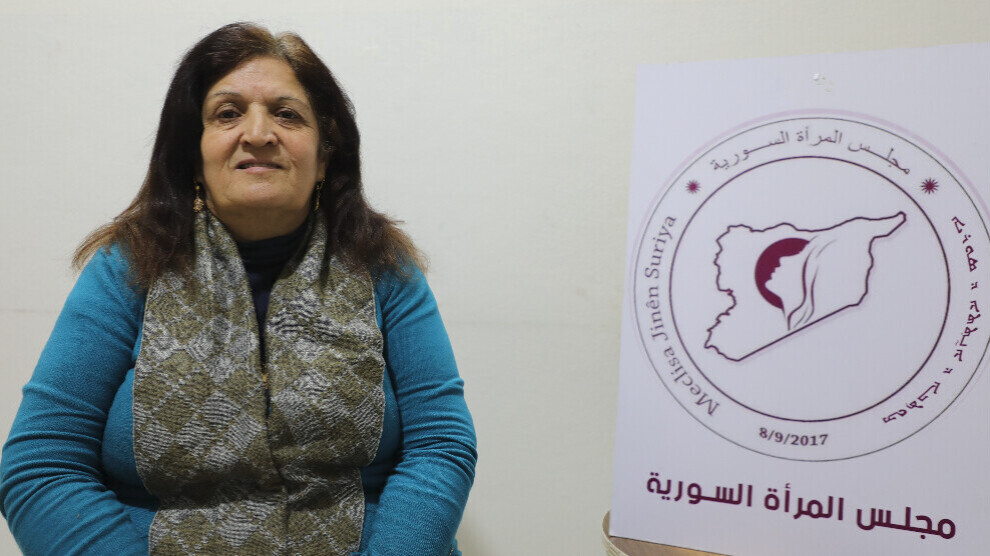
Arîfe Bekir, a member of the board of the Syrian Women's Council, called for women's unity and underlined the importance of anchoring women's rights in a new constitution.


NÛJIYAN ADAR
QAMISHLO
Thursday, 26 December 2024

Since the fall of the Syrian regime on 8 December, concerns about a deterioration in women's rights have increased. The Al-Qaeda offshoot HTS has taken power and, despite moderate words, has already implemented a number of misogynistic measures, such as expelling women from the judiciary. In an interview with ANF, Arîfe Bekir, a member of the board of the Syrian Women's Council, spoke about developments in the country from a woman's perspective.

Arîfe Bekir said that the conditions for women under the Baathist regime were extremely poor, contrary to what the regime reported, and added: "Although women's rights were formally anchored in the Syrian constitution, this had no consequences in practice. Women had no right to make their own decisions; their will was usurped. Although some women were able to hold important positions, this also took place in the shadow of the patriarchal mentality.”

The regime tortured active women and made them disappear

Bekir added: "The (Syrian) Women's Union was unable to be effective because it worked on the basis of the ideology of the Baath regime. The Syrian Women's Council applied to join this union, but were not accepted. In addition, many women were imprisoned by the regime and women who fought for their freedom were tortured. The fate of some women is still unknown. The aim was to break women's free will. Every single woman was deprived of her rights and forced to live within narrow limits."

2011 brought light and shadow for women

Especially after the uprisings in 2011, the situation of women changed in two ways. According to Bekir: "We can actually look at 2011 in two ways. On the one hand, the spread of the spark of the Rojava Revolution and the determined resistance of women are worth highlighting. With the revolutionary achievements of this period, women gained a say in all areas of life. Women were leading a revolution.

On the other hand, thousands of women were killed in clashes between the groups calling themselves the opposition and the Baath regime. There are many Syrian women whose fate is still unknown. In this war, the homes of thousands of women were destroyed, and women were displaced, killed and raped. The year 2011 and the period afterward was an extremely difficult time for women."

Practices in the occupied territories surpass the cruelty of the Baath regime

Bekir underlined that "women suffered heavily in the conflict between the interests of the mercenary groups and the Baath regime. These were groups that ostensibly set out to make a change in 2011, but occupied places like Afrin, Girê Spî, Serêkaniyê, al-Bab and Azaz. And they did not stop there, they continued to murder women, fill their prisons with women. We can say that every day in the occupied territories at least one woman is either murdered or raped. Young boys were forcibly recruited and forced to fight. Underage women were forced to marry. These groups supported polygamy. In fact, the practices of the groups that presented themselves as 'opposition forces' in the territories they occupied have surpassed the Baath regime in cruelty."

Our goal is the unity of women

On 8 September 2017, the Syrian Women's Council was founded. The aim was to unite all women in the country. Bekir explained the organization's intentions: "The Syrian Women's Council was founded with the aim of bringing women together across Syria, reaching out to all women in the country and promoting dialogue. The aim of this council is to create solidarity and unity by addressing the common problems of women. Women from different regions of Syria have the opportunity to support each other and build solidarity networks by sharing their experiences. As women from Syria, our priority is to guarantee women's freedom. In this context, we are actively fighting to defend women's social, economic and political rights. The protection, recognition and preservation of women's own identity are our priority.

Our goals include building a democratic and ecological society based on women's liberation and ensuring a solution to the crisis in Syria through democratic dialogue and decentralized systems. Our priorities include bringing freedom, democracy and justice to all ethnic, cultural and social identities, organizing and educating women and developing a free and equal understanding of life. By supporting the role of women in the new constitution and the dialogue process in Syria, we want to ensure women's rights in all areas. In this context, the implementation of international law, in particular Security Council Resolution 1325 on women, is of the utmost importance."

The resolution is about the position of women in conflicts. Among other things, it aims to guarantee the participation of women at all levels in peace processes, both in the negotiation and in the implementation of peace agreements. In addition, the resolution emphasizes the special need for protection of women and girls in armed conflicts. This particularly concerns protection against sexual and gender-based violence.

Women should write their own constitution

Bekir said that the time had come for the freedom of Syria's women and continued: "We are in a critical and extremely sensitive phase. This is the time of freedom and women. At such a time, all women must unite. All women must come together without distinction. Without the unity of women, without women standing shoulder to shoulder, there can be no freedom.

The main goal of the Syrian Women's Council is to empower women to assert their rights and free themselves from slavery. The future of the new Syria is extremely important for women. We support the construction of a new democratic, equal, just, peaceful and decentralized Syria, a country that guarantees women's rights. There will be a new constitution of Syria, and it is important that women's rights are enshrined in it. A constitution that is created on the basis of a patriarchal mentality will certainly not take women's rights into account. Therefore, women should write their constitution with their own hands."

Women in Suwayda: We must take an active role in building a new Syria


Women attending a conference titled "Building a Citizenship State Together Towards a United Syria where Everyone Wins" held in the Syrian city of Suwayda said that they will take an active role in building the future of Syria.
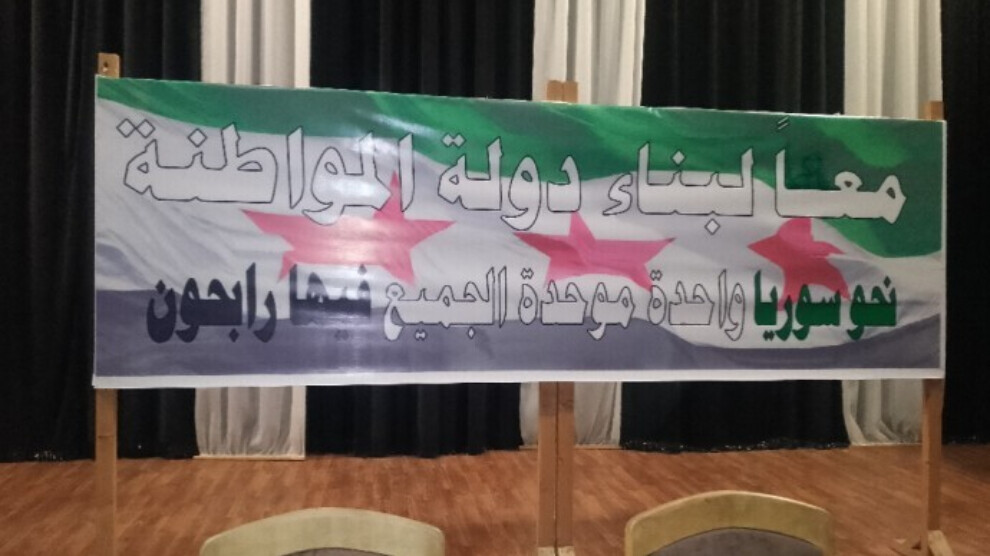

ANF
NEWS DESK
Wednesday, 25 December 2024, 23:45

A conference titled "Building a State of Citizenship Together Towards a United Syria where Everyone Wins" was held in Suwayda, a city in southwestern Syria with a large Druze population. Many citizens attended the conference and shared their thoughts on the future of Syria.

After the fall of the Baath regime and the coming to power of the Interim Government, women in Suwayda emphasized the need for women to participate in all aspects of life and play their political role.

Women must be equal to men

Sulwa Qasim told JINHA news agency: "I was one of the participants in the struggle from the first day of the movement in Suwayda and I have always stood side by side with men. My demand is not only for myself, but for all Syrian women to live in a 'country that benefits everyone'.

Suwayda added: "In this conference we called for the participation of women in all political and legal bodies in accordance with the Constitution and in proportion to their contributions in this field, taking into account that Syrian women are engineers, doctors, mothers, in the civil resistance and shoulder to shoulder with men in all fields of land, industry and life.

Women must not be excluded as second-class citizens. Women must have an equal and active role with men in building a new Syria. Women's participation in parliament and political life is a right that must never be compromised".

Women will play an important role

Lawyer Safaa Al Awam said: "Women are not half of society, but the whole of it, as they have proven their worth over the past 14 years, not only in the city of Suwayda, but in the whole of Syria and the world, because of that they will play an important role in drafting the constitution in the next phase."

Maysa Darwish said: "In the transitional phase, we should not ignore women who have participated in movements and revolutions in the past and present and who play a role in the political sphere, so we must make sure that they are included in all branches of the state, because they will work hand in hand with men in the new Syria to build a new Syria."

Lawyer Hanadi Hudhaifa said: "Since the beginning of the peaceful movement in Suwayda, women have played an active role, showing that women are not only for the home and kitchen."



WOMEN, LIFE, FREEDOM!

Pakshan Azizi: A Symbol of Kurdish women’s resistance against oppression

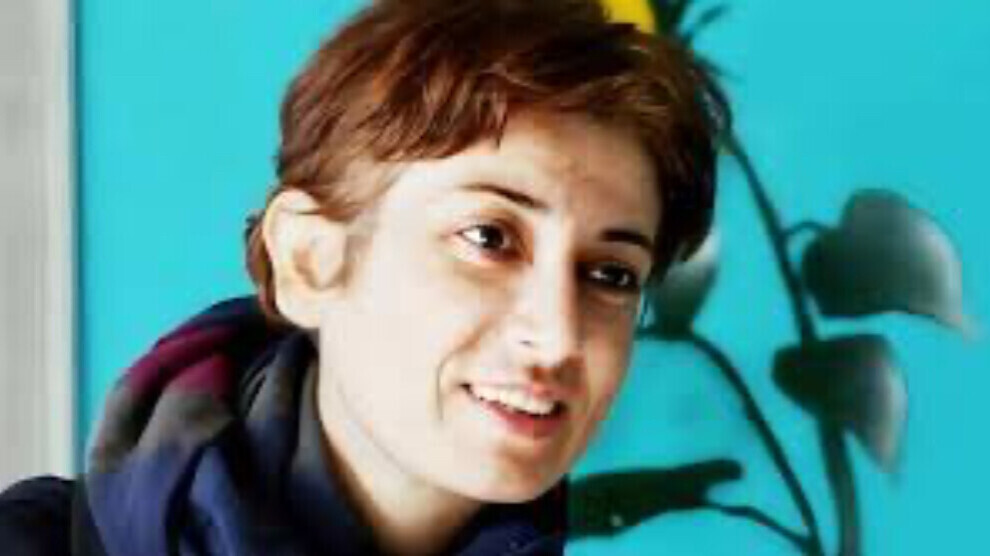
Pakshan Azizi, a social worker, women’s rights activist, and a prominent figure in the fight against gender and ethnic discrimination, has been sentenced to death in Iran.


ANF
NEWS DESK
Thursday, 26 December 2024

Pakshan Azizi, a social worker, women’s rights activist, and a prominent figure in the fight against gender and ethnic discrimination, was born in Mahabad.

For years, she advocated for victims of domestic violence and worked on empowering women. Pakshan Azizi organized awareness programs for women in Kurdish regions, educating them about their rights.

She also participated in cultural and social initiatives promoting gender equality and children’s rights. As a key member of local organizations, she worked tirelessly to amplify the voices of marginalized women and minorities.

Arrest and charges

In August 2023, Pakshan Azizi was arrested at her home by security forces. She was initially charged with offenses like "rebellion against the regime" (Baghi) and "propaganda against the state." Following an opaque trial, the Tehran Revolutionary Court, presided over by Judge Iman Afshari, sentenced her to death.

Reports indicate that Azizi endured severe physical and psychological torture during her detention in the Ministry of Intelligence's facilities to extract false confessions for crimes she did not commit.

Prison Conditions

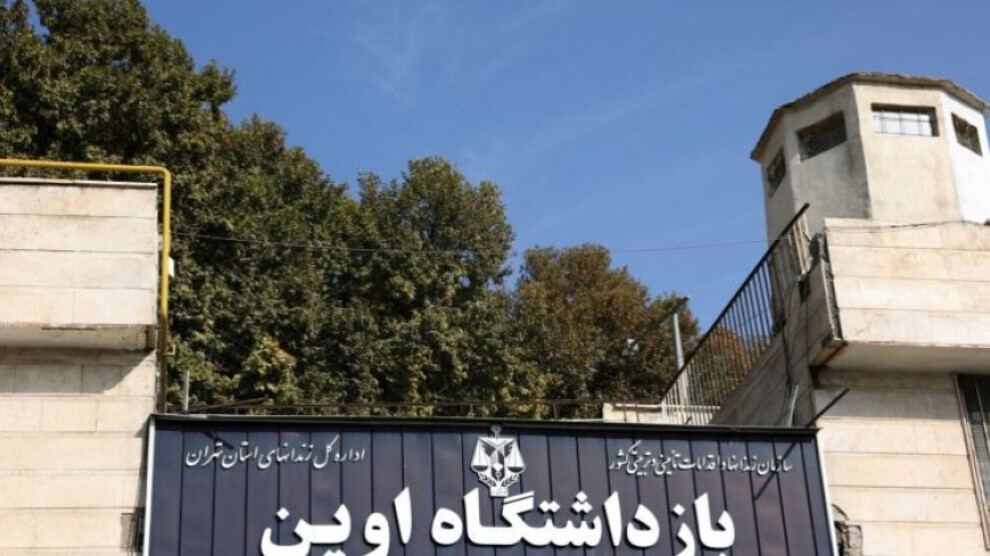
Pakshan Azizi is currently held in the women’s political ward of Evin Prison under dire conditions:

Denied Legal Representation: Her lawyer was only allowed access to her case after the interrogation phase was completed.

Lack of Medical Care: Azizi suffers from physical issues due to torture but is denied adequate medical treatment.

Restricted contact with family: She has limited access to phone calls and is deprived of regular family visits.

Reactions and case significance
The death sentence for Pakshan Azizi has sparked widespread protests inside and outside Iran. Numerous human rights organizations, including Amnesty International and Human Rights Watch, have condemned the ruling and called for its immediate reversal.

Her fellow inmates in Evin Prison have staged several sit-ins and hunger strikes to show solidarity and protest the sentence.

Pakshan Azizi’s case has become a symbol of the systemic oppression of Kurdish women and the use of the death penalty as a tool to intimidate dissenters. This case reflects state policies targeting women’s and ethnic minorities' rights, aiming to silence their voices.

Despite the repression, Azizi and others like her have inspired resistance movements advocating for women’s rights and freedom both in Iran and globally.

Demands and expectations

Human rights activists, women’s advocates, and defenders of minority rights have emphasized in various statements the urgent need for international action to prevent her execution. These demands include:

Diplomatic pressure on the Iranian government to revoke death sentences.

Support for women’s and ethnic minority movements in Iran.

International campaigns to abolish the death penalty and free political prisoners.

Conclusion

Pakshan Azizi is a symbol of Kurdish women’s fight for justice, freedom, and equality. Her case highlights blatant human rights violations and the state’s use of violence to suppress dissent.

The "Women, Life, Freedom" movement, which emerged from Iran's protests, represents the determination of Iranian women and men to end oppression and authoritarian rule.

Together with other courageous imprisoned women, Pakshan Azizi continues to inspire society and reminds us of the urgent need for global solidarity to achieve justice and freedom.


Women political prisoners in Iran

Women in Iran face a complex combination of challenges and opportunities. Significant achievements have been made in the fields of education, art, and science. Yet, restrictive governmental laws and policies have made their situation difficult.


ANF
NEWS DESK
Tuesday, 24 December 2024, 12:02

Women in Iran face a complex combination of challenges and opportunities. On the one hand, significant achievements have been made in the fields of education, art, and science. On the other hand, restrictive governmental laws and policies, coupled with social and cultural discrimination, have made their situation difficult. This reality is particularly pronounced for women belonging to ethnic, religious, and political minorities, such as Kurdish or Baluch women.

Politically and socially active women are especially at risk of arrest, torture, and imprisonment. Cases such as Narges Mohammadi, Atena Daemi, Zeinab Jalalian, and Pakhshan Azizi are prominent examples of the suppression of protesting and active women.

The "Woman, Life, Freedom" (Jin, Jiyan, Azadi) movement, which in recent years has been accompanied by widespread protests, symbolizes women's demands for equal rights and greater freedoms. This movement has become one of the icons of the struggle for social justice and equality in Iran.

Women from ethnic, religious, and political minorities in Iran face compounded discrimination:

Kurdish and Baluch Women: These women often grapple with issues such as poverty, state violence, and discrimination in access to education and healthcare services.

Bahá'í and Christian Women: Women belonging to religious minorities face legal and social restrictions and are often deprived of job and educational opportunities.


Women political prisoners in Iran symbolize the intersection of gender-based oppression and state-sanctioned persecution of dissent. Among the most notable cases are Verishe Moradi, Pakshan Azizi, and Zeinab Jalalian, three Kurdish women whose lives and struggles highlight the plight of women caught in the crossfire of ethnic discrimination, systemic gender inequality, and authoritarian repression.

This dossier provides a comprehensive overview of their lives, activism, imprisonment, and the broader context of women’s political imprisonment in Iran.

Background and activism

Varisha Moradi
Varisha Moradi, a Kurdish activist and advocate for women’s rights, was committed to addressing the marginalization of Kurdish women. A community leader, Azizi’s activism focused on empowering women through education and resistance against cultural and state-imposed restrictions. Arrested during the 2021 protests, she has been accused of “Baghi” (armed rebellion) without evidence linking her to such acts.

Pakshan Azizi
Pakshan Azizi, a social worker and feminist, worked to support victims of domestic violence and promoted gender equality in Kurdish regions. She organized programs educating women about their rights and actively challenged patriarchal and state violence. Arrested in August 2023, Pakshan was tortured and falsely accused of rebellion against the regime, earning her a death sentence.

Zeinab Jalalian
Zeinab Jalalian is one of the longest-serving Kurdish women political prisoners in Iran. Arrested in 2008, she was accused of membership in the PJAK (Kurdistan Free Life Party), a charge she denies. Zeinab has been subjected to severe torture and denial of medical care, even as she suffers from life-threatening illnesses. Her case has drawn international attention to the plight of Kurdish women in Iranian prisons.

Arrest and Charges

The arrests of these women reflect systemic flaws in Iran’s judicial process:

Fabricated Charges: Charges like "Baghi," "spreading propaganda against the state," or "corruption on Earth" are frequently leveled without evidence.

Torture and Coerced Confessions: All three women reported being subjected to torture, including physical abuse, psychological intimidation, and prolonged solitary confinement.

Opaque Trials: They were denied access to legal representation during crucial phases of their trials. Court proceedings were brief, secretive, and predetermined, violating international standards of fair trials.

Prison Conditions

The conditions these women face reflect the harsh realities of political imprisonment in Iran:

Physical and Psychological Torture: Torture remains a widespread practice in Iranian detention centers, particularly for political prisoners.

Denial of Medical Care: Zeinab Jalalian has been denied medical treatment for serious illnesses. Pakshan Azizi and Varisha Moradi also suffer from untreated injuries due to torture.

Isolation and Harassment: Political prisoners, especially women, are isolated from their families and subjected to verbal abuse by prison authorities.

Restricted Communication: Access to family visits and legal counsel is severely limited.

Broader Context of Women Political Prisoners

Iran uses imprisonment as a tool to suppress dissent, with women often facing the dual burden of political persecution and gender discrimination:

Targeting Activists: Women involved in social movements, human rights advocacy, or protests are disproportionately targeted.

Ethnic and Gender Discrimination: Kurdish women, in particular, face compounded discrimination due to their ethnicity and gender.

Rise in Executions: Since the “Woman, Life, Freedom” protests, executions of women have increased dramatically. In 2023 alone, at least 24 women were executed, many of them Kurdish.

5. Global Reactions and Solidarity

The international community has condemned Iran’s treatment of women political prisoners:Human Rights Organizations: Groups like Amnesty International and Human Rights Watch have demanded immediate cessation of torture and unfair trials.
Global Campaigns: Calls to abolish the death penalty in Iran and to release all political prisoners have intensified.
Solidarity Movements: Women's rights organizations globally have rallied around these cases as emblematic of the broader struggle for freedom in Iran.

Significance of Their Cases

The cases of Verishe Moradi, Pakshan Azizi, and Zeinab Jalalian are significant because:Symbols of Resistance: They represent the resilience of Kurdish women against systemic oppression.
Injustice Highlighted: Their plight underscores the widespread judicial and human rights abuses in Iran.
Inspiration for Movements: Their courage inspires the global “Woman, Life, Freedom” movement.

Demands for Justice

The following steps are essential to address the injustices faced by these women:Immediate Action: Revocation of death sentences and release of all political prisoners.
Accountability: Investigations into torture allegations and judicial misconduct.
Abolition of the Death Penalty: A global campaign to end executions in Iran, especially for political dissenters.
Support for Families: Providing psychological and financial assistance to the families of political prisoners.

Conclusion

The stories of Verishe Moradi, Pakshan Azizi, and Zeinab Jalalian exemplify the courage and determination of Iranian women in the face of oppression. Their imprisonment and persecution are stark reminders of the urgent need for global solidarity in the fight for justice and human rights in Iran.

The rallying cry of “Woman, Life, Freedom” continues to echo worldwide, inspired by the sacrifices and struggles of these women and many others like them.


Vigil at Kobanê border: We will not accept a life without status


During the vigil at the Suruç-Kobanê border, activists emphasized that the Kurdish people will not remain silent against the attacks on Rojava and will not accept a life without status.


ANF
URFA
Wednesday, 25 December 2024

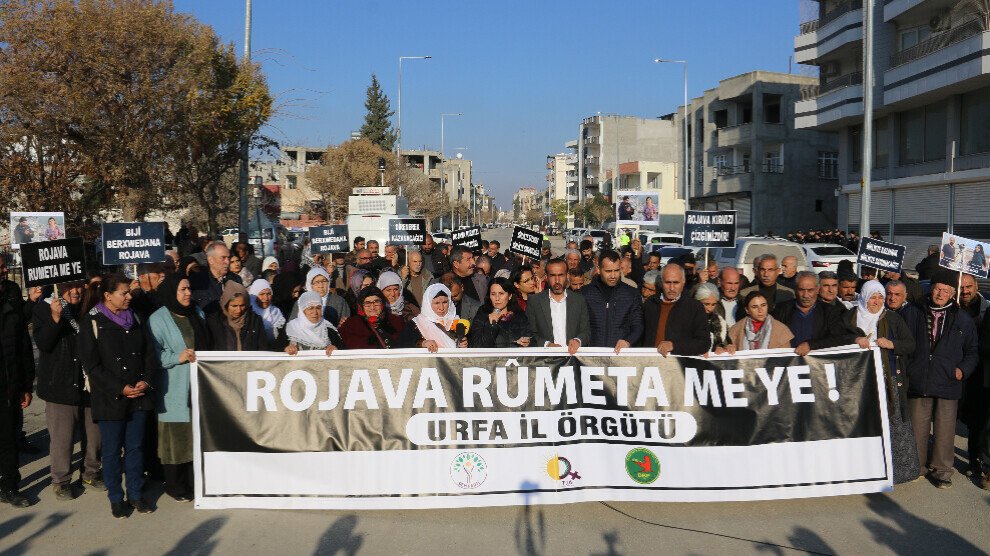
The vigil started in the Suruç district of Urfa on the border of Kobanê in protest at the invasion attacks against Northern and Eastern Syria continues on its 3rd day. The vigil, launched under the leadership of the Democratic Regions Party (DBP), Peoples' Equality and Democracy Party (DEM Party) and Free Women's Movement (TJA), was attended by DEM Party Urfa MP Ferit Şenyaşar as well as many party members and members of the Peace Mothers Assembly on Wednesday.

Masses gathered in the district today, singing and dancing to Kurdish songs. A banner reading “Rojava rûmeta me ye” (Rojava is our honour) was unfurled and banners reading “Rojava is our red line” and “Bijî berxwedana Rojava” (Long live the struggle of Rojava) were carried.

‘Resistance will continue’

TJA activist Edle Fidan protested the prevention of the activists from making a press statement at the Kobanê border on the pretext of “security” and said, “Rojava's security is our security”.

Commemorating Kurdish journalists Nazım Daştan and Cihan Bilgin who were killed in a Turkish UCAV attack in Rojava last week, Edle Fidan said, “These attacks are meant to leave the Kurds without status and destroy the gains in Rojava. But no one can leave the Kurds without status in the Middle East. We will continue our resistance against this. We do not accept a life without status. The life in Rojava is a life established by the women's revolution. We, as women, will embrace this life.”

'The attacks are directed against Kurdish gains'

DEM Party Adıyaman Provincial Co-Chair Hüseyin Coşkun said, “Everyone is watching the events in Syria and North-East Syria with great concern. These attacks are directed against Kurdish gains.”

DEM Party Bismil District Co-Chair Mustafa Kurt called for unity against the attacks and said, “An attack is currently carried out by mercenaries. We reject the attacks against the people of Rojava.”

'We will always be in solidarity with the people of Rojava'

“The people of Suruç and the people of Kobanê are friends and relatives,” said MP Ferit Şenyaşar of the DEM Party: “We do not accept the attacks on the people of Rojava by ISIS remnant terrorist organizations. I hereby commemorate our journalist friends Nazım and Cihan who were killed in a combat drone attack. We condemn this genocidal mentality. As long as these attacks continue, we will not remain silent against these attacks, because to remain silent is to act against human dignity. The people of Rojava have been recognized by the international community for their struggle against ISIS. The people of Rojava are not a threat to Turkey. We will always be in solidarity with the people of Rojava.”

The demonstration ended with the slogan “Bijî berxwedana Rojava” (Long live the struggle of Rojava).


German Foreign Minister: A war by Turkey against the Kurds in Syria must not happen

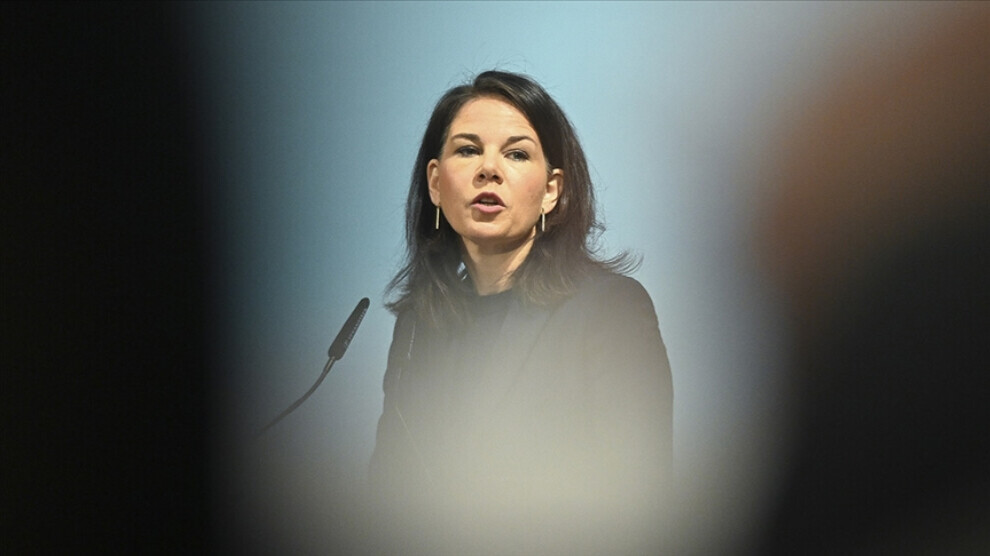
“A war between Turkey and the Kurds in Syria must not be allowed to happen,” said Annalena Baerbock, stressing that it would help no one if the terrorist militia “Islamic State” were to emerge as the winner from such a conflict.


ANF
NEWS DESK
Tuesday, 24 December 2024, 

German Foreign Minister Annalena Baerbock warned of a worsening of the situation in Turkey's conflict with Kurdish forces in northern Syria. “A war by Turkey against the Kurds in Syria must not happen,’ Baerbock said on Deutschlandfunk radio on Monday. She said it would help no one if the terrorist militia Islamic State were to come out on top of such a conflict. “That would be a security risk for Syria, for Turkey and for us in Europe,” said the Green Party politician.

With regard to ISIS, Baerbock pointed out that “In particular, it was also the Kurds who pushed back ISIS’. In this context, she also recalled ‘the terrible massacres committed by ISIS terrorists’. The city of Kobanê, against which Turkey and its allied jihadist militias are currently preparing an invasion, is ‘a symbol of the courageous fight of the Kurds against ISIS,’ said Baerbock. “Together with the international anti-ISIS coalition, of which Germany is also a member, they defeated ISIS.”

The current situation in Syria should ‘not be used to expel the Kurds again, to allow violence to break out again,’ the minister said, adding that this is precisely what Germany is calling on NATO partner Turkey to do. From the minister's point of view, the international community must now make it clear: “We all have a responsibility to ensure that there is no new violence, that there are no new radical forces, but that after years of this terror, people can finally live in safety.” Baerbock also emphasised the territorial integrity of Syria, saying: “The unity of the country must be preserved, and third parties must not be allowed to wreak havoc there again, as Iran and Russia did before.”

Two weeks ago, the Islamist militia Hayat Tahrir al-Sham (HTS), which is still listed as a terrorist organisation internationally, and its allies took Damascus, ending decades of rule by the Baath regime. Since then, tensions have been escalating in the areas of the Democratic Autonomous Administration in North and East Syria (DAANES), as Turkey, in the slipstream of the HTS offensive against former President Bashar al-Assad, launched a major attack on North-East Syria together with its proxy army ‘SNA’. The cities of Tel Rifat and Manbij were occupied a few weeks ago, and now the Turkish sabre-rattling is getting louder and louder near Kobanê. The NATO member Turkey has been occupying parts of northern Syria since 2016, including Afrin, Serêkaniyê and Girê Spî.


Patrice Franceschi: If Kurds lose, we all lose

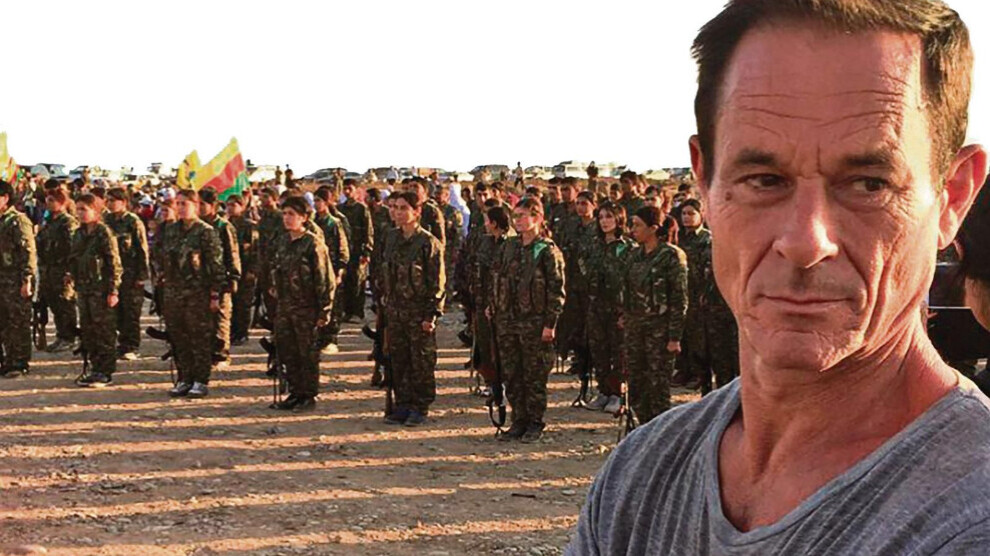
French writer Patrice Franceschi said that the attack on Rojava was an attack on freedoms. "They want to destroy Rojava. If the Kurds lose, we all lose."


SERKAN DEMIREL
ANF
PARIS
Tuesday, 24 December 2024, 

Researcher and writer Patrice Franceschi told ANF that Western democracies are currently relatively weak and Turkey's NATO membership complicates matters. He added: "As long as Turkey is part of NATO, it has to be considered an ally of European states. In reality, Turkey should be expelled from NATO. It has no place there because its entire program, agenda, and will are against the West, democracies, and everyone else. Therefore, while a country like Turkey is in NATO, it is extremely difficult to help the Kurds."

Franceschi is a French researcher and writer who closely follows the region. He is also the author of the book Dying for Kobanê.

The Ba'ath regime fell following attacks led by armed groups under Hay’at Tahrir al-Sham (HTS) on November 27. How do you evaluate the fall of the regime?

I should state that the fall of Bashar al-Assad's regime is a good thing, but those who overthrew it could be worse. Just because a despicable regime collapses doesn't necessarily mean that its successors will be better. They could be worse. Remember the situation with the Shah of Iran in 1979. There was a tyrant, and when he was overthrown, everybody thought that his successors would be better, but things took a far more terrible turn. Therefore, I think it's very positive that Bashar al-Assad was removed from power because his rule was drenched in blood. However, we must be cautious, as those who take his place could be worse, especially for the Kurds and all minorities in Syria.

HTS is implementing Erdoğan's agenda

You also study jihadist organizations. How should we assess the structure of Hay’at Tahrir al-Sham (HTS), the jihadist group currently being proposed as the future of Syria?

To put it bluntly, Hay’at Tahrir al-Sham is a coalition of Islamist groups directed, financed, and supported by Turkey and additionally funded by Qatar. HTS is currently implementing the agenda set by Ankara and Erdoğan. It is uncertain whether at some point al-Jolani (HTS leader) will try to free himself from Erdoğan and pursue his own agenda, but for now, he is obedient to Ankara. Obeying Ankara means avoiding, at least temporarily, mistakes similar to those made by the Taliban when they seized power in Kabul. That’s why al-Jolani, HTS, and Erdoğan are trying to present themselves to the West as extremely honorable partners.

We in the West must not fall for this façade. HTS is a radically Islamist group, particularly dangerous for Kurds, Christians, Yazidis, and all minorities. However, they will try to convince us they are reliable partners. If we fall into this trap and, for example, grant them a seat at the United Nations or remove them from the “terrorist organizations list,” we will pay a heavy price. Once they gain such privileges, they will implement their real agenda, starting with establishing Sharia law everywhere. This would be disastrous, especially for Kurds and other minorities.

There is no such thing as a moderate or modern Islamist organization

HTS and its leader are being marketed in the West today as a moderate or modern Islamist group. Yet their links to ISIS and their origins are deeply rooted in a similar tradition. How do you evaluate this Western narrative? Isn't this a danger for the future?

This is a very big danger for the future because there is no such thing as a moderate or modern Islamist organization. Such a concept does not exist. They are Islamists, plain and simple. Therefore, they are enemies of the West, enemies of democracy, enemies of the Kurds, and enemies of minorities. We must not be swayed by the communication campaigns trying to portray them as something else. They are what they are: al-Qaeda, nothing else.

The idea of the Ottoman empire is being implemented in Syria

While HTS's role in shaping Syria's future is being debated, the Turkish state and its affiliated militias continue their occupation attacks on the Autonomous Administration regions in Northern and Eastern Syria. Is it possible to talk about a political solution in a process where these attacks continue?

Currently in Syria, there is a situation where, on the one hand, al-Jolani and HTS aim to conquer southern Syria and integrate it into the idea of the Ottoman Empire, and on the other hand, there is an effort to eliminate the Kurds in Northern and Eastern Syria. The Turkish state has assigned this task to the Syrian National Army (SNA).

The SNA, which is attacking the Kurds, has occupied Manbij and is besieging Kobanê. These are mercenaries, more or less Islamist, entirely salaried, trained, and nurtured by Ankara. Since 2018, they have been involved in the ethnic cleansing of Afrin. They were also sent to Nagorno Karabakh to ethnically cleanse Armenians. Today, they are trying to eliminate as many Kurds as possible from northern Syria. All of this is part of Erdoğan's ambition.

The West must understand this maneuver and continue to support the Kurds by preventing the SNA from taking Kobanê or even Raqqa.

Kobanê is a symbol, and if it falls, we all lose

They want to occupy Kobanê, which is a symbol of resistance against the Islamic State for everyone. You wrote a book called Mourir pour Kobanê (Dying for Kobanê) about the Kobanê resistance. How do you evaluate the Turkish state’s desire to occupy this city, which is a symbol for the peoples of the world?

What happened immediately after Kobanê's victory, that is, the victory of the Kurds against ISIS, holds highly symbolic importance. If we abandon our Kurdish comrades to the hands of Turkish mercenaries and the Turkish army and allow Kobanê to fall into their hands, it would signify, in a sense, the end of a world. In other words, it would mean the end of the West's freedom in the face of terrorism and Turkish totalitarianism.

Western powers - the Americans, the French, and the Europeans - must act to prevent the Turks from occupying such a symbolic city.

The Rojava model terrifies them

Amid the chaos in Syria, a model was established in Rojava that offers solutions to all the region's problems. Why is this model not being considered and discussed for Syria's future?

The problem is that the model proposed and currently operating in Rojava is genuinely an interesting one that could transform the entire Middle East. But the rest of the Middle East does not want this model because Syria, Iraq, Jordan, Turkey, and all the countries surrounding Rojava oppose this idea. For them, democracy, gender equality, women’s liberation, and secularism are seen as poison.

They fear the spread of Rojava's excellent model to their own societies, and they do not want it. That’s why our brave comrades defending this model around the world are met with widespread opposition. This is the core of the issue.

We must stand with the Kurds

Another danger in the region is the resurgence of ISIS. Turkish attacks have also led to movements among jihadists in prisons and camps in Rojava. As someone who knows the region well, what kind of threat are we facing here?

The seizure of camps like Roj and Al-Hol by jihadists is a huge danger for everyone. These camps hold over 50,000 jihadists and their families. These camps in Rojava are ticking time bombs for the entire West and all democracies.

I hope Western awareness of this issue will prompt Americans, French, and Europeans to prevent the Turks and their Islamist allies from seizing these camps. What is happening right now is very serious, and everything is at stake. Unfortunately, the transition period in the U.S. between Trump and Biden seems to have left Americans in a state of uncertainty that their adversaries are exploiting to advance their agendas.

I hope that before 20 January, the right response will be made, and we will give full support to the Kurds.

Finally, let me say this: the free world - essentially the West, but also the Kurds and a few other nations - must recognize that what is happening in Northern Syria is of fundamental importance for freedom worldwide. Our support and assistance to the Kurds must be complete right now. Otherwise, the entire world faces the risk of collapse.


Paolo Ferrero: Rojava is a legacy for humanity, we must defend it!

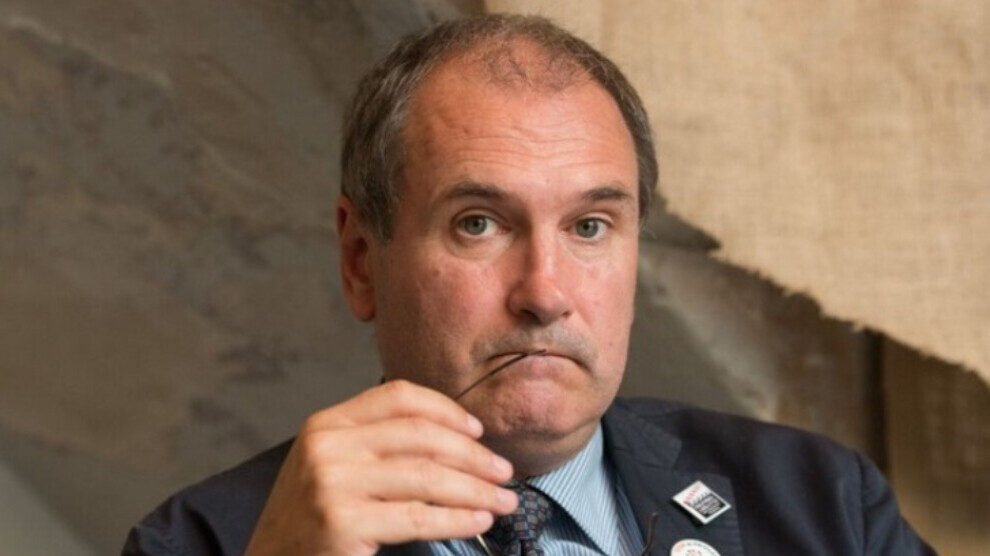
Former Minister Ferrero said that a project to destroy Syria is being implemented, and added that "the only model that should be taken as a basis for Syria’s future is Rojava. We must defend it."


SERKAN DEMIREL
ANF
NEWS DESK
Wednesday, 25 December 2024

Following the overthrow of the Syrian regime on 8 December, the situation in the region continues to evolve. While international powers are trying to implement a new plan for Syria through the jihadist group Hayat Tahrir al-Sham (HTS), the Turkish state and its affiliated militia groups, which are among the primary supporters of this jihadist group, continue their invasion attacks on the Autonomous Administration regions of Northern and Eastern Syria.


Paolo Ferrero, former Italian Minister of Social Solidarity and former secretary of Rifondazione Comunista, spoke to ANF about the developments in Syria and the attacks on the Kurds.

‘Not a new Syria but a destruction project’

Paolo Ferrero said that the Assad regime was already weak and was overthrown with the direct support of Turkey and Israel and indirect support from the U.S. He added: "They have disrupted the existing balance in Syria. I believe this new situation will not lead to a new Syrian government, but to the destruction of Syria. I say this because Israel is annexing the entire Golan Heights and neighboring areas in Lebanon. Turkey is also trying to do the same in northern Syria. Moreover, although jihadist terrorist groups are portrayed as having formed a government, in reality, they have no sovereignty. Just like the Islamic State was used against the Kurds, they too are being manipulated and used as tools."


‘The project to destroy Syria through Turkey is active’

Ferrero pointed out that the project to destroy Syria through Turkey is being carried out and emphasized that seeking a solution for Syria through HTS is futile. He said: "Given the history and ideology of this jihadist group, it’s very difficult to envision a solution for Syria with them. Turkey wants to implement its plans through this group and other armed groups affiliated with it. As in the past, it is clear that these groups are being used against the Kurds and Rojava. We will see if the U.S. intervenes. As for Russia, like Iran, it seems to be standing on the sidelines. If the U.S. and Turkey want to normalize the situation, talks may be possible. However, if Turkey insists on forcibly changing the situation in Syria, then military action may be the only option, as so far, no real discussion about a solution has taken place. The military power balance in Syria is shifting in favor of the jihadist model because this model reflects the interests of Turkey, Israel, and to some extent the U.S. These powers want to divide Syria into small ethnic, religious, or cultural states in order to better control the region. This situation is part of a long-term vision to maintain these powers' dominance in Syria."


‘They don’t want to accept the Kurdish reality’

Ferrero said that Turkey’s main goal is to implement a new Ottoman policy in the region and highlighted that the attacks on Rojava are aimed at preventing the acceptance of the Kurdish reality by Erdoğan and his regime. Ferrero said: "Moreover, Erdoğan nurtures a rigid and intolerant nationalism that rejects any form of autonomy for the Kurds. Turkey doesn’t want the Kurds to be in a position where they can freely express themselves or govern themselves."

‘The Rojava model is a true revolution’

Ferrero reminded that for half a century, an understanding that does not accept any differences has held power in Syria, and said: "The proposal and model of a democratic region that unites different religions, cultures, and ethnic groups in Kurdistan is truly revolutionary in the current context. The existence of the Assad regime was based on the denial of this pluralism. Despite the knowledge of this reality in Syria, we see that groups that pursue an exclusionary vision of a state based on a single religion, like the jihadists, are being supported."

Ferrero added: "It is crucial for us to do everything we can to support the Kurdish people in Western countries and elsewhere. Attacks on the Kurds are unacceptable. They should be left free to govern themselves. We must put pressure on Turkey and the U.S.

The Rojava model, inspired by the ideas of Abdullah Öcalan, offers an important alternative for a pluralistic and participatory democracy.

However, democratic forces are opposed to this idea because they support the authoritarian democracy that dominates the West today. The Kurdish people are not only defending the right to live and self-govern but also have a vision to solve humanity’s problems. If we follow this path of participatory and pluralistic democracy, it will be possible to move away from the logic of war. Otherwise, war will remain inevitable."

‘They want to destroy Kobanê, the symbol of resistance’

Ferrero said: "Turkey, which sees the victories of the Kurdish people as an insult to themselves, is trying to destroy the symbol of Kurdish resistance, Kobanê."

‘We must defend Rojava for the future of humanity’

In his concluding remarks, Ferrero said: "It is of vital importance to apply pressure on Turkey and the U.S. to end this situation, which reminds us of what Israel is doing to the Palestinians. These great powers think they can impose their will on the people. Rojava is not just a positive experience for the Kurds; it is also important for humanity. This model represents an important practical step showing that living together is possible despite differences. Rojava presents a concrete and realistic proposal for harmonious coexistence among different ethnic groups, religions, and political orientations. This is why we must defend Rojava. It represents a potential model for the future of humanity, where peace prevails over war. By defending Rojava, we will be defending a model for the future of humanity."


ERDOGAN'S ETHNIC CLEANSING

Turkish government against the existence of the Kurds


Ferset Doski, a prominent researcher and writer from South Kurdistan, said that the Turkish government is not only against Kurdish parties and organizations, but also against the existence of the Kurds.


ANF
NEWS DESK
Tuesday, 24 December 2024, 16:48

Researcher and writer Ferset Doski stated that Erdoğan's government is a threat to the Kurdish people and country, whether in Bashûr (South), Bakur (North), Rojava (West) and Rojhilat (East) Kurdistan.

Speaking to ANF, Doskî remarked that the history of Kurdistan is full of important breaks and opportunities from which lessons should be learned and said, "The Turkish government today threatens Rojava and wants to destroy it, but they are not only against a Kurdish region or institution, but against the existence of the Kurdish people as a whole."

Emphasizing that Kurdish political organisations should not evaluate Erdoğan's government only through a policy against the PKK or the YPG, Doskî said that the ongoing attacks on Rojava are an attack and threat against the existence of the Kurds. "No matter which Kurdish party, institution or personality, this regime takes an attitude against it, wherever it exists," Doski said, calling on Kurds to put aside all their differences and adopt a common stance, especially in the critical days in Rojava.

‘Let us not betray the sacrifices of our martyrs’

Stating that it is vital to protect the gains in Rojava, Doski said, "Let us not waste the blood of our martyrs and the prices paid by our people for the sake of personal or party interests. Let us not betray the sacrifices of our martyrs. History will never forgive betrayal." Stressing that today is not the time to argue over political differences in Rojava, Doski said that the Kurds should go to Damascus in unity and pursue a common policy. He added that this unity is essential for the defense of the rights of the Kurdish people.

SEPERATED AT BIRTH

‘The only thing that will liberate us is our unity’

Stating that the Treaty of Lausanne, a bitter experience for the Kurdish people 100 years ago, should not be allowed to be renewed, Doskî said, "The hope of our people, their suffering and the prices they paid should not be sacrificed to political disagreements once again. The only thing that will liberate us is our unity."

‘Let’s unite around the call of Mazlum Abdi’

Dostkî emphasized that groups such as ISIS, Jabhat al-Nusra and, nowadays, HTS are legitimized through diplomacy by changing their cover, but it is important not to forget the crimes committed by these groups in Serêkaniyê, Girê Spî and Efrîn, which are stained with the blood of the Kurdish people: "We are enduring the negotiations with these groups in order to protect the hopes and gains of our people in four parts. Therefore, let's join hands and take part in these negotiations. The armed forces in Rojava sacrificed their lives for this cause, not on a wrong line, but in defense of the people. This is not a matter of debate for Kurds. A common politics should be developed around Mazlum Abdi's stance and call. This force is the guarantee of our politics and the future of our people. A unity around the gains of Rojava is the hope of the Kurdish people. Only by acting in unity can Kurds protect the gains of Rojava, and everyone must work for this."


KCK: The resistance against the massacres of the genocidal colonialists must be expanded


The KCK calls for resistance against the massacres carried out by Turkey in the past as well as today.


ANF
BEHDINAN
Monday, 23 December 2024

The Co-Presidency of KCK (Kurdistan Communities Union) Executive Council issued a statement on the occasion of, among others, the massacre of Paris in 2022, the massacre of Roboski in 2011, and the massacre of Meresh (tr. Kahramanmarash) in 1978. The statement also includes a call regarding the current situation in Rojava, as well as in North and East Syria.

The KCK statement calling for resistance against the massacres carried out by Turkey in the past as well as today reads as follows:

"The month of December has gone down in history as a month that witnessed many massacres conducted by the genocidal colonialist Turkish state. There is the massacre of Marash (tr. Kahramanmarash) in 1978, the massacre of political prisoners in 2000, the Roboski massacre in 2011, and the Second Paris massacre in 2022, to name just some of them. We once again condemn all these massacres carried out by the Turkish state, and by commemorating Cihan Bilgin and Nazim Dashdan, the two journalists and members of the free press that were murdered a couple of days ago, we respectfully and gratefully commemorate all the martyrs of the revolutionary struggle for freedom and democracy.

The massacre of Marash took place as part of the genocidal plan against the Kurds to expel them from the west of the Euphrates. The colonialist Turkish state had taken the west of the Euphrates as a strategic line to realize the Kurdish genocide and concentrated its attacks there. Because the west of the Euphrates is Kurdistan’s border with Turkey. Therefore, the Turkish state has tried to develop the Kurdish genocide starting from here and spreading it throughout all of Kurdistan. Therefore, our Kurdish-Alevi people living there have been subjected to countless massacres and have suffered great pain, as seen in Marash in 1978. After the massacre, our Kurdish-Alevi people living there were forced to migrate, and the demographic structure of the region was forcefully changed. Today, the AKP-MHP government continues this genocidal policy and tries to extend it to the whole of Kurdistan. The invasions against Rojava and the new invasion plans reveal that this mentality and politics are being deepened and continued.

Another massacre that revealed the true face of the Turkish state targeted the villagers of Roboski, by bombing them with warplanes. The majority of the people murdered were under-aged children. Although 13 years have passed since the Roboski Massacre, the perpetrators of the massacre have not faced any consequences, and Tayyip Erdoğan, who is the main responsible for the massacre, has openly defended it. So much so that he congratulated the pilots and military officials who carried out the bombardment. As in all massacres before and afterward, the Roboski Massacre once again proved that slaughtering Kurds is not a crime; it is a state policy.

Following the same genocidal and colonial mentality, the Turkish state also murdered Evin Goyi, a member of our KCK Executive Council, the artist Mir Perwer, and the Kurdish patriot Abdurrahman Kizil in Paris on December 23, 2022. This massacre went down in history as the Second Paris Massacre. It is very clear that the Second Paris Massacre, like the first, was carried out with the support of European states and intelligence organizations. If it were not for their support, the Turkish state would not have been able to carry out these massacres. The cover-up of both massacres reveals this fact. In the Paris massacres, it is particularly the French state that is under the most blame. So far, the French state has not taken any steps to shed light on these massacres. This is gradually increasing the suspicion of our people towards the French state. The French state must definitely shed light on these massacres in order to get rid of the blame. This is the expectation of the Kurdish people.

On the occasion of the anniversary of these massacres, we call on our people, our friends, and all the revolutionary, democratic forces. The perpetrators and those responsible for these massacres can only be held to account by raising the struggle and, on this basis, frustrating the plans of the massacring enemy. For this, we must raise our resistance against invading, genocidal attacks and disrupt the plans of the massacring enemy. On this basis, we call on everyone to develop resistance everywhere against the attacks against Rojava."


Tishrin dam under the control of North-East Syrian fighters

The claims of the occupying Turkish state's special war media and the SNA gangs affiliated to the Turkish state about the Tishrin dam have once again turned out to be false.


DILOVAN ASMÎN
TISHRIN
ANF
Thursday, 26 December 2024


Images from the ground contradict the allegations that the Turkish special war media and the Syrian National Army (SNA) gangs affiliated to the Turkish state have taken the Tishrin dam.

Latest images from the Tishrin dam show that the dam is completely under the control of the Manbij Military Council, SDF (Syrian Democratic Forces), YPG (People’s Defense Units) and YPJ (Women’s Defense Units) fighters.

Journalist Dilovan Asmîn, who went to the Tishrin dam today (26 December) at 13:00 local time, said that the dam is under the control of the fighters and that the Turkish state and its affiliated gangs resort to such special war propaganda because they are defeated.

Dilovan Asmîn reported the latest situation at the Tishrin dam as follows: “Today is 26 December and 13:00, we are at the Tishrin dam. The occupying Turkish media and the gangs affiliated with the Turkish state are propagandising that they have taken the dam. This is not true, it is propaganda of the special war. Their aim is to weaken the belief of the people of Northern and Eastern Syria in their own power. Because the occupying Turkish state and its gangs are being defeated. Their propaganda and claims are not true. As of this hour, the Tishrin Dam is under the control of the Manbij Military Council, SDF, YPG and YPJ forces. As you can see, the dam is completely under the control of the fighters. Therefore, no one should believe the special war propaganda.”

SDF: All attacks by Turkish occupation mercenaries in Southeast Manbij thwarted

The Manbij Military Council successfully foiled all attacks launched by Turkish occupation mercenaries in Southeast Manbij.


ANF
NEWS DESK
Wednesday, 25 December 2024


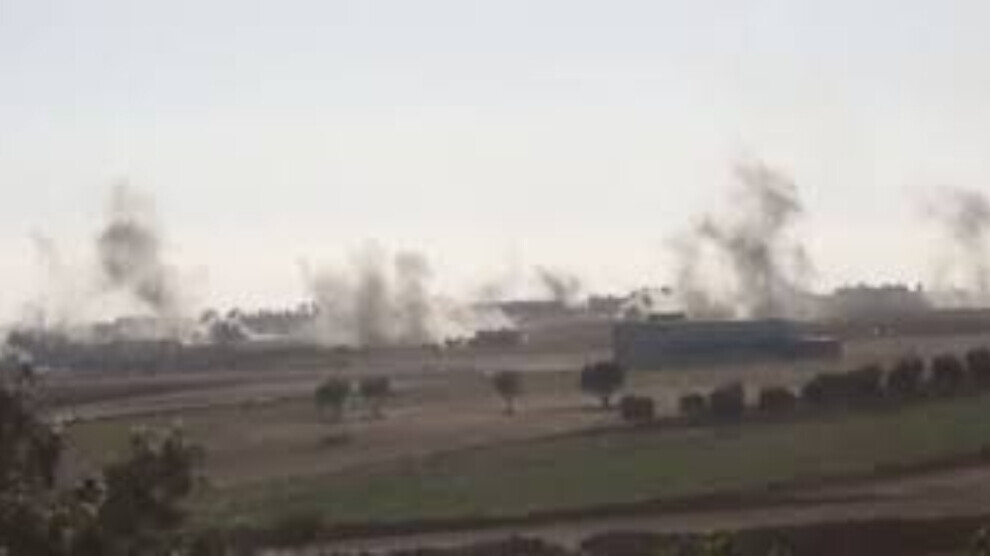
The Syrian Democratic Forces (SDF) Media Center issued a statement confirming that "the Manbij Military Council successfully foiled all attacks launched by Turkish occupation mercenaries, backed by Turkish heavy artillery and airstrikes, on villages south and east of Manbij, eliminating and wounding many of the mercenaries and destroying numerous military vehicles."

The statement added: "During the violent clashes that erupted this morning near the town of Abu Qalqal, southeast of Manbij and in the northern countryside of the Tishreen Dam, 14 Turkish occupation mercenaries were eliminated, and dozens more were wounded. Furthermore, two armored vehicles, two vehicles equipped with DShK machine guns, and two motorcycles belonging to the mercenaries were destroyed.

All the mercenaries’ attacks were effectively thwarted. Footage documentation of our forces destroying mercenaries’ vehicles will be released soon."

Turkey shells civilian areas in Rojava

The occupying Turkish state and affiliated gangs bombed the grain silo in Girê Spî, Um El Kêf village in Til Temir and the Sirîn Junction.


ANF
NEWS DESK
Tuesday, 24 December 2024

The occupying Turkish state and affiliated gangs bombarded the village of Qizelî in the eastern countryside of Girê Spî in North-East Syria and the grain storage silo in the village with heavy weapons. In addition, the village of Til Tewîl in Til Temir city of Cizre Canton was shelled with heavy weapons.

On the other hand, Turkish unmanned combat aerial vehicles (UCAVs) bombed the Sirîn Junction and the village of Um El Kêf to the west of Til Temir.
Alawites protest in Syria, curfew in Homs

After allegations of an attack on an Alawite place of worship, Syrian Alawites organized protests against HTS, which has seized control in parts of Syria. A nighttime curfew was imposed in Homs.


ANF
NEWS DESK
Wednesday, 25 December 2024

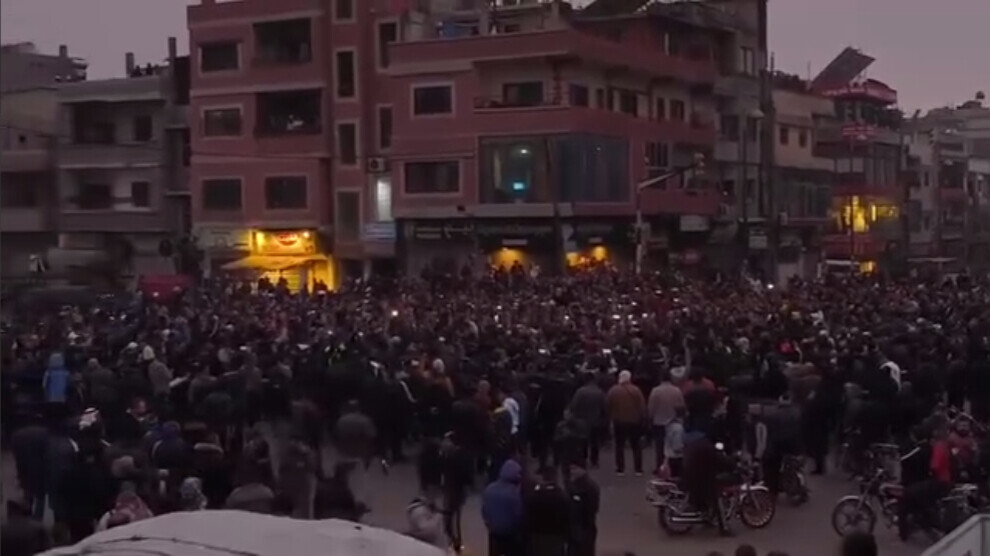
Anti-HTS (Hay'at Tahrir al-Sham) demonstrations were held in Tartus, Jableh, and Latakia, coastal towns in western Syria with a significant Alawite population.

The Syrian Observatory for Human Rights (SOHR), as well as the official Syrian news agency SANA, confirmed similar protests in major urban centers like Baniyas and Homs, where police announced a curfew from 6 pm to 8 am.

During the protests in Homs, a young Alawite woman was killed by gunfire from armed individuals linked to HTS.


The demonstrations were sparked by the release of a video on digital platforms showing an attack on the "Abu Abdullah al-Husayn al-Khisibi" temple, a place of worship used by Alawites in Aleppo.

In Latakia, both the city center and rural areas are preparing for a protest to be held tomorrow in front of the governorate headquarters.

Autonomous Administration protests targeting of Alawites in Syria

The Autonomous Administration protested the targeting of the Alawites and said: "Preserving Syria's diversity and national wealth is an important foundation for building a strong Syria."


ANF
NEWS DESK
Thursday, 26 December 2024

The Autonomous Administration of Northern and Eastern Syria issued a statement regarding the recent targeting, in Tartus, Jableh, and Latakia as well as Homs, of the Alawite community by Hay'at Tahrir al-Sham elements.

The statement said: "Due to the rapid developments in Syria, particularly following the overthrow of the Baath regime, it would be more appropriate to advance toward the aspiration of building a modern Syria. It is a historical necessity for the Syrian people to act in solidarity and unity to develop a national governance model based on justice and equality."

The statement added: "Our country, Syria, is rich in diversity - a historical wealth with national and societal value. This richness, destroyed by the Baath Party, reflects Syria's true identity and reality. Actions targeting Alawites on the Syrian coast, the burning of Christmas trees in Hama and Homs, do not serve Syria or its future. Protecting Syria's diversity and national wealth is an essential foundation for building a strong Syria."

The Autonomous Administration of Northern and Eastern Syria, affirmed "the urgent necessity of preserving diversity in Syria and respecting symbols, traditions, and customs. Protecting the rights and sacred values of all communities is a national duty.

Wrong approaches toward any region of Syria will result in negative consequences and bring no benefit to the country. Such actions will only lead to further wars and conflicts, undermining Syria's unity. Thanks to the democratic nation project, which is based on the principle of contributions from all components, we have defended this land without war and conflict for many years."

Solidarity Activists Are Raising Alarm Over Impending Turkish Attacks on Rojava

The Kurdish movement in North and East Syria is facing existential threats from Turkey following the fall of Assad.


By Ella Fassler
December 24, 2024

People mourn during the funeral procession of a member of the Women's Protection Units (YPJ), who was killed during a Turkish drone strike in the countryside of Kobani a day earlier, in Syria's northeastern city of Qamishli, on December 22, 2024.DELIL SOULEIMAN / AFP via Getty Images

When Seattle-based journalist and activist Arthur Pye visited North and East Syria in 2023, he was stunned by what he observed at an organizing meeting in Serdem, a refugee camp of internally displaced people. Many of the refugees had been participants in the Rojava Revolution — a Kurdish-led, multiethnic, feminist, directly democratic movement involving more than 4 million people — in the autonomous city of Afrin before Turkish-backed assaults forced them out of their homes. At Serdem, Pye watched refugees organize and govern themselves in accordance with these values, even in the most desperate of circumstances.

But now, thousands of displaced people residing at the camp have been displaced yet again, according to Pye, who first became interested in Rojava during ISIS’s attempted siege of the city Kobanî in 2014. Since December 1, the Turkish military and the Turkish-backed Syrian National Army (SNA) have been bombarding the Shehba region in North Syria, which includes the Serdem camp. The SNA shares Turkey’s goals of destroying Rojava and ethnically cleansing Kurds from North and East Syria. SNA militiamen are reportedly kidnapping and assaulting some of the approximately 100,000 refugees attempting to flee Shehba. About a week later, on December 9, the SNA seized Manbij, a city that had been in Rojavan territory. Some residents in Manbij are protesting SNA’s seizure of the city and the army’s looting of homes and businesses.

Turkey and SNA are threatening to capture Kobanî next, a city Pye called “the heart and soul of the Rojava Revolution.” As of December 17, Turkish-backed forces had been firing at areas just south of the city, signifying their intention to launch an assault.

The attacks are a result of shifting power dynamics in the region after the Islamist rebel group Hayat Tahrir al-Sham (HTS) expelled Bashar al-Assad from Syria on December 8, just 14 days after its initial advance. Exuberant crowds across the country emptied prison cells, toppled statues of Assad and danced in the streets to celebrate the end of a brutal dictatorship that imprisoned, tortured, killed and displaced countless civilians. The interregnum offers hope and possibility for many in the country. But once it became clear that Russia, Iranian militias and Syrian regime forces weren’t going to be major players in Syria anymore, Rojava became particularly vulnerable to Turkish-backed attacks, according to Samantha Teal of the Rojava Information Center, an independent, volunteer-run organization of journalists and researchers based in the Rojavan city of Qamishlo.

“There was this kind of one day of celebration on the street and statues being pulled down, but it quickly became clear the situation for North and East Syria was not going to be so perfect,” Teal said. “It wasn’t like a kind of fairy-tale falling of Assad, and everyone’s free.”


The fate of the revolution is now largely in the hands of the United States, which has allied with Rojava’s military — the Syrian Democratic Forces (SDF) — in the fight against ISIS for about a decade. The U.S. negotiated a ceasefire between Turkey and the SDF that ended on Saturday, December 21. The SNA, however, has reportedly violated the ceasefire agreement by attacking the Tishreen Dam, infrastructure that lies south of Manbij, and a Turkish drone killed two Kurdish journalists, among other attacks. SDF forces successfully repelled strikes against the dam.

“Will America intervene if Kobani is attacked?” Teal asked. “This is somehow what everything hinges on right now.” The SDF has proposed the establishment of a U.S.-supervised demilitarized zone in Kobani to appease Turkey’s security concerns. Turkey has yet to respond to this proposal.
A Feminist Revolution From Below

Since declaring autonomy from the Syrian regime in July 2012, more than 4 million people in North and East Syria have been organizing a revolutionary multiethnic, feminist, ecological and directly democratic society from the ground up with the goal of building autonomy. The movement, originally led by Kurds, set up communes in nearly all villages and neighborhoods in Rojava to coordinate access to basic needs, including self-defense, bread, water, electricity, heating oil, health and garbage collection, according to Azize Aslan in her recently translated book Anticapitalist Economy in Rojava: The Contradictions of Revolution in the Kurdish Struggle. Communes and commune sub-committees host assemblies where everyone is encouraged to participate and make decisions about daily life together.

“It gave me chills to see how communities can govern themselves. I was seeing it kind of with my own eyes, up close in person,” said Pye in his recollections of the Serdem camp. “These were just everyday people coming together to really take responsibility for their own community, and they knew nobody else was going to make these decisions for them. And they felt it was on them to not only understand their problems, but come up with solutions.”

Aslan reported that as of 2017, there were more than 3,800 communes across Rojava. Each commune has two co-presidents, one man and one woman that represent the cultural diversity of the commune, who coordinate neighborhood-level needs with other municipal levels of governance structures.

“[W]hen I visited Rojava in early 2018, I was struck by the mobilization capacity of the people,” writes Aslan. “People previously oppressed by the state, who did not have the right to speak or live freely, were now actively participating in the process of self-management and determination of autonomy, with their voices, their ideas and their decisions.”

Still, Aslan also writes that many in Rojava would feel more comfortable taking up arms and joining the war than attending an assembly. Teal, the Rojava Information Center researcher, similarly said they’ve interviewed people involved in communes who say some of their neighbors have a state-like mentality. “They say people in my neighborhood don’t want to come to my commune because they are used to everything being run centrally, they don’t want to participate in this local organization,” said Teal. Participation levels ultimately vary from commune to commune, according to Teal.

Communes organize restorative justice programs for many disputes and social issues to minimize involvement of courts in daily life. Still, mass detention centers exist in Rojava. Rojava has detained around 56,000 Syrian and foreign prisoners, including women and children, from its decade-long war with the Islamic State. For years, the Democratic Autonomous Administration of North and East Syria (DAANES), Rojava’s formal organizing body, has repeatedly made calls for international support and resources to address this grim situation.

The movement directly addresses these types of contradictions through a robust process of critique and self-critique during assemblies.

This participatory, women-led revolution didn’t happen spontaneously or overnight. It is a culmination of more than a century of Kurdish resistance against ethnic cleansing and genocidal campaigns in Turkey, Syria, Iraq and Iran. From the 1970s to the mid-2000s the Kurdish movement organized around, and fought for, the creation of a Kurdish nation-state in response to these existential threats, Aslan explained in her book. But in 2005, many Kurds abandoned the goal of nation-state building in favor of constructing societal structures that promote autonomy for all people.

For years, the Syrian Democratic Council (SDC), a political coalition representing political parties and organizations in North and East Syria, has proposed a formal decentralized political model for all of Syria, in which different regions retain autonomy while still being connected to a centralized government, Teal said. While HTS has claimed it will protect the rights of minorities and Syria’s diversity, it is unclear whether their actions and words will align.
An Urgent Call for Action

The latest assault against Rojava is alarming supporters around the world, who see the revolution as a beacon of hope and inspiration for the Middle East and the entire world. On December 12, Kurds rallied in Nashville, Tennessee — home to 15,000 Kurds — demanding the United States defend their Kurdish allies who fought and died in the protracted, bloody war against ISIS. Supporters staged demonstrations across Europe, the U.S. and Brazil on December 14 in response to a call for a Day of Action by Rise Up for Rojava, an international coalition of supporters.

Pye said several Shehba-based council members he spoke with before the territory fell to the SNA underscored the importance of convincing the U.S. government to stop Turkey’s assault on Rojava. The U.S. provided $200 million dollars in aid to the Turkish military in 2023 and approved the sale of F-16 fighter jets earlier this year. “It’s important that people understand that what Turkey does and what Turkey does through its proxies is all made possible by this kind of unwavering U.S. support,” said Pye. “That’s why it’s so important that we raise our voices and demand action from the United States government.”

The Emergency Committee for Rojava (ECR), a U.S-based membership organization building a support network for Rojava, released a toolkit with a call-in and email campaign script targeting ranking members of the Senate Committee on Foreign Relations and the House Foreign Affairs Subcommittee on the Middle East, North Africa and Central Asia. The script demands emergency legislation denouncing Turkish aggression and a commitment to long-term U.S. support of the SDF; formal political recognition of DAANES, Rojava’s formal organizing body; as well as more overt calls for intervention, including economic sanctions in response to aggression by Turkey and its proxies; the withdrawal of Turkish forces from Syria; and an immediate halt to U.S. military aid to Turkey.

The U.S. Senate Committee on Foreign Relations did not respond to Truthout’s request for comment at the time of publishing.

Supporters can organize call-in campaigns, film screenings, demonstrations and fundraisers for Heyva Sor, a humanitarian organization supporting displaced people fleeing Shehba, Manbij, and other dangerous areas in Syria. “All of these together are incredibly urgent,” said Pye, who is a steering committee member of ECR. “These things can make a difference. It may seem like a long shot, but these are desperate times, and legislators need to hear that people know about this situation and that they care about it. Otherwise, they certainly won’t do anything.”

If history is any indicator of what’s to come, Turkey and its proxy forces are likely to commit terrible atrocities against Kurds and other minority populations if they successfully seize Rojavan territory, according to Pye. “But we’re also at risk of losing something that is a precious beacon of hope and inspiration, I think, for democratic community [and] self-governance. I think Rojava has really shown us all a path away from oppression and domination, and a new path towards democracy and autonomy and cooperation,” he said. “That’s something we all have a stake in, not just those in Syria. The whole world has something precious to lose in this fight.”
12 killed in blast at Turkey explosives plant


By AFP
December 24, 2024


The blast at the facility that makes munitions, explosives and flares for the domestic and international markets - Copyright POOL/AFP STEPHANE DE SAKUTIN
Fulya OZERKAN

A powerful blast ripped through an explosives plant in northwestern Turkey on Tuesday killing 12 people and injuring five others, officials said.

Footage showed shards of glass and metal scattered outside the plant, where ambulances stood by.

“According to initial reports, 12 employees died and four were taken to hospital with injuries as a result of the explosion” in the Karesi district of Balikesir province, local governor Ismail Ustaoglu said.

“I wish God’s mercy upon our deceased citizens and a speedy recovery to our wounded,” he added.

Officials later revised the number of the injured as five and added they were not in a serious condition.

There were no staff members left inside the factory and the blaze was put out, they added.

The blast took place at 8:25 am (0525 GMT) at a section of the plant which local officials said collapsed under the force of the explosion.

Interior Minister Ali Yerlikaya said the cause of the blast at the factory, which is located away from residential areas, was not immediately known.

“We are trying to find out what caused it,” he said.

Local officials pointed to “technical reasons” without elaborating as experts were still investigation at the scene.

Authorities ruled out sabotage and prosecutors have launched a thorough investigation.


-‘Battlefield’-


President Recep Tayyip Erdogan said he was “deeply saddened by the death of 12 brothers,” in a message on social platform X.

He said he was briefed by all relevant institutions soon after the blast and instructed that “the necessary investigation be initiated immediately in all aspects”.

The plant, located in the north of Balikesir, makes munitions, explosives and flares for the domestic and international markets.

Witnesses told local media that part of the building was “like a battlefield”.

The bodies of the dead were due to be carried to the morgue.

Security forces took measures in case of a second blast, Civilians and members of the press were not allowed nearby.

Turkey has become a major defence exporter, particularly for drones, with Erdogan a major supporter of the industry.

In 2020, an explosion at a fireworks factory in northwestern Turkey killed seven people and injured 127 others.

In 2023, a blast at a military explosives factory killed five people. That factory — some 40 kilometres (25 miles) east of the capital Ankara, was part of Turkey’s defence ministry.


Turkey to allow Kurdish DEM party to meet jailed PKK leader Ocalan, newspaper says

By:TII team
Date:
December 26, 2024

A Kurdish demonstrators holding flags of jailed Kurdish PKK leader Abdullah Ocalan attend rally in Istanbul, Turkey, June 5, 2016. Photo: Reuters

ISTANBUL,— Turkey has agreed to allow the pro-Kurdish opposition party to hold talks with Abdullah Öcalan, the leader of the Kurdistan Workers’ Party (PKK), who has been imprisoned on an island near Istanbul for over two decades.

The talks, expected to take place this week, would be the first such visit in nearly a decade, according to a report from the pro-government Sabah newspaper on Thursday.

A delegation from the Democratic Party of the Peoples (DEMP), a pro-Kurdish political group, is scheduled to visit Öcalan’s prison on Imrali Island as part of ongoing efforts to address the long-standing conflict between Turkey and the PKK, Sabah reported.

The exact timing of the visit was not confirmed, but it is anticipated to occur on Thursday or Friday. The source of this information was not disclosed.

The decision follows a proposal by a close ally of Turkish President Recep Tayyip Erdoğan, who suggested using the meeting to help resolve the 40-year conflict with the PKK.

This conflict, which began in 1984, has seen more than 40,000 deaths, including Turkish soldiers and Kurdish guerrillas, as the PKK fought for greater autonomy for Turkey’s Kurdish population in Turkish Kurdistan, which makes up over 20% of the country’s 84 million people.

Abdullah Öcalan, who founded the PKK in 1974, has become a symbolic figure for many Kurds. He was captured in Kenya in 1999 and sentenced to life in prison on Imrali Island.

Despite his imprisonment, Öcalan continues to hold significant influence among Kurdish communities both in Turkey and abroad, as he is seen by many as a champion of Kurdish rights and democracy.

The move also comes amid growing concerns over Turkey’s relationship with Kurdish forces in Syria. On Wednesday, President Erdoğan issued a stern warning to the US-backed Syrian Kurdish SDF/YPG, a group he considers closely linked to the PKK, demanding that they disarm or face further consequences.

This latest development could signal a new phase in Turkey’s efforts to address Kurdish demands for cultural rights and greater autonomy, though the outcome remains uncertain.

(Credit: Reuters | Agencies)

Copyright © 2024 The Insight International. All rights reserved