Thursday, December 26, 2024

Pacem in terris?

Peace on Earth is imperilled or absent.


Mahir Ali 
Published December 25, 2024   
DAWN  


JUST before sitting down yesterday to write this column, I was listening to a History Extra podcast about the ‘history behind the headlines’ of 2024. It was a conversation between Oxford and Harvard academics Hannah Skoda and Rana Mitter, who spoke for 45 minutes without even a passing reference to the genocide in Gaza or its antecedents.

What kind of oblivion do such intellects reside in, where they can reference the Nuremberg-adjacent Tokyo trials while ignoring this year’s Israel-focused proceedings at The Hague? And how can Christmas be celebrated today without any recognition of the daily atrocities taking place in the land where so many of the traditions on which the Abrahamic faiths are based originated?

And then there are the children, supposedly the chief beneficiaries of Yuletide, who are being robbed of their futures. Both the dead and the living. Earlier this month, a War Child Alliance-sponsored NGO concluded that 96 per cent of the surviving children in the besieged territory consider death to be imminent, and half of them would welcome that outcome. If only a fraction of the folk carving their stuffed turkey or ham roast would consider the starvation in Gaza that is part of the genocidal intent, it might give them cause for a pause. A token minute of silence, perhaps, followed by a determination to back the kind of boycott, divestment and sanctions that helped to demolish a previous apartheid regime.


Peace on Earth is imperilled or absent.


Israel’s raids on Gaza, resulting in dozens of deaths each day, continued even as it pursued a similar strategy in Lebanon, before going on to destroy the military capabilities of post-Assad Syria, a country that hadn’t posed any serious threat to Israel for half a century, notwithstanding its notorious role in Lebanon and serving as a conduit for weapons and other supplies to Hezbollah. Israel routinely attacked some of these Iranian-affiliated conduits, but Bashar al-Assad’s military facilities were rarely targeted while he was in power.

Although it has been suggested that the Qatar-sponsored ceasefire talks between Israel and Hamas are 90pc complete, there is cause for scepticism given similar previous pronouncements, mostly emanating from the US, which bears as much responsibility for the genocide as Israel. No one can say to what extent Kamala Harris’s presidential prospects would have been improved by at least pretending to have a spine. Still, those who understandably withheld their votes from the Democratic candidate on this basis and gave them to her Republican rival will find cause for self-flagellation once Donald Trump re-enters the White House.

There are, of course, plenty of supplementary causes around the world to reconsider the traditional Yuletide model of ‘joy unto the world’ — from the massacres in Sudan and the Congo to the continuing death and destruction in Ukraine and the terrorist attack in Magdeburg that has left German authorities struggling to figure out why an evidently Islamophobic and pro-Zionist psychiatrist who came to the country as a Saudi refugee would decide to plough through a Christmas market in his vehicle, killing five women and a child, and injuring more than 230 others. Taleb al-Abdulmohsen abandoned his faith and sought to support potential exiles who wished to escape the Gulf region’s version of religious injunctions. At the same time, though, he railed against Middle Eastern immigration to Europe, and absurdly considered the likes of Angela Merkel to be promoting the Islamisation of the continent.

Even the secular-minded Gulf emigres he contacted — especially women — were alarmed by his bullying tactics. Perhaps understandably, the German authorities paid little heed to wa­­­rnings from Riyadh about his extremism. It is not inconceivable, though, that his horrific, deadly act was guided by the notion of helping his favourite party, the neo-Nazi Alternative for Germany (AfD), to reinforce its case agai­nst immigration. The AfD — unreservedly backed by Elon Musk, seen by some as effectively the next president of the US — has lost little time in capitalising on the obscenity of its kindred spirit’s murderous spree. It wouldn’t be surprising if that had been Abdulmohsen’s intention all along.

Meanwhile, as for a peace deal with a Saudi component, it’s worth recalling that the US Republicans thwarted a Vietnam settlement in 1968 to benefit Richard Nixon, and delayed the release of American hostages in Iran a decade later to boost Ronald Reagan. That pattern might be repeated ahead of the Trump presidency, eagerly awaited by idiots and fellow proto-fascists around the world.

Be that as it may, the relentless genocide in Gaza and its reflections in the region and beyond provide sufficient cause to wonder whether the worthy notion of pacem in terris will remain a realistic aspiration during Christmases to come.

mahir.dawn@gmail.com

Published in Dawn, December 25th, 2024
Unpacking Trump
Published December 25, 2024    
DAWN   
The writer, a former ambassador, is adjunct professor Georgetown University and Visiting Senior Research Fellow National University of Singapore


THE Trump administration is around the corner. What we know so far about its composition, ideas, and power structure can give us some sense of US-Pakistan relations, however vague at this point.

Donald Trump’s appointments reflect a broad spectrum of nepotism, patronage and loyalty, and a mixed policy agenda lacking coherence and consensus. You have China hawks in the incoming secretary of state Marco Rubio and the national security adviser Mike Waltz; a pro-China billionaire as ambassador-designate to China; a top hedge fund manager as treasury secretary; and the China-friendly Elon Musk as top Trump adviser.

That would make Trump the ultimate arbiter of policy. Critical governance institutions will bend to his will as they will be run by his loyalists. And the Republican Party, which now controls both Houses of Congress, has been tamed by him. He would thus loom large over the policy landscape as well as the political arena.

The marketing genius that he is, Trump had framed his personal quest for power as part of the broader public struggle against the governing elites and politicians, in whom the people had lost their trust. But upon coming to power the last time, he went for a hostile takeover of the institutions for his own ends. His incoming administration, like the first one, will be personalised, not institutionalised. Its symbolism will remain populist but the substance will be personalist and oligarchic.


Pakistan may have lost its importance but not its relevance.

Trump’s secretary of state last time, Rex Tillerson, once said when he was Exxon chief that US interests were not necessarily corporate America’s interests. Under Trump, corporate America’s interests will become national interests. So, in addressing the China challenge, Trump and the billionaires he has appointed to his cabinet and other key positions may break some china but are not going to bring the house down. Global disorder is not good for the US economy and for them. They are all globalist at heart. Protectionism and isolationism are not synonymous in today’s economy.

Trump is not a strategic thinker. A person so transactional cannot be. He knows the broad rules of how to deal with rivals and adversaries. He will try to unravel the Russia-China strategic partnership by reaching a deal with one. Depending on who it is will be either good news for India or bad news. That will have a ripple effect on Pakistan.

Trump will nonetheless continue the strategic competition with China, but its ‘foundational arena’ will be science and technology. Another focus will be on tariffs. A transactional and commercial challenge like Trump’s is always easier to deal with than a strategic or politico-military one like Joe Biden’s. After a recent visit to China, Thomas Friedman wrote in The New York Times that China is well-prepared to cope with Trump.

Where does that leave US-Pakistan relations? So far, there is nothing in China-Pakistan relations to alarm Washington. The China factor may not be at play yet. Other than that, Pakistan is neither an ally nor an adversary. The days of a high-profile aid relationship are gone, as they were always war-related. Not just Trump but America as a whole has turned against unnecessary wars.

Pakistan may have lost its importance but not its relevance. The US-Pakistan relationship is need-based and episodic. And each episode is a different story. The current relationship is defined by many negatives. Washington would like Pakistan not to be too close to China, not undermine the Indo-Pacific strategy and the strategic balance in South Asia, and not support jihadists. But the US needs Pakistan’s co­­operation in counte­rterrorism and Af­­-ghanistan.

Whether Pak­ist­an’s compliance or cooperation is nee­ded, it would require engagement. As Am­­erica has seen, when it comes to dealing with China’s allies, coercion does not work. It also makes sense to support nuclear Pakistan’s efforts at economic stabilisation. However, if there is a terrorist incident traceable to Pakistan, it would cause a domestic political backlash in America. And that might unleash Trump’s retribution.

The recent missile-related sanctions by the Biden administration were not surprising. Basically, America wants strategic imbalance in South Asia to relieve India of its two-front dilemma, so that it is free to concentrate on China. But designating Pakistan’s missile programme as a potential security threat to the US was vindictive.

It purposely raised a red flag for the incoming administration. Not to mention, it passes on a damning legacy of the relationship after all that it had done, despite its flaws, to benefit America — the unkindest cut of all, if not a dirty trick.

The writer, a former ambassador, is adjunct professor Georgetown University and Visiting Senior Research Fellow National University of Singapore.

Published in Dawn, December 25th, 2024
Year of travel in the US

Anis Shivani 
Published December 26, 2024  
DAWN 
GIVING US HIS BEST KEROUAC LOOK


The writer is the author of many books of fiction, poetry, and criticism.


OVER the last year, I drove 30,000 miles exploring the western half of the US, staying in the extreme wilderness as well as glamorous cities, travelling on secondary roads rather than the interstates. I interacted with people of all classes and emerged physically intact despite occasional danger, even if many preconceptions were shattered. These are my big takeaways, especially in light of recent political developments.

Except for the largest cities, the country is frighteningly homogeneous. Listening to the drumbeat about the penetration of Hispanics everywhere, you would expect to find the hinterlands sparkling with multiracialism. In the presidential debate, we heard that “in Springfield [Ohio], they [Haitian immigrants] are eating the dogs … they’re eating the cats”. Instead, even in places where demographic data and local industry would indicate otherwise, migrants are rarely seen. Xenophobic sentiment is strongest precisely where there are fewest migrants.

Just north of San Francisco, Marin, Sonoma, and Napa counties turn unbearably white. Quaint towns like Petaluma and Sebastopol remain mummified in fifties nostalgia. All along the sublime Oregon coast this summer, I rarely met anyone non-white (except for foreign tourists) until I hiked in a state park an hour west of Portland. I guessed instantly where the young biracial couples were from. Yet Portland itself, despite its bohemian reputation, is insufferably white, both in demographics and norms.

The eastern sides of Oregon and Washington have a justified reputation for historical racism. I plunged anyway into the alleged strongholds of white supremacy in Idaho, Montana, and Wyoming. Hiking, camping, and other outdoor activities remain predominantly white preoccupations, based on their origins as middle-class retreats from urban drudgery. Engaging in ‘white’ activities in unrelentingly white settings made me doubly self-conscious of the artificiality of the escape. The anomaly wasn’t so much white nationalism as rural poverty, which the country has little stomach to confront.


Urban gentrification has managed to reproduce itself in precisely the same manner everywhere.

After 40 years of neoliberal commodification, urban gentrification has managed to reproduce itself in precisely the same manner everywhere. Los Angeles feels the most dystopian, because of its gargantuanism, but all cities gravitate towards its viral anxiety. Los Angeles doesn’t work because it is oversold as a magnet of opportunity. I felt more comfortable among the homeless in San Francisco’s Tenderloin district, although a recent supreme court judgement criminalises homeless encampments. I prefer the visibility of poverty.

Road rage, once a rarity, is everywhere, especially in liberal cities. Phoenix is where you suddenly encounter deadly speed if you’re approaching from the east. Its agonisingly elaborate suburban neatness parodies itself. The sprawl in Phoenix or Las Vegas is so stupendous that their long-term survival amidst water and other scarcities seems fanciful. All of this creates anxiety, which cannot be expressed honestly, except in such diversions as “healthy lifestyles.”

Caste consciousness in America has been reduced to a binary. The rigid segregation between what we might call ‘Brahmins’ versus “Dalits” is pervasive. Seattle had the largest concentration of immigrant desi professionals I saw. Wherever such cosmopolites proliferate, there exists the same set of unresolvable paradoxes involving inequality. But you can’t even find healthy food outside the big cities, so I craved the comforts of familiarity, despite the banal gentrification.

The two Americas, red and blue (as the Nov 5 electoral map showed), don’t talk to each other — but it goes beyond that. The tech bros in Silicon Valley speak an identical language of elitism. One former guardian of discourse at Twitter insisted that “the people are stupid” and must be protected from themselves, a sentiment I often heard among the techies.

American rage seems ready to boil over into overt violence at the slightest push. The Brahmins express it with speed and rudeness, while the Dalits show it with rampant conspiracy theory, often called ‘common sense’. The shoplifters, homeless, and illegals must be purged by militarist force, as I saw in Portland, lately the site of the George Floyd occupation.

Some of the rural rage might well emanate from the cultural dystopia, with few signs of spontaneous cultural expression. Not that the cities are different, with such former hotbeds as Haight-Ashbury, Berkeley, and the Sunset Strip mere husks of their former selves.

I could never get away from wondering if this civilisation is fragile or stable, on the verge of collapse or unshakably rooted. Would it take a slight trigger, such as a climate emergency, to topple it, or is it resilient? Perhaps both.

As with everything else, infrastructure is distributed unequally. I explored all four quadrants of New Mexico and Arizona, and the roads were so un-drivable that I swore never to return. The vast majority of towns seem on the way to becoming ghost towns, with little foot traffic, the same Family Dollars without customers, and Walmart and Home Depot as the forced hives of activity. The hustle and bustle ceases even in the reconstructed major downtowns in the evenings.

Taking in the entire western half of the country shocked me about the emptiness of the land; nearly all the people seem to inhabit a minute fraction of territory. Entire countries could be prosperously resettled in the emptiness. Not to have a modern homesteading initiative to give land to the landless seems a travesty.

Unmoored, nomadic, unclaimed, I became increasingly conscious of my forgotten roots in the colonial experience. In order to avoid mishap, calmness is the first priority on such a journey, but in the end, I too succumbed to American rage, disturbed by the uniform vulgarity, narcissism, and inequality of the cities, and the cultural desolation of the countryside.

I began with unbounded optimism and nostalgia, but soon found it difficult to focus on anything but death — not just mine, but of the civilisation around me. When I was stationary, the feeling receded, but when mobile, it returned with a vengeance. It may have something to do with the corrupted forms of modern motion itself, with driving as the only realistic option available. Yet I must resume next year, exploring the eastern United States, setting aside my resentment as unwanted baggage.

Published in Dawn, December 26th, 2024
GERMANY

Days of rage

Rafia Zakaria
Published December 25, 2024 
DAWN


LAST week, Saudi-German psychiatrist Taleb al-Abdulmohsen drove his car into a Christmas market in the German city of Magdeburg. The market was crowded; Christmas break had just begun, giving people an opportunity to spend time with their families and friends and enjoy the festive season.

According to the German authorities, Abdulmohsen, who had earlier described himself as a “Saudi atheist”, supported extreme right-wing groups in Germany and had posted dark and ominous posts on social media. It is unclear what he believed he would achieve by killing innocent people at a Christmas market.

Whatever the reason for this horrific act, unexpected and alarming explosions of rage have become a rising trend over the past year.

A couple of weeks prior to the attack in Germany, a young man named Luigi Mangione shot and killed the CEO of UnitedHealthcare, which is part of the UnitedHealth Group, America’s biggest health insurer. While the motives have yet to be ascertained, the killer’s resentment against the corporate healthcare industry may have been linked to the chronic pain he suffered after a debilitating injury.

Instead of universal outrage, the killing was met with many instances of celebration in American internet spaces as people expressed their anger at how health insurance companies had treated them. Last year alone, the CEO in question had been paid $10 million. Moreover, it was alleged that his company used an algorithm to deny most patients their claims. In fact, one clothing company planned to introduce playing cards featuring the “most wanted CEOs”. The owner of the socialist brand stated: “I’m not suggesting anyone should cause any physical harm to anyone, but I do want people to know who is making their life harder… .”

These cases are only notable because they are stories from places where people generally have it good — the US has the richest economy in the world, and Germany is the largest economy in Europe. The situation beyond these countries, in places where people are struggling far more, is even more dire. The bloody conflagrations in Gaza have killed tens of thousands of people. According to the UN, the largest proportion of those killed in Gaza — nearly 70 per cent — are women and children. The Gaza conflict, as well as the Ukraine and Sudan wars, have led to an escalating number of civilians dying in violence. The victims cannot express their rage, but the devastated and grieving families that they have left behind are full of pent-up anger at a world that seems oblivious to their suffering.

Anger around the world is growing as fundamental rights are snatched away from the people.

Anger around the world is growing as fundamental rights are snatched away from the people. The feeling of being wronged and of being robbed of one’s right to justice and retribution will increase in an apathetic and abusive world. While the actions of Abdulmohsen and Mangione may be extreme, a similar level of anger, coupled with frustration, prevails in places where hunger, poverty and exploitation at the hands of the powers that be are on the rise.

Take, for example, the case of prisoners. According to the UN, over half its member states have overcrowded prisons. The problem is particularly bad in the Caribbean and Latin America, where prisons are operating at 150 per cent of their capacity. The UN says: “Nearly a third of the global prison population remains in pre-trial detention, masking wide regional disparities.” Imagine the resentment that builds up.

Meanwhile, in country after country that did actually have free and fair elections, people voted to remove the incumbents. In many cases, rage against existing governments has been generated by the inability of world economies to meet the economic shortfalls of the post-Covid era. The fury that inequality, poverty and the lack of justice induces is reflected in our everyday actions as well. There is ample evidence of this in this country. Take road rage; drivers on the roads of our cities seem to be immersed in a kind of aggression that makes one scared to be behind the wheel. This is not the usual kind of jostling and jams, which our large cities like Karachi are notorious for; this new anger is one where everyone is poised to fight and cause harm to someone. Pent-up fury with nowhere to go often manifests itself in this way.

People have come up with ‘innovative’ ways to address the rage they feel. For instance, the French have a franchise they call ‘The Fury Room’, which consists of rooms where people vent their rage by smashing plates and other objects. Apparently, these rooms are booked to capacity every day. This is an alarming reflection of how anger becomes the galvanising emotion in our society.

It is not supposed to be this way. Love and fellow feeling are supposed to be the driving force behind all our actions towards others. Underpinning our international and national institutions is a strong belief in the centrality of human dignity, justice and equal rights. Constitutions worldwide stress on these principles. But given the state of rage that exists across the globe — in both developed and struggling economies — it is no surprise that these once much-respected documents are being tossed aside, amended, twisted and turned, giving the rest of us yet another reason to be enraged.

In such a situation, one could be forgiven for feeling that the end of the world is near. We will have to wait and see what new aspect of rage, which continues to fuel wars, feuds and murders, we will see in the next 365 days. But while it is impossible to say what exactly will take place, one can be fairly sure that it will be difficult to put rage back in the bottle.

The writer is an attorney teaching constitutional law and political philosophy.

rafia.zakaria@gmail.com

Published in Dawn, December 25th, 2024
Climate shame
Published December 26, 2024
DAWN

WE have seen the completion of COP29, with much criticism of those rich economies that contribute the most to emissions, yet continue to renege on their commitments and promise less and less with each passing year. In effect, this means that the world’s poorest populations will suffer much more in the present and in the future. These communities, along with our animal and plant species, will continue to face alarming levels of degradation and decimation, with a vision of a desperate future ahead.

Pakistan seemed to fare somewhat better at the COP meetings this year, and there was much in the news about how Pakistan showed its commitment to climate change, with the prime minister stating how the country had taken steps to address climate vulnerabilities. Last week, the Ministry of Climate Change, in collaboration with a think tank, conducted a workshop on developing inclusive climate commitments for Pakistan. Earlier this month, at the International Court of Justice, the attorney general of Pakistan delivered submissions on climate change in order to showcase the devastation that climate change was causing within the country. He concluded: “We are the first generation to feel the impact of climate change and undoubtedly the last generation that can do something about it.”

All wonderful rhetoric and sentiments. And then we come back down to earth, or at least down to the practical political economy of our beloved country. Those of us who reside in Islamabad are aware of the continuing battle that is being played out between those who wish to take over the Margalla National Parks and make them into a concrete jungle, and the protectors of the Parks, led by the Islamabad Wildlife Management Board. The IWMB had succeeded (or so we thought) in not only keeping these parks sacrosanct but also removing the growing hub of restaurants that, in the process of making millions, were destroying and polluting the natural habitat of the parks.

However, our victory has been cut short. The Ministry of Climate Change — or as I would prefer to rename it, the Ministry of Climate Shame — appears to be in the process of trying to sack the Islamabad Wildlife Management Board and repopulate it with its own cronies. This would allow the Islamabad Capital Development Authority control to re-grant leases to mega restaurants in the protected area of the Margalla Hills. The Supreme Court, in July of this year, held that the creation of such spaces in the middle of a wildlife park was against Section 21 of the Islamabad Wildlife Ordinance. Only weeks after this ruling, there was a move to sack the IWMB chairperson and transfer administrative control to the Ministry of the Interior. Civil society groups approached the Supreme Court, which hauled up senior government officials. What came to light was that the notification had been issued by the cabinet secretary, who was the brother of the owner of one of the same mega restaurants.


Our violations against ourselves and our own run deep.

The transgressions of the ministry, the CDA, and others in government, are just one small example of how greed and corruption have cemented our destruction of habitat. Our government begs for handouts and reparations on behalf of those of our citizens who have suffered the baleful impacts of climate change. But let us not forget that during and after the floods of 2022, there was little, if any, government assistance forthcoming. It was civil society and regular people who provided relief, with the administration conspicuous by its absence. I also clearly re­member that the tents provided by Tur­kiye to Pakistan for flood victims were unwittingly provided back by our government to Turkiye when they were affec­ted by an earthquake. This is not simply a cause for national embarrassment. It reflects the depths to which we have sunk. Our violations against ourselves and our own run so deep that protecting the environment and managing climate change remain as probable an outcome as the PPP losing in Sindh. But don’t lose hope, dear readers. Miracles do happen.

While I write, Islamabad is undergoing construction of a raft of new underpasses and overpasses in areas with no real justification for their need. Air quality has been badly affected as a result, but for the powers that be, the kickbacks coming from such projects far outweigh any environmental damage. After all, expensive air purifiers can be easily availed, and as for the rest of the population, well, it is their fate to suffer. As a famous lady once said, if they can’t afford bread, let them eat cake.

The writer is an independent development professional and impact adviser with over 25 years of experience designing and managing programmesto improve people’s lives


Published in Dawn, December 26th, 2024
Bangladesh to investigate 2009 mutiny massacre

AFP Published December 26, 2024 

A boy walks past army soldiers outside the headquarters of the paramilitary Bangladesh Rifles (BDR) in Dhaka, February 25, 2009. — Reuters

Bangladesh on Thursday ordered a commission to investigate a failed 2009 army mutiny and subsequent crackdown, including the role of alleged “foreign” backers, the inquiry chief said.

The violent mutiny sent shock waves through the South Asian nation and ended with the army crushing the mutineers, with scores arrested and sentenced to death.

A previous official investigation into the mutiny which left scores dead blamed years of pent-up anger among ordinary soldiers, who felt their appeals for pay rises and better treatment were ignored.

But that probe was carried out during the tenure of Sheikh Hasina, who was ousted as prime minister by a revolution in August when she fled to old ally India.


Since her fall, families of soldiers killed in the violence have been campaigning to reopen the investigation.

They have repeatedly accused Hasina — then newly elected — of orchestrating a plan to weaken the military to bolster her own power in a country prone to coups.

Protesters have also alleged India’s involvement in that plot.

The claims are likely to infuriate New Delhi, which did not immediately respond to the allegations.

“We aim to determine whether any foreign entity was involved in the carnage, as allegations of national and international conspiracy have been raised,” commission chief A.L.M. Fazlur Rahman told reporters.

The mutineers stole thousands of weapons in February 2009 from the headquarters of the Bangladesh Rifles (BDR) paramilitary squad before embarking on a killing spree in the barracks.

The uprising quickly spread, with thousands of soldiers seizing weapons and pledging allegiance to the mutineers before it was quashed by the army.

Thousands were rounded up and tried in special military courts in the aftermath of the massacre, as the then-newly-elected government of Hasina wrestled to regain control.

Hundreds of soldiers were handed punishments ranging from death to a few years, with the United Nations criticising the process for failing to meet basic standards.

Hasina’s iron-fisted rule was backed by New Delhi, and the 77-year-old remains in India, adding to fraying relations between the nations.

On Monday, Dhaka said it had requested India send Hasina back, to face charges of “massacres, killings, and crimes against humanity”.

Iraq halts oil exports to Syria amid regional instability

Iraq halts oil exports to Syria amid regional instability
Iraq halts oil exports to Syria amid regional instability / bne IntelliNews
By bnm Gulf bureau December 22, 2024

Iraq has suspended crude oil exports to Syria, citing regional instability, in a move that threatens to deepen Syria's fuel crisis, Iraqi officials said on December 22.

The decision to halt shipments of approximately 120,000 tonnes of crude per month was implemented on December 17, Iraqi parliamentarian Mustafa Sanad said on social media.

"Iraq has decided to stop providing Syria with crude oil starting this month," Sanad wrote on his social media account.

The suspension coincides with a separate announcement by the Syrian Democratic Forces (SDF) to cease oil deliveries from their eastern Syria territories to areas under the Syrian transitional government's control.

Fuel prices in Syria have surged over the past fortnight amid dwindling supplies at petrol stations, local sources said, with distribution hampered by security concerns affecting transport routes between provinces.

The Iraqi export halt comes at a crucial time for Syria's transitional government, which has been seeking to stabilise the country's economy while major oil fields remain under SDF control.

Iraq's decision reflects growing concerns about regional security and economic risks, according to government officials who spoke on condition of anonymity because they were not authorised to discuss the matter publicly.

Syria has relied heavily on Iraqi oil imports to supplement domestic production, which has been severely curtailed by years of conflict and fractured territorial control.

Neither interim Syrian authorities led by former terror group leader Ahmed al-Sharaa (Al Jolani) nor the Kurdish-US-backed SDF immediately responded to requests for comment.

Following the announcement by Iraq, Foreign Minister Fuad Hussein voiced concern about the possible resurgence of terrorist organisations in Syria while stressing Iraq's commitment to respecting Syrian sovereignty.

Speaking at a joint press conference with his Omani counterpart Badr Albusaidi in Baghdad, Hussein addressed the evolving situation in Syria whilst highlighting the diplomatic role of regional partners in managing the crisis.

"Whilst we respect the Syrian people's choices, we remain vigilant about the potential return of terrorist organisations," Hussein said during the briefing.

He noted that Iraq continues to monitor developments and changes in Syria closely.


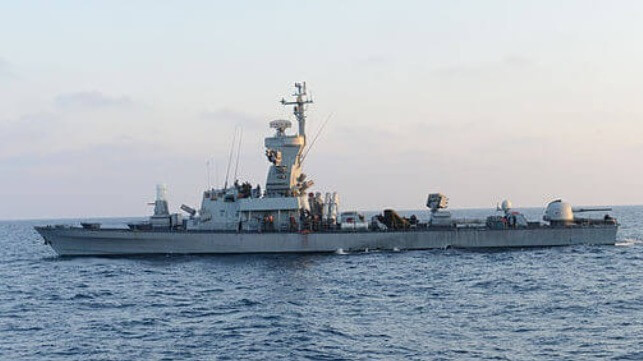
Israeli Missile Boat Commander Details Attack on Syria's Navy

Sa'ar-4.5 class missile boat (IDF)

Published Dec 26, 2024 5:38 PM by The Maritime Executive


The commander of an Israeli Navy missile boat that helped destroy Syria's small surface fleet has given a rare interview about the operation, detailing the careful secrecy surrounding the planning. 

On Dec. 9-10, Israeli forces struck Syrian Navy vessels at Latakia and Tartus, destroying the majority of the country's fleet of surface combatants. In a statement, the Israeli Defense Forces said that it had targeted Syrian assets afloat and ashore "to prevent them from falling into the hands of terrorist elements."

Syria's government and military collapsed under the weight of a rebel assault in early December, and longtime dictator Bashar al-Assad fled to Russia. The country is now ruled by the militant group Hayat Tahrir al-Sham (HTS), a U.S.-designated terrorist organization and a one-time backer of Al-Qaeda; though it has long since renounced this association, HTS is far from a natural ally for Israel, and far from the only armed faction operating in Syria. Recent reports from within Syria indicate a deteriorating security situation and increasingly brutal reprisal attacks against Assad's supporters.

As a hedge against future threats, Israel moved quickly to liquidate most of the Assad regime's remaining military assets, from jets to munitions depots to suspected chemical weapons labs. It conducted hundreds of airstrikes over the span of a few days, effectively eliminating the equipment of the now-defunct Syrian armed forces. 

Syria's small navy - primarily comprised of Soviet-built Osa II class missile boats - was on the list as well. The Israeli Navy was tasked with destroying this aging fleet at the pier before it could be seized by HTS or another militant faction. 

INS Herev - a Sa'ar 4.5-class missile boat carrying up to eight Harpoon antiship missiles - was dispatched to Syrian waters to carry out the mission. Even the crew did not know what they were undertaking before getting under way, according to commanding officer Lt. Col. Tomer - and they were stunned when they found out. 

"I told them that the ship was now sailing deep into Syrian waters, and the mission was to destroy the missile boat fleet of the Syrian Navy," he told The Jerusalem Post. "We couldn’t believe for a moment that this [operation] would happen during our watch."

INS Herev made a fast transit north and was in position the same night. However, the operation was delayed by a day so that Herev could provide fire support to the Israeli Air Force. The crew destroyed several hostile anti-aircraft systems on shore to pave the way for Israeli strike fighters.

The following day, Herev returned to waters nearer the Syrian coast and helped launch missile strikes on Syrian missile boats that were in port at Latakia. "They sank and were rendered out of service," Tomer confirmed. 

In all, Israeli forces destroyed 15 Syrian naval vessels that day, according to The Jerusalem Post. 

 ec

An Anarchist View From Rojava on Recent Events in Syria

An Anarchist View From Rojava on Recent Events in Syria: A conversation with a combatant of Tekoşîna Anarşist

From The Final Straw Radio

Original title: "An Anarchist View From Rojava on Recent Events in Syria: A conversation with a combatant of Tekoşîna Anarşist"

This week, we’re sharing a conversation with Errico, a combatant member of Tekoşîna AnarÅŸist, an internationalist anarchist formation in critical solidarity with the Rojava Revolution. For this episode, Errico answers some questions we had about what’s been happening in Syria and concerns from within the Democratic Autonomous Administration of North and East Syria. You can find ideas and updates from the TA formation on their blog, https://tekosinaanarsist.noblogs.org. Past interviews with TA can be found 

Kurds Under Threat in Syria as Turkey Launches Attacks and Kills Journalists After Assad Regime Falls
December 25, 2024
Source: Democracy Now!

As foreign powers look to shape Syria’s political landscape after the toppling of the Assad regime, the country’s Kurdish population is in the spotlight. Turkish President Recep Tayyip ErdoÄŸan continues to threaten the Syrian Kurdish YPG militia, which Turkey regards as an extension of the Kurdistan Workers’ Party militants who have fought an insurgency against the Turkish state for 40 years. Turkey’s foreign minister recently traveled to Damascus to meet with Syria’s new de facto ruler Ahmed al-Sharaa, the head of the Islamist group HTS. “Turkey is a major threat to Kurds and to democratic experiments that Kurds have been implementing in the region starting in 2014,” says Ozlem Goner, steering committee member of the Emergency Committee for Rojava, who details the persecution of Kurds, the targeting of journalists, and which powerful countries are looking to control the region. “Turkey, Israel and the U.S. collectively are trying to carve out this land, and Kurds are under threat.”


Transcript

This is a rush transcript. Copy may not be in its final form.

AMY GOODMAN: This is Democracy Now!, democracynow.org, The War and Peace Report. I’m Amy Goodman.

We end today’s show with Syria and what the fall of the Assad regime means for Syria’s 2 million Kurdish people, who make up about 10% of the country. Since the Islamist armed group HTS toppled the Assad regime, Turkey, Israel and the United States are vying for greater control in post-Assad Syria, and the balance of power seems to be shifting against Kurdish groups.

Turkey’s foreign minister traveled to Damascus Sunday to meet with Syria’s new de facto leader Ahmed al-Sharaa, the head of HTS. According to press accounts, they discussed the need for Syria to draft a new constitution, Israel’s attacks on Syria, and the future of the Kurds.

Meanwhile, a U.S. delegation met with al-Sharaa on Friday, and the Biden administration is moving to lift a $10 million bounty on him over his links to al-Qaeda. The Pentagon has also acknowledged there are now about 2,000 U.S. troops in Syria, more than double the previously announced figure of 900.

On Monday, the Turkish President Tayyip ErdoÄŸan said Syrian Kurdish armed groups had no place in Syria’s future, adding that Turkey would continue targeted operations against it. Turkey regards the Syrian Kurdish militia YPG as an extension of the Kurdistan Workers’ Party, or PKK, which has fought an insurgency against the Turkish state for 40 years. The Syrian Kurdish YPG is the military wing of the Syrian Democratic Forces, or SDF, a key U.S. ally in fighting the Islamic State. But the return of President-elect Trump has called into question how long Washington’s support will continue.

For more, we’re joined here in New York by Ozlem Goner. She is associate professor at the Department of Sociology and Anthropology at the College of Staten Island and the Department of Middle Eastern Studies at the Graduate Center of the City University of New York, CUNY. She’s also a steering committee member of the Emergency Committee for Rojava and is from the Bakur region of broader Kurdistan.

Welcome to Democracy Now!, Professor.

OZLEM GONER: Thank you.

AMY GOODMAN: Talk about your concerns right now. What exactly is happening to the Kurdish population of Syria?

OZLEM GONER: Thank you so much for having me.

So, this is a big threat for the Kurdish populations in Syria, and this is also a big threat for this democratic confederalist, women’s liberationary and pluralist experience that Kurds initiated in the region of north and east Syria more broadly, because Turkey, as you’ve shown in the clip, and also as President ErdoÄŸan, for example, just this past week said that we can’t confine the great Turkish nation to its 700-something thousand kilometers. So, Turkey is very explicitly saying that they’re involved. Turkey has said very explicitly that they’ve been supporting HTS for 11 years and that they have a stake in Syria and have explicitly been intervening in the region, pushing for its interests, trying to further its already-occupied — for example, Turkey has been occupying Afrin region of north and east Syria, that was under the Kurdish self-government for now since 2018. So, Turkey is a big threat to the democracy and against Kurds especially at this moment.

And we’ve seen in Syria, you know, both Israel and Turkey are making their progress, trying to control further territory, trying to exert further power and control in the region, and all through the U.S. You know, U.S. has been — Turkey is a NATO country. We have to know this, because sometimes this is represented as if there’s, like, Turkey versus the U.S., whereas, actually, Turkey is one of the major allies of the United States in the region. Turkey is the second-largest NATO army. And Turkey has been not only massacring, torturing, imprisoning Kurds under the Turkish territories, under the Turkish nation-state, but has been killing journalists in Kurdistan, has been killing journalists in Syria, in Iraq. So Turkey is really playing at becoming a major force in this region and taking Kurds out of the picture here.

AMY GOODMAN: Let’s talk specifically about the journalists. Press freedom groups have condemned the killing of two Kurdish journalists, Nazim Dastan and Cihan Bilgin, by a Turkish drone as they were reporting on attacks on the Tishrin Dam on the outskirts of Kobani in northern Syria.

OZLEM GONER: Right, right, right.

AMY GOODMAN: Explain the significance of this area and who those journalists were.

OZLEM GONER: Right. So, those journalists — this is very, very important. This is crucial that Turkey targeted — target-killed these two journalist in north and east Syria.

AMY GOODMAN: A man and a woman.

OZLEM GONER: A man and a woman, yes. So, Nazim Dastan has been showing Turkey’s involvement with ISIS in 2014, when Kobani, this town that’s now under the threat of yet another Turkish invasion, and the SNA, the Turkish militias, Turkish mercenaries, paid by Turkey, are at the border and have started also a ground invasion. Turkey is using airstrikes and drones to also kill, do these targeted killings. Nazim Dastan was the journalist in 2014 who showed the Turkish-ISIS alliance and how, the ways, the different ways that Turkey was supporting ISIS in the region. And he was actually imprisoned in Turkey prior to his killing in north and east Syria.

And Cihan Bilgin has also been doing very important work, showing, for example, the lives of Kurdish people who were displaced from Afrin by Turkey’s ethnic cleansing in 2018. So, she has been in the region reporting the lives of these displaced people and also the ongoing Turkish attacks, because we need to understand something that’s very important, is that Turkey, from 2014, by supporting ISIS into the killing of 14,000 Kurdish people at the hands of ISIS, backed by Turkey, was very important.

Since then, in 2018, Turkey occupied Afrin, a region in north and east Syria that was under the Kurdish self-rule, and ethnically cleansed thousands of people, sold Kurdish women to slavery. And there are many, many human rights reports that show this at this moment. So, 2018. 2019, Turkey again came to the U.N. meeting and, in front of all the U.N., the world leaders, showed a detailed map as to how Turkey plans to colonize and occupy the north and east Syria. So, it’s trying to attack Kurds in 2023 right before Israel’s genocide started in Gaza. Turkey destroyed 40 to 50% of infrastructure in north and east Syria. And these, you know, they hardly make it to the media, but these are the realities that Turkey is a major threat to Kurds and to democratic experiment that Kurds have been implementing in the region starting in 2014.

AMY GOODMAN: So, let’s talk about how this will all play out with the presidential transition here.

OZLEM GONER: Right.

AMY GOODMAN: The U.S. is backing one Syrian Kurdish group that Turkey is opposed to, but at the same time, Turkey and the U.S. are allies, right?

OZLEM GONER: Yes, yes.

AMY GOODMAN: Both in NATO.

OZLEM GONER: Yes.

AMY GOODMAN: And also, how worried are Kurds in Syria about President Trump returning to power? In 2019, he greenlit a Turkish invasion into northern Syria.

OZLEM GONER: Right, right. I mean, as you know, these are fascist governors, governments, that are basically in coordination since the Cold War. Turkey has been one of major allies of the United States in the region, starting with the Cold War, I mean, using military training, sales of war equipment. The planes, the F-16s, that kill Kurds in north and east Syria are sold by the U.S., and not only are sold by the U.S., but the U.S. actually gives a lot of military funding, humanitarian funding, that are used in the purchase of these, this weaponry.

So, behind, you know, if you scratch the surface a little bit, the only purpose of those U.S. troops in the region were to prevent the further growth of ISIS, because even prior to the U.S. entering the region, it was the Kurdish forces who have been, because of their own movement’s success of 40 years of practicing of self-governing, self-defense, women’s self-defense forces — so, these were all in place before the U.S. entered the region. But the current presence of the U.S. troops is to prevent Turkey from entering, annihilating, crushing, killing Kurds in tens of thousands. What we’re seeing in Gaza today can happen in Rojava if we don’t enter. And it happened previously to Kurdish populations in my hometown of Dêrsim, 1930s, in Iraq. So, the Kurdish populations at the hands of these governments, who are in cooperation with the U.S., who use U.S. funding, U.S. military equipment, and then somehow appearing on the surface as if there is some contradiction here between the U.S. and Turkey. At the moment, as you said in the beginning, Turkey, Israel and the U.S. collectively are trying to carve out this land, and Kurds are under threat.

And also, I have to say one important thing is, even during Assad regime, Turkey was preventing the Kurds from sitting at the negotiating table to determine the future of a democratic Syria. And Turkey is doing that right now, while HTS have been giving some messages that Kurds could be included in this process. That is, after that, the Turkish foreign minister made several visits, signaled that, “Hey, we have been supporting HTS for the last 11 years.” And so, Turkey is trying very hard to prevent Kurds from sitting at the negotiating table. And that’s a very big loss for the region in general.

AMY GOODMAN: And, of course, we’ll continue to cover this. Ozlem Goner, we want to thank you so much for being with us, associate professor at the Department of Sociology and Anthropology at the College of Staten Island and also at the CUNY Graduate Center here in Manhattan.

Happy birthday to Narmeen Maria! Tune in tomorrow to our tribute to the blacklisted lyricist Yip Harburg, the man who put the rainbow in The Wizard of Oz, his songs sung by millions around the world. This is Democracy Now! I’m Amy Goodman. Thanks for joining us.


Ozlem Goner
Professor and steering committee member of the Emergency Committee for Rojava