Thursday, December 26, 2024

How Finnish youth learn to spot disinformation

MASS USE OF THE INTERNET SINCE IT CAME ONLINE


By AFP
December 25, 2024


Students attend a class on media literacy at the Hiidenkiven Koulu school in Helsinki - Copyright AFP/File Nhac NGUYEN

Anna KORKMAN


Finland is consistently ranked as Europe’s most media literate country and the skills needed to spot online hoaxes are on the school curriculum, amidst a boom of mis- and disinformation campaigns.

“Who knew what a troll was before?” literature and Finnish language teacher Saara Varmola asked her 14 to 15 year-old students who all promptly raised their hands during a class at a Helsinki school in November.

“Who produced the material that you watch, what do you produce yourself and whether you have an ethical responsibility,” Varmola tells AFP, as she lists the critical questions to ask when living in a global information environment increasingly characterised by misleading information.

By teaching its citizens how to critically engage with media content to debunk hoaxes, mis- and disinformation, as well as to produce content of their own, Finland wants to promote media literacy as a civic skill.

The Nordic country was among the first in Europe to outline a national policy for media literacy in 2013.

Updated in 2019, the national policy ensures media literacy is integrated in subjects throughout education from early childhood to upper secondary classes.

To enhance skills among adults and the elderly, libraries and NGO’s are offering courses.

“Media literacy is essential to building societal resilience, and Finland realised this quite early on,” Anders Adlercreutz, Minister of Education, told AFP.

“As traditional media is responsible for less and less of the information we receive, it’s especially important to be able to critically evaluate what you read,” he added.

– ‘Not immune to influence’ –

Considered a forerunner, Finland has been ranked first on the European Media Literacy Index every year since it was first published in 2017 by the Bulgarian Open Society Institute.

The index compares 41 countries’ resilience to disinformation based on indicators such as quality of education, media freedom and trust in society.

Neighbours Denmark, Norway, Estonia and Sweden trailed Finland’s top ranking last year.

A collaborative approach between many sectors help explain Finland’s success in promoting media literacy among its 5.5 million residents, according to Adlercreutz.

“It’s not just the school, it’s the media, the newspapers, businesses, the libraries, museums. Everybody sort of takes part in this work,” he said.

According to Leo Pekkala, Deputy Director of Finland’s National Audiovisual Institute (KAVI) — an institution mandated to implement the country’s media literacy policy — it also boils down to Finns’ trust in its societal institutions.

“We Finns still have a very strong trust in the defence forces, the army, the police and the government. We trust our politicians and we also trust the media”, he said.

Still, between sharing a 1,340 kilometre (830 miles) border with Russia and facing the rise of artificial intelligence, Finland is not immune to the influence of dis- and misinformation campaigns, Adlercreutz warned.

“I’m not so sure that we have yet been tested fully in this matter”, he said.

– Critical thinking key –

In the snow-covered school in Helsinki, Varmola handed out assignments to her students with questions related to online disinformation: ‘Can youtubers and streamers mislead?’, ‘Is sponsored content a way of influencing through information?’

“Yes, youtubers and streamers and people on social media can do it. In my opinion, it’s something you come across”, 8th grader Bruno Kerman said in a discussiong with some of his fellow students.

“Yes, and who is preventing them?” classmate Niilo Korkeaoja continued.

The students said the education system had equipped them with abilities to spot suspicious information online, critically analyse content and verify sources they encounter on social media networks such as TikTok, Snapchat and Instagram.

“School has taught me to interpret messages in the media, also those written between the lines,” Ronja Turunen, another student, said.

The country has a long tradition of promoting media skills among its citizens — when its free comprehensive school system was introduced in the 1970’s, the first education curriculum already referenced mass media education.

While education has evolved and adapted to the changing media environment and the advent of digital technologies, the key objective of teaching critical thinking has persisted, Pekkala noted.

“Our overall objective is to promote the kind of skills that will enable people to think and act critically and be active members of a democratic society,” he said.

A major challenge now is to keep all its citizens up to date with the rapid changes in the digital sphere, including for the country’s growing elderly population who may never have learned how to detect fake news on the internet.

‘Draconian’ Vietnam internet law heightens free speech fears

IRONICALLY JUST AS IRAN LIBERALISES ITS INTERNET LAW

By AFP
December 23, 2024


A new law will require social media users in Vietnam to verify their identities - Copyright AFP/File Nhac NGUYEN

Social media users in Vietnam on platforms including Facebook and TikTok will need to verify their identities as part of strict new internet regulations that critics say further undermine freedom of expression in the communist country.

The law, which comes into force on Christmas Day, will compel tech giants operating in Vietnam to store user data, provide it to authorities on request, and remove content the government regards as “illegal” within 24 hours.

Decree 147, as it is known, builds on a 2018 cybersecurity law that was sharply criticised by the United States, European Union and internet freedom advocates who said it mimics China’s repressive censorship of the internet.

Vietnam’s hardline administration generally moves swiftly to stamp out dissent and arrest critics, especially those who find an audience on social media.

In October, blogger Duong Van Thai — who had almost 120,000 followers on YouTube, where he regularly recorded livestreams critical of the government — was jailed for 12 years on charges of publishing anti-state information.

Months earlier, leading independent journalist Huy Duc, the author of one of the most popular blogs in Vietnam — which took aim at the government on issues including media control and corruption — was arrested.

His posts “violated interests of the state”, authorities said.

Critics say that decree 147 will also expose dissidents who post anonymously to the risk of arrest.

“Many people work quietly but effectively in advancing the universal values of human rights,” Ho Chi Minh City-based blogger and rights activist Nguyen Hoang Vi told AFP.

She warned that the new decree “may encourage self-censorship, where people avoid expressing dissenting views to protect their safety — ultimately harming the overall development of democratic values” in the country.

Le Quang Tu Do, of the Ministry of Information and Communications (MIC), told state media that decree 147 would “regulate behaviour in order to maintain social order, national security, and national sovereignty in cyberspace”.


– Game over –


Aside from the ramifications for social media firms, the new laws also include curbs on gaming for under-18s, designed to prevent addiction.

Game publishers are expected to enforce a time limit of an hour per game session and not more than 180 minutes a day for all games.

Nguyen Minh Hieu, a 17-year-old high school student in Hanoi who admits he’s addicted to gaming, told AFP that the new restrictions would be “really tough” to follow — and to enforce.

Games are “designed to be addictive” he said. “We often spend hours and hours playing match after match.”

Just over half of Vietnam’s 100 million population regularly plays such games, says data research firm Newzoo.

A large proportion of the population is also on social media, with the MIC estimating the country has around 65 million Facebook users, 60 million on YouTube and 20 million on TikTok.

Under the new laws, these tech titans — along with all “foreign organisations, enterprises and individuals” — must verify users’ accounts via their phone numbers or Vietnamese identification numbers, and store that information alongside their full name and date of birth.

They should provide it on demand to the MIC or the powerful ministry of public security.

The decree also says that only verified accounts can livestream, impacting the exploding number of people earning a living through social commerce on sites such as TikTok.

Neither Facebook parent company Meta, YouTube owner Google, nor TikTok replied to requests for comment from AFP.

Human Rights Watch is calling on the government to repeal the “draconian” new decree, which the campaign group said threatens access to information and freedom of expression.

“Vietnam’s new Decree 147 and its other cybersecurity laws neither protect the public from any genuine security concerns nor respect fundamental human rights,” said Patricia Gossman, its associate Asia director.

“Because the Vietnamese police treat any criticism of the Communist Party of Vietnam as a national security matter, this decree will provide them with yet another tool to suppress dissent.”

US agency focused on foreign disinformation shuts down

OUTSOURCED TO MICROSOFT

By AFP
December 24, 2024

The State Department's Global Engagement Center has faced scrutiny and criticism from Republican lawmakers and Elon Musk. - Copyright AFP Mandel NGAN

A leading US government agency that tracks foreign disinformation has terminated its operations, the State Department said Tuesday, after Congress failed to extend its funding following years of Republican criticism.

The Global Engagement Center, a State Department unit established in 2016, shuttered on Monday at a time when officials and experts tracking propaganda have been warning of the risk of disinformation campaigns from US adversaries such as Russia and China.

“The State Department has consulted with Congress regarding next steps,” it said in a statement when asked what would happen to the GEC’s staff and its ongoing projects following the shutdown.

The GEC had an annual budget of $61 million and a staff of around 120. Its closing leaves the State Department without a dedicated office for tracking and countering disinformation from US rivals for the first time in eight years.

A measure to extend funding for the center was stripped out of the final version of the bipartisan federal spending bill that passed through the US Congress last week.

The GEC has long faced scrutiny from Republican lawmakers, who accused it of censoring and surveilling Americans.

It also came under fire from Elon Musk, who accused the GEC in 2023 of being the “worst offender in US government censorship [and] media manipulation” and called the agency a “threat to our democracy.”

The GEC’s leaders have pushed back on those views, calling their work crucial to combating foreign propaganda campaigns.

Musk had loudly objected to the original budget bill that would have kept GEC funding, though without singling out the center. The billionaire is an advisor to President-elect Donald Trump and has been tapped to run the new Department of Government Efficiency (DOGE), tasked with reducing government spending.

In June, James Rubin, special envoy and coordinator for the GEC, announced the launch of a multinational group based in Warsaw to counter Russian disinformation on the war in neighboring Ukraine.

The State Department said the initiative, known as the Ukraine Communications Group, would bring together partner governments to coordinate messaging, promote accurate reporting of the war and expose Kremlin information manipulation.

In a report last year, the GEC warned that China was spending billions of dollars globally to spread disinformation and threatening to cause a “sharp contraction” in freedom of speech around the world.
Nippon Steel revises closing date for US Steel acquisition

Reuters | December 26, 2024 | 

Credit: U.S. Steel

Japan’s Nippon Steel said on Thursday it revised the closing date for its purchase of US Steel, expressing confidence that the acquisition will protect and grow the American company.


The estimated closing date was revised to the first quarter of 2025 from the third or fourth quarter of 2024 previously.

(By Rocky Swift; Editing by Himani Sarkar)


President Biden to decide fate of Nippon Steel’s $15bn bid for US Steel

Reuters | December 23, 2024 | 


Credit: Wikimedia Commons

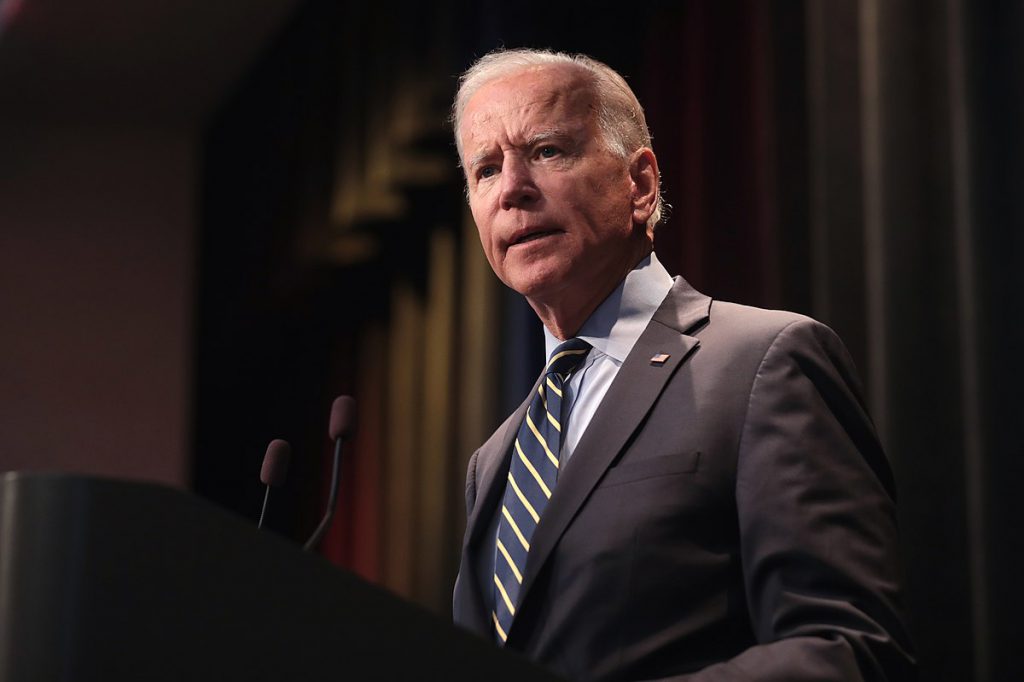
Nippon Steel’s $15 billion bid for US Steel has been referred to US President Joe Biden, a White House spokesman said, giving the president 15 days to decide on a tie up he has previously said he opposes.


The Committee on Foreign Investment in the United States (CFIUS), which reviews foreign investments in the US for national security risks, referred the deal to Biden after it was unable to reach a consensus, the companies and two sources said.

That gives Biden, who has long opposed the tie-up, 15 days to block the deal. If he takes no action in that time, the merger would get an unexpected greenlight.

“We received the CFIUS evaluation and the President will review it,” White House spokeswoman Saloni Sharma said.

The referral to Biden paves the way for the deal to be killed before President-elect Donald Trump takes office.

Trump, who will be inaugurated on Jan. 20, has also opposed the deal, which was first announced last December.

Nippon Steel and US Steel said on Tuesday they were informed of the referral. Both companies have previously said they had planned to close the deal before the end of 2024.

“We urge him (Biden) to reflect on the great lengths that we have gone to address any national security concerns that have been raised and the significant commitments we have made to grow US Steel,” Nippon Steel said in a statement.

US Steel said: “It is our hope that President Biden will do the right thing and adhere to the law by approving a transaction that so clearly enhances US national and economic security.”

If the deal collapses, Nippon Steel must pay a $565 million penalty to US Steel. It has earlier said it could pursue legal action against the US government if the deal falls apart.

Nippon Steel aims to raise its global steel production capacity with US Steel to 85 million metric tons per year from 65 million tons and the deal is core to its goal of lifting production to more than 100 million tons in the long-term.

The US is the only developed nation where domestic steel demand is increasing, with the highest steel prices globally due to production capacity falling short of domestic needs, SBI Securities analyst Ryunosuke Shibata said.

That makes US Steel “a once-in-a-lifetime opportunity for Nippon Steel,” Shibata added.

Lack of consensus

CFIUS said on Monday that allowing Nippon Steel to take over US Steel could result in lower domestic steel production representing “a national security risk”, according to the Washington Post, which first reported the referral to Biden.

Nippon Steel said it could eliminate that risk by appointing US citizens to top management and board of director positions at US Steel, but the committee was divided in its view of whether those remedies would be sufficient, said the newspaper.

The US Treasury Department, which leads CFIUS, and the Commerce Department, declined to comment.

The proposed tie-up has faced high-level opposition within the US since it was announced, with both Biden and Trump taking aim at it as they sought to woo union voters in the swing state of Pennsylvania, where US Steel is headquartered. The president of the United Steelworkers Union opposes the tie-up.

“The question is, what will Biden’s decision be? And I think that’s still very unpredictable,” said Nick Wall, M&A partner at Allen & Overy. “He’s got nothing really to lose.”

In August a CFIUS letter sent to the companies, seen by Reuters, which said the deal could hurt the supply of steel for critical transportation, construction and agriculture projects.

But Nippon Steel won a 90-day review by countering that its investments made by a company from an allied nation would in fact shore up US Steel’s output.

That gave CFIUS until after the November US election to make a decision, fueling hope among supporters that a calmer political climate could underpin the deal’s approval.

Those hopes were dashed last weekend when CFIUS sent a 29-page letter to the companies raising allegedly unresolved national security risks, Reuters exclusively reported.

The companies countered in a follow-up letter, exclusively reported by Reuters Friday, that Biden had “impermissible influence” over the national security review process, threatening legal action if the deal is blocked.

(By Katya Golubkova, Yuka Obayashi, Sakura Murakami, Alexandra Alper, Nandita Bose and Nilutpal Timsina; Editing by Sam Holmes and Michael Perry)

US panel could not reach consensus on US-Japan steel deal: Nippon


USW SHOULD BUY IT WITH LABOR PENSION FUNDS


By  AFP
December 23, 2024

Nippon Steel has urged US President Joe Biden to allow its takeover of US Steel to go through after a regulatory panel failed to reach a consensus
 - Copyright AFP/File Richard A. Brooks

John BIERS

A US government panel failed to reach a consensus on whether US Steel’s acquisition by Nippon Steel threatens Washington’s national security, shifting the decision to the White House, the Japanese company said late Monday.

The deadlock by the Committee on Foreign Investment in the United States (CFIUS) means the controversial $14.9 billion transaction will now be referred to President Joe Biden, who is legally required to act within a 15-day deadline.

“Nippon Steel has been informed by CFIUS that the Committee has referred this matter to President Biden after failing to reach a consensus on our transaction with US Steel,” Nippon said.

Biden has criticized the deal for months, joining a loud consensus of US power players who have slammed the transaction, including President-elect Donald Trump and the incoming vice president, JD Vance.

The deal became ensnared in the 2024 presidential campaign when Pennsylvania emerged as a critical swing state and leaders of the United Steelworkers (USW) union loudly opposed the transaction.

Nippon officials had hoped to have more success after the election, but there have been few signs of change in the dynamics.

US media have reported that the killing of the deal could prompt litigation from the steel companies. There are also questions about diplomatic fallout from derailing a transaction championed by Japan, a close US ally.

Nippon said the deal should go through.

“During the 15-day period that the President has to make a final decision, we urge him to reflect on the great lengths that we have gone to address any national security concerns that have been raised and the significant commitments we have made to grow US Steel, protect American jobs, and strengthen the entire American steel industry, which will enhance American national security,” Nippon said.

“We are confident that our transaction should and will be approved if it is fairly evaluated on its merits.”

US Steel also called on Biden to approve the deal, noting that Nippon is based in “one of the United States’ closest allies” and describing the transaction as a means to “combat the competitive threat from China.”

The Nippon deal is “the best way, by far, to ensure that US Steel, including its employees, communities, and customers, will thrive well into the future,” US Steel said.

Nippon has argued that the transaction would pump much-needed capital to update plants in Pennsylvania’s Mon Valley, the oldest of which dates to 1875.

The company has described the transaction as a lifeline to Pennsylvania’s much-diminished steel industry, vowing to keep US Steel’s headquarters in Pittsburgh.

But the USW union has characterized Nippon’s commitments as untrustworthy, while slamming US Steel executives as being motivated by the huge windfalls they would likely make from the sale.

“The proposed US Steel-Nippon transaction represents nothing more than corporate greed, selling out American workers and jeopardizing the long-term future of the domestic steel industry and our national security,” USW President David McCall said Monday as he urged Biden to block the transaction.

DECRIMINALIZE DRUGS

Canada records 50,000 opioid overdose deaths since 2016


By AFP
December 23, 2024


A person holds a lighter in an alleyway while smoking in the US state of Oregan in 2024 - Copyright AFP Patrick T. Fallon

Nearly 50,000 people in Canada died of an apparent opioid overdose from January 2016 to June 2024, with fentanyl playing an increasingly prominent role in fatalities, the national health agency said Monday.

The prevalence of fentanyl in Canada has drawn additional attention after incoming US president Donald Trump cited the drug as part of his justification to impose sweeping tariffs on Canadian imports.

Trump has accused Ottawa of not doing enough to stem the flow of fentanyl into the United States and said his promised 25 percent tariff would remain in place until Canadian authorities address the problem.

Health Canada on Monday reported a total of 49,105 “apparent opioid toxicity deaths” from the start of 2016 to June of this year.

Fentanyl was involved in 79 percent of opioid deaths so far this year, a figure that has increased by 39 percent since 2016, the agency said.

Canadian authorities have acknowledged a significant spike in domestic fentanyl production.

The seizure of Canadian-made fentanyl in the United States, Australia and elsewhere indicates that domestic production exceeds demand and Canada has become a net fentanyl exporter, the foreign ministry has said.

But experts do not believe Canadian-sourced fentanyl is a major player in the United States.

Health Canada said that so far this year an average of 21 people have died each day from apparent an apparent opioid overdose, 72 percent of whom were males.

Those figures marked an improvement compared to same period in 2023, Health Canada said, but noted the figures are preliminary and subject to change.

“We must remain cautious in drawing conclusions on the trends for 2024,” it said in a statement.

“The extent of opioid and stimulant-related harms remains very high.”


Blue economy, green development vital for Global South

China Daily | Updated: 2024-12-26 

SHI YU/CHINA DAILY

Editor's note: The Third China-Indian Ocean Region Forum on Blue Economy Development Cooperation was held in Kunming, Yunnan province from Dec 15 to 16. The forum, themed "Future of the Blue Indian Ocean — Development Practice of the Global South", was jointly organized by the China International Development Cooperation Agency, the People's Government of Yunnan Province, the Ministry of Fisheries and Ocean Resources of the Maldives, and the Ministry of Environment and National Beautification, Green and Blue Economy of Barbados. Below are excerpts of speeches of some participants at the forum.

Forum in line with GDI

The Third China-Indian Ocean Region Forum on Blue Economy Development Cooperation is of tremendous importance to Barbados. For us (in Barbados), this is a tangible demonstration of China's commitment to forge greater synergy across multilateral development processes with the view to accelerate the implementation of the United Nations 2030 Agenda for Sustainable Development.

China's hosting of the forum is in keeping with its Global Development Initiative, which consolidates its international cooperation agenda and is based on the following six guiding principles: a people-centered approach; development as a priority; benefits for all; innovation-driven development; harmony with nature; and action-oriented approaches.

The agenda for this year's forum includes topics which directly impact the future of a significant number of countries across the world and by extension a significant percentage of the world's population. These include climate change, island resilience and disaster recovery, implementation of the Paris Agreement, and sustainable development of the blue economy.

Reginald Farley, president of the Senate of Barbados

Oceans sustain livelihoods

For more than 4,000 years, the oceans have sustained our (Maldivian people's) livelihoods and shaped our identity as the "children of the sea". Small developing island states like ours bear a disproportionate burden of climate change despite emitting the least volumes of carbon dioxide and other toxic gases. We have voiced this concern on countless platforms, countless times.

The Maldives is doing as much as it can, with the little resources it has, to adapt to and mitigate the impacts of climate change. As a global leader in maritime affairs, China has been a reliable partner to the Maldives, thanks to their strong bilateral relationship. The successive editions of the forum have reflected the Chinese government's, especially Chinese President Xi Jinping's, commitment to address common cross-border challenges with effective responses.

Hussain Mohamed Latheef, vice-president of Maldives

Pakistan upholds marine cooperation

Oceans are a shared lifeline, a source of connectivity and economic opportunities, a custodian of the vast marine resources. The "blue economy" holds immense potential for us (in Pakistan) in areas such as sustainable fisheries, marine tourism and renewable energy.

Yet this potential comes with great responsibility. Challenges such as climate change and pollution require urgent and collective action to protect these vital resources. Our partnership with China under the Belt and Road Initiative framework has fostered knowledge exchange, technology advancement, and marine resource conservation. The China-proposed Global Development Initiative aligns with our shared visions of transnational collaboration and environmental stewardship.

Pakistan stands ready to partner with all the stakeholders to promote marine cooperation and ensure that our region maintains peace and progress and sustainability. Let us protect and promote our vital marine resources for our future generations.

Asif Ali Zardari, president of Pakistan

Time for action

The oceans connect us all; they carry more than 80 percent of global trade, sustaining the livelihoods of millions of people in fisheries and coastal communities, and offer renewable energy solutions such as offshore wind and tidal power. This lifeline is under threat. The urgency for action could not be clearer.

The adoption of the High Seas Treaty and the ongoing plastic pollution treaty negotiations highlight the power of international cooperation. Success demands collaboration — across sectors, across borders and across generations. I commend the outcomes of the last China-Indian Ocean forum, which enhanced disaster prevention and early warning systems for regions devastated by tsunamis and floods.

Now is the time for action — to forge partnerships that amplify the voices of vulnerable coastal and island nations, to prioritize resilience and investments that safeguard lives and livelihoods, while advancing the UN Sustainable Development Goals.

Amina Mohammed, deputy secretary-general of the United Nations

Blue economy a central theme

In recent years, the blue economy has emerged as a central theme for many countries across the world and for the United Nations Industrial Development Organization. It has a transformative role in advancing sustainable development. There is an estimated annual turnover of between $3 trillion and $6 trillion.

The ocean economy represents about 4 percent of global GDP. So, if the oceans were a country, they would rank as the world's seventh-largest economy. The blue economy holds a huge potential to drive stable industrial employment, protect our environment and foster prosperity on a global scale. It is a critical resource especially for coastal economies, especially for small island developing states.

The blue economy contributes significantly to not only economic growth but also food security. Which makes this an opportunity we cannot ignore.

Gerd Müller, director-general of the UNIDO

Boost regional capacity

The China-Indian Ocean region is a vital marine ecosystem and a hub for global trade, supporting the livelihoods of millions of people. However it faces escalating challenges including climate change, overfishing, marine pollution and governance gaps.

To address these challenges, it is important to foster inclusive strategies for the growth of blue economies involving local communities, the private sector and international organizations. Since its inception, China-Indian ocean forum has been instrumental in strengthening regional alignment in planning and action to deepen blue cooperation.

I hope the forum will strengthen regional capacity, promote sustainable practices in the blue economy and forge stronger partnerships for effective ocean governance.

Armida Alisjahbana, under secretary-general of the United Nations and Executive Secretary of the Economic and Social Commission for Asia and the Pacific

Early warning system indispensable

The China-Indian Ocean Region Forum is timely, as it comes in the wake of the recent 16th Meeting of the Conference of the Parties to the Convention on Biological Diversity and the 29th Conference of the Parties to the UN Framework Convention on Climate Change, both of which are deeply connected to the sustainable development of the blue economy. As such, the UNDP is delighted to join hands with the China International Development Cooperation Agency.

As for our global initiative, we are focused on strengthening early warning systems against natural disasters and helping developing countries to protect humans and marine life. We look forward to further deepening our partnership with China and building on our collective progress in protecting and restoring our planet's critical ecosystems including the oceans.

Xu Haoliang, associate administrator of the UNDP

Practical cooperation needed

The oceans are an essential part of the Earth's ecosystem, while the blue economy is an important component of the world economy. Thirty-eight countries in Africa are coastal and/or island states.

Therefore, strengthening transnational cooperation in the blue economy and fully utilizing marine resources are crucial for African countries to achieve the 2030 Agenda for Sustainable Development. The China-Indian Ocean Region Forum on Blue Economy Cooperation provides a platform for exchanges and cooperation among countries in the Indian Ocean region, including many African countries and has promoted marine ecological protection and blue economic development.

We look forward to reaching a broad consensus and boosting more practical cooperation results between Africa and China in the development of the blue economy.

Monique Nsanzabaganwa, deputy chairperson for the African Union Commission

Oceans critical to climate governance

Zero is an important concept of the Chinese government and our (Bangladesh's) stakeholders. We will integrate our goals and plans with the future development path of the Global Development Initiative, so as to manage the oceans and maintain sustainable practices in a sustainable way. At this forum, representatives from various countries shared their experiences, expectations and future plans, and I saw how the blue economy digitalization can empower the blue economy.

The oceans are critical for tourism, disaster response, promoting climate governance, implementing the Paris Agreement, and other hot-button issues. In particular, Bangladesh will work with other countries to implement the outcomes of the forum and contribute to global sustainable development.

Khalilur Rahman, high representative of the chief adviser to the Interim Government of Bangladesh

Beacon of sustainable growth

The Indian Ocean has always been a cradle of trade, culture and human connections. Today, it is at the heart of our shared aspirations for sustainable growth and prosperity. The dialogues here have reaffirmed the importance of aligning our policies and investments with sustainable practices.

Cooperation with China and other countries in the Indian Ocean region is essential for achieving these goals. Through knowledge sharing, technological support, and innovative financing mechanisms, we can build a resilient and inclusive blue economy.

Let this gathering mark the start of a decade of collaboration, where we can collectively ensure that our oceans remain a source of life, livelihoods, and inspiration for all. Together, let us act decisively and inclusively to ensure that the blue economy is a beacon of sustainable growth for all our people.

Mahinda Siriwardana, secretary to the treasury and the Ministry of Finance, Planning and Economic Development of Sri Lanka

Early warning system should be effective

The significance and vulnerability of our oceans are in stark contrast to the investments that go into keeping them safe and healthy. At present, SDG 14 — life below water — is the most underfunded of all the Sustainable Development Goals. Therefore, we are particularly thrilled to have signed the first two financial agreements with the China International Development Cooperation Agency on a multi-country initiative to develop actionable early warning systems in a bid to help strengthen the coastal communities' resilience to climate change.

Indeed, as climate-related natural disasters become increasingly frequent, having effective early warning systems in place and mainstreaming disaster risk mitigation into development strategies are more important than ever, to protect lives, livelihoods, and the ecosystems they rely on.

Moving forward, we are ready to continue working with China, and all countries, to safeguard and restore critical ecosystems, including the oceans, and embed sustainable development in the blue economy. This cannot be accomplished by any one country alone. Only through shared resolve and global cooperation can we address the challenges of our times and realize the vision of the 2030 Agenda.

Beate Trankmann, representative of UNDP in China

Maldives committed to actions

As we reflect on the milestones of this decade and set our sights on its ambitious goals, it is crucial to recognize the synergy between the UN Ocean Decade and the core principles of Global Development Initiative. Both frameworks are rooted in inclusivity, innovation and action-oriented strategies to advance the 2030 Agenda for Sustainable Development.

For the Maldives, the GDI provides a unique opportunity to advocate for equitable ocean research policies that empower our fishing communities and protect our biodiversity. The principles of the GDI-with its focus on innovation, inclusivity and results-oriented actions — offer a complementary framework for achieving the goals of the Ocean Decade.

As the GDI champions global partnerships, mobilizes resources and bridges the North-South divide, it provides the support necessary to implement key "decade programs" in areas such as early-warning systems, advancing ocean literacy and promoting innovations in sustainable fisheries and aquaculture. Together, these frameworks represent a road map to navigate the most urgent challenges rooted in our ocean. The Maldives is committed to being an active partner in this journey, leveraging our unique insights as a small island nation to contribute to global solutions.

Ahmed Shiyam, minister of fisheries and ocean resources of Maldives

BRI facilitates ocean governance

The Indian Ocean is a region of immense significance. Pakistan is a maritime nation with nearly 1,050 kilometers of coastline along the Arabian Sea. Our national maritime policy prioritizes the sustainable utilization of marine resources, aligning economic development with environmental preservation.

The oceans hold unparalleled potential to drive economic growth, alleviate poverty and ensure environmental sustainability. By integrating ocean sustainability into the Global Development Initiative framework, we can ensure a more comprehensive and interconnected approach to global development.

Through our collaboration with China under the Belt and Road Initiative framework, Pakistan has advanced innovative approaches to sustainable ocean governance. Let us continue to work together, leveraging technology, fostering knowledge-sharing and deepening partnerships to ensure that our oceans remain a source of life and prosperity for generations to come. Pakistan stands firmly committed to this shared vision and looks forward to advancing cooperation with China and all our partners here today for a better, just, inclusive and sustainable global development.

Ahsan Iqbal, federal minister of planning, development and special initiatives of Pakistan

The views don't necessarily represent those of China Daily.

Why the US should think twice before launching another tariff war?

By Xin Ping | chinadaily.com.cn | Updated: 2024-12-25 
'
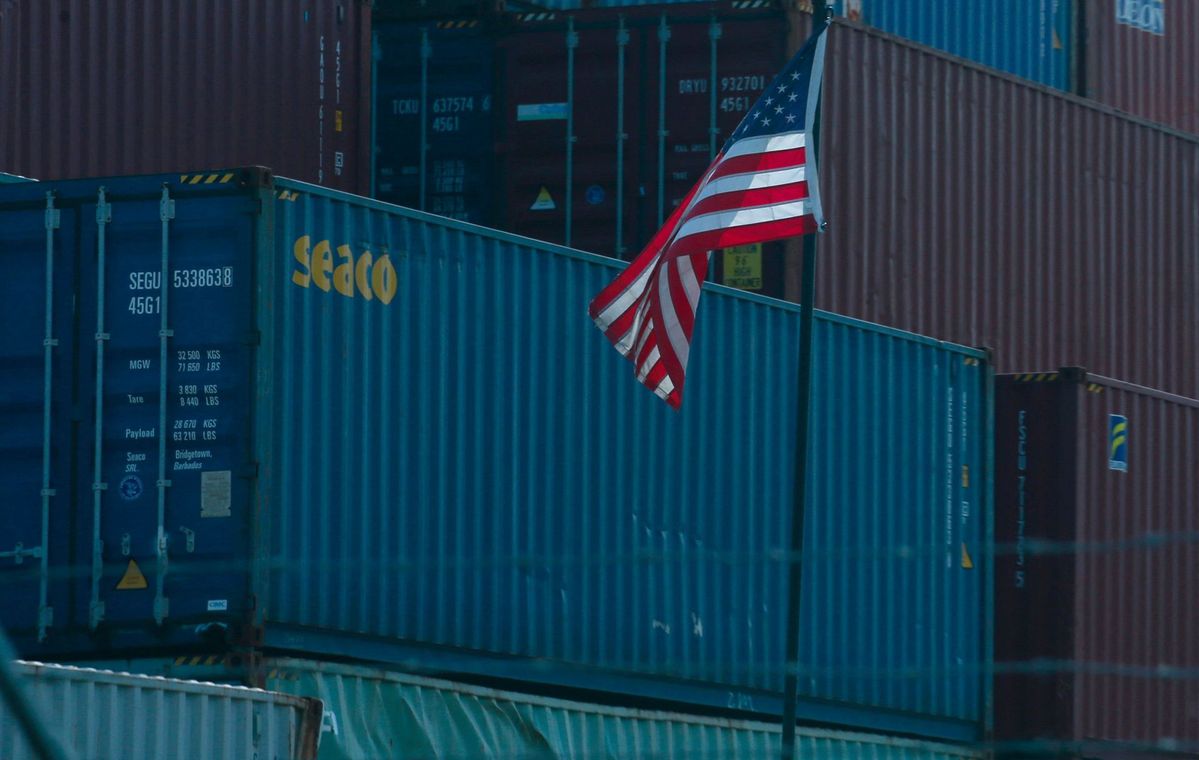
Shipping containers are stored at the Port Newark Container Terminal in Newark, New Jersey, on July 21, 2022. [Photo/Agencies]

In a move that surprised no one, US President-elect Donald Trump once again played the "tariff card," threatening an additional 10 percent tariff on all Chinese products entering the United States, citing a most far-fetched excuse of US drug problems.

The drums of another tariff war have sounded. And the first to voice opposition are Americans. Numerous US think tanks, universities, leading media outlets, and business associations have highlighted the various ways elevated tariffs will hurt the US economy. Here are the key points:

Pushing up prices and inflation

From the Federal Reserve to the Peterson Institute for International Economics (PIIE) and Moody's, it is generally believed that the additional 10 percent tariff will cause US inflation to rise by 0.9 to 1.5 percentage points and its GDP growth to fall by 1 to 1.4 percentage points. Should an additional 60 percent tariff on China, another threat by Trump during his campaign, materialize, it will push up the inflation rate further by 0.7 percentage points.

Increasing tax burden and eroding family wealth

American consumers will be hard hit. Yale University's Budget Lab estimates that a 10 percent global tariff and 60 percent China tariff will slash annual household incomes by $2,576, taking into account the impact of possible retaliation.

Similarly, the Center for American Progress estimates that a 20 percent sweeping import tariff plus 60 percent tariff on Chinese goods would result in a $3,900 tax increase for a middle-income family. The National Retail Federation reports that a universal 10-20 percent tariff on imports from all foreign countries and an additional 60-100 percent tariff on imports specifically from China could cost Americans $78 billion in annual spending power.

Widening wealth gap

In the low-income groups in the United States, the proportion of consumption of imported goods is very high. By contrast, this proportion is lower for the rich. Low-income families will be worse off by tariff hikes than richer ones.

Additionally, US policies under Trump tend to focus more on reducing corporate income tax, which benefits large corporations and exacerbates income inequality. According to PIIE, if Trump pushes his policy to the maximum, after-tax income for the poorest 20 percent of Americans will shrink by 8.5 percent, while the top 1 percent nets an 11.6 percent increase.

Harming US industries

Extra tariffs will not revive the US manufacturing industry as some claim, but rather hinder the "revitalizing American manufacturing" project. The US economy, particularly its manufacturing industry that imports intermediate products in large quantities, is propelled by and dependent on global value chains. More tariffs will only increase their production costs and reduce their competitiveness.

US importers have vocally opposed swelling tariffs. The CEO of Kent International, a New Jersey-based US firm that imports bicycle parts from China, complained, "The Trump administration was very proud to say that China is paying the tariffs, and I was always very quick to say, 'Well, if somebody in China wants to pay it, I'd be happy, but we're paying it.'"

Hurting employment

Escalating tariffs and foreign countermeasures may lead to job losses, stagnated wage growth, and weaker employment stability. Research by Moody's shows that the trade war with China caused the loss of 300,000 American jobs between July 2018 and August 2019. The Tax Foundation estimates that new tariffs will shrink US GDP by at least 0.8 percent, and cost 684,000 full-time jobs.

Hindering capital flows

Increased tariffs have failed to reduce expanding US trade deficit, which reached a record high of $951.2 billion in 2022. The investment bank Evercore ISI predicts that new tariffs will push average US tariff level to 17 percent, the highest since the Great Depression.

Nobel laureate economist Paul Krugman believes that a tariff-ridden world would also be a world with greatly subdued capital flows. "The US trade deficit is the counterpart of large capital flows, a global trade war probably would reduce that deficit—not by helping US firms compete with foreigners, but by largely shutting down international movements of capital."

Since the initial phase of tariff hikes under "Trump 1.0," China has expanded its toolkit to counter economic shocks. As the New York Times reported, China is poised to handle "Trump 2.0" with strategies such as reciprocal tariffs, targeted inclusion of US companies in its unreliable entity list, and reducing trade dependence on the US. China does not want a tariff war with the US. But if such a war were to be unleashed, it certainly is prepared to defend itself.

One thing is for sure: there are no winners in tariff or trade wars. While China may bear some losses, the United States will not be able to walk away unscathed.

The author is a commentator on international affairs, writing regularly for Xinhua News, Global Times, China Daily, CGTN etc. He can be reached at xinping604@gmail.com. The views don't necessarily represent those of China Daily.


China unveils results of 5th national economic census

Xinhua | Updated: 2024-12-26 

BEIJING -- China on Thursday published the results of its fifth national economic census, which showed that the country's economy has achieved progress while maintaining stability over the past five years.

The census results showed that China had 33.27 million legal units engaged in secondary and tertiary industries at the end of 2023, up 52.7 percent from the end of 2018.

The secondary and tertiary industries employed over 428.98 million people at the end of 2023, up 11.9 percent compared with the end of 2018.

The number of self-employed units was nearly 88 million with 179.56 million persons employed, according to the results.

The economic census, one of China's key national surveys, provides a comprehensive overview of the country's secondary and tertiary industries, offering valuable insights into its social and economic development.

China carried out four national economic censuses in 2004, 2008, 2013 and 2018, respectively, and formally started its fifth national economic census in 2023.

Cutting-edge science ship delivered in Guangzhou

By ZHENG CAIXIONG | chinadaily.com.cn | Updated: 2024-12-26 17
A new cutting-edge multifunctional scientific research and archaeological vessel was delivered on Thursday in the Nansha district of Guangzhou, Guangdong province.
 [Photo provided to chinadaily.com.cn]

A new cutting-edge multifunctional scientific research vessel was delivered on Thursday in Nansha district of Guangzhou, Guangdong province. It will play an important role in enhancing China's ocean exploration and scientific research capabilities.

The Tansuo 3, or Exploration 3, built by Guangzhou Shipyard International Co, has overcome the design difficulties of other full-sea operating vessels, said He Guangwei, deputy chief engineer of GSI and chief designer of the vessel.

"It can operate in polar areas, breaking 120-centimeter-thick ice covered with 20 centimeters of snow," He said. "During the trial voyage, we encountered waves exceeding 4 meters, but our ship was able to sail at full speed when its wave resistance was tested."


US harvests gains of war economics, dollar hegemony

China Daily | Updated: 2024-12-26

Luo Jie/China Daily

The World Economic Outlook report released by the International Monetary Fund in October predicts that the US economy is expected to grow by 2.8 percent in 2024, compared with its projected growth of 0.8 percent for the eurozone and 0.3 percent for Japan.

An important reason is that the United States has gained tremendously from the ongoing geopolitical tensions, to the cost of other parties.

The US has provided Ukraine with about $100 billion in various types of aid over the past two years, but most of the funds, about 90 percent, has been spent stoking the US defense industry, creating thousands of jobs in at least 38 states.

The US' war economics also functions hand-in-hand with its sanctions on Russia. After the still mysterious explosion of the Nord Stream natural gas pipelines in September 2022, the energy trade between Russia and Europe plummeted, forcing the European Union to turn to the US for natural gas, at a much higher price.

Washington has also taken advantage of its Inflation Reduction Act, CHIPS and Science Act and other domestic laws to attract high-tech companies from the EU and other developed economies to relocate to the US by providing them with game-changing subsidies.

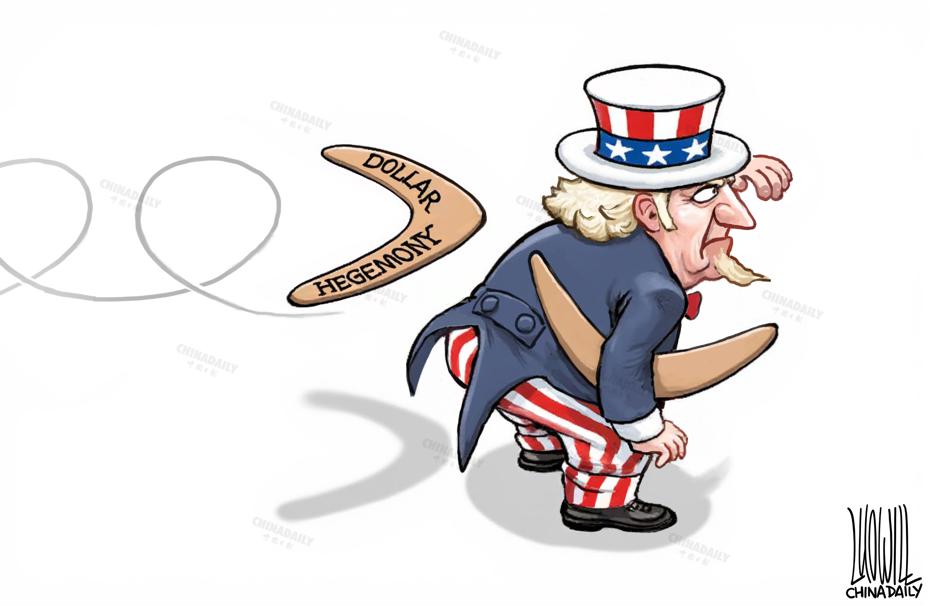
Financial hegemony is another crucial tool for the US to boost its economy. Given the dominant position of the US dollar in the international monetary system, against the backdrop of intensified geopolitical turmoil and the Federal Reserve's previous aggressive interest rate hikes, more and more global investors have chosen to invest in the US' financial market to evade risks. US companies currently account for nearly 70 percent of the world's major stock indexes, while this proportion was 30 percent in the 1980s.

Relying on its dollar hegemony, the US has also created a "credit card" for itself with unlimited overdrafts, using huge debts to increase public spending. Over the past year, the US federal government debt surged from $33 trillion to $36 trillion. As the Federal Reserve begins to cut interest rates, the US government, which is already running at a high deficit, is expected to issue more treasury bonds, and the risks from the US debt will continue to rise.

Looking ahead to 2025, the policies of the new US government may expose the US economy to more risks associated with labor shortages, rising inflation, and worsening federal debt problems.

If the large-scale deportation plan of the incoming administration is implemented, the move may lead to up to 1 million job vacancies in the US in a short time. The widespread imposition of tariffs on trading partners will lead to rising prices, and the costs will ultimately be borne by US companies and consumers.

If the new US government implements tax cuts as the US president-elect pledged to do during his election campaign, in a bid to woo the voters, this will further reduce government revenue and expand the government's fiscal deficit, which will accelerate the deterioration of the US' debt problem.

XINHUA NEWS AGENCY