Thursday, July 31, 2025


Palestine Action wins bid to challenge terror ban in London court


London (AFP) – The co-founder of pro-Palestinian activist group Palestine Action can launch a court bid to overturn the UK government's decision to ban the group under anti-terrorism laws, a judge ruled Wednesday.


Issued on: 30/07/2025 - FRANCE24

Palestine Action has condemned the ban as an attack on free speech
 © CARLOS JASSO / AFP

The government earlier this month banned the group days after activists broke into an air force base in southern England.

Prosecutors have said they caused an estimated £7 million ($9.3 million) of damage to two aircraft at the base.

Being a member or supporting the group is now a criminal offence punishable by up to 14 years in prison.

Co-founder Huda Ammori asked a judge to allow her to launch a High Court challenge over the ban, calling it an attack on free speech.


And judge Martin Chamberlain on Wednesday ruled that it was "reasonably arguable" that the ban amounted to a "disproportionate interference" of Ammori's right to freedom of expression and freedom of assembly.

He also said the claim that the government was "in breach of natural justice" by failing to consult the group beforehand was also "reasonably arguable".

Police have arrested over 100 people in London and other cities for supporting Palestine Action during protests over the government's decision to ban the activist group.

Since the Palestine Action ban kicked in on July 5, police have warned that expressing support for the group was now a crime, after a last-ditch High Court challenge failed to stop its proscription becoming law.

© 2025 AFP

UNICEF urges France to recognise exploited children as victims, not criminals

France is failing to protect thousands of children from criminal exploitation, treating them as delinquents rather than victims, the French branch of the UN children’s agency (UNICEF) said in a report published Wednesday.


Issued on: 30/07/2025 - RFI


Unaccompanied young migrants should be recognised as victims rather than criminals UNICEF France says in a report published 30 July. AFP - NICOLAS TUCAT


The agency has called for urgent reform to end what it described as a "double punishment" of vulnerable minors caught up in criminal networks. The report, published on Wednesday to mark World Day Against Trafficking in Persons, highlighted the systematic failure to recognise children forced into crime as victims rather than perpetrators.

"Children who are victims of criminal exploitation are insufficiently recognised and protected as victims," Unicef France stated. "They are too often prosecuted and criminally sanctioned for offences committed as a consequence of their exploitation."
Majority from the Africa continent

The report reveals the huge scale of the problem. Data from France's inter-ministerial mission for protecting women against violence and combatting human trafficking (Miprof) shows that more than two-thirds of people involved in criminal exploitation – including prostitution, drug trafficking, pickpocketing, burglary, charity scams and document fraud – are under 18.

The vast majority of identified minors – 92 per cent – are unaccompanied, with 81 per cent originating from Africa, particularly Algeria and Morocco. A further 19 per cent come from Europe, mainly Eastern and Southern European countries including Romania and Bosnia-Herzegovina. Boys and young men account for 89 per cent of victims.

"The people who exploit them use different strategies: addiction, blackmail, threats, psychological pressure, violence," said Corentin Bailleul, Unicef France's advocacy coordinator. "Young people who are exploited are often recruited under false promises or forced to act to survive or repay a debt."

However, on the ground "their exploitation is little recognised, with few exceptions," Bailleul added. He cited the January 2024 trial of the so-called "little thieves of Trocadéro" as a rare example of appropriate justice. In that particular case, six Algerian nationals were convicted for supplying isolated teenagers with psychotropic drugs, "initially free of charge", to control them and force them to steal from tourists. Child protection associations have described the case as exemplary.


Legal reform needed

Unicef insists that France's lack of mechanisms for identifying and referring victims of trafficking makes it impossible to assess the true scale of the phenomenon, and that currently available data is therefore underestimated. In 2022, only 352 victims – both adults and children – were identified by NGOs. This figure dropped to 236 in 2023.

By comparison, in the United Kingdom, where such a mechanism is in place, criminal exploitation is currently the most frequently reported form of child exploitation, with 2,891 children identified as victims in 2024.

Unicef argues that international and European law (UN Convention on the rights of the child, 2005 Warsaw Convention, Palermo Protocol against transnational organised crime) requires these children be recognised and protected as trafficking victims, not criminalised for offences they were compelled to commit.

The organisation call for legal reform, urging France to inscribe in its penal code that "a person who is a victim of exploitation cannot be criminally responsible when the offence committed is a consequence of trafficking".


Unicef also wants amendments to France's civil code, specifying that "any minor who is exploited, even occasionally, is deemed to be in danger and falls under the protection of the children's judge".

(with newswires)
Taxi strike over fuel hike spurs deadly riots in Angolan capital

At least five people have been killed and more than 1,200 arrested in Luanda after a taxi strike over fuel prices turned violent. Shops were looted, cars were damaged and large parts of Angola’s capital came to a standstill.


Issued on: 30/07/2025 
RFI

Luanda, the capital of Angola, has seen looting and acts of vandalism alongside a protest movement by taxi drivers against a fuel price hike imposed by the authorities.
 © AFP

The unrest began on Monday when drivers of candongueiros – blue and white minibus taxis that carry nearly 90 percent of Luanda’s commuters – launched a three-day strike.

They were protesting a government decision to raise the price of subsidised petrol from 300 to 400 kwanzas per litre (about €0.29 to €0.38) earlier in July.

By Tuesday evening, police spokesperson Mateus Rodrigues said 1,214 people had been arrested. He said shops, banks and cars had been vandalised, and warned that “pockets of disorder” were still being reported.

Luanda at a 'standstill’

Many shops and businesses have closed their doors. “The city centre is quiet,” activist Laura Macedo told RFI’s Portuguese service. “But all the shops were shut since Monday afternoon. Luanda is at a standstill.”

Macedo said the calm was deceptive, adding that "people can see the government is not in the slightest bit concerned about them”.

A single taxi trip that once cost 700 kwanzas, she said, was now up to 1,800 kwanzas in some areas.

“We don’t have public transport. The government allowed drivers to raise their prices, trying to prevent a revolt. But that created even more anger,” she explained.

Macedo, an organiser of peaceful marches in recent weeks, said police often broke up the gatherings before they could finish.

“Angolans have been struggling for years. Even middle-class families can no longer manage,” she said.


Oil wealth, rising anger


Angola is the second-largest oil producer in Africa, behind Nigeria. But many people say they are not seeing any benefit from Angola’s oil wealth.

“This is a paradox we’ve lived with since independence,” said Macedo, criticising President João Lourenço for promoting Angola’s 50th independence anniversary while much of the population continues to suffer.

“He cannot be a happy man. How can you accept that there are still children on the streets, and that the drought in southern Angola continues to kill people?” she asked.

The ANATA taxi drivers’ union, which called the strike, has distanced itself from the unrest.

Its leader, Geraldo Wanga, condemned the violence and said his members were not involved in the destruction. He criticised what he called the “arbitrary” arrest of drivers wrongly accused of inciting violence.

The protests reflect growing frustration with Angola’s economic struggles and political leadership. The MPLA has ruled since the country gained independence from Portugal in 1975. Many are calling for change as inflation rises and jobs remain scarce.
Myanmar junta ends state of emergency in election run-up

FAKE ELECTIONS FAKE STATE

Yangon (AFP) – Myanmar's junta ended its state of emergency on Thursday, ramping up plans for a December election that opposition groups pledged to boycott and monitors said will be used to consolidate the military's power.


Issued on: 31/07/2025 - RFI

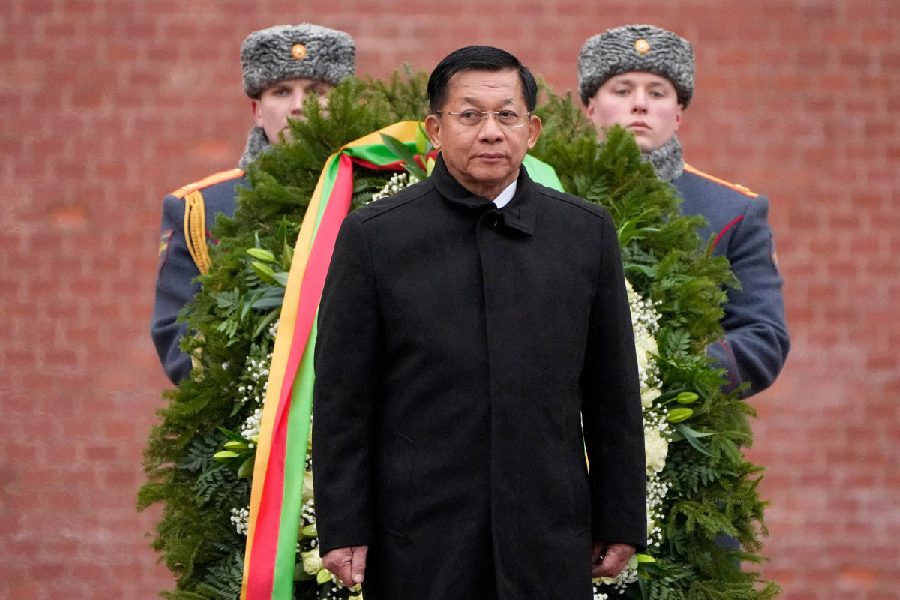
Analysts predict junta chief Min Aung Hlaing will keep a role as either president or armed forces chief following the election © STR / AFP/File

Advertising


The military declared a state of emergency in February 2021 as it deposed the civilian government of democratic leader Aung San Suu Kyi, sparking a many-sided civil war which has claimed thousands of lives.

The order gave junta chief Min Aung Hlaing supreme power over the legislature, executive and judiciary -- but he has recently touted elections as an off-ramp to the conflict.

Opposition groups including ex-lawmakers ousted in the coup have pledged to snub the poll, which a UN expert last month dismissed as "a fraud" designed to legitimise the military's continuing rule.

The junta seized power making unsubstantiated claims of fraud in a 2020 election Suu Kyi's National League for Democracy won in a landslide, and she remains jailed alongside their other top leaders.

"The state of emergency is abolished today in order for the country to hold elections on the path to a multi-party democracy," junta spokesman Zaw Min Tun said in a voice message shared with reporters.

"Elections will be held within six months," he added.

An order signed by Min Aung Hlaing cancelled the emergency rule which handed power to him as the armed forces chief, returning it to the head of state.

However Min Aung Hlaing also occupies that office as the country's acting president.

"We have already passed the first chapter," Min Aung Hlaing said in a speech in Naypyidaw reported in state newspaper The Global New Light of Myanmar on Thursday.

"Now, we are starting the second chapter," he told members of the junta's administration council at what the newspaper called an "honorary ceremony" for its members.
No date set

Analysts predict that following the election he will keep a role as either president or armed forces chief and consolidate power in that office, thereby extending his tenure as de facto ruler.

A flurry of notices announced a new "Union Government" had been formed alongside a "National Security and Peace Commission" to oversee defence and the election process, both led by Min Aung Hlaing.

"The upcoming election will be held this December, and efforts will be made to enable all eligible voters to cast their ballots," The Global New Light of Myanmar reported, paraphrasing another part of his speech.

A foreign ministry spokesman of junta ally China said Beijing supports "Myanmar's various parties and factions properly resolving differences through political means under the constitutional and legal framework".

No exact date for the poll has been announced by the junta, but political parties are being registered while training sessions on electronic voting machines have already taken place.

The military government said Wednesday it enacted a new law dictating prison sentences of up to 10 years for speech or protests aiming to "destroy a part of the electoral process".

A census held last year as preparation for the election estimated it failed to collect data from 19 million of the country's 51 million people, provisional results said.

The results cited "significant security constraints" as one reason for the shortfall -- giving a sign of how limited the reach of the election may be amid the civil war.

Analysts have predicted rebels will stage offensives around the election as a sign of their opposition.

But this month the junta began offering cash rewards to those willing to lay down their arms and "return to the legal fold" ahead of the vote.

© 2025 AFP


Myanmar junta hands over power to interim civilian govt, chief remains acting President

An announcement in state media said a decree that granted power to the military after its 2021 coup had been cancelled

Reuters 
Published 31.07.25


Myanmar's military chief Senior General Min Aung Hlaing
Reuters


Myanmar's military on Thursday nominally transferred power to a civilian-led interim government ahead of a planned election, with the junta chief remaining in charge of the war-torn country in his other role as acting president.


An announcement in state media said a decree that granted power to the military after its 2021 coup had been cancelled and a caretaker administration had been formed alongside a special commission to oversee the election.

The move signals no change to the status quo in Myanmar, with coup leader Min Aung Hlaing holding on to all major levers of power as acting president while retaining his position as chief of the armed forces.

A nationwide state of emergency in place since the coup, which was due to expire on Thursday after seven extensions, has now been lifted, said Zaw Min Tun, a government spokesperson.

"The interim president and commander in chief said this upcoming six months are the time to prepare and host the election," he told state media.

Myanmar has been in chaos since the coup against Aung San Suu Kyi's elected civilian government plunged the Southeast Asian nation into civil war, with the military fighting to contain a rebellion and accused of widespread atrocities, which it denies.

The election has been dismissed by Western governments as a sham to entrench the generals' power and is expected to be dominated by proxies of the military, with opposition groups either barred from running or refusing to take part.

David Mathieson, an independent Myanmar-focused analyst, said the change in power was cosmetic and those in charge would continue to be abusive and repressive.

"They are just rearranging the same pieces and calling the regime a new name," he said. "This is part of preparations for an election which we don't know much about."

War raging

The extent of the civil war's impact on the planned election remains unclear. In an effort to create voter rolls, the junta held a nationwide census last year but was only able to conduct it in 145 out of Myanmar's 330 townships - reflecting its lack of control over swathes of the country.

At a meeting of defence officials on Thursday, Min Aung Hlaing said voting in the election would be held in different areas in December and January due to security concerns, state-run MRTV reported in its nightly news bulletin.

Martial law and a state of emergency would be imposed in more than 60 townships across nine regions and states due to the threat of violence and insurgency, the report said, many in border areas where the military is facing unprecedented resistance from rebel groups.

China's foreign ministry on Thursday said it "supports Myanmar's development path in line with its national conditions and Myanmar's steady advancement of its domestic political agenda".

The military has killed more than 6,000 people and arbitrarily detained over 20,000 since the coup, with more than 3.5 million people internally displaced, an Amnesty International report said in January.

Myanmar's military has dismissed allegations of abuses as Western disinformation.

It justified its 2021 coup as a necessary intervention following what it said was widespread fraud in an election three months earlier that was won decisively by Suu Kyi's now defunct ruling party.

Election monitors found no evidence of fraud that would have changed the outcome.

France supports Belgium's push to block US destruction of contraceptives

France has confirmed it is monitoring a US plan to incinerate millions of dollars worth of unused contraceptives in Europe – a move aid groups say is ideologically driven and medically wasteful.


Issued on: 31/07/2025 - RFI

USAID has provided hundreds of millions in reproductive health funds to dozens of low‑income countries, though much of that aid is now paused under policy changes. 
AP - Aaron Ufumeli

The contraceptives – including intrauterine devices (IUDs), implants and pills – were bought under public health programmes run by the US Agency for International Development (USAID).

Since January, the supplies have been sitting in a warehouse in Geel, Belgium, after the Trump administration froze and then cancelled funding for reproductive health projects.

The products, which were meant for use in low- and middle-income countries, were being stored as part of USAID’s supply chain, managed by its logistics contractor Chemonics.

Several media outlets have reported that the material may soon be transferred and incinerated in France, though no final decision has been confirmed.

A diplomatic source told RFI that France “firmly supports the Belgian authorities’ desire to find a solution to avoid the destruction of the contraceptives” and is “following the situation closely”.

The source added that France had “no information about any transfers that have taken place”.

A US State Department spokesperson told the French news agency AFP that a preliminary decision had been made to destroy certain "abortifacient contraceptives" from USAID contracts, adding that no HIV medication or condoms would be affected.

The destruction is expected to cost $167,000. The stock is valued at $9.7 million.

French left urges Macron not to be complicit in US plan to bin contraceptives
Redistribution offers rejected

Several global organisations say they offered to collect and redistribute the supplies free of charge, but were turned down by US authorities.

The International Planned Parenthood Federation (IPPF) said it proposed to recover the products in Brussels, transport them to its Dutch warehouse for repackaging, and then send them to countries in need.

MSI Reproductive Choices, a UK-based group, told RFI it had offered to cover all the costs involved, including rebranding.

“We would have removed the stars from the USAID logo. It would have cost the US taxpayer nothing, nor the government,” said Sarah Shaw, MSI’s advocacy director.

“We were told the US government would only sell the supplies at their purchase price. This is a situation we have never seen before.”

Shaw estimated the stock would have covered Senegal’s contraception needs for three years.
The Khehne and Nagel warehouse storing millions of contraceptives is seen in Geel, Belgium. REUTERS - Marta Fiorin


The UN’s sexual and reproductive health agency, UNFPA, also offered to buy the contraceptives but was turned down.

“This suggests the problem is not legal, but ideological,” Shaw said. “It is a clear refusal to allow these contraceptives to be given to women in need. This US administration simply does not recognise their right to contraception.”

The US State Department has described the items as “abortifacient” – a term commonly used by anti-abortion activists to describe IUDs and other hormonal contraceptives.

Since January, the Trump administration has banned any US funding to NGOs that support or promote access to abortion, even indirectly.

What's stopping more men in France from getting vasectomies?


French firm denies involvement

Media reports have identified Veolia, a French waste management firm, as a possible contractor for the incineration. But the company told RFI it only has a framework agreement with Chemonics to handle expired products.

“The stock mentioned in Belgium is not part of this agreement,” Veolia’s press office said. “We are not responsible for its management.”

Activist Danièle Gaudry, from the coalition Abortion in Europe – Women Decide, told RFI the timing of any transfer from Belgium to France remains unknown. “We still don’t know the date it will happen, and we’re still trying to identify the company,” she said.

France’s parliament approves free contraception to be extended to women up to the age of 25


Lawmakers urge action

On Saturday, French Greens leader Marine Tondelier and a group of female MPs urged President Emmanuel Macron to intervene, calling the plan “an affront to the fundamental principles of solidarity, public health and sexual and reproductive rights that France is committed to defending”.

They asked him not to become “complicit, even indirectly, in retrograde policies” and to support NGOs ready to redistribute the contraceptives.

Sarah Durocher, president of the French Family Planning association, said France had a responsibility to act.

“A government that proudly enshrines the right to abortion in its constitution must also defend access to contraception beyond its borders,” she said, in a statement issued by IPPF.

The Elysée has yet to comment on the case.

Papua New Guinea steps up renewable energy drive with global support

Papua New Guinea steps up renewable energy drive with global support
Performers in a 'Sing Sing' tribal dance event in Papua New Guinea / Bob Brewer - Unsplash

Papua New Guinea (PNG) is intensifying its push towards renewable energy as it seeks to transform its electricity sector, improve energy access for rural communities, and meet growing demand in a sustainable manner. With international backing and a range of domestic initiatives, the country is positioning itself as a potential clean energy leader in the Pacific region.

Currently, only around 13% of Papua New Guinea’s population has reliable access to electricity, with the majority of rural communities dependent on diesel generators or without power altogether. Recognising the urgent need for change, the government has set an ambitious target of reaching 70% household electrification by 2030. Much of this expansion is expected to be powered by renewable sources.

Harnessing natural resources

PNG is naturally endowed with significant renewable energy potential. Hydropower remains the cornerstone of the country’s clean energy strategy, with abundant rivers providing the capacity for both large-scale and small-scale developments. Alongside this, the country is investing in solar energy, biomass, and, to a lesser extent, geothermal resources.

In recent years, several projects have highlighted the viability of renewables in even the most remote parts of the country. The Baime Hydropower Project in Morobe Province, commissioned in 2023, generates over 80 gigawatt-hours of electricity annually, reducing the need for diesel in nearby communities. Solar mini-grids and standalone systems have also been deployed in isolated areas, particularly on outer islands and in highland villages.

Global backing

Papua New Guinea’s renewable transition is being supported by a number of international development partners. In 2024, the World Bank approved a $204mn National Energy Access Transformation (NEAT) Project aimed at connecting over 400,000 people to electricity through a mix of grid upgrades, solar systems, and mini-grids. The project also includes funding for public-private partnerships to encourage investment in rural electrification.

Australia, PNG’s closest regional partner, has committed more than $150 million through the Australian Infrastructure Financing Facility for the Pacific (AIFFP). These funds are being used to modernise hydropower stations, expand solar access in remote provinces such as Milne Bay and West New Britain, and improve power infrastructure in urban centres.

Japan, through its Pacific Green Transformation programme, has supported solar installation at innovation hubs in Bougainville, while the European Union previously contributed to the development of renewable energy education and policy frameworks during the 2013–2017 Energy for the Pacific (EPIC) programme.

Additionally, the Global Green Growth Institute (GGGI), with funding from Korea’s KOICA, has launched renewable energy and green economy training programmes. These initiatives focus on equipping communities in Central Province with the skills needed to maintain solar and hydro systems and promote energy efficiency.

Policy and regulatory framework

To support this wave of investment, PNG has introduced a number of regulatory and strategic planning tools. The National Energy Policy (2017–2027) outlines the government’s clean energy priorities, while the recently established National Energy Authority has begun rolling out regulations for small power systems, paving the way for micro-grids and private operators.

The Climate Change (Management) Act and PNG Vision 2050 further anchor the country’s long-term commitment to a low-emissions development pathway. The government has also prioritised the creation of an investment-friendly environment to attract private sector partners, particularly in off-grid and mini-grid markets.

Local innovation, community solutions

In some cases, local innovation is leading the way. On Karkar Island, a community-driven project is producing biodiesel from coconuts to power schools, clinics, and local transportation. The initiative has proven to be both environmentally and economically sustainable, displacing thousands of litres of imported diesel each month.

Challenges and outlook

Despite notable progress, PNG still faces considerable challenges. The country's rugged terrain, dispersed population, and underdeveloped infrastructure make energy delivery costly and complex. Furthermore, financing gaps remain, with estimates suggesting a further $1.7 billion is needed to meet the 2030 electrification target.

However, with strong international backing, robust policy foundations, and growing momentum at the community level, Papua New Guinea’s renewable energy journey is firmly underway.


Japan targets tech giants with new app market regulations

Japan targets tech giants with new app market regulations
/ Unsplash - Sergey Zolkin


\


By bno - Seoul Office July 31, 2025


Japan’s Fair Trade Commission has released new guidelines under a law designed to address monopolistic practices in the smartphone app sector, primarily targeting Apple and Google, Japan Today reports. The guidelines prohibit unfair treatment of third-party app stores that are not run by the two tech giants. Encouraging competition among app stores may lead to reduced commission fees for developers and, in turn, lower app prices for users, according to analysts.

Apple and Google currently control over 90% of Japan’s smartphone operating system market. App purchases and related payments are generally limited to their official platforms, creating barriers for rival services. A private research firm estimated that Japan’s app market generated around JPY2.4 trillion ($16.2bn) in revenue from in-app purchases in 2024 alone.

Apple has criticised the move, claiming it could undermine both user privacy and security while forcing the company to share its technologies and services without compensation—posing potential risks.

Japan’s parliament approved the law in 2024 to allow third-party developers easier access to the app ecosystem. Set to take full effect in December, the law mandates access to core OS functions such as voice calls and biometric ID. The JFTC also outlined 100 possible violations in its final guidelines.

PETRO POLITICS

COMMENT: Trump’s new Venezuela oil waiver raises more questions than answers

COMMENT: Trump’s new Venezuela oil waiver raises more questions than answers
Since the start of the administration, Trump’s special envoy Richard Grenell had tried to strike deals with Maduro on prisoner swaps and oil licences. But he was repeatedly shut down by Rubio, a known hardliner against Venezuela. / bne IntelliNews
By Elias Ferrer in Caracas July 30, 2025

On July 24, the Trump administration quietly granted a new sanctions waiver allowing US energy major Chevron to resume operations in Venezuela. The move took many by surprise, as the White House had just re-tightened oil sanctions to put pressure on the Nicolás Maduro regime. But it followed closely on the heels of a high-profile prisoner exchange involving 10 Americans, 250 Venezuelan migrants, and dozens of political detainees.

This time, unlike in previous rounds, the US Treasury’s Office of Foreign Assets Control (OFAC) issued a private licence – its terms not available to the public. Sources familiar with the matter say Chevron will pay Venezuela in crude rather than in cash. Yet this arrangement risks undermining the very policy objective it claims to support: limiting revenue flows to Maduro and his cronies.

Where did this licence come from?

Since February, Secretary of State Marco Rubio and his allies had been scrambling to eliminate every single sanctions exception – what we know as “OFAC licences” – related to Venezuela. While most were related to the production and export of crude oil, there were also authorisations for Shell and BP to develop new offshore gas fields split between Trinidad and Venezuela. And the last one to be axed did not even provide income for Maduro’s government: it merely allowed the country to import liquefied petroleum gas (LPG) – propane and butane – ostensibly on humanitarian grounds.

Then, in a marked shift, the US administration granted a new, private licence for Chevron to restart operations, barely two months after a public announcement that all oil-related activities would be wound down by May 27.

The timing was not coincidental. In the lead-up to the waiver, Washington and Caracas completed a sweeping prisoner swap. El Salvador sent home the 250 Venezuelan migrants, allegedly members of criminal gangs such as the Tren de Aragua, whom the US had deported to the infamous CECOT mega-prison, and the Maduro government released 5 US citizens, 5 green card holders, and dozens of political prisoners – significantly more than the 80 releases initially expected.

Since the start of the administration, Trump’s special envoy Richard Grenell had tried to strike deals with the Maduro government on precisely the same thing: prisoner swaps and oil licences. But he was repeatedly shut down by Rubio, a hardliner known for his visceral opposition to socialist regimes like Cuba and Venezuela. This time around, however, the Secretary of State not only allowed the deal to go through but is said to have participated in the negotiations in an official capacity

A Trump administration official, who did not wish to be named, says that Rubio has now lost his argument. “We’ve tried sanctions and pressure and achieved nothing. The opposition is not taking power anytime soon.” In the meantime, a different approach would focus on freeing Americans in Venezuela, and favouring US companies to do business in the country at the expense of China.

Indeed, under the current sanctions regime, Washington has handed Beijing a de facto monopsony, a buyer’s monopoly, on Venezuelan oil. Over the past two months, China has snapped up almost all of Venezuela’s oil exports, save for some token shipments to Cuba. The Asian superpower is also the top buyer, or in some cases the only one, for many of Venezuela’s strategic minerals like iron ore, cassiterite, and rare earths.

Why the oil licences matter, for Venezuela and for the US?

The way the Venezuelan state benefits from Chevron’s licence is not as clear-cut as many think. Let’s take a moment to consider how the authorisations – namely General License 41 and the later “specific licences” for Repsol, Maurel et Prom, and others – had functioned up until early this year.

The private oil company would produce crude in local joint ventures with state-owned oil company PDVSA, and then be assigned a certain amount to sell overseas, generating revenues. It would then have to pay taxes and royalties to the state. In very simplistic terms, the government and the private company would be splitting export profits 50-50. Otherwise, PDVSA would be exporting oil directly and cashing in 100%.

So why would the Venezuelan government want a Chevron licence? It may be a case of short-term pain for long-term gain. Foreign oil companies have historically been more efficient at boosting production than PDVSA, as long as they had licences. This is due to a mix of factors, including better management and having sanctions waivers. Thanks to the latter reason, international oil majors can also sell crude at more profitable prices, as opposed to sanctioned sellers which have to offer steep discounts and pay for higher freight and insurance costs. Under sanctions, Venezuelan crude barrels have seen discounts of as much as $35.

The extra revenues that foreign oil companies generate have an outsized effect on the Venezuelan economy: these sell hard currency into the local FX market to pay wages, suppliers, and taxes. By doing so, they create a lifeline not much for Maduro, but for many private businesses in dire need of US dollars. In short, they have a stabilising impact on the economy. For the US, this was also a desired outcome as it would bring more transparency, on top of benefiting the local private sector.

According to Ecoanalítica, a Venezuelan consulting firm, the three main foreign oil producers with OFAC licenses, Chevron, Repsol and Maruel et Prom, contributed 40% of the hard currency that was sold in the FX market in 2024, via private banks.

What does the new Chevron licence look like?

The “new” Chevron licence is officially a closely guarded secret, but many sources and experts are already discussing details emerging from leaks. The widely circulated version sees Chevron compensating the Maduro government with crude, instead of in the local bolivar, as discussed above. If confirmed, this deal would reflect incredibly simplistic thinking on the part of policymakers in the Trump administration.

PDVSA, while receiving crude as payment, would remain under sanctions. It would therefore be incentivised to continue selling to China through intermediaries and at steep discounts, as it is doing now, rather than allowing Chevron to ship that oil to American refineries. The current arrangement already benefits Beijing at Washington’s expense. Payments would be made in USDT – yes, the so-called stablecoin – or via flying suitcases of hard currency, destined straight for regime insiders and bypassing the broader economy altogether.

If this is the licence that ultimately emerges, it will only serve to entrench corruption, bolster Chinese access to cheap crude, and further weaken Venezuela’s struggling private sector, while denying US Gulf Coast refiners a reliable stream of heavy oil. And yet, the Secretary of State will still be able to claim, technically, that “Chevron is not paying US dollars to Maduro.”

That leaves a more fundamental question: what comes next? Is the Trump administration’s strategy simply to keep the pressure on indefinitely, hoping Maduro eventually relents, no matter how many years or decades that might take? Marco Rubio is surely familiar with the Cuban case study that bears his name. Or is there, at last, a plan to negotiate, one that accepts the need for difficult concessions on both sides?

For now, the licence looks more like a political fig leaf than a path towards resolution.

Elías Ferrer is the founder and director of Orinoco Research, a research firm based in Venezuela for foreign investors, and editor-in-chief of Guacamaya, a Caracas-based independent digital media outlet.

Serbia accused of supporting violent groups to suppress protests

Serbia accused of supporting violent groups to suppress protests
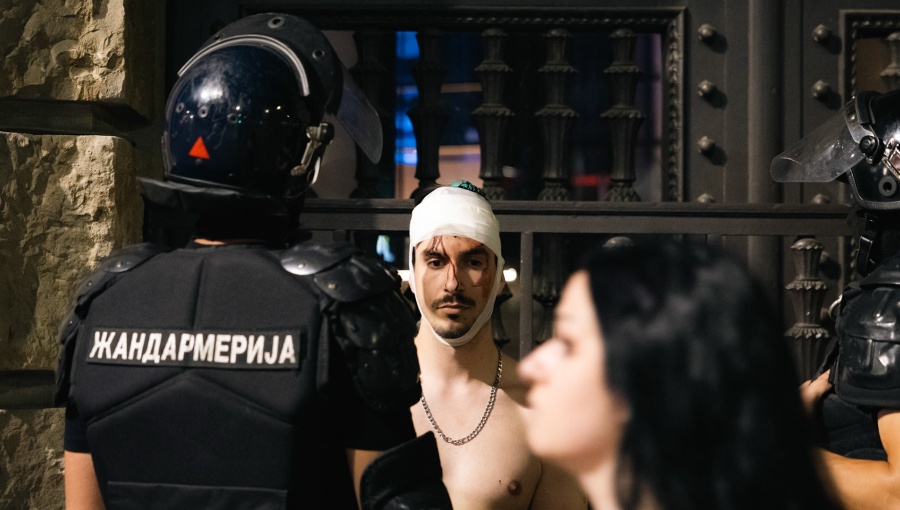
Vidovdan, June 28, 2025 / Gavrilo Andrić
By bne IntelliNews July 30, 2025

Serbia is experiencing a sharp decline in civic freedoms amid a crackdown on student-led protests, according to a report released on July 30 by CIVICUS, a global alliance of civil society organisations.

The student-led protests began in November 2024 after a concrete awning collapsed at a railway station in northern Serbia, killing 16. Citizens called for accountability and an end to corruption, which many blamed for the disaster. The protests have since expanded to demand early elections and an end to President Aleksandar Vucic’s 13-year rule.

The CIVICUS Monitor report accuses Serbian authorities of “legitimising violence against protesters” and employing police force, surveillance and politically motivated prosecutions to stifle dissent. It classifies Serbia’s civic space as “obstructed,” indicating serious concerns about violations of freedoms of expression, peaceful assembly and association.

“The right to peaceful assembly, expression, and association is under threat in Serbia,” the report said. “Authorities have responded to civil disobedience with brutality and detentions, while violent groups backed by the state have attacked activists with impunity.”

The publication of the report follows an incident on July 28 when masked men forcibly removed students occupying the University of Novi Pazar in southwest Serbia. Despite police presence, no intervention was made. The following day, protests erupted across multiple cities, including Kraljevo, Niš, Novi Sad and the capital Belgrade.

CIVICUS documented a pattern of repression marked by police use of tear gas and beatings, with more than 400 protesters detained during the first week of July. The report also highlights credible accounts of serious injuries and mistreatment in custody.

During a major protest on June 28, police detained 77 people, some of whom reportedly were denied medical attention. In response, students launched a nationwide civil disobedience campaign, erecting barricades and holding spontaneous rallies across the country.

The report notes that counter-protest encampments, allegedly organised by the government and guarded by police, have become flashpoints for violence and attacks on journalists.

“Senior officials have encouraged and sought to legitimise violence against protesters,” the report states. Earlier this month, President Vucic pardoned four men linked to the ruling Serbian Progressive Party (SNS) who had been convicted of assaulting a female student in Novi Sad—an incident that precipitated the resignation of the prime minister earlier this year.

The Serbian Interior Ministry defended police actions, saying all measures were lawful and intended to maintain public order. The government has yet to publicly respond to the CIVICUS findings.

Serbia joins Kenya, El Salvador, Indonesia, Turkey and the United States on CIVICUS’s latest Watchlist, which monitors civic space in 198 countries and territories. Countries rated as having “obstructed” civic space are those where civil liberties are severely pressured, civil society groups face harassment and independent media are restricted.

CIVICUS works with over 20 partner organisations to track global civic trends and promote accountability.

MEN ONLINE

Cyberstalking has surged by 70% in the UK since 2012, study finds

The number of people who said they experienced cyberstalking in the UK and Wales went up 70 percent in eight years, according to a new study
Copyright Canva


By Anna Desmarais
Published on 

In the United Kingdom, cyberstalking is growing at a faster pace than physical stalking, new research found.

On the receiving end of unsolicited text messages, emails, being harassed on live streams, or seeing personal photos posted online without your permission? 

If so, you could be a victim of cyberstalking, an online behaviour that is becoming more common in the UK. 

A new study, published in the British Journal of Criminology, found that cyberstalking is growing at a faster pace than traditional types of stalking. 

It examined responses from nearly 147,800 people who answered crime surveys in England and Wales. The surveys asked about the prevalence and perception of cyberstalking, physical stalking, and cyber-enabled stalking from 2012 to 2020.

The UK’s Crown Prosecution Office describes cyberstalking as “threatening behaviour or unwanted advances” directed at someone online. It can be combined with other types of stalking or harassment.

Cyberstalking could include threatening or unsolicited text messages and emails, harassment on live chats, or posting photoshopped photos of a specific person, their children or workplace on social media, the office said. 

Cyber-enabled crimes are ones that don't depend on technology but have changed significantly because of it, like cyberbullying, trolling, or virtual mobbing.

Over the eight-year period, 1.7 per cent of respondents said they had experienced cyberstalking, up from 1 per cent in 2012.

Cyberstalking identified as ‘wrong but not a crime’

While physical stalking remains more common overall, the 70 per cent rise in cyberstalking over the eight-year period was the only type with a “significant” increase over time, the researchers found.

Complaints of physical stalking increased by 15 per cent and cyber-enabled stalking actually fell during that time period.

Women, young people, and LGBTQ+ people were more likely to say they had been cyberstalked than other groups, the study found.

Almost half of the respondents that had experienced cyberstalking in the previous year said their experience was “wrong but not a crime,” which the authors found could impact the number of people that report their experience to law enforcement.

“There is a clear disconnect between the lived experience of cyberstalking and how it is understood legally and socially,” Madeleine Janickyj, one of the study’s authors and a researcher in the violence, health and society group at University College London, said in a statement.

“This not only affects whether victims seek help, but also how police and other services respond,” she added.

Part of the problem, Janickyj said, could be that young people are “so used to cyberstalking that they don’t see it as a crime”.

The researchers said the UK government should improve public education, clarify legal definitions, and provide additional support for victims of cyberstalking.