Thursday, July 31, 2025

 EU-US tariff deal not finished yet, say Europeans unhappy with Trump's terms


Laura Gozzi
BBC News
Published on 

Getty Images
Since the deal was announced criticism of European Commission chief Ursula von der Leyen


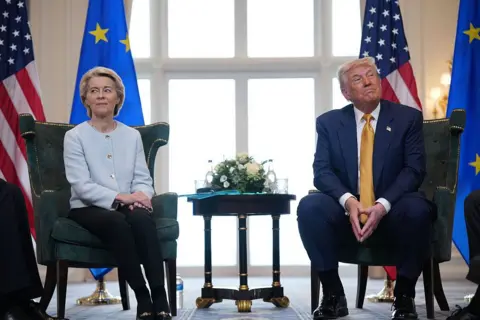
It was all handshakes and smiles when European Commission chief Ursula von der Leyen and US President Donald Trump announced that a EU-US trade agreement had been reached after months of wrangling - beating Trump's deadline of 1 August to make a deal.

Many across Europe breathed a sigh of relief that European negotiators had avoided 30% tariffs threatened by Trump months ago. Other countries are still racing to finalise deals with the US to avoid sweeping levies.

But since news of the US-EU deal was announced last weekend, not only has criticism mounted, but it has become clear many details are yet to be ironed out, there are several discrepancies between the two sides and some EU countries will be disproportionately affected.

Only a first step?


Few European leaders rejoiced at the announcement that a 15% tariff would be applied on most EU exports to the US - an improvement on the 30% tariff initially threatened by Trump, but still a substantial hike from the former 4.8% average rate.

Yet, while expressing regret that the EU had not adopted a tougher negotiating stance, many begrudgingly agreed the deal had at least brought a semblance of certainty and predictability to Europe's businesses after a number of fraught months.

"I would have wished for a different outcome," Germany's finance minister Lars Klingbeil said. "Still, all in all, it is good that there is an agreement with the US, that there are no further escalations."

As of Thursday, a joint statement had yet to be released, although the Commission has emphasised it will not be a legally binding document but a "set of political commitments".

"From there will flow the additional negotiated exemptions that we're looking to bake into our agreement with the US," Commission trade spokesperson Olof Gill said.

The Commission's general outline of the deal stressed it was not legally binding.

The White House fact sheet on the agreement presents none of these caveats and says it achieves "historic structural reforms", but US Commerce chief Howard Lutnick admitted on Wednesday that talks would continue and that EU and US officials were still discussing some aspects of the framework.

"This isn't the end of the story and we won't leave it at that," French President Emmanuel Macron said. "It's the first step in a negotiation process that will continue."

Trade agreements usually take between 18 and 24 months of bilateral negotiations, says Cinzia Alcidi of the Centre for European Policy Studies in Brussels. "To give some certainty to the industry and private sectors now, the 15% blanket tariff will apply – but then there will be efforts to get some goods a different deal," she says.

Key discrepancies and interpretations


According to the White House, pharmaceuticals and semiconductors will fall under the 15% tariff, with no mention of that number being the upper limit.

But the EU says the two sectors will remain on the current 0% rate for now and until new global tariff rates are agreed. Any future tariffs, according to the EU, will be capped at 15%.

Tariffs on steel and aluminium, according to the US, will remain at 50%. The EU says Brussels and Washington will work to cut that number and that they will be replaced by a quota system to come beyond 1 August.

Some of the most glaring discrepancies can be found in the language used by the two sides to describe the EU's investment commitments.

Where the US statement says the EU "will" purchase $750bn (£568bn) in US oil, liquefied natural gas (LNG) and nuclear energy products, the EU says only that it "intends" to do so as it weans itself off Russian gas and oil.

Not only is it unclear whether the US can even provide such amounts to the EU, says Cinzia Alcidi, but the EU cannot decide purchases on behalf of the private sector.

Similarly, the US says the EU will invest $600bn by the end of Trump's second term – but the EU states simply that "companies have expressed interest" in investing that sum by 2029. As Brussels cannot force private firms to invest in the US, there is technically no guarantee that amount can or will be reached.

According to the US, the EU has "agreed to purchase significant amounts" of US military equipment. There is no mention of this in the EU statement.

Nearly 80% of the EU's defence investment already goes to the US, and scaling up further may not be possible; besides, such a commitment would be at odds with von der Leyen's recent ReArm Europe plan, which calls for investments in Europe's domestic defence industry.

And while negotiations continue, the US will also apply a 15% tariff on wine and spirits, the Commission said on Thursday, adding it would continue to try and achieve a carve-out.

On Wednesday, Macron said the agreement had the merit of offering "predictability in the short term" - but also called for Europe to be firmer with the US.

"In order to be free you have to be feared. We weren't feared enough," he said.

Given the amount of detail that still needs hammering out, the next phase of negotiations is set to continue for some time - and after the backlash the Commission received this week, European negotiators may feel under greater pressure to stand their ground.

Getty Images
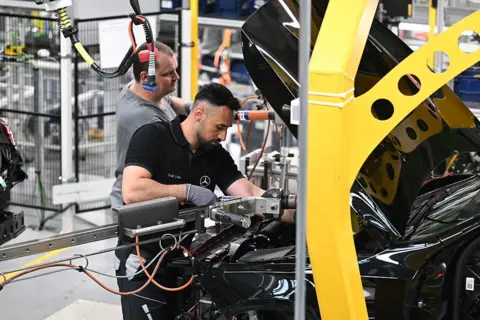
The German automotive industry will face billions in extra costs from the new tariffs

Which countries will be worse off?

Although the 15% tariffs will hit all European countries, they will affect them in different ways.

Germany, Ireland and Italy are particularly exposed due to the nature of their partnerships with the US. For Germany's carmakers, the US represents 13% of their exports worth €34bn (£29bn). Hildegard Müller, president of the German Association of the Automotive Industry, said the new tariffs would be a costly burden.

Among EU countries, Ireland is the most reliant on the US as an export market. In particular it manufactures and exports pharmaceuticals worth $50bn a year – so Dublin welcomed the EU-US agreement through gritted teeth. "It is what it is and we move on," said Neale Richmond, a minister of state in Ireland's foreign affairs department.

Italy's agricultural, pharmaceutical and automotive sectors will also suffer and the country's gross domestic product (GDP) could take a 0.2% hit as a result of the 15% levy, according to the Italian Institute of International Political Studies.

Cristiano Fini of the Italian Confederation of Farmers said the deal with the US felt more like "a surrender" than an agreement. Several Italian trade associations are now already clamouring for compensation from the EU to make up for the predicted losses.

But that is exactly what the EU needs to resist, says Cinzia Alcidi.

Blanket compensation for EU exporters would end up costing taxpayers, she believes, "and that would constitute a great victory for Trump because it would mean that, ultimately, Europeans are paying the price of his tariffs".


Trump’s gangsterism towards the EU is working

The US-EU tariff deal is a disaster for the European economy.


By Bruno Maçães
International Politics
29 July 2025
NEW STATESMAN 
Photo by Thierry Charlier/AFP

In 2018, when Donald Trump threatened to impose tariffs on European cars, then-president of the European Commission, Jean-Claude Juncker, responded: “We can also do stupid.” When Trump then imposed steel and aluminium tariffs, the EU responded by targeting Harley-Davidson motorbikes and bourbon. It wasn’t long before the two economic blocs agreed to put further tariffs on hold. It was a different time.

Juncker, of course, was cut from a different cloth from today’s Commission president Ursula von der Leyen and many of the current European leaders. He had not danced the night away in Berlin in November 1989, as the Wall fell, and was not too inclined to believe in teenage ideas such as the end of history or America as a force for good in the world. He knew, as former French president François Mitterrand once put it, that between America and Europe there is a bloody economic war going on at all times, and there has been one for more than a century.

But let us be fair to von der Leyen. There is another difference between today and 2018: the war in Ukraine. For all the pablum about how the war has awakened Europe from its geopolitical slumber, the truth is very different. The war has made Europe entirely dependent on the US — even as it continues to pay for most of the war expenses — because of the belief that without American weaponry Ukraine would sooner or later be defeated.

It is a wonderful position for Donald Trump to be in. He can effectively threaten Ukraine with a tragic defeat and the EU with the consequences of such an outcome by simply allowing the withdrawal of all support for Kyiv to hover above the economic negotiations. “What a nice country Ukraine is,” he says ominously to Europeans, “it would be terrible if something happened to it.” There are no economic discussions taking place at the moment; rather, it’s the logic of military force supplanting every economic discussion.

The gangsterism has been effective. Terribly effective in fact as evidenced by the bizarre deal announced by von der Leyen over the weekend: for the privilege of paying tariffs of 15 per cent to export to the American market, the EU will reduce its own tariffs and prepare significant transfers of funds to the US energy and defense industries, themselves an informal part of the American state. I have to confess I have never seen a trade deal quite like this one where European concessions were seemingly exchanged for… more European concessions.

It’s a catastrophic outcome for a series of reasons. First, more than any other crisis in my lifetime, the deal undermines the very raison d’etre for the European Union. If the EU is after all too weak, too divided, too timid to defend European interests on the global stage, what exactly is it for? The individual states can surely be weak on their own.

Second, while European leaders have often expressed their distaste for the kind of politics Donald Trump represents, they are also the best possible argument for Trump: after all, if he can extract significant tribute from wealthy European societies, in a way his predecessors could not, why should Americans vote for anyone else? And in fact, after the deal was announced, social media was flooded by Maga accounts celebrating a victory, even turning it into a battle of the sexes, with von der Leyen coming out defeated and humiliated. Good job, everyone in the Berlaymont, you made us proud.

Third, the deal is a disaster for the European economy. We saw the impact the day after the announcement: investment banks are revising their growth forecasts for Europe and the euro fell steeply against the dollar. This is particularly hard to take because it reverses very positive dynamics after Trump returned to the White House and global investors started to look at Europe as a more predictable place to park their money. Why should they do that now that exports to the US market may fall by about 30 per cent as a result of the tariffs and investment in European technology looks doomed with the necessary funds going to buy American weapons and natural gas instead of European weapons and wind turbines.

Note how the deal determines that Europe continues to subsidise the military industrial complex in North Virginia instead of investing in its own military technology. Such investment would help Ukraine survive, but it would also reduce Europe’s vulnerability and create a level playing field for transatlantic relations. That’s the last thing Trump wants. This deal is disastrous on its own terms and doubly disastrous for creating the conditions for many similar deals in the future.

The irony is that Europeans spend an enormous amount of time discussing among themselves why their economies are falling behind the boisterous US economy. One American company, Nvidia, may soon be worth more than the 50 largest European companies. What explains this? Might it be an excess of regulation, as Mario Draghi likes to say? A taste for la dolce vita? Too much wine? Too much espresso? Perhaps Europeans lack the entrepreneurial drive of Americans, the typical justification of every colonised mind and yet not uncommon in parts of Europe. What a mystery.

Unless, of course, it has something to do with Europe’s extreme vulnerability and America’s willingness to use its unmatched military power to shape economic outcomes. Yes, it might be that.


Mexico expects to reach tariff agreement with US this week
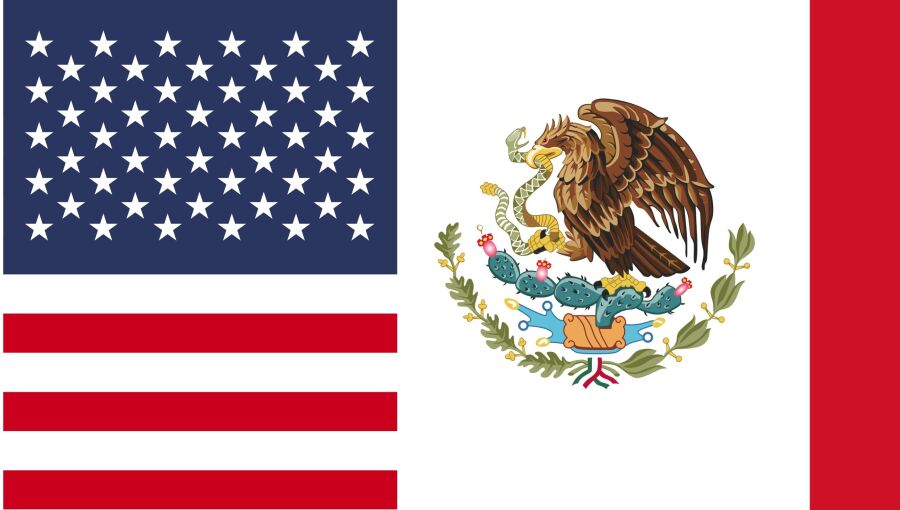
Mexico expects to reach tariff agreement with US this week
Mexico hopes to reach agreement on tariffs with US. / bne IntelliNews

By bnl Mexico City bureau July 30, 2025

Mexican President Claudia Sheinbaum stated on July 28 that she expects to reach an agreement with the United States this week, days before new tariffs take effect on August 1. The Mexican leader expressed optimism during her regular press conference whilst acknowledging differing positions between both nations.

"There is an agreement that they (United States) signed with Japan, with the European Union yesterday, with other countries, and we expect an agreement this week. So, we will continue reporting," Sheinbaum declared during her morning briefing.

US President Donald Trump announced on July 12 his intention to impose 30% tariffs on Mexican products from August 1, citing the "fentanyl crisis" as justification. However, American institutions report a 50% reduction in synthetic opioid flows into US territory during Sheinbaum's administration, which began on October 1, linked to increased seizures on Mexico's side of the border.

The president categorically denied media reports of US "pressure" to extradite alleged politicians linked to drug trafficking, describing such claims as "absolutely false." She attributed these reports to columnists seeking to project privileged access to information, dismissing them as falsehoods.

Sheinbaum emphasised that no telephone conversations with Trump or other bilateral official communications have requested specific individual extraditions related to political connections or current politicians. The president reiterated the main topics discussed with the American government, including migration policy.

"They have a migration policy. Mexico has developed different actions with respect to human rights to prevent the arrival of people of other nationalities to the northern border. I repeat: within the framework of mobility and respect for human rights," she stated.

Her administration has also requested US recognition for Mexican workers whilst seeking mechanisms for undocumented labourers supporting America's economy to access development opportunities.

Mexican cartels exploit Ukraine war to acquire military drone technology

Mexican cartels exploit Ukraine war to acquire military drone technology
The revelations cement Ukraine’s inadvertent role as a premier training ground for modern asymmetric warfare techniques amid its conflict with Russia. / unsplash
By bne IntelliNews July 30, 2025

Ukrainian counterintelligence has discovered that criminal organisations from Mexico and Colombia have been exploiting the country's volunteer recruitment programme to acquire advanced military drone capabilities for use in narcotics trafficking operations.

The scheme, first reported by French publication Intelligence Online, came to light following intelligence sharing between Mexico City and Kyiv, revealing that individuals with suspected cartel connections had deliberately enlisted in Ukraine's International Legion under false pretences to gain access to cutting-edge unmanned aerial vehicle training.

Unlike genuine volunteers motivated by solidarity with Ukraine's defensive struggle, these operatives reportedly sought specific technical instruction in First-Person View drone operations – skills highly valued by criminal networks seeking tactical advantages in territorial disputes and enforcement activities.

The discovery has prompted Ukrainian authorities to reassess screening procedures for foreign recruits, particularly those from regions with significant organised crime presence.

The infiltration effort demonstrates remarkable sophistication, with suspects employing false identities, forged documentation and front companies to facilitate their passage into Ukrainian territory and military structures.

Intelligence analysts have identified a network of private security firms across Latin America that appear to have coordinated these placements. Companies operating from Mexico, Colombia and other regional centres allegedly provided fraudulent credentials and logistical support to enable suspect individuals to reach Ukrainian training facilities.

One particularly concerning case involved an operative codenamed Aguila-7, who successfully embedded within a specialised Ukrainian unit for several months whilst maintaining a humanitarian cover story. He joined the International Legion in March 2024 using false Salvadoran documentation and completed comprehensive training at facilities in Lviv.

His exceptional pre-existing technical knowledge, including familiarity with electronic warfare countermeasures and thermal detection avoidance, eventually aroused instructor suspicion. Background investigations later revealed probable connections to Mexico's elite GAFE special forces, some of whose former personnel have historically transitioned to cartel employment, notably through the ultra-violent Zetas organisation.

Additional cases have emerged involving former FARC guerrillas who infiltrated the system using Panamanian and Venezuelan identity documents, with at least one individual identified through distinctive tattoos and accent patterns captured in internal training videos.

The revelations cement Ukraine’s inadvertent role as a premier training ground for modern asymmetric warfare techniques amid its conflict with Russia. The country's unique operational environment has fostered rapid innovation in low-cost, high-impact military technologies that could prove highly attractive to non-state actors worldwide.

Ukrainian facilities have developed comprehensive curricula covering drone manufacturing, tactical deployment, electronic warfare resistance and real-time battlefield coordination. These capabilities represent exactly the type of force multiplication that criminal organisations seek to enhance their operational effectiveness.

Speaking anonymously to Intelligence Online, an SBU official summarised the gravity of the situation: "We welcomed volunteers in good faith. But we must now recognise that Ukraine has become a platform for the global dissemination of FPV tactics. Some come here to learn how to kill with a $400 drone, then sell this knowledge elsewhere to the highest bidder."

Security experts warn that the knowledge transfer could significantly alter criminal conflict dynamics across Latin America, where cartels already employ increasingly sophisticated military-style tactics and equipment in their operations.

The concerns stretch well past regional boundaries, as similar infiltration attempts could theoretically originate from other areas with substantial organised crime presence or hostile state actors seeking access to battlefield-tested technologies.

Since the start of Russia’s full-scale invasion in February 2022, Ukrainian security services have implemented enhanced vetting procedures in coordination with international partners, including expanded background checks and closer monitoring of volunteer activities within sensitive training programmes.

The investigation has been elevated to specialised counterintelligence units typically reserved for protecting critical state assets and preventing technology transfer to unauthorised recipients. Since 2023, these divisions have worked closely with military intelligence structures to filter foreign access to sensitive training modules and prevent doctrine transfer to unauthorised actors.

Spanish-speaking volunteers suspected of ulterior motives have had their data cross-referenced with Interpol and US Drug Enforcement Administration databases, with several individuals flagged for potential criminal backgrounds or connections to narco-paramilitary organisations.

Officials acknowledge the challenge of balancing legitimate international support for Ukraine's defensive efforts against the risk of exploitation by criminal elements. But the volunteer programme has provided valuable personnel and expertise to Ukrainian forces, making wholesale restrictions problematic.

The broader implications extend to other conflict zones where similar technology transfer risks might emerge, adding pressure to the need for coordinated international approaches to preventing criminal exploitation of military training opportunities.



ORWELLIANISM

US imposes visa sanctions on Palestinian Authority, PLO officials for 'undermining' peace


The US State Department on Thursday announced sanctions on officials of the Palestinian Authority and Palestine Liberation Organization for trying to "internationalise” their conflict with Israel, including by bringing cases to the International Criminal Court, and "undermining the prospects for peace".


Issued on: 31/07/2025 - 
By: FRANCE 24

People participate in a protest in support of Palestine outside the UN as a conference on Palestine and a two-state solution takes place inside the UN on July 29, 2025 in New York City. © Stephanie Keith, Getty Images via AFP

The US imposed sanctions on Palestinian Authority officials and members of the Palestine Liberation Organization on Thursday, accusing them of undermining peace efforts with Israel even as other Western powers moved toward recognition of Palestinian statehood.

Reactions to possible German recognition of a Palestine state

© France 24
03:51


The State Department said it would deny visas for travel to the US by those it was targeting, although it did not name any specific individuals.

“It is in our national security interests to impose consequences and hold the PLO and PA accountable for not complying with their commitments and undermining the prospects for peace,” the State Department said in a statement.

Read more Calls for two-state solution for Israel, Palestinians at UN grow louder

The State Department said the two Palestinian organizations had “taken actions to internationalize” their conflict with Israel, including through the International Criminal Court, and said both had continued “to support terrorism.” The PA and PLO serve as representatives for the Palestinian people and have long pushed for recognition of a Palestinian state by international organizations and foreign nations. The two groups had no immediate comment on the US move.

The State Department made its announcement just a day after Canada said it planned to recognize the State of Palestine at a meeting of the United Nations in September, ratcheting up pressure on Israel as starvation spreads in the Palestinian enclave of Gaza.

France said last week it would back Palestinian statehood and Britain said it would do the same at September’s UN General Assembly meeting if the fighting in Gaza had not stopped by then.

Read more'
Enough was enough': Why France is now taking a stand on Palestinian statehood

US President Donald Trump has insisted that recognition of Palestinian statehood would wrongly reward Hamas, the militant group that is battling Israel in the Gaza Strip. Since returning to office in January, Trump has been vague on his position on a two-state solution to the conflict between Israel and the Palestinians.

Israel has denounced the moves by France, Britain and Canada.


‘Moral distortion’


Israeli Foreign Minister Gideon Saar, in a post on X, thanked the US for its “moral clarity” in sanctioning the Palestinian officials, saying the action “also exposes the moral distortion of certain countries that ran to recognise a virtual Palestinian state while turning a blind eye to its support for terror and incitement".

It was not immediately clear how the US visa ban would affect Palestinian diplomats.

Under the 1947 UN “headquarters agreement,” the US is generally required to allow access for foreign diplomats to the UN in New York. But Washington has said it can deny visas for security, terrorism and foreign policy reasons.

The U.S. sanctions follow an international conference this week at the UN, hosted by France and Saudi Arabia, that aimed to work towards a two-state solution between Israel and the Palestinians. Israel and the US boycotted the event.

Also on Thursday, U.S. special envoy Steve Witkoff met Israeli Prime Minister Benjamin Netanyahu in a bid to salvage Gaza truce talks and tackle a humanitarian crisis in the enclave, where a global hunger monitor has warned that famine is unfolding.

The Gaza war began on October 7, 2023, when Hamas-led fighters stormed southern Israel, killing 1,200 people, mostly civilians, and taking 251 hostages back to Gaza, according to Israeli tallies.

Since then, Israel’s offensive has killed more than 60,000 people in Gaza, mostly civilians, according to Gaza health officials, reduced much of the enclave to ruins and displaced nearly the entire population.

(FRANCE 24 with Reuters)
Trump to Canada: Recognizing Palestinian state makes trade deal ‘very hard’

By Sean Previl 
 Global News
Posted July 31, 2025 


U.S. President Donald Trump says Canada’s intent to recognize a Palestinian state will make it “very hard” for the two countries to negotiate a trade deal.

“Wow! Canada has just announced that it is backing statehood for Palestine. That will make it very hard for us to make a Trade Deal with them,” Trump said on Truth Social.

The president made the post on his social media platform early on Thursday, hours after Prime Minister Mark Carney announced that Canada intends to recognize Palestinian statehood at the United Nations General Assembly in September.

That recognition, however, is conditional, Carney said Wednesday evening.

“This intention is predicated on the Palestinian Authority’s commitment to much-needed reforms, including commitments by the Palestinian Authority’s President (Mahmoud) Abbas, to fundamentally reform its governance, to hold general elections in 2026 in which Hamas can play no part, and to demilitarize the Palestinian state,” Carney said.

Israel and the United States, Israel’s closest ally, both rejected Carney’s comments.
STORY CONTINUES BELOW ADVERTISEMENT


The Prime Minister’s Office said Carney “reaffirmed Canada’s commitment to a two-state solution” in a call with Abbas but also informed him of the conditions surrounding Canada recognizing Palestinian statehood.

“Prime Minister Carney welcomed President Abbas’ commitment to these reforms,” the readout says.

In his comments Wednesday, Carney said actions such as increased settlements by Israel and restrictions on aid into Gaza have undermined the hope of achieving a two-state solution through a negotiated process.

He cited the factors as among those weighing on his decision for Canada’s planned recognition of Palestinian statehood.

Those aid restrictions appeared to slightly loosen last week, allowing for food and medicine to reach Gaza and on Thursday, Canadian aid was among the packages airdropped.


Foreign Affairs Minister Anita Anand said Jordan was helping to drop Canadian aid, and posted a photo of pallets with Canadian flags taped to them.

Carney’s decision followed France and Britain also indicating they would recognize a Palestinian state, though French President Emmanuel Macron said the recognition would come without conditions.

Britain, however, said its recognition would come unless Israel takes substantive steps to end the “appalling situation” in Gaza and meets other conditions.

Trump has previously said recognition of Palestinian statehood would reward the Palestinian militant group Hamas.

“You’re rewarding Hamas if you do that. I don’t think they should be rewarded,” he said on board Air Force One on Tuesday.

White House press secretary Karoline Leavitt added that recognition of Palestinian statehood could have further impacts on ending the conflict.

“He (Trump) feels as though that’s rewarding Hamas at a time where Hamas is the true impediment to a ceasefire and to the release of all the hostages,” Leavitt said Thursday.

U.S. State Department deputy spokesperson Tommy Pigott told reporters recognition could “hurt the prospect for peace.”

The U.S. also imposed sanctions on Thursday on Palestinian Authority officials and members of the Palestine Liberation Organization, saying the groups were undermining peace efforts.

Trump’s comments Thursday come just before an Aug. 1 deadline set by him for countries to reach trade deals with the U.S. or face higher tariffs.


Trump is set to impose a 35 per cent tariff on all Canadian goods that are not covered by the Canada-U.S.-Mexico trade agreement (CUSMA) if a new trade and security agreement is not reached by the deadline.

The prime minister said “constructive” negotiations with the Americans were ongoing, but cautioned they may not conclude by Aug. 1.

“These are complex, they’re comprehensive, they’re constructive negotiations with the Americans (that) are ongoing,” Carney said. “It’s possible that they may not conclude by the first of August, but we’ll see.”

Canada is the second-largest U.S. trading partner after Mexico, and the largest buyer of U.S. exports. It bought $349.4 billion of U.S. goods last year and exported $412.7 billion to the U.S., according to U.S. Census Bureau data.

The U.S. has levied a 50 per cent tariff on steel and aluminum products and 25 per cent on the automotive industry, and plans to implement a 50 per cent on copper imports starting Friday.

Last month, Carney’s government scrapped a planned digital services tax targeting U.S. technology firms after Trump abruptly called off trade talks, saying the tax was a “blatant attack.”

— with files from Global News’ Sean Boynton, Reuters and The Canadian Press

Desperate Trump’s anger at Canada only exposes how thin his threats really are

Story by Andrew Buncombe 
iNEWS
Issued on: 31/07/2025


Donald Trump and Canadian Prime Minister Mark Carney at the G7 Leaders’ Summit in June (Photo: Getty)

When Donald Trump returned to the White House in January he quickly started attacking one of America’s closest allies – Canada.

He targeted not only individuals such as Justin Trudeau, but suggested all the country’s 41 million citizens be annexed into becoming the US’s 51st state. 

When he started threatening tariffs of as much as 25 per cent, many Canadians expressed fury at what they felt was an act of utter betrayal.

Six months on, Trump is at it again, with new threats for America’s northern neighbour, as the 1 August deadline to reach a trade deal ticks closer.

“Wow! Canada has just announced that it is backing statehood for Palestine,” Trump said on social media. “That will make it very hard for us to make a trade deal with them.”

The announcement by Prime Minister Mark Carney that he would recognise a state of Palestine came as concern about the suffering of civilians in Gaza has intensified, the death toll has passed 60,000, and images of starving and utterly malnourished children have dominated some of the world’s media. 

“The level of human suffering in Gaza is intolerable and it is rapidly deteriorating,” Carney said. “The prospect of a Palestinian state is being eroded before our eyes.”


His move followed a similar announcement from the UK and France. Indeed,  147 of the UN’s 193 member states recognise Palestine, which is currently a “permanent observer state” at the world body.

When Trump met Keir Starmer in Scotland last weekend, he said for the first time there was “real starvation” in Gaza and urged Israel to allow “every ounce of food” into the Palestinian enclave.

Since the 7 Oct 2023 Hamas attacks, Israel has slowly seen international support dwindle as its military response has often been seen as disproportionate. 

At the same time, the UN and other groups have accused it of failing to permit the sufficient flow of aid into Gaza.

This is a claim Israel rejects, but every day there are reports of Palestinians being killed as they seek to obtain aid from the controversial Gaza Humanitarian Foundation, a group backed by the Israeli and US governments which took over responsibility for aid distribution earlier this year.

The Hamas-run health ministry says 91 people have been killed while seeking aid in the last 24 hours.

For all Benjamin Netanyahu’s insistence Israel is doing everything it can to help Gazans, he has fewer and fewer allies.

Trump is certainly the most powerful of them and has continued to back a ceasefire in Gaza that could allow more aid and the return of the remaining hostages. Netanyahu met Trump’s envoy Steve Witkoff on Thursday but there was no immediate talk of a breakthrough.

The US has a long history of giving political cover to Israel, vetoing UN critical resolutions and sending billions of dollars of weapons and aid.

Trump now has no easy way out. With even members of his own Maga base, such as Marjorie Taylor Greene saying what is happening in Gaza is “genocide”, he faces a divided Republican Party.

The US president did manage to broker the Abraham Accords during his first term, which saw diplomatic relationships established between Israel and a series of Muslim nations, namely the United Arab Emirates, Bahrain, Morocco and Sudan. 

But he is not known for his love of slow and difficult diplomacy. He much prefers to announce “deals” and “wins” with a showman’s flourish, hoping that if he talks loudly enough nobody will pay attention to the small print.

In terms of Gaza, there’s no quick or easy way for the US to go.

Better then for him to reach for the distraction playbook and attack Canada, hoping to avoid taking responsibility for the horrors in Gaza and lining up an easy scapegoat should the trade deal fall through.
Canada intends to recognize Palestinian state at UN General Assembly: Carney

Ottawa (AFP) – Canada plans to recognize a Palestinian state at the UN General Assembly in September, Prime Minister Mark Carney said Wednesday, a major policy shift that drew an angry response from US President Donald Trump and was rejected by Israel.


Issued on: 31/07/2025 - FRANCE24

Canadian Prime Minister Mark Carney exits a press conference after announcing plans to recognize a Palestinian state © Dave Chan / AFP


Carney said the move was necessary to preserve hopes of a two-state solution to the Israeli-Palestinian conflict, a long-standing Canadian goal that was "being eroded before our eyes."

"Canada intends to recognize the State of Palestine at the 80th Session of the United Nations General Assembly in September 2025," the prime minister said.

This makes Canada -- a G7 nation -- the third country, following recent announcements by France and the United Kingdom, to signal plans to recognize a Palestinian state in September.

Carney said the worsening suffering of civilians in Gaza left "no room for delay in coordinated international action to support peace.

Israel blasted Canada's announcement as part of a "distorted campaign of international pressure," while Trump warned that trade negotiations with Ottawa may not proceed smoothly.

"Wow! Canada has just announced that it is backing statehood for Palestine," the US president wrote on his Truth Social platform.

"That will make it very hard for us to make a Trade Deal with them."

Asked by reporters if there was a scenario where Canada could change its position before the UN meeting, Carney said: "there's a scenario (but) possibly one that I can't imagine."

Canada's intention "is predicated on the Palestinian Authority's commitment to much-needed reforms," Carney said, referring to the body led by President Mahmoud Abbas, which has civil authority in parts of the Israeli-occupied West Bank.

Carney said his plans were further predicated on Abbas's pledge to "hold general elections in 2026 in which Hamas can play no part, and to demilitarize the Palestinian state."

'Historic' decision


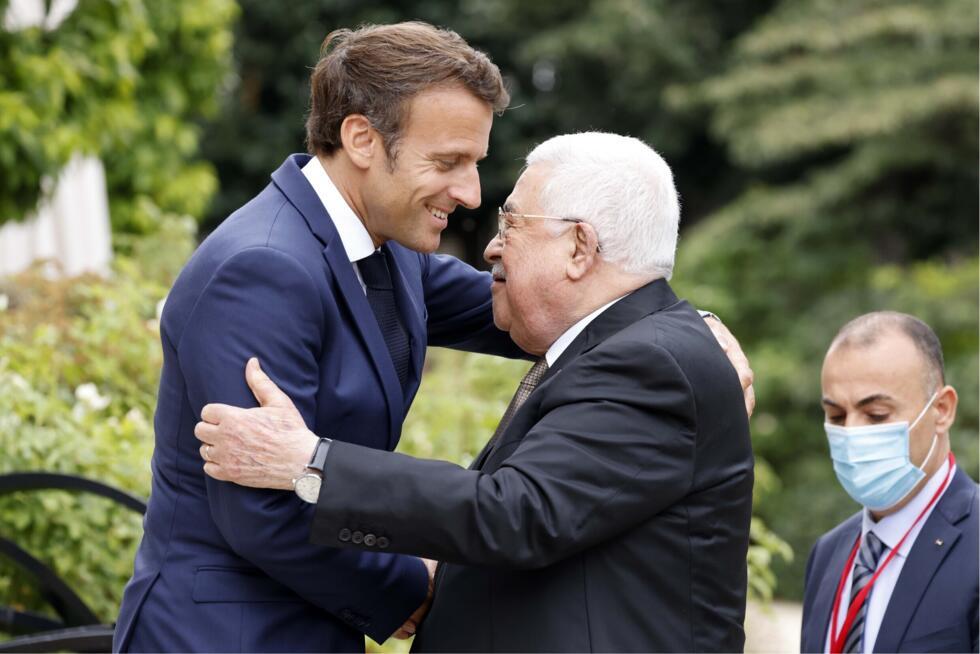
French President Emmanuel Macron (L) wants to work to achieve peace with Palestinian Authority President Mahmoud Abbas (R) © Ludovic MARIN / AFP/File


With Wednesday's announcement, Carney positioned Canada alongside France, after President Emmanuel Macron said his country would formally recognize a Palestinian state during the UN meeting, the most powerful European nation to announce such a move.

The Israeli embassy in Ottawa said "recognizing a Palestinian state in the absence of accountable government, functioning institutions, or benevolent leadership, rewards and legitimizes the monstrous barbarity of Hamas on October 7, 2023."

The PA's Abbas welcomed the announcement as a "historic" decision, while France said the countries would work together "to revive the prospect of peace in the region."

Canada's plan goes a step further than this week's announcement by British Prime Minister Keir Starmer.

Starmer said the UK will formally recognize the State of Palestine in September unless Israel takes various "substantive steps," including agreeing to a ceasefire in Gaza.
Two-state solution

Carney stressed that Canada has been an unwavering member of the group of nations that hoped a two-state solution "would be achieved as part of a peace process built around a negotiated settlement between the Israeli government and the Palestinian Authority."

"Regrettably, this approach is no longer tenable," he said, citing "Hamas terrorism" and the group's "longstanding violent rejection of Israel's right to exist."

The peace process has also been eroded by the expansion of Israeli settlements across the occupied West Bank and east Jerusalem, Carney said.

The prime minister said a two-state solution was growing increasingly remote, with a vote in Israel's parliament "calling for the annexation of the West Bank," as well as Israel's "ongoing failure" to prevent humanitarian catastrophe in Gaza.

He framed his decision as one aimed at safeguarding Israel's future.

"Any path to lasting peace for Israel also requires a viable and stable Palestinian state, and one that recognizes Israel's inalienable right to security and peace," Carney said.

© 2025 AFP


Statement by Prime Minister Carney on Canada’s recognition of a Palestinian state


July 30, 2025
Ottawa, Ontario

“Canada has long been committed to a two-state solution – an independent, viable, and sovereign Palestinian state living side by side with the State of Israel in peace and security.

For decades, it was hoped that this outcome would be achieved as part of a peace process built around a negotiated settlement between the Israeli government and the Palestinian Authority.

Regrettably, this approach is no longer tenable. Prospects for a two-state solution have been steadily and gravely eroded, including by:The pervasive threat of Hamas terrorism to Israel and its people, culminating in the heinous terrorist attack of October 7, 2023, and Hamas’ longstanding violent rejection of Israel’s right to exist and a two-state solution.
The accelerated settlement building across the West Bank and East Jerusalem, while settler violence against Palestinians has soared.
Actions such as the E1 Settlement Plan and this month’s vote by the Knesset calling for the annexation of the West Bank.
The ongoing failure by the Israeli government to prevent the rapidly deteriorating humanitarian disaster in Gaza, with impeded access to food and other essential humanitarian supplies.

The deepening suffering of civilians leaves no room for delay in co-ordinated international action to support peace, security, and the dignity of all human life. Preserving a two-state solution means standing with all people who choose peace over violence or terrorism, and honouring their innate desire for the peaceful co-existence of Israeli and Palestinian states as the only roadmap for a secure and prosperous future.

For these reasons, Canada intends to recognize the State of Palestine at the 80th Session of the United Nations General Assembly in September 2025.

This intention is predicated on the Palestinian Authority’s commitment to much-needed reforms, including the commitments by Palestinian Authority President Abbas to fundamentally reform its governance, to hold general elections in 2026 in which Hamas can play no part, and to demilitarize the Palestinian state. Canada will increase its efforts in supporting strong, democratic governance in Palestine and the contributions of its people to a more peaceful and hopeful future.

We reiterate that Hamas must immediately release all hostages taken in the horrific terrorist attack of October 7; that Hamas must disarm; and that Hamas must play no role in the future governance of Palestine. Canada will always steadfastly support Israel’s existence as an independent state in the Middle East living in peace and security. Any path to lasting peace for Israel also requires a viable and stable Palestinian state, and one that recognizes Israel’s inalienable right to security and peace.

Canada has already committed over $340 million in humanitarian aid to address the dire humanitarian situation in Gaza, including $30 million in new funding to help address the needs of Palestinian civilians and $10 million to support the Palestinian Authority’s role in stabilizing and governing the West Bank.

We will intensify our efforts with our international partners to develop a credible peace plan that establishes governance and security arrangements for Palestine and ensures the delivery of humanitarian aid at the necessary scale to Gaza. Canada will be a constructive partner in building a just, meaningful, and lasting peace in the region, and a future that respects the dignity, security, and aspirations of all Palestinians and Israelis.”

Canada plans to recognize Palestinian state in September

CBC
Wed, July 30, 2025 


Prime Minister Mark Carney said Canada plans to formally recognize the state of Palestine at the United Nations General Assembly this fall. (Adrian Wyld/The Canadian Press - image credit)


Prime Minister Mark Carney says Canada will recognize a Palestinian state in September if the West Bank's governing body agrees to make certain commitments.

The prime minister said the Palestinian Authority must hold an election in 2026 and commit to other democratic reforms.

"Preserving a two-state solution means standing with all people who choose peace over violence or terrorism, and honouring their innate desire for the peaceful co-existence of Israeli and Palestinian states as the only roadmap for a secure and prosperous future," Carney said during a news conference on Wednesday.


He said Canada would formally recognize the state of Palestine at the UN General Assembly.

Carney's announcement came after he spoke to Palestinian Authority President Mahmoud Abbas earlier Wednesday.

Mona Abuamara, the former chief representative of the Palestinian General Delegation to Canada, told CBC's Power & Politics that she believes the commitments Carney set out are achievable.

"The Palestinian people have been living hell for two years. They know what they want. They need the opportunity to actually build their own state," she told guest host David Common

The Palestinian Authority currently controls parts of the West Bank through the Fatah party. Hamas governs in Gaza. Neither territory has held an election since 2006.

Carney said Hamas can have no role in the election he is proposing. He also reiterated that Hamas needs to release the remaining Israeli hostages and said a Palestinian state must be demilitarized.

The announcement follows similar commitments from other allied countries in the past week.

British Prime Minister Keir Starmer said Tuesday the U.K. will also recognize a Palestinian state in September unless Israel agrees to a ceasefire in Gaza, allows the UN to bring in aid and takes other steps toward long-term peace

France announced a similar plan last week, but without conditions. Ireland, Norway and Spain have all recognized Palestine within the last year.

Carney said he has spoken to both Starmer and French President Emmanuel Macron in recent days.

"In our judgment, and the judgment of others, the prospect of a Palestinian state is literally receding before our eyes," the prime minister said.

"Working with others to support the possibility of a Palestinian state establishes that [prospect]."

Canadian governments previously said they would acknowledge a Palestinian state only after a negotiated peace agreement between Israel and Palestinian leadership. Carney said that approach was "no longer tenable."

Carney said the ongoing threat of Hamas, the expansion of Israeli settlements in the West Bank and "the ongoing failure by the Israeli government to prevent the rapidly deteriorating humanitarian disaster in Gaza" spurred Canada to make this move now.
Israel rejects Canada's plans

The Israeli Foreign Ministry said its government "rejects" Carney's move.

"The change in the position of the Canadian government at this time is a reward for Hamas and harms the efforts to achieve a ceasefire in Gaza and a framework for the release of the hostages," the statement said.

Iddo Moed, the Israeli Ambassador to Canada, told Power & Politics that Canada's decision would "embolden" Hamas.

"Hamas is very much aware of what is going on right now and I think they will be celebrating this very message," Moed said.

Noah Shack, CEO of the Centre for Israel and Jewish Affairs (CIJA), said in a news statement on Wednesday that Carney's decision is "predicated on misplaced faith in vague commitments" by Abbas.

"Extending recognition absent real change on the ground is a recipe for another failed Palestinian pseudo-state controlled by terrorists," Shack said.

More than 100 advocacy groups have been warning of hunger spreading in Gaza as ceasefire negotiations stall.

Israel, which controls all supplies entering Gaza, denies it is responsible for food shortages.

Carney was asked how likely it is that elections could be held given the ongoing humanitarian crisis in Gaza and the heightened tensions in the region overall.

"Much has to happen in order for a democratic viable state [to be] established in Palestine. We fully recognize that," Carney said.

"We're committed to help work as part of that process, but I'm not in any way [or] shape minimizing the scale of that task."


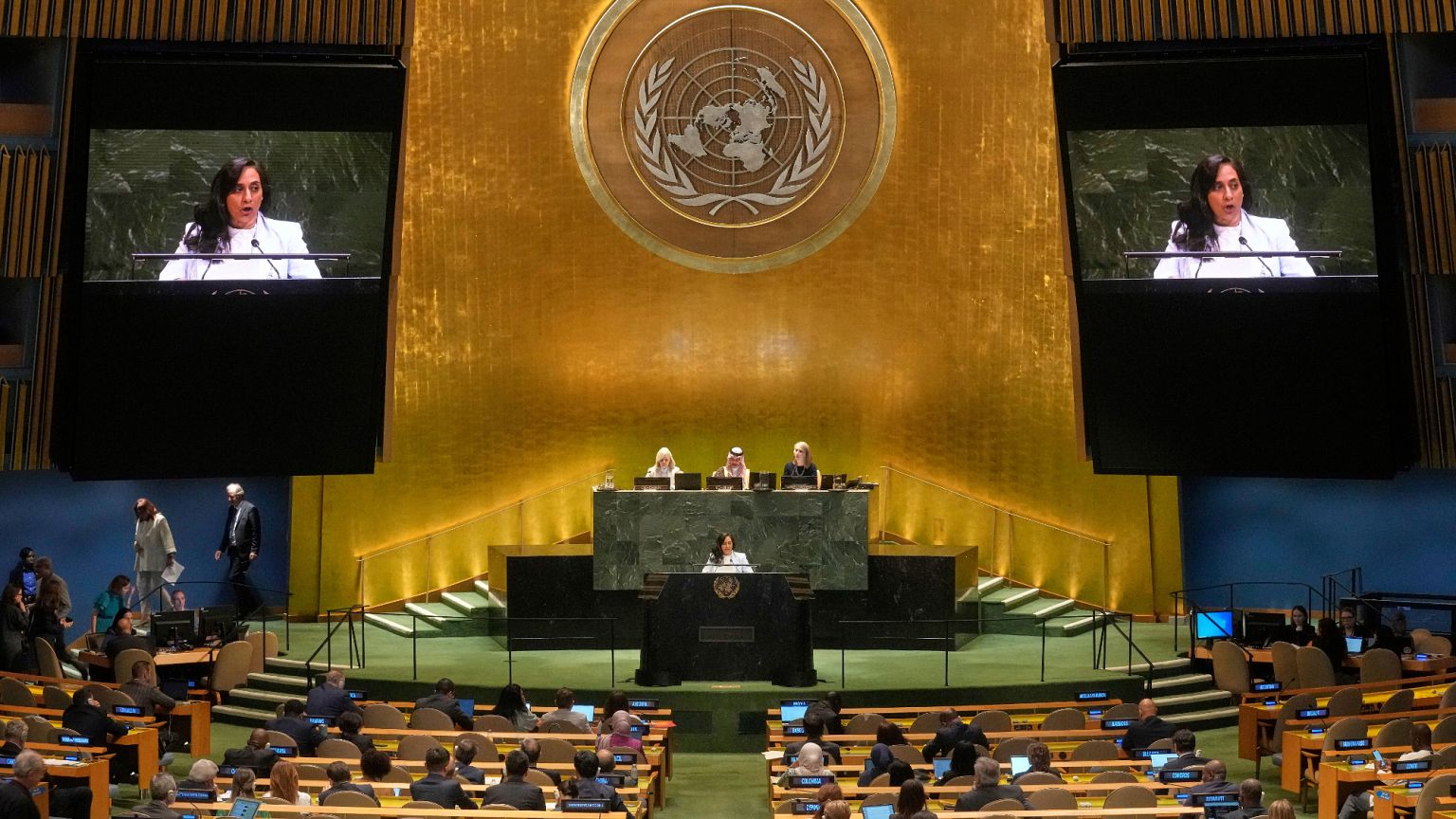
Foreign Affairs Minister Anita Anand spoke at a UN conference on the two-state solution earlier this week. (Richard Drew/The Associated Press)

Carney was joined by Foreign Affairs Minister Anita Anand, who announced $10 million to "to accelerate reform and capacity-building for the Palestinian Authority" earlier this week.

Anand's announcement was made at a major UN conference — convened by France and Saudi Arabia — to find ways to preserve the two-state solution.
Conservatives denounce decision

The Conservative Party said in a statement that it supports a two-state solution, but also said Carney's decision is a "reward" for Hamas.

"A unilateral declaration of Palestinian statehood, without peace negotiations or a renunciation of violence, destroys the path to a lasting, two-state solution. Worse, it legitimizes terrorism by handing political rewards to a group that rules Gaza through fear, oppression and brutality," the statement said.

NDP MP Heather McPherson said she welcomed Carney's decision but said it should have been made sooner. She also called on Canada to do more to end the humanitarian crisis in Gaza.

"It should not have taken the Liberals this long to make this decision — and it should not take until September to implement it," McPherson wrote in a statement.

"The Liberals should recognize the state of Palestine today — while also taking the political action necessary to end Canada's complicity in this genocide.

In the past week, a number of Liberal MPs have called on Canada to follow France's lead.

Toronto MP Salma Zahid and Montreal-area MP Sameer Zuberi said in social media posts that Canada must join France in announcing its recognition of a state for the Palestinian people.

Fares Al Soud, who represents the Toronto-area riding of Mississauga Centre, said on social media that justice for the Palestinian people "demands recognition."

Canada and Malta say they will recognise Palestine, joining France and UK
Copyright AP Photo/Richard Drew)By  Evelyn Ann-Marie DomPublished on 31/07/2025 -

It comes as high-level representatives met at a UN conference on a two-state solution, which Israel and the United States have boycotted.

Canada and Malta both announced on Wednesday that they plan to formally recognise the state of Palestine at the United Nations General Assembly in September, joining France and the United Kingdom, who announced earlier they would do so.

The move to recognise Palestine as a state comes amid a renewed push in Europe to put pressure on Israel to stop its devastating war in Gaza, which has led to widespread starvation in the strip, as well as to halt the expansion of settlements in the West Bank.

"The level of human suffering in Gaza is intolerable," Canada's Prime Minister Mark Carney speaking after a cabinet meeting on Wednesday, emphasising the need for international cooperation to ensure lasting peace and stability in the region.

"Canada has long been committed to a two-state solution. An independent, viable and sovereign Palestinian state living side by side with the state of Israel in peace and security," he added

In return, Canada wants to see "much-needed reforms" to the governance of the Palestinian Authority, including general elections to be held in 2026 with the exclusion of the militant group, Hamas.

"Canada will increase its efforts in supporting strong democratic governance in Palestine," Carney concluded.

Malta has long supported Palestinian sovereignty and the self-determination for its citizens. Christopher Cutajar, the permanent secretary at Malta’s Foreign Ministry, made the announcement earlier at a United Nations conference on a two-state solution.

"As responsible actors, we have a duty to work to translate the concept of a two-state solution from theory into practice," Cutajar said.

It comes a day after Prime Minister Keir Starmer also announced the United Kingdom would formally recognise the state of Palestine before the annual gathering of world leaders at the 193-member General Assembly in September.

French President Emmanuel Macron confirmed his country's decision to formalise the move in September a week earlier, which would make France the first G7 country and the first permanent member of the UN Security Council to recognise Palestine.

147 member states of the United Nations, including ten European Union member states already recognise the state of Palestine.

The act of recognition involves acknowledging the sovereignty and independence of Palestine within its pre-1967 Middle East war borders. This includes the West Bank, Gaza, and East Jerusalem.

Israel opposed a two-state solution and boycott the UN conference held in New York City, alongside its closest ally, the United States.


Peace Partnership: Arabs and Jews join forces to oppose Israel’s war

July 31, 2025 
PEOPLES WORLD


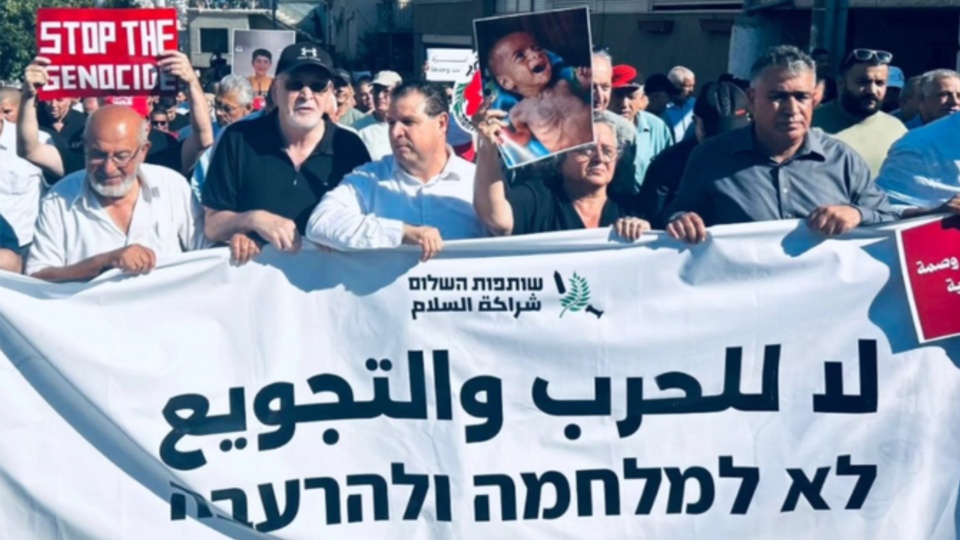
Leaders of the Democratic Front for Peace and Equality (Hadash) and the Communist Party of Israel march at the mass demonstration against the war and starvation held in Sakhnin. At center, holding the photograph, is MK Aida Touma-Suleiman. To the left, in the white shirt, is Hadash leader and MK Ayman Odeh. | Photo via Peace Partnership

SAKHNIN, Israel—With hunger worsening and genocide continuing in Gaza, this past weekend saw the largest joint Jewish-Arab/Palestinian demonstration inside Israel since the start of the war.

It was initiated by the Peace Partnership, a grassroots coalition of over 60 Jewish and Palestinian organizations established in December 2023. Formed in response to Israel’s devastating war in Gaza, the partnership calls for an immediate end to violence and a just political resolution.

Operating across Israel/Palestine, the Peace Partnership organizes joint demonstrations, peace conferences, public education campaigns, and community outreach efforts. It advocates five core principles: ending the war, an “all for all” hostage/prisoner exchange, a sustainable political solution, an end to racist and political persecution, and full civil and national equality for all.

“This demonstration is a step in the right direction,” organizers said at the start of the march, announcing that they will continue the struggle until the war ends. The event was co-sponsored by the Supreme Monitoring Committee for Arab Affairs in Israel.

It was also attended by Knesset members from the Hadash (Democratic Front for Peace and Equality) coalition, including Ayman Odeh, Ahmed Tibi, Aida Touma-Suleiman, and Ofer Cassif. The leaders of Hadash, the Communist Party of Israel, and a number of other political forces in Arab-Israeli society were on stage, as well.

During the demonstration, Hadash MK Touma-Suleiman, who is a member of the Communist Party, condemned the assault on Gaza, saying, “Enough with the starvation in Gaza, enough with the war of annihilation!”

Rally organizers said police tried to postpone or prevent the demonstration by making illegal demands. Officers also confiscated flags, posters, and banners on buses before participants arrived at the demonstration.

More than 10,000 Arabs and Jews from across the country participated in the march and rally, led by Hussein Halagh and Ronit Haimov of the Peace Partnership. The demonstration began with a march from the square of the Al-Nur Mosque toward the city hall square, where a ceremony was held in which speeches were made, among others, by the chairman of the Arab Society Monitoring Committee, Mohammad Barakeh, and the mayor of the city of Sakhnin, Mazen Ghnaim. Numerous police forces were present at the scene.

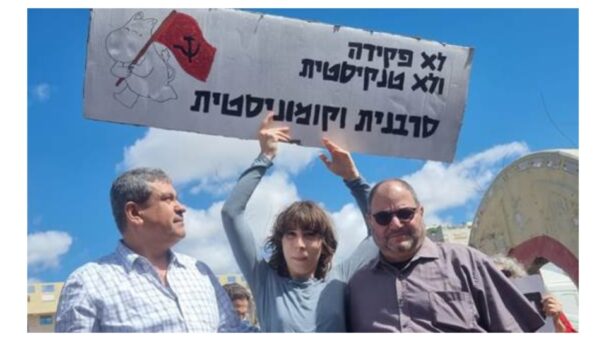
At center is Ella Keidar, holding a sign that reads: ‘Neither a clerk nor a tank driver – a refusenik and a Communist.’ She is flanked by Adel Amer, the General Secretary of the Communist Party of Israel, at left, and Hadash MK Ofer Cassif at right. The photo was taken during a demonstration held near the induction center at Tel-Hashomer when Keidar announced her refusal to serve in the Israeli Defense Forces, a decision for which she faced imprisonment. She was a featured speaker at this weekend’s rally in Sakhnin. | Photo via Zo Haderekh

In his speech, Ghnaim called for an end to the war and famine in Gaza: “We say this clearly: We and our people in Gaza are one people. We demand equality and full civil rights, no more wars.”

The mayor, who was previously a member of the Knesset for the United Arab List, added that he wants a new Middle East. “We want education, employment, health, and to raise our children and grandchildren in the best way possible,” he said. According to him, Arab society “wants to be partners with those who recognize our rights.”

Barakah, the chairman of the Monitoring Committee, said in his speech that the protesters “are here to say a clear word against the extermination.” He asked, “Why are the police mobilizing enormous forces for a legitimate and legal demonstration? This is an attempt to instill terror, but you will not scare us or silence the expression of our identity and belonging.

“We demand that the State of Palestine be declared a sovereign state under occupation. This is Palestinian land—in the West Bank, Jerusalem, and Gaza—and the occupation must leave,” stressed Barakeh.

Additional speeches called for an end to the war and for cooperation between Arabs and Jews who oppose government policy. Among the speakers were Dr. Anat Matar, a senior lecturer at Tel Aviv University, and Ella Keidar, a conscientious objector from Tel Aviv.

Matar is a member of Academics for Equality, an organization with around a thousand students and faculty members in its ranks who seek to promote leftist values in universities and colleges in diverse fields. She said:

“Since October 2023, we have organized on various campuses in protest against Israel’s murderous attack on Gaza, calling for an immediate ceasefire and the release of the hostages. But although we saw from the beginning the dimensions of the killing and destruction, the obliteration of cities and farmland, the abuse of prisoners in detention camps and prisons, and although we quickly realized that war crimes were becoming genocide, none of us anticipated such dimensions of destruction, of limitless cruelty, of starvation to death, of targeted shooting at people trying to get a little food, the bombing of medical teams and rescue teams, and the meticulous and diabolical planning of concentration camps and exile.”

Matar said the scale of the horror makes it hard to imagine how Gaza will rise from the ruins. She said Israelis are living “in a very sick society, possessed by fascism, ignorance, and hatred.” She also criticized the international community, which as for almost two years “been formulating condemnations but not doing anything concrete to stop the destruction.”

But, Matar emphasized, “there are huge demonstrations around the world, labor unions are imposing sanctions on the production and shipment of weapons to Israel, the British Medical Association has suspended ties with the Israeli Medical Association, universities are boycotting academic institutions here…. Everything like that gives a little hope.”

Keidar, who is a leader of the Communist Youth of Israel in Tel Aviv, told the thousands gathered: “More and more people are taking to the streets and becoming involved in leftist activity against the regime, all of this alongside the demonstration today, the largest demonstration against the extermination. We have come, many thousands, Arabs and Jews, to cry out together for an end to this horror. This is what brings me hope. We congratulate the Peace Partnership, the organizers of the demonstration, and all the demonstrators who came here because together we will succeed in ending the extermination and defeating the fascist regime—only together.”

The Communist Party, known by its Hebrew initials as Maki, and Hadash also congratulated the organizers and participants of the demonstration. “This is a powerful cry against the war of extermination, hunger, and barbarity of this period,” the two groups said in a statement. “Thank you to the Peace Partnership for the initiative, to the Monitoring Committee, and to the heads of the Arab authorities. This was the largest demonstration since the outbreak of the war and this is a political turning point in the struggle.”

According to Maki and Hadash, the demonstration showed “the steadfast fighting spirit of the Arab public, which remains committed to the fundamental principle of our struggle: Arab-Jewish unity and cooperation for justice, freedom, and peace. Every time they thought the common struggle was dying out, we showed that the opposite was true. Justice will prevail, no matter how brutality intensifies.”

In the 24 hours before Trump envoy Steve Witkoff arrived in Israel Thursday, at least 69 starving people were killed and dozens more wounded while seeking food aid in Gaza. Babies in the blockaded Strip continue to die of acute malnutrition and a severe shortage of milk. According to estimates, approximately 900,000 children are currently suffering from hunger.

The official Gaza death toll since Oct. 7, 2023, passed 60,000 on Tuesday, with the bulk of those victims being women and children; an additional 143,965 are listed as having been injured. These are not final figures, as many bodies are still under the rubble or scattered in the streets, and medical and rescue teams are unable to reach them.

We hope you appreciated this article. At People’s World, we believe news and information should be free and accessible to all, but we need your help. Our journalism is free of corporate influence and paywalls because we are totally reader-supported. Only you, our readers and supporters, make this possible. If you enjoy reading People’s World and the stories we bring you, please support our work by donating or becoming a monthly sustainer today. Thank you!


CONTRIBUTOR

Zo HaDerekh
Zo HaDerekh (This Is The Way) is the Communist Party of Israel's Hebrew-language newspaper.

The Asian take on recognition of a Palestinian State

The Asian take on recognition of a Palestinian State
Bethlehem Palestine B&B, Bethlehem / levarTravel - Unsplash
By bno - Ho Chi Minh Office July 31, 2025

The recent announcement by British Prime Minister Sir Keir Starmer that the UK will formally recognise a Palestinian state in September – unless Israel agrees to a ceasefire and re-engages with the two-state solution – has triggered a new wave of diplomatic ripples globally, not least across Asia. With more than 140 UN member states already recognising Palestine, including many from Asia, the question now is which remaining countries in the region might follow suit, and which are unlikely to do so – and why.

Likely supporters

Among Asian nations, several are strong candidates to either reaffirm or extend support for Palestinian statehood. Foremost among them is Malaysia, which has long maintained a pro-Palestinian stance grounded in both public sentiment and official foreign policy.

Successive Malaysian governments have not only recognised Palestine but have also refused to establish diplomatic relations with Israel. Kuala Lumpur’s support is driven by a blend of Islamic solidarity, anti-colonial sentiment and regional alignment with other Muslim-majority nations.

Indonesia, the world’s most populous Muslim-majority country, is another staunch backer of Palestinian self-determination. The country has consistently advocated for Palestinian rights at international forums and has refused to normalise relations with Israel. With President-elect Prabowo Subianto expected to continue this policy line, Jakarta’s recognition is secure and influential among the Global South.

Pakistan, too, remains firmly in the pro-Palestinian camp. Historical ties, ideological alignment with the Islamic world and strong anti-Israel public opinion ensure that Islamabad maintains its recognition of Palestine. Pakistan’s strained relationship with India – an ally of sorts of Israel – only strengthens its position on the matter.

Bangladesh is another likely endorser. Having already extended diplomatic support to Palestine, the country’s foreign policy generally aligns with broader Organisation of Islamic Cooperation (OIC) positions. Dhaka is unlikely to deviate from its traditional stance, particularly given growing domestic sensitivity to the situation in Gaza.

Among non-Muslim nations too, China has shown increasing sympathy for the Palestinian cause, motivated less by ideology and more by strategic calculation. Beijing supports a two-state solution and has recognised Palestine since 1988. Its position serves as a counterweight to US dominance in the Middle East and bolsters its influence among Arab and Muslim-majority nations. The UK’s recognition, particularly if joined by France and perhaps even Canada, will likely offer Beijing more diplomatic cover to speak out more assertively on the issue.

The hesitant backers

On the other side of the equation in Asia lie countries whose ties with Israel -whether strategic, economic or military – make Palestinian recognition diplomatically fraught. It is no coincidence that the countries hesitant to back Palestine have strong US links or rely heavily on the US for trade; sometimes both.

India recognised Palestine in 1988 and has historically supported a two-state solution. However, under Prime Minister Narendra Modi, India has drawn increasingly closer to Israel, particularly in defence cooperation and intelligence sharing. Delhi maintains a careful diplomatic balancing act on many issues and Palestine is but one example: expressing concern over civilian casualties in Gaza while continuing robust ties with Tel Aviv. While formal recognition of Palestinian statehood already exists, India is unlikely to take any fresh symbolic or political step that could upset its deepening relationship with Israel – and Washington.

Japan, although traditionally supportive of a two-state solution and a significant donor to Palestinian development efforts, is also unlikely to recognise Palestinian statehood independently. Tokyo’s foreign policy remains closely aligned with Washington, and it tends to follow US-led diplomatic timetables on sensitive geopolitical matters such as Middle Eastern politics.

South Korea, like Japan, maintains close security and economic ties with the United States. Seoul has focused its Middle East diplomacy on energy security and trade, steering clear of contentious political alignments. It has supported humanitarian aid for Palestinians but avoids overt gestures like state recognition without broader international consensus.

Vietnam and the Philippines are two more countries in East Asia which, though sympathetic to the Palestinians’ plight in principle, prioritise their bilateral relations with the United States.

The Philippines has, at times, supported Israel at the United Nations and has diplomatic and commercial exchanges with the country. For both, recognition of Palestinian statehood remains diplomatically unlikely in the near term – especially with US President Donald Trump being trigger happy with the threat of tariffs in recent months.

As a result, with Britain poised to join the growing chorus of countries recognising Palestine, Asia presents a patchwork of positions.

Muslim-majority nations and those seeking to expand their influence in the Middle East such as China will likely support or reaffirm recognition. Meanwhile, countries deeply embedded in US strategic frameworks or enjoying robust ties with Israel are expected to remain cautious or abstain outright from symbolic actions.

Whether these stances shift will depend largely on how the situation in Gaza evolves, on broader international realignments, and crucially on whether the United States begins to soften its longstanding opposition to Palestinian recognition.

Until then, Asia’s response will remain split as historic solidarities, emerging alliances, and realpolitik calculations dominate.