Friday, August 01, 2025

How ‘scrumping’ apes may have given us a taste for alcohol


To guide more research, a Dartmouth-led paper coins a new term for apes' fondness for ripe fallen fruit.


Dartmouth College

Scrumping chimp 

image: 

Dartmouth and University of St Andrews researchers propose "scrumping" as a new word to describe the fondness African apes have for eating fermented fruit from the ground. Recent research suggests the behavior could have led to humans' ability to metabolize alcohol, but this predilection for found fruit has not been studied separately. 

view more 

Credit: Catherine Hobaiter/University of St Andrews


If scientists are to better understand whether the genes that let us safely welcome the weekend with a cold beer or enjoy a bottle of wine with dinner began with apes eating fermented fruit, then the habit needs a name, according to a new study.

"Scrumping" is the name coined in a paper led by researchers at Dartmouth and the University of St Andrews in Scotland for the fondness apes have for eating ripe fruit from the forest floor. These primates' palate for picked-up produce has taken on new importance in recent years, the researchers report in the journal BioScience.

But scientists cannot fully understand the significance of this behavior—particularly for human evolution—because "we never bothered to differentiate fruits in trees from fruits on the ground," says Nathaniel Dominy, the Charles Hansen Professor of Anthropology at Dartmouth and a corresponding author of the paper, which includes co-author Luke Fannin, a postdoctoral researcher at Dartmouth.

In other words, scrumping by no name at all just looks like eating fruit, Dominy says. The researchers write that geneticists reported in a 2015 study that eating fermented fruit may have triggered a single amino acid change in the last common ancestor of humans and African apes that boosted their ability to metabolize alcohol by 40 times.

"It's a fascinating idea, but nobody studying these ape species, or Asian apes, had the data to test it. It just wasn't on our radar," Dominy says. "It's not that primatologists have never seen scrumping—they observe it pretty regularly. But the absence of a word for it has disguised its importance. We're hoping to fill an important void in scientific discourse."

Scrumping, the researchers write, describes the act of gathering—or sometimes stealing— windfallen apples and other fruits. The word is the English form of the medieval German word "schrimpen," a noun meaning "shriveled" or "shrunken" used to describe overripe or fermented fruit. In England today, scrumpy refers to a cloudy apple cider with an alcohol by volume content that ranges from 6 to 9%.

The researchers set out to better determine how common their new behavior classification is among great apes. They examined dietary reports of orangutans, chimpanzees, and mountain and western gorillas observed in the wild.

Feeding events were cross-referenced with how high off the ground the animal was when it ate, as well as the height at which the fruit grows. If an ape at ground level was recorded eating a fruit known to grow in the middle or upper levels of the forest canopy, it was counted as scrumping.

The researchers found that African apes "scrump" on a regular basis, but orangutans do not. These results corroborate the 2015 gene-sequencing study, which found the primary enzyme for metabolizing ethanol is relatively inefficient in orangutans and other non-human primates.

The authors of the BioScience paper propose that metabolizing ethanol may let African apes safely eat the ripe, fermented fruit they find on the ground. This adaptation could free them from competing with monkeys for unripe fruit in trees. It also could spare large apes the risk of climbing and possibly falling out of trees, which a 2023 study by Dominy and Fannin reports is so incredibly dangerous that it influenced human physiology. 

Given that chimpanzees consume about 10 pounds of fruit each day, the team's analysis suggests these animals ingest a non-trivial amount of alcohol, Dominy says. That level of intake suggests that chronic low-level exposure to ethanol may be a significant component of chimpanzee life, and a major force of human evolution.

The next step is measuring levels of fermentation in fruits in the trees versus fruits on the ground to better estimate alcohol consumption in chimpanzees, Dominy says. 

"Scrumping by the last common ancestor of gorillas, chimpanzees, and humans about 10 million years ago could explain why humans are so astoundingly good at digesting alcohol," Dominy says. "We evolved to metabolize alcohol long before we ever figured out how to make it, and making it was one of the major drivers of the Neolithic Revolution that turned us from hunter-gatherers into farmers and changed the world."

Humans might also have retained social aspects that apes bring to scrumping, says Catherine Hobaiter, a professor of psychology and neuroscience at St Andrews and co-corresponding author of the study.

"A fundamental feature of our relationship with alcohol is our tendency to drink together, whether a pint with friends or a large social feast," Hobaiter says. "The next step is to investigate how shared feeding on fermented fruits might also influence social relationships in other apes."

The word scrumping will catch on if other scientists see its descriptive value, Dominy says. The paper in BioScience notes other words invented to capture new concepts, such as "symbiosis"—coined in 1877—and the now ubiquitous "meme," introduced by evolutionary biologist Richard Dawkins in 1976.

"These are great examples of words that we never knew we needed, until we did. If the term is useful, then it will catch on," Dominy says. "That's natural selection at work!"


The researchers studied how common their new behavior classification of scrumping is and found that African apes "scrump" on a regular basis. Chimpanzees consume about 10 pounds of fruit each day, suggesting they ingest a non-trivial amount of alcohol and that chronic low-level exposure to ethanol may be a significant component of chimpanzee life.


The study authors propose that metabolizing ethanol may let African apes safely eat the ripe, fermented fruit they find on the ground. This adaptation could free apes from competing with monkeys for unripe fruit in trees, as well as spare them the risk of climbing and possibly falling out of trees. 

Credit

Catherine Hobaiter/University of St Andrews


Journal

Thursday, July 31, 2025


US to Impose 50% Tariffs on Copper Imports Starting Friday

2025-08-01 10

Photo : YONHAP NewsThe United States will impose 50 percent tariffs on copper imports starting Friday, as announced by President Donald Trump.

The White House released a fact sheet on the tariffs Wednesday, saying Trump signed a proclamation to address the effects of copper imports on national security.

According to the fact sheet, the 50 percent rate will apply to imports of semi-finished copper products such as copper pipes, wires, rods, sheets and tubes, and to copper-intensive derivative products such as pipe fittings, cables, connectors and electrical components.

The tariffs apply to the copper content of a product, while the non-copper content remains subject to reciprocal tariffs or other duties.

The White House said copper input materials and copper scrap are not subject to the 50 percent tariffs or reciprocal tariffs.


 ‘Taco Thursday’: Social media users taunt Trump after he extends Mexico trade deadline


The president once again backed down from increasing import taxes on Mexican goods

Andrew Feinberg
in Washington, D.C.
Thursday 31 July 2025
The Independent UK

Donald Trump’s pausing of higher import taxes on a wide range of Mexican products a day before they were set to start saw the president mocked on social media with the now-familiar “TACO” taunt.

The nickname TACO, short for “Trump Always Chickens Out,” stems from the president’s habit of making tariff threats, resulting in a drop in the markets, only for him to change course and see the markets rebound.

Trump announced the move in a Truth Social post following a phone call with Mexican President Gloria Sheinbaum on Thursday.

He said the conversation had been “very successful in that, more and more, we are getting to know and understand each other” and suggested that the American trade relationship with Mexico is different from other countries because of the complexity of the border situation.

“We have agreed to extend, for a 90 Day period, the exact same Deal as we had for the last short period of time, namely, that Mexico will continue to pay a 25% Fentanyl Tariff, 25% Tariff on Cars, and 50% Tariff on Steel, Aluminum, and Copper,” he added.

The reaction from some of Trump’s most fervent critics was swift, predictable, and Mexican food-themed, invoking the TACO nickname investors have bestowed on the president for his economic flip-flopping.

California Governor Gavin Newsom’s press team was quick to pounce after Trump’s announcement hit Truth Social, writing that it was “TACO Thursday.”


Another critic, writer Paul Rudnick, posted a dual screen grab noting headlines stating that Trump had said he wouldn’t extend his tariff deadlines just a day before he announced yet another extension.


And a Democratic congressman, Rep. Chuy Garcia of Texas, twisted the knife a bit further, pointing out on X that consumers — not the Mexican government — pay the tariffs at issue.


Another X user, added:” SHE OWNS tRUMP ...TACO THURSDAY.”


Trump announces 90-day negotiating period with Mexico as 25% tariff rates stay in place

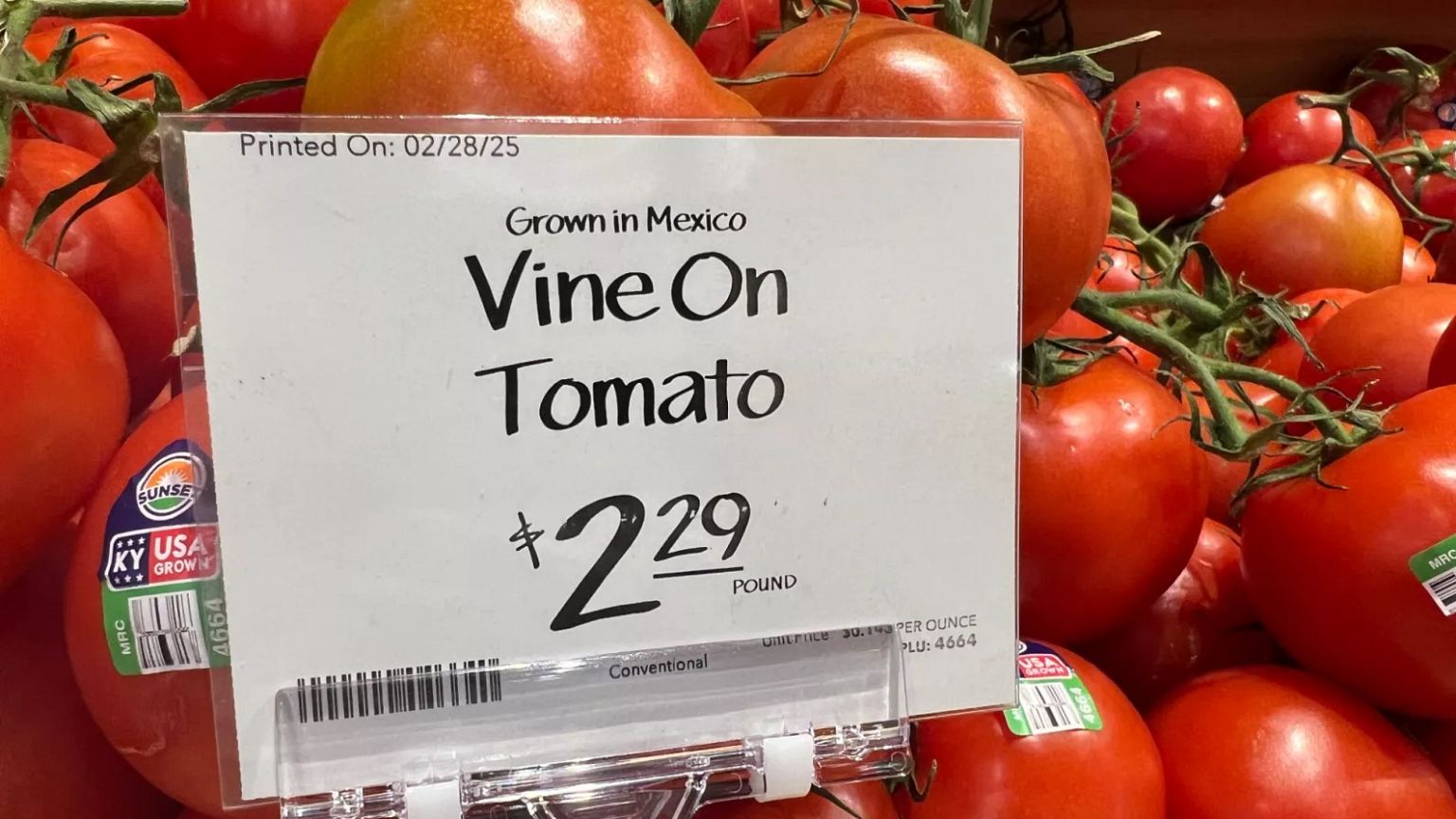
Tomatoes imported from Mexico are for sale in a supermarket in Miami, 5 March, 2025
Copyright AP Photo


By Gavin Blackburn
Published on 

Nations are scrambling to finalise the outlines of a trade framework with Trump in order to avoid him imposing higher tariff rates that could upend economies and governments.

The United States will enter a 90-day negotiating period with Mexico over trade as 25% tariff rates stay in place, part of the rush of trade activity on Thursday before President Donald Trump plans to impose a broad set of global levies starting on Friday.

Trump posted on his Truth Social platform that his phone conversation with Mexican leader Claudia Sheinbaum was "very successful in that, more and more, we are getting to know and understand each other."

The Republican president had threatened tariffs of 30% on goods from Mexico in a July letter, something that Sheinbaum said Mexico can now stave off for the next three months.

"We avoided the tariff increase announced for tomorrow and we got 90 days to build a long-term agreement through dialogue," Sheinbaum wrote on X

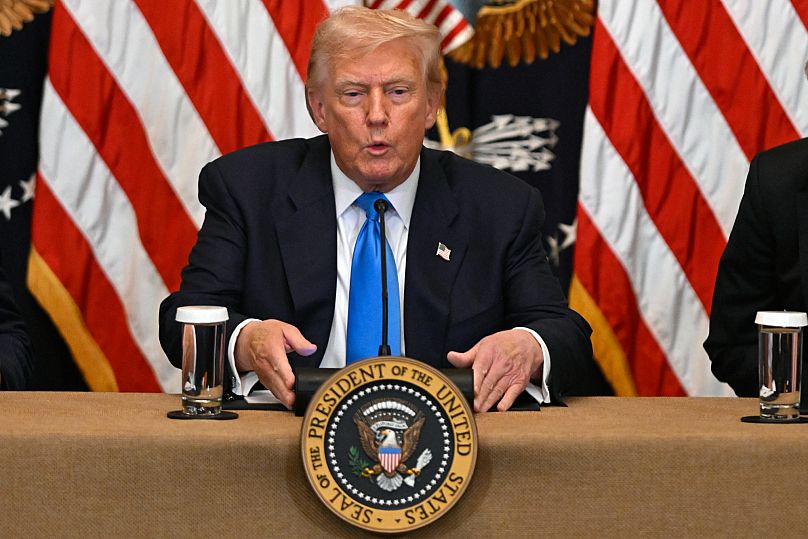
President Donald Trump speaks at an event to promote his proposal to improve Americans' access to their medical records in the East Room of the White House, 30 July, 2025
President Donald Trump speaks at an event to promote his proposal to improve Americans' access to their medical records in the East Room of the White House, 30 July, 2025 AP Photo

The leaders' morning call came at a moment of pressure and uncertainty for the world economy.

Nations are scrambling to finalise the outlines of a trade framework with Trump in order to avoid him imposing higher tariff rates that could upend economies and governments.

Trump reached a deal with South Korea on Wednesday and earlier with the European Union, Japan, Indonesia and the Philippines.

His commerce secretary, Howard Lutnick, said on Fox News' "Hannity" programme that there were agreements with Cambodia and Thailand after they had agreed to a ceasefire to their border conflict.

Among those uncertain about their trade status are Switzerland and Norway.

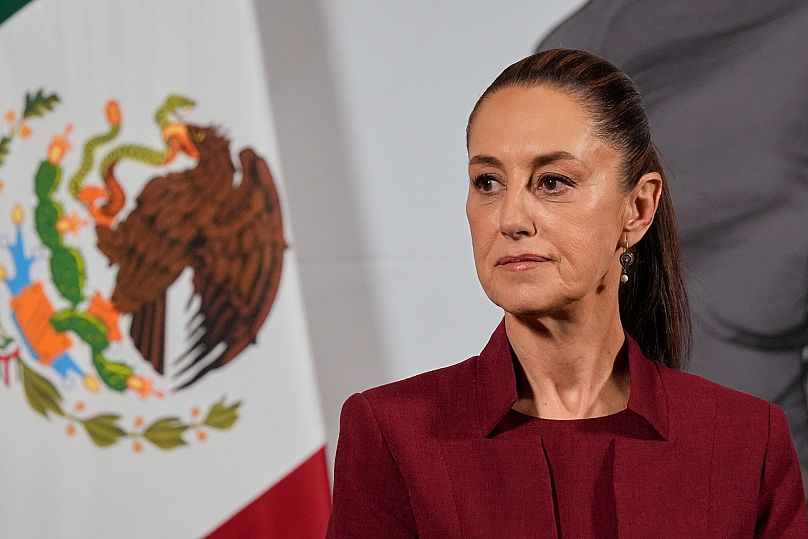
Mexican President Claudia Sheinbaum attends her morning press conference at the National Palace in Mexico City, 2 April, 2025
Mexican President Claudia Sheinbaum attends her morning press conference at the National Palace in Mexico City, 2 April, 2025 AP Photo

Norwegian Finance Minister Jens Stoltenberg said it was "completely uncertain" whether a deal would be completed before Trump's deadline.

But even the public announcement of a deal can offer scant reassurance for an American trading partner.

EU officials are waiting to complete a crucial document outlining how the framework to tax imported autos and other goods from the 27-member state bloc would operate. Trump had announced a deal on Sunday while he was in Scotland.

"The US has made these commitments. Now it’s up to the US to implement them. The ball is in their court," EU commission spokesman Olof Gill said.

The document would not be legally binding.

Trump said as part of the agreement with Mexico that goods imported into the US would continue to face a 25% tariff that he has ostensibly linked to fentanyl trafficking.

He said autos would face a 25% tariff, while copper, aluminium and steel would be taxed at 50% during the negotiating period.

He said Mexico would end its "Non Tariff Trade Barriers," but he didn’t provide specifics.

Some goods continue to be protected from tariffs by the 2020 US-Mexico-Canada Agreement (USMCA), which Trump negotiated during his first term.

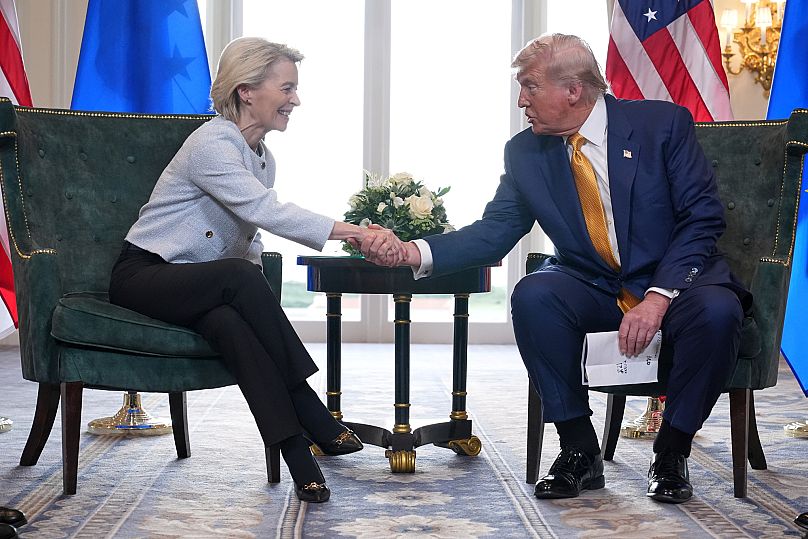
President Donald Trump and European Commission President Ursula von der Leyen shake hands after reaching a trade deal in Scotland, 27 July, 2025
President Donald Trump and European Commission President Ursula von der Leyen shake hands after reaching a trade deal in Scotland, 27 July, 2025 AP Photo

But Trump appeared to have soured on that deal, which is up for renegotiation next year. One of his first significant moves as president was to tariff goods from both Mexico and Canada earlier this year

US Census Bureau figures show that the US ran a $171.5 billion (€149 billion) trade imbalance with Mexico last year. That means the US bought more goods from Mexico than it sold to the country.

The imbalance with Mexico has grown in the aftermath of the USMCA as it was only $63.3 billion (€55 billion) in 2016, the year before Trump started his first term in office.

Besides addressing fentanyl trafficking, Trump has made it a goal to close the trade gap.

Additional sources 

Shock, chaos and a hollow win: Chasing a tariff deal with Trump

Jonathan Head
BBC
South East Asia correspondent in Bangkok
JULY 31, 2025


Export-driven economies like Thailand have been scrambling for a trade deal to avoid President Trump's steep tariffs


When US President Donald Trump made his dramatic tariff announcement on 2 April, nowhere was the shock greater than in South East Asia, a region whose entire world view and economic model is built on exports.

The levies went as high as 49% on some countries, hitting a range of industries from electronics exporters in Thailand and Vietnam to chip makers in Malaysia and clothing factories in Cambodia.

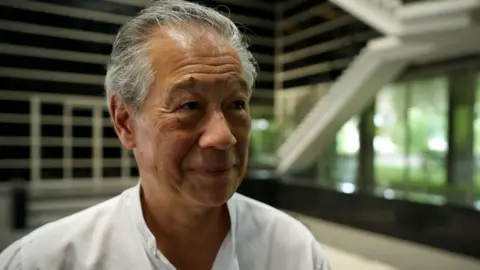
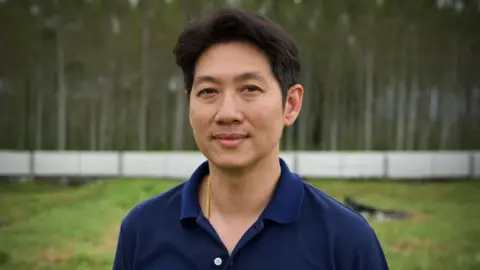
"I remember waking up in the morning. It was quite early, and seeing him standing there on the White House lawn with his board. I thought: 'Did I see that right? 36%? How could it be?" says Richard Han, whose father founded Hana Microelectronics, one of Thailand's biggest contract manufacturers.

Thailand, which was facing a 36% levy, now has a deal, like most of its neighbours, to reduce the tariffs to 19%.

The negotiations went down to the wire, finalised just two days before the deadline Trump had set - 1 August. It has been a fraught process getting there, and there is still very little detail about exactly what has been agreed.

Live Updates: 


Richard Han says the 36% levy on Thailand was a "shock"

The 10 countries in Asean, as the South East Asian regional bloc is known, exported $477bn (£360bn) worth of goods to the United States in 2024. Vietnam is by far the most exposed economy, its exports to the US totalling $137bn, making up about 30% of its GDP.

No surprise then that the Vietnamese government was first off the block to negotiate with the US, and the first in the region to do a deal to cut the punishing 46% rate Trump had imposed on them.

According to the US president, the deal cuts the tariffs to 20%, while he claims Vietnam will now impose no tariffs at all on any imports from the US. Tellingly, the Vietnamese leadership has said nothing about the deal.

There are no details, no written or signed documents, and some reports suggest Vietnam does not agree with Trump's numbers. But they set the bar for other countries in the region.

Indonesia and the Philippines followed with deals reducing their tariffs to 19%, although neither country depends much on exports to the US.

Thailand does export a lot to the US. Last year they earned it more than $63bn, about one-fifth of its total exports. Thailand too should have been at the head of the queue in Washington, pleading for a reduction in the 36% tariff Trump had designated for it.


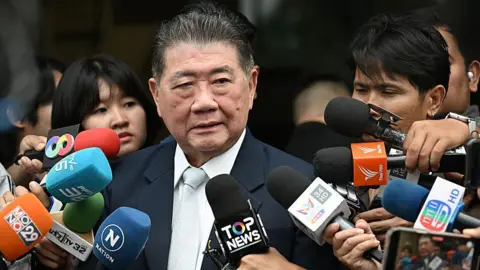
Thailand's acting Prime Minister Phumtham Wechayachai took office after the last PM stepped down over a political scandal

But Thailand is not Vietnam, a one-party communist state where critical decisions can be made quickly by a few leaders, with little need to worry about the opinions of businesses or the public.

Rather, like South Korea and Japan, whose deals came after much wrangling despite them being staunch American allies, Thailand too has to contend with domestic politics and public opinion. Thailand also has a weak and fractious coalition government, beholden to a range of vested interests.

Worse still, decisions it took which were entirely unrelated to trade angered the US side.

In February it sent 40 Uyghur asylum-seekers who had been stuck in Thailand for more than a decade back to China, defying warnings by the US Secretary of State Marco Rubio. One Thai trade official told the BBC the US negotiators were still bringing up the Uyghurs as a grievance at tariff talks in May.

Then a regional army commander filed a lèse-majesté complaint against a US academic, resulting in him being jailed and then forced to leave Thailand. So, far from being at the front, Thailand found itself at the back of the queue.

The other difficulty facing the Thai trade team was what the US was asking for in return for cutting the tariff rate, in particular access to Thailand's agricultural market, which is heavily protected.

Food is big business in Thailand. CP Group, one of the world's agribusiness giants, is the biggest company in the country. This US demand was painful for Thailand.

"Vietnam opened a Pandora's box," says another Thai trade official. "By offering zero percent tariffs on all US imports, they make it hard for those of us who can't easily open up all sectors to US competition."


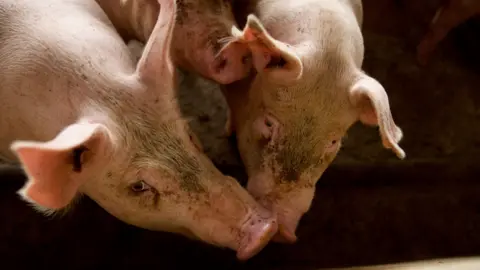
Zero tariffs on US pork imports would be a blow for Thailand's pig farms

Three hours' drive from Bangkok, in Nakhon Nayok, Worawut Siripun keeps 12,000 pigs – an important business in Thailand; Thais eat a lot of pork. He is active in the Thai Swine Raisers Association, and has been lobbying against eliminating tariffs on US pork.

"US farmers produce on a much bigger scale than us, and their costs are lower. So, the price of their pork will be lower, and domestic farmers won't be able to survive."

Access to the agricultural market was also a sticking point in negotiations with Japan, which sought to protect its rice farmers, and continues to be one of the main hurdles with India.

In Thailand, it is presumed that agribusiness giants like CP have also been lobbying against US demands to open up other sectors like poultry and corn. There have been fractious meetings between the trade team and cabinet ministers after every round of tariff talks in Washington, the BBC understands.

Worawut Siripun says he cannot compete with US farmers who produce a lot more

But on the other side are Thailand's manufacturers, who represent a much larger contribution to GDP than agriculture. They badly needed a deal.

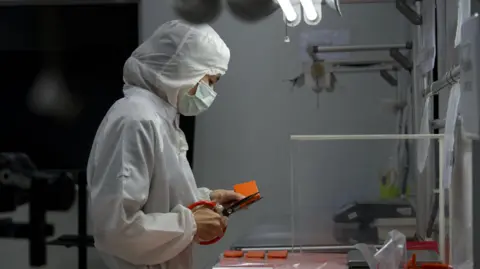
"If we get 36% then it's going to be terrible for us," said Suparp Suwanpimolkul, deputy managing director of SK Polymer, before the deal was announced. The company makes a bewildering array of components from rubber and synthetic materials, for washing machines, fridges, air conditioners.

"I guarantee you would find at least one of our products in your home," he said.

SK Polymer was founded by Suparp and his two brothers in 1991. Its story is the story of modern Thailand, originating from their father's small family business, but riding the explosive growth of global trade which has been the foundation of Thailand's economy.

They are an integral part of a complex supply chain, where their products join other components from multiple countries to make consumer, industrial or medical goods for export. About 20% of the company's income comes from the US, but the number is much higher when products which contain its components are included. The Trump tariffs have thrown a spanner in the works.

"We have small margins," said Suparp. He said they could still manage with tariffs up to 20% or even 25% by cutting costs. When he spoke to the BBC, before the deal was announced, he said the uncertainty was the biggest challenge: "Please - to our government, just get the deal, so we can plan our business."

A worker at SK Polymer, which makes rubber products for export to the US

A 20% levy is also palatable for electronics manufacturers, a big industry in Thailand.

"If all of us in this region end up with around 20% our buyers won't seek alternative suppliers – it will just be a tax, like VAT, for US consumers," says Richard Han, CEO of Hana Microelectronics. The company makes the basic components that go into everything in our digital lives: printed circuit boards, integrated circuits, RFID tags for pricing.

Mr Han says only about 12% of his products go to the US directly, but like SK Polymer the proportion that goes indirectly, as part of other manufactured goods, is much higher. But it is not just the tariff number that worries him.

His concern is trans-shipment, the US charge that China is avoiding tariffs by routing its production through South East Asia. Already Vietnam, according to President Trump, will pay 40% - double the new tariff rate - on goods the US judges to be trans-shipped.

Both Thailand and Vietnam saw foreign investment increase significantly after tariffs were imposed on China in the first Trump term, and their exports to the US rose as well. Some of that was Chinese companies moving production; some was products using a lot more Chinese-made components. And they are not just from China.

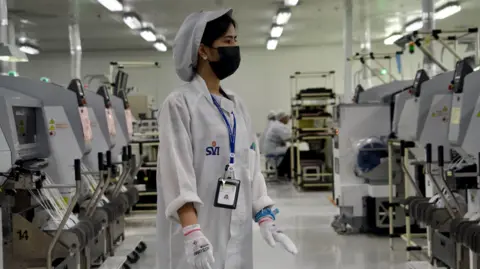
At another electronics manufacturer, SVI, robots glided up and down the assembly line bringing hundreds of tiny components to assemble circuit boards in machines that cost hundreds of thousands of dollars. A quick look at the labels showed the components came from Malaysia, the Philippines, Taiwan and China.

SVI makes security cameras, bespoke amplifiers, medical equipment, to whatever specification their customers, who are mainly in Scandinavia, want. Thailand's vital manufacturing sector is part of an immensely complex global supply chain which is almost impossible to rearrange to meet the US president's demands.

Under WTO rules a product is considered local if at least 40% of its value is added in the local manufacturing process, or if it has been "substantially transformed" into a new product, the way an iPhone becomes something different once it has been assembled.


Electronics manufacturer SVI is one of many Thai companies that sits at the heart of a complex global supply chain

The Trump administration pays no heed to WTO rules, and it is not clear what will be counted as trans-shipped, but Mr Han fears this could prove a bigger problem for Thai companies than the standard tariff rate if the US insists on more local components, or fewer from China.

"South East Asia relies very heavily on China," he explains. "China, by far, has the largest supply chain for electronics and many other industries, and they are the cheapest.

"We could buy materials from another part of the world. It would be a lot more expensive. But it would be virtually impossible for Thailand or Vietnam or the Philippines or Malaysia to get a very high threshold, say 50-60%, made within that country. And if that is the condition to get the US certificate of origin, then nobody's going to get the certificate of origin."

For the moment very few of these details have been revealed. Despite President Trump claiming he has got zero percent tariffs for US goods coming into the Philippines and Indonesia, both those countries have said this is not correct, and that much still needs to be negotiated.

For the Thai government, having started so late, and struggled to meet US demands, just getting a deal will have been a relief.

They will worry about how to make the deal work later, as the details are worked out, which typically takes years. And in that, they are far from alone – rich and developing economies alike are scrambling to keep up with Trump's mercurial tariff policy.

"At some point this has to stop. Surely it has to stop?" Mr Han says. "The trouble is, we don't know what the rules of the game are going to be, so we're all milling around, just waiting to find out how to play the new game."

PHOTOS BBC/ Lulu Luo 

Trump hits dozens of countries with steep tariffs, including 35% for Canadian goods


A drone view shows a vessel docked during a day of commercial activity at the port of Manzanillo, in Manzanillo, Mexico, Dec 14, 2023.
PHOTO: Reuters file

REUTERS
PUBLISHED ON July 31, 2025 


US President Donald Trump slapped dozens of trading partners with steep tariffs ahead of a Friday (Aug 1) trade deal deadline, including a 35 per cent duty on many goods from Canada, 50 per cent for Brazil, 25 per cent for India, 20 per cent for Taiwan and 39 per cent for Switzerland.

Trump released an executive order listing higher import duty rates of 10 per cent to 41 per cent starting in seven days for 69 trading partners as the 12.01am EDT (12.01pm in Singapore Time) deadline approached. Some of them had reached tariff-reducing deals and some had no opportunity to negotiate with his administration.

The order said that goods from all other countries not listed in an annex would be subject to a 10 per cent US tariff rate.

Trump's order said that some trading partners, "despite having engaged in negotiations, have offered terms that, in my judgement, do not sufficiently address imbalances in our trading relationship or have failed to align sufficiently with the United States on economic and national-security matters."

Trump issued a separate order for Canada that raises the rate on Canadian goods subject to fentanyl-related tariffs to 35 per cent from 25 per cent previously, saying Canada had "failed to co-operate" in curbing fentanyl flows into the US.

The higher tariffs on Canadian goods contrasted sharply with Trump's decision to grant Mexico a 90-day reprieve from higher tariffs of 30 per cent on many goods to provide more time to negotiate a broader trade pact.

A US official told reporters that more trade deals were yet to be announced as Trump's higher "reciprocal" tariff rates were set to take effect.

"We have some deals," the official said. "And I don't want to get ahead of the President of the United States in announcing those deals."

Regarding the steep tariffs on goods from Canada, the second largest US trading partner after Mexico, the official said that Canadian officials "haven't shown the same level of constructiveness that we've seen from the Mexican side."

The extension for Mexico avoids a 30 per cent tariff on most Mexican non-automotive and non-metal goods compliant with the US-Mexico-Canada Agreement on trade and came after a Thursday morning call between Trump and Mexican President Claudia Sheinbaum.

Trump hits Brazil with tariffs, sanctions but key sectors excluded


"We avoided the tariff increase announced for tomorrow," Sheinbaum wrote in an X social media post, adding that the Trump call was "very good."

Approximately 85 per cent of US imports from Mexico comply with the rules of origin outlined in the USMCA, shielding them from 25 per cent tariffs related to fentanyl, according to Mexico's economy ministry.

Trump said the US would continue to levy a 50 per cent tariff on Mexican steel, aluminium and copper and a 25 per cent tariff on Mexican autos and on non-USMCA-compliant goods subject to tariffs related to the US fentanyl crisis.

"Additionally, Mexico has agreed to immediately terminate its Non Tariff Trade Barriers, of which there were many," Trump said in a Truth Social post without providing details.

Korea deal, India discord

South Korea agreed on Wednesday to accept a 15 per cent tariff on its exports to the US, including autos, down from a threatened 25 per cent, as part of a deal that includes a pledge to invest US$350 billion (S$453 billion) in US projects to be chosen by Trump.

But goods from India appeared to be headed for a 25 per cent tariff after talks bogged down over access to India's agriculture sector, drawing a higher-rate threat from Trump that also included an unspecified penalty for India's purchases of Russian oil.

Although negotiations with India were continuing, New Delhi vowed to protect the country's labour-intensive farm sector, triggering outrage from the opposition party and a slump in the rupee.

Trump's rollout of higher import taxes on Friday comes amid more evidence they have begun driving up consumer goods prices.

Commerce Department data released Thursday showed prices for home furnishings and durable household equipment jumped 1.3 per cent in June, the biggest gain since March 2022, after increasing 0.6 per cent in May. Recreational goods and vehicles prices shot up 0.9 per cent, the most since February 2024, after being unchanged in May. Prices for clothing and footwear rose 0.4 per cent.
Tough questions from judges

Trump hit Brazil on Wednesday with a steep 50 per cent tariff as he escalated his fight with Latin America's largest economy over its prosecution of his friend and former President Jair Bolsonaro, but softened the blow by excluding sectors such as aircraft, energy and orange juice from heavier levies.

Read Also

Pakistan says deal concluded with US on tariffs, Trump cites oil reserves agreement


The run-up to Trump's tariff deadline was unfolding as federal appeals court judges sharply questioned Trump's use of a sweeping emergency powers law to justify his sweeping tariffs of up to 50 per cent on nearly all trading partners.

Trump invoked the 1977 International Emergency Economic Powers Act to declare an emergency over the growing US trade deficit and impose his "reciprocal" tariffs and a separate fentanyl emergency.

The Court of International Trade ruled in May that the actions exceeded his executive authority, and questions from judges during oral arguments before the US Appeals Court for the Federal Circuit in Washington indicated further scepticism.

US Treasury Secretary Scott Bessent said earlier that the United States believes it has the makings of a trade deal with China, but it is "not 100 per cent done," and still needs Trump's approval.

US negotiators "pushed back quite a bit" over two days of trade talks with the Chinese in Stockholm this week, Bessent said in an interview with CNBC.

China is facing an August 12 deadline to reach a durable tariff agreement with Trump's administration, after Beijing and Washington reached preliminary deals in May and June to end escalating tit-for-tat tariffs and a cut-off of rare earth minerals.


Read Also

Trump says US, India still negotiating after 25% US tariff threat


Source: Reuters


Trump modifies tariff rate for Lesotho to 15% as small country reels from tariff impacts


Workers execute their duties at the Afri-Expo Textile Factory, which makes clothing for the US market, on the outskirts of Maseru, the capital of Lesotho, July 9, 2025.
PHOTO: Reuters file

PUBLISHED ONJuly 31, 2025 

The small African country Lesotho received a modified tariff rate of 15 per cent Thursday (July 31) from US President Donald Trump as the nation continued to reel from high tariffs the administration had threatened to implement earlier this year.

In an executive order, Trump modified reciprocal tariff rates for dozens of countries, including Lesotho, which had been under threat of a 50 per cent rate since April, the highest of any US trading partner.

The Trump administration defended its tariff rate on the mountain kingdom in Southern Africa as reciprocal, stating that Lesotho charged 99 per cent tariffs on US goods.

Lesotho officials have said they do not know how the White House arrived at that figure.

After announcing the barrage of reciprocal tariffs in April, the administration paused implementation to give countries time to negotiate.

Under the tariff threat and uncertainty, many US importers cancelled orders of Lesotho-produced textiles, leading to mass layoffs.

"If we still have these high tariffs, it means we must forget about producing for the US and go as fast as we can... (looking for) other available markets," Teboho Kobeli, owner of Afri-Expo, which makes jeans for export, told Reuters earlier this year.

DURING THE 1990'S LESOTHO WAS COLONIZED BY CHINESE CLOTHING MANUFACTURERS WHO BUILT THE COUNTRIES INDUSTRIALIZED INFRASTRUCTURE 
ON JAN 1, 2000 THE WTO ALLOWED CHINA TO JOIN THUS AVOIDING THE PREVIOUS DECADES OF TARIFFS THAT WERE AVOIDED BY COLONIZING LESOTHO
THE MORNING OF JAN 1 LESOTHOIANS AWOKE TO A COUNTRY DESTITUTE OF CHINESE AND THEIR FACTORIES!!!
In outreach, shift in US tack on Pakistan as India faces tariff heat from Trump

India’s ruling dispensation had walked on eggshells to avoid giving any offence to Trump during the special discussion in Parliament on the Pahalgam attack and Operation
 Sindoor

Vivek Katju
 Published 01.08.25
TELEGRAPH CALCUTTA


US President Donald Trump may have dealt a double blow to India on tariffs, with a Pakistani sting in the tail.

When Trump was warning India on July 30 of enhanced and penal tariffs going into effect from August 1, Pakistani and US negotiators were successfully concluding their trade and tariff negotiations in Washington.

An ecstatic Pakistan Prime Minister, Shehbaz Sharif, in a post on X on July 31 morning, conveyed to Trump “profound thanks” for “his leadership role” in the finalisation of this “historic” trade agreement. Two hours earlier, the Pakistani embassy in Washington had announced that an agreement had been reached.

The embassy claimed that it would result in “reduction of reciprocal tariff especially on Pakistani exports to the United States”. It went on to assert that “this deal marks the beginning of a new era of economic collaboration especially in energy, mines and minerals, IT, cryptocurrency and other sectors”.

Separately, in a post on X on July 30, Trump mentioned US-Pakistani collaboration in developing Pakistan’s massive oil reserves. He did not then disclose that a trade and tariff agreement had been reached.

Absent from the Pakistani statement is how the agreement has dealt with agricultural and dairy issues. These should be vital matters for Pakistan’s economy because, according to an official Pakistani government publication, 65 to 70 per cent of its “population depends on agriculture forits livelihood”.

This aspect is significant, for agriculture and dairy are two sticking points in finalising the India-US trade and tariff agreement.

India’s ruling dispensation had walked on eggshells to avoid giving any offence to Trump during the special discussion in Parliament on the Pahalgam attack and Operation Sindoor.

Trump did not display a similar restraint. He called Narendra Modi his friend but did not refrain from blasting Indian trade practices. Nor has he displayed any real sensitivity to India’s concerns regarding Pakistan’s involvement in terrorism over the past few months.

Trump called Modi to condemn the Pahalgam attack. However, when India launched Operation Sindoor, Trump wanted the hostilities to end, ostensibly fearing escalation.

Since May 10, when India and Pakistan agreed on a cessation of hostilities, Trump has repeatedly claimed that he mediated the “ceasefire”. Pakistan has thanked him for his efforts while India has said that no third country played any role in bringing about the cessation of hostilities.

Maintaining a careful balance between India and Pakistan during and after Operation Sindoor, the Trump administration has refrained from accusing Pakistan of any role in the Pahalgam terrorist attack.

Trump offended India with his invitation to the Pakistan army chief, Field Marshal Asim Munir, to visit him at the White House for lunch and discussions in June.

To add insult to injury, he invited Modi, who was then in Canada, to pass by Washington while Munir was there. Naturally, Modi declined the offer. Perhaps to make up for this gratuitous behaviour, the Trump administration named The Resistance Front (TRF) — blamed for the Pahalgam attack — as a global terrorist organisation.

Trump’s outreach to Pakistan marks a clear shift in the US approach towards India’s western neighbourhood. It cannot be to pressure India into taking a more constructive approach on the trade and tariff agreement. It can be a marginal factor in efforts to goad India to be more positive, as the tone and tenor of Trump’s posts over the past two days suggest.

But the US would know that Delhi would hardly be guided by the concessions that Islamabad has made on this score. This is so even if Delhi would like to know the details of the US-Pakistan deal. Hence, the factors that are leading to the change, if not the transformation, taking place in US-Pakistan relations lie elsewhere.

Sections of successive US administrations have sought to balance ties between India and Pakistan. This, even though they are conscious that India has to be accorded primacy because of its growing heft in world affairs.

But they seem to segregate zones for India and Pakistan now: India to play a role in the India-Pacific, while the US seeks a greater alignment with Pakistan in India’s western neighbourhood.

Finally, these elements do not want China to have an open field in Pakistan. Trump seems to be going along with this thinking. There are, of course, also dark rumours about his family’s economic interests in Pakistan.

All in all, India-US contentions in the trade and tariff deal are only one aspect of potential problems in the relationship.

Vivek Katju is a retired Indian Foreign Service officer

The shine has come off the Modi-Trump bromance (and perhaps the India-US relationship)

Chietigj Bajpaee

Claims of ideological affinity between the world’s oldest and largest democracy won’t be enough.

THEY ARE BOTH ARYAN SUPREMACISTS


Donald Trump hosts Narendra Modi at the White House in February (White House Photo)


Published 1 Aug 2025
THE INTERPERTER
LOWY INSTITUTE


When US President Donald Trump was sworn in for his second term in January, India was among the most positive countries about the outlook for relations with the United States. Prime Minister Narendra Modi was the fourth world leader to visit Washington following Trump’s inauguration. A day after the inauguration, Indian External Affairs Minister Subrahmanyam Jaishankar met US Secretary of State Marco Rubio as part of the Quad foreign ministers meeting, and India is also set to host the Quad Summit for the first time later this year when Trump is scheduled to visit India.

Fuelling this optimism is the high degree of bipartisan consensus in Washington on deepening the bilateral relationship. There was also a belief that the Modi and Trump’s worldviews were aligned. Both are strongman populist leaders who regard China and radical Islam as existential threats, and share a common mistrust of the liberal media and civil society. The two are also economic nationalists at heart. One could even argue that India was Trumpian before Trump given India’s protectionist tendencies and transactional foreign policy. Moreover, India was in the unique position of being neither a US ally or adversary, so it didn’t face Trump’s wrath of not pulling its weight (like NATO members) or being seen to pose an existential threat to the United States (like China).

Developments this week demonstrate a degree of irrational exuberance in New Delhi’s expectations of the India-US relationship.

Trump’s announcement of 25% tariffs on India and his acerbic statements – of India as a “dead economy” that does “very little business” with the US with “the most strenuous and obnoxious non-monetary Trade Barriers of any country” – are likely to be bluster as the US seeks to extract concessions from India in order to secure a favourable trade deal. Trump’s social media statements do not equate to official government policy.

Nonetheless, this is a wake-up call for New Delhi, particularly when seen in the context of other recent actions by the Trump administration.

Just as Trump abandoned the United States’ more conciliatory approach towards China in his first term, this may be the beginnings of similar scrutiny of US engagement with India.

Amid efforts to secure a ceasefire in Ukraine, Trump has also threatened secondary tariffs on India for its trade with Russia. New Delhi is a leading buyer of Russian crude and more than 50% of India’s in-service military platforms are of Russian origin. He has also threatened 200% tariffs on pharmaceutical imports – which holds significance for India as a leading supplier of generic drugs to the United States – and 10% tariffs on BRICS member states for pursuing so-called “anti-American” policies. Washington has also announced sanctions on several Indian entities and individuals for trading with Iran.

Further souring relations with the United States is Trump’s position on recent India-Pakistan hostilities where he claims that he helped to broker the ceasefire between both countries in May (denied by New Delhi) while deepening relations with Islamabad (by hosting Pakistan’s Army Chief Asim Munir at the White House in June and pursuing resource and cryptocurrency deals with the country). Trump’s announcement of a trade deal with Pakistan on the same day as he announced tariffs on India has added insult to injury.

New Delhi had appeared relatively sanguine about Trump’s return. The announcement of Trump’s “reciprocal” tariffs in April was met with cautious optimism in New Delhi amid a belief that this would facilitate a degree of trade diversion away from China and other countries (in South and Southeast Asia) whose supply-chains are heavily exposed to China. India’s Commerce Minister Piyush Goyal referred to Trump’s tariffs as the “opportunity of a lifetime”. Vindicating this view, Apple announced that it was shifting production of its US market iPhones from China to India.

New Delhi remained positive amid expectations that India would be among the first countries to secure a trade deal with the United States. There was also a view among some in New Delhi that Trump’s tariffs could be a blessing in disguise by acting as a catalyst to accelerate India’s much-needed economic reform agenda, just as previous external shocks – from India’s 1991 balance of payments crisis to economic sanctions following India’s nuclear tests in 1998 – triggered the country’s first-generation reforms.

Now the mood has shifted. New Delhi fears that Washington could seek to “do a deal” with China. Despite the deepening India-US relationship over the last three decades, there has always been an underlying fear of strategic abandonment in both countries. Trump’s latest outburst will not change the direction of travel in the India-US relationship overall – that of a cautious embrace. But the shine has undoubtedly come off.

Even if a trade deal is secured, New Delhi can no longer rely on claims of the US as a “natural ally” amid an ideological affinity between the world’s oldest and largest democracy. Just as Trump abandoned the United States’ more conciliatory approach towards China in his first term, this may be the beginnings of similar scrutiny of US engagement with India. Washington may increasingly question why the US has stuck its neck out for India time and time again – from a civil nuclear agreement to supporting India’s G20 presidency and candidacy for a permanent seat on the UN Security Council – while India maintains close relations with countries with which the United States (and West) have a history of difficult relations, including Russia and Iran.

Ironically, this scrutiny may create a self-fulfilling prophecy as Trump’s actions vindicate India’s long-standing commitment to strategic autonomy in its foreign policy. This has been evidenced by recent discussions about reviving the long dormant Russia-India-China trilateral and Modi’s likely participation the Shanghai Cooperation Organisation Summit in China this month. In this context, the damage may be done as New Delhi comes to see that the India-US relationship is not as special as it perceived it to be.


Bangladesh interim government urged to further enshrine human rights

Human Rights Watch (HRW) stated on Wednesday that Bangladesh’s interim government failed to implement adequate human rights protections, one year after the overthrow of the previous government.

The rights group noted that while the current government, led by Mohammed Yunus, has taken some positive steps towards improving the human rights situation, issues of impunity and other abuses persist.

HRW’s Deputy Asia Director Meenakshi Ganguly described the current government as “stuck, juggling an unreformed security sector, sometimes violent religious hardliners, and political groups that seem more focused on extracting vengeance on [supporters of the previous government] than protecting Bangladeshis’ rights.”

HRW emphasized how the state of affairs does not align with the democratic aspirations of the Bangladeshi people. Although the repressive measures and abuses, characteristic of the previous administration, have ended, the interim government has conducted arbitrary detentions of political opponents and failed to implement necessary reforms in the security and judicial sectors.

Moreover, the current administration continues to face significant challenges, including mob violence and harassment of journalists by political parties and non-state groups. HRW reported that violent clashes between security forces and supporters of former prime minister Sheikh Hasina erupted in July, resulting in the deaths of five people.

Police have also detained hundreds of former state officials. Some high-profile detainees have claimed that their arrests were baseless, accusing the government of denying them medical care and bail. According to HRW, many detentions of individuals allegedly connected to the Awami League, Hasina’s political party, appeared arbitrary and politically motivated.

The rights group further criticized the interim government for not fully investigating the enforced disappearances that occurred during Hasina’s rule, especially following Bangladesh’s ratification of the International Convention for the Protection of All Persons from Enforced Disappearance. The government responded that, while the investigative commission collected significant evidence, members of security forces destroyed that evidence and prevented efforts to hold the alleged abusers accountable, hindering the investigation.

HRW called on foreign governments and the UN to support the interim government during this transitional phase. It also urged the government to end arbitrary detentions and to combat impunity by prosecuting those responsible for serious crimes. The group also emphasized the need for the government to implement legal and constitutional reforms in judicial and security sectors.

Bangladesh’s interim government was established in August 2024 following the resignation of former Prime Minister Sheikh Hasina amid nationwide protests against her administration. According to the UN, serious human rights violations were committed during these protests, which may constitute crimes against humanity. In addition to accusations of human rights abuses, the Anti-Corruption Mission filed three lawsuits against Hasina for corruption in January.

The interim government was tasked with implementing reforms necessary to conduct elections in June 2026, yet it also faced criticism regarding human rights violations. In February, Reporters Without Borders condemned the escalating attacks on journalists, which allegedly violated the constitutional rights of media professionals. Following this, international human rights organizations urged the interim government to protect freedoms of expression and opinion during the country’s political transition.

UN chief salutes Thailand and Cambodia ceasefire, calls for further civilian redress and protection

On Wednesday, the UN high commissioner for human rights welcomed the ceasefire between Cambodia and Thailand while urging both countries to pursue a civil deescalation process.

High Commissioner Volker Türk asserted that it is important for both sides to ensure that victims of the violence receive redress in line with international human rights and humanitarian laws and standards, saying:

In a tense situation of this kind, it is important that both Thai and Cambodian authorities take steps to rebuild confidence, to counter harmful and inciteful rhetoric, and tackle misinformation in accordance with international human rights law. It is the responsibility of both governments to ensure the safety and protection of each other’s nationals on their territory.

Thailand and Cambodia have had an almost century long dispute over ownership of Preah Vihear, an 11th century Hindu Temple, which sits along the nations’ shared border. The temple has triggered conflicts over the years, the latest occurring when a Cambodian soldier was killed on the border in May. Tensions further escalated when a mine exploded on the border, killing five Thai soldiers.

The conflict lasted five days and resulted in thousands being displaced and at least 35 deaths. The conflict also resulted in Thailand’s former prime minister Paetongtarn Shinawatra being suspended after leaked text messages to Cambodian leader Hen Sun exposed potential national security liability. Economic pressure from the US, China and the Association of Southeast Asian Nations led by Malaysia, resulted in the ceasefire.

In 1962, the International Court of Justice had ruled that the temple falls within the sovereignty of Cambodia and repeated the ruling in 2013.

US Navy F-35C crashes near airbase in California


Pilot ejects safely as jet crashes in second incident involving F-35 this year


Xenia Zubova
31st July 2025 

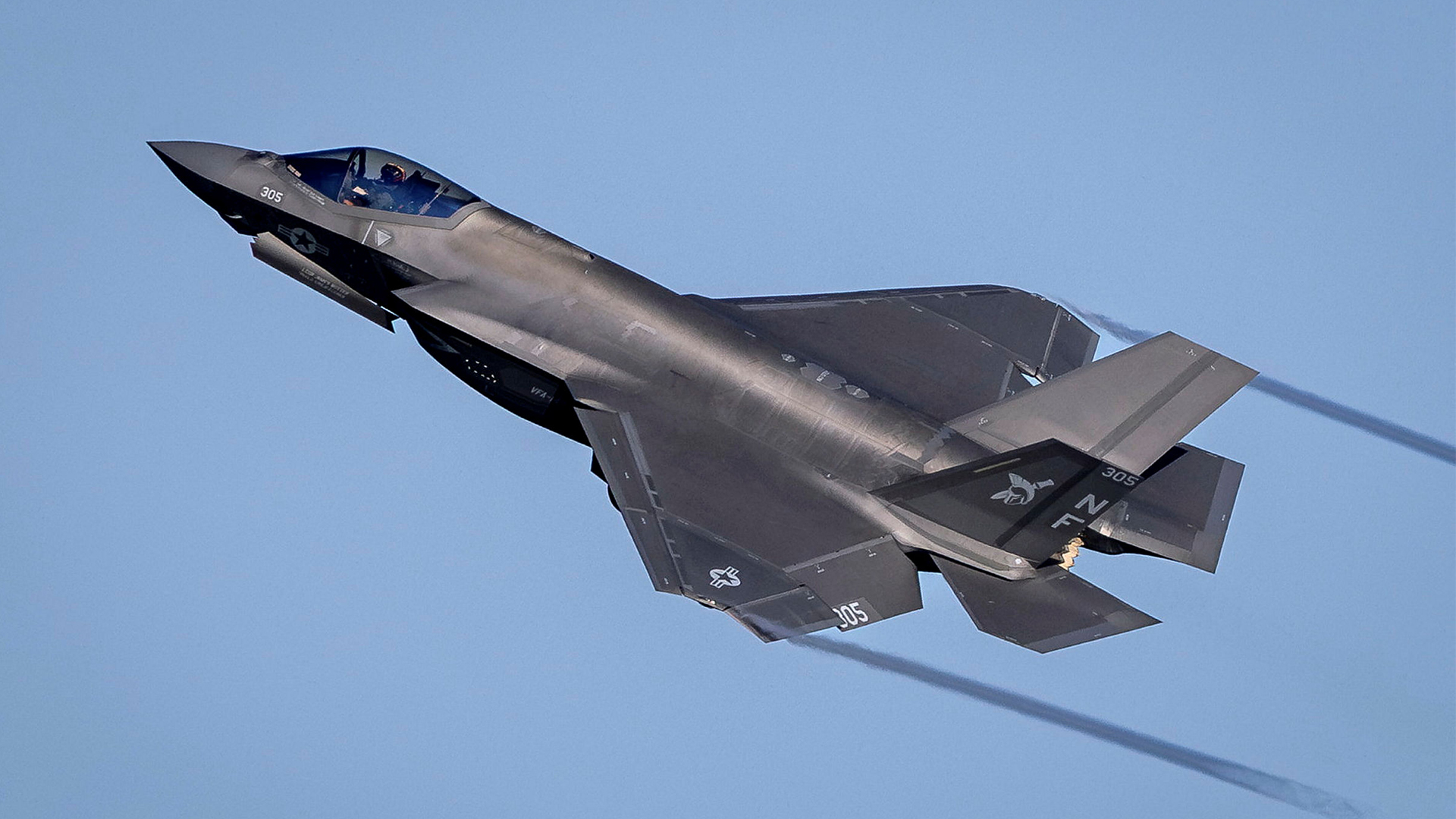
An investigation is underway after a US Navy F-35C crashed near Fresno, California, on July 30, 2025. The pilot ejected safely and no other people were affected.

A US Navy F-35C fighter jet has crashed near Naval Air Station Lemoore in California, with the pilot ejecting safely.

The crash happened around 18:30 local time in flat, open farmland about 40 miles southwest of Fresno. Local emergency services and Cal Fire responded to the scene.

The aircraft belonged to Strike Fighter Squadron VFA-125, known as the Rough Raiders, which trains US Navy pilots and aircrew on the carrier-based F-35C variant.

The US Navy said the cause of the crash was under investigation.

Footage broadcast by local outlet KFSN showed a fire and thick black smoke rising from the crash site.

The F-35C is designed to operate from conventional carriers as it lacks the short take-off/vertical landing capability of the B (Picture: MOD)

Second F-35 incident in 2025

This marks the second crash involving an F-35 this year.

In January, a US Air Force F-35A went down during a training mission in Alaska - the pilot survived after ejecting.

The F-35 is a fifth-generation stealth fighter developed by Lockheed Martin and used by multiple US military services and partner nations.

The F-35C is designed for Navy carrier operations, with larger wings and reinforced landing gear, compared to the Air Force's F-35A and the US Marine Corps' short take-off/vertical landing F-35B.

The F-35 programme has faced scrutiny in recent years over aircraft availability and maintenance challenges.

A January, a Pentagon report found that all variants were still falling short of their targets for reliability and readiness.

While it's tempting to ask which version is the "best" the answer is neither as each variant of the F-35 Lightning has something different to offer.

F-35 issues in US echo delays in UK's £71bn programme

The UK flies the F-35B variant from Royal Navy aircraft carriers and RAF bases, with 37 jets currently in service out of a planned 138.

The jets are expected to remain in service until 2069 at a £71bn whole-life cost, according to National Audit Office estimates.

Although tailored for UK use, the F-35 is largely a US-led programme.

Around 15% of each aircraft is made in Britain, generating £22bn in contracts for UK firms.

But the UK's F-35 programme has also faced delays and setbacks.

The NAO said the capability delivered so far represents a "disappointing return" on the £11bn spent to date.

It cited aircraft availability problems, pilot shortages and engineering gaps as key challenges.

Flying hours have fallen below requirements and mission readiness rates remain well below Ministry of Defence targets.

The UK still plans to field two full squadrons by the end of 2025, and has also committed to buying 12 F-35A jets as part of Nato's nuclear-sharing mission.