SPACE/COSMOS
India’s new space race economy
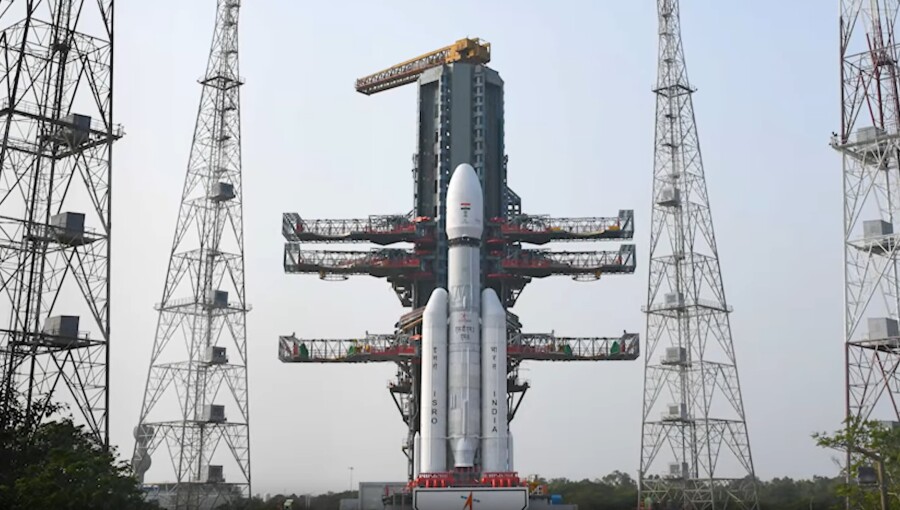
For decades, India’s presence in space was defined by a single, formidable institution. The Indian Space Research Organisation(ISRO) which designed, built and flew the country’s rockets, satellites and deep space missions, earning global respect for reliability and frugal engineering.
Yet in the past few years, a quieter but potentially transformative shift has been under way. A new generation of private companies is attempting something once unthinkable in India, building and launching their own rockets for commercial customers.
This change has not happened by accident. It is the result of policy reform, global market pressures and a cohort of engineers who grew up inspired by ISRO’s successes but eager to operate beyond the confines of a state monopoly. Together, they are giving India its first taste of a NewSpace era.
The turning point came in 2020, when the Indian government announced wide ranging reforms to open the space sector to private enterprise. New bodies were created to regulate and promote commercial activity, most notably the Indian National Space Promotion and Authorisation Centre, known as IN-SPACe. State owned assets, including launch facilities and testing infrastructure, were made accessible to startups. The message was clear, space was no longer the exclusive preserve of the government.
According to a report by Carnegie India, at the heart of this shift lies a global opportunity. The rapid growth of small satellites, driven by Earth observation, communications and research, has created demand for dedicated, low cost launch services. These satellites are often too small to justify rides on large rockets, yet too valuable to risk indefinite delays.
Companies around the world are racing to fill this niche, and Indian entrepreneurs believe they can compete on price, responsiveness and engineering talent. Two firms have emerged as flag bearers of India’s private launch ambitions. Skyroot Aerospace, based in Hyderabad, and Agnikul Cosmos, headquartered in Chennai, are both developing small satellite launch vehicles designed to carry a few hundred kilograms to low Earth orbit.
Their approaches differ, but their goals are strikingly similar, frequent launches, rapid turnaround and commercial customers from around the world. Skyroot made history in November 2022 with the suborbital launch of Vikram-S, the first privately built rocket to fly from Indian soil. Named after Vikram Sarabhai, the founder of India’s space programme, the mission was largely symbolic, carrying no satellites into orbit.
Yet it demonstrated that a private company could design, integrate and launch a rocket using ISRO’s facilities, marking a psychological breakthrough for the sector. Since then, Skyroot has focused on its orbital vehicle, Vikram-1, which it hopes will offer a dedicated launch option for small satellites. The company has emphasised rapid manufacturing and has drawn heavily on engineers with experience inside ISRO.
Its pitch is straightforward, Indian launch costs combined with global service standards. Agnikul Cosmos has taken a slightly different path. In May 2024, it successfully conducted a suborbital flight of its Agnibaan SOrTeD rocket from a newly built private launch pedestal at Sriharikota, India’s main spaceport.
The mission tested Agnikul’s semi cryogenic engine, Agnilet, which uses liquid oxygen and kerosene and is fully 3D printed. The company argues that such technologies will reduce production time and allow faster iteration. Perhaps most striking is the degree of cooperation between these startups and the state. Rather than competing with ISRO in a traditional sense, private firms are deeply intertwined with the national programme.
They rely on ISRO for range safety, tracking and access to launch sites, while ISRO increasingly positions itself as a facilitator and mentor rather than sole operator. Officials have repeatedly described the relationship as complementary, with the agency focusing on heavy lift missions and exploration, while private players handle commercial small satellite launches.
This model reflects a broader rethinking of India’s space economy. Government policymakers see private launch vehicles as a way to capture a share of the global market, which is currently dominated by American, European and Chinese firms. They also view the sector as a driver of high skilled employment and advanced manufacturing, with spillover benefits for other industries.
Challenges remain significant. Developing a reliable orbital rocket is notoriously difficult, and even established players worldwide have suffered costly failures. Indian startups operate with far less capital than some of their international rivals, and delays are common. Regulatory clarity, while improved, continues to evolve, and insurance and liability frameworks are still being tested. There is also the question of scale. India’s domestic demand for small satellite launches is limited, meaning companies must attract foreign customers to survive.
That, in turn, requires not just low prices but consistent reliability, something that can only be proven over time. Yet optimism persists. India’s reputation for engineering talent, combined with relatively low costs and growing political support, gives its private launch sector a credible foundation. The sight of privately built rockets rising from Sriharikota, once the exclusive domain of ISRO, has already altered perceptions at home and abroad.
In the coming years, success will be measured less by symbolic firsts and more by cadence, how often Indian private rockets fly, how reliably they perform and how many customers they serve. If even one of these companies manages to establish a steady launch rhythm, it could mark a profound shift in how India participates in the global space economy.
For a country that once prided itself on doing more with less in space, the NewSpace era offers a chance to do something different, to turn ingenuity into industry, and launches into a lasting commercial presence.
Taxonomic classification of 80 near-Earth asteroids reveals key insights into their origins, evolution and planetary defense significance
Beijing Zhongke Journal Publising Co. Ltd.
image:
January 27, 2026: Distribution of Near-Earth Asteroids of different taxonomic complexes in the Solar System, where red represents S-complex Near-Earth Asteroids, green represents C-complex ones, and blue represents X-complex ones.
view moreCredit: Beijing Zhongke Journal Publising Co. Ltd.
Near-Earth asteroids (NEAs) are celestial bodies whose orbits intersect with Earth’s, holding great significance for studying Solar System formation and evolution while posing potential collision hazards to humanity. However, classifying small, newly discovered NEAs remains challenging due to limited observational windows.
Led by researchers from the Purple Mountain Observatory, Chinese Academy of Sciences, the international team conducted a one-year observational campaign from October 2023 to October 2024. Using the Johnson-Cousins BVRI broadband photometric system, they collected data from two telescopes: the Purple Mountain Observatory Yaoan High Precision Telescope (YAHPT, IAU code O49) in China and the Kottamia Astronomical Observatory 1.88 m telescope (IAU code 088) in Egypt. After rigorous data reduction and analysis, the team successfully obtained photometric color indices for 84 NEAs and completed taxonomic classification for 80 of them.
The results show that nearly half (46.3%) of the sampled asteroids belong to the S-complex, 26.3% to the C-complex, 15.0% to the X-complex, and 6% to the D-complex, with the remaining classified as A-type or V-type. Statistical analysis revealed that C/X-complex asteroids are more abundant among smaller NEAs (absolute magnitude H > 17.0), accounting for nearly twice the proportion of larger ones. Additionally, X-complex asteroids tend to have sub-kilometer diameters, while C- and S-complex asteroids show similar distributions across different size ranges.
Orbital parameter analysis indicated that C/D-complex asteroids dominate NEAs with a Jovian Tisserand parameter TJ < 3.1, suggesting a potential cometary origin. Notably, NEA (385268) exhibits spectral and dynamical properties consistent with Jupiter-family comets, likely originating from the Themis family via Jupiter’s 2:1 mean-motion resonance. Among 13 potentially hazardous asteroids (PHAs) identified in the sample, C-complex and S-complex asteroids each account for 5, a finding that challenges previous assumptions and highlights new considerations for planetary defense, as C-complex asteroids are more porous, which may reduce the effectiveness of kinetic impact deflection strategies commonly used in planetary defense.
The research provides valuable data for understanding NEA origin and evolution mechanisms, while offering practical guidance for planetary defense planning. Future studies will expand the sample size, focus on fainter NEAs, and incorporate infrared observations to improve classification accuracy.
See the article:
Taxonomic classification of 80 near-Earth asteroids
http://dx.doi.org/10.26464/epp2025080
Journal
Earth and Planetary Physics
Article Title
Taxonomic classification of 80 near-Earth asteroids
Article Publication Date
31-Jan-2026
How brick-building bacteria react to toxic chemical in Martian soil
Indian Institute of Science (IISc)
image:
Microscopy image of Sporosarcina pasteurii
view moreCredit: Aloke Lab, IISc
Bacteria that thrive on Earth may not make it in the alien lands of Mars. A potential deterrent is perchlorate, a toxic chlorine-containing chemical discovered in Martian soil during various space missions.
Researchers at the Indian Institute of Science (IISc) recently investigated how bacteria that can mould Martian soil into brick-like structures fare in the presence of this chemical. They find that although perchlorate slows down bacterial growth, it also surprisingly leads to the formation of stronger bricks.
“Mars is an alien environment,” says Aloke Kumar, Associate Professor in the Department of Mechanical Engineering and corresponding author of the study published in PLOS One. “What is going to be the effect of this new alien environment on Earth organisms is a very, very important scientific question that we have to answer.
In previous studies, the researchers used the soil bacterium Sporosarcina pasteurii to build “space bricks” from lunar or Martian soil that can potentially be used to set up extraterrestrial habitats. When added to synthetic Martian or lunar soil along with urea and calcium, the bacterium produces calcium carbonate crystals (precipitates), which help glue the soil particles together into bricks, in a process called biocementation. The process also requires the natural adhesive guar gum, a powdery polymer extracted from guar beans.
In the current study, the authors used a more robust, native strain of the bacterium that they discovered in the soils of Bengaluru.
After first establishing its precipitate-forming skills, the researchers were curious to see if this strain can survive in the presence of perchlorate, which can be found at levels of up to 1% in Martian soils. In collaboration with Punyasloke Bhadury, Professor at the Indian Institute of Science Education and Research (IISER), Kolkata, the team found that the bacterial cells become stressed in its presence – they grow slowly, become more circular in shape, and start clumping together into multicellular-like structures. The stressed bacterial cells also release more proteins and molecules in the form of extracellular matrix (ECM) into the environment. Using electron microscopy, the researchers found that more calcium chloride-like precipitates were formed, and that the ECM formed little “microbridges” between the bacterial cells and the precipitates.
Synthetic Martian soils do not usually contain perchlorate because it is flammable, but to test its effects on biocementation, the researchers carefully added the chemical to the soil simulant in the lab. To their surprise, they found that the presence of perchlorate made the bacteria better at gluing the soil together, but only if guar gum – essential for bacterial survival – and the catalyst nickel chloride are also present.
“When the effect of perchlorate on just the bacteria is studied in isolation, it is a stressful factor,” says Swati Dubey, currently a PhD student at the University of Florida and first author of the study. “But in the bricks, with the right ingredients in the mixture, perchlorate is helping.”
Dubey thinks that the ECM microbridges could be enhancing the bacteria’s biocementation skills by funneling nutrients to the stressed cells – a theory that the team wants to explore in future studies. They also want to test the isolate’s biocementation abilities in a more Mars-like high CO2 atmosphere, which they plan to simulate in the lab.
Ultimately, the team’s goal is to deploy this method as an alternative, sustainable building strategy, to rely less on carbon-intensive cement-based processes – both on Earth and Mars. Such technologies can also help make future Mars landing missions smoother – by helping build better roads, launch pads, and rover landing sites, says co-author Shubhanshu Shukla, ISRO astronaut who is pursuing his Master’s degree with Kumar at IISc. The uneven topography of the moon’s surface, for instance, has caused some landers to topple over, he adds.
“The idea is to do in situ resource utilisation as much as possible,” Shukla says. “We don’t have to carry anything from here; in situ, we can use those resources and make those structures, which will make it a lot easier to navigate and do sustained missions over a period of time.”
Journal
PLOS One
Article Title
Effect of perchlorate on biocementation capable bacteria and Martian bricks
Article Publication Date
29-Jan-2026

No comments:
Post a Comment