It’s possible that I shall make an ass of myself. But in that case one can always get out of it with a little dialectic. I have, of course, so worded my proposition as to be right either way (K.Marx, Letter to F.Engels on the Indian Mutiny)
Thursday, November 20, 2025
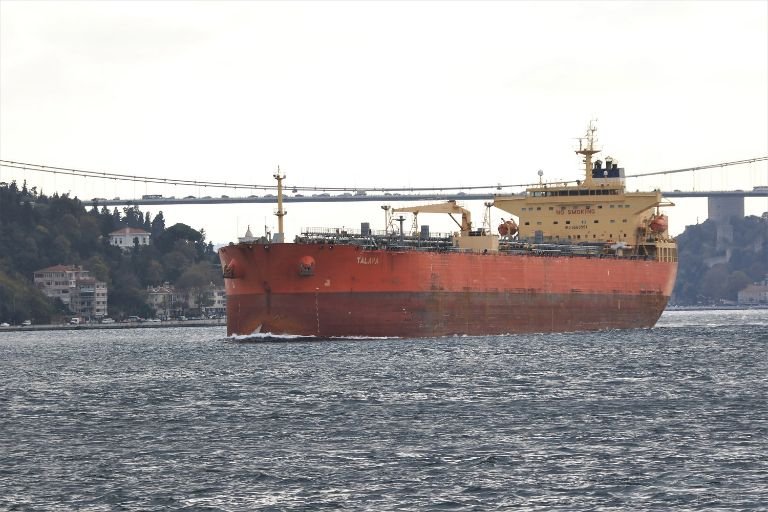
IRGC Releases Seized Tanker Talara From Iranian Custody
The tanker Talara has been released after five days in Iranian custody, along with the crew - but not the cargo, according to the operator.
Talara was seized last Friday by the Islamic Revolutionary Guard Corps (IRGC) at a position in the UAE, off Khor Fakkan. After boarding by helicopter, IRGC personnel diverted the ship to the coastal waters off Bandar Abbas, a typical destination for foreign-flag ships captured by Iran.
The IRGC has claimed responsibility, and in a statement to state media it asserted that the vessel was carrying 30,000 tonnes of petroleum products that were being transported "illegally" to Singapore. The ship is now in ballast, indicated manager Columbia Shipmanagement on Wednesday, implying that the cargo has since been removed.
The crew is safe and "in good spirits," Columbia said, and the vessel is under way.
The nature of the dispute remains unclear. According to Columbia, the crew, ship, owner and manager were never accused of any wrongdoing while in custody. If the IRGC took any action, it would appear to be limited to the cargo.
Writing for the Maritime Executive, a senior Mideast security expert suggested two possible reasons for the intercept: a routine smuggling bust, or a retaliatory action.
"The first possibility is a counter-smuggling operation. Iran has long conducted 'law enforcement' operations to clamp down on oil smuggling, which Iran could classify as resource theft," said the analyst. "The second - which would irritate the IRGC, and provoke their retaliation - would have been the loss of the tanker Falcon and its valuable cargo of LPG on October 18. Falcon was loaded in Iran's Assaluyeh shipment terminal and was under way to the Houthi-controlled port of Ras Isa. TankerTrackers.com reported at the time that the MV Falcon was part of the Iranian shadow fleet and noted that it had no known insurer."
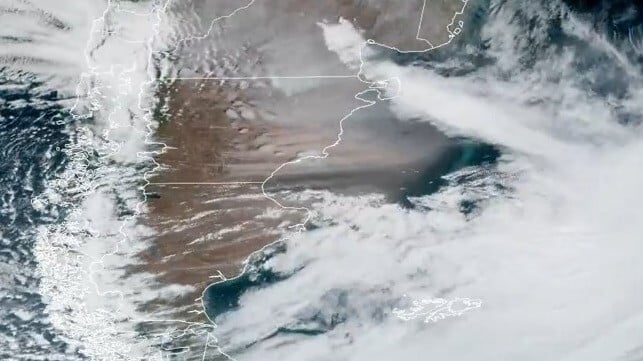
A severe windstorm in southern Argentina damaged multiple fishing vessels in ports around the region on Monday, including three smaller vessels that sank in the harbor at Caleta Olivia, Santa Cruz.
With a low pressure system arriving from the Pacific and blowing over the Andes, gusts in parts of southern Argentina hit speeds upwards of 80 knots, according to the nation's government weather service. Swells rolling in from the Atlantic hit hard for smaller vessels moored alongside in less-protected ports. Three boats identified as the Yakisa, Barracuda, and Alborada went down in sequence at Caleta Olivia, according to Revista Puerto. No injuries were reported, and Argentina's navy is working with the owners and other agencies to arrange for refloating the wrecks.
A fourth smaller vessel, the Madre Teresa, reportedly took on water and partially sank at a shipyard in Rawson, Chubut Province.
In Puerto Deseado, to the northeast of Patagonia in Santa Cruz Province, the winds tore one vessel away from its mooring and sent it slamming into the bow of another. The fishing vessel Atlantico I hit the squid jigger Soho Maru, putting a hole in the latter vessel's bow. No injuries or pollution were reported.
Well into Tuesday, eight provinces in Argentina remained under "yellow alert" for high winds, with gusts up to 40 knots in southern Patagonia.
In Torres del Paine National Park, Patagonia, five tourists were confirmed dead after they were caught in wind-driven whiteout conditions while on a mountain hike. Four survivors were located and rescued on Tuesday.
NTSB: Loose Electrical Wire Led to Dali Hitting Francis Scott Key Bridge
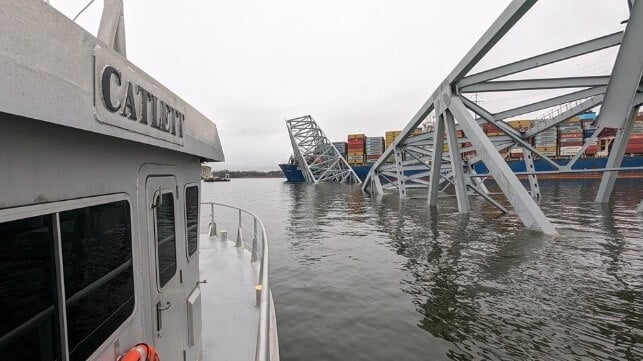
[Breaking] A simple oversight in labeling an electrical wire was a likely causal factor in the blackout aboard the boxship Dali, resulting in the vessel's allision with a bridge pier and the destruction of the Francis Scott Key Bridge, according to the National Transportation Safety Board.
The Dali's main switchboard was constructed with spring-grip terminals for each wire connection. To make a connection, the spring is pushed back with a tool, the bare tip of the wire is inserted down into the terminal block, and the spring is released, forcing the wire against a contact - where it should stay for the rest of the life of the ship.
Aboard the Dali, each individual wire had a cylindrical label with the wire number on it for easy tracing and troubleshooting. The label was supposed to be placed above the bare tip of the wire, up on the insulation. Instead, someone clamped at least some of the wires' labels too far down towards the tip of the wire, NTSB found.
On wire 1 of terminal block 381, the label's incorrect position and its larger diameter prevented the bare tip of the wire from being inserted all the way down into the terminal block, the NTSB alleged. The safety agency determined that the improperly-placed plastic label hit the top of the terminal block and stopped the wire from going in any further. Because of this, the wire's tip was barely held by the clamp at the time of assembly. It then rattled free of the clamp at some point in service, and thereafter it made a poor, intermittent connection with the contact, according to NTSB's investigators.
In the early hours of March 26, 2024, the loose wire ceased making contact with the terminal, causing a fault that shut down the Dali's auxiliary power, NTSB found. In a cascade of events, this cut out the vessel's propulsion and steering, leaving Dali helpless and adrift. Without tug assist, and unable to restart successfully, Dali drifted into a pier supporting the Francis Scott Key Bridge and destroyed it, collapsing the structure and killing six people.
NTSB Chair Jennifer Homendy said Tuesday that the crew would have had a hard time finding the loose wire. NTSB only located it after a forensic examination of the switchboard and a series of tests aided by the shipbuilder. "It’s high with miles of wiring and thousands of electrical connections. Locating a single wire that is loose among thousands of wires is like looking for a loose bolt in the Eiffel Tower," she said.
NTSB's wire-label finding echoes a claim made previously by the vessel's owners and operators. In late July, owner Grace Ocean and operator Synergy Marine filed a lawsuit alleging that the shipbuilder "defectively designed the switchboard in such a manner that wiring connections were not secure, could not be verified as secure, and could lose connection" because the “labeling band identifying the wire was installed too close to the ferrule crimped on the end of the wire.”
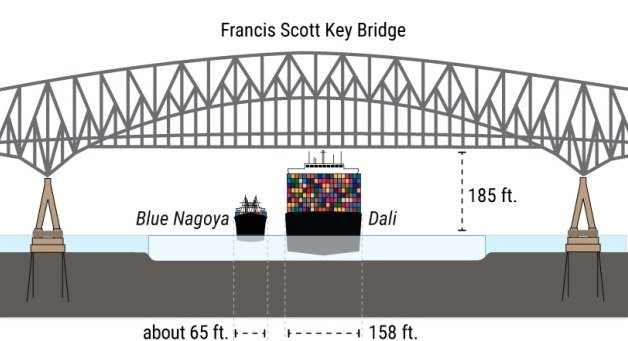
NTSB also concluded that the Francis Scott Key Bridge was vulnerable to catastrophic failure if hit by a modern boxship, as has been previously observed. The Key Bridge suffered a similar incident in 1980 when it was hit by the small containership Blue Nagoya, and it survived with little damage. Dali was 10 times larger than the Nagoya, reflecting the upsizing of containerships over the decades. Ships had changed, but the bridge had not, and the outcome was much different.
Courtesy NTSB
Slow Progress for Salvage of Fire-Damaged Wan Hai 503 Containership
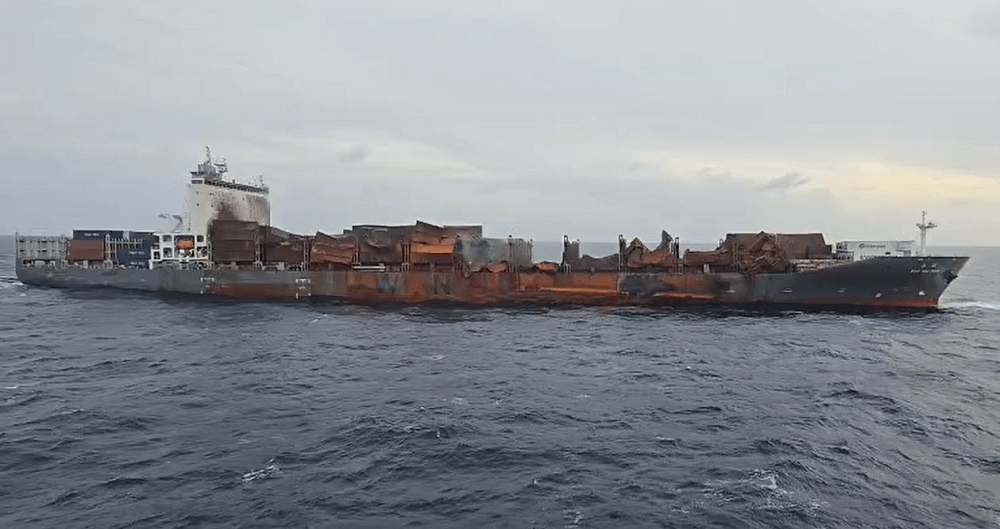
Wan Hai 503 after the fire was extinguished by late July (Indian DGS)
Salvage teams continue to make slow progress in their efforts to clear the fire-damaged containership Wan Hai 503. Two months after the hulk was permitted to dock in the port of Jebel Ali, UAE, the salvage operations continue to face challenges after having removed approximately two-thirds of the containers from the vessel.
Vessel operator Wan Hai posted its latest update, reporting that 1,148 containers have been discharged from the vessel in a slow and challenging operation, with an additional 574 containers still aboard. At the end of October, salvage teams had removed 638 containers, and by the end of the first week of November, it had risen to 987 containers.
The shipping line highlights that the first challenge was that carbon monoxide remained in some of the unopened cargo holds despite the fire, which began on June 9, being largely extinguished by early July. The operation required careful ventilation of the below-deck spaces.
The boxes were waterlogged and suffered extensive fire damage as well as damage to the structures holding the containers. Heavy machinery and grab units were being used to remove each box, but they noted that lifting paths needed to be constantly revised.
Dewatering has also continued, with some 5,000 tonnes of firefighting water having been discharged. The efforts to remove the remaining water, however, have become increasingly difficult due to the amount of cargo residue that is blocking the pump pipes or the hold openings.
Entry into the cargo holds has also been complicated by the deformation of the hatches. They report the hatches were severely deformed by the fire, requiring the salvage teams to cut the hatches into segments before they could be lifted.
The remaining containers are among those that were the most deformed, melted, and structurally weakened during the fire. Wan Hai reports that it is becoming increasingly difficult to identify the individual containers as they are being discharged.
The fire began while the containership was approximately 54 nautical miles west of India in the Arabian Sea and was finally brought under control by early July. It was finally declared fully extinguished by the end of July, and then more than a month was spent searching for a port of refuge before it was decided to tow the vessel to the Middle East. Four seafarers, two from Taiwan and one each from Indonesia and Myanmar, were reported missing when the vessel was abandoned on June 9. The remaining 18 crewmembers were evacuated with the assistance of the Indian Navy and Indian Coast Guard, with six admitted to hospitals in India with injuries from the explosion and fire aboard the vessel.
UK HSE Investigates Fatal Accident Aboard North Sea Jackup
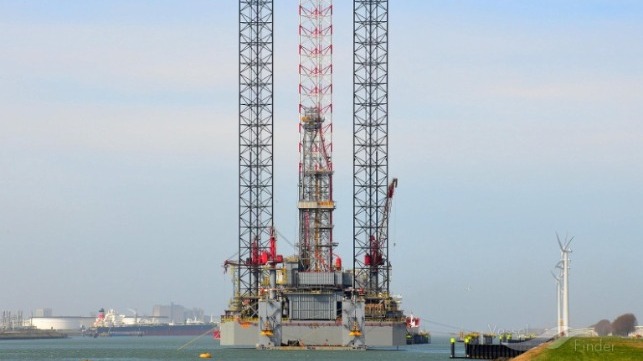
Safety authorities in the UK are investigating the death of a rig worker aboard the jackup Valaris 121 at a site in the North Sea. The victim, identified as Lee Hulse, 32, is believed to have fallen from a crane.
"Around 4.40am on Friday November 14 we received a report of the death of a 32-year-old man on a drilling rig in the North Sea," said Police Scotland in a statement. "The death is not being treated as suspicious."
Operator Valaris confirmed that a worker passed away as a result of an incident on board. "Their next of kin has been informed and Valaris is offering support to them at this difficult time."
Shell, which operates the fixed platform where Valaris 121 was working, expressed its condolences to Lee's family. "We are deeply saddened by the death of a crew member on Valaris 121, which was working at our Shearwater platform in the North Sea. We are providing support to Valaris following the incident," the company said.
No other personnel were injured, and Valaris initiated a temporary halt to operations aboard the vessel.
A GoFundMe has been set up for Hulse's family. "Lee always looked after his family and all his friends," the organizers wrote in an appeal for donations. "This is our turn to make sure we look after him and give him the best send off that he deserves and make sure his daughter is well looked after."
It is the second time in as many years that a fatality has been reported aboard the jackup rig. In January 2023, a worker disappeared from the Valaris 121 while it was under tow. A dislodged polymer grating was found in an inspection after the disappearance, "exposing employees . . . to a risk to their safety by tripping on the displaced grating and/or falling through the subsequent hole in the decking area," inspectors with the UK Health and Safety Executive wrote in an advisory to the operator. The missing man was never found, and the case is still under investigation.
Valaris 121 is a Keppel FELS Super "A" Class harsh environment jackup built in 2014. High-pressure / high-temperature capable, it can drill to depths of up to 40,000 feet.
The Korean Coast Guard held a briefing on yesterday’s grounding of a passenger car ferry, reporting a litany of failures and saying it is pursuing charges, including gross negligence. It said the first officer, who was responsible for navigation, was distracted by his cell phone and failed to perform his duties, while the captain and helmsman are also under investigation.
The first officer of the ferry, identified as a Korean in his 40s, was in charge of the vessel as it was completing its four-hour run from the popular tourist destination on Jeju island. He initially told the Coast Guard the steering had malfunctioned, but later admitted he had been reading the news on his cell phone.
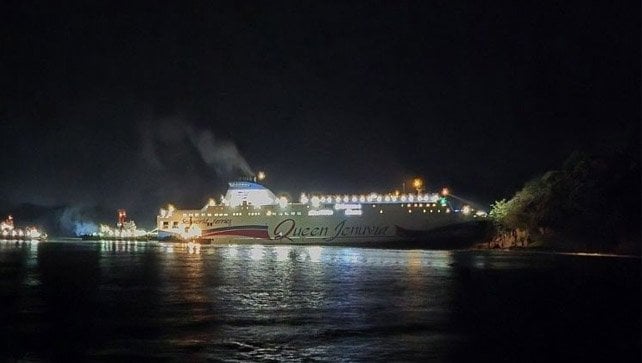
During the final 45 minutes of the voyage, the ferry Queen Jenuvia 2 was traveling through a narrow navigation channel, and according to the Coast Guard, the vessel should have been under manual control. Instead, the vessel’s automatic pilot had remained engaged as it approached a nearly 90-degree bend in the channel.
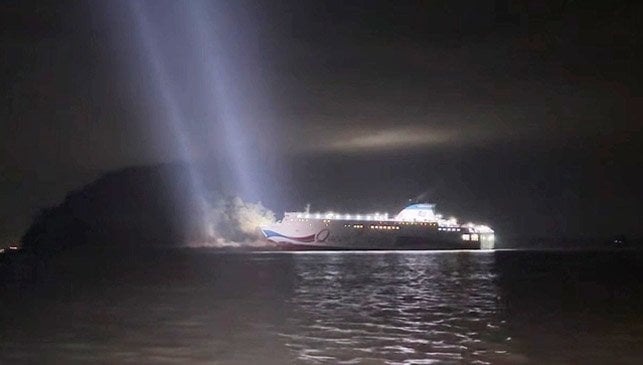
The vessel overshot the turn by approximately two to three minutes, or 1,500 meters, and was approximately 100 meters from an uninhabited island when the error was detected. The bow of the vessel was holed as it hit the island. A total of 27 passengers were taken to the hospital after the vessel was evacuated, suffering from a range of minor injuries.
The Coast Guard said the first officer, along with the helmsman, is being detained and facing arrest on charges of gross negligence. If convicted, they would face up to five years in jail.
The investigation into the incident is ongoing, with the Coast Guard reporting that it was seizing cell phones to conduct forensic analyses. It is also reviewing closed-circuit TV camera video from the ship, as well as the voyage data recorder.
The master of the vessel, a Korean in his 60s, is also under investigation because he was not on the bridge at the time of the incident. He is facing charges for a failure to fulfill his duties. The helmsman, who is from Indonesia, was being interviewed through the use of an interpreter.
The operators of the ferry, Sea World Express Ferry Co., issued a formal apology and suspended service. It said it was working with the authorities while noting it had arranged shelter for the passengers after they were evacuated. The company said it was working to determine the circumstances and promised to “comprehensively reorganize our safety management system across all ship operations to prevent a recurrence.”
The ferry was refloated overnight at high tide and was brought to the dock in Mokpo for further investigation. It had 246 passengers and 21 crewmembers aboard and was carrying 118 vehicles. Arrangements were being made for the vehicles to be offloaded along with the cargo from the ship.
Passengers Being Evacuated After Korean Ferry Runs Aground
A large rescue operation is underway along the South Korean coast south of Seoul after a larger passenger-car ferry grounded while approaching the port at Mokpo on Wednesday evening, November 19. Coming 11 years after South Korea’s worst sea disaster on another passenger ferry, the government, including the president of South Korea, has quickly responded to the grounding.
President Lee Jae Myung was briefed during a state visit to the UAE and immediately ordered all available resources to be deployed. The government issued instructions for the local authorities to immediately establish temporary shelter and put medical support teams on standby. The danger, however, was reported to be less imminent as the ferry is hard aground and not reported to be taking on water.
Built in 2021, the 26,546 gross ton Queen Jenuvia 2 was completing a run from the popular tourist destination on Jeju Island. There were 267 passengers aboard and a crew of 21. The ship is operated by SeaWorld Express, which acquired it in 2024, and it is registered in Panama. It has a capacity for 1,010 passengers and more than 3,500 tons of cargo or vehicles.
According to the media reports, the vessel was nearing shore at low tide when the bow of the 558-foot (170-meter) ferry struck an uninhabited island at approximately 8:15 p.m. local time, approximately 45 minutes before its scheduled arrival time. It had departed Jeju at 4:45 pm local time. Passengers reported a strong jolt, and media reports are saying five passengers suffered minor injuries.
The ship was reported listing 15 degrees to port with a hole in its hull. Weather conditions were fair with light winds.
The Coast Guard dispatched 10 patrol boats, with the first vessels reaching the stranded ferry within approximately 20 minutes. Passengers were instructed to put on their life jackets and were being transferred to the Coast Guard vessels.
A skeleton crew was remaining aboard the vessel with the captain. The Coast Guard was hoping to refloat the vessel and move it to port overnight during the high tide.
In 2014, the Sewol ferry bound for Jeju sank in a similar position to the current incident. Many people were trapped aboard the ferry, with over 300 killed. It was later determined that the ferry had been overloaded.
Cargo Barge Damaged and Taking on Water North of Vancouver
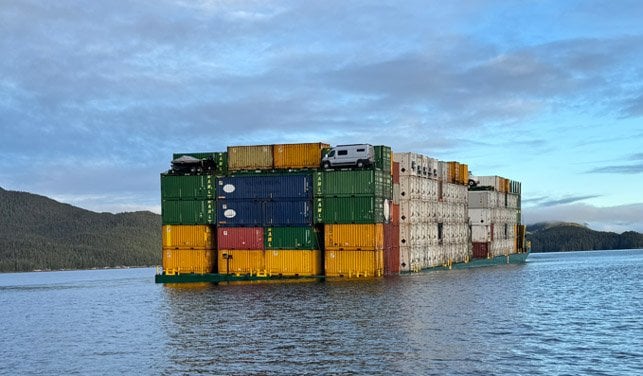
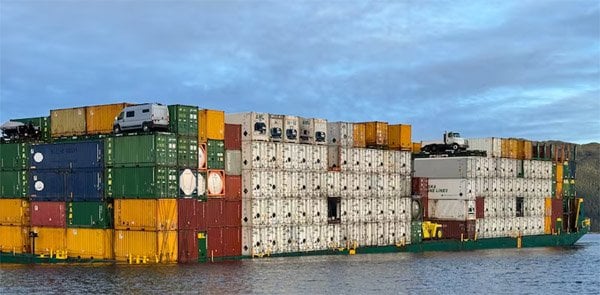
Barge is sitting low in the water after likely hitting something while transiting the Inside Passage (Heiltsuk Marine Emergency Response Team photos)
A U.S.-bound cargo barge being towed by a U.S. tug reported that it was taking on water north of Vancouver, British Columbia, Canada, while traveling along the Inside Passage. Officials said that the vessels were moved into a more secure location and that the situation remains stable while the operators prepare to lighten the cargo load on the barge.
The Dunlap Towing Company tug Malolo reported on Tuesday morning, November 18, that the barge it was towing was taking on water and sitting low in the water. At the time, it was approximately 300 miles northwest of Vancouver near Bella Bella, B.C. It is in an area supervised by the Heiltsuk First Nation’s Marine Emergency Response Team.
The Malolo is a 50-year-old twin screw tug with 3,420 horsepower. It was towing a barge for Alaska Marine Lines, coming from Kodiak, Alaska, bound for Seattle, Washington. The company operates barges that are approximately 400 feet in length with a capacity of upwards of 17,000 tons of cargo. Photos show the barge carrying at least 300 containers, as well as several vehicles on top of the containers and boats on trailers.
The Heiltsuk response team was monitoring the barge and reports that a precautionary pollution control boom has been strung, although there are no reports of leaks or pollution so far. The barge was towed into one of the inlets to put it in a more sheltered position, and divers inspected the hull on Wednesday. A spokesperson from the Heiltuk First Nation told Canadian media that there is damage to the hull of the barge and speculated that the barge likely struck something. They reported that the barge, however, is stable and is not continuing to sink.
Alaska Marine Lines told the Canadian media that a second tug and barge had been set to location and the plan was to lighten the load on the barge. They expect that the two tugs with the barges will then proceed to Seattle. The operation could be challenged or delayed by forecasted high winds in the region this week.
The Canadian Coast Guard reports it is collaborating with the Heiltsuk Nation, Transport Canada, and the tug owner to ensure an appropriate response.
Alaska Marine Lines provides a vital cargo link between Alaska and Washington state. The company told the media that because the barge was southbound, it was not carrying groceries or supplies for Southeast Alaska, and there would be no disruption to the supply chain to the state.
TRUMP'S DOJ Sides with Cruise Industry Seeking to Block Hawaii’s “Green Fee”
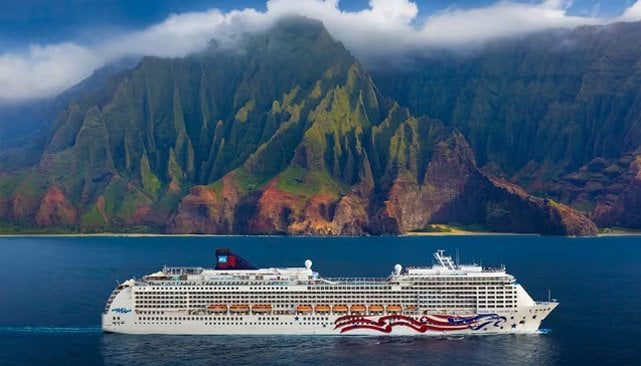
One cruise ship, Pride of America, sails year-round in Hawaii (NCL)
In an unusual move, the Department of Justice filed a motion in federal court seeking to intervene in the pending legal action by the cruise industry against the State of Hawaii. The action is in keeping with the Trump administration’s position that denies climate change and seeks to block individual state efforts, which it sees as damaging to federal policy and commerce.
The motion was filed in the U.S. District Court in Hawaii, arguing that the federal Department of Justice should be permitted to intervene in defending federal law. It takes the position that the private plaintiffs, in this case, the cruise industry, cannot fully represent or protect federal law and that the issue is to ensure the uniformity of the taxation of vessels as established in the U.S. Constitution.
The trade group Cruise Lines International Association (CLIA) filed the suit at the end of August, supported by vendors to the cruise industry and tour operators in Hawaii. It is seeking an injunction to stop Hawaii’s new “Green Fee” from going into effect in January on the basis that they argue the cruise industry is being discriminated against.
At issue is a May 2025 law enacted in Hawaii that imposes additional fees on tourists in hotels and on cruise ships to address climate impact on the state. Hawaii Governor Joshua Green called it “a groundbreaking move for climate action,” saying it could generate as much as $100 million annually, which would be used to fund projects for environmental stewardship.
CLIA is arguing that the fees do not treat the cruise industry and other segments of tourism equally and are not for services being provided to the ships and their passengers. It points to the small increases in hotel costs and the lack of fees on airplanes. At the same time, it argues that under the U.S. Constitution, fees imposed on ships must be approved by the U.S. Congress.
DOJ seeks to intervene, citing this later point under the so-called “Tonnage Clause” in the Constitution, saying that states need Congressional approval for tonnage fees. The motion argues the “United States has a strong interest in ensuring the primacy of Federal law.”
They are also arguing that the “Hawaii unabashedly boasts that this revenue is not for the purpose of paying for services actually provided to incoming cruise ships or their passengers, but for funding climate change initiatives.”
"This scheme to extort American citizens and businesses solely to benefit Hawaii flies in the face of federal law,” asserts the DOJ.
Hawaii has also sought to have the federal court dismissed, arguing that it is a state matter and, as such, should be resolved in state, not federal court.
Falling under the cabotage provisions of the Passenger Services Act, cruising is a small part of Hawaii’s overall tourism industry, as foreign-flag cruise ships cannot transport passengers around the islands or between the mainland and the islands without going to a foreign port. One large, U.S.-flagged cruise ship sails year-round from Honolulu, while foreign-flag cruise ships make port calls during Pacific crossings or operate Hawaii cruises with Mexican port calls to bypass the cabotage restrictions.
Cruises reportedly bring about 3000,000 tourists annually to Hawaii, based on 2023 data. Hawaiian government data shows that there were more than 9.6 million visitors to the state in 2023. During a court hearing at the end of October, however, it was argued that the one cruise ship sailing year-round in Hawaii, Pride of America, is experiencing a 30 percent decline in bookings for 2026 versus 2025 due to the increased cost of the cruises from the “Green Fee.”
Hawaiian officials have said they will vigorously defend the law due to the impact of climate on the state. They said the focus would be on the shoreline and other areas being most impacted by the changes in climate.
ECOCIDE: DRILL, BABY, DRILL
New U.S. Offshore Oil and Gas Plan Opens High Arctic Waters for Drilling
The U.S. Department of the Interior has announced that it is withdrawing the Biden-era offshore leasing plan for 2024-29 and instituting a new plan.
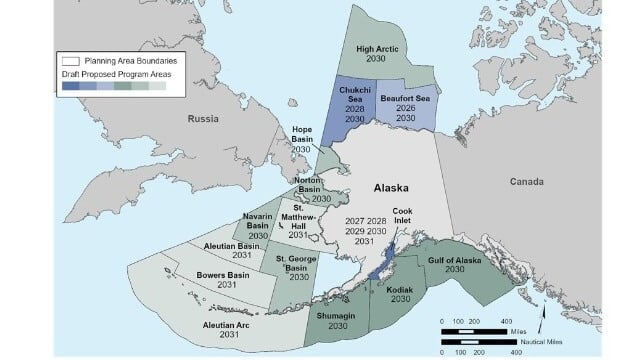
The proposal puts forward a schedule for as many as 34 lease sales covering 1.27 billion acres. The proposed areas cover waters off the coast of Alaska, the U.S. Gulf and California. The map includes some novel new additions that depart from recent policy. The first is a new "High Arctic" lease area in the icy Arctic Ocean, extending out to roughly 80 degrees north latitude - a frigid and inaccessible region visited only by icebreakers. Moving south, the plan proposes leasing in every possible block off mainland Alaska and the Aleutian Chain, from border to border (with the exception of Bristol Bay).
On the U.S. West Coast, it proposes three lease areas off the coast of California, two of which would begin auctions in 2027. Political commentators have noted that offshore leasing would be an effective retaliatory measure against California's governor, a vocal opponent of the administration.
In the Gulf, the lease areas cover the western and central regions from Texas to Alabama, which are routinely on offer at auction. For the first time in years, Interior also plans to offer lease areas off Florida, an idea which has been consistently opposed by the state's Republican governor and its congressional delegation. Atlantic waters off the U.S. Southeast - where oil and gas exploration is heavily opposed by Republican-led state governments - were excluded.
The lease plan received positive reviews from the offshore industry, which stands to benefit from a faster tempo of auctions and a broader geographic reach.
"After years of delay in federal leasing, this is a historic step toward unleashing our nation’s vast offshore resources," said Mike Sommers, president and CEO of the American Petroleum Institute. "We applaud Secretary Burgum for laying the groundwork for a new and more expansive five-year program that unlocks opportunities for long-term investment offshore and supports energy affordability at a time of rising demand at home and abroad."
"While the Central and Western Gulf . . . remain core areas for investment and energy production, a forward-looking approach that evaluates new areas ensures the U.S. remains competitive and secure in meeting future energy needs," said Erik Milito, head of the National Ocean Industries Association (NOIA). "Energy demand is on the rise and America’s offshore basins are a shining opportunity for U.S. competitiveness and leadership."
Environmental groups have given the lease plan critical reviews.
"Trump’s plan would risk the health and well-being of millions of people who live along our coasts. It would also devastate countless ocean ecosystems that both humans and wildlife rely on. This administration continues to put the oil industry above people, our shared environment, and the law," said Earthjustice senior attorney Brettny Hardy.
The East African country of Tanzania has been going through the most serious political crisis in its history since gaining independence in 1961, following the disputed re-election of Samia Suluhu Hassan as president. There is now talk of thousands of deaths, an estimate corroborated by diplomatic sources.
Politics of terror
As in many other countries on the continent, the two main oppositionists were excluded from the electoral process. Tundu Lissu, leader of the Chadema party, was prevented from running for legal reasons, while Luhaga Mpina, leader of the ACT-Wazalendo party, is awaiting trial in prison on charges of treason — an offence that does not allow for bail.
In all the major cities of the country, massive demonstrations took place to denounce this sham election. The police have repeatedly fired live ammunition. The first videos released after the internet reopened show streets littered with corpses. The police are trying to erase this evidence by sending text messages threatening anyone who broadcasts testimonies about this bloodbath.
After the elections, the abuses continued. Security teams went at night to the homes of citizens suspected of having taken sides against the president in order to execute them. Even some important figures of the ruling party, the CCM, such as Humphrey Polepole, disappeared after issuing criticisms of the current political line. An isolated regime
Samia Suluhu Hassan, initially vice president, came to power after the sudden death of president John Magufuli. The early days of her mandate were marked by a relative openness of the public space. But very quickly, authoritarian and then openly dictatorial practices took over, at a time when opposition parties, notably Chadema, were gaining popularity.
The ferocity of the repression illustrates the fragility of the Hassan regime, whose only real support remains, so far, the army and the police forces. Her predecessor, although also undemocratic, had never reached such a level of coercion. Magufuli also retained a certain social base, because of his anti-imperialist rhetoric and sovereignist economic policy in the face of British and Canadian multinationals in the mining sector. His measures against corruption and budget waste also won him some popular sympathy.
Samia Suluhu Hassan, on the other hand, is pursuing a neoliberal economic policy aimed at improving the “business climate” and attracting foreign investors by favouring the private sector. Her brutal authoritarianism earned her the nickname “Idi Amin Mama” on the street, in reference to Idi Amin Dada, the bloodthirsty Ugandan dictator of the 1970s. This shows the popularity of this president, officially elected with... 98% of the votes.
Paul Martial is a correspondent for International Viewpoint. He is editor of Afriques en Lutte and a member of the Fourth International in France.
International Viewpoint is published under the responsibility of the Bureau of the Fourth International. Signed articles do not necessarily reflect editorial policy. Articles can be reprinted with acknowledgement, and a live link if possible.