CUBA UNDER SEIGE UPDATED

Another nationwide blackout plaguing Cuba - first this year
16.03.2026, dpa

Photo: Nick Kaiser/dpa
Cuba has experienced another nationwide power outage, with the cause under investigation and work underway to restore power, the Ministry of Energy announced on Monday.
It was the first island-wide blackout in Cuba since the beginning of the year. A blackout just under two weeks ago had affected around two thirds of the Caribbean nation.
The country, which has a population of just under 10 million, suffers repeated total collapses of its power grid. Large parts of the outdated infrastructure in the socialist island state are in poor condition. As a result, power plants frequently go offline and have to be hastily repaired.
Power outages a fact of daily life
The government attributes the crisis to the US trade embargo, which has been in place for more than 60 years.
The situation has worsened amid recent tensions between Cuba and the United States.
For months, the country has been receiving no oil from Venezuela, after US President Donald Trump ordered a complete blockade on sanctioned oil tankers carrying deliveries from Cuba's South American ally. The country depends on oil for its power supply.
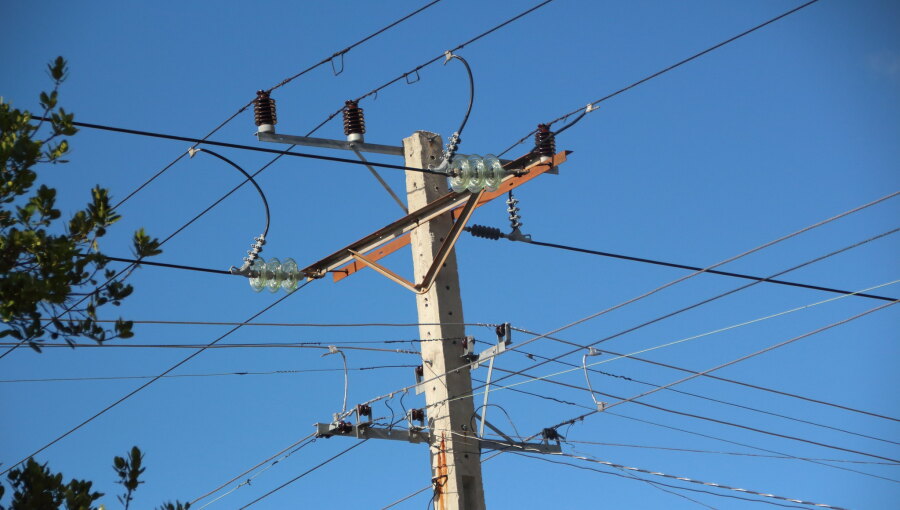
Cuba's national electricity system suffered a complete collapse on March 16, state utility Unión Eléctrica announced, plunging the entire island into darkness as the country grapples with an acute fuel shortage.
The utility said "protocols for the restoration of the system are beginning to be implemented" but did not provide a timeline for when power might be restored.
The total grid failure represents the most severe disruption yet to an electricity system that has been buckling under the weight of dwindling petroleum reserves. Blackouts affecting up to 70% of the country during peak hours had already become routine in recent weeks, with residents in several provinces enduring outages of up to 20 hours daily.
Cuba has received no oil shipments in over three months following a de facto US fuel embargo. Venezuela had supplied the bulk of Cuban petroleum for over two decades until the January 3 US operation that resulted in President Nicolás Maduro's capture and severed Caracas's subsidised oil flows to Havana.
President Donald Trump signed an executive order on January 29 declaring Cuba an "unusual and extraordinary threat" to US national security and threatening punitive tariffs against any country supplying oil to the communist-run island. This prompted Mexico, another key oil supplier, to halt deliveries, fearing retaliation from the US.
The island generates roughly 40% of its petroleum from domestic sources but requires imported oil to meet energy demand, with electricity production dependent on ageing Soviet-era oil-fired plants.
On March 15, Trump told reporters aboard Air Force One that Washington could reach an agreement with Cuba imminently. "Cuba also wants to make a deal, and I think we will pretty soon either make a deal or do whatever we have to do," he said.
Cuban President Miguel Díaz-Canel confirmed last week that officials had held talks with US representatives aimed at resolving bilateral differences through dialogue, marking the first public acknowledgement of discussions between the two governments.
The total blackout comes amid mounting social unrest. Over the weekend, protesters in the central city of Morón stormed a provincial Communist Party building, setting it ablaze in anger over soaring food prices and relentless power cuts
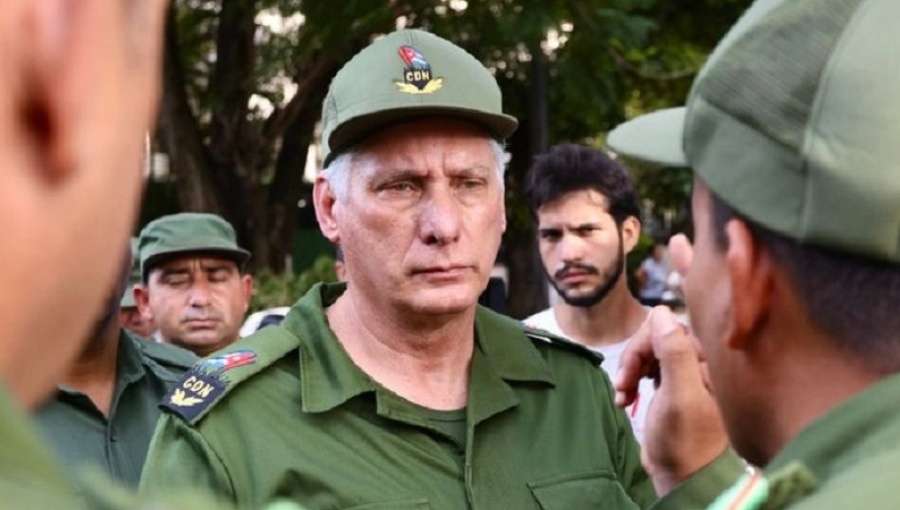
President Donald Trump has said that Washington could reach an agreement with Cuba imminently, a few days after Havana's leader publicly confirmed for the first time that the two governments are holding discussions.
"Cuba also wants to make a deal, and I think we will pretty soon either make a deal or do whatever we have to do," Trump told reporters on March 15 aboard Air Force One. "We're talking to Cuba, but we're going to do Iran before Cuba."
The comments follow an announcement on March 13 by Cuban President Miguel Díaz-Canel that officials had held talks with US representatives. "These talks have been aimed at finding solutions through dialogue to the bilateral differences we have between the two nations," Díaz-Canel said in a video aired on state television.
The Cuban leader described the contacts as being in an "initial phase" and conducted with strict discretion.
Díaz-Canel said the objective was to identify bilateral problems requiring solutions, explore possible remedies, assess both sides' willingness to take concrete actions, and identify areas for cooperation. He emphasised that exchanges were proceeding "based on the principle of equality and respect between both countries" and with adherence to international law.
The acknowledgement marks a significant shift for a regime that had previously flatly denied or dismissed as "speculation" reports of discussions with Washington. The talks come as Cuba confronts its gravest crisis since the 1950s revolution, with the island teetering on the edge of humanitarian catastrophe.
The severity of the emergency was laid bare over the weekend when protesters in the central city of Morón stormed a provincial Communist Party building, setting it ablaze in an unprecedented act of defiance.
The violence reflects deepening public anger over soaring food prices and relentless power cuts, with blackouts of up to 15 hours daily now commonplace across the island.
In Havana and other cities, residents have increasingly resorted to nighttime protests by banging pots and pans. In a rare public acknowledgement, Díaz-Canel recognised the legitimacy of public grievances over living conditions but warned that acts of violence and vandalism would not be tolerated, whilst pinning blame for the energy crisis on the United States.
The Cuban leader attributed the emergency to US restrictions, stating no petroleum shipments had arrived in over three months. "The government is not to blame, the revolution is not to blame. The energy blockade they have imposed on us is to blame," he said, adding that the fuel shortage has had an "immeasurable impact on the lives of our people".
Cuba generates roughly 40% of its oil needs from domestic sources but requires imports to satisfy demand, with electricity production dependent on ageing Soviet-era oil-fired plants. Venezuela, once a close ideological ally, had supplied the bulk of Cuban petroleum for over two decades until the January 3 US operation that resulted in Nicolás Maduro's capture and severed Caracas's subsidised oil flows to Havana.
Mexico, another key supplier, halted shipments after Trump signed an executive order on January 29 declaring Cuba an "unusual and extraordinary threat" to US national security and threatening punitive tariffs against any country supplying oil to the communist-run island.
Cuba's electricity system has reached crisis levels, with blackouts affecting up to 70% of the country during peak hours and residents in several provinces enduring outages of up to 20 hours daily. Hospitals have curtailed surgical procedures, schools have cancelled classes and rubbish goes uncollected on Havana's streets as fuel-dependent municipal services grind to a halt.
Jet fuel became unavailable last month at all airports, forcing international airlines to suspend service and dealing a severe blow to the tourism sector, a vital source of foreign currency. Meanwhile, a massive US naval deployment in the Caribbean has reinforced Washington's pressure campaign, successfully deterring multiple attempted fuel deliveries.
The island's economic downfall has been exacerbated by over 60 years of crippling US sanctions, economic mismanagement and the recent disruption of oil imports.
According to Axios, Secretary of State Marco Rubio, a Cuban American and longtime advocate of overthrowing the communist regime, has been conducting backchannel discussions with Raúl Guillermo Rodríguez Castro, grandson of former Cuban leader Raúl Castro. The engagement circumvents formal diplomatic contacts and demonstrates the administration's belief that the 94-year-old former leader wields more influence than Díaz-Canel.
CNN reported that Rodríguez Castro made a notable public appearance on March 13 alongside Díaz-Canel at multiple official functions, prompting speculation among analysts about his position within Cuba's power structure. The younger Castro was present both at a session with Communist Party and Council of Ministers leadership and at the subsequent press conference during which the president acknowledged ongoing discussions with the White House.
The 41-year-old previously served as his grandfather's personal security chief and is widely known in Cuba by the nickname "Raulito". His father, General Luis Alberto Rodríguez López-Calleja, who died in 2022, headed GAESA, the sprawling military-run business conglomerate that controls significant portions of Cuba's economy.
"What strikes me is that it's happening publicly now, but what we should really ask ourselves is how long he has been acting as this channel of communication," said Diana Correa, director of the international relations programme at Tecnológico de Monterrey, as quoted by CNN.
Speaking to reporters on the sidelines of a Caribbean Community gathering in St Kitts and Nevis in late February, Rubio addressed the Cuba crisis without confirming specific discussions. "Cuba needs to change. It needs to change. And it doesn't have to change all at once," Rubio said on February 25. "And they need to make those dramatic reforms that open the space for both economic and eventually political freedom for the people of Cuba, obviously the United States would love to see that."
Trump has made a series of increasingly bold statements about Cuba in recent weeks, suggesting the island was on the verge of collapse and eager to reach an agreement. He has floated the possibility of a "friendly takeover" of Cuba before adding: "It may not be a friendly takeover."
During the “Shield of the Americas” summit with conservative Latin American leaders on March 7, Trump declared that "Cuba's at the end of the line, they're very much at the end of the line. They have no money. They have no oil. They have a bad philosophy; they have a bad regime that's been bad for a long time."
Despite the renewed contact, significant differences remain between the two governments. US officials have suggested any easing of pressure would likely depend on political and economic concessions from Havana, whilst Cuban leaders insist negotiations must respect the island's independence and sovereignty.
Trump told reporters last week that he expected developments within approximately two weeks. As he welcomed Inter Miami's Major League Soccer championship team to the White House, he told Cuban-American businessman Jorge Mas Santos he would soon be able to fly to Cuba without presidential approval.
However, the president has not yet decided on a specific course of action, with his attention currently directed primarily toward the escalating conflict with Iran following joint US-Israeli airstrikes that killed Supreme Leader Ali Khamenei on February 28.
Trump has set regime change in Cuba as a goal by the end of 2026, though unlike Venezuela with its vast oil reserves and functioning opposition parties, Cuba offers Washington fewer levers for engineering political transformation.
Cuba’s Slow Strangulation and the Empire That Can’t Stop Squeezing
 Some catastrophes arrive like explosions; others arrive like a hand on the throat that tightens, loosens just enough to keep the victim conscious, then tightens again. What is happening to Cuba now is the second kind. It is less a “crisis” than the logical endpoint of a relationship Ada Ferrer, in Cuba: An American History, describes as “intimate, explosive, and always uneven”—a history in which the United States could never decide whether Cuba was a neighbor, a colony, or a mirror it couldn’t bear to look into.
If the Iran war exposes how vulnerable the global system is at its maritime choke points, Cuba reveals something just as important: how an empire behaves when the choke point is not a strait half a world away but an island ninety miles off its own shore. It turns out that the methods are the same—sanctions, blockades, energy as weapon—but the blowback is closer, the hypocrisy starker, and the margin for error smaller.
Cuba’s Fuel Blockade Future
The outlines are simple and brutal. A small, import‑dependent island is strangled of fuel. Power plants shut down or limp along on residual stocks. Blackouts spread—at first rolling, then unpredictable, then so widespread that, for stretches, two‑thirds of the country sits in the dark. Refrigerators warm. Buses disappear. Flights are cancelled. Pumps stop pushing clean water uphill. Food that once moved by truck begins to rot in place. UN officials now warn that tens of thousands of cancer patients are missing treatment, nearly a million people are losing piped water when generators stop, and even humanitarian aid is stuck in port because trucks have no diesel.
None of this is an accident. It is the direct consequence of a policy crafted in Washington and justified, as Ferrer might put it, in the same register that once dressed the Platt Amendment as “protection” and the Bay of Pigs as “liberation.” The embargo that has shadowed Cuba since 1960 has been tightened again and again, but the latest turn of the screw is qualitatively different. It targets the literal fuel lines of the society—shipments of oil from Venezuela, Mexico, and any other state bullied or bribed into compliance—on the explicit theory that enough darkness and scarcity will crack the Cuban government before it cracks the Cuban people.
If you cared only about overthrowing a regime on a strategist’s whiteboard, you might call this efficient. If you cared about the texture of ordinary life, you would see something closer to slow‑motion warfare: a weaponization of kilowatts and kilometers that treats 11 million people as leverage.
Cuba as American Project
Ferrer’s book is built around a simple but devastating premise: to write the history of Cuba is to write a history of the United States from a different angle. The island has been central to American fantasies and fears since before there was a U.S. flag to fly over it. Thomas Jefferson dreamed of extending his “empire for liberty” across Florida into Cuba. John Quincy Adams compared the island to an apple that nature itself destined to fall into the Union’s hands. Southern planters saw in its sugar fields a chance to expand slavery’s domain.
Long before 1898, U.S. merchants and shipowners had already plugged Cuba into a transatlantic machine: American hulls carried enslaved Africans to its plantations, American capital financed its mills, and American markets swallowed its sugar. Spain still flew its flag from Havana’s forts, but as Ferrer shows, the island’s economy and future were already wired to the north.
When Cuban separatists finally rose in earnest against Spain in the late nineteenth century, they did so with a vision that would have horrified both Madrid and Washington: a multiracial republic, formally independent, with neither a king nor a plantation oligarchy at the top. The United States entered that war late, reframed it on its own terms as the Spanish‑American War, and claimed the victory. Spanish flags came down on January 1, 1899, but the flag raised in their place was not the lone‑starred Cuban banner that patriots had died for. It was the Stars and Stripes.
Independence did not arrive; it was deferred and rebranded. Through the Platt Amendment, Washington claimed the right to intervene in Cuban affairs whenever it saw fit and carved out Guantánamo as a permanent military foothold. American sugar companies and banks flooded in. By the 1920s, vast stretches of cane, rail, and mill lay in U.S. hands; Havana was reshaped to serve tourists and investors, and the countryside was reorganized around seasonal labor, debt, and the volatility of a single export.
Ferrer is careful not to turn this into a cartoon of passive victims and omnipotent puppeteers. Cuban elites collaborated. Cuban workers, farmers, and radicals resisted. Coups, “authentic” republics, and reformist waves all came and went. But the through‑line is unmistakable: for more than a century, the United States treated Cuba as a project—a place to discipline, develop, entertain, and extract from—not as a sovereign equal.
The Revolution and the Broken Mirror
The 1959 revolution shattered that arrangement but did not end the entanglement. It reversed the direction of power, even though physical proximity remained, and wealthy U.S. properties were nationalized. The Eagle vanished from monuments. Havana turned from client to antagonist almost overnight. For Washington, a socialist Cuba so close to Florida was not just a security problem; it was an insult, a refusal to accept the gravity that Adams once invoked.
The Castro government, for its part, turned the island into a laboratory for post‑colonial development: literacy campaigns, agrarian reform, universal health care, an attempt—uneven, often harsh—to redistribute the fruits of modernity to people who had spent centuries picking cane for others. It did all this under permanent siege by its northern neighbor: invasion, assassination attempts, embargo, covert operations, and the constant threat of annihilation during the Cuban Missile Crisis.
Ferrer’s point is not that the revolution was pure or painless. It wasn’t. But she insists that you cannot understand it, or its aftermath, without setting it against the long backdrop of occupation, sugar dependency, and thwarted independence. What happens when a people who have been alternately courted and trampled by an empire try to write a different script? Cuba is one answer.
What happens when the empire can’t forgive them for it, even sixty‑plus years on? That answer is being written right now in the darkened streets of Havana.
Energy as Empire’s Last Language
In my Iran essays, the heart of the argument was that a civilization without slack—without spare capacity in its energy systems, soils, finance, or politics—turns every local war into a test of the whole. Cuba shows the same logic at a smaller scale. The island is almost as dependent on imported fuel as a modern industrial country, but without the buffers: no vast domestic fields, no monetary hegemony, no deep capital markets to soak up shocks.
When Washington cuts off oil, it is not just pinching a budget line. It is severing the arteries that keep water moving, food chilled, buses running, and hospitals lit. Blackouts in a wealthy northern city are temporary inconveniences; blackouts in a poor, sanctioned island are existential crises. They turn vaccines into spoiled cargo, surgeries into gambles, and everyday life into a sequence of improvisations around darkness.
There is a grim symmetry here. The United States, which once organized the island’s economy around sugar and steam, now organizes its suffering around kilowatts and barrels. The levers have changed, but the principle has not: control the flows, and you control the future.
But the future no longer has room for such games. In a climate‑stressed, energy‑tight world, weaponizing fuel against an island is not clean geopolitics; it is a rehearsal for broader breakdown. Each tanker turned away from Havana is also a signal to every other vulnerable state about the risks of reliance, and to every other major power about the necessity of finding routes and currencies beyond Washington’s reach.
Blowback, Visible and Invisible
The most obvious blowback is migration. Cuba has already sent waves of exiles and migrants northward in every decade since the revolution, each crest driven by some mix of repression, economic crisis, and U.S. policy. A deliberate fuel strangulation all but guarantees new attempts by sea and land. The same politicians who demand “toughness” toward Havana will soon be standing in front of cameras insisting the border cannot cope with the human fallout of their own strategy.
Then there is legitimacy. Even in a world hardened by Gaza, Yemen, and Iraq, there is something especially naked about starving an entire country of fuel. It is the kind of act that international law was supposed to name and prevent. The UN is already warning in those exact terms: of “possible humanitarian collapse,” of hospitals forced to triage care by generator hours, of aid convoys immobilized because they cannot get diesel. Each blackout in Havana is also another crack in the already fragile story of a “rules‑based order” administered from Washington. If sanctions are the empire’s favorite “non‑violent” tool, it’s because the dying happens offshore, off‑camera, and far from the people signing the orders.
Finally, there is the subtler blowback Ferrer hints at when she describes how Cubans came to see 1898 not as liberation but as theft. Memory accumulates. A people who have lived through slavery, sugar dependency, occupations, revolution, and embargo are not blank slates. They carry stories about who starved them and who stood by. Every night spent in darkness because someone in an office in Washington signed an order will become another story added to that ledger.
Cuba as Microcosm of Collapse
Seen from a distance, the new Cuban crisis might look like a small, if tragic, side plot in a world preoccupied with larger wars. Seen from closer in, it is a concentrated version of the same themes:
- A global system that cannot deliver basic security and dignity without continuous extraction and coercion.
- An empire that reaches for the same blunt tools—blockades, sanctions, proxy pressure—even as those tools corrode the order they are meant to defend.
- A planet whose physical limits—of energy, climate, and ecology—turn every act of economic warfare into a ripple in a tightly coupled web.
Cuba has been, for centuries, a place where big forces show their hand early: slavery, monoculture, corporate imperialism, Cold War proxy conflict, the false promise of “development” under dependency. It is not surprising that it is now an early stage for energy warfare in the age of climate breakdown.
In that sense, the streets of Havana today belong in the same mental frame as tankers stalled near Hormuz or farmers in the Midwest staring at fertilizer quotes. The details differ; the structure doesn’t. A civilization that has built its comforts on other people’s precarity is discovering that the line between “over there” and “here” is dissolving.
Cuba’s blackout is not separate from the slow collapse I have been mapping. It is one more facet of the same weather system: a world in which the engines of empire still turn, but with less fuel, less consent, and less time.
Is there a particular outlet you’re now leaning toward for this piece? That might shape how hard we lean into explicit UN language versus keeping it at the more essayistic level.

The head of a prominent U.S.-funded nongovernmental organization has recently acknowledged years of involvement in subversive operations in Cuba and Nicaragua, some in defiance of executive policies.
Damon Wilson, president of the National Endowment for Democracy (NED), confirmed in testimony before Congress last month that his organization has spent years supporting dissidents who are seeking regime change in Cuba and Nicaragua. He acknowledged that NED supported Cuban dissidents when the Obama administration was organizing a rapprochement with Cuba, and he cited numerous operations in support of Nicaraguan dissidents, including a former Nicaraguan presidential candidate.
Although Wilson insisted that NED makes its decisions in consultation with Congress and the White House, he insisted that the organization can operate independently in pursuit of its own goals. Policies such as the Obama administration’s move to normalize relations with Cuba, he explained, would not deter NED from working to change the Cuban government.
“We’re built so that there is no such thing as mission creep from one administration’s priorities to another,” Wilson said.
Background
Since its creation in 1983 at the behest of Ronald Reagan, NED has been a major organizer of U.S. influence operations across the world. Funded by Congress but designed as a nongovernmental organization, it has worked privately to mobilize and empower political allies in other countries, often with the goal of bringing new leaders to power. NED presents its work as a way of spreading freedom and democracy.
Leaders of NED and its core institutes, including the International Republican Institute (IRI) and the National Democratic Institute (NDI), have indicated that they pursue regime change by playing the long game. They have openly acknowledged efforts to change governments across the Global South, and they have speculated about bringing down the governments of powerful U.S. rivals, including China and Russia.
“We have to not give up on the possibility for democratic change in China,” Carl Gershman told Congress in 2018, when he was president of NED.
At last month’s congressional hearing, Wilson indicated that NED continues to conduct influence operations across the world, including in China, which he described as NED’s “largest program.” Wilson disclosed that NED has been active in Iran, citing efforts to deploy hundreds of Starlinks across the country, which have been used by opponents of the Iranian government to share information and organize resistance.
“It’s now one of our largest programs globally that involves both direct partners, Iranian groups, as well as our core institutes,” Wilson said.
Wilson delivered his testimony shortly before the United States and Israel directed a major military attack against Iran, all with the goal of regime change.
NED also operates in Latin America. The organization’s three largest programs in the region are in Venezuela, Cuba, and Nicaragua, all targets of the Trump administration.
Wilson said little about NED’s longstanding involvement in Venezuela, a country where the Trump administration recently directed a military intervention to seize its president, but he indicated that NED remains active in Cuba and Nicaragua, both of which are under threat of U.S. intervention.
Cuba
For decades, NED has played a significant role in Cuba. Much of its work has focused on supporting and empowering opponents of the Cuban government.
The leaders of NED have often presented their goal as bringing democratic change to Cuba, but their priority has been regime change.
Diplomatic cables published by WikiLeaks reveal that NED and its core institutes have funded Cuban dissidents who have been trying to bring down the Cuban government. A 2007 cable, which summarizes the approaches of two prominent U.S.-backed dissidents, is titled “Cuba: Two Paths to Regime Change.”
Cuban dissidents have relied heavily on NED, requiring its support to maintain their operations. As U.S. diplomats in Cuba have acknowledged, Cuban dissidents are not widely known.
“We see very little evidence that the mainline dissident organizations have much resonance among ordinary Cubans,” U.S. diplomats reported in 2009.
According to Wilson, NED supported Cuban dissidents even when the Obama administration was trying to implement a major shift in U.S. policy by engaging with the country’s leaders and normalizing relations with the Cuban government.
NED’s status as private organization, Wilson told Congress, “allowed us to maintain our work in supporting Cuban dissidents.” NED’s work continued while the Obama administration “was engaged in talks with the regime in Havana about restoring diplomatic relations, requesting that NED, IRI, and NDI, that our programs cease in Cuba.”
Wilson’s suggestion that NED worked against the policies of the Obama administration caught the attention of Representative Mario Díaz-Balart (R-FL), who is now pushing for regime change in Cuba. He put special emphasis on Wilson’s point.
“You all did not change your policy…, did you, despite, by the way, the fact that the Obama administration was looking at a totally different strategy,” Díaz-Balart said.
Wilson did not directly answer but indicated that NED continued its longstanding policy of supporting Cuban dissidents, saying that “we have a responsibility to deliver on our congressional mandate” and “we would maintain as a priority our support for the Cuban people.”
Nicaragua
While NED has remained active in Cuba, it has also played a significant role in Nicaragua. One of its main goals has been to empower the political opponents of the Sandinistas, leftist revolutionaries who led the resistance to the U.S.-backed Somoza dictatorship and rose to power during the 1980s.
NED’s main target has been Sandinista leader Daniel Ortega, who played a central role in the Sandinista Revolution, served as the country’s president from 1985 to 1990, and returned to power again in 2007. NED has displayed a willingness to work with any of Ortega’s opponents, ranging from former U.S.-backed Contras who attempted to overthrow the Sandinistas during the 1980s to disaffected Sandinistas who have grown alienated by Ortega’s increasingly repressive rule.
Diplomatic cables published by WikiLeaks reveal that NED and its core institutes have been directly involved in efforts to weaken Ortega. A 2006 cable describes how both IRI and NDI worked to mobilize voters and political candidates against Ortega and the Sandinistas.
Shortly after Ortega’s return to power in 2007, U.S. diplomats in Nicaragua called for more funding for opposition groups, including more money from U.S. Aid and nongovernmental organizations.
“We need to take decisive action and well-funded measures to bolster the elements of Nicaraguan society that can best stop him,” U.S. diplomats reported.
At the hearing last month, Wilson confirmed that NED continues supporting Nicaraguan dissidents. He explained that NED manages a portfolio of civil society and opposition groups that operate inside and outside Nicaragua.
“Our portfolio puts an emphasis on supporting independent media, access to information,” Wilson said. “We have an incredible suite of Nicaraguan journalists with coverage networks inside the country.”
Wilson also noted that NED supports disaffected peasants, particularly those who have protested the construction of an inter-oceanic canal across Nicaragua. He praised the “campesinos from the movement that resisted the Chinese effort to build a canal across their communities.”
Although Wilson repeatedly insisted upon the importance of protecting the identities of NED recipients, he revealed that NED has established a particularly close relationship with Félix Maradiaga, a former presidential candidate who was arrested and imprisoned by the Nicaraguan government for conspiring with NED during the 2021 general election.
“When he thought that regime forces would be coming for him,” Wilson told Congress, “he wrote down on a sheet of paper a phone number and he turned to his wife Berta Valle and he said, ‘If they take me, call this number, call NED. They will know what to do.’”
In 2023, Maradiaga was released from prison and removed to the United States along with over 200 additional political prisoners. NED later named Maradiaga to its Spring 2024 cohort of Reagan-Fascell Democracy Fellows.
To this day, NED continues supporting Nicaraguan dissidents, many of whom are now operating from Costa Rica, a country with a U.S.-backed right-wing government, where an estimated 200,000 Nicaraguans are seeking asylum.
Wilson acknowledged that he had recently returned from Costa Rica, having met with NED’s Nicaraguan partners, who are operating in areas along the border with Nicaragua. They are in serious danger, he warned, citing assassinations and “a burgeoning proliferation of the reach of Nicaraguan security services into Costa Rica.”
Political Battles in Washington
The U.S. foreign policy establishment remains highly supportive of NED’s work, including its efforts to achieve regime change in Cuba and Nicaragua, but the organization has faced growing scrutiny. Although it has historically faced strong criticism from the left for meddling in other countries, it has recently come under fire from the right, where right-wing organizations and Trump administration are pushing for its elimination.
In 2024, the Heritage Foundation published a report that made a right-wing case against NED. The report claimed that NED included too many Democrats and discriminated against conservatives. It warned that its members have been critical of Trump and the Republican Party, citing board member Jendayi Frazer, who once identified as a Republican but expressed opposition to Trump. “I would rather my country not go down the fascist route,” Frazer said in 2016.
At the start of the second Trump administration, Trump and his ally Elon Musk moved against the organization. After Trump issued an executive order that froze all foreign aid, Musk’s Department of Government Efficiency tried to eliminate NED. Musk called the organization “evil.” Although NED filed a successful lawsuit against the government, regaining funding for Fiscal Year 2025 (FY25), the Trump administration continues to withhold funding.
“We have not received FY26 yet, but we’re engaged in consultations with the administration,” Wilson said.
At the same time, right-wing members of Congress have been highly critical of NED. Several representatives have complained that NED once funded the Global Disinformation Index (GDI), which ranked the websites of several conservative and right-wing media organizations as being among the riskiest online news outlets in the United States. GDI found the highest disinformation risk came from the websites of The New York Post, Reason Magazine, RealClearPolitics, The Daily Wire, TheBlaze, One America News Network, The American Conservative, The Federalist, Newsmax, and The American Spectator.
Representative Mark Alford (R-MO) called NED’s decision to support GDI “a serious lapse in judgment” and demanded an apology.
Right-wing members of Congress have also taken the position that NED has not been effective. A better way of achieving regime change, they have argued, is to use military force, just as the Trump administration has been doing, all in violation of domestic and international law.
Countries such as China, Cuba, Iran, Russia, and Venezuela “have seen little to no progress in democratic reform and have only recently, actually, have been seeing regime change when our military has gotten involved with pressure from the current administration,” Representative Juan Ciscomani (R-AZ) said.
Although establishment members of Congress share similar sentiments, they still support NED. Believing that the organization remains critical to U.S. influence operations across the world, including Cuba and Nicaragua, they are doing everything in their power to reassure right-wing critics that it is necessary for NED to continue its work.
“NED is accountable,” Díaz-Balart insisted.
Indeed, establishment leaders are doing everything they can to save an organization that not only meddles in sovereign countries but is willing to go rogue. Rather than condemning the organization for its subversive activities, including its work against the Obama administration in Cuba, they are championing its efforts to exercise U.S. influence across the world and lay foundations for regime change.
“I will tell you,” Díaz-Balart said to Wilson, “that your mission, established by Ronald Reagan, supported by this Congress, continues to be as important now as it ever was.”
