Friday, December 12, 2025

Tired of the same old Christmas songs? 
So were these countercultural carolers

December 09, 2025

With Mariah Carey and Wham! saturating airwaves with their holiday tunes, it’s beginning to sound a lot like Christmas.

But if all you want for Christmas is a reprieve from stereotypical Christmas music, you’re not alone.

Despite the fact that they often rebel against conformity and commercialism, many countercultural musicians have been inspired to produce holiday tracks of their own. Because the symbols of Christmas are so widely recognizable, juxtaposing them with the sounds and values of more niche musical styles can have striking effects.

Here’s how genres like roots reggae, thrash metal and pop punk have added new layers to familiar holiday tropes:

A roots reggae Christmas revival

Certain sounds elicit certain expectations.

If you hear sleigh bells and a children’s choir, lyrics about wintry fun can’t be far. If you hear off-beat reggae guitars and Jamaican accents, you’ll probably picture pot and palm trees, not Christmas.

And yet the roots reggae sound of Jacob Miller’s “We Wish You A Irie Christmas” infuses the classic “We Wish You a Merry Christmas” with Rastafarian liberation theology.

Singers of the classic carol – which some historians trace to 16th-century England – clamor for figgy pudding, a traditional British Christmas dessert. They refuse to leave until they get their sweets: “We won’t go until we get some / So bring it out here!”

By contrast, Miller’s Christmas is “irie,” which, in Jamaican Patois, roughly translates to contentment and inner peace.

In his version, Miller points out that poverty and joy are not mutually exclusive: “We rub it and dub it to the Christmas ‘pon a broke pocket this year.” He also stresses freedom from material desire: “Don’t kill nuf oneself to buy it all.”

After all, the biblical Christmas in Bethlehem had no toys – and no snow either, just like the Caribbean.

For Rastafarians like Miller, the renewal promised by Christmas was deeply personal. In the track, a word that sounds like “Ice-mas” is actually “I’s-mas.” In Rastafarianism, the “I” is the deity contained in each person. Miller’s Christmas revelers dance to their own divinity, anticipating a return to the promised land.

In doing so, Miller turns a simple, well-worn carol into an anthem of self-worth and liberation.

Thrash metal Christmas horror

Other genres can recast an innocent carol’s lyrics into a horror story.

The 19th-century German carol “Kling, Glöckchen, Klingelingeling” was written from the perspective of the “Christkind,” a Christmas gift-bringer in parts of Europe and South America. This “little Jesus” brings gifts in countries where Santa Claus isn’t part of holiday traditions.

Each stanza is framed by a melody and words that evoke the sounds of a ringing bell, which are reflected in the title. In the carol, the Christkind implores children to let it inside so it doesn’t freeze to death. Next, the Christkind promises gifts in return for being let into the living room. Finally, the Christkind asks the children to open their hearts to it.

Who could corrupt this child-friendly pitch for piety?

Enter Thomas “Angelripper” Such, a former coal miner and the front man of the German thrash metal band Sodom.

Where earlier heavy metal could be gloomy and occult, Sodom raised the temperature even more with gory, blasphemous lyrics, buzzsaw guitars and snarled screams. Sodom’s side project, Onkel Tom Angelripper, has recorded metal versions of popular German songs, including “Kling, Glöckchen, Klingelingeling.”

Without changing the lyrics, the thrash metal sound transforms the carol’s wholesomeness into horror. A twee wind arrangement is cut off by heavy, distorted guitars and a growled “Kling.” Metal musicians often use these sounds to evoke feelings of danger.

Angelripper’s caroler sounds more like a large predator who manipulates and bribes his way into a home. In this framing, the final stanza’s line – “open your hearts to me!” – sounds less like a call for communion and more like an ominous threat of mutilation. It’s a home invasion akin to that in the classic Christmas movie “Home Alone,” but it’s all terror, no humor.

This musical corruption of ambiguous lyrics lays bare the fragility of festive innocence.

Christmas grief gets the punk treatment

There’s a whole catalog of melancholic Christmas songs, from Elvis Presley’s “Blue Christmas” to Bing Crosby’s “I’ll Be Home for Christmas.”

But few touch on painful themes of substance abuse, suicide and guilt like the raw-yet-catchy “Christmas Vacation” by pop-punk pioneers the Descendents.

For better or worse, many of the Descendents’ songs are unabashedly immature, petulant and sometimes offensive. Yet their boyish bravado puts moments of vulnerability into relief.

“Christmas Vacation” is no different.

Over jangly guitars and sparse bass, front man Milo Aukerman recalls an alcoholic friend or partner who “took a vacation into oblivion.” And while this turn of events wasn’t a surprise to the narrator, that didn’t change anything: “I knew about your plans / I really did understand / But you didn’t let me know / I wasn’t invited to go.”

The lyrics portray a process of ongoing grief. What makes “Christmas Vacation” poignant is its lyrical vacillation. The narrator wonders: Did she leave forever? Will she be back? Is she to blame? Am I?

The vocal harmony in the chorus – a pop punk staple – mirrors this ambivalence. In the track, the joining of voices starts to sound like a wail. An expected feature of pop punk is transformed into a moving expression of grief and loneliness: a common, less celebrated, holiday experience.

Rather than sneer at or mock Christmas, these three tracks give voice to the complicated emotions that can accompany the holidays. Miller evokes gratitude and hope; Angelripper provokes fear and vulnerability; the Descendents dwell on grief and longing. And all three perspectives end up complementing the focus of mainstream music on food, fancy gifts, snow and family.

Florian Walch, Assistant Professor of Music Theory, West Virginia University

This article is republished from The Conversation under a Creative Commons license. Read the original article.


‘Yes’ to God, but ‘no’ to church – what religious change looks like for many Latin Americans


Photo by Ian Stauffer on Unsplash

December 09, 2025

In a region known for its tumultuous change, one idea remained remarkably consistent for centuries: Latin America is Catholic.

The region’s 500-year transformation into a Catholic stronghold seemed capped in 2013, when Jorge Mario Bergoglio of Argentina was elected as the first Latin American pope. Once a missionary outpost, Latin America is now the heart of the Catholic Church. It is home to over 575 million adherents – over 40% of all Catholics worldwide. The next-largest regions are Europe and Africa, each home to 20% of the world’s Catholics.

Yet beneath this Catholic dominance, the region’s religious landscape is changing.

First, Protestant and Pentecostal groups have experienced dramatic growth. In 1970, only 4% of Latin Americans identified as Protestant; by 2014, the share had climbed to almost 20%.

But even as Protestant ranks swelled, another trend was quietly gaining ground: a growing share of Latin Americans abandoning institutional faith altogether. And, as my research shows, the region’s religious decline shows a surprising difference from patterns elsewhere. While fewer Latin Americans are identifying with a religion or attending services, personal faith remains strong.

Women known as ‘animeras,’ who pray for the souls of the deceased, walk to a church for Day of the Dead festivities in Telembi, Ecuador. AP Photo/Carlos Noriega


Religious decline

In 2014, 8% of Latin Americans claimed no religion at all. This number is twice as high as the percentage of people who were raised without a religion, indicating that the growth is recent, coming from people who left the church as adults.

However, there had been no comprehensive study of religious change in Latin America since then. My new research, published in September 2025, draws on two decades of survey data from over 220,000 respondents in 17 Latin American countries. This data comes from the AmericasBarometer, a large, region-wide survey conducted every two years by Vanderbilt University that focuses on democracy, governance and other social issues. Because it asks the same religion questions across countries and over time, it offers an unusually clear view of changing patterns.

Overall, the number of Latin Americans reporting no religious affiliation surged from 7% in 2004 to over 18% in 2023. The share of people who say they are religiously unaffiliated grew in 15 of the 17 countries, and more than doubled in seven.

On average, 21% of people in South America say they do not have a religious affiliation, compared with 13% in Mexico and Central America. Uruguay, Chile and Argentina are the three least religious countries in the region. Guatemala, Peru and Paraguay are the most traditionally religious, with fewer than 9% who identify as unaffiliated.

Another question scholars typically use to measure religious decline is how often people go to church. From 2008 to 2023, the share of Latin Americans attending church at least once a month decreased from 67% to 60%. The percentage who never attend, meanwhile, grew from 18% to 25%.

The generational pattern is stark. Among people born in the 1940s, just over half say they attend church regularly. Each subsequent generation shows a steeper decline, dropping to just 35% for those born in the 1990s. Religious affiliation shows a similar trajectory – each generation is less affiliated than the one before.
Personal religiosity

However, in my study, I also examined a lesser-used measure of religiosity – one that tells a different story.

That measure is “religious importance”: how important people say that religion is in their daily lives. We might think of this as “personal” religiosity, as opposed to the “institutional” religiosity tied to formal congregations and denominations.

 
People attend a Mass marking the International Day against Drug Abuse and Illicit Trafficking in Buenos Aires, Argentina, on June 26, 2024. AP Photo/Rodrigo Abd

Like church attendance, overall religious importance is high in Latin America. In 2010, roughly 85% of Latin Americans in the 17 countries whose data I analyzed said religion was important in their daily lives. Sixty percent said “very,” and 25% said “somewhat.”

By 2023, the “somewhat important” group declined to 19%, while the “very important” group grew to 64%. Personal religious importance was growing, even as affiliation and church attendance were falling.

Religious importance shows the same generational pattern as affiliation and attendance: Older people tend to report higher levels than younger ones. In 2023, 68% of people born in the 1970s said religion was “very important,” compared with 60% of those born in the 1990s.

Yet when you compare people at the same age, the pattern reverses. At age 30, 55% of those born in the 1970s rated religion as very important. Compare that with 59% among Latin Americans born in the 1980s, and 62% among those born in the 1990s. If this trend continues, younger generations could eventually show greater personal religious commitment than their elders.

Affiliation vs. belief

What we are seeing in Latin America, I’d argue, is a fragmented pattern of religious decline. The authority of religious institutions is waning – fewer people claim a faith; fewer attend services. But personal belief isn’t eroding. Religious importance is holding steady, even growing.

This pattern is quite different from Europe and the United States, where institutional decline and personal belief tend to move together.

Eighty-six percent of unaffiliated people in Latin America say they believe in God or a higher power. That compares with only 30% in Europe and 69% in the United States.

Sizable proportions of unaffiliated Latin Americans also believe in angels, miracles and even that Jesus will return to Earth in their lifetime.

In other words, for many Latin Americans, leaving behind a religious label or skipping church does not mean leaving faith behind.

 
An Aymara Indigenous spiritual guide blesses a statue of baby Jesus with incense after an Epiphany Mass at a Catholic church in La Paz, Bolivia, on Jan. 6, 2025. AP Photo/Juan Karita

This distinctive pattern reflects Latin America’s unique history and culture. Since the colonial period, the region has been shaped by a mix of religious traditions. People often combine elements of Indigenous beliefs, Catholic practices and newer Protestant movements, creating personal forms of faith that don’t always fit neatly into any one church or institution.

Because priests were often scarce in rural areas, Catholicism developed in many communities with little direct oversight from the church. Home rituals, local saints’ festivals and lay leaders helped shape religious life in more independent ways.

This reality challenges how scholars typically measure religious change. Traditional frameworks for measuring religious decline, developed from Western European data, rely heavily on religious affiliation and church attendance. But this approach overlooks vibrant religiosity outside formal structures – and can lead scholars to mistaken conclusions.

In short, Latin America reminds us that faith can thrive even as institutions fade.

Matthew Blanton, PhD Candidate, Sociology and Demography, The University of Texas at Austin

This article is republished from The Conversation under a Creative Commons license. Read the original article.
FIAT LUX

This Hanukkah, learn about the holiday’s forgotten heroes


Jewish woman lights a candle for the festival of Hanukkah at the Western Wall Plaza in Jerusalem. Marco Longari/AFP via Getty Images Alan Avery-Peck, College of the Holy Cross

December 09, 2025 


The eight-day Jewish festival of Hanukkah commemorates ancient Jews’ victory over the powerful Seleucid empire, which ruled much of the Middle East from the third century B.C. to the first century A.D.

On the surface, it’s a story of male heroism. A ragtag rebel force led by a rural priest and his five sons, called the Maccabees, freed the Jews from oppressive rulers. Hanukkah, which means “rededication” in Hebrew, celebrates the Maccabees’ victory, which allowed the Jews to rededicate their temple in Jerusalem, the center of ancient Jewish worship.

But as a professor of Jewish history, I believe that seeing Hanukkah this way misses the inspiring women who were prominent in the earliest tellings of the story.

The bravery of a young widow named Judith is at the heart of an ancient book that bears her name. The heroism of a second woman, an unnamed mother of seven sons, appears in a book known as 2 Maccabees.

Saving Jerusalem

These books are not included in the Hebrew scriptures, but appear in other collections of religious texts known as the Septuagint and the Apocrypha.

According to these texts, Judith was a young Israelite widow in a town called Bethulia, strategically situated on a mountain pass into Jerusalem. To besiege Jerusalem, the Seleucid army first needed to capture Bethulia.

Facing such a formidable enemy, the townsfolk were terrified. Unless God immediately intervened, they decided, they would simply surrender. Enslavement was preferable to certain death.

But Judith scolded the local leaders for testing God, and was brave enough to take matters into her own hands. Removing her widow’s clothing, she entered the enemy camp. She beguiled the Seleucid general, Holofernes, with her beauty, and promised to give her people over to him. Hoping to seduce her, Holofernes prepared a feast. By the time his entourage left him alone with Judith, he was drunk and asleep.

Now she carried out her plan: cutting off his head and escaping back to Bethulia. The following morning, the discovery of Holofernes’ headless body left the Seleucid army trembling with fear. Soldiers fled by every available path as Bethulia’s Jews, recovering their courage, rushed in and slaughtered them. Judith’s bravery saved her town and, with it, Jerusalem.

A family’s sacrifice

The book of 2 Maccabees, Chapter 7, meanwhile, relates the story of an unnamed Jewish mother and her seven sons, who were seized by the Seleucids.

Emperor Antiochus commanded that they eat pork, which is forbidden by the Torah, to show their obedience to him. One at a time, the sons refused. An enraged Antiochus subjected them to unspeakable torture. Each son withstood the ordeal and is portrayed as a model of bravery. Resurrection awaits those who die in the service of God, they proclaimed, while for Antiochus and his followers, only death and divine punishment lay ahead.

Throughout these ordeals, their mother encouraged her sons to accept their suffering. “She reinforced her woman’s reasoning with a man’s courage,” as 2 Maccabees relates, and admonished her sons to remember their coming reward from God.

Having killed the first six brothers, Antiochus promised the youngest a fortune if only he would reject his faith. His mother told the boy, “Accept death, so that in God’s mercy I may get you back again along with your brothers.” The story in 2 Maccabees ends with the simple statement that, after her sons’ deaths, the mother also died.

Later retellings give the mother a name. Most commonly, she is called Hannah, based on a detail in the biblical book of 1 Samuel. In this section, called the “prayer of Hannah,” the prophet Samuel’s mother refers to herself as having borne seven children.

Working with God

Jewish educator and author Erica Brown has emphasized a lesson we should learn from the story of Judith, one that emerges from 2 Maccabees as well. “Just like the Hanukkah story generally, the message of these texts is that it’s not always the likely candidates who save the day,” she writes. “Sometimes salvation comes when you least expect it, from those who are least likely to deliver it.”

Three hundred years after the Maccabean revolt, Judaism’s earliest rabbis stressed a similar message. Adding a new focus to Hanukkah, they spoke of a divine miracle that occurred when the ancient Jews took back the Temple and wanted to relight the holy “eternal flame” inside. They found just one small vessel of oil, sufficient to light the flame for only one day – but it lasted eight days, giving them time to produce a new supply.

As the influential rabbi David Hartman pointed out, the Hanukkah story celebrates “our people’s strength to live without guarantees of success.” Some ordinary person, he points out, took the initiative to rekindle the eternal flame, despite how futile doing so may have seemed.

Ever since, Judaism has increasingly focused on the interaction of the human and the divine. The Hanukkah story teaches listeners that they all must play a part to repair a hurting world. Not everyone needs to be a Judith or Hannah; but, like them, we humans can’t wait for God to take care of it.

In synagogues, one of the readings for the week during Hanukkah is from the prophet Zechariah, who proclaimed, “Not by might, nor by power, but by my spirit, says the Lord of hosts.” These words succinctly capture the meaning of Hanukkah and express what Jews might think about while lighting the Hanukkah candles: our responsibility to act in the spirit of God to create the miracles the world needs to become a place of beauty, equity and freedom.

[Get the best of The Conversation’s politics, science or religion articles each week.Sign up today.]

Alan Avery-Peck, Kraft-Hiatt Professor in Judaic Studies, College of the Holy Cross

This article is republished from The Conversation under a Creative Commons license. Read the original article.


Indian festival of lights Diwali joins UNESCO heritage list


By AFP
December 10, 2025


People watch fireworks light up the sky as part of Diwali celebrations in Mumbai in October - Copyright AFP


 Odd ANDERSEN

India’s festival of lights, Diwali, was on Wednesday announced as an addition to UNESCO’s intangible cultural heritage list, sparking celebrations.

The United Nations cultural agency, meeting in the Indian capital New Delhi from Tuesday to Thursday, is examining dozens of nominations from as many as 78 countries.

The new announcements will join UNESCO’s list of cultural heritage, whose purpose is to “raise awareness of the diversity of these traditions” and protect them in future.

Indian Prime Minister Narendra Modi welcomed the announcement, saying the festival was “very closely linked to our culture and ethos”.

“It is the soul of our civilisation. It personifies illumination and righteousness,” he said in a statement on social media, adding the move “will contribute to the festival’s global popularity even further”.

The Delhi government is organising several events, including special illumination of buildings and decoration across major roads, along with a massive lamp-lighting ceremony.

As one of Hinduism’s most significant festivals, millions of Indians celebrate Diwali, also known as Deepavali, not just in India but globally.

Many people, including those from the Sikh and Jain religious communities, observe it as a five-day festival which symbolises the triumph of good over evil.

Celebrations, which happen on the new moon day in either late October or November, usually see lighting of lamps and bursting of firecrackers.

In much of north India, Diwali marks the return of Hindu Lord Rama to Ayodhya after defeating the demon king Ravana.

The festival is also strongly associated with worship of Lakshmi, the goddess of wealth and prosperity.

India’s foreign ministry said Diwali’s addition to the UNESCO list was a “joyous moment” for the country.


How Jimmy Swaggart’s rise and fall shaped the landscape of American televangelism


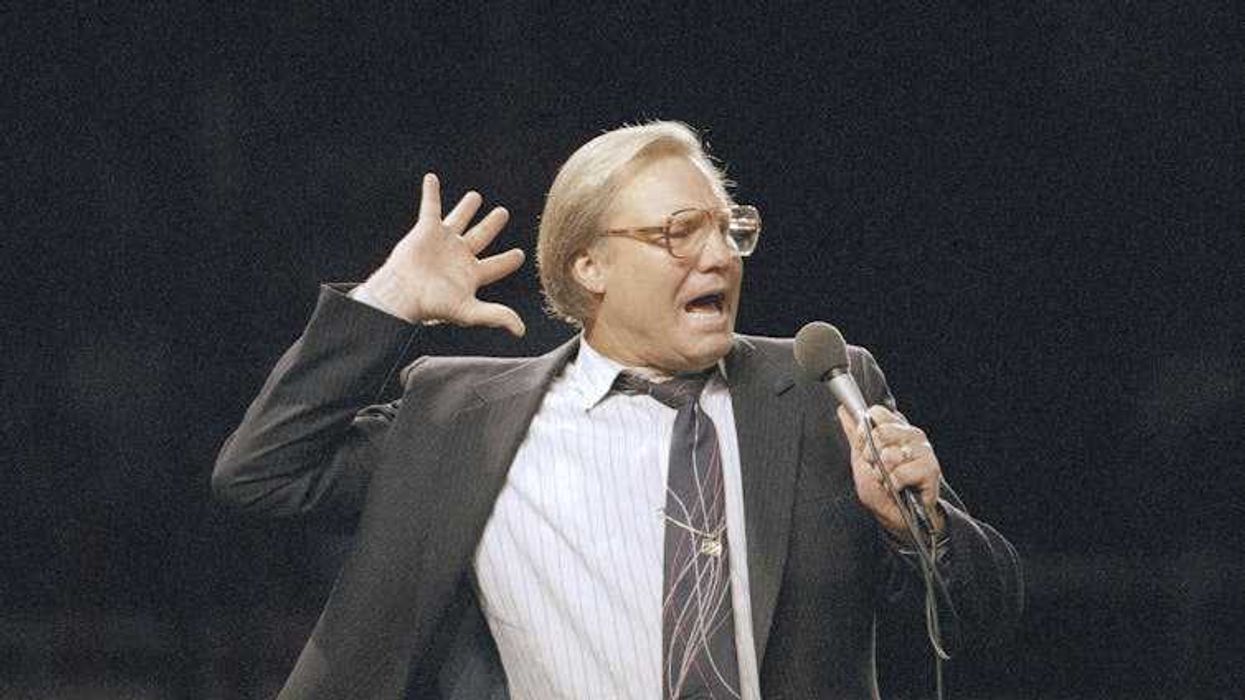
Rev. Jimmy Swaggart preaches at the Los Angeles Memorial Sports Arena on March 29, 1987. AP Photo/Mark Avery

December 09, 2025

Jimmy Swaggart, one of the most popular and enduring of the 1980s televangelists, died on July 1, 2025, but his legacy lives.


Along with Jerry Falwell and Pat Robertson, he drew an audience in the millions, amassed a personal fortune and introduced a new generation of Americans to a potent mix of religion and politics.

Swaggart was an old-time evangelist whose focus was “saving souls.” But he also preached on conservative social issues, warning followers about the evils of abortion, homosexuality and godless communism.

Swaggart also denounced what he called “false cults,” including Catholicism, Judaism and Mormonism. In fact, his denunciations of other religions, as well as his attacks on rival preachers, made him a more polarizing figure than his politicized brethren.

As a reporter, I covered Swaggart in the 1980s. Now, as a scholar of American religion, I argue that while Swaggart did not build institutions like Falwell’s Moral Majority or Robertson’s 700 Club, he helped to spread right-wing positions on social issues, such as sexual orientation and abortion, and to shape the image of televangelists in popular culture.

Swaggart’s cousins

Born into a hardscrabble life in a small Louisiana town, Swaggart grew up alongside his cousins Jerry Lee Lewis, the future rockabilly pioneer, and future country singer Mickey Gilley.

All three loved music and singing. They polished their playing on an uncle’s piano and sneaked into African American nightclubs to hear the jazz and blues forbidden by their parents.

While Gilley and Lewis turned their musical talent into recording and performing careers, Swaggart felt called to the ministry. He dropped out of high school, married at 17, began preaching at 20 and was ordained at 26.

He was licensed by the Assemblies of God, a Pentecostal denomination that believes the Holy Spirit endows believers with spiritual gifts that include speaking in tongues and faith healing.

The glory years

Pentecostals were nicknamed Holy Rollers because of their tendency to shake, quake and roll on the floor when feeling the Holy Spirit. Their preachers excelled at rousing audiences’ ardor, and Swaggart commanded the stage better than most. He paced, pounced and poured forth sweat while begging listeners to turn from sin and accept Jesus.

Starting small, he drew crowds while preaching on a flatbed trailer throughout the South. His following grew, and in 1969 he opened the Family Worship Center in Baton Rouge.

At capacity, the church held 10,000 worshippers, who represented a broad swath of America: young girls and grannies, white and Black, bankers and farmers. His sermons began calmly but built to a fever pitch. CBS newsman Dan Rather once called him the “country’s greatest speaker.”

During services, Swaggart also sang and played piano. In 1982, Newsweek magazine noted his musical chops, naming him the “King of Honky Tonk Heaven.” His music crossed gospel, country and honky-tonk – songs with a strong rhythmic beat – and he sold 17 million albums over his lifetime.

By 1975, Swaggart’s on-stage charisma powered the launch of a television ministry that would reach millions within a decade. Viewers were captivated by his soulful tunes and fire-and-brimstone sermons. At its height, Swaggart’s show was televised in 140 countries, including Peru, the Philippines and South Africa.

His ministry also became the largest mail-order business in Louisiana, selling books, tapes, T-shirts and biblical memorabilia. Thanks to the US$150 million raised annually from donations and sales, Swaggart lived in an opulent mansion, possessed a private jet previously owned by the Rockefellers, sported a yellow gold vintage Rolex and drove a Jaguar.

The downfall

Swaggart disliked competition and had a history of humiliating rival preachers. Wary of the Rev. Marvin Gorman, a Pentecostal minister whose church also was in Louisiana, Swaggart accused the man of adultery. Gorman admitted his infidelity and was defrocked.

Gorman had heard rumors about Swaggart’s own indiscretions, and he and his son decided to tail the famed evangelist. In 1988, they caught Swaggart at a motel with a prostitute, and Gorman reported the incident to Swaggart’s denomination. He also gave news outlets photos of Swaggart and the prostitute. In a tearful, televised apology, Swaggart pleaded for a second chance.

While his fans were willing, the Assemblies of God had conditions: Swaggart received the standard two-year suspension for sexual immorality. Defying the ruling, Swaggart went back to work after three months, and the denomination defrocked him.

Swaggart might have succeeded as an independent minister, but in 1991 the police stopped his car for driving on the wrong side of the road. Inside they found the preacher with a prostitute. This time, Swaggart did not ask for forgiveness. Instead, he informed his congregation, “The Lord told me it’s flat none of your business.”

Afterward, Swaggart never regained his former standing. His mail-order business dried up, donations fell, and attendance at services cratered. But up until his death, he kept on, in his own words, as an “old-fashioned, Holy Ghost-filled, shouting, weeping, soul-winning, Gospel-preaching preacher.”

Swaggart’s legacy

Swaggart, like other 1980s televangelists, brought right-wing politics into American homes. But unlike Jerry Falwell and Pat Robertson, Swaggart was less interested in winning elections than saving souls. In fact, when Robertson considered a presidential run in 1988, Swaggart initially tried to dissuade him – then changed his mind and supported him.

Swaggart’s calls for a return to conservative Christian norms live on – not just in Sunday sermons but also in today’s world of tradwives, abortion restrictions and calls to repeal gay marriage. His music lives on, too. The day before he died, the Southern Gospel Music Association Hall of Fame inducted him as a member.

But his legacy also survives in popular culture. In recent years, both reality television and scripted series have starred preachers shaped in the image of Swaggart and his peers. Most exaggerate his worst characteristics for shock and comedic effect.

Preachers of L.A.,” a 2013 reality show that profiled six Los Angeles pastors, featured blinged-out ministers whose sermons mixed hip-hop with the Bible. The fictional “Greenleaf” followed the scandals of an extended family’s Memphis megachurch, while “The Righteous Gemstones,” a dark spoof of Southern preachers, turned a family ministry into a site for sex, murder and moneymaking.

But these imitations can’t match the reality. Swaggart was a larger-than-life minister whose story – from small-town wannabe to disgraced pastor, to preaching to those who would listen – had it all: sex, politics, music and religion.

For those who want a taste of the real thing, The King of Honky Tonk Heaven lives on. You can see his old services and Bible studies streaming daily on his network.

Diane Winston, Professor and Knight Center Chair in Media & Religion, USC Annenberg School for Communication and Journalism

This article is republished from The Conversation under a Creative Commons license. Read the original article.

US Supreme Court may allow religious right to undermine First Amendment


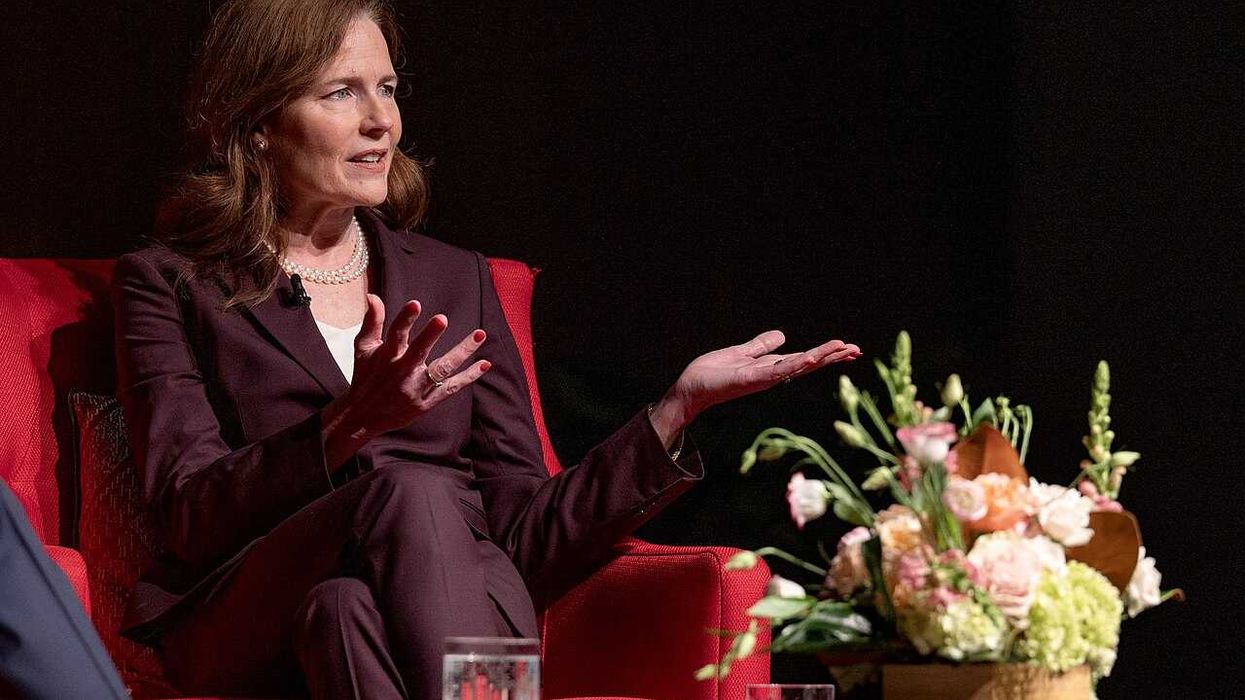
U.S. Supreme Court Associate Justice Amy Coney Barrett on September 18, 2025 (LBJLibraryNow/Flickr)

December 11, 2025

When the U.S. Constitution's First Amendment was adopted in 1791, the Founding Fathers were clear about two things: (1) freedom of religion would a Constitutional right, and (2) government would not favor one religion over another. The First Amendment states, "Congress shall make no law respecting an establishment of religion, or prohibiting the free exercise thereof."

The First Amendment is at the heart of Oklahoma Statewide Charter School Board v. Drummond, a case that finds the Religious Right at odds with a combination of liberals, progressives, and right-wing libertarians.

At issue in the case is whether or not religious charter schools can, under the Constitution, receive taxpayer dollars. The Oklahoma Supreme Court ruled "no," but when the case went to the U.S. Supreme Court in May 2025, it was a 4-4 split decision. Right-wing Justice Amy Coney Barrett, a Donald Trump appointee, could have been a tie-breaking vote but recused herself.

But according to The New Republic's Steve Kennedy, the justices may revisit the matter.

In an article published on December 11, Kennedy notes that the High Court "left intact a ruling from the Oklahoma Supreme Court that denied what would have been the nation's first publicly funded religious charter school, St. Isidore of Seville Catholic Virtual School."

"Because the Court did not reach the underlying constitutional questions," Kennedy explains, "the door remains ajar. And as news has emerged that the same legal apparatus that set up and represented St. Isidore is now organizing a Jewish charter school in Oklahoma, many observers see it as an attempt to push the same issue — this time with a majority of conservatives ready to strike down religious public funding bans across the country."


Kennedy continues, "At issue in Drummond were two significant constitutional questions. First: Are privately run charter schools state actors if they are publicly approved and funded? And second: If they are public, does the First Amendment's Free Exercise Clause prohibit a state from excluding religious schools from its charter school program — or does the Establishment Clause require it to exclude them?"

Kennedy notes that in Drummond, U.S. Supreme Court Justice Sonia Sotomayor was clear about the need to protect the separation of church and state. During oral arguments, the Barack Obama appointee said, "The essence of the Establishment Clause was: we're not going to pay religious leaders to teach their religion."

"However, the St. Isidore attorneys argued that excluding schools solely because of their religious natures violated the Free Exercise Clause," Kennedy notes. "Drawing on recent U.S. Supreme Court cases like Espinoza v. Montana Department of Revenue and Carson v. Makin, they argued that once a state offers a generally available public benefit, it cannot flatly exclude religious applicants on the basis of religion, and they contended that charter school status was such a public benefit. The Oklahoma Supreme Court rejected that argument in 2024, and because the U.S. Supreme Court split evenly on the issue, that ruling remains in place."

Read Steve Kennedy's full article for The New Republic at this link.


Millions of patients ended up in debt when Trump’s idea for healthcare was tried before


Noam N. Levey,
December 09, 2025

Sarah Monroe once had a relatively comfortable middle-class life.

She and her family lived in a neatly landscaped neighborhood near Cleveland. They had a six-figure income and health insurance. Then, four years ago, when Monroe was pregnant with twin girls, something started to feel off.

“I kept having to come into the emergency room for fainting and other symptoms,” recalled Monroe, 43, who works for an insurance company.

The babies were fine. But after months of tests and hospital trips, Monroe was diagnosed with a potentially dangerous heart condition.

It would be costly. Within a year, as she juggled a serious illness and a pair of newborns, Monroe was buried under more than $13,000 in medical debt.

Part of the reason: Like tens of millions of Americans, she had a high-deductible health plan. People with these plans typically pay thousands of dollars out of their own pockets before coverage kicks in.

The plans, which have become common over the past two decades, are getting renewed attention thanks to President Donald Trump and his GOP allies in Congress.

Many Republicans are reluctant to extend government subsidies that help cover patients’ medical bills and insurance premiums through the Affordable Care Act.

And although GOP leaders have yet to coalesce around an alternative, several leading Republican lawmakers have said Americans who don’t get insurance through an employer should get cash in a special health care account, paired with a high-deductible health plan. In such an arrangement, someone could choose a plan on an ACA marketplace that costs less per month but comes with an annual deductible that can top $7,000.

“A patient makes the decision,” Sen. Bill Cassidy (R-La.) said at a recent hearing. “It empowers the patient to lower the cost.”

In a post on Truth Social last month, Trump said, “The only healthcare I will support or approve is sending the money directly back to the people.”

Conservative economists and GOP lawmakers have been making similar arguments since high-deductible health plans started to catch on two decades ago.

Back then, a backlash against the limitations of HMOs, or health maintenance organizations, propelled many employers to move workers into these plans, which were supposed to empower patients and control costs. A change in tax law allowed patients in these plans to put away money in tax-free health savings accounts to cover medical bills.

“The notion was that if a consumer has ‘skin in the game,’ they will be more likely to seek higher-quality, lower-cost care,” said Shawn Gremminger, who leads the National Alliance of Healthcare Purchaser Coalitions, a nonprofit that works with employers that offer their workers health benefits.

“The unfortunate reality is that largely has not been the case,” Gremminger said.


Today, deductibles are almost ubiquitous, with the average for a single worker with job-based coverage approaching $1,700, up from around $300 in 2006.

But even as high deductibles became widespread, medical prices in the U.S. skyrocketed. The average price of a knee replacement, for example, increased 74% from 2003 to 2016, more than double the rate of overall inflation.

At the same time, patients have been left with thousands of dollars of medical bills they can’t pay, despite having health insurance.

About 100 million people in the U.S. have some form of health care debt, a 2022 survey showed.

Most, like Monroe, are insured.

Although Monroe had a health savings account paired with her high-deductible plan, she was never able to save more than a few thousand dollars, she said. That wasn’t nearly enough to cover the big bills when her twins were born and when she got really ill.

“It’s impossible, I will tell you, impossible to pay medical bills,” she said.

There was another problem with her high-deductible plan. Although these plans are supposed to encourage patients to shop around for medical care to find the lowest prices, Monroe found this impractical when she had a complex pregnancy and heart troubles.

Instead, Monroe chose the largest health system in her area.

“I went with that one as far as medical risk,” she said. “If anything were to happen, I could then be transferred within that system.”

Federal rules that require hospitals to post more of their prices can make comparing institutions easier than it used to be.

But unlike a car or a computer, most medical services remain difficult to shop for, in part because they stem from an emergency or are complex and can stretch over numerous years.

Researchers at the nonprofit Health Care Cost Institute, for example, estimated that just 7% of total health care spending for Americans with job-based coverage was for services that realistically could be shopped for.

Fumiko Chino, an oncologist at the MD Anderson Cancer Center in Houston, said it makes no sense to expect patients with cancer or another chronic disease to go out and compare prices for complicated medical care such as surgeries, radiation, or chemotherapy after they’ve been diagnosed with a potentially deadly illness.

“You’re not going be able to actually do that effectively,” Chino said, “and certainly not within the time frame that you would need to when facing a cancer diagnosis and the imminent need to start treatment.”

Chino said patients with high deductibles are often instead slammed with a flood of huge medical bills that lead to debt and a cascade of other problems.

She and other researchers found in a study presented last year that cancer patients who had high-deductible health insurance were more likely to die than similar patients without that kind of coverage.

For her part, Monroe and her family were forced to move out of their house and into a 1,100-square-foot apartment.

She drained her savings. Her credit score sank. And her car was repossessed.

There have been other sacrifices, too. “When families get to have nice Christmases or get to go on spring break,” Monroe said, hers often does not.

She is thankful that her children are healthy. And she continues to have a job. But Monroe said she can’t imagine why anyone would want to double down on the high-deductible model for health care.

“We owe it to ourselves to do it a different way,” she said. “We can’t treat people like this.”

KFF Health News is a national newsroom that produces in-depth journalism about health issues and is one of the core operating programs at KFF—an independent source of health policy research, polling, and journalism. Learn more about KFF.


US Treasury chief seeks looser regulation at financial stability panel


By AFP
December 11, 2025


US Treasury Secretary Scott Bessent says efforts to safeguard the financial system have led to 'burdensome' regulations 
- Copyright GETTY IMAGES NORTH AMERICA/AFP/File JUSTIN SULLIVAN

US Treasury Secretary Scott Bessent signaled key changes Thursday to a high-level panel on financial stability, putting more emphasis on economic growth and reduced regulation.

The panel, the Financial Stability Oversight Council (FSOC), was created to identify emerging risks and avoid a repeat of the 2008 global financial crisis.

Chaired by the Treasury secretary, it comprises representatives of top financial regulators including the Federal Reserve, the Securities and Exchange Commission, and the Federal Deposit Insurance Corporation.

“Too often in the past, efforts to safeguard the financial system have resulted in burdensome and often duplicative regulations,” Bessent told an FSOC meeting on Thursday.

“Little thought was given to the harms of overregulation,” he added.

He said the FSOC is working with member agencies to consider where the US financial regulatory framework imposes “undue burdens.”

Bessent said the “twin priorities of economic growth and economic security will guide the Council’s future approach” when it comes to identifying priorities, assessing risks and recommending regulatory changes.

The council’s annual report this year also reflects the “reorientation” of the FSOC’s priorities, Bessent said.

The change aligns with a focus on deregulation under the administration of President Donald Trump.

Ahead of the FSOC meeting, however, Elizabeth Warren, the top Democrat on the Senate Banking Committee, criticized the council’s direction under Bessent’s leadership.

“The FSOC has met less frequently than it ever has before; meanwhile, at the rare meetings when it does convene, Wall Street deregulation is a standing agenda item, and the Council is actively sabotaging its own authorities,” Warren wrote in a letter to the Treasury chief dated Wednesday.

“This erosion of financial stability oversight would be troubling at any moment, but it is especially dangerous as systemic risk in the financial system appears to be intensifying,” she said.

In a letter accompanying the new FSOC report, Bessent said that the council has formed new working groups.

They include one that will consider if regulation has “distorted or imposed undue costs” on equity and credit markets among others, “in ways that could negatively impact economic growth and economic security.”

Another group looks into artificial intelligence to consider ways that it can boost financial system resilience.

At Thursday’s meeting, Bessent also urged FSOC member agencies to ease regulations that might discourage AI experimentation in the financial services sector.
Interest rate cut can't undo 'damage created by Trump's chaos economy': economist


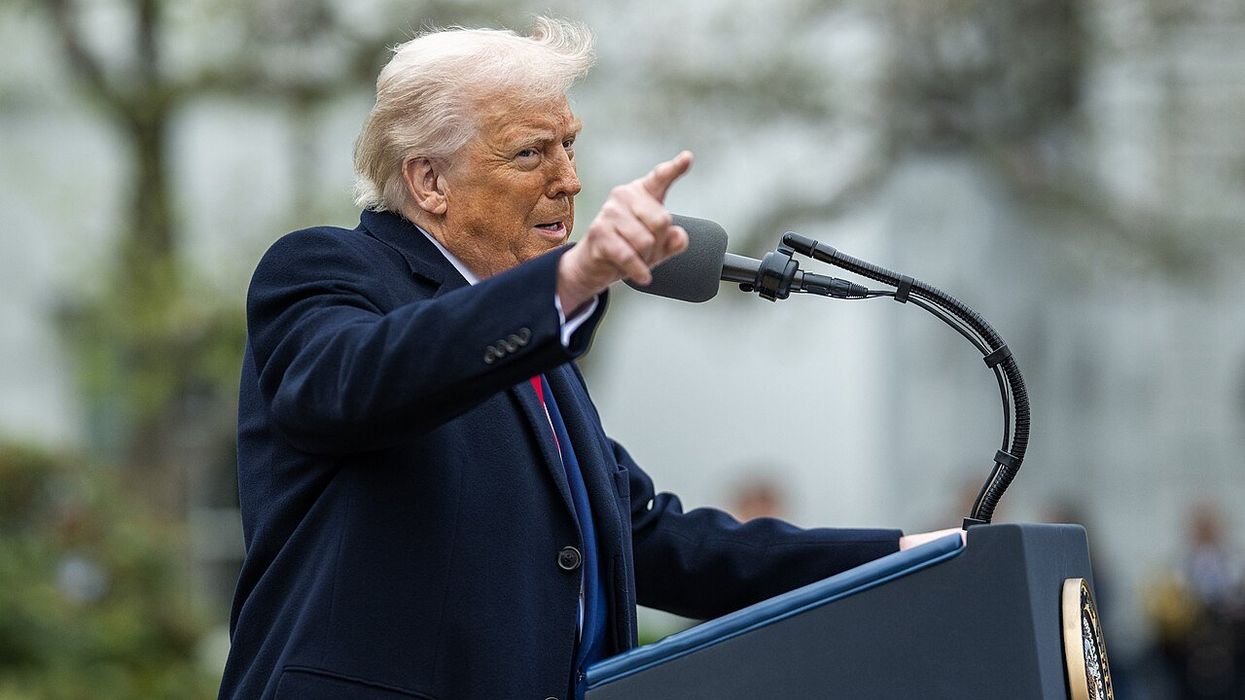
President Donald Trump in the White House Rose Garden on April 2, 2025 (Official White House Photo by Daniel Torok/Flickr)

December 11, 2025

A leading economist and key congressional Democrat on Wednesday pointed to the Federal Reserve’s benchmark interest rate cut as just the latest evidence of the havoc that President Donald Trump is wreaking on the economy.

The US central bank has a dual mandate to promote price stability and maximum employment. The Federal Open Market Committee may raise the benchmark rate to reduce inflation, or cut it to spur economic growth, including hiring. However, the FOMC is currently contending with a cooling job market and soaring costs

After the FOMC’s two-day monthly meeting, the divided committee announced a quarter-point reduction to 3.5-3.75%. It’s the third time the panel has cut the federal funds rate in recent months after a pause during the early part of Trump’s second term.

“Today’s decision shows that the Trump economy is in a sorry state and that the Federal Reserve is concerned about a weakening job market,” House Budget Committee Ranking Member Brendan Boyle (D-Pa.) said in a statement. “On top of a flailing job market, the president’s tariffs—his national sales tax—continue to fuel inflation.”

“To make matters worse, extreme Republican policies, including Trump’s Big Ugly Law, are driving healthcare costs sharply higher,” he continued, pointing to the budget package that the president signed in July. “I will keep fighting to lower costs and for an economy that works for every American.”

Alex Jacquez, a former Obama administration official who is now chief of policy and advocacy at the Groundwork Collaborative, similarly said that “Trump’s reckless handling of the economy has backed the Fed into a corner—stuck between rising costs and a weakening job market, it has no choice but to try and offer what little relief they can to consumers via rate cuts.”

“But the Fed cannot undo the damage created by Trump’s chaos economy,” Jacquez added, “and working families are heading into the holidays feeling stretched, stressed, and far from jolly.”

Thanks to the historically long federal government shutdown, the FOMC didn’t have typical data—the consumer price index or jobs report—to inform Wednesday’s decision. Instead, its new statement and projections “relied on ‘available indicators,’ which Fed officials have said include their own internal surveys, community contacts, and private data,” Reuters reported.

“The most recent official data on unemployment and inflation is for September, and showed the unemployment rate rising to 4.4% from 4.3%, while the Fed’s preferred measure of inflation also increased slightly to 2.8% from 2.7%,” the news agency noted. “The Fed has a 2% inflation target, but the pace of price increases has risen steadily from 2.3% in April, a fact at least partly attributable to the pass-through of rising import taxes to consumers and a driving force behind the central bank’s policy divide.”

The lack of government data has also shifted journalists’ attention to other sources, including the revelation from global payroll processing firm ADP that the US lost 32,000 jobs in November, as well as Gallup’s finding last week that Americans’ confidence in the economy has fallen by seven points over the past month and is now at its lowest level in over a year.

The Associated Press highlighted that the rate cut is “good news” for US job-seekers:

“Overall, we’ve seen a slowing demand for workers with employers not hiring the way they did a couple of years ago,” said Cory Stahle, senior economist at the Indeed Hiring Lab. “By lowering the interest rate, you make it a little more financially reasonable for employers to hire additional people. Especially in some areas—like startups, where companies lean pretty heavily on borrowed money—that’s the hope here.”Stahle acknowledged that it could take time for the rate cuts to filter down to employers and then to workers, but he said the signal of the reduction is also important.
“Beyond the size of the cut, it tells employers and job-seekers something about the Federal Reserve’s priorities and focus. That they’re concerned about the labor market and willing to step in and support the labor market. It’s an assurance of the reserve’s priorities.”

The Federal Reserve is now projecting only one rate cut next year. During a Wednesday press conference, Fed Chair Jerome Powell pointed to the three cuts since September and said that “we are well positioned to wait to see how the economy evolves.”

However, Powell is on his way out, with his term ending in May, and Trump signaled in a Tuesday interview with Politico that agreeing with immediate interest rate cuts is a litmus test for his next nominee to fill the role.

Trump—who embarked on a nationwide “affordability tour” this week after claiming last week that “the word ‘affordability’ is a Democrat scam”—also graded the US economy on his watch, giving it an A+++++.

US Sen. Bernie Sanders (I-Vt.) responded: “Really? 60% of Americans live paycheck to paycheck. 800,000 are homeless. Food prices are at record highs. Wages lag behind inflation. God help us when we have a B+++++ economy.”

Fact-checker says White House 'misleading the public' on inflation


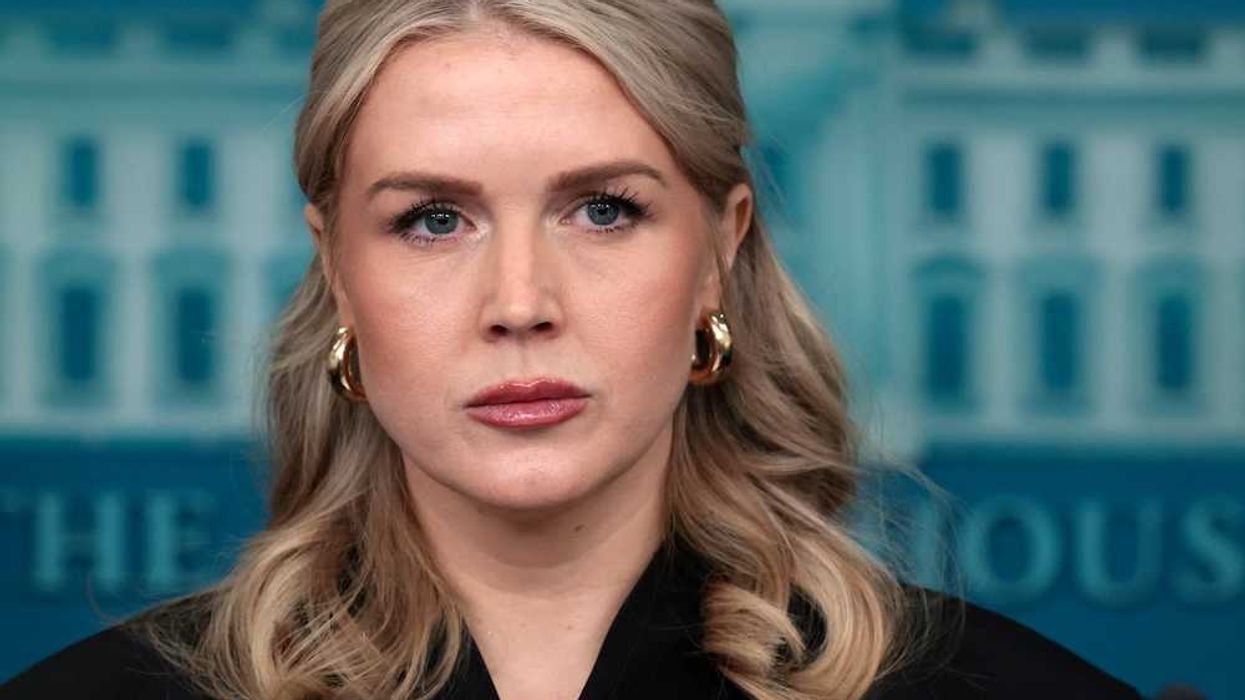
White House Press Secretary Karoline Leavitt holds a press briefing at the White House, in Washington, D.C., U.S., December 11, 2025. REUTERS/Jonathan Ernst

December 11, 2025  
ALTERNET

President Donald Trump's administration is cherry-picking inflation data to paint a more flattering picture of the economic climate, according to new reporting from CNN.

During the Thursday episode of her show "The Source," CNN host Kaitlan Collins took Trump's White House to task for falsely reporting the rate of inflation more than 10 months into Trump's second term. She began the segment by playing an exchange she had with White House press secretary Karoline Leavitt, in which Leavitt insisted that the inflation rate was down to 2.5 percent from the three percent Trump inherited from former President Joe Biden.

"So we're trending in the right direction with more to come. And I would remind you, when President Trump left office in his first term, inflation was 1.7 percent, and the previous administration jacked it up to a record high nine percent," Leavitt said. "So again, in ten months, the president has clawed us out of this hole. He's kept it low at 2.5 percent. And we believe that number is going to continue to decline, especially as energy and oil prices continue to decline as well."

CNN fact-checker Daniel Dale disputed Leavitt's claims that Trump had lowered inflation, pointing to the September consumer price index (CPI) report — which is the most recent month of data available — showing that inflation remained at three percent. Dale said Leavitt's use of the 2.5 percent figure was "very much apples to oranges," saying that she was purposefully using the average rate from all 10 months of Trump's second term — rather than the most recent figures — as a means of downplaying the impact of Trump's tariffs.

"So when the press secretary told us today that we're very much headed in the right direction, we're not," Dale said. "... They're grabbing this early-year data. Why are they doing that? Well, because inflation was lower before President Trump's so-called 'Liberation Day,' when he announced sweeping global tariffs that then made their way through the economy."

"So by using this ... annualized rate, they're making inflation sound rosier than it would if they use the one month, most recent data that everyone else is talking about," he continued. "So, no, this is not an apples-to-apples comparison."

"They're entitled to use whatever kind of math they want," he added. "The annualized rate is a real thing, but they're not clearly explaining that they're doing so. And I think that's where they're misleading the public."

Watch the segment below:


Economist rips 'lying' Trump for 'driving the affordability crisis'


White House photo
December 10, 2025 
ALTERNET

During a Tuesday, December 9 rally in Mount Pocono, Pennsylvania, President Donald Trump aggressively defended his economic record. Trump insisted that inflation is way down under his watch and claimed that he is making the United States "affordable again."

But the following day on MS NOW, Trump's economic record got a scathing critique from University of Michigan economics professor Justin Wolfers.

The Australian economist, who is originally from Sydney but now lives in the U.S., laid out a variety of ways in which Trump is hurting the economy during a Wednesday morning, December 10 appearance on Ana Cabrera's show.

Wolfers told Cabera, "Look, what I want, Ana, is for us to have honest conversations about the economy. Prices are rising; people feel that. Those are two realities. Another reality is that prices tend to rise in modern economies. It's called inflation. What we typically try to do is not get prices to fall, but get them to rise sufficiently slowly that you barely notice it. When the president says prices are falling, he's lying. When he says he's going to get prices down, he really shouldn't. Because the only way to get prices down is to crush the economy."

The United States, Wolfers added, needs to have "a mature and responsible conversation" about the economy — and Trump isn't offering that.


"Prices are rising," Wolfers told Cabrera, "and what we want from policy is for them to rise slowly — and for people to have an opportunity to get wage rises so that their overall quality of life can do more than keep up, actually get ahead…. I think there's a lot of pain out there right now. Often, we'd say that there's not much that a president can do to shape the economy, except this is a president who's given no deference at all to Congress. And so, the president has done a lot of things."

Wolfers continued, "Let's be clear. He's imposed tariffs…. We have mass deportations; that's making it very difficult for some parts of the economy, particularly agriculture and construction, to get the workers they want. We had the Big, Beautiful Bill, which is the largest redistribution of money from poor to rich in a single bill in American history. We've got the Obamacare subsidies expiring, which could lead to a big shock to the health insurance costs facing a lot of Americans. And we've had overall attempts to undermine Obamacare as well — as well as the loss of renewable energy subsidies and attacks on SNAP (the Supplemental Nutrition Assistance Program). So, if you want to see what's driving the affordability crisis, you don't need to look any further than the White House."


Fresh data show US consumers still strained by inflation

By AFP
December 5, 2025


The impact of lingering inflation remains a question mark surrounding the US holiday shopping season - Copyright AFP/File Joseph Prezioso

US consumer pricing and sentiment reports released Friday pointed to lingering questions about affordability as the calendar moves towards the peak of the festive season.

The personal consumption expenditures (PCE) price index, the Federal Reserve’s preferred data point for measuring inflation, rose to 2.8 percent on an annual basis in September from 2.7 percent in August.

When food and energy prices were excluded, prices also rose by 2.8 percent in September. However, that was below the 2.9 percent reading in August for the same benchmark.

The mixed report, delayed due to the US federal government shutdown, is the last major inflation reading before the Fed’s rate decision next week.

The figures were largely in line with expectations, but included notable increases in some categories that have strained consumers. Durable goods like automobiles, appliances and furniture rose 1.4 percent from a year ago.

A separate report showed consumer sentiment rose in December to 53.3 from 51.0 in November, according to the University of Michigan.

However, consumers today have a diminished outlook for their expected personal income compared with early in 2025 and labor market expectations “remained relatively dismal,” said survey director Joanne Hsu.

“Consumers see modest improvements from November on a few dimensions, but the overall tenor of views is broadly somber, as consumers continue to cite the burden of high prices,” she said.

The data did not significantly move the US stock market on Friday. Stocks are up modestly for the week, due partly to expectations the Fed will cut interest rates next week.

The Fed has cut interest rates at its last two meetings following indications of a slowdown in the US employment market.

But the Fed has also kept an eye on inflation due to the risk that President Donald Trump’s tariffs could reignite a major increase in prices.

EY-Parthenon Chief Economist Gregory Daco predicted the US central bank would cut rates as expected next week, but could face multiple dissents.

Fed Chair Jerome Powell will “persuade several hesitant policymakers to support a third consecutive ‘risk management’ rate cut, while signaling firmly that additional easing is unlikely before next spring absent a material weakening in economic conditions,” Daco said in a note.

Friday’s pricing data revealed a “gradual and uneven” tariff pass-through on goods, “exacerbating the affordability crisis,” Daco said.

“While many businesses have absorbed cost pressures using pre-tariff inventories and narrower margins, these buffers are slowly eroding,” said Daco, who expects rising inflation in late 2025 and early 2026, “further complicating the consumer outlook amid softening labor-market dynamics.”

Trump’s North American Trade Deal ‘Created More Problems Than It Fixed’: Analysis

The trade deficit has grown and the US has lost manufacturing jobs during the first nine months of Trump’s second term.


Dozens of fallen shipping containers are seen next to the Portugal-registered ship Mississippi Madera at the Port of Long Beach on September 9, 2025 in Long Beach, California.
(Photo by Apu Gomes/Getty Images)


Brad Reed
Dec 11, 2025
COMMON DREAMS

A new analysis from the Economic Policy Institute claims that the signature trade deal from President Donald Trump’s first term has actually “created more problems than it fixed.”

The report, published Thursday, notes that the United States-Mexico-Canada Agreement (USMCA), signed into law by Trump in 2020, has completely failed to fulfill Trump’s stated goal of lowering the US trade deficit with Canada and Mexico, which has grown from a combined $125 billion in 2020 to $263 billion in 2025.


With US ‘Paying the Price for Trump’s Mistakes,’ He Ends Tariffs for Bananas, Beef, Coffee, and More


Trump Grades Economy ‘A+++++’ as Americans Skip Medical Care and Struggle to Afford Essentials

This increased trade deficit was particularly notable when it comes to the auto industry, says the report, written by EPI senior economist Adam S. Hersh.

“In the critical automotive industry that Trump said he wanted to reshore, imports of motor vehicles and parts from Mexico nearly doubled following USMCA, rising to $274 billion in 2024, up from $196 billion in 2019,” the report explains. “Light-duty vehicles imports from Mexico rose 36% while imports of medium- and heavy-duty vehicles increased a whopping 256%.”

The report also finds that the trade deal “left a gaping loophole for Chinese manufacturers to exploit duty-free access to North American markets without reciprocal market access for US manufacturers,” the result of which was “Chinese firms expanded their direct investment footprint in Mexico by as much as 288% through 2023.”

The bottom line, says the report, is “Trump’s USMCA created more problems than it fixed,” and that “today the pressure on manufacturing jobs and deterioration in the trade balance with Mexico are worse than before USMCA.”

However, the report also says that the US, Canada, and Mexico have an opportunity to significantly improve on USMCA given that the deal is up for review next year.

Among other things, the report recommends closing the loopholes that have allowed Chinese manufacturers to rapidly expand their footprint in Mexico; expanding the the Rapid Response Labor Mechanism that “has helped improve wages and working conditions in a number of specific workplaces”; and slashing intellectual property rights provisions that “currently allow companies to preempt local laws addressing negative externalities from digital service provision.”

The EPI report came on the same day that American Economic Liberties Project’s Rethink Trade program released an analysis showing that Trump so far has failed to live up to his pledge to reduce the US trade deficit and revive domestic manufacturing.

In all, Rethink Trade found that the US trade deficit increased more during the first nine months of 2025 than it did during the first nine months of 2024. Additionally, the group found that the US has actually lost 49,000 manufacturing jobs since the start of Trump’s second term.

Lori Wallach, director of the Rethink Trade program, said that “the nine-month data show outcomes that are the opposite of President Trump’s promises to cut the trade deficit and create more American manufacturing jobs.”

She noted that Trump’s trade deals so far “seem to prioritize the demands of Big Tech, Big Oil, Big Pharma, and other usual beneficiaries of decades of failed US trade policy instead of fixing the root causes of our huge trade deficit to help American manufacturing workers and firms as he promised.”