Wednesday, December 17, 2025

UCP HOISTED ON IT'S OWN PETARD

Alberta recall petitions grow to 23 with latest against justice minister

Story by Lisa Johnson


Alberta Minister of Justice Mickey Amery announces proposed changes to several pieces of democratic process legislation, in Edmonton on Tuesday, April 29, 2025. THE CANADIAN PRESS/Jason Franson© The Canadian Press

EDMONTON — Alberta’s justice minister is the latest member of Premier Danielle Smith’s caucus to face a citizen recall petition.

Elections Alberta announced Wednesday petitions against Mickey Amery and fellow United Conservative Party legislator Jackie Armstrong-Homeniuk.

That means 22 UCP legislature members are facing recall petitions – a number approaching half the 47-member caucus.

One member of the Opposition NDP, education critic Amanda Chapman, also faces a petition.

Sead Tokalic, who filed for the petition against Amery in Calgary-Cross, says the move was triggered by dissatisfaction with the government's handling of public education and funding.

"It all started for me with the teachers' strike and how that was handled. Since then there was a lot more things that came down," Tokalic told The Canadian Press.

In October, the UCP used the Charter's notwithstanding clause to force striking teachers back to work and impose a collective agreement that they had overwhelmingly rejected. Smith has said her government was forced to act because of the toll the three-week strike was taking on more than 740,000 students.

Tokalic said he has heard from others who also don't feel like their MLAs are responsive or representative.

"I emailed my MLA many times, not just this time around, previously as well, before this whole thing started. I never heard from him ever," he said.


He added that he's never been a member of any political party and isn't backed by any activist group.

"I'm just a guy in (the neighbourhood of) Marlborough that's not happy with what's going on," said Tokalic.

In his written reasons to Elections Alberta for a recall, he said Amery supports policies that harm vulnerable populations. Tokalic clarified there are a lot of newcomers attending schools in the constituency who would benefit from more supports.

In response to the petition, Amery told Elections Alberta that he's committed to standing up for his constituency and, like other UCP members, argues the recall process is being abused.

"The Recall Act is in place to address serious misconduct or ethical violations – not to be misused by partisan activists trying to undermine democracy," Amery wrote.

"My focus is on listening, responding and delivering results that reflect our shared priorities."

Armstrong-Homeniuk represents the constituency of Fort Saskatchewan-Vegreville, east of Edmonton.

Petitioner Edwin Laarz said in his application to Elections Alberta that Armstrong-Homeniuk ignores constituents and was silent when the province recently used the Charter’s notwithstanding clause.

Smith’s government used the clause to override teachers’ rights to end the strike. It also recently used the clause to shield three laws affecting transgender citizens from court challenges.

Armstrong-Homeniuk, in response, said she works hard for her constituents and has a mandate to represent them based on winning her seat in the 2023 provincial election.

The recall campaigns target MLAs from across the province, including the premier in her Brooks-Medicine Hat constituency.

Many behind the petitions have said they're campaigning because their representatives have failed to address concerns and viewpoints of constituents.

The recall process is lengthy and involves multiple steps.

Petitioners have three months to collect signatures equal to 60 per cent of the total number of votes cast in their constituency in the 2023 election.

For the petition against Amery, that amounts to just over 9,000 signatures; for Armstrong-Homeniuk, the campaign would need to collect almost 15,000.

If successful, there would be a constituency-wide vote on whether the representative keeps their seat. If the member fails to gain a majority of votes, a byelection is held.

This report by The Canadian Press was first published Dec. 17, 2025.

Lisa Johnson, The Canadian Press


Bankrupt oil company leaves Alberta county with $9.3M unpaid tax bill

Rural municipalities in Alberta have been dealing with the issue of unpaid taxes from energy companies for years.


Story by CBC/Radio-Canada


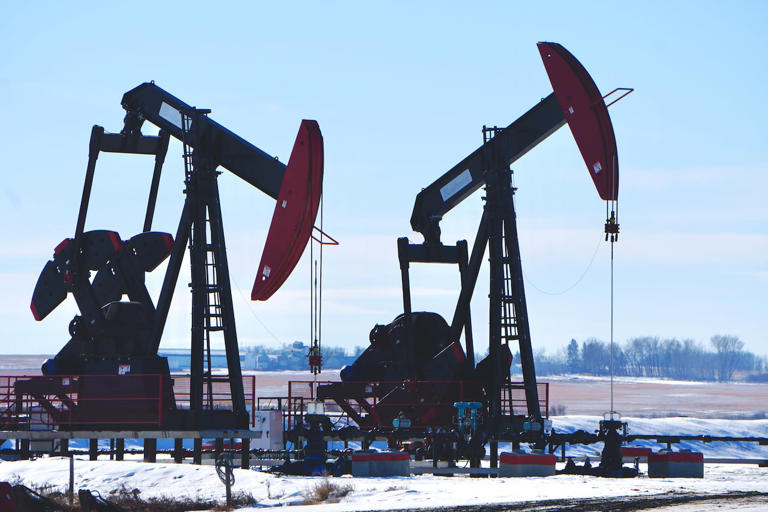
Pumpjacks pull oil from the ground near Three Hills, Alta., in this file photo. Big Lakes County in northern Alberta said it is owed millions in unpaid taxes from a bankrupt oil and gas company.© Kyle Bakx/CBC

A northwestern Alberta municipality says it's been left with $9.3 million of unpaid property taxes owed by a company that has since gone bankrupt.

Big Lakes County, about 368 kilometres northwest of Edmonton, said it was owed about $11.3 million from Razor Energy Corp.

The county was able to collect $2 million before the company concluded bankruptcy proceedings earlier this year.

With every legal avenue exhausted, county officials say there’s no way to recover the outstanding money.

“[The industry] helped build Alberta as a whole to what we are today,” said Reeve Tyler Airth.

“But it’s really hard to be proud to support oil and gas when every time you turn around you feel like you're getting kicked by this very industry you fought so hard for.”

The county has been informed that no additional money will be recovered, but if circumstances change, the municipality still has the right to collect the funds in the future.

Airth said Razor Energy was sold to another company, called Tex Cal, which has also filed for bankruptcy, further complicating the issue.

CBC News reached out via multiple channels to Razor Energy and its representatives, but did not receive a response.

Rural municipalities in Alberta have been dealing with the issue of unpaid taxes from energy companies for years.

According to the Unpaid Oil and Gas Property Tax Survey conducted by the province in 2022, a cumulative $220 million in unpaid taxes has been reported by municipalities, with $130 million in tax arrears and the remaining $90 million in cancellations. About $76 million is owed by companies that are still operating, and that money is potentially recoverable, possibly through repayment agreements.

The Rural Municipalities of Alberta told CBC News there is now about $253 million in unpaid taxes reported provincewide.

President Kara Westerlund said the association has formed a working group with the Ministry of Municipal Affairs and Ministry of Energy, and hopes to table recommendations in the new year.

“There is a solution to this issue. We can legislate and regulate our way out of this problem,” said Westerlund.

“That in itself lies with the provincial government and with the Alberta Energy Regulator. So we will continue to sit at the table and have those really difficult conversations.”

In a statement, Minister of Municipal Affairs Dan Williams said the vast majority of oil and gas operators in Alberta meet their property tax obligations.

“I have been working closely with RMA to find a solution for municipalities affected and we have established a Property Tax Accountability Strategy Working Group to examine additional options and develop further recommendations,” he said.

Williams noted that legislation was passed to give municipalities priority over other creditors through a special lien where property taxes are owed, and the Alberta Energy Regulator has been given clearer authority to enforce compliance.

“This includes requiring proof of municipal tax payment as a condition for approving new licences or licence transfers,” he said.

For Big Lakes County, $9.3 million is a significant amount of money, Airth said, and $2.6 million more in debt is expected to be written off by the county next year.

“We have actually been, unfortunately, planning for a loss in these tax revenues every year. We just expect we are not going to get a certain portion of that. That isn’t right,” he said.

“Why is it that the rest of our ratepayers are hung with the burden for these oil and gas companies that can’t pay theirs?”

Airth said the county is continuing to advocate to the province for a long-term solution.

“I don't think there is a quick and easy answer, but we are at least getting them to listen,” he said.

“I think they are acknowledging the fact that there is an issue, but it shouldn't have taken this long.”
U.S. Federal judge blocks Whitmer from shutting down submerged Great Lakes pipeline

Story by Todd Richmond


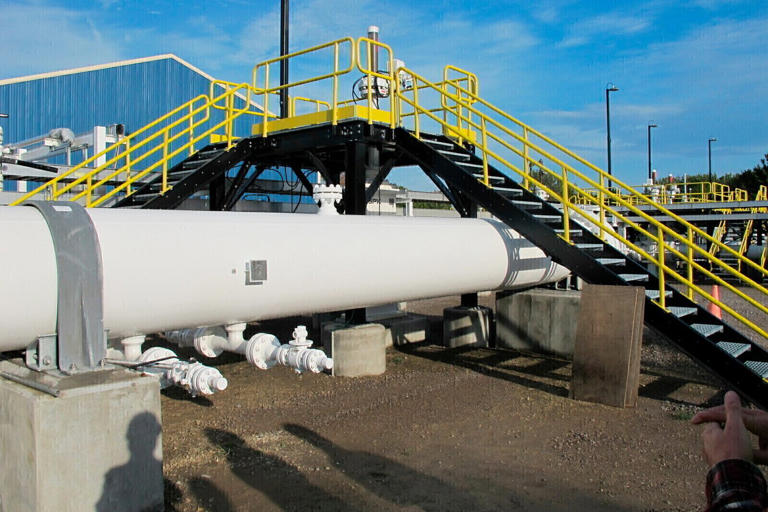
FILE - An above-ground section of Enbridge's Line 5 is seen at the Mackinaw City, Mich., pump station, Oct. 7, 2016. (AP Photo/John Flesher, File)© The Associated Press

A federal judge on Wednesday blocked Michigan Gov. Gretchen Whitmer 's attempt to shut down an aging oil pipeline running beneath a channel linking two of the Great Lakes, finding that only the federal government can regulate interstate pipeline safety.

Whitmer, a Democrat, ordered regulators in 2020 to revoke an easement that allows Enbridge Inc. to operate a 4.5-mile (6.4) kilometer pipeline segment under the Straits of Mackinac, which link Lake Michigan and Lake Huron. Whitmer made the move out of concern that the 72-year-old pipeline could rupture and cause a catastrophic spill.

Enbridge filed a federal lawsuit seeking to block the revocation and the pipeline continues to operate. President Donald Trump's administration argued in filings this year that Whitmer's order interferes with U.S. foreign energy policy and that only the federal government, not the states, can regulate pipeline safety. The pipeline segment, known as Line 5, moves crude oil between Superior, Wisconsin, and Sarnia, Ontario.

U.S. District Judge Robert Jonker wrote in an opinion that revoking the easement would effectively shut down Line 5. He found that Congress expressly prohibited states from regulating interstate pipeline safety in the Pipeline Safety Act of 1992. He also noted that the United States and Canada agree that Michigan's attempt to shut down the pipeline interferes with their federal foreign policy positions and trade relations.

“An oil spill in Michigan's Great Lakes would undoubtedly be an environmental catastrophe. And Michigan would undoubtedly be the recipient of almost all the environmental damage that would result,” Jonker wrote. “But for better or worse, the national government has unequivocally decided to displace state power in this area and assume exclusive responsibility for interstate pipeline safety.”

A message seeking comment was left for a spokesperson for Michigan Attorney General Dana Nessel, whose office represented Whitmer's administration in the lawsuit. A Whitmer spokesperson referred questions to Nessel.

Enbridge issued a statement saying the line is safe and that Jonker's ruling protects both the United States and Canada from “significant energy disruptions.”

Multiple other legal challenges are swirling around Line 5 in Michigan and Wisconsin.

Nessel filed her own action in 2019 seeking to void the easement in the straits. The U.S. Supreme Court is currently weighing whether that case belongs in state or federal court. And a number of environmental groups and tribes have sued challenging state permits authorizing Enbridge's plan to build a protective tunnel around the straits segment. That case is pending before the Michigan state Supreme Court.

In Wisconsin, a federal judge ruled in 2023 that Enbridge must remove a section of Line 5 that runs across the Bad River Band of Lake Superior Chippewa's reservation. The company has proposed a 41-mile (66-kilometer) route around the reservation, but the tribe and environmentalists say construction could harm the environment and the new route would still leave the region vulnerable to a spill.

The Bad River has sued in state court seeking to void state permits for the project; that case is still pending. The tribe along with a number of environmental groups also is challenging the permits through the state's contested case process, a proceeding similar to a lawsuit that will culminate with an administrative law judge's ruling.

The tribe filed a federal lawsuit on Tuesday in Washington, D.C., challenging U.S. Army Corps of Engineer permits authorizing the reroute.

___

Associated Press writer Isabella Volmert in Lansing, Michigan, contributed to this report.

Todd Richmond, The Associated Press
‘European swine wanted to feast on Russia's collapse', Putin says bashing Europe


Russia’s president disparaged European leaders on Wednesday, calling Ukraine’s allies “swine” who wanted “to feast on the collapse of Russia” as he blamed the West for Moscow’s war against Ukraine and threatened to continue waging his full-scale invasion.


By Sasha Vakulina
Published on 17/12/2025 


Russia’s president disparaged European leaders on Wednesday, calling Ukraine’s allies “swine” who wanted “to feast on the collapse of Russia” as he blamed the West for Moscow’s war against Ukraine and threatened to continue waging his full-scale invasion.


Russian President Vladimir Putin threatened on Wednesday that Moscow will seek to extend its “gains” in Ukraine if Kyiv and its Western allies reject the Kremlin's demands

Speaking at an annual meeting with top Russian military officers, Putin rejected any possibility of the Kremlin accepting the amended US-led peace plan to put an end to its war against Ukraine.

He said that Moscow “would prefer” to achieve its goals and “eliminate the root causes” by diplomatic means, but “if the opposing side and its foreign patrons refuse to engage in substantive dialogue, Russia will achieve the liberation of its historical lands by military means.”

According to Moscow, the “root causes” include Ukraine's aspirations to join both the EU and NATO as well as NATO's alleged violation of commitments not to expand eastwards, Kyiv's alleged discrimination against ethnic Russians and what Putin calls the "denazification" of Ukraine.

Putin and other Russian officials have used these arguments to justify the full-scale invasion of Ukraine in February 2022, but failed to provide evidence for any of these allegations.

With Putin still insisting on achieving these false goals, the Kremlin is likely to continue its war against Ukraine.
'European swine wanted to feast on Russia's collapse'

Meanwhile, Putin once again blamed the West for Moscow’s war against Ukraine, saying that it started the war.

Russia started its unprovoked invasion of Ukraine in February 2022 and has refused to put an end to it or agree to a ceasefire.

The Russian president specifically blamed the previous US administration of President Joe Biden for “initiating” Russia’s all-out war, adding that Washington’s allies in Europe “joined the actions of the then-US administration” in what Putin described as hoping to profit from the possible collapse of Russia.

“European swine wanted to feast on the collapse of Russia,” he said, using the uncommon term "podsvinki," a word former President and Putin's Prime Minister Dmitry Medvedev previously used as a slur against Western democracies.

"Immediately after the collapse of the Soviet Union, it seemed to us that we would quickly become members of the so-called civilised family of European nations. Today it turns out there is no civilisation there, only complete degradation."

He went on slamming Europe, saying that although he “hopes” that Europe will return to dialogue with Moscow, this scenario is unlikely with “the current European elites".

Putin said this in reference to the unlikely possibility of European leaders restoring dialogue with Russia on Moscow’s terms and siding with Russian demands.

"It is unlikely that this is possible with the current political elites. But in any case, it will be inevitable as we continue to strengthen our position. If not with the current politicians, then when the political elites in Europe change."

Putin also said that the US administration is “demonstrating such readiness”.

“We are engaged in dialogue with them. I hope the same will happen with Europe.”
Putin threatens Europe and Ukraine, flexing nuclear muscles

Addressing Russia’s top military officers, Putin also praised the Russian military and particularly noted the modernisation of its nuclear arsenal, claiming no other country can compete.

“Ninety-two per cent of our nuclear forces are modernised. No other country, no other nuclear power in the world has this," he said.

"We are developing new weapons and new means of destruction. No one else in the world has them, and they will not appear anytime soon.”

Putin specifically spoke about Russia’s new nuclear-capable intermediate-range Oreshnik ballistic missile that he said will officially enter combat duty this month.

Russia first tested a conventionally armed version of the Oreshnik to strike a Ukrainian factory in Dnipro in November 2024, and Putin has boasted that it is impossible to intercept.

Related


Europe accuses Putin of feigning interest in peace after Ukraine talks with US envoys

Putin praised Moscow's all-out war against Ukraine, saying thanks to the full-scale invasion, Russia “has regained its full sovereignty and become a sovereign country in every sense of the word.”

“We have regained this status," Putin said. Russia has been a sovereign state since declaring so in June 1990, in the lead-up to the Soviet Union's dissolution in December 1991.


COMMENT: The evolving 'no-limits' India-Russia partnership plans to double trade to $100bn

COMMENT: The evolving 'no-limits' India-Russia partnership plans to double trade to $100bn
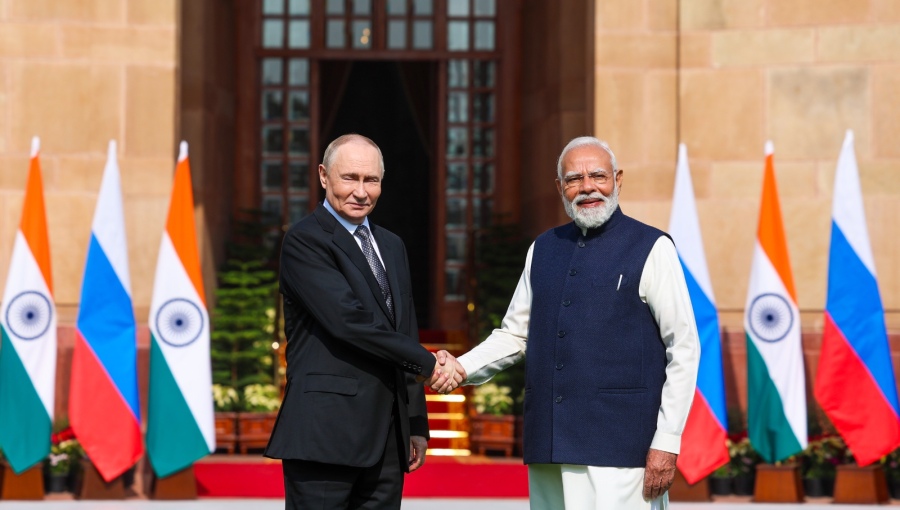
President Putin of Russia, and Prime Minister Modi of India / PM Modi - X
By bno Chennai Office December 17, 2025

Russia's relationship with India has undergone a structural transformation bearing remarkable resemblance to the framework Moscow constructed with Beijing, explicitly branded the "no limits” strategic partnership.

During Russian President Vladimir Putin's December 4-5 2025 state visit to New Delhi, the two nations accelerated a recalibration that transcends traditional bilateral commerce to forge institutional integration across defense, technology, infrastructure, and financial systems.

The Russia-China "no limits" partnership, formalised in February 2022 but coined much earlier, explicitly states that cooperation has no boundaries, encompasses political, military, economic and technological dimensions, and is designed to withstand external pressures through mutual interdependence that makes strategic divergence increasingly costly.

Moscow-Beijing ties operate through nested institutional arrangements such as the Shanghai Cooperation Organisation(SCO) forums, BRICS mechanisms, and bilateral commissions that embed cooperation so deeply that disruption becomes practically infeasible.

India-Russia ties are now following a similar trajectory.

Bilateral trade between India and Russia exploded from $13bn in 2021 to approximately $68bn by FY2024-2025, propelled by energy commerce but increasingly diversified across sectors. More critically, Moscow and New Delhi have started constructing a similar financial architecture characterising the Russia-China model.

These include bilateral settlement systems using Indian Rupees and Russian Rubles, interoperability between payment mechanisms and central bank digital currency platforms designed to circumvent US dollar denominated constraints such as the Group of Seven(G7) sanctions imposed on Russia in the wake of its 2022 full scale invasion of Ukraine.

VEB.RF, Russia's de facto development bank, has reportedly begun the process of establishing Indian branches alongside Gazprombank(MOEX:GZPR) and Alfa Bank(MOEX:ALFB), creating finance infrastructure through which Moscow can channel massive Indian Rupee surpluses accumulated from hydrocarbon exports into joint venture manufacturing and long term investment commitments.

This financial architecture addresses the core vulnerability previously preventing India and Russia increasing ties as Russia had accumulated enormous Indian Rupee holdings from New Delhi’s energy purchases, generating a $59bn trade surplus, yet lacked mechanisms to repatriate those funds productively.

These new financial institutional mechanisms are locking both economies into mutual dependency analogous to existing, and in the pipeline Russia-China arrangements.

The India-Russia bilateral trade target of $100bn by 2030, joint manufacturing commitments, and BRICS institutional embedding collectively constitute an architecture wherein both powers increasingly depend on continuous cooperation across multiple dimensions. But interlinked dependence is a double edged sword, where disruption in one sector may become economically costly across many sectors.

However the transformation of a bilateral relationship into mutual structural integration that transcends traditional alliance frameworks becomes economically and strategically difficult to reverse.

The moniker "no limits” in a partnership sense has become as apt for India-Russia relations as it remains for Russia-China arrangements.


Christmas in East Asia: monetised, aestheticised but largely devoid of meaning

Christmas in East Asia: monetised, aestheticised but largely devoid of meaning
/ Kenny Eliason - Unsplash
By Mark Buckton - Taipei December 17, 2025

Christmas in East Asia is that rare thing: a global festival successfully imported, enthusiastically monetised, meticulously aestheticised - and almost entirely stripped of its original point. It is Christmas as a lifestyle accessory or an Instagram backdrop. But it is Christmas without Jesus Christ, sans family obligations, and in many places without a day off.

For hundreds of millions across Japan, South Korea, Taiwan, China and elsewhere December 25 arrives not with the gentle hush of a public holiday, but with the familiar alarm clock signalling the need to get up and head to work or school.

Business carried on as usual, and the only tangible sign that anything unusual is happening is a Santa Claus inflatable wedged between a bubble tea shop and a real estate agent advertising “luxury micro-apartments”.

This is not to say Christmas is ignored entirely. In fact, quite the opposite is the case.

East Asia has embraced Christmas with the zeal of a shopping mall on commission. Streets and apartment complexes are draped in fairy lights of such wattage that passing satellites and astronauts stuck in the International Space Station over the festive period can probably see them. Department stores install towering trees as soon as US-themed Thanksgiving decorations are packed away in late November and are often decorated in themes that change annually - Nordic Minimalist Christmas, Pastel K-Pop Christmas and Luxury Champagne Christmas - none of which has much to do with Bethlehem, Nazareth or, indeed the true meaning of the Christian celebrations observed half a world away.

In Tokyo, Christmas is widely understood to be a romantic event for couples, ideally involving a hotel booking, a view of illuminated landmarks and a cake that costs more than a modest weekly grocery shop. In Seoul, it is similar, though with greater emphasis on social media documentation and the faint competitive undertone that accompanies all major Korean leisure activities. In Taipei, it is an excuse for shopping centres to play “Last Christmas” by Wham on a loop from early November until morale finally collapses around the Lunar New Year in January or February.

The religious content, meanwhile, is treated with polite indifference. Christianity exists in East Asia, of course, sometimes in large numbers, particularly in South Korea. But the public Christmas remains resolutely secular, in the way only a hyper-commercial society can manage.

Nativity scenes are rare; Santa Claus is ubiquitous. Angels may appear, but only if they can be rendered cute, cartoonish or holding a promotional placard advertising real estate or teen hangouts.

What Christmas means is therefore refreshingly clear: consumption.

Christmas in East Asia is about the wallet and buying things, preferably wrapped in red and gold, and preferably promoted with just enough Western imagery to make the locals feel“international” without requiring any understanding of its origins.

It is capitalism in a Santa hat.

Japan’s contribution to this global phenomenon remains the undisputed masterpiece: Kentucky Fried Chicken as Christmas dinner. Through a marketing campaign launched in the 1970s and never allowed to die, millions of Japanese families dutifully pre-order buckets of fried chicken weeks in advance. This is not parody. This is logistics in action. Miss your booking and Christmas is ruined, or at least reduced to a less festive bento box with a leg or a wing at best.

Elsewhere, Christmas food traditions are similarly inventive. There are strawberry sponge cakes, “Christmas lattes” that taste suspiciously identical to normal lattes, and chocolates presented in boxes so elaborate one assumes the contents must be priceless, only to discover they are exactly the same chocolates available year-round, merely rebranded and slightly more expensive.

The soundtrack, too, is resolutely globalised. Mariah Carey dominates malls from Shanghai to Sapporo with the kind of cultural imperialism usually associated with aircraft carriers. Local pop stars release Christmas singles that sound festive largely because they contain bells and the word “snow”, regardless of whether snow is actually a thing where the song is being played - in Taiwan it never is. Indeed, in tropical parts of East Asia, Taiwan again, artificial snow machines have been known to pump foam into 20+degree heat, just in case anyone forgets this is meant to be winter.

And yet, for all the lights, music and promotional tie-ins, there is an unmistakable hollowness to the day itself.

Christmas Eve may be busy. Christmas Day is often just… Thursday. Children go to school. Office workers attend meetings. Trains run on normal schedules. The great annual Western ritual of pretending not to check emails is largely absent.

For expats across East Asia, this can be disorientating. One moment you are standing beneath a massive Christmas tree while a choir of recorded children sings about peace on earth; the next you are answering emails about quarterly targets. The disconnect is almost impressive. East Asia has perfected the art of festive simulation without inconvenience to the school schedule or corporate calendar.

This, perhaps, is the key to Christmas’s success in the region. It is all sparkle, not substance. No awkward conversations at the dinner table. No arguments about politics. No compulsory goodwill beyond what can be expressed through a gift receipt.

It also avoids the deeper, messier questions that Christmas traditionally raises: charity, inequality, faith, forgiveness. These are quietly ignored in favour of LED reindeer and promotional discounts. The poor are not so much remembered as forgotten, unless they can be integrated into a corporate social responsibility campaign with suitable branding.

Even the language reflects this selective adoption. “Merry Christmas” is widely used, often enthusiastically, but as a seasonal greeting rather than a statement of belief. Christmas in East Asia is a temporary vibe, not a value system.

And when the day itself passes, it vanishes quickly. On 26 December, decorations begin to disappear with remarkable speed, replaced by banners advertising year-end sales or, in Chinese-speaking regions, Lunar New Year preparations which can still be as distant as six-weeks away.

Christmas, having served its purpose, is efficiently packed away until next November.

COMMENT: Russian pranksters trick top Biden official into admitting war in Ukraine was unnecessary

COMMENT: Russian pranksters trick top Biden official into admitting war in Ukraine was unnecessary
Amanda Sloat, who served as Senior Director for Europe at the US National Security Council and overseeing policy on Ukraine admitted in an interview that the war in Ukraine could have been avoided if Russia's security concerns were taken into account in January 2022. / bne IntelliNews
By Ben Aris in Berlin December 16, 2025

Nearly three years into the war in Ukraine, a former senior White House official has acknowledged that the conflict might have been avoided had the United States been willing to forgo Nato membership for Ukraine.

Amanda Sloat, who served as Senior Director for Europe at the US National Security Council and lead policy on the region for President Joe Biden – directly overseeing policy on Ukraine – admitted to Russian pranksters that if Kyiv had agreed to abandon its Nato aspirations in early 2022 during a round of diplomacy or shortly after the invasion at the Istanbul peace talks, it “may well have [prevented/stopped the war].” She added, “It certainly would have prevented the destruction and the loss of life.”

The interview with Sloat was conducted by two well-known Russian pranksters who go by the aliases Vovan and Lexus -- real names are Vladimir Kuznetsov (Vovan) and Alexei Stolyarov (Lexus) – who have regularly tricked western officials, often posing as foreign officials, into giving candid interviews and admitting embarrassing details as part of the deteriorating relations with Russia.

The interview with Sloat was particularly damning as she admitted that the Biden administration had no particular plan to protect Ukraine nor bring it into Nato, and simply refused to negotiate with Russia on principle in failed talks that led to war. Russian state TV aired the interview which bolsters the Kremlin’s claim that Russia is fighting a proxy war against Nato.

Sloat’s remarks prompted sharp criticism from foreign policy commentators, who described Sloat’s framing as both revealing and misleading.

“She’s being dishonest,” political commentator and IntelliNews contributor Arnaud Bertrand said. “By definition, neutrality for Ukraine wouldn’t have given Russia ‘some sort of sphere of influence’ but would have made it… neutral, i.e. in-between spheres of influence.”

Bertrand contends that the refusal to consider neutrality was based less on principle than on Washington’s reluctance to relinquish strategic leverage. “She [Sloat] was uncomfortable with the idea of implicitly giving Russia some sort of veto power,” he noted. “But that’s exactly what she wanted to preserve for the US—keeping the theoretical possibility of pulling Ukraine into Nato. It wasn’t even about an actual gain, just the optionality.”

The human cost of that decision has been catastrophic. Hundreds of thousands of men have died and Ukraine has been devastated. It stands in stark contrast to the abstract policy preferences that shaped US policy on Ukraine.

“Think about the cost equation,” Bertrand says. “Not even an actual security commitment, just the potential of one, outweighed any serious effort to prevent the war.”

The issue of Nato expansion has long been a fault line in relations between Russia and the West. Russian President Vladimir Putin has complained about Nato’s inextricable expansion eastwards that started in 1999, when Poland, Hungary and Czechia joined, eventually adding eight new members, starting with his famous speech at the Munich Security Conference (MSC) in 2007. In that speech he claimed that Nato had given verbal promises to Mikhail Gorbachev of “not one inch” expansion that was subsequently broken.

Ukraine’s supporters point to an essay that Putin wrote in July 2021 to claim that Russia wants to conquer all of Ukraine and recreate the Soviet Union. However, last year former Nato Secretary General Jens Stoltenberg admitted that the war in Ukraine began after Nato refused to respond and Russia’s security concerns were the root cause of the war in Ukraine in another embarrassing revelation. Sloat’s interview corroborates that revelation.

During the early stages of the war, Ukrainian and Russian delegations struck the Istanbul peace deal that included an agreement for Ukraine to give up its Nato ambitions. However, the deal failed after Ukrainian President Volodymyr Zelenskiy met with former UK Prime Minister Boris Johnson, who refused to sign off on security deals and told the Ukrainian president to “fight on.” Over a million men have been killed or wounded since.

At the Berlin meeting on December 14, between EU leaders, US President Donald Trump’s special envoys and Zelenskiy, all the same points that the Kremlin was pushing for in January 2022 before the invasion started have come up again.

Sloat’s comments now confirm that strategic discomfort in Washington played a direct role in foreclosing what may have been a viable diplomatic off-ramp. “She’s describing her own position and projecting it onto Russia,” Bertrand said.


US Lucid and KACST open Middle East's first electric vehicle innovation centre in Saudi Arabia

US Lucid and KACST open Middle East's first electric vehicle innovation centre in Saudi Arabia
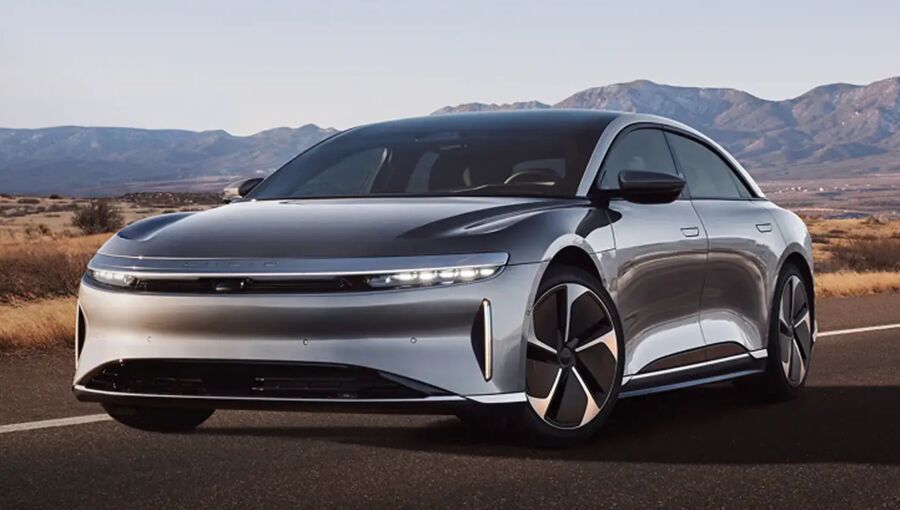
US Lucid and KACST open Middle East's first electric vehicle innovation centre in Saudi Arabia / bne IntelliNews
By bnm Gulf bureau December 17, 2025

Lucid Motors and King Abdulaziz City for Science and Technology have opened the Middle East's first Electric Vehicle Innovation Center in Riyadh, the Saudi Press Agency reported on December 17.

The facility will focus on advanced research across electric vehicle development, supporting Saudi Arabia's future mobility ambitions.

Research at the centre will concentrate on improving the efficiency, functionality and performance of Lucid's electric vehicles.

The facility aims to bring together local, regional and international research expertise, strengthening Lucid's research and development capabilities whilst supporting the kingdom's growing electric mobility sector.

The innovation centre represents the second phase of partnership between Lucid and KACST.

Initially launched as a specialised testing and validation facility, it has expanded to cover all stages of electric vehicle development.

The Riyadh facility joins Lucid's growing network of sites in the United States and Saudi Arabia, including manufacturing operations and a recently opened showroom in Al Khobar.

Lucid interim Chief Executive Marc Winterhoff said the centre embodies the company's commitment to leading electric vehicle technology advancement and supporting Saudi Arabia as a hub for technological innovation.

Dr Talal bin Ahmed Al Sedairy, senior vice president for research and development at KACST, said the collaboration supports transforming research outcomes into commercially viable technologies.

Faisal Sultan, president of Lucid Middle East, described the opening as a major step forward in Lucid's commitment to Saudi Arabia.

"This collaboration strengthens our regional presence, nurtures local talent and contributes to building a vibrant technology ecosystem aligned with Vision 2030," Sultan said.


Diageo agrees to sell entire 65% stake in East African Breweries to Asahi for $2.3bn

 Diageo agrees to sell entire 65% stake in East African Breweries to Asahi for $2.3bn
/ bne IntelliNews
By bne IntelliNews December 17, 2025

Diageo (LSE:DGE, NYSE:DEO), the world’s largest spirits group, has agreed to sell its 65% stake in East African Breweries Ltd (NSE:EABL) to Asahi Group Holdings (TSE:2502) in a deal valued at $2.3bn, marking the UK spirits group’s full exit from direct beer ownership in Africa.

The transaction values EABL at about $4.8bn, making it Japan’s largest single investment in the African alcohol sector to date. Completion is expected in late 2026, subject to regulatory and shareholder approvals.

Under the agreement, Asahi will acquire Diageo’s controlling stake, consolidating its exposure to one of East Africa’s most profitable consumer-goods companies, with leading market positions in Kenya, Uganda and Tanzania. EABL’s portfolio includes flagship brands such as Tusker, Bell Lager and Serengeti.

The transaction will also require approvals from competition and capital-markets regulators in Kenya and other EABL markets, and is expected to trigger a mandatory offer to minority shareholders under Nairobi Securities Exchange rules.

For Diageo, which produces Johnnie Walker whisky and Captain Morgan rum, the sale would represent a strategic shift away from direct equity ownership in African beer producers, following years of portfolio rationalisation. The company has previously reduced or exited stakes in several African brewing assets, opting instead for licensing, distribution and spirits-led growth strategies.

Diageo faces multiple challenges including tariff increases in its key US market, elevated debt levels and signs of reduced alcohol consumption among younger consumers.

EABL has long been one of Diageo’s most valuable emerging-market assets, benefiting from strong cash generation, premiumisation trends and resilient demand across East Africa. The implied valuation reflects investor appetite for scale consumer platforms in high-growth African markets despite currency volatility and regulatory risk.

Asahi said the acquisition aligns with its strategy of expanding internationally through premium beer and beverage brands, diversifying earnings beyond Japan’s mature domestic market. Africa’s favourable demographics and rising middle class were cited as key attractions.