Sunday, December 28, 2025

The deepest parts of the Arctic Ocean are warming now too

While it is well documented that global warming is heating the world's oceans, there is now further evidence that even the deep waters are being affected.
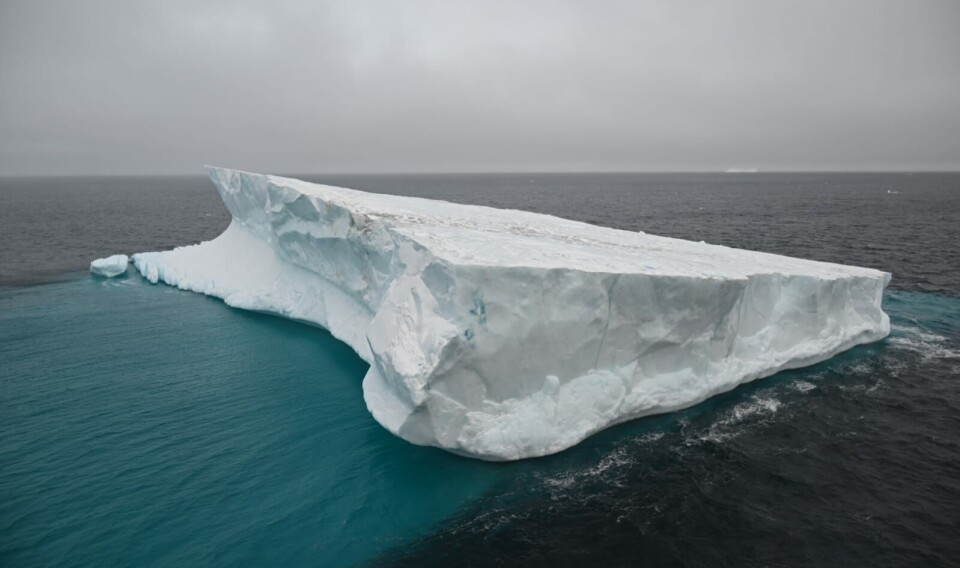


Iceberg in the Arctic Ocean in September 2025 Photo: Henry Patton

journalist
26 November 2025 - 
THE BARENTS OBSERVER


A new study analysed temperature data gathered in recent decades to identify the main sources of heat causing Arctic Ocean warming. The study by the team from the Ocean University of China and Laoshan Laboratory demonstrated that the effect of climate change on the oceans is far greater than previously thought.
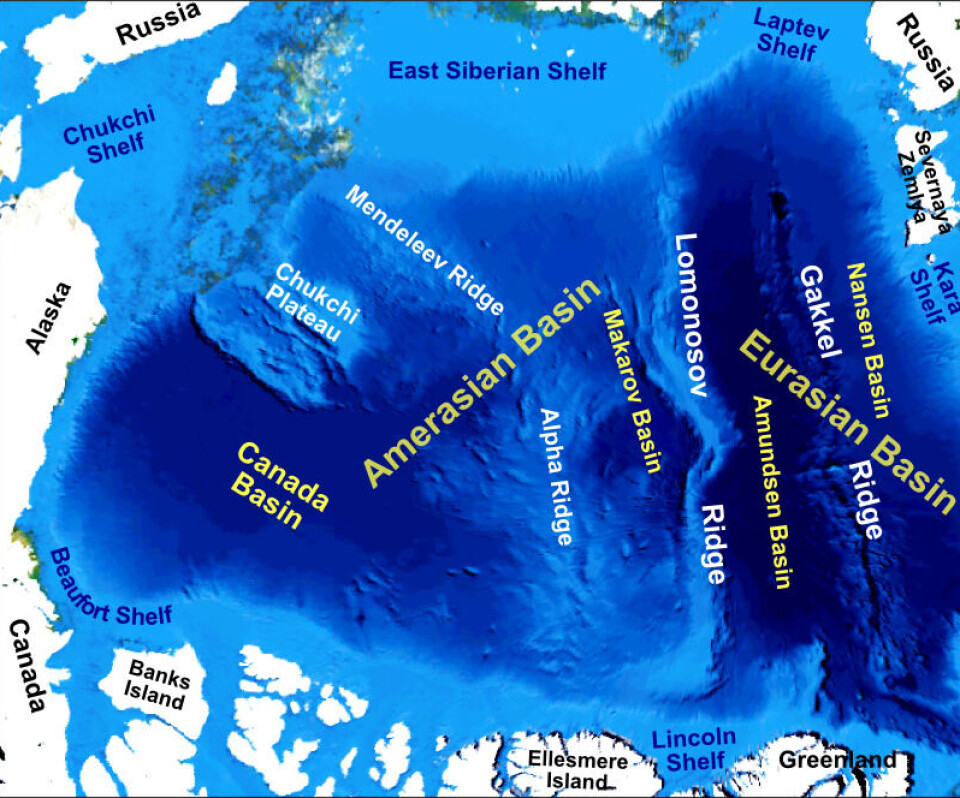

Photo: Wikipedia/Mikenorton

The Arctic Ocean includes various basins, each with its own specific characteristics and rate of warming. The process of Atlantification in the Arctic Ocean - the process where the Arctic Ocean becomes more influenced by the warmer, saltier waters of the Atlantic - is well-known.

However, a new study has found that the deep water in the Eurasian Basin of the Arctic Ocean is warming at a rate of 0.020°C per decade. According to the researchers, this rate of warming is too fast to be explained by natural geothermal heating alone.

“Our findings indicate that the deep Greenland Basin warming has already exerted obvious impacts on the deep Arctic Ocean,” researchers emphasise.

The Greenland basin is a deep-water basin within the Greenland Sea, which is considered an outlying part of the Arctic Ocean and borders Greenland to the west.


The team concluded that the additional warming in the Eurasian Basin originates from the Greenland Basin, which, due to rapid warming, is no longer functioning as a cold source for the Eurasian Basin as it did in the past.

"We find that the rapid warming in the deep Greenland Basin diminishes its cooling effect on the deep Eurasian Basin via the Fram Strait," the study concludes.


The shallow Lomonosov Ridge prevents the warm water from spreading further into the Amerasian basin, "maintaining its relatively slow warming rate".

For Norway, for example, the warming of the coastal waters is impacting the local ecosystem. According to experts at the Norwegian Institute of Marine Research, warmer waters affect the spawning of cod.

"Some species have absolute temperature limits. Cod, for instance, cannot spawn when the temperature exceeds 10 degrees,' said marine scientist Mari Myksvoll.

Fishermen in the Arctic have reported an increase in the number of fish that are more typical of southern waters.

"I see cod, mackerel, yellowfin tuna, herring and haddock moving north from the south," Kent Jensen, who has fished in the Barents Sea near Kirkenes for 15 years, told the Barents Observer, "Ten years ago, there wasn't so much mackerel in the northern part of the Barents Sea."
Moscow declares Nature and Youth an "undesirable organisation"

The Norwegian environmental youth organisation has worked with Russian partners for more than 30 years.


Representatives of Nature and Youth at a demonstration against Arctic oil drilling in Tromsø. Photo: Thomas Nilsen

Olesia Krivtsova
Atle Staalesen
17 December 2025 
THE BARENTS OBSERVER

The Russian Ministry of Justice on December 16 announced that Nature and Youth (Natur og Ungdom) has been included in a list of so-called "undesirable organisations."

The environmental NGO is the fifth entity in Norway that is "undesirable." From before, Bellona, Human Rights Watch, the Norwegian Helsinki Committee and the Barents Observer are on the list.

Leader of the organisation Sigrid Hoddevik Losnegård was not aware of the decision when the Barents Observer took contact.

"We are surprised and sad," she says in a comment.

The Russian Justice Ministry has so far not given any explanation of why the young Norwegian environmentalists have become 'undesirable.'


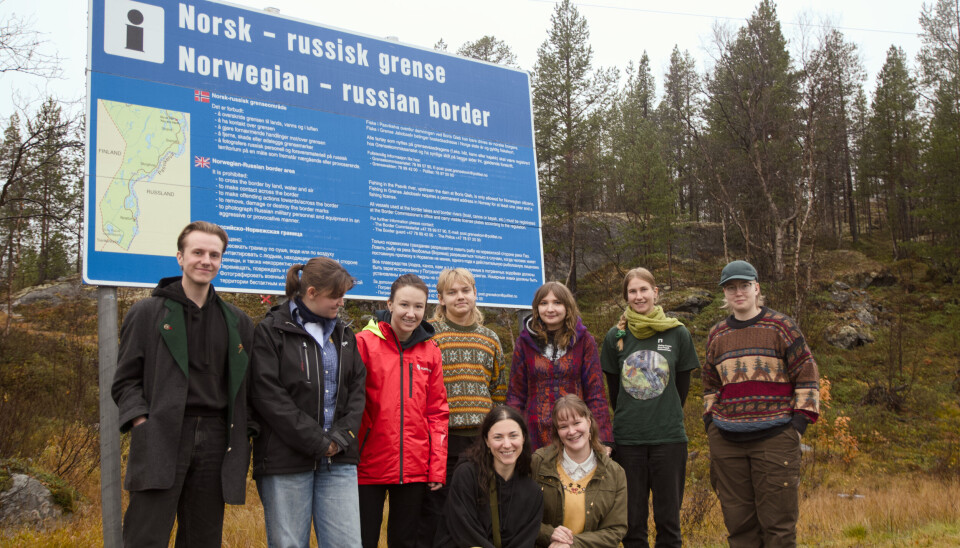
Representatives of Nature and Youth near the border to Russia. Photo: Nature and Youth

Nature and Youth has a more than 30-year-long history of cooperation with Russian partners.

Contacts between young activists from Norway and Russia started in the late 1980s and developed into a fruitful cooperation with dozens of cross-border projects.

In 1989, more than 70 Norwegian youngsters participated in a peace and environmental festival in Murmansk. They were the first Western environmentalists that visited the Kola Peninsula and the festival resulted in a boost in contacts.

At the time, there was a grim environmental situation on the Kola Peninsula. In only short distance from the border to Norway large volumes of nuclear waste materials, including spent nuclear fuel, was stored under extremely bad conditions. There were also major emissions of sulphur dioxide from nickel melters located in the border areas.

In the 1990s several local groups of Nature and Youth, including from Tromsø and Bodø, started cooperation project with Russian groups from the Kola Peninsula

"A key objective for the Nature and Youth has been to support local Russian groups that wanted to do something with the environmental problems," the authors of a book about the organisation's cooperation with Russia explain.

Over the years, Nature and Youth's Russian partners have included regional environmental organisations in the regions of Murmansk and Arkhangelsk. Projects have been funded through Norwegian grant programmes.

With increasing frequency, Russian authorities label organisations as ‘undesirable’ as part of a repression policy towards non-governmental entities. This status implies a complete ban on the organisation's activities in Russia. For Russian citizens, participation in such an organisation, distribution of its materials, or any form of cooperation may result in administrative liability, and in the case of repeated incidents, criminal prosecution.

By late December 2025, the Russian Ministry of Justice had included 290 organisations in the ‘undesirable-’ list. Among them are political and social associations, religious structures, independent media, human rights and environmental initiatives, as well as foundations and think tanks.


Moscow Threatens Activists From Numerically Small Nations With Up To 20 Years In Prison – OpEd


December 28, 2025
By Paul Goble

When Moscow arrests activists in the capital or in one of the major non-Russian republics, journalists and diplomats generally will at least cover the story; but when the center does so against numerically small indigenous nations who live far beyond the ring road, that often does not happen.

As a result, the Russian authorities can be especially brutal in their cases, confident that they won’t face outrage and that what they do to these human communities will serve as a warning to others that a similar fate awaits even larger communities as ever more people in the West accept as normal what the Putin regime is doing.

That makes the case of nearly two dozen activists from these numerically small groups who were arrested a week ago and charged with being members of a terrorist organization especially important (sibreal.org/a/mogut-dat-do-20-let-k-zaschitnikam-prav-korennyh-narodov-prishli-s-obyskami-i-arestami/33630043.html).

Such trumped-up charges are intended to keep them from being able to develop contacts with the international community and call attention to Moscow policies that could leave those charged with up to 20 years behind bars and snuff out any chance that these small groups will get the support they need to continue to resist.

Three things lie behind this latest Moscow effort to “criminalize” the work of activists among the numerically small peoples of the north and far east – and none of them involve the secessionism that the Russian legal system is charging them with in an effort to stop their activities and eliminate what little support they do get abroad.

First, Moscow is angry that these groups have continued to form their own organizations rather than become part of Kremlin-controlled bodies. Second, the center is furious that these groups have succeeded in taking part in UN conferences where they have been able to expose the falsehood of Kremlin claims.

And third – and this may be the most important cause of all – the Kremlin is upset that these groups have exposed the environmental depradation Putin’s development policies have inflicted on the north and far east and sometimes have been able to slow if not stop what Russia’s largest corporations want to do.

The International Committee of the Indigenous Peoples of Russia and the Memorial Anti-Discrimination Center has called the persecution of these activists “unprecedented political repressions” against small ethnic minorities few in the West have ever heard of, according to the SibReal portal.

In its statement, Memorial said that there is no evidence that the activists were guilty of any of the things Moscow is accusing them of and declared that these attacks represented “an effort by the authorities of the Russian Federation to criminalize activism and human rights actions” among peoples too small to be able to defend themselves effectively (adcmemorial.org/novosti/glavnoe/svobodu-dare-egerevoj-i-vsem-korennym-aktivistam-zhertvam-politicheskih-repressij-diskriminaczii-i-kolonialnogo-podavleniya-korennyh-narodov/).


Paul Goble

Paul Goble is a longtime specialist on ethnic and religious questions in Eurasia. Most recently, he was director of research and publications at the Azerbaijan Diplomatic Academy. Earlier, he served as vice dean for the social sciences and humanities at Audentes University in Tallinn and a senior research associate at the EuroCollege of the University of Tartu in Estonia. He has served in various capacities in the U.S. State Department, the Central Intelligence Agency and the International Broadcasting Bureau as well as at the Voice of America and Radio Free Europe/Radio Liberty and at the Carnegie Endowment for International Peace. Mr. Goble maintains the Window on Eurasia blog and can be contacted directly at paul.goble@gmail.com .


Russia withdraws from Euro-Arctic rescue cooperation

The Foreign Ministry in Moscow announced on November 26 that it had formally terminated the agreement with Norway, Finland and Sweden on joint reponse to emergency situations in the north.


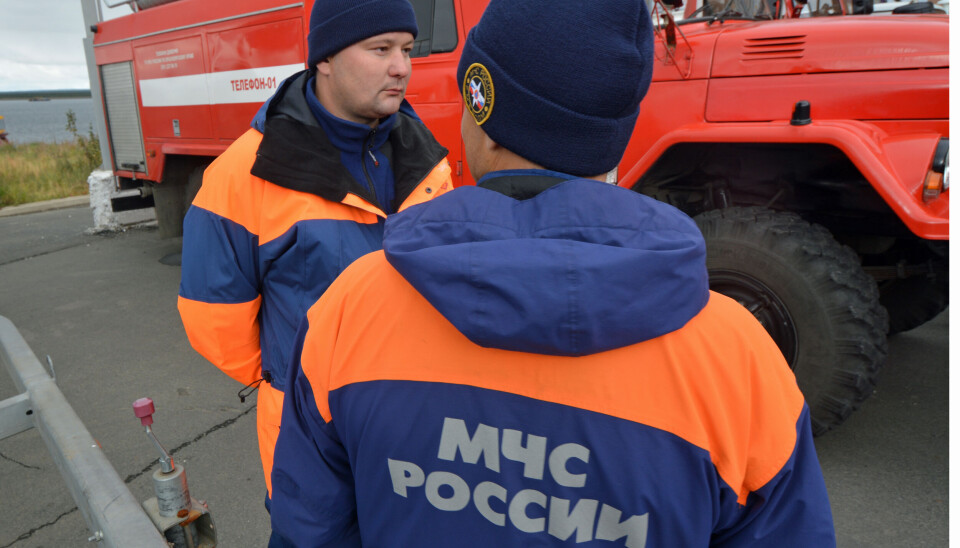
Russian Emergencies Ministry (MChS) is responsible for search and rescue operations in response to natural and man-made disasters. Photo:Thomas Nilsen

Thomas Nilsen
28 November 2025 
THE BARENTS OBSERVER

The agreement from 2008 on Cooperation within the Field of Emergency Prevention, Preparedness and Response was the last part of the Barents cooperation that officially included Russia.

An formal statement on the withdrawal has been posted on the Foreign Ministry's portal.

The Barents cooperation was a multilateral set of regional and state partnerships that was established following the collapse of the Soviet Union in the early 1990s. Not much of the cooperation lasted after the full-scale brutal war against Ukraine started in 2022 because the Nordic countries, like the rest of Europe, turned their back against the Russian regime. In April this year, Moscow said enough was enough and formally closed its participation in the Barents cooperation.

Over the years, the participating countries have arranged nine joint rescue exercises, rotating between Russia, Finland, Sweden and Norway semiannually. The rescue cooperation has helped the participants understand the special climatic and geographical challenges rescuers face in the northernmost regions.

It has as well contributed to strengthen cross-border contacts in case accidents happen and international assistance is needed.

Although the multilateral cooperation with the Nordic countries has now come to an end, Russia maintains a special bilateral agreement with Norway on search and rescue in the Barents Sea. However, no joint exercises have taken place in the maritime border area after 2022.


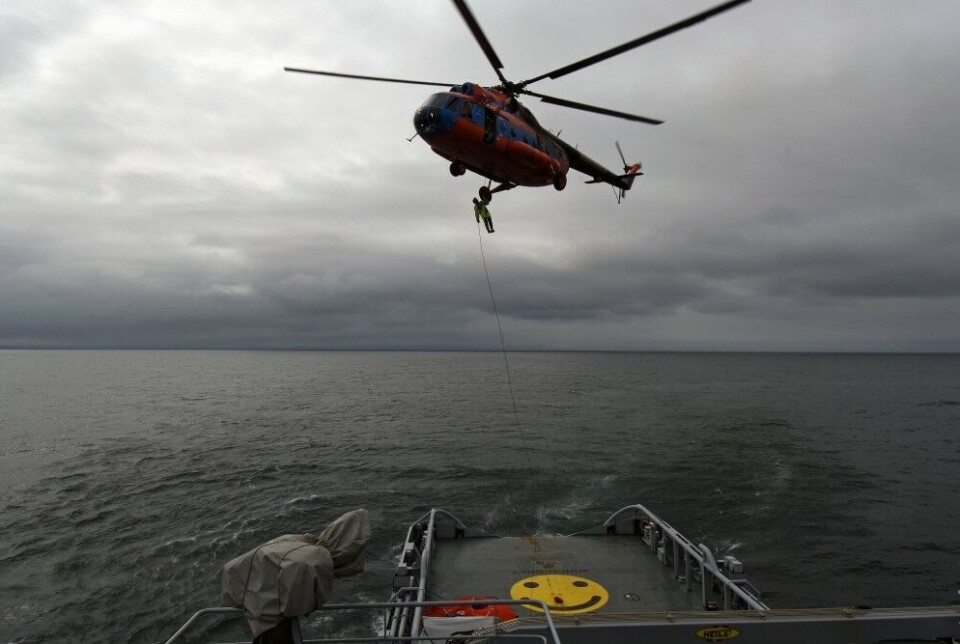
Joint exercise in the Varanger fjord: Fast-roping to the deck of the Norwegian Coast Guard ship KV Barentshav from a Russian Mi-8 helicopter operating for the rescue service based in Murmansk. Photo: Thomas Nilsen
Beijing's men on the Northern Dvina

As a mounting number of Russia's shadow fleet ships sails across the Northern Sea Route to Chinese ports, a Beijing-led business delegation comes to Arkhangelsk to discuss shipping.


Chinese General Consul in St. Petersburg Luo Zhanhui takes a closer look at the Northern Dvina, the river that plays a key role in current Chinese-Russian Arctic cooperation. Photo: Port of Arkhangelsk on VK

Atle Staalesen
27 November 2025
THE BARENTS OBSERVER

Our sea port is the key point of cooperation between Arkhangelsk and China, the port administration declared as a Chinese delegation paid a visit in mid-November.

The delegation was headed by General Consul in St. Petersburg Luo Zhanhui. It included several business representatives, among them Ke Jin, the leader of the New New Shipping Line.


A Chinese business delegation headed by Consul General in St. Petersburg Luo Zhanhui met with Arkhangelsk Minister of Economic Development Yevgenia Shelyuk and representatives of the Arkhangelsk Sea Port. Photo: Arkhangelsk Sea Port on VK

The Chinese shipping company is in the process of significantly strengthening its position in the Russian North. Reportedly, a total of 17,500 containers have been shipped between Chinese ports and northern Russia since 2024. The number of import and export shipments amounts to 14, according to the Arkhangelsk Sea Port.

The NewNew Shipping Line is known as the owner of the NewNew Polar Bear, a ship that was suspected of sabotage against underwater infrastructure in the Baltic Sea in 2023.


The company NewNew Shipping Lines has major plans for container traffic in Arctic waters. Picture: Poster on website of the NewNew Shipping Lines

Since 2024, the NewNew Polar Bear and several of its sister ships have shuttled along the Northern Sea Route. According to Arkhangelsk Governor Aleksandr Tsybulsky, his region primarily supplies woodworking products to China and receives mainly technological products, machine-building products and components for the automotive industry in return.
 

The first Chinese container carrier arrived in Arkhangelsk in August 2024. Photo: Chinese General Consulate in St. Petersburg on Telegram

The Chinese shipping company cooperates with Torgmoll, a company which is closely connected with Russian business interests.

The NewNew Shipping Line is actively seeking to boost cooperation also with the region of Murmansk, and Director Fan Yuxin in late September met with regional Governor Andrei Chibis.

Both parties are determined to work for more shipments and better port infrastructure in the region, Chibis emphasised in the meeting, and added that the ultimate plan is to be able to offer year-round shipments between the countries on the Northern Sea Route.

In the Chinese business delegation that visited Arkhangelsk this month was also Denpak Dao, a representative of the Chinese city of Qingdao. The port of Qingdao is known as a Chinese hub for Russian crude oil imports. It also has direct container shipping route connections with Russian ports like Vladivostok and Vostochny.

Russia's so-called shadow fleet tankers have made hundreds of port calls at Qingdao.

Since the start of its full-scale war of aggression against Ukraine and the subsequent introduction of massive international sanctions, Moscow has developed a major fleet of shadow vessels that brings sanctioned oil and other goods to international markets.

The shadow fleet is increasingly sailing also in the Arctic. In 2025, a major share of the vessels that made transit voyages on the Northern Sea Route was 'shadow tankers.' Many of them had Chinese ports as their destinations.

Other Chinese ports involved in Arctic shipments are Dalian, Shanghai, Ningbo-Zhoushan and Taicang.

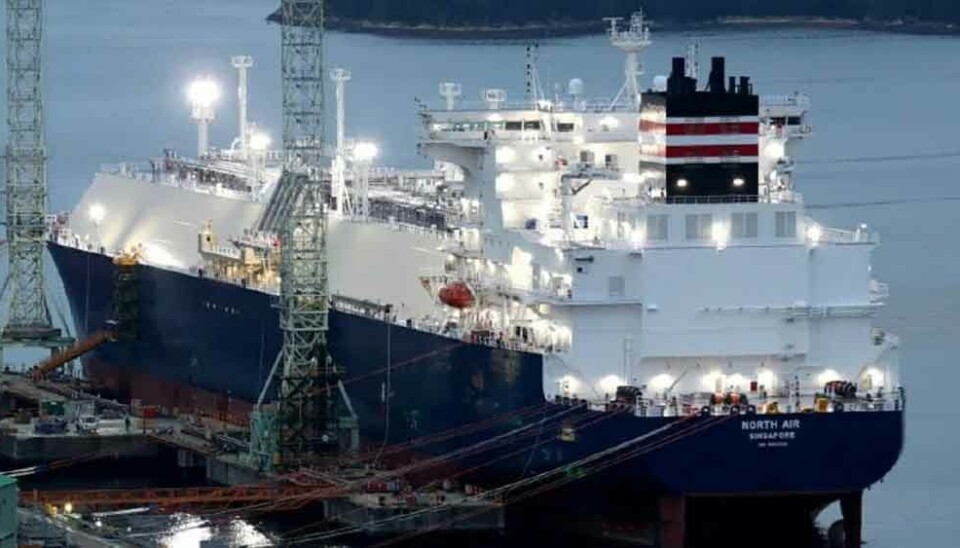
Symptomatically, one of the last ships to sail on the route in November before sea ice covered the waters was the Buran, an LNG carrier that is sanctioned by the EU, USA, UK and several other countries.
 

The Buran (previously named North Air) is among Russia's sanctioned 'shadow fleet' carriers. Photo: belokamenka51 on VK

The Buran has, along with its sister vessels Iris, Voskhod and Zarya, repeatedly transported LNG from the sanctioned gas plant Arctic LNG 2 to China.

Arctic shipments between the two dictatorships are due to increase even more in the coming years. In connection with the first container shipment to Arkhangelsk in August 2024, a Chinese diplomat emphasised that shipments on the Northern Sea Route "demonstrate the successful cooperation between China and Russia in the field of logistics routes."


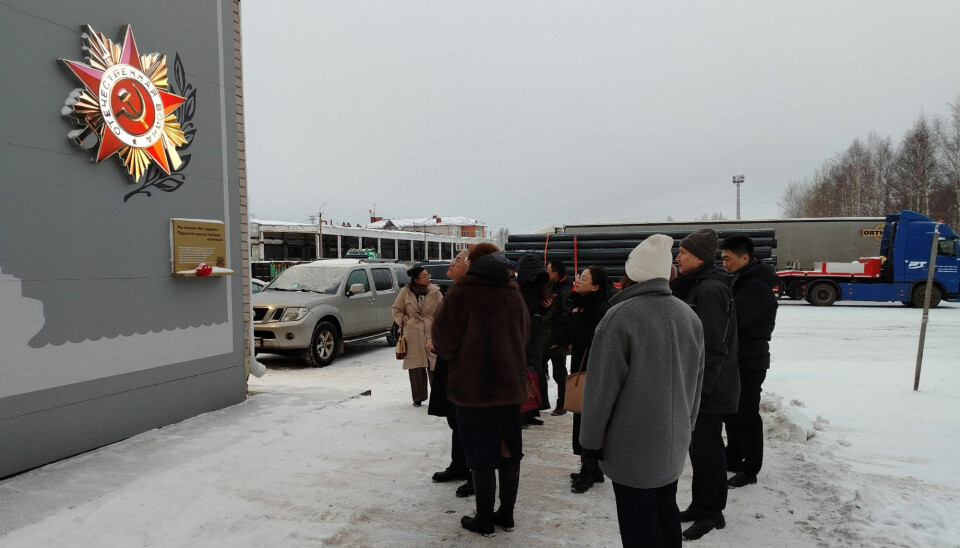
Chinese visitors at the Port of Arkhangelsk pay respect at a new war memorial. Photo: Arkhangelsk Sea Port on VK

The rulers in Beijing have a clear plan to strengthen Chinese engagement in the Arctic, and in 2018 published an ambitious Arctic Policy.

According to the NewNew Shipping Company, its plans for shipments on the Northern Sea Route is a response to the government's white paper.

"[…] NewNew Shipping actively responded to the national call and expanded its business with a strong sense of mission, successfully opening up Arctic shipping routes. NewNew Shipping deeply understands that participating in the development of Arctic routes is not only a good opportunity for corporate development, but also a sacred mission to contribute to the country's strategic layout," a statement [translated from Chinese] from the company reads.

The cooperation with Russia appears to be a key part of China's Arctic strategy.

In a column that praises China's 15th Five-Year Plan, Consul General in St. Petersburg Luo Zhanhui highlights the importance of Chinese-Russian relations.

"Currently, under the strategic guidance of the two heads of state, China-Russia relations are at their best historical period. […]China is willing to work with Russia, guided by the consensus reached by the two heads of state, to strengthen solidarity and cooperation in various fields, jointly implement global development initiatives, global security initiatives, global civilization initiatives, and global governance initiatives, and work together to build a community with a shared future for mankind."


With backing from Beijing, LNG carrier sails Arctic route to banned Russian gas terminal

The Buran is part of a tanker fleet that continues to shuttle to Novatek's sanctioned LNG terminal in the far northern Gydan Peninsula. The Russian company now gives Chinese buyers a major discount on gas from the Arctic LNG 2 project.


'Shadow fleet' tankers shuttle on Northern Sea Route with liquified gas from Novatek's Arctic LNG 2 project. Chinese buyers now get a major discount on the sanctioned LNG. Photo: Novatek

Atle Staalesen
20 November 2025 
THE BARENTS OBSERVER 

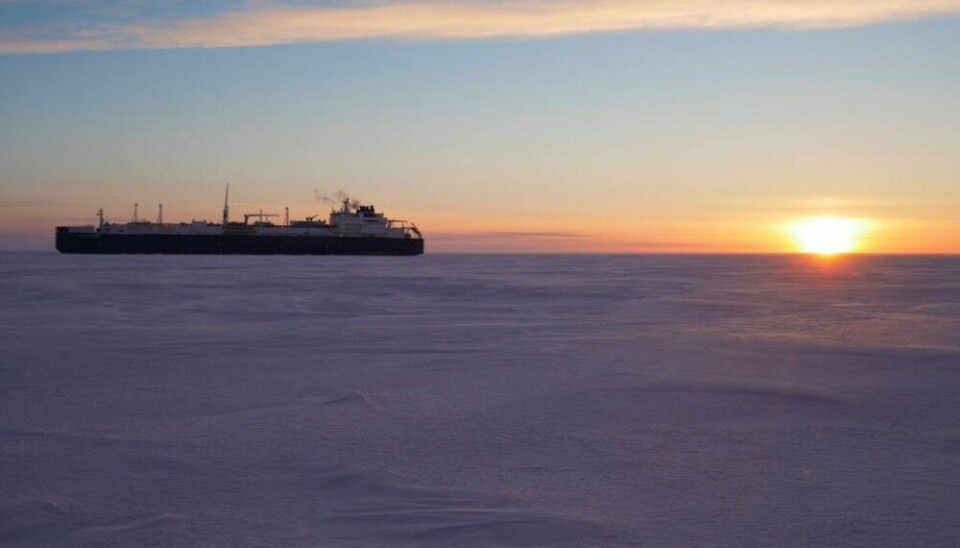
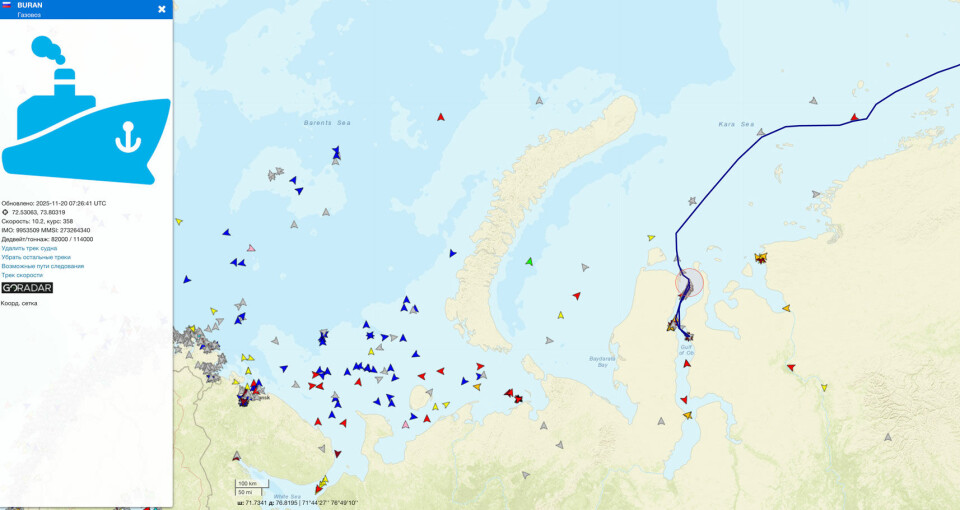
The 293-metre-long gas carrier arrived in the port of Utrenny on November 14, and a few days later set out from the ice-covered Gulf of Ob. On November 20, the tanker was on its way into the Kara Sea with the course for China.


After having sailed the Northern Sea Route from China, the Buran on November 20, 2025 set out from the port of Utrenny fully loaded with gas from the Arctic LNG 2 project. Map: goradar.ru

Utrenny is the name of the terminal of the Arctic LNG 2. The major Russian gas project is built on the tundra of the Gydan Peninsula. It has been sanctioned by the US since 2023 and the UK since 2024.

The international ban against the Arctic LNG 2 notwithstanding, production at the project's two gravity-based production structures has continued and LNG carriers have made at least 12 shipments to the Utrenneye terminal in 2025.

It is China that is keeping the controversial project running. And the backing from Beijing is likely to continue. Project owner Novatek is now granting Chinese buyers a major discount on LNG from the project.


According to Reuters, Chinese companies can now buy gas from the Arctic LNG 2 with a 30-40 percent discount.

It is the Buran and its sister vessels Iris, Voskhod and Zarya that serve the Russian-Chinese cooperation.

The four tankers, all of them on international sanction lists, are operating as 'shadow vessels' for Novatek. In April 2025, they all changed names. The North Air, North Mountain, North Sky and North Way became Buran, Voskhod, Iris and Zarya respectively. They also changed their flag state from Panama to Russia.

The ships all have standard Arc4, which allows them to sail in light sea ice. Under tougher conditions, Arc4 tankers need escort from icebreakers.

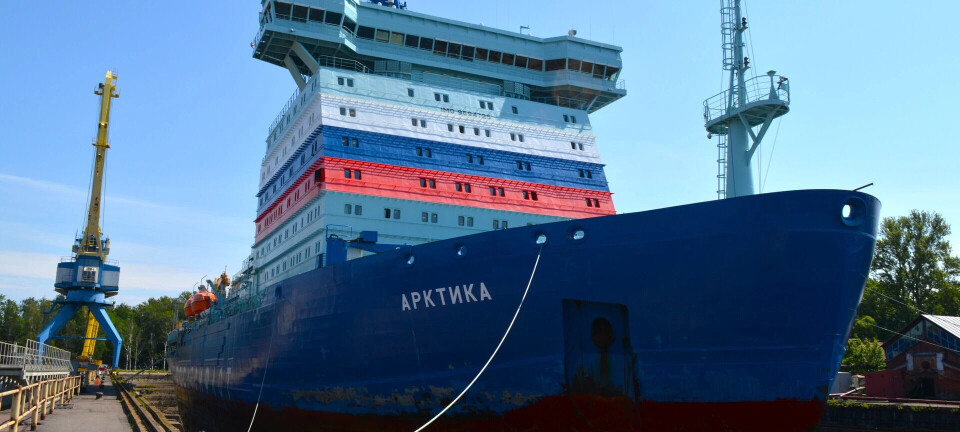
As the Buran made its way across the Northern Sea Route in early November this year it was escorted by the nuclear-powered icebreaker Arktika


Putin orders building of North Pole ice base

The Artur Chilingarov Ice Base will be located on an ice floe and house researchers and tourists who are ready to pay a minimum of €40,000 for a five-day visit.


Dictator Putin commissions his government to participate in efforts to build an ice camp on the North Pole. Photo: Artur Chilingarov Ice Camp on Telegram

Atle Staalesen
16 December 2025 
BARENTS OBSERVER

The decree signed by the Russian dictator on December 15 orders the government to participate in the establishment of a North Pole base.

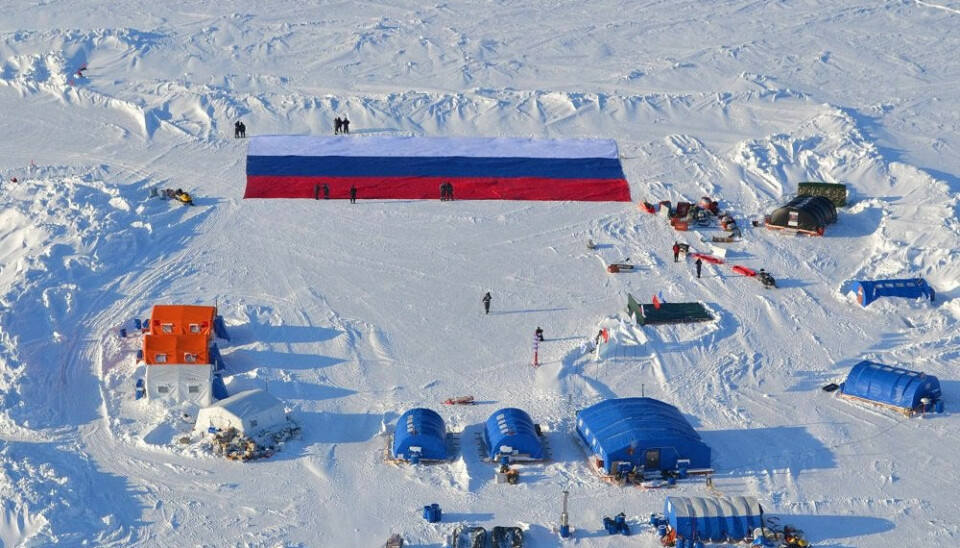
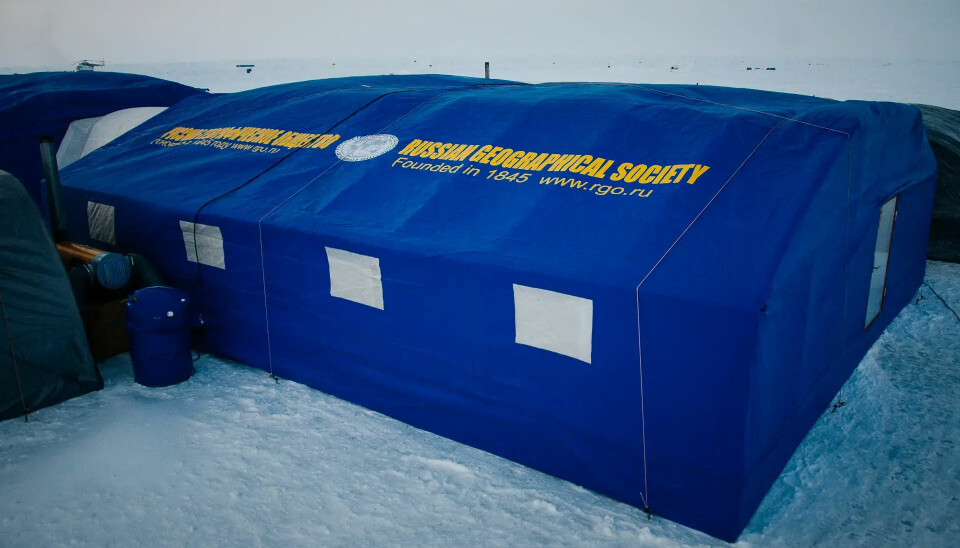
The base is to be developed in cooperation with the Russian Geographical Society and the Academy of Sciences. The decree follows Putin's participation in the Geographical Society's congress in October this year.


The Russian Geographical Society is one of the main organisers of the Artur Chilingarov Ice Base. Photo: northpolecamp.ru

Russia has a long tradition of organising research expeditions on drifting Arctic ice. However, it has become increasingly difficult to find ice floes solid enough to hold the research stations. The last “real” ice station, the “North Pole-40”, was established in October 2012, and had to be evacuated in May 2013, because the ice floe the base was placed on started to break apart.

For many years, a group of Russian businesspeople also organised the Barneo Ice Camp. The camp was built near the North Pole. Because of the unstable ice conditions, the last Barneo camp was held in 2018. Nevertheless, the organisers say that they intend to set up the camp in 2026.


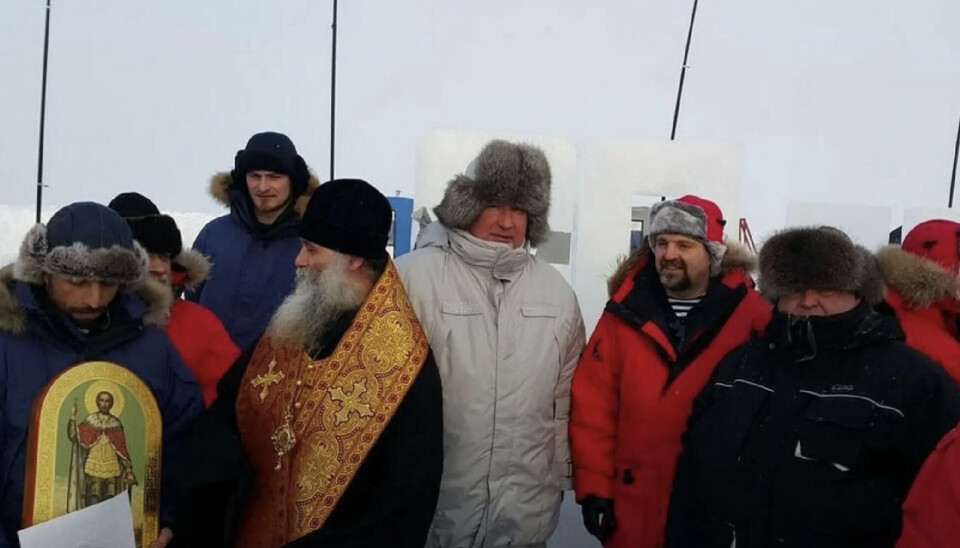
Visitors to the Barneo Ice Camp in April 2015: Russia's deputy prime minister Dmitri Rogozhin (in white jacket) and Bishop Iyakov of Naryan-Mar. Photo: From the archive

It is not clear whether the Artur Chilingarov Ice Base will interact with the Barneo Camp. It is also an open question whether it will be possible to build the camp at all because of the vanishing sea ice.

According to the Artur Chilingarov Ice Base website, a five-day visit costs a minimum of 3,7 million rubles (€40,000). All visits are due to take place in April 2026.

Artur Chilingarov was a famous Soviet-Russian explorer who died in 2024.

Putin's participation at this year's congress of the Russian Geographical Society showed a major level of Kremlin support to the expansionist efforts of the Society.

During the congress, prominent members of the Russian elite discussed initiatives aimed at the Arctic as well as the occupied parts of Ukraine.

In his address, the Russian dictator highlighted the role of the Geographical Society in territorial issues and said that 2027 would be declared the 'year of geography.'

“Given the contribution made by our geographers throughout history to strengthening the state and the paramount importance of geographical science, I ask the government to consider declaring 2027 the Year of Geography,” the Russian ruler said.

"This is important for us from a political point of view,” he explained, and emphasized that "the main event of the year will be consolidation of maps — new maps — of the Russian Federation.”


Putin: “I am confident that the new icebreaker Stalingrad will bear this proud name with dignity”

The keel-laying ceremony for the nuclear-powered icebreaker Stalingrad took place at the Baltic Shipyard in St. Petersburg


The Stalingrad will be painted in the colours of the Russian flag. On its front, the icebreaker will get a painting of the colossal war memorial sculpture Rodina-mat' zovyot! (The Motherland Calls) erected to commemorate the casualties of the battle of Stalingrad. Illustration: Rosatomflot


Thomas Nilsen
18 November 2025 - 
THE BARENTS OBSEVER

The Stalingrad will be the seventh icebreaker in the Project 22220 series.

The Arktika, Ural, Sibir and Yakutia are already sailing in Arctic waters, breaking the ice for petroleum tankers and other vessels sailing along the Northern Sea Route. The two icebreakers Chukotka and Leningrad are under construction at the Baltic Shipyard and are expected to be delivered to Rosatomflot by the end of 2026 and 2028.

On November 18, Vladimir Putin attended the keel-laying ceremony for the Stalingrad, but only via video-link from one of his bunkers, likely in Moscow.

The icebreaker with the "glorious name of Stalingrad," Putin said, "is yet another tribute to the memory and unwavering courage of the defenders and residents of the Volga stronghold, the valour and bravery of the participants in the grand battle, which largely determined the outcome of not only the Great Patriotic War, but also the entire Second World War, and, without exaggeration, influenced the fate of humanity."

As a modern-day dictator, Putin plays on the collective memory of World War II to mobilise society to legitimise current policies by drawing parallels between WWII and present-day conflicts. In this way, the leader in the Kremlin aims to shape the young generation's understanding of sacrifice and war.

Names from geography to mass murderers

When Russia in 2013 laid down the first of the new generation icebreakers, the Arktika, the decision was made to give all vessels geographical names from the northern regions.


Nuclear icebreaker had to sail all to St. Petersburg for basic hull work as Russia's lacks northern dock


That policy changed with the full-scale war against Ukraine, and it was decided that the next two icebreakers to be built should carry the names of the Soviet Union's two dictators and mass-murderers.

The Kamchatka became Stalingrad, and the Sakhalin was renamed to Leningrad.

Also, the two last icebreakers with Soviet hero city names are to be painted differently than the previous vessels. The Leningrad and Stalingrad will be painted in the colours of the Russian flag, and both will have a huge image of a Soviet-style World-War II statue from the relevant city painted on its front.

Stalingrad was officially renamed Volgograd in 1961 as part of the Soviet Union's "de-Stalinization" campaign to distance itself from the dictator Joseph Stalin.

"I am confident that the new icebreaker Stalingrad will bear this proud name with dignity. Operating in the harsh Arctic conditions, blazing a path through the ice, it will become yet another symbol of the talent, strength, and creative energy of our people, their ability to set and implement the most daring plans, and to persevere in the most difficult times," Vladimir Putin said in his video-transmitted speech to the construction yard in St. Petersburg.

Year-round navigation

The new generation icebreakers are powered by two RITM-200 nuclear reactors (2 × 175 MWt). Capable of breaking ice that is 2,8 meters thick or more, the goal is for Russia to provide for year-around sailings from the Kara Sea in the west to the Bering Strait in the east.

All Russia's nuclear-powered icebreakers are based at Atomflot, the service base in Murmansk.


Rosatomflot's service base is located in the northern part of Murmansk on the shores of the Kola Bay. Photo: Thomas Nilsen
On Christmas Day, Moscow sent strategic bombers to Norwegian Sea

Only two days after Tu-95 strategic bombers took off from Olenya, Kola Peninsula, as part of a massive terror raid against Ukraine, similar aircraft from the same base set off towards the Norwegian Sea.


A Tupolev-95 strategic bomber takes off from the Olenya airbase on the Kola Peninsula and sets course for the Barents Sea and Norwegian Sea. Photo: screenshot of video


Atle Staalesen
27 December 2025 
THE BARENTS OBSERVER

There was no proper ground deicing of the Tu-95 strategic bomber that took off from the Olenya air base in the Kola Peninsula this week. A video posted by the Russian armed forces shows the large, four-engine turboprop-powered strategic bomber taking off with snow on its wings and body.

On December 23, bombers from the same airbase had taken part in raids against Ukraine. Two days later, on December 25, the aircraft chose a northern trajectory.

In the former operation, the aircraft carried cruise missiles. In the latter, there were apparently no missiles on board. But the external suspension for the missiles were visible under the wings.

Reportedly, the Tu-95 strategic bombers flew more than 7 hours through the Barents Sea and to the Norwegian Sea. Allegedly, the flight was part of a planned operation and was made over “neutral waters.”

The video shows that the bombers were refueled in the air by a tanker aircraft.

The bombers were accompanied by several of the Northern Fleet’s Su-33 fighter jets, the Russian Defence Ministry reports.

According to the Russian ministry, at certain stages of the flight the bombers were accompanied by fighter jets from foreign countries.

The Norwegian Air Force has not issued any official information about the Russian aircraft.

It is not clear how many aircraft that took part in the operation. According to Russia's war ministry, there were more than one bomber in the air. The operation came only two days after aircraft from the same air force division took off from the same airbase to engage in a major bombing raid against Ukraine.

According to Ukrainian military authorities, aircraft from four Russian airbases, among them the Olenya, took part in the massive attack aimed at Ukrainian cities and infrastructure on December 23.

In the course of Russia’s almost four years of full-scale war of aggression, bombers based in Olenya have repeatedly carried out terror raids against Ukraine.

The airbase in the Kola Peninsula has become a key target for Ukrainian retaliation. Ukrainian drones have several times targeted the base. In the spectacular Operation Spiderweb, the Ukrainians succeeded in destroying several strategic bombers in Olenya, as well as in other Russian strategic airbases.
Man who detonated first nuclear bomb on Novaya Zemlya is honoured with name on Arctic peak

With nuclear tensions on the rise, Russia names mountain peak on Novaya Zemlya after a Soviet rear admiral who was instrumental in developing the nuclear test site in the 1950s.


The 50 megaton 'Tsar Bomba' was detonated on Novaya Zemlya on October 30, 1961. Photo: Screenshot of video

Atle Staalesen
3 December 2025 
THE BARENTS OBSERVER

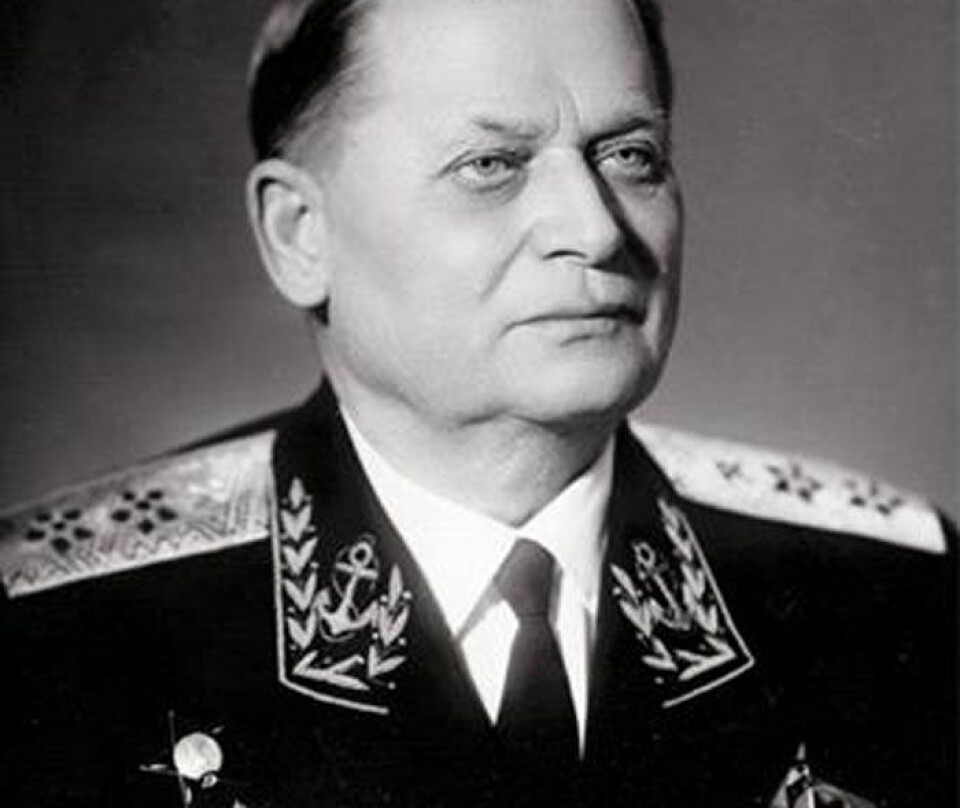
Russian Prime Minister Mikhail Mishustin has signed a decree, according to which a mountain top in the archipelago of Novaya Zemlya will be named after Pyotr Fomin.

The 1241-metre-high peak did not have a name until explorer and colonel Sergei Churkin in 2024 came up with the proposal to name it after the rear admiral. The legislative assembly in Arkhangelsk subsequently organised a poll, which reportedly showed public support for the proposal.


The 'Mount Pyotr Fomin' is located on the northern part of Ostrov Yuzhny, Novaya Zemlya. Photo: Arkhangelsk regional assembly on VK

The mountain is located about 30 km southwest of Severny, a secretive military settlement in the Matochin Strait.

Pyotr Fomin had participated in the building of the Soviet Union's first nuclear submarine, the Leninsky Komsomol, before he was commissioned to lead the development of the nuclear test site on Novaya Zemlya.

He was the first head of the Soviet 6th Naval Command, a body responsible for developing new types of nuclear weapons.

In 1954, the Novaya Zemlya test site was officially opened and Fomin had the responsibility to prepare and organise the testing. It ultimately had catastrophic consequences for the arctic archipelago.


As many as 224 nuclear detonations were set off in Novaya Zemlya in the period between 1955 and 1990. The detonations had a total explosive energy equivalent to 265 megatons of TNT.

Among the detonations was the 'Tsar Bomba,' a 50 megaton explosion that could be seen many hundreds of kilometres away.

According to Andrei Sakharov, the nuclear physicist that turned into a human rights activist, Petr Fomin was shocked by the force of the explosions.


Pyotr Fomin was a rear admiral and head of the Soviet Navy's 6th Command.

Fomin reportedly told Sakharov that "sailors are used to fighting an armed enemy in open battle" and that for him "the very idea of such a massacre is disgusting."

Nevertheless, the rear admiral is praised for his efforts by leaders of today's militant and aggressive Russia.

"He is truly a significant figure for our country and region. Pyotr Fomin has made a significant contribution to strengthening the defence capabilities of our homeland," regional legislator from Arkhangelsk Aleksandr Frolov said.

The Soviet Union conducted several atmospheric nuclear tests, and also tested nuclear torpedoes in Novaya Zemlya. However, the Mount Pyotr Fomin is located in an area where only underground detonations were set off.

The last nuclear test was held in 1990, but Russia has continued to conduct subcritical nuclear tests at Novaya Zemlya. The archipelago is also home to the test site for the infamous Burevestnik nuclear-powered missile currently under development.


In early November this year, Russian defence minister Andrei Belousov hinted that nuclear testing could be resumed. "It is appropriate to begin immediate preparations for full-scale nuclear tests at Novaya Zemlya," he said in a meeting with dictator Vladimir Putin. The statement came after US President Donald Trump said his country could start tests.


China drafts stricter rules to regulate AI for emotional interaction

China's cyber regulator proposed draft rules to oversee AI simulating human personalities and emotional interaction, requiring user safety measures, addiction monitoring, data protection, algorithm review, and banning harmful content or behavior.


A humanoid robot Tiangong by Beijing Innovation Center of Humanoid Robotics Co, moves an orange as a demonstration at its company, during an organised media tour to Beijing Robotics Industrial Park. (Reuters Photo)


Reuters
New Delhi,
Dec 28, 2025 03:15 IST


China's cyber regulator on Saturday issued draft rules for public comment that would tighten oversight of artificial intelligence services designed to simulate human personalities and engage users in emotional interaction.

The move underscores Beijing's effort to shape the rapid rollout of consumer-facing AI by strengthening safety and ethical requirements.

The proposed rules would apply to AI products and services offered to the public in China that present simulated human personality traits, thinking patterns and communication styles, and interact with users emotionally through text, images, audio, video or other means.

The draft lays out a regulatory approach that would require providers to warn users against excessive use and to intervene when users show signs of addiction.

Under the proposal, service providers would be required to assume safety responsibilities throughout the product lifecycle and establish systems for algorithm review, data security and personal information protection.

The draft also targets potential psychological risks. Providers would be expected to identify user states and assess users' emotions and their level of dependence on the service. If users are found to exhibit extreme emotions or addictive behaviour, providers should take necessary measures to intervene, it said.

The measures set content and conduct red lines, stating that services must not generate content that endangers national security, spreads rumours or promotes violence or obscenity.

- Ends
CANADA

Annette Dionne, last surviving Dionne quintuplet, dies aged 91

BBC
Grace Eliza Goodwin


Toronto Star via Getty Images
Annette, Yvonne and and Cécile Dionne pictured in 1998

Annette Dionne, the last surviving sister of the Canadian quintuplets, has died at 91, the Dionne Quints Home Museum has announced.

The five identical sisters, born in Ontario at the height of the Great Depression in 1934, were the first known quintuplets to survive past infancy.

They quickly became a global sensation during their childhood - starring in feature films, appearing on the covers of magazines, and endorsing products from toothpaste to syrup.

"Much beloved, Annette had championed children's rights," the museum said in a statement announcing her death.


The Dionne quintuplets on their fourth birthday in 1938

The museum, which seeks to preserve their legacy and educate the public on the quintuplets' controversial upbringing, added: "She believed it was important to maintain the Dionne Quints Museum and the history it provides for the future of all children."

The quintuplets - Annette, Yvonne, Cécile, Émilie, and Marie - were taken away from their parents by the Ontario government when they were infants.

For several years, the authorities displayed the children in a compound dubbed "Quintland", which became a popular tourist attraction.

The children were constantly examined and observed, and had limited contact with their parents and siblings.

Their parents later regained custody of the quintuplets.

The quintuplets on their second birthday


As adults Annette, Cécile, and Yvonne sued the Ontario government for compensation over the circumstances of their childhood, and they received a settlement totalling nearly C$3m in 1998.

Annette was the last surviving sibling out of the 14 Dionne children, the Dionne Quints Home Museum said.

Prior to Annette and Cécile's deaths this year, Émilie died in 1954, Marie died in 1970 and Yvonne died in 2001.

Getty Images
The Dionne sisters at their first formal American press conference in 1952
Kennedy Center demands $1M in damages from musician after canceled Christmas performance - AP

The cancellation followed the White House’s decision last week to rename the center in honor of US President Donald Trump, the Associated Press reported on Friday.

The newly added lettering for US President Donald Trump's name is displayed at the facade of the John F. Kennedy Center for the Performing Arts in Washington, DC, US, December 19, 2025(photo credit: REUTERS/Kevin Lamarque TPX IMAGES OF THE DAY)

DECEMBER 28, 2025 

The John F. Kennedy Center for the Performing Arts Venue President Richard Grenell has reportedly demanded $1 million dollars in damages from musician Chuck Redd who cancelled the center’s traditional Christmas Eve performance on Wednesday.

The cancellation followed the White House’s decision last week to rename the center in honor of US President Donald Trump, the Associated Press reported on Friday.

“When I saw the name change on the Kennedy Center website and then hours later on the building, I chose to cancel our concert,” AP said, quoting an email written to them by Redd, adding that the cancelled Christmas Eve performance was a popular tradition which was why “it was one of the many reasons that it was very sad to have had to cancel.”

Grenell had reportedly written a letter to Redd, which was shared with AP, slamming his decision to withdraw and cancel the performance at the last minute in response to the Center's renaming as "classic intolerance and very costly to a non-profit Arts institution."

The letter also claimed that Grenell would demand $1 million dollars from Redd over the “political stunt,” according to AP.

US President Donald Trump participates in NORAD Santa tracker phone calls, on Christmas Eve, from the Mar-a-lago club in Palm Beach, Florida, US, December 24, 2025. (credit: REUTERS/Jessica Koscielniak)


Kennedy Center renamed 'Trump Kennedy Center'“The Kennedy Center Board of Trustees voted unanimously today to name the institution The Donald J. Trump and The John F. Kennedy Memorial Center for the Performing Arts," Center spokeswoman Roma Daravi announced in a statement released following the vote.

"The new Trump Kennedy Center reflects the unequivocal bipartisan support for America’s cultural center for generations to come.”

The Center did not respond to questions regarding whether congressional approval was sought out or required for the name change.

Trump expressed that he was “honored” and “surprised” by the board's decision during an event in the Oval Office later that day.

“We saved the building,” he later remarked. “The building was in such bad shape, both physically and financially, and in every other way.”

Reuters contributed to this report.