Sunday, December 28, 2025

Thailand and Cambodia declare ceasefire

BANGKOK

Thailand and Cambodia agreed to an "immediate" ceasefire on Dec. 27, the two countries said in a joint statement, pledging to end border clashes that killed dozens of people.

Haberin Devamı

U.N. Secretary-General Antonio Guterres welcomed the announcement "as a positive step towards alleviating the suffering of civilians... and creating an environment conducive to achieving lasting peace," spokesman Stephane Dujarric said.

At least 47 people were killed and more than 1 million displaced in three weeks of fighting with artillery, tanks, drones and jets, according to official tallies.

The conflict spread to nearly every border province on both sides, shattering an earlier truce for which U.S. President Donald Trump took credit.

U.S. Secretary of State Marco Rubio on Saturday welcomed the ceasefire, calling on both sides to "immediately honor this commitment."

The ceasefire took effect at 12 p.m. local time, said the declaration signed by the Southeast Asian neighbors’ defense ministers at a border checkpoint on the Thai side.

The truce applies to "all types of weapons, including attacks on civilians, civilian objects and infrastructures, and military objectives of either side, in all cases and all areas."

Both sides agreed to freeze all troop movements and allow civilians living in border areas to return home as soon as possible, the statement said.

They also agreed to cooperate on demining efforts and combatting cybercrime, while Thailand was to return 18 captured Cambodian soldiers within 72 hours.

Thai Defense Minister Nattaphon Narkphanit said the initial three-day window would be an "observation period to confirm that the ceasefire is real."


Trump declares end to Cambodia-Thailand fighting, criticizes UN role

28/12/2025, Sunday

US President Donald Trump has announced that fighting between Cambodia and Thailand will cease, allowing both nations to return to peace following a newly implemented ceasefire. In a statement on social media, he congratulated the countries' leaders and launched a sharp critique of the United Nations, suggesting the US has become the "real United Nations" due to its mediation efforts. The ceasefire ends nearly three weeks of deadly border clashes that caused significant casualties and displacement.

US President Donald Trump has publicly declared an end to the recent border clashes between Cambodia and Thailand, framing the new ceasefire as a successful outcome and using the moment to criticize the United Nations. In a post on his Truth Social platform on Sunday, Trump stated the fighting "will stop momentarily, and they will go back to living in peace, as per our recently agreed to original treaty."

Praise for Leaders and Swift Resolution

Trump extended congratulations to the leaders of both Southeast Asian nations for their "brilliance in coming to this rapid and very fair conclusion." He characterized the diplomatic process as "fast & decisive, as all of these situations should be!" The ceasefire agreement, signed on Saturday, brings to a close nearly 20 days of intense fighting along the disputed border that reportedly resulted in around 99 fatalities and displaced close to a million civilians from border communities.

A Broader Critique of International Institutions

The US president then pivoted to a broader critique of global governance, explicitly targeting the United Nations. "With all of the wars and conflicts I have settled and stopped ... perhaps the United States has become the real United Nations, which has been of very little assistance or help in any of them," Trump asserted. He called for the UN to "start getting active and involved in world peace," contrasting its perceived inaction with American diplomatic engagement under his administration.

Context of the Conflict and Ceasefire

The recent hostilities, which resumed on December 8 after a border skirmish, have taken a heavy toll. Thai authorities reported 26 soldiers and one civilian killed, with 41 other civilian deaths attributed to collateral effects. Cambodia's Interior Ministry cited 31 civilian fatalities. The newly implemented truce reinforces an earlier ceasefire brokered in July by the US, China, and Malaysia, which was later formalized in a Kuala Lumpur meeting in October. Trump's statement highlights the ongoing role Washington sees for itself in mediating regional disputes, even as it questions the effectiveness of established multilateral bodies.

Trump calls US the "real United Nations" amid Cambodia-Thailand ceasefire


Story by Peter Aitken • 
Newsweek
28.12.2025 

President Donald Trump on Sunday touted the peacekeeping role the United States has played in the world since his return to office, calling it the “real United Nations” and pointed to the renewed deal between Thailand and Cambodia as proof of his administration’s accomplishments.

“I am pleased to announce that the breakout fighting between Thailand and Cambodia will stop momentarily, and they will go back to living in PEACE, as per our recently agreed to original Treaty,” the president wrote on Truth Social.

Newsweek reached out to the White House by email on Sunday morning outside of normal business hours for comment.

Why It Matters


The neighboring Southeast Asian nations have spent decades fighting over a 500-mile stretch of disputed border, which was demarcated by the French during their rule of Cambodia. Thailand has therefore argued the border is inaccurate.

Five days of fighting in July ended with intervention from Malaysia and the U.S., resulting in a peace deal that Thailand and Cambodia signed in October. However, the deal collapsed just six weeks later following an extensive propaganda campaign from both sides.

Trump once again said he would end the fighting, and after a series of talks, culminating in three days of lower-level talks between military officials last week, a new deal was struck between the two countries.


President Donald Trump participates in NORAD Santa tracker phone calls on Christmas Eve from the Mar-a-lago club in Palm Beach, Florida, on December 24. (Photo by ANDREW CABALLERO-REYNOLDS / AFP via Getty Images)


What To Know

The new ceasefire agreement between Thailand and Cambodia stipulates that the two countries must observe a 72-hour period of peace before other provisions come into effect, including the repatriation of 18 Cambodian soldiers, “joint humanitarian demining operations,” and eliminating propaganda and disinformation.

However, Trump has already started celebrating the deal, marking it as another conflict he ended since returning to office, although it’s unclear if he’s counting it as a separate conflict from the first one he claimed to end earlier this year.

“I want to congratulate both great leaders on their brilliance in coming to this rapid and very fair conclusion. It was FAST & DECISIVE, as all of these situations should be! The United States of America, as always, was proud to help!” Trump wrote.

He continued: “With all of the wars and conflicts I have settled and stopped over the last eleven months, EIGHT, perhaps the United States has become the REAL United Nations, which has been of very little assistance or help in any of them, including the disaster currently going on between Russia and Ukraine. The United Nations must start getting active and involved in WORLD PEACE!”

The president has helped push through several ceasefires and peace deals across the past 11 months, even though some of the parties involved dispute the degree to which the U.S. was actually involved in negotiations.

The Trump administration also helped broker deals between Armenia and Azerbaijan, Israel and Iran, Rwanda and the Democratic Republic of Congo, as well as Israel and Hamas in their two-year war.

Trump has claimed credit for helping broker a deal between India and Pakistan, however Indian leaders have disputed any involvement from the U.S. in the ceasefire mediations.

Trump will meet with Ukrainian President Volodymyr Zelensky on Sunday in Miami as he seeks to push a deal between Russia and Ukraine over the finish line in their near four-year war, with Zelensky indicating the new deal could see a vote in Ukraine after finding “new ideas” on how to reach a deal with U.S. negotiators.


What People Are Saying

U.S. Secretary of State Marco Rubio said in a statement on Saturday: “The United States welcomes the announcement from Cambodia and Thailand on reaching a ceasefire following the General Border Committee meeting. We urge both countries to immediately honor this commitment and fully implement the terms of the Kuala Lumpur Peace Accords.”

Cambodia’s Defense Minister Tea Seiha to reporters after the signing: “Today’s ceasefire also paves the way for the displaced people who are living in the border areas to be able to return to their homes, work in the fields, and even allow their children to be able to return to schools and resume their studies.”

Thailand’s Defense Ministry spokesperson Surasant Kongsiri in a news briefing: “If the ceasefire does not materialize, this would indicate a lack of sincerity on the Cambodian side to create sure peace. Therefore, the 72- hour ceasefire beginning today is not an act of trust nor unconditional acceptance but a time frame to tangibly prove whether Cambodia can truly cease the use of weapons, provocations and threats in the area.”


Update 12/28/25, 11:15 a.m. ET: This article has been updated with additional information.

Update 12/28/25, 11:45 a.m. ET: This article has been updated with additional information.
Australian cruise ship runs aground off coast of Papua New Guinea, with 123 people on board

Incident occurs about 30 kilometers from Lae, Papua New Guinea's second-largest city, in Morobe province, as Coral Adventurer's operator says 'all passengers and crew are safe'

Berk Kutay Gokmen |28.12.2025 - TRT/AA


ISTANBUL

The Australian cruise ship the Coral Adventurer has run aground after hitting a reef off the coast of Papua New Guinea with 123 people on board.

The incident occurred early on Saturday morning, approximately 30 kilometers (19 miles) from Lae, Papua New Guinea's second-largest city, in Morobe province.

The ship's operator said that none of the 80 passengers or 43 crew members were injured.

"All passengers and crew are safe," a spokesperson for Coral Expeditions said in a statement, according to the Australian Broadcasting Corporation (ABC). "An initial inspection indicates no damage to the vessel.”

The incident has been reported to authorities, and as is standard procedure, additional official inspections of the hull and marine environment will be conducted.

The Australian Maritime Safety Authority (AMSA) said it did not receive a distress call from the Coral Adventurer but was aware it had run aground.

"AMSA is currently monitoring the situation and is ready to support PNG (Papua New Guinea) authorities if requested," a spokesperson said in a statement.

The Coral Adventurer is under investigation by AMSA and Queensland Police following the death of 80-year-old passenger Suzanne Rees, found dead on Lizard Island on Oct. 26.

Rees had been hiking with other passengers but separated for a rest. The ship left without her and returned hours later upon realizing she was missing.

A search operation located her body the next day. The ship was only two days into a 60-day voyage when Rees died, resulting in the cancellation of the cruise.
SPACE/COSMOS

Gemini And Banco Telescopes Unlock Clues To Origin Of Longest Gamma-Ray Burst Ever Observed


This artist’s illustration, which shows a high-speed jet of material being launched from a source that is embedded in a very dusty galaxy, depicts GRB 250702B — the longest gamma-ray burst that astronomers have ever observed. This powerful, extragalactic explosion was first detected on 2 July 2025. It exhibited repeated bursts that lasted over seven hours. Astronomers conducted rapid follow-up observations with multiple telescopes around the world and found that GRB 250702B resides in a large, extremely dusty galaxy. Their data support a range of progenitor scenarios, including interactions between a star and a black hole, or possibly a neutron star.
 CREDIT: NOIRLab/NSF/AURA/M. Garlick


December 28, 2025 
By rasia Review

Gamma-ray bursts (GRBs) are among the most powerful explosions in the Universe, second only to the Big Bang. The majority of these bursts are observed to flash and fade within a few seconds to minutes. But on 2 July 2025, astronomers were alerted to a GRB source that was exhibiting repeating bursts and would end up lasting over seven hours. This event, dubbed GRB 250702B, is the longest gamma-ray burst humans have ever witnessed.

GRB 250702B was first identified by NASA’s Fermi Gamma-ray Space Telescope (Fermi). Shortly after space-based telescopes detected the initial bursts in gamma-rays and pinpointed its on-sky location in X-rays, astronomers around the world launched campaigns to observe the event in additional wavelengths of light.

One of the first revelations about this event came when infrared observations acquired by ESO’s Very Large Telescope (VLT) established that the source of GRB 250702B is located in a galaxy outside of ours, which until then had remained a question.

Following this, a team of astronomers led by Jonathan Carney, graduate student at the University of North Carolina at Chapel Hill, set out to capture the event’s evolving afterglow, or the fading light emissions that follow the initial, extremely bright flash of gamma-rays. The properties of these emissions can provide clues about the type of event that caused the GRB.

To better understand the nature of this record-breaking event, the team used three of the world’s most powerful ground-based telescopes: the NSF Víctor M. Blanco 4-meter Telescope and the twin 8.1-meter International Gemini Observatory telescopes. This trio observed GRB 250702B starting roughly 15 hours after the first detection until about 18 days later. The team presents their findings in a paper published in The Astrophysical Journal Letters.

The Blanco telescope is located in Chile at NSF Cerro Tololo Inter-American Observatory (CTIO), a Program of NSF NOIRLab. The International Gemini Observatory consists of the Gemini North telescope in Hawai‘i and the Gemini South telescope in Chile. It is partly funded by the NSF and operated by NSF NOIRLab.

“The ability to rapidly point the Blanco and Gemini telescopes on short notice is crucial to capturing transient events such as gamma-ray bursts,” says Carney. “Without this ability, we would be limited in our understanding of distant events in the dynamic night sky.”

The team used a suite of instruments for their investigation: the NEWFIRM wide-field infrared imager and the 570-megapixel DOE-fabricated Dark Energy Camera (DECam), both mounted on the Blanco telescope, and the Gemini Multi-Object Spectrographs (GMOS) mounted on Gemini North and Gemini South.

Analysis of the observations revealed that GRB 250702B could not be seen in visible light, partly due to interstellar dust in our own Milky Way Galaxy, but more so due to dust in the GRB’s host galaxy. In fact, Gemini North, which provided the only close-to-visible-wavelength detection of the host galaxy, required nearly two hours of observations to capture the faint signal from beneath the swaths of dust.

Carney and his team then combined these data with new observations taken with the Keck I Telescope at the W. M. Keck Observatory, as well as publicly available data from VLT, NASA’s Hubble Space Telescope (HST), and X-ray and radio observatories. They then compared this robust dataset with theoretical models, which are frameworks that explain the behavior of astronomical phenomena. Models can be used to make predictions that can then be tested against observational data to refine scientists’ understanding.

The team’s analysis established that the initial gamma-ray signal likely came from a narrow, high-speed jet of material crashing into the surrounding material, known as a relativistic jet. The analysis also helped characterize the environment around the GRB and the host galaxy overall. They found that there is a large amount of dust surrounding the location of the burst, and that the host galaxy is extremely massive compared to most GRB hosts. The data support a picture in which the GRB source resides in a dense, dusty environment, possibly a thick lane of dust present in the host galaxy along the line-of-sight between Earth and the GRB source. These details about the environment of GRB 250702B provide important constraints on the system that produced the initial outburst of gamma-rays.

Of the roughly 15,000 GRBs observed since the phenomenon was first recognized in 1973, only a half dozen come close to the length of GRB 250702B. Their proposed origins range from the collapse of a blue supergiant star, a tidal disruption event, or a newborn magnetar. GRB 250702B, however, doesn’t fit neatly into any known category.

From the data obtained so far, scientists have a few ideas of possible origin scenarios: (1) a black hole falling into a star that’s been stripped of its hydrogen and is now almost purely helium, (2) a star (or sub-stellar object such as a planet or brown dwarf) being disrupted during a close encounter with a stellar compact object, such as a stellar black hole or a neutron star, in what is known as a micro-tidal disruption event, (3) a star being torn apart as it falls into an intermediate-mass black hole — a type of black hole with a mass ranging from one hundred to one hundred thousand times the mass of our Sun that is believed to exist in abundance, but has so far been very difficult to find. If it is the latter scenario, this would be the first time in history that humans have witnessed a relativistic jet from an intermediate mass black hole in the act of consuming a star.

While more observations are needed to conclusively determine the cause of GRB 250702B, the data acquired so far remain consistent with these novel explanations.

“This work presents a fascinating cosmic archaeology problem in which we’re reconstructing the details of an event that occurred billions of light-years away,” says Carney. “The uncovering of these cosmic mysteries demonstrates how much we are still learning about the Universe’s most extreme events and reminds us to keep imagining what might be happening out there.”

Iran launches 3 new satellites aboard Russia’s Soyuz carrier

It marks latest launch in growing Iran-Russia space cooperation amid Western criticism

Syed Zafar Mehdi |28.12.2025 - TRT/AA


TEHRAN, Iran

Iran on Sunday successfully launched three new satellites into space aboard a Russian Soyuz rocket in Russia’s Far East.

The satellites – Kowsar 1.5, Paya, and Zafar-2 – represent the latest chapter in a series of Iranian satellite launches in recent years, many of which have been carried out with Russian cooperation.

The Soyuz carrier also carried payloads from other countries, including Kuwait and Belarus.

The Kowsar 1.5 satellite is an upgraded version of Iran’s previous remote-sensing platform, designed for high-resolution imaging with a focus on agricultural applications, according to Iranian officials.

It was developed by a local knowledge-based company in collaboration with the Iranian Space Agency, highlighting growing cooperation between the public and private sectors.

Zafar, another upgraded satellite, is an advanced Earth-observation platform designed and built by Iran University of Science and Technology.

Weighing approximately 100 to 135 kilograms, it is intended to transmit high-resolution images for monitoring and managing natural resources, according to reports.

Paya, the heaviest of the three satellites, was produced by Iran Electronics Industries in collaboration with the Iranian Space Agency. Weighing about 150 kilograms, it is a remote sensing satellite and considered one of the most advanced domestically built imaging satellites.

The launch was widely followed in Iran with a live telecast by the state broadcaster.

There has been no reaction so far from the US or its European allies on the latest launch. They have often expressed concerns over Iran’s space launches, claiming they violate UN Security Council resolutions. Iran has, however, rejected these claims.

In a statement released ahead of Sunday’s launch, Foreign Minister Abbas Araghchi emphasized that Iran’s satellite program is civilian and scientific in nature and expressed the ministry’s full support for the Iranian Space Agency.

“Iran’s activities in nuclear science, defense industries, nanotechnology, and satellite development are entirely peaceful and intended for peaceful purposes,” he said.

While many of Iran’s satellite launches in recent years have faced technical difficulties, this latest launch further strengthens cooperation between Iran and Russia in space technology.

Kazem Jalali, Iran’s ambassador to Russia, speaking ahead of the launch on Sunday, said that Tehran-Moscow collaboration in the space sector is extensive.

He noted Russia’s leading role in space affairs, including satellite technology, launch vehicles, and satellite deployment, saying the latest launch marks the seventh Iranian satellite to be carried into space by Russia.

New race to the moon: could a German be first this time?


Copyright Copyright 2025 The Associated Press. All rights reserved

By Sonja Issel
Published on 28/12/2025 - EURONEWS

Man is returning to the moon - and with him old rivalries and new ambitions. Europe wants to have its say; Germany wants to be at the forefront. A historic opportunity beckons for Berlin.

Humans are due to land on the moon again in 2027—a return that comes at a time of growing geopolitical tensions reminiscent of the Cold War in many respects: rearmament, new power blocs, and increasing tensions between East and West.

As in the past, space has once again become a stage for strategic competition. A new landing on the moon stands for far more than scientific progress: it is seen as an expression of technological leadership and geopolitical power in the new space race. A permanent presence on the moon promises influence on future space standards, questions of resource utilisation and international cooperation.

The ambitions are correspondingly high. In addition to the USA and Europe, Russia and China in particular are currently pushing ahead with their own programmes. In this context, the European Union is increasingly coming into focus. Not only as a partner of the USA, but increasingly as an independent player in space.

This raises a new question: could this race end with a German on the moon for the first time?

US lunar programme with a European signature


The return of humans to the moon is part of the NASA-led Artemis programme. The United States is leading the way, while international partners—above all the European Space Agency (ESA)—are playing a central role.

A manned orbit of the moon is planned for the first half of 2026 with Artemis 2. One year later, Artemis 3 will see astronauts land on the lunar surface for the first time since 1972. In the long term, the programme also envisages the construction of the Gateway lunar station.

Europe is involved not only politically but also technologically. A key component of the missions is the European service module of the Orion spacecraft, which is being developed by ESA on behalf of NASA and largely built in Germany.

This role could now even be honoured with a priority on the moon: The head of the ESA, Josef Aschbacher, explained that he had decided that the first Europeans on a future moon mission should be astronauts of German, French, and Italian nationality. Germany should make the start.

Gerst as the Gagarin of the 21st century?


Four Germans are currently hoping for a ticket to the moon. As things stand today, Alexander Gerst and Matthias Maurer are considered the most promising candidates.

Gerst, a geophysicist and volcanologist, and Maurer, a materials researcher, have already been on the International Space Station (ISS) and are members of the European Space Agency's (ESA) active astronaut team.

Experience is particularly crucial for the selection process: according to current criteria, only astronauts who have already been in space can be considered for a mission to the moon. The two German reserve astronauts, Amelie Schoenenwald, a biochemist, and Nicola Winter, do not yet fulfil this requirement.

However, as it could still be a few years before an actual moon mission is scheduled, it cannot be ruled out that they will also have space experience by then, and therefore also have a chance.

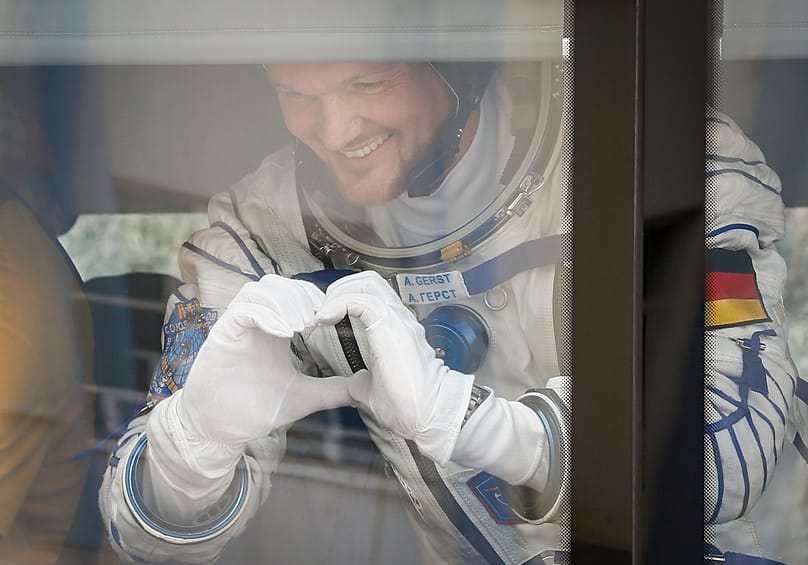
Alexander Gerst on his last space mission in 2018. AP

Gerst is already open to a mission to the moon. When asked whether he could imagine a flight to the moon, he replied, "Of course."

For him, these missions have numerous benefits. Those who play an active role in the lunar programme will also remain at the forefront of key future technologies in space travel—for example, in earth observation, climate research, and Europe's technological autonomy.

Whether a German astronaut will actually be among those who set foot on the Moon cannot be determined at this stage, Gerst said. In his view, this would in any case require a significantly stronger involvement of the European Space Agency in providing key components for the missions.
Europe's striving for independence

However, a European on the moon also has great symbolic significance for Europe. Despite its close co-operation with NASA, Europe remains dependent on the USA in many areas of space travel. At the same time, the European Union is pursuing the goal of becoming more technologically independent.

This strategy is receiving a boost from a record budget for the European Space Agency (ESA). The member states are providing almost 22.1 billion euros for the years 2026 to 2028. One focus is on Europe's independent access to space.

Germany wants to define its role within this framework—as Europe's strongest economic power, preferably at the forefront. Research Minister Dorothee Bär (CSU) speaks of space travel "Made in Germany."

It seems to be no coincidence that her department has officially included the term "space" in its name since the start of the new legislative period.

With 5.1 billion euros, Germany is the largest contributor to the ESA. According to Bär, investment in space travel is necessary despite tight budgets—not only as an investment in the future, but also as a contribution to European sovereignty and security.
Competition in space

Other major powers also have ambitions beyond Earth. In Russia, for example, the state space agency Roskosmos is planning to spend billions and wants to involve private investors to a much greater extent than before.

Among other things, it plans to set up its own satellite internet service modelled on Starlink, which, according to Roskosmos CEO Dmitry Bakanov, is due to launch in 2027.

However, Russia's prospects in the new race to the moon are currently considered limited. Experts are expecting delays due to logistical and financial problems. The Luna-26 moon mission has already been postponed to 2028.

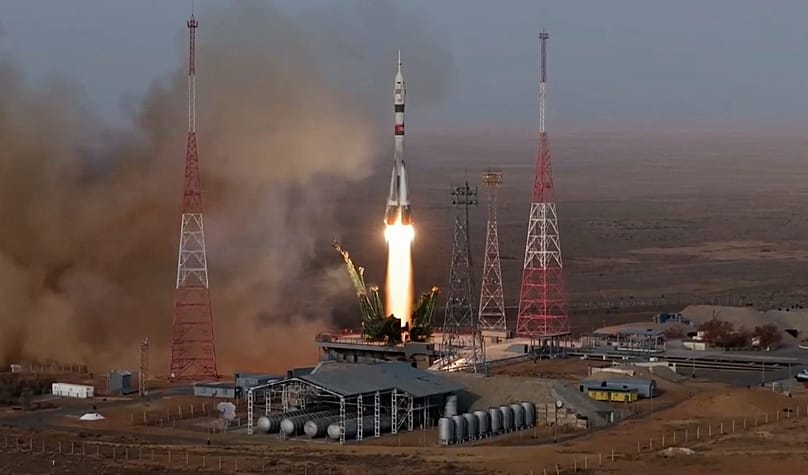
Launch of a Russian Soyuz rocket with a new ISS crew in Kazakhstan, November 2025. AP/Roscosmos space corporation

China, on the other hand, is much more dynamic. The People's Republic is pushing ahead with its space programme at a rapid pace and is increasingly positioning itself as a strategic competitor to the USA. The official goal is to launch a manned mission to the moon by 2030, even if Beijing has so far revealed little about specific timetables.
A symbolic first step towards the moon

As far as Germany is concerned, the journey to the moon could begin as early as 2026—but not directly with a German astronaut for the time being. The Italian designer Giulia Bona, who lives in Berlin, has created a mascot that could fly into space on NASA's Artemis 2 mission.


The design shows a small astronaut on the shoulder of a giant called Orion, named after the mission's space capsule and also an allusion to the mythology in which Orion is associated with the goddess Artemis. Such so-called zero-G indicators have a long tradition: Yuri Gagarin is said to have taken a small lucky charm with him into space in 1961.

Bona said she took part in the competition spontaneously. The fact that her design made it to the final round was an "unexpected joy" for her.

She now hopes to see her mascot floating between the astronauts in the live stream when Artemis 2 is launched, which would at least be a symbolic first step for Germany towards the moon.

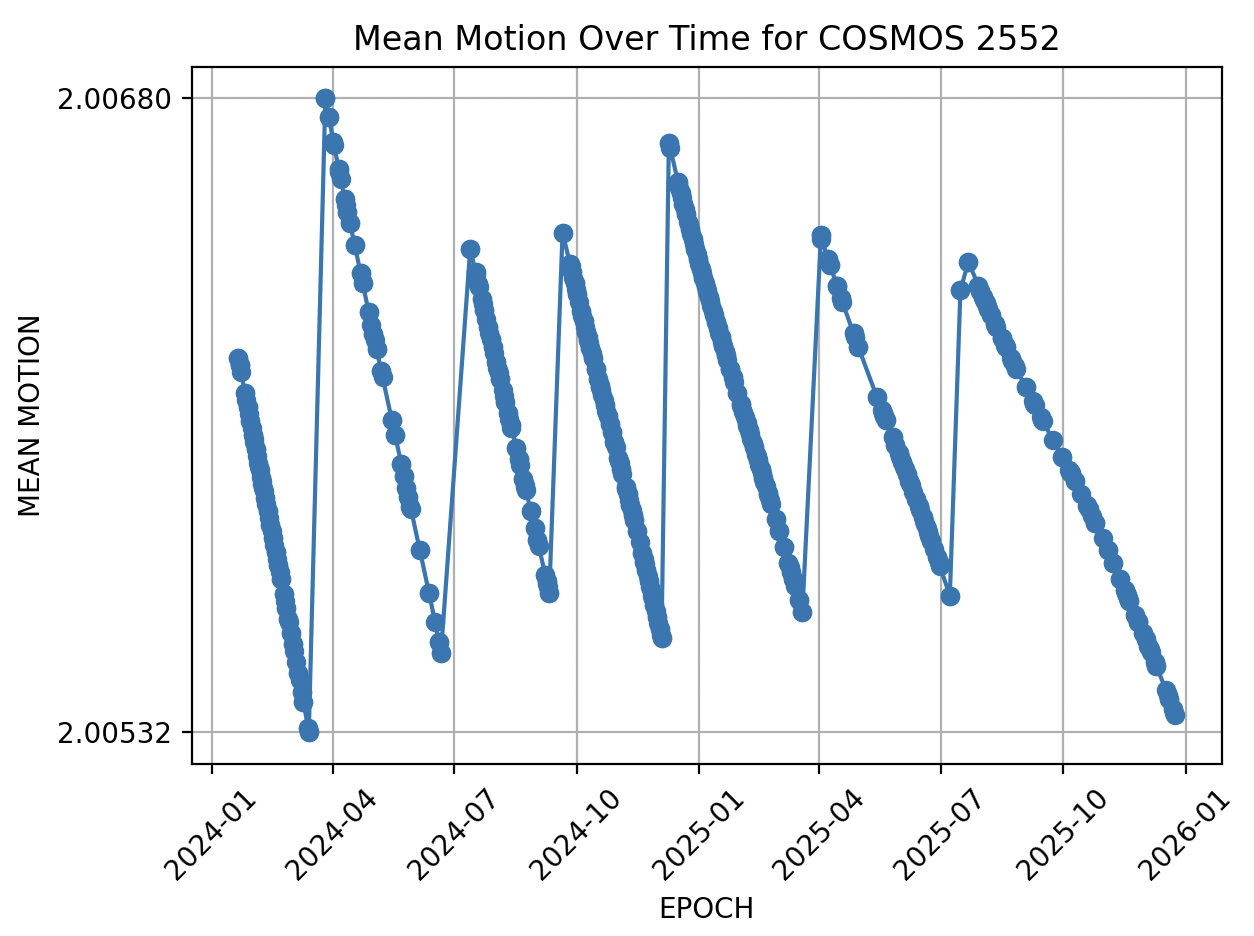
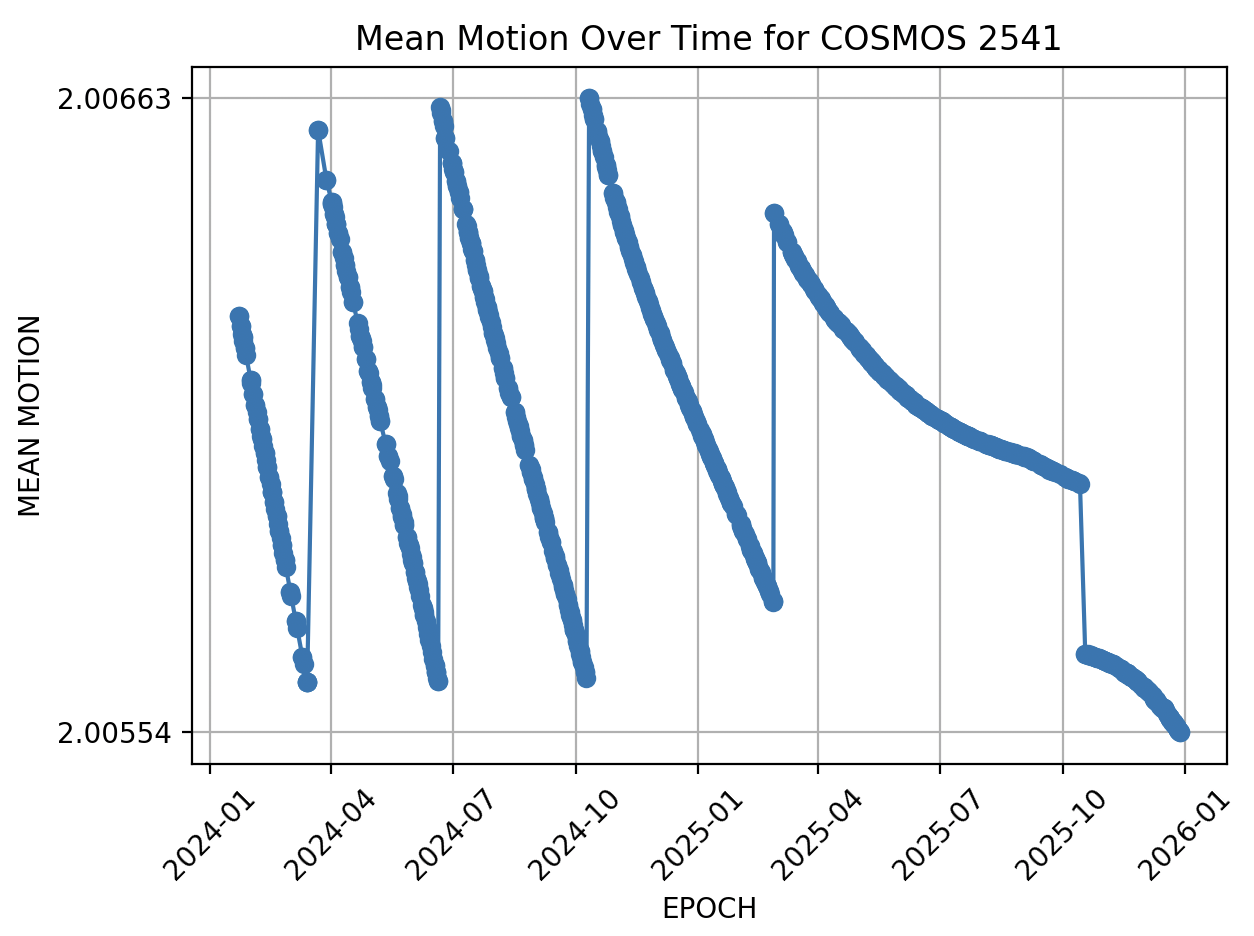
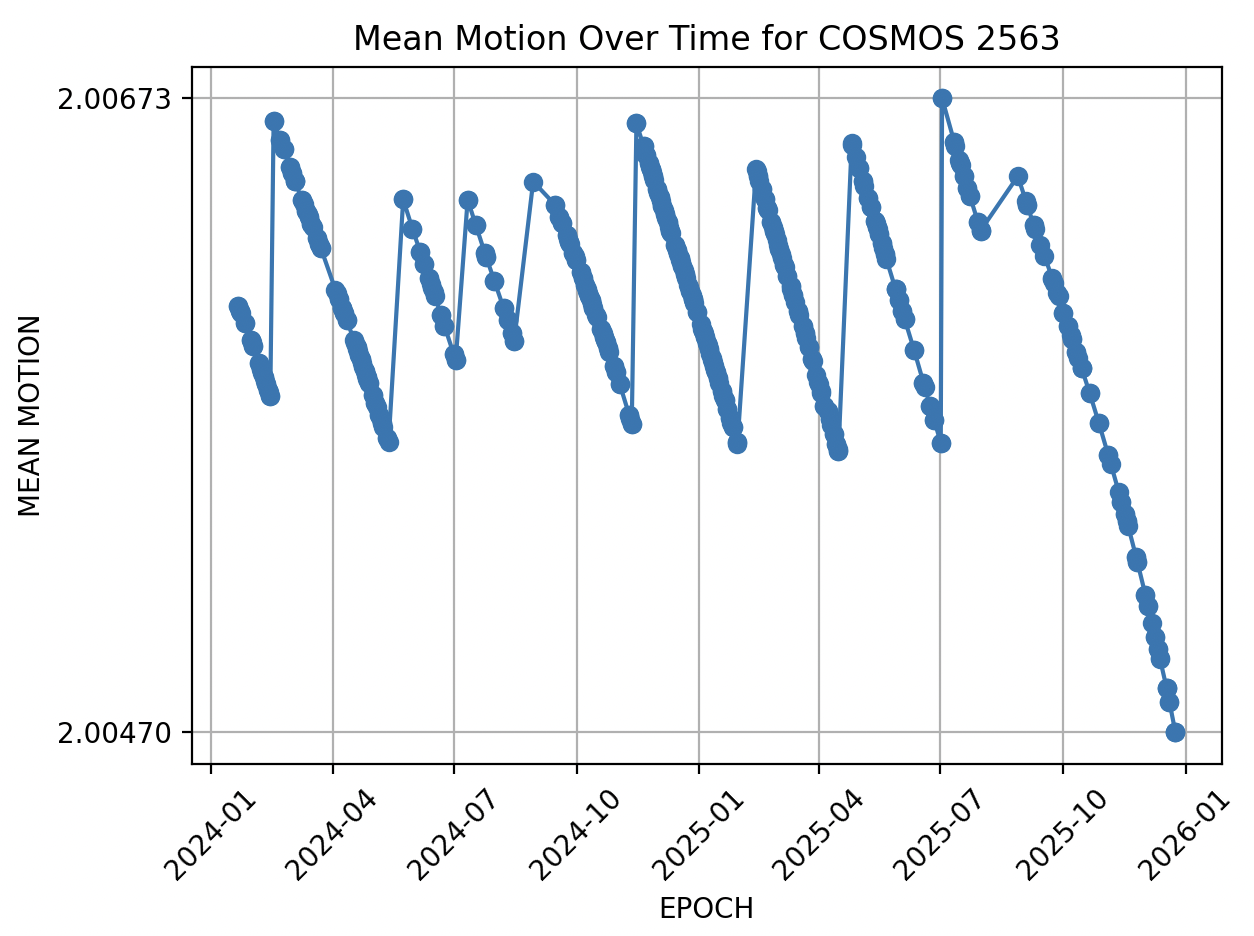
20251218-Cosmos-2552.pngOrbital data suggest that as of the end of 2025 Russia may have only one functioning early-warning satellite of the Tundra type. This is a significant decline from the situation in March 2025, when three satellites of the constellation - Cosmos-2541 (launched in September 2019), Cosmos-2552 (November 2021), and Cosmos-2563 (November 2022) - appeared to be operational.

Now it appears that for Cosmos-2541, the orbit correction maneuver successfully conducted in March 2025 was the last one. Another satellite of those three, Cosmos-2563, appears to have failed at some point after the last successful maneuver in July 2025. Images below show the changes in mean motion that testify to the failures.

20251218-Cosmos-2541.png20251218-Cosmos-2563.png

The only satellite that doesn't show clear signs of failure is Cosmos-2552, launched in November 2021. However, based on recent patterns, it should have performed an orbit correction sometime in November 2025 (see the main image in the post). But it is too early to say that Cosmos-2552 has ended its operations.

I should note again that the apparent loss of early-warning satellites is not necessarily a cause for alarm. Russia does not rely on the space-based segment of its early-warning system to the extent the United States does. For a discussion, see this 2015 post or my Science & Global Security article.

Green Hydrogen’s Uncertain Future

  • Green hydrogen expanded rapidly during the pandemic but has struggled to maintain momentum amid rising costs and limited renewable power availability.

  • Europe’s ambitious hydrogen targets have been undermined by regulatory uncertainty and slower-than-expected project development.

  • New EU funding mechanisms and cross-border infrastructure projects could revive the sector, though long-term success remains uncertain.

During the Covid-19 pandemic, when oil prices fell to a record low, governments and energy companies worldwide began to shift their focus to green alternatives. Many governments introduced ambitious climate pledges and introduced decarbonisation targets, encouraging industries to explore ways to cut carbon. One of the most promising energies for reducing emissions in hard-to-abate industries is green hydrogen, as it can be used for a variety of applications. However, the race to develop commercial green hydrogen seems to have lost momentum as the sector faces several challenges. 

Unlike grey and blue hydrogen, which are produced using natural gas, green hydrogen is made using renewable energy to power an electrolyser, which splits water into hydrogen and oxygen. The gas is then burned to produce power and emits only water vapour and warm air, making it carbon-free. Several energy companies announced plans to invest in green hydrogen production during the pandemic, as it aligned with plans to diversify their portfolios to support a gradual green transition. 

The green hydrogen industry rapidly expanded in several parts of the world, such as Europe and the Middle East, as governments and energy companies invested heavily in the sector. Europe and the Middle East were vying for the top spot as green hydrogen producers, as global demand increased in line with aims to decarbonise industry. In 2022, Spain announced a €50 million green hydrogen plant in Puertollano and the U.K. revealed a £150 million plant in Felixstowe.

However, as several energy companies, such as BP, have backtracked on their renewable energy pledges, the development of the green hydrogen industry is faltering. Several more challenges stand in the way of sectoral progress, such as the need to use renewable energy for power rather than for green hydrogen electrolysis, and the high cost of production. At present, Europe’s green hydrogen output is forecast at around 1.7 million tonnes by 2030, compared to the previous target of 10 million tonnes mentioned in the European Union’s REPowerEU. 

The growing need for renewable electricity to power data centres supporting advanced technologies is making it harder to justify the use of clean energy to power green hydrogen operations. In addition, the cost of producing green hydrogen remains extremely high as the industry has not scaled at the rate needed to drive down prices. The current cost of producing green hydrogen stands at between $5.78 and $23.27 a kilogram, compared to roughly $2 to $3.50 per kg of blue hydrogen

In April, the announcement of the signing of a joint development agreement on the “world’s first” liquid hydrogen corridor, connecting Oman, the Netherlands, and Germany, provided greater optimism around a major advancement in green hydrogen connectivity. The corridor is expected to connect Oman’s Port of Duqm with the Port of Amsterdam in the Netherlands and the Port of Duisburg in Germany. In total, 11 parties entered the deal, including Oman’s national green hydrogen orchestrator Hydrom and Dutch steel producer Tata Steel. 

However, in September, Oman called on the EU to halt ongoing changes to its renewable hydrogen definition, stating that the regulatory uncertainty was deterring final investment decisions in major export projects. Oman’s Energy and Minerals Minister, Salim bin Nasser Al Aufi, said, “Oman is ready to deliver clean hydrogen globally, forging partnerships that drive decarbonisation and sustainable economic prosperity… Do not change the EU's green hydrogen definition while projects are still under development.”

This is not the first time that the EU has been criticised for stalling progress because of its inability to define green hydrogen. In January, German Chancellor Olaf Scholz called for the EU to relax its stringent definitions of the fuel, suggesting that the existing standards were too strict and hindered the competitiveness of planned projects.

Nevertheless, recent developments offer hope for sectoral advancement. In December, the European Commission announced the approval of 100 cross-border hydrogen and electrolyser projects as part of a $1.75-trillion energy infrastructure investment pipeline between 2024 and 2040. The selected projects will be eligible for EU financing from the Connecting Europe Facility and will be provided with more streamlined approval and regulatory processes. “These cross-projects will strengthen energy connectivity across the continent, bringing nearer the completion of the Energy Union,” the Commission stated. 

Spain’s government also announced a $483.3 million contribution to the European Hydrogen Bank's community auction-as-a-service (AaaS) scheme to support the development of new domestic green hydrogen projects. The country’s Deputy Prime Minister, Sara Aagesen, said, “With this contribution, we have reached the figure of €3.155 billion to make hydrogen a reality.” 

Since the pandemic, the outlook for green hydrogen has yoyoed. Initially, several companies seemed highly optimistic about an accelerated rollout of green hydrogen projects, backed by major investments. However, ongoing challenges to the commercial deployment of the clean fuel and complex regulatory standards in the EU have stalled progress. Now, with a fresh promise of investment from the European Commission and several state governments, there is still potential for the green hydrogen industry to grow over the coming decades.

By Felicity Bradstock for Oilprice.com

'Sheer idiocy': Experts pounce on Stephen Miller's comments about history's 'brown people'


David McAfee
December 28, 2025 
RAW STORY

White House deputy chief of staff for policy Stephen Miller came under fire over the weekend for purported racism hidden in comments he made about inventions in history.

Stephen Miller said, "Someone should write an alternate historical novel where Americans are the first to master the automobile, the first in flight, the first to harness the atom, the first to land on the moon — but just keep going and never open our borders to the entire third world for sixty years."

Miller added, "For those who don’t know, the US had negative migration for the half century between the first nonstop transatlantic flight and the moon landing.

That caused an eruption of comments from critics and experts alike.

Geopolitics blogger Anatoly Karlin said, "The first automobile was German, the Manhattan Project was primarily the work of immigrant Budapest Jews (the Martians), and German immigrants of dubious political provenance likewise played an important role in getting the US to the Moon."

Political scientist and right-wing personality Richard Hanania said, "America kept inventing stuff! It’s the center of global innovation, disproportionately due to immigration!"

"What planet are you living on?" he asked.

Hanania added, "Stephen Miller reveals how stupid nativism is as an ideology. Let him keep posting and showing how intellectually empty it all is."

Attorney Danny Miller also chimed in on Sunday, "I keep writing different responses to this and I just can’t wrap my head around its sheer idiocy. Is he not aware that we got the atom bomb first because of a bunch of Jewish scientists fleeing Nazi persecution?"


Dem candidate Fred Wellman said, "Lots of people are pointing out this little racist Nosferatu looking troll doesn’t know an overwhelming majority of our achievements came because of immigrants including our nuclear and space programs."

"He means white immigrants folks. He knows exactly what he’s saying," he wrote on X. "His people were the ‘good immigrants.’ He’s against brown people."


'It is quite concerning': Greenlanders react to appointment of US special envoy to Greenland


Issued on: 28/12/2025 - FRANCE24


Greenlanders react to US President Donald Trump's announcement of the appointment of Louisiana Governor Jeff Landry, a Republican, as US special envoy to Greenland.

Video by: Florent MARCHAIS

Iraqis cover soil with clay to curb sandstorms

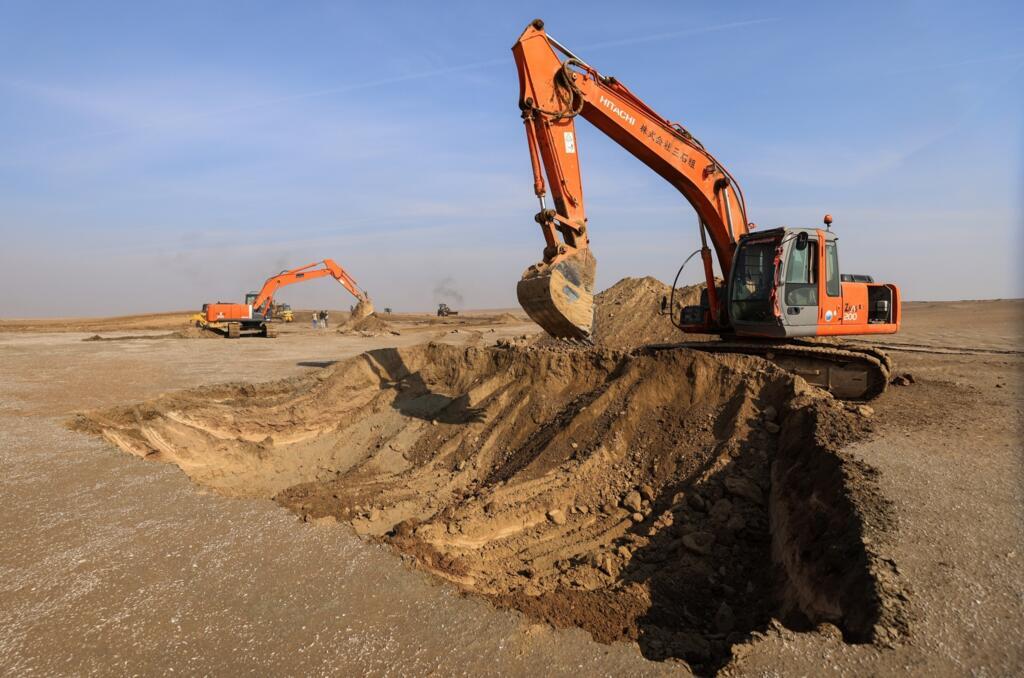
Samawah (Iraq) (AFP) – Deep in Iraq's southern desert, bulldozers and earthmovers spread layers of moist clay over sand dunes as part of a broader effort to fight increasingly frequent sandstorms.


Issued on: 28/12/2025 - RFI

Iraq has long suffered from sand and dust storms, but in recent years they have become more frequent and intense as the country falls prey to the effects of climate change © AHMAD AL-RUBAYE / AFP


Iraq has long suffered from sand and dust storms, but in recent years they have become more frequent and intense as the country falls prey to the effects of climate change.

Sand and dust storms -- driven by severe drought, rising temperatures and deforestation -- have cloaked cities and villages in an endless ochre haze, grounded flights and filled hospitals with patients suffering from breathing difficulties.

Iraqi authorities have warned that these suffocating storms will intensify further, adding urgency to address the root of the problem.

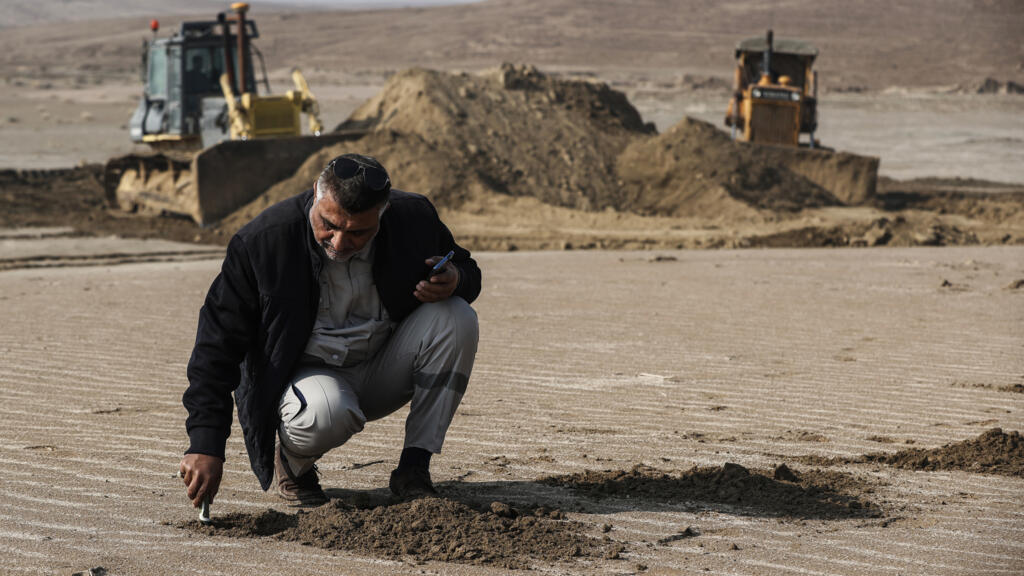
In a relatively small area between the cities of Nasiriyah and Samawah, not far from ancient Sumerian ruins, labourers are working hard to stabilise the soil by applying a layer of moist clay 20–25 centimetres thick.

The project also includes planting heat-tolerant seedlings like Prosopis and Conocarpus to further stabilise the soil.


A short-term objective is to shield a southern highway where many traffic accidents have occurred due to poor visibility during dust storms © AHMAD AL-RUBAYE / AFP


"The main goal is to reduce the impact of transboundary dust storms, which may reach Kuwait, Saudi Arabia and Qatar," said Udai Taha Lafta from UN-Habitat, which is leading the project to combat sandstorms with Iraqi expertise.

"It is a vital area despite its small size, and will hopefully help reduce dust storms next summer," Lafta said.

A short-term objective is to shield a southern highway where many traffic accidents have occurred due to poor visibility during dust storms.
'Slow but steady'

The Ministry of Environment estimates that Iraq now faces about 243 storms per year, and the frequency is expected to increase to 300 "dust days" by 2050 unless drastic mitigation measures are adopted.

In 2023, Iraqi authorities teamed up with the UN-Habitat and the Kuwait Fund for Arab Economic Development in areas that have been identified as major sources of sandstorms.

The project has been implementing several methods in three southern areas, including digging water canals and supplying electricity to pump water from the Euphrates river, preparing barren lands for vegetation.

Between the cities of Nasiriyah and Samawah, not far from ancient Sumerian ruins, labourers are working hard to stabilise the soil by applying a layer of moist clay
 © AHMAD AL-RUBAYE / AFP


One of the project's ultimate goals is to increase green spaces and for farmers to eventually sustain the lands after droughts and chronic water shortages have drastically reduced agricultural areas.

Qahtan al-Mhana, from the agriculture ministry, said that stabilising the soil gives agricultural efforts in sandy areas a chance to endure.

He added that Iraq has extensive "successful" experience in combating desertification and dust storms by stabilising sand dunes.

Since the 1970s, the country has implemented such projects, but after decades of turmoil, environmental challenges have largely fallen by the wayside.

With the severe recent impact of climate change, "work has resumed," said Najm Abed Taresh from Dhi Qar University.

"We are making slow but steady progress," Taresh said.

© 2025 AFP
Stigma and sisterhood: how one Kenyan woman knitted a healthcare revolution

Mary Mwangi turned to her knitting needles for solace during her cancer treatment – and then used them to help other women survivors reclaim their dignity.


Mary Mwangi at her small shop, where she knits prostheses and teaches other women how to do the same. © Mary Mwangi

By: Anne Macharia in Nairobi
Issued on: 27/12/2025 - RFI

The first thing you notice about Mary is her laughter – warm, loud, and quite unexpected from one who has faced death twice.

Inside a tiny tailoring shop in the town of Thika, near the Kenyan capital Nairobi, rolls of fabric spill off the shelves and sewing machines hum. Mary sits in one corner, yarn in hand, looping stitch after stitch with meditative focus.

Knitting was not always her livelihood, it was once just a childhood hobby, forgotten somewhere between raising three children and building a business. It only resurfaced in 2017, when her body forced her to slow down.

'I felt like the world had slapped me'

That year, Mary was diagnosed with spinal cancer and was bedridden for 11 months. She remembers the silence in her house, the long days and the longer nights, and a mind restless with fear. In an attempt to escape it all, she reached for her knitting needles.

“I just needed something to keep my mind from sinking,” she says, her fingers absently tracing the rim of a basket full of yarn.

She began knitting hats and donating them to cancer patients at Kenyatta National Hospital.

A year later, her cancer was back – this time, stage three breast cancer. Mary remembers the doctor's voice fading into a blur as she was told the news.

"I felt like the world had slapped me," she says. She turned off her phone and withdrew from her friends, telling her husband she didn't want to speak to anyone. "Everything felt violent. Even the air."

Her treatment was gruelling – a mastectomy, 33 rounds of radiotherapy, endless visits to the hospital. Her hair disappeared. Her savings vanished. The loan of $10,000 she had taken out to expand her small tailoring shop was swallowed up by medical bills.
'A common wound'

But what cut deepest for Mary was the stigma around losing her breasts.

“People whispered. They called me ‘the woman whose breasts were cut'. Losing them, and your sense of dignity and womanhood... it's not something you can prepare for,” she says.

When Mary was well enough to walk around the cancer ward, she saw other women draped in scarves and oversized jumpers, disguising the area where a breast used to be.

"The conversations revealed a common wound: stigma and silence," she says.

Silicone prosthetic breasts cost far more than most of these women can afford. So Mary turned again to the thing that had got her through her illness – her knitting, But this time she had a different purpose in mind.

She learned how to make soft yarn breast prostheses, mastered the technique with YouTube videos and long nights of trial and error.

"Knitting saved me mentally," she says. "It pulled me from fear into purpose."

Small shop, big dreams

Today, Mary's tailoring shop is more than a business, it's a sanctuary.

As the staff work the machines, Mary sits by the window knitting prosthesis after prosthesis – round, soft and colourful. She sells them for 1,500 shillings each, and organisations buy them in bulk to donate to cancer survivors.

She has now made more than 600 prostheses and more than 450 hats, and the orders just keep coming.

Every week, Mary also holds classes teaching women – many of whom are fellow survivors – how to knit the prostheses, in order to earn an income.

Hannah Nungari Mugo is a former vegetable seller, who says she felt her identity fade away after her 2019 mastectomy.

"People treated me like a broken thing," she says. Knitting gave her something to hold on to, and she now makes around even prostheses a week.

Mary Patricia Karobia, who had a liver transplant, says she too knows what that stigma feels like. “I heard people whisper about my liver being removed." For her, knitting is about healing, and showing others her strength.

Mary hopes one day to be able to train women throughout Kenya, but space and finances are standing in her way for now.

"Cancer took a lot from me," she says, looking down at the colourful prostheses on her table. "But it also gave me purpose. And I want to pass that purpose on."
Dragon-Slaying Saints Performed Green-Fingered Medieval Miracles


A Holy hermit, possibly Guglielmo of Malavalle (wall painting, 1330–1337), Sant’ Agostino chapter house, Siena, Italy. 

CREDIT: Krisztina Ilko

December 28, 2025
By Eurasia Review

The Vatican’s eco-friendly farm, recently inaugurated by the first ever Augustinian pope, echoes his order’s forgotten early history, new research argues. Dr Krisztina Ilko challenges major assumptions about the medieval Catholic Church and early Renaissance.

A scorched cherry twig miraculously sprouting; a diseased swamp restored to ‘peak fertility’; healing the broken leg of an ox; and multiplying cabbages. These are just some of the forgotten medieval miracles brought to light by Cambridge University historian Dr Krisztina Ilko.

“Bleeding hosts and stigmatisations are the best-known medieval miracles,” says Dr Ilko, author of The Sons of St Augustine, a major new study published by OUP.

“The Augustinians get very little credit for miraculously making land fertile, healing livestock and bringing fruit trees back to life,” says Ilko, a medieval historian from Queens’ College, Cambridge.

“With Leo XIV becoming the first Augustinian Pope, it’s the perfect time to make the order’s astonishing history better known. There has been so much focus on Italian cities, we’ve lost sight of how important the countryside was to the Church and to the Renaissance.”


Dragons and fertility miracles

Saint George, the most famous Christian dragon slayer, appears in countless paintings as a lance-wielding military saint. Far less famous is the twelfth-century hermit Guglielmo of Malavalle who was venerated by the Augustinians for killing a dragon with a humble wooden staff shaped like a pitchfork.

In medieval Europe, disease suffered by livestock, crops and people was often blamed on dragons, and more specifically on their toxic breath which, it was thought, suffocated the countryside and those who lived there. Dragons were particularly associated with swampy areas.

After hearing a voice from the sky, Guglielmo settled in Malavalle, ‘the bad valley’, in Tuscany’s swampy Maremma region. Toxic air and terrible storms were thought to have left the valley barren, so ‘dark, and terrible’ that not even hunters dared to enter.

Dr Ilko argues that Guglielmo was venerated for ‘defeating the dragon’ because he purified the putrid air and restored the valley to ‘peak fertility’.

“These achievements weren’t symbolic, Guglielmo provided a crucial public service, he helped country people survive in a really harsh natural environment,” Dr Ilko says.

“Guglielmo was a pitchfork-wielding dragon slayer and divine gardener all at once. Commanding the weather, securing a good harvest, and restoring the health of livestock must have seemed the most desirable divine interventions in the late medieval countryside. They were matters of life and death.”
Miraculous discoveries

A decade of research took Dr Ilko to two dozen archives and she trekked to more than sixty Augustinian sites, including some of the most inaccessible ruins. She made discoveries in frescoes, illuminated manuscripts, hagiographies and letters. Some of the ancient documents she studied had been misdated and wrongly attributed, further denying the Augustinians of miraculous limelight.

The earliest collection of Augustinian life stories Dr Ilko studied was written by a Florentine friar in the 1320s and has been largely overlooked until now because, she believes, scholars deemed its miracles too rural. Housed in Florence’s Biblioteca Medicea Laurenziana, the manuscript opens with the life of Giovanni of Florence who built the Augustinian hermitage of Santa Lucia in Larniano with the help of local farmers. One of his greatest miracles was healing the broken leg of an ox. Another life story describes Jacopo of Rosia commanding an unreliable apple tree to produce fruit every year, as well as him multiplying cabbages.

“When people think about religious orders and their massive role in the Renaissance, they usually turn their attention to cities like Rome, Florence and Siena,” Dr Ilko says.

“The Franciscans and Dominicans, in particular, are credited for Italy’s rapid urban renewal from the 1200s onwards. Not many people realise that the Augustinians drew most of their power from the countryside. Their miracles were very green-fingered, agricultural.”

“St Francis of Assisi remains the most famous ‘nature saint’, best known for preaching to birds. In a more eco-conscious world, the Augustinians deserve much more attention.”
Augustinian survival strategy

Dr Ilko argues that positioning themselves in forests or by the sea was crucial to the survival of the Augustinians as a religious group.

The Order of the Hermits of St Augustine was founded by the papacy as a mendicant order through the amalgamation of various central Italian hermit groups in 1256. Then, in 1274, the Roman Catholic Church put the Augustinians on notice because they were founded after 1215 and lacked continuous existence since late antiquity. The papacy only re-confirmed their order’s existence in 1298. During this 25-year period of uncertainty, the Augustinian friars worked hard to prove their legitimacy.

Lacking a single, charismatic founding father, the friars developed a compelling origin story in which they claimed to have been founded directly by St Augustine. But, Dr Ilko argues, the Augustinians also drew heavily on their wild power-bases – forests, mountains and the sea – to prove their antiquity and authority. “Direct contact with nature gave the friars legitimacy, special spiritual powers and access to valuable natural resources including timber, crops and wild animals,” Dr Ilko says.

The Augustinians went on to found urban convents but carefully selected locations that bordered the countryside. In Rome, they founded the convent of Santa Maria del Popolo at one of the major entrances to the city, framed by trees and gardens on one side. The Franciscans had earlier rejected the spot because it was too remote and difficult ‘to sustain the body’ there. The site had been a sinister place: an ancient walnut tree plagued with demons towered over the supposed burial site of the Emperor Nero until Pope Paschall II had them removed in 1099.

In addition to raising public awareness about the Augustinians, Dr Ilko argues that the ruins of Augustinian hermitages should be better cared for and access improved so that that more people can visit them.
Researchers Revive Old Pea Varieties In Huge Seed Collection: ‘An Untapped Gold Mine For The Future’


Peas from Nordgen.

 CREDIT: Nordgen / University of Copenhagen

December 28, 2025 
By Eurasia Review


The demand for plant-based foods is increasing worldwide. Peas in particular are a burgeoning source of high protein content as a substitute for meat. With their small climate footprint, peas are sustainable to grow and provide a high yield. However, the pea varieties we grow today require intensive industrial processing.

“Today, we use very few pea varieties in agriculture, which are primarily produced for their properties as pig feed, but are not intended as protein in a plant-based burger. Just as an apple is not just an apple, a pea is not just a pea, even though it may seem that way in the supermarket,” says Associate Professor René Lametsch from the Department of Food Science.

In the quest to find suitable pea varieties, researchers from the Department of Food Science at the University of Copenhagen have developed a new AI method. They have unleashed it on the Nordic gene bank NordGen, which contains almost 2,000 different types of peas, in order to identify old pea varieties that are well suited as plant protein for humans.

“The gene banks contain an enormous variety that is largely untapped today. Our method makes it possible to utilise the plant resources in the gene bank and quickly find the most interesting types,” says René Lametsch.
Smooth or wrinkled? 51 promising pea varieties found

Using the new AI method, the researchers have found 51 old pea varieties that are no longer used in agriculture but appear to have promising properties as plant food, including high starch and protein content.

The method can automatically measure the shape, colour, size and surface of the seeds from ordinary photographs. The combination of image data and information about protein content makes it possible for the AI to select a small but
About NordGen

NordGen serves as the Nordic countries’ joint gene bank for plants and as a knowledge centre for genetic resources. The gene bank contains over 33,000 seed samples from approximately 450 plant species and 95 potato varieties, which are preserved as living cuttings. NordGen’s primary task is to ensure the conservation and promotion of the sustainable use of genetic resources in plants, livestock and forestry throughout the Nordic region representative sample of peas, which can then be analysed in depth.

“There are widely varying characteristics from variety to variety, especially in terms of starch and protein content, so it can make a lot of sense to revive some of the old varieties in our search for good ingredients for new types of plant-based foods,” says René Lametsch.

The study shows that the appearance of the seeds is closely related to their chemical composition. One feature in particular – how smooth or wrinkled the seed is – is closely linked to the type of starch the pea contains. This means that, for the first time, researchers can partially predict chemical properties based on images alone.

“We see a surprisingly large variation in the balance between the two key proteins in peas, legumin and vicilin – far greater than in today’s commercial varieties. This makes the gene bank’s old peas an untapped gold mine for the development of future plant-based foods,” concludes René Lametsch.

Ubiquitin Switch Reveals How Grapevines Survive The Cold


December 28, 2025 
By Eurasia Review


Cold temperatures can severely damage perennial crops such as grapevine, limiting growth, fruit quality, and regional distribution. Plants respond to cold through complex signaling networks that coordinate transcriptional activation, protein turnover, and oxidative stress detoxification. Central among these systems is the ubiquitin–proteasome pathway, which selectively removes regulatory proteins to fine-tune stress responses. Transcription factors like MYB proteins and CBF regulators are essential for activating COR genes, but their stability is tightly controlled by E3 ubiquitin ligases. Yet, in grapevine, the mechanisms linking ubiquitination to cold-response transcriptional programs and ROS homeostasis remain unclear. Due to these challenges, deeper investigation into grapevine cold-tolerance mechanisms is urgently needed.

A research team from Ningxia University reported a new regulatory mechanism underlying grapevine cold tolerance in a study published in Horticulture Research. The researchers identified VaMIEL1, a RING-type E3 ubiquitin ligase, as a key negative regulator that promotes degradation of the transcription factor VaMYB4a under normal temperatures. Cold stress suppresses VaMIEL1 expression, allowing VaMYB4a to activate the CBF–COR pathway and antioxidant defenses. The study combines biochemical analysis, Arabidopsis genetics, and grapevine callus experiments to map this cold-response module.

The researchers first demonstrated that VaMIEL1 physically interacts with VaMYB4a through yeast two-hybrid, BiFC, and co-immunoprecipitation assays, with the C-terminal regulatory domain of VaMYB4a responsible for binding. Promoter analysis revealed a low-temperature-responsive element, and reporter assays confirmed that VaMIEL1 expression decreases dynamically during cold exposure. In Arabidopsis, overexpression of VaMIEL1 increased cold sensitivity, leading to elevated ROS accumulation, reduced proline levels, impaired antioxidant enzyme activity, and strong suppression of CBF and COR gene expression. Conversely, the AtMIEL1 loss-of-function mutant showed improved cold tolerance and enhanced redox balance.

In grapevine calli, VaMIEL1 overexpression caused browning, reduced biomass, high ROS buildup, and lower SOD/POD activity under cold conditions. RNAi silencing of VaMIEL1 produced the opposite effects, elevating antioxidant capacity and restoring expression of VaCBF1 and VaCBF3. In vitro and in vivo ubiquitination assays confirmed that VaMIEL1 directly ubiquitinates VaMYB4a, accelerating its proteasomal degradation. Co-expression experiments further demonstrated that VaMIEL1 partially suppresses VaMYB4a-mediated cold tolerance, highlighting their opposing roles in modulating the CBF–COR pathway. Together, these results reveal an integrated mechanism linking ubiquitination, transcriptional activation, and oxidative stress mitigation during cold adaptation.

“Our findings demonstrate that cold tolerance in grapevine is not governed by a single pathway but instead by a coordinated system integrating transcriptional control and redox balance,” said the study’s corresponding author. “By identifying VaMIEL1 as a key regulator that destabilizes VaMYB4a, we show how the plant fine-tunes CBF–COR signaling and antioxidant activity in response to cold. This dual regulatory role expands our understanding of how perennial species survive harsh environments and provides a promising molecular handle for future crop improvement.”

The newly uncovered VaMIEL1–VaMYB4a module provides a valuable framework for breeding and engineering cold-resistant grapevine cultivars. Targeted suppression of VaMIEL1 or enhancement of VaMYB4a stability could improve CBF–COR activation and ROS detoxification, supporting plant survival during early-season frosts or extreme climate events. Because many crops rely on similar MYB- and ubiquitination-based regulatory networks, the findings may extend beyond grapevine, offering potential applications in apples, pears, and other temperate fruit species. This work opens new avenues for developing climate-adaptive crops that can sustain yield and quality under increasing environmental variability.