Sunday, December 28, 2025

Denmark's postal service company to end letter-carrying service after 400 years due to digitization

Physical letters have declined dramatically in volume over the last twenty five years, the company said, from almost 1.5 billion in the year 2000 to only 110 million in 2024, over a 90% decrease.

AN UNDATED era street collection mail box from Denmark is seen in a display at the US National Postal Museum  in Washington, DC.
(photo credit: PAUL J. RICHARDS/AFP via Getty Images)ByTZVI JASPERDECEMBER 28, 2025 05:33

Denmark's primary postal service company, PostNord, will cease carrying letters on December 30, after 400 years of operation, citing the country's increased steps towards digitization.

"Although this is a difficult decision, it is an important step towards a strong PostNord for the future," the company announced on its website.

Physical letters have declined dramatically in volume over the last twenty five years, the company said, from almost 1.5 billion in the year 2000 to only 110 million in 2024, over a 90% decrease.

The decline was caused in part by the ubiquity of digital means of receiving information from the government. Since 2014, all public sector communiques, including those from banks, insurance companies, and pension companies, must by law be sent digitally.

Leading up to the company's final letter, PostNord donated 1,200 of its iconic red mailboxes to be sold by Danmarks Indsamling, a charity organization.

DELIVERY CARS of Danish postal service PostNord at the company's distribution center in Broendby, Denmark, December 14, 2020. (credit: MADS CLAUS RASMUSSEN/Ritzau Scanpix/AFP via Getty Images)

One thousand of the mailboxes were made available on December 15, and, according to The Copenhagen Post, sold out almost immediately.

Another 200 will be made available in January 2026, coming from selected locations in Denmark or decorated by Danish artists.
PostNord's final letter to the publicAs a symbolic final letter, PostNord prepared a video in which a letter from them to the Danish public was read out by Danish actress and narrator Ellen Hillingsø.

The letter will be put on display at ENIGMA, the Museum of Communication in Copenhagen.

PostNord has been run jointly by the Danish and Swedish governments since a merger took place in 2009, combining the separate Swedish and Danish postal service providers.

The company plans to continue providing parcel delivery service, as well as maintaining its letter delivery service in Sweden.
16-hour wait for bed in emergency: Why Canada's healthcare system is in ICU

An Indian-origin father of three young kids died at an Edmonton hospital despite crying for a bed for eight hours. Canada-based Indians say it could take up to 16 hours to get medical treatment in emergency rooms and months for doctor appointments. What is ailing the healthcare system of Canada, considered a developed country?


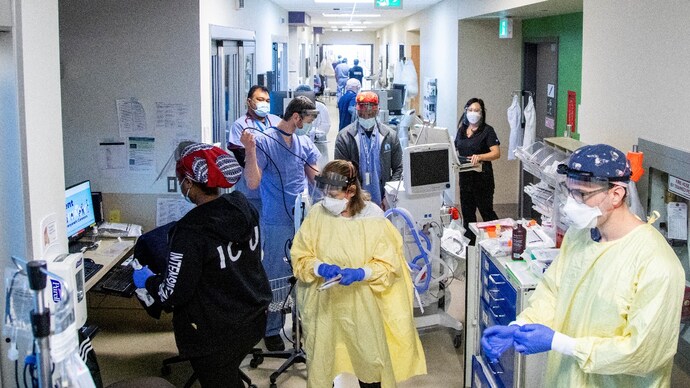
An image of Toronto's Humber River Hospital during the Omicron wave in 2022. The share of older Canadians with an attached family physician fell from 87% in 2019 to 79% after the Covid. (Reuters image for representation.)


India Today World Desk
New Delhi
Dec 28, 2025 
Written By: Shounak Sanyal


On December 22, Prashant Sreekumar, a 44-year-old man of Indian origin, reported to the emergency room(ER) of the Grey Nuns Hospital in Edmonton, complaining of severe chest pain. Despite repeated pleas from Prashant and his family members, he was reportedly made to wait for nearly eight hours. During this period, he remained in intense pain as his blood pressure continued to shoot up, reaching levels as high as 210. The only medical assistance provided to him during this entire time was doses of Tylenol to manage the pain.

After eight hours, when Prashant was finally taken in for emergency treatment, he collapsed and died within seconds. Standing beside Prashant's body, his wife was seen in a video saying that "the hospital killed him". "Basically, the hospital administration and the employees of Grey Nuns Community Hospital have killed my husband, by not providing him with timely medical help," she is heard saying in a video that has gone viral.

Prashant's death points to a broader crisis affecting Canada’s healthcare system. For years, Canadian patients and media reports have raised concerns about steadily increasing wait times in hospital emergency rooms across the country. Similar experiences have been shared by Indian students in Canada, some of whom have reported waiting as long as 16 hours for medical attention.

Emergency medicine operates on the principle of the Golden Hour, which holds that patients facing severe illness or traumatic injury have the highest chance of survival if they receive medical care within the first hour. Measured against this standard, Prashant’s eight-hour wait indicates a serious failure in emergency care delivery and points to deeper systemic shortcomings within Canada’s healthcare system.


HOW DOES CANADA'S HEALTHCARE SYSTEM OPERATE?

Healthcare in Canada is guided by the principles of the Canada Health Act of 1984, which established a system known as Medicare.

Medicare is a publicly funded government-run organisation which provides all citizens and permanent citizens of the country with universal healthcare free of charge. Medicare provides 70% of all healthcare needs for Canadians, with the remaining 30% provided by private operators and includes procedures not covered by Medicare, including dentistry, eye care, psychotherapy, gender therapy etc. Private medical care is usually paid through public insurance, with a report by The Washington Post saying that at least 70% of Canadians have either public or private health insurance.

Delivery of healthcare, however, is left to the various provinces and territories of the country. The federal government is responsible for setting national healthcare principles, transferring money to the various provinces, regulating drugs and medical procedures, and covering specific groups like Indigenous peoples on reserves, members of the military and federal inmates. Local governments, meanwhile, are responsible for funding hospitals, deciding their staffing requirements, deciding which medical procedures will be covered by Medicare and funding public insurance systems like OHIP in Ontario.

According to the Canadian Institute for Health Information, the country spent close to $308 billion in 2021, or 12.7% of Canada's GDP for that year. The Organisation for Economic Co-Operation and Development, in its 2025 Health At a Glance report, noted the country performed well across a variety of metrics, including life expectancy, preventable mortality rate, access to healthcare, public healthcare spending, etc. Across the board, most Canadians reported being more or less satisfied with the country's healthcare system with a survey by Ipsos finding out about 56% of respondents satisfied with the level of public healthcare they received.

Nevertheless, there do exist some glaring gaps within Canada's healthcare system, with one of its most persistent challenges being the rising strain on emergency care, driven by staff shortages, an ageing population and rising patient volumes.

WHAT ARE THE PROBLEMS WITH CANADA'S HEALTHCARE SYSTEM?

One of the most salient problems within Canada's healthcare system is the lack of primary care doctors within the country. According to a study conducted by the CMA in 2025, an estimated 5.9 million Canadians, or about 1 in 5 individuals lack access to primary care providers like clinics, family physicians and nurse practitioners. The same study also revealed that although 81% of the population had access to primary care providers, only about 37.5% of individuals were able to get an urgent appointment within 24 hours.
advertisement

Primary care providers like clinics and family physicians form the front line of any country's healthcare system, helping to care for minor ailments and injuries. Improper access to these systems forces patients to turn to hospitals for even the most minor causes, leading to another one of Canadian healthcare's most pressing problem, overcrowded emergency rooms (ERs).

According to a study by the Canadian Institute for Health Information, up to 20% of emergency visits are for conditions easily treatable within primary care systems, with the study noting approximately 16 million visits. This increased load on ERs can lead to several detrimental effects.

According to INFOnews, Canadian ERs are now operating beyond capacity as a norm, with ERs in Quebec province operating at 120% capacity, with some sites operating at 200% capacity. Overstretched ERs leads to patients having to wait longer thah medically advised for admittance and care.

OVER 8-HOUR WAIT TIME AT CANADA HOSPITALS FOR URGENT ADMISSION

According to the Canadian Medical Association, wait times for non-urgent patients to get admitted have increased to over 22 hours, while those for urgent patients have increased to anywhere between 6.5 to 8.5 hours. Overstretched emergency rooms (ERs) also resulted in patients having to stay longer, with the Canadian Institute for Health Information noting that patients admitted to a hospital from an ER are staying much longer, with 9 in 10 completed visits exceeding 48.5 hours.

And it's not just hospital admittance times that are suffering.

According to a study conducted by the Frazer Institute, it revealed that Canadians have to wait longer for medical procedures after being referred by a General Physician. According to the study, the average waiting time for patients between being referred and the procedure increased to 30 weeks in 2024, compared to the 9.3 weeks patients could expect in 1995. Essential procedures like Orthopaedic Surgery (57.5 weeks) and Neurosurgery (46.2 weeks) are the most affected.

Compounding these problems is the fact that Canada suffers from a shortage of trained doctors and nursing staff.

According to The Organisation for Economic Co-Operation and Development's 2025 Health At a Glance report, the country has 2.8 practising physicians per 1,000 population, which is lower than the OECD average of 3.8 of 1000. And a report by the Government of Canada titled, The State of the Health Workforce in Canada published in 2022 projected a shortage of 78,000 doctors by 2031 and 117,600 nurses by 2030.
advertisement

HOW CANADIAN CITIZENS ARE SUFFERING FROM THE SHORTCOMINGS OF CANADA'S HEALTHCARE SYSTEM?

Following the death of Prasanth, Canadian journalist Rajinder Saini, speaking to India Today TV, noted that the average waiting time in Canadian ERs was now up to 8 to even 16 hours, with many patients having to return from hospitals after failing to get admitted, with many instances of people passing away without getting to see a doctor. He noted that despite Canada's population having rapidly increased due to immigration, hospitals had failed to add enough beds to deal with the surge, leading to crowded ERs.

Another India Today Digital Report noted that lack of primary healthcare and long hospital wait times were one of the major problems facing international students in Canada, who do not have coverage from the country's universal healthcare coverage system. According to the Canada Medical Association, those who are not covered by Medicare, including foreign students, might have to pay as much as $260 CAD for a clinical appointment and $1000 CAD for a hospital ER visit.

Similar sentiments have been reflected across the country. According to the Canadian newspaper Capital Daily, the number of people having to leave emergency rooms without getting admitted has jumped to 86% in the last 7 years, with up to 141,961 patients having to leave without proper care between 2024 and 2025 in British Colombia alone.

A CBC report noted a figure of 500,000 across the country, with around 5% to 15% of patients having to leave ERs without proper care. Speaking to the CBC, Fraser MacKay, an emergency physician in New Brunswick and a board director of the Canadian Association of Emergency Physicians (CAEP), noted this is a side effect of long wait times in ERs.

In one unfortunate incident reported by the CBC, with many parallels to Prashant Sreekumar's case, in 2024, 16-year-old Finlay van der Werken was taken to Oakville Trafalgar Memorial Hospital with severe abdominal pain. He was triaged as "emergent", requiring a doctor within 15 minutes. Instead, he waited over eight hours as his condition worsened. By the time he was seen, Finlay had developed sepsis and went into cardiac arrest, later dying of organ failure. And just like Prasanth's wife and father who accused the Grey Nuns hospital of negligence, Finlay's parents said his death was preventable and sued the hospital network.

Prashant Sreekumar's death is a heartbreaking reminder of the human cost of strain within Canada's healthcare system. While Medicare promises universal access, families in overcrowded emergency rooms often experience fear, helplessness and loss as staff shortages and long waits delay care. His and the experience of many others before him demonstrate how systemic gaps can turn that promise into tragedy.

- Ends


As good as DMV: Elon Musk slams Canada's healthcare over Indian-origin man's death

Prashant Sreekumar, father of three, died on December 22 after being brought to the hospital after he complained of severe chest pain while at work.


Tesla chief Elon Musk (left), and Indian-origin man's wife standing next to his body in Canada's Grey Nuns Hospital in Edmonton.


India Today 
New Delhi,

Dec 28, 2025 18:07 IST
Written By: Vivek Kumar


Tesla chief Elon Musk on Friday took note of the tragic death of a 44-year-old Indian origin man, who died of suspected cardiac arrest in Canada's Edmonton after complaining of severe chest pain and then waiting for at least eight hours at the hospital to get treatment, lashing out at the Canadian healthcare system, "calling it as good as the DMV".

Prashant Sreekumar, a father of three, died on December 22 after experiencing severe chest pain at work. A client drove him to Grey Nuns Hospital in Edmonton, where he was triaged, given an ECG and Tylenol, and asked to wait. Despite repeatedly reporting intense pain, staff said there was nothing significant. He later died.

"When the government does medical care, it is about as good as the DMV," Musk wrote on X, while tagging a news report speaking about the incident and posted by a handle with the title "Billboard Chris".


People in the US often criticise the lethargic and lackadaisical way of working of the Department of Motor Vehicle (DMV), which handles and attends to customer requirements for driving licences (testing, issuance, renewal), vehicle registration, titles, and licence plates, among others.

On December 22, after an eight-hour-long ordeal in extreme agony, Prashant was finally taken in for emergency treatment, where he collapsed and died within seconds.

Standing beside Prashant's body, his wife was seen in a video saying that "the hospital killed him".

"Basically, the hospital administration and the employees of Grey Nuns Community Hospital have killed my husband by not providing him with timely medical help," she is heard saying in a video that has gone viral.

Later, reacting to the death of Prashant, Canadian health authorities said that they would not comment on the specifics of patient care due to privacy concerns.

They, however, confirmed that the case had been referred to the Office of the Chief Medical Examiner for review, as per a Global Times report.

Responding on behalf of Covenant Health, Karen Macmillan, Interim Chief Operating Officer for Acute and Primary Care, said the organisation extended its condolences to the family.

"We offer our sympathy to the patient’s family and friends. There is nothing more important than the safety and care of our patients and staff," Covenant Health said in a statement.

- Ends


'I want justice for Prashant': Wife of Indian-origin man who died in Canada hospital demands accountability
Philippines in 2025: a year of crisis, from corruption scandal to South China Sea tension

Deepening political feuds, ex-president Duterte’s ICC arrest and the South China Sea dispute have reshaped the Philippine landscape

Sam Beltran
Published:  28 Dec 2025
SCMP


As the Philippines wraps up a tumultuous year punctuated by colourful barbs thrown across warring political houses, an ongoing corruption scandal surrounding flood control projects threatens to derail President Ferdinand Marcos Jnr’s administration.

Externally, Manila has been embroiled all year in a long-standing territorial row with Beijing in the South China Sea that shows no signs of waning, while also gearing up for the hot seat as next year’s chair of the Association of Southeast Asian Nations.

We recap below the headlines for the Philippines in 2025:

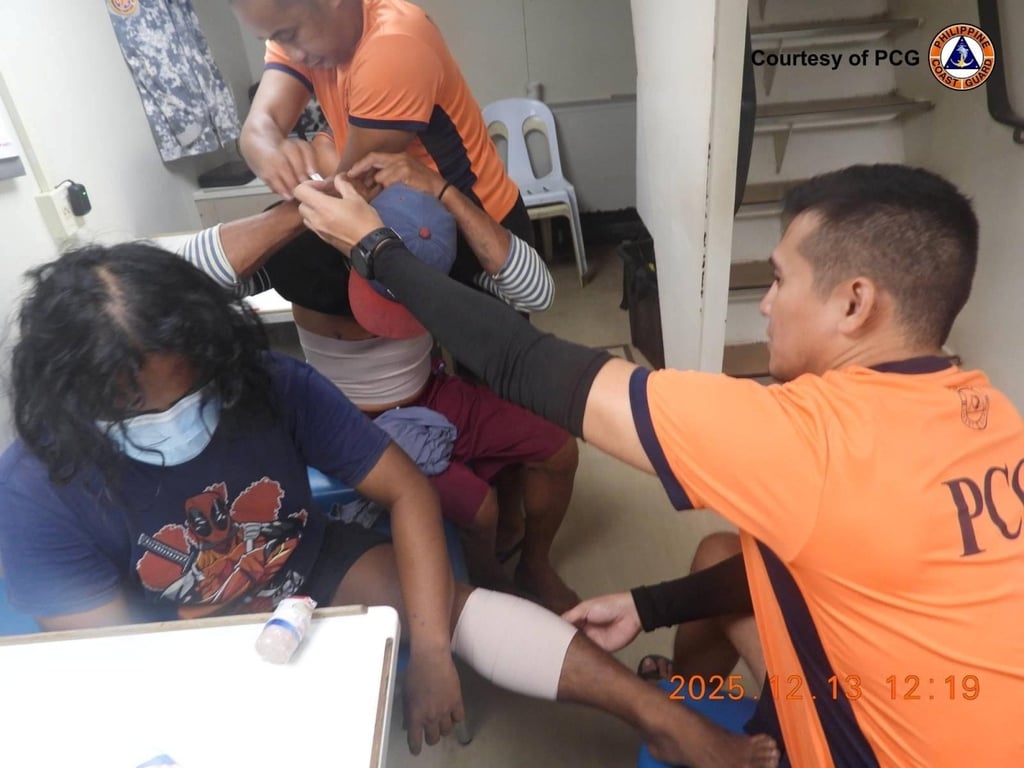
Philippine coastguard personnel treat wounded fishermen inside their vessel in the disputed South China Sea on December 13. Photo: Philippine Coast Guard via AP

Water wars
Tensions between the Philippines and China over disputed waters in the South China Sea heightened following Beijing’s announcement in September of the approval of a national nature reserve at Scarborough Shoal, just 124 nautical miles west of Zambales province.


This came a month after a China Coast Guard (CCG) and navy ship collided while the former was trailing a Philippine Coast Guard vessel during a resupply mission in the area.

The row also came to a head this month, as Manila accused CCG ships of firing water cannons at Filipino fishing vessels near Sabina Shoal, which injured three fishermen and caused significant damage to their boats.


Throughout the year, Beijing has taken more assertive measures in its claims over contested waters, deploying two long-range H-6 bombers in March around the Scarborough Shoal.
The Philippines has meanwhile ramped up joint patrols with allies and continued to deepen defence ties, including its reciprocal access agreement with Japan that came into effect in September.

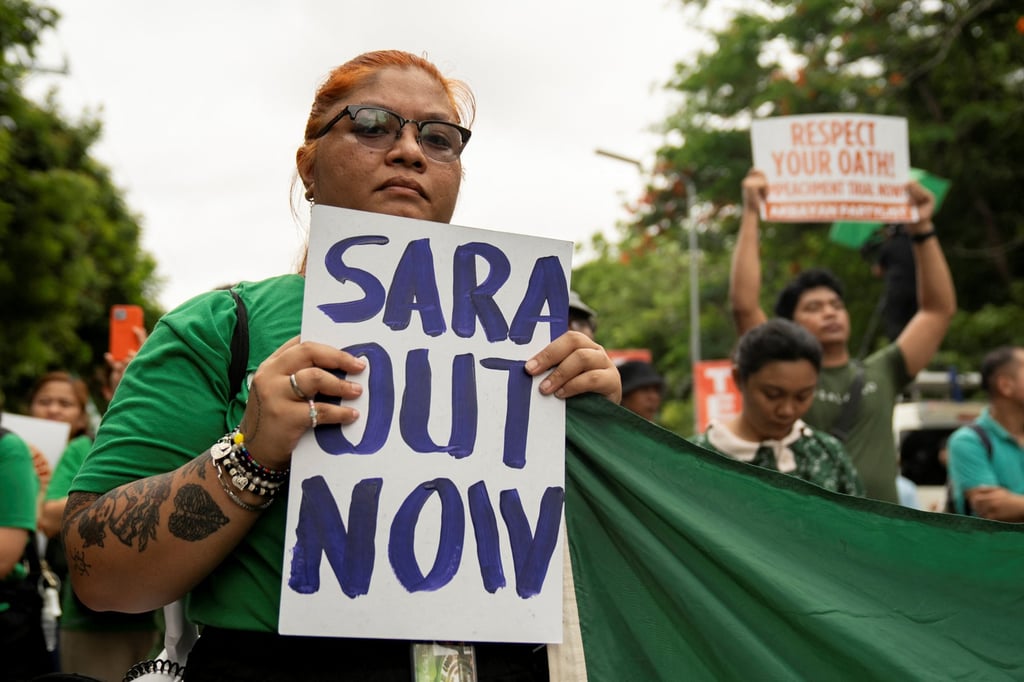
A woman carries a placard during a protest calling for the impeachment of Philippine Vice-President Sara Duterte in Pasay City, Metro Manila, in June. Photo: Reuters

A vice-president’s woes
In February, more than 200 lawmakers at the House of Representatives impeached Vice-President Sara Duterte-Carpio after signing the fourth impeachment complaint that had been lodged against her.

The charges included her unexplained wealth, the misuse of public funds, the betrayal of public trust, and even allegations of plotting murder after she had threatened to kill Marcos and the first family in November last year.

However, after the House’s articles of impeachment were transmitted to the Senate, which would be required to convene as an impeachment court, then Senate president Francis Escudero maintained it could only begin proceedings after the Congressional recess in June, which sparked criticisms that the chamber was attempting to stall the process.
In July, the Supreme Court blocked impeachment proceedings against Duterte-Carpio but said the complaint might be refiled in February 2026.


Will Duterte become Asia’s first ex-leader convicted by the International Criminal Court?
Rodrigo Duterte’s ICC arrest
Former president Rodrigo Duterte was arrested on March 11 by Philippine police and Interpol agents and quickly flown to The Hague to face charges of crimes against humanity related to his deadly war on drugs during his administration.

Duterte’s lawyer and family members have maintained that his arrest and detention are unlawful and amount to kidnapping.
In August, his defence lawyer appealed to the court for an adjournment of all proceedings, saying the 80-year-old Duterte was not fit to stand trial – a claim rejected by the ICC medical panel which last week ruled the former leader was well enough to take the stand.


The charges against Duterte cover a total of 76 killings that took place between 2016 and 2018 in the Philippines, with some related to the “war on drugs” that he initiated at the beginning of his presidency in 2016.

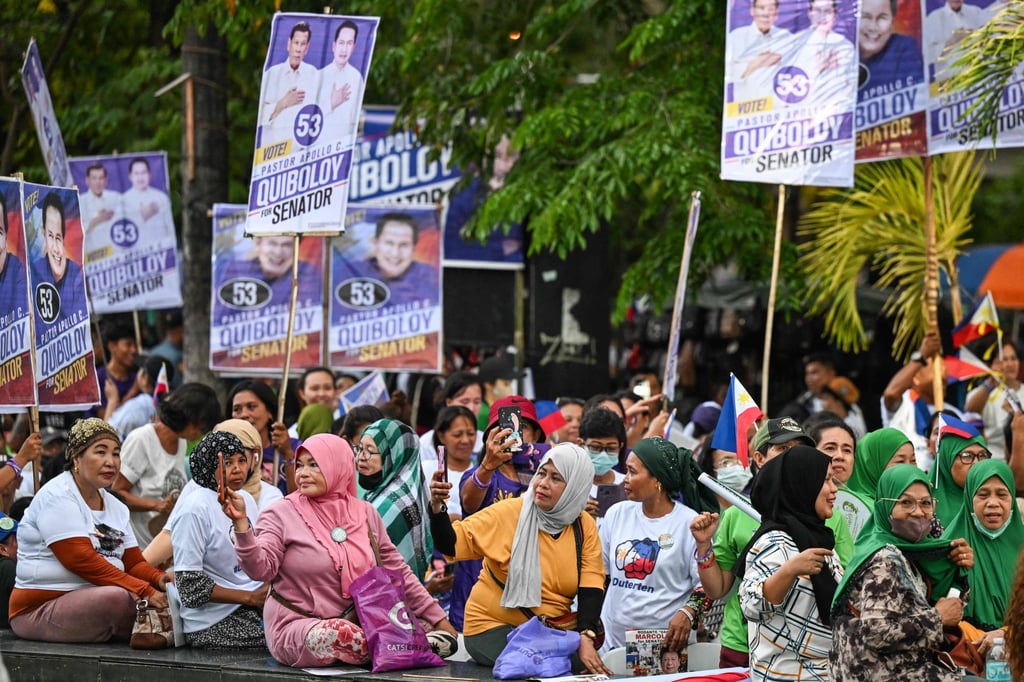
People attend a campaign rally of senatorial candidates under the party of former Philippine president Rodrigo Duterte in Manila on May 8, ahead of the country’s midterm election. Photo: AFP

Clash of the clans
Results of the Philippines’ midterm elections recorded a surge in the youth vote and led to surprise developments, including the Marcos-backed Senate slate winning only half of the chamber’s 12 seats, while staunch Duterte ally and former aide Christopher Go secured re-election with the highest number of votes.
Locally, the Duterte clan maintained its stronghold in its hometown of Davao City, where Rodrigo triumphantly returned to the mayoral seat despite his detention at The Hague, while his son, Sebastian, won as vice-mayor.
Analysts say the outcome of the polls would determine the trajectories of the feuding Marcos and Duterte clans as they wrestle for power in the lead-up to the 2028 presidential election, where Duterte-Carpio has expressed interest in seeking the highest post.

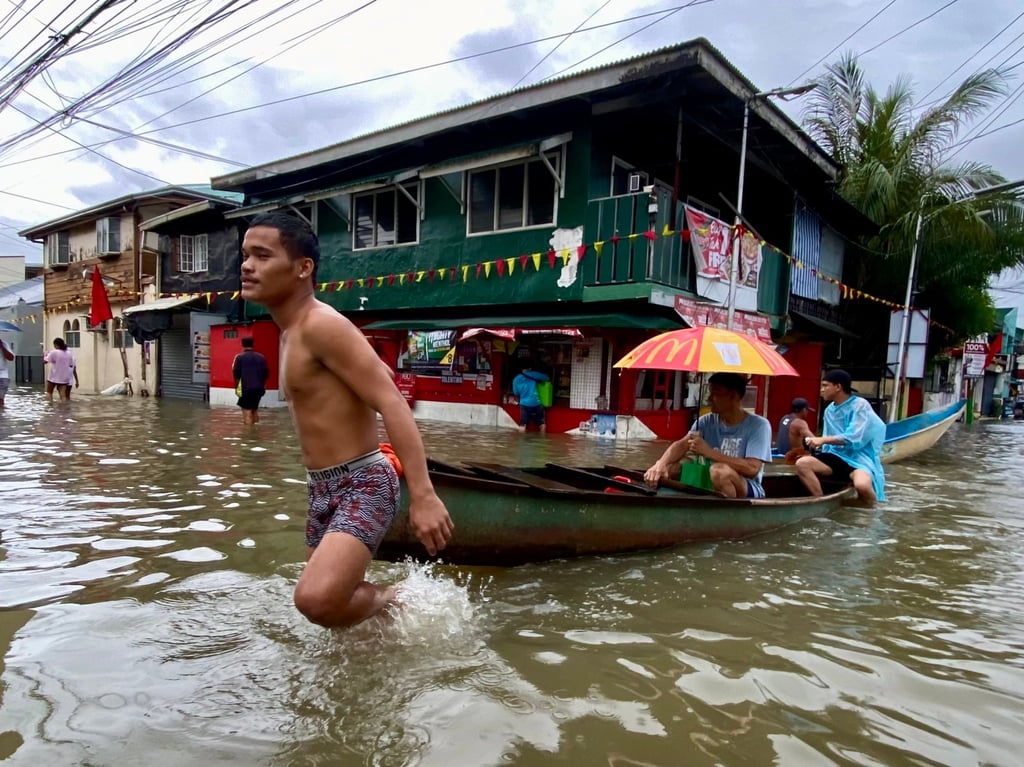
People on a wooden boat make their way through floodwaters in Kawit, Cavite province, south of Manila, in July. Outrage over billions spent in anomalous flood control projects culminated in weeks of protests. Photo: EPA

Corruption outrage

Both Marcos and Duterte-Carpio suffered blows to their performance and trust ratings after an investigation into corruption-linked flood control projects dominated headlines for months, with parts of the Philippines such as Metro Manila hit by serious floods from torrential rains.

The president ordered an investigation into these projects, which revealed the existence of incomplete or substandard work, including phantom projects for nonexistent infrastructure, despite a total budget of 545 billion pesos disbursed for flood control since 2022.

Marcos’ internal investigation further revealed that only 15 out of 2,409 registered contractors hoarded 100 billion pesos worth of the projects, with the remaining 436 billion pesos divided among 2,394 contractors.

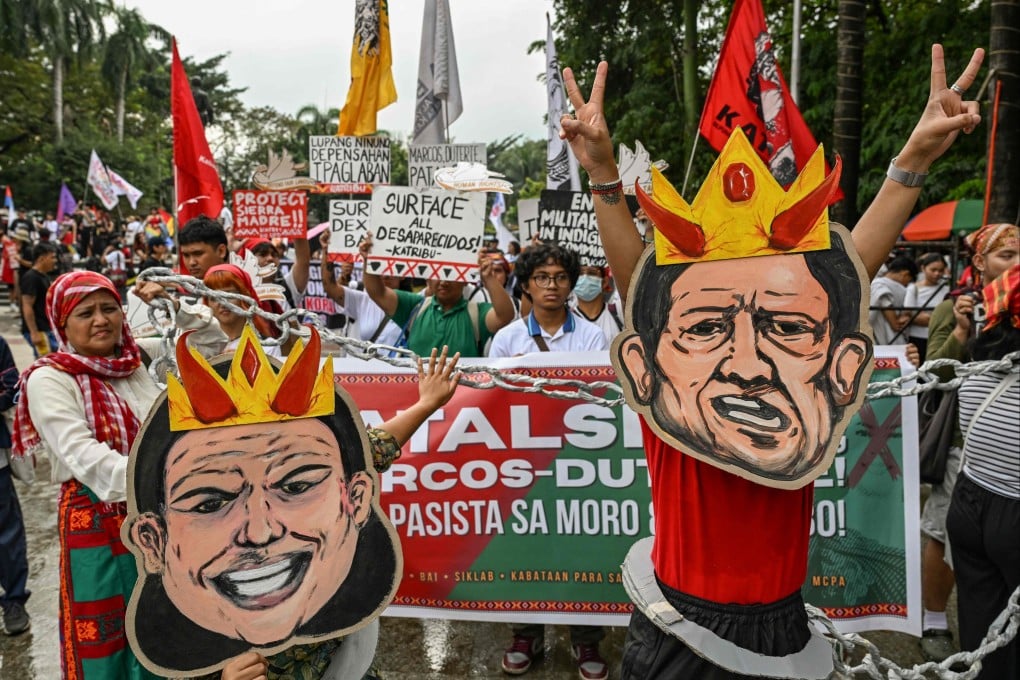
The outrage over billions spent in anomalous flood control projects culminated in weeks of protests from church groups, civil society organisations and the public.
The Philippine government has been mounting arrests towards contractors, officials of the Department of Public Works and Highways, as well as suspected lawmakers. Authorities earlier this month arrested the “queen of flood control” Cezarah Discaya, whose construction firms cornered a lion’s share of flood control projects, while an arrest warrant has been issued for former congressman Zaldy Co, who is currently at large.

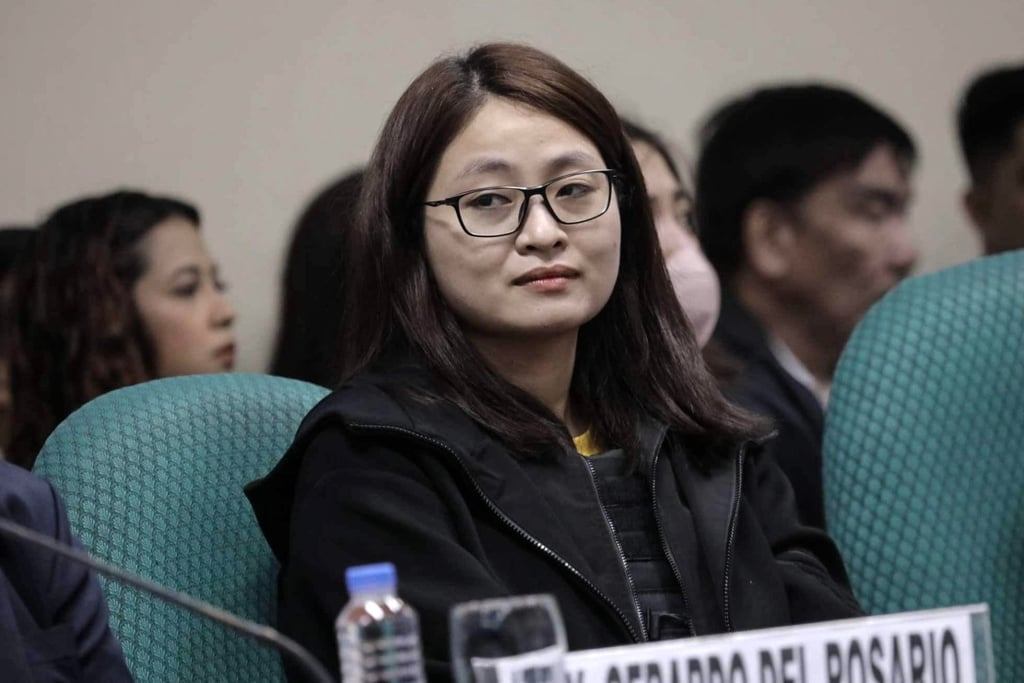
Former Bamban mayor Alice Guo during a hearing at the Philippine Senate in September 2024. Guo has been sentenced to life imprisonment over her role in setting up a scam centre. Photo: EPA-EFE/Handout

Alice Guo gets life
A Philippine court found former town mayor Alice Guo guilty of human trafficking and sentenced her to life imprisonment over her role in setting up a scam centre, a year after Guo became the face of a lengthy Senate probe over alleged crimes linked to Philippine offshore gaming operators (Pogos).

The court also ordered the forfeiture of the 6 billion-peso Baofu property that had been linked to Guo, where authorities uncovered evidence of scam and trafficking operations during a raid in March last year.

Observers hailed the conviction as a decisive victory against organised crime, strengthening the government’s hand in dismantling illicit Pogo hubs linked to exploitation and fraud.

Philippine Trade Secretary Cristina Aldeguer-Roque. Photo: Facebook/DTISecretaryCrisRoque


Tone deaf for Christmas

Amid woes by Filipinos over economic hardships attributed to corruption, Trade Secretary Cristina Aldeguer-Roque was criticised for what the public considered to be tone-deaf remarks after dispensing advice on a radio programme that 500 pesos (US$8.50) was enough for a family of four to host a “basic” Noche Buena dinner, the traditional Christmas Eve dinner celebrated in the Catholic-majority country.

Roque’s comments were in reference to her claims that the trade department managed to stabilise prices for the festive season, in line with Marcos’ order to keep holiday goods affordable for consumers.

However, critics said Roque’s comments were far from the on-ground realities that Filipino families faced amid continuously rising prices.


Sam Beltran
Sam Beltran is a journalist based in Manila who has written for publications in the Philippines and around Asia. Her stories explore food, lifestyle scenes, popular trends, and sub-cultures as windows into society and the human condition.

Learning feminism before knowing its name: Verse’s story from Myanmar

Verse Myanmar

Through films, Verse began translating feminist ideas into visual storytelling. Photo from Exile Hub. Used with permission.

Exile Hub is one of Global Voices’ partners in Southeast Asia, emerging in response to the 2021 coup in Myanmar, focusing on empowering journalists and human rights defenders. This edited article is republished under a content partnership agreement.

As a Burmese filmmaker shaped by her grandmother’s quiet defiance, Verse uses storytelling to challenge gender bias and uplift women whose voices are too often erased.

Verse began her professional journey in 2018 as a reporter at a local news agency in Myanmar. She dreamed of covering political news, but quickly encountered systemic gender bias. During a major assignment, male reporters were sent to Nay Pyi Taw to cover parliament-related matters, and she was told to stay behind.

She recalled the moment: “I was told women weren’t given those opportunities. I could not accept a workplace that denied my growth simply because I was a woman.”

She left journalism and joined a women’s rights organization, shifting her focus to human rights and feminist advocacy.

Before Verse ever stepped into a newsroom or picked up a camera, she grew up watching her grandmother quietly defy the rules of her time. A tough, respected Rakhine woman running a sawmill business, working daily among men, and refusing to bend to the gender norms imposed on her.

Verse talks about her grandma proudly: “She never once told me, ‘you’re a girl, so you can’t do this.’ She taught me that actions have consequences, but gender should never be a limitation.”

Her grandmother’s philosophy became the backbone of Verse’s feminist worldview. Even in small everyday acts, her grandmother pushed against societal expectations. While the neighborhood insisted women must hide their underwear under the longyi when drying laundry, her grandmother thought differently. From a health perspective, she said underwear needed sunlight to prevent bacteria. So she just hung them in front of the house. She never believed being a woman meant you had less dignity.

Growing up under such influence, Verse absorbed feminism not through books but through lived experience with a woman who modeled resilience, pride, and equality long before Verse learned the word “feminist.”

In 2020, Verse attended Yangon Film School, where she began translating feminist ideas into visual storytelling. The classroom itself became another frontline of gender bias. Six male and six female students attended. One day, a male classmate asked her an inappropriate question rooted in a harmful cultural myth about girls with arm hair or slight mustaches being “sexually provocative.”

She was hurt and angry, but she chose a different response.

During a group discussion in class, Verse brought the incident forward, sparking an honest conversation about how students should respond when they encounter verbal harassment. Her courage led the film school to introduce its first-ever zero-tolerance policy on sexual harassment.

Verse’s filmmaking has since become an extension of her feminist inheritance. Her storytelling centers on women who are often unheard or unseen.

“Through film, I want people to feel empathy to see women’s emotions, existence, and oppression in new ways. My mind is always thinking for them.”

One of her most meaningful works is the animated film “Exit,” portraying the lived experiences of sex workers in Myanmar, who face stigma, violence, and criminalization. Supported by Goethe-Institut Myanmar, the film has been screened at the Shi Exhibition and DVB Peacock Film Festival 2024.

Verse first learned about Exile Hub in 2022 after receiving a Critical Voices production grant. In 2025, she was again selected as a recipient of the Feminist Storytelling Grant, under which she created the documentary “Fight for Freedom.”

The film follows an exiled woman resisting Myanmar military patriarchy, a story of courage, and the fierce determination to spark ideological revolution. There is no hierarchy of oppression in which one form is greater or lesser than another. Every form of oppression must be challenged and dismantled.

Though her professional opportunities have widened, Verse still makes her home in Myanmar. Her grandmother is aging and requires care.

She says simply: “She didn’t just raise me. She taught me my worth. She made sure I never believed my gender was a limitation. How could I ever leave her behind?”

Feminism, for her, is a lived experience grounded in resilience and the courage to challenge oppression wherever it appears. Through her films, Verse honors her belief by reshaping narratives, breaking barriers, and imagining a world where women’s voices are not just heard, but honored.

Verse’s life is shaped by a simple ideology: “Women deserve equality, dignity, and the freedom to define their own lives.”

Categories

COMMENT: Myanmar’s 2025 vote - an election with the ending already written

COMMENT: Myanmar’s 2025 vote - an election with the ending already written
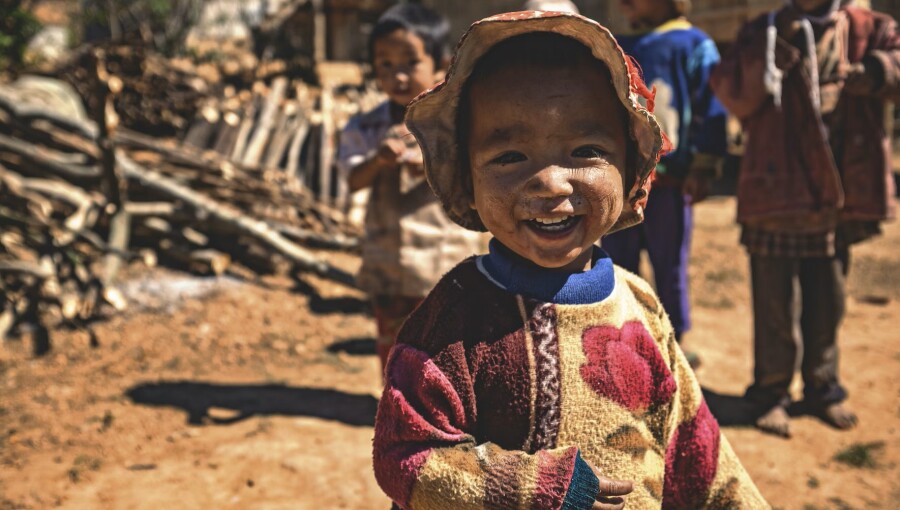
A young child in Shan State, Myanmar / Jesse Schoff - Unsplash
By Mark Buckton - Taipei December 28, 2025

Myanmar’s generals have finally produced the ballot box they have been promising since their 2021 coup. After five years of civil war, mass displacement of entire towns and villages and systematic repression across the country, the junta has staged the first part of what it calls a return to democratic rule.

However, as was reported by the Hindustan Times across the 1,640km border with India - the world’s largest democracy - what appears to be unfolding on election day, Sunday December 28, looks less like an election than a carefully managed performance; one designed to legitimise continued military control while excluding any genuine or effective political competition.

It is a play being staged without many of the actors though, as across junta-held parts of the country, polling stations opened to sparse crowds. In some locations, officials and journalists have reportedly outnumbered voters, reports say. This is a striking contrast to the long queues seen in the last nationwide election in 2020. That was a vote the military annulled before overthrowing the elected government and arresting its leaders the following year.

Under cover of COVID and Russia’s invasion of Ukraine, the generals have spent the intervening years insisting that a new election would restore stability. What is unfolding on the ground, however, bears little resemblance to that narrative.

The sham in action

As is, Myanmar, a nation of around 50mn, remains fractured by conflict, with large swathes of territory outside the military’s control. Voting is not taking place in rebel-held areas, in effect disenfranchising tens of millions of citizens. Even in cities such as Yangon and Mandalay, where polling stations are open, the atmosphere was largely subdued and tightly policed, the Hindustan Times says.

Added to this, the most popular political force in the country is absent altogether. Aung San Suu Kyi, the former civilian leader and enduring symbol of Myanmar’s democratic movement, remains behind bars and ageing. Now 80-years-old and from time to time reported as being in ill-health, her party, which won a landslide victory in 2020, has been dissolved and barred from contesting the vote. In its place, a field of military-aligned ‘parties’ and approved candidates are competing in a process widely criticised as being rigged from the outset.

As a result, international reaction has been scathing. Human rights groups, Western governments and the United Nations have all dismissed the election as a sham. Think Tank at the European Parliament ran a piece earlier in the month to this end, titled in part “Myanmar: Towards a 'sham' election”.

Efforts to shame the junta’s sweeping restrictions on free speech, assembly and the press, in addition to the ongoing imprisonment of thousands of political opponents is well known.

To this end, the only real beneficiary of the process is the Union Solidarity and Development Party, a pro-military vehicle widely seen as a civilian façade for continued martial rule. Victory for the party will - not would - allow the generals to claim constitutional legitimacy without surrendering real power, thus for Myanmar’s military leadership, the election is not a risk but an insurance policy.

Continued trade with regional partners

On the ground in Myanmar, the junta has long argued that restoring order must come before political freedoms. Yet, as its regional neighbours and the wider world know, it was the coup itself that plunged the country into chaos. Many leaders in the region though opt to turn a blind eye and have to some extent chosen to ignore the internal crisis and oppression of the populace in order to maintain business and trade ties.

These include China, a long time partner pushing the China-Myanmar Economic Corridor under the Belt and Road Initiative and Thailand for whom cross-border commerce includes agricultural products and consumer goods. India too, as well as Singapore and to a lesser extent Malaysia and Indonesia continue to trade with the junta. This is despite the fact that within Myanmar’s borders, air strikes on civilian areas and village burnings coupled to mass arrests continue and have become routine. More than 1mn people have been displaced and humanitarian needs continue to rise. This was only exacerbated by the magnitude 7.7, March 28 earthquake in the region which killed over 3,600.

In this context, the ‘election’ looks less like a step towards any form of effective stability and peace and more like an attempt to rewrite the historical and political narrative - with the tacit help of trade partners across South and Southeast Asia.

By pointing to ballot boxes and polling stations, the generals hope to persuade the wider world to accept the status-quo as it is recognised by China, Thailand India et al, albeit without looking too closely.

For many living in Myanmar, with nowhere else to go, however, staying away from the polls is the only form of protest still open to them.

Myanmar's ruling junta says election will provide path to peace as polls open - but opponents criticise 'sham' vote

Since seizing power by force nearly five years ago, Myanmar's ruling military junta has imprisoned thousands of its opponents - most notably Aung San Suu Kyi, the last democratically elected leader.


By Shingi Mararike, news correspondent, in Yangon
Sunday 28 December 2025 

UK
SKY NEWS


'Nobody talks about the election, people are scared. That's why they don't speak up. Because of the government' one woman told Shingi Mararike.


Yangon is Myanmar's beating heart. The bustle of busy market stalls and sight of glittering Buddhist monuments are a vision of the country those in power want the world to see.

The ruling military junta has granted the media rare access to some parts of the country in time for the election - a vote it hopes represents a return to normal, restoring civilian rule here for the first time since 2021.

But that notion has been widely criticised.

Tom Andrews, the United Nation's Special Rapporteur on human rights for Myanmar, has dismissed the polls, split into three stages, as "sham elections". Other human rights organisations and governments have also condemned the ballot.
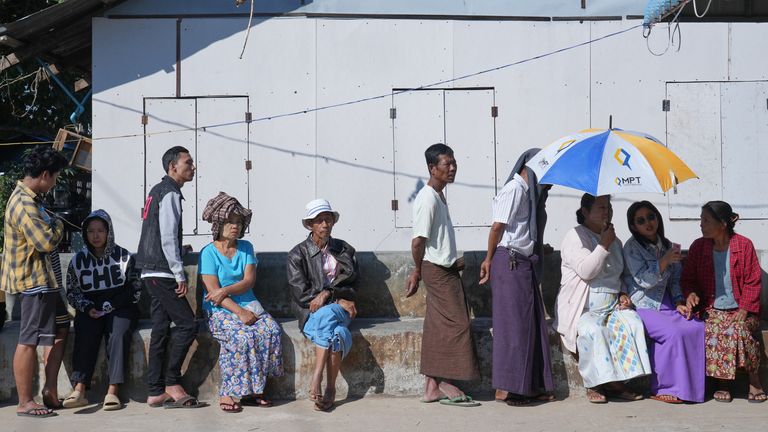
Voters line up to cast their ballots at a polling station in Naypyitaw, Myanmar. Pic: Ap

Since seizing power by force nearly five years ago, the junta has imprisoned thousands of its opponents. The most notable of those is Aung San Suu Kyi, Myanmar’s last democratically elected leader. Her party, the National League For Democracy (NLD), has been dissolved and cannot run in this election. If it could, it would most likely win.

The coup also triggered a civil war that is still ongoing, with the junta locked in battle against a collection of ethnic armed groups and civilian activist forces. That means in large swathes of the country, people will be unable to vote.


Myanmar's former leader Aung San Suu Kyi was imprisoned in 2021

There are multiple options on the ballot, but none represent genuine opposition to the junta.

The Union Solidarity and Development Party, the main military-backed party, is seen as the winner in waiting, because of its close alignment with the junta.

Image:Myanmar's junta chief Min Aung Hlaing casting his ballot. Pic: Reuters

Some of the party's team in Yangon take us out on the campaign trail, determined to show us this election is free and fair.

READ MORE: Inside Myanmar's secret jungle hospital
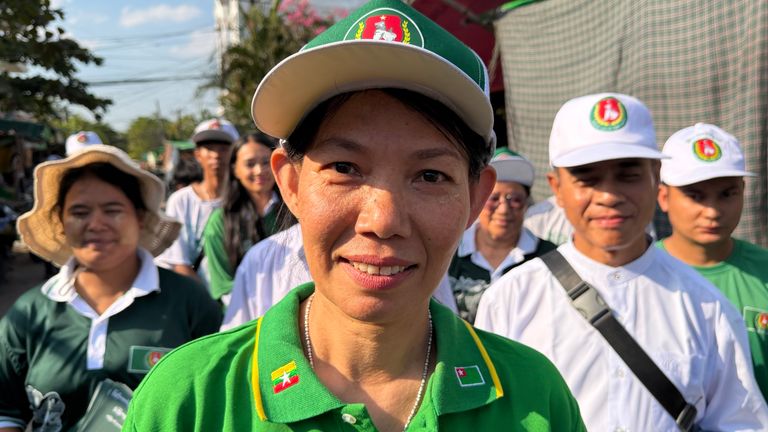
Candidate San San Htlay runs for the military-backed Union Solidarity and Development Party in Dagon Myothit South, Yangon

'People are scared, that's why they don't speak up'

As we walk through the market stalls in town, USDP candidate San San Htay hands out flyers while telling me she has had encouraging conversations with voters. "Mostly they say they will support me and they tell me what they want me to do for them if I win," she says, before turning her thoughts to the criticism from the UN’s Special Rapporteur.

"This is what he says, and that's his opinion," she tells me, "but we have sovereignty over our nation and we have our own rights. We only need the will of our people, we only need to satisfy the will of our people."

San San Htay is all smiles as she moves through a market, but shortly after the campaign team leaves the mood is cagey. One woman we speak to tells us she knows nothing about the vote. Another is fearful.

"In my neighbourhood nobody talks about the election," says the second woman. "People are scared, that's why they don’t speak up, because of the government."
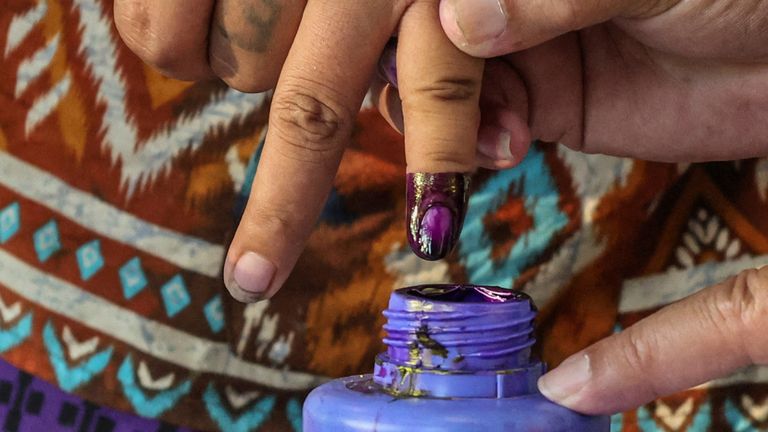
A polling official assists a woman during voting at a polling station. Pic: Reuters

The junta isn't just waging a war on free speech. On the battlefield, one of the world's longest running civil wars continues to rage, leaving part of this nation smouldering, tens of thousands dead and millions unable to vote.

Footage from earlier in December shows an airstrike by the junta on a hospital in the western state of Rakhine, which killed 33 people. Other videos show civilian houses burning in Western Mogok town in Mandalay, reportedly after military air strikes.

'If the military was fair we wouldn't need to use weapons'

Among those who are resisting the military junta are Kyaw Kyaw and Hla Khin, not their real names, who speak to us anonymously because they are concerned about their safety and the consequences of criticising the regime.

They were both jailed for opposing Myanmar’s ruling military junta as supporters of Ms Suu Kyi's now dissolved NLD.

The two former prisoners believe the ongoing civil war in the country will not end "until democracy is restored".

Hla Khin describes why she feels strongly about the need for an armed resistance, stating: "Even though I was scared in the beginning, we protested peacefully for democracy, we didn’t take up arms. But the junta turned into a violent dictatorship, and our generation felt this was unjust."

"If the military was fair we wouldn’t need to use weapons, but they’re not, so we fight too. That’s why young people are undergoing military training and fighting," she says.
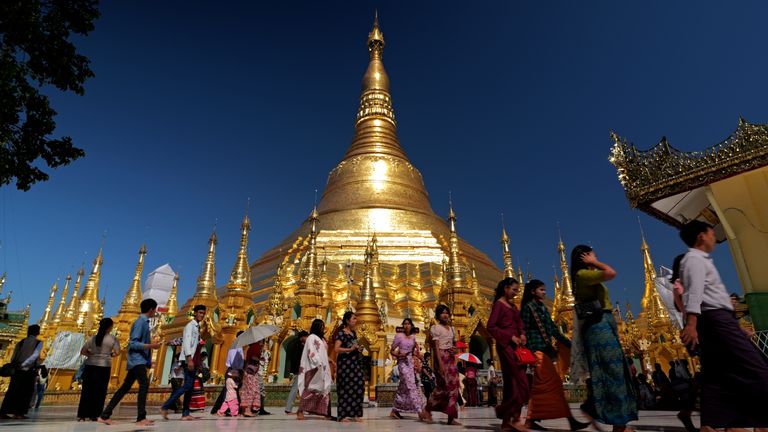
Myanmar has been plunged into civil war since the 2021 coup.

Kyaw Kyaw, who held a political role in the NLD, described the oppressive conditions he says he faced in prison, including being "shackled for 45 days".

"I was beaten during military interrogation and at the entrance of the prison by the prison staff," he says.

"We weren’t allowed to write poetry or read political literature. If they found us doing that, people were locked in solitary confinement and beaten. Some were hospitalised."

As for the future after the election. Both see no end in sight to a civil war which has raged on since the coup.

"If the military junta chief Min Aung Hlaing won’t give up, well young people won’t give up either. Not until democracy is restored," says Hla Khin.

"This situation won’t end until democracy is back. If the conflict gets worse the people will suffer."

'They're trying to intimidate and terrify people'

Commander Tin Oo is one of the soldiers fighting against the junta in central Myanmar, as part of the People's Defence Force, a civilian-led resistance group formed after the coup.

Leaving the frontline to speak to me on a video call, he says the bombing by the junta has intensified in some rebel-held areas in the lead up to the election.

"The junta is intentionally carrying out air attacks on civilians in the area we control, even though it's far away from the frontline," he says before adding. "They’re trying to intimidate and terrify the people. Part of the reason the junta is bombing us is to protect the areas where they will hold elections."

Myanmar goes to the polls

The election beginning on 28 December will be Myanmar's first in five years.

Two more rounds of voting will be held on 11 and 25 January before the election is complete.

More than 4,800 candidates from 57 parties are running for seats in national and regional legislatures.

Only six parties are running candidates nationwide, meaning they will have the clout to affect change in parliament.

The election is being supervised by the military government.

Voting will take place in 102 of Myanmar's 330 townships during the first round.

The military-backed Union Solidarity and Development Party is the favourite to win.

Min Aung Hlaing, the general who has ruled since the 2021 coup, is speculated to assume the presidency.

Fighting continues across the country, displacing 3.6 million people, as armed groups clash with the military.

The final result is not expected to be announced until February.

It means the junta is preventing the revolutionary forces from taking over where the elections are happening.

As polling stations open, his assessment of what happens in this splintered nation is bleak.

"Nothing will change after this sham election," he tells me. "The fighting will carry on."

Despite the opposition and spectre of violence, the junta says this election will provide a path to peace - with votes expected to be counted at the end of January.

Many in Myanmar, and around the world, have a less optimistic view of the future though - with concerns the thin veneer of a civilian government will only serve to strengthen an oppressive regime.


How Myanmar's junta-run vote works, and why it might not

Yangon (Myanmar) (AFP) – Myanmar's junta presides over elections starting on Sunday, advertising the vote as a return to democratic normality five years after it mounted a coup that triggered civil war.


Issued on: 27/12/2025 - RFI
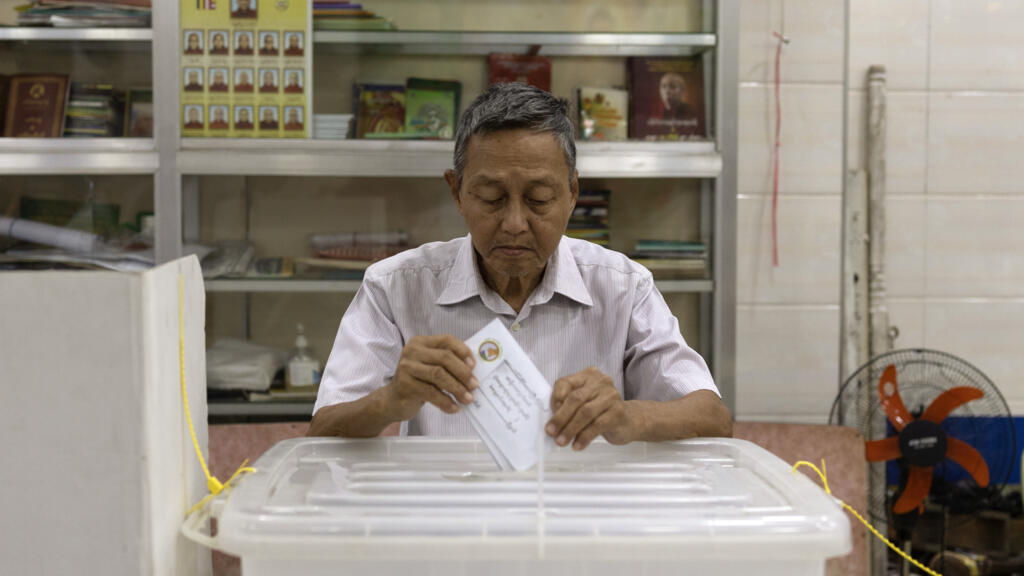
Myanmar's general elections have been widely slated as a charade to rebrand military rule © Lillian SUWANRUMPHA / AFP/File

The vote has been widely slated as a charade to rebrand the rule of the military, which voided the results of the last elections in 2020, alleging massive voter fraud.

Here are some key questions surrounding the heavily restricted polls:

- Who is running? -

The pro-military Union Solidarity and Development Party is by far the biggest participant, providing more than a fifth of all candidates, according to the Asian Network for Free Elections (ANFREL).

Former democratic leader Aung San Suu Kyi and her massively popular National League for Democracy party, which won a landslide in the last vote, are not taking part.

After the 2021 coup, Suu Kyi was jailed on charges rights groups say were politically motivated.

According to the Assistance Association for Political Prisoners advocacy group, some 22,000 political prisoners are languishing in junta jails.

The National League for Democracy and most of the parties that took part in the 2020 vote have been dissolved. ANFREL says organisations that won 90 percent of seats then will not be on Sunday's ballot.

Polling is taking place in three phases spread over a month, using new electronic voting machines which do not allow write-in candidates or spoiled ballots.

Who can and cannot vote?

Myanmar's civil war has seen the military lose swathes of the country to rebel forces -- a mix of pro-democracy guerillas and ethnic minority armies which have long resisted central rule -- and the vote will not take place in the areas they control.

A military-run census last year admitted it could not collect data from an estimated 19 million of the country's 50 million-odd inhabitants, citing "security constraints".

Amid the conflict, authorities have cancelled voting in 65 of the 330 elected seats of the lower house -- nearly one in five of the total.

More than one million stateless Rohingya refugees, who fled a military crackdown beginning in 2017 and now live in exile in Bangladesh, will also have no say.
How is a winner decided?

Seats in parliament will be allocated under a combined first-past-the-post and proportional representation system which ANFREL says heavily favours larger parties.

The criteria to register as a nationwide party able to contest seats in multiple areas have been tightened, according to the Asian election watchdog, and only six of the 57 parties standing have qualified.

Results are expected in late January.

Regardless of the outcome of the vote, a military-drafted constitution dictates a quarter of parliamentary seats be reserved for the armed forces.

The lower house, upper house, and military members each elect a vice president from among their ranks, and the combined parliament votes on which of the three will be elevated to president.

What happened in the run-up?
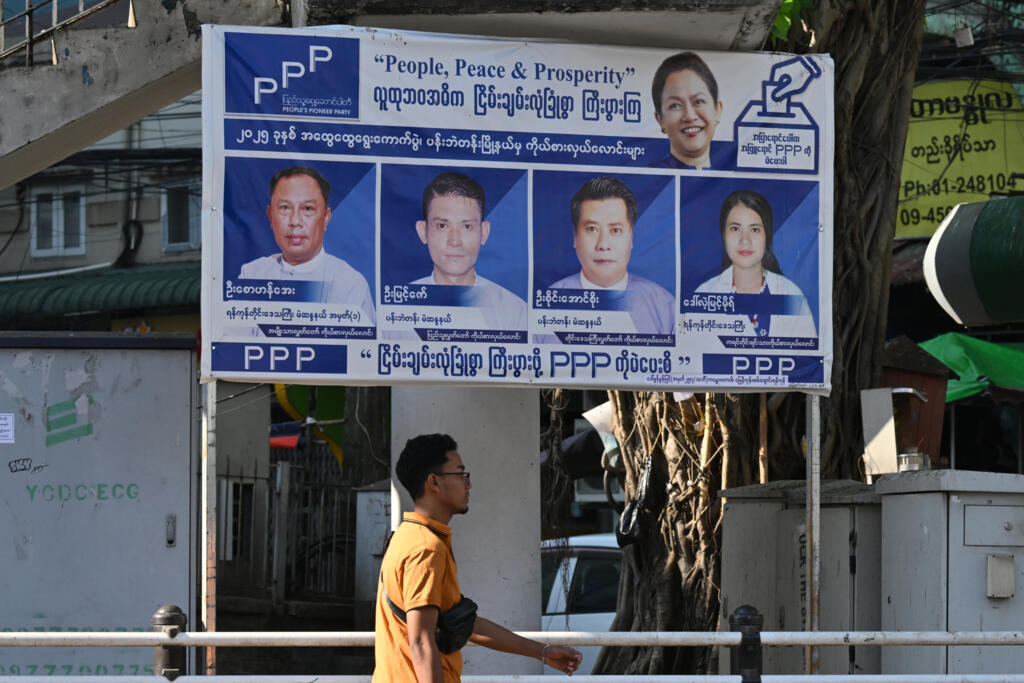
Myanmar's military-drafted constitution dictates a quarter of parliamentary seats be reserved for the armed forces © NHAC NGUYEN / AFP


ANFREL says the Union Election Commission overseeing the vote is an organ of the Myanmar military, rather than an independent body.

The head of the commission, Than Soe, was installed after Suu Kyi's government was toppled and is subject to an EU travel ban and sanctions for "undermining democracy" in Myanmar.

Social media sites including Facebook, Instagram and X have all been blocked since the coup, curtailing the spread of information.

The junta has introduced stark legislation punishing public protest or criticism of the poll with up to a decade behind bars, pursuing more than 200 people for prosecution under the new law.

Cases have been brought over private Facebook messages, flash mob protests scattering anti-election leaflets, and vandalism of candidate placards.

Myanmar has invited international monitors to witness the poll, but few countries have answered.

On Friday, state media reported a monitoring delegation had arrived from Belarus -- a country that has been ruled since 1994 by strongman President Alexander Lukashenko, who put down pro-democracy protests six years ago.

© 2025 AFP

Myanmar junta stages election after five years of civil war

Yangon (Myanmar) (AFP) – Voters trickled to Myanmar's heavily restricted polls on Sunday, with the ruling junta touting the exercise as a return to democracy five years after it ousted the last elected government and triggered a civil war.


Issued on: 27/12/2025 - RFI
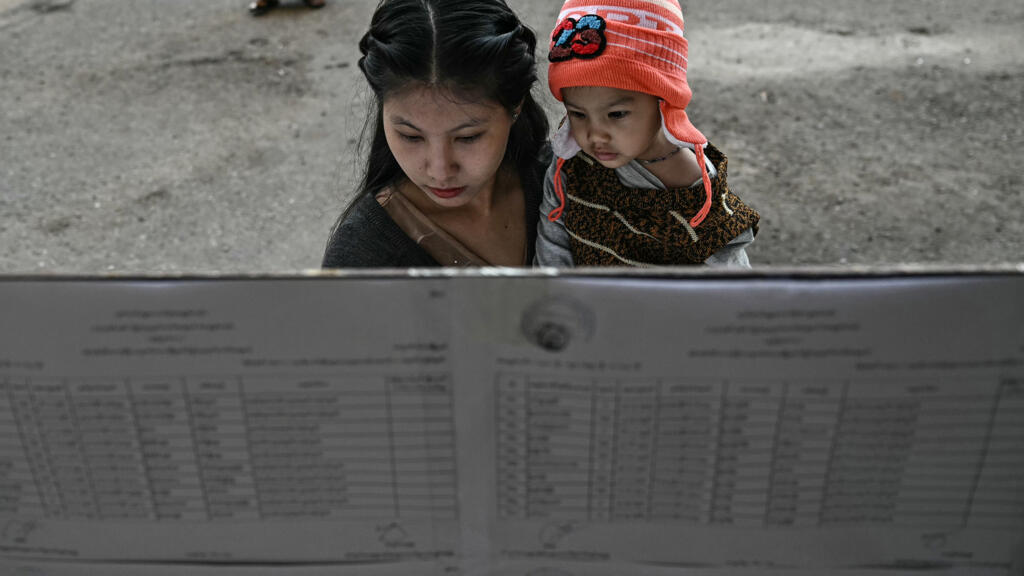
The pro-military Union Solidarity and Development Party is widely expected to emerge as the largest bloc © Lillian SUWANRUMPHA / AFP

Former civilian leader Aung San Suu Kyi remains jailed, while her hugely popular party has been dissolved and was not taking part.

Campaigners, Western diplomats and the United Nations' rights chief have all condemned the phased month-long vote, citing a ballot stacked with military allies and a stark crackdown on dissent.

The pro-military Union Solidarity and Development Party is widely expected to emerge as the largest bloc, in what critics say would be a rebranding of martial rule.
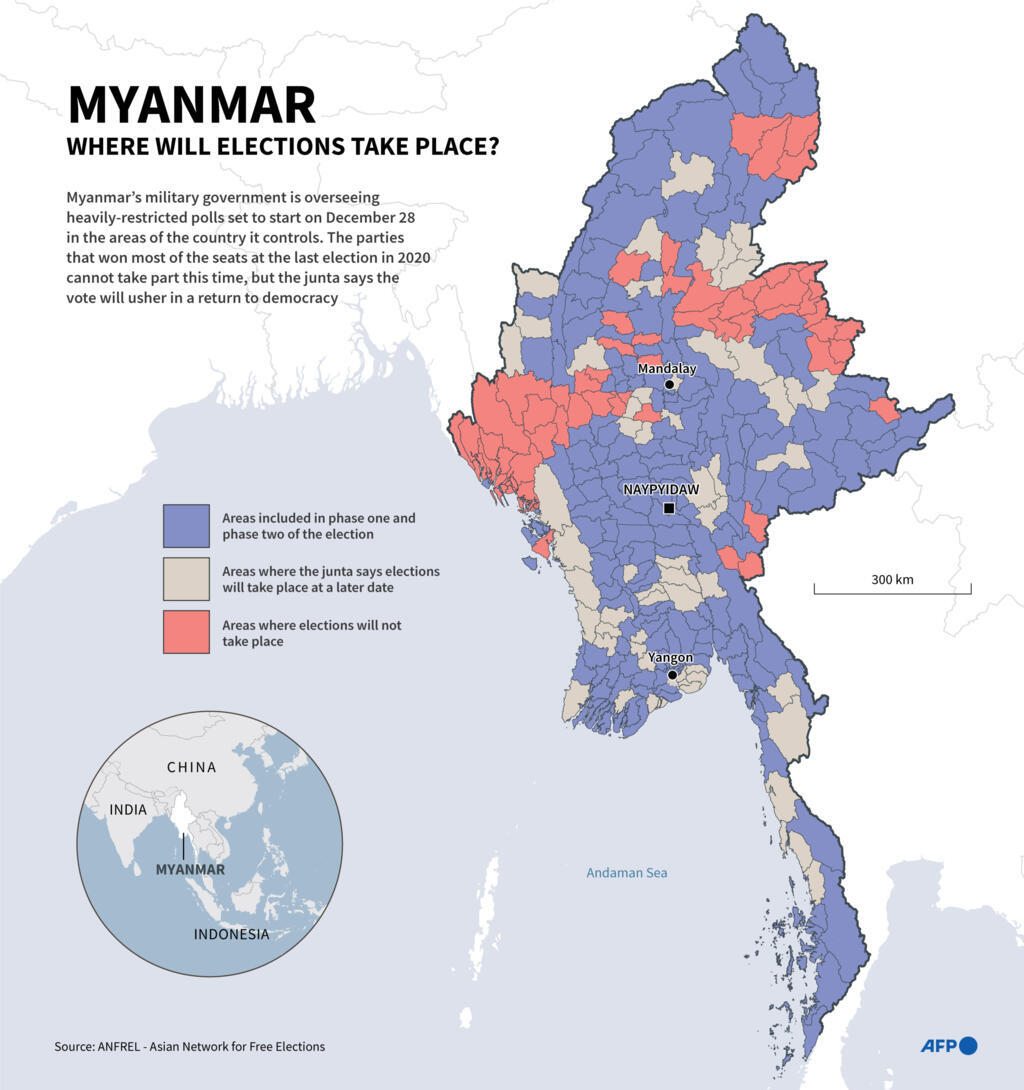
Myanmar: where will elections take place © Nicholas SHEARMAN / AFP


"We guarantee it to be a free and fair election," junta chief Min Aung Hlaing told reporters after casting his ballot in the capital Naypyidaw.

"It's organised by the military, we can't let our name be tarnished."

The Southeast Asian nation of around 50 million people is riven by civil war and there will be no voting in areas controlled by rebel factions that have risen up to challenge military rule.

While opposition factions threatened to attack the election, there were no reports of violence against polling day activities by the time voting ended at 4:00 pm (0930 GMT).
Limited turnout

Snaking queues of voters formed for the previous election in 2020, which the military declared void a few months later when it ousted Aung San Suu Kyi and seized power.

But when a polling station near her vacant home closed on Sunday, only around 470 of its roughly 1,700 registered voters had cast ballots, an election official said -- a turnout of less than 28 percent.

Its first voter, Bo Saw, 63, said the election "will bring the best for the country".

"The first priority should be restoring a safe and peaceful situation," he told AFP.

At a downtown Yangon station near the gleaming Sule Pagoda -- the site of huge pro-democracy protests after the 2021 coup -- 45-year-old Swe Maw dismissed international criticism.

"There are always people who like and dislike," he said at a polling station that later reported a turnout of below 37 percent.

The Southeast Asian nation of around 50 million is riven by civil war and there will be no voting in areas controlled by rebel factions © Lillian SUWANRUMPHA / AFP

The run-up saw none of the feverish public rallies that Aung San Suu Kyi once commanded, and the junta has waged a withering pre-vote offensive to claw back territory.

"I don't think this election will change or improve the political situation in this country," said 23-year-old Hman Thit, displaced by the post-coup conflict.

"I think the air strikes and atrocities on our hometowns will continue," he said in a rebel-held area of Pekon township in Shan state.
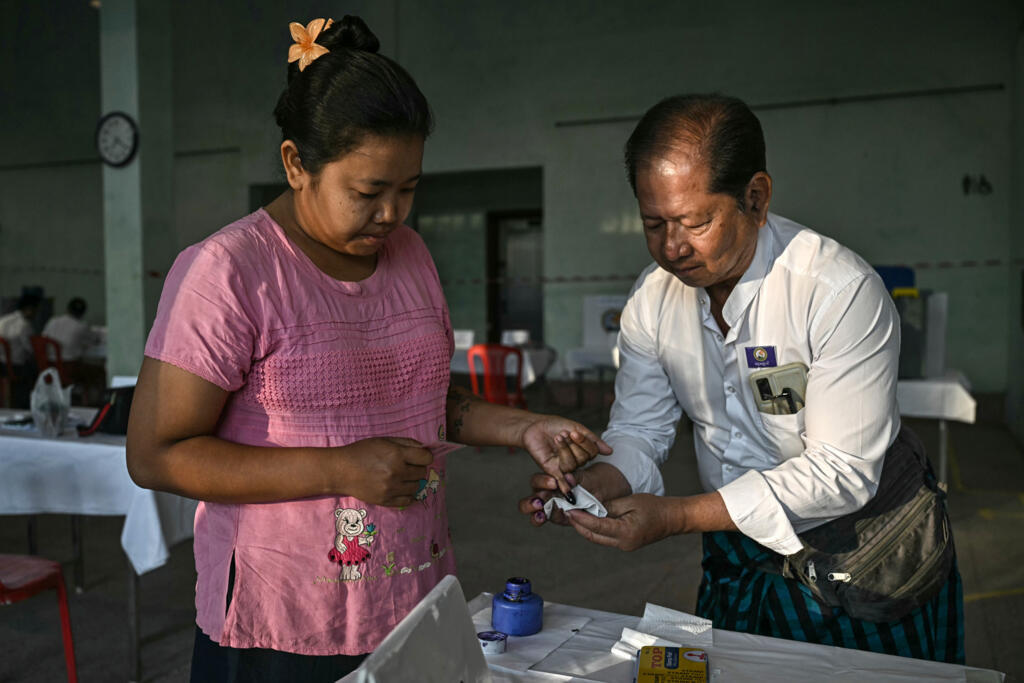

The run-up to the election saw none of the feverish public rallies that former civilian leader Aung San Suu Kyi once commanded © Lillian SUWANRUMPHA / AFP


The military ruled Myanmar for most of its post-independence history, before a 10-year interlude saw a civilian government take the reins in a burst of optimism and reform.

However, Min Aung Hlaing snatched power in a coup, alleging widespread voter fraud, after Aung San Suu Kyi's National League for Democracy party trounced pro-military opponents in the 2020 elections.

The military put down pro-democracy protests and many activists quit the cities to fight as guerrillas alongside ethnic minority armies that have long held sway in Myanmar's fringes.

There is no official death toll for Myanmar's civil war and estimates vary widely, but global conflict monitoring group ACLED tallies media reports of violence and estimates that 90,000 people have been killed on all sides since the coup.

Aung San Suu Kyi is serving a 27-year sentence on charges that rights groups dismiss as politically motivated.

"I don't think she would consider these elections to be meaningful in any way," her son Kim Aris said from his home in Britain.
Vote 'disruption' banned

Most parties from the 2020 vote, including Aung San Suu Kyi's, have since been dissolved.

The Asian Network for Free Elections says 90 percent of the seats in the previous election went to organisations that did not appear on Sunday's ballots.

New electronic voting machines did not allow write-in candidates or spoiled ballots.
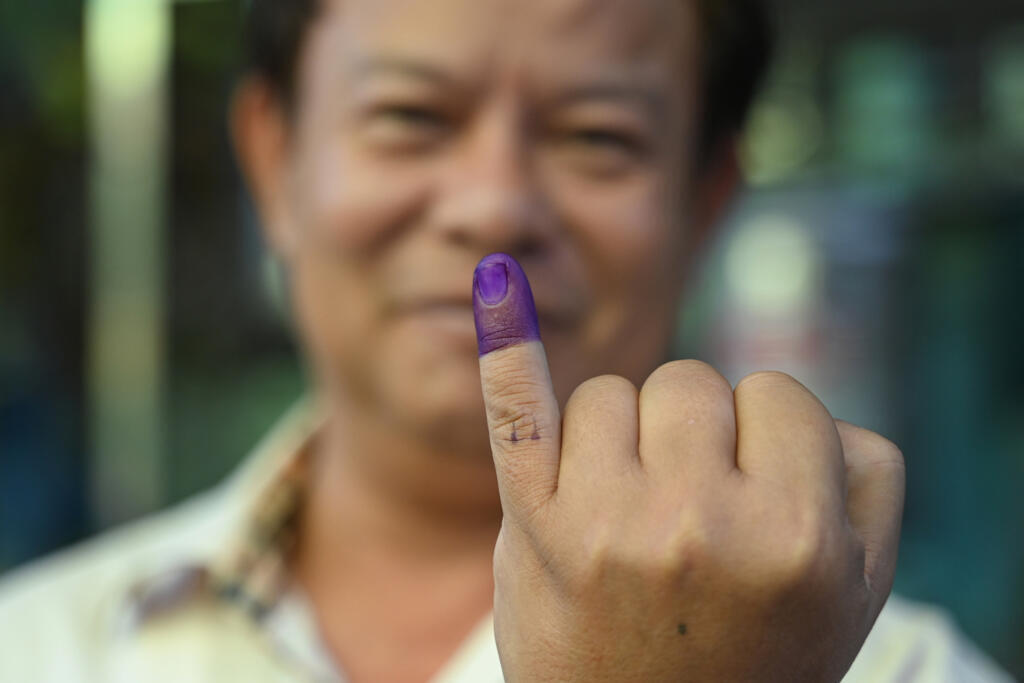

A voter shows an inked finger after casting a ballot © NHAC NGUYEN / AFP


The junta is pursuing prosecutions against more than 200 people for violating draconian legislation forbidding "disruption" of the poll, including protest or criticism.

The United Nations in Myanmar said it was "critical that the future of Myanmar is determined through a free, fair, inclusive and credible process that reflects the will of its people".

The second round of polling will take place in two weeks before the third and final round on January 25, but the junta has acknowledged that elections cannot happen in almost one in five lower house constituencies.

© 2025 AFP