Thursday, January 15, 2026

US freezes immigrant visa processing for 75 countries including Georgia, Armenia and Azerbaijan

US freezes immigrant visa processing for 75 countries including Georgia, Armenia and Azerbaijan
Georgia, Armenia and Azerbaijan are listed in the new travel ban from the Trump administration citing Citizenship by Investment concerns. / bne IntelliNews
By bnm Gulf bureau January 14, 2026

The United States will freeze immigrant visa processing for 75 countries starting on January 21 as part of efforts to prevent applicants deemed likely to rely on public benefits from entering the country, Fox News Digital reported on January 14.

According to the US, Central Asian and Caucasus states like Kazakhstan, Uzbekistan, Kyrgyzstan, Armenia and Georgia were selected due to data showing high rates of visa overstays, welfare dependency risks and consular concerns over weak local economies and fraud histories. Under tightened “public charge” rules, officials deem applicants from these regions likely to burden US taxpayers, prioritising self-sufficient immigrants as part of Trump’s immigration crackdown.

A State Department leaked memo directs consular officers to refuse visas under existing law while the department reassesses screening and vetting procedures. The pause will continue indefinitely until the reassessment is completed, according to the memo.

Tommy Piggott, State Department spokesperson, said the department will use its authority to deem ineligible potential immigrants who would become a public charge on the United States.

"Immigration from these 75 countries will be paused whilst the State Department reassess immigration processing procedures to prevent the entry of foreign nationals who would take welfare and public benefits," Piggott said.

The guidance instructs consular officers to deny visas to applicants deemed likely to rely on public benefits, weighing factors including health, age, English proficiency, finances and potential need for long-term medical care.

Older or overweight applicants, as well as those who have had any past use of government cash assistance or institutionalisation, could be denied.

Somalia has drawn heightened scrutiny from federal officials following a fraud scandal centred in Minnesota, where prosecutors uncovered abuse of taxpayer-funded benefit programmes. Many of those involved are Somali nationals or Somali-Americans.

The 75 countries affected are Afghanistan, Albania, Algeria, Antigua and Barbuda, Armenia, Azerbaijan, Bahamas, Bangladesh, Barbados, Belarus, Belize, Bhutan, Bosnia, Brazil, Burma, Cambodia, Cameroon, Cape Verde, Colombia, Cote d'Ivoire, Cuba, Democratic Republic of the Congo, Dominica, Egypt, Eritrea, Ethiopia, Fiji, Gambia, Georgia, Ghana, Grenada, Guatemala, Guinea, Haiti, Iran, Iraq, Jamaica, Jordan, Kazakhstan, Kosovo, Kuwait, Kyrgyzstan, Laos, Lebanon, Liberia, Libya, Macedonia, Moldova, Mongolia, Montenegro, Morocco, Nepal, Nicaragua, Nigeria, Pakistan, Republic of the Congo, Russia, Rwanda, Saint Kitts and Nevis, Saint Lucia, Saint Vincent and the Grenadines, Senegal, Sierra Leone, Somalia, South Sudan, Sudan, Syria, Tanzania, Thailand, Togo, Tunisia, Uganda, Uruguay, Uzbekistan and Yemen.

Exceptions to the pause will be "very limited" and only allowed after an applicant has cleared public charge considerations, the State Department said.


Mexico moves to contain US military pressure after Trump threats

Mexico moves to contain US military pressure after Trump threats
Internal deliberations within Sheinbaum’s cabinet reflect anxiety. While there is broad agreement on opposing US intervention, there is disagreement over how publicly confrontational Mexico should be.
By Alek Buttermann January 13, 2026

The latest phone call between Mexican President Claudia Sheinbaum and US President Donald Trump was not significant because of its duration or tone, but for what it revealed about the current balance of power in the bilateral relationship. The 15-minute exchange, confirmed by the Mexican government on January 12, functioned as an exercise in crisis containment rather than diplomacy in the conventional sense. 

According to the Mexican presidency, Trump again raised the possibility of direct US military involvement in Mexico’s fight against organised crime, an option the country explicitly rejected on constitutional and sovereignty grounds.

The episode must be understood within a broader strategic context. Since returning to the White House last year, Trump has ramped up his rhetoric around narcotics, singling out Mexican cartels as a direct national security threat to the United States. That framing hardened after the US military operation in Venezuela earlier this month, which resulted in the capture of Nicolás Maduro. 

The Venezuela operation has shifted perceptions in Mexico City from viewing Trump’s threats as rhetorical pressure to treating them as credible policy options, according to senior Mexican officials cited by The New York Times.

Against that backdrop, the phone call was less about persuasion than boundary-setting. Sheinbaum’s central objective was to eliminate ambiguity regarding US “assistance” on Mexican soil. She reiterated that cooperation was acceptable, intervention was not, and that any security collaboration must respect Mexico’s constitutional prohibition on foreign military operations. 

This position, she said, was acknowledged during the call, with no further insistence from Trump, as she publicly stated during her morning briefing.

Rather than engaging Trump on principles alone, Sheinbaum anchored her argument in data-backed operational outcomes. She cited a reduction of up to 50% in fentanyl crossings into the United States and a 43% decline in fentanyl-related deaths north of the border, figures she attributed to joint security efforts. 

She also highlighted a 40% reduction in homicides in Mexico since she took office, the dismantling of dozens of clandestine drug laboratories, and tens of thousands of arrests, data reiterated by El País.

A tactical calculation underpins this emphasis. Trump has repeatedly argued that Mexico is “captured” by organised crime and Sheinbaum is afraid of facing cartels, a claim he does not need to substantiate legally, only politically. In response, Mexico’s strategy has been to undermine the usefulness of that narrative by demonstrating measurable enforcement outcomes, even if those outcomes do not fully align with Trump’s preferred rhetoric of militarised escalation.

According to El País, senior Mexican officials privately describe this approach as “delivering the homework”: securing the northern border with 10,000 troops, expanding intelligence-sharing, extraditing high-value targets, and sharply reducing irregular migration flows. The broader objective is not limited to domestic security, but aims to remove any pretext for unilateral US action.

Venezuela as a warning signal

The discussion of Venezuela during the call underscored the depth of Mexico's concern. According to the presidency, Trump inquired directly about Mexico’s position on the US intervention and Maduro’s ouster. Sheinbaum responded by restating Mexico’s long-standing doctrine of non-intervention, rooted in its constitution. She condemned the operation without escalating the exchange, and the issue was dropped, according to her own account.

However, the Venezuelan precedent has had a profound impact on Mexican threat perception. US prosecutors have accused Maduro of narcoterrorism and explicitly linked his government to Mexican cartels, mentioning Mexico dozens of times in the indictment, according to The New York Times. 

Mexican officials are acutely sensitive to any narrative that associates their state with Venezuela’s legal or political situation, fearing it could be used to justify extraordinary measures.

Internal deliberations within Sheinbaum’s cabinet reflect this anxiety. While there is broad agreement on opposing US intervention, there is disagreement over how publicly confrontational Mexico should be.

Some officials worry that repeated condemnations of US actions could harden Washington’s stance during upcoming trade and tariff negotiations, including the high-stakes review of the US-Mexico-Canada Agreement later this year.

Publicly, US officials have struck a conciliatory tone. US ambassador to Mexico Ronald Johnson described the current relationship as the “most cooperative and mutually beneficial of recent decades” following the call between the two presidents, as stated in a public message. 

That assessment aligns with the operational reality: intelligence cooperation has expanded, arms trafficking is now a formal item on the bilateral agenda, and high-level meetings are continuing, according to Mexican government briefings reported by multiple outlets.

Yet analysts warn against overinterpreting diplomatic language. Guadalupe Correa Cabrera of George Mason University told DW that structural asymmetry leaves Mexico with limited leverage and that unilateral US actions, including targeted strikes or covert operations, cannot be ruled out.

Ulises Flores Llanos of FLACSO offered a more cautious assessment, telling DW that Trump’s confrontational rhetoric is often followed by negotiation, but still requires careful management.

The upcoming binational security meeting in Washington on January 22-23 will be a critical indicator. Mexican officials, including the foreign minister and the security secretary, are expected to present updated enforcement data and seek firm commitments against unilateral action. According to El Economista, the outcome will clarify whether the United States is prepared to operate within existing coordination mechanisms or intends to escalate demands and, potentially, take unilateral action.

Mexico’s current posture is best described as defensive pragmatism. Sheinbaum has avoided public confrontation, prioritised direct communication, and reinforced enforcement to buy diplomatic space. 

This strategy has temporarily reduced pressure, as reflected in the decline of Mexico-related rhetoric in US media following the call, a trend tracked internally by the Mexican government. 

But the margin for error is minimal. Trump’s willingness to weaponise security, trade, and legal narratives simultaneously means that Mexico’s compliance must be continuous, visible, and politically legible to Washington. In this environment, results are not merely policy outcomes; they are instruments of deterrence.

The 15-minute phone call did not resolve the underlying tension. It postponed it. What follows, not what was said, will determine whether containment remains viable or whether the relationship enters a phase of open coercion.

COMMENT: Instability in Iran bigger threat to global oil markets than Venezuela

COMMENT: Instability in Iran bigger threat to global oil markets than Venezuela
Iran has a lot more oil, oil that it is actaully producing and selling, than Venezuela. If that oil goes off line that will be a much bigger problem for global markets and China in particular. / bne IntelliNews
By Ben Aris in Berlin January 14, 2026

The mass demonstrations rocking Iran presents a far more serious risk to global oil markets than the US decapitation of Venezuela, according to note by Kieran Tompkins, Senior Climate and Commodities Economist at Capital Economics.

Both the scale of Iran’s oil production and the number of potential flashpoints that could disrupt supply make it “a much thornier problem for the global oil market,” says Tompkins.

“Iran accounted for 4.7mn bpd, or 4.4%, of global oil supply last year,” he noted. “That’s despite a backdrop of international sanctions that have caused oil output to fluctuate since the 2010s.” By contrast, Venezuela’s contribution is far smaller, about 800,000 barrels a day in 2025, and market reactions to Operation Maduro on January 3 reflected this. Brent crude prices have risen by approximately 6% since January 8, a movement Tompkins attributes to increased investor perception of geopolitical risk stemming from Iran not Venezuela.

Tompkins warned that some plausible escalation scenarios could “severely” reduce the current global oil surplus, which Capital Economics forecasts at around 3mn bpd in 2024. “Some of these flashpoints could halve that surplus,” he said.

While Iran is also a major natural gas producer — the world’s third largest in 2023, according to the US Energy Information Administration — its impact on the global gas market is limited.

“The country consumes almost all of its gas domestically,” Tompkins noted, with only 1% of global exports in 2023 coming from Iran, mostly via pipeline to Turkey and Iraq. That share has likely declined further due to the continued expansion of global LNG trade.

Looking to the past, Tompkins pointed to historic episodes in which Iranian political instability sharply impacted output. “Oil production peaked at 6mn bpd before the Iranian Revolution,” he said, “but slumped following politically-motivated strikes by oil workers and a flight of foreign expertise.” With exiled Crown Prince Reza Pahlavi now calling for strikes in key sectors, including oil, there are growing concerns that history could repeat itself.

The most severe risks stem from the possibility of military conflict. As bne IntelliNews reported, Arab leaders across the region are lobbying the White House to forego a mooted large-scale military strike on Iran to “help” the protestors. They fear regional instability or a possible regional war and the unleashing of extremist elements.

“That would risk oil infrastructure being targeted, or Iran retaliating by attempting to restrict shipping traffic through the Strait of Hormuz,” Tompkins warned. The strategic waterway handles a fifth of the whole world’s oil transits and LNG shipments; any disruption could send global prices soaring. However, he noted that both outcomes were avoided during the 12-day Israel–Iran conflict in 2025, suggesting that such scenarios remain low probability — for now.

US policy could also factor into the risk calculus. Tompkins recalled that former President Donald Trump threatened 25% secondary tariffs on countries trading with Iran, though similar threats toward Venezuela and Russia did not materialise.

“Iran has increasingly relied on the shadow fleet and a smaller number of buyers,” he said, estimating that China takes in around 90% of Iran’s 1.8mn bpd of seaborne exports.

Looking ahead, Tompkins argued that Iran has the resource base to become a far more prominent energy player — but only if sanctions are lifted and foreign investment returns.

“Iran has the world’s third-largest oil reserves and the second-largest gas reserves,” he said. “But the sector has lacked the technology and investment needed to ramp up production meaningfully.” Even so, low extraction costs in the region mean that, under different circumstances, Iranian oil could be highly competitive.

Iran internet blackout enters seventh day, isolating 90mn people

Iran internet blackout enters seventh day, isolating 90mn people
Netblocks notes longest-ever internet shutdown in Iran. / bne IntelliNews
By bnm Tehran bureau January 14, 2026

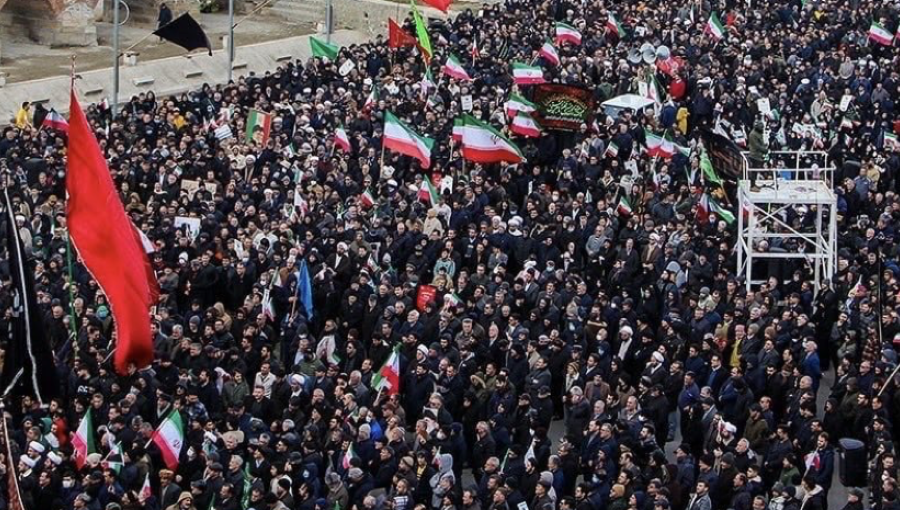
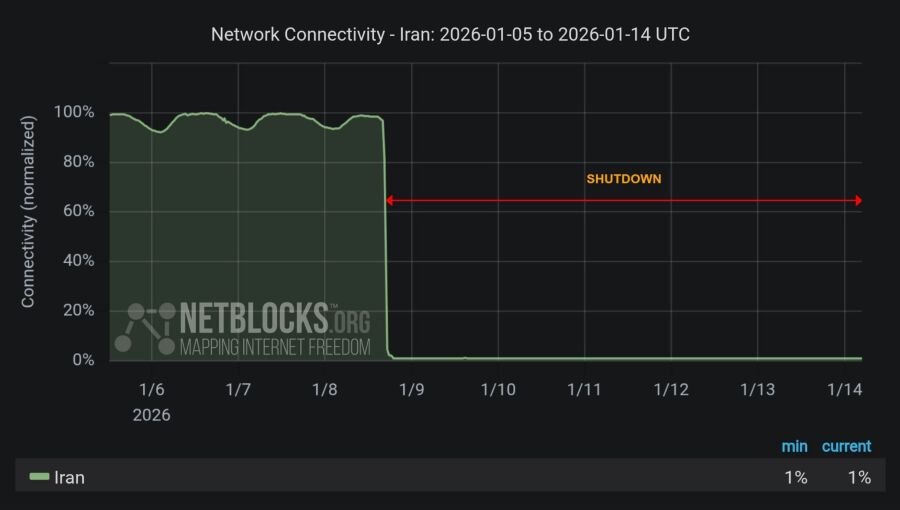
Iran has entered the seventh day of a near-total telecommunications blackout, with the disruption passing 144 hours and ranking among the longest on record, NetBlocks reported on January 14.

The network monitoring organisation said the blackout continues to isolate over 90 million Iranians from the outside world. Network data show the telecommunications shutdown began as nationwide protests erupted across the Islamic Republic.

According to several calls made to Iran by bne IntelliNews, locals were entirely uncontactable; however, several reports suggest that one-way calls to foreign telephone numbers were made. Social messaging apps have also been entirely disconnected, including several Iranian newspapers, who have been entirely disconnected; others have, however, somehow managed to stay online via government internet networks. 

The extended disruption comes as Iran faces its most significant wave of civil unrest in decades. The US-based Human Rights Activists News Agency reported on January 14 that at least 2,571 people have been killed during the protests, a death toll that surpasses any other round of protest or unrest in Iran in decades.

Details of the government crackdown began emerging on January 13 as some Iranians were able to make international phone calls for the first time in days after authorities initially severed nationwide communications when the demonstrations began.

Earlier, on January 14, Iran's judiciary chief Gholamhossein Mohseni-Ejei indicated that authorities would conduct swift trials and executions for detained protesters. US President Donald Trump warned he would "take very strong action" if executions proceed and announced he was terminating negotiations with Iranian leaders.

Iranian President Masoud Pezeshkian said on January 13 that the government's failure to address complaints from merchants and guild members in a timely manner created conditions for the protests, according to Tasnim News Agency.

The telecommunications blackout has prevented independent verification of events inside Iran and hindered communication between protesters and international media organisations. Previous internet shutdowns in Iran during the 2019 protests lasted approximately one week.


World’s sinking river deltas put over 236mn people at risk

World’s sinking river deltas put over 236mn people at risk
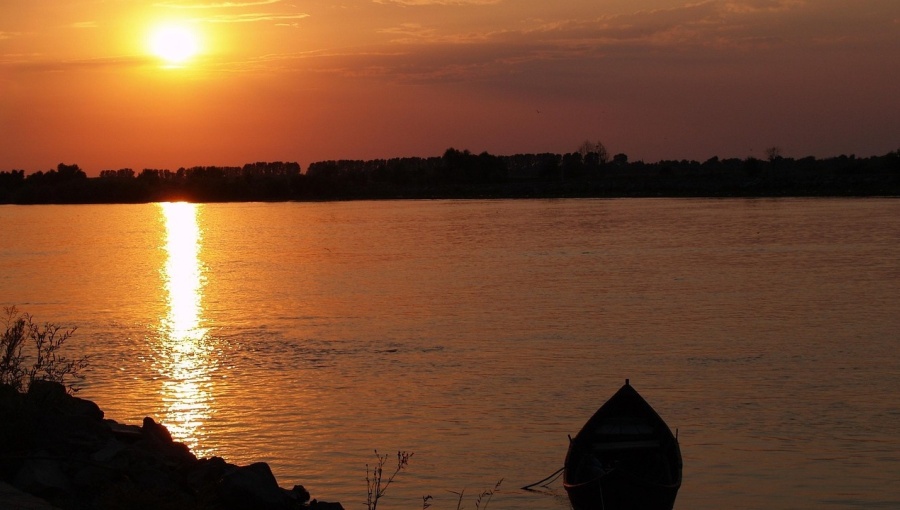
River deltas occupy just 1% of the Earth’s land surface but are home to between 350mn and 500mn people and include 10 of the world’s 34 megacities. / patricianiculae0 via Pixabay
By Clare Nuttall in Glasgow January 14, 2026

Some of the world’s most densely populated river deltas are sinking faster than sea levels are rising, exposing more than 236mn people to growing flood risk, according to a major international study published on January 14.

The research, published in the journal Nature and led by the University of California, Irvine, with partners including the University of East Anglia (UEA), found that human-driven land subsidence, largely caused by groundwater extraction, is now the dominant factor behind the loss of elevation in many deltas.

River deltas occupy just 1% of the Earth’s land surface but host between 350mn and 500mn people and include 10 of the world’s 34 megacities. They underpin global food production, fisheries, ports and major transport networks, making their stability critical to national and international economies. Yet these low-lying landscapes, much of them less than two metres above sea level, are increasingly threatened by a combination of sinking land and rising seas.

“Our study provides the first delta-wide, high-resolution subsidence observations across 40 major river delta systems, revealing not just where land is sinking, but quantifying how much,” said Leonard Ohenhen, an assistant professor of Earth System Science at UC Irvine and lead author of the study, in a press release bne IntelliNews.

Using satellite radar data, the researchers mapped elevation change across 40 of the world’s largest deltas. They found that at least 35% of all delta land is sinking, and in 38 of the 40 deltas studied, more than half of the total area is subsiding.

In 18 deltas, including the Nile, Ganges-Brahmaputra, Mekong, Chao Phraya, Pearl and Yellow rivers, the average rate of land subsidence already exceeds the rate of regional sea-level rise.

“In every delta that we monitored at least some portion is sinking faster than the sea surface is rising,” said Professor Robert Nicholls of UEA and the University of Southampton, a co-author of the study. “In many densely populated deltas, like the Mekong, Chao Phraya and Nile, vast areas are sinking faster than current sea-level rise rates threatening many millions of people.”

Human footprint

All deltas naturally sink over time as newly deposited sediments compact under their own weight, but the study found that human activity has dramatically accelerated this process.

The main drivers are “excessive groundwater extraction, oil and gas exploitation, and land-use changes associated with urbanisation and agriculture”, the authors said.

The researchers calculated that in 35% of the deltas studied, groundwater pumping was the dominant cause of subsidence, as cities, farms and industries draw water from underground aquifers.

Subsidence rates vary widely, from less than one millimetre per year in Canada’s Fraser Delta to more than one centimetre per year in China’s Yellow River Delta, with many areas sinking at more than double the current rate of global sea-level rise.

In the US, the Mississippi River Delta continues to sink rapidly. The study found it is subsiding at an average of 3.3 millimetres per year, while local sea levels along the Gulf Coast are rising at about 7.3 millimetres per year. In some places, however, the land is sinking much faster, by more than 89 millimetres per decade, compounding Louisiana’s long-running land-loss crisis.

Globally, climate change is pushing sea levels higher as polar ice melts and oceans warm. Average global sea levels are now rising by about four millimetres per year. But the researchers warned that in many deltas, sinking land is the more immediate threat.

“The dominance of subsidence persists even when compared to future sea level rise worst-case scenarios,” the study said. “This means that for hundreds of millions of coastal residents, the immediate threat is not just climate change-driven sea level rise alone, but the more immediate threat of the ground sinking beneath their feet.”

“These results give delta communities a clearer picture of what is driving persistent flood risk and overall vulnerability, and that clarity matters,” Ohenhen said. “If land is sinking faster than the sea is rising, then investments in groundwater management, sediment restoration and resilient infrastructure become the most immediate and effective ways to reduce exposure.”

Subsidence overlooked

Nicholls said subsidence is often overlooked until the damage is already visible.

“Subsidence is often ignored until it causes impacts,” he told bne IntelliNews. “A range of options are available including mitigate human-induced subsidence by removing the causes of subsidence e.g., stopping groundwater withdrawal where this is causing subsidence – successfully employed in some cities – notably Tokyo and Osaka but not a universal response as yet.”

Another option is to rebuild land naturally using river sediments, though this is difficult in built-up areas.

“Promote accretion with sedimentation – but this means allowing flooding with sediment-laden water so difficult in urban areas – possible in rural and natural areas – still more of a concept than a real measure,” he said.

In many places, however, societies simply adapt to the sinking land. “Accept the subsidence and adapt to the changes – for relative sea-level rise due to subsidence you can do the same things as you would for sea-level rise – advance, protect, accommodate or retreat. [This is] widely done,” Nicholls said.

He added that the findings highlight the need for more integrated coastal management. “More generally, subsidence shows the need to take a more holistic perspective of managing coasts and considering all the drivers of hazard and risk in management,” he said.

Asia at the epicentre

While all deltas are affected to some degree, the most severe impacts are concentrated in fast-growing developing economies, especially in Asia.

“It affects all river deltas to some degree, but deltas where human-induced changes are fastest see the biggest issues – so mainly developing countries see the big changes,” Nicholls said. “Deltas are also concentrated in east, south-east and east Asia so there is a regional dimension to this issue.”

These regions are home to megacities such as Bangkok, Ho Chi Minh City, Shanghai and Dhaka, where tens of millions of people depend on fragile delta landscapes for housing, jobs, food and water.

Looking further ahead, Nicholls warned that the long-term viability of delta cities is increasingly uncertain.

“To my knowledge, no city has been abandoned to date due to subsidence and enhanced protection has been the norm,” he said. “However, New Orleans has not fully recovered post-Katrina and in Louisiana a lot of people moved vertically up (to Baton Rouge) which is a little higher.”

“Looking to the future your question is a concern and cities in deltas will only remain viable with substantial additional adaptation and efforts to address subsidence as well,” he added.

The researchers say their high-resolution mapping should help governments and planners decide where to focus scarce resources, combining efforts to slow subsidence with long-term climate adaptation as rising seas continue to push against the world’s most vulnerable landscapes.
Scientists in Tajikistan puzzled by expanding glacier

Scientists in Tajikistan puzzled by expanding glacier
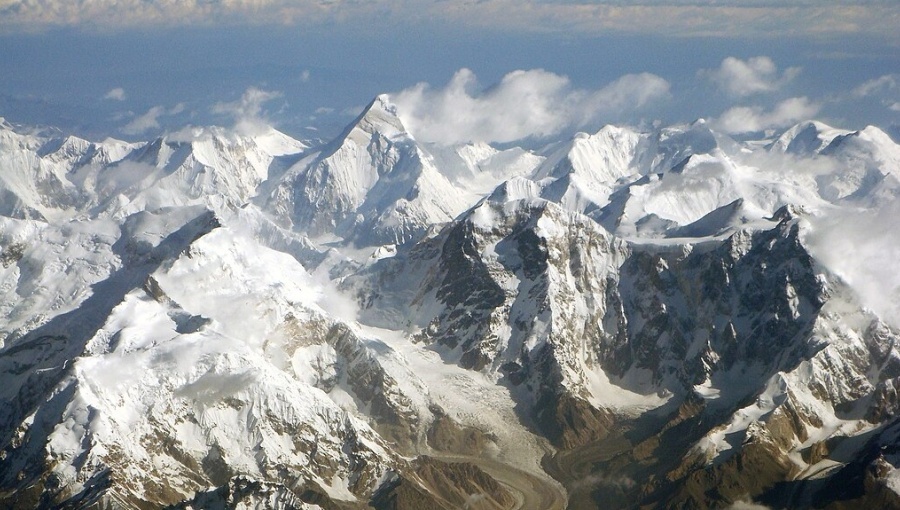
Scientists hope that if they can solve what lies behind the unusual expanding glacier on the "Roof of the World", gathered data might help in efforts to protect other glaciers that are melting. / Chen Zhao, cc-by-sa 2.0
By bne IntelliNews January 12, 2026

Scientists in Tajikistan are puzzled by a glacier that is expanding.

With the world losing perhaps a thousand or so glaciers per year because of anthropogenic climate change, the discovery in the Pamir Mountains is highly unusual.

A study published by the journal Nature refers to the oddity that is the Kon-Chukurbashi high-altitude ice cap in a part of the Earth sometimes referred to as the “Roof of the World”.

At around 5,810 metres, or 19,000 feet, up in the Pamirs, an international team of scientists set out to understand the glacier’s unexpected resilience.

The scientists have already been in the headlines for removing two glacier ice core samples, one of which they transported to an underground sanctuary in Antarctica called the Ice Memory Foundation. The repository will serve as a source of climate information for centuries to come.

It turns out that the other core has been sent to the Institute of Low Temperature Science at Hokkaido University in Sapporo, Japan, where Yoshinori Iizuka, a professor at the university, will analyse the sample in an effort to understand the anomaly of the expanding ice cap.

“If we could learn the mechanism behind the increased volume of ice there, then we may be able to apply that to all the other glaciers around the world,” Iizuka told AFP. “That may be too ambitious a statement. But I hope our study will ultimately help people.”

Tajikistan’s glaciers are retreating at an alarming rate, with over one thousand already gone completely and dozens more under threat, according to an Atlas of Environmental Change published by the United Nations Environment Programme (UNEP) last September.

The findings underscore the urgency of regional cooperation as rising temperatures put unprecedented pressure on Central Asia’s water resources.

Some of the world’s last resilient glaciers are located in Tajikistan’s Pamir Mountains, but they are being destabilised by snowfall shortages, a study from the Institute of Science and Technology Austria (ISTA) has found.

In October, a giant chunk broke away from a large glacier in the Pamirs, triggering warnings from scientists to mountain villages in the vicinity.