Sunday, February 01, 2026


PAKISTAN

Stance on Iran

Published January 31, 2026 
DAWN


WHILE the US continues to mull a new attack against Iran, it is welcome that the upper echelons of the Pakistani state have made clear their stance against aggression targeting the neighbouring country. Prime Minister Shehbaz Sharif spoke to Iranian President Masoud Pezeshkian on Thursday, reaffirming the need for “sustained dialogue and diplomatic engagement” at this critical time.

The foreign ministers of both states also had a phone conversation, with Ishaq Dar emphasising that diplomacy was “the only viable way forward”. Meanwhile, a Foreign Office statement correctly pointed out that “this region cannot afford war”, adding that Pakistan opposes “the use of force … against Iran” as well as interference in Iran’s internal affairs.

Pakistan’s stance is in line with the regional consensus, as previously both Saudi Arabia and the UAE have stated that their soil and facilities will not be used against the Islamic Republic. Turkiye is similarly ramping up diplomatic efforts; the Turkish foreign minister hosted his Iranian counterpart on Friday in an effort to prevent the march towards a new, devastating regional war.

Pakistan has a long border with Iran, and any instability in the region will directly affect this country. While there have been ups and downs, the Pakistan-Iran relationship has been largely cordial. Along with a joint frontier, both nations share historical, cultural and spiritual ties. Moreover, Pakistan has displayed moral clarity by opposing foreign intervention against a sovereign state. The Gulf monarchies are similarly wary of the fallouts of an American attack, mainly because senior Iranian officials have said US bases in the region will be targeted if Iran is attacked.

However, there are media reports that suggest the Americans are trying to pressure Riyadh into quietly acquiescing to a US attack. The Saudi defence minister is currently in Washington. The US should abandon its threatening posture against Iran and come to the table while respecting Iran’s sovereignty. The Iranians say they have drawn lessons from last year’s US-Israeli aggression, and will hit back harder.

Hence, the American presumption that this will be a short, clean campaign is erroneous; any war will be bloody and incredibly destructive for the global economy. Yet Iran must also make efforts to address the legitimate grievances of its people and improve the rights situation, though any change must be internal, and not orchestrated from abroad.

Published in Dawn, January 31st, 2026

Iran considers EU armies as ‘terrorist groups’ in retaliatory move

 February 1, 2026 


Iranian Parliament Speaker Mohammad Baqer Qalibaf looks on after a press conference with Lebanese Parliament Speaker Nabih Berri, in Beirut, Lebanon on October 12, 2024. —Reuters/File

Iran considers as “terrorist groups” the armies of EU countries that listed the Islamic Revolutionary Guard Corps (IRGC) on the bloc’s list of terrorist organisations, Parliament Speaker Mohammad Baqer Qalibaf said on Sunday.

The EU marked a symbolic shift in its approach to Iran’s leadership on Thursday by designating the Revolutionary Guards as a terrorist organisation, following what turned out to be one of the country’s deadliest crackdowns of protests since its establishment in 1979.


#Iran's Parliament Speaker: Under the law of reciprocal action against designating the #IRGC as a terrorist organization, the armies of European countries are considered terrorist entities. The EU will bear full responsibility for the consequences of this move.
Quote
Iran Nuances
@IranNuances
Members of #Iran's Parliament wore #IRGC uniforms in today's session to protest against the EU's decision to designate the IRGC as a 'terrorist organization'.


“By trying to hit the Revolutionary Guards … the Europeans actually shot themselves in the foot and once again made a decision against the interests of their people by blindly obeying the Americans,” Mohammad Baqer Qalibaf told his fellow MPs, all wearing Revolutionary Guards uniforms in support of the elite force.

“According to Article 7 of the law on countermeasures against the designation of the Revolutionary Guards as a terrorist organisation, the armies of European countries are considered terrorist groups.”

Qalibaf added that the national security parliamentary commission would deliberate on the expulsion of EU countries’ military attaches and follow up on the issue with the foreign ministry.

Set up after Iran’s 1979 Islamic Revolution to protect the ruling system, the IRGC have great sway in the country, controlling swathes of the economy and armed forces.


Demonstrators in Milan protest ICE unit at Winter Olympics


COLLEEN BARRY
Sat, January 31, 2026 


A person holds a sign, during an Anti-ICE demonstration, ahead of the 2026 Winter Olympics, in Milan, Italy, Saturday, Jan. 31, 2026. (AP Photo/Antonio Calanni)(ASSOCIATED PRESS)


People take part in an Anti-ICE demonstration, ahead of the 2026 Winter Olympics, in Milan, Italy, Saturday, Jan. 31, 2026. (AP Photo/Antonio Calanni)(ASSOCIATED PRESS)


People take part in an Anti-ICE demonstration, ahead of the 2026 Winter Olympics, in Milan, Italy, Saturday, Jan. 31, 2026. (AP Photo/Antonio Calanni)(ASSOCIATED PRESS)

MILAN (AP) — Hundreds of demonstrators gathered Saturday in Milan to protest the deployment of U.S. Immigration and Customs Enforcement agents during the upcoming Winter Olympics, unbothered by the fact that agents would be stationed in a control room and not operating on the streets.

The protest in Piazza XXV Aprile, a square named for the date of Italy’s liberation from Nazi fascism in 1945, drew people from the left-leaning Democratic Party, the CGIL trade union confederation and the ANPI organizations that protect the memory of Italy’s partisan resistance during World War II, along with many other people.

Organizers handed out plastic whistles, which participants blew as music blared from a van. The protest was as much against the news that agents from a division of ICE would participate in security for the U.S. delegation as against what many of those present said they saw as creeping fascism in the United States

“No thank you, from Minnesota to the world, at the side of anyone who fights for human rights,’’ read one banner. “Never again means never again for anyone,’’ read another, and “Ice only in Spritz,’’ a reference to a popular aperitif, read yet another.

The ICE agents to be deployed to Milan are not from the same unit as the immigration agents cracking down in Minnesota and other U.S. cities.

News of the deployment of ICE agents has provoked a backlash in Italy. Milan Mayor Giuseppe Sala has said they were not welcome. Interior Minister Matteo Piantedosi has been called to Parliament to testify about the deployment this week.

Protester Silvana Grassi held a sign that read “Ice = Gestapo.” She said the scenes of ICE agents in Minneapolis shooting and killing protesters and detaining children were deeply upsetting.

“It makes me want to cry to think of it,’’ Grassi said. “It’s too terrible. How did they elect such a terrible, evil man?’’

Homeland Security Investigations, an ICE unit that focuses on cross-border crimes, frequently sends its officers to overseas events like the Olympics to assist with security. The ICE arm at the forefront of the immigration crackdown in the U.S. is known as Enforcement and Removal Operations, and there is no indication its officers are being sent to Italy.

“Even if it’s not the same ones, we don’t want them here,’’ Grassi said.

Paolo Bortoletto, also holding a banner, was aware that the officers would have an investigative and not a street role.

Still, he said, “We don’t want them in our country. We are a peaceful country. We don’t want fascists. It’s their ideas that bother us."
Democrats flip Texas state Senate seat in shock upset

Fort Worth Democrat Taylor Rehmet, a machinist and Air Force veteran, defeated Southlake Republican to fill the vacant state Senate seat

Julia Mueller
Sat, January 31, 2026 

Democrats scored a stunning upset on Saturday in a special election runoff for Texas Senate, according to a projection from Decision Desk HQ, giving the party a major boost ahead of the November midterms.

Fort Worth Democrat Taylor Rehmet, a machinist and Air Force veteran, defeated Southlake Republican Leigh Wambsganss to fill the vacant state Senate District 9.

The district favored President Trump — who endorsed Wambsganss earlier on Saturday — by 17 points in 2024. The race went to a runoff after none of the candidates were able to clinch a majority in the November election.

Rehmet’s overperformance in the fall stoked concerns for the GOP, and a number of prominent party leaders, including Gov. Greg Abbott (R), intervened in the race in an effort to boost Wambsganss.

“When a grassroots union organizer like Taylor Rehmet overperforms by almost 20 points and forces a runoff, it couldn’t be any clearer that voters are tired of Republican bullshit,” Texas Democratic Party Chairman Kendall Scudder said in a statement after the November race.


Rehmet’s victory is sure to fuel Democratic optimism heading into the midterms, where the party is hoping to flip the House and potentially even the Senate amid growing anxiety over the economy and anger over Trump’s immigration policies.

The seat opened up after Republican state Sen. Kelly Hancock was tapped as acting state comptroller.

Copyright 2026 Nexstar Media, Inc. All rights reserved. 


Houston Democrat wins former Rep. Sylvester Turner’s seat ahead of contested primary

Liz Crampton
Sat, January 31, 2026 
POLITICO US


Harris County Attorney Christian Menefee, a Democrat, won a special runoff election on Saturday to serve the remainder of former Texas Rep. Sylvester’s term, who died last year.

The Associated Press projected that Menefee beat Amanda Edwards, an attorney and former member of the Houston City council, after a protracted process to fill the central Houston seat after Turner's death in March 2025. The process was drawn out by GOP Gov. Greg Abbott’s refusal to quickly schedule a special election following Turner’s death and a crowded field that triggered a runoff following the first round of voting in November.

But the contest between the pair will continue: Both Menefee, 37, and Edwards, 44, are participating in the March primary for a newly refashioned 18th Congressional District, going up against Rep. Al Green, 78. That winner will be heavily favored to win a full two-year term in November.

The March primary is the latest example of the generational change debate animating the Democratic Party, as the two young Democrats take on progressive icon Green, who has been in Congress for more than two decades. It's a fight that’s taking place nationwide, pitting young and old factions of the party against each other as they both argue they’re better fighters against Republicans.

Residents in this district have been without consistent representation since former Rep. Sheila Jackson Lee died in 2024. Lee held the seat for three decades.

Green’s current district was scrambled by the Texas GOP’s redistricting, prompting him to jump into the race to represent a new district that contains many of his constituents.

Menefee’s victory is a huge boost to his public profile ahead of the primary. Early voting begins in two weeks.

TRUMP SEZ

Trump says India will buy oil from Venezuela, not Iran


Reuters 
Published February 1, 2026 


United States President Donald Trump on Saturday said India will buy Venezuelan oil, as opposed to purchasing oil from Iran.

“We’ve already made that deal, the concept of the deal,” Trump told reporters while on Air Force One, en route to Florida from Washington, DC.

Trump also said on Saturday that China was also welcome to make a deal with the US to buy Venezuelan oil.

Trump’s comment came a day after the US told Delhi it could soon resume purchases of Venezuelan oil to help replace imports of Russian oil, three people familiar with the matter told Reuters.

India pledged to slash Russian crude oil purchases after Washington also hiked tariffs related to that activity, and India is on track to lower its Russian oil imports by several hundred thousand barrels per day in the coming months, according to the sources, who declined to be identified.

Trump imposed 25 per cent tariffs on countries buying Venezuelan oil, including India, in March 2025, and his administration ramped up a campaign against Venezuelan President Nicolas Maduro, whom US forces captured on January 3.


Since then, Washington has begun directing the Caracas government and plans to control Venezuela’s oil industry indefinitely.

The US effort to supply Venezuelan crude to India comes as Washington seeks to reduce the oil revenue that is funding Russia in its war in Ukraine.

Last week, Indian Oil Minister Hardeep Singh Puri said India is diversifying its crude sources as its Russian oil imports fall.

Two of the Reuters sources said India is preparing to cut Russian oil imports to below one million barrels per day soon.

In January, they were around 1.2 million bpd, and are projected to decline to about 1m bpd in February and 800,000 bpd in March, one of those two sources said.

The second of the two sources said those imports are expected eventually to decline to about 500,000-600,000 bpd, helping the nation clinch a trade deal with the US.

US tariffs on Indian goods reached 50pc in August as Washington added a further 25pc tariff on purchases of Russian oil.

Challenges posed by Western sanctions eventually prompted Indian refiners to increase imports from other sources.
BALOCHISTAN IS A COUNTRY

Pakistan combing for perpetrators after deadly separatist attacks


Pakistan has been battling a Baloch separatist insurgency for decades. 
(AFP)

AFP
February 01, 2026

Around a dozen sites where the attacks took place — including the provincial capital Quetta — remained sealed off

The Baloch Liberation Army, the province’s most active militant separatist group, claimed responsibility for the attacks


QUETTA, Pakistan: Pakistan forces were hunting on Sunday for the separatists behind a string of coordinated attacks in restive Balochistan province, with the government vowing to retaliate after more than 120 people were killed.

Around a dozen sites where the attacks took place — including the provincial capital Quetta — remained sealed off, with troops combing the area a day after militants stormed banks, jails and military installations, killing at least 18 civilians and 15 security personnel, according to the military’s count.

At least 92 militants were also killed, the military added, while an official said that a deputy district commissioner had been abducted.

Mobile Internet service across the province has been jammed for more than 24 hours, while road traffic is disrupted and train services suspended.

After being rocked by explosions, typically bustling Quetta lay quiet on Sunday, with major roads and businesses deserted, and people staying indoors out of fear.

Shattered metal fragments and mangled vehicles litter some roads.

“Anyone who leaves home has no certainty of returning safe and sound. There is constant fear over whether they will come back unharmed,” Hamdullah, a 39-year-old shopkeeper who goes by one name, said in Quetta.

The Pakistan military said it was conducting “sanitization operations” in the areas that had been targeted in Saturday’s attacks.

“The instigators, perpetrators, facilitators and abettors of these heinous and cowardly act... will be brought to justice,” it said in a statement Saturday night.

The Baloch Liberation Army (BLA), the province’s most active militant separatist group, claimed responsibility for the attacks in a statement sent to AFP.

The group said it had targeted military installations as well as police and civil administration officials in gun attacks and suicide bombings.

Saturday’s attacks came a day after the military said it killed 41 insurgents in two separate operations in the province.

Pakistan has been battling a Baloch separatist insurgency for decades, with frequent armed attacks on security forces, foreign nationals and non-local Pakistanis in the mineral-rich province bordering Afghanistan and Iran.

Pakistan’s poorest province despite an abundance of untapped natural resources, Balochistan lags behind the rest of the country in almost every index, including education, employment and economic development.

Baloch separatists have intensified attacks on Pakistanis from other provinces working in the region in recent years, as well as foreign energy firms that they believe are exploiting its riches.

The separatists attacked a train with 450 passengers on board last year, sparking a two-day siege during which dozens of people were killed.


‘We will fight this war’: CM Bugti says 145 terrorists killed in 40 hours across Balochistan

Published February 1, 2026
DAWN/AFP


Security personnel stand at the blast site in Quetta on Feb 1, 2026, a day after a terrorist attack. — AFP

Balochistan Chief Minister Sarfraz Bugti on Sunday expressed the firm resolve to eliminate terrorists after a spate of coordinated attacks across the province, adding that 145 militants were killed within a span of 40 hours.

The military’s media affairs wing said terrorists of Fitna-al-Hindustan carried out a spate of attacks across Balochistan on Saturday, responding to which the security forces killed 92 terrorists.

The state has designated Balochistan-based terrorist groups as Fitna-al-Hindustan to highlight India’s alleged role in terrorism and destabilisation across Pakistan.

Addressing a press conference in Quetta on Sunday, CM Bugti said 145 terrorists were killed in 40 hours, adding that their bodies were in the custody of the authorities.


“This is the highest number since Pakistan is facing this war on terror,” he highlighted.

“Our 17 law enforcement people, including police and FC and one Navy personnel, were martyred, and our civilian casualties are 31, including some injured,” CM Bugti said.

The Inter-Services Public Relations (ISPR) had said on Saturday night that 15 personnel were martyred during the operations and 18 civilians, including women and children, were also killed during the attacks.

Stating that the state shared the grief of bereaved families, CM Bugti assured them that the welfare of the martyrs’ children was the government’s responsibility.

“We had intelligence reports that this kind of operation is being planned, and as a result of those, we had already started pre-operations a day before, in which around 40 terrorists were killed in Shaban and Panjgur,” he detailed.

The chief minister noted that the terrorists had planned to attack Quetta from Shaban, adding that the forces were “very vigilant”.

CM Bugti termed the Gwadar incident, where he said five women and three children were killed, as the “most painful”.

Noting that a narrative of independence had been created, he said, “When you could not even free a union council, a ward, why are you making Baloch fuel and on whose instructions? India’s.

“Whenever Pakistan begins to take off economically or on foreign fronts, you try to destabilise Pakistan by carrying out such attacks on India’s directives.”

The chief minister said the terrorists had planned to enter the Red Zone and occupy important assets, which were foiled.

However, he added, “Except for Nushki, where it took us some time to disengage them. Nushki is completely clear now.”

CM Bugti said tracing and combing operations were underway and vowed, “We will not let them go.”

The chief minister also assailed attempts to frame terrorism as a “political issue”.

“Is BLA a registered party with whom you have to hold a dialogue? […] They purely want to impose their ideology on us with the force of guns and push the Baloch into a futile war. […] You are linking this war with deprivation and rationalising this violence too.”

He asserted that “rationalising this violence in the name of ethno-nationalism was a direct support to BLA”.

Bugti then asked what some people wished for to be the outcome of such a dialogue. “As a result of dialogue, they want us to surrender? We will not. We will fight this war for a thousand years,” he affirmed.

“We are not ready to surrender even for a second. They can carry out a thousand such attacks. They can destabilise us, but they cannot take an inch from us. This Pakistan is not for breaking away. These people cannot do it. And neither can their masters.”

CM Bugti said “tools such as certain Sardars and social media” were being used to “disintegrate” the youth from the state. He expressed the resolve to further boost engagement with the population and the youth.

Responding to a question, he asserted that terrorists were only terrorists and that it upset him when they were called “Baloch terrorists”.

Noting that terrorists blend themselves within the civilian population, the chief minister asked, “Should we become brutal like them?

“We could kill 10 [terrorists] by throwing one mortar, but what about the 20 civilians with them? This is the only reason why we do not want to become brutal like them.”

CM Bugti also took exception to those arguing that the Balochistan “issue cannot be solved with force”. “When has force ever been used in Balochistan?” he asked rhetorically, adding that no military operation was conducted in any city.

“It is a purely intelligence-driven war,” the chief minister stressed, noting that only intelligence-based operations (IBOs) were conducted in the province.

He also accused India’s Research & Analysis Wing (RAW) of backing the terrorist activities, asserting that the authorities had “solid and circumstantial evidence”.

Responding to a question, CM Bugti expressed the state’s firm resolve to continue the war against terrorism.

“Why will we get tired? We are the state of Pakistan. We will not get tired,” he said, adding that military operations were not needed currently as IBOs were being carried out.

The chief minister noted that while “all kinds” of arms were employed in the recent attacks, those left behind after the US withdrawal from Afghanistan had “spread into the market and were provided to them by their masters”.

‘Mopping-up’ operation underway: defence minister


Separately, Defence Minister Khawaja Asif said peace has been established in Balochistan after yesterday’s attacks and security forces were now “engaged in a mopping-up operation”.

“At this moment in time, peace has been established, and the coordinated attack has been repulsed completely, and they (terrorists) have retreated,” Asif said while addressing the media in Sialkot.

The defence minister further said that attempts were made to target the FC headquarters in Nushki and Dalbadin, adding that all attacks were foiled.

“They attempted to carry out a suicide attack in Dalbadin,” he said, adding that “all targets have been neutralised”.

Echoing Interior Minister Mohsin Naqvi’s statements, Asif blamed the incidents on neighbouring India, adding that the attacks aimed to “destabilise the country at a time when it is on the path to progress”.

“Our intelligence and the confessional statements by terrorists all prove linkages to India,” the defence minister said.

Pointing out that the BLA was now making use of female bombers, Asif said two of Saturday’s attacks involved women perpetrators.

“The minds of young women are being polluted,” he said, adding that the BLA was now targeting “labourers and poor people struggling to survive”.
US remains Pakistan’s ‘steadfast partner’ in efforts to ensure peace

Earlier in the day, US Charge de’ Affaires Natalie Baker strongly condemned the Balochistan terrorist attacks and affirmed that the United States remained a “steadfast partner” of Pakistan in efforts to ensure peace.

“The United States strongly condemns January 31 attacks and acts of terrorist violence against security personnel and civilians in Balochistan, claimed by the Balochistan Liberation Army, a US-designated Foreign Terrorist Organisation,” Baker said on X.

On behalf of the US, she extended condolences to the victims of terrorism, their families and all those affected. “The Pakistani people deserve to live free from violence and fear,” she said.

Baker added: “The United States remains a steadfast partner of Pakistan in its efforts to ensure peace and stability. We stand in solidarity with Pakistan during this difficult time.”


In August 2025, the US also designated the BLA and its Majeed Brigade squad as foreign terrorist organisations (FTOs).

Besides the US, the British High Commission, Qatar and Saudi Arabia had also condemned the latest terrorist activities.

The interior minister held India responsible for the series of attacks, asserting that the authorities would go after every single one of those involved and the “masters behind them”.

In 2024, the BLA emerged as a key perpetrator of terrorist violence in Pakistan.

 Myanmar junta calls coup-protesting civil servants back to work


AFP
February 01, 2026


Tens of thousands of public workers left their posts in a surge of civil disobedience after the junta took power in 2021

Some found private employment, while others joined pro-democracy rebels defying the military

YANGON: Myanmar’s junta called on Sunday for ex-civil servants who quit their jobs in protest over the coup five years ago to report back to work, pledging to remove absent state employees from “blacklists.”

After the military snatched power in a coup on February 1, 2021, tens of thousands of public workers, including doctors and government administrators, left their posts in a surge of civil disobedience.

Some found private employment, while others joined pro-democracy rebels defying the military in a civil war that has killed tens of thousands on all sides.
Last week, the junta completed a month-long election it has touted as a return to civilian rule.

But the dominant pro-military party won a walkover victory in a vote democracy watchdogs say was stacked with army allies to prolong its grip on power.

The junta’s National Defense and Security Council said civil servants who “left their workplaces without permission for various reasons” since February 2021 should “report and make contact with the offices of their former departments.”

“Following verification, employees found not to have committed any offense, as well as those who had committed offenses but have already served their sentences and whose names still appear on the blacklists, are being removed from the blacklists,” the council said in a statement published in the state-run Global New Light of Myanmar newspaper.
Public employees who had been absent from work were placed on blacklists, “leading some to remain in hiding,” it added.

After the coup, in which the military ousted the elected government of democratic figurehead Aung San Suu Kyi, tens of thousands of striking public workers joined the “Civil Disobedience Movement” in protest.

The junta responded with a crackdown on demonstrators, relying on tips from informers and surprise raids to round up those on strike.

Today, more than 22,000 people are languishing in junta jails, according to the Assistance Association for Political Prisoners monitoring group.

Suu Kyi remains in military detention and her massively popular party has been dissolved.
The junta’s phased elections ended last Sunday without voting in one in five of Myanmar’s townships, amid fighting that has left large swaths of the country outside military control.
Parties that won 90 percent of seats in the previous election in 2020 — won in a landslide by Suu Kyi’s party — did not appear on the ballot this time, the Asian Network for Free Elections said.
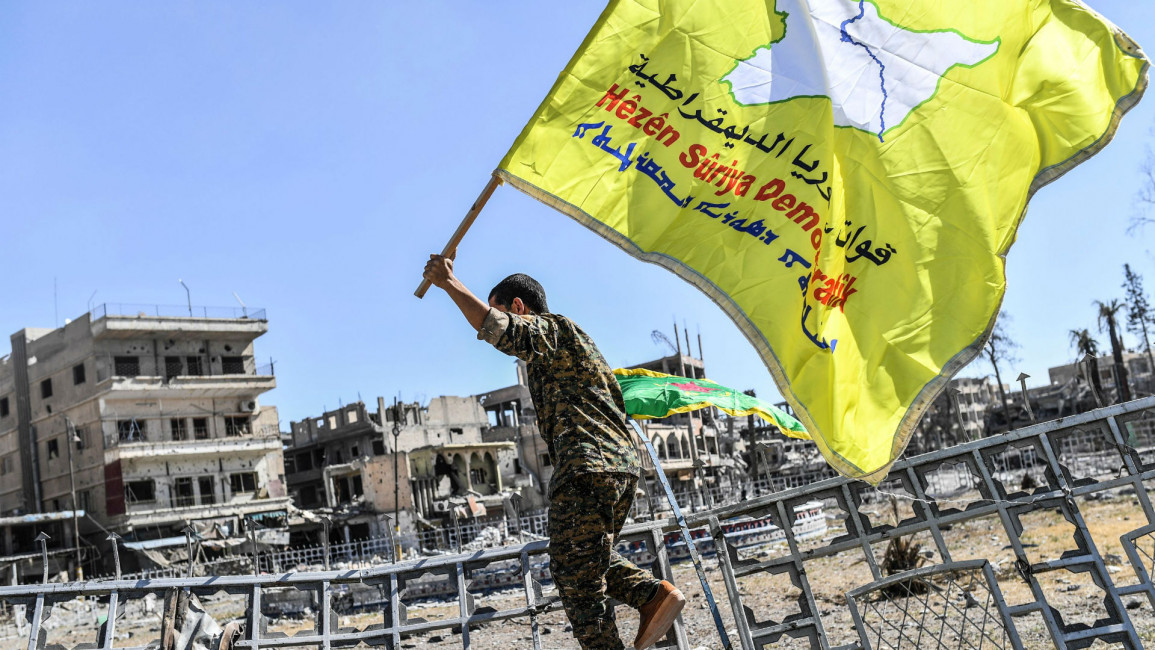
Turkey blocks aid convoy to Syria's Kurdish town of Kobane: NGOs


Turkish authorities have blocked a convoy carrying aid to Kobane, a predominantly Kurdish town in northern Syria encircled by the Syrian army


The New Arab Staff & Agencies
31 January, 2026

Turkish authorities have blocked a convoy carrying aid to Kobane, a predominantly Kurdish town in northern Syria encircled by the Syrian army, NGOs and a Turkish MP said on Saturday.

They said the aid was blocked before it reached the Turkey-Syria border, despite an agreement announced on Friday between the Syrian government and the country's Kurdish minority to gradually integrate the Kurds' military and civilian institutions into the state.

Twenty-five lorries containing water, milk, baby formula and blankets collected in Diyarbakir, the main city in Turkey's predominantly Kurdish southeast, "were prevented from crossing the border", said the Diyarbakir Solidarity and Protection Platform, which organised the aid campaign.

"Blocking humanitarian aid trucks carrying basic necessities is unacceptable, both from the point of view of humanitarian law and from the point of view of moral responsibility," said the platform, which brings together several NGOs.

Earlier this week, residents of Kobane told AFP they were running out of food, water and electricity because the city was overwhelmed with people fleeing the advance of the Syrian army.

Kurdish forces accused the Syrian army of imposing a siege on Kobane, also known as Ain al-Arab in Arabic.

"The trucks are still waiting in a depot on the highway," said Adalet Kaya, an MP from Turkey's pro-Kurdish DEM party who was accompanying the convoy.

"We will continue negotiations today. We hope they will be able to cross at the Mursitpinar border post," he told AFP.

Mursitpinar is located on the Turkish side of the border, across from Kobane.

Turkish authorities have kept the border crossing closed since 2016, while occasionally opening it briefly to allow humanitarian aid to pass through.


DEM and Turkey's main opposition CHP called this week for Mursitpinar to be opened "to avoid a humanitarian tragedy".

Turkish authorities said aid convoys should use the Oncupinar border crossing, 180 kilometres (110 miles) away.

"It's not just a question of distance. We want to be sure the aid reaches Kobane and is not redirected elsewhere by Damascus, which has imposed a siege," said Kaya.

After months of deadlock and fighting, Damascus and the Syrian Kurds announced an agreement on Friday that would see the forces and administration of Syria's Kurdish autonomous region gradually integrated into the Syrian state.

Kobane is around 200 kilometres from the Kurds' stronghold in Syria's far northeast.

Kurdish forces liberated the city from a lengthy siege by the Islamic State group in 2015 and it took on symbolic value as their first major victory against the militants.

Kobane is hemmed in by the Turkish border to the north and government forces on all sides, pending the entry into the force of Friday's agreement.


Reshaping Syria's northeast: What now for the SDF?


The government's push into the northeast is reshaping Syria's balance of power, leaving the SDF's future and the country's reunification hanging in the balance

Analysis
Cian Ward
29 January, 2026


Deir Az-Zour, Syria - Two nail-biting hours after the deadline for last week's ceasefire in northeast Syria expired on Saturday, Syria’s Ministry of Defence announced that they had decided to extend the truce for an additional 15 days.

The announcement came following a major conflagration in Syria since mid-January, when the government launched an offensive against the Kurdish-majority Syrian Democratic Forces (SDF) in Syria’s northeast.

It followed a week of clashes in Aleppo’s Kurdish neighbourhoods of Achrafieh and Sheikh Maqsoud, and a government offensive in SDF positions in eastern Aleppo.

Just under a week into the operation in northeast Syria, tribes in the largely Arab provinces of Raqqa and Deir Az-Zour, who had been allies with the SDF for years, defected to the side of the government. This forced the SDF to retreat to Kobani, Qamishli, and Hasakah, where larger populations of Kurds are situated.

On 18 January, a 14-point peace deal was agreed between the two sides that stipulated the SDF’s integration, but it was never effectively implemented on the ground as both sides kept fighting.


A second deal was then announced that provided the SDF with four days for “internal consultations” to develop a concrete plan on how they could integrate. On Saturday, the deadline expired without response, and for two hours the country held its breath, not knowing if the northeast was about to be plunged back into war. At the 11th hour, the ceasefire was eventually extended, and is now due to expire on 8 February.

SDF commander Mazloum Abdi was in Damascus on Tuesday for further talks as part of efforts to reach a new security arrangement in the northeast.

A source close to the Kurdish side told Al-Araby Al-Jadeed, The New Arab's sister site, that the government’s internal security forces are expected to enter Hasakah city alongside the SDF’s internal security - perhaps as soon as the next 48 hours.

Cian Ward


Washington's shifting loyalties

The US announced plans last week to transfer 7,000 Islamic State (IS) prisoners from detention facilities under the control of the SDF to Iraq. The 15-day ceasefire extension was ostensibly to provide the US military time to achieve this.

Washington’s decision could signal a degree of pessimism about the ability of the SDF and the government to agree on an integration deal, alongside its diminished trust in the SDF’s capacity to guarantee the security of its prisons in the face of continued fighting.

According to Reuters, the US had reportedly given Damascus the tacit green light to launch the recent operation against its erstwhile ally.

The SDF have lost significant amounts of territory that they held in northeastern Syria following the government's recent offensive. [Getty]

The US played a role in the very formation of the SDF in 2015 by pushing a collection of left-leaning Kurdish-dominated groups - the largest of which was the YPG - into forming a more coherent military and political structure.

The SDF became Washington’s preferred security partner and was provided with large amounts of US weapons, training, and military support to pursue its fight against IS in Syria.

It is clear that Washington still hopes for a deal between the two sides, with Tom Barrack, US Special Envoy to Syria, posting on X that, “the ceasefire represents a pivotal inflection point, where former adversaries embrace partnership over division”.

However, what is also evident is that the US has switched its allegiance and now views Damascus as its primary partner in Syria moving forward - ultimately deeming that its interests lie in the SDF’s complete integration, rather than Syria’s continued fragmentation.

For many on the SDF side, however, this has come as an abject betrayal of years of blood, sweat, and tears that they have spent fighting IS on Washington’s behalf.

At the same time, the US administration was reportedly angry that Syrian forces had encircled Kurdish-majority cities despite the 18 January truce, with officials considering reimposing sanctions if mass violence against Kurds takes place and fighting continues.

Shelly Kittleson


The SDF's next move


One of the biggest questions is what comes next. Will the SDF lay down its weapons or will it continue its fight for a decentralised Syria? Could internal disagreements cause a split within the movement itself?

Following the 20 January ceasefire, decisions about the future now rest with the SDF. This period of internal consultation is due to them “hypothetically trying to get everyone who has power within the movement on board with the deal,” Alexander McKeever, researcher and author of the This Week in Northern Syria newsletter, told The New Arab.

He notes that whilst the SDF and their civilian government have official transparent hierarchies, “it is unclear if that has any bearing on how decisions are made. Instead, decision making is made by a number of senior cadres,” whose influence isn't necessarily reflected in their position.

There is a common line given by the pro-government side that SDF commander Mazloum Abdi is a moderate who is seeking a deal, but is being spoiled by others, perhaps with PKK ties, behind the scenes. However, according to McKeever such claims are entirely unsubstantiated.

The US has switched its allegiance and now views Damascus as its primary partner in Syria moving forward. [Getty]

In reality, it is notoriously difficult to assess the internal divisions within this shadowy network of cadres as they are extremely effective at showing a united front publicly.

“At the end of the day, this is a well-disciplined guerilla movement in which every major decisionmaker has spent years in the mountains socialised within the organisation [fighting the Turks,]” he adds.

This makes it “quite hard to predict whether or not they could be a split,” he explained to TNA. The SDF has no track record of public splits, however, the government's offensive represents the single gravest existential threat it has ever faced, and so the possibility can’t be ruled out.

Islamic State prisoners

The government’s offensive caused several IS prisons to be abandoned by the SDF as it withdrew, with a number of IS detainees and family members escaping over the last week.

At al-Shaddadi prison in Hasakah province, 120 IS members escaped after Arab tribal elements reportedly seized the facility and released those inside. According to the government, 83 of those have since been recaptured.

Despite this, it remains unclear how many of those accused of IS affiliation inside the SDF’s prison network are actually members of the group. Large families gathered outside al-Aqtan prison in Raqqa province last week demanding the release of their relatives, as a component of SDF fighters holed up inside negotiated their safe transfer to SDF territory.

Paul Iddon

Those families denied that their imprisoned relatives were members of IS, instead claiming that they had been unjustly targeted by the SDF as part of a broader pattern of systematic discrimination against the Arab community in SDF-controlled territory.

Following the successful negotiation of the SDF fighters’ safe departure to Kobani province, it emerged that Syrian authorities had found and released 120 underage prisoners inside al-Aqtan, many of whom had been accused of being members of IS.

The government also took control of the infamous Al-Hol camp, and the government has since decided to bring these detention facilities under the formal jurisdiction of the Ministry of Justice, potentially signalling that it is seeking to resolve the file and free the prisoners from years of political limbo. What form that takes, however, is yet to be determined.

An existential war for Kurds

Many Kurds, meanwhile, consider the threat posed by Damascus’ new government to be existential.

“We don’t know what will happen to our families,” one man, Daher, told TNA in Kobani. The city is surrounded on three sides by the Syrian government and on the fourth by Turkey, who consider the SDF as an arm of the PKK - a group that has fought a decades-long insurgency against Ankara.

Under siege for at least a week, it was only on Sunday that the Syrian government opened two humanitarian corridors into the region.

“These are the same people who massacred thousands on the coast and in Suweida,” Daher told TNA. “We are terrified that if they come, there will be massacres.”

If there is no deal to be made, this fight-or-die mentality will certainly strengthen the resolve of the SDF and the Kurdish populations living under their control in the face of a renewed government offensive.

Last week, the SDF issued a general mobilisation, calling on “all segments of our people to arm themselves and prepare to confront any potential attack”. Daher says he witnessed hundreds of residents in Kobani bringing their weapons to enlistment centres to sign up with the SDF.

“These people are now our reserves; they are currently on standby in case the enemy attacks, after which they will join the fight,” he told TNA. “How can I live in peace with those terrorists? They are no better than IS.”

Many Kurds consider the threat posed by Damascus' new government to be existential. [Getty]

It is a common sentiment in some parts of Syria, from Alawite areas on the coast to Druze-majority Suweida, pointing to a broader disaffection among many minority communities as Damascus seeks to centralise authority by force under the rhetoric of national unity.

This pattern of using repeated coercion to bind the country together, without providing an effective sense of justice, has been criticised by many for papering over the cracks that ripped the country apart over a decade of civil war.

Damascus may be able to extend its authority to the northeastern borders of Syria, but that doesn't necessarily mean it will be able to bring the four corners of the country into the centralised authority’s fold.

Suweida, for example, remains an open wound, while on the coast, widespread dissatisfaction amongst Alawites triggered protests last December, with calls for federalism amid an ongoing low-level insurgency.

Even if the government does win a war against the SDF, it doesn’t necessarily mean the bloodshed will stop in Syria’s northeast.


Cian Ward is a journalist based in Damascus, covering conflict, migration, and humanitarian issues

Follow him on X: @CP__Ward

Supplies running out at Syria’s Al-Hol camp as clashes block aid deliveries

FILE PHOTO: Detainees gather at al-Hol camp after the Syrian government took control of it following the withdrawal of Syrian Democratic Forces (SDF), in Hasaka, Syria, January 21, 2026. (Reuters)

AP
January 31, 2026

DAMASCUS: An international humanitarian organization has warned that supplies are running out at a camp in northeast Syria housing thousands of people linked to the Daesh group, as the country’s government fights to establish control over an area formerly controlled by Kurdish fighters.

The late Friday statement by Save the Children came a week after government forces captured Al-Hol camp, which is home to more than 24,000 people, mostly children and women, including many wives or widows of Daesh members.

The capture of the camp came after intense fighting earlier this month between government forces and members of the Kurdish-led and US-backed Syrian Democratic Forces during which forces loyal to interim President Ahmad Al-Sharaa captured wide areas in eastern and northeastern Syria.

The SDF signed a deal to end the fighting after suffering major defeats, but sporadic clashes between it and the government have continued.

Save the Children said that “critical supplies in Al-Hol camp are running dangerously low” as clashes are blocking the safe delivery of humanitarian aid.

It added that last week’s clashes around the camp forced aid agencies to temporarily suspend regular operations at Al-Hol. It added that the main road leading to the camp remains unsafe, which is preventing humanitarian workers from delivering food and water or running basic services for children and families.

“The situation in Al-Hol camp is rapidly deteriorating as food, water and medicines run dangerously low,” said Rasha Muhrez, Save the Children Syria country director. “If humanitarian organizations are unable to resume work, children will face still more risks in the camp, which was already extremely dangerous for them before this latest escalation.”

Muhrez added that all parties to the conflict must ensure a safe humanitarian corridor to Al-Hol so basic services can resume and children can be protected. “Lives depend on it,” she said.

The SDF announced a new agreement with the central government on Friday, aiming to stabilize a ceasefire that ended weeks of fighting and lay out steps toward integrating the US-backed force into the army and police forces.


Deal reached with Kurdish-led SDF is a ‘victory for all Syrians,’ Syrian ambassador to UN tells Arab News


Ephrem Kossaify
February 01, 2026
ARAB NEWS
SAUDI ARABIA


Ibrahim Olabi says ceasefire and phased integration agreement shows that Kurdish-led SDF’s “best success story” lies within the Syrian government
Lauds Saudi Arabia’s “consistent diplomatic role in encouraging de-escalation and supporting Syria’s reintegration into the regional and international system”


NEW YORK: A landmark ceasefire and phased integration agreement between the Syrian government and the Kurdish-led Syrian Democratic Forces was announced on Friday, a deal senior Syrian officials described as a major step toward national unity and stability following years of conflict and stalled negotiations.

Speaking with Arab News in New York, Ibrahim Olabi, the Syrian Arab Republic’s permanent representative to the UN, described the agreement as not only a military and administrative achievement but a symbolic victory for all Syrians, one that reflects the country’s collective aspirations for peace, reconstruction and international cooperation.

He said that stability, equitable resource distribution and internal security underpin the deal’s significance. He also highlighted broad international support and specific engagement from countries such as Saudi Arabia and the US.

He said that Saudi Arabia had played a consistent diplomatic role in encouraging de-escalation and supporting Syria’s reintegration into the regional and international system, including through calls to lift sanctions and back state institutions.

The Syrian Arab Republic's national flag. (AFP)

As for Washington, Olabi said, it had come to view a unified Syrian state as serving US and regional interests, and saw integration within the Syrian government as the SDF’s most viable long-term protection.

“We are viewing the milestone that was achieved today as a success for all Syrians and for Syria. All Syrians benefit from stability, from having security apparatus in their towns. All Syrians benefit from resources being under the control of the state because they can be equitably distributed. The same thing goes for borders. All Syrians benefit when there is calm, domestically, which then also has regional implications and reconstruction implications,” he said.

“So, we view it as a success, as a victory for all Syrians.”

He added that the agreement built on existing momentum generated by earlier understandings and international endorsements, as well as shifting political and military realities, creating conditions that made this phase more likely to hold.

The core of the Jan. 30 agreement is a phased integration of SDF military units and administrative bodies into Syrian state structures, beginning with security arrangements and progressing toward full institutional incorporation.

Soldiers stand guard as Syrian government forces make their way to the city of Hasakeh in northeastern Syria on January 20, 2026. (AFP)

This model, Olabi said, was intended to avoid abrupt shifts that could destabilize fragile local dynamics.

“The phased integration approach falls within the wider theme that the Syrian government has always been open to proposals, to ideas, to debate whatever really works in having a united, strong, stable Syria,” he said.

“It starts with the security component, then it goes to the administrative component, then it goes to state institutions. We thought one month would be a reasonable timeframe. The idea is not to rush things, but also not for things to take too long, all Syrians are interested in moving ahead to the future, putting the past 14 years of conflict and factionalism behind them.”

Under the agreement, SDF fighters will begin joining national security units and brigades, and Interior Ministry forces will be deployed in key Kurdish-held cities including Hasakah and Qamishli, where the Syrian government’s presence had been limited for years.

A new military formation, including three brigades drawn from SDF elements, will be part of the broader Syrian army structure, with Kurdish civil institutions integrated into the state’s administrative framework.

Members of the Kurdish-led Syrian Democratic Forces (SDF) queue to settle their status with Syrian government in Raqqa, Syria, on January 27, 2026. (REUTERS)

Olabi stressed that the accord gave time for orderly integration, not immediate absorption, and that this timeframe was agreed in consultation with the SDF to promote confidence and minimize friction.

Addressing concerns over the sincerity of guarantees for SDF members against reprisals or loss of status, Olabi pointed to the government’s longstanding overtures and previous interactions with the Kurdish leadership, and to the government’s conduct throughout negotiations as evidence of its approach.

“(SDF chief) Mazloum Abdi was welcomed in Damascus as a hero, not as a villain or as an enemy. The SDF as a whole were always welcomed in Damascus, and we were always engaging with them and always trying to find ways. They have seen that we have no interest in reprisals, no interest in the situation deteriorating. We would like to move forward. International partners have also noticed that the Syrian government has no interest in escalating a situation,” he said.
BIO

Ibrahim Abdulmalik Olabi was appointed the permanent representative of the Syrian Arab Republic to the UN on Aug. 19 last year. Before that, he served as special adviser on international legal affairs to Syria’s Ministry of Foreign Affairs and Expatriates from Feb. 2025. He holds a master’s in public policy from the University of Oxford, an LLM in security and international law, and an LLB from the University of Manchester.

On the question of dispute resolution, Olabi made clear that all disputes would be addressed internally, through dialogue among Syrian factions, keeping the process fully within the country’s control.

“Any sort of disputes that may arise are things that we have to resolve together. The door has always been open. We didn’t want to resort to any military solutions, and the same will apply again. People have seen that we went into not one agreement, but four or five different versions of it. There is no judge or jury or adversarial group — it’s Syrian factions coming together to build the Syria they want.”

The agreement follows months of intense clashes between Syrian government forces and Kurdish armed groups in Aleppo’s Sheikh Maqsoud and Ashrafiyah districts in December 2025 and January 2026. The fighting left dozens of fighters dead on both sides and forced thousands of civilians to flee their homes. Several ceasefire agreements collapsed before this latest deal, underscoring the fragility of trust and the risks of renewed escalation.

Detainees gather at al-Hol camp in Hasaka, Syria, on January 21, 2026, after the Syrian government took control of it following the withdrawal of Syrian Democratic Forces. (REUTERS)

Olabi said that the current deal differed because it advanced those earlier understandings into a more detailed, time-bound and technically defined agreement, shaped by new political and military realities and reinforced by international and UN backing

“We believe this agreement is the next step from the initial agreement. It has more technical details, more timeframes, and is more nuanced than the framework agreement signed a couple of days ago. International powers and the UN have welcomed it, and the new political and military realities all contribute to its success,” he said.

Saudi Arabia has welcomed the ceasefire and integration deal, lauding it as a step toward peace, national unity and stability. A Ministry of Foreign Affairs statement reaffirmed the Kingdom’s support for Syria’s sovereignty, unity and territorial integrity. It said that the deal could help to advance security and stability, ease humanitarian suffering, and create conditions conducive to reconstruction and the return of displaced Syrians, while emphasizing the importance of a Syrian-led political process.

Olabi characterized Saudi support as consistent with the Kingdom’s long-standing backing for a sovereign, unified Syria.

Two women walk among tents at Roj camp, one of the detention facilities holding thousands of Daesh group members and their families, in the al-Malikiyah area of northeastern Syria, on Jan. 29, 2026. (AP)

“The Kingdom of Saudi Arabia has been a key partner and key ally of the Syrian people, first of all, for many, many, many years and of the new Syrian government and the new Syrian leadership. We’ve seen that since day one. We’ve seen that when President Trump met President Ahmad Al-Sharaa; it was the first time that happened in Riyadh,” he said.

“We’ve seen their support for calling for the ending of sanctions, the institutional support that they’re giving in terms of working with us to build our capacity so that we have a stable Syria. Crown Prince Mohammed bin Salman has been a key ally, and the fact that they are welcoming such a statement is in line with the policies that they’ve had in supporting a united, strong and stable Syria,” he said.

Tom Barrack, the US ambassador to Turkiye and special envoy for Syria, welcomed the agreement in a post on X on Friday. He described it “as a profound and historic milestone in Syria’s journey toward national reconciliation unity and enduring stability,” adding that it affirmed “the principle that Syria’s strength emerges from embracing diversity and addressing the legitimate aspirations of all its people.”

Olabi said that the US administration recognized the mutual benefits of a stable, unified Syria.

“The United States, under President Trump and his envoy to Syria, Ambassador Tom Barrack, have seen that it is in US interests to have a stable, unified Syria. They have also seen that the SDF’s best protection, best success story is within the Syrian government,” he said.


Barrack noted that this moment was of “particular significance” for the Kurdish people, whose “extraordinary sacrifices” and “steadfast resilience” have been crucial in defending Syria and protecting vulnerable populations.

The recent Presidential Decree No. 13 represents a “transformative stride” toward equality, restoring citizenship, recognizing Kurdish as a “national language,” and correcting “longstanding injustices” to affirm the Kurds’ place in a secure, inclusive Syria.

Earlier this month, President Al-Sharaa issued a decree formally recognizing and protecting Kurdish cultural and civil rights, including language and representation, as part of broader efforts to address longstanding grievances. The move was presented by the Syrian government as a state decision independent of ongoing negotiations with armed groups.

Olabi said: “That question should be separated from the rights of Kurds, because for us, the Kurds are a key component that live all across Syria — in Damascus, in Aleppo, in Afrin, in Idlib and elsewhere. As you know, the decree granting Kurdish rights was issued independent of the negotiation. It wasn’t an outcome of the negotiation, it wasn’t during the negotiation.”

Israel has continued military operations inside Syria over the past year following the removal of Bashar Assad from power, carrying out repeated airstrikes and ground incursions that Al-Sharaa’s government says have violated its sovereignty and killed Syrian civilians, even as it has signaled its openness to diplomatic engagement.

Members of the Kurdish-led Syrian Democratic Forces (SDF) queue to settle their status with Syrian government in Raqqa, Syria, on January 27, 2026. (REUTERS)

labi referred to a December 2025 tweet by President Trump after an Israeli incursion that killed 13 Syrians. “The Syrian government has said since day one that we will uphold the 1974 agreement between Syria and Israel, an agreement that withstood the test of time for over 50 years. We even engaged publicly and openly with Israel through US mediation,” he said.

“But Israel’s actions have been against Syrian interests. Syria is not going to be a threat to anyone. We are always open to diplomacy and constructive engagement. If there are legitimate security concerns, we can address them. But land grabs and destabilization are something we cannot tolerate. No government in Syria can give away Syrian rights.”

On how trust can be rebuilt after years of factional fighting, Olabi emphasized a distinction between the SDF as an armed faction and Syria’s Kurdish population at large, who have endured decades of discrimination. “The Kurds have seen our discipline in operations, the decree protecting their rights, and our openness to engage. That is why many chose to move from Aleppo to Afrin,” he said.

The Syrian government on Friday declared the Al-Hol and Roj camps northeast Syria, which house families linked to former Daesh fighters, as formal security zones. Security at the camp collapsed following the withdrawal of SDF amid intense fighting, with reports of escape by possibly 1,500 Daesh-linked individuals.

A boy eats bread as displaced Syrians take shelter in a mosque after clashes between the Syrian Democratic Forces and the Syrian army, in Qamishli, Syria, on January 29, 2026. (REUTERS)

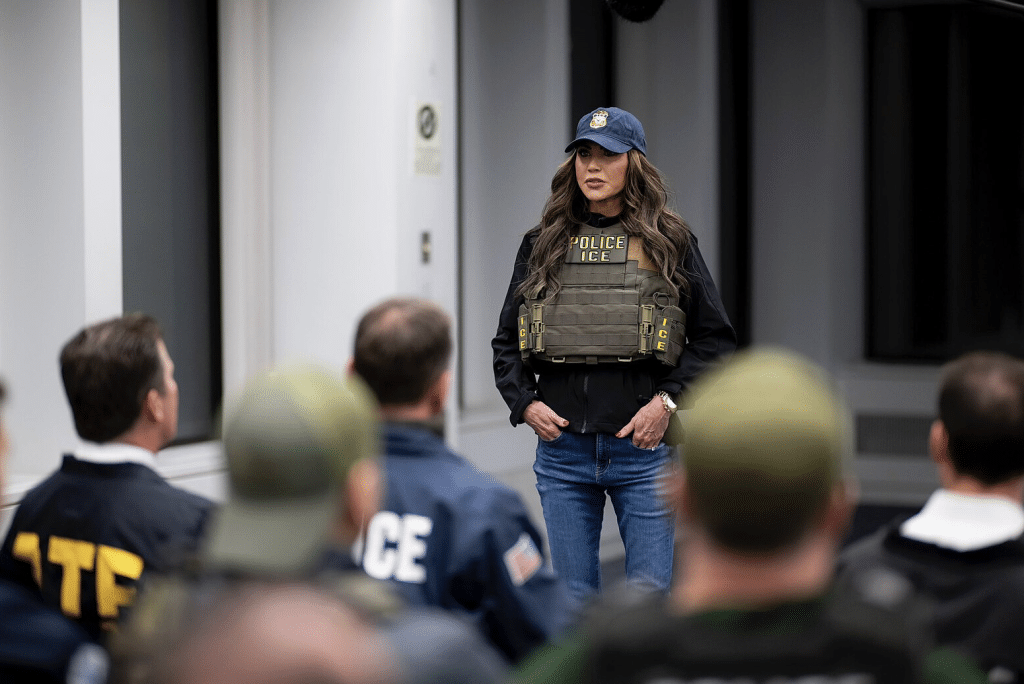

Humanitarian aid is now blocked. The camp holds roughly 24,000 people — mostly women and children — including about 14,500 Syrians, 3,000 Iraqis and 6,500 foreign nationals.

“The Syrian government inherited a very complicated situation at Al-Hol, with many families of former Daesh fighters. We have taken responsibility for both security and humanitarian management. We are also urging states whose nationals are detained there to take responsibility. The UNHCR and other UN agencies are engaged, and we hope to address this in a humane, just, and secure way over the coming weeks,” he said.

As Syria and the SDF embark on this integration phase, analysts caution that while the ceasefire provides a framework, deep-seated distrust, unresolved grievances and external pressures could destabilize progress.

Olabi, however, maintained that the focus remained on Syrian autonomy and the state’s responsibility to protect all citizens. “People have seen that we have no interest in reprisals. We would like to move forward,” he said.


People across US join general strike to protest ICE immigration crackdown

People across the US on Friday abstained from school, work and shopping – and many braved sub-zero temperatures – to protest immigration crackdowns.


Brooke Anderson
Washington, DC
31 January, 2026
THE NEW ARAB


The killing of Alex Pretti by immigration agents helped spark a nationwide general strike.
[Getty]


People across the US on Friday abstained from school, work and shopping – and many braved sub-zero temperatures – to protest the hardline government crackdown on immigration.

The “National Shutdown” or the “General Strike” took place in towns and cities across the US, with the support of hundreds of civil society groups.

The main organisers were student groups from Minnesota, where earlier in January two local protesters were fatally shot at close range by immigration agents, and where a growing immigrant crackdown has led to warrantless apprehensions and family separations.

Many businesses closed for the day, while some opened their doors to serve as community centres to shelter and feed demonstrators. Though the majority of protesters stayed home for the national shutdown to show their dissatisfaction with ICE, many also staged walkouts from school or work and attended demonstrations, often in sub-zero temperatures.

A statewide strike in Minnesota was held the previous Friday in response to the killing of Renee Good by ICE agents. After organisers’ demands were not met, and after Customs and Border Patrol Agents killed Alex Pretti, another protester, they planned a second strike to be held nationwide.

The main demands of the organisers were the immediate withdrawal of immigration agents from Minnesota; accountability for those involved in the killings of Good and Pretti; expanded protections for international students; and the abolishment of ICE.

Saikat Charkrabarti, a candidate for Congress in San Francisco, said in a public statement by email, “No work. No school. No shopping. Let’s shut it down! The killings of Renée Good and Alex Pretti are not one-off incidents. They are part of a pattern of violence being carried out by Trump’s secret police. But we’re seeing resistance work.”

He continued, “We have to keep pushing and resisting until we abolish ICE and hold everyone accountable for these murders and this violence.”

He went on to encourage other candidates, including his opponents, to join the strike, saying it only works if everyone does it.

The Council on American-Islamic Relations, a sponsor of the strike, issued a public statement saying, “We urge all Americans to participate in this strike to send the message that ICE is out of control and must be stopped. Shooting innocent people, including American citizens, dead on the street in broad daylight is just one of the many abuses ICE is committing in American cities. These breaches of law and order and violations of civil rights must stop immediately.”


Power & Pushback: Soliman family members recount harsh details of being held in ICE detention for 8 months

 January 27, 2026 
MONDOWEISS

DHS Secretary Kristi Noem (Department of Homeland Security)

Last week, an immigration judge denied bond to the wife and children of Mohamed Soliman, the man accused of attacking a June 2025 Boulder, Colorado rally “calling for the immediate release of the hostages held by Hamas.”

Prosecutors say Soliman lit and threw two Molotov cocktails at the Run for Their Lives group during their Boulder walk. Soliman told officers he learned of the rally after searching online for Zionist events. The attack killed a woman and injured 15 other people.

Soliman is facing dozens of federal charges, including 12 hate crime counts. But it might come as a surprise that Soliman’s wife and five children have also been held in a Texas detention facility for eight months, and ICE says they intend to deport them all, even though the family says it knew nothing about his plans.

Earlier this month, his 18-year-old daughter Habiba released a lengthy statement through her attorneys.

“We believe that what happened to the victims of the attack is dreadful,” it reads. “That no one ever should experience what they have experienced. Violence is never justified. And we condemn every one that uses violence including my father.”

The statement details harsh treatment from ICE and DHS:


“Just like other people, we were lied to by DHS and ICE agents. On the third day, they told us that staying in the hotel was dangerous and that we should go to another hotel for our safety. … We drove for an hour to Florence still believing that we were going to a hotel. To our surprise we arrived at a place in the middle of nowhere.”

“We drove into a garage and watched it close behind us. We felt trapped. We thought we got kidnapped. … The ICE agents didn’t show their badges or identify themselves at all until we got inside and saw the holding cells. They took our phones and all of our property, and we stayed for more than 8 hours in a cold cell. It was the beginning of the end.”

Habiba says the conditions at the facility have been terrible:


“We have been fighting and struggling to get the most basic things like food, medicine and even clothes. It was surprising to see the amount of heartless people that worked in the facility. … the truth is that only 10 percent of these officers have ever treated us like humans. … The officers talk arrogantly and treat the residents like they are nothing, as if just because we are detained, we are not humans anymore.”

“Their actions would be anywhere from eating lollipops and candy in front of the little kids, knowing that they all want some but can never get any.”

“Our whole day is spent running from one line to the next; they manage to keep us very busy waiting that by the end of the day, we have no energy left. … My brother himself had appendicitis, and when he went to the medical department, he wasn’t even seen by a doctor. … He was finally taken to actually be seen after he threw up in the waiting room and begged the nurse that he couldn’t even walk from the pain.”

The statement ends with Habiba calling for more people to oppose the Trump administration’s immigration policies.

“I don’t know when or how our detention will end,” she writes. “I don’t know if it’s a happy or a sad ending. I don’t know how we will deal with the effects that this place imposed on us. … But I know one thing: the truth never dies. We just need more people who are willing to spend the time and effort to find it.”

“I just hope that when the truth comes out that it is not too late and that the damage is fixable,” Habiba continues. “We are fighting because we know we are innocent. What happened is terrible, but there is no point in destroying the lives of six innocent humans. We pray for someone to look at us not as the family of a man who is accused of terrorism, but as humans who deserve to live freely.”
Momodou Taal detained

Momodou Taal, a student and activist who left the United States last year after his visa was revoked for participating in Gaza protests, says he was detained by British police at Heathrow Airport for six hours.

Taal says his phone and laptop were confiscated, and that authorities took a sample of his DNA. They asked him about “his childhood, mosque, Islamic preachers, and friends,” and if he had ever “read Karl Marx.”

Under Schedule 7 of the Terrorism Act, British authorities can question anyone whom they believe is involved in the “current, emerging and future terrorist activity.”

“Full solidarity with you Momodou,” tweeted Electronic Intifada editor Asa Winstanley. “It’s the UK’s systemic abuse of its draconian Schedule 7 ‘counter-terror’ powers for political persecution that makes me extremely reluctant to travel anywhere right now. The ‘Terrorism Act’ is illegitimate and should be rescinded!”

Taal was suspended by Cornell University over his connections to the school’s Gaza solidarity encampment. He left the U.S. amid a lawsuit against Trump. He voluntarily left the country amid a lawsuit against the Trump administration.

“Given what we have seen across the United States, I have lost faith that a favourable ruling from the courts would guarantee my personal safety and ability to express my beliefs,” he wrote at the time. “I have lost faith I could walk the streets without being abducted. Weighing up these options, I took the decision to leave on my own terms.”

Further Reading

Drop Site News: