Monday, February 09, 2026


The Polar Vortex: Background And Forecasting – Analysis
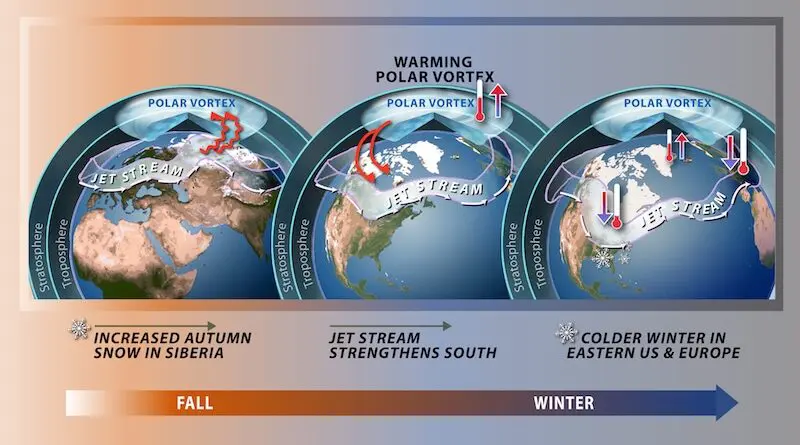


Polar vortex and weather impacts due to stratospheric warming. Credit: National Science Foundation, Wikipedia Commons

February 9, 2026 0 Comments

By CRS
By Eva Lipiec

In recent years, broadcast meteorologists and the media have begun using the term polar vortex to describe some instances of unseasonable temperatures and storms across the United States during the winter months. The polar vortex is a regular seasonal occurrence, and disruptions to it can cause both milder- and colder-than-average temperatures across North America.

For example, in February 2021, the South-Central United States experienced an influx of record-breaking cold air from the north with accompanying snow and ice (Figure 1), contributing to over $20 billion in economic losses and more than 220 fatalities. During that event, multiple sectors experienced damage and losses, including agriculture and water and electric utilities, resulting in nearly 10 million Texans without power at one point. Congress has shown interest in protecting life and property from extreme weather events associated with disruptions to the polar vortex and may consider whether to modify the federal government’s role in forecasting and researching such events.
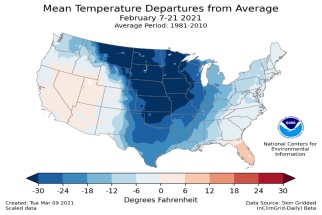
Figure 1. Mean Temperature Departures from Average, February 7-21, 2021. Average Period: 1981-2010. Source: National Oceanic and Atmospheric Administration, National Centers for Environmental Information, “Monthly Climate Reports – Synoptic Discussion February 2021.”

The Arctic stratospheric polar vortex (hereinafter polar vortex) is a strong band of winds about 10 to 30 miles above the Earth’s surface that forms every winter. In typical years, a stable polar vortex and the polar jet stream (another band of strong winds, hereinafter jet stream) work together to contain cold air at higher latitudes (Figure 2). Every so often, the polar vortex weakens, shifts, or splits into multiple vortices. When this occurs, the jet stream becomes “wavy” and cold air moves south and warm air moves north, producing a disrupted polar vortex. Meteorologists sometimes identify these cold air pulses as Arctic blasts or cold air outbreaks. The polar vortex and jet stream are two of several simultaneous global atmospheric patterns created by the interaction of the Earth, its tilt, and the sun’s rays. Scientists have not observed a long-term trend or pattern in disruptions to the polar vortex. Some models predict that increased warming and reductions in sea ice cover will produce a weaker polar vortex; others predict a stronger polar vortex.
Forecasting

Congress has authorized the Secretary of Commerce, acting through the National Oceanic and Atmospheric Administration’s (NOAA’s) Administrator, to forecast weather and issue storm warnings (15 U.S.C. §313 and §313 notes). NOAA National Weather Service (NWS) forecasters examine atmospheric conditions at the North Pole and forecast changes to the polar vortex. Forecasters generally are able to predict specific disruptions to the polar vortex a few days to about two weeks ahead of time; the disruption’s associated impacts on U.S. weather can last for weeks to months. NOAA forecasters issue watches and warnings for hazards associated with these disruptions, such as extreme cold, freezes, frosts, blizzards, winter storms (snow, ice, sleet, or blowing snow), and ice storms. Forecasters provide their predictions and other services to various stakeholders, such as emergency managers, government partners, members of the media, and the public, to help with preparedness and response efforts.


Research

Congress has directed NOAA and other federal agencies (e.g., National Science Foundation, National Aeronautics and Space Administration) to perform and support research that could address some outstanding research questions. These include the relationships between the polar vortex, other parts of the atmosphere, other global atmospheric patterns, and environmental conditions (e.g., surface temperature and pressure, sea ice cover), as well as the impact of climate change on those patterns and conditions. NOAA historically has funded research at its laboratories and cooperative institutes, such as the Pacific Marine Environmental Laboratory and the Cooperative Institute for Climate, Ocean, and Ecosystem Studies, as well as through competitive grants from NOAA’s Office of Oceanic and Atmospheric Research (OAR).
Considerations for Congress

The Trump Administration has taken steps to change NOAA’s implementation and support of forecasting and research; Congress may consider whether to take additional steps to codify, modify, or reverse the Administration’s actions. The Administration’s actions include pausing disbursement of NOAA funds appropriated through P.L. 117-169, commonly referred to as the Inflation Reduction Act of 2022 (IRA), in January 2025 and proposing to eliminate funding for some programs (e.g., climate labs and cooperative institutes, climate competitive research) and to dissolve OAR in FY2026. In July 2025, Congress rescinded unobligated balances of IRA funding for NOAA (P.L. 119-21 §40008). CRS was unable to identify how the Administration’s pause and congressional rescission of IRA funds may have specifically impacted NOAA’s weather and climate forecasting and research efforts. In January 2026, Congress supported “full staffing levels at all Weather Forecast Offices,” provided funding for weather and climate forecasting and research, and retained OAR, as described in the explanatory statement accompanying the FY2026 NOAA appropriations law (P.L. 119-74).

Some may assert that Congress should put greater emphasis on forecasting and researching the impacts of polar vortex disruptions. Congress could do so by directing NOAA to focus on the phenomena in existing programs or create a new standalone program for certain weather events, such as the hurricane forecast improvement program (15 U.S.C. §8514). Others may note that disruptions to the polar vortex and their impacts are already part of NOAA’s weather forecasting activities or that extreme events are rare and do not warrant additional attention.

Others may emphasize to Congress that a greater understanding of the relationships between atmospheric and other environmental components broadly could increase the lead time and accuracy of forecasts of both disruptions to the polar vortex and the resulting extreme winter weather, among other phenomena. Improved forecasts could further protect life and property. The 119th Congress is considering directing NOAA to improve weather forecasting broadly across multiple components and timescales (e.g., H.R. 5089, see CRS In Focus IF12698, Weather Act Reauthorization Act of 2025 (H.R. 3816 and H.R. 5089)) and may deliberate additional directives.

Congress also could address aspects of polar vortex-related weather forecast communication. For example, scientists have found that the term polar vortex is used by the media but that the “use of the term without adequate explanation can suggest a more dramatic change to the global [atmospheric] circulation than has actually occurred.” Poor use of the term may cause unnecessary public alarm or, alternatively, may put life and property at risk if the public and emergency managers misunderstand the potential severity of an event. Congress has previously required NOAA to assess and recommend improvements to the communication of hazardous weather events (P.L. 115-25, §406). NOAA continues to update its hazard communications (e.g., cold weather products) and to fund social science research as it relates to improving weather forecast understanding and response (e.g., FY2025 funded projects). Given how the term polar vortex is sometimes misused, Congress could direct or encourage NOAA to improve its polar vortex-related weather forecast communication and/or to provide training to its partners, among other actions, to further protect life and property.
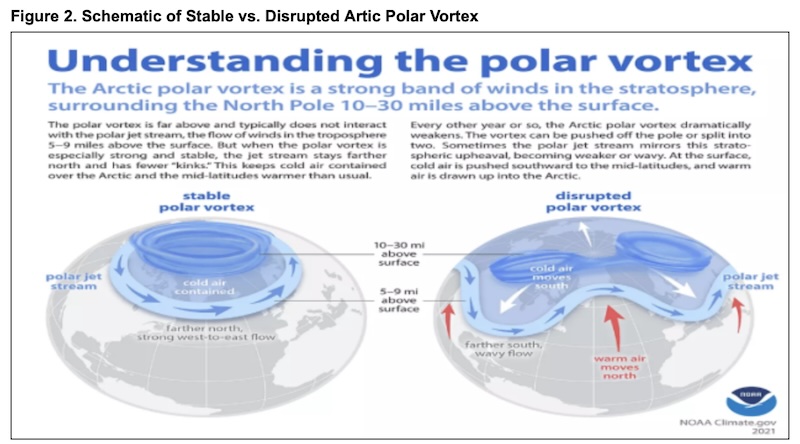
Source: Rebecca Lindsey, “Understanding the Arctic Polar Vortex,” Climate.gov, March 5, 2021


.About the author: Eva Lipiec, Specialist in Natural Resource Policy


Source: This article was published by the Congressional Research Service (CRS


CRS

The Congressional Research Service (CRS) works exclusively for the United States Congress, providing policy and legal analysis to committees and Members of both the House and Senate, regardless of party affiliation. As a legislative branch agency within the Library of Congress, CRS has been a valued and respected resource on Capitol Hill for nearly a century.

 

The world has pledged to triple climate financing for poorer countries. Is the UK about to U-turn?

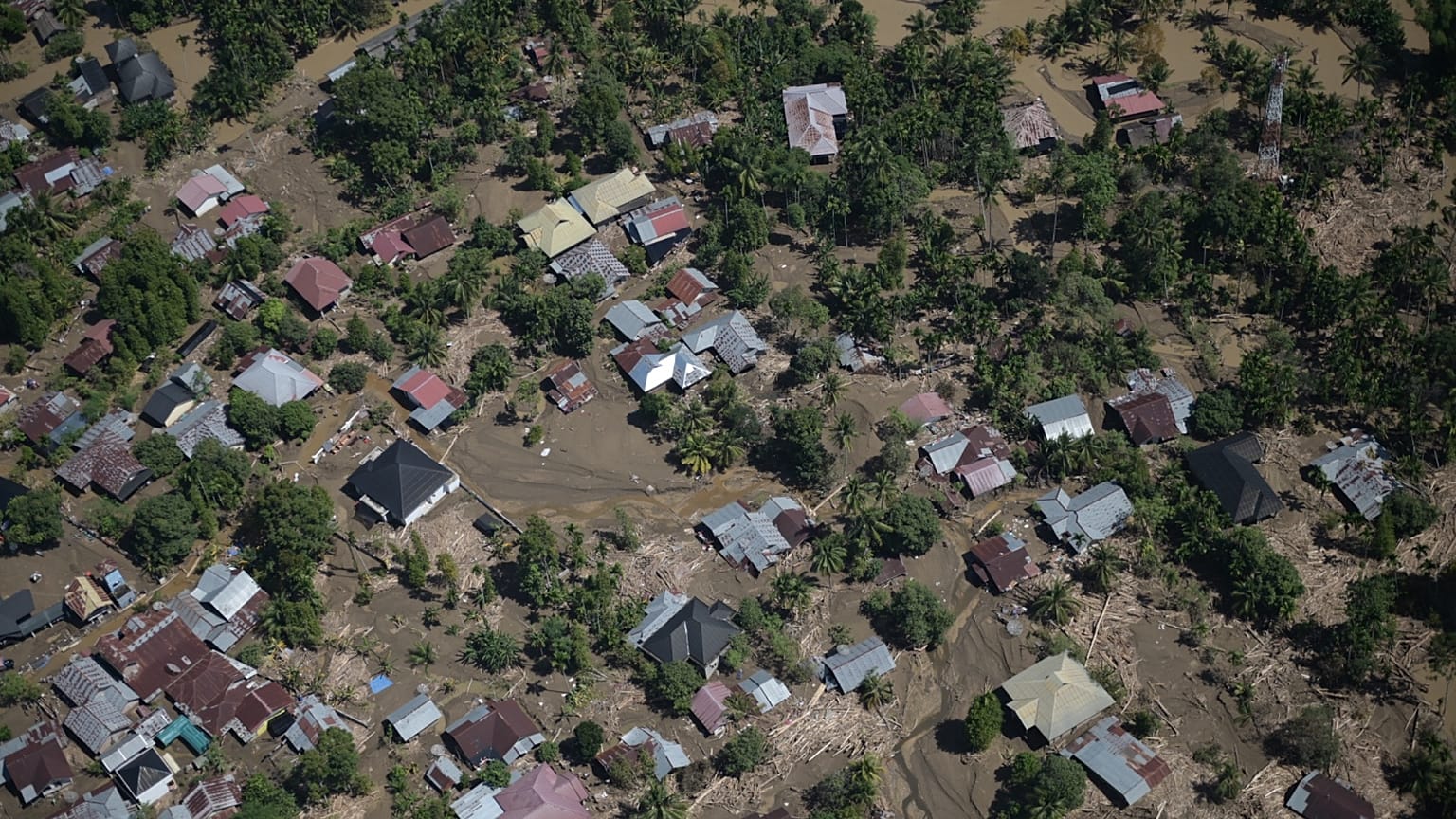
This photo taken from a national disaster mitigation agency's helicopter during an aerial aid distribution shows an area affected by floods in the aftermath of Cyclone Senyar.
Copyright Copyright 2025 The Associated Press. All rights reserved.

By Liam Gilliver
Published on 

The UK government tells Euronews Green it is “modernising” its approach to international climate financing – but declined to comment on alleged cuts.

The UK has been warned that cutting climate financing for poorer countries would be an “act of self-harm” that would hinder its global influence and damage food security.

According to UK newspaper The Guardian, ministers plan to cut climate finance for the “developing world” from £11.6 billion (around €13.37 billion) over the past five years to £9 billion (€10.37 billion) in the next five. When factoring in inflation, this would mean a proposed cut of around 40 per cent in spending power since 2021.

At the UN COP29 Summit in 2024, almost 200 nations – including the UK – agreed to triple finance to developing countries to $300 billion (around €254.5 billion) annually by 2035.

A year later, at COP30 in Belém, developing countries called for more support for adaptation to help protect people from climate change by building infrastructure such as flood defences and drought-resistant water systems. However, parties only agreed to call for efforts to at least triple adaptation finance by 2035 – reiterating a previous commitment without further progress.

Is the UK about to cut its climate financing?

A government spokesperson tells Euronews Green that it is “modernising” its approach to international climate financing to focus on “greater impact” – making sure that every pound delivers for the UK taxpayer and the people it supports.

“The UK remains committed to providing International Climate Finance, playing our part alongside other developed countries and climate finance providers to deliver our international commitments,” they add. “The UK is on track to deliver £11.6 billion in International Climate Finance by the end of this financial year.”

The Foreign, Commonwealth & Development Office, which has historically never commented on leaks, did not confirm whether the alleged cuts are going ahead, or respond to criticism that has already ensued.

‘Damaging trust’ in the UK

Gareth Redmond-King of the Energy and Climate Intelligence Unit (ECIU) describes such a move as an “act of self-harm” for the UK – if it goes ahead.

“We import two-fifths of our food from overseas, much of which is grown in countries being hit hardest by extremes of heat and flood,” he says.

“The UK’s climate finance helps farmers in these countries to adapt their farming to maintain both their livelihoods and our food security.”

Redmond-King argues that going back on climate commitments would also damage trust in the UK’s position at a time when it has made real progress in cutting emissions and striving towards net zero targets.

“With China potentially offering forms of climate finance to poorer nations which need it, the longer-term risk is to the UK’s relative power and influence around the world.”

A ‘national security’ risk

The report comes just weeks after the UK’s Department for Environment, Food and Rural Affairs (DEFRA) published a 14-page document warning that the collapse of global ecosystems is a direct threat to the country’s national security and prosperity.

With alleged involvement from MI5 and MI6, the report found that the world is also experiencing the impacts of biodiversity loss such as crop failures, intensified natural disasters and infectious disease outbreaks

However, without “major intervention”, the report says these threats will increase alongside environmental degradation.

Officials highlighted the UK’s reliance on global markets for its food and fertiliser, with around 40 per cent of its food – such as vegetables, sugar and soy for animal farming – coming from overseas.

“Biodiversity loss, alongside climate change, is amongst the biggest medium- to long-term threats to domestic food production – through depleted soils, loss of pollinators, drought and flood conditions,” the report states.

“Ecosystem collapse would place the UK’s agriculture system under great stress, leaving it struggling to pivot to the new approaches and technologies that would be required to maintain food supply.”

Disruption to the international markets caused by ecosystem collapse would put UK food security at risk. This paves the way for organised crime to “exploit” scarce resources and could push more people into poverty, the report warns.

As more people cross the threshold into food insecurity, migration will rise. According to a landmark 2021 report by the Council on Strategic Risks, even a one per cent increase in food insecurity in a population compels 1.9 per cent more people to migrate.

The report also highlights growing political polarisation and instability in food and water-insecure areas, which could trigger a spike in disinformation.

“Conflict and military escalation will become more likely, both within and between states, as groups compete for arable land, food and water resources,” the report adds. “Existing conflicts will be exacerbated.”


Brazil Ratifies High Seas Treaty On Ocean Biodiversity


February 9, 2026 

ABr
By Fabiola Sinimbu

The Agreement on the Conservation and Sustainable Use of Marine Biological Diversity in Areas Beyond National Jurisdiction – or BBNJ – came into force in January 2026, after two decades of international negotiations. Immediately after the text was finalized in March 2023, 145 countries signed the document that came to be known as the High Seas Treaty, including Brazil.

To come into effect, the accord needed ratification by at least 60 countries to become valid 120 days later. In Brazil, Congress approved the pact on December 16, 2025, but even before that, in September, 60 other countries had already confirmed their adherence.

As of the publication of this story, 84 countries had ratified the agreement, according to the global network of social organizations High Seas Alliance. But why does this international treaty on a common good outside the territories of countries arouse so much interest?

Ana Paula Prates, director of the Department of Ocean and Coastal Management at Brazil’s Ministry of the Environment and Climate Change, says that although other international treaties establish rules for marine biodiversity conservation, they mainly cover national territories, while this is the first to comprehensively address international waters, which represent two-thirds of the planet’s oceans.

“This integrated approach was necessary because everything that happens in international waters also affects our jurisdictional waters – whether it’s biopiracy, the environmental impacts of enterprises such as deep-sea trawling, or even plastic,” she pointed out.

Living beings


With a total area of over 360 million km² and depths exceeding 10 km, the oceans play a key role in balancing the planet’s temperature. They produce more than half of the oxygen necessary for life and are home to a vast biodiversity. Approximately 64 percent of this enormous expanse comprises the high seas, beyond national jurisdictions.

“By getting to know it better and conducting environmental impact studies of human activities in this area, we have the possibility of improving the protection and conservation of this biodiversity, which is by far the most important for the maintenance of life on earth,” says Andrei Polejack, director of research and innovation at the National Institute for Oceanic Research (INPO), a social organization dedicated to ocean research and development.

The text of the High Seas Treaty deals with guidelines and global governance for the conservation and sustainable use of biodiversity in the high seas. It is based on four pillars:the creation of marine protected areas in international waters;
assessment of economic activities in terms of environmental impact;
the sharing of benefits from genetic resources; and technology transfer 
and capacity building.

In practice, any activity carried out on the high seas will be subject to the rules of the agreement, as the treaty is binding, thus becoming a legal obligation imposed on participating countries. “It will not be up to each country, each company, or their respective countries [to decide]. For example, deep-sea trawling – which is something that happens too often and no one knows where – will now have to be assessed jointly with these countries [that have joined the treaty],” Ana Paula Prates states.

To operate in these regions, the nations will also need to better understand the biodiversity on the high seas, through investments in science and technology such as deep-sea submersibles and genetic mapping of the fauna and the flora there.

Benefits

“We have a wonderful opportunity to find new resources for medicines, cosmetics, and other solutions. But this will have to be evaluated jointly, and the benefits will have to be shared among all ratifying countries. Similarly, another controversial issue that will have to be negotiated is the establishment of marine protected areas,” the representative of the Brazilian Ministry of the Environment said.

The idea is that when there is doubt about the capacity to conserve and maintain the balance of a given ecosystem and the species in it, the region should be protected, with measures ranging from assessing the impacts of human activities to be carried out in the area to the creation of marine protected areas.

“This is a process that adopts some principles of international law, which are binding in this treaty – like the precautionary approach, which states that if we do not know exactly what the impact will be, then it is better to suspend activities,” Polejack noted.

High Seas COP


With the treaty now in force, only countries that have ratified it will be able to participate in the establishment of the institutions, operational rules, and processes necessary for the agreement to become operational. The first talks for the creation of these instruments are expected to take place at the Conferences of the Parties (COP) to the High Seas Treaty.

Even before this stage, when the agreement was signed by the countries interested in participating, the United Nations General Assembly (UNGA) set up a preparatory commission tasked with choosing a country to host the secretariat and other institutions – such as the scientific and technical body – as well as establishing the financial structure and rules for decision-making.

Two meetings were held in April and August 2025, and a third is scheduled to take place in March 2026 at the United Nations headquarters in New York. “At this [meeting], we will be able to decide where the secretariat will be located – which is already under dispute. Belgium has come forward, as have Chile and now China. All three are candidates. We should also set the date for the first COP,” Ana Paula Prates said.

Advantages

Still according to Polejack’s assessment, Brazil has much to contribute with all the diplomatic and scientific knowledge developed in other international treaties – such as those created at ECO92 in Rio de Janeiro, which deal with climate, biodiversity, and desertification. He also considers it important to hold debates on the social and collective interests of the people.

“This work must be based on scientific evidence and must consider the balance between the uses of this biodiversity in areas beyond national jurisdiction, on the high seas, but it must also distribute the benefits generated. So, there’s a huge number of details. It’s a complex agreement, and it really needs all voices together,” he concluded.


ABr

Agência Brasil (ABr) is the national public news agency, run by the Brazilian government. It is a part of the public media corporation Empresa Brasil de Comunicação (EBC), created in 2007 to unite two government media enterprises Radiobrás and TVE (Televisão Educativa).
International And Domestic Impact Of The Maldives-Mauritius Dispute Over The Chagos Islands – Analysis


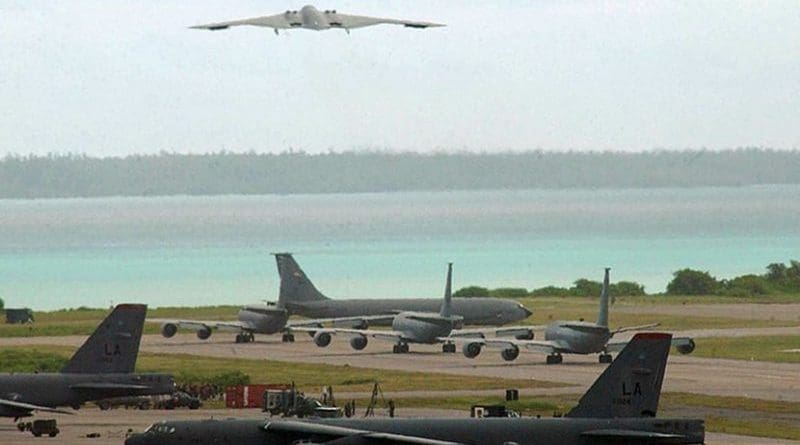
A B-2 bomber takes off, with B-52 bombers on tarmac on Diego Garcia. Photo Credit: U.S. Air Force photo by Senior Airman Nathan G. Bevier


February 9, 2026
By P. K. Balachandran


The revival of the Maldives-Mauritius dispute over the Chagos Islands and the waters around them has significant implications for the strategic interests of the US, UK, and India in the Indian Ocean, as well as for President Muizzu’s standing among the Maldivian electorate.

The Maldivian President, Dr Mohamed Muizzu, has taken a belligerent stance against Mauritius, following the UK and Mauritius’ agreement in May 2025, under which Mauritius will acquire sovereignty over the Chagos Islands but lease Diego Garcia to the UK for 99 years. The UK, in turn, will allow the US to continue using its base in Diego Garcia. Maldives protested against the deal as it says that the Chagos Islands should have been transferred to it because-

1. The islands are closer to it than they are to Mauritius – Diego Garcia is only 310 miles from Malé, the Maldivian capital, while it is 1,300 miles from Port Louis, the capital of Mauritius.

2. Historically, Maldivian fishermen had been visiting the island, proof of which still exists.


“The Maldives has historical connections to the Chagos Islands – known to us as Foalhavahi – which lie south of Maldivian waters,” President Muizzu told the Daily Express, a British tabloid, in January. “These connections are based on documentary evidence, and we believe gives the Maldives a greater claim than any other country,” he argued.

Maldivians knew of the Chagos Islands centuries before colonial powers arrived in the Indian Ocean. Maldivian ancestors named it in the Dhivehi language, Muizzu said, and cited mentions in Maldivian navigation documents about Maldivians “going fishing there day-to-day with ease.”

There are 900-year-old gravestones on Chagos etched in the Maldivian language, Dhivehi, predating the arrival of people in Mauritius. Mauritius was uninhabited before the 17th century when Dutch, French, and British colonialists arrived. There is a 16th Century patent from a Maldivian King asserting sovereignty over the islands. DNA evidence showed that modern Chagossians have Maldivian and Creole heritage.

Timeline of Events

In February 2019, the International Court of Justice (ICJ) ruled that continuing British occupation of the Chagos Islands is illegal. After this, the UN General Assembly, through a non-binding resolution, called upon Britain to cede Chagos to Mauritius within six months. The Maldives voted against the resolution, along with the UK, US, Australia, Israel, and Hungary, because it could undermine a 2010 bid to establish the outer limits of the continental shelf between the Maldives and Chagos.

In April 2023, an International Tribunal on the Law of the Sea (ITLOS) apportioned 47,232 square kilometres to the Maldives and 45,331 square kilometres to Mauritius.

Bolstered by the ICJ opinion on the issue, Mauritius asked ITLOS to delimit the maritime boundary in the overlapping Exclusive Economic Zones (EEZs).

Subsequently, Maldives toned down its opposition to the transfer of Chagos Islands to Mauritius. In October 2022, the Maldivian Attorney General, Ibrahim Riffath, said that President Ibrahim Solih had informed the Mauritius Prime Minister in August that the Maldives would vote in favour of Mauritius on a General Assembly resolution about the return of the Chagos Isands to Mauritius.

Solih’s backing down from a traditional Maldivian stand on the issue, unleashed a political firestorm in the Maldives. The opposition accused the Solih administration of “treason” and “selling” Maldivian territorial waters. Former President Abdulla Yameen alleged bribery, while former President Mohamed Nasheed called asked Solih to reject the transfer directive.

Muizzu took office in November 2023 with a pledge to reclaim the Chagos islands and the waters around them. The Attorney General formed a three-member committee to review the case and to recover the forfeited territory from the “Maldivian sea.”

Based on the advice of international experts, President Muizzu asked the Attorney General Ahmed Usham to present a position paper to the cabinet. Legal proceedings were initiated thereafter.

Muizzu reversed the previous administration’s recognition of Mauritius’s sovereignty over the archipelago.

He told parliament on Thursday that Maldives does not recognise any changes to the territories already defined in the country’s Constitution. He rejected the maritime boundary drawn between the Maldives and the Chagos Islands by the International Tribunal for the Law of the Sea (ITLS) in 2023, which had divided the Exclusive Economic Zones.

He said that the government will revise the Maritime Zones Act of 1996 to this effect. He also announced plans to amend the law to formally designate a 200-nautical-mile Exclusive Economic Zone (EEZ) as sovereign “Maldivian territory.”

The government has since formally communicated its decision to withdraw the August 2022 letter written by President Solih to the Mauritian Prime Minister Pravind Kumar Jugnauth. Muizzu’s letter notes that the sudden and unexplained change in the position made by the previous Solih administration, midway through the ITLOS proceedings, had hurt the Maldives’ interests in the case. Furthermore, the government held that this shift was “unreasonable, unjustified, and made without due process.”

Muizzu said that he had brought the matter to the attention of the British Deputy Prime Minister David Lammy during a phone call on December 15, 2025, and sought talks on the issue. The Maldives had formally objected to the British government on November 8, 2024 and again on January 18, 2026.

Following the President’s address on Thursday, the Maldivian National Defence Force (MNDF) started patrolling the disputed maritime zone.
Trump’s Somersault

Following the UK-Mauritius agreement of May 2025, US President Donald Trump condemned the deal in harsh terms. Presumably, he feared that a pro-Chinese or a pro-Indian government in Mauritius could terminate the lease and the US would lose Diego Garcia base.

The Maldivians were happy with Trump’s castigation. But joy was short-lived because Trump and the British Prime Minister Keir Starmer made up. Trump then described the deal as the best under the circumstances for the UK and the US .

Be that as it may, President Muizzu decided not to slacken his stance. He continued to press the Maldives’ claim, exploiting popular support over the issue. Support on this could yield votes for his party, the Peoples’ National Congress (PNC), in the March 28 local body elections. These elections are crucial for Muizzu, whose ratings have come down because of his inability to manage Maldives’ debts. A recent poll had found that former President Abdulla Yameen was the single most popular leader. Yameen topped the rankings with an average score of 5.6 out of 10, placing him clearly ahead of the other leaders.
Nasheed’s Speculation

Meanwhile, former President Mohamed Nasheed stated that Muizzu’s stepped- up actions on the Chagos issue could be having the prior but tacit consent of the UK and the US.

In a post on X, Nasheed said that Trump’s concurrence with the UK’s decision did not necessarily mean that he actually agreed with ceding the Chagos Islands to Mauritius.

“The US and UK can now state that the Maldives’ claim should be investigated. They can say Chagos cannot be handed over to Mauritius,” Nasheed said.

He also maintained that recent operations in the EEZ by the Maldivian Coast Guard could have been conducted with the tacit approval of the UK and US.
Muizzu’s Offer to US

Interestingly, Muizzu, a pro-China leftist, has moved close to the US. In an interview to Newsweek, he had offered to let the US maintain its military presence on Diego Garcia if sovereignty was transferred to the Maldives.

“President Trump clearly seeks to protect and secure the continuation of the use of Chagos for the US Naval Support Facility at Diego Garcia,” Muizzu said, adding that he would “seek approval of this through the Maldivian parliament as per our constitution, to facilitate the continuation of the status quo.”
Implications of India’s Support for Mauritius

The Maldives-Mauritius dispute has great implications for India, an Indian Ocean power. India has been a consistent supporter of Mauritius, mainly because 70% of the people of Mauritius are of Indian origin, who are mainly from Bihar and Uttar Pradesh in North India, the centre of power in India lies.

The foreign and security policies of Mauritius have been heavily influenced by India. Its National Security Advisor has always been an Indian nominee. There has never been a threat of Mauritius becoming pro-China, which cannot be said of the Maldives. In fact, President Abdulla Yameen and Mohamed Muizzu had led an “India Out” campaign.

No wonder an Indian External Affairs Ministry statement said, after the transfer of sovereignty over Chagos to Mauritius, that India has consistently supported Mauritius’ legitimate claim over the Chagos Archipelago in keeping with its principled position on decolonisation, respect for sovereignty, and the territorial integrity of nations.

“As a steadfast and longstanding partner of Mauritius, India remains committed to working closely with Mauritius and other like-minded countries to strengthen maritime security and regional stability and ensure peace and prosperity in the Indian Ocean region,” the Indian statement said.

The Maldives and Mauritius are different kettles of fish. Unlike Mauritius, Maldives is a 100% Muslim country, and India is 80% Hindu.

However, President Solih’s regime was markedly pro-India. An not surprisingly, Solih had told the Mauritian PM that the Maldives would support Mauritius’ case on the Chagos Islands.

Muizzu’s stand on Chagos Islands against Mauritius could well strain Indo-Maldivian ties. How New Delhi will handle the dispute now will be keenly watched in the Indian Ocean region. What the UK and the mercurial Donald Trump will do in the months to come will also have a great impact on Male, Port Louis and New Delhi.


P. K. Balachandran

P. K. Balachandran is a senior Indian journalist working in Sri Lanka for local and international media and has been writing on South Asian issues for the past 21 years.


Think before you ink: Research suggests tattoos could cause cancer, but how concerned should we be?

Despite their popularity, very little is known about the long-term health effects of tattoos.
Copyright Canva

By Amber Louise Bryce
Published on 

Tattoos are more popular than ever, but a growing body of research suggests a link between permanent ink and the development of certain types of cancer. How concerned should people be?

From tribal sleeves to lower-back butterflies, humans have been inking their skin for thousands of years.

For most people, the fear of future regrets is the main concern. But a growing body of research suggests tattoos could also carry more serious health risks.

Tattoos have increased in popularity over recent years, with around 13 to 21 percent of Western Europe now brandishing one, according to a study in the European Journal of Public Health.

Despite their prevalence, surprisingly little is known about the potential long-term health effects.

Previous research has found evidence that tattoo ink accumulates in human lymph nodes, which can lead to inflammation and - in rare cases - lymphoma (a type of blood cancer).

More recently, a 2025 study by the University of Southern Denmark (SDU) reported that those with tattoos have an increased risk of developing skin cancer and lymphoma.

Using a cohort of randomly selected twins, the researchers compared those who had a form of cancer with those who didn’t. The tattooed twins had nearly four times the risk of skin cancer, according to the study, which was published in the journal BMC Public Health.

It also noted that tattoo size could play a part, with anything larger than palm-sized potentially heightening risk.

“We have evidence that there is an association [between the amount of ink and risk] for lymphoma and for skin cancer,” Signe Bedsted Clemmensen, the study’s co-author and assistant professor of biostatistics at SDU, told Euronews Health.

“For lymphoma, the hazard rate is 2.7 times higher, so this is quite a lot. And for skin cancers, before it was 1.6 and now it's 2.4. This indicates that the more ink you have, the higher the risk, the higher the hazard rate,” she added.

It’s important to note, however, that these findings are still in their earliest stages - and limited due to the vast amount of contributing variables. For example, ink types, tattoo placements, cancer subtypes, and other genetic and environmental factors all need to be taken into account for a more accurate analysis.

“The bottom line is, more research is needed,” Clemmensen said, noting that future investigations require larger cohort studies across longer spans of time.

“But also, the next step I think is studying the biological mechanisms [of getting tattooed] and trying to understand what happens there.”

How concerned should we be about tattoos?

There’s no concrete evidence that tattoos cause cancer, but there are still other risks to be aware of.

These include ensuring the equipment being used is sterile to avoid infection and that the inks themselves are safe.

All tattoo inks are made up of a pigment (to add colour) and a carrier fluid (to implant colour into the middle layer of the skin, known as the dermis).

Due to most tattoo inks being imported from around the world, their ingredients can be hard to keep track of - and sometimes contain harmful substances.

“Some inks contain trace amounts of heavy metals, including nickel, chromium, cobalt and occasionally lead,” Manal Mohammed, a professor in medical microbiology at the University of Westminster, wrote in a piece for The Conversation. “Heavy metals can be toxic at certain levels and are well known for triggering allergic reactions and immune sensitivity.”

In 2022, the European Union restricted more than 4,000 hazardous substances in tattoo ink and permanent make-up under its REACH (Registration, Evaluation, Authorisation and Restriction of Chemicals) regulations. This includes anything classified as carcinogenic or mutagenic, with all tattoo inks requiring clear labelling.

Regulation is less strict in other countries - something the United Kingdom is currently tackling, having recently published plans to implement its own set of restrictions under UK REACH.

Ultimately, tattoos are considered safe if carried out hygienically, with the caveat that - as with most things in life - there could be a risk of long-term harm.

But we just don’t know enough yet to answer for sure, according to Clemmensen.

“It’s up to each of us how we choose to live our lives, right? But as a researcher, it’s also my job to inform people of these risks,” she said.

“Or, when it comes to tattooing, right now it's more about informing people about how little we know.”


Ayahuasca retreats are booming in Spain, one of the only European countries with a legal loophole

Ayahuasca has boomed in popularity as a wellness practice in recent years.
Copyright WeareAvalon

By Rebecca Ann Hughes
Published on 

Ayahuasca has boomed in popularity as a wellness practice in recent years.

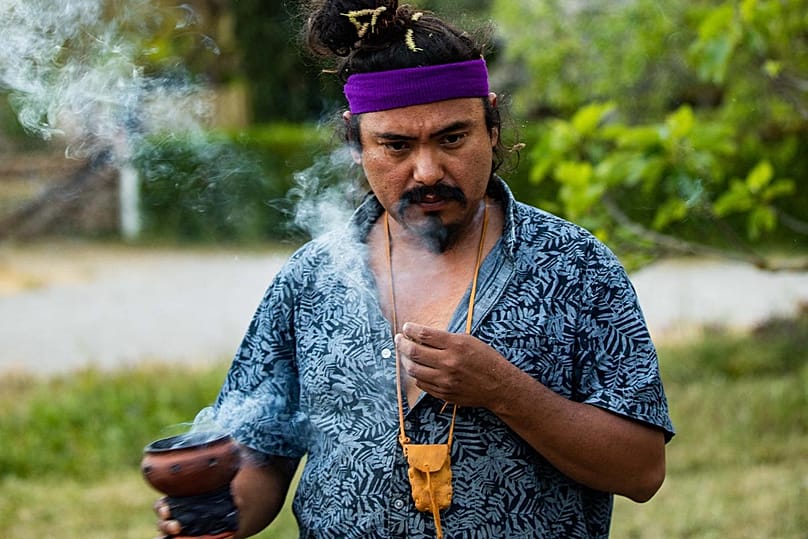
As dark falls, Taita Isaías Muñoz Macanilla, a traditional doctor and an Indigenous activist from Putumayo, cleanses a tree-fringed outdoor clearing and the participants seated in a circle in preparation for their first ayahuasca ceremony.

But they are not in the Amazon. Instead, they are in a boutique hotel in Barcelona.

Ayahuasca, a psychoactive, plant-based brew found in South America and used in traditional medicine and shamanism, has boomed in popularity as a wellness practice in recent years.

But given that the decoction contains dimethyltryptamine (DMT), which induces intense visions, purging, and powerful psychological experiences in users, it is banned in most European countries.

Spain and Portugal are exceptions, however, which has given rise to a growing number of ayahuasca retreats that are much more accessible to Europeans.

Why ayahuasca travellers are swapping South America for Spain

Dozens of retreat centres now invite alternative wellness-seeking travellers to remote spots in Peru and Brazil to experience deep-rooted ayahuasca traditions.

The Indigenous practice has sparked increasing interest in the West, amplified by the rise of spiritual tourism, public disclosures by celebrities about their use of psychedelics, and broader cultural conversations around mental health and spirituality, according to Alejandro Carbó, founder of Avalon retreats.

Carbó’s programmes connect guests to traditional ayahuasca practitioners, but are part of a growing number of experiences much closer to home for Europeans.

Ayahuasca is a psychoactive, plant-based brew found in South America and used in traditional medicine and shamanism. WeareAvalon


His retreats are located in Spain and Portugal, countries which he says travellers are increasingly drawn to for a combination of practical, cultural and perceptual reasons.

“Reduced travel time and costs make these retreats far more accessible, while European standards of accommodation, food, hygiene and services provide a level of comfort many participants expect,” Carbó says.

At Avalon’s retreats, there are doctors, psychologists and integration guides on hand, for example.

“There is also greater trust rooted in familiarity with the culture, territory, food and social norms, which lowers the psychological threshold for participation,” Carbó says.

Both countries have long been favoured as holiday destinations for Europeans, plus retreats commonly integrate other wellness activities like yoga, art therapy and meditation tailored to established Western tastes.

Spain and Portugal are ‘unique permissive environments’ for ayahuasca

As interest in ayahuasca retreats in Europe grows, so do concerns around safety and cultural appropriation

“In my opinion, European retreat founders should act as bridges between two worlds: the Amazonian and the Western,” says Carbó.

Carbó’s programmes connect guests to traditional ayahuasca practitioners. WeareAvalon

“They should work in partnership with Indigenous traditions, the legitimate inheritors of this ancestral wisdom, while at the same time adapting the ritual for non-Indigenous participants, their needs, and a context (territory, legality and safety) different from its place of origin.”

Legal issues mean most European countries are off-limits for practising ayahuasca, but ​Spain and Portugal are often described as uniquely “permissive” environments, Carbó explains.

“This is not because ayahuasca is explicitly legal, but because of how their legal frameworks operate in practice. In both countries, ayahuasca as a brew is not specifically scheduled, which places it in a legal grey zone rather than under a clear prohibition,” he says.

In Spain, this permissiveness is largely shaped by jurisprudence, where courts have tended to distinguish private, non-commercial use from trafficking or public harm.

In Portugal, the country’s permissive reputation is closely linked to the decriminalisation of drug possession for personal use in 2001 and the resulting public-health-oriented approach to enforcement, according to Carbó.

“That said, this permissiveness is inherently fragile, as it relies on discretion and context rather than on explicit legal protection, and can quickly shift in response to political pressure or adverse events,” he adds.


'Nobody gives us any incentive': A family's solitary fight to save endangered plants in the Amazon

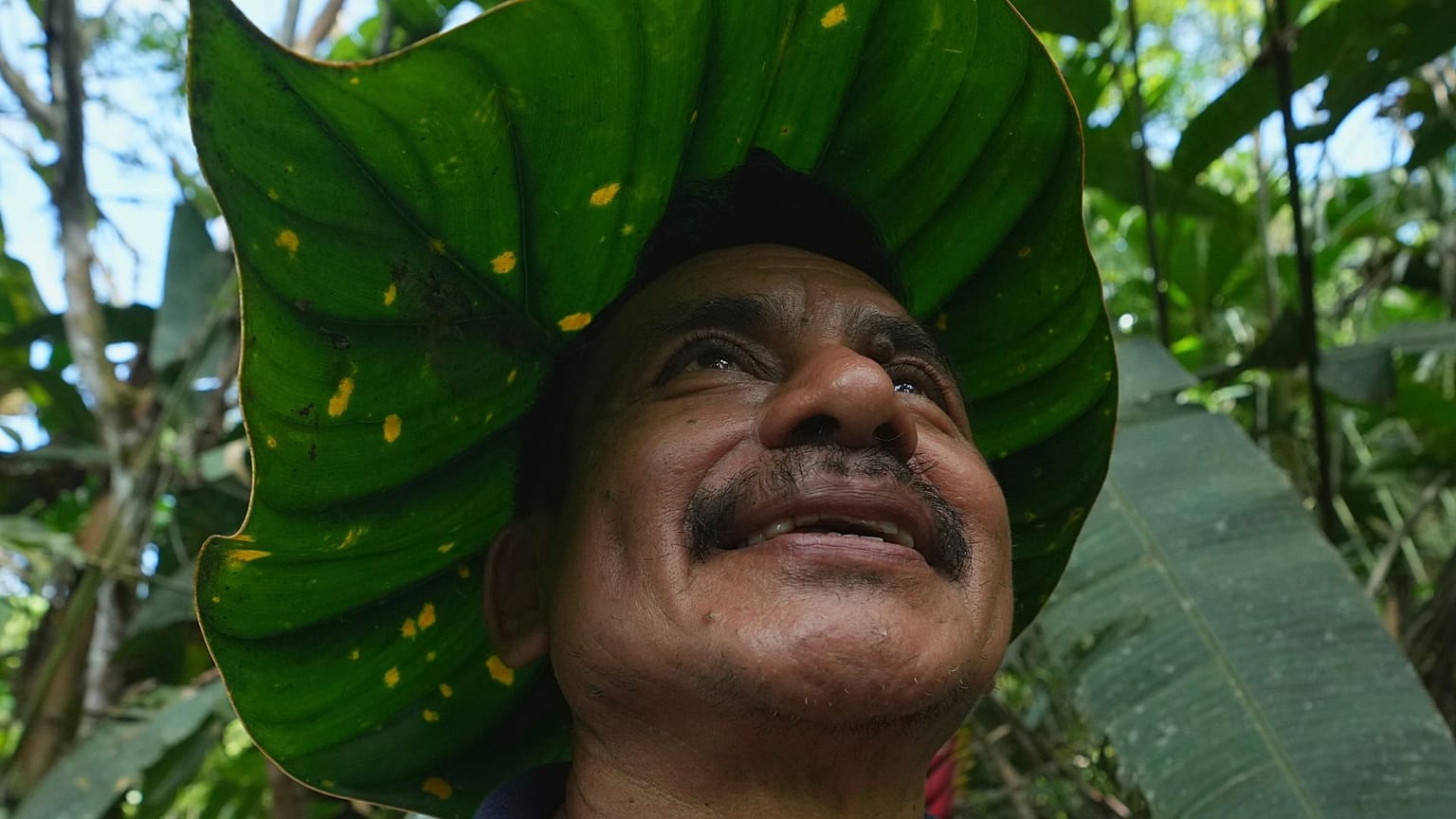
Ramon Pucha demonstrates how to turn a leaf into a sunhat on his family's farm in Alto Ila, in Ecuador's Amazon region, Tuesday, Feb. 3, 2026.
Copyright AP Photo/Dolores Ochoa

By Gonzalo Solano with AP
Published on 


Pucha and his family have spent years building a 'living laboratory' and a vital seed bank in the Ecuadorian Amazon jungle.

On a recent journey into the Ecuadorian Amazon jungle, Ramón Pucha realized he was being trailed. Fresh puma tracks now lined the path alongside his own footprints. Unfazed, he continued his trek, focused entirely on the precious cargo he carried – seeds from some of the world’s most endangered plant species.

Pucha and his family have spent years recreating their own piece of jungle with rescued species on a 32-hectare farm called El Picaflor in the Indigenous Quichua community of Alto Ila, 128 kilometres southeast of the capital, Quito.

“I have a passion for nature, for plants, for animals,” says Pucha, 51, noting that his drive to protect the environment is so intense that many people in his community consider him “crazy.”

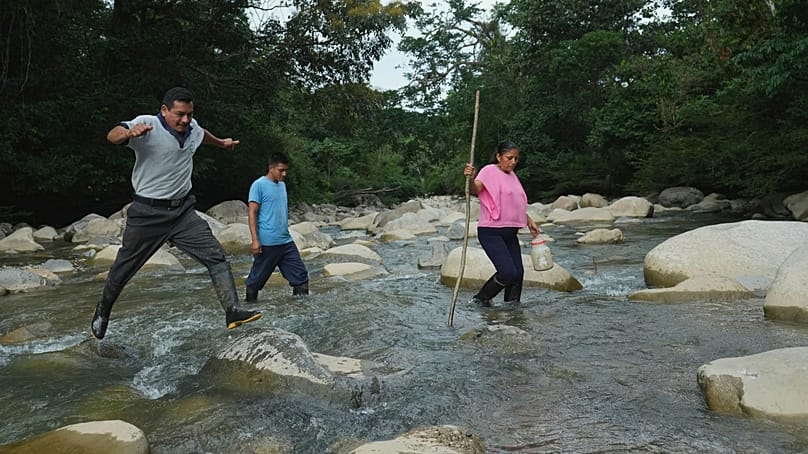
Ramon Pucha, his son Jhoel, and his wife Marlene cross the Alto Ila River during an expedition to search for native seeds to grow on their farm, in Ecuador's Amazon region. AP Photo/Dolores Ochoa

Saving the Amazon, one seed at a time

To save endangered plant species, Pucha ventures deep into the jungle, often alone, for up to five days at a time. On more than one occasion, he said he returned empty-handed because – as a consequence of climate change and severe droughts across the region – many of the large trees had stopped producing seeds annually.

Once the seeds reach home, Pucha’s wife, Marlene Chiluisa, takes charge. She plants them in suitable soil and compost so that they can begin to grow into plants that are then replanted in the rainforest. The family even shares the fruits of their labor, selling or gifting a percentage of the plants to neighbours committed to forest regeneration.

Jhoel, the couple's 21-year-old son, has stepped into his father’s role as the family’s successor. An expert botanist, he moves through the forest identifying plants by their common, traditional and scientific names with ease. He also serves as a guide, ferrying visitors across the turbulent Ila River in a precarious craft made of wooden planks lashed to a buoy.

Yet, for all their effort, the family’s struggle remains a solitary one.

“Nobody gives us any incentive – not the government, not foundations, not anyone,” says Chiluisa.

Ecuador's Ministry of Agriculture and Livestock recognises the importance of the family's work, calling El Picaflor a “living laboratory” and a vital seed bank in an area scarred by 50 years of constant logging.

But while Ecuador was the first country to enshrine the “rights of nature” in its constitution, that reputation is now at risk. Environmentalists and Indigenous groups warn that President Daniel Noboa’s decision to merge the Ministry of Environment with the Ministry of Energy and Mines threatens the very landscape the family is fighting to save.

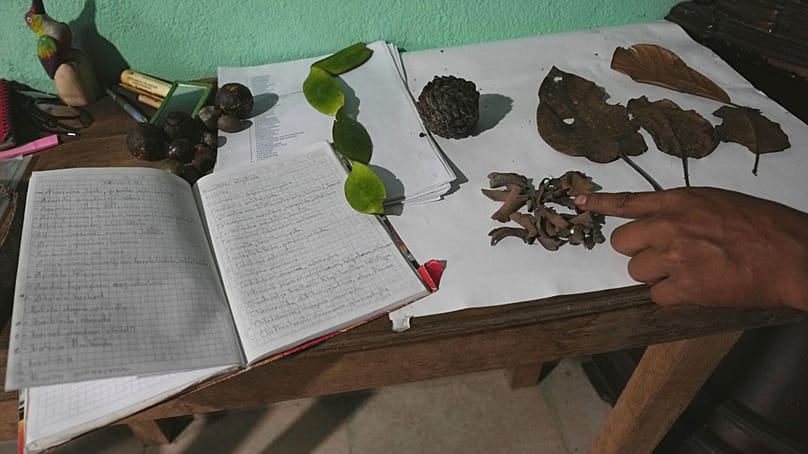
Ramon Pucha shows seeds and plant materials he has collected from the forest near his family farm in Alto Ila, in Ecuador's Amazon region, Feb. 3, 2026. AP Photo/Dolores Ochoa)

‘That is my legacy’

As he walks across the property that was once barren pastureland, Pucha pauses to observe the plants, describing the unique purpose of each one.

His eyes light up as he points to a small, growing tree, which he says is now rare in the area – a type of fine wood that will reach maturity in 100 years. Though he knows he will never see it fully grown, he remains committed to his mission.

“That is my legacy for my children and for humanity,” he says, noting that these species are essential to the Amazon’s survival, serving as medicine for humans and a food source for the animals that naturally replant the forest.


Spain train strikes: Which services are still running and what are your refund rights?

People run to catch a train during a 24-hour partial strike by train drivers at Atocha station in Madrid, 10 June 2016.
Copyright Copyright 2016 The Associated Press. All rights reserved. This material may not be published, broadcast, rewritten or redistributed without permission.

By Christina Thykjaer
Published on 

During Spain's three-day train drivers' strike, more than 330 services have been cancelled.

A train strike in Spain is causing major disruptions to passengers this week.

Train drivers and railway workers are walking out between 9-11 February. As of Monday morning, it has already resulted in the cancellation of more than 330 high-speed and medium-distance trains. Commuter services are also impacted.

The operators Renfe, Ouigo and Iryo have jointly cancelled these services as a result of the strike and are running minimum services, forcing thousands of passengers to change their travel plans.

Which trains are still running during Spain's strikes?

In order to guarantee essential journeys for citizens in Spain, the Secretary of State for Transport and Sustainable Mobility has established minimum train services during the strike days.

Renfe Cercanías (commuter) services will be maintained at 75 per cent during peak hours and at 50 per cent during the rest of the day, while 65 per cent of the usual services will run on medium-distance trains. In the case of high-speed and long-distance trains, minimum services are set at 73 per cent of scheduled journeys.

These percentages are set by the central government in accordance with current railway legislation, although there are territorial exceptions. In Catalonia, the Generalitat is responsible for determining the minimum services for suburban and regional trains operating entirely within the region, whereas in the Basque Country this falls to the autonomous government for Iberian and metric gauge suburban trains.

Ticket changes and refunds during Spain's train strikes

Renfe says affected passengers can cancel or modify their tickets at no additional cost, regardless of the sales channel used. This measure applies both to passengers whose trains have been cancelled and to those who decide not to travel during the strike.

The operators recommend that passengers check the status of services before going to stations, as train schedules may vary throughout the day.

How long will Spain's train strike last?

The strike will continue until Wednesday 11 February. It comes after unions failed to reach an agreement with the Ministry of Transport and the companies in the sector.

The trade union organisations defend the stoppages as a measure to demand labour and safety improvements.

The beginning of the year was marked by several railway accidents in Spain, including the deadliest in decades, which has intensified the debate on safety on the network, working conditions and the need to reinforce operational protocols. This has increased pressure on both companies and the administration in the midst of negotiations with the unions.

Spain has fallen behind in rail network inspection

Several specialised train drivers who were hired for network supervision by state-owned railway network manager Adif have said that they were left without assigned tasks for extended periods, despite having contracts to carry out this work, according to Spanish newspaper El Mundo.

This complaint from train drivers is part of a wider criticism of the management of rail infrastructure maintenance, which some workers see as uncoordinated and ineffective.

The fleet designed to inspect the tracks has in many cases been inoperative or in prolonged approval phases, which, in the complainants' view, has hampered the ability to continuously monitor the network.

This situation was the subject of an injunction from the Labour and Social Security Inspectorate, which pointed out the absence of work calendars and annual timetables for these drivers, a basic element to ensure that they could carry out their duties normally.