Monday, February 09, 2026


France calls on EU to set climate 'red lines' as bloc reviews UN goals


As European environment ministers gather for a two-day summit in Cyprus, France has called for the bloc to take a more aggressive stance when it comes to defending global climate goals.


Issued on: 06/02/2026 - RFI
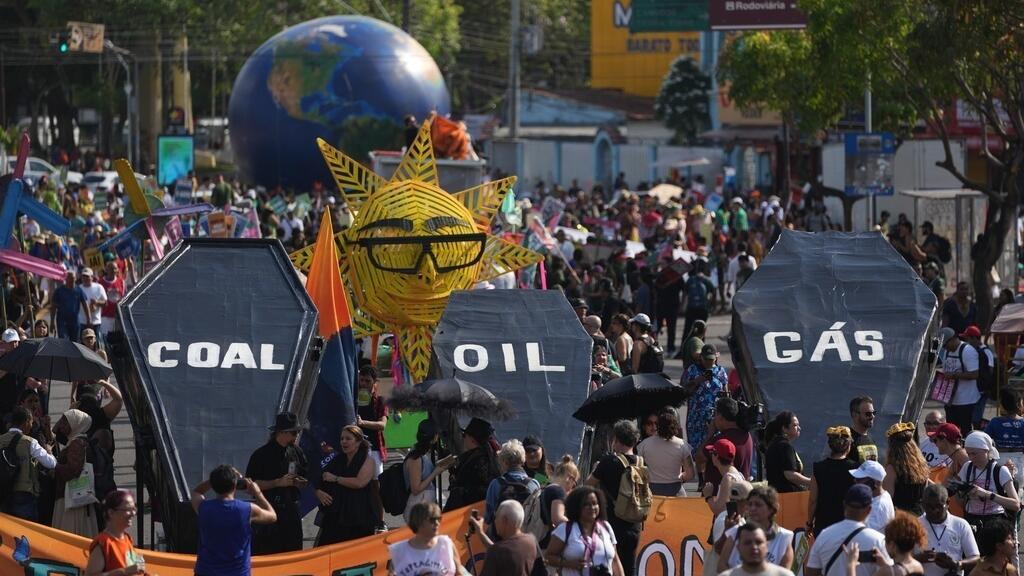
Climate activists protest during the Cop30 UN climate summit in Belem, Brazil, on 15 November 2025. © AP - Andre Penner

The European Union must be "more transactional" in global climate negotiations and consider using financial and trade leverage to assert its position, the French ecology ministry said Tuesday.

The comments came before a meeting of EU environment ministers in Cyprus on Thursday to review last November's UN climate summit, which ended with a watered-down pact that omitted EU demands over fossil fuels.

Monique Barbut, France's minister for ecological transition, had already expressed disappointment over the Cop30 outcome and said the EU must be prepared to "assert its red lines" and reject similar proposals in future.

'Tougher world'


The EU must be "less naive" and "more assertive, more demanding, and more transactional if we want to have an impact in these negotiations", her office said ahead of the meeting.

"We are in a tougher world where the European Union, when it comes to climate negotiations, is more isolated," a senior source from Barbut's office told reporters.
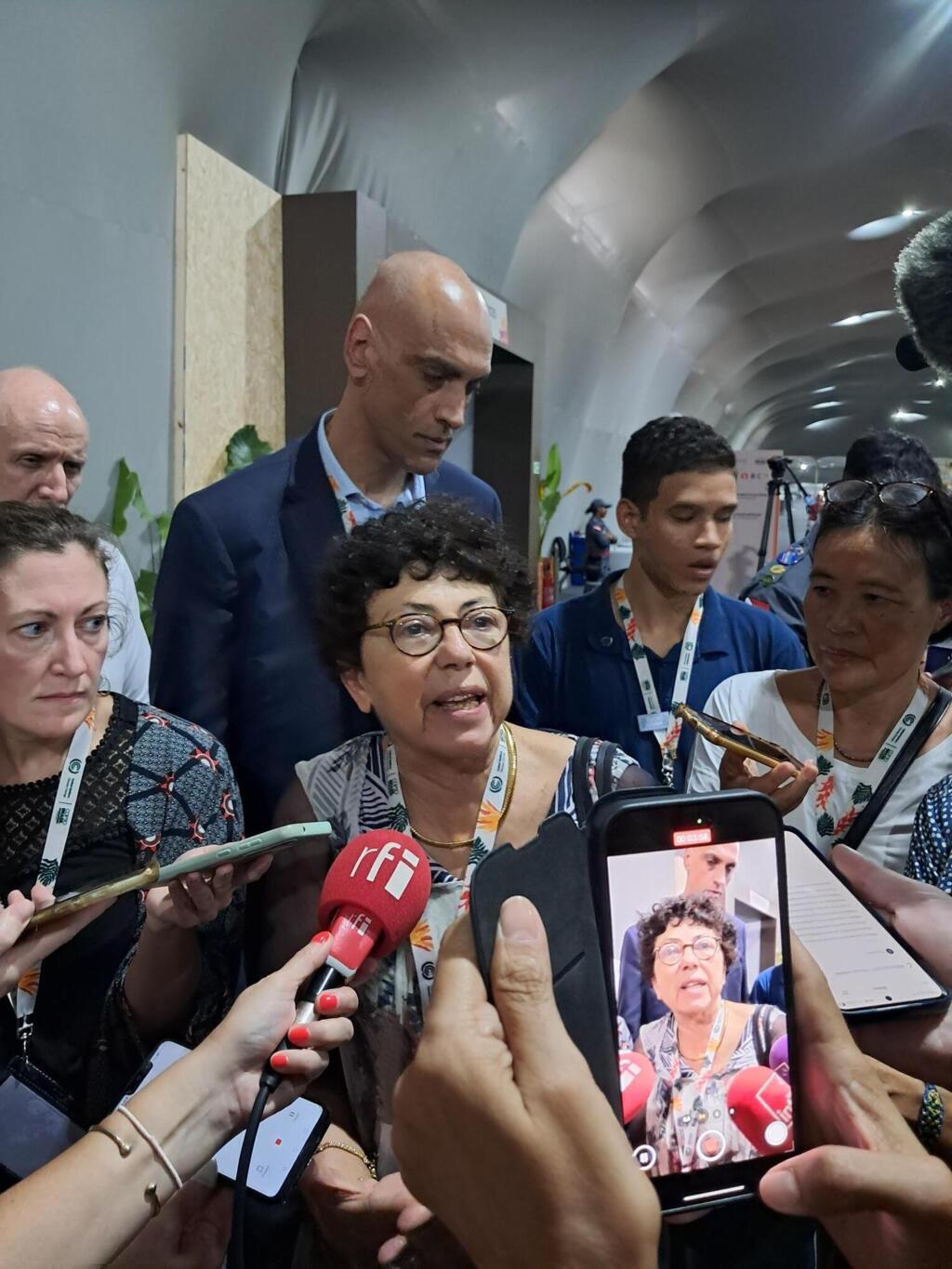
Monique Barbut, French Minister for the Environment and Ecological Transition, on 22 November 2025, during the Cop30 summit in Belém, Brazil. © Géraud Bosman-Delzons/RFI


"States that had previously been somewhat hesitant to speak out are doing so much more freely since the American withdrawal" from the global fight against climate change, the source added.

US President Donald Trump has withdrawn the world's largest economy from the Paris Agreement on global warming and the UN climate treaty that underpins it.

His administration sent nobody to the last UN climate summit in Brazil, where the EU's call for the inclusion of a "roadmap" leading the world away from fossil fuels was left out of the final deal.

The EU ended up accepting that version instead.

Climate finance

The EU is the largest payer of climate finance – money to help developing countries transition to a low-carbon future – and Barbut's office suggested the 27-nation bloc could use this in a more "political" manner.

The source also questioned if the EU should "continue to demonstrate climate and financial solidarity with countries" that have failed to meet their obligations under the Paris Agreement.

These include updating their national pledges for cutting emissions, the latest round of which were due last year.

But more than 60 countries – some of them major climate finance recipients such as India, Egypt, and the Philippines – have still not turned in their latest plans.

"We have tools like trade agreements", whose implementation can be conditional on compliance with the Paris Agreement, the minister's office added.

Cyprus currently holds the rotating presidency of the Council of the European Union.

One of the key issues on the agenda will be implementation of a European strategy for water resilience across key sectors such as agriculture, tourism and energy.

In addition, delegates will discuss challenges related to the circular economy and the plastics recycling market.

(with AFP)
China shuns calls to enter nuclear talks after US-Russia treaty lapses

Beijing (AFP) – China rejected calls to enter talks on a new nuclear treaty after a US-Russian agreement expired on Thursday, ending decades of restrictions on how many warheads the two powers can deploy.


05/02/2026 - RFI

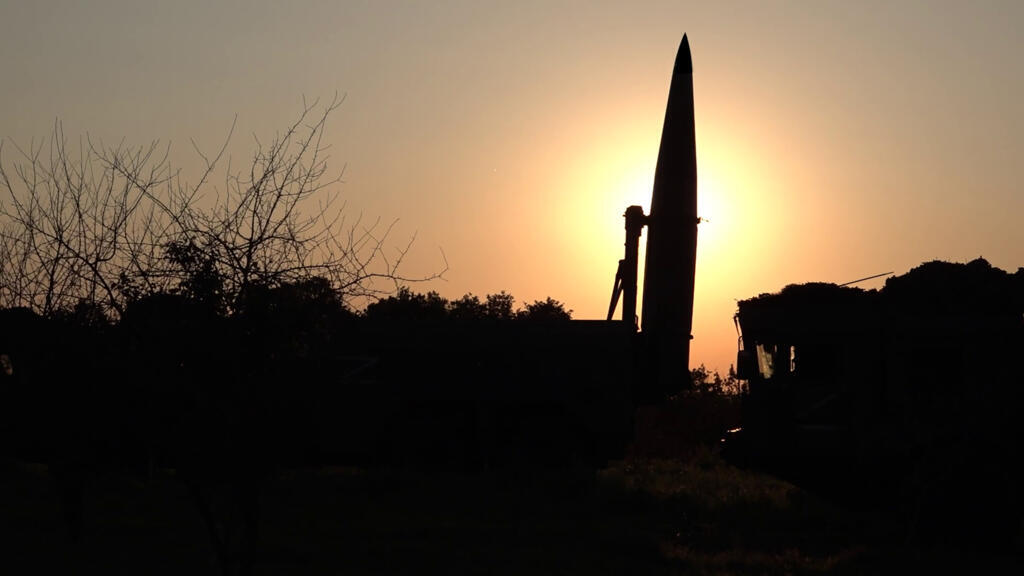
Campaigners have warned allowing the treaty to lapse could unleash a new nuclear arms race. © Handout / Russian Defence Ministry/AFP

Campaigners have warned that the expiry of the New START treaty could trigger a global arms race, urging nuclear powers to enter negotiations.

The United States has said any new nuclear agreement would have to include China, whose nuclear arsenal is rapidly expanding, but international efforts to draw Beijing to the negotiating table have so far failed.

China's foreign ministry joined a growing chorus expressing regret on Thursday over the expiry of the treaty, saying it was "of utmost importance to safeguarding global strategic stability".

Nevertheless, "China's nuclear capabilities are of a totally different scale as those of the United States and Russia," foreign ministry spokesman Lin Jian told a news conference.

Beijing "will not participate in nuclear disarmament negotiations at this stage", he said.

Russia and the United States together control more than 80 percent of the world's nuclear warheads.

China's nuclear arsenal, meanwhile, is growing faster than any country's, by about 100 new warheads a year since 2023, according to the Stockholm International Peace Research Institute (SIPRI).

China is estimated to have at least 600 nuclear warheads, SIPRI says – well below the 800 each at which Russia and the United States were capped under New START.

France and Britain, treaty-bound US allies, together have another 100.

Fears of nuclear war

Signed during a warmer period of relations, US President Donald Trump did not follow up on Russian counterpart Vladimir Putin's proposal to extend New START's limits for one year.

UN Secretary-General Antonio Guterres called the expiry a "grave moment".

"For the first time in more than half a century, we face a world without any binding limits on the strategic nuclear arsenals" of Russia and the United States, Guterres said in a statement.

"This dissolution of decades of achievement could not come at a worse time – the risk of a nuclear weapon being used is the highest in decades," he said, after Russian suggestions of using tactical nuclear weapons early in the Ukraine war.

Pope Leo XIV said each side needed to do "everything possible" to avert a new arms race.

A NATO official, speaking on condition of anonymity, called for "restraint and responsibility" and said that the US-led military alliance "will continue to take steps necessary" to ensure its defence.

A group of Japanese survivors of US atomic bombs during World War II said they feared the world was marching towards nuclear war.

"Given the current situation, I have a feeling that in the not-too-distant future, we'll actually have a nuclear war and head toward destruction," Terumi Tanaka, co-chair of the Nihon Hidankyo group, told a press conference.

In the run-up to the treaty's expiry, the metaphorical "Doomsday Clock" representing how near humanity is to catastrophe moved closer than ever to midnight, as its board warned of heightened risks of a nuclear arms race.

'Impossible' without Chine

Moscow said it considered that both Russia and the United States were "no longer bound by any obligations" under New START.

"The Russian Federation intends to act responsibly and prudently," it added, but warned it was ready to take "decisive" countermeasures if its national security is threatened.

Kremlin spokesman Dmitry Peskov told reporters of the treaty's expiry that "we view it negatively."

Trump, who has frequently lashed out at international limits on the United States, also looked ready in his first term to let New START lapse as he insisted on including China.

But some observers say the expiry owes less to ideology than to the workings of the Trump administration, where career diplomats are sidelined, simply not having the bandwidth to negotiate a complex agreement.

On Wednesday, Secretary of State Marco Rubio reiterated a call for a new agreement that includes China.

"The president's been clear in the past that in order to have true arms control in the 21st century, it's impossible to do something that doesn't include China," Rubio said.

Daryl Kimball, executive director of the Arms Control Association, which warns of nuclear risks, agreed that China should engage.

But "there is no indication that Trump or his team have taken the time to propose risk reduction or arms control talks with China since returning to office in 2025", Kimball said.

The treaty, signed in 2010 in Prague by then presidents Barack Obama and Dmitry Medvedev, limited each side's nuclear arsenal to 1,550 deployed strategic warheads, a reduction of nearly 30 percent from the previous limit set in 2002.


Caught between conflict and crisis, Syria faces 'incredibly fragile moment'

Issued on: 06/02/2026 -  RFI

After more than a decade of war, a surge of violence in northern Syria is forcing thousands of people to flee – even as others return to a fractured country under a fragile interim government. With two-thirds of the population in need of urgent assistance and the UN humanitarian response underfunded, the Danish Refugee Council's Charlotte Slente tells RFI why aid groups fear catastrophic consequences as cold weather and economic collapse push millions to the brink.

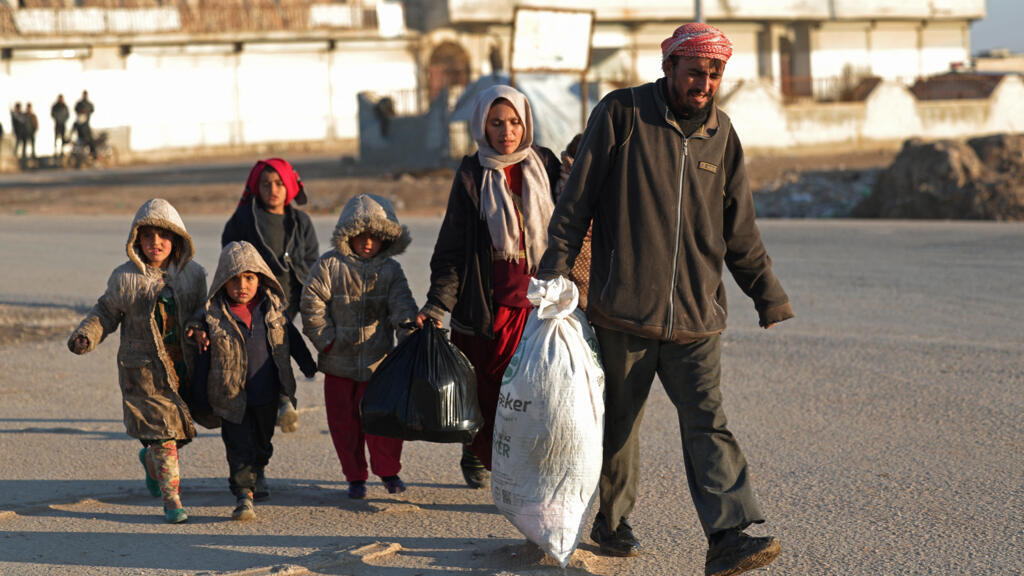
A family flees from the vicinity of Humaymah village, east of Aleppo, in Syria on 16 January, 2026. © AFP - OMAR HAJ KADOUR

Clashes in and around Aleppo have displaced around 170,000 people since mid-January, as the Syrian army seeks to extend its control over previously Kurdish-controlled areas.

Ongoing hostilities between government forces and armed groups continue to trigger displacement in several parts of the country, according to the UN.

While political transition is underway after the fall of Bashar al-Assad at the end of 2024, reconstruction and recovery efforts are hindered by instability and lack of funding.

Access to healthcare remains unreliable, and basic services are severely disrupted. A harsh winter and long-term drought are exacerbating the crisis.

More than 16 million Syrians are expected to need humanitarian assistance in 2026 – yet the UN's response plan is only 33.5 percent funded, leaving a $3.2 billion gap.

"It is an incredibly fragile moment for Syria," said Slente, secretary-general of the Danish Refugee Council (DRC), speaking to RFI on a visit to the Syria, including areas in and around Damascus.

"This is a country where two out of every three Syrians need humanitarian assistance, and 90 percent of the population lives below the poverty line."

Returning to ruins, landmines

Around 3 million Syrian refugees and internally displaced people have returned home since the fall of the Assad regime, over 1 million from other countries and nearly 2 million from within Syria.

"Syria has had a new government in place for the last year," Slente said, "and it's time to sort of recap on our programming here and adapt our programming to the new realities on the ground. A vast percentage of the population here are in dire need of humanitarian assistance on the ground."

Many people are returning to their homes to find almost nothing after more than 13 years of civil war, she added.

One of the DRC's priorities now is to work on getting rid of the landmines that still litter areas where fighting took place, and pose a deadly threat to returnees.

The organisation recently finished training local teams to help clear mines, Slente said.

"We are helping build the capacity here of the National Mine Action Centre in the Ministry of Emergencies that needs to coordinate that very big endeavour of clearing Syria of unexploded ordinance and landmines. It means that now we can get more jobs done on the ground with the clearing of mines, getting them out of fields and villages, so that people can actually be safe when they move around the territory."

Upheaval in Kurdish north


In north-eastern Syria, near the border with Turkey, civilians say they are still fearful.

After months of tension, Kurdish-led forces have ceded swathes of territory to advancing government troops. Under a deal agreed last week, Kurdish forces and administrative institutions are to be integrated into the state.

It is a blow to the Kurds, who had sought to preserve the de facto autonomy they exercised after seizing swathes of territory in battles against the Islamic State jihadist group during the civil war.

"We are afraid that they will attack our regions and that massacres and genocide will occur," one woman told RFI's reporter in the Kurdish-majority city of Qamishli, where government forces entered on Tuesday.

Another resident said he was hoping for "a positive resolution to the conflict, so that no more bloodshed occurs".

This episode was mixed by Nicolas Doreau.

Thousands attend Gaddafi son’s funeral, highlighting Libya’s divided loyalties

Thousands of mourners gathered in the western Libyan town of Bani Walid on Friday for the funeral of former Libyan leader Muammar Gaddafi's son, Saif al-Islam Gaddafi, who was killed this week. The turnout in a town that has long been a Gaddafi stronghold underscored the divisions that have split Libya since the 2011 Arab Spring uprising, plunging the country into instability.


Issued on: 06/02/2026
By: FRANCE 24


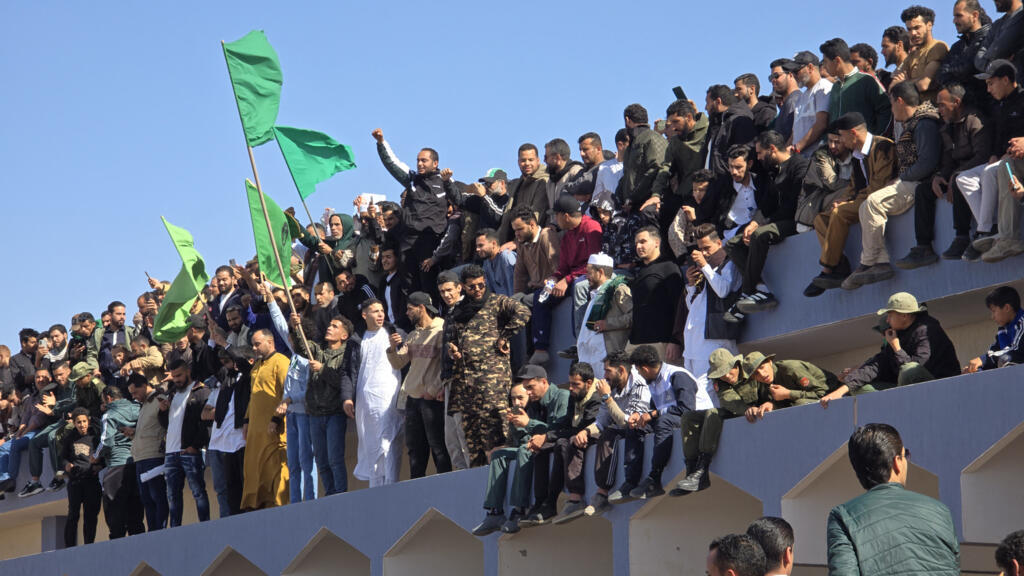
Libyans gather for the funeral of Saif al-Islam Gaddafi in Bani Walid on February 6, 2026. © Mahmud Turkia, AFP

Thousands turned out on Friday for the burial of the slain son of former Libyan ruler Muammar Gaddafi in a town that still holds allegiance to the late longtime leader.

Saif al-Islam Gaddafi, once seen by some as Libya's heir apparent, was shot dead in his home in the northwestern city of Zintan on Tuesday.

His burial in the town of Bani Walid, some 175 kilometres (110 miles) south of Tripoli, brought together thousands of Gaddafi loyalists, nearly 15 years after the ruler was toppled and killed in a 2011 NATO-backed uprising.

Libya has struggled to recover from chaos that erupted since. It remains split between Prime Minister Abdelhamid Dbeibah's UN-backed government based in Tripoli and an eastern administration backed by Khalifa Haftar.

Dbeibah condemned the killing, saying that "assassinations never provide stability... but rather deepen division".

His interior ministry had announced that it would "ensure the security of the funeral" in the town of some 100,000 people.

Each year, Bani Walid celebrates the anniversary of a 1969 coup that brought Gaddafi to power, with people parading through the streets with portraits of the ex-leader and Libya's green flag from before the Arab Spring uprising.

Ahead of the burial on Friday, locals also carried those portraits and flags while chanting pro-Gaddafi slogans and declaring that "the martyrs' blood will not be shed in vain".

Marcel Ceccaldi, a French lawyer who had been representing Seif al-Islam, told AFP a "four-man commando" killed him.

Authorities said they were probing his death as the assailants remained at large.

Saadi Gaddafi, Saif al-Islam's younger brother, said his dead sibling would be buried "next to his brother Khamis Gaddafi", who was killed during the 2011 unrest.

Under his father's iron-fisted 40-year rule, Seif al-Islam was described as the de facto prime minister, cultivating an image of moderation and reform despite holding no official position.

But that reputation soon collapsed when he promised "rivers of blood" in retaliation for the 2011 uprising.

He was arrested that year on a warrant issued by the International Criminal Court for alleged crimes against humanity, and a Tripoli court sentenced him to death, although he was later granted amnesty.

In 2021 he announced he would run for president but the elections were indefinitely postponed.

(FRANCE 24 with AFP)

Kadhafi clan’s path back to power fades with killing of Saïf al-Islam


The death of Saïf al-Islam Kadhafi – the last political heir of Libya’s former ruling family – is reshaping the country’s political landscape, dealing a decisive blow to any remaining hopes of the Kadhafi clan returning to power.


Issued on: 07/02/2026 - RFI

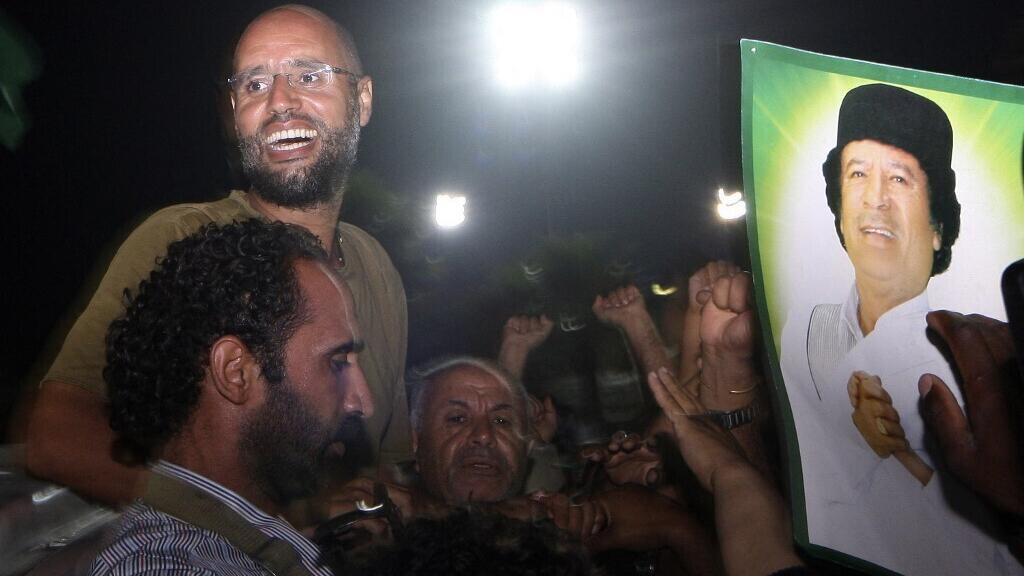
Saïf al-Islam Kadhafi pictured with supporters and journalists at his father’s residential complex in Tripoli in August 2011. Saïf al-Islam, long seen as the last political heir of the Kadhafi clan, was killed this week. AFP - IMED LAMLOUM

Nearly 15 years after the fall of his father, former Libyan leader Muammar Kadhafi, Saïf al-Islam was shot dead on Tuesday at his home in the city of Zintan, north-western Libya.

Media reports said Saïf al-Islam, 53, was at home alone when four armed men broke into the residence and opened fire.

He remained, for many Libyan tribes and especially for his own clan, a powerful symbol of a possible Kadhafi comeback.

His assassination is expected to have lasting consequences for Libya’s political future. No other member of the clan, experts say, can match his level of popularity or influence.

Son of former Libyan dictator Moamer Kadhafi shot dead in home

Rival political camps in Libya could also be affected. The loss of a figure seen as capable of bringing different factions together is widely viewed as unlikely to serve the country’s broader interests.

However, Saïf al-Islam’s death benefits a number of political actors who viewed him as a rival, said Virginie Collombier, a political scientist at Luiss Guido Carli University in Rome.

“Saïf al-Islam Kadhafi was carrying the torch of a united Libya, brought together around a major project of national reconciliation,” she told RFI.

“That was not well received by the two main centres of power, which saw the emergence of a third force as a potential threat to their ability to reach agreement and share power and resources.”

Reconciliation hopes fade

National reconciliation appears to be the first casualty of Saïf al-Islam Kadhafi’s murder. Efforts to bring Libyans into a genuine national dialogue have repeatedly failed.

So far, seven United Nations special envoys have been unable to make progress, blaming a lack of willingness among those in power to commit to reconciliation.

In 2019, the United States administration gave Field Marshal Khalifa Haftar the green light to attack Tripoli 10 days before a planned meeting. That episode led to the resignation of the UN envoy at the time, Ghassan Salamé.

Saïf al-Islam was the third high-profile Libyan figure to be killed in recent months. Observers say a series of political assassinations risks destabilising the country's internal balance and undermining the political process under way.

His death also comes at a sensitive moment, as the UN attempts to relaunch a new format for national dialogue – with a possible deadline mooted for November.

“The risk now is that this dialogue process will be seriously disrupted,” Collombier warned, adding that renewed tensions cannot be ruled out.

Regional and international players could also benefit from Kadhafi’s demise. He had frequently criticised the way Libya is currently run, which he believed was heavily influenced by foreign powers, including the US and Turkey.

Saïf al-Islam was wanted by the International Criminal Court for crimes against humanity, linked to his alleged role in the suppression of opposition protests in 2011.
How Svalbard went from from Arctic outpost to geopolitical flashpoint

Tensions in the Arctic are putting new pressure on Svalbard, a Norwegian-administered archipelago long seen as an example of international cooperation, as climate change transforms the region and rivalry between major powers intensifies.


Issued on: 06/02/2026 - RFI

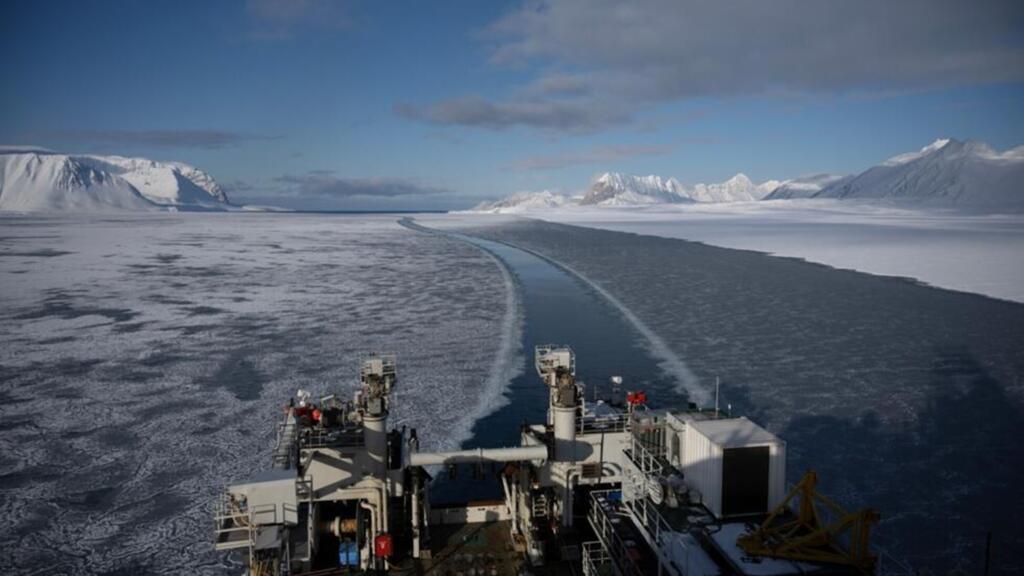
The Norwegian icebreaker Kronprins Haakon in eastern Svalbard, an Arctic archipelago that has become increasingly central to both climate research and geopolitical competition. © Olivier MORIN / AFP

Svalbard is often described as the fastest-warming place on the planet. Located close to the North Pole, the archipelago sits on the front line of climate change, a position that has drawn scientists from around the world for decades.

For years, a unique legal status allowed Svalbard to function as a model of global cooperation. But as Arctic ice retreats and geopolitical competition intensifies, the territory is newly vulnerable.

Recent tensions linked to the possibility of a US annexation of Greenland, less than 500 kilometres to the west, have fuelled concern in Norway's media and political circles. Could Svalbard be next?

“Norway has not faced a security situation this serious since 1945,” Eivind Vad Petersson, a senior official at Norway’s foreign ministry, told The New York Times. “When Greenland is hit by a political storm, Svalbard is inevitably splashed as well.”

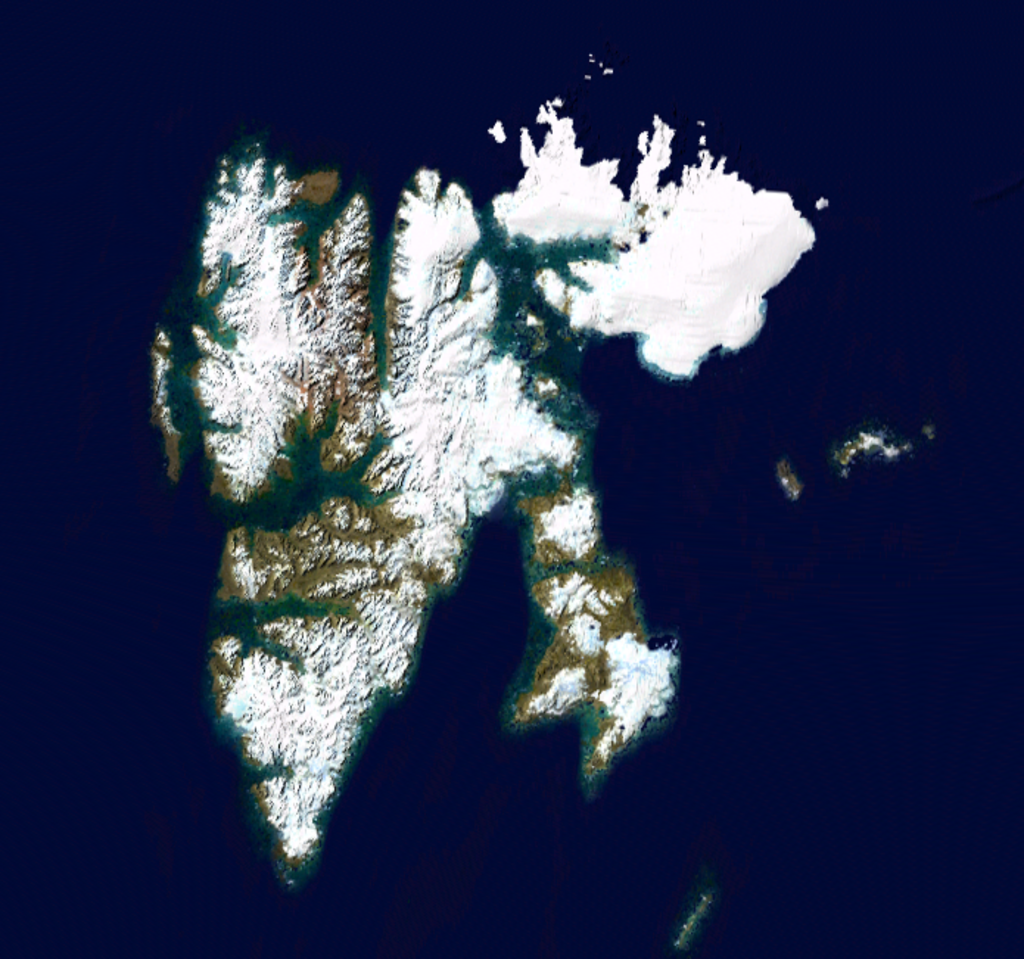
Svalbard’s sensitivity lies in its legal framework. The Spitsbergen Treaty, signed in Paris in 1920 after the First World War, recognises Norwegian sovereignty over the archipelago, located more than 900 kilometres north of mainland Norway.

At the same time, the treaty strictly limits Oslo’s authority. Citizens of signatory states are placed on an equal footing when it comes to access and activity in Svalbard – including hunting, fishing, mining and land ownership.

The Svalbard archipelago lies deep in the Arctic Ocean, halfway between mainland Norway and the North Pole. Administered by Norway, it is home to small international communities and foreign research stations. © Вікіпедія

Initially signed by around 10 countries including France, Denmark, the United States, the United Kingdom, Japan and Italy, the treaty now counts nearly 40 signatories. They include Russia, China and North Korea, whose citizens can settle in Svalbard without a visa.

For decades, this system underpinned what many saw as an Arctic laboratory of cooperation. Nowhere symbolised this more than Ny-Alesund, a small research community hosting Chinese, Korean, Franco-German and Japanese scientific stations.

“Svalbard became a hub for research, exchange and the study of climate change. It’s a place where international scientific cooperation can really happen,” Florian Vidal, a researcher at the Arctic Institute of Norway in Tromso, told RFI.

Today, the archipelago – roughly the size of Croatia – has about 2,700 residents, mainly in Longyearbyen, the world’s northernmost town. A study published in January found there are fewer people there than polar bears.

Strategic ambitions take shape


In recent years, the Arctic as a region has become more politically charged. Once seen as remote, it has become a key arena of international competition at a time when the global order is shifting.

Security concerns, new maritime routes and access to resources have all raised Svalbard’s profile. Seabeds around the archipelago are believed to contain copper, zinc, cobalt, lithium and rare earths – seen as strategic for new technologies and the energy transition.

While extraction is limited by moratoriums, several major powers, including China and the US, are already looking further ahead.

Russia has played a central role in the rising pressure. “Tensions around Svalbard have existed since the 2010s, but they clearly accelerated after the annexation of Crimea and then with the war in Ukraine,” Vidal said.

In February 2024, Russian Deputy Prime Minister Yury Trutnev warned that Moscow would fight for its “rights” in Svalbard, invoking the need to defend its “sovereignty” over the archipelago, in rhetoric echoing language used to justify the war in Ukraine.

The message was repeated in November, when Trutnev again stressed Svalbard’s strategic importance for Russia and the need to maintain a stronger presence, particularly through the state mining company Arktikugol.

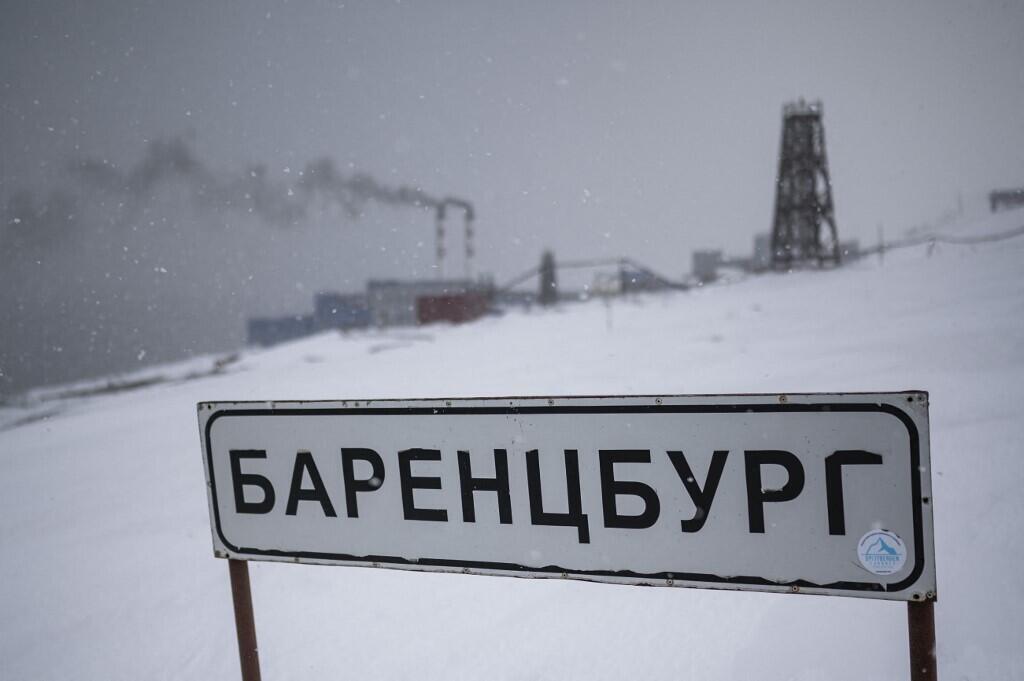
Entrance to the mining town of Barentsburg on the Svalbard archipelago in northern Norway. AFP - JONATHAN NACKSTRAND


Russia maintains two settlements on Svalbard – Barentsburg and Pyramiden, home to several hundred Russian citizens. Officially tied to coal mining, the sites are remnants of the Soviet era, with the mine in Pyramiden closing at the end of the 1990s.

“The Russians are artificially maintaining the Barentsburg mine to justify keeping a presence,” Vidal said.

Testing Norway’s red lines


In recent years, these communities have become the stage for symbolic gestures viewed by Oslo as provocative.

In Barentsburg, where the Russian flag flies, a parade was held in 2023 to mark Victory Day on 9 May, celebrating the defeat of Nazi Germany. There were no weapons, but the military-style staging and symbols were seen by Norwegian authorities as a political message.

Vidal also pointed to the use of security vehicles with visual codes close to those of Russian forces, and to the growing prominence of the Russian Orthodox Church. A full-time priest has been permanently based in Barentsburg since March 2025.

This helps anchor Svalbard in an image of “Russian land”, Vidal said. “These episodes fit into a logic of hybrid warfare. The Russians are testing the limits of Norway’s sovereignty over the archipelago.”

The message, he added, is unambiguous: "The Russians are there, and they are not leaving.”

Svalbard also holds military significance for Moscow. Nuclear submarines from Russia’s Northern Fleet, the country’s main Arctic naval force, are based in Severomorsk in northwest Russia and must pass near the archipelago to reach the Atlantic, making it a key transit point.

Oslo reasserts control


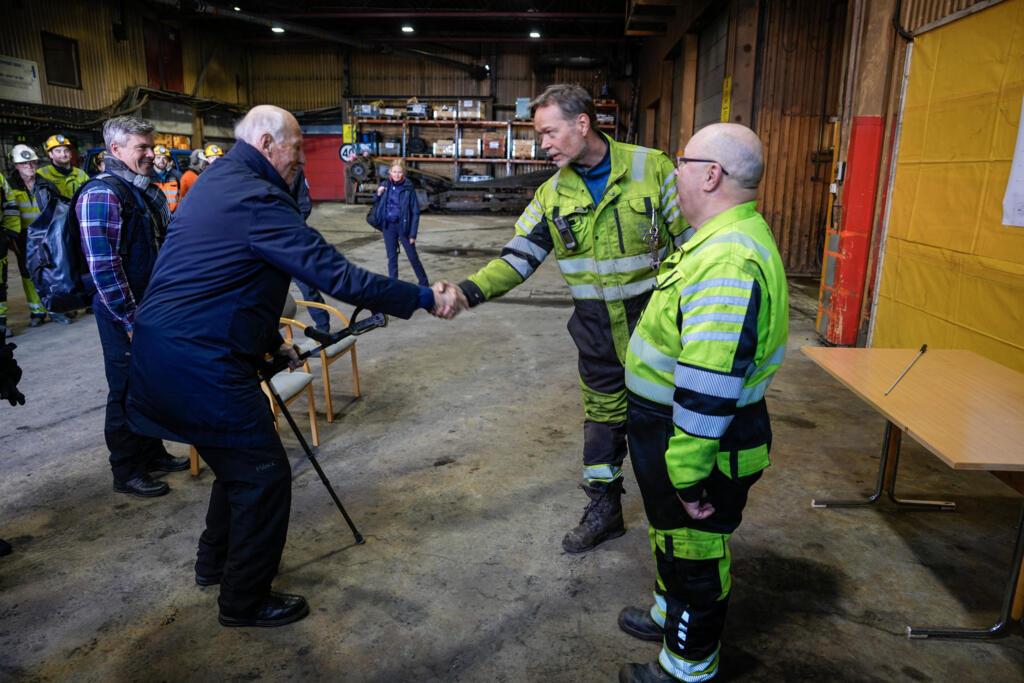
Faced with these signals, Norway has moved to reassert its authority without formally challenging the 1920 treaty. In a strong symbolic move, King Harald V visited Svalbard in June for the first time in 30 years.

“America has gone mad in the Arctic and Russia does not respect the independence of its neighbours. It is very important to send the king to mark the kingdom’s supremacy over its distant territories,” Norwegian daily newspaper Verdens Gang said.

“There is a form of nationalism around Svalbard on the Norwegian side, it’s a very sensitive issue,” Vidal said.

King Harald V of Norway during a visit to Svalbard on 16 June 2025
. AFP - CORNELIUS POPPE


Norway has also strengthened coastguard patrols around the archipelago. Moscow has protested, arguing this violates the treaty’s ban on military use.

While permanent militarisation is prohibited, naval patrols are not explicitly banned – a legal grey area Norway now relies on.

Administrative controls have also tightened. Local voting rights have been restricted to foreigners who have lived for several years on mainland Norway, and land sales to non-Norwegians have been banned.

Scientific research is now more closely supervised, with projects requiring approval from Oslo. “We are seeing a gradual extension of Norwegian prerogatives,” Vidal said, describing a “Russian-Norwegian ping pong game”.

Pressure from multiple sides


China’s presence is also viewed with growing caution. Beijing has been a signatory to the Spitsbergen Treaty since 1925, and has operated a research station in Ny-Alesund since 2004.

Officially dedicated to polar science, the station is suspected by Norwegian and US authorities of carrying out research with potential dual use.

Two granite lion statues have become a symbol of friction, with China refusing Oslo’s requests to remove them. In summer 2024, more than 180 Chinese tourists arrived in Ny-Alesund, displaying national symbols.

One woman posed in military-style clothing in front of the statues, triggering diplomatic unease.

Norwegian authorities have also, for the first time, denied Chinese students access to the University Centre in Svalbard, citing security risks.

Svalbard has also long been a point of tension between Norway and the European Union. Several EU member states contest fishing quotas and permits imposed by Oslo around the archipelago, arguing they breach the treaty’s principle of equality.

The EU has also raised concerns over Norway’s seabed prospecting campaigns near Svalbard.

Against this backdrop, tensions surrounding Greenland have revived fears of imitation. If US President Donald Trump were to seize Greenland in defiance of international law, could Russia feel justified in challenging the status quo in Svalbard?

“We are not in a critical phase, but in a crisis that is gradually building,” Vidal said.

One strategic question remains unresolved. In the event of an attack, would NATO’s Article 5 – its collective defence clause – apply to an archipelago with demilitarised status?

Aware of this uncertainty, Norway has stepped up political signalling in recent years, including hosting delegations from NATO’s parliamentary assembly in Svalbard, without ever securing a formal guarantee.

This article has been adapted from the original version in French by Aurore Lartigue
Thousands displaced as flooding devastates wetland crops in Malawi

Flooding across Malawi following heavy rains that began in December has displaced thousands and destroyed the country's agricultural heartlands, with experts linking the increased rainfall to climate change.


Issued on: 08/02/2026 - RFI

part of rehabilitated Dwangwa bridge which was washed away by the water cutting off the road which is is vital for transport agricultural products and commodities across the country . © RFI/Charles Pensulo

By: Charles Pensulo in Malawi

Kakuyu, in Malawi’s central district of Nkhotakota, provides hundreds of farmers with their livelihoods. Close to both the Dwangwa River and Lake Malawi, its swampy delta land makes it easy to grow crops such as rice and maize twice a year, without the need for fertilisers.

But a heavy downpour in December displaced these farmers and washed away their crops, which were about to be harvested.

Authorities say Nkhotakota and the surrounding districts received continuous rainfall from 25 December straight through to the end of the month, leading to rising water levels in rivers and streams which culminated in flooding of low lying areas.

Malawi's Department of Disaster Management Affairs (DoDMA) said on 22 January that "at least 40 people have died while more than 36,000 households have been affected by rain-related disasters during the 2025/26 rainfall season", the Malawi News Agency reported.

The statement, by Wilson Moleni, commissioner for Disaster Management Affairs, added that "209 people have sustained injuries, while 23 deaths were caused by lightning strikes and 17 by collapsing walls".

DoDMA and its humanitarian partners have responded by providing maize flour, clothes, blankets and medical supplies, while the Malawi Defence Force has been involved in search and rescue operations.


Global warming

For Julius Ng'oma, national coordinator for the country's Civil Society Network on Climate Change (CISONECC), the cause of the disaster is clear: "The recent flooding in Malawi follows a pattern that can be attributed to climate change, suggesting that this is likely being amplified by the global warming phenomenon."

Leah Phiri, 53 who has lived in the Kakuyu area for 30 years, educating her seven children with the proceeds of her crops, said she had never seen anything like the downpour.

The waters had reached shoulder height before officials from the Red Cross sounded the alarm and boats arrived to rescue residents.

"We were told that only people and no possessions were allowed in the boat," said Phiri, who is still sheltering at a former school along with 700 others.

She had watched as her maize, rice and beans – which were almost ripe – were submerged in the water.

Now, she's sharing a room with 50 other people and relying on beans and flour, along with other necessities, donated by the government, the Red Cross and other donors. She is afraid that an outbreak of cholera could erupt due to the overcrowding and lack of hygiene facilities.

"We’ve stayed in that area for decades and it became our home. It hosts over 800 people and is composed of dambos [wetlands] which are ideal for growing different crops like rice and maize. We can’t go back now, and all our possessions have been destroyed."

For 62-year-old Nancy Nthali, Kakuyu was like "a place God gave us to make a living".

For her and her six children – including two orphans she looks after – the disaster has plunged their future into uncertainty.

Livelihoods lost

This is not the first time Kakuyu and the surrounding areas have experienced rising water levels due to rains. But for the first time, residents have seen the water create gullies and streams which make it almost unusable for farming.

Leonard Chiphwanya, who has lived in the area for almost a decade, said families have been torn apart. His own four children were taken in by relatives while he stayed at the camp, agonising over the family's next move. He should have been in the field working, he said.

Chiphwanya recalled how the district had an abundance of rice and maize, in an area that has now been destroyed – and said this plentiful supply meant an affordable price for these commodities compared to in other areas. There were excess harvests, he says, because people were able to "grow crops twice, during rainy season and dry season".

He added: "We were growing crops due to the type of soil and proximity to the water. In the past, the area was neglected... until [people] discovered its worth and one by one, they stayed permanently. Imagine people harvesting between 30, 50 up to 100 bags of rice and maize. This has been a source of livelihood to our families."

For Ng'oma of CISONECC: "Malawi needs to ensure that tangible adaptation measures to the impact of heavy rains and flooding are put in place to secure property, livelihoods and lives in the near and long term. Careful planning in consideration of climate hazards and risk is essential. Climate proofing is key for infrastructure."
Third impeachment case filed against Philippine VP Duterte

Manila (AFP) – Members of the Philippine clergy filed an impeachment complaint Monday against Sara Duterte, the third to hit the country's vice president in just over a week.


Issued on: 09/02/2026 - RFI

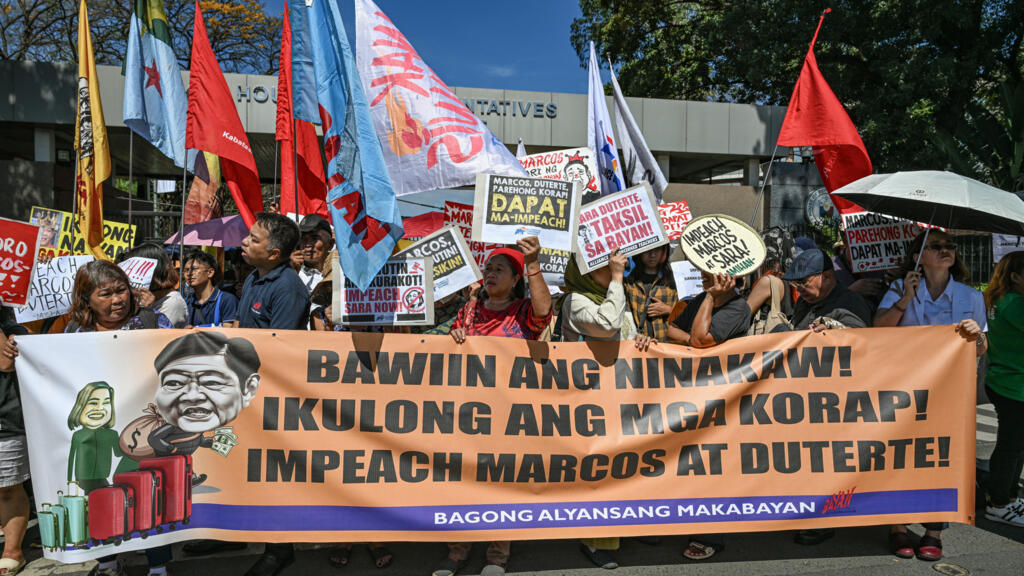
Protesters hold placards calling for the impeachment of Sara Duterte outside the House of Representatives in early February © Jam STA ROSA / AFP

The daughter of former president Rodrigo Duterte was impeached by the House of Representatives last year only to see the country's Supreme Court throw the case out over procedural issues.

Under the Philippine constitution, an impeachment triggers a Senate trial. A guilty verdict would see Duterte barred from politics and sidelined from a potential 2028 presidential run.

Monday's filing -- brought by some of those behind the former complaint -- accuses Duterte of bilking taxpayers of at least $10 million while serving as vice president and as secretary of education.

"This is not political, we are not politicians," Reverend Joselito Sarabia, a Catholic friar and one of the complainants, told reporters outside the House complex.

"We believe there is a moral concern. That's why we are here again," he said, adding it was time for Duterte to "answer all accusations".

The complaint also cites an alleged death threat against President Ferdinand Marcos made during a late-night press briefing that Duterte has since said was misinterpreted.

Representative Leila de Lima, who endorsed the complaint, said she was confident it would advance to a House vote, calling it an "improved version of the articles of impeachment" sent before.

De Lima spent more than six years behind bars on drug charges that rights groups have said were trumped up by the vice president's father.

Last week, Philippine civil society leaders and members of a left-wing coalition filed separate similar impeachment complaints against Duterte.

They were filed just days before a House justice committee dismissed a pair of impeachment complaints against President Marcos, saying they lacked the necessary substance to move forward.

Analysts who spoke to AFP had said the move against the president had been unlikely to succeed given the support he enjoys among House lawmakers.

Former allies, Marcos and Duterte have been engaged in a high-stakes political brawl that erupted within weeks of their winning a landslide victory together in the 2022 presidential election.

Duterte supporters widely believe Marcos engineered Rodrigo Duterte's arrest and subsequent transfer to the International Criminal Court in the Netherlands to face charges related to killings that took place during a brutal crackdown on drugs.

© 2026 AFP
French riot police officers on trial over beating of Yellow Vest protesters

The trial of nine French CRS officers, who were filmed beating Yellow Vest protesters in Paris in December 2018, opens in the capital on Monday.


Issued on: 09/02/2026 - RFI

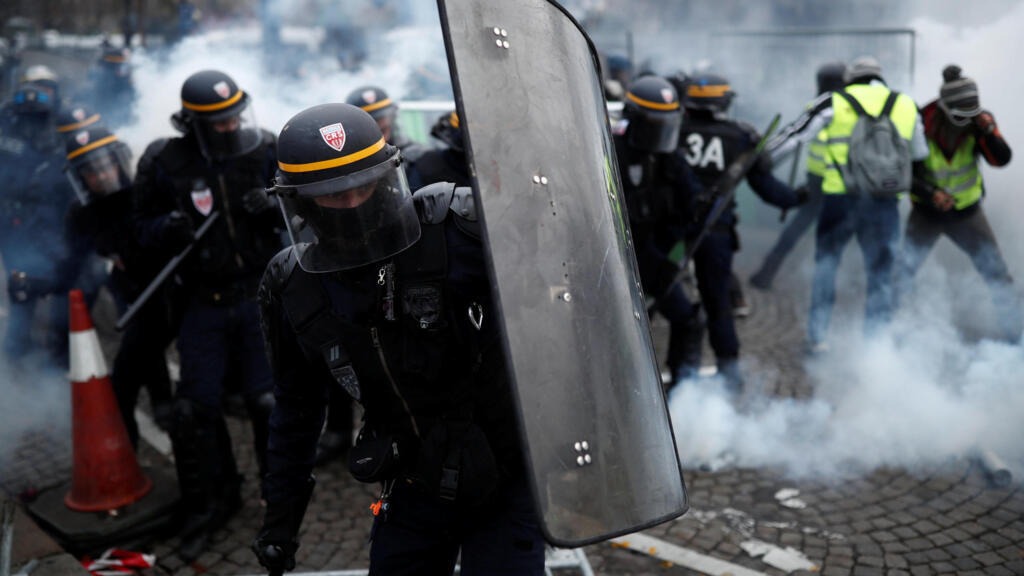
Protesters wearing yellow vests clash with riot police on the Champs-Elysées in Paris, 24 November, 2018. REUTERS/Benoit Tessier

The nine officers, from France's riot police division, the CRS, aged between 30 and 52, face charges of "wilful violence by a person holding public authority". Some are also accused of "aggravated violence".

The events in question took place on 1 December, 2018, during the anti-government Yellow Vest protest movement, when protestors tried to ransack the Arc de Triomphe.

A group of protesters and at least one journalist covering the unrest entered a nearby Burger King restaurant to escape tear gas, after violent clashes broke out between police and demonstrators.

CCTV footage on the premises, along with videos captured by journalists and bystanders, showed members of the CRS entering the premises and using batons to strike several people who were already on the ground or had their hands up.

Multiple victims reported physical injuries and psychological trauma.

If found guilty, the officers face up to seven years in prison and a €100,000 fine.

French police watchdog calls for action against officers who beat protesters


'Police violence is a major issue'

Natan Arthaud, 32, is one of the victims of the Burger King assault.

CCTV footage showed him curled up on the ground, protecting himself with his arms as a group of riot police surrounded him.

Arthaud, from the Loire region, was signed off work for five days after receiving 27 blows to his arms and legs.

"Police violence is a major issue," he told local media in an interview in August 2024.

"I hesitated a great deal [before filing a complaint]. I was aware that by bringing a civil action against the riot police, I wasn't taking on just anyone."

In July 2024, after lengthy proceedings, the Paris public prosecutor requested a criminal trial, noting that some riot police officers "armed with batons and shields" had "repeatedly struck non-hostile demonstrators" who were on the ground or "trying to come out with their hands raised".

In late February last year, an investigating judge referred nine officers to the criminal court on charges of aggravated intentional violence by a person holding public authority.

The officers are expected to argue that they were operating under extreme stress and "insurrectional" conditions, following hours of being targeted with projectiles by rioters.

Long investigation

The case, which has taken seven years to come to trial, is one of the largest collective trials of police officers arising from the Yellow Vest protest movement.

Triggered by fuel hikes and the cost of living crisis, the movement mushroomed into a wider protest against President Emmanuel Macron and his pension reform.

Some 212 cases of alleged police brutality have been investigated by the IGPN police oversight body in relation to the protests.

In December 2019 a CRS officer was handed a two-month suspended sentence for wilful violence, after he was filmed hurling a paving stone at a protester during Yellow Vest protests on 1 May that year. He continued in his post.

The trial at the Paris Judicial Court is scheduled to run until 12 February.
Bangladesh’s Election And Referendum: Contesting Reform And Political Futures – Analysis


Bangladesh's Muhammad Yunus. Photo Credit: @ChiefAdviserGoB, X


February 9, 2026 

By Institute of South Asian Studies (ISAS)


Bangladesh’s election in February 2026 is taking place alongside a national referendum on constitutional reform, making it unlike a routine electoral contest. The vote is unfolding in a political environment that is marked by party exclusions, institutional tensions and competing visions of reform. Together, the election and referendum are shaping a moment that will influence how constitutional change proceeds, how political competition is organised and how the country’s future political system evolves.

By Imran Ahmed and Muhammad Saad Ul Haque

On 13 November 2025, the interim government in Bangladesh issued the July National Charter (Constitutional Reform) Implementation Order, stipulating that the next parliamentary election would be held simultaneously with a national referendum on constitutional reform. The referendum requires voters to cast a single ‘Yes’ or ‘No’ vote on a package of four reform proposals. This design has drawn criticism from several political actors, particularly because it condenses complex constitutional changes into a binary choice and limits the space for party-specific dissent.

The July National Charter itself emerged from the recommendations of multiple reform commissions established after the August 2024 transition, which together produced a large set of reform proposals later refined through negotiations facilitated by the National Consensus Commission. The Charter was signed on 17 October 2025 but some political parties declined to endorse it, citing concerns over its legal standing, constitutional implications and the inability to challenge it through judicial channels.

The referendum proposes four broad reforms: the reconfiguration of caretaker governance and constitutional bodies, including the Election Commission; the creation of a 100-member upper house of parliament through proportional representation; the binding of the next elected government to implement a set of agreed reforms; and the continuation of additional reforms based on party commitments. If approved, the elected parliament would simultaneously function as a Constitutional Reform Council tasked with completing amendments within a defined timeframe and initiating the establishment of the upper house.

However, apprehension persists around both the design and implementation of the referendum. Critics argue that a single ‘Yes’ or ‘No’ vote negates the complexity of disagreements among the parties on key constitutional questions. A ‘Yes’ outcome could effectively bypass dissent and bind future governments to the reform agenda as written, while a ‘No’ outcome could derail the reform process altogether. The referendum, therefore, places significant weight on a simplified public mandate to resolve deeply contested institutional questions.

Uncertainty is further compounded by the broader political environment surrounding the vote. There are concerns about the public’s ability to fully understand the technical nature of the reforms, given that multiple proposals have been condensed into four broad categories. At the same time, the government’s active campaigning for a ‘Yes’ vote has raised questions about neutrality, particularly in light of the Election Commission directives restricting official interference. This tension has contributed to confusion among the political actors and the electorate about the appropriate boundaries between state authority and the electoral process.

More broadly, the referendum unfolds within an election already shaped by a deeply altered political landscape, including party exclusions, institutional pressures and competing visions of reform. The enforced absence of the Awami League, following the suspension of its registration and activities, has created a significant political vacuum and removed a major electoral force that historically commanded a substantial share of the national vote. This exclusion risks undermining the perceived legitimacy of the electoral process by alienating constituencies, particularly minorities and secular segments, which had long been represented through the party’s participation in competitive elections.

Precisely how these constituencies will respond electorally, and which direction their votes may shift in the absence of the Awami League, remains uncertain. In its place, the political landscape has increasingly coalesced around two emerging blocs: a nationalist alliance led by the Bangladesh Nationalist Party (BNP) and a religious-conservative alignment centred on Jamaat-e-Islami and the National Citizen’s Party. Across both blocs, the leaders have, nonetheless, converged around support for the referendum. The BNP’s chairman, Tarique Rahman, has urged voters to back a ‘Yes’ vote as part of the party’s broader commitment to political reform despite reservations about aspects of the Charter; Jamaat-e-Islami leaders have similarly framed the referendum as necessary to avoid an electoral crisis and advance implementation of the July Charter; and the National Citizen’s Party, despite refusing to sign the Charter, has also campaigned for a ‘Yes’ outcome, arguing that reform remains necessary even if elements of the framework remain unclear.

The outcome of the election on 12 February 2026 will determine not only whether the proposed constitutional changes proceed but also how the legitimacy of the electoral process and the resulting political order is constructed in the post-election period. In this sense, the vote is as much about the credibility of the process as it is about the substance of reform. How the results are accepted, implemented and contested in the days that follow will shape public confidence in both the reforms themselves and the political system that emerges from this election.

About the authors: Dr Imran Ahmed is a Research Fellow at the Institute of South Asian Studies (ISAS), an autonomous research institute at the National University of Singapore (NUS). He can be contacted at iahmed@nus.edu.sg

Mr Muhammad Saad Ul Haque is a former Research Associate at the same institute. He can be contacted at msaaduh@gmail.com

The authors bear full responsibility for the facts cited and opinions expressed in this paper.


Source: This article was published by the Institute of South Asian Studies (ISAS)


Institute of South Asian Studies (ISAS)

The Institute of South Asian Studies (ISAS) was established in July 2004 as an autonomous research institute at the National University of Singapore (NUS). ISAS is dedicated to research on contemporary South Asia. The Institute seeks to promote understanding of this vital region of the world, and to communicate knowledge and insights about it to policy makers, the business community, academia and civil society, in Singapore and beyond.
Strong Sunlight Limits Plant Diversity And Biomass In Grasslands


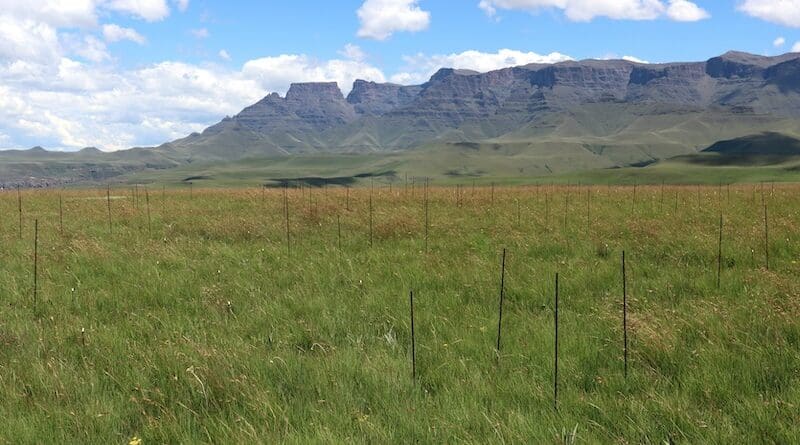
One of the grassland sites included in the study, located in the Drakensberg in South Africa. Foto: Clinton Carbutt


February 9, 2026 
By Eurasia Review


The sun is the basis for photosynthesis, but not all plants thrive in strong sunlight. Strong sunlight even constrains plant diversity and plant biomass in the world’s grasslands, a new study shows. Temperature, precipitation, and atmospheric nitrogen deposition have less impact on plant diversity.

These results were published in the journal PNAS, by a research team led by Marie Spohn from the Swedish University of Agricultural Sciences.

The steppes of North America, the Serengeti savanna, the Svalbard tundra and natural pastures in the Alps are examples of habitats that are described as grasslands, with the common feature that there are no trees and the vegetation is dominated by grasses and other herbaceous plants. The diversity of plant species in these grasslands varies considerably, but the question of what controls plant diversity has challenged researchers for decades.

Last year, in a study on grasslands, Marie Spohn from SLU and colleagues found that soil properties and climate factors, such as temperature, did not explain variations in plant diversity.

“This finding surprised me” says Marie Spohn. “And that’s when I started wondering about the importance of sunlight for plant diversity in grasslands and decided to start a new project that would explore this relationship”.

More sun than photosynthesis can handle

Now, Marie Spohn and 34 colleagues from different parts of the world show that plant diversity in global grasslands was negatively correlated with sunlight: increased levels of sunlight generally mean a lower diversity. But it was not all solar radiation that was important. It was intense sunlight in the wavelengths used in photosynthesis that constrained the number of plant species. Neither UV-B radiation, temperature, precipitation, dryness index or atmospheric nitrogen deposition were as closely related with plant diversity as intense sunlight.

“We know that plants can be stressed by receiving more photosynthetically active radiation than the photosynthetic machinery can handle and that this reduces photosynthesis, but this is the first study to show that photosynthetically active radiation is a factor that constrains plant diversity in the world’s grasslands,” says Marie Spohn.
Stronger impact in mountainous areas may have consequences in a warmer climate

The researchers also discovered that plant diversity was constrained by intense solar radiation particularly at higher elevations. The reason for this is most likely that at higher elevations, where the air pressure is lower, the air contains lower concentrations of atmospheric gases and aerosols that make solar radiation more diffuse.

The research also found that above 430 meters above sea level, not only plant diversity but also plant aboveground biomass was negatively correlated with strong sunlight.

“Our study is relevant regarding the question of what happens to plant communities when the climate gets warmer. It suggests that intense solar radiation may limit the ability of many plant species to migrate to higher elevations in response to climate warming. This supports the concern that such species are currently ‘riding the elevator towards extinction’,” says Marie Spohn.

In contrast to previous estimates, the new results suggest that it is the photosynthetically active radiation, rather than UV-B radiation, that limits plant migration upwards.
Some plant groups are more sensitive than others

While total plant diversity was negatively correlated with intense sunshine, different groups of plants were affected to different degrees. For example, grass diversity was only negatively correlated with sunshine at higher elevations, and legume diversity was not correlated with sunshine at all.

Extensive collaboration across six continents

The finding that photosynthetically active solar radiation constrains species richness and plant biomass in the world’s grasslands, was only possible due to the highly collaborative approach of the study. A team of scientists working on six continents collected standardized data on plant species richness and biomass in 5590 plots in natural and semi-natural grasslands. These data were then analysed together with satellite-derived data of solar radiation covering 22 years.