Tuesday, February 10, 2026

The Neocolonial Binge in the Compact States

 February 10, 2026

Photograph Source: Luka Peternel – CC BY-SA 4.0

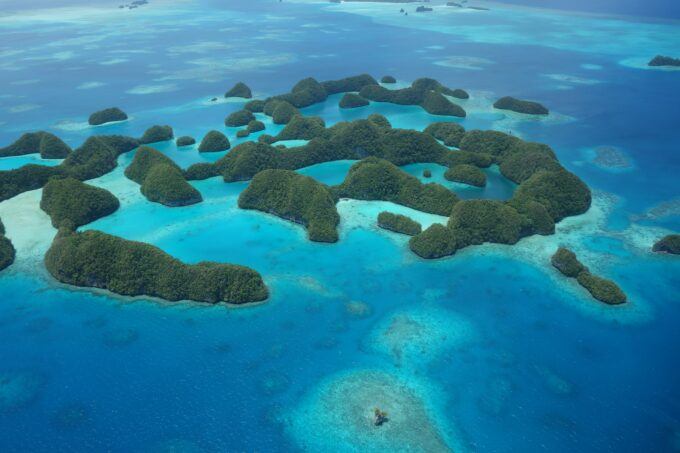
The United States is quietly working to reassert its control over the compact states, three island states in the central Pacific Ocean.

Last month, witnesses at a congressional hearing revealed that the Trump administration is expanding military and intelligence operations in Palau, the Marshall Islands, and the Federated States of Micronesia. Witnesses told lawmakers that the three countries occupy an area critical to U.S. power projection and pivotal for geopolitical competition with China.

“This is a region that is increasingly central to United States security and global stability,” State Department official Tony Greubel said. “And as geopolitical competition intensifies, the Pacific strategic sea lanes, abundant resources, and vibrant communities, they’re more important than ever to the United States and our allies and partners.”

Some congressional leaders criticized the Trump administration’s imperial ambitions in other parts of the world, with Representative Jared Huffman (D-CA) warning about “a colonial conquest binge” affecting Greenland, but they exhibited the same kind of imperial mindset for the Pacific. Lawmakers from both parties called on the Trump administration to preserve U.S. military controls in the compact states.

“If we lose the foothold there, we are never going to get it back,” Representative Addison McDowell (R-NC) said.

The president may continue to insist that the United States should annex other lands and countries, but U.S. lawmakers know that the United States can maintain control over the compact states through other means, just as it has been doing for decades. Rallying behind their own vision of empire, they are working to ensure that the Trump administration remains supportive of the longstanding system of compact colonialism.

“We should not let this administration drop the ball and risk losing our military dominance in such a critical region,” Representative Huffman (D-CA) said.

Compact Colonialism

For decades, the United States has ruled over the compact states, which are also known as the Freely Associated States (FAS). Through a special arrangement with each country called a compact of free association (COFA), the United States has exercised exclusive military controls while claiming special privileges in a vast oceanic area that is comparable in size to the continental United States.

U.S. powers severely limit the sovereignty of the compact states. With the “defense veto,” the United States can prevent the compact states from creating their own security arrangements with other countries. The power of “strategic denial” enables the United States to prohibit military forces from other countries from accessing the compact states’ lands, waters, and airspace.

“With the exclusive military rights, with exclusive military access, every country’s military, before they stop to refuel like aircraft or ships in the Freely Associated States, they have to ask for permission,” State Department official Tony Greubel told Congress, referring to U.S. military controls over the compact states.

Although the compact states have chafed at the limits to their sovereignty, they have repeatedly renewed the compacts, in part because the United States provides them with economic assistance and grants islanders visa-free access to the United States. Under the terms of the compacts, which were renewed in 2024, the compact states are receiving $7.1 billion in U.S. funding over the next 20 years.

U.S. leaders often boast about U.S. dominance of the region, but they exaggerate the scope of their powers. Rather than acknowledging that the UN Convention on the Law of the Sea limits strategic denial to the 12-mile territorial waters around the compact states, as confirmed by a 2002 report by the General Accounting Office, U.S. leaders routinely lay claim to the much larger 200-mile exclusive economic zones of each country. Some have gone so far as to suggest that compacts provide the United States with control over a vast oceanic highway that crosses the Pacific Ocean.

“Through the compacts, the U.S. military secures exclusive access across the Pacific beyond Hawaii all the way to Palau,” Representative Teresa Leger Fernández (D-NM) falsely claimed at the congressional hearing in January.

Representative McDowell (R-NC), who spoke of maintaining a foothold in the region, also made exaggerated claims about U.S. powers, falsely asserting that “the United States has exclusive defense and security rights across millions of square miles of the Pacific.”

Challenges

U.S. lawmakers may have evaded legal challenges to their grand imperial claims by refusing to ratify the UN Convention on the Law of the Sea, a sign they share Trump’s disdain for international law, but they remain concerned about challenges to U.S. power.

On Capitol Hill, lawmakers often warn about China. The United States and China, they say, are engaged in great-power competition. Some argue that there is a battle underway for control of the compact states.

China is “trying to push the United States out of its own backyard and rewrite the balance of power in the Pacific,” Representative McDowell (R-NC) said.

Many U.S. leaders fear that China is trying to establish a direct presence in the compact states. Officials in Washington are tracking people from China who live on the islands, especially those who are leasing tracts of land near U.S. military locations.

A related concern in Washington is compact migration. Officials increasingly worry about the depopulation of the compact states, as many islanders are leaving their homelands, largely due to poor living conditions and a lack of economic opportunities.

“The most significant threat in that region is depopulation of the communities,” Insular Affairs official Angel Demapan told Congress. “Depopulation is premised on the lack of available services and opportunities.”

Although officials in Washington remain focused on geopolitical developments, the compact states face a far more urgent threat. As leaders of the Pacific Islands have been warning for years, the single greatest threat to their region is climate change.

After President Trump delivered an inflammatory speech at the United Nations last year in which he dismissed climate change as “the greatest con job ever perpetrated on the world,” leaders of the Pacific Islands responded with a united front in which they rejected his claim and warned that climate change remains an existential threat to their homelands. They reminded the world of its legal obligation to stop global warming from rising beyond 1.5 degrees Celsius.

“The climate crisis is not up for debate,” Wesley Simina, president of the Federated States of Micronesia, said in a speech. “The only question now is whether we as leaders will act with the urgency it demands.”

Actions

Officials in Washington understand that the compact states are facing an existential threat from climate change, especially given that U.S. military locations are being affected, but they remain focused on their imperial ambitions. Viewing the region through the lens of great-power competition, they are prioritizing their goal of maintaining a foothold.

The Trump administration is working to strengthen the U.S. military presence in all three compact states. It is directing the construction of radar stations and airstrips in Palau, the testing of hypersonic missiles and interceptors at a military base in the Marshall Islands, and the expansion of seaport and airport projects in the Federated States of Micronesia.

“The United States currently maintains, or is planning to build, improve, or expand defense sites,” Insular Affairs official Angel Demapan acknowledged.

At the same time, the Trump administration is trying to reduce Chinese influence. In contrast to the many islanders who welcome Chinese assistance, viewing it as beneficial to their countries, U.S. officials are seeing tests of U.S. power and a battle for influence. They are going so far as to get people from China expelled from the islands.

A major effort is underway in Palau, where U.S. diplomats are warning that Chinese individuals and organizations are engaging in criminal activity, including operations to influence Palauan leaders. Last year, the U.S. embassy distributed intelligence reports that warned about corruption in the Palauan government.

Some Palauan officials have welcomed U.S. involvement, even requesting assistance from the Central Intelligence Agency (CIA).

“We have asked the United States, especially, you know, the CIA, to assist us,” Hersey Kyota, Palau’s ambassador to the United States, told Congress. “They have identified those illegal companies or illegal individuals that are tied with CCP,” meaning the Chinese Communist Party. “Our president has identified them… and we send them back.”

Oceanic Empire

The leaders of the United States insist that their operations are helping the compact states. They defend their actions by claiming that they are safeguarding the region from Chinese influence and trying to maintain a free and open Indo-Pacific.

“Through these compact agreements, the United States advances economic growth, promotes self-sufficiency in the FAS, and reinforces partnerships that support a free and open Indo-Pacific,” Insular Affairs official Angel Demapan said in a written statement to Congress.

While U.S. leaders speak of growth and freedom, however, they often contradict themselves. They criticize islanders who want to improve relations with China, even standing in the way of the self-determination of the compact states. They boast about having the power to close off a vast area of the central Pacific Ocean to other countries, a claim at odds with the idea of a free and open Indo-Pacific.

“Under the COFA agreements, the United States has full authority and responsibility for security and defense matters with respect to the FAS, including the ability to establish defense sites and to strategically deny foreign military access to the lands, waters, and airspace of the FAS,” Demapan insisted.

U.S. lawmakers often take the same contradictory positions. They are highly critical of any efforts by the compact states to develop closer relations with China. At the same time that they call for a free and open Indo-Pacific, they insist upon maintaining the power to deny foreign militaries access to the compact states.

“Strategic denial alone is worth far more than what we spend on these agreements,” Representative McDowell (R-NC) said.

Even as some lawmakers criticize the Trump administration’s imperial ambitions, particularly the president’s calls for annexing other lands and countries, they display a comparable imperial mindset. Believing that the compact states remain critical to U.S. imperial power, they are supporting the administration’s moves to strengthen U.S. controls over the islands, including its ongoing military and intelligence operations.

What U.S. leaders are doing, in short, is spreading fears about China while trying to maintain a vast oceanic empire in the central Pacific Ocean. Instead of pursuing a really existing free and open Indo-Pacific, which would include respect for the rights and freedoms of all peoples, they are forging ahead with a decades-long neocolonial binge in the compact states.

This first appeared on FPIF.

Edward Hunt writes about war and empire. He has a PhD in American Studies from the College of William & Mary.

Washington’s Power Recalibration in the


Indo-Pacific


February 10, 2026

Photograph Source: U.S. Secretary of War – Public Domain

In the corridors of Washington, the world is increasingly viewed through the narrow prism of a besieged fortress. For the nations of the Indo-Pacific, the 2026 National Defense Strategy (NDS), released on January 23 under the title Restoring Peace Through Strength for a New Golden Age of America, offers a vision as unsettling as it is unambiguous. It signals a retreat into a “Homeland First” posture, leaving the region to navigate the turbulent waters of a shifting global order with a map where many traditional landmarks have been erased.

The most striking feature of this new strategic doctrine is the deliberate omission of Taiwan. In a document that purports to chart the course for regional security, the absence of the self-ruled island—long the focal point of friction—is a silence that resonates more loudly than any rhetoric. This pivot suggests a transactional recalibration, where the American administration appears to be wagering that by de-emphasizing specific flashpoints, it can clear the path for a broader economic grand bargain with Beijing. It is a gamble that treats long-standing security guarantees as variables in a larger equation of domestic priority.

For Australia, this shift presents a profound dilemma. Canberra has long tethered its security to the reliability of the American “primary producer.” Yet the 2026 NDS introduces a new and demanding vocabulary for “model allies.” Although Australia is not mentioned by name, the document’s insistence that allies must shoulder their “fair share” of the burden—pegged to a daunting benchmark of 5 percent of GDP for core and security-related spending—places a heavy hand on the scales of Australian domestic policy. The comfortable certainties of the AUKUS agreement, once framed as a seamless integration of three great maritime democracies, now look more like a steep price of admission to a club whose membership rules are being rewritten in real-time.

For Japan, the implications are equally acute. Although the Pentagon maintains that the alliance remains a “linchpin,” the fine print tells a story of outsourced stability. The NDS demands a significant increase in burden-sharing, a phrase that has become the polite euphemism for the rising costs of maintaining a presence in the Pacific. Tokyo is being nudged, with increasing force, to take “primary responsibility” for the security of its own periphery.

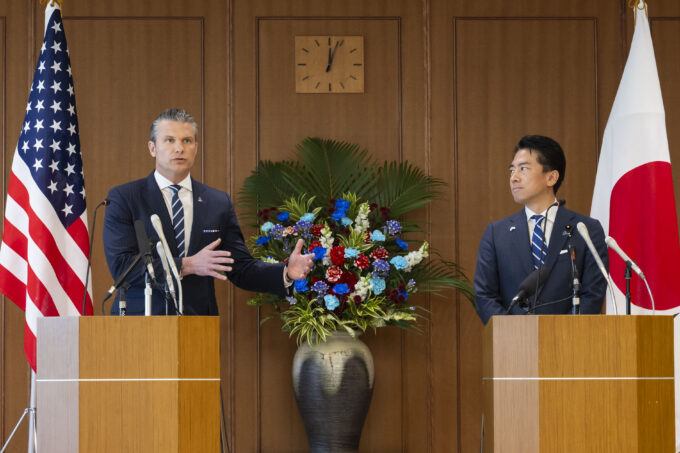
The recent dialogue in Washington between Secretary of War Pete Hegseth and Japanese Defense Minister Shinjiro Koizumi underscored this shift. Although there are plans to expand joint training and boost production of the Standard Missile-3 Block 2A, the underlying message is clear: Japan must accelerate its own defense industrial base to fill the potential void. As regional powers stake their claims through “established facts” on the water, Tokyo finds itself in a position where its “independent judgment” must now translate into a formidable military reality.

If Japan is being asked to do more, India is being asked to wonder where it stands in the hierarchy of American interests. The 2026 strategy contains no explicit mention of New Delhi, a curious exclusion for a nation recently courted as an indispensable partner. This omission occurs even as U.S. Secretary of the Army Daniel P. Driscoll visited New Delhi on January 25 to discuss “military-to-military engagement” with General Upendra Dwivedi.

The strategic ambiguity of the NDS was brought into sharp relief on February 2, 2026, during a high-stakes phone call between President Donald Trump and Prime Minister Narendra Modi. In a move that mirrors the administration’s broader transactional philosophy, a “trade truce” was announced, slashing U.S. tariffs on Indian goods from a punitive 50 percent (the highest for any major partner) down to 18 percent. This “reset” was contingent not on shared democratic values, but on a hard-nosed bargain: India reportedly pledged to halt its purchase of Russian oil and commit to a staggering $500 billion in American imports. Although New Delhi hailed this as a “wonderful announcement” for its exporters, the deal underscores the NDS’s core message. In the new Washington, security is no longer an abstract guarantee—it is a commodity to be negotiated, one phone call at a time.

The disconnect between high-level strategy and ground-level diplomacy suggests a Washington that is either deeply divided or increasingly erratic. India may find this omission a blessing in disguise, reinforcing the view that relying on a capricious superpower is a recipe for disappointment. The NDS’s focus on “homeland defense” and “Western Hemisphere dominance” confirms that the American gaze has shifted inward, leaving the “Indo” part of the Indo-Pacific to seek its own equilibrium.

The strategy’s approach to China is a study in pragmatic contradiction. It labels Beijing as a priority subordinate to the defense of the American homeland, stating the goal is to deter through strength “not confrontation.” This is a significant departure from the “pacing threat” language of previous years. The administration now speaks of “strategic stability” and “de-escalation,” seeking to move away from kinetic conflict toward a more managed coexistence.

Beijing, for its part, operates within the gaps left by this shifting posture. Whether it is the presence of the China Coast Guard near the Senkaku Islands or the deployment of mobile drilling vessels, the strategy of incremental encroachment meets an American strategy of selective engagement. The NDS calls for a “denial defense” along the First Island Chain, yet it skips the very details that would make such a defense credible to the allies on the front lines.

The administration’s rhetoric about a “New Golden Age” of American power rings hollow when paired with a strategy that signals a reluctance to lead. By demanding that allies from Canberra to Tokyo shoulder the weight of regional stability, Washington is essentially admitting that the era of the global policeman has reached its sunset.

This first appeared on FPIF.

Imran Khalid is a geostrategic analyst and columnist on international affairs. His work has been widely published by prestigious international news organizations and publications.


The Media is Whitewashing Trump’s Board of Peace


Imagine telling someone who has experienced the most apocalyptic conditions known to man to give their perpetrators a “chance.” That’s exactly what it felt like when I opened my phone the other day and saw headlines from The Washington Post and Wall Street Journal talking about Trump’s sham “Board of Peace,” which is supposed to govern Gaza.

Not only is it tone deaf, but it’s also downright racist. Palestinians have spent decades being strung along like puppets, being told what’s going to happen to our land instead of letting us have it. We have been raped, maimed, starved, displaced, imprisoned, tortured, and killed by foreigners who come in and think they have the right to take something that’s not theirs.

So to the news outlets who believe it’s their job to control the narrative: there will be no grace, no chances, no benefit of the doubt given to the monsters who’ve allowed hundreds of thousands of men, women, and children to be slaughtered, all while the world watched. Our media should not repeat the same mistakes that manufactured consent for a genocide in Gaza.

It’s despicable, though not surprising, that a board of old white men and their sycophantic stooges have joined forces to colonize more indigenous land for their benefit. At the end of the day, this has been their strategy since the beginning of time. But nowadays, we have a collective voice. We supposedly have a free and independent press that challenges power — a free and independent press that you’d think would call out history repeating itself, not praise it. However, The Washington Post and Wall Street Journal are doing just that: urging their readers to “Give the Board of Peace a chance” and view the board as a “technocratic turn that’s giving hope for Gaza.”

What these outlets are failing to point out is the sheer irony and insanity of a “Board of Peace” run by Trump, who has dubbed himself the “chairman for life.” This is someone who has used his position of power to accelerate the U.S.-Israeli genocide throughout his presidential term. The blood of tens of thousands of Palestinians is on his hands. Here in the U.S., the blood of migrants and protestors is on his hands as he orders their kidnappings and murders of our own in the streets in broad daylight. What sort of precedent does it set if “leaders” who know nothing but capital greed and bloodshed are allowed to position themselves at the forefront of “peace” efforts worldwide? If we accept this obvious scam, there will be no peace. There will be fascist control over everyone and everything, and histories and cultures will be lost, and the people will succumb to the fate of an elite ruling class propped up by our tax dollars and complicit media.

When the most recent ceasefire agreement was announced, I thought about what a true end to the genocide might look like. I imagined Gaza being returned to its rightful owners, the people being given the resources they need to rebuild, and the U.S. and Israel finally leaving them alone. Instead, they are installing a system to create perpetual, coordinated genocide — all while Gaza is becoming an apocalyptic wasteland. The Israeli and U.S. destruction of Gaza has reduced the Strip to rubble, makeshift camps, and starved masses. These are the same people who are vowing to bring peace to Gaza — and more broadly to the whole region.

The depraved Donald Trump and his so-called “Board of Peace” have promoted the idea that Gaza is theirs to conquer. All in the name of “regional stability,” they believe that they can go in, occupy the land, fill it with data centers and waterfront properties for the white wealthy class, and push Palestinians into concentration camps. This is the American occupation of Palestinian land. Yet, for some reason, major news outlets are giving grace to those who want to do this.

The “Board of Peace” is nothing more than an extension of the colonization that Palestine has faced for decades. But has it worked? Have Palestinians left their houses, abandoned their lands, and given it all up? Has the movement for Palestine been so completely forgotten that we would simply allow these war criminals to go and take Gaza? Absolutely not. I know I speak for all Palestinians when I say I will die trying to save my land from the bloody hands of people like Benjamin Netanyahu, Donald Trump, Jared Kushner, and Tony Blair.

I know deep in my core that Palestine will be free. All those who have been forced to leave the shores of Gaza, all the way to Akka, will return. Those waterfront homes will be ours to pass down to our children and grandchildren. What was once an apocalyptic wasteland will become our homeland reborn, and all the news outlets will report on it as if they weren’t complicit. I do not doubt this, and neither should you. So when you read about the Board of Peace, don’t feel doomed — we the people know the truth, and together we have the power to set the story straight.

Jenin M is CODEPINK’s Palestine campaign organizer and a Palestinian-American organizer, advocate, and storyteller dedicated to justice for Palestine and collective liberation. With over five years in grassroots movement-building, her work focuses on advocacy, digital storytelling, and mobilizing communities against oppression. A graduate in Public Policy from the University of Illinois at Chicago, she bridges policy analysis and on-the-ground organizing. Read other articles by Jenin.