Monday, March 16, 2026

Russian Mercenaries Take Control Of Eastern CAR Seeking Control Of Gold Mines


Artisanal gold mining in Africa. Photo Credit: WHO

March 15, 2026 
By Africa Defense Forum


Russian mercenaries have taken control of the border zone shared by the Central African Republic, South Sudan and Sudan, effectively turning a region known for its gold mines into a “gray zone” controlled by a private military corporation.

Russia’s Lobaye Invest, which is affiliated with the Wagner Group, controls mining operations in eastern CAR. With little to no state presence in that region, Russian mercenaries have established draconian rules on the miners working there: no hunting, no possessing weapons, and no using motorcycles within the mining zone.

Several weeks ago, a miner at the Baba mine captured a gazelle that that been outfitted with a Russian surveillance camera. That action provoked a rapid, violent response from Russian mercenary forces. A barrage of weapons fire from both ground-based vehicles and from helicopters wounded 30 miners and sent others fleeing for safety into Sudan and South Sudan, potentially increasing instability and insecurity in those border areas.

The next day, bodies lay abandoned at the site while the local community was left to process what happened, according to The Sudan Times.

“This bloody confrontation underscores the volatile and often deadly security vacuum in the region, where foreign forces exert aggressive control over lucrative mineral resources at the expense of local lives,” The Sudan Times wrote.


After the violent attack, Russian forces closed the roads into eastern CAR, effectively sealing it off from its neighbors and the world.

The Baba mine attack was the latest in a long list of Russian attacks on gold miners in CAR and Sudan reaching back to 2020, when the Wagner Group took over the CAR’s Ndassima mine. According to analysts with the Robert Lansing Institute, the closing of eastern CAR was the last step in Russia’s plan to establish a lawless region beyond state control and international sanctions where it is free to smuggle gold.

That plan dates back to 2017, when CAR President Faustin-Archange Touadéra invited the Wagner Group to train his military, provide his personal security and serve as his national security advisors. Wagner would be paid for its services with the gold and diamonds extracted by its affiliate Lobaye Invest.

Over the last nine years, Russia’s presence and authority in the country has grown to include controlling the border crossing with Sudan’s Central Darfur state. The use of helicopters and drones has given Russian mercenaries control of the airspace over eastern CAR, reducing the capacity of the militaries and border control authorities of CAR and Sudan, according to the Lansing Institute.

“Russia’s presence in CAR has evolved from nominal ‘site protection’ and security training to de facto management of specific territories and resource flows, enforced through its own rules and coercive mechanisms,” Lansing Institute analysts wrote.

By closing eastern CAR, Russia has control over a key hub of gold and smuggling routes, turning the region’s gold into a steady source of illicit revenue. This trafficking allows the country to avoid the conventional banking systems from which it has been isolated.

“At the same time, local intermediaries and armed groups become increasingly dependent on Russia’s coercive ‘protection,’ entrenching Moscow’s long-term presence without the need for formal inter-state agreements,” the Lansing Institute wrote.

Analysts added that the action in eastern CAR is not isolated.

“This is a scalable model,” they wrote.


Africa Defense Forum

The Africa Defense Forum (ADF) magazine is a security affairs journal that focuses on all issues affecting peace, stability, and good governance in Africa. ADF is published by the U.S. Africa Command.


The US Fed Faces A Slowing Economy And A New Inflation Shock


March 15, 2026 
The Center Square
By Orphe Divounguy


(The Center Square) – Last week’s data painted an uncomfortable picture. The U.S. economy entered 2026 with less momentum than previously thought, and inflation was still running hotter than the Federal Reserve would like. Revised figures showed fourth-quarter GDP grew at just a 0.7% annualized rate, down from the earlier 1.4% estimate, a sign that growth was already fading before the latest geopolitical shock.

January’s income-and-spending report did little to ease those concerns: real consumer spending barely rose, while core PCE inflation accelerated to 3.1% from a year earlier. Personal income increased, but part of that gain came from dividend income, which is less reliable than wage growth as a support for household spending.

The labor market told a similarly fragile story. Job openings remain subdued, and there are now more unemployed workers than open positions – a clear sign that labor demand has weakened. Yet the unemployment rate has not exploded, partly because the civilian labor force has declined and slower population growth is reducing labor-force inflows. In other words, the labor market looks less healthy than the headline unemployment rate suggests. Workers are staying put because it has become much harder to find a new job, and that low-hire environment is likely to keep wage growth under pressure just as inflation begins to rise again.

That matters because households are now being squeezed from both sides. Hiring has slowed, wage growth is likely to cool further, and inflation pressures are picking up again. The risk is that real wage gains narrow or turn negative for many households, especially lower-income families who are most exposed to higher prices for essentials like energy, food and shelter. Depending on the duration of the Iran conflict, oil prices could remain elevated, intensifying the squeeze in the months ahead.


This week’s main event is the Federal Reserve meeting on March 17–18. The Fed is widely expected to leave rates unchanged, but that does not mean the meeting will be uneventful. This is one of the quarterly meetings that includes a new Summary of Economic Projections, which means investors will be watching the updated “dot plot” and the Fed’s revised forecasts for growth, unemployment, and inflation. The central question is straightforward: if growth is weakening and the labor market is stalling, will officials be willing to look through what they may view as a temporary, oil-driven inflation shock? Or will they decide inflation is still too high to justify easier policy?

That is the Fed’s tradeoff. On one side, the economy was already losing speed before the latest rise in oil prices. On the other, higher energy costs threaten to push headline inflation higher and could also keep inflation expectations from settling down. The likely outcome this week is no rate change and a cautious message: officials may acknowledge softer growth and a weaker labor market, but they are unlikely to signal urgency on cuts while inflation is re-accelerating. Markets have moved in that direction too, with traders now seeing a hold next week as overwhelmingly likely and betting the first cut may not come until later in the year.

Housing will also be in focus, with the January new-home-sales report now scheduled for March 19 after a delay. The story there is mixed. Lower mortgage rates in February briefly improved affordability and made builder incentives such as rate buydowns more effective. But that window may already be closing: The 30-year fixed mortgage rate is back up roughly 40 basis points from slightly below 6% in February. Builders are also facing stiffer competition from the resale market, where inventory has begun to rise and February existing-home sales posted a modest increase. That should keep pressure on new-home demand even if builders continue using incentives to move inventory.

The broader takeaway is that the economy is becoming harder to read, but the direction of risk is clearer. Growth is softening. The labor market is losing dynamism. Inflation is not moving cleanly toward target. And now the oil shock threatens to worsen all three. This week’s Fed meeting will not resolve that tension, but it should tell us whether policymakers still believe weaker growth will eventually dominate, or whether they now fear inflation will stay uncomfortably high for longer. That answer will shape the outlook for rates, housing, and household finances over the rest of 2026.


Orphe Divounguy is an economist with Zillow and the co-host of The Center Square’s Everyday Economics podcast.
Medicare Advantage ‘Dark Money’ Group Attempts To Win Higher Payments For Insurance Companies


Medicare Advantage Majority has spent more than $3.1 million on hundreds of Facebook ads since September 2024, according to Facebook’s Ad Library, a database of the social media company’s online ads. 
(ERIC HARKLEROAD/KFF HEALTH NEWS)

March 15, 2026 
KFF Health News
By Fred Schulte and Maia Rosenfeld and David Hilzenrath

(KFF Health News) — Judging by more than 16,400 comments recently posted on a federal government website, you’d think there was a groundswell of older Americans demanding that federal officials hike payments to their Medicare Advantage health insurance plans.

Yet about 82% of the comments are identical to a letter that appeared on the website of a secretive advocacy group called Medicare Advantage Majority, a data analysis by KFF Health News has found.

The “dark money” group does not reveal its funders or much else — other than to say it is “dedicated to protecting and strengthening Medicare Advantage” and is “powered by hundreds of thousands of local advocates nationwide.”

“Our campaign provides information and offers tools for concerned Americans to use to reach decision makers,” spokesperson Darren Grubb said in an email. The group has spent more than $3.1 million on hundreds of Facebook ads since September 2024, according to Facebook’s Ad Library, a database of the social media company’s online ads.


There’s no doubt health insurers are unhappy with a January proposal from the Centers for Medicare & Medicaid Services, or CMS, to keep Medicare Advantage reimbursement rates essentially flat in 2027 — far less than they expected from the Trump administration.

Medicare Advantage plans differ from traditional Medicare because private insurance companies administer them. The insurance plans enroll about 35 million members, more than half the people eligible for Medicare. The plans offer things like vision and drug coverage, but Medicare Advantage insurers restrict the hospitals and doctors that patients can use and require prior approval for various procedures.

CMS is set to announce a final decision by early next month on the rate proposal. The agency solicited public comments on the proposal from Jan. 26 through Feb. 25 to give interested parties and the public a chance to air their views.

Medicare Advantage Majority, which says the rate proposal amounts to a “cut” in services and warns of dire consequences for seniors should it go through, accounted for at least 13,522 of the 16,422 comments published as of March 12.


The proposed rate plan “puts my access to care at risk,” the group’s template letter to policymakers reads in part. “If the investment made by Washington in the Medicare Advantage program is nearly flat year-over-year, I could lose benefits I rely on every day, including affordable prescriptions, capped out of pocket costs, and access to trusted doctors and specialists.”

“Medicare Advantage is not optional for me. The cost protections alone have saved me thousands of dollars and made my health care manageable. Without this program, I would face higher costs, fewer providers, and fewer benefits at a time when I can least afford it,” the letter states.

Critics warn that these sorts of campaigns may create a misleading impression of grassroots support, especially when it’s not clear who is financing them.

“It puts a different spin on a massive groundswell of comments to know all are being driven by one specific organization,” said Michael Beckel, director of money in politics reform for Issue One, a group that seeks to limit the influence of money on government policy and legislation.

“There’s no way for the public to know what wealthy donors or special interests are funding dark money groups like this,” he said. “That means there’s no scrutiny of who’s really calling the shots.”

Some health care policy experts, who have long argued that the government overpays Medicare Advantage plans by tens of billions of dollars every year, believe industry groups or their surrogates routinely overstate possible negative impacts of rate decisions they don’t like.

“The plans always say that the sky is falling,” said Matthew Fiedler, a health care policy expert with the Brookings Institution. “The industry has a lot of money at stake here. They try to exert pressure on policymakers any way they can.”


At the same time, even critics concede that some of the millions of people enrolled in Medicare Advantage plans could face service cuts if insurance companies are not satisfied with government payments.

“It is legitimate for people to be worried,” said Julie Carter, counsel for federal policy at the Medicare Rights Center, a group that advocates for older adults and people with disabilities.

Her group argues that Medicare Advantage plans have never attained expected cost savings and instead have been overpaid for years at least partly due to “actions to maximize profits.” She said the health plans “are supposed to be saving money, not taking extra.”

People struggling to pay health care bills may have little use for the policy debate in Washington.

“If it wasn’t for being able to have this program, I really wouldn’t be able to afford any kind of medical services, to be honest,” said EsterAlicia Rose, 75, who works at the front desk of a hotel in Pagosa Springs, Colorado. She said she signed the Medicare Advantage Majority form letter to reach policymakers.

Kathy Lovely-Marshall, 66, a retired nurse who lives in Brookville, Ohio, did too. She said she receives “a lot of perks” from her plan, such as dental care, eyeglasses, and prescriptions.

“All those things are a big plus as far as I am concerned,” she said. “I’m very happy with the plan I have.”

But Corenia Branham, 90, a widow and cancer survivor who lives in Alum Creek, West Virginia, said she wants nothing to do with Medicare Advantage plans run by private health insurance companies. She said she didn’t turn in any of the four form letters under her name, which were posted online by CMS on Feb. 23 and signed, “Miss Corenia Branham Branham.” It’s not clear why her last name is signed twice.

Branham said she’s not on Medicare Advantage and doubts she could count on it for needed care.

“I wouldn’t recommend it to nobody,” she said. “I sure don’t want anything to do with it.”

Grubb, the Medicare Advantage Majority spokesperson, disputed that account. He said Branham responded to an ad on Facebook. On Feb. 6, she “completed the form with her information and chose to send her comment to CMS as well as to her representatives in Congress and the White House,” he said.

Other Medicare Advantage advocacy groups have stepped up ad campaigns as the rate decision looms.

The Better Medicare Alliance, whose “allies” include a range of health insurers, health care providers, and consumers, is urging seniors to “Tell Washington to Stand Up for Medicare Advantage.”

“We’ve mobilized beneficiaries to write letters and make phone calls, and we’ve run digital ads on streaming platforms,” spokesperson Susan Reilly said.

Reilly said that this year roughly 3 million seniors “were forced to find new coverage” because plans either shuttered operations or left some areas.


She also said Medicare Advantage plans have “scaled back” benefits such as offering transportation to medical appointments, nutrition support, and dental and vision coverage, while over the past two years beneficiaries have faced an average $900 increase in out-of-pocket maximums.

“We do view this as especially serious,” Reilly said. “This isn’t a single bad year; it’s the cumulative effect of years of underfunding and policy disruption from the previous administration that has left the program increasingly vulnerable.”

As of March 12, CMS said it had received 46,884 comments but had posted only 16,422 online.

CMS spokesperson Catherine Howden said the agency would make more comments public “as soon as practicable.”

“The agency focuses on reviewing the substance of timely submissions and does not speculate on volume, sentiment, or potential impact of comments while the comment period is open/under review,” she said in a statement.

About the authors:
Maia Rosenfeld: mrosenfeld@kff.org
David Hilzenrath: dhilzenrath@kff.org, @DavidHilzenrath

KFF Health News

KFF Health News is a national newsroom that produces in-depth journalism about health issues and is one of the core operating programs at KFF — the independent source for health policy research, polling, and journalism.
The Inevitability Of Self-Driving Cars – OpEd


A Waymo-operated Jaguar I-Pace in San Francisco. 
Photo Credit: Dllu, Wikipedia Commons

March 15, 2026 
 FEE
By Stephen Weese

When you think of self-driving cars, you may imagine scenes from a sci-fi movie, with sleek silver cars sliding perfectly into and out of the flow of traffic. Pedestrians simply express their desire for a car, and in moments one appears.

Just as easily, you might also think of media reports you’ve seen about crashes and other malfunctions of these vehicles in the recent past. You may even think of both and think that the sci-fi depiction is far-fetched and unlikely. The reality is actually simpler: self-driving cars are inevitable.

In the US, we love our cars. Nearly 92% of households have access to a motor vehicle. We have car shows, car racing, car dealerships everywhere, and even TV shows about cars. It’s an accepted part of our society. In a geographically expansive country like ours, cars are essential for many. Along with car culture, we also have a cultural acceptance of the dangers and even fatalities that come from car accidents. The US (human) accident rate is approximately 2,000 per million miles driven. Around 40,000 people are killed each year in auto accidents. Right now, hardly anyone talks about these deaths. There are few news articles, and it is generally accepted as the price of driving.

What if we could reduce the number of injuries and fatalities to 50% of what they are now? Or even further, what about 80%? Would it be worth it to switch to self-driving cars then? Interestingly enough, preliminary numbers from Waymo indicate that they already are 80% safer. The media rushes to report any accidents caused by these cars, which may give the impression that they are much more dangerous. The truth is, they actually promise a safer world for all.


Imagine a world with safe, self-driving cars. Mothers would feel more comfortable about their children. Parents’ dreadful fears about having a 16-year-old out on the streets would be almost completely relieved. People wouldn’t worry about the vision and dexterity loss of the elderly when they get into a vehicle. Drunk driving would be a thing of the past. Road rage would almost be eliminated—self-driving cars won’t cut off or tailgate other self-driving cars. Tens of thousands of lives would be saved per year, in the US alone.

Currently, most people do not realize that these autonomous vehicles are safer than a human driver. Concurrently, it is also not well understood that the performance of AI across most domains is growing at a staggering rate. This means that these cars that already outperform human drivers will keep getting better and better. At some point, it will be obvious that the best choice will be to give up our keys. Other factors will contribute to this as well; safety is only one of the reasons to switch.

For a while, there will be a mix of self-driving cars and manned vehicles on the road. As we move toward a majority of autonomous cars on the road, we will increasingly see the benefits:Improved fuel efficiency
Reduced travel time
Ability to work or relax in the car
More pleasant commutes
No need for car ownership
Reduced insurance and liability

Autonomous vehicles will drive without being heavy on the gas pedal. They will be able to coordinate with other vehicles to have smooth lane changes and predict routes and congestion based on shared information. People going to work will simply step into a car and can relax with a coffee, start reading email, or even get a little extra sleep.

What’s more, with fleets of these cars on the roads, you won’t even need to own one. If you don’t own a car, there is no need for individual insurance; you’ll simply share a minor cost every time you ride. You can be tired or intoxicated and get right in. The blind and elderly and many others who have difficulty driving will now have the same option as everyone else. If you rent from a service, you never have to pay for parking.

Even if you own your own self-driving car, you can just have it go back home or park far away and then come pick you up when you’re done. No long walks to the car, no paying parking fees. Imagine this: no more parking tickets. While we’re at it: no more speeding tickets or traffic violations. Waymo and Tesla’s planned Robotaxi networks are already betting on this being our future. Uber is launching its own self-driving taxi service this year.

If there were 80% fewer accidents overall, it would save over 30,000 American lives per year. At some point, the benefits will far outweigh our desire to keep driving. Right now, these cars still have their challenges, such as difficult weather, construction zones, and complex urban environments, but it won’t be long until these challenges are solved. The real barriers are regulation and public sentiment. Once governments and the public realize the avalanche of benefits from these vehicles, the tipping point will occur, and we will begin our transition. Welcome to the future.


About the author: Stephen Weese is a computer professor and consultant in CS, IT, and AI. He also works in media and is the CEO of Marvelous Spiral Studios.

Source: This aricle was published by FEE

FEE

The Foundation for Economic Education's (FEE) mission is to inspire, educate, and connect future leaders with the economic, ethical, and legal principles of a free society. These principles include: individual liberty, free-market economics, entrepreneurship, private property, high moral character, and limited government. FEE is a tax-exempt, 501(c)3 educational foundation


New Method Reveals Slower Expansion In Our Cosmic Neighborhood


The velocities of galaxies in groups versus distance. Embedded in the expanding Universe the attractive forces of gravity cluster the groups members together and cosmic expansion tears the outer member galaxies away. This balancing act jointly constrains the mass of the gravitationally-bound group and the Hubble constant being the expanding pull.
 Credit: AIP/ D. Benisty / J. Fohlmeister


March 15, 2026 
By Eurasia Review


Two studies were recently published in Astronomy & Astrophysics by an international team including David Benisty from the Leibniz Institute for Astrophysics Potsdam (AIP). Each paper analyzes observational data for a different nearby galaxy group — the Centaurus A group and the M81 group — to determine both their masses and the value of the Hubble constant.

The Hubble constant describes how fast the Universe expands, expressed as a ratio of the recessional velocity to the distance a galaxy has towards us. The Hubble constant is measured in km/s per Megaparsec, 1 Megaparsec being 3.3 million light years.

From the first light in the early Universe, the so-called cosmic microwave background radiation, a precise measurement for the Hubble constant with the value 68 km/s/Mpc was inferred. Using explosions of stars in receding galaxies to measure their distances, another very precise measurement of the Hubble constant could be established from our late, local Universe. However, the value is 73.

This discrepancy between the expansion rates of the early and the late Universe is known as the Hubble tension. Over the last decades, increasingly precise observations have turned this tension into one of the central challenges in cosmology. It questions our understanding of cosmology and fundamental physics.

The new studies shed light onto this tension from a more holistic viewpoint in contrast to the approach based on stellar explosions. While the stellar-explosion method aims to directly track the cosmic expansion, the new studies analyze the motion of galaxies in groups embedded in the expanding Universe. The attractive forces of gravity cluster the groups together and cosmic expansion tears the member galaxies apart. This balancing act jointly constrains the mass of the gravitationally-bound group and the Hubble constant being the expanding pull. Surprisingly, David Benisty from AIP and his collaborators obtained a Hubble constant of about 64 km/s/Mpc. The result suggests that at least part of the Hubble tension may arise from the observations and methods we choose to infer the Hubble constant.

The researchers focused on two galaxy groups: The Centaurus A group is one of the nearest galaxy groups beyond the Milky Way’s own Local Group. It was assumed to be dominated by the giant elliptical galaxy Centaurus A and contains dozens of smaller satellite galaxies. The new analysis showed that the Centaurus A group is not centered around Centaurus A, but forms a binary with the M83 galaxy. The team thus determined the first value of the Hubble constant from this group as a binary and a more accurate mass estimate.

The M81 group is already known to have two galaxies, M81 and M82, in its center. Thanks to the extended dataset, the member galaxies around this binary were found to still form a planar structure, as previously established. The study of the turbulent dynamics shows that is yet so neatly ordered: The inner planar region with distances of less than 1 million light years is tilted by about 34 degrees to the larger-scale environment. At 10 million light years distance, the orientation has turned to align with the larger-scale sheet-like structure that also stretches out to the Centaurus A group.

Most intriguingly, the two galaxy groups do not only share a similar surrounding. They also have in common that the masses of the most luminous member galaxies almost entirely constitute the total group mass and that the motions of all galaxies in their vicinity are equally well described by the interplay between the galaxies’ gravitational attraction and the cosmic pull. Hence, in contrast to simulated galaxy groups which are always embedded in an overall dark-matter halo, the observations of both galaxy groups can be well explained without this additional dark mass.

The team will use this method that gives a comprehensive understanding of structures in our cosmic neighborhood and transfer it to a larger cosmic volume. With new observations at larger distances, coming, for instance, from the 4-metre Multi-Object Spectroscopic Telescope (4MOST), the next data releases may not only bring a resolution to the Hubble tension but also yield a more precise census how much of this puzzling dark kind of matter is in our Universe.

This work was carried out in collaboration with David Benisty (AIP Potsdam), Jenny Wagner (Academia Sinica, Institute of Astronomy and Astrophysics, and University of Helsinki), Adrian Faucher (École Polytechnique), David Mota (University of Oslo), and Igor Karachentsev (Special Astrophysical Observatory, Russian Academy of Sciences).

From Speculation To Science: Humans Are Born Musical


By Eurasia Review


Humans are fundamentally “musical animals” – and our capacity for music is rooted in biology, not just culture. This is the conclusion of new work by University of Amsterda professor of Music Cognition Henkjan Honing. In ‘The Biology of Musicality’, published in the journal Current Biology, Honing describes how two decades of work across psychology, neuroscience, biology, genetics and animal cognition have reshaped scientists’ understanding of music’s origins. Instead of studying music as a cultural product, researchers should be focussing on “musicality” – the biological capacity that enables humans to perceive, produce, and enjoy structured sound.

‘For much of the twentieth century, people thought studying the evolution of music was pure speculation,’ says Honing. ‘Because music can’t be found in the fossil record, many assumed we could never investigate it scientifically. But that view is now outdated.’
Babies show musical ability from birth

Some of the strongest evidence comes from infancy. Studies show that newborns can detect rhythmic patterns, prefer certain melodic contours, and form expectations about timing and pitch long before they acquire language.

‘These abilities emerge spontaneously,’ says Honing. ‘Infants respond to rhythm and melody without being taught. That strongly suggests we are born with biological predispositions for musical structure.’

‘These similarities are unlikely to be accidents,’ Honing says. ‘They point to shared cognitive biases – ways our brains naturally organise sound.’

Looking beyond humans

To trace musicality’s evolutionary roots, scientists also study other species. This comparative approach helps identify which components are ancient and which may be uniquely human.

Across cultures, children show an intuitive grasp of musical organisation, even in very different musical traditions. Although music varies widely worldwide, recurring patterns – such as common pitch relationships and rhythmic structures – appear consistently.

‘If a musical trait is found in humans and other primates, it likely existed in our common ancestor,’ Honing explains. ‘If we see similar traits in distantly related animals like birds, that suggests evolution arrived at similar solutions independently.’

Research supports what Honing calls a “multicomponent hypothesis”: musicality is not a single trait but a mosaic of abilities – including beat perception, pitch processing and emotional response – each with its own evolutionary history.
Not just language in disguise

For decades, many scientists assumed music was a by-product of language. Growing evidence challenges that idea. Brain imaging studies show that music and speech rely on partly distinct neural pathways. Some patients with severe language impairments retain musical abilities, while others with normal language experience congenital amusia.

‘Music is not just language with decoration,’ Honing says. ‘The evidence increasingly suggests that musicality is an ancient biological capacity, possibly predating language itself.’

Rather than evolving from scratch, musicality likely emerged by integrating older brain systems involved in perception, movement and emotion.

‘Musicality may have arisen by bringing together perceptual, motor and emotional building blocks in new ways,’ Honing explains.

Why it matters

The implications of this extend beyond explaining why we love music. Research on musicality may inform treatments for language disorders, motor impairments and emotional dysregulation, and may guide new approaches to education and well-being.

‘The study of musicality has moved from philosophical debate to empirical science,’ Honing says. ‘We can now ask precise questions about how specific components evolved and how they function across species.’

The growing evidence suggests that music is not merely a cultural ornament – it is a fundamental part of human nature.

‘Recognising that musicality is a core biological capacity changes how we see ourselves,’ Honing concludes. ‘We are, by nature, musical beings.’

Fact check: Has Ukraine just legalised same-sex marriage?


By James Thomas
Published on 

A Supreme Court ruling in Ukraine recognising a same-sex couple as a "de facto" family unit has sparked confusion online.

A number of news headlines and social media posts are claiming that Ukraine's Supreme Court has legalised same-sex marriage, following reports of the court's recognition of a same-sex couple in Kyiv.

Some have led readers to believe that same-sex unions are now legal in Ukraine, while others have come to the conclusion that a law aiming to do so is being discussed in parliament.

However, these claims have been taken out of context, because same-sex marriage is still illegal in Ukraine.

The confusion arose after the Supreme Court recognised a same-sex couple as a "de facto" family for the first time in Ukraine's history in February this year.

It upheld a previous decision by the Desnianskyi District Court in June 2025 that Zoryan Kis, a Ukrainian diplomat, and his partner Tymur Levchuk were a legal family.

The couple launched legal proceedings after the Ukrainian Ministry of Foreign Affairs refused to recognise their relationship and blocked Levchuk from joining Kis on a diplomatic posting in Israel.

Their lawyers argued that they should be recognised as a family because they had lived together since 2013, married in an unofficial ceremony in Ukraine in 2016 and had registered their marriage in the US in 2021, according to local reports.

The district court agreed, prompting a conservative group called Vsi Razom to appeal against the decision. It was eventually sent to the Supreme Court, which rejected the appeal and confirmed the original judgment.

Does the ruling change Ukraine's marriage laws?

The ruling creates a judicial precedent that same-sex couples who share a home and have a de facto marital relationship should be legally recognised as a family unit.

This means that they get certain rights, such as joint property rights and the ability to make urgent medical decisions for each other if one of them is incapacitated.

However, this is not the same as same-sex marriage or even same-sex civil partnerships, which are also still absent from Ukraine's statute books.

The legal definition of marriage remains unchanged, with Article 51 of Ukraine's Constitution explicitly stating that it is between a man and a woman.

"Marriage is based on the free consent of a woman and a man," it says. "Each of the spouses has equal rights and duties in the marriage and family."

Changes to the constitution are also currently impossible due to martial law, which Ukraine is subject to as Russia's invasion continues.

New civil code could undo progress

Nevertheless, that could change in time due to Ukraine's aspirations to join the EU. A bill to introduce civil partnerships was introduced in the Ukrainian parliament in 2023, after Brussels included a goal for Kyiv to legally recognise same-sex couples in Ukraine's EU membership roadmap.

However, it's currently stuck in parliamentary limbo, and a new draft civil code is also currently making its way through parliament, which critics say could undermine the progress already made.

While its proponents say that it's necessary to modernise the country and align it with EU standards, others have criticised its failure to provide legal recognition for same-sex couples.

In fact, LGBTQ advocacy group ILGA-Europe said that the draft civil code actually defines "de facto family unions" as exclusively opposite-sex partnerships and explicitly excludes same-sex families, and so would effectively override the recent court rulings.

"This version of the draft Civil Code should not pass in its current form if Ukraine is serious about its path toward EU membership," said Katrin Hugendubel, ILGA-Europe's advocacy director, in a press release.

"It would roll back hard-won protections under domestic case law, clash with Ukraine's obligations under the ECHR [European Convention on Human Rights] and its EU accession commitments, and run counter to the commitments set out in the accession plan for recognising same-sex partnerships," she added

As Ukraine's hopes to join the EU hinge on legal recognition for same-sex couples, among other criteria, Brussels will likely be keeping a watchful eye on whether the legal developments violate its accession requirements.

Currently, 16 of the EU's 27 member states have legalised same-sex marriage, while an additional seven permit same-sex civil unions.

While Brussels does not force members to allow same-sex marriages or civil partnerships, a 2025 ruling by the European Court of Justice determined that each country must recognise same-sex marriages legally conducted in another EU member state.


From IUDs to pills: Where in the EU is it easiest to access contraceptives?


By Inês Trindade Pereira 
Published on 

Despite access to effective and affordable contraception remaining unequal across Europe, experts believe there is overall improvement on the continent.

Confusion at the end of 2025 over millions of dollars' worth of contraceptives stockpiled in Europe — caught between conflicting narratives from the United States and the Flemish government — highlighted a deeper issue: access to modern, effective and affordable contraception remains uneven across the EU.

The 2026 Contraception Policy Atlas from the European Parliamentary Forum for Sexual and Reproductive Rights (EPF) shows that France (97.9%), Portugal (93.8%), Luxembourg (93.3%), and Belgium (89.8%) top the list of EU countries with the best access to contraceptives for the second year in a row.

Despite being top-ranked, Belgium saw a decrease of 0.5 percentage points, from 90.3% to 89.8%, between 2025 and 2026.

When wider Europe is considered, the UK falls in second place behind France, at 95.8%.

On the other hand, Slovakia (32.2%), Hungary (36.9%), and Poland (38.9%) are the EU countries at the other end of the ranking, with Turkey (37.6%) and Russia (37.8%) completing the bottom five when looking at the continent as a whole.

Meanwhile, in Poland, vasectomies are becoming an increasingly popular method of permanent contraception among men.

It is estimated that around 5,000 are carried out annually in the Polish private health system.

An East-West divide

In the past five years, the overall context around contraception in Europe has changed significantly, with the rise of pronatalist policy agendas and changes in reproductive healthcare.

In addition, there's a persistent East-West divide when it comes to access to contraception in Europe.

Eastern European countries tend to sit at the lower end of the spectrum due to restrictive policies and a lack of support for contraceptive access.

Western countries at the top of the ranking, meanwhile, provide postpartum contraception after childbirth, something that the low-ranking Eastern European countries lack.

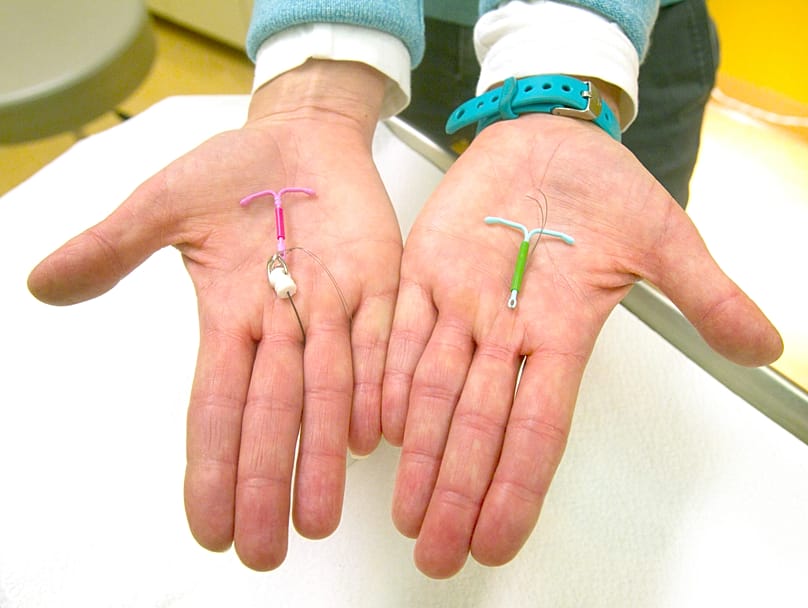
Contraceptives are covered in the national health systems of 15 EU countries, including long-acting reversible contraception, such as IUDs (intrauterine devices) and implants.

Dr. Susan Gorman displays the Skyla IUD, left, and the Mirena IUD, at High Lakes Gynecology in Redmond, Ore., Jan. 14, 2015. Andy Tullis/The Bulletin via AP

Only 10 EU countries provide a special cover of contraceptives for vulnerable groups, like the unemployed and those with a low income, while Denmark, Germany, and Italy only provide it in certain regions.

There is also more misinformation circulating online, with evidence-based online resources being actively blocked or removed in some countries, according to the EPF.

Online information on contraception is available on government-supported websites in 16 EU countries, including Bulgaria, Croatia, Latvia, and Sweden.


Is Europe ready to defend its medical sovereignty?

FILE: European Commission President Ursula von der Leyen makes a statement during an official visit to the Pfizer pharmaceutical company in Puurs, Belgium
Copyright  ASSOCIATED PRESS

By Marta Iraola Iribarren
Published on 

Europe's health sovereignty is under pressure. Experts from industry, institutions, and civil society will debate whether the EU can tackle these challenges at the Euronews Health Summit on March 17.

Ursula von der Leyen, President of the European Commission, told ambassadors in Brussels earlier this year of the importance of health security.

Recent geopolitical tensions have significantly strained Europe's health systems and pharmaceutical supply chains.

The COVID-19 pandemic, the war in Ukraine, and recent political shifts from international partners such as the United States have shaken the European Union’s health landscape.

Over the past years, the bloc has faced supply chain disruptions, shortages of medicines and workers, tariff threats, and brain drain amid an ageing population and overstretched health systems.

The global health landscape has also taken a hit. The United States’ decision to withdraw from the World Health Organization and halt all humanitarian and development foreign aid has left a significant vacuum, opening the door for new actors and dynamics.

So is the European Union ready to maintain its position as a leader in global health, and to guarantee both competitiveness and stability within its own borders?

What are the main challenges?

Europe’s pharmaceutical and biotechnology sector is a global pillar for trade and research. Without pharmaceuticals, the EU trade balance would flip from a €147 billion surplus to a €47 billion deficit, according to the European Federation of Pharmaceutical Industries (EFPIA).

The sector invests about €55 billion per year in research and development (R&D) and generates around €320 billion in exports, making it the single largest contributor to the EU’s trade surplus, according to EFPIA.

Yet recent analyses show that Europe is losing ground.

Over the past two decades, the region has lost about 25 percent of its global share of R&D investment. Between 2010 and 2022, EU pharma R&D grew at 4.4 percent per year, compared with 5.5 percent in the US and 20.7 percent in China.

The Draghi report identified pharmaceuticals and biotech as one of the ten strategic sectors where Europe must invest and regain competitiveness.

What is the EU doing?

The European Union has responded with multiple legislative and regulatory initiatives, including:

The EU Biotech Act, which aims to create a framework that helps biotechnology reach the market faster, improving the bloc’s competitiveness.

In parallel, a revamp of the EU’s pharmaceutical legislation overhauls two decades of medicine rules. The new framework expands the regulatory protection periods to incentivise companies to produce and commercialise in Europe.

Finally, the Critical Medicines Act aims to secure the supply of essential medicines and reduce dependencies.

Whether the EU’s instruments are enough will be at the heart of the conversation at Euronews Health Summit on 17 March, where health experts from the industry, public institutions, research centres, and civil society will discuss Europe’s path to medical sovereignty.

From diagnosis to data: How AI is reshaping healthcare and raising ethical questions

From diagnosis to data: How AI is reshaping healthcare and raising ethical questions.
Copyright Cleared/Canva

By Marta Iraola Iribarren
Published on 

Can artificial intelligence reshape healthcare without deepening inequalities or outpacing the rules designed to govern it? Experts will debate the boundaries of Europe’s digital health future at Euronews Health Summit on 17 March in Brussels.

Artificial intelligence (AI) and other new technologies are transforming healthcare, driving advances in diagnostics, drug development, and easing the workload of healthcare professionals.

Many European countries are already using AI in their health systems. Finland, for example, uses it to train health workers, Estonia is applying it to medical data analysis, and Spain is using AI for disease detection.

If there is one thing experts agree on when talking about artificial intelligence in health, it is that it will never, or should never, replace a health worker.

“AI is already a reality for millions of health workers and patients across the European Region,” said Hans Kluge, WHO Regional Director for Europe, in a recent statement.

“But without clear strategies, data privacy, legal guardrails, and investment in AI literacy, we risk deepening inequities rather than reducing them,” he added.

With the many advantages technological innovation brings to healthcare, there are also many risks: data privacy, access, and representation in the algorithms.

AI across the health system

There is also a shortage of the health workforce worldwide, deepened by an ageing population, which is straining health systems.

Some countries are already partnering with AI companies to help ease the pressure and facilitate access.

In January 2026, the Gates Foundation and OpenAI announced a $50 million (€43.6 million) in funding, technology, and technical support to build AI health capacities in African countries. Starting in Rwanda, they aim to reach 1,000 primary healthcare clinics by 2028.

Doctors in Europe are using AI scribe tools to reduce the amount of time they spend taking notes and doing paperwork, allowing them to spend more time with patients.

AI is also starting to be developed for diagnosis, which could accelerate the process and allow earlier access to treatment.

Mind the risks

But all that glitters is not gold. With the rapid expansion of AI, concerns and warnings from experts are also increasing.

Recent research has shown that language models may be a dangerous tool when looking for medical advice, as they don’t always correctly assess urgency.

Experts have also warned of the sensitivity of biological data and the need for concrete frameworks for how AI models can access it.

The gaps in legal accountability, uneven investments in workforce development, and emerging risks of exclusion underscore the need for continued vigilance, cooperation, and learning, the WHO warned in a recent report.

The organisation found that only 8 percent of its member states have issued a national health-specific AI strategy, “an urgent reminder that ambition must be matched with concrete action”.

As technology evolves, the questions may not be what AI can do in health, but who gets to decide how, and for whom it does it.

What happens when algorithms are trained on non-representative data? Who has access to the data AI models use? Who should regulate this, and how?

Experts working at the intersection of artificial intelligence and health will discuss these questions during the Euronews Health Summit on 17 March in Brussels.