Tuesday, March 31, 2026

Singapore’s path towards nuclear energy use

Singapore’s path towards nuclear energy use
/ Mick Truyts - UnsplashFacebook
By bno - Surabaya Office March 31, 2026

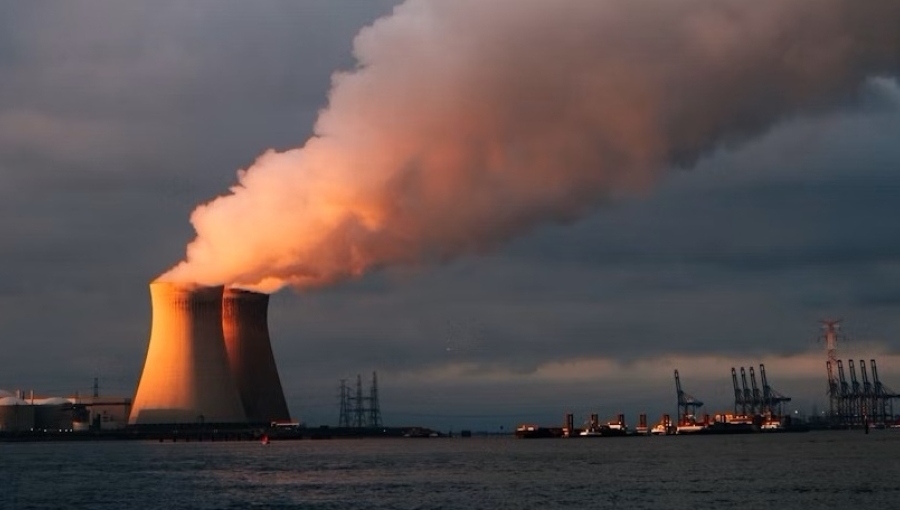
The National Environment Agency (NEA) of Singapore is commissioning three comprehensive studies focused on nuclear safety and environmental protection. The city-state is making a shift, from passive observation to active preparation with research and policy exploration. As reported by World Nuclear News, this isn't a sudden political pivot toward building reactors; rather, it is a calculated expansion of Singapore’s long-term strategy, anchored in rigorous risk assessment and the development of local technical expertise.

The new studies are chosen to complement the Energy Market Authority’s (EMA) ongoing feasibility work, as they aim to scrutinise international safety benchmarks and what the potential ecological footprint of nuclear power is within the specific context of Singapore, followed by the broader Southeast Asian region. Singapore is making a statement that it’s building the intellectual infrastructure necessary to decide if nuclear energy belongs in its future power grid.

A "capability-first" philosophy

Singapore has historically maintained a distance from nuclear power, a pragmatic stance given its status as a high-density island with no natural resources and zero room for error. Traditional nuclear plants present spatial and safety hurdles that are far more daunting for a small city than for a large nation. Because of these constraints, the government approaches the issue not with a "rush to policy” but by focusing on institutional maturity and independent evaluation instead.

The three new studies reflect this commitment to foundational knowledge. The first one focuses on a deep dive into safety benchmarking. On this, experts will analyse global standards for reactor design and accident prevention.

Working alongside the first study, the government is also proactively reviewing the environmental oversight and regulatory frameworks that govern nuclear facilities worldwide as a comparison study and to see how they might be adapted locally.

A specific investigation into local impact will be conducted, examining the unique environmental consequences of any potential deployment on or near the island. This multi-pronged approach suggests that the goal isn't immediate construction, but rather the cultivation of a sophisticated ability to navigate the complexities of nuclear technology.

Research and policy approach

The current trajectory marks a significant departure from 2012, when a government study concluded that then-current nuclear technology was ill-suited for a compact urban centre. However, that same study left the door ajar, recommending that Singapore monitor "next-generation" developments. Today, that recommendation is bearing fruit.

Singapore’s improvement coincides with Small Modular Reactors (SMRs) popularity, as it changed the math with how its designs often feature passive safety systems and smaller footprints. SMRs align better with Singapore’s geographical limitations.

As the urgency of the climate crisis has transformed nuclear power from a theoretical fallback into a potential pillar of the nation’s 2050 Net-Zero goal. Looking back, several milestones underscore this evolution across several fronts. In 2022, the EMA released a study on how nuclear could eventually meet 10% of the nation's electricity needs, marking a shift in how the technology is perceived by policymakers. Following that, in 2024, a Memorandum of Understanding was signed with the UAE’s nuclear agency. This paved the way for human resource development and international knowledge sharing.

Additionally, the hiring of technical firms like Mott MacDonald to conduct deep-dives into the maturity and safety of advanced reactor designs indicates that the government is looking for data-driven answers to satisfy its stringent safety requirements.

Looking toward the future

The diplomatic dimension is also expanding. High-level discussions between Singaporean leaders and partners in South Korea - a global nuclear tech leader - highlight a growing interest in SMR technology. While Minister Tan See Leng has reassured the public regarding current energy security, the volatile nature of global oil and gas markets is forcing a serious look at all low-carbon alternatives.

However, the conversation online—as captured by platforms like The Online Citizen, suggests that the nuclear "question" isn't purely technical. It is a test of civic trust. Critics argue that a society defined by engineering competence must also be willing to discuss the ethical weight of a decision that carries consequences for centuries.

Ultimately, nuclear power offers a rare "baseload" source of carbon-free energy, which is why Prime Minister Lawrence Wong emphasised the need for continued study in his 2025 Budget speech. Singapore is not just importing expertise; it is building a homegrown capacity to judge whether this technology can be implemented safely. While a final decision remains years away, nuclear energy has officially moved from the fringes to the centre of Singapore’s long-term survival strategy.

 

Moldova’s separatist Transnistria faces second year of economic collapse

Moldova’s separatist Transnistria faces second year of economic collapse
/ bne IntelliNewsFacebook
By Iulian Ernst in Bucharest March 31, 2026

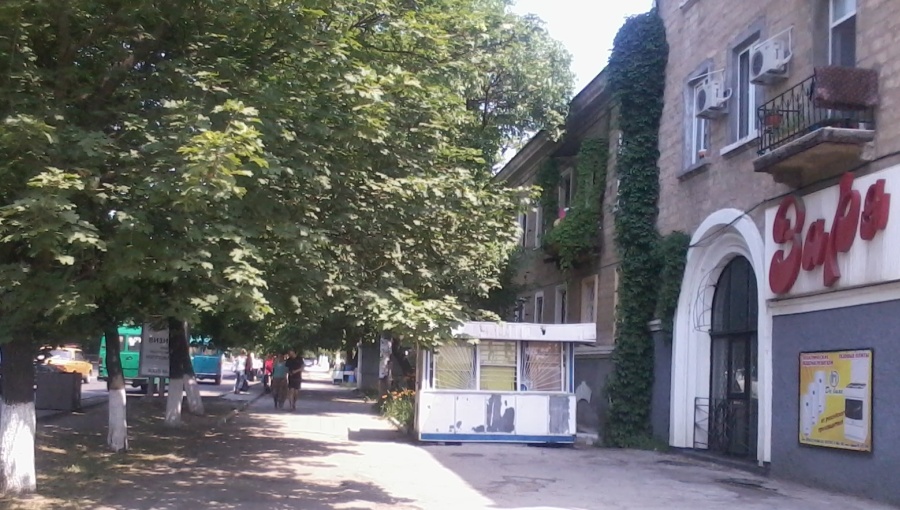
The separatist Transnistrian region of Moldova is preparing its 2026 budget amid a deep economic crisis, following an estimated contraction of nearly 18% in 2025, according to a statement from the executive authorities in Tiraspol. The region faced scarce and problematic gas supplies last year, after it lost the direct free gas supplies from Russia in January 2025.

Officials are also outlining a Budget and Tax Policy Concept for 2027 and the medium term, reflecting ongoing economic strain and external pressures. The first deputy prime minister said implementation of the framework will depend on several conditions, including uninterrupted natural gas supplies, stable access to foreign payments, a steady exchange rate, and no escalation of sanctions or external shocks.

While Russia is still providing financial support to the region, Moldova is gradually enforcing a national taxation and customs regime on the separatist territory, building up at the same time a budget for financing the economic integration of the region in view of joint EU accession.

The region's economic downturn in 2025 was driven largely by an energy crisis and disruptions to gas supplies. Industrial production declined by 27.3%, while foreign trade turnover fell by 28.5%. Gross domestic product dropped by almost 18% in real terms, while inflation reached 14.7% following a sharp increase in tariffs.

Early indicators for 2026 suggest a feeble rebound. Industrial output in January and February increased by nearly 70% compared with the same period a year earlier, although it remains about 20% below 2024 levels.

External trade continues to lag. Exports have declined by almost 60%, and imports are down 24.5%, pointing to subdued economic activity. Inflation has eased significantly to 1.7%, indicating reduced price pressures after the previous year’s surge.

Authorities said the medium-term budget will retain a strong social focus while aiming for gradual fiscal consolidation. Tax policy will prioritise predictability, targeting a tax burden of around 28% of GDP, within a margin of plus or minus one percentage point.

Planned state support will be directed towards key sectors including industry, agriculture, import substitution, information technology, domestic tourism and energy efficiency, as the region seeks to stabilise its economy under continued constraints.


Transnistria: A Conflict Unfrozen but Not Thawed - CSIS

Feb 18, 2026 · For more than three decades, Transnistria has existed as one of Europe’s frozen conflicts—a breakaway region of Moldova sustained by Russian economic subsidies and military …


BEYOND THE BOSPORUS: Turkey builds house for PKK leader Ocalan on prison island Imrali

BEYOND THE BOSPORUS: Turkey builds house for PKK leader Ocalan on prison island Imrali
An image of what Ocalan’s house on Imrali might look like as AI-generated by Gemini. / Gemini, AIFacebook
By Akin Nazli in Belgrade March 30, 2026

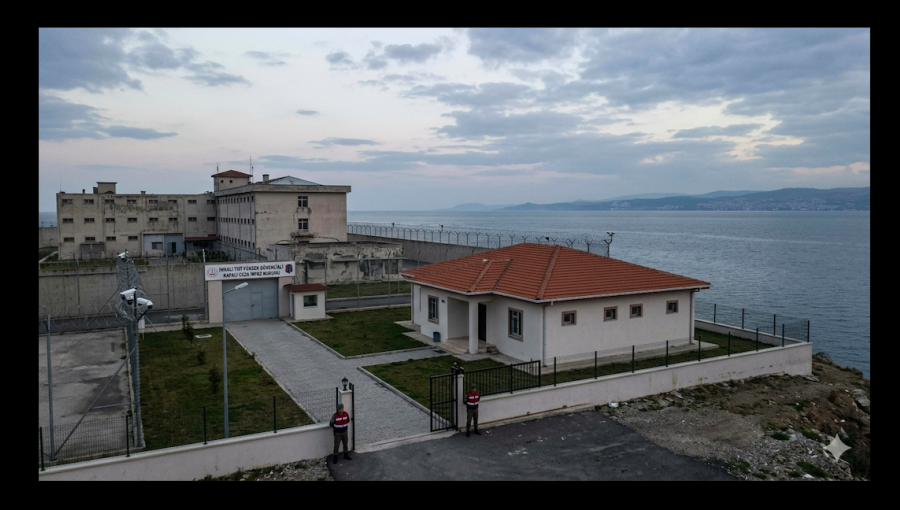
The Turkish government has built a house for Abdullah Ocalan, the leader of the militant-politico Kurdistan Workers’ Party (PKK), imprisoned for life after he was abducted by intelligence agents in Nairobi, Kenya 27 years ago.

The dwelling was constructed on Imrali prison island, in the Sea of Marmara, south of Istanbul, where Ocalan was incarcerated, Tuncer Bakirhan, co-chair of Turkey’s pro-Kurdish DEM Party, said on March 28.

Prior to the confirmation of the residence provided by Bakirhan during a televised interview on Medya Haber TV, a Belgium-based broadcaster operated by the PKK, there were rumours of the development in Turkish media.

Spit it out

“A place, a building or a house has been built for Ocalan on Imrali. Actually, there's a complex there, but what is its name, what is its status?” Bakirhan said, struggling to spit it out.

“The issue of what we will say when we go there, how we will describe it, needs to be clarified. I think there may be developments on this matter soon,” he added.

“Imrali delegation”

On March 27, three members of the DEM Party’s “Imrali delegation”, namely Pervin Buldan, Mithat Sancar and Faik Ozgur Erol met with Ocalan.

“There was a meeting lasting longer than five hours, attended by our delegation, the state delegation and Mr Ocalan,” Bakirhan also said.

“We know that this meeting focused on addressing the setbacks and discussing the steps that need to be taken for the progress of this [peace] process [with the Turkish government], which we call the second phase,” he also said.

PKK? No. “The PKK”

DEM, with substantial representation in the Turkish parliament, is the legal political wing of the political movement of Turkey’s Kurds, with the latter loosely referred to in general as “the PKK”.

The PKK, founded in 1978, waged low-intensity warfare against Turkey from 1984. It was actually abolished in 2002 after the CIA handed over Ocalan to Turkey’s intelligence agency, MIT, in Kenya in 1999.

Main arms of the KCK

The current umbrella organisation of the political movement of Turkey’s Kurds is in fact called the KCK.

There are dozens of combinations of three letters that operate under the KCK. The KCK has militia in the Qandil mountains, located on the border of Iraq and Iran, that occasionally target Turkey (in attacks commonly ascribed to “the PKK”) and Iran (attacks are described as mounted by “PJAK”). The KCK also runs a state-like enterprise covering territory in northern Syria and a network in Europe.

The contesting of elections in Turkey by the Kurdish political movement’s legal political form (the current party is called DEM) results in a significant number of victories. DEM thus wins control of certain municipalities – but the Turkish government often seizes municipalities won by the Kurds and installs state “trustees” to run them.

New cycle, new peace concept

Since the 1980s, governments in Turkey and the political movement of the country’s Kurds have entered into cycles where, in coordination, war and peace concepts are addressed.

Currently, a ceasefire prevails. It was initiated in October 2024.

This affair has a complex structure and long history. It is coupled with heavy manipulation from multiple sides (foreign players in addition to different power groups within the various parties involved in the conflict) as well as the courage of ignorance that dominates media coverage. In fact, relying on media reports for the sake of understanding developments is not advisable.

In July, bne IntelliNews wrote: “Make no mistake. What we have here is an Erdogan, PKK coalition.” Why so? You can read about it here.

The coalition process that holds sway in Turkey is conducted by the powers that be. Erdogan pulls the strings. When the time comes to sell a sharp U-turn in bilateral rhetoric, the masses are always, step by step, subject to thorough preparation.


US-Israel plan for Kurdish incursion into Iran collapses

US-Israel plan for Kurdish incursion into Iran collapses
A joint plan by the US and Israel to support a Kurdish ground incursion into Iran has collapsed after two failed attempts to cross the border into Iran. / bne IntelliNewsFacebook
By Ben Aris in Berlin March 30, 2026

A joint plan by the US and Israel to support a Kurdish ground incursion into Iran has collapsed following leaks and regional opposition, according to The Times of India, which reported on March 28 that the proposal had been under development for several years.

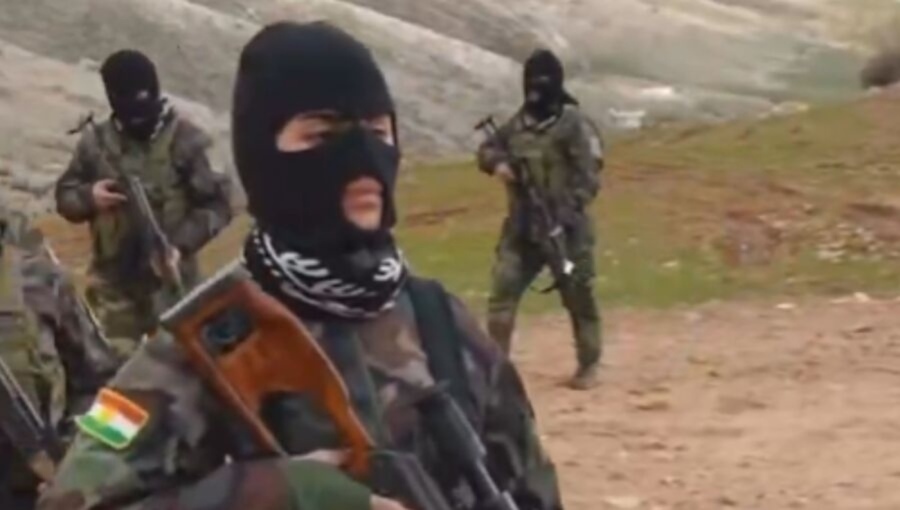
The plan envisaged tens of thousands of Kurdish fighters entering Iran from neighbouring Iraq, backed by US and Israeli air support, with the objective of stretching Iranian military forces and potentially triggering internal unrest. The proposal was presented “at the highest levels”, the report said, as part of a broader effort to destabilise the Iranian regime.

As IntelliNews reported, in the first week of the war Kurdish fighters, backed by the CIA, massed on the border with the intent to stretch Iran's security forces thin. The Kurdistan Freedom Party (PAK) said some of its forces had moved to areas near the Iranian border in Sulaymaniyah province and were on standby. However, the operation failed.

According to the report, the operation was abandoned after details were disclosed in the media before execution, allowing Iran to reposition forces and coordinate with Iraqi authorities to block potential entry routes. The exposure of the plan is said to have significantly reduced the feasibility of any rapid incursion.

Regional dynamics also contributed to the breakdown. Turkey opposed the initiative, reflecting its longstanding concerns over Kurdish military movements, while Gulf states expressed reservations about the potential for wider instability. Kurdish groups themselves reportedly hesitated amid doubts over the level of sustained ground support and lingering mistrust of US commitments.

Two separate launch windows were ultimately cancelled, the report said, with the plan now considered off the table. The collapse has also introduced friction between Washington and Jerusalem, according to the same account, although no official statements have been issued by either government.

The reported episode highlights the complexity of coordinating multinational operations involving non-state actors in a region marked by competing strategic interests and sensitivities over sovereignty.

The plan had aimed to “push toward Tehran, stretch regime forces, and ignite internal uprising”, according to The Times of India.


Legged robot could accelerate resource prospecting on the Moon and the search for life on Mars


What if future planetary robots did not have to wait for instructions from Earth before examining every rock?


Frontiers

Robot in Marslabor 

image: 

Legged robot performing analogue tests in Marslabor at the University of Basel. 

view more 

Credit: Dr Tomaso Bontognali.


Planetary surface missions currently operate cautiously. On Mars, communication delays between Earth and rovers (typically between four and 22 minutes), as well as data transfer constraints due to uplink and downlink limitations, force scientists to plan operations in advance. Rovers are designed for energy efficiency and safety, and to move slowly across hazardous terrain. As a result, exploration is typically limited to only a small portion of the landing site, with rovers typically traveling up to a few hundreds of meters per day, which makes it difficult to collect geologically diverse data.

Here, we tested a different approach: a semi-autonomous robotic explorer which can investigate multiple targets one-by-one and collect data without constant human intervention. The results showed that semi-autonomous robots equipped with compact instruments could significantly speed up resource prospecting and the search for ‘biosignatures’ (ie, evidence of life) on planetary surfaces: instead of investigating a single rock under continuous supervision, a robot could walk toward multiple targets and autonomously perform measurements at each location.

Our research question was whether a robot equipped with a simple scientific payload could quickly study several targets while still delivering meaningful scientific results. The results proved that even relatively compact instruments can achieve the full scientific objective: identifying rocks relevant for astrobiology and resource exploration.

A robotic field test for future missions

To test the concept, we used the quadrupedal robot ‘ANYmal’ equipped with a robotic arm carrying two instruments: the microscopic imager MICRO and a portable Raman spectrometer developed for the ESA-ESRIC Space Resources Challenge. We carried out this work in collaboration with the Robotic Systems Lab at ETH Zurich, ETH Zurich | Space, the University of Zurich, and the University of Bern.

We conducted our experiments in the ‘Marslabor’ facility at the University of Basel, which simulates planetary surface conditions using analogue rocks, ‘regolith’ (ie, planetary dust) materials, and analog lighting conditions. The robot autonomously approached selected targets, deployed the instruments with its robotic arm, and returned images and spectra for analysis.

The system successfully identified diverse rock types relevant to planetary exploration, including gypsum, carbonates, basalts, dunite, and anorthosite. Many of these are scientifically significant: for example, lunar-analog rocks such as dunite (rich in olivine and oxides), anorthosite (containing anorthite), and oxides such as rutile, may indicate valuable resources for future space missions.

Faster science with multi-target exploration

We compared two operational approaches: traditional single-target exploration guided closely by scientists, and a semi-autonomous multi-target strategy in which the robot performs measurements at several locations in sequence.

The semi-autonomous missions turned out to be much faster. Multi-target missions took between 12 and 23 minutes, while a human-guided mission required 41 minutes to complete comparable analyses.

Despite the faster pace, the robot achieved high scientific success rates. In one test run, all selected targets were correctly identified.

This approach could thus allow future missions to rapidly survey large areas of planetary surfaces. Scientists could then analyze incoming data and select the most promising locations for detailed investigation.

Instead of waiting for humans to command every step, robots could move through the terrain, scan rocks quickly, and collect data. This approach could allow us to conduct science much faster on planetary surfaces. Robots could rapidly explore and characterize many rocks, helping scientists pinpoint the most interesting samples for further investigation.

Preparing for future exploration

The study highlights how relatively simple instruments can provide valuable scientific information when integrated into autonomous robotic systems. Instead of relying solely on large and complex instrument suites, future missions could deploy agile robots that rapidly scan the environment and flag promising targets for detailed investigation.

As space agencies prepare for upcoming missions to the Moon, Mars, and beyond, such semi-autonomous systems could help scientists survey larger areas in less time, supporting both resource prospecting and the search for possible signs of past life.


On the left: the robot performing autonomous measurements of a rock with MICRO and Raman. On the right: examples of images from the microscopic imager (MICRO) returned by the robot, showing the texture of three different lunar analogue materials in RGB, UV, and IR.

Credit

Dr Gabriela Ligeza


Setup of legged robot operation on the testbed, with the control room and operators in the background. 

Credit

Dr Tomaso Bontognali.


“One Plant Health Concept” connects tradition and technology to address plant diseases in Africa


A newly published “One Plant Health” strategy combines traditional indigenous knowledge and cutting-edge technology to tackle plant diseases in Africa for improved food security


CABI


Wallingford, UK, 31 March 2026 – A new article published in CABI Agriculture and Bioscience calls for a diverse, participatory approach that combines indigenous, local knowledge systems with modern technologies to tackle plant diseases and strengthen food security in Africa. This comprehensive review proposes a strategy for “One Plant Health” management across the continent and aims to address challenges such as climate change and emerging plant viruses.

Authors Dr Gilbert Nchongboh Chofong, Dr Julia Mulabisana, and Dr Katja Richert-Poeggeler explain the core of this strategy as an integrated approach that brings together a broad range of stakeholders while combining old and new techniques for plant health and crop cultivation. Effective environmental management strategies can be developed and implemented, for example, by integrating indigenous communities' profound understanding of local ecosystems with data from remote sensing technologies such as drone and satellite imagery.

“A synergy is created when we combine indigenous knowledge with modern technologies,” said lead author Dr Gilbert Nchongboh Chofong, Senior Research Associate at the Julius Kühn-Institut. “Our review shows that by using a combined, participatory approach, focusing on traditional techniques and modern approaches, stakeholders can unite to improve disease management, strengthen sustainable agriculture, and build more resilient food systems across Africa now and in future.”

Local communities have long identified disease-resistant traits in plant varieties, cultivating them through seed selection, conventional breeding, and intercropping. Today, modern research employs smart breeding techniques (e.g. screening for molecular markers) that develop genetically improved crops for enhanced plant yield and resistance to plant viruses and other diseases. By integrating techniques, embracing both traditional wisdom and cutting-edge approaches, the strategy aims to improve plant health, reduce food shortage, and foster economic growth in Africa.

Broadening the application of the One Plant Health strategy

Furthermore, the strategy can be applied to address broader environmental problems. An integrated approach can help to tackle challenges such as deforestation, land degradation, soil pollution, and water scarcity.

Collaboration is key to the strategy, which emphasizes coordinated efforts among diverse participants, including researchers, farmers, local communities, and policymakers.

Strengthening the integration of Plant Heath in One Health

The paper aims to promote the integration of plant health and phytopathology into the One Health concept and encourage practices in agroecology to address broader health challenges. By researching the interconnectedness of human, animal, and ecological well-being, the study explains how we can better limit the impact of emerging plant pathogens on health in general. Plant health remains underrepresented within One Health, making the study particularly important within the framework.

<ENDS>