Wednesday, August 20, 2025

Pulling the Levers of Power: How the Trump Administration Hijacked Public Broadcasting


Once a bipartisan resource, public media is now cast as an ideological threat under the Trump administration’s efficiency campaign.


On May 1, 2025, President Donald Trump signed an executive order titled “Ending Taxpayer Subsidization of Biased Media,” instructing the Corporation for Public Broadcasting (CPB) to cease nearly all federal funding for National Public Radio (NPR) and Public Broadcasting Service (PBS). The order prohibited local public radio and television stations, and any other recipient of CPB funds, from using federal grants to purchase programming from these public media organizations and mandated a review of existing grants for compliance with the administration’s ideological priorities. The Trump administration’s attempt to cut public media funding is part of their “rescission” strategy—a process to roll back previously appropriated budgets.

The House gave final approval on July 18, 2025, to the Trump administration’s plan to rescind approximately $9 billion in previously allocated funds. This measure included a $1.1 billion cut to the CPB, effectively eliminating all federal support for NPR, PBS, and their member stations. Following this, the CPB announced on August 1, 2025, that it would begin an orderly shutdown of its operations after the Senate-Labor-HHS-Education appropriations bill excluded its funding for the first time in nearly sixty years. These actions are part of a broader initiative spearheaded by the newly established Department of Government Efficiency (DOGE), which aims to streamline the federal government, eliminate programs deemed unnecessary by the administration, and reduce bureaucratic inefficiency.

While the administration claims its efforts are motivated by fiscal responsibility and safeguarding taxpayer dollars, critics argue that these moves are politically motivated attempts to silence dissent and reshape the media landscape to favor partisan narratives. Clayton Weimers, Executive Director of Reporters Without Borders USA, told Project Censored, “The administration frames the cuts as ‘efficiency cuts,’ but that is not necessarily the case. They frame it that way because they decided that’s a more palatable way to sell it to the American people. But at the end of the day, public media broadcasting costs the American taxpayer, on average, $1.60 per year, and the level of value that Americans get out of that $1.60 per year is tremendous.”

The CPB, established in 1967 as a private nonprofit corporation, was specifically designed to insulate public broadcasting from political interference, with its charter expressly forbidding government control over broadcasting content while ensuring that over 70 percent of federal appropriations flow directly to more than 1,500 local affiliate stations rather than centralized bureaucracies.

“It’s really important that people understand how public media is funded in this country,” Weimers shared with Project Censored. Local affiliates have the freedom to purchase programming from NPR and PBS that caters to their audiences’ preferences. He explained how Trump’s executive order essentially bans affiliate stations from buying this programming, thereby infringing on their First Amendment rights. Weimers emphasized that “it is up to the individual local independent stations what they want to show their audience on air, and they should make that decision based on what their audiences want to see and what their audience wants to hear, not based on what politicians in Washington think they ought to hear.” He challenged the Trump administration’s claim that public media is a biased tool of his political opponents, “Some of the editorial coverage might lean left and the audience might lean left, but it’s a complete mischaracterization. Public media in this country has over a thousand different broadcast, television, and radio stations. It’s not just any one thing. There isn’t one political line across all of public media.”

Other voices in the media industry echo Weimers’s statements regarding the motivations behind the Trump administration’s CPB rescissions. Victor Pickard, Professor of Media Policy and Political Economy at the University of Pennsylvania’s Annenberg School for Communication, explained to Project Censored that public media was created to address gaps in commercial broadcasting and to ensure that all audiences, especially low-income communities and communities of color, would have access to high-quality, trusted content. Pickard warned that defunding public media will force communities to “learn that lesson once again” about the limitations of commercial broadcasting, which “will never provide all of the information and communication needs of a democratic society.”

Lisa Graves, founder and Executive Director of True North Research, told Project Censored that the Trump administration’s cuts to the CPB are a systematic effort to undermine independent journalism, not address legitimate concerns about bias or fiscal policy. Graves explained that the targeting of NPR and PBS stems from coordinated and widespread disinformation and propaganda being perpetuated by the Trump administration. “These entities are important public investments that help bring national, international, as well as local news into our communities,” Graves told Project Censored. “The administration claims that there is political bias or partisan bias at these outlets, when in fact they are just covering the news. … The attack on public broadcasting is an attack on facts, truth, and journalistic independence. It has to be seen as such.”

This strategy poses an Achilles’ heel: While the rhetoric employed by the Trump administration targets elite, national outlets, the most damaging impact will fall on the hyperlocal media infrastructure already struggling to survive. Many small-town, rural, and tribal affiliates rely on CPB funding and syndicated content from NPR and PBS to fill gaps in local coverage, provide educational programming, and serve communities with little to no other media access, otherwise known as news deserts. Eliminating this support could crater regional journalism ecosystems—leading to programming losses, station closures, and widespread layoffs that ripple down the media supply chain. In many conservative and underserved communities, where public broadcasting often remains the only consistent source of local and noncommercial news, the cuts could unintentionally harm the very constituencies that the defunding narrative claims to serve.

Noting that public media receive only paltry funding from federal sources, Pickard called the defunding of the CPB a “tragic irony,” because it will “hurt individual stations, especially in rural and conservative areas in states such as Alaska, Wyoming, Idaho, and Texas.” He explained to Project Censored that some stations depend on CPB funding for 25–50 percent of their budgets and “will likely go under if federal subsidies are entirely cut, leaving news deserts in their wake.”

The Trump administration frames these funding cuts as fiscal responsibility, but smaller local news outlets view them as politically motivated attacks and part of a campaign to delegitimize public media and the services they provide. NPR and three Colorado public radio stations filed a lawsuit alleging that the May executive order is “textbook retaliation and viewpoint-based discrimination” in violation of the First Amendment. PBS, along with Lakeland PBS in rural Minnesota, also filed a similar lawsuit, disputing claims of bias and asserting that the Constitution forbids the President from arbitrating content. These lawsuits suggest Trump has far exceeded the expansive powers of the presidency, usurping congressional prerogatives and eroding free speech rights.

Seth Stern, Director of Advocacy at Freedom of the Press Foundation, told Project Censored that the Trump administration has adopted what he calls a “throw-it-at-the-wall approach,” where they challenge the Constitution despite knowing most cases will fail on constitutional grounds. However, Stern explained that the strategy behind this approach is to find any legal opening the administration can exploit. “They are looking for the case they win, looking for the one instance where the courts give them an opening, and once they have that opening, they are going to barge through it.”

The Trump administration has adopted a multifaceted strategy to politicize public media by portraying these institutions as adversaries rather than recognizing them as informational resources or allies. Through rhetorical attacks, the administration frames public media and their content as ideologically biased, financially irresponsible, and increasingly unnecessary. This approach is implemented through executive orders and policies that employ loaded language such as “woke propaganda,” citing questionable fiscal justifications like “cost efficiency,” downplaying societal value, and implementing disruptive measures that create instability for essential broadcasting programs, ultimately exploiting public media rather than leveraging its potential for effective public communication.

Experts like Reporters Without Borders’ Weimers contend that the Trump administration has “shown a very strong disposition towards using whatever levers of power they have to punish those who oppose their agenda in any way.” Weimers emphasized to Project Censored that this targeting can affect public media outlets simply for “accurately reporting on what they’re doing.” The implications of these executive actions extend far beyond public media, he cautioned. “There is no reason that that would not also impact nonprofit media that publish content that the Trump administration does not like, even for-profit media.”

Weimers warned of a troubling escalation, characterizing the Trump administration’s campaign against public media as “a slippery slope.” Once the government gains control over public media and broadcast licensees, he argued, “they are one step closer to getting their hands on the rest of the media as well.”

Pickard told Project Censored that while the federal funding cuts will have a “chilling effect” on an already compromised media system, they also open the possibility of “building something entirely new out of the wreckage.” That wreckage is not merely financial—it is the collapse of a decades-old compact between government, media, and the public.

But from that imminent destruction comes a rare opportunity to reimagine public media not as a government-funded institution vulnerable to political whims, but as a truly community-owned resource, insulated from both partisan interference and commercial pressures. Rebuilding cannot depend on Washington reversing course or a future administration restoring support. Instead, citizens must take action: establishing community-supported journalism cooperatives, developing hyperlocal news networks sustained by their audiences, and building media infrastructures accountable to neighbors rather than distant politicians or corporate shareholders. The Trump administration may have dismantled decades of public media investment, but it cannot destroy the fundamental human need for trustworthy, bipartisan information and community connection.

Originally published on https://www.projectcensored.org/trump-admin-hijacked-public-broadcasting/

Jackie Vickery served as a summer 2025 intern for Project Censored. She is currently pursuing a Bachelor of Arts in Journalism at Ithaca College’s Roy H. Park School of Communications and is expected to graduate in May 2026. Read other articles by Jackie.

Digging Deeper on Community Radio: Triple R and Indispensable Airwaves


To get to the venue involves a calming, if early, ritual. Uneasy sleep beforehand, given the morning slot. Eagerness to prepare for the topic to be discussed in the global affairs segment, accompanied by that childish sense of worry that approval means something. Then, getting on a tram to the venue, which, as luck would have it, is positioned just at the end of the tramline in East Brunswick. This is Melbourne, and the destination is one of the city’s most heart-throbbing venues of community radio, Triple R.

The trio of radio hosts on the program Breakfasters has already grown callouses of experience, managing multiple tasks as they go through the music listings and guests with placid ease. Before heading to the green room, the scene is welcoming. Wooden floors, slightly worn, charmingly tatty, with brochures prominently displayed as you enter the building, a solid, expansive structure that accommodates generous space for live music and studios.

Triple R or 3RRR, depending on preference, is one of those community radio stations that sports an influence far beyond the plutocrats of the traditional or commercial radio scene. There are no demagogues to be found, no celebrity functionaries to be lauded. You are not handed a list of forbidden topics or words, much as you would be if running a program for the national broadcaster. The programming is also distinctly free of the venom and spite trafficked on the airwaves of the shock jock stations. While the arterial flow of the station is music, the mix of news and discussions on international and local affairs adds a rich sauce. Those with omnivorous tastes will be hard to disappoint.

Across the vast expanse of Australia, some 450 community radio stations hum away, hoping to offer their listeners alternative platforms with varied content. That very fact is almost singular. The development of such radio, observes David Melzer, himself having had lengthy experience at the helm of Melbourne’s polyglot 3ZZZ, had its roots in a number of factors: those dealing in education, activists inspired by anti-Vietnam War protests, increasing numbers of migrants, and enthusiasts of classical music. “Each of these four groups had one thing in common. They challenged how broadcasting operated in Australia. They wanted control of the airwaves, and they lobbied for it, leading to the establishment of the third tier of broadcasting in Australia.” With the advent of community broadcasting came the increasing role of Indigenous communities and those reluctant to use print media.

Globally, such stations face the corrosive effects of not so much digital disruption as digital appropriation, a process that is also shaping listening habits. Be it such internet-based giants as YouTube and Spotify, and the personalised, podcasting format, where tastes become bespoke affairs, the very idea of the radio as an important part of a day’s routine is being challenged. Not only does this alter the nature of what content is being offered, but it has had behavioural effects. As a co-authored article in the Electronic Journal of Education, Social Economics and Technology published this year contends, “Today’s listeners, especially younger generations, prefer interactive, mobile-accessible content and often participate in content production themselves via social media”.

That said, there is room for some sunny optimism. Community radio in the United Kingdom, for instance, is burgeoning. In September 2024, the country had over 350 licensed community radio stations, a marked increase from the 200 stations broadcasting in 2014. Data from Radio Joint Audience Research published in July this year also finds that over 50 million adults (86% of the UK population) tune in to radio every week, which augurs well for the more specific programming offered by community radio outlets. The streaming behemoths have created an odd sense of detachment, even estrangement, and certain listeners are seeking grassroots comforts. The significance of this is hard to exaggerate, given the nourishment such radio outlets provide in terms of language, cultural pursuits, and the arts.

During those necessary radiothons, when money is sought from the subscribers, the staff place themselves into the hands, ears, and pockets of the listeners, trying to sweetly convince them that another year of financial loyalty is needed. The theme this year for Triple R is “Digging Deeper”, described by the radio station as representing the labours of volunteer presenters who “work hard to dig deeper every single day, uncovering musical gems and unearthing important issues that often do not find airtime anywhere else.” The names of subscribers are read out with hearty enthusiasm and a tease. Renewals are emphasised with pride.

It is almost impossible to believe that an institution such as Triple R has been around for some three decades. The brooding fear is that such a scene will cease before the thieving systems of artificial intelligence or be chewed up by the ghastly listening habits of “influencers” and curated streaming services. Let us hope there is still ample time before that ghastly universe triumphs. Till then, best appreciate the admirable exploits of digging deeper by those able staff in community radio.

Binoy Kampmark was a Commonwealth Scholar at Selwyn College, Cambridge. He lectures at RMIT University, Melbourne. Email: bkampmark@gmail.comRead other articles by Binoy.


China’s EVs Surge Into Georgia, Challenging U.S. Car Dominance

THE COUNTRY NOT THE STATE

  • Chinese EV imports to Georgia jumped nearly 88% year-on-year, making China the country’s second-largest EV supplier after the U.S.

  • BYD’s growing presence reflects both affordability and rising demand, though infrastructure like charging stations remains limited.

  • The EV surge aligns with Georgia’s ruling party’s pro-China stance, as political ties with the U.S. and EU

In Tbilisi, whether you are inching through traffic or weaving down side streets, you cannot escape the same slogan splashed across the backs of some passing cars: “Build Your Dreams.” 

That is a branded motto etched onto vehicles made by BYD, China’s largest automaker. Each vehicle is a moving data point in a quiet shift, signaling the rise of Chinese electric vehicles on the streets of the Georgian capital, home to nearly half of the country’s population, as well as in other cities.

According to official data for January-July 2025, China accounted for just over 10 percent of Georgian imports, ranking fourth behind Turkey, the United States and Russia.

Passenger cars are the country’s largest import product, accounting for 20 percent of all imports, reflecting the sector’s significance, both for domestic demand and Georgia’s role as a regional re-export hub. China’s increasing presence underscores its strategic interest in gaining a larger share of the country’s auto market.

While Georgia’s annual number of imported cars has remained relatively steady in recent years, the share of electric vehicles is surging. During the first half of this year, the country imported 3,616 EVs, an 88 percent jump from 1,922 during the same period last year. Until recently, China did not even rank among Georgia’s top five car-supplying countries. 

China is now the second-largest EV supplier after the US, and overall imports of Chinese cars, both electric and conventional, have risen roughly 79 percent this year.

Electric vehicles still make up a relatively small share of the overall auto market in Georgia, where nearly every second person owns a car. A major reason is that most Georgian consumers have long relied on cheap, second-hand cars from the US that are easy to repair locally. EVs do not fit this model, which helps explain why the US remains the country’s main car supplier. 

While China cannot compete with the US in conventional car imports, it has already captured nearly 12 percent of Georgia’s EV market in just a couple of months. Demand is rising sharply; the appeal of EVs is strong. They are cheaper to run than gasoline-powered cars. But widespread adoption requires infrastructure, especially charging stations, that Georgia currently lacks. Market signals suggest that is about to change. Add to that the fact that Chinese EVs are more affordable than their Western-made counterparts, and it is clear they are poised to capture an increasing share of the Georgian market. 

Growing Chinese economic influence goes hand in hand with politics. The ruling Georgian Dream party’s pro-China stance is well known, with Prime Minister Irakli Kobakhidze praising Communist China as the “best example of state modernization” and arguing that Beijing sets a positive example for other global powers. 

In a twist of political irony, BYD Center in Tbilisi has just recently taken over the former headquarters of the United National Movement, the one-time governing party, now a major opposition force. Built in 2010 for party operations, the building had slipped out of the opposition’s hands amid financial and political pressures from the government.

Transparency International Georgia noted the geopolitical shift in its latest report: “As Georgia’s relations with the United States and the European Union deteriorate, Georgian Dream is strengthening its alliances with authoritarian regimes hostile to the United States, such as China.”

By Eurasianet.org


Colorado River Running Out of Water

  • Lake Powell risks hitting “dead pool” by year-end, threatening water releases to 40M people and up to ~3,000 MW of hydropower from Glen Canyon/Hoover.

  • Low water imperils hydropower and cooling for thermal/nuclear plants, complicates data-center siting and fracking.

  • As the U.S. grid already faces a big capex build-out, drought drives operating costs higher

That the Colorado River’s flow has been declining is not new in water circles. Truth is that the states bordering the Colorado divided up the water supply on the basis of a wet year, a century ago, and have been fighting over the diminishing supply for some time. (From a negotiating standpoint this made a lot of sense at the time. Dividing relatively scarce water resources among various political bodies is like slicing up a pie among hungry people and everyone wants a big piece. Except here government officials were able to essentially riff on the old economist’s joke and simply assume a bigger pie. And this policy, based on faulty data, worked until recently. Now reality and droughts have returned.)

Something like 40 million people depend of Lakes Mead and Powell for drinking water. But what made the headlines recently is the announcement that the water in Lake Powell, a main reservoir, could fall to “dead pool” levels by December, thereby preventing the release of water to downstream, and that would stop hydroelectric generation that serves seven western states. These hydroelectric facilities in the Glen Canyon and Hoover Dams can produce over 3000 megawatts which is both relatively cheap and obviously, environmentally benign although both facilities have been producing power below maximum capacity due to water constraints. We’re not used to thinking about water as an intermittent resource but that may be our new reality. So now do we face a water and an electricity shortage simultaneously?

Water shortages are becoming common, resulting from overuse, groundwater pollution, negligent agricultural practices, and changing climate conditions. Water supply constraints could affect the siting of data centers (water for cooling) and prospects for fracking. In addition, hydropower still plays an important role in power generation and in some countries (Brazil, Norway, Canada, and parts of Africa) a dominant role. We have argued that the US electric grid has not spent enough to modernize, let alone keep up with new demand. So a new deficit of generation resources, caused by water shortages, comes at the wrong time. Water storage in the electricity business is like a gigantic battery you can turn on and off. Except in this case, it’s water behind a dam spinning turbines to generate electricity.

Low water levels mean more than hydro generation loss. Generators require cooling water to run huge nuclear and fossil fuel units. French utility EDF had to curtail power generation at nuclear plants due to jellyfish clogging water intakes. (The jellyfish bloom is attributable to warmer water temperatures.) And in August 2022, they had to curtail generation at five nuclear stations due to excessive temperatures in river water. The water industry has, for a long time, been concerned with climate change. There is some irony in the fact that the electric industry, which continues to hasten climate change through its policies and actions, might have to face the consequences of a water shortage. Wait a minute! The electric company’s customers will face the adverse financial consequences via accelerated rates, not the electric company.  And remember that a power short in the southwest will suck in power from elsewhere. It might become everyone’s shortage.

Let’s conclude with the financial consequences of water shortages. First, the power industry is in the early stages of a massive capex boom to accommodate a broad societal move to electrification. This will drive up power prices as new facilities cost far more than those installed decades ago. These are capital costs. Now, with a looming water shortage, utility operating costs are poised to escalate as well as water generation is replaced by much higher cost fossil fuel powered generators. To sum up, watch the southwest for the rest of the year because a water crisis, if the pools reach bottom, could turn into an energy crisis and an affordability crisis.

By Leonard Hyman and William Tilles for Oilprice.com


US targets Chinese steel and lithium for forced-labor scrutiny


Kashgar, Xinjiang, China. Stock image.

The Trump administration said it will step up scrutiny of imports of steel, copper, lithium and other materials from China to enforce a US ban on goods allegedly made with forced labor in the country’s Xinjiang region.

The announcement of new “high-priority sectors” targeted under the four-year-old Uyghur Forced Labor Prevention Act was included Tuesday in an annual update to the US government’s enforcement efforts. It also dovetails with President Donald Trump’s broader trade goals, as he seeks to lower the US trade deficit with China and pressures Beijing to curb shipments of fentanyl and precursor chemicals.

“America has a moral, economic, and national security duty to eradicate threats that endanger our nation’s prosperity, including unfair trade practices that disadvantage the American people and stifle our economic growth,” Homeland Security Secretary Kristi Noem said in a statement.

Still, the administration went ahead with the announcement at a time when Trump has sought to improve relations with his counterpart, Xi Jinping. The US president last week extended a pause on higher tariffs on goods from China for 90 days as he seeks an in-person meeting with the Chinese leader.

Under the 2021 law, the US government assumes that anything made even partially in the Chinese manufacturing hub of Xinjiang is produced with forced labor and cannot be imported into the US. Companies may win exemptions if they can provide “clear and convincing evidence” forced labor was not used.

The measure is meant to help combat alleged repression of Uyghurs and other minorities in the province of Xinjiang. Beijing has repeatedly denied accusations that minorities are compelled to work against their will.

Although the law applies to all goods, it originally singled out apparel, cotton and cotton products, tomatoes and silica-based products — including polysilicon — as high-priority sectors for enforcement. Under former President Joe Biden, the government expanded the products subject to extra scrutiny to include aluminum, polyvinyl chloride and seafood.

The Trump administration’s Tuesday announcement expands the list again to encompass red dates, caustic soda and lithium, as well as steel and copper.

The US doesn’t import significant tonnage of copper from China, according to data from Morgan Stanley. In 2024, the US imported about 470,000 tons of steel from China, equal to 0.5% of domestic consumption, according to the Commerce Department.

(By Jennifer A. Dlouhy)


US urged to tackle illicit gold boom fueled by soaring price

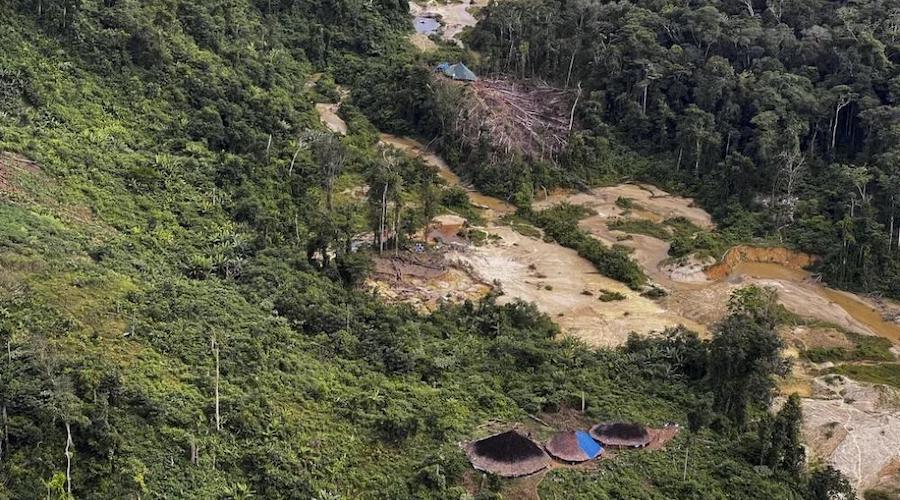
Illegal gold mining in the Yanomami traditional territory. (Image by the Brazilian Air Force).

US authorities are being pressed to step up efforts to combat the illegal gold trade, one of the largest and fastest-growing illicit economies in the Western Hemisphere as bullion prices surge.

An illegal gold mining and trafficking boom in several South American nations has become a crisis too large for the US to ignore, according to a report from the Financial Accountability and Corporate Transparency Coalition, or FACT, released Wednesday. In Colombia and Peru, top growers of the plants used to make cocaine, illegal gold is estimated to generate more money for organized crime than the drug trade itself.

The Washington-based financial advocacy group called on Congress to pass a bill that cracks down on the environmental and social impacts of illicit gold mining. FACT also wants illegal mining to be a building block for prosecuting money laundering and for gold to be included in cross-border currency reporting.

“By making illegal gold mining, trafficking and associated money laundering less profitable and more likely to result in serious consequences, the US can play a powerful role in reducing the financial incentives driving this devastating criminal economy,” FACT wrote.

The US lacks the tools to effectively respond to the illicit gold trade, a situation that’s been further complicated by shifting priorities in the Trump administration and staffing reductions this year, the report said. Behind the surge in illicit gold is a tripling of bullion prices over the past decade and lax law enforcement as authorities remain squarely focused on tackling the drug trade.

FACT urged the US to increase enforcement and prosecution efforts against transnational criminal networks involved in the illicit gold trade, implement gold-specific sanctions and resume funding for international projects related to combating illegal gold mining. The administration should also require collection of basic information about the real owners of companies as well as strengthen international information sharing and due diligence requirements for the US Mint, according to the report.

“The recommendations are expected to resonate with folks in the US who are concerned about organized crime in Latin America — who see that as a threat to US interests and stability,” Julia Yansura, FACT’s program director for environmental crime and illicit finance, said in a telephone interview.

(By James Attwood)

Afghanistan says China seeks its participation in Belt and Road Initiative

Afghanistan plain. Stock image.

China wants Afghanistan to formally join its Belt and Road Initiative, the Afghan foreign ministry said in a post on X after the two countries’ foreign ministers held talks in Kabul on Wednesday.

China’s Wang Yi told his Afghan counterpart Amir Khan Muttaqi that it’s “interested” in the country’s participation in the project. In addition, Wang pledged to advance mineral exploration, with plans to begin some mining projects this year.

The Belt and Road Initiative is China’s flagship global infrastructure and investment program, launched by President Xi Jinping a decade ago, that aims to improve connectivity and economic integration across Asia, Africa, the Middle East, Europe, and beyond. For China, Afghanistan’s location is crucial as it sits at the crossroads of these regions.

China was among the first countries to embrace the Taliban government after the US withdrawal in 2021. China adopted a diplomatic approach that allowed it to expand its influence and tap Afghanistan’s vast mineral resources. Wang also visited Kabul in 2022, where he discussed boosting trade and efforts to rebuild the country’s economy.

Muttaqi described China as a key trade partner, saying annual trade has reached $1 billion. He proposed expanding banking and transport links and called for joint commissions to manage talks on trade and investment.

China’s Foreign Ministry didn’t immediately respond to a request seeking to confirm the Taliban’s statement.

The high-level talks give a boost to the Taliban’s push for legitimacy on the world stage, showing that key regional players are willing to engage with it despite the lack of formal recognition. Russia recently became the first country to formally recognize the Taliban administration in Afghanistan.


(By Eltaf Najafizada)


Codelco pegs El Teniente output at 316,000t after deadly collapse

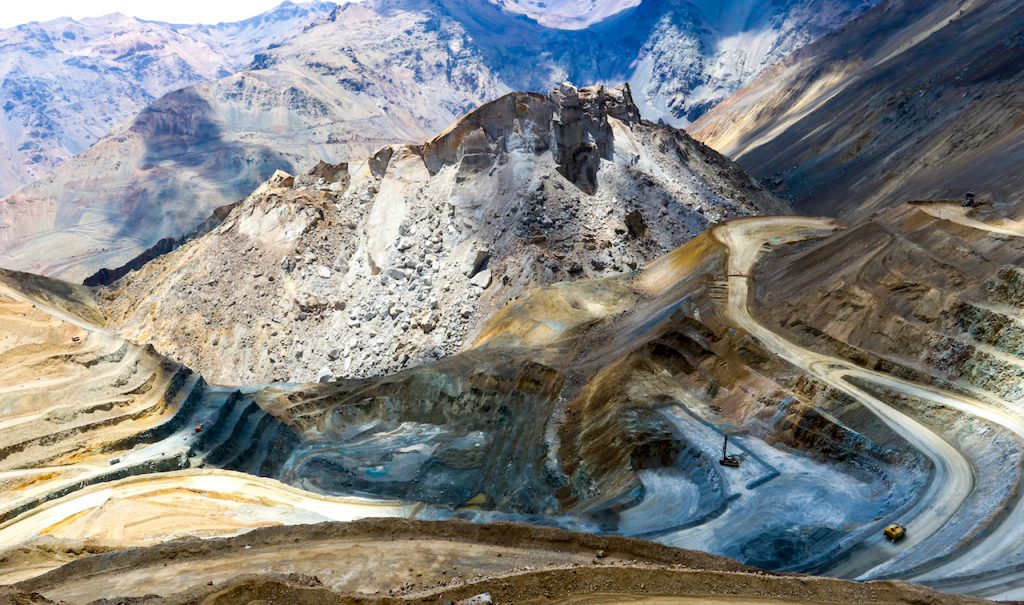
El Teniente is the world’s biggest underground copper mine and the sixth largest by reserve size. (Image courtesy of Codelco)

Chilean miner Codelco expects to produce 316,000 metric tons of copper at its El Teniente mine this year, CEO Ruben Alvarado said on Wednesday, after a deadly collapse at the site in late July.

The world’s biggest underground copper mine last year produced 356,000 metric tons of the red metal.

The firm also estimates a $340 million hit from the incident, which killed six workers, Alvarado added.

Codelco will lower its 2025 production guidance due to the loss at the mine, chairman Maximo Pacheco told Reuters after a congressional hearing, adding that the company is still working to hit its target of 1.7 million tons of copper per year by 2030.

(By Fabian Cambero and Paolo Laudani; Editing by Sarah Morland)

APACHE LANDS

Trump raises stakes over Resolution Copper project with BHP, Rio Tinto CEOs at White House

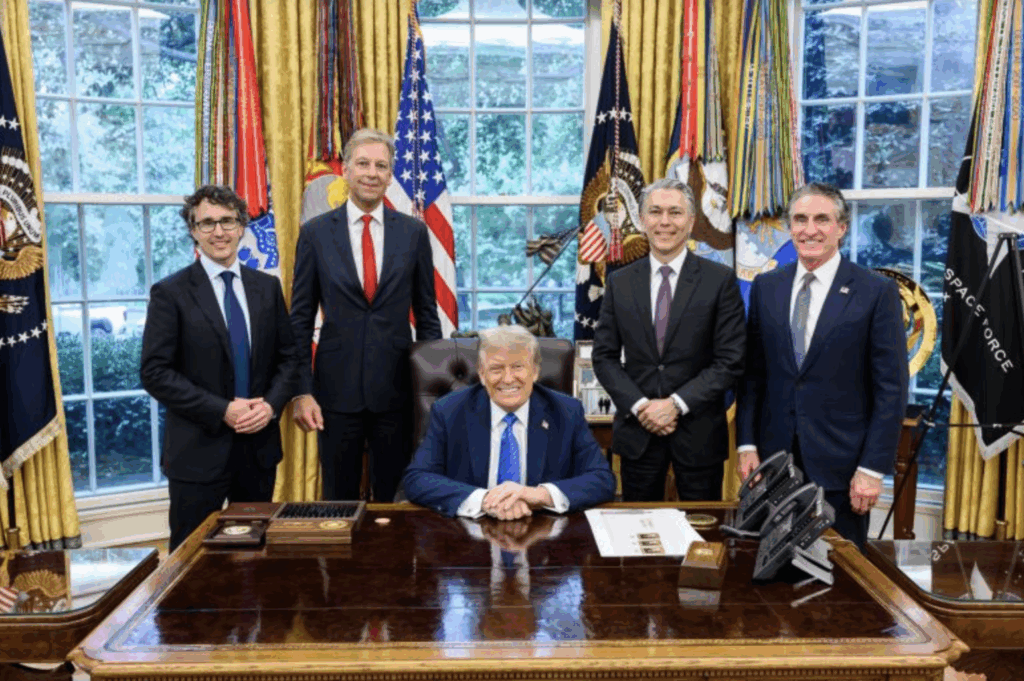
From left: Incoming Rio Tinto CEO Simon Trott, current CEO Jakob Stausholm, US president Donald Trump, BHP CEO Mike Henry and Secretary of the Interior Doug Burgum. Image from Mike Henry via LinkedIn.

President Donald Trump met with the chief executive officers of the world’s two biggest mining companies to discuss a copper project that could supply the US with a quarter of its demand for decades to come, adding greater weight to his push to boost local output of the vital metal.

Rio Tinto Group’s Jakob Stausholm; his incoming replacement, Simon Trott; and counterpart at BHP Group, Mike Henry, met the US leader to discuss the Resolution project in Arizona, according to LinkedIn post by Stausholm. In a separate post, Trump criticized a court judgment that set back the development, insisting the US’ need for greater domestic production was urgent.

The Trump administration has made the revival of US metals and minerals production a key priority, including copper, a commodity vital for the energy transition as well as conventional uses in pipes. As part of that push, Washington imposed tariffs on a wide range of products made from the metal earlier this year, although flows of refined material were not covered.

“Today, I visited the White House with Simon Trott to meet with US President Donald Trump, Secretary of the Interior Doug Burgum, and other officials to discuss Rio Tinto’s crucial role in delivering American copper and other critical minerals,” Stausholm said in the post. They discussed Resolution and the potential the project had to provide domestic supply, he added.

The talks centered on the “industry’s capacity to deliver long-term domestic supplies of copper and other critical minerals,” Rio said in a statement.

Still, even with Trump’s support, building a mega-mine in America remains a challenging and drawn-out endeavor. It takes 29 years on average between discovery and commercial mine production in the US, the longest timeline of any country except Zambia, according to S&P Global.

Most easy-to-reach deposits, including one located above Resolution, were depleted during the 20th century. Now, miners must go deeper, into earth so hot it would have been impossible for workers to survive a century ago, presenting a host of technical obstacles that jack up project costs.

If developed, the Arizona project could supply the US with 25% of its annual copper needs for as many as 40 years, according to Rio Tinto, but it has been delayed for decades due to permitting, environmental concerns, and litigation.

Final environmental approval for the mine was given in June. However, opponents then lodged an appeal seeking a review of the decision. On Tuesday, they won a delay in approving a land swap that’s key to the development.

Trump criticized the court’s decision in a social media post that coincided with the visit by the Rio Tinto and BHP executives.

A Copper Mine in Arizona, ‘Resolution,’ was just delayed by a Radical Left Court for two months — 3,800 Jobs are affected, and our Country, quite simply, needs Copper — AND NOW!” the president said on Truth Social.

Benchmark copper futures have advanced about 11% this year, and last traded above $9,708 a ton on the London Metal Exchange. The record price was set last year at a little above $11,000.

In June, Rio Tinto said it had incurred gross costs of $321 million associated with US tariffs on aluminum, but added that a “substantial part” of that sum had been clawed back from higher premiums on US sales.

(By Paul-Alain Hunt)

Trump blasts appeals court for halting Resolution Copper land transfer

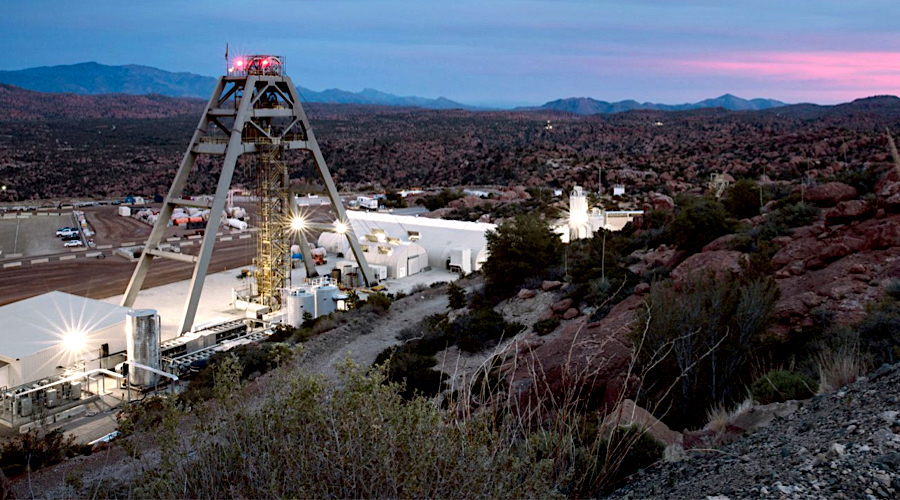
The mine is estimated to produce as much as 40 billion pounds of copper over 40 years. (Image courtesy of Resolution Copper.)

US President Donald Trump on Tuesday criticized an appeals court’s decision to temporarily block federal officials from completing a land transfer needed for Rio Tinto and BHP to develop Arizona’s Resolution Copper project.

Trump’s post on his Truth Social platform came after he and Interior Secretary Doug Burgum met at the White House with the CEOs of Rio and BHP, two of the world’s largest mining companies, which have been trying to develop Resolution for more than a decade.

The San Francisco-based 9th US Circuit Court of Appeals ruled on Monday that the transfer – which had been slated for Tuesday – should be halted while the court weighs a request from the San Carlos Apache tribe to block the project for religious, cultural and environmental reasons.

It was only the second time any court has ruled in favor of the Apache or their allies in more than five years of myriad legal maneuvers against Resolution, slated to become one of the world’s largest supplies of a metal used to build nearly every electronic device.

Trump called the court a “radical left court” and said that those who oppose the mine “are Anti-American, and representing other copper competitive Countries.”

“It is so sad that Radical Left Activists can do this, and affect the lives of so many people,” Trump said in the post. “We can’t continue to allow this to happen to the USA!”

Trump did not outline any actions he plans to take to sway the court, but said that “our Country, quite simply, needs Copper — AND NOW!” He did not provide evidence for his claims about the court and opponents of the project.

Terry Rambler, chairman of the San Carlos Apache, said in a statement that he and the tribe were “working to save the US from making a disastrous decision that would give up American resources to foreign interests.”

Rambler noted in his statement that BHP is based in Australia, while Rio is based in Australia and the UK and its largest shareholder is a Chinese aluminum company.

Rio has said it plans to keep all of Resolution’s copper inside the US should the mine be approved. The company controls one of the two US copper smelters.

Rambler said he believes that Rio is likely to export Resolution’s copper to China.

“I look forward to sitting down with the administration and providing factual information that will help protect American assets,” Rambler said.

Court

The appeals court made clear it takes “no position on the merits” of the Apache’s arguments and would expedite its review. Judges asked for filings to be submitted by October 14, but have not yet scheduled a hearing date. Ten of the appeals court’s 29 members were appointed by Trump.

Rio said it was “confident the court will ultimately affirm” the land transfer. Rio CEO Jakob Stausholm and his successor Simon Trott, who will take the company’s reins next month, were at the White House meeting with Trump.

BHP CEO Mike Henry thanked Trump and Burgum on social media “for their strong leadership to reinvigorate mining and processing supply chains in and for America.”

Trump’s post comes less than a month after he imposed a copper tariff on wiring and pipe, but not the copper concentrate produced by mines themselves, a levy falling far short of what the mining industry had expected. That will allow other countries to import copper into the US without fear of tariff implications.

History

The mine’s construction would cause a crater that would swallow a site where the Apache worship. Congress and then-President Barack Obama approved the mine in 2014 after it was added at the last minute to a must-pass military funding bill with the condition that an environmental report be published.

The underground mine – which Trump approved in his first term before successor Joe Biden reversed him – would supply more than a quarter of US appetite for copper and be a key part of Trump’s plan to boost US mining.

Apache Stronghold, a nonprofit group comprised of some Apache and conservationists, asked the US Supreme Court to block the transfer, a request that the high court denied in May.

Meanwhile, the tribe itself made the same request of federal courts. It failed last week at the district court level and appealed over the weekend.

(By Ernest Scheyder and Trevor Hunnicutt; Editing by Franklin Paul, Stephen Coates and Sonali Paul)

US appeals court temporarily blocks  land transfer for Resolution Copper

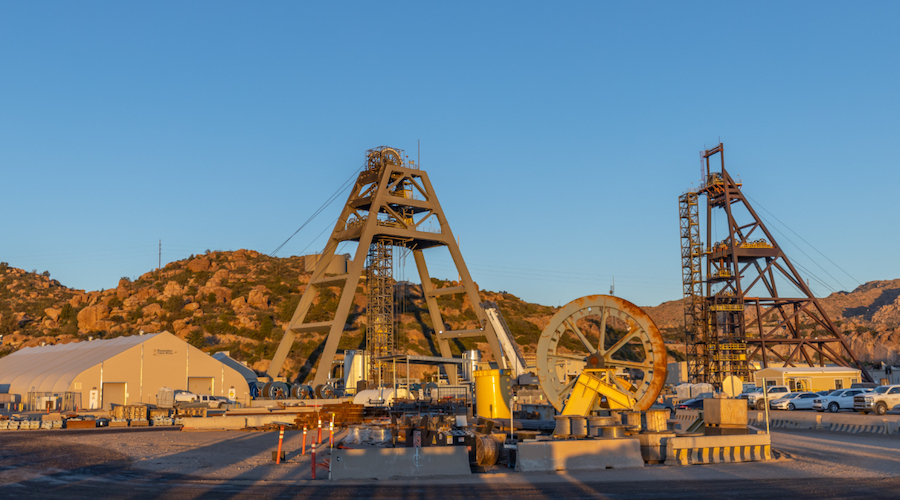
The Resolution underground mine could meet 25% of the US domestic copper needs. (Image courtesy of Resolution Copper.)

A US appeals court on Monday temporarily blocked federal officials from completing a land transfer needed for Rio Tinto and BHP to develop Arizona’s Resolution Copper project.

The San Francisco-based 9th US Circuit Court of Appeals granted a temporary administrative injunction while it considers the merits of a request from the San Carlos Apache tribe to block the transfer. The transfer had been slated to occur on Tuesday.