Sunday, March 15, 2026


Climate group files complaint against OCBC over coal exposure in Indonesia

Climate group files complaint against OCBC over coal exposure in Indonesia
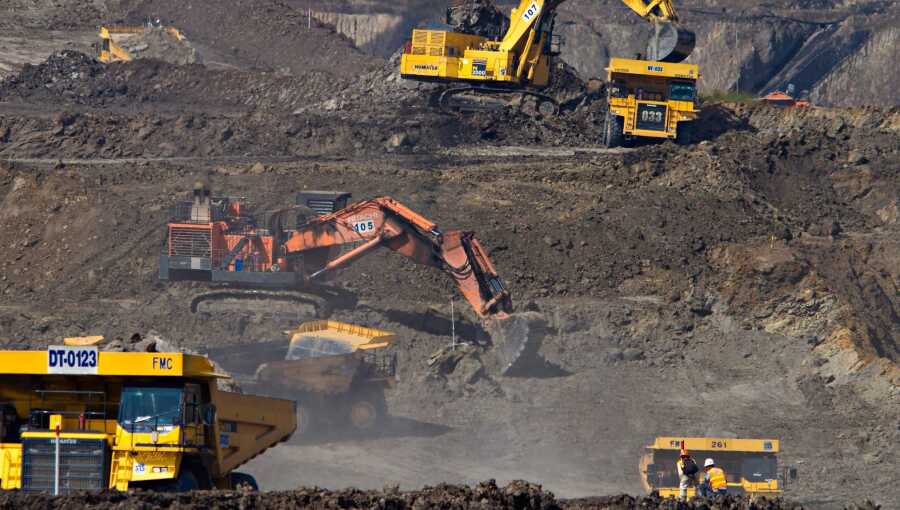
/ Dominik Vanyi - Unsplash
By bno - Surabaya Office March 16, 2026

A Green Central Banking report reveals that a climate advocacy organisation has lodged a formal complaint with the Singapore Exchange against OCBC Bank, accusing the lender of potentially misleading investors about its exposure to coal-powered industrial facilities in Indonesia. Market Forces, the climate advocacy organisation, argues that there are inconsistencies between the commitment that OCBC stated in public space in terms of sustainability and the financing of companies that still rely on coal-fired power plants. These companies, Market Forces said, still run industrial operations such as nickel and aluminium smelters.

Indonesian nickel operations

The finding revealed that OCBC is still the largest financier of the Indonesian mining conglomerate Harita Group. Harita Group operates significant nickel processing facilities on Obi Island, a place where most power generation currently comes from coal-fired plants. These plants are built specifically to supply electricity to smelting operations.

Market Forces also claims that the industrial complex operates about 910 MW of captive coal-fired power capacity, with an additional 760 MW currently under construction. The site turns out to only use around 40 MW of solar power, highlighting what the organisation describe as a heavy reliance on coal energy.

The facility could eventually reach 2.54 GW of coal capacity, alongside roughly 1.3 GW of solar generation, suggesting coal will continue to dominate the complex’s energy mix despite the financing background attempting to reduce it.

Allegations of incomplete climate disclosure

Under the complaint, OCBC is said to have failed to disclose its exposure to high-carbon assets fully. This put them in a position of potentially breaching disclosure rules set by the Singapore Exchange.

Campaigners then argue that investors rely heavily on banks’ climate commitments and coal phase-out policies when assessing climate-related financial risks. But still, investors need the full picture as they rely on climate and coal phase-out commitments disclosed by banks to assess growing climate-related risk.

The problem lies in transparency. Banks should provide clarity on how financing for companies dependent on coal power aligns with their sustainability policies and global climate goals.

OCBC speaks out

OCBC has responded and rejected suggestions that its disclosures are inadequate. The bank’s chief sustainability officer, Mike Ng, said the institution’s reporting has complied with the regulatory framework established by the Singapore Exchange.

OCBC also emphasised that it follows the Equator Principles, a guide for financial institutions in assessing environmental and social risks associated with major infrastructure and industrial projects. “We are expecting nickel smelters to operate entirely on renewable energy, but it is currently unrealistic in remote regions of Indonesia,” Ng argued.

Hydropower and wind resources are often geographically limited, while solar energy remains intermittent, he said. As a result, energy transitions in heavy industry frequently involve trade-offs between environmental goals and operational reliability.

OCBC further pointed to the strategic importance of Indonesia’s nickel reserves for global electrification, particularly for the production of electric vehicle batteries.

However, analysts note that the majority of Indonesia’s nickel output is used mainly for stainless steel production. Only about 5% of the country’s nickel supply currently goes toward electric vehicle battery manufacturing. These numbers weaken the justification for continued coal-powered expansion at industrial smelters.

The complaint highlights that other major Singapore lenders, including DBS Bank and United Overseas Bank, have previously been identified as significant financiers of the Harita Group.

However, Market Forces chose not to include them in the current complaint. Mariana said this is because their coal exclusion policies contain broader exemptions and less precise language, making it harder to argue that they are misleading investors.

Rising global scrutiny

The case reflects a wider trend of increasing regulatory and activist scrutiny around climate-related financial disclosures. Regulators around the world are beginning to penalise financial institutions that fail to properly manage or disclose climate risks. For example, the European Central Bank recently fined a bank for failing to adequately address financially material climate risks.

The OCBC complaint is also not the first filed by Market Forces with Singapore regulators. In 2023, the group lodged a whistleblower report against JERA over alleged disclosure shortcomings related to liquefied natural gas investments tied to a bond issued in Singapore.

Corporate governance experts say the case highlights the increasing influence of civil society organisations on financial markets. Companies with ambitious climate policies could face heightened scrutiny if their financing activities appear inconsistent with those commitments. Firms may respond by adopting more conservative sustainability pledges if activist pressure becomes too intense.

At the same time, the dispute signals that investors and advocacy groups are paying closer attention to how banks support high-carbon industries, particularly in sectors tied to the global energy transition.

As pressure grows on financial institutions to align lending practices with climate targets, the outcome of the complaint could become an important test case for climate disclosure standards among companies listed on the Singapore Exchange.


Hamas urges Iran not to target Gulf states amid widening regional war

Hamas urges Iran not to target Gulf states amid widening regional war
Hamas has publicly urged Iran not to target Gulf states, exposing rare tensions within Tehran’s “Axis of Resistance” as regional strikes threaten the diplomatic and financial networks the group relies on. / bne IntelliNews
By bne IntelliNews March 15, 2026

Hamas has called on Iran to refrain from attacking neighbouring countries, in a rare public appeal that highlights emerging strains within Tehran’s regional alliance network as conflict spreads across the Middle East.

In a statement carried by Al Jazeera Arabic and Palestinian media, the militant group urged restraint from its long-time patron, saying it called on “our brothers in Iran not to target neighbouring countries” and urging “all countries in the region to cooperate to stop this aggression and preserve the bonds of brotherhood”. Hamas has not denied issuing the statement and no other member of the so-called Axis of Resistance has publicly contradicted it.

The message comes after Iran launched missile strikes against the United Arab Emirates, Bahrain and Saudi Arabia and fired toward Oman and Qatar since February 28, according to regional security officials. The attacks followed escalating hostilities between Iran, Israel and the US, transforming the Gaza war into a broader regional confrontation.

For Hamas, the countries targeted by Tehran are also central to its political and financial survival. Qatar hosts and mediates Hamas ceasefire negotiations with Israel, while Gulf financial networks have historically provided channels that support Gaza’s fragile economy and humanitarian infrastructure.

The group’s statement nonetheless reaffirmed Tehran’s position against Israel and the US, saying Iran retains the right to respond to “American and Israeli aggression by all available means in accordance with international norms and laws”.

Analysts say the dual message — affirming Iranian retaliation while urging restraint toward Gulf states — reflects the organisation’s competing dependencies.

Since 2007, Iran’s Islamic Revolutionary Guard Corps Quds Force has provided Hamas with between $100mn and $350mn annually in funding and military support, according to regional intelligence assessments cited by Western officials. The assistance has been delivered through a mixture of cash transfers, smuggling networks, intermediaries linked to Lebanon’s Hizbollah and, more recently, cryptocurrency channels.

The funding relationship endured multiple regional upheavals, including a rupture during the Syrian civil war in 2012 and a later reconciliation between the two sides. It also continued after Hamas’s October 7 attack on Israel, which Israeli and US officials say involved coordination with Iranian strategic guidance — a claim Tehran denies.

But the widening conflict now threatens the broader political environment on which Hamas depends. By striking Gulf states that host Palestinian communities and play key diplomatic roles in Gaza negotiations, Iran risks damaging relationships that sustain Hamas beyond the battlefield.


Op-Ed: The Most Important Meeting in the World is About Oil

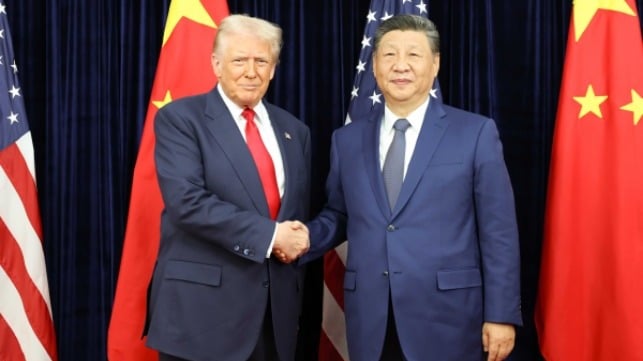
U.S. President Donald Trump and Chinese President Xi Jinping in Busan, October 2025 (Chinese Foreign Ministry press handout)
File: Donald Trump and Xi Jinping in Busan, October 2025 (Chinese Foreign Ministry press handout)

Published Mar 15, 2026 10:39 PM by Erik Bethel


On the morning of March 1, a tanker called the Skylight was moving through the narrow waters north of Khasab, Oman, when a projectile struck its hull. Omani authorities said all 20 crewmembers were evacuated. Later reports confirmed that two had died. By the time news reached trading floors in London and Singapore, the Skylight had already become something larger than itself — a data point in a disruption that analysts were beginning to describe, with the careful hedging of people who deal in understatement, as the worst energy crisis since the 1970s.

The Strait of Hormuz is 21 miles wide at its narrowest point. Generations of planners and strategists have studied it, war-gamed it, written contingency documents about it. Over the years, Iran threatened to close it many times but never did. When the closure finally came, after the United States and Israel launched Operation Epic Fury on February 28, it arrived not through naval blockade or mines or the sophisticated anti-ship missiles that analysts had always imagined. It came from drones — cheap, expendable, deployed selectively near the strait's narrow S-curve until insurers and shipping companies made the rational calculation that the waterway was no longer safe. The physical infrastructure of the global oil trade, it turned out, wasn’t undone by the Iranian navy but by the actuarial mathematics of risk.

Iraq had roughly six days of storage when Hormuz effectively closed. Kuwait had fourteen. The UAE seventeen. Those numbers mattered in ways that were easy to state and difficult to fully absorb: when tankers stop moving, oil has nowhere to go, and fields that cannot store output have only one option. Iraq's largest fields are shutting down now, not because of bombs or sanctions, but because the arithmetic of production without export has only one answer. Brent crude, which traded near $60 before the first strikes, is now trading north of $100. The IRGC has since announced that no vessel will transit the strait and that oil will reach $200. Whether any of this is literally true is, in some sense, beside the point. The market believes enough of it to behave accordingly.

President Donald Trump is scheduled to land in Beijing on March 31 to meet with Xi Jinping. The meeting was conceived in a different moment — a world in which the central frictions between the two countries were tariffs, semiconductors, and TikTok. That world still exists, technically, but it has receded. What has not receded is the fact that roughly forty percent of China's oil imports normally transit the strait that is now closed, and that Beijing — Iran's largest crude customer — has already dispatched a special envoy to Tehran urging a ceasefire. China is not panicking. It spent 2025 building storage, accumulating what analysts estimate as roughly four months of import coverage. It has Russian pipeline gas and domestic coal. But it is also the country with the most direct influence over the party that closed the strait, which makes the coming summit something stranger and more complicated than a trade negotiation.

The country with the most to lose is not in the room. Japan gets roughly 70 percent of its Middle Eastern oil through Hormuz. Its refiners are already asking the government to release emergency stockpiles. There is no adequate bypass, no comparable storage buffer. South Korea sits in nearly the same position. American allies, in other words, are absorbing the sharpest edges of a crisis that an American decision set in motion — a fact that will not be spoken aloud in Beijing but will be present in every exchange.

One detail keeps returning. At its narrowest, the Strait of Hormuz is only 21 miles wide. On a map it hardly seems like a place that could carry so much weight. In an age of satellites, carrier groups, and supply chains that run across entire oceans, 21 miles ought to be manageable. It ought to be ordinary. But the people closest to the water see it differently. The Indian sailors aboard the Skylight. The tanker captains who have quietly turned their ships around and begun the long voyage away from the Gulf. The refinery managers in Osaka who now spend their mornings looking over inventory reports, counting the days of crude still in storage. None of them think of the strait as an abstraction.

For years the strategic documents treated Hormuz as a problem that could always be solved. The waterway was narrow, but it was also heavily watched, heavily studied, heavily protected. Planners wrote contingency plans. Analysts ran simulations. And beneath all of that was a quiet belief that the strait would remain open, because it always had. But openness was never really a policy. It was a habit. And habits are strange things. They grow slowly, through repetition, until they begin to feel permanent. Only when they break do people realize how little was holding them in place. In places where the normal rules stop applying, that lesson arrives quickly. The people who live or work near those places tend to learn it first

Trump arrives in Beijing in eighteen days. Xi will be waiting.

Erik Bethel is a General Partner at Mare Liberum, an investment fund at the intersection of critical technologies and the maritime domain. Previously, he served as US Director of the World Bank.

The opinions expressed herein are the author's and not necessarily those of The Maritime Executive.


With Ferry Strikes, Ukraine Narrows Russia's Options at Kerch Strait

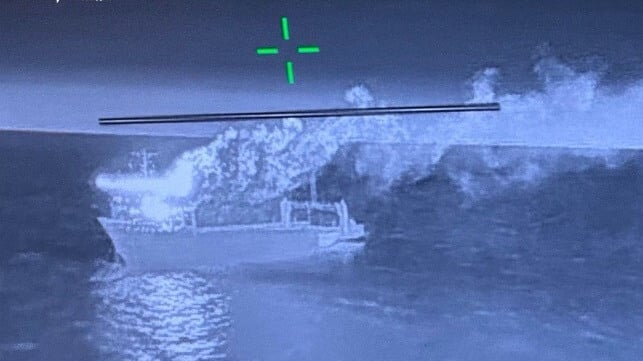
The rail ferry Slavyanin's wheelhouse burns, March 14 (HUR)
The rail ferry Slavyanin's wheelhouse burns after a Ukrainian strike, March 14 (HUR)

Published Mar 15, 2026 9:33 PM by The Maritime Executive


Ukraine has launched attacks on two railway ferries that Russia was using to supplement its rail line from the Russian mainland across the Kerch Strait Bridge to Crimea.

In the attack, the 150-meter ro/ro rail/vehicle carrier Slavyanin (IMO: 8300169) was disabled and the 125-meter Avangard (IMO 9522403) was damaged. Rendering these two vessels unfit for sailing now means that Russian has no rail ferries left in service on the Black Sea.

From imagery released by the Ukrainian military intelligence organization HUR, it appears that both attacks took place at sea. HUR did not reveal what strike method was used.

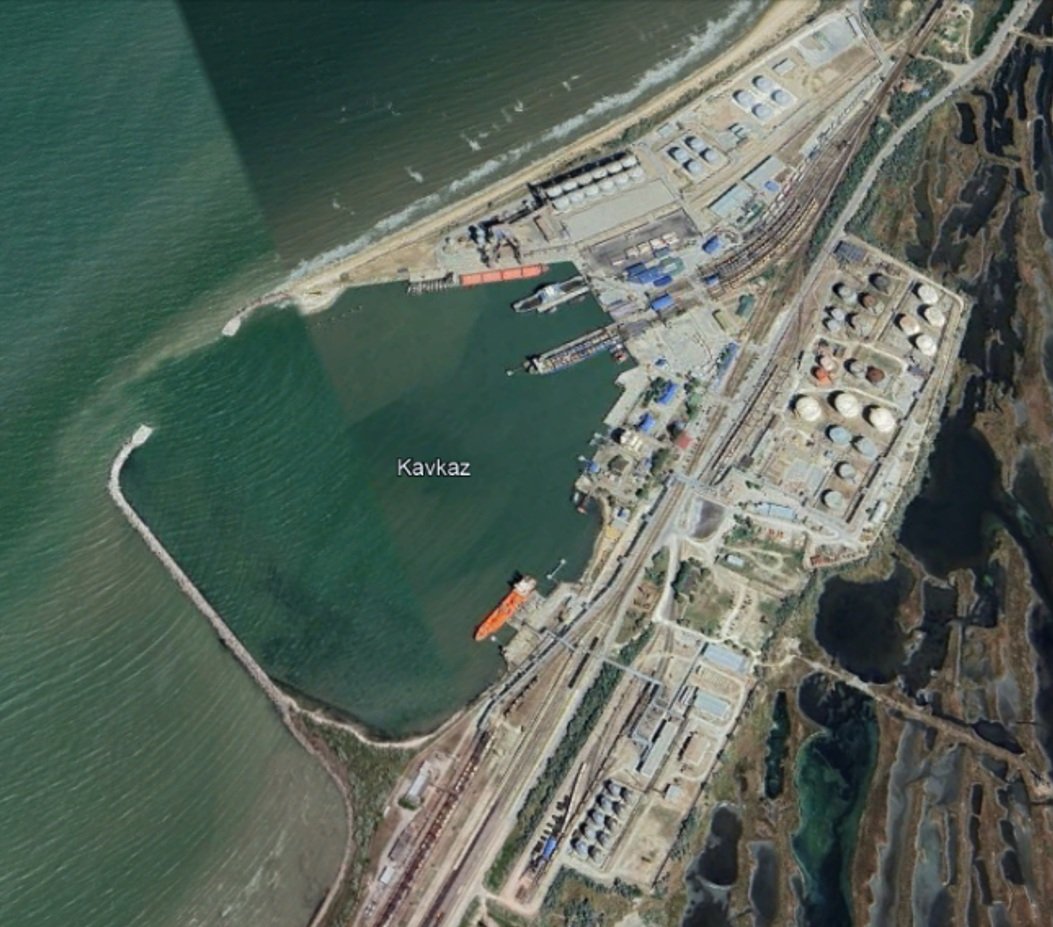
A busy Kavkaz ferry port in 2023, with two rail ferries docked (Google Earth/Landsat/Copernicus)

At the same time as the vessels were hit, the Ukrainians also attacked the port of Kavkaz, the rail and car ferry terminus in Krasnodar on the Russia mainland. Kavkaz has been hit before, as has Avangard: Ukraine struck the ferry at berth using ATACMS rockets in 2024.

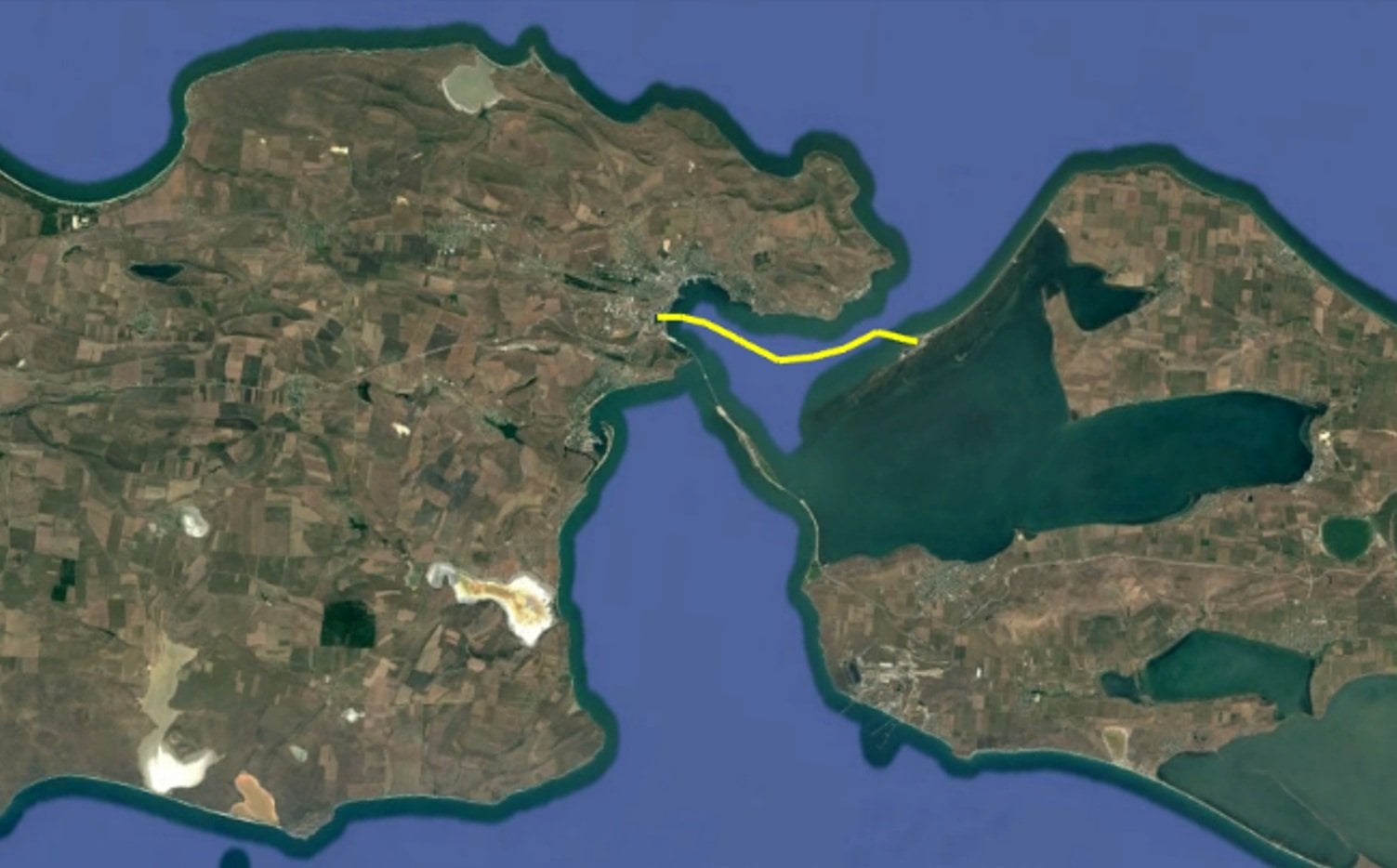
The terminus on the Crimean side is a short nine nm voyage away. When there were sufficient ferries, the port at Kavkaz was also used to serve rail ferries sailing to Samsun in Turkey, thereby avoiding transits through Georgia.

Russia has for some time now sent flammable and explosive rail cargoes across the Kerch Strait using rail ferries. It is unclear whether it has done so in order to reduce the risk of Ukraine targeting the bridge when an explosive or flammable goods train is crossing. Ukraine has pulled off such an attack before, with the subsequent fire of oil wagons causing secondary damage. It is also possible that a previous attack may have weakened the bridge structure so much that oil wagon trains are now too heavy for the calculated load-bearing classification of the railway bridge. In either case, Russia may now have no choice but to make further use of the Kerch Bridge, which is the only available rail route into Crimea from Krasnodar.

The Kerch-Kavkaz ferry route in yellow, to the north of the Kerch Strait Bridge (Google Earth/CJRC)


What makes the situation worse for the Russians is that rail routes to Crimea and the Russian front line in the Kherson region, which have been constructed as a fall-back along the Sea of Azov coastline through Mariupol and Melitopol, are becoming increasingly vulnerable to Ukrainian drone attack. Ukraine has been steadily increasing the depth of its “drone zone,” an area beyond the front line stretching deep into Russian-held territory in which most tactical movement is detected by a constant drone presence overhead and then attacked.

The Ukrainian’s next move is likely to be yet another attack on the Kerch Bridge itself, now that it has become the critical remaining link over which the Crimea can be supported by bulk heavy rail traffic from Russian territory. As an alternative to rail traffic for bulk goods, the Russians are still using coastal vessels to support their forces in Crimea, but these are vulnerable to Ukrainian sea drone attack.


Greek-Operated Tanker Hit by Unknown Assailants Near CPC Terminal

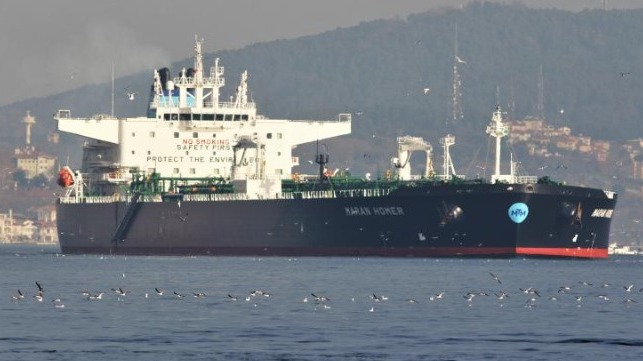
Maran Homer (Cengiz Tokgöz / VesselFinder)
Maran Homer in a calmer era, 2017 (file image courtesy Cengiz Tokgöz / VesselFinder)

Published Mar 15, 2026 5:27 PM by The Maritime Executive


The Greek-owned tanker Maran Homer (IMO 9761372) has been hit by an attack while awaiting loading at the port of Novorossiysk, Russia, according to Greece's shipping ministry. 

Operator Maran Tankers Management reports that Maran Homer was struck by an unknown object at 0435 local time on Saturday. The tanker was located in international waters of the Black Sea and was awaiting instructions to load Kazakh-origin oil at the Caspian Pipeline Consortium (CPC) single-point mooring terminal. 

The tanker sustained only minor damage to the deck and deck equipment, the company said. The vessel was in ballast at the time of the strike, and there were no signs of pollution. Following the attack, the ship departed the scene and got under way.

Ukraine has not claimed responsibility for the strike. 

The Maran Homer's specific destination is of consequence, as there are two terminals at Novorossiysk: the Sheskharis terminal in the inner harbor, which exclusively loads Russian oil and has been repeatedly attacked by Ukrainian forces; and the CPC terminal in deep water outside the harbor, which loads mostly Kazakh oil piped overland through Russia.

Ukraine has attacked the CPC pipeline, loading terminal and associated tanker traffic in the past. These actions have attracted pushback from the U.S. government, which views the CPC as essential to American interests in the region. Chevron and ExxonMobil hold minority ownership stakes in the CPC pipeline and terminal, and taken together, the two American companies own 75 percent of Kazakhstan's Tengiz field, the prolific field that feeds the pipeline. The CPC loading terminal is a key bottleneck for Tengiz, as Kazakhstan has few other export routes to get its oil to global markets. Warnings of potential Ukrainian strikes on the loading terminal (among other factors) have delayed the ramp-up of Tengiz to full rated capacity, according to Reuters. 

The CPC pipeline's largest shareholder is Russian midstream company Transneft, which earns transit revenue for the barrels that pass through the system. Ukraine views Russian energy assets - Transneft included - as top-priority targets, as petroleum revenue is essential to covering the cost of Russia's ongoing invasion. 

Top image: Maran Homer in a calmer era, 2017 (file image courtesy Cengiz Tokgöz / VesselFinder)

The sinking of IRIS Dena: A quiet death of the rules-based order


The sinking of IRIS Dena — unarmed, post-exercise, in a neutral state’s waters — exposed a doctrine of impunity, and the quiet death of the rules-based order.

Published March 10, 2026
DAWN

At 05:08 local time, in international waters 40 nautical miles south of Galle, Sri Lanka, a Mark 48 heavyweight torpedo — one of two fired, with the first missing its mark — struck the IRIS Dena beneath her keel. She was returning from India’s MILAN 2026 multinational naval exercise at Visakhapatnam as an officially invited guest, and was unarmed in accordance with the exercise’s return-voyage protocol.

She had 180 crew members aboard. At least 87 are now confirmed dead, another 32 were rescued and about 60 people were likely unaccounted for, Sri Lankan ​authorities said. The vessel was approximately 1,700 nautical miles from Iran’s nearest coastline and over 1,350 nautical miles from the nearest active theatre of Operation Epic Fury.

The submarine that sank her — identified by CBS News, citing multiple officials, as USS Charlotte, a Los Angeles-class attack submarine — left the area without conducting search and rescue operations. The Sri Lankan Navy recovered survivors and bodies from the water alone.
A quiet death

Pete Hegseth called it a “quiet death.” He was describing a torpedo strike. Without realising it, he was also eulogising something larger — the rules-based international order that the United States and its partners spent 80 years constructing and now appear, with evident satisfaction, to be dismantling.

What “quiet death” reveals is not a military assessment but a doctrine: we can do this, anywhere, to anyone, and frame it as dominance rather than law.

Across independent polls conducted after the strikes on Iran, roughly 60 per cent of Americans opposed the campaign. Support was concentrated almost entirely among self-identified MAGA Republicans, whose fragile enthusiasm Donald Trump acknowledged by invoking the “silent majority.”

This operation was not calibrated for America. It was not calibrated for the world. It was calibrated for a base. And when a Secretary of Defence crafts press-conference language as a loyalty signal rather than a legal or strategic communication to the international community, something has gone quietly wrong with the function of government itself.
One doctrine, three expressions

The pattern did not begin with IRIS Dena. On Thursday, February 26 — two days before the bombs fell — Iranian and American negotiators concluded what Iran’s foreign minister, Abbas Araghchi, described as the most intense round of talks yet, and agreed to reconvene in Vienna the following week. Both sides said progress had been made.

The bombs fell on Saturday.

Ayatollah Ali Khamenei — 86 years old, the spiritual authority of 85 million people — was announced dead by nightfall. Omani Foreign Minister Sayyid Badr bin Hamad Albusaid, who had brokered months of diplomatic architecture, said he was dismayed that “active and serious negotiations” had been destroyed. The Member of International Atomic Energy Agency’s (IAEA) director-general had stated publicly, and on the record, that the agency had found no proof of an active Iranian nuclear weapons programme — a position consistent with US intelligence assessments.

Iran was negotiating. Then it was bombed.


Hours later, that same Saturday, a missile struck the Shajareh Tayyebeh girls’ elementary school in Minab, in Hormozgan province. Between 165 and 180 people were killed — the majority girls aged seven to twelve, sitting in class on a Saturday morning. Planet Labs satellite imagery, analysed by three independent experts, including Professor Jeffrey Lewis of the Middlebury Institute, showed precision detonation centroids consistent with a US strike, given the geographic location and munition type.

The school had been separated from an adjacent Islamic Revolutionary Guard Corps (IRGC) base by a wall built between 2013 and 2016. Al Jazeera’s independent investigation concluded that only two explanations are consistent with the evidence: either the coalition relied on a targeting database more than a decade out of date — constituting grave negligence and reckless disregard for civilian life — or the strike was deliberate, intended to inflict maximum societal shock.

UNESCO condemned it. The UN Secretary-General condemned it. The Pentagon did not respond to requests for comment.

Five days later: IRIS Dena.

Khamenei killed during diplomacy. Schoolgirls killed in their classroom. Sailors killed on an unarmed transit. These are not three separate incidents. They are three expressions of the same doctrine — that when rules become inconvenient, they are set aside, and the press conference follows.

The law that died with the Dena


The San Remo Manual on the laws of naval warfare — the same framework the United States cited for four decades against Iranian conduct in the Persian Gulf — requires neutral state notification, precaution before attack, and verified military necessity. Sri Lanka received no warning. The IRIS Dena reportedly carried no ordnance. No alternative to sinking her was attempted or explained.

When the USS Charlotte fired and departed without conducting search and rescue operations, it added a second violation to the first: the Second Geneva Convention requires parties to a maritime engagement to search for and collect the wounded, sick, and shipwrecked. The Sri Lanka Navy, which bore no responsibility for the engagement, carried out those operations alone. The US did not attempt to argue that the conditions for lawful conduct had been met. It did not need to. Impunity does not require justification. It simply acts, and then describes what it has done as winning.

That is the tell. For 80 years, the rules-based order rested on a claim: that powerful states had accepted constraints on their behaviour and would enforce those same constraints on others. What the past 10 days suggest is that the claim was always conditional. When the most powerful actor in the system decides those constraints no longer apply to itself, there is no enforcement mechanism, no appeal, no remedy. There is only the press conference.
Theatre vs discipline

A nuclear-powered attack submarine hunting a frigate in the Indian Ocean and firing two Cold War-era torpedoes — one missing, one killing — at an unarmed vessel on a transit passage is not military efficiency. It is theatre: a display of capability masquerading as necessity, calibrated for the same domestic audience as Hegseth’s press conference and perfectly aligned with the instincts of an administration that consistently mistakes spectacle for strategy.

The contrast with Iran’s own conduct is instructive, and ought to disturb those who assume the United States holds every strategic advantage. Iran has absorbed the killing of its Supreme Leader, the destruction of its nuclear facilities, and the decimation of its navy. Its military responses have been a disciplined integration of precision and volume that has confounded Western expectations.

Where the United States reached for expensive legacy platforms, Iran deployed a calibrated mix of ballistic missiles and cheap drones that achieved what no formal naval blockade managed in 40 years: the effective closure of the Strait of Hormuz.


The Joint Maritime Information Centre now assesses it as a critical-risk environment. Maersk, Hapag-Lloyd, CMA CGM, and MSC have all suspended passage. Traffic is down by more than 80pc. Helima Croft of RBC Capital Markets described it as “about as wrong as things could go at any single point of failure” in global energy markets. Iran closed the world’s most critical energy chokepoint with cheap drones. Its adversary responded with a $1.5 million torpedo fired at an unarmed vessel 1,700 nautical miles from the conflict zone.

The asymmetry is not merely financial. Each Iranian response has been calculated to impose cost without unnecessarily triggering the next threshold — a doctrine of economy and discipline from a state that has studied asymmetric warfare for four decades. When a vastly superior force responds to that kind of disciplined resistance by escalating theatrically rather than strategically, it is not winning. It is revealing that it does not know how to win.

And at the end of that logic sits the USS Gerald R. Ford, repositioned progressively forward in the Eastern Mediterranean and into range of Iran’s longer-reach ballistic arsenal. Whether that forward positioning reflects thinning interceptor stocks or a calculated attempt to bait Iran into providing a casus belli that would rewrite the rules of this conflict entirely, the result is the same: a nuclear-armed superpower manoeuvring its most visible asset into an adversary’s kill envelope. That is not escalation control. That is escalation gambling.

The cost to partners

On Friday morning, Prime Minister Anthony Albanese confirmed what his foreign minister had declined to say two days earlier: three Royal Australian Navy personnel were aboard USS Charlotte when it fired. “We wouldn’t normally confirm such an issue,” Albanese told Sky News, “but given our National Security Committee meetings and the public interest, I can confirm that there were three Australian personnel on board that vessel.” He added, in the same breath, that “no Australian personnel have participated in any offensive action against Iran.”

That distinction collapsed within hours. Professor Don Rothwell of the Australian National University, one of the country’s foremost international law experts, stated plainly that Australians under the command of an American submarine captain would have had very little choice but to be involved. “Literally every person on board a submarine is engaged in active duty,” Rothwell said, “unlike, say, the vast numbers of persons who would be on board an aircraft carrier.”

A submarine has no bystanders. The question of whether Australian personnel participated in offensive action is not one the prime minister can answer with a prepared statement. It is a question of operational reality that the laws of armed conflict, not Canberra’s communications team, will ultimately determine.


Senator Shoebridge, who drew this thread in parliament, put it with characteristic precision: every future US war, under the current AUKUS (a trilateral security partnership between Australia, the UK, and the US) architecture, will have Australia dragged into it “without ever a decision being made by the Australian cabinet.” The Albanese government spent two days stonewalling. When it finally confirmed, it confirmed more than it intended.

India’s position is more exposed, and more silent. On February 25, Prime Minister Narendra Modi stood in the Israeli Knesset — the first Indian leader ever to do so — and declared India’s solidarity with Israel “firmly, with full conviction.” Two days later, Operation Epic Fury began. Eight days later, a vessel India had officially invited to its exercise was sunk in India’s strategic maritime neighbourhood by India’s partner, without any consultation with New Delhi.

India’s senior strategic analyst Brahma Chellaney raised a question that has since become the sharpest edge of New Delhi’s discomfort: under the Communication Compatibility and Security Agreement (Comcasa) and Logistics Exchange Memorandum of Agreement (LEMOA), India and the United States share sensitive maritime data.

If USS Charlotte used that shared data to locate IRIS Dena — a vessel that had just departed an Indian port after an Indian-hosted exercise — it would represent, in Professor Brahma Chellaney’s words, “a foundational breach of the defence partnership.” The Indian government denied it categorically, calling the suggestion “preposterous.” But the mere existence of the question — raised not by Iran but by India’s own strategic community — is itself an indictment. “In one torpedo strike,” Chellaney wrote, “American hard power has punctured India’s carefully cultivated soft power.”


The Information Fusion Centre – Indian Ocean Region almost certainly tracked IRIS Dena throughout her transit. India knew where she was. India watched. India said nothing. Former Naval Chief Admiral Arun Prakash called the sinking “senseless and inflammatory.” Former Foreign Secretary Kanwal Sibal said the US had “ignored India’s sensitivities, as the ship was in these waters because of India’s invitation.” Not a serving minister has spoken. That silence is the loudest statement in the Indian Ocean.
Whose quiet death

India’s International Fleet Review (IFR) 2026 drew warships from 74 nations. Every one of their navies must now ask whether participation in an Indian-hosted exercise could expose them to US submarine operations if their flag state happens to be at war with Washington. The answer, established by precedent on March 4, 2026, is: possibly, depending on whether Washington decides you are worth stopping. Chellaney noted it clearly: “The message to participating navies is stark: attending India’s exercises may not guarantee safety once they sail away.”

This is not a rules-based order. It is a power order: unilateral, unaccountable, and now openly acknowledged as such by the people running it. The Second Geneva Convention, the San Remo Manual, the UN Charter, and the diplomatic conventions that protect negotiations in progress all applied, clearly, to the events of the past 10 days. None of them were observed. None of them were argued against. They were simply set aside — and a press conference was held.

Pete Hegseth called it a “quiet death.”

He was right. He just didn’t say whose.


Header image: A Sri Lanka Navy vessel approaches an Iranian vessel during a rescue operation, a day after the crew of a distressed Iranian military ship, IRIS Dena were assisted in waters south of Sri Lanka, off the coast of Colombo, Sri Lanka March 5, 2026. Sri Lanka Navy/Handout via Reuters/File Photo

The author is a Melbourne-based combat veteran and former Pakistan Army officer with a background in psychology.
ENVIRONMENT: WATER’S DIRE RECKONING

Sheheryar Khan 
Published March 15, 2026 
DAWN


A view of Baglihar Dam, also known as Baglihar Hydroelectric Power Project, on the Chenab river, which flows from Indian-occupied Kashmir into Pakistan, at Chanderkote in Jammu region on May 6, 2025: around 95 percent of Pakistan’s total renewable water originates from the Indus Basin, making the national water economy uniquely vulnerable to both hydrological stress and political contestation | Reuters

A mid the ongoing turmoil in global politics that continues to dominate headlines, a recent report by the United Nations University Institute for Water, Environment and Health (UNU-INWEH) has largely escaped notice.

The findings and implications of this report, however, are profound. It argues that, globally, we have now entered what it describes as an “era of water bankruptcy”, a formulation intended to capture the structural nature of the crisis now unfolding. This deliberate shift in language is itself significant.

For decades, discussions around water scarcity have largely been framed through the vocabulary of crisis — a condition of mounting stress on rivers, aquifers and reservoirs as demand rises and supply grows more erratic and unreliable. Bankruptcy, however, suggests something qualitatively different, a condition in which withdrawals outpace the natural processes that replenish them, and where the imbalance is no longer episodic but built into the way economies and societies consume water.

The report develops this argument through a financial analogy that helps clarify the nature of the problem. Water systems, it suggests, function analogously to economic accounts. Some water resources behave like annual income, such as rainfall, river discharge and seasonal recharge that renew themselves within relatively short cycles. Others resemble long-term capital, such as groundwater aquifers, glaciers, wetlands and soil moisture, that accumulate slowly over geological timescales.

The world isn’t just running short of water. According to a new UN report, it is going bankrupt. For Pakistan, dependent on a single river basin and a rapidly expanding network of unregulated tubewells, the implications are dire…

This use of financial language is deliberate. Much like the Stern Review (2006) reframed climate change as a problem of economic risk rather than a purely environmental or future-oriented concern, the concept of water bankruptcy attempts to translate ecological depletion into terms that policymakers and economic planners can no longer ignore.

LIVING OFF CAPITAL

Under stable conditions, societies draw primarily on renewable flows. Yet the report argues that this balance has shifted in many parts of the world. Growing urban populations, expanding agricultural demand, rising energy consumption and inadequate wastewater management have collectively increased pressure on water systems, leading countries to rely increasingly on reserves that were never meant to sustain continuous extraction.

The danger lies not only in depletion but in the timescales involved. When aquifers are overdrawn or glaciers retreat, replenishment — if it occurs at all — plays out across timescales far beyond a human lifetime. In economic terms, the report suggests, societies are no longer living off annual income but are gradually liquidating natural capital. It is this sustained drawdown of ecological reserves rather than temporary scarcity alone that the authors of the report describe as water bankruptcy.

What makes this pattern particularly destabilising is that it often unfolds gradually and remains partially concealed within existing infrastructure systems. Deep tubewells enable continued extraction even as groundwater tables fall, reservoirs and dams smooth seasonal variability, and inter-basin transfers redistribute supply across regions. Yet these mechanisms do not generate new water. They merely delay the point at which depletion becomes visible, allowing extraction to continue even as reserves quietly diminish.

The report’s central warning is, therefore, not simply that water scarcity is intensifying, but that many water systems are operating in a state of structural overdraft. Without governance systems capable of measuring withdrawals accurately and aligning them with ecological recharge, societies risk locking themselves into patterns of water use that steadily erode the very reserves on which future stability depends.

PAKISTAN: A CASE STUDY

If the language of water bankruptcy appears to be abstract (it certainly did so to me), its implications become clearer when viewed through the experience of countries where water systems are already under severe strain, and Pakistan offers one of the more instructive examples.

Concerns about the country’s water future have been expressed through the familiar vocabulary of scarcity, such as falling per capita availability, recurring drought warnings, or the spectre of inter-provincial disputes over river flows.

According to a World Bank study, the total renewable freshwater available per person in Pakistan is currently estimated at around 1,100 cubic metres per year, but is projected to decline to 900 cubic metres by 2050 due to population growth alone, which would push the country well below the international threshold for water scarcity.

Yet the framework proposed in the report suggests that the challenge confronting Pakistan may be better understood not merely as scarcity, but as the cumulative outcome of a development model that has steadily expanded water extraction without corresponding attention to ecological limits.

At the centre of this model lies an agricultural system that remains heavily dependent on irrigation. A handful of crops — wheat, cotton and sugarcane — account for approximately 80 percent of irrigation water use, underscoring how concentrated water demand has become within the agricultural sector.

Despite possessing one of the largest contiguous irrigation networks in the world, which supports agricultural productivity, the system has also encouraged patterns of water use premised on the assumption of a reliable and abundant supply that is no longer guaranteed.

This vulnerability is compounded by dependency on a single source: around 95 percent of Pakistan’s total renewable water originates from the Indus Basin, making the national water economy uniquely vulnerable to both hydrological stress and political contestation. Over time, as the demand for food, energy and urban expansion has grown, groundwater has increasingly become the buffer that sustains this system.

Nowhere is this more evident than in Punjab, which accounts for nearly 75 percent of the country’s cropped area and where the number of agricultural tubewells has risen from around 330,000 in 1994 to over 1.2 million by 2024.

In the short term, this flexibility has helped maintain agricultural output and urban growth. In the longer term, however, it has also encouraged a pattern of water use that resembles the dynamics described in the water bankruptcy report — specifically a growing reliance on reserves that replenish far more slowly than they are being depleted. Aquifers that accumulated over centuries are now being drawn down to sustain present demand, even as pressure from population growth and climate variability continues to intensify.

A GOVERNANCE GAP

This also reflects a set of governance arrangements that have struggled to keep pace with the scale and complexity of Pakistan’s water use.

Water management in the country remains fragmented across multiple institutional levels, with responsibilities divided between federal agencies, provincial departments and a range of specialised authorities, whose mandates often overlap but rarely converge in practice. While this institutional architecture has evolved over decades, it has rarely been accompanied by the regulatory mechanisms needed to monitor and manage extraction effectively.

Groundwater provides perhaps the clearest example of this governance gap. Despite its growing importance to both agriculture and urban supply, groundwater extraction in much of the country remains largely unregulated. Private tubewells have transformed groundwater into an informal but indispensable component of the national water economy, allowing farmers to stabilise crop production and cities to supplement unreliable surface supply.

The challenge, therefore, is not simply one of declining availability but of institutional capacity. Without reliable systems for measuring withdrawals, setting enforceable limits and aligning water use with ecological recharge, the gradual drawdown of reserves can continue largely unnoticed until the point at which reversal is no longer possible.g

The writer focuses on environmental issues and is currently associated with WWF-Pakistan. He can be reached at sheheryarkhan95@gmail.com

Published in Dawn, EOS, March 15th, 2026


Bengal: Water in Dam, Hunger in Fields; Kangsabati Boro Farmers in Limbo


Madhu Sudan Chatterjee 


Despite the Kangsabati Reservoir being filled to its capacity, farmers across Jangalmahal have been denied irrigation water for Boro paddy cultivation for the past 13 years.


The Kangsabati Reservoir in Mukutmanipu brimming with water.

Despite adequate water in the Kangsabati Reservoir this year, farmers in the districts of Bankura, Jhargram, Paschim Medinipur and Hooghly have not received irrigation water for Boro Paddy cultivation. The Kangsabati irrigation department of Bengal has issued an official notice clearly stating that water will not be supplied for Boro farming this season.  The department has stated that irrigation water cannot be supplied for Boro cultivation due to shortage of water in the reservoir. However, the ground reality appears to be different.

According to local observers, the Kangsabati Reservoir currently holds sufficient water that could support irrigation for Boro farming. But, thousands of bighas of agricultural land remain uncultivated during the current Boro season. Farmers and agricultural labourers are left without work and are facing serious economic hardship.

Boro cultivation, which could have resulted in significant paddy production and contributed to the economic growth of the region, has been halted for several years during the tenure of the Trinamool Congress (TMC) rule in West Bengal.

From a distance, the Kangsabati Reservoir appears to be a picture of planning and perseverance. Spread across Mukutmanipur — around 230 kilometres west of Kolkata city — it stands between the Ranibandh and Khatra blocks of Bankura district, encircled by ancient hills and dense forests.

Asia’s largest earthen dam, the reservoir’s deep blue waters and pristine surroundings have turned the region into one of Bengal’s most popular tourist destinations.

But beneath this picture postcard beauty lies a history of displacement and sacrifice. Nearly seven decades ago, the residents of Bankura and Purulia surrendered their homes and farmlands to make way for the irrigation project, trusting the government’s promise that water from the dam would transform their dry lands and secure their future.

Construction of the reservoir began in 1957 at the confluence of the Kansai and Kumari rivers flowing from Purulia. The Planning Commission approved ₹25.26 crore for the project, and 372 mouzas across Bankura and Purulia districts were brought under what came to be known as the Mukutmanipur project, later renamed the Kangsabati irrigation scheme.

“Thousands of villages lost their land. Most villages in the areas under the reservoir have been lost to history,” recalled Sahadeb Mahato, 75, of Mallikdangavillage in Ranibandh block.

He pointed out that while the Puddi gram panchayat exists today, there is no Puddi village anymore. Villages such as Basantopur, Dhatkidihi, Gholkuri, Bonpukuria, Serenggarh, Gonsaidihi, Bhalukchera, and Brikromdihi met a similar fate.

“When the dam construction began, people supported it because they wanted irrigation for dry lands,” said Gour Tantubai (87), a resident of Lodda village of Ranibandh. He added: “People in Bankura and Purulia stood behind the project. At the same time, we launched a movement demanding rehabilitation and financial compensation for displaced families.”

Decades later, the promise that sustained the farmers’ sacrifice appears broken.

Despite the Kangsabati Reservoir being filled to its capacity, farmers across Bengal’s Jangalmahal have been denied irrigation water for Boro cultivation for the past 13 years. Since 2012, no water has been released for winter paddy, even though the same reservoir continues to draw tourists and admiration. Farmers allege that this prolonged denial has nothing to do with scarcity, but with the state irrigation department’s sustained indifference.

Devastating Consequences

Seventy-year-old Gurupada Mahato now spends his days grazing cattle across the fields that once bloomed with crops. After harvesting Aman paddy, his land now lies unused. Just a few years ago, the same soil supported Boro paddy, sustained by irrigation from the Kangsabati Reservoir. Today, acre after acre of fertile land has turned barren, turning cultivators and agricultural labourers into a jobless workforce.

Others share the same fate. Elderly farmers, such as Gurupada Mahato, Srikanto Bauri, and Pratima Mahato, have been pushed out of cultivation entirely and now survive by tending cattle. Younger members of the farming families are forced to work in local brick kilns or migrate to other states as labourers to escape starvation.

Across Jangalmahal and Hooghly districts, agricultural fields lie abandoned — the silent markers of a dying agrarian heritage, waiting for water that has not arrived since 2012.

To understand the scale of the crisis within the Kangsabati command area, this reporter visited several affected regions across Bankura, Jhargram, Paschim Medinipur, and Hooghly districts. Farmers and land labourers were found living in a state of deep despair, uncertain of their future and increasingly disconnected from farming.

Whatever hope remained was recently crushed when the Kangsabati Irrigation Department issued an official circular clearly stating that water would not be supplied for Boro cultivation this season as well. The announcement left farmers helpless. With the government itself closing off their primary source of livelihood, a single question echoes across these villages: what are they supposed to do—and how long can they survive?

Across villages within the Kangsabati command area, farmers repeatedly voiced a common grievance: irrigation water for Boro cultivation stopped reaching them after the TMC came to power in West Bengal in 2011. Yet, despite receiving no water for winter paddy for over a decade, they continue to pay irrigation water tax every year.

Following the pattern of the past 13 years, a leaflet was recently circulated across the Kangsabati irrigation area, bearing the signatures of two superintendent engineers of the Kangsabati Irrigation Division—Shibjyoti Raja of the Bankura division and Amit Dutta of the Paschim Medinipur division. The leaflet stated that irrigation water would not be supplied for Boro cultivation due to allegedly low water levels in the reservoir.


Kangsabati irrigation department notice on not providing irrigation water during the Boro season due to "shortage of water" in the reservoir.


Farmers Contest Govt Claim

“Despite experiencing one of the heaviest monsoon rainfalls in recent years, farmers in the Kangsabati command area are now facing an acute shortage of irrigation water,” said Madhu Sudan Mahato, a farmer from Sindurpur village in Ranibandh block of Bankura district. He pointed out that continuous rainfall for nearly three months during the last monsoon season had filled the Kangsabati dam to capacity.

“A significant portion of this water was reportedly released into the river without proper planning,” he alleged, adding that this practice has been repeated annually by the irrigation authorities for the past 13 years. As a result, even when the reservoir holds a substantial volume of water, farmers are denied water for Boro paddy cultivation.

Farmers across the region said that, like previous years, Boro paddy has not been cultivated this year either. They cited the prior announcement that irrigation water would not be released from the Kangsabati Reservoir. “On what assurance will farmers cultivate crops?” they asked, pointing out that without guaranteed water supply, investing in seeds, fertilisers, and labour is impossible.

Standing in his Bonsol field, an elderly farmer, Gurupada Mahato, said that the monsoon paddy had already been harvested and there was currently no crop on the land. “We are grazing our cattle in the fields. We have no other option,” he said, adding that the authorities have clearly stated that irrigation water from Kangsabati will not be provided.

A similar scene played out in nearby Barkola village, close to the Kangsabati Reservoir. Farmer Pabitra Bauri was seen grazing cattle on his agricultural land. Expressing his helplessness, he asked, “How can we cultivate if water is not supplied?”


Farmers of Barkura village -- Pabitro Bauri, Srikanto Bauri, Susanto Bauri and Behula Bauri -- grazing cattle in their agricultural fields, unable to do Boro cultivation.

Another farmer, Behula Bauri, said agriculture in the region had now become entirely dependent on monsoon rainfall. “This year, due to sufficient rainfall, we were able to cultivate Aman paddy,” she said, underscoring how winter cultivation has effectively vanished from the cropping cycle.

How the Irrigation System Was Meant to Work

The Kangsabati irrigation scheme was constructed by diverting water from the Kansai and Kumari rivers flowing from Purulia. Designed as an earthen gravity dam with a concrete saddle spillway, the structure’s embankments are formed by layers of compacted mud arranged in a pyramid-like shape and reinforced with boulders for protection. This unique design has earned it the distinction of being Asia’s largest earthen dam.

The project created an irrigation potential of 3,48,477 hectares across Bankura, Paschim Medinipur, Jhargram, and Hooghly districts. While the original objective was to supply irrigation water during the kharif season, the scope of the project expanded significantly during the Left Front regime (1977–2011).

“The Left Front government’s land reform programme provided land patta, or title deeds, to landless people. Around the same time, high-yielding seed varieties entered the market, leading to large-scale cultivation across these districts,” said Sheikh Israyel, a retired officer of the Kangsabati Irrigation Department. “As a result, Kangsabati irrigation became essential for farmers,” he added.

Israyel noted that before 1977, there was little demand for irrigation water beyond the kharif season. After 1977, canals were renovated and extended, allowing irrigation for Rabi and Boro crops in addition to monsoon cultivation.

Tarubala Biswas and Pulin Bihari Baske, former chief of the Bankura and Paschim Medinipur Zilla Parishad, told this writer that earlier, irrigation planning involved collective decision-making. “To provide water for Boro cultivation, the superintending engineers of four districts, elected representatives of the Zilla Parishad, and government officials would sit together to assess how long the water would last,” he said. Leaflets were then distributed across the Kangsabati command area to inform farmers. “That process no longer exists,” they added.

State Govt Refusing to Answer Questions

A little distance from the abandoned paddy fields, farmers Srikanta Bauri and Sushanta Bauri pointed to their mustard crop drying under sun. “Despite having such a large reservoir nearby, we are not getting water,” they alleged, standing on land that should have been irrigated. Their experience reflects a broader pattern unfolding across the Kangsabati command area.


Susanta Bauri’s mustard field.

According to data available with the Irrigation Department, the Kangsabati Reservoir was designed to irrigate 12,53,756 acres of agricultural land spread across 24 blocks in Bankura, Jhargram, Paschim Medinipur, and Hooghly districts. In practice, however, irrigation over this vast area has failed to materialise for Boro cultivation.

Local residents argue that had irrigation-supported Boro paddy been cultivated across even a portion of this command area, rice production would have increased substantially. Agricultural labourers would have found employment, while farmers and rural households would have achieved greater economic stability.

“A strong cycle of local economic activity would have developed around agriculture,” said Madhu Sudan Mahato, adding that “In that situation, youths would not have been forced to migrate outside the state in search of work as migrant labourers.”

Yet the central question remains unresolved: is there truly a shortage of water in the Kangsabati Reservoir to justify the continued suspension of Boro irrigation?

Ground-Level Observations Tell a Different Story

During a visit to the Kangsabati Reservoir, it was found to be holding a substantial volume of water. An assistant engineer of the Kangsabati Irrigation Department, who spoke on condition of anonymity, explained that the reservoir had a maximum storage capacity of 40 feet. “If the water level remains up to 25 feet, irrigation water can be released for both Boro and Rabi crops,” he said, adding that the current water level has not fallen below that threshold. He also confirmed that water had already been released for Rabi cultivation, although Rabi farming—primarily winter vegetables—was practiced only on a limited scale in the region.

Sources within the department further revealed long-standing structural issues within the irrigation system. The Kangsabati canals, they said, had not undergone proper renovation for several years. While silt is removed annually in the name of maintenance, it is allegedly dumped along canal banks rather than cleared. During the monsoon, this silt washes back into the canals, leading to repeated accumulation and reducing their carrying capacity.

The sources also alleged that canal maintenance had been carried out for years by a small group of selected contractors, resulting in ineffective and unsustainable renovation work. Over time, large stretches of the canals have become shallow and clogged, severely affecting water flow.

Additional concerns were raised about reservoir management during the monsoon. According to local accounts, water stored in the reservoir is often released into the Kangsabati River before it reaches danger levels. Such releases serve little purpose for farmers, as the water cannot be utilised for irrigation at that time.

Compounding these issues is the critical shortage of manpower. No new staff have reportedly been recruited at the Kangsabati project over the past 14 years. Departmental sources said the irrigation department was currently operating with nearly 30% fewer personnel than required, significantly undermining monitoring and maintenance. Several staff members acknowledged that the lack of manpower had directly affected effective supervision of irrigation infrastructure.

When contacted regarding the non-availability of irrigation water for Boro cultivation, Somnath Ghose, executive engineer of the Bankura Division of the Kangsabati Irrigation Department, offered a brief response. “It has already been communicated through leaflets that water cannot be supplied for Boro cultivation due to lack of sufficient water in the reservoir. Beyond this, I have nothing more to say,” he said.

The statement has drawn sharp reactions from local residents. They argue that the reservoir was originally built to provide irrigation water to farmers, noting that even 15 years ago, water was regularly supplied for cultivation from the same project. “Why are farmers being deprived now?” they asked.

Residents also pointed to the government’s continued investment of crores of rupees in developing the Mukutmanipur tourism project around the reservoir. “Is this reservoir meant only for the entertainment of visitors from outside, while farmers are left to dry up?” they questioned angrily. “Are farmers and agricultural labourers expected to perish while the reservoir is used for tourism?”, they ask.

The writer covers the Jangalmahal region for ‘Ganashakti’ newspaper in West Bengal.

(All photographs by Madhu Sudan Chatterjee)