World Nuclear News
Indian parliamentarians stress urgency for uranium projects

The Committee on Public Undertakings' comments came in a report covering the progress of India's planned nuclear energy expansion.
It included the recommendations from an earlier report and the responses received from Nuclear Power Corporation of India Ltd (NPCIL) and the Department of Atomic Energy (DAE). The report notes DAE's assurance that by 2036 "Uranium Corporation of India Ltd (UCIL), Jaduguda plans to double the production by enhancing the existing mine capacity as well as setting up uranium mining projects in Jharkhand, Rajasthan and Chhattisgarh".
The committee welcomes the "concrete project roadmap" provided but says "nevertheless, the Committee notes that the timeline for full realisation stretches to 2036, whereas NPCIL's massive capacity additions are front-loaded over the next decade. Any delay in the commissioning of these mining clusters will prolong the strategic sensitivity of relying on imported fuel lines".
Both NPCIL and DAE said they noted the committee's earlier observation "that the Nuclear Fuel Complex (NFC) ensures complete domestic fabrication of fuel assemblies for PHWRs using uranium concentrate supplied by UCIL or imports arranged under Government oversight. The Committee observes that DAE has pursued long-term supply agreements with multiple international partners to ensure continuous fuel availability for safeguarded reactors. Also, as per NPCIL's capacity expansion trajectory, PHWRs alone could require approximately 5,400 tonnes U3O8 per annum for about 25 GWe, while UCIL currently estimates catering to about 30% of this need, implicating persistent import reliance unless domestic production accelerates and diversified supply lines are established".
The committee also welcomed as a "constructive and encouraging step" proposals for a joint venture between UCIL and NTPC to acquire stakes in overseas uranium assets which could stabilise "long-term fuel costs and support the domestic nuclear fleet against market fluctuations and uncertainties".
They also say they are looking forward to receiving updates on a potential long-term supply contract with Uzbekistan post-2026, and the establishment of strategic stockpiles "calibrated to reactor refuelling cycles" which remain "a vital measure to ensure continuous operations".
"The Committee note that NPCIL continues to rely significantly on imported uranium, posing a strategic sensitivity with regard to stable fuel supply. The future expansion of the nuclear fleet is also closely linked with Uranium Corporation of India’s ability to increase domestic uranium production, an element that remains beyond NPCIL's immediate purview.”
Imports presently originate from Kazakhstan, Russia, Uzbekistan and Canada, with an Uzbek long-term contract valid up to 2026. Last month India and Australia signed the administrative arrangement to enable uranium exports to India for peaceful purposes under the nuclear cooperation agreement signed between the two countries more than a decade ago.
India, which currently has about 7,900 MW capacity from 24 operable nuclear power plants, is planning a large expansion of its nuclear capacity. The country says that seventeen nuclear power reactors with a total of 13,100 MW capacity are either under construction (7) or under pre-project activities (10). The ambition is for India to reach a nuclear energy capacity of about 100 GW by 2047.
In other parts of the report, the committee stresses the need for regulatory and legislative moves to help facilitate the uranium projects. And it encourages NPCIL to develop its international market presence and global competitiveness, saying: "The Committee recommend that NPCIL adopt a focused and time bound internationalisation strategy, by accelerating the development and commercialisation of indigenous Light Water Reactors (LWRs) and modular reactor technologies aligned with prevailing global market demand. The Committee further recommend that NPCIL strengthen strategic partnerships with established international nuclear vendors and actively participate in joint ventures and global supply chains to enhance credibility and market access."
In response NPCIL says "The recommendation of the Hon’ble Committee is noted and NPCIL will make efforts to implement it appropriately".
X-Energy and Centrus sign HALEU supply agreement
_19025_30674.jpg)
The low-enriched uranium (LEU) and high-assay low-enriched uranium (HALEU) will be produced at Centrus's American Centrifuge Plant in Pike County, Ohio. The HALEU will be supplied to X-Energy's fuel subsidiary TRISO-X, for the fabrication of TRISO-X-coated particle fuel at its fuel fabrication campus in Oak Ridge, Tennessee.
The contract will see prepayments from X-Energy to Centrus "under a phased approach to scale HALEU production in alignment with the advancement of X-Energy’s commercial pipeline".
HALEU fuel enriched to between 5% and 20% of the fissile uranium-235 isotope will be needed to fuel many of the advanced reactor designs that are under development. With no commercial source of the material in the USA, the US Department of Energy has been actively supporting the development of a domestic US supply chain. In 2019, it awarded Centrus a contract to license and construct a cascade of advanced centrifuges to demonstrate HALEU production at the American Centrifuge Plant in Piketon, Ohio, and in 2022 selected the company through a competitive process for the three-phase follow-on contract to bring the cascade into production and to deliver HALEU for the DOE's use.
Last year, Centrus announced plans for a major expansion of the plant to boost production of both low-enriched uranium and HALEU. The expansion is expected to create 1,000 construction jobs and 300 new operating jobs in Ohio alone, while retaining the 150 jobs that existed at the Piketon plant when the expansion began, the company said.
Prepayment arrangements and government funding has been helping to tackle the "chicken and egg" issue where advanced reactor developers need to know they will have the fuel for their projects, while the fuel companies want to be assured of future demand before investing in new facilities. Centrus says it has a USD3 billion "contingent LEU and HALEU backlog, of which USD2.4 billion is definitised".
Amir Vexler, President and CEO of Centrus, said: "This is another significant agreement that validates Centrus as the go-to, de-risked supplier of HALEU to the global market. Agreements like these provide important non-dilutive, non-debt capital to support our build-out and serves to advance commercial LEU and HALEU capacity expansion."
X-Energy CEO J Clay Sell, said: "Our approach is to build a resilient, long-term fuel supply strategy by partnering with enrichment providers that are investing in new HALEU production capacity. Through our agreement with Centrus, X-Energy has secured enrichment capacity that will support our customers’ initial fuel needs through the market's transition to a robust commercial HALEU supply."
Background
The Xe-100 is a pebble bed high-temperature gas reactor capable of a thermal output of 200 MW or (80 MW electrical). It uses fuel made from robust TRISO (tri-structural isotropic) fuel particles which are able to withstand extremely high temperatures without melting.
Optimised as a four-unit plant delivering 320 MWe, the reactor can provide baseload power to an electricity system or use its thermal output to support industrial applications with high pressure, high temperature steam.
The first deployment of the Xe-100 is planned for Dow’s Seadrift site on the Texas Gulf Coast, to supply both power and high-temperature heat to industrial-scale operations. X-energy and Amazon have also committed to the goal of more than 5 GW of new nuclear by 2039, starting with a joint plan with Washington state utility Energy Northwest to build up to 12 SMRs near Energy Northwest's Columbia Generating Station.
In February, TRISO-X received a 40-year Special Nuclear Material Licence from the US Nuclear Regulatory Commission, enabling TRISO-X to commercially manufacture fuel using HALEU under a single licence.
TRISO fuel is composed of small spheres of enriched uranium that are coated with multiple layers of carbon and ceramic materials, forming a robust shell that can withstand high temperatures. HALEU contains between 5% and 20% of fissile uranium-235 - a higher enrichment than that found in typical uranium fuel used in today's operating commercial reactors, which contains between 3.5% and 5% U-235.
Bechtel assumes responsibility for Polish plant site
_83018_1b29bf06_32867.jpg)
Bechtel will be responsible for both the execution and supervision of the work carried out during the preparation of the future construction site, as well as cooperation with the investment subcontractors and ensuring safety on the site in Lubiatowo-Kopalino, in the Choczewo municipality of Pomerania in northern Poland.
"This is a very important day for both Bechtel and the implementation of the entire multi-year project to build a key infrastructure and energy project for our country - the first nuclear power plant in Poland," said Leszek Hołda, President of Bechtel Polska. "We are formally becoming the site's administrators, taking over this role from Polskie Elektrownie Jądrowe. This marks the investment's transition to the next stage - a phase of further operational activities, carried out by Bechtel engineers and experts, as well as specialised contractors, including local contractors."
The takeover of site management coincides with the selection of Budimex SA, one of the largest construction companies in Poland, as the main contractor for earthworks.
Initially, this will include ground levelling, reconstruction and expansion of drainage systems, and construction of a network of temporary roads totalling about 16 kilometres (10 miles). Simultaneously, work will be carried out to prepare the site for future technical, logistics, and production facilities, as well as adapting existing infrastructure. An extensive construction site will also be constructed, including fuel storage and refuelling areas, car washes, equipment maintenance workshops, storage yards, and material warehouses, as well as office, staff, and sanitary facilities. Work, under the permit obtained, is scheduled to take place between the third quarter of 2026 and the first quarter of 2029.
Ground movement and levelling will be carried out on the more than 300-hectare future construction site. Additional embankments will be constructed to prepare the area for the commencement of the main construction work. About 6 km of drainage ditches, along with culverts and erosion protection, will also be constructed.
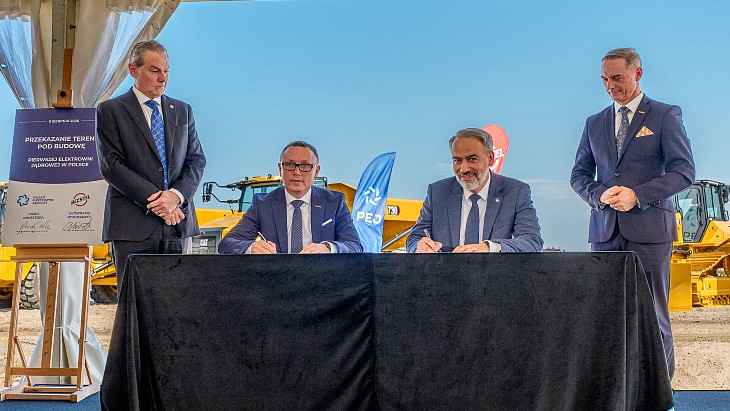
(Image: US Embassy Warsaw)
"Budimex has been involved in projects of fundamental importance to Poland's development for many years," said Artur Popko, President of the Management Board of Budimex SA. "For nearly 60 years, we have been building roads, railways, energy facilities, and critical infrastructure. These investments benefit millions of people every day. I am extremely satisfied that Bechtel - the general contractor of Poland's first nuclear power plant - has trusted Polish contractors and entrusted us with the initial work, which paves the way for the next stages of this key investment. We are proud that, as a Polish company, we can participate in a project that will be of fundamental importance to the security and future of our country."
Marek Woszczyk, President of the Management Board of PEJ, said: "The handover of the site where Poland's first nuclear power plant is being built, along with the commencement of earthworks, marks the next, very concrete steps towards commencing construction. After years of preparation, research, and obtaining the necessary administrative decisions, we are entering a phase of intensive fieldwork. This is clear evidence that the Polish nuclear programme is moving from planning to implementation. Over 200 people are already working on the project site, and this number will steadily increase in the coming months. Entrusting Bechtel with the coordination of the work will allow us to maintain the planned pace of implementation and effectively prepare the project for the next stages of construction."
The background
In November 2022, the then Polish government selected Westinghouse AP1000 reactor technology for construction at the Lubiatowo-Kopalino site in the Choczewo municipality in Pomerania in northern Poland. In September 2023, Westinghouse, Bechtel and PEJ - a special-purpose vehicle 100% owned by Poland's State Treasury - signed an 18-month engineering services contract under which Westinghouse and Bechtel will finalise a site-specific design for a plant featuring three AP1000 reactors. In April last year, PEJ and the Westinghouse-Bechtel Consortium agreed the terms and conditions of an Engineering Development Agreement (EDA) after the previous agreement expired.
_65585_f2ff86c8.jpg)
How the completed plant could look (Image: Polish Government)
On 29 December, PEJ announced it had signed an amendment to the EDA with the Westinghouse-Bechtel Consortium. The amended scope of the agreement provides for the continuation of design works covering the nuclear island, turbine island, and the balance of plant, as well as further in-depth geological survey campaigns. This, it said, allows it to maintain the project schedule by advancing the power plant design and continuing field works, while simultaneously conducting negotiations and finalising the Engineering, Procurement, and Construction (EPC) contract, "which will ultimately determine our cooperation with the Westinghouse-Bechtel Consortium".
On 31 March this year, PEJ submitted an application to the President of Poland's National Atomic Energy Agency (PAA) for a construction permit.
PEJ said it expects to pour first concrete for the plant's first unit in the fourth quarter of 2028. In order to meet this schedule, the company must obtain both a construction permit from the PAA and a building permit from the Pomeranian Voivode. PEJ said it plans to submit a building permit application in 2027.
Construction of each reactor is expected to take about seven years. This will be followed by approximately one year of testing and commissioning. The aim is for the first reactor to begin commercial operation in 2036, the second in 2037, and the third in 2038.
Water levels to be increased in Zaporizhzhia's used fuel pools
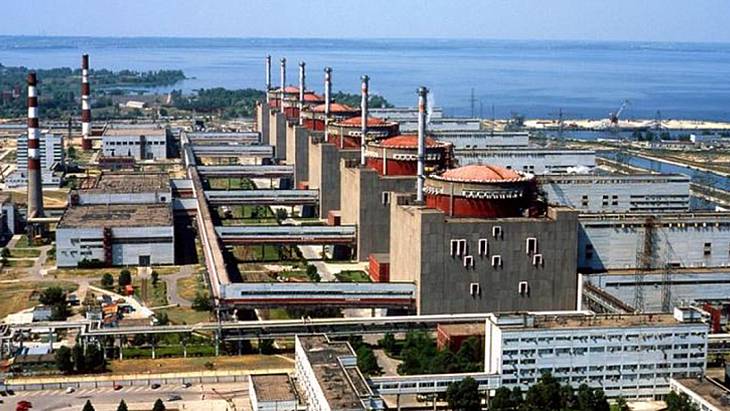
The agency (IAEA) said its experts at the site had been informed by the operators of the plant - which has been under Russian military control since March 2022 - that "the measure is intended to increase the time available before water could begin to boil off in the event of a prolonged loss of off-site power during which the site exhausted its diesel fuel supplies and could no longer continue cooling the pools".
The IAEA added: "The decision was taken in light of the prolonged unavailability of the 750 kV Dniprovska line and current challenges in resupplying the site’s diesel fuel stores because of military activity in the area. The work began this week, with the IAEA team present to observe."
Cooling pools are used for storing used nuclear fuel underwater. This is normally for at least five years to allow decay of radioactivity and heat.
The Zaporizhzhia plant's six units have all been shut down since the start of the war in 2022, with the last unit transferring to a cold shutdown in April 2024.
The plant is close to the front line of Russian and Ukrainian forces and the plant has suffered a number of incidences where it has lost all external power, and had to rely on its fleet of emergency diesel generators for the power needed for essential safety functions. Nuclear power plants generally have enough diesel stored on site to operate emergency generators for an initial seven days if necessary. This ensures there is time to fix external power issues, or allow time for new supplies of diesel to be brought in if the generators are to be in use for a longer period.
According to the IAEA there have now been 24 times that the plant has lost external power, with half of those occurring in the past four months, including twice in the past week.
Director General Rafael Mariano Grossi said: "This trend, with the rising number of off-site power cuts at the Zaporizhzhia Nuclear Power Plant, is deeply concerning and clearly not sustainable. The agency will continue its work to help improve the situation and support nuclear safety and security at the site."
At the moment the plant is relying on a single 330 kV backup power line, with its main 750 kV power line unavailable since March. Repairs were carried out, under an IAEA-arranged localised ceasefire, but it remains unavailable because of damage to a substation which provides power to the line.
Grossi said: "These substation missions have a clear nuclear safety and security purpose. As set out in the seven indispensable pillars, nuclear power plants require reliable off-site power, and substations are a crucial part of that process."
The IAEA said that its teams at Zaporizhzhia and at the South Ukraine Nuclear Power Plant and the Chernobyl site all continue to report hearing military activity and/or air raid alarms.
Grossi said: "With each new day of the conflict, the risks to nuclear safety and security are not decreasing, on the contrary. I renew my call for maximum military restraint around all of Ukraine’s nuclear power plants and their associated electrical infrastructure."
US test reactors achieve milestones
_31903.jpg)
Oklo's Grove reactor - located near Lockhart in Caldwell County, Texas - was one of 11 advanced reactor projects selected by the US Department of Energy (DOE) in August 2025 for the Nuclear Reactor Pilot Program, which aims to expedite the testing of advanced reactor designs that will be authorised by the DOE at sites located outside of the national laboratories. Part of the Reforming Nuclear Reactor Testing at the Department of Energy executive order signed by President Donald Trump in May last year, its goal was "to construct, operate, and achieve criticality of at least three test reactors using the DOE authorisation process by 4 July, 2026".
"Reaching criticality in less than a year is an incredible milestone for our team," said Oklo co-founder and CEO Jacob DeWitte. "Oklo developed Groves from a greenfield site on private land, completed full-scale civil excavation and construction, manufactured or commercially procured all components, including fuel, and developed its operating programmes in-house. Taken together, we believe these accomplishments establish a new benchmark for the Reactor Pilot Program and set the stage for the future of advanced nuclear deployment at scale."
Groves is a low-power test reactor designed to demonstrate reactor design, build, and operations, and to establish operating experience needed to support future isotope production facilities. The project advances Oklo's plans to establish domestic production of critical isotopes for potential use in cancer care, manufacturing, scientific research, space exploration, and national security.
"Groves demonstrates that the domestic nuclear industry can once again move from design through construction, authorisation, and startup on timelines that are measured in months rather than years when developers, suppliers, and regulators work together on an integrated deployment approach," Oklo said.
The company said the project has generated practical experience in project engineering, construction, procurement, reactor operations, startup procedures, safety readiness, training, qualification work, and deployment execution that can inform future isotope production facilities. It has also established engineering practices, operating procedures, training programmes, commissioning experience, and organisational capabilities "that will reduce uncertainty and execution risk across every Oklo facility, including the company's future isotope, powerhouse, and fuel cycle deployments".
Antares Nuclear's Mark-0 reactor became the first reactor under the Reactor Pilot Program to reach initial criticality in early June, closely followed by Valar Atomics' Ward 250 reactor. Deployable Energy's Unity demonstration reactor achieved criticality on 1 July, while Aalo Atomics' Critical Test Reactor chieved initial criticality in the early hours of 4 July.
Deep Fission reactor gets safety design approval
California-based startup Deep Fission, which aims to place small modular reactors in boreholes a mile underground, announced DOE's approval of the Nuclear Safety Design Agreement for its Gravity reactor, confirming that its design warrants advancement under the Reactor Pilot Program.
_11f63b54.jpg)
Gravity reactor cutaway detail (Image: Deep Fission)
The DOE's authorisation pathway mirrors many elements of the Nuclear Regulatory Commission's licensing framework, including the development of preliminary and final safety analyses for construction and operation (read more about the DOE pathway here). The Nuclear Safety Design Agreement - also referred to as the NSDA - is the first step under the Reactor Pilot Program authorisation pathway. It covers design requirements, safety analysis approach, regulatory engagement process, applicable regulatory requirements, and identifies the key safety decisions for the design.
"With this milestone in place, Deep Fission moves forward to the next phase of the DOE authorisation pathway, advancing toward demonstration and eventual deployment of its underground nuclear reactor technology," the company said.
Deep Fission's Gravity reactor is a small modular reactor designed to be placed underground in an optimised borehole one mile (1.6 km) deep. Using traditional pressurised water reactor technology and low-enriched uranium (LEU) fuel, each reactor will generate 15 MWe, the company says, while its small footprint and dense power output means it will require a fraction of the land needed for traditional surface nuclear: ten reactors on the same site would deliver 150 MWe, or 100 reactors would produce 1.5 GWe. In this design, thermal energy is transferred through a closed-loop system from the reactor canister to a heat exchanger, then rises to the surface in a secondary closed-loop for conversion into electricity, like a geothermal system. The company says passive shielding and natural containment offered by the surrounding geology, and the combination of mature technologies from the nuclear, oil and gas, and geothermal industries, while using off-the-shelf parts and readily available LEU fuel, aims to improve safety and security and enable a faster, more cost-effective path to deployment.
Deep Fission broke ground in December at the Great Plains Industrial Park in Parsons for its pilot project and plans to build a full-scale commercial plant there following the test reactor demonstration.
"Deep Fission's Parsons project is not designed as a one-time criticality test," the company said. "Consistent with the intent of Executive Order 14301 and the Reactor Pilot Program, the company intends for its demonstration reactor to become a fully Nuclear Regulatory Commission-licensed, commercially operating unit, delivering power after initial testing and receiving DOE authorisation."
US collaboration to study used nuclear fuel recycling
_46726.jpg)
Under the agreement, the partners will evaluate source-to-product and source-to-fuel pathways for materials recoverable through Curio's proprietary NuCycle technology, while identifying opportunities for future engineering coordination, fuel development, qualification, fabrication, and commercialisation. The collaboration will also seek to facilitate connections across the nuclear supply chain to more seamlessly bring next-generation fuel and product streams to market.
As part of the MoU, the companies will conduct technical assessments, feasibility studies, supply chain analyses, and interface evaluations to identify potential opportunities for future development agreements and commercial partnerships. Together, the parties seek to identify practical pathways that can strengthen both domestic and international nuclear fuel supply chains, support long-term energy security objectives, and help meet growing global demand for reliable, carbon-free nuclear energy.
"The collaboration reflects growing industry recognition that meeting future energy demand will require integrated fuel cycle solutions capable of supporting both domestic reactor deployment and expanding international nuclear energy markets," Curio said. "By evaluating opportunities across the entire value chain, the parties aim to identify pathways that could support the commercialisation of advanced fuels and fuel-cycle solutions needed to power the next generation of nuclear energy systems."
The parties anticipate that this collaboration may lead to future agreements focused on technology development, fuel qualification, supply chain development, and commercial deployment opportunities.
"America's ability to lead the next era of nuclear energy will depend on more than building reactors - it will require building the fuel cycle infrastructure needed to support them," said Curio CEO Ed McGinnis. "This collaboration brings together leaders in fuel recycling, fuel development, and advanced reactor deployment to evaluate innovative pathways that could strengthen domestic and international energy security, enhance fuel supply resilience, and unlock greater value from existing nuclear materials. By connecting these critical elements of the nuclear value chain, we are helping lay the foundation for a future of clean, sustainable energy."
Tony Robinson, president and CEO of Framatome Inc, added: "Advancing the next generation of nuclear energy demands bold innovation and strong alignment across the entire fuel cycle. At Framatome, we are committed to working with partners who share that vision and support efforts to strengthen America's nuclear infrastructure. This collaboration represents the kind of forward-looking, integrated approach needed to unlock new fuel technologies, and ensure the US remains at the forefront of safe, reliable, carbon-free nuclear power."
"With the most near-term deployable SMR (small modular reactor) technology, NuScale has long recognised that the nuclear industry requires a strong, reliable, sustainable frontend and backend fuel supply to meet increasing demand," said John Hopkins, President and CEO of NuScale Power. "We are pleased to work alongside our partners Curio and Framatome to leverage our complementary capabilities, including NuScale's position as the only SMR to have received US Nuclear Regulatory Commission design approval, to help advance a more resilient and integrated nuclear fuel cycle for off-takers in the United States and internationally."
Curio's proprietary NuCycle technology is designed to recycle used nuclear fuel and recover valuable materials that can be utilised in future nuclear energy applications. By dramatically reducing residual waste volumes by up to 97% while recovering strategic nuclear materials, NuCycle offers a pathway toward a more sustainable, secure, and economically productive nuclear fuel cycle.
In February this year, the US Department of Energy's Office of Nuclear Energy awarded more than USD19 million to five US companies to research and develop recycling technologies for used nuclear fuel. Curio is to receive funding to support the development of its proprietary NuCycle technology. The funding will support a collaborative effort between Curio and key partners including Idaho National Laboratory, Pacific Northwest National Laboratory, and several other technical organisations to optimise for scale-up and commercialisation of NuCycle. The primary objective of the collaboration is to develop detailed engineering designs and specifications for NuCycle's core processes and prepare for a pilot-scale demonstration.
Reprocessing in the USA
In March 2022, the DOE launched the Converting UNF Radioisotopes Into Energy (CURIE) programme, which is under the auspices of the Advanced Research Projects Agency-Energy (ARPA-E), with the aim of enabling commercially viable reprocessing of used nuclear fuel from the current US light-water reactor fleet by resolving key gaps and barriers in reprocessing technologies, process monitoring, and facility design. Later that year, twelve projects were selected to receive USD38 million of funding.
Reprocessing of used fuel from commercial reactors has been prohibited in the USA since 1977, with all used fuel being treated as high-level waste. However, the nation has more than 250 plant-years of reprocessing operational experience, mostly from reprocessing oxide fuels at government-operated defence plants as part of its military programme. A civil reprocessing plant at West Valley, New York, operated successfully from 1966-1972: a second one at Morris, Illinois, failed to work successfully and was declared inoperable in 1974. A third civil reprocessing plant was built at Barnwell, South Carolina but was not commissioned due to the changed government policy.
Newcleo sets out plan for licensing of US MOX plant
_74193.jpg)
The Regulatory Engagement Plan (REP) sets out the proposed framework for the company's pre-application engagement with the NRC. It identifies the principal regulatory and technical topics that Newcleo expects to address with NRC staff, together with technical submissions and an indicative engagement schedule.
In March, Newcleo announced it had initiated pre‑application engagement with the NRC to support the future licensing of its first LFR-AS-200 lead-cooled fast reactor and an associated mixed-oxide (MOX) fuel fabrication facility in the USA. Following the submission of a letter of intent to the NRC on 23 February, Newcleo began early interactions with the NRC that were intended to familiarise NRC staff with the proposed facility designs and associated safety approaches for both the reactor and the MOX fuel fabrication facility. These discussions also supported the development of regulatory plans and facilitated NRC resource and budget planning, it said.
Newcleo submitted the Regulatory Engagement Plan for the LFR-AS-200 - the commercial 200 MWe version of its lead-cooled fast neutron reactor - last month.
The company said that with the submission for the fuel facility it has "achieved a significant milestone in establishing a source of advanced nuclear fuel for its planned advanced modular reactors".
"This submission to the NRC is a concrete step to advance our MOX fuel facility in the US, building on the work of over 100 engineers with decades of industrial experience," said Newcleo CEO Stefano Buono. "Our goal is to reduce the long-term burden of spent nuclear fuel and increase energy independence, turning existing nuclear material into a domestic resource, not a long-term liability, effectively closing the nuclear fuel cycle."
In July, France's nuclear safety regulator, the Autorité de Sûreté Nucléaire et de Radioprotection (ASNR) - published its opinion on the safety features proposed by Newcleo for its planned French mixed-oxide fuel facility, concluding that the provisions adopted by the company for its safety approach are satisfactory at this stage. The ASNR's official opinion on the submitted safety options will contribute to securing the application for authorisation to construct such a facility.
Alongside its regulatory activities, Newcleo continues to develop FASTER (Fuel process Assembly Storage Training and Enhanced Reality), its engineering and testing centre in Chusclan, France. Designed to accelerate the development of its innovative fuel manufacturing pilot line in a non-nuclear environment, the facility will ultimately bring together around 100 employees and provide state-of-the-art engineering, immersive training and technology testing capabilities. The site is becoming increasingly operational, with several prototypes and test mock-ups already installed and supporting the development, validation and optimisation of future MOX fuel manufacturing processes.
Newcleo's delivery roadmap sees the first non-nuclear precursor prototype of its lead-cooled fast neutron reactor being ready this year in Italy and the first reactor operational in France as early as 2032, while the final investment decision for the first commercial power plant is expected around 2029. At the same time, Newcleo will directly invest in a mixed uranium/plutonium oxide (MOX) plant to fuel its reactors. It has initiated site acquisition and public consultation processes in France for the MOX fuel pilot assembly line in Nogent-sure-Seine.

No comments:
Post a Comment