It’s possible that I shall make an ass of myself. But in that case one can always get out of it with a little dialectic. I have, of course, so worded my proposition as to be right either way (K.Marx, Letter to F.Engels on the Indian Mutiny)
Thursday, August 06, 2026
Wearable electric-field device slows aggressive breast cancer in preclinical study
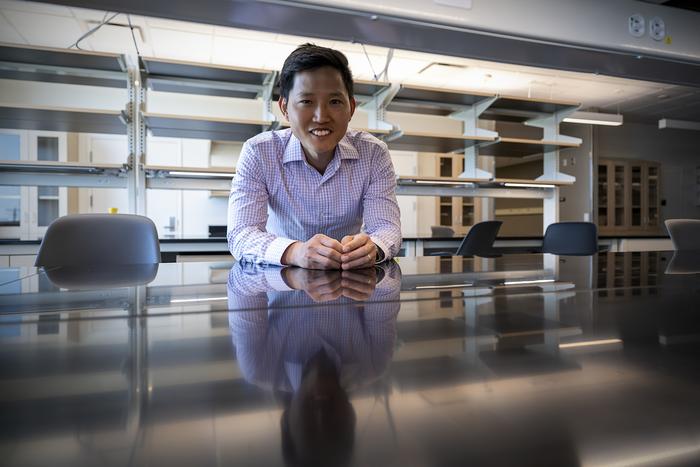
Jonathan Song, PhD, co-corresponding author of the study. Song is a researcher with the OSUCCC – James Cancer Biology Research Program, co-director of the Center for Cancer Engineering-CURES, and a professor of mechanical and aerospace engineering at Ohio State College of Engineering.
The treatment also appeared to make the area around tumors more active against cancer. These findings were published in the June 2026 issue of the journal Breast Cancer: Targets and Therapy.
Technology could offer a non-invasive treatment option
Triple-negative breast cancer can be hard to treat because it lacks the hormone or protein targets found in some other breast cancers. It also has a higher risk of coming back or spreading, and chemotherapy remains an important treatment for many patients. The disease often spreads to the lungs and brain, making it particularly difficult to treat.
This new approach uses low-intensity electric fields with the potential to be delivered from outside the body using a wearable device, unlike existing electric field-based treatments that require contact electrodes.
“When people hear ‘electric fields,’ they may picture something like being shocked or zapped. That is not what we are talking about. The current does not run through the body. Instead, a wearable device can generate low-intensity fields that interact with cancer cells in a controlled way,” said Jonathan Song, PhD, co-corresponding author of the study. Song is a researcher with the OSUCCC – James Cancer Biology Research Program, co-director of the Center for Cancer Engineering-CURES, and a professor of mechanical and aerospace engineering at Ohio State College of Engineering.
Researchers found that the electric fields affected several cancer-related processes, including how cancer cells move, spread and use energy.
In cases where breast cancer had spread to the lungs, the treatment also reduced immune-suppressing cells and increased cancer-fighting immune cells.
“One unexpected finding was that these electric fields did not appear to act only on cancer cells. They also seemed to change the area around the tumor in a way that may help the body recognize and fight cancer,” said Song.
The current findings are based on preclinical models, not patients. OSUCCC – James researchers partnered with EMBioSys, Inc to develop a wearable investigational device, which will be tested in an upcoming National Institutes of Health-sponsored human clinical trial.
“This technology is still in an early stage, and the next step is clinical testing. But the idea that a wearable, low-powered device could one day help treat breast cancer as part of a patient’s daily life is very compelling,” said Song.
Ohio State coauthors in the study include Manish Charan, Travis H Jones, Dinesh K Ahirwar, Nandini Acharya, Vish V Subramaniam, Konstantin Shilo and Ramesh K Ganju. The work was supported by an Pelotonia-funded Idea Grant and The Ohio State University Comprehensive Cancer Center, an Accelerator Award supported by the Keenan Center for Entrepreneurship at Ohio State University and the Ohio Third Frontier Technology Validation and Start-up Fund.
Joint press release by Charité, DKG, BARMER, DAK-Gesundheit, and mkk – meine krankenkasse
Regularly checking in with patients with metastatic breast cancer by way of an app to enquire about their well-being – and responding promptly – can alleviate their debilitating fatigue and make their daily lives easier. This was demonstrated by researchers at Charité – Universitätsmedizin Berlin and the German Cancer Society in a study published today in the journal JAMA Oncology*. The study is the result of the PRO B Innovation Fund project, which was implemented in collaboration with the health insurance providers BARMER, DAK-Gesundheit, and mkk – meine krankenkasse. Based on the positive results, the Federal Joint Committee (G-BA) is recommending to incorporate the new treatment concept into standard care.
Approximately 68,000 women in Germany are living with breast cancer that has metastasized – meaning that the tumor has spread to other organs. At this stage, the cancer is no longer curable. With the help of modern therapies, however, the disease can be temporarily controlled and life expectancy extended by several years. Some women are even able to continue working. Today’s therapeutic options, however, also present challenges.
“The new medications often no longer need to be administered at the hospital but can be taken at home,” says Prof. Maria Karsten, senior attending physician at the Charité Breast Cancer Center and initiator of the PRO B project. “As a result, we see patients less frequently at the hospital, and our medical oversight has become somewhat incomplete. In order to close this gap and provide patients with close support in spite of the distance, we have developed the PRO B digital treatment concept.”
Close monitoring despite the distance
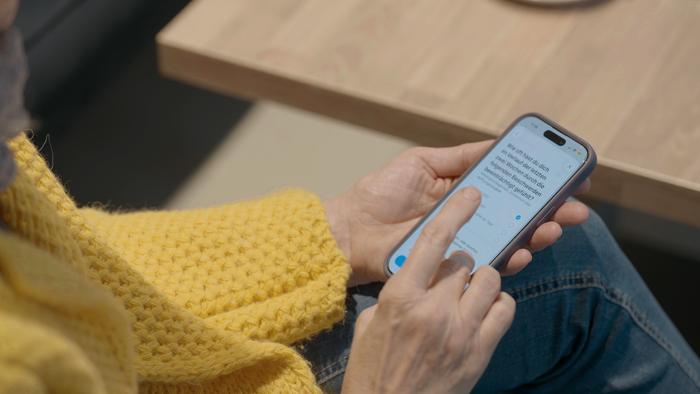
An app that asks women up to 52 structured questions once a week about their symptoms, daily life, and emotional state is at the heart of the PRO B approach. These include, for example, “Did you experience pain?”, “Were you too tired to perform your usual activities?”, or “Did you feel short of breath?”. The answers are then analyzed by an algorithm that immediately reports any relevant changes to the team assigned with treatment. The notified team calls the patients within 48 hours to determine whether any action is called for and, if so, what steps should be taken.
“During these phone calls, for example, we discuss whether the dosage of anti-nausea medication should be adjusted or offer practical tips for managing the various symptoms,” explains Maria Karsten. “But we also detect serious side effects more quickly – such as those indicated by a seemingly harmless symptom like fatigue – and can immediately schedule the patient for an appointment at the hospital.”
Less exhaustion, better physical functioning and fewer hospital visits
Based on a Germany-wide study the research team has now demonstrated that this combination of close digital monitoring and on-demand in-person care improves the daily lives of the persons affected. The study involved 52 breast cancer centers, whose treatment teams monitored 909 patients with metastatic breast cancer, aged 19 to 81, over the course of a year. About half of the women received care involving the PRO B concept in addition to drug-based tumor therapy. The other half, instead of receiving full PRO B care, were asked questions about their well-being only once every three months and were not contacted by the treatment team.
The result: Patients in the PRO B group reported significantly less fatigue – a term used to describe a state of physical, emotional, or mental exhaustion that can severely restrict daily life. They also assessed and rated their physical functioning more positively and required less frequent hospitalization.
A weekly safety net
“These are effects that have a noticeable impact on the patients’ daily lives; the women are more capable and better able to manage their lives,” as Maria Karsten emphasizes, who led the study. “We even have evidence that the PRO B approach extends the remaining lifespan for some patients. We are achieving all of this not through a new medication, but simply by regularly and systematically assessing the women’s well-being and responding accordingly.” The conclusion the patients reached in the PRO B study group is clear: In a survey conducted after the study concluded, more than 90 percent of them expressed the desire for the new treatment approach to become part of routine care.
Stephanie Neumann-Johnston is one of the patients who participated in the PRO B study. “I feel like the app has saved my life several times,” says the 51-year-old. “There are so many situations and incidents that you can’t make sense of – you have so many questions. With the app, I can look up common problems and find medically reviewed information, for example, about fatigue. That way, I can help myself, also on the weekends. And the personal contact provides me with emotional and medical support. For example, I can find out whether I’m allowed to take certain medication for a fever, or get an assessment of my situation: Should I go to the emergency department with these symptoms or not? The app takes a huge weight off your shoulders.”
The “ida” care app is on its way to becoming part of standard care
Based on the medical findings and a health economic analysis, the G-BA recommended in June that the PRO B treatment concept should be incorporated into standard care. This means that, in future, all patients with statutory health insurance will be able to access this new form of care upon receiving the respective diagnosis. “This recommendation must now be implemented as quickly as possible,” emphasizes PD Dr. Christoph Kowalski, Department Director at the German Cancer Society and co-author of the study. “If a new care concept offers medical and economic benefits, we should not withhold it from the most seriously ill women.”
In order to be able to offer PRO B care to their insured members even before it is incorporated into standard care, the health insurance companies involved in the project are planning further developments that are expected to enable affected women to receive routine PRO B care starting this autumn. The new care form will be continued in the future under the name of “ida” by Maria Karsten and her team.
*Karsten MM et al. Electronic Patient-Reported Outcome Monitoring With Alert-Based Interventions in Metastatic Breast Cancer: A Randomized Clinical Trial. JAMA Oncol 2026 Aug 06. doi: 10.1001/jamaoncol.2026.2661
About PRO B
Between 2020 and 2024, the PRO B project (Patient-Reported Outcomes in Breast Cancer) received approximately 4.8 million euros in funding from the Innovation Committee of the Federal Joint Committee. The project is led by Prof. Maria Karsten of Charité; the consortium partners include BARMER, mkk – meine krankenkasse, DAK-Gesundheit, the German Cancer Society (Deutsche Krebsgesellschaft e. V.), and OnkoZert GmbH.
About breast cancer
Breast cancer is the most common cancer among women in Germany: About one in eight women will develop this disease during their lifetime. Worldwide, breast cancer is the leading cause of cancer-related deaths. Despite advances in treatment, 30 percent of women with early-stage breast cancer and up to 70 percent of those with lymph node involvement in later stages develop distant metastases, which typically make breast cancer incurable. Metastatic breast cancer is associated with significant health burdens and a restricted quality of life. The goal of treatment in these cases is to prolong life, while maintaining the best possible quality of life.
About the Innovation Fund projects
Since 2016, the Federal Joint Committee (G-BA) has been tasked with promoting new forms of care that extend beyond the current care standards, as well as projects in health services research. The goal is to improve the quality of health care in Germany. The Innovation Fund is financed by contributions from statutory health insurance plans and by the Health Fund.

No comments:
Post a Comment