Inverse Flows
The end of one lucrative trade from Europe to West Africa led to the creation of another. For product carriers, it was a bonanza.
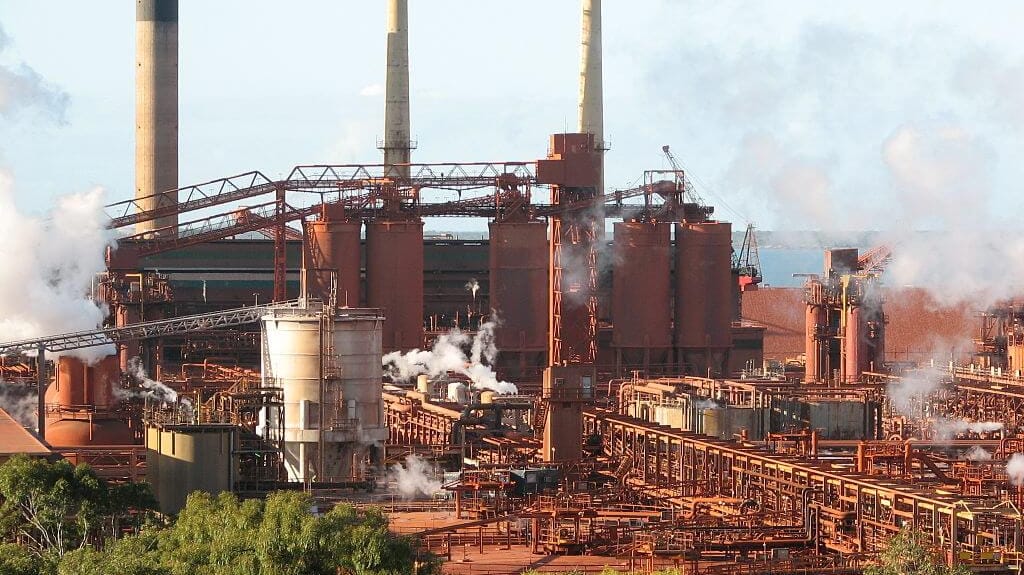
(Article originally published in Sept/Oct 2026 edition.)
I nearly titled this article "End of an ARA," meaning (A)msterdam, (R)otterdam and (A)ntwerp, the three cities that were for many decades responsible for the European trade in blended fuels destined for West Africa.
It was a big business, for as long as it lasted. In 2023, Europe exported 1.3 million barrels of gasoline per day (b/d) with a third of that going to West African buyers, according to Kpler. The trade was valued at $17 billion by Argus, a price intelligence provider.
The fuel was dismissively called "African quality" because it didn't live up to the aspirations of European environmentalists. It sometimes had 1,500 parts per million (ppm) of sulfur (compared with the 10 ppm permitted at European pumps), and it could be mixed with benzene, manganese octane-boosters and similarly hazardous additives.
While not permitted to be sold in Europe, such fuels could be exported.
That was true until 2023 when the Dutch passed a ban, eliminating Amsterdam and Rotterdam. That left Antwerp. Then Belgium joined the ban in 2024. With that, ARA ended. By September 2024, the three cities were still drip-feeding 150,000 b/d to West Africa. And the infrastructure? Well, it was fine – the refineries and ports, anyway. More on that shortly.
But what ended the "African quality" trade was not the Dutch and Belgian bans.
The Real Story
No, while Europe cleaned up its act, the real story was unfolding in Africa. In January 2024, billionaire Aliko Dangote, Africa's richest man and the CEO of Dangote Group, opened his new behemoth refinery in Lekki, near Lagos, Nigeria's largest city.
He started planning it in 2013 with help from China's National Chemical Engineering Company and Engineers India Limited, two state-owned firms that had been hired, respectively, to build and manage the project. The Lekki refinery would ultimately cost more than $19 billion. It required stabilizing a 2,600-hectare swampland and building a private port for equipment deliveries like 150,000 tons of prefabricated steel from Hangxiao Steel Structure and boilers and furnaces from India.
The Lekki refinery began with diesel and jet fuel. In fact, its first European cargo, shipped on 27 May 2024 to (ironically) Rotterdam, was 45,000 tons of jet fuel on the Greek MR product carrier Doric Breeze. Gasoline followed in September 2024, the same month Belgium's ban took effect. Two years later, in addition to exporting to Europe and the rest of West Africa, Lekki could satisfy 87 percent of Nigeria's domestic gasoline demand, according to Nigeria's own downstream regulator.
BIMCO reported that from "April to May [of 2026], Western Africa's clean petroleum product (CPP) imports fell 44 percent year on year," reflected in a 47 percent drop in vessel ton-miles.
But the new refinery was not the only factor rearranging origins and destinations.
In 2025, Europe imported "more than half of all its jet fuel from the Middle East," according to S&P. With war between the U.S. and Iran and the closure of the Strait of Hormuz in February 2026, those sources became unavailable. Purchases from India were interrupted because of E.U. sanctions targeting Russian-origin crude oil. India's refiners had made a business of buying it, refining it and selling it to Europe.
The Lekki refinery became the largest exporter of jet fuel to Europe in June and July of 2026. U.S. Gulf refineries (collectively) came in second.
Inverted Trade Flows
Europe's fuel mix became decidedly Atlantic. That meant shorter routes but fuller holds, i.e., fewer voyages on ballast. How are ships dealing with all of this?
Let's look at three of the affected vessel categories: LR1s, LR2s and MRs.
LR1s are "small" (Panamax) product tankers between 60,000 and 79,999 deadweight tons (dwt). LR2s are large (Aframax) product tankers between 80,000 dwt and 120,000 dwt. (Yes, there are even larger tankers, but they ordinarily carry crude, not refined products.) Then come MRs: smaller, versatile ships of between 40,000 and 55,000 dwt.
Before the Lekki refinery, "clean" tankers (the ones carrying refined products) would load at ARA and then unload in West Africa. They would sail back to Europe empty. Meanwhile, "dirty" tankers (the ones carrying unrefined crude) would haul their cargo from West Africa to Europe's refineries and sail back empty to Africa.
But tankers do not care whether they are bringing cargo from Europe to Nigeria or from Nigeria to Europe. A full hold is a full hold, whatever the direction.
MRs now travel in a square, not a triangle. They load product in the U.S. Gulf, then head to West Africa. There, they can load jet fuel or another product from the Lekki refinery. They haul that north to Europe. There, often at ARA, ships can sometimes pick up what little remains of the blended fuels African trade. The only side of the "square" that ships have to sail empty is from West Africa back to the U.S. Gulf.
This is working well. Kpler says that MRs' ton-miles have been consistently positive since July 2025.
LR1s were well-suited to the ARA-West Africa trade. Their West African ton-miles fell 88 percent, the worst of any class, but they've long been diversely employed "in trades between the U.S. Gulf and Asia, as well as on transatlantic routes," as Haiying Jia and Zhenming Wu stated this February in an article in the Journal of Transport Geography.
And the best for last: LR2s. In July 2026, an LR2 vessel that had earned $144,600 per day earlier in the year would be on a "downward curve with averages for June sitting at $72,700/day" for the same vessel, though these earnings are still "very healthy." For comparison, in 2025 LR2 earnings per day moved consistently in a narrow band between roughly $30-40,000.
We're holding back our tears.
Declining Output
And the European refineries, as I promised?
Shell, BP, ExxonMobil and Vitol operate at Rotterdam while Antwerp features TotalEnergies and ExxonMobil. "Very clearly," said President of Shell Nederland Frans Everts in April 2026, "every refinery in Europe is on what we call max jet mode," serving Europe's thirsty airlines.
Nonetheless, since 2009, Europe has lost about 30 of its refineries. Seventy-three still operate. This has less to do with West African competition or changes in buyer habits and more to do with plants reaching end of life.
Most of Europe's refineries were built in the 1960s and 1970s. They're ancient. The result? The U.K.'s Petroineos Grangemouth refinery, as one example, used to refine 150,000 bpd and was converted last year to a petroleum products import terminal.
Few European investors are willing to risk their capital on a new European oil refinery. Their focus is on clean energy like hydrogen and biofuels. "Europe is unlikely to build another conventional refinery on the scale of Pernis or Rotterdam. […] The continent's largest sites will require billions of dollars in cumulative spending to remain safe, reliable and commercially relevant. Some investments will extend the life of conventional units," EPCIntel says.
Europe is doubling down on its current refineries, if they're viable.
Africa Rising
Meanwhile, Aliko Dangote has announced a second refinery in Kenya at a cost of $15 billion. This one will process 700,000 bpd – another Lekki on the opposite African coast.
At least Kenya is far enough for the tankers to stretch their legs. And it's good to have two alternatives to the Strait of Hormuz, even when they both answer to one man.
Erik Kravets is a maritime lawyer whose law firm is based in Cuxhaven, Germany. He is a frequent contributor to the online Maritime Executive Newsletter and has lectured at the State Maritime College of Cuxhaven and at Bremerhaven University of Applied Sciences.
The opinions expressed herein are the author's and not necessarily those of The Maritime Executive.

No comments:
Post a Comment