“Voters across the country supported candidates who pledged to cut energy costs, end corruption, and take on corporate greed. That’s the exact framework we need to push a bold clean energy and polluter pays agenda,” Jamie Henn of Fossil Free Media said.
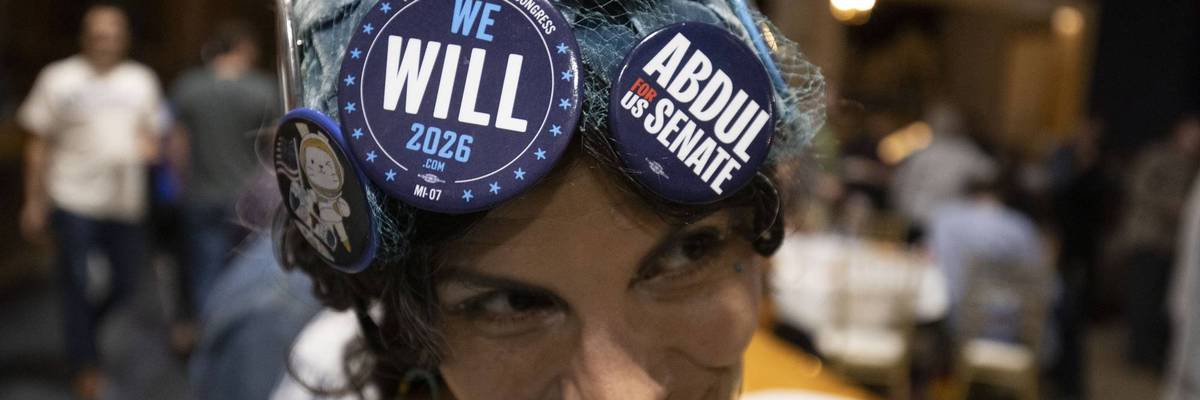
Michigan resident Nichole Kewaybiber attends Democratic US House candidate William Lawrence’s election night watch party at “The Venue by Eleven” on November 3, 2026 in Lansing.
(Photo by Bill Pugliano/Getty Images)
Olivia Rosane
Nov 04, 2026
COMMON DREAMS
Tuesday’s historic rebuke of President Donald Trump’s policies and party was also a major victory for the climate and environment, campaigners said, as Democratic control of Congress gives lawmakers a chance to check the president’s pro-pollution and pro-extinction agenda.
Up and down the ballot, voters elected candidates who champion climate action and holding wealthy polluters accountable while rejecting data centers and tech and fossil-fuel spending blitzes.
“Voters just overwhelmingly repudiated the most anti-environmental, pro-fossil fuel administration in US history,” Jamie Henn, the director of Fossil Free Media, told Common Dreams. “This was a historic climate victory in disguise. Voters across the country supported candidates who pledged to cut energy costs, end corruption, and take on corporate greed. That’s the exact framework we need to push a bold clean energy and polluter pays agenda.”
“Climate politics are back on the table, and we plan to fight for them.”
“Last night’s election opens the door for plenty more states to pass climate legislation, like climate superfund bills, and block industry attempts to hold back clean energy or immunize themselves from climate damages,” Henn said.
Affordability and Corruption Are Climate Issues
While climate and the environment took a backseat in election rhetoric and reporting to issues like affordability and corruption, many winning candidates who champion reducing inequality and challenging corporate greed—such as Sen.-elect Abdul El-Sayed (D-Mich.) and Reps.-elect Chris Rabb (D-Pa.), Claire Valdez (D-NY), and Melat Kiros (D-Colo.)—also back policies such as a Green New Deal and holding polluting industries accountable. Also in Michigan, Democratic Rep.-elect Will Lawrence was a co-founder of the climate focused Sunrise Movement.
“Ardent advocates of climate and environmental action and justice who loudly rejected Trump and the Republican attack on both are now heading to and returning back to Congress and to offices across the nation,” environmental investigative journalist Antonia Juhasz wrote on social media. “It’s officially a Green Wave too.”
Kidus Girma, Sunrise Movement’s campaign director, told Common Dreams that on Tuesday, “Young people proved that progressive ideas like the Green New Deal are just as popular in central Michigan as they are in Brooklyn.”
“Working people in America no matter where they live want the same thing—good green jobs, a pause on data centers, and a system that works for people, not billionaires,” Girma said. “Climate politics are back on the table, and we plan to fight for them.”
Climate advocates pointed out that issues such as the high price of gas due to Trump’s illegal war on Iran are intimately connected with the dependence on a fossil fuel industry that is empowered to profit from energy crises.
“Climate change may not have dominated the election, but the consequences of our dependence on fossil fuels certainly did,” said Cassidy DiPaola, the communications director at Fossil Free Media and spokesperson for the Make Polluters Pay campaign, in a statement. “Americans are struggling with high gas prices, rising energy bills, and mounting climate disaster costs while Big Oil rakes in record profits and spends millions buying influence in Washington.”
Further, the backlash against the AI data centers build-out, reflected in massive wins for data centers moratoriums and anti-data center candidates, is also a major climate victory, as the Sierra Club projects that the use of fossil fuels to power new data centers will increase power sector emissions by 42% by 2030 when compared with 2025 levels, undoing 15 years of climate progress in electricity generation.
“Millions of voters cast their ballots in frustration over data centers, corporate greed, and Trump’s egregious giveaways to fossil fuel CEOs and other industry cronies,” Brett Hartl, the national political director at the Center for Biological Diversity Action Fund, said in a statement.
Elizabeth Bast, executive director at Oil Change Action, said in a statement that “voters send a clear message: They’re fed up with Trump’s agenda of fossil fuel giveaways, illegal and immoral wars, and unchecked data center expansion that makes their lives more expensive while lining the pockets of Big Oil and Big Tech,”
Bast continued: “Affordability and accountability were voters’ top concerns this election cycle. Both are inseparable from fossil fuel dependence. Americans have spent an additional $101 billion on gas since the start of Trump’s war on Iran, highlighting the dangers of fossil fuel reliance. Meanwhile, Trump increased his wealth by tens of millions through stock trades made profitable by his war—a blatant example of this administration’s corruption.”
Big Oil Bet and Lost
One major theme of the midterms was the ability of the “many” to beat the “money,” as El-Sayed put it in his victory speech. Big spending by the American Israel Public Affairs Committee and Big Tech oligarchs including Elon Musk failed to force their preferred candidates over the finish line.
This was equally true of Big Oil, as Emily Atklin detailed in a race-by-race breakdown for Heated. On the national level, Chevron, Koch, Energy Transfer, and the American Petroleum Institute gave a combined $25 million to keep Republicans in charge of Congress, only to see the Democrats retake both the House and Senate. Chevron also gave $200,000 each to losing GOP candidates Ken Paxton in Texas and Sen. Susan Collins in Maine.
Lawrence, the Sunrise Movement alum, triumphed over the combined forces of Musk and other GOP insiders in what was the nation’s most expensive House race.
“Lawrence mobilized voters and volunteers by his long-standing commitment to putting working-class families over billionaire polluters and data center developers. His campaign estimates it knocked more doors than any other House Democratic race,” Oil Change’s Bast said.
Mya Lega, a Lawrence campaign spokesperson, told Common Dreams: “Michiganders want our land, air, and water protected from AI data centers, polluters, and corporate oligarchs. Will Lawrence built his career on standing up to them. In the House, he’ll be a leading voice against the Trump administration’s rollbacks on environmental protections and handouts to corporations and oligarchs.”
The victory of people over money was true of more local races as well, as in Georgia where voters flipped the Georgia Public Service Commission to Democratic control despite fossil fuel spending on behalf of Republican candidates, while voters in Colorado rejected an industry-backed attempt to enshrine a right to use or sell natural gas in the state constitution.
“Fossil fuel money is one of the most powerful forces in American politics. It is the biggest obstacle we face in preserving a livable climate for everyone on Earth,” Atkin wrote. “But it is not invincible. Not even close.”
Further, the appetite for getting money out of politics was reflected in votes on energy and climate issues. In Michigan, voters approved Proposition 2 to bar publicly regulated utilities from giving funds to state and local candidates. And nationwide, more than 65 congressional candidates who had signed the No Fossil Fuel Money Pledge won their races.
“Big Oil and Big Tech have poured enormous amounts of money into this election to protect their power and profits,” Bast of Oil Change wrote. “Across the country, candidates who refuse fossil fuel money have won elections, proving that Big Oil’s money is no match for the power of organized communities.”
A Win for Wildlife
Beyond climate and energy concerns, Defenders of Wildlife celebrated Tuesday’s results as a check on Trump’s gutting of protections public lands and endangered species.
“For those of us working to protect America’s wildlife and wild places, this is a moment of renewed hope and possibility,” the group’s president and CEO, Andrew Bowman, said in a statement. “Over the past two years, we have faced extraordinary challenges, including relentless efforts to weaken the Endangered Species Act, roll back protections for public lands, and undermine decades of conservation progress.”
Bowman continued: “A new Congress offers opportunities to defend bedrock environmental laws, strengthen congressional oversight, and advance conservation priorities that have faced significant political headwinds. It also creates new possibilities for bipartisan cooperation around something we know transcends political divisions: America’s shared commitment to wildlife and our natural heritage.”
‘Rallying Cry’
Following Tuesday’s win, climate and environmental campaigners urged victorious candidates to consider their election as a mandate to protect public health and the environment and to hold polluters accountable for harm and corruption.
They also urged current members of Congress to reject the Bipartisan American Affordability and Jobs Act (BAAJA), a bill that advocates argue would gut current regulations to clear the way for more fossil fuel and data centers projects.
“The midterm results are a rallying cry for Democrats to use their newfound power to rein in Trump. Democrats must not cut deals in the lame duck that bolster Trump and give Republicans wins but instead lay the foundation to end Trump’s corrupt anti-environmental crusade for good,” the Center for Biological Diversity’s Hartl said.
“Voters gave Democrats control of Congress to advance policies that uplift communities, not offer sweetheart giveaways to corporate polluters and data centers, like the Senate permitting reform bill,” Hartl continued. “Trump has done so much damage to our public lands, wildlife habitats, and clean air and water protections in the last two years. Democrats must take ownership of their new mandate right now and start changing the conversation in Congress.”
“For newly elected leaders looking to establish themselves as champions of the working class, taking on Big Oil is an obvious place to start.”
Earthworks policy director Lauren Pagel warned: “In the coming weeks this administration and current Congress will treat the lame-duck session like a fire sale on essential environmental and health protections and the rights of tribal governments. It is critical we stop them before they do even more damage to our air, water, land, sacred places, and the health of our communities.”
She argued that this started with rejecting BAAJA: “This legislation that the Senate will likely consider next week would permanently undercut the ability of communities to say no to dangerous oil, gas, and mining projects in their backyards.”
Bast of Oil Change agreed, saying: “Democrats have a clear mandate to rein in Big Oil and Big Tech. They must seize the opportunity to do so, first by rejecting the currently proposed permitting deal... and then by taxing Big Oil’s windfall profits in the incoming Congress.”
The Environmental Protection Network (EPN), an organization made up of more than 800 former employees of the Environmental Protection Agency, called on the new Congress to hold Trump’s EPA to account for failing in its mission to protect people and the environment from pollution and to restore it to its prior function and scientific rigor.
“Americans understand that when corporations aren’t held accountable for their pollution, ordinary families end up paying the price,” EPN’s senior director of public affairs, Marc Boom, said in a statement. “Our polling shows that 81% of registered voters surveyed believe the costs of pollution are being shifted onto families. The incoming Congress has an opportunity and a responsibility to hold EPA and the rest of the federal government accountable and make sure they’re doing their jobs to protect public health and leave families safer, not sicker.”
Others urged the new Congress to take the opportunity to hold Big Oil accountable as well.
“Americans are struggling with high gas prices, rising energy bills, and mounting climate disaster costs while Big Oil rakes in record profits and spends millions buying influence in Washington,” DiPaola said in a statement. “Voters made clear they’re fed up with corporate greed and politicians who put wealthy donors ahead of working families. Now Democrats have a chance to prove they’re serious about changing that. For newly elected leaders looking to establish themselves as champions of the working class, taking on Big Oil is an obvious place to start.”
She continued: “We want to see oil executives hauled before Congress to answer for their profiteering and political influence. We want a windfall profits tax that puts money back in working people’s pockets, climate superfund laws that make polluters pay for the damage they’ve caused, and an end to Big Oil’s push for special legal immunity. Democrats have won the power to take on one of the wealthiest and most politically connected industries in America, and we expect them to use it.”
Aaron Regunberg, who directs Public Citizen’s Climate Accountability Project, agreed.
“Democrats across the country ran on a pledge to lower the costs of essentials and take on corporate corruption. They just won a massive mandate to do just that. And you can’t achieve those goals without fighting for Big Oil accountability,” he told Common Dreams.
He continued: “Democrats have an opportunity to crack down on fossil fuel profiteering and haul Big Oil CEOs in to investigate their corrupt dealings with Trump. It would be a huge mistake to not seize this huge opportunity.”
The 2026 Election Gives Winners a Mandate to Act Big on Climate
Over the last two years, we’ve witnessed the most corrupt, pro-fossil fuel, anti-environmental administration in US history. Last night, voters overwhelmingly rejected those priorities and demanded a total system reset. It’s time to deliver.
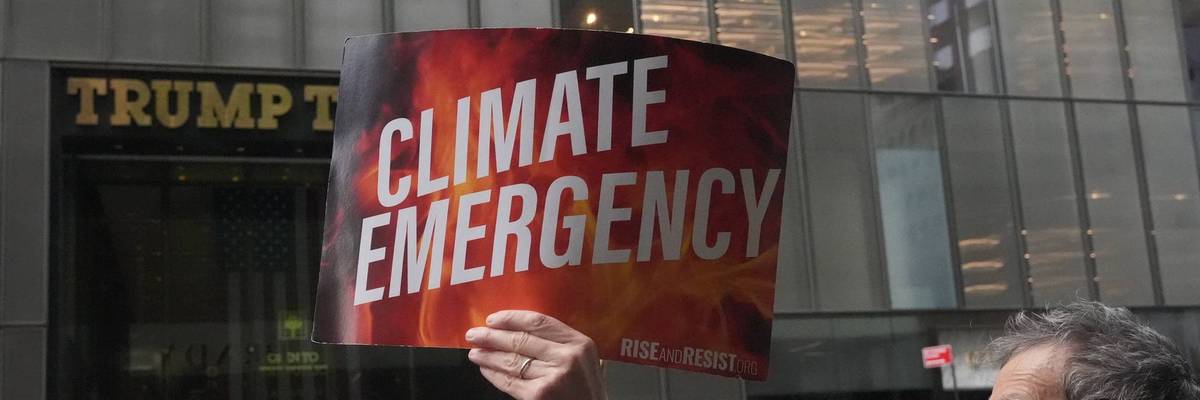
Demonstrators gather outside Trump Tower on 5th Ave to raise awareness about climate change, environmental protection, and sustainability, and call for stronger policy action and accountability during an Earth Day Protest in New York City on Wednesday, April 22, 2026.
(Photo by Selcuk Acar/Anadolu via Getty Images)
Jamie Henn
Nov 05, 2026
Over the last two years, we’ve witnessed the most corrupt, pro-fossil fuel, anti-environmental administration in US history. Last night, voters overwhelmingly rejected those priorities and demanded a total system reset. It’s time to deliver.
Demonstrators gather outside Trump Tower on 5th Ave to raise awareness about climate change, environmental protection, and sustainability, and call for stronger policy action and accountability during an Earth Day Protest in New York City on Wednesday, April 22, 2026.
(Photo by Selcuk Acar/Anadolu via Getty Images)
Jamie Henn
Nov 05, 2026
Common Dreams
Where does Tuesday night’s historic election leave the climate movement? The answer is on the cusp of a huge opportunity—if we know how to seize it.
Two of the issues that voters cared about most in this election—energy prices and corruption—present climate advocates with the perfect framework within which to push exactly the sort of bold agenda we need for this moment in the climate fight.
Let’s take energy first. Above all else, this was a gas prices election. It’s hard to imagine the sort of Democratic blowout we saw last night if gas and diesel prices weren’t the highest they’ve ever been for any election day in US history. The same is true for electricity bills. While not as mediagenic as the price ticking up on the pump, utility bills were top of mind for voters. No surprise considering the impact that they have on a family’s bottom line: it’s easier to cut back on miles driven than the need to light and heat your home.
From utility reform, to new investments in public transit, to rapidly scaling up renewables, Democrats have a mandate to roll out a historic clean energy package that will cut costs and pollution at the same time.
In response, Democrats up and down the ballot made energy affordability a core campaign issue. On Tuesday, voters rewarded them for it. In election after election, Democrats who spoke clearly and passionately about the need to drive down rates, hold big utilities accountable, and build more clean energy won overwhelmingly. The same was true for energy cost-related ballot initiatives, like in Michigan, where over 80% of voters supported an initiative to ban their utility from making political donations that many rightfully saw as bribes for politicians to keep rates high. Down ballot, Democrats also won important seats on the Georgia Public Service Commission, the Arizona Corporation Commission, and the Texas Railroad Commission, which all have crucial decision-making roles in those states when it comes to prioritizing renewables over fossil fuels.
These wins set up Democrats at all levels to embrace the most ambitious and sweeping clean energy affordability agenda possible. Voters are demanding that politicians drive down rates, and building more clean energy is the fastest and cheapest way to do it. From utility reform, to new investments in public transit, to rapidly scaling up renewables, Democrats have a mandate to roll out a historic clean energy package that will cut costs and pollution at the same time.
But voters want more than just affordability—they want accountability. Corruption emerged as a major issue in this election, from President Donald Trump and his family’s self-dealing, to Big Tech’s backroom deals to push AI data centers, to Big Oil’s profiteering off the War in Iran and invasion of Venezuela. People are rightfully furious at a system that they see enriching a small circle of billionaires (including all those Big Oil CEOs) at the public’s expense.
That anger is the rocket fuel Democrats need to pursue an aggressive agenda that goes after Big Tech, Big Oil, and other corporate polluters. In Congress, that should look like an aggressive oversight agenda to investigate the corrupt dealings between the Trump administration and the fossil fuel industry. From the sale of our public lands, to the attack on our environmental regulations, to the outrageous profits Big Oil and Trump personally has raked in because of the war in Iran, there is plenty for Democratic-led committees to sink their teeth into.
But oversight isn’t enough. Democrats will also have to show that they’re willing to take these corporations head on. That means doing everything they can to stop the massive build-out of AI data centers, which have become the largest new source of greenhouse gas emissions in the country, along with their other harms. It also means taking immediate action to rein in the massive profiteering oil companies are engaged in right now—just days before the election, Exxon, Chevron, Shell, BP, and TotalEnergies announced they’d made a combined $56.2 billion in the last quarter, or $611 million every day. When the new Congress convenes in January, they should pass a permanent Big Oil Windfall Profits Tax that would send the majority of those profits back to the public and ensure prices aren’t allowed to spike like this again.
Voters’ desire for affordability and accountability also provides fertile ground for politicians of all stripes to throw their support behind the growing Make Polluters Pay campaign, which is demanding fossil fuel companies pay their fair share for growing climate damages. As Tuesday’s election was taking place, people across the Southwest were still grappling with the impacts of record-breaking flooding, which has wiped away bridges and homes across the region and made getting out to vote that much harder. The costs of the damage in New Mexico alone could be as high as $300 million. State leaders should fully embrace the push for climate superfund bills, like those passed in Vermont and New York, which would force the oil and gas companies most responsible for the climate crisis to pay into funds to offset the costs of climate disasters and invest in resiliency, as well as squash any attempts by the industry to pass “big oil immunity” bills which would grant them a get-out-of-jail-free card.
Above all else, we need our politicians to act—and act big. Now isn’t the time for small thinking or convoluted triangulation and half measures. Over the last two years, we’ve witnessed the most corrupt, pro-fossil fuel, anti-environmental administration in US history. Last night, voters overwhelmingly rejected those priorities and demanded a total system reset. Our job now is to do everything we can as a climate movement to help deliver on that vision in the most sweeping way possible.
For a new generation of Democrats looking to make a name for themselves as champions of working people, this is an obvious place to start. From making polluters pay to getting every American access to cheap, clean energy, we know what needs to be done in the years ahead—it’s time to go out and fight for it.
Our work is licensed under Creative Commons (CC BY-NC-ND 3.0). Feel free to republish and share widely.
Jamie Henn
Jamie Henn is the director of Fossil Free Media and a co-founder of 350.org.
Full Bio >

No comments:
Post a Comment