Showing posts sorted by date for query BUSH MEAT. Sort by relevance Show all posts

Friday, October 30, 2026

BUSH MEAT

Flying fox fruit bats are shrinking


Comparisons of bats collected over time suggests that the biggest bats are selectively hunted


Field Museum

Skull measurement

image: 

Emily Cornelius Ruhs measuring the skull of a Madagascar flying fox in the Field Museum's collections. Photo © Field Museum.

view more 

Credit: Field Museum


Flying foxes are the biggest bats in the world; they look like German shepherd puppies with five-foot-wingspans. But Madagascar's flying foxes are shrinking. In a new study, published in the Journal of Mammalogy, scientists showed that these giant fruit bats have been getting smaller over the past several decades, a change that the researchers suspect is related to an increase in large-scale commercial hunting.

The paper's authors, both scientists at the Field Museum in Chicago, had noticed that the flying fox skulls and skins preserved in the museum's mammal collections seemed to be larger than the members of the same species they encountered while doing recent fieldwork in Madagascar. The researchers wondered why the modern bats were smaller than the older ones collected decades earlier.

"I was thinking about a million different angles to explain why the bats were getting smaller. I wondered if it was related to changes in temperature or habitat," says Emily Cornelius Ruhs, a postdoctoral researcher in the Field Museum's Negaunee Integrative Research Center and the paper's lead author. 

But when Ruhs talked to her colleague Steve Goodman about it, he had a different hypothesis in mind. On the basis of national legislation of Madagascar, these fruit bats are considered vermin associated with their consumption of commercially important fruits, and flying foxes as a game species are currently hunted for food at a large scale in certain portions of the island nation. Goodman, the Field Museum's only full-time field biologist, has been living and working in Madagascar for nearly 40 years, and he noticed after looking at late 18th and 19th century museum specimens, "many of these animals were of monster size compared to animals we handle today. Hence, the idea was formed that they have diminished in body size as a result of  recent heavy hunting pressure and they are not living as long as they did in decades past. This underlines the importance of historical museum material in helping scientists to understand change through time," says Goodman. 

Goodman then visited the collections of nine natural history museums across the United States and Europe, where he examined 121 Madagascar flying fox specimens that were collected over the course of the past 150 years. He took measurements of the bats' skulls and teeth, and then Ruhs performed statistical analyses of these data to look for overall trends in size.

"We took all those measurements and put them together, and we looked at how they changed over time. We saw a clear drop in size starting around 1980, when we believe bat hunting became more commercialized," says Ruhs. The change was so stark that at first, Ruhs thought it must have been a mistake. "I thought that there must be something wrong with the analysis, there was no way that the rough estimate we had was correct, but it was."

Ruhs notes that while the study establishes a correlation between the bats shrinking and the commercialization of hunting, the project so far does not explicitly show that the commercialized hunting caused the bats to shrink. However, Ruhs says that she suspects that it's no coincidence that the biggest bats were the ones that were disappearing.

"If you're the biggest bat in the sky, you might be the easiest target. You're also going to provide a hunter with the most meat," says Ruhs. 

Many of the largest flying foxes identified in this study were also older individuals. If bigger, more mature bats of breeding age are being targeted by hunters, that could affect flying fox populations overall.

However, larger bats being targeted by hunters might not be the only factor in the trend towards smaller bats. "Things like deforestation, climate change, inadequate or shifting timing of the fruit season could all be playing a role in making flying foxes smaller than they were 40, 50 years ago," says Ruhs. "I don't think there's any one cause that explains it all."

But the study's findings suggest that Madagascar's flying fox populations are shrinking in size largely  due to human-driven pressure. "These bats are an important food source in certain portions of the island for people to feed their families or on the menu in some roadside restaurants, so it is critical to figure out ways to protect the bat populations," says Ruhs. "This needs to involve higher levels of protection following new national laws, particularly at breeding sites, so that the populations don't collapse."

For Ruhs, the study also highlights the value of museum collections. "We can still get a lot of information from these bat specimens that were collected in the 1800s," she says. 

###


Emily Cornelius Ruhs with Madagascar flying fox specimens in the Field Musuem's collections.

To help exemplify the overall phenomenon of flying foxes shrinking, two specimens from the Field Museum's collections. The smaller specimen on the left is from 1995; the larger specimen on the right is from 1948.


Credit

(C) Field Museum


A flying fox fruit bat in Madagascar.

Credit

Photo by Angelo Andrianiaina.

Wednesday, August 26, 2026


When fruits and veggies are scarce, monkeys hunt for meat


Patterns of predatory behavior in capuchins provide insights into the origins of human carnivory


PLOS

Small vertebrate consumption by capuchin monkeys (Sapajus libidinosus): Insights into the human predatory pattern 

image: 

Adult male capuchin feeding on bird prey.

view more 

Credit: Luciano Candisani, CC-BY 4.0 (https://creativecommons.org/licenses/by/4.0/)


Capuchin monkeys hunt prey when fruits and vegetables become scarce, potentially mirroring the habits of human ancestors, according to a study published August 26, 2026 in the open access journal PLOS One by Susana Carvalho (Gorongosa National Park, Mozambique), Noemi Spagnoletti (Sapienza University of Rome, Italy) and colleagues.

Humans are the only living primates who regularly hunt animals larger than themselves, a lifestyle thought to have emerged alongside large brains and complex social structures. This predatory habit might have begun with the eating of smaller prey, as seen in other primates such as chimps and capuchins. To determine what factors lead primates to hunt, Carvalho, Spagnoletti and colleagues investigated the hunting habits of capuchin monkeys.

The team observed two groups of bearded capuchins in Fazenda Boa Vista, Brazil. Between 2006-2010, they observed more than 5,000 hours of the capuchins’ behavior and documented 446 instances of them eating small animals, mostly lizards (43%) and rodents (28%). These included the first recorded cases of these monkeys eating opossum, iguana, and bird nestlings. Compared with female monkeys, males hunted prey more often and went after more dangerous prey like snakes. Diets also varied based on environmental conditions, with an increase in hunting when plant foods were less accessible. The monkeys also tended to prefer the brains and guts of prey, seemingly prioritizing fat-dense tissues.

These results suggest that capuchins turn to vertebrate prey during times of plant food scarcity, a pattern that has been suggested for ancestral humans during climate fluctuations, but that the monkeys’ hunting habits also vary based on sex and on which nutrients are lacking in their diet. The authors suggest that future studies may confirm these patterns in capuchins and other primates, and that fossil research might seek evidence of similar patterns in the prey of early humans to determine whether our modern relatives are an adequate model for the evolutionary origins of human predatory habits.

Susana Carvalho, Director of Science at Gorongosa National Park and one of the lead authors of the study, adds: “This study highlights the critical need of long-term observational field work to reliably understand the behavior of long-lived and highly flexible primate species.” 

"When we look at 45 months of data, we see small vertebrates like lizards, rodents and snakes as a key source of food when less fruit is available - and a preferential target for prey brains and viscera. Hunting small prey could have been an important source of nutrition for human ancestors, during periods of food scarcity, providing a steppingstone to the exploitation of larger prey - the fossil record now needs re-analyzing to look at evidence of small vertebrate predation."


Author interview: https://plos.io/4hCq173

In your coverage, please use this URL to provide access to the freely available article in PLOS One: https://plos.io/3TWAsZl

Citation: Carvalho S, Spagnoletti N, d’Oliveira Coelho J, Beardmore-Herd M, Mendonça-Furtado O, Verderane M, et al. (2026) Small vertebrate consumption by capuchin monkeys (Sapajus libidinosus): Insights into the human predatory pattern. PLoS One 21(8): e0355204. https://doi.org/10.1371/journal.pone.0355204

Author countries: Portugal, Italy, UK, Brazil, Chile.

Funding: This work was financially supported by a Scholarship for postgraduate study abroad (Law 398/89, Rector’s Decree of 25/01/2006) given to Noemi Spagnoletti by the University La Sapienza of Rome; EU FP6 NEST Programme ANALOGY (NS: 029088, Elisabetta Visalberghi PI for the ISTC-CNR Unit); FAPESP PhD scholarships (MPV: 06/51578-9; OMF: 08/52293-3) and FAPESP to Patrícia Izar PI (06/51577-2 and 08/55684-3), CNPq research grant # 307731/2096-5 to Patrícia Izar PI, CAPES (NS: 017/2012) to Noemi Spagnoletti PI, CNR Short-term Mobility Program to Elisabetta Visalberghi, and Funding from Ethoikos srl to Elisabetta Visalberghi PI. Open Access to this article is financed by FCT – Fundação para a Ciência e a Tecnologia, within the scope of the project ICArEHB UID/04211/2025 (DOI: https://doi.org/10.54499/UID/04211/2025). There was no additional external funding received for this study. None of the funders had a role in study design, data collection and analysis, decision to publish, or preparation of the manuscript.

Monday, July 27, 2026

The State’s War on the Left Didn’t Begin With Trump — But He’s Escalating It


Trump’s war on the left blends “war on terror” language with Cold War McCarthyism.

July 24, 2026

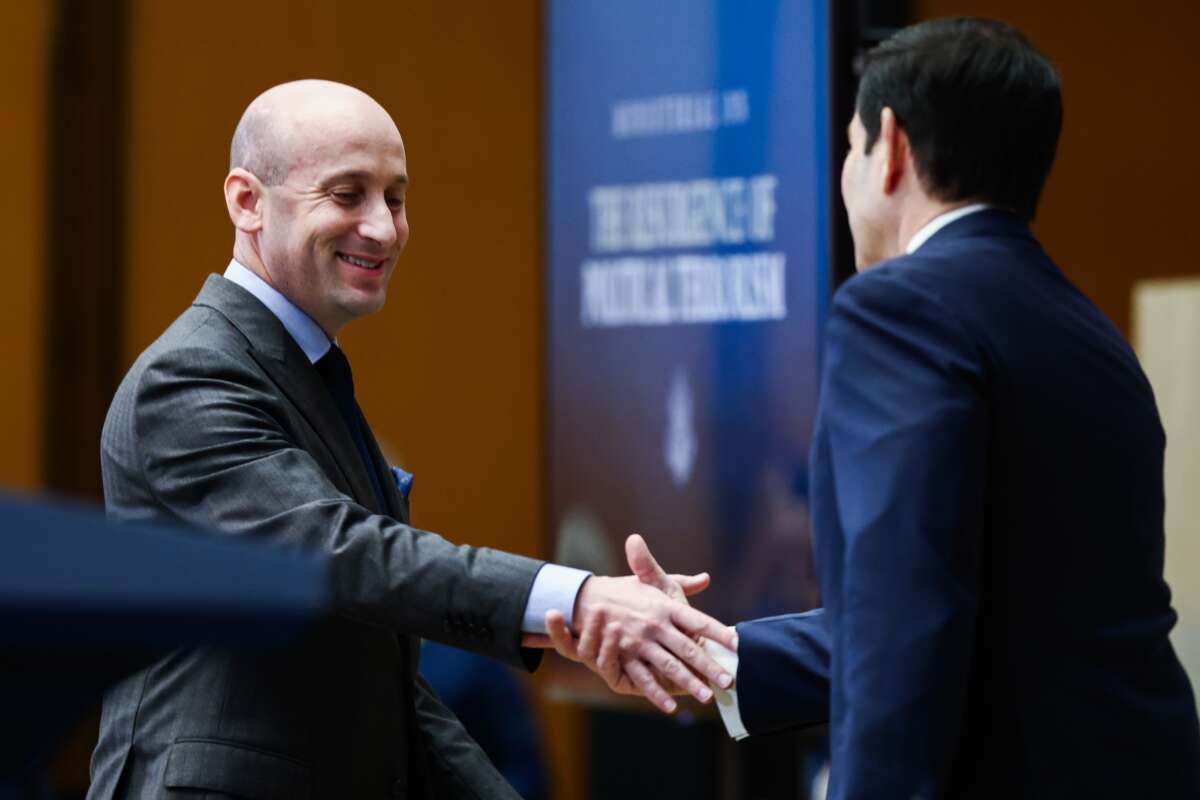
White House Deputy Chief of Staff Stephen Miller shakes hands with Secretary of State Marco Rubio before addressing the audience during opening remarks at the “Ministerial on the Resurgence of Political Terrorism” at the U.S. State Department, on July 16, 2026, in Washington, D.C.Finn Gomez / Getty Images

The Trump administration’s drive to turn the machinery of counterterrorism against left-wing movements worldwide kicked into a higher gear this month surrounding its convening of an international “Ministerial on the Resurgence of Political Terrorism.”

On July 16, 2026, Deputy Secretary of State Christopher Landau stood before representatives of over 60 nations assembled for the global summit in Washington, D.C. to introduce his boss, Secretary of State Marco Rubio. As he opened for the arch neoconservative, Landau told those assembled, “For those of us who grew up in the 1970s, the topic that we’re going to be discussing today is all too familiar.”

Landau’s invocation of the 1970s felt like an implicit admission that to many, the topic of the day — “left-wing political violence” — felt like an anachronism. While groups like the Baader-Meinhof Group in Germany or the Red Brigades in Italy in the 1970s did carry out acts of violence while proclaiming revolutionary beliefs, such groups are long defunct. Yet according to Rubio and White House adviser Stephen Miller, left-wing political violence constitutes an immediate threat; they describe the West as being in a war for civilization itself. Such rhetoric is not new for Miller.


The conference is the latest step in the Trump administration’s efforts to use mechanisms originally framed through the language of “counterterrorism” to repress left-wing movements — efforts the administration is now internationalizing. Donald Trump’s opening move was an executive order in September 2025 declaring that antifa, short for anti-fascism, was a domestic terrorism organization. Anti-fascism is an ideology, not an organization, though the bizarrely worded order dubbed antifa “a militarist, anarchist enterprise.” In addition to antifa not being an organization, there is no mechanism in U.S. law to declare a domestic organization to be domestic terrorists. These peculiarities left questions as to whether the move was mere bluster, a bit of rhetorical red meat for Trump’s MAGA base, or the start of something more serious.

NSPM-7 is essentially a blueprint for mobilizing the U.S. counterterrorism bureaucracy against domestic left-wing movements.

That question was answered three days later when Trump signed the National Security Presidential Memorandum-7 (NSPM-7). Citing the threat of left-wing political violence, NSPM-7 is essentially a blueprint for mobilizing the U.S. counterterrorism bureaucracy against domestic left-wing movements. It shows a deep understanding of the machinery of repression and an ability to turn it against Trump’s domestic enemies without requiring any new laws.


Miller Labels Leftists a “Cancer” That World Must “Root Out” in Fascistic Speech
People with left-wing beliefs are “enemies of civilization,” said Miller in a speech with numerous McCarthyist echoes.  By Sharon Zhang , Truthout  July 16, 2026


Rubio, along with Miller, explicitly mentioned NSPM-7 during the July 16 ministerial. In addition to NSPM-7, the Trump administration produced a counterterrorism strategy document that names three terror threats to the U.S.: “Narcoterrorists and Transnational Gangs,” “Legacy Islamist Terrorists,” and “Violent Left-Wing Extremists, including Anarchists and Anti-Fascists.” Rubio told the assembled nations that, “Under President Trump, for the first time, the United States is building the infrastructure, the partnership, and the strategy to defeat the scourge of far-left terror.”

While the Trump administration has made waging a civilizational war against the left under the guise of counterterrorism a key goal, Rubio has increasingly transformed the State Department into a tool for political repression. Early in the Trump administration, Rubio invoked a rarely used Cold War immigration provision to arrest, detain, and attempt to deport Palestinian solidarity activists. Citing NSPM-7, Rubio is now using the same immigration provision to deny visas to so-called “far left terrorists and associated groups.”

Rubio’s State Department has again shown itself to be an important vector of McCarthyism with its July 20 report entitled “Cuba: The Capital of 21st Century Communism.” Rubio, whose family fled the dictatorship of Fulgencio Batista (the dictator who was later overthrown by Fidel Castro), has long been obsessed with overthrowing Cuba’s socialist government.

The State Department report claims that the tiny island nation, under decades of U.S. siege, constitutes a threat to the U.S. in terms of “espionage” and “subversion.” This is clearly building a pretext, albeit a preposterous one, for a regime change war against Cuba. But it also is designed to put a target on the backs of the U.S. left.

Claims of Cuba’s threat to the U.S. largely stem from the idea that Cuba supports or inspired decades of left-wing movements in the U.S. The State Department report draws on sources like the House Un-American Activities Committee and the right-wing Capital Research Center, parroting decades-old conspiracy theories about U.S. social movements being the products of foreign communists.

Like the Rubio-Miller summit on left-wing violence, the report feels at first glance like the product of a past era. But its list of “front groups and fellow travelers” includes the Democratic Socialists of America, Code Pink, and The People’s Forum – all current targets of the right.

Days before the report was released, Rubio told the ministerial, “The Cuban regime’s sprawling intelligence and ideological network helped to build the far-left in our country and in our hemisphere, and it remains inextricably linked to the far-left groups and movements across and beyond the West.” It is clear claims of Cuban support are pivotal for laying the groundwork for attacking the left.

And the tools that the Trump administration needs to repress the left are already available within the U.S. national security state.


The U.S. Has a Long History of Targeting the Left


Trump officials repeatedly claim that prior to this point, the supposed threat of the left had been ignored or downplayed. This narrative is false. Domestic political surveillance, especially when carried out by the FBI, has always disproportionately targeted the left. And much of the language employed by Trump about left-wing “terrorists” has been in consistent usage for decades by the FBI.

Since counterterrorism (as opposed to counter-subversion) became the FBI’s national security focus in the late 1970s and early 1980s, the FBI has repeatedly targeted nonviolent left-wing groups as “terrorists.”

Under the Reagan administration, the FBI carried out a massive, sprawling investigation against the Committee in Solidarity with the People of El Salvador, which was justified as being an effort in collecting foreign intelligence against international terrorists.

During the Clinton administration, FBI Director Louis Freeh gave testimony to the U.S. Senate on the “Threat of Terrorism to the United States” that featured a section on “Left-wing and Puerto Rican extremist groups.” Claiming socialist, “anarchist and extremist socialist groups” posed a threat, he singled out groups involved in anti-globalization protests he claimed had an “an international presence.”

When George W. Bush’s administration expanded the scope of counterterrorism surveillance, the FBI issued bulletins encouraging preemptive monitoring of anti-Iraq War and anti-globalization protesters in the name of counterterrorism.

The Biden administration, like the Trump administration, claimed to be uniquely focused on domestic terrorism, and produced documents that repeated decades-old descriptions of “anarchist violent extremists, who violently oppose all forms of capitalism, corporate globalization, and governing institutions, which they perceive as harmful to society” as being a terror threat. Thus, the Trump administration’s claims that the national security apparatus spared the left in the past are simply false.


The Trump administration has made clear that the FBI’s focus must exclusively be on the left, not the right.

Rhetoric about left-wing or anarchist extremists did not start with Trump. The Trump administration’s war on the left, however, should not be shrugged off as more of the same. One striking difference is that in the past when the FBI used language about anarchist or left-wing terrorism, it was often coupled with parallel language about the sovereign citizen movement, militias, or right-wing terrorists. The FBI’s own track record indicates the agency was hardly even-handed, but it at least feigned neutrality.

The Trump administration has not only omitted such language but also made clear that the FBI’s focus must exclusively be on the left, not the right. In doing so, the administration has blended together the language of the “war on terror” with that of Cold War McCarthyism. But there is greater continuity between these two periods than many realize.

The U.S. has a long history of political policing. By the end of World War I, this political policing had increasingly become federalized. The Bureau of Investigation, as the FBI was known then, formed an intelligence division dedicated to tracking down so-called radicals. This division was disbanded when its political spying aroused considerable controversy, but paradoxically, in spite of the scandal, it helped to catapult the division’s leader, J. Edgar Hoover, into national political life. Even as the division was temporarily shuttered, Hoover was promoted to run the entire Bureau.

In the run-up to World War II, Hoover was able to again restart the FBI’s intelligence division. As he edged out bureaucratic competitors to firmly establish domestic intelligence as a core part of the FBI’s fiefdom, he interpreted presidential directives to give the FBI’s reconstituted intelligence division broad power to investigate “subversives.”

The Trump counterterrorism strategy is bringing history full circle, fully exposing the McCarthyite origins of modern counterterrorism.

Unsurprisingly, Hoover’s FBI overwhelmingly used this power to spy on the left. The Cold War allowed the FBI to cement these powers, but much of what would later be described as McCarthyism was the deliberate result of the FBI leadership’s own preexisting goals. Fallout from Watergate, the discrediting of the Cold War national security establishment by the U.S. defeat in Vietnam, and revelations that the FBI had spied on the civil rights and anti-Vietnam War movements that millions of Americans participated in all led to a serious effort to rein in this spying.

Yet, almost as soon as reforms were being proposed in the mid 1970s, defenders of the McCarthyite project desperately turned to a new rationale: counterterrorism.

Claims were made by congressional critics of FBI reform, right-wing think tanks, and private McCarthyites that restrictions on FBI surveillance, or even the abolition of the House Un-American Activities Committee, would lead the U.S. to become defenseless against terrorism.

The McCarthyites-turned-counterterrorists rallied around a theory that since terrorism was a politically motivated crime, preventing terrorism required looking at political movements before they spawned terrorists. Unsurprisingly, they singled out left-wing movements they disliked as those mandating the most scrutiny.

Critics on the right of the new restrictions argued that guidelines that restricted the FBI to surveilling only those engaged in criminal acts robbed it of the ability to prevent terrorism. These grievances percolated on the right for decades.

After al-Qaeda’s horrific murder of 3,000 Americans on September 11, 2001, these grievances became the starting point for the effort to hijack the tragedy and expand counterterrorism surveillance. Using intelligence to prevent and disrupt terrorism before it occurred, as opposed to prosecuting it as a law enforcement matter after the fact, became the new focus of the FBI. To be clear, preventing violent acts like 9/11 is a noble goal. But the preventive framework for counterterrorism that was adopted opened the door to political policing, as it was arguably designed to, and has seemingly had little success in foiling real violence. And NSMP-7 is rife with references to this framework. This is what makes it so dangerous.

The Trump counterterrorism strategy is bringing history full circle, fully exposing the McCarthyite origins of modern counterterrorism. The Rubio-Miller conference may seem like a comical anachronism. But the administration appears to be building toward painting larger swathes of the left as terrorists or foreign agents, while claiming the need to prevent terrorism. In doing so, Trump officials are laying the framework for targeting the left broadly.


This article is licensed under Creative Commons (CC BY-NC-ND 4.0), and you are free to share and republish under the terms of the license.


Chip Gibbons

Chip Gibbons is policy director of Defending Rights & Dissent. A journalist and researcher focusing on the U.S. national security state, Chip is currently working on The Imperial Bureau, forthcoming from Verso Books. Based heavily on archival research and documents obtained through the Freedom of Information Act, it tells the history of FBI political surveillance and explores the role of domestic surveillance in the making of the U.S. national security state.


Saturday, June 27, 2026

Hands off Cuba: UNISON demands removal of Cuba from the US State Sponsors of Terrorism list


“Nowhere is the devastation of this blockade more evident than in the health system. Cuba’s preventative health system has been the envy of the world with more doctors per capita than any other country, but it is now suffering.”

By UNISON

UNISON has a long-standing commitment to Cuba. The country has faced more than six decades of US economic, commercial and financial sanctions. Yet despite this, Cuba has developed a globally respected public health system which, until recently, was the envy of many countries. 

However during Trump’s two terms in office, the US has imposed more than 240 additional punitive measures against Cuba. 

According to Cuba’s latest report to the UN, it estimates economic losses of over US$7.6 billion in one year alone, including US$290 damage to the health sector. Hospitals are facing critical shortages and over half of the 651 medicines on Cuba’s essential medicines list are currently unavailable.  

A motion was brought at national delegate conference to renew UNISON’s support for the Cuban cause. It also called for the UK government to lobby the US to remove Cuba from its list of countries that are claimed to support state-sponsored terror. This list deters foreign investment, restricts access to international banking and threatens both Cuba’s domestic healthcare and its international medical programme. 

“Our union has proud history of supporting Cuban comrades,” said one delegate, speaking at national conference in Brighton. “Nowhere is the devastation of this blockade more evident than in the health system. Cuba’s preventative health system has been the envy of the world with more doctors per capita than any other country, but it is now suffering, with operations being performed by torchlight and a lack of essential medicines.”

A delegate from the union’s national young members forum, who went to Cuba with a small group UNISON’s Scottish young members recently, said: “We visited a number of public service workplaces where we saw the appalling impact of the US blockade. I was so impressed by the incredible resilience of our colleagues and trade union members in Cuba, but this blockade is a direct attack on workers.”

Shortages of contraception, condoms, vitamins, folic acid and early pregnancy tests have further harmed women’s productive health and this was evident on the UNISON member’s visit. He explained: “We visited a residential care home which provides medical support for women with high-risk pregnancies. Historically Cuba has had high quality sexual health education, but the blockade had led to an increase in unwanted pregnancies and infant mortality.”

As a result of the blockade, the number of deaths per live births has increased by over 50% from 5 to 8.2 deaths per 1,000 live births.  

The motion was passed unanimously. 


With Cuba in crisis, faith groups work to influence policy, deliver aid


(RNS) — U.S. Republican administrations have long seen faith groups as a cornerstone for humanitarian aid and community trust as they push for regime change in Cuba.
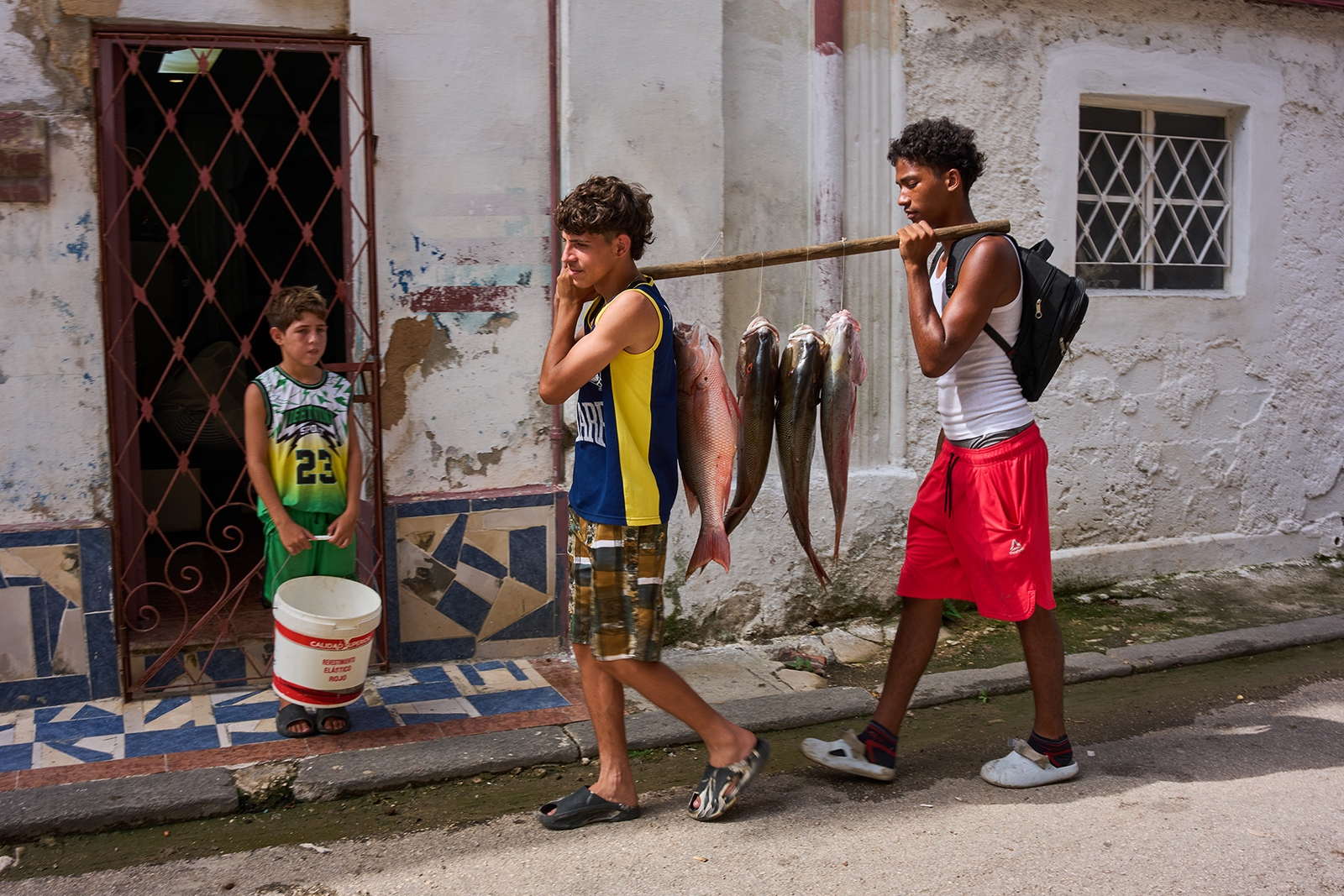
Youths carry freshly caught fish from the sea in Havana, Cuba, Monday, June 1, 2026. (AP Photo/Ramon Espinosa)


(RNS) — In the face of an accelerating U.S. pressure campaign, deteriorating public utilities and economic inefficiency, Cuba’s communist government on Thursday (June 18) announced sweeping economic reforms, the largest privatization since before Fidel Castro’s revolution in 1959.

 threats of military action, and its sanctions and an oil blockade have been compounding Cuba’s existing fuel shortages, power outages and scarcity of food and medicines. 

Amid the mounting internal and external pressure, faith communities have been speaking up and meeting with both the U.S. and Cuban governments.

U.S. Republican administrations have long seen faith groups as a cornerstone for humanitarian aid and community trust as they push for regime change in Cuba. In the last few months, the top U.S. diplomat in Cuba, Mike Hammer, has met with top Catholic bishops, a Catholic priest known for being critical of the Cuban government, a Methodist bishop and members of the Alliance of Evangelical Churches in Cuba, which includes several groups more often critical of the government, including the Assemblies of God.

Despair has become intense, said Rita María García Morris, the executive director of the Centro Cristiano de Reflexión y Diálogo (Christian Center for Reflection and Dialogue) based in the Cuban province of Matanzas, who with her team has helped meet the daily needs of vulnerable people and to advocate for peace, including several meetings with Hammer and U.S.-based pastors. 

“Suicide, mental illnesses and hopelessness are extreme, extreme,” said García Morris in Spanish. “Our psychologists cannot keep up. We have a team of psychologists working even at night with phone calls, and they cannot keep up.”

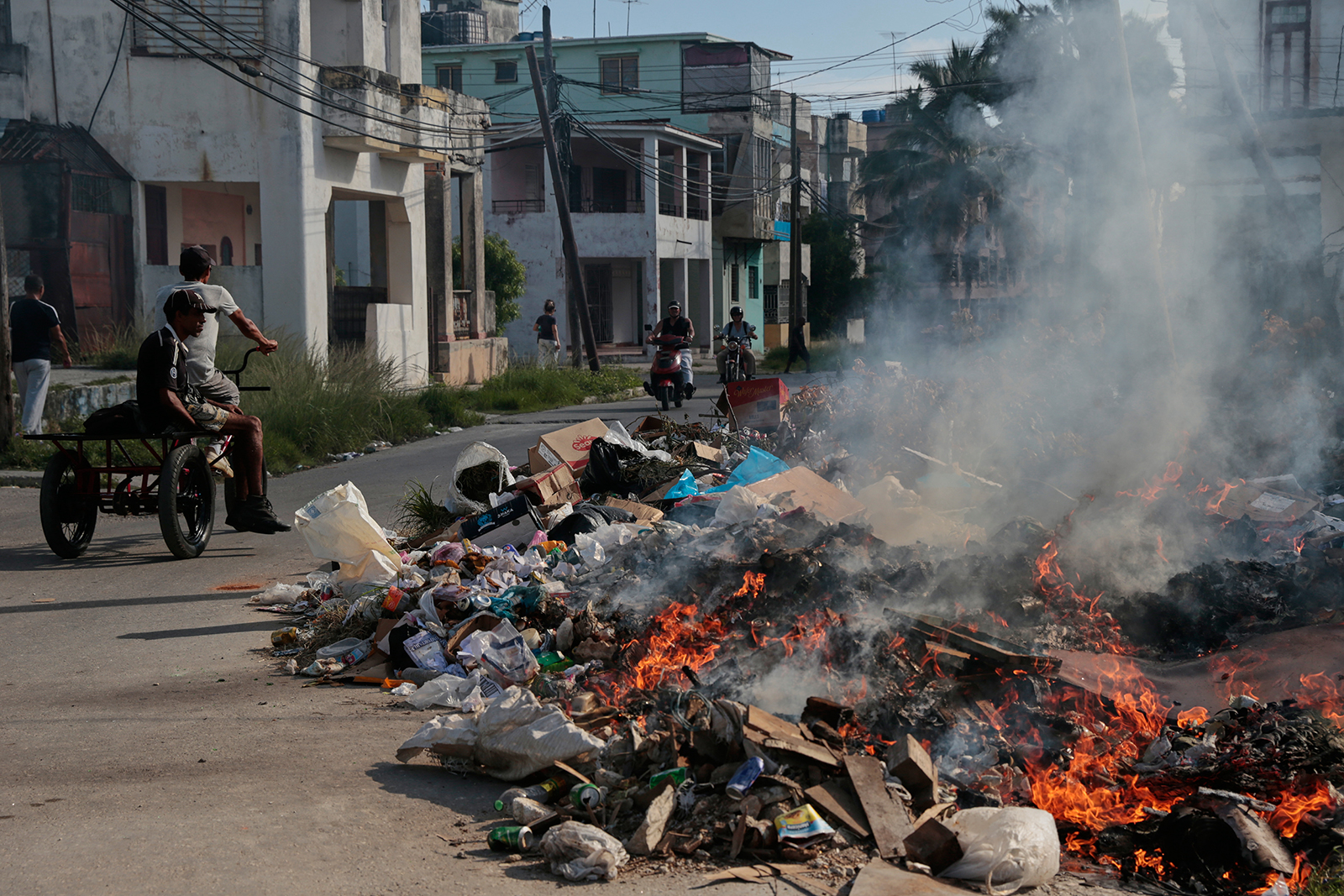
A pile of trash burns in Havana, Cuba, Wednesday, June 17, 2026. (AP Photo/Jorge Luis Banos)

García Morris, a Presbyterian ruling elder, said that suffering due to days-long blackouts and spoiled food is widespread. In December, she had to travel to the Dominican Republic because she had developed diabetic ketoacidosis, a condition that can become life-threatening, because she was not able to keep her insulin refrigerated.

She told RNS she is waiting to see how the economic reforms will affect the population. “Where does that leave the poor people and the humble people?” she asked.

Cuban state media has said the survival rate for children with cancer has fallen from 85% to 65% since the oil blockade began and that more than 75% of essential medications produced on the island can’t be made right now because of unavailable components.

The power outages and lack of flour are also limiting the Catholic church’s ability to produce unconsecrated bread for Communion. Puerto Rican parishes and Dominican religious sisters worked to send nearly 300,000 hosts to Cuba this month.

Outreach Aid to the Americas (OAA) distributes humanitarian aid to Cuba through largely evangelical churches independent from the government.

Teo Babun, OAA’s Cuban-American president and CEO, was quoted on the important role of faith communities in a 2004 Bush administration report issued by the Commission for Assistance to a Free Cuba. The evangelical businessman told RNS that “most of those reports interestingly enough are applicable today.”

He expressed confidence that the U.S. government and evangelical organizations are ready to provide a greater surge of humanitarian aid, even before a regime change.

“ We are aware of a lot of conversation taking place regarding Cuba and the aid that needs to be put together,” he said. “ They are becoming more and more familiar with the fact that the evangelical church has tremendous, broad resources and experience working in Cuba to be able to assist in providing humanitarian assistance at the right time.”

Since the beginning of the year, the U.S. State Department has funneled humanitarian aid to Cuba through the Catholic church, citing concerns about government corruption. The first batch of $3 million was designated after last fall’s Hurricane Melissa and took over four months to distribute. 

The State Department announced in February another $6 million in aid to be distributed through the Catholic church, but Secretary of State Marco Rubio said in May that half of that amount was still being held up by Cuban government permitting. The department made a third offer of $100 million in assistance distributed through both the Catholic church and “other reliable independent humanitarian organizations” last month.

The Catholic Church has also been continuing their long history of diplomacy promoting dialogue, rather than military conflict, in the U.S.-Cuba relationship. In February, several high-level meetings at the Vatican involving U.S. and Cuban leaders speaking about the Cuban crisis were publicized.

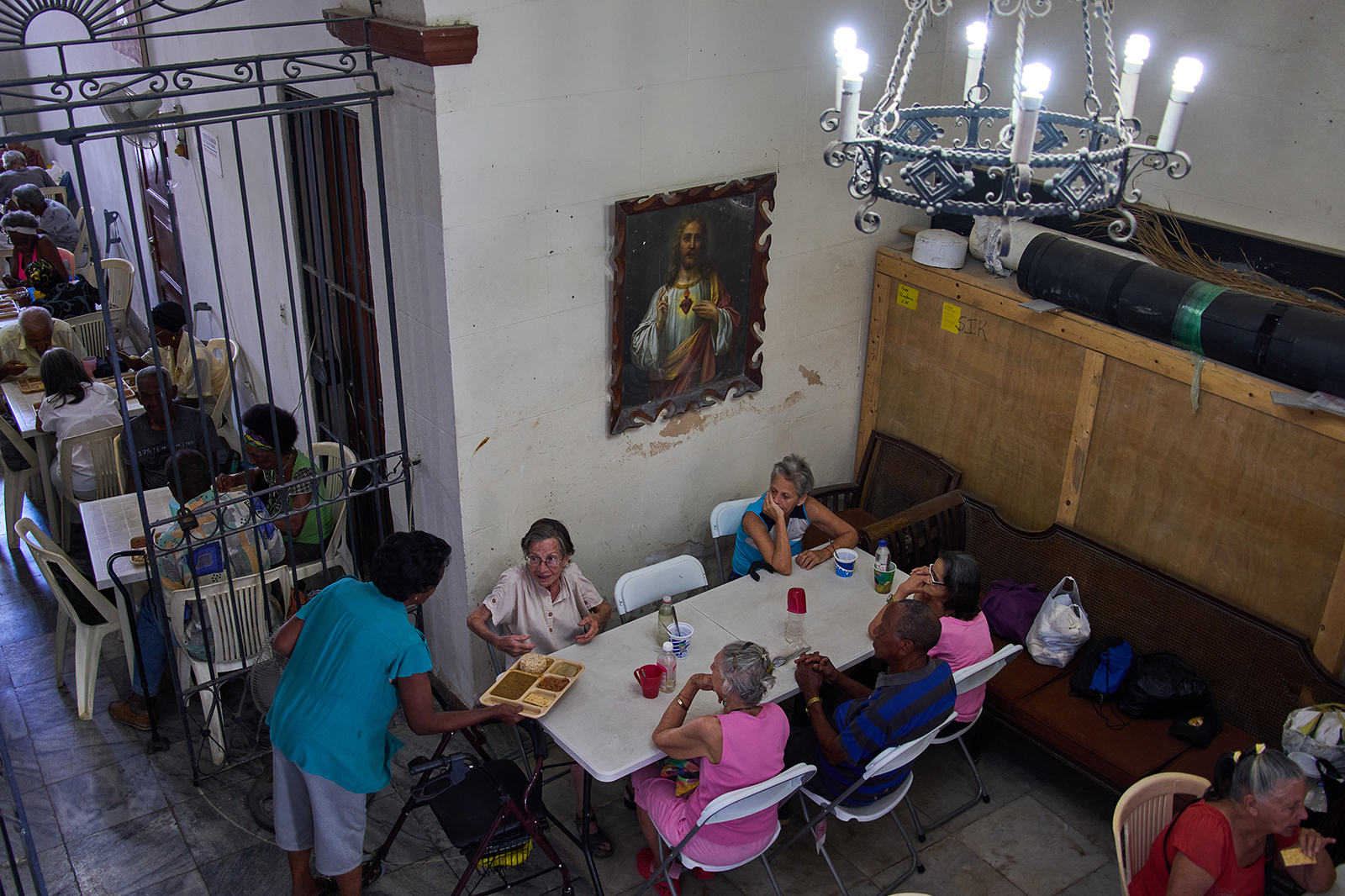
Carmen Casado, 84, is served a free meal of ground meat, rice, red beans and crackers through a program run by the Church of the Holy Spirit at a dining hall adjacent to the Catholic church in Old Havana, Cuba, Thursday, April 21, 2026. (AP Photo/Ramon Espinosa)

“This is the oldest diplomatic corps in the world and is certainly one of the most effective,” said Peter Martin, a former U.S. diplomat to the Holy See who now teaches at Boston College. 

Those diplomats have played key roles in Cuba’s recent history. On Pope Francis’ 78th birthday, President Barack Obama announced that he would begin normalizing relations with Cuba, a sharp break in over 50 years of policy — and he personally thanked Francis for his “moral example” and role in brokering key prisoner releases that allowed for the agreement.

That announcement came after decades of work by the Vatican and U.S. bishops. U.S. bishops began to back Cuban bishops’ calls for an end to the U.S. embargo on Cuba in 1972, and Vatican leaders had played a key role in easing government repression of religious groups in the once-atheist country, starting with a 1989 trip by Cardinal Roger Etchegaray.

“Vatican officials always urge leaders to consider the human cost of war, aggression and economic sanctions,” Martin said. “In my experience, when Holy See officials raised these issues, they weren’t asking us to turn a blind eye to the Cuban government’s abuses; they were simply pressing us to engage in dialogue and consider policies that would not harm the most vulnerable.”

Anna Lee Stangl, head of advocacy for CSW, an ecumenical Christian religious freedom organization, told RNS that it was possible to both believe that U.S. sanctions are “unjust” and that the Cuban government is engaging in “the systematic and serious violation of individual people’s basic human rights.”

Her organization’s research with sources on the ground in Cuba informs the U.S. government’s assessment of religious freedom in Cuba, and she said they continue to collect credible reports about religious leaders experiencing harassment, fines, surveillance and unjust incarceration


Catholics weren’t the only religious groups to contribute to the Obama administration policy.

“They wanted to hear from us and valued the expertise because they knew that our partners on the ground had the knowledge of exactly what was happening on the ground unfiltered,” said Catherine Gordon, Presbyterian Church (USA)’s representative for international issues, citing high-level meetings between denominational faith offices and the National Security Council.

Though the Vatican has continued to play a role in U.S.-Cuba diplomacy, faith groups opposing punitive U.S. economic policy on Cuba had not seen much success since the Obama years. In his first term, President Donald Trump reimposed restrictions on the island country, and despite some faith groups expecting the Biden administration would echo Obama’s Cuba policy, he continued Trump administration policies and added new sanctions.

Gordon said her coalition, largely left-leaning Protestant faith groups who had helped shape Obama’s Cuba policies, have been shut out ever since. Under Biden, “ we were seen as another network to promote their agenda with,” said Gordon, but despite assurances the administration was reviewing Cuba’s state sponsor of terrorism designation, “ they were never working on it,” she said, saying the Biden administration’s engagement with those groups was in “bad faith.”

Under Trump, those organizations, which work together under the Interfaith Working Group on Cuba, have tried alternate strategies to keep their ideas in conversation. In February, they delivered a letter to the White House and Congress calling on policymakers to end sanctions, enable humanitarian assistance and engage in diplomacy.

At the end of March, a group including leaders from the World Council of Churches, World Communion of Reformed Churches, the Anglican Communion, the World Methodist Council, Presbyterian Church (USA) and the United Church of Canada made a solidarity visit to Cuba, designed to highlight Cuban suffering and condemn U.S. sanctions, and met with Cuban government leaders.

And in April, Gordon and the working group also organized a webinar with Obama administration alumnus Ben Rhodes, who highlighted the importance and potential power of faith communities in shaping policy on Cuba. “There are faith-based arguments that can be made about the human suffering,” Rhodes said.

But they say they’ve largely been hitting walls in their efforts. Carol Blythe, the advocacy coordinator for the Alliance of Baptists, described feeling unheard in a January Zoom meeting with a State Department staffer when she asserted that their counterparts in Cuba are able to worship freely, counter to the department’s assessment of Cuba as a Country of Particular Concern for religious liberty.

At the end of 2024, Blythe, along with Stan Hastey, a retired denominational leader for the Alliance of Baptists, spearheaded a report about religious liberty based on a survey of pastors in Cuba and the testimonies of U.S. partners, which they delivered to the State Department.

“We contend that there is no systematic, ongoing, egregious violations of religious freedom that specifically include (1) torture; (2) prolonged detention without charges; (3) forced disappearances; or (4) other flagrant denial of life, liberty, or security of persons,” several denominations wrote in a letter introducing the report to then-Secretary of State Antony Blinken. 

In the report, which emphasizes the improvements in religious liberty in Cuba, one U.S. pastor who served in Cuba argued that policing seditious political dissidence and controlling religious expression are significantly different.

The State Department and the U.S. embassy in Cuba did not respond to requests for comment. 

“I believe that the church, international Christian leaders, can really call for peace and insist that the governments have a dialogue,” García Morris said. “The church in Cuba and the United States has not been indifferent. I believe that it has worked and continues working to prevent a much bigger and worse catastrophe.”