Monday, August 25, 2025

Trump advisor  APOLOGIST says US may take stakes in other firms after Intel

TV ECONOMIST LIKE KUDLOW


By AFP
August 25, 2025


Silicon Valley chip maker Intel says it cut about 15 percent of its 'core workforce' in the recently ended quarter - Copyright GETTY IMAGES NORTH AMERICA/AFP JUSTIN SULLIVAN

The US government could take stakes in other companies after doing so with chipmaker Intel, President Donald Trump’s top economic advisor Kevin Hassett said Monday.

Hassett, director of the National Economic Council, cited Trump’s plans for a sovereign wealth fund in a CNBC interview, saying “I’m sure that at some point there’ll be more transactions” in the semiconductor industry or others.


He was responding to a question on whether a recently announced deal for the US government to take a 10-percent equity stake in Intel was the start of broader efforts towards similar moves in other industries that authorities have been funding.

Under the agreement with Intel, the US government will receive 433.3 million shares of common stock, representing a 9.9-percent stake in the company, Intel said in an earlier statement.

This amounts to an $8.9 billion investment, funded partially by $5.7 billion in grants awarded but not yet paid under the CHIPS and Science Act — a major law passed under former president Joe Biden, which Trump has criticized. The other portion comes from a different award.

Hassett said on Monday that “in the past, the federal government has been giving money away” to companies.


Kevin Hassett, Director of the US National Economic Council, said the government could take stakes in other companies after Intel but plans to stay out of how firms are run – Copyright AFP/File ANDREW CABALLERO-REYNOLDS

But he maintained that under potential deals like that with Intel, “these are going to be shares that don’t have voting rights.”

He said the US government plans to stay out of how companies are run.

– Company risks –


Intel warned in a securities filing on Monday, however, that the government’s equity stake could limit its ability to secure grants from government entities in the future — among other risks.

It noted that the timing it would receive the funding, alongside its ability to fulfil conditions for the funds, “remain uncertain.”

Intel additionally noted that its international business could be “adversely impacted” by the US government being a significant shareholder.

Critics of the deal warn it could be bad for the company’s viability if politics are seen as driving business decisions.

In February, shortly after Trump returned to the presidency, the White House published a plan for the world’s biggest economy to set up a sovereign wealth fund.

A sovereign wealth fund is a state-owned investment fund that manages a country’s excess reserves, typically derived from natural resource revenues or trade surpluses, to generate long-term returns.

For now, Hassett noted that the specific deal with Intel came out of “a very, very special circumstance because of the massive amount of CHIPS act spending that was coming Intel’s way.”

The US government could take stakes in other companies after doing so with chipmaker Intel, President Donald Trump’s top economic advisor Kevin Hassett said Monday.

Hassett, director of the National Economic Council, cited Trump’s plans for a sovereign wealth fund in a CNBC interview, saying “I’m sure that at some point there’ll be more transactions” in the semiconductor industry or others.

He was responding to a question on whether a recently announced deal for the US government to take a 10-percent equity stake in Intel was the start of broader efforts towards similar moves in other industries that authorities have been funding.

Under the agreement with Intel, the US government will receive 433.3 million shares of common stock, representing a 9.9-percent stake in the company, Intel said in an earlier statement.

This amounts to an $8.9 billion investment, funded partially by $5.7 billion in grants awarded but not yet paid under the CHIPS and Science Act — a major law passed under former president Joe Biden, which Trump has criticized. The other portion comes from a different award.

Hassett said on Monday that “in the past, the federal government has been giving money away” to companies.

But he maintained that under potential deals like that with Intel, “these are going to be shares that don’t have voting rights.”

He said the US government plans to stay out of how companies are run.

– Company risks –

Intel warned in a securities filing on Monday, however, that the government’s equity stake could limit its ability to secure grants from government entities in the future — among other risks.

It noted that the timing it would receive the funding, alongside its ability to fulfil conditions for the funds, “remain uncertain.”

Intel additionally noted that its international business could be “adversely impacted” by the US government being a significant shareholder.

Critics of the deal warn it could be bad for the company’s viability if politics are seen as driving business decisions.

In February, shortly after Trump returned to the presidency, the White House published a plan for the world’s biggest economy to set up a sovereign wealth fund.

A sovereign wealth fund is a state-owned investment fund that manages a country’s excess reserves, typically derived from natural resource revenues or trade surpluses, to generate long-term returns.

For now, Hassett noted that the specific deal with Intel came out of “a very, very special circumstance because of the massive amount of CHIPS act spending that was coming Intel’s way.”


US Judge temporarily halts deportation of Salvadoran Kilmar Abrego Garcia to Uganda

A federal judge on Monday temporarily blocked the deportation of Salvadoran national Kilmar Abrego Garcia to Uganda, halting a case tied to President Donald Trump’s immigration crackdown. Garcia, wrongly deported to El Salvador in March, was arrested again in Baltimore by ICE, Homeland Security Secretary Kristi Noem said.


Issued on: 26/08/2025 - 
By: FRANCE 24

Kilmar Abrego Garcia speaks to the media before entering the Immigration Enforcement building in Baltimore, Maryland, on August 25, 2025. © Roberto SCHMIDT, AFP

A federal judge on Monday temporarily blocked the deportation to Uganda of a Salvadoran man at the center of a row over US President Donald Trump's immigration crackdown.

Kilmar Abrego Garcia, who was wrongly deported to El Salvador in March and then sent back to the United States, was arrested in Baltimore on Monday by Immigration and Customs Enforcement (ICE), Homeland Security Secretary Kristi Noem said on X.

Abrego Garcia, 30, who was released last week from a jail in Tennessee, where he is facing human smuggling charges, and allowed to go home to Maryland pending trial, "will be processed for removal to Uganda," the Department of Homeland Security said.

Lawyers for Abrego Garcia immediately filed a lawsuit contesting his deportation and District Judge Paula Xinis temporarily blocked his removal from the country while she holds further hearings on his case.

Abrego Garcia was required to check in with ICE in Baltimore on Monday as one of the conditions of his release.

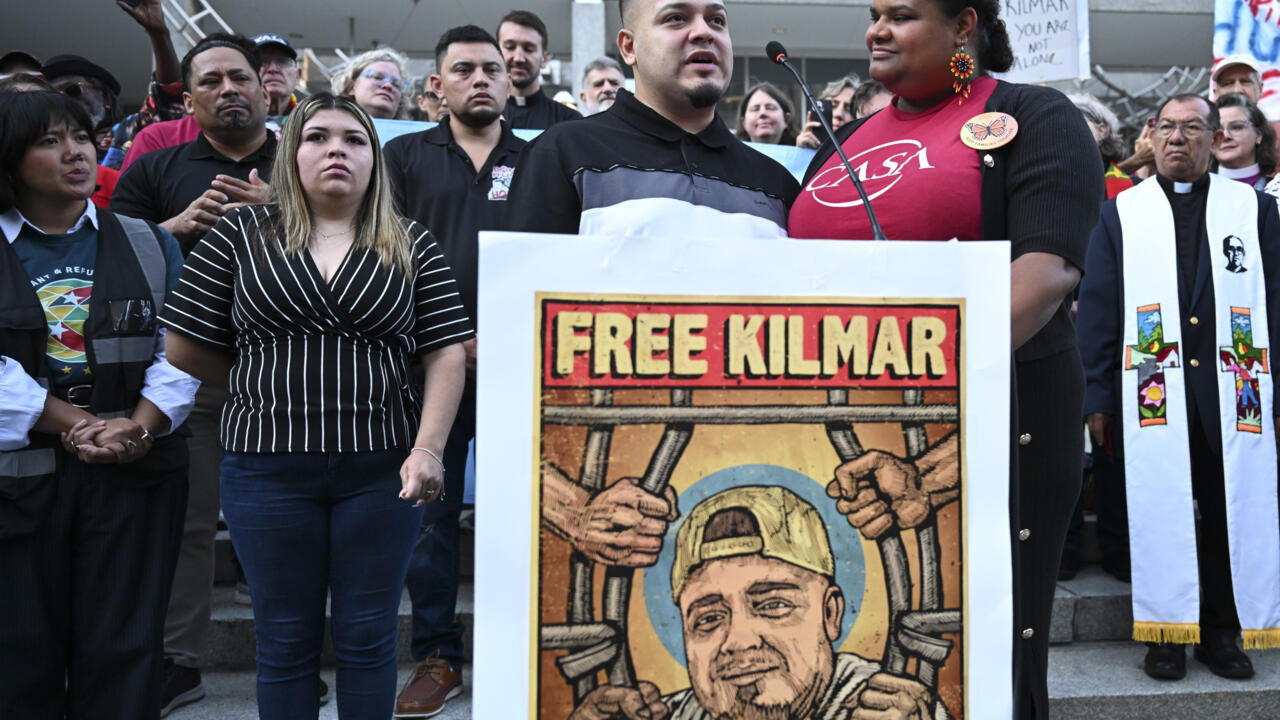
Simon Sandoval-Moshenberg, one of Abrego Garcia's lawyers, told a crowd of supporters outside the ICE field office that his client was immediately taken into custody when he turned up for the appointment.

"Shame, shame," chanted the protestors, who were holding signs reading "Free Kilmar" and "Remove Trump."

The attempt to deport Abrego Garcia to Uganda adds a new twist to a saga that became a test case for Trump's sprawling crackdown on illegal immigration -- and, critics say, his trampling of the law.

Abrego Garcia had been living in the United States under protected legal status since 2019, when a judge ruled he should not be deported because he could be harmed in his home country.

Then he became one of more than 200 people sent to El Salvador's CECOT mega-prison in March as part of Trump's crackdown on undocumented migrants.

But Justice Department lawyers admitted that the Salvadoran had been wrongly deported due to an "administrative error."

He was returned to US soil only to be detained again in Tennessee on human smuggling charges.

'Completely unconstitutional'

Abrego Garcia denies any wrongdoing, while the Trump administration alleges he is a violent MS-13 gang member involved in smuggling of other undocumented migrants.

On Thursday, when it became clear that Abrego Garcia would be released the following day, government officials made him a plea offer: remain in custody, plead guilty to human smuggling and be deported to Costa Rica.

He declined the offer.

"That they're holding Costa Rica as a carrot and using Uganda as a stick to try to coerce him to plead guilty to a crime is such clear evidence that they're weaponizing the immigration system in a manner that is completely unconstitutional," Sandoval-Moshenberg said.

The case has become emblematic of Trump's crackdown on illegal migration.

Right-wing supporters praise the Republican president's toughness, but legal scholars and human rights advocates have blasted what they

(FRANCE 24 with AFP)
TECH BROS

Musk’s xAI sues Apple, OpenAI alleging antitrust violations

By AFP
August 25, 2025


The latest meme, if you missed it, is AI action figures... generated by OpenAI's free ChatGPT service - © AFP/File PAU BARRENA

Elon Musk’s companies xAI and X filed a sweeping US antitrust lawsuit Monday against Apple and OpenAI, alleging the tech giants formed an illegal partnership to stifle competition in artificial intelligence and smartphone markets.

The 61-page complaint, filed in federal court in Texas, accuses Apple and OpenAI of entering an exclusive deal that makes OpenAI’s ChatGPT the only generative AI chatbot integrated into Apple’s iPhone operating system, while blocking rivals like xAI’s Grok.

“This is a tale of two monopolists joining forces to ensure their continued dominance in a world rapidly driven by the most powerful technology humanity has ever created: artificial intelligence,” the lawsuit states.

The plaintiffs claim Apple holds 65 percent of the US smartphone market, while OpenAI controls at least 80 percent of the generative AI chatbot market through ChatGPT.

Apple and OpenAI announced their partnership in June 2024, making ChatGPT the exclusive AI assistant accessible through Apple’s Siri voice assistant and other iPhone features.


The xAI lawsuit comes as Elon Musk publicly feuds with OpenAI CEO Sam Altman – Copyright AFP/File LISA O’CONNOR, JACK GUEZ

The lawsuit alleges this arrangement gives ChatGPT exclusive access to “billions of user prompts” from hundreds of millions of iPhone users.

The complaint also accuses Apple of manipulating App Store rankings to favor ChatGPT while delaying approval of updates to the Grok app.

Musk’s companies are seeking billions in damages and a permanent injunction to stop the alleged anticompetitive practices. They have demanded a jury trial.

“This latest filing is consistent with Mr Musk’s ongoing pattern of harassment,” OpenAI said in a statement to AFP.

Apple did not immediately respond to a request for comment.

The lawsuit follows threats Musk made earlier this month that triggered a fiery exchange with OpenAI CEO Sam Altman.

Altman called Musk’s accusation of ranking manipulation “remarkable,” charging that Musk himself “manipulates X to benefit himself and his own companies and harm his competitors and people he doesn’t like.”

Musk called Altman a “liar” in the heated exchange.

Both men were original founders of OpenAI before Musk’s departure in 2018 and now have a highly conflictual relationship.

Musk founded xAI in 2023 to compete with OpenAI and other major AI players that have poured billions of dollars into AI since the blockbuster launch of the first version of OpenAI’s ChatGPT in late 2022.


Telegram’s Durov blasts French probe one year after arrest


By AFP
August 25, 2025


The 40-year-old was detained in Paris in 2024 
- Copyright GETTY IMAGES/AFP Andrew Harnik

Telegram founder Pavel Durov has criticised France’s investigation into illegal content on his messaging app, saying authorities were “struggling” to find evidence of wrongdoing a year after his high-profile arrest.

“One year ago, the French police detained me for four days because some people I’d never heard of used Telegram to coordinate crimes,” Durov wrote on his Telegram channel Sunday evening.

“A year later, the ‘criminal investigation’ against me is still struggling to find anything that I or Telegram did wrong,” he said.

The Russian-born entrepreneur, 40, was sensationally detained in Paris in 2024 and is under formal investigation by French authorities over the popular platform’s alleged complicity in criminal activity.

Durov, who holds French and Russian passports, has been accused of complicity in running an online platform that allowed illicit transactions, images of child sex abuse and other illegal content.

He has denied the allegations and condemned his arrest as doing “massive damage to France’s image as a free country”.

“Arresting a CEO of a major platform over the actions of its users was not only unprecedented — it was legally and logically absurd,” Durov wrote, pledging to “keep fighting”.

The tech founder has accused French authorities of failing to follow proper legal procedures when submitting content moderation inquiries.

“Our moderation practices align with industry standards, and Telegram has always responded to every legally binding request from France,” Durov said.

During initial questioning in December 2024, the tech entrepreneur acknowledged a growing criminal presence on the platform, and pledged to strengthen content oversight.

Durov, who was initially banned from leaving France, had his judicial control relaxed in July, allowing him to reside in the United Arab Emirates, where Telegram is based, for a maximum of two weeks at a time.

“I still have to return to France every 14 days, with no appeal date in sight,” he said.
US studio unearths fossilized dinosaur game ‘Turok’

The original arrow-twanging Turok was a character in 1950s comic books, who made his way to Nintendo 64 consoles in a series of successful games in the late 1990s and then to other consoles in the 2000s. After that, its eponymous native American adventurer was largely forgotten

FIRST NATIVE AMERICAN CHARACTER IN COMICS 
AS A STAND ALONE HERO

By AFP
August 25, 2025


Gamescom in Germany got a preview of 'Turok: Origins' -- a game pitting players against dinosaurs, whose release date is still not set - Copyright AFP Lionel BONAVENTURE

Everything old is new again, especially for gamers at the Gamescom trade fair, who got a preview of upcoming video game “Turok: Origins” — a third-person shooter pitting the player against dinosaurs and aliens.

The original arrow-twanging Turok was a character in 1950s comic books, who made his way to Nintendo 64 consoles in a series of successful games in the late 1990s and then to other consoles in the 2000s.

After that, its eponymous native American adventurer was largely forgotten — until US studio Saber Interactive dug him up for “Turok: Origins” and developed him into a game that looks like a blend of the “Jurassic Park” and “Predator” movie franchises.


When Universal Studios — producer of the “Jurassic Park” movies — tapped Saber in 2020 to develop its Turok intellectual property (IP), the gaming company was “shocked”, its studio head, Jesus Iglesias, told AFP.

“It’s been sleeping for a long time,” he noted.

But Saber — founded in Russia but now based in Florida in the United States — had a track record of reviving some memorable but neglected titles.

“Saber Interactive is known for taking, from time to time, some dead IPs and rebooting them, like we did with (Warhammer 40,000’s) ‘Space Marine’, we did with ‘Evil Dead’,” Iglesias said.

– ‘Turok’ reboot –

The result is “Turok: Origins”, part of which was presented at Gamescom in Germany, one of the biggest gaming trade shows in the world, which ended on Sunday after welcoming more than 357,000 visitors.

The game, which Iglesias said had 250 people working on it at the peak of its development, offers single-player and multi-player modes to tackle AI-controlled enemies.

Whereas the original run of Turok was reminiscent of early-stage Lara Croft in a prehistoric setting, the “Origins” reboot promises a fluid, fast-moving and more cinematic experience, as demanded from today’s players.

“We are being respectful with the originals, especially with Turok 1 and Turok 2, and also adding some elements that help to make the universe a little bit more consistent,” Iglesias said.

“The games that they released after the first one, they were, in a way, going away from the original one. And that ended up in the game that was released in 2008 that was almost a disaster.”

That 2008 game, simply called “Turok”, had aimed to reboot the series but it got a mixed reception. A 2019 Turok title followed, but it was unconnected to the main series.

There is no release date yet for “Turok: Origins”, which will be available on Xbox, Playstation and PC.

I COLLECTED TUROK STILL HAVE THEM IN MY COMIC COLLECTION!


Bolivia right-wing candidate pledges to scrap lithium deals with China, Russia

BUT NOT SCRAPING THEM ENTIRELY


Bolivian right-wing presidential candidate Jorge Quiroga vowed on Monday to cancel multi-billion-dollar lithium extraction agreements signed by the outgoing government with Russia and China if elected president in October, saying he would seek alternative investment partners.


Issued on: 26/08/2025 
By: FRANCE 24

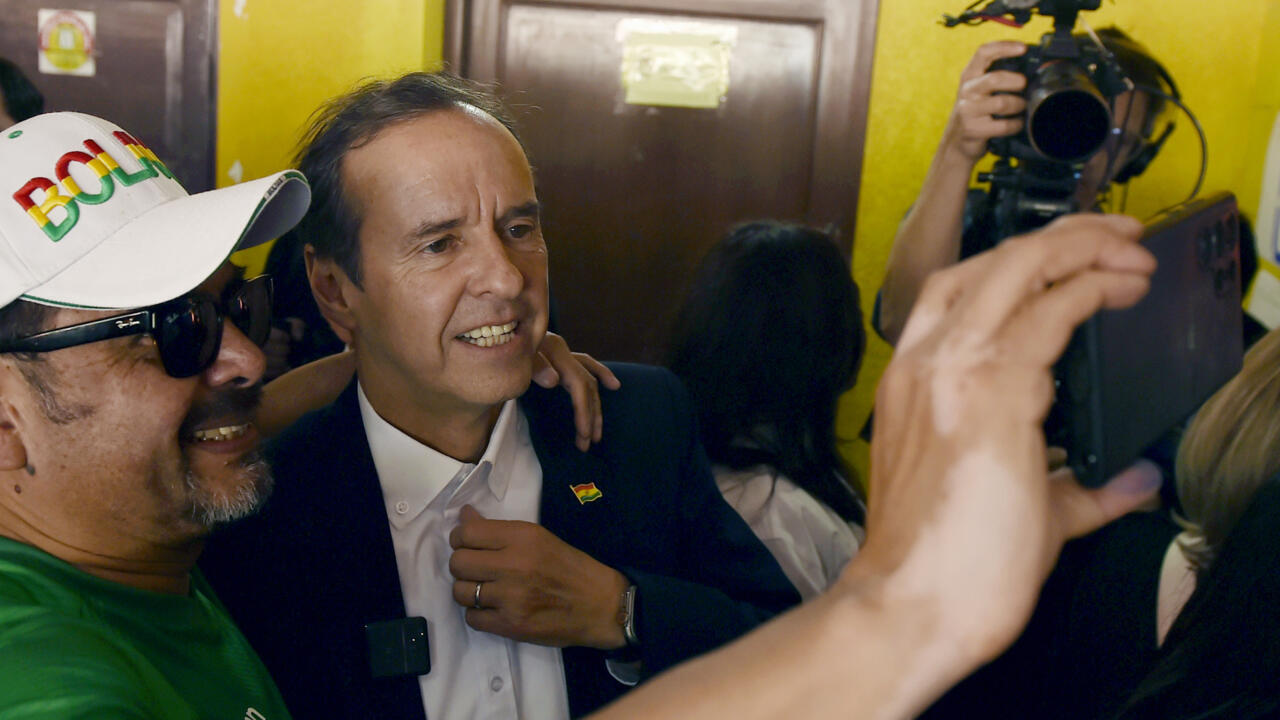
Jorge 'Tuto' Quiroga, Bolivia's presidential candidate for the Alianza Libre coalition, takes a photo with a supporter after voting at a school in La Paz on August 17, 2025. © Jorge Bernal, AFP

Bolivian right-wing presidential hopeful Jorge Quiroga on Monday vowed to scrap billion-dollar lithium extraction deals struck by the outgoing government with Russia and China if elected leader.

"We don't recognise (outgoing President Luis) Arce's contracts... Let's stop them, they won't be approved," the US-educated Quiroga, who has vowed a major shake-up in Bolivia's alliances if elected president in October, told AFP in an interview.

Quiroga came second in the first round of Bolivia's August 17 presidential election with 26.7 percent, behind center-right senator Rodrigo Paz on 32 percent.

The Movement Towards Socialism (MAS), in power since 2006, suffered a historic rout, with voters punishing the party founded by iconic ex-president Evo Morales over a deep economic crisis.

Quiroga and Paz now face a second-round duel for the presidency on October 19.

The fate of Bolivia's lithium deposits -- among the world's largest of the metal used in smartphone and electric vehicle batteries -- is a hot topic in the campaign.

The so-called Lithium Triangle, spanning parts of Bolivia, Chile and Argentina, is home to 60 percent of the world's lithium reserves, according to the US Geological Survey.

But in the case of Bolivia, nearly all of it is still trapped underground, at an altitude of 3,600 meters (12,000 feet) in the vast Salar de Uyuni salt flat, one of the country's top tourist attractions.


In 2023 and 2024 Arce's government signed deals with Russia's Uranium One and China's CBC, a subsidiary of battery manufacturer CATL, to extract lithium from the salt pan.

Worth a combined $2 billion, the deals were intended to help Bolivia catch up in the race to mine the mineral.

But they were blocked in Congress by infighting in the ruling party.

Indigenous groups meanwhile went to court to have them scrapped on environmental grounds.

Quiroga claimed Uranium One and CATL were selected "behind the back" of local authorities an
d said he would propose a new law on mineral deposits that precluded "favoritism."


From gas to lithium

Bolivia enjoyed over a decade of strong growth under Morales (2006-2019), who nationalized the gas sector and ploughed the proceeds into anti-poverty programs.

But underinvestment in exploration caused gas revenues to implode, eroding the government's foreign currency reserves and leading to acute shortages of imported fuel, widely-used dollars and other basics.

Inflation rose to 24.8 percent year-on-year in July, its highest level since at least 2008, causing voters to desert the left in droves.

Quiroga, who served briefly as president in the early 2000s, has pledged a radical overhaul of Bolivia's big-state economic model if elected, including steep spending cuts.

His challenger Paz, who has campaigned as a moderate, on Monday ruled out strict austerity measures to rescue the country from the brink of bankruptcy.

"There will be a stabilization process, we're not calling it an adjustment," the 57-year-old senator told AFP.

He nonetheless revealed he would cut $1.2 billion in annual fuel subsidies -- a major drain on the public purse -- and save another $1.3 billion in unspecified "superfluous spending."

Paz added that he would create tax incentives to get Bolivians to bank any dollars hidden under their mattress but would not initially seek an international bailout, as proposed by Quiroga.

"People understand that we have to get our house in order first," said Paz, whose father Jaime Paz Zamora led Bolivia from 1989 to 1993.

(FRANCE 24 with AFP)
Norway wealth fund divests from Caterpillar over Gaza 'rights violations'

Oslo (AFP) – Norway's sovereign wealth fund said Monday that it had divested from US construction equipment firm Caterpillar over purported involvement in rights violations in the Israel-Hamas war.


Issued on: 26/08/2025 - RFI

An Israeli military bulldozer demolishes a home at the Nur Shams Palestinian refugee camp in the Israeli occupied West Bank on June 23, 2025 © Jaafar ASHTIYEH / AFP/File

Fuelled by Norway's vast energy revenues, the fund is the world's biggest, with a value of nearly $2 trillion and investments in more than 8,600 companies across the globe.

The fund had held a 1.2 percent stake in Caterpillar, valued at 24.4 billion krone ($2.4 billion), as of the end of last year.

The Norwegian central bank, which manages the fund, said it had decided to exclude Caterpillar as it posed "an unacceptable risk... to serious violations of the rights of individuals in situations of war and conflict".

The fund said it had based its decision on a recommendation by its council on ethics.

In a statement, the council said that "bulldozers manufactured by Caterpillar are being used by Israeli authorities in the widespread unlawful destruction of Palestinian property".

"There is no doubt that Caterpillar's products are being used to commit extensive and systematic violations of international humanitarian law," the body said.

It added that the company had "not implemented any measures to prevent such use".

AFP has contacted Caterpillar for comment.

The fund said it had also withdrawn from five Israeli firms for financing the construction of illegal settlements in the Israel-occupied West Bank.

They included First International Bank of Israel, FIBI Holdings, Bank Leumi Le-Israel, Mizrahi Tefahot and Bank Hapoalim.

Earlier this month, the fund said it was selling out of 11 Israeli companies following reports that it had invested in an Israeli jet engine maker even as the war in Gaza raged.

The revelations led Prime Minister Jonas Gahr Store to ask Finance Minister and former NATO secretary general Jens Stoltenberg for a review.

© 2025 AFP

Hundreds of filmmakers urge Venice Film Festival to take a stronger stand on Gaza


Copyright AP Photo

By David Mouriquand
Published on 25/08/2025


A group of international filmmakers are urging the Venice Film Festival, which starts this week, “to be more courageous and clear in condemning the ongoing genocide in Gaza.”


The 82nd Venice Film Festival kicks off on Wednesday and both Italian and international filmmakers have called on the festival to condemn what they describe in an open letter as genocide and ethnic cleansing in Gaza.

The appeal, under the banner of Venice4Palestine, was sent to the Venice Film Festival's umbrella organisation the Biennale di Venezia, as well as the festival's Venice Days and International Critics’ Week sections.

The group urges the festival to avoid becoming “a sad and empty showcase”. To be better, the group asks the festival to take a “clear and unambiguous stand”, to provide “a place of dialogue, active participation, and resistance, as it has been in the past” and highlight Palestinian narratives to better address “ethnic cleansing, apartheid, illegal occupation of Palestinian territories, colonialism and all the other crimes against humanity committed by Israel for decades, not just since October 7.”

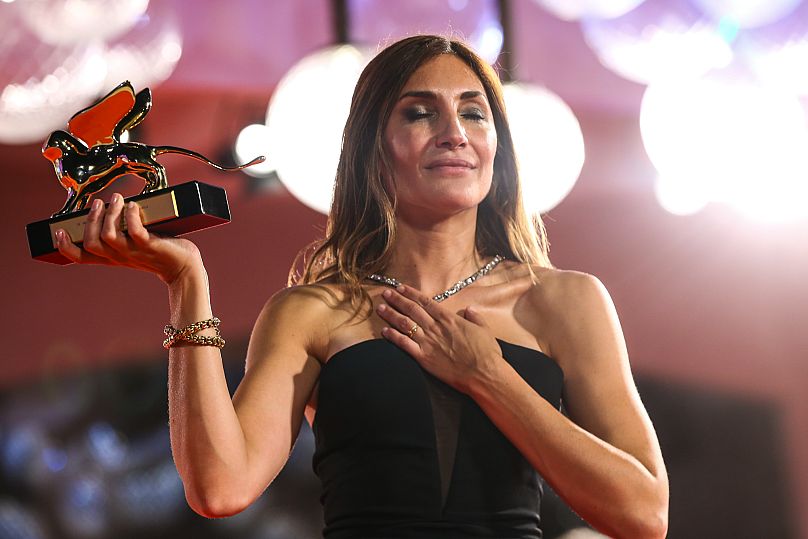
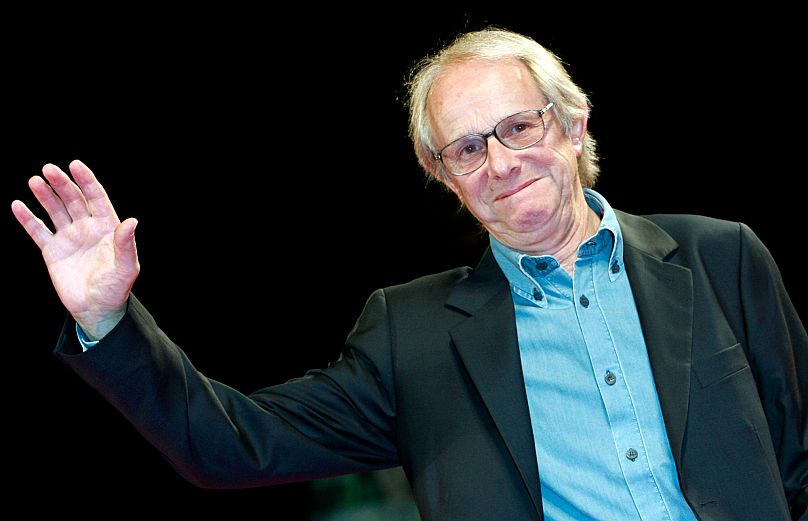
Signatories include Italian actor Toni Servillo, Italian actress and director siblings Alba and Alice Rohrwacher, French directors Céline Sciamma and Audrey Diwan (who won the Golden Lion for Happening in 2021), British filmmaker Ken Loach (who won the Honorary Golden Lion in 1994) and British actor Charles Dance, as well as Palestinian directorial duo Arab Nasser and Tarzan Nasser - who won best director in Cannes Un Certain Regard this year for their film Once Upon A Time In Gaza.

Audrey Diwan with the Golden Lion in 2021 AP Photo

In the letter, they write: “As the spotlight turns on the Venice Film Festival, we’re in danger of going through yet another major event that remains indifferent to this human, civil, and political tragedy. ‘The show must go on,’ we are told, as we’re urged to look away - as if the ‘film world’ had nothing to do with the ‘real world.'”

“We must interrupt the flow of indifference and open a path to awareness,” they add, stating that “there is no cinema without humanity.”

The letter concludes: “Let us ensure that this Mostra has meaningful values and does not turn into a sad and shallow vanity fair once more. Let’s do it all together – with courage, with integrity. Free Palestine!”

Ken Loach AP Photo

The Biennale was quick with their response, saying they and the Venice Film Festival “have always been, throughout their history, places of open discussion and sensitivity to all the most pressing issues facing society and the world.”

They cite as evidence “the works that are being presented”, citing the case of the film The Voice of Hind Rajab by Tunisian director Kaouther Ben Hania, which is in competition this year and centres on the killing of a 5-year-old Palestinian girl in a car that had been attacked by Israeli forces in Gaza in 2024.

In its statement, the Biennale further noted that last year’s Venice line-up featured Israeli director Dani Rosenberg’s film Of Dogs and Men shot in the wake of the Oct. 7 Hamas attack.

“The Biennale is, as always, open to dialogue,” the statement concluded.

Both statements from Venice4Palestine and the Biennale come as the global hunger monitor, the Integrated Food Security Phase Classification, announced last week that people in the Gaza Strip are officially facing “a man-made” famine in the territory – despite what the Israeli government has said.

The statements also come prior to the upcoming United Nations meeting in September, with many nations including Britain, France and Canada saying that they are preparing to officially recognize a state of Palestine.

The 82nd Venice International Film Festival runs from 27 August to 6 September.

RSF says journalists 'targeted' in Israeli strike on Gaza hospital


Israeli strikes on a hospital complex in Gaza killed 20 people, including five Palestinian journalists in what the French NGO Reporters without Borders called a "deliberate" attack.


Issued on: 25/08/2025 - RFI

Rescuers work to recover the body of Palestinian cameraman Hussam al-Masri, a freelancer for the Reuters news agency, who was killed with others in Israeli strikes on Nasser hospital, in Khan Younis, in this still image taken from a video shot by Reuters freelancer Hatem Khaled, who was wounded shortly afterwards in another strike while he was filming the site, 25 , August 202
5. © Hatem Khaled/Reuters

Strikes hit Nasser Hospital in Khan Yunis, a large medical complex in the south of Gaza that is a known gathering place for displaced journalists, according to the press freedom group Reporters without borders (RSF).

Hossam al-Masri, a freelance photographer for the Reuters news agency died in a first drone strike on the hospital Monday morning.

A second strike, eight minute later, killed three other journalists who had arrived at the scene to cover rescue efforts.

They included Mariam Abu Daqqa, a freelance journalist for the Associated Press news agency; Moaz Abu Taha, a correspondent for the American broadcasting network NBC; and Mohamad Salama, a photojournalist for Al Jazeera.


Freelance journalist Ahmad Abu Aziz died soon after of injuries.

Freelance photographer Hatem Khaled was wounded in the second strike, according to Reuters, as was Palestine TV journalist Jamal Bemdah, according to RSF.


RSF said the journalists were "deliberately targeted" and called for an emergency UN Security Council meeting to ensure the protection of journalists in Gaza and "that concrete measures are taken to end impunity for crimes against journalists, protect Palestinian journalists, and open access to the Gaza Strip to all reporters".

Shocking indifference


The United Nations insisted that journalists and hospitals should never be targeted.

"The killing of journalists in Gaza should shock the world – not into stunned silence but into action, demanding accountability and justice," UN rights office spokeswoman Ravina Shamdasani said in a statement.

The head of the UN agency for Palestinian refugees Philippe Lazzarini described the strike as "silencing the last remaining voices reporting about children dying silently amid famine", adding on social media platform X: "The world's indifference and inaction is shocking."

Following the strike, the Israel-based Foreign Press Association called for an "immediate explanation" from the military and prime minister's office.

"We call on Israel once and for all to halt its abhorrent practice of targeting journalists," the group said in a statement.

The Israeli foreign ministry said on X that troops carried out a strike in the area around the hospital, which has targeted several times since the start of the war.

The military said will conduct an "initial inquiry as soon as possible", the ministry said, adding that it "regrets any harm to uninvolved individuals and does not target journalists as such".

Recognition for journalists who bear burden of showing world the Gaza war

Media restrictions

Earlier this month an Israeli air strike killed four Al Jazeera staff and two freelancers outside Al-Shifa hospital in Gaza City.

The Israeli military alleged that one of those killed, Anas al-Sharif, headed a Hamas "terrorist cell" and was "responsible for advancing rocket attacks" against Israelis.

The Committee to protect journalists and RSF slammed that strike, saying journalists should never be targeted in war.

According to the CPJ and other media watchdogs, over 200 journalists have been killed in nearly two years of war in Gaza between Israel and Hamas, many of them while exercising their profession.

However, media restrictions in Gaza and difficulties in accessing many areas mean AFP is unable to independently verify the tolls and details provided by the civil defence agency or the Israeli military.

(with newswires)

‘We are painted as targets’: How Israel puts Gaza journalists in the crosshairs


Israel’s army is using a secret unit to shape narratives around Gaza, portraying Palestinian journalists as Hamas operatives to justify strikes. Analysts say the tactic silences reporters and controls the story in one of the deadliest conflicts for journalists.


Issued on: 25/08/2025 -
FRANCE24
By: Anaelle JONAH

A journalist holds the blood-covered camera belonging to Palestinian photojournalist Mariam Dagga, a journalist killed in an Israeli strike on Nasser hospital in Khan Yunis in the southern Gaza Strip, during her funeral on August 25, 2025. © AFP

Israel’s war in Gaza has not only been fought with drones, tanks and air strikes. It has also been waged through words, videos and carefully crafted narratives. At the heart of that effort is the army’s shadowy "Legitimisation Cell", a communications unit tasked with shaping international perceptions of the conflict.

According to the independent Israeli media outlet +972 Magazine, its mission is clear: to scour the lives of dead and living journalists for any trace of Hamas links, however tenuous, to justify killing them.

More than a dozen journalists have been killed in Israeli air strikes in Gaza in recent weeks, highlighting what analysts describe as a deliberate military strategy to criminalise Palestinian reporting.

"The key task of the 'Legitimisation Cell' is to undermine the work done by Palestinian journalists and provide the excuse to kill them," said political scientist Ahron Bregman.


The Legitimisation Cell monitors reports from Gaza and pushes out counter-narratives on social media and international airwaves. In practice, it often portrays Palestinian reporters as Hamas operatives – claims that press advocates and analysts say are flimsy at best.

"The links Israel establishes between Palestinian journalists and Hamas are often weak, but in Israel’s Hasbara war [the public diplomacy of Israel voiced by the IDF or the PM's office] it is good enough to justify their killing," Bregman explained.

A war of narratives


The pattern has been evident in multiple high-profile cases. In early August, Al Jazeera correspondent Anas al-Sharif was killed alongside four of his colleagues in a strike outside Gaza City’s Shifa Hospital. The Israeli army quickly circulated documents claiming he had been a Hamas operative since 2013. Yet even if taken at face value, the files showed his last contact with Hamas was in 2017 – years before the current war.

Al-Sharif, 28, had spent months covering northern Gaza, reporting on starvation and relentless air strikes. "I never hesitated for a single day to convey the truth as it is, without distortion or falsification," he wrote in a message prepared before his death.

Read moreFive Al Jazeera journalists, including Anas al-Sharif, killed in Israeli strike on Gaza

A similar tactic followed the killing of journalist Ismail al-Ghoul in July 2024, along with his cameraman. Weeks later, the army described him as a "Nukhba terrorist", a Hamas special forces branch, citing a 2021 document allegedly retrieved from a Hamas computer. But the same document listed him as receiving his rank in 2007 – when al-Ghoul was just ten years old.

An anonymous journalist working in Gaza told FRANCE 24 the Legitimisation Cell’s tactics are "alarming", saying they put reporters’ lives at risk by linking them to armed groups.

“We already work under constant fear – air strikes, losing colleagues, being silenced. Now the threat is also reputational, stripping us of international support and protection,” the journalist said. “It’s a systematic effort to delegitimise our voices and block the truth about Gaza from reaching the world. We are painted as targets, not professionals reporting the facts.”

In 2024, the organisation Forbidden Stories, which brings together journalists from around the world, investigated the killing of nearly a hundred Palestinian reporters by the Israeli army as part of its Gaza Project.

"The Israeli army participates in disinformation around journalists to suggest that all journalists operating in Gaza are Hamas agents," Executive Director Laurent Richard told Radio France.

"The reality is far more nuanced and complex…It usually starts with rumours and articles on sites close to the Israeli government, claiming a particular journalist is in fact a terrorist. Then, weeks or months later, that journalist is targeted by a drone."
'The worst conflict for reporters'

On Monday, Israel struck southern Gaza’s main hospital twice, killing at least 20 people, including five journalists, according to medical officials. Reporters Without Borders (RSF) condemned the strikes as part of Israel’s "progressive elimination of information in Gaza" and called for an emergency UN Security Council meeting.


Multiple journalists killed by Israeli strikes on Gaza hospital © France 24
02:14


"How far will the Israeli armed forces go in their efforts to gradually eliminate information in Gaza? How long will they continue to defy international humanitarian law?" said RSF Director Thibaut Bruttin.

Media watchdogs estimate that around 200 journalists have been killed in nearly two years of fighting between Israel and Hamas, making Gaza the deadliest conflict for journalists in modern history. In April, Brown University’s Watson Institute described it as "quite simply, the worst ever conflict for reporters".

In this family handout photo, Riyad Dagga, center, and other relatives pray over the body of his daughter, freelance journalist Mariam Dagga, 33, during her funeral after she was killed in a double Israeli strike on Nasser Hospital in Khan Younis, southern Gaza Strip, on August 25, 2025. AP

"Israel kills Palestinian journalists as if they were flies," Bregman said. "The Israeli method is simple: they allow into the Gaza Strip journalists and influencers they believe will support the Israeli narrative, and silence – often with bullets – those who contradict the Israeli narrative."

Controlling the story

Aside from the case of al-Sharif, Israel maintains that its operations do not intentionally target journalists, asserting that air strikes are aimed solely at militants and military infrastructure. The IDF did not immediately respond to requests for comment on the existence or activities of the Legitimisation Cell.

Following the latest hospital strike, the army’s chief of staff ordered a preliminary inquiry, stressing that the IDF "does not in any way target journalists as such".

Read more'Death follows us everywhere': Israel pounds Gaza City as it vows to press on with offensive

But press freedom groups say the pattern is clear: reporters smeared as militants, then killed in strikes justified by those same allegations. For Bregman, the logic is about information control, not battlefield necessity.

"This is all about Hasbara and controlling the narrative Israel wants the world to believe in. It has nothing to do with security and military operations," he said.

Israel extends its control over the Gaza narrative beyond the conflict zone, strictly regulating foreign reporting by allowing access only to journalists embedded with its forces

"This is one of the rare times in modern history when a conflict of this scale cannot be covered by journalists who wish to report from the ground," Richard said. "When a country refuses access to foreign journalists in a war zone, it poses a major democratic problem regarding access to information."

The Legitimisation Cell is more than a PR tool. It embodies the militarisation of information, where every word, image, or report is scrutinised as a potential threat. In this framework, journalists are not just messengers but become targets themselves.

"Being a journalist doesn't mean being a target, but unfortunately the Israeli army tries to label us as such, traumatizing both the public and reporters themselves,” the anonymous reporter said.


Kyrgyzstan abandons attempt to rescue Russian climber trapped on icy summit of country’s highest mountain

Kyrgyzstan abandons attempt to rescue Russian climber trapped on icy summit of country’s highest mountain
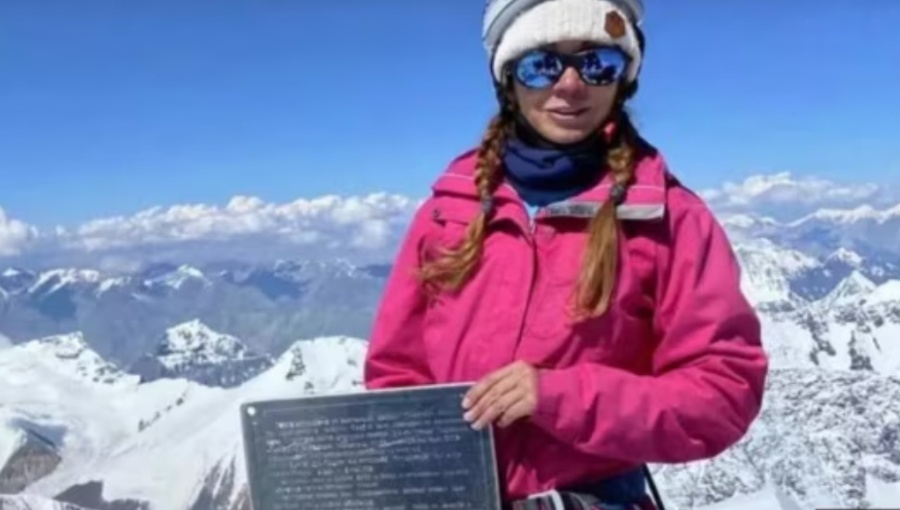
Natalia Nagovitsyna atop the Communism (I. Somoni) peak in Tajikistan. / Natalia Nagovitsyna, social media page

By bne IntelliNews August 25, 2025

Rescue missions for well-known Russian climber Natalia Nagovitsyna, trapped on the icy summit of Kyrgyzstan’s highest mountain, have been indefinitely abandoned after two weeks. Officials came to the decision to halt operations following the death of a climber who took part in an attempt to reach her, according to the Kyrgyz Ministry of Emergency Situations.

The rescuer who perished was Italian mountaineer Luca Sinigaglia. The Italian Ministry of Foreign Affairs announced his death on August 15. Extremely bad weather conditions have so far made it impractical to recover his body.

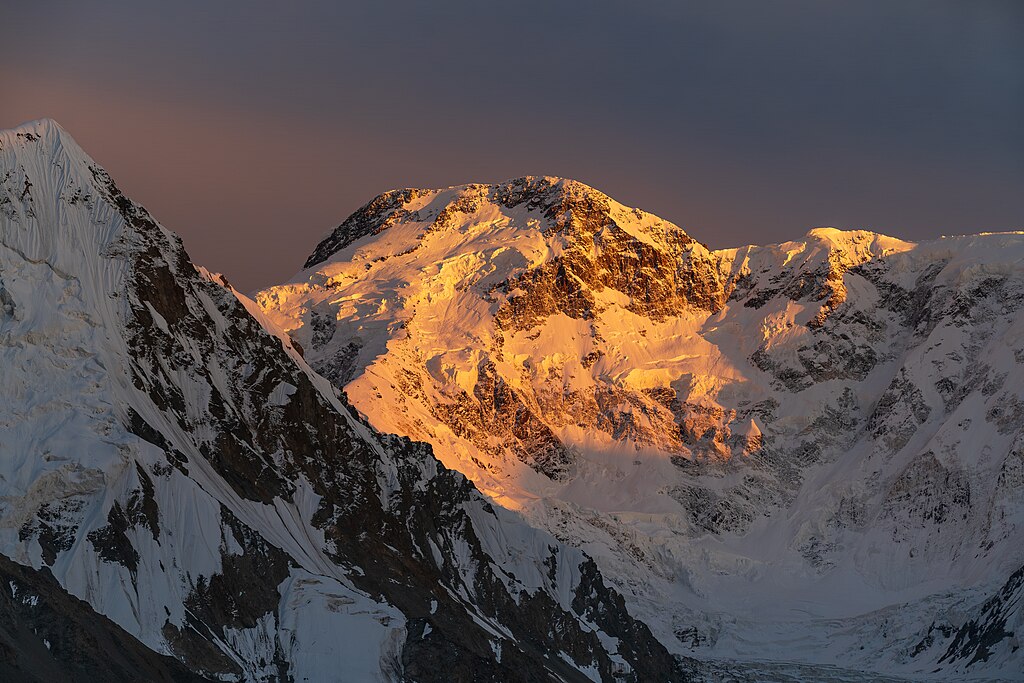
Nagovitsyna—who lost her climber husband in a climbing tragedy four years ago—was attempting to descend from Jengish Chokusu, or Victory Peak (height 7,439 metres, or 24,406 feet), on August 12 when she broke her leg.

Dmitry Grekov, head of the Victory Peak base camp, told Russian news agency TASS that rescuers “know where [Nagovitsyna] is”, adding: "It’s impossible to get there."

Peak of Jengish Chokusu seen from the Southern Inylchek Glacier (Credit: Maryliflower, cc-by-sa 4.0).

Radio Azattyk, meanwhile, quoted Grekov as saying that he warned Nagovitsyna and her climbing companion before they set off that the weather was set to deteriorate on the mountain on August 11.

One group of climbers did reach Nagovitsyna to provide her with some supplies, but due to extreme conditions they were not able to help her down from the summit, the highest mountain in the Tian Shan mountain system, and which sits at Kyrgyzstan’s border with China.

Repeated attempts to save Nagovitsyna have included operations involving helicopters. One helicopter suffered a hard landing during one such operation, with several onboard injured.

CNN reported on August 25 that Nagovitsyna was spotted on a surveillance drone not far from the top of the mountain on August 19. A spokesperson for the Kyrgyz Ministry of Emergency Situations said it was believed that she was alive at the time. But on August 23, authorities suspended the search, with heavy snowfall and other difficult weather continuing to worsen sharply. Temperatures were reported to be around -30C (-22F) at night on the summit.

The ministry has also stated that Kyrgyzstan lacks the kind of helicopter that would be needed to mount a rescue attempt with a good chance of success.

If the plight of Nagovitsyna ends in tragedy then it will follow that of her husband, Sergei Nagovitsyn, who in 2021 became paralysed and incapacitated during an expedition to another Tian Shan mountain, Khan-Tengri, located on the Kazakhstan-Kyrgyzstan-China tri-point. Nagovitsyna was with Sergei during the incident. She refused to leave his side until rescuers arrived. Sadly, he died while still on the mountain.

Both Jengish Chokusu and Khan-Tengri are one of the so-called Snow Leopard mountains, the five 7,000-ft-plus peaks of the former Soviet Union. Ascending all five is considered a major achievement. Only around 700 people, including 30 women, have accomplished the feat.


Drones take on Everest's garbage


Kathmandu (AFP) – A team of drone operators joined climbers and guides at Everest Base Camp this climbing season, armed with heavy-duty drones to help clear rubbish from the world's highest peak.


Issued on: 26/08/2025 - RFI

A man operates a heavy-lift drone to clear trash dumped at the Everest Base Camp © - / Airlift Technology/AFP

Tonnes of trash -- from empty cans and gas canisters, to bottles, plastic and discarded climbing gear -- have earned once-pristine Everest the grim nickname of the "highest dumpster in the world".

Two DJI FC 30 heavy-lifter drones were flown to Camp 1 at 6,065 metres (19,900 feet), where they airlifted 300 kilograms (660 pounds) of trash down during the spring climbing season, which usually lasts from April to early June.

"The only options were helicopters and manpower, with no option in between," said Raj Bikram Maharjan, of Nepal-based Airlift Technology, which developed the project.

"So, as a solution for this problem, we came up with a concept of using our heavy-lift drone to carry garbage."

After a successful pilot on Everest last year, the company tested the system on nearby Mount Ama Dablam, where it removed 641 kilos of waste.

"This is a revolutionary drive in the mountains to make it cleaner and safer," said Tashi Lhamu Sherpa, vice chairman of the Khumbu Pasang Lhamu rural municipality, which oversees the Everest area.
'Game changer'

The drones are proving to be far more efficient, cost-effective and safer than earlier methods, said Tshering Sherpa, chief of the Sagarmatha Pollution Control Committee.

"In just 10 minutes, a drone can carry as much garbage as 10 people would take six hours to carry," Sherpa told AFP.

The powerful drones cost around $20,000 each, but were supplied by the China-headquartered manufacturer to support the cleanup operation and promote its brand.

Other costs were borne partially by the local authorities.

Beyond waste removal, the drones have also been deployed to deliver essential climbing gear such as oxygen cylinders, ladders, and ropes -- reducing the number of dangerous trips across the Khumbu Icefall, one of Everest's deadliest sections.

That can help improve safety for the guides and porters, especially the early "fixing" teams who establish routes at the start of the new season.

"People in the fixing team were very happy," said record-holding climber Nima Rinji Sherpa, the youngest to summit all 14 of the world's highest peaks.

"They can simply just go by themselves and the drone will carry ladders or the oxygen and ropes for them. It saves a lot of time and energy."

Next month, Airlift Technology will take the drones to Mount Manaslu, the world's eighth-highest peak.

"It's not just in war that drones are useful," Maharjan said.

"They can save lives and protect the environment. For climate and humanitarian work, this technology is going to be a game changer."

© 2025 AFP


REWILDING WORKS
Renaturalisation of wetlands slows global warming and species decline


Copyright Euronews

By Hans von der Brelie
Published on 20/08/2025


For many centuries, farmers drained swamps to gain arable land. But this contributes to climate change. The European Union wants to change this, and an EU law sets out a detailed timetable: By 2050, half of the damaged moors are expected to be "healed" - a third of them through rewetting.

Europe's ecosystems should be functioning again by 2050. The EU's renaturation regulation requires the rewetting of some agricultural areas. Restoring moors is good for climate protection and biodiversity, because living moors serve as carbon sinks. For comparison: Forests cover one third of our planet's land surface, moors three per cent. And yet moors bind twice as much carbon as all the forests on earth! However, when moors are drained, the millennia-old carbon reservoirs are transformed into CO2 emitters.

In order to curb greenhouse gas emissions, the EU is promoting the research, mapping and renaturation of wetlands. The EU law on renaturation stipulates that 30 per cent of drained moors must be "repaired" by the end of this decade, a quarter of which will be rewetted. By 2050, half of the damaged moors are expected to be "healed" - a third of them through rewetting. Farmers receive money or compensation land. The Member States are responsible for implementing the renaturation regulation. The first plans should be available next year.

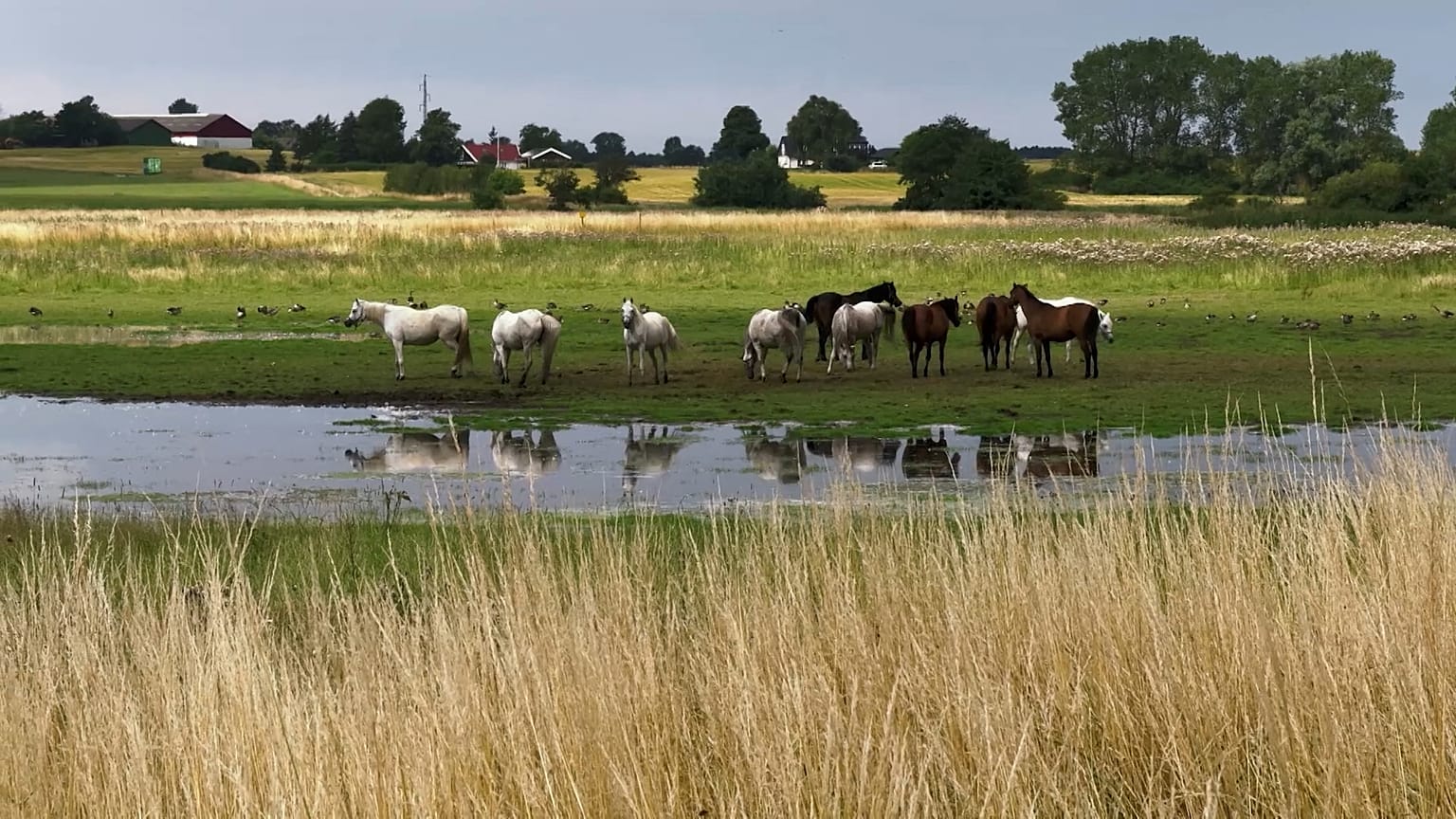
A huge shallow water lake is being created north of Copenhagen. Over 200 years ago, small ditches drained the area. The draining caused the water level to drop by seven metres. This releases climate-damaging carbon dioxide. To change this, a swamp lake is now being built.

Morton Elling works for the Danish Nature Agency: "The government has decided to reduce CO2 emissions from agriculture. That is why we are raising the groundwater level, as here in Søborg. The rewetting will reduce annual CO2 emissions by 8,000 tonnes. Last year we started filling in the drainage ditches, and small ponds are forming with a great variety of wildlife."

Søborg Sø is the name of the 600-hectare project. 63 landowners had to be convinced. Some have farmed the land for generations. Horse owner Sally Schlichting sold part of her land: "It has to be voluntary, because if you tell farmers what to do, many will say no!"

The EU law on the renaturation and rewetting of agricultural land also incentivises farmers. The targets, on the other hand, are prescribed by law. The most urgent measures must be implemented by 2032.

At the European Environment Agency, based in Copenhagen, I have an appointment with an expert on wetlands, Yurena Lorenzo.

Euronews: "Why are wetlands and moors important?"

Lorenzo: "Over the course of the last millennium, we have lost 80 per cent of wetlands in Europe. And 50 per cent of the (remaining) moors in the EU have been damaged by drainage."

Euronews: "Why is drainage a problem?"

Lorenzo: "If you take the water away from the moors, large amounts of carbon are released. Europe is the second largest emitter of greenhouse gases from drained moors in the world after Indonesia. That is alarming. So we need to channel the water back into the moors to combat climate change. For me, moors and wetlands are nature's superheroes. They are home to 40 per cent of the world's plant and animal diversity."

Euronews: "The EU Restoration Regulation recently came into force. What happens now?"

Lorenzo: "The member states must adopt their restoration plans by 2027 at the latest."

Euronews: "Are the objectives for renaturation and rewetting formulated in the EU regulation recommendations or binding targets?"

Lorenzo: "It is the very first time that we have a Europe-wide, legally binding law (in this area) with deadlines. These are quantifiable renaturalisation targets that are linked to a timeline."
AI robot dogs deliver fast food in Zurich, as Just Eat pilots new technology
Copyright Just Eat Takeaway.com (JET)

By EURONEWS
Doloresz KatanicPublished on 22/08/2025 


The Dutch food delivery company has teamed up with Swiss firm RIVR to deploy autonomous robot dogs for food delivery, piloting the tech first in Zurich and later in other European cities.

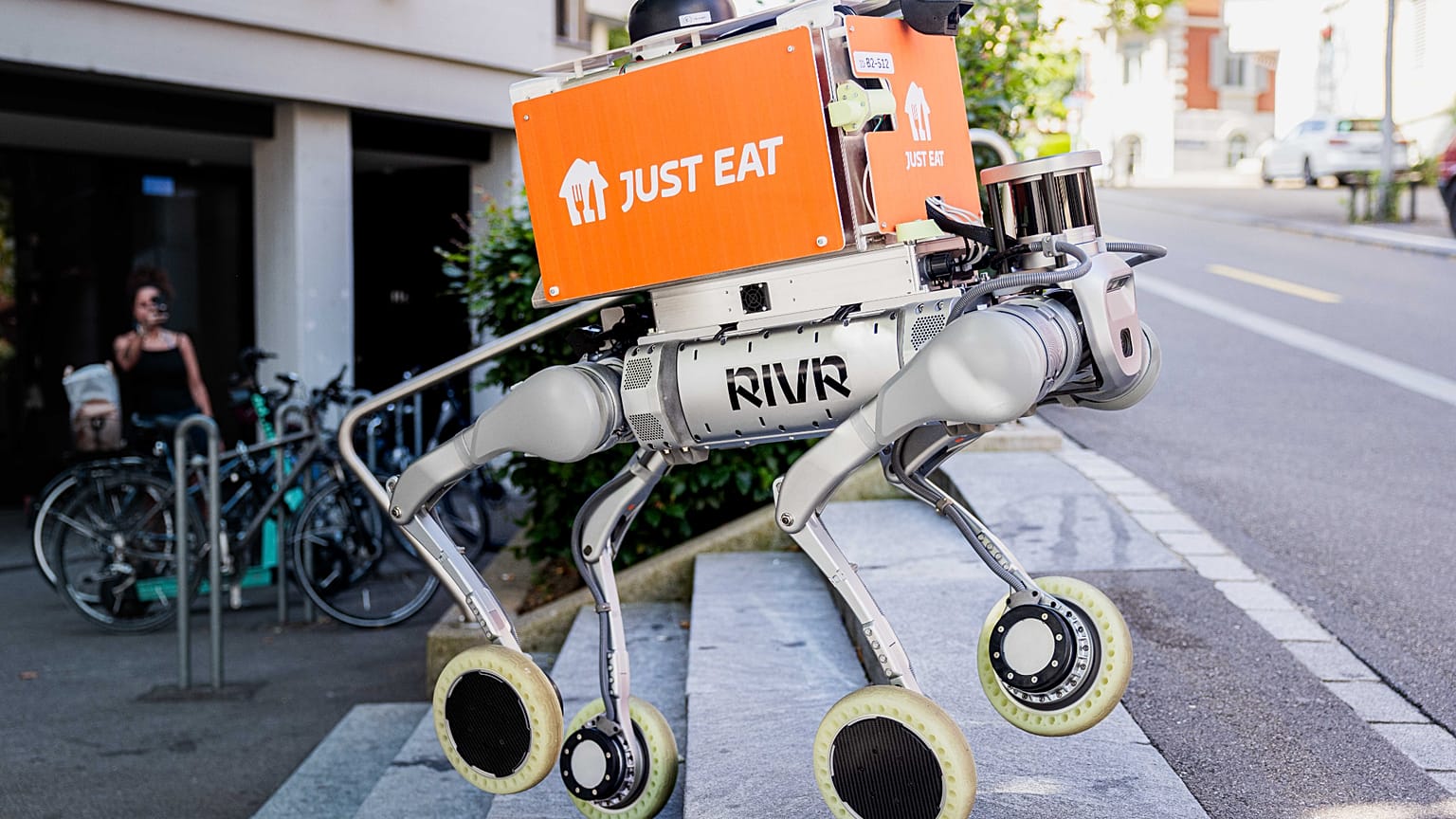
Delivery robots are about to become a regular sight on the streets of Zurich. More specifically, robo-delivery-dogs, which are being deployed to deliver fast food from a local restaurant named Zekis World.

This is a pilot programme by food delivery marketplace Just Eat Takeaway.com and its collaborator, the Swiss robotics company RIVR. 

The wheeled-legged ‘robo-dogs’ are equipped with Physical AI and can climb stairs, manoeuvre obstacles like rubbish cans or grass, and move around pedestrians, vehicles and cyclists.

The dogs can ‘walk’ at speeds of around 15km per hour, and can withstand rain, snow, high heat, and wind. Every delivery is monitored in real time, and the robo-delivery-dog can be controlled remotely.

Just Eat Takeaway.com said that they were the first on-demand delivery service to pilot wheeled-legged hybrid robotics equipped with Physical AI in Europe.

RIVR intends to deploy the robots to bring parcels, goods, groceries, and fresh meals in future.

Robo-delivery-dogs are being piloted in Zurich, Switzerland Just Eat Takeaway.com (JET)

“We plan to introduce more robots to other European cities later this year, with potential expansion into retail and convenience stores,” the developer said in a statement. 

Marko Bjelonic, Chief Executive Officer of RIVR said, “Our collaboration with Just Eat Takeaway.com is a glimpse into a future where automation blends naturally into our cities, helping people get what they need, when they need it. Physical AI allows our robots to understand and adapt to the real world.”

Just Eat has already been piloting innovative delivery options, including a drone-delivery service in Ireland, in partnership with drone operator Manna Drones Ltd.