Sunday, September 13, 2026

30 years after her death, Gilda embodies Argentina’s enduring faith in folk saints
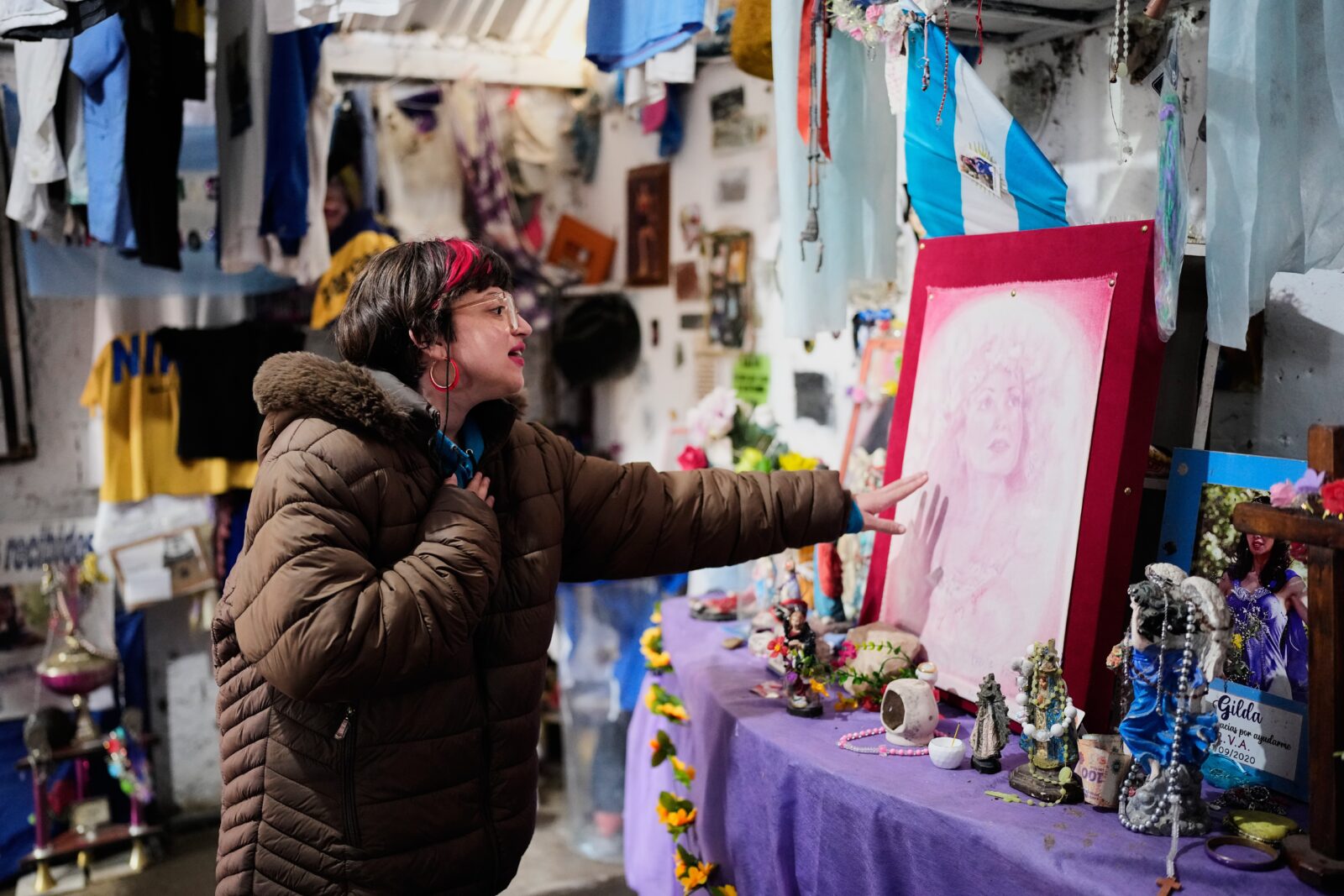
CEIBAS, Argentina (AP) — At a chapel near the site of the accident, some fans knelt in prayer, emotion welling in their eyes. Others sang and danced raucously to her greatest hits.

CEIBAS, Argentina (AP) — Thirty years ago this Monday, Argentina was left stunned when a tour bus carrying a beloved cumbia singer, known by her stage name Gilda, collided with a truck. Miriam Alejandra Bianchi died at age 34, but she lives on in legend as a miracle-working folk saint.

At a chapel near the site of the accident, some fans knelt in prayer, emotion welling in their eyes. Others sang and danced raucously to her greatest hits.

Gilda went from star singer to miracle-healing folk saint

During her life, Gilda was a nationally beloved singer of cumbia, a fusion of Latin pop and dance music that’s hugely popular in Argentina.

Her fame only grew after her death. A posthumous album went double platinum as her propulsive songs reverberated beyond the heaving dance halls where she first captivated crowds, becoming national anthems of heartbreak and desire. Her fans, dressed in T-shirts that showed her in a shimmering blue dress and flower crown, began making pilgrimages to the crash site every year, sharing stories of Gilda appearing in their dreams and answering their prayers.

Like other Argentine folk saints, Gilda isn’t formally recognized by the Catholic Church. But devotees ask her to carry their prayers to God much as Catholics invoke the church’s recognized saints, seeking healing, protection and help overcoming hardships.

On Monday, scores of Gilda’s devotees flocked to pay homage to her at the rusted wreckage of the tour bus, now preserved as a memorial off the national highway that skirts Argentina’s muddy Paranacito River. The bus overflows with flowers, stuffed animals, votive candles and handwritten appeals for help. A nearby chapel is crammed with the wedding gowns of women whose wish to marry was fulfilled after a visit, trophies and jerseys offered by champions whose athletic dreams became a reality, crutches discarded by those who could walk again, and police uniforms left by officers who earned promotions after praying to her.

“For me, it’s about faith — putting everything in God’s hands and asking Gilda to intercede,” said Julia Domínguez, 63, who credits Gilda with curing growths on her vocal cords nearly two decades ago, sparing her from a risky surgery and inspiring her to become a singer. “That was a miracle. Today, I sing thanks to her.”

Argentina’s folk saints inspire generations of devotion

The shrine, about a two-hour drive into the grasslands north of the capital, Buenos Aires, offered a glimpse of a centuries-old tradition of folk saints that runs deep in Argentina even as the influence of the Catholic Church wanes.

That erosion is one of the biggest challenges facing Pope Leo XIV as he plans his first tour as pontiff of South America — home to more than a quarter of the world’s Catholics. He’s set to visit Argentina, Uruguay and Peru in November.

Travel the roads of Argentina and shrines to a growing pantheon of unofficial saints are everywhere: Red flags mark altars to Gauchito Gil, a 19th-century outlaw revered as an Argentine Robin Hood. Plastic water bottles pile up at shrines to Difunta Correa, who legend says miraculously nursed her infant son after dying of thirst in the desert. Even Argentine soccer great Diego Maradona has become an object of quasi-religious devotion.

“One of the most common things devotees tell us is that these saints accompany them every day of their lives,” said Cleopatra Barrios, an scholar of popular religion at Conicet, Argentina’s national scientific research body. “Miracles aren’t understood as they are from the institutional Catholic point of view, as something extraordinary. Here, they’re things that happen every day.”

As with other saints — folk and otherwise — part of Gilda’s appeal seems to stem from how relatable she remained even as her fame grew while she was still alive, singing cumbia in prisons and exchanging intimate, handwritten letters with fans.

“With everything that happens, I always ask her, ‘Accompany me,’” said Paola Martini, 46, who organizes trips to Gilda’s shrine from all over Argentina. “Then, like magic, I feel her.”

The church accommodates, but doesn’t recognize, unofficial saints

Catholic clergy haven’t directly discouraged devotion to folk saints, but have sought to steer followers’ worship toward God. Two priests on Monday celebrated Mass at Gilda’s shrine, but made no mention of her status as a popular saint and urged devotees to keep God at the center of their faith.

As growing secularism and rival branches of Christianity siphon off Catholic faithful across the region, Leo has embraced the efforts of his Argentine predecessor, Pope Francis, to bring the church closer to ordinary people, particularly the poor.

A member of the Augustinian order, whose teachings emphasize service and community, Leo is expected to visit a Buenos Aires prison and a center for people with disabilities during his November trip, Argentine church officials told local media on Monday. There was no immediate confirmation of the pope’s itinerary from the Vatican.

“We’re waiting for Leo, we’re preparing for him,” Domínguez said, insisting she saw no contradiction with her Roman Catholic faith in invoking Gilda to protect her. “In the end, sainthood isn’t always decided by the church. Sometimes, the people recognize it first.”

At NBCUSA denominational meeting, leaders, advocates and AOC urge midterm voter turnout

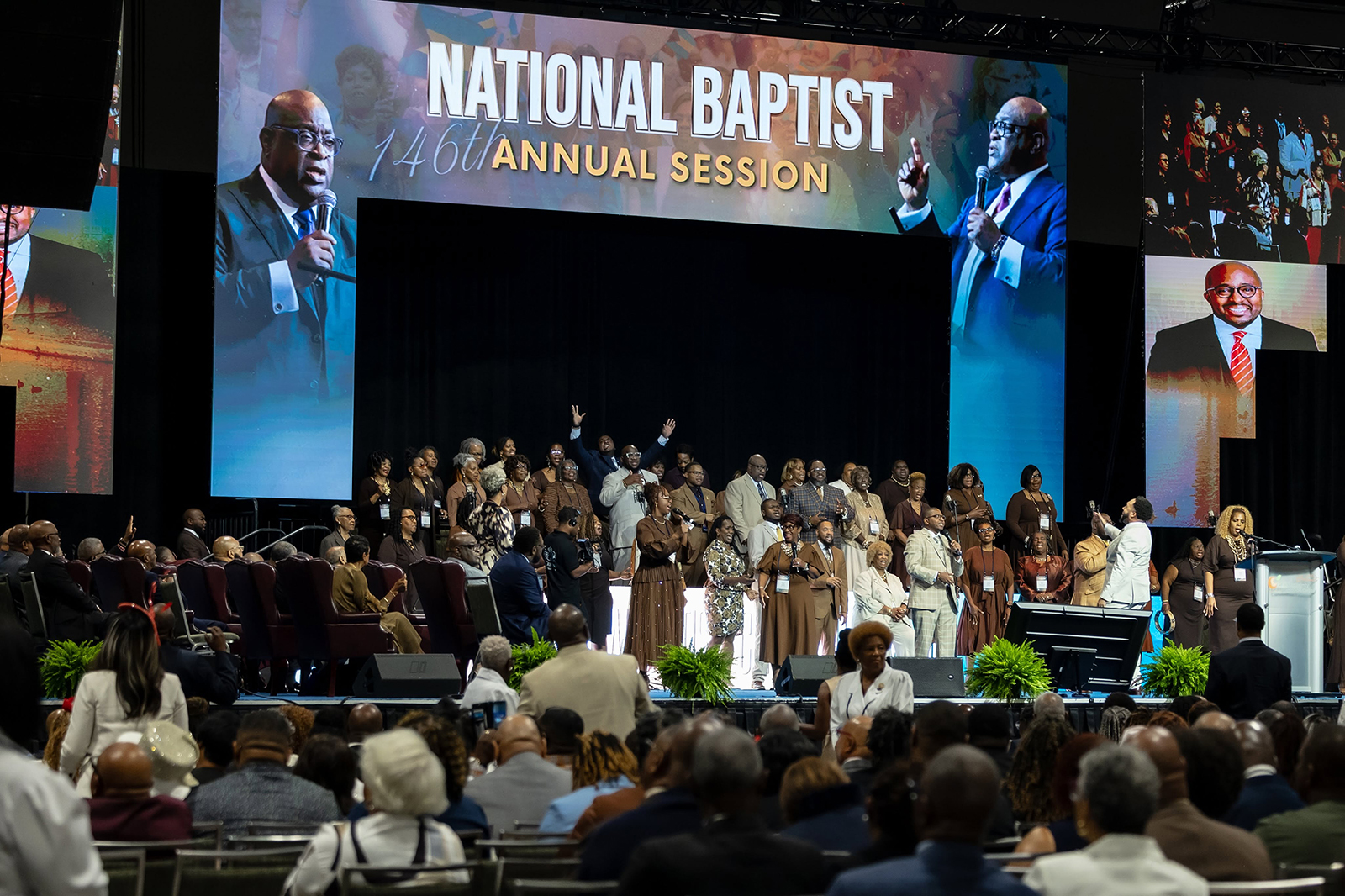
(RNS) — ‘They're trying to make voting difficult, but you stand in line if you got to stand all day,’ said the Rev. Boise Kimber, president of the National Baptist Convention USA Inc. ‘You are immovable.’
A choir performs during the National Baptist Convention USA Inc. annual session in Orlando, Florida. (Photo courtesy of National Urban League and NBCUSA)

(RNS) — The leader of the National Baptist Convention USA Inc., a historically Black denomination, said gerrymandering threatened to “destroy” the power of voters, in a plea for turnout in the midterm elections this fall.

“You got to get back up and fight for your vote,” NBCUSA President Rev. Boise Kimber continued in his presidential address on Thursday (Sept. 10), the last day of the denomination’s annual meeting in Orlando, Florida, this week.

“Supreme Court has become the puppets of the land, but you got to get back up and fight until justice roll down like waters and righteousness like an ever-flowing stream,” Kimber said, referencing a verse from the Bible’s Book of Amos. “They’re trying to make voting difficult, but you stand in line if you got to stand all day. You are immovable.”

Kimber’s remarks came after two earlier days of the meeting featured representatives of partner organizations highlighting ways the Baptists in attendance and their church members at home can work together on get-out-the-vote efforts. The strategizing at the meeting, attended by about 8,000 people, occurred in the wake of a Supreme Court decision earlier this year to gut a portion of the landmark 1965 Voting Rights Act.

In a different speech, the Rev. Starsky Wilson, president and CEO of the Children’s Defense Fund, a national nonprofit focused on child advocacy and research, urged NBCUSA members to take into consideration reductions to the Supplemental Nutrition Assistance Program through Republicans’ “One Big Beautiful Bill Act” when they head to the polls.

An estimated 4 million fewer people are receiving food assistance through the federal aid program compared to before the bill was passed last year, according to data analyzed by the Center on Budget and Policy Priorities, The Associated Press reported. 

“I want you to vote for the 1.5 million children who had food taken off of their tables in the last year because of SNAP cuts,” Wilson said on Wednesday, adding that many students are also at risk of losing access to free school meals.


RELATED: National Baptists launch social justice center near US Capitol


U.S. Rep. Alexandria Ocasio-Cortez, left, and the Rev. Starsky Wilson, center, participate in a panel discussion with moderator Minister Kelvin Davis, at the National Baptist Convention USA Inc. annual session in Orlando, Florida. (Video screen grab)

Wilson shared resources from the Children’s Defense Fund, including a 12-page voter action guide designed for congregations, and a link to use to verify voter registration status and polling place location. He recalled sitting near a woman at a Texas church revival two weeks ago, who said she had checked her status the week before to see her name on the rolls, and checked it again and found it had been removed.

“We need you to check your voter registration status and verify it weekly,” said Wilson, a step his organization is encouraging faith leaders to take before the closing of services on Children’s Sabbaths weekend, a CDF-sponsored observance on the third weekend in October.

U.S. Rep. Alexandria Ocasio-Cortez, D-N.Y., spoke on Wednesday during a panel discussion with Wilson about the current state of electoral politics — including redistricting and possibilities that depend on the outcome of the midterms.

“In the short term, we have to turn out in record numbers out here in the South to show them that they can’t draw us out of nothing,” she said, noting her confidence that Democratic wins could lead to passage of the John R. Lewis Voting Rights Advancement Act, a bill introduced in 2021, and which passed the House. She also expressed optimism about potentially expanding the number of justices on the Supreme Court if the midterms go well for Democrats.

National Urban League officials also attended the Baptist meeting aiming to increase Black church cooperation in the civil rights group’s Reclaim the Vote initiative, especially through “Sound the Trumpet Sunday” on the fourth Sunday of each month before Election Day. In efforts to urge people to vote, the group advised not focusing on Washington but on kitchen-table topics to prevent people from sitting the election out.

The Rev. Rhonda Spears Bell addresses the National Baptist Convention USA Inc. annual session in Orlando, Florida. (Photo courtesy of National Urban League and NBCUSA)

“Our churches cannot be silent about the issues affecting the very people we’ve been called to serve because the people sitting in our pews are not thinking about politics in the abstract,” said the Rev. Rhonda Spears Bell, a senior vice president of the league. “They’re not worried about political theory. They are thinking about whether their paycheck will last until Friday.”

For those advocating to potential voters, she encouraged answering questions about the difference a vote can make by explaining rather than shaming.

“Talk to the young adult who has never voted,” Bell said. “Talk to the brother who feels nobody listens to Black men. Talk to the sister who’s working two jobs and doesn’t even know if she has time to vote. Talk to the member who’s confused about everything that they see online, and let’s move them from information to action.”

Yusef Jackson, the son and successor to the late Rev. Jesse Jackson as the leader of the Rainbow Push Coalition, encouraged an increased “level of cultural maturity” through linkages between civil rights organizations, like the Urban League and his coalition, with the Baptist denomination.

“If I pass today, we leave this earth and this country with fewer rights than my father left me,” said Jackson, who joined National Urban League President Marc Morial and political and housing experts for a panel discussion. “We can never, never let that happen. So we have to fight. We have to go to the polls.”

The Rev. Boise Kimber, NBCUSA president, addresses the National Baptist Convention USA Inc. annual session in Orlando, Florida. (Video screen grab)

The living care for ancestors and wandering spirits at Malaysia's Hungry Ghost Festival


BUKIT MERTAJAM, Malaysia (AP) — For 15 days, devotees pray and make offerings before a towering paper-and-bamboo effigy of Da Shi Ye. The celebration culminates in the ceremonial burning of the effigy, symbolically sending the deity back to the spirit world.


BUKIT MERTAJAM, Malaysia (AP) — It’s that time of year when the living make room for the dead. Malaysia’s Hungry Ghost Festival is held during the seventh month of the Chinese lunar calendar, which this year began in mid-August.

“It is centered around the worship of Da Shi Ye, also known as the Guardian God of Ghosts, and has become one of the major traditional Chinese religious celebrations in Bukit Mertajam,” said Lee Kim Fong, general affairs coordinator for the event.

The city is in Malaysia’s northern state of Penang, about 320 kilometers (200 miles) north of Kuala Lumpur.

“It dates back to 1888, when there was a serious plague in Bukit Mertajam,” Lee said. “After that, our ancestors began worshipping Da Shi Ye.”

For 15 days, devotees pray and make offerings before a towering paper-and-bamboo effigy of Da Shi Ye. The celebration culminates in the ceremonial burning of the effigy, symbolically sending the deity back to the spirit world.

Lee estimated that more than 10,000 people attended the burning ceremony this year, with crowds sometimes reaching 20,000.

“The main purpose is to look after wandering spirits, especially spirits who have no one to worship or make offerings to them,” Lee said. “Some may have died in accidents or may have no family members to pray for them.”

Similar celebrations are held in Hong Kong, Singapore and Taiwan. Devotees travel to Bukit Mertajam from across Malaysia as well as Singapore, Indonesia and Thailand.

A towering effigy stands at the center of the celebration

The Da Shi Ye effigy in Bukit Mertajam is traditionally made about five centimeters (two inches) taller each year. In 2026, it reached 8.9 meters (about 29 feet).

Ng Chi Wong, 69, has spent more than four decades crafting the figures. He said completing the towering effigy takes about a month and a half, with a team of seven or eight people working on it.

“We have the measurements and a general idea of the structure, but there are no formal drawings,” Ng said. “Most of the design and construction details are already in our minds.”

The artisans begin with the head, the part that requires the most work, before building the main frame and shaping the body. The outer layers are then added and painted.

Ng said that the process has undergone some small improvements over time. Yet the craft requires more than technical skill.

“You also need to understand the tradition and the beliefs behind it,” he said.

The festival honors spirits with no one to remember them

Lim Han Cong, a University of Malaya master’s graduate in Chinese studies, described the Hungry Ghost Festival as a counterpart to another traditional Chinese observance: Qingming, or Tomb-Sweeping Day, when families honor their ancestors at their graves.

While Qingming focuses primarily on one’s own ancestors, the Hungry Ghost Festival extends offerings to wandering spirits and the unclaimed dead. “This tradition reflects a synthesis of Buddhist, Taoist and Chinese folk religious beliefs,” Lim said.

In Taoist ceremonies during the festival, priests recite sacred scriptures and perform rites to help the deceased find peace and salvation. Such practices are intended to provide comfort, nourishment and liberation to those who have no descendants to care for them.

“At its core, the Ghost Festival expresses the belief that the living and the dead remain connected through enduring moral and emotional bonds,” Lim said. “The living, therefore, have a responsibility to honor, support and help the deceased attain peace.”

An old tradition finds new roles in Malaysia

Offerings and rituals like those held in Bukit Mertajam eventually took on a broader community role. Starting in the 1970s, Malaysian Chinese celebrations incorporated charitable activities such as auctions of blessed offerings and fundraising campaigns for schools.

“As a result, the Ghost Festival in Malaysia has evolved beyond a festival devoted solely to honoring the dead,” Lim said. “It has also become an important platform for strengthening community solidarity.”

That broader role is also evident in Bukit Mertajam. Money raised through fundraising efforts helps the organizing committee provide assistance to people with medical needs and support Chinese-language education.

Alongside that community work, organizers are looking for new ways to broaden access to the tradition. Participation is no longer limited to those who can make it to Bukit Mertajam.

“We introduced online worship for devotees who are overseas or unable to return,” Lee said. “So they can still take part in the prayers and make offerings.”

A professional team documented the celebration from Aug. 14 through Aug. 29. Organizers plan to upload the footage to Facebook so people around the world can see the Da Shi Ye festival in Penang.

“This is a Chinese tradition that has been passed down for more than a hundred years,” Lee said. “As descendants of the Chinese community, we have a responsibility to preserve it.”

___

Hernández reported from Beijing. AP video journalist Syawalludin Zain contributed to this report.

Associated Press religion coverage receives support through the AP’s collaboration with The Conversation US, with funding from Lilly Endowment Inc. The AP is solely responsible for this content.


Symbolic funerals held in Nepal for those feared lost as some missing tourists make contact

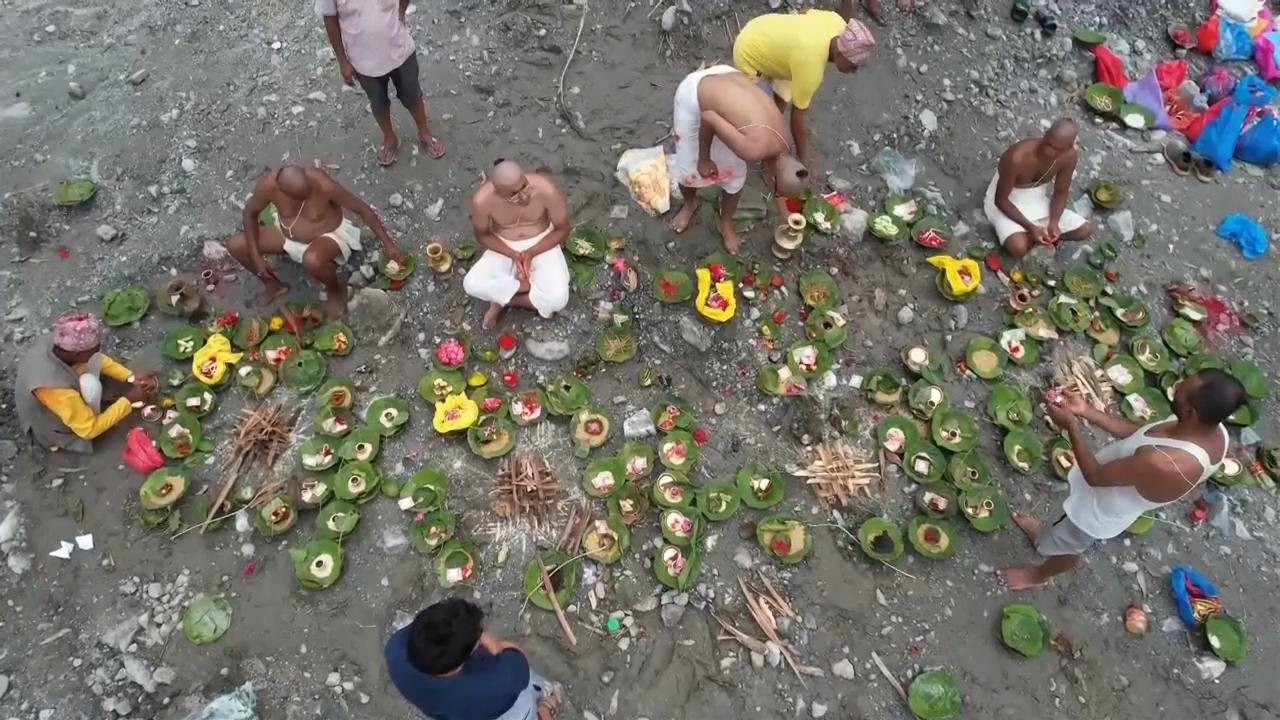
KATHMANDU, Nepal (AP) — Some families in Nuwakot, one of Nepal's worst-affected districts, have held symbolic funerals for relatives still missing, hoping to free their souls after they were presumed dead.

KATHMANDU, Nepal (AP) — Tourists previously reported missing in Nepal have made contact with authorities, officials said Wednesday, as families of locals still unaccounted for after last week’s catastrophic floods held symbolic funerals for their loved ones.

Nepal’s Foreign Ministry said 324 foreign nationals have been rescued, while another 590 from 39 countries remain missing following the Aug. 26 floods. At least 1,204 people have been killed and more than 4,200 are missing, according to the country’s disaster management agency.

Australian Prime Minister Anthony Albanese said Wednesday that the number of Australians missing in the disaster had fallen from 43 to 38 after five were confirmed safe overnight.

“Amidst all of this tragedy, we are seeing some positive news. Today, another five Australians have been confirmed safe,” Albanese told reporters in Palau, where he is attending a regional summit.

“We hope, of course, for positive news further, and we’re doing everything we can to work with authorities,” Albanese added.

On Thursday, the Australian government said it would send a team of drone operators to Nepal within days to assist search and rescue efforts.

Sunil Sharma, a spokesperson for the Nepal Tourism Board, said at least five other tourists who were previously reported missing had contacted authorities by email or telephone in recent days.

It is thought the disaster happened when a glacial collapse in the Himalayas sent rock, ice and meltwater into valleys below, triggering powerful floods downstream. The surge entered rivers flowing through Tibet and Nepal, causing them to rise rapidly. Floodwaters swept away homes, buildings, roads and bridges, carrying mud and rocks downstream.

Families hold symbolic funerals

Some families in Nuwakot, one of Nepal’s worst-affected districts, have held symbolic funerals for relatives still missing, hoping to free their souls after they were presumed dead.

In Hindu tradition, cremation is an important final rite, and for some families, performing the ceremony even without the bodies of their loved ones provides a sense of spiritual release.

Mukunda Rijal said his cousins and their daughters had not been found, prompting the family to perform a symbolic funeral for them.

Along the banks of the Trishuli River, a priest placed straw effigies representing the missing family members and covered them with small piles of wood before setting them alight. The symbolic funeral pyres were surrounded by offerings to Hindu deities as relatives gathered to perform the final rites.

Authorities in Nepal have also been burying recovered bodies in temporary graves until they can be identified. They are preserving DNA samples, photographing distinguishing facial features and recording other identifying details to help match the remains with missing people and eventually return them to their families.

China builds access road for rescue crews

On the Chinese side, rescue crews completed a makeshift road to the disaster site at Gyirong Port on the Nepal border, state broadcaster CCTV reported on Wednesday.

Crews have been clearing access for heavy machinery to be used in the search at the border crossing complex, which was washed away by the floods. The road leading to the crossing was destroyed and buried under water, mud and rocks.

At least 21 people have been killed and 541 remain missing in China, according to the Chinese state news agency Xinhua.

Survivors find shelter in Kathmandu

Some flood survivors are fleeing the devastation to seek shelter in Nepal’s capital, Kathmandu.

Around 400 survivors, mostly from the town of Timure, about 110 kilometers (65 miles) west of Kathmandu, have been staying at the Yellow Gumba monastery. The shelter is being organized by locals and relatives, with relief supplies donated by individuals and charity organizations.

Riya Tamang, 21, who fled with her 10-month-old baby as the floodwaters approached, is among those taking shelter at the monastery. She lost her grandparents in the disaster.

“I was the last one to leave the house. It was so difficult to escape,” she said.

Her husband, who works as a cook in Gyirong town on the Chinese side of the border, also survived, and the couple now stays in touch through video calls.

___

Associated Press journalists Yasin Dar in Nuwakot, Nepal, Rod McGuirk in Melbourne, Kanis Leung in Hong Kong and Huizhong Wu in Bangkok contributed to this report.

 OBITUARY

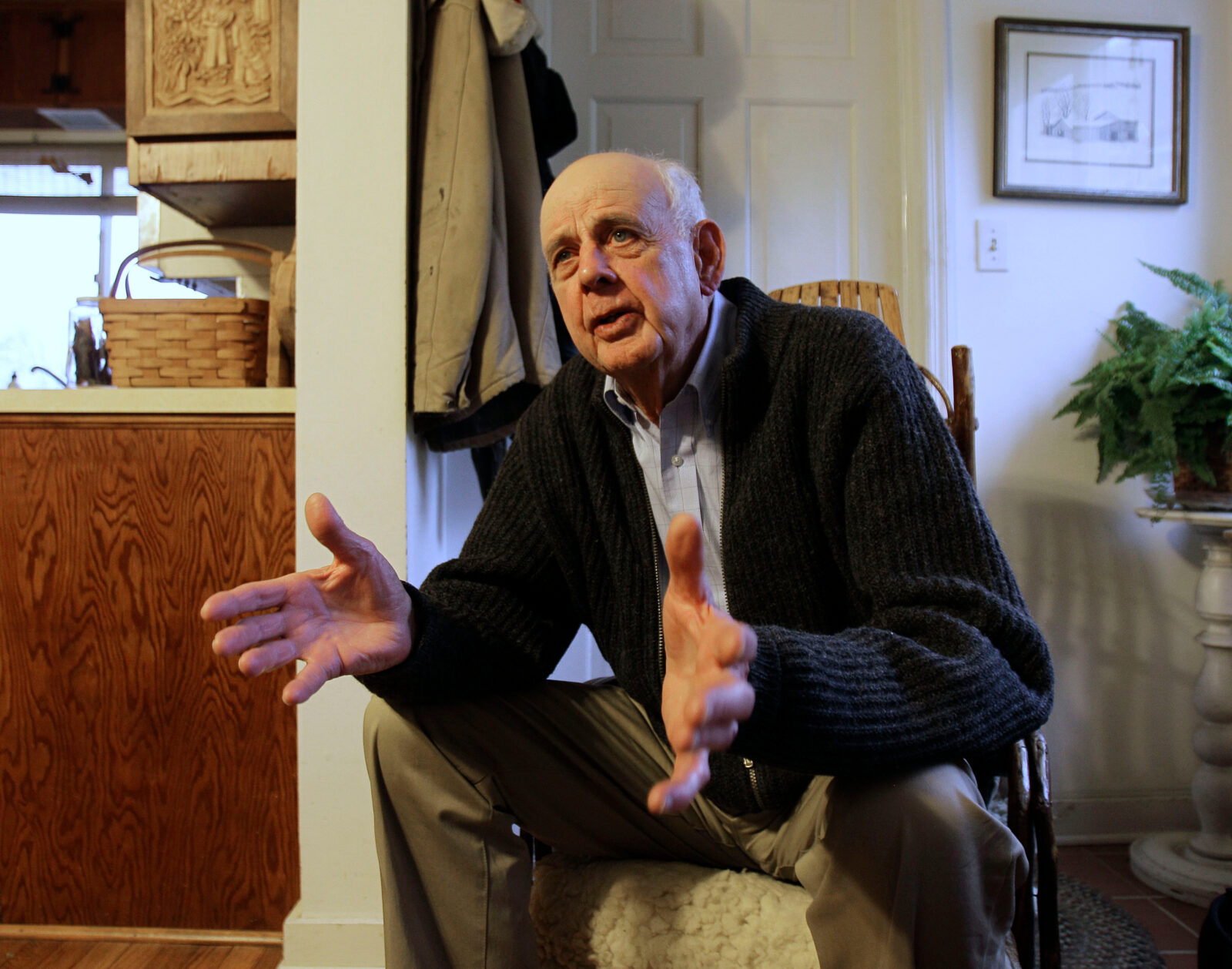
For many spiritual seekers, author Wendell Berry was a fellow pilgrim and contrarian

(AP) — While Berry inspired writers, artists, local-food activists, environmentalists, agrarians and many others, some of his deepest admirers were moved by his spiritual vision.


For Kentucky author Wendell Berry, the environmental crisis he lamented to such great effect in his essays, poetry and fiction was also a human crisis — a deeply spiritual one.

Berry, who died Monday at home at age 92, drew that connection in poignant writings across many decades.

“Persons cannot be whole alone,” Berry wrote in “The Unsettling of America: Culture and Agriculture,” his classic 1977 work. “It is wrong to think that bodily health is compatible with spiritual confusion or cultural disorder, or with polluted air and water or impoverished soil.”

While Berry inspired writers, artists, local-food activists, environmentalists, agrarians and many others, some of his deepest admirers were moved by his spiritual vision.

Spending Sundays amid the ‘timbered choir’

That’s despite — or maybe because of — Berry’s skepticism of organized religion. He called himself a “bad-weather churchgoer” because in finer weather, he often skipped church to spend Sundays in what he called nature’s “timbered choir.”

He was too steeped in the Bible and his Baptist heritage to fit the common notion of “spiritual but not religious.” But he was too independent-minded to be pigeonholed into any one tradition. Defiantly non-conformist yet committed to neighborly and communal bonds, he quipped about creating an “International Brotherhood of Contraries” in one of his poems.

“One of the reasons Wendell has been read and loved by so many people who are in faith or spiritual traditions is that he was able to think about the most fundamental questions of land and water and community and health and a flourishing life in such an expansive way,” said Norman Wirzba, a longtime friend of Berry’s who has written and edited numerous essays about him.

“He was also able to show the industrial mindset is not just a technique, but it’s a spiritual way of seeing the world that turns out to be very damaging and degrading,” said Wirzba, a professor of Christian theology at Duke Divinity School.

Berry saw spirituality as integrated with the human body

Berry recoiled from any spirituality that was ethereal and other-worldly, Wirzba said. “Wendell was a master in showing that any spirituality that’s worth anything starts with the human body.”

Seekers found a kindred soul in Berry, one who accompanied them in a time haunted by species loss, environmental disasters and social alienation.

Many sought him out in person: seminarians, clergy, professors and others on a search for greater meaning. They found their way to Berry’s farmhouse overlooking the Kentucky River in Port Royal, the prototype for the tiny hamlet that was the setting for much of his fiction. Visitors sat on Berry’s porch or amid the towering bookshelves in his living room, bringing their anxieties and questions in conversation with the author and his wife, Tanya.

Of course, Berry reached many more through his writings.

“So today I find myself giving thanks for someone I knew rather well, yet never met,” wrote Derek Peterson, a youth development educator. He said Berry helped deepen his appreciation for the North Dakota farm where he and three previous generations of his family have lived.

“He helped me understand that loving a place is not sentimentality; it is a discipline,” Peterson wrote on Facebook. “To know a piece of Earth — its soil and water, trees and birds, seasons and wounds; to understand what happened here before you arrived and wonder seriously about what condition it will be in after you leave — is a particular way of being human.”

An author, activist, farmer and contrarian

Berry was many things. As an author, he wrote more than 40 books, publishing his final novel, “Marce Catlett: The Force of a Story,” at age 91 in 2025. As an activist, Berry took part in an occupation of the Kentucky governor’s office to protest mountaintop-removal mining. As a farmer, he plowed with a horse rather than a tractor, rejecting the “Get big or get out” mandate of industrial agriculture.

Berry embraced parts of his Baptist heritage. He took the Bible at its word when it says the Earth was made by God, and it was good — a gift to be cared for.

But he believed the Southern evangelical religion had gone wrong with a stark separation of the spiritual and the physical worlds. To Berry, it focused on other-worldly salvation while blessing slavery and, later, environmentally devastating practices of agriculture and coal mining.

The title character of his acclaimed 2000 novel, “Jayber Crow,” concludes that “Christ did not come to found an organized religion but came instead to found an unorganized one.” Young Jayber studies for the ministry but has too many doubts to continue, becoming instead a barber and church janitor and living out “questions to which you cannot be given answers.”

In one of his poems, Berry gleefully defied both the religious and the cynical.

“When they said, ‘I know my Redeemer liveth,’ I told them, ‘He’s dead,’” Berry wrote. “And when they told me ‘God is dead,’ I answered, ‘He goes fishing every day in the Kentucky River. I see Him often.’”

The title of his widely admired “Sabbath Poems” partly reflects that he wrote many of them on his Sunday amblings in nature. But it also hearkens to biblical concepts of “Sabbath” — that humans and the land need a time of rest, not the constant churn demanded of an industrial economy.

Berry sought to heal fragmented selves and society

In a time of rampant loneliness and anxiety, such a message is crucial, said Wirzba.

“More people today enjoy a standard of life that would have been unimaginable to people 100 years ago, but they’re not happy,” Wirzba said. Berry’s answer, he said, is to “see the beauty of this world and see that it’s worth cherishing.”

Among Berry’s longtime admirers was Russell Moore, editor at large at Christianity Today and author of a 2025 cover story on Berry for the evangelical magazine.

“He believed body and soul, heaven and earth, are meant to hold together,” Moore wrote after Berry’s death. “When they do not, the result is what Berry saw as the most fundamental crisis of the modern era: the disintegration of persons and communities.”

Through The Berry Center in New Castle, Kentucky, the author’s family promotes the values he championed through education, agricultural training and other means. The center launched a small cooperative for local farmers raising grass-fed beef — a model for helping maintain small-scale farms.

Berry’s death came just days after the center announced publication of a 50th anniversary edition of “The Unsettling of America.” It was his passionate manifesto for human-scale, sustainable farming and against the machines, chemicals and human displacement of the era of industrialized agriculture.

“The tragedy of this book is that it originated in the recognition of a still-continuing absurdity,” Berry wrote in a new foreword. That is the assumption “that we can produce food by means that destroy, in human culture and in nature, the sources of food.”

Yet Berry insisted in interviews that he refused to give in to cynicism. Hope, he noted, is not a sentiment but a theological virtue, something one is obligated to pursue.

“I haven’t quit,” he said in a 2013 interview. “You have to assume I have hope. If you want an easy life, indulge yourself in despair.”

___

Associated Press religion coverage receives support through the AP’s collaboration with The Conversation US, with funding from Lilly Endowment Inc. The AP is solely responsible for this content.