Sunday, September 13, 2026


China’s President Demands Action After Shipyard Fire Kills 25 Workers
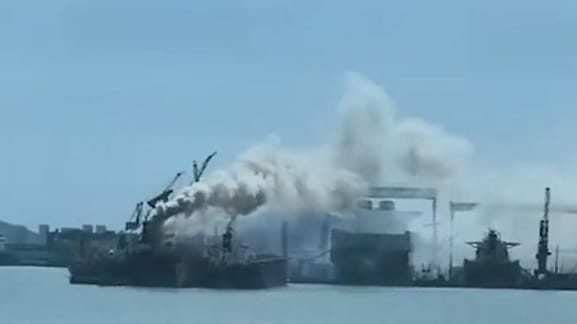
fire on bulker undergoing repairs in China
Smoke seen billowing from th bulker under going repairs at the Chinese shipyard (Chinese TV)

Published Sep 10, 2026 1:11 PM by The Maritime Executive


A large fire broke out on a dry bulk carrier undergoing repairs in a Chinese shipyard, resulting in the death of 25 workers and injuring five others who were taken to a hospital. The fire, which is being reported as one of China’s worst industrial incidents, drew the personal attention of President Xi Jinping, who called for an investigation to hold those responsible for the deaths accountable.

Chinese state media reported the fire started at approximately 11:15 a.m. local time on September 10 at the Qingdao Beihai Shipbuilding yard, part of China State Shipbuilding Corporation (CSSC). Residents told Chinese media that they “did not hear an explosion or smell anything,” but suddenly saw smoke billowing from the yard.

The fire started aboard the Chinese-owned dry bulk carrier Ocean Melody. AIS signals show the 55,742-dwt bulker arrived in Qingdao on August 31 and was undergoing maintenance. They are reporting that there were 42 workers aboard the ship when the fire began. Images show the bulker in a dry dock at the yard.


UPDATE: Rescue efforts at the scene of the cargo ship fire in Qingdao, China. 25 people have died in a fire aboard a foreign-flagged cargo ship undergoing repairs at Qingdao Beihai Shipbuilding.
Video cr. CCTV https://t.co/yWjNTSW59X pic.twitter.com/MfwUrBckaQ

— Shanghai Daily (@shanghaidaily) September 10, 2026


State media reports that 12 workers were evacuated from the ship without injuries, while five others were taken to the hospital for their injuries. Initial reports said that five people were missing and that 20 deceased shipyard workers had been recovered. Later reports at around 7:15 p.m. said a search after the fire was extinguished recovered five additional bodies, bringing the death toll to 25. They said everyone was now accounted for among the people who had been on the ship.

The fire reportedly burned for nearly three hours aboard the bulker, which was built in 2006 and is registered in Liberia. It was acquired by a Chinese company in 2025. The vessel was reported to be 190 meters (623 feet) in length and sustained significant damage. No cause of the fire has been reported.

President Xi said the authorities must act promptly to determine the cause and hold those responsible accountable. He urged all regions and relevant departments to learn from the fire and to rectify all types of fire hazards.


Fire on Chinese Car Carrier Appears to Flare Up After a Month
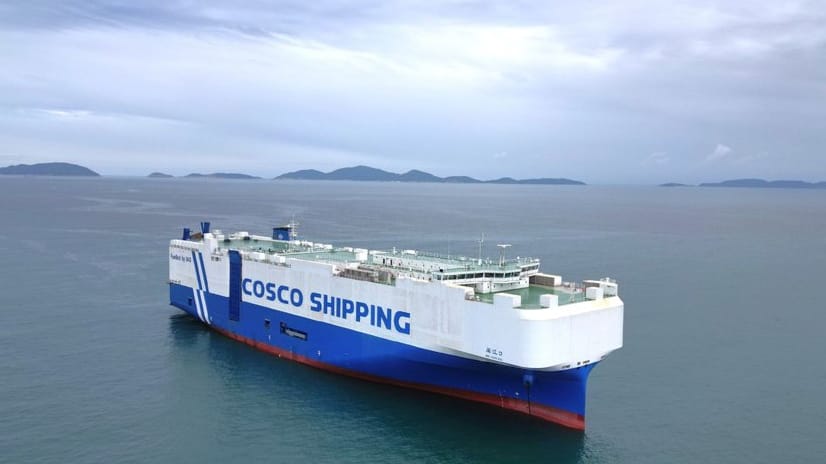
Chinese car carrier
A hot spot was detected a month after the fire was first reported on the Chinese car carrier (COSCO Specialized Carriers file photo)

Published Sep 10, 2026 4:14 PM by The Maritime Executive


Officials in Panama are reporting that they are monitoring the salvage efforts on the Chinese car carrier Min Jiang Kou as a hot spot was detected more than a month after an engine room fire disabled the vessel. Images on Panama TV appear to show smoke billowing from the stern of the car carrier, with tugs working to cool the vessel.

The Panama Maritime Authority had granted permission for the salvage operation to tow the vessel into a position offshore. The plan was to further stabilize the vessel and then begin a tow across the Pacific to a shipyard. The salvage effort, being led by Resolve Marine, was working to stabilize the vessel.

On the night of September 7, the authorities in Panama said a temperature increase was detected on the ship. They said that technical evaluations were underway to determine the status of the vessel, which is offshore from Panama.

The TV images show one of the three reported tugs spraying water on the vessel as part of a cooling effort. The vessel remains abandoned with on onboard power.

The Min Jiang Kou had only entered service two years ago with a special maiden voyage in July 2024 from Dubai. The vessel, which is 19,181 dwt with a capacity of 7,500 vehicles, is operated by COSCO Shipping Specialized Carriers. It is an LNG-fueled carrier that was built as part of a fleet expansion program by COSCO. It also made the first RoRo delivery a year ago to Peru’s Chancay port, which was developed by China and COSCO. The ship is 200 meters (656 feet) long with 13 vehicle decks, and it is registered in the Marshall Islands.

The U.S. Coast Guard reported it received a distress alert from the vessel at midday on August 8 while it was approximately 630 miles south of Costa Rica. The car carrier reported an engine room fire but said the crew had sealed the space and used the carbon dioxide fire suppression system. It initially appeared to be containing the fire.

About 12 hours after the first report, the vessel reported increased smoke aboard and that the captain had ordered the 22 crewmembers to abandon the ship and enter the lifeboat.  The USCG directed two nearby vessels, Jin Hai Ping and Degu, to assist, and they recovered the crew from the lifeboat. The crew was aboard the Jin Hai Ping and was being transported to Japan.

Salvage teams reported the vessel had been stabilized by late August and was being towed. The initial stop was Panama before heading to an Asian shipyard.

 

Video: Strong Winds Tear Aida Cruise Ship from its Moorings in France

AIDA cruise ship
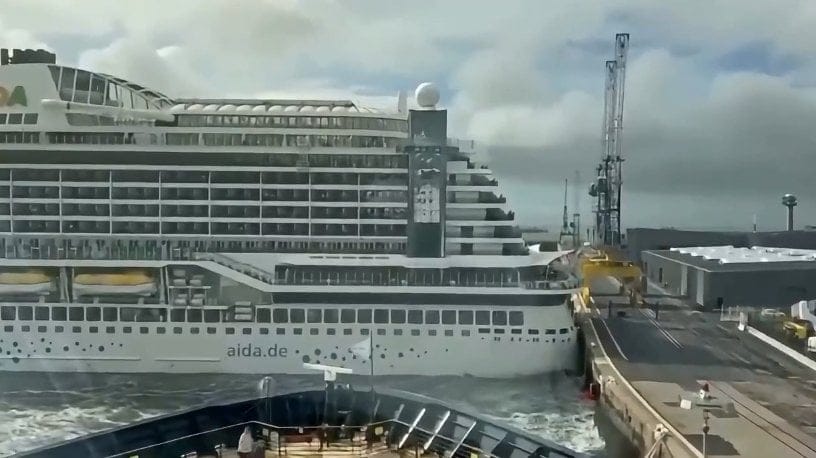
Aida cruise ship drifted in Le Havre coming up against the concrete wall (Video scene)

Published Sep 9, 2026 3:02 PM by The Maritime Executive


The German cruise ship AIDAperla (125,572 gross tons) broke free of its moorings in the Port of Le Havre, France, on Tuesday and made contact with the berth. The ship is currently being held in the port as an inspection is ongoing to determine the extent of the damage, while reports said passenger shipping in Le Havre is also restricted until the port can recover the cruise ship’s gangways from the harbor.

The cruise ship, which is operated by the German-focused brand of Carnival Corporation, was operating a 7-day circuit from Hamburg with stops in Rotterdam, Zeebrugge, Le Havre, and Southampton. It had docked Tuesday morning, September 8, in Le Havre, and passengers were on various tours to Paris and other destinations.

French authorities had warned of a potential for strong winds as a weather front moved through the area. Media reports say that the port experienced winds of up to 68 mph. 

Around 4:00 p.m. local time, the 300-meter (984-foot) cruise ship was pushed away from the pier, and its lines snapped. Reports said two gangways were lost or hanging down on the side of the ship as it drifted through the harbor. Several tugs responded, and by 6:30 p.m., the cruise ship had been secured to the dock.


Videos are appearing online from passengers on the Mein Schiff 3 cruise ship, which was also in Le Havre. It shows the Aida ship drifting backward before its stern made contact with a concrete wall. Media stories are reporting a small gash in the hull of AIDAPerla.

No passengers were injured, but they were unable to reboard the cruise ship. Approximately 500 passengers remained on their buses while waiting for the ship to be resecured. AIDAPerla has a double occupancy of over 3,300 passengers and a maximum capacity of 4,333 passengers, although it was unclear how many were aboard the current cruise.

The German media outlet Ostsee-Zeitung is reporting that passengers were advised that the port calls in Zeebrugge and Rotterdam were canceled. The ship remains in Le Havre as of Wednesday evening, with media reports that passengers have been told they can continue to go ashore in France until Thursday afternoon. The ship is expected to get back underway Thursday evening and then will proceed directly to Hamburg.

AIDA issued a statement saying its concern was the safety of the passengers and crew aboard the ship. TUI Cruises, operator of Mein Schiff 3, told the German media that it had also brought in extra tugs to ensure the safety of its cruise ship in Le Havre.


Gulf War Forces Antarctic Expedition Firm to Replace Historic Liner

St Helena cargo-passenger ship
St. Helena transported passengers and cargo till 2018 as the last long-distance RMS vessel and sailing to the remote British outpost in the middle of the South Atlantic (Burgh House photo)

Published Sep 3, 2026 7:04 PM by The Maritime Executive


The start-up Terra Nova Expeditions announced this week that it has been forced to change plans for its inaugural expedition cruise season to Antarctica. The company had planned to bring back the historic liner St. Helena for a new career as an expedition ship, but was forced to replace the ship, creating an uncertain future.

St. Helena, built at the Appledore Shipyard in the UK and commissioned in 1990, provided a vital service to the island of the same name located more than 1,100 miles west of Africa and became one of the last RMS (Royal Mail Ships) in service. She is 344 feet (105 meters) in length and approximately 6,800 gross tons. She plods along at 14 knots, but her service primarily between Cape Town and Saint Helena, and continued to Ascension Island, was vital to maintaining a link to the outside world before there was an airport. The introduction of air service was her death knell, and despite the protests of her loyal following, St. Helena was retired in 2018.

The historic ship cheated the scrappers, finding a repurposing. She was briefly used as a vessel-based armory in the Gulf of Oman and later sold to the car racing group Extreme E, which used her as a transport for materials and cars. The company extensively renovated the ship in 2022, retrofitting her engines, updating her systems, and refurbishing her cabins and public spaces.

Terra Nova Expeditions emerged in 2025, saying they had chartered the quirky little ship and were refitting her to commence Antarctic voyages in 2026-2027. The first voyage was planned for December 2026. 

The company reported this week that St. Helena is currently unable to reposition from the Persian Gulf in a safe and timely manner for the start of the 2026/2027 Antarctic season due to the ongoing situation in the Middle East. According to her AIS transmissions, the ship, which is currently registered in Djibouti, has been caught in the Dubai area and last reported near Port Rashid in the United Arab Emirates. 

Terra Nova Expeditions said it spent several months working to secure an alternate vessel and has been forced to abandon plans for St. Helena and proceed with an alternate ship. It reports it secured a three-year season charter for the vessel that formerly operated as the Expedition and G Expedition, which it will rechristen Terra Nova Adventurer.


Terra Nova Adventurer will be a suitable replacement but is not the quirky St. Helena (Terra Nova Expeditions)


The replacement ship has a long history as well, and Terra Nova has the advantage of having an extensive history of expedition cruising in Antarctica, the Arctic, and other remote destinations. She had been sailing for the Canadian company G Adventures since being rebuilt for expedition cruising in 2008. The 6,333 gross ton ship started her life as a passenger car ferry in the Baltic, built in 1972. Currently, she appears to be laid up as the Vestland Adventurer, registered in Liberia.

Terra Nova Expeditions says it will undertake a series of enhancements ahead of the vessel’s first season with the company. Alongside new soft furnishings and décor throughout the ship, the project will include the remodeling of the bar and lounge areas and the addition of a Jacuzzi and new sauna on Deck 5. It reports, “The result will combine the vessel’s established expedition credentials with a refreshed onboard experience aligned with Terra Nova Expeditions’ approach to small-ship polar travel. 

The company says that its Antarctic itineraries and expedition program will continue as planned aboard Terra Nova Adventurer. Under the charter, the ship will remain with the company through the 2028/29 season.

The fate of the historic St. Helena, however, appears uncertain at best. 


Pirates Hijack Bulker Off Yemen in the 25th Recorded Incident of 2026

Somali pirates
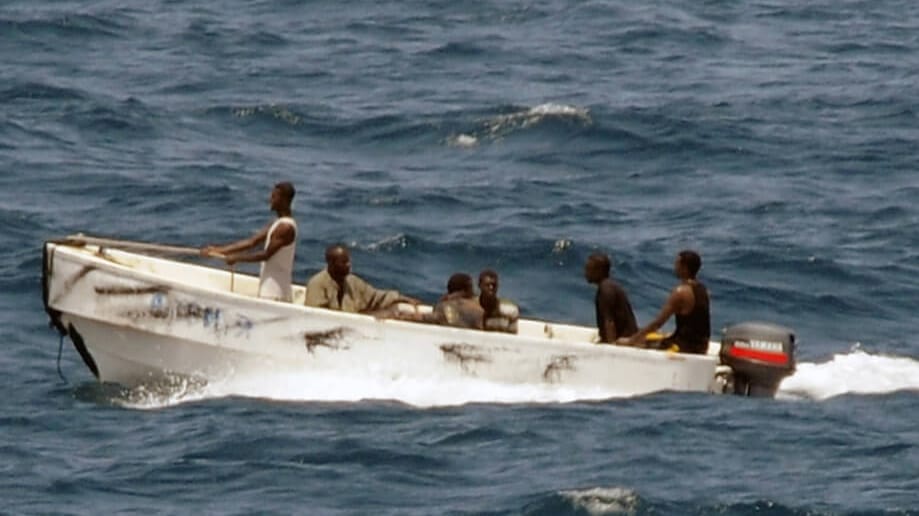
Today's pirate incident is the 25th reproted in 2026 (USN file photo)

Published Sep 10, 2026 5:02 PM by The Maritime Executive


Reports are coming in of a new vessel hijacking that happened earlier today, September 10, south of Yemen. The monitoring authorities issued alerts about a bulker that was approached and appeared to have been boarded while assets assigned to the EU operation Atalanta were investigating the situation.

UK Maritime Trade Operations received a report of the vessel being approached while it was approximately 98 nautical miles southwest of Al Mukalia, Yemen. The Maritime Security Centre Indian Ocean (MSCIO) later reported the vessel had been hijacked by a pirate action group approximately 38 nautical miles southwest of Balhaf, Yemen. 

The vessel is being identified as the Glamor, a Greek-owned bulker built in 1998. The 24,000 dwt vessel, which is 154 meters (505 feet) in length, is registered in Saint Vincent and the Grenadines. It appears to be operating in and out of Djibouti, but little information is known about the ship and its crew.

It is the first reported pirate incident since August 20, but it has been an active year that saw a dramatic increase in the number of reports. The instability in the region and possible support from the Houthis for the pirates are being cited as factors contributing to the rise in incidents. Today’s activity came as the Houthis were pursuing a new offensive and reported taking the port city of Mocha in Yemen. It would increase the militants’ ability to threaten shipping or control the passage into the Red Sea.

MSCIO and Atalanta reported this week that they are still monitoring five vessels that are being held in Somalia’s coastal waters. The tanker Honour 25 was hijacked on April 21, followed by the cargo ship Sward on April 26. The tanker Eureka was hijacked off Yemen on May 2. More recently, the tanker Asana was hijacked off Yemen on July 17, and on August 20 the tanker Sibu I was also reportedly hijacked by a pirate action group east of Yemen while bound for Port Sudan.

The organizations’ only remark about the cargo ship Lutuf was that it had been released on August 17 while approximately 4.5 NM south of Maraya (Eyl District), Somalia. Turkish authorities and the government of Somalia reported that commandos stormed the ship, which was carrying Turkish military equipment, and killed the hijackers. The authorities in the Puntland region of Somalia dismissed the reports and claimed a ransom had been paid. 

MSICO lists today’s incident as the 25th reported in 2026. In addition to the hijacked vessels and kidnapped crews, it tracks incidents of armed robbery and approaches toward commercial vessels. It also reports several dhows that were seized, possibly to act as mother ships for the pirate groups. It continues to warn commercial ships to maintain heightened vigilance in the area within 150 NM off the Somali coast between Mogadishu and Hafun.


Two Tankers Attacked on Omani Route in Strait of Hormuz, Brent Hits $108

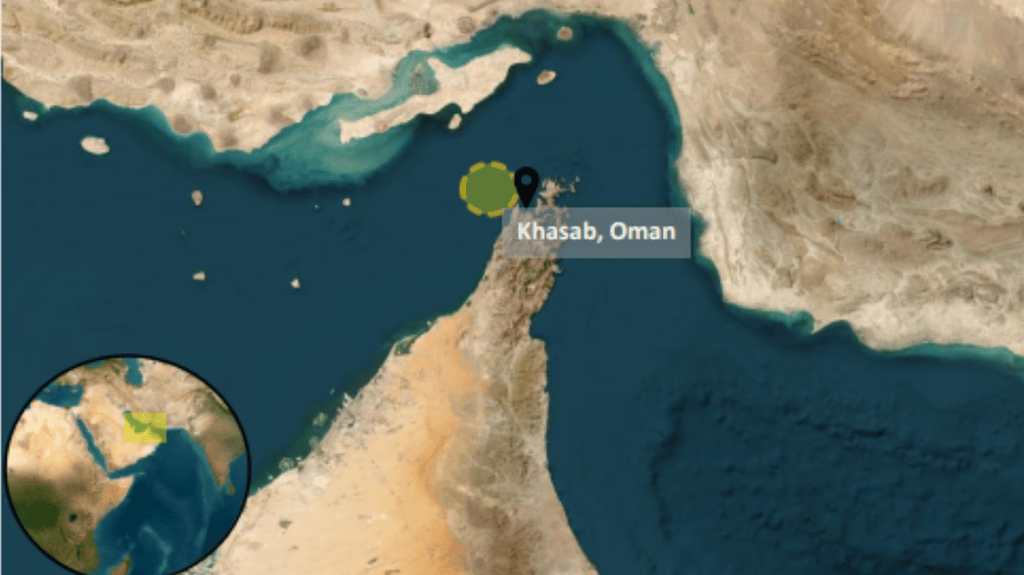
Khasab
Courtesy UKMTO

Published Sep 10, 2026 7:32 PM by The Maritime Executive


UK Maritime Trade Operations reports that two more vessels have been attacked on the Omani side of the Strait of Hormuz, the latest in a series of strikes and counterstrikes between Iranian and American forces in the Mideast. 

At about 1910 hours UTC, UKMTO received a report from the master of a nearby vessel that four projectiles had hit two unidentified ships in the strait, just four nautical miles off Khasab on the northeast side of the Musandam Peninsula. One of the two vessels caught fire, he reported; the other vessel's status is unknown. Iran has not claimed responsibility for the attacks but has conducted all previous similar strikes in this area of the strait. 

The reported strikes follow shortly after a series of recent U.S. retaliatory attacks on Iran's tanker fleet, including two sinkings, the Iran-linked Riesco and the Kylo. Oil slicks near their last reported positions have been identified by RFI, a possible confirmation. Going forward, U.S. officials have pledged to follow a "tanker for a tanker" retaliation model for each subsequent Iranian strike. 

The newly reported attacks add to market concerns about oil supplies, and Brent crude rose to $109 by the end of the day. Also factoring into traders' decisionmaking, infrared satellite sensing suggests disruption (possibly heavy flaring) on the East-West Pipeline connecting Saudi's oil-producing Gulf coast with the Red Sea. 

The line moves about five to seven million barrels of oil per day for refining or export, relieving much of the pressure created by Iran's restrictions on the Strait of Hormuz. Any interruption in its operations would further restrict supplies of crude, which are already running at or below global demand; global stockpiles are at multiyear lows. 

Possible explanations for the heavy smoke and thermal anomalies along the pipeline include high-volume flaring for operational purposes. Other possibilities include an attack by Houthi forces, which are currently engaged in active combat with Saudi-backed government forces within Yemen. The Houthi group began launching drone and missile strikes on refineries and oil storage sites across the border in southwestern Saudi territory earlier this week, with serious effects on the 400,000-bpd Jazan refinery. 


Saudi East-West Pipeline Suffers Significant Damage in Drone Attack

Energy markets are unfazed by the news as offsetting Strait of Hormuz export volume grows

Low-resolution infrared sensing shows a huge plume of heat along a remote stretch of the East-West Pipeline, September 10 (Sentinel-3 / analysis JH Crudeoil231)

Published Sep 11, 2026 3:05 PM by The Maritime Executive


U.S. officials have confirmed that Saudi Aramco's East-West Pipeline - the key bypass route carrying Gulf oil around the contested Strait of Hormuz - has been damaged in a Houthi strike. Satellite imaging analysis shows clear and substantial impacts at two pumping stations, including particularly extensive fire damage at one of them. 

The news confirms early indications seen Thursday: low-resolution satellite photos revealed a large smoke plume emanating from the pipeline route, and spikes on infrared remote sensing in the same area (VIIRS / NASA FIRMS) indicated active fires. The infrared data showed a large number of additional fire locations along the line, either a sign of emergency flaring or of further damage. 

In a statement, the Saudi energy ministry confirmed that the pipeline has been shut down as a precautionary measure after multiple attacks. The strikes Thursday morning resulted in multiple injuries, the ministry said. 

A U.S. official said that the attack involved drones launched from a location in Iraq. If accurate, the drones - typically a slow-moving threat class - would have had to transit large swathes of Saudi airspace without interception, raising questions about detection and air defense effectiveness.

Attribution is as-yet unclear. Iranian-backed militia groups have a substantial presence in Iraq, and Yemeni Houthi forces - operating far from home - have previously used Iraqi territory to launch strikes on Saudi facilities. The Houthis have been using their own operating area next to the southwestern Saudi border to strike key Aramco facilities near the Red Sea, including the massive refinery at Jazan. Axios reports that the Trump administration has declined Saudi requests for military assistance in combating an increasingly aggressive and effective Houthi threat.

Brent crude oil fell Friday despite the news of the pipeline attack and Houthi territorial gains near Bab el-Mandeb, dropping three percent to settle at about $104.

While the attack is unwelcome news for Saudi oil shipping out of Red Sea ports, it has been offset by favorable developments for oil shipping  in the Gulf region. TankerTrackers.com reports that average daily crude oil flows out of the Strait of Hormuz have hit more than 10 million barrels per day, a significant milestone after months of Iranian restrictions on GCC export flow. The shipping surge - controversial at IMO, given the active threat of Iranian attack and associated risk to life and safety of tanker crews - is complemented by a corresponding jump in STS transfer activity off Fujairah. "Shuttle" tankers associated with GCC exporters offload their cargo to long-haul VLCCs at the comparatively safe Gulf of Oman anchorage for final delivery. 

"Even with pipeline transmission now impacted, Saudi crude oil exports have been trending higher over the past couple of weeks after having picked up significantly from the kingdom's heavyweight eastern terminals. Those exports depart via the [Strait of Hormuz] under US CENTCOM protection. [Saudi Red Sea terminals] shall likely export from storage in the meantime. This is not their first rodeo," commented TankerTrackers.com


Decisive Moment in Gulf War: Houthis Position to Close Bab el-Mandeb

Bab el-Mandeb
Houthi forces are now positioned near the critical passage at the southern end of the Red Sea (NASA)

Published Sep 11, 2026 10:21 AM by The Maritime Executive


The Houthis have accelerated their advance over the past 36 hours in southwest Yemen to complete their capture of the entire Red Sea coastline of Yemen, from their southernmost stronghold all the way down to the Murad Peninsula, rounded off by capturing the Internationally Recognized Government (IRG)’s port at Ras Menhali and the island of Perim, which lies opposite. Neither the IRG itself nor those principally affected by this development, principally Saudi Arabia, have moved in time to reinforce or intervene, notwithstanding that the danger of the Houthi seizure has been apparent for a number of days. Once the Houthis had broken through IRG lines and onto the Tihama Plain, the tactical advantage was with them, as the featureless terrain favors fast movement and lacks defensive obstacles. Nonetheless, the Houthis could have been thwarted, being exposed in the open terrain to air strikes, but airpower never arrived from the IRG’s allies to save the day.

Seizure of the Hanish Islands to the north, and Perim Island midstream in the narrowest section of the southern entrance to the Red Sea at the Bab el Mandeb, has strategic implications likely to impact the course of the wider conflict in the Gulf.  By being able to dominate marine traffic in the Red Sea, the Houthis will be able to interdict Saudi (and Gulf) trade routes to and from Asia, which had switched from the Gulf to Saudi Arabia’s west coast ports.


 Locations which Houthi forces are reported to have entered, as at September 11
(Google Earth/CJRC, with thanks to expert input from @BashaReport)

Saudi Arabia’s crude exports will be particularly affected. The ability to use the East-West crude pipeline had relieved much of the strain the Saudis suffered from the closure of the Strait of Hormuz, and now the only remaining export route will be northwards through the Suez Canal.  Even if the route north through the Suez Canal remains open, costs of diverting around southern Africa if trade is to be maintained with Asia, plus the inevitable congestion which Jeddah and Yanbu are likely to experience, will be major inhibitors of economic activity, and will force oil prices up.  The result is likely to be political pressure on the United States from its erstwhile allies in the Gulf to come to a settlement with the Iranians, so as to get trade flowing through the Strait of Hormuz again.  The actions of the past few weeks have shown a high degree of strategic foresight on the part of Iran and the Houthis, coordinating their actions to best effect, and leaving their opponents looking inept.

As the gravity of the situation becomes apparent, those most affected may come up with a counter-attack plan, and warfare in Yemen over the past decade has shown that front lines can move quickly. But for the moment, the initiative lies with the Houthis. The Houthis have made statements that their action is directed against the Saudis, who they blame for the imposition of the economic blockade on Houthi areas.  But these statements may be designed to assuage immediate fears and to sabotage counter-attack plans.  In the end, if the Houthis are on Perim Island and dominate the coastline where the Red Sea is at its narrowest, they will have the option at any time to close down all traffic in the Red Sea, granting or withholding permission to anyone who wants innocent passage – an option which the IRGC had up its sleeve for a long time over the Strait of Hormuz before choosing the decisive moment to play that card.


WSC: Better Rules Needed to Manage Fire Risk of Small Li-Ion Batteries

Burning debris falls out the bottom of a fire-damaged container of battery-powered flashlights, Sept. 2020 (Transport Malta)

Published Sep 11, 2026 11:08 PM by The Maritime Executive


Lithium-ion batteries come with known fire risks, and they are a top cargo of concern for container lines and ro/ro operators. Improperly-declared battery cargoes - transported out of compliance with IMDG Code rules - are a significant hazard. But under current regulations, shippers can pack as many small batteries as they want into a standard box without telling the carrier what's inside - a fully compliant loophole that the World Shipping Council says that governments must take action to close. 

The volume of lithium-ion batteries in circulation has risen sixfold in the last five years, according to estimates from the International Energy Agency, and demand is expected to double by the end of the decade. Clean-energy transport, utility-level grid storage, personal electronic devices and countless industrial and commercial applications have all driven up demand for these batteries, which are the gold standard in durable, high-energy-density technology. When they short out or overheat, they can catch fire and emit toxic, flammable gases at an explosive rate, and the resulting blaze is difficult to extinguish. In a shipboard setting, they are a potential hazard that must be managed by following safe-stowage protocols. 

The IMDG Code has specific rules for declaring and stowing dangerous goods, including large lithium-ion battery packs. However, smaller batteries fall under an IMDG exception (SP188) if they meet certain testing criteria. They do not have to be disclosed and shipped with the same precautions - even if there are lots of them packed together. 

Using a typical consumer-electronics example, WSC notes that a standard 40-foot shipping container might carry as many as 4,200 laptops, which could have as much total battery capacity as three to four electric vehicles. Electric car battery packs are a known, regulated fire risk, but the risk can be mitigated to a safe and acceptable level if managed appropriately. The equivalent battery content in a cargo of laptops could be dropped off by the shipper unbeknownst to the container line, rendering proper management impossible. WSC says that this has caused known incidents and needs to be changed. 

“We know what can happen when hazards are invisible,” said Joe Kramek, President and CEO of the World Shipping Council. “Batteries shipped under the exemption have caused serious container fires, putting people, ports, ships and the marine environment at risk. . . . As battery shipments continue to grow, we need a better solution that makes these cargoes visible and allows the risks to be properly managed.”

In a past example, a 40-foot container full of battery-powered flashlights caught fire on the deck of the boxship X-Press Godavari in September 2020 and burned for more than three days, even after it was offloaded onto the pier. It had likely overheated during transport as deck cargo in 86 F weather, likely exacerbated by exposure to direct sunlight in its stowage location, The ambient air temperature was already at the safe upper storage limit recommended by the OEM, and the prolonged exposure to sunlight contravened the manufacturer's recommendations. The 7,000-kilo cumulative mass of Li-ion batteries inside the cargo likely ignited as a result. The cargo met the rules of SP188 and was not declared as a dangerous-goods shipment, as allowed by the exception in the IMDG Code; but had the operator been notified, the container would likely have been stowed appropriately and the fire might not have occurred. 

To address the issue, the WSC has submitted a proposal to the IMO to put a limit on the maximum weight or capacity of batteries that are acceptable in a given container under the SP188 exemption. Past that level, the battery packs would have to be declared. The proposal comes up for review next week at the next meeting of the Sub-Committee on Carriage of Cargoes and Containers. 

What the shofar’s ancient sound means on Rosh Hashanah


(RNS and NPR) — The shofar marks moments of heightened experience and emotion — and the Jewish new year.
A man blows a shofar, a ram’s horn, marking Rosh Hashana, the Jewish new year, overlooking the port of Haifa, Israel, Oct. 4, 2024. (AP Photo/Maya Alleruzzo)

(RNS and NPR) — Rosh Hashanah, the Jewish new year, begins at sunset Friday (Sept. 11). Across the world, Jews will spend the holiday in prayer, reflection and celebration. And for many, a highlight will be hearing the shofar: an animal’s horn blown like a trumpet.

It can be the small, curved horn of a ram or the dramatic spiral of an African antelope. But the sound it creates is unmistakable. 

Creating that sound is not difficult, but it does take some practice, said Rabbi Alicia Jo Rabins, who is also a musician based in Portland, Oregon. You take a deep breath — which Rabins calls one of the most basic spiritual practices — and purse your lips, like you are playing a brass instrument. 

“When we say horn, we think of, like, a trumpet or maybe a trombone,” she told RNS and NPR. “But really the original horns are the horns of animals.” 

How did this primal instrument become a holiday’s spiritual soundtrack?

“ The most basic answer is that it makes noise, right? It calls people to attention,” said Daniel Picus, associate professor of biblical studies in the ancient world in the Department of Global Humanities and Religions at Western Washington University in Bellingham. “All of the instances in which a shofar is used in the Hebrew Bible, that is what it’s doing.”

Shofars on display for sale at a workshop in Tel Aviv, Israel, on Sept. 22, 2014. (AP Photo/Ariel Schalit)

Shofar blasts marked the revelation of the Torah at Mt. Sinai and the start of the Jubilee year, Picus said. Priests blew shofars when they circled the walls of Jericho to bring down the walls. The shofar marks moments of heightened experience and emotion — and Rosh Hashanah.


“In the Hebrew Bible, Rosh Hashanah is the day of trumpeting and the day of remembrance,” Picus explained. “… The association of the shofar with Rosh Hashanah is right there in the Biblical text.” 

Centuries later, the Mishnah, the earliest rabbinic codification of law, drilled down into greater detail in the tractate Rosh Hashanah, laying out exactly how a shofar should be prepared (hollowed out), repaired (it depends), blown (a complex series of blasts at several times during the service, thanks to debate over linguistic interpretation), and whether or not it can be blown when Rosh Hashanah falls on Shabbat (no, although some modern synagogues have changed course).  

And within the Talmud and for centuries thereafter, people have debated the meaning of the shofar.

Rabbi Micha’el Rosenberg, who teaches at the Hadar Institute, a center for Jewish learning based in New York City, pointed to several sources that compare the sound of the shofar to the cry of a mother in pain — the mother of the slain biblical military commander Sisera, and the cries of a woman in labor.

(Photo by Megs Harrison/Unsplash/Creative Commons)

Rosenberg said you can hear that in the sound — especially the broken staccato blasts, known as “teruah.” “You can really imagine someone so caught up that they can’t get the full sound out even, that they’re gasping with their cries,” he said. 

Another interpretation comes from Maimonides, the medieval Jewish rabbi and scholar known as the Rambam, who wrote “The Laws of Repentance.” He describes the blast of the shofar as a sort of spiritual wake-up call to become your best self. 

“The shofar wakes us out of our slumber,” Rosenberg said, adding that, especially in the last decade or so, when many people have faced offenses to their ethical poles and spiritual lives, it has become easy to sort of fall into that slumber.

“In Jewish law, we have this expression of “daled amos,” my four cubits — I focus on the 6 feet around me, as it were,” he said. “It’s easy to do that — and there’s value in doing that sometimes. But the shofar, per the Rambam, wakes us up and says, ‘No, there’s more beyond what I can immediately see around me.’” 

Rosenberg also pointed to Hasidic theories that the blowing of the shofar reenacts the breathing of life into the world. But he said one of the most powerful things about the shofar is that it doesn’t say anything at all. “It transcends my words, it transcends my rational thoughts, and it really is just a feeling that I can hope to hold onto,” he said. 


Sam Shonkoff teaches at the Graduate Theological Union in Berkeley, California, and has studied the early Hasidic movement’s embrace of these more direct, democratized spiritual practices. He said the dance between words and wordlessness within Rosh Hashanah is powerful. “The way the liturgy unfolds, it can be this torrential downpouring of words,” he said. “The actual shofar blasts are like these sound baths.” The shofar itself, visually and materially, takes participants from text to ancient practice.

Rabins, the Portland rabbi and musician, said the shofar can call across time to speak to those wordless places inside us. “It really brings you into the moment, and you also feel connected to your ancestors, who have been hearing this sound and making this sound for thousands of years,” she said. 

It’s a sound, Rabin said, that can wake you up to all the joy and sadness of life, whether it be a birthday horn or a mother’s cry. And it makes you pay attention — both to this moment, and to the year to come.

This story was produced through a collaboration between NPR and RNS. Listen to the radio version of the story.