Wednesday, October 07, 2026

AUSTERITY KILLS

IMF chief signals austerity is back as global public debt heads for 100% of GDP

FILE. International Monetary Fund (IMF) Managing Director Kristalina Georgieva speaks at a news conference in Washington, 9 April 2026
Copyright AP Photo/Jose Luis Magana

By Quirino Mealha
Published on


IMF chief Kristalina Georgieva has urged heavily indebted governments to tighten their belts and central banks to take a hawkish stance, signalling a return to austerity as the energy shock from the Iran war, record public debt and a credit-fuelled AI investment boom weigh on the global economy.

The days when governments could lean on cheap money and fast growth to keep their debts in check are over, according to the head of the International Monetary Fund (IMF), who called for spending discipline and tighter monetary policy around the world.

Speaking in Singapore on Wednesday, ahead of the IMF and World Bank annual meetings in Bangkok next week, Kristalina Georgieva said policymakers "can no longer rely on higher growth rates alone to solve fiscal problems".

Worldwide public debt is close to levels last seen after World War II and could top 100% of GDP before 2030, the IMF chief warned, singling out developed economies as the "worst offenders".

"Yet, we don't see decisive action in the high-debt advanced economies where the need of the hour is for credible medium-term fiscal consolidation plans," Georgieva said, adding that "fiscal space is crying out for replenishment".

Borrowing costs are already climbing, she noted, with 10-year government bond yields in the US, Germany and Japan at their highest levels since 2007, 2009 and 1996 respectively.

On monetary policy, Georgieva described recent rate hikes by the US Federal Reserve, the European Central Bank and the Bank of Japan as "highly appropriate".

"Now may be a good time for a prudently hawkish bias in many countries' monetary policy," she said.

The IMF chief also warned that the global economy is being pulled in opposite directions by a negative energy supply shock from the Iran war and a positive demand shock from artificial intelligence, adding that "the combined impact of these two forces is highly uneven across the world".

Oil prices remain at about $100 a barrel, she said, well above the $89 the IMF assumed for this year in its July forecasts, which put global growth at 3% in 2026 and 3.4% in 2027.

"Even if the war in the Gulf were to end soon, the problem of high energy prices will likely persist for some time," Georgieva said.

An AI boom with risks attached

"Love it, hate it, or fear it, AI is here," the IMF chief said, describing the technology as "rapidly becoming a key driver of countries' relative fortunes in the world economy".

If done right, AI could lift global growth by as much as half a percentage point a year, according to IMF estimates.

Over a decade, that would be like adding "an economy the size of ASEAN to the world economy", Georgieva said, referring to the Southeast Asian bloc.

But she cautioned that "the AI building boom is inflationary", with spending on the technology, relative to the size of the economy, likely to outstrip past investment waves in railways, power grids and telecoms.

A letdown for investors could become "a far-reaching shock," she warned.

Georgieva also flagged dangers ranging from job losses and cyberattacks to cutting-edge models that could "escape human control and run amok".

The IMF is due to publish updated global growth forecasts during next week's meetings in Bangkok.




 

Christa Pike awake a week after lethal injection as her lawyers seek answers

Christa Pike's failed execution took place on 30 September, 2026.
Copyright AP Photo

By Simon Ormiston
Published on

Christa Pike remains shackled to her hospital bed with burned and blistered arms, while Tennessee has suspended executions and its prison chief has resigned.

A US death row inmate who survived an attempt to execute her by lethal injection is conscious and speaking, her lawyers have said, as they go to court to find out what went wrong.

Christa Pike, 50, was given two doses of the drug pentobarbital at a Tennessee prison on 30 September. She is believed to be the only person to survive after lethal injection drugs were administered.

"Against all odds, Christa Pike is conscious, speaking, and continues to receive critical medical care," her attorneys said on Tuesday.

"Despite the severe damage she endured to her arms, she is still handcuffed and shackled to the bed," they said. "Her prognosis remains unclear but, at a minimum, we expect a long recovery."

'Pike was sentenced to death for the 1995 killing of 19-year-old Colleen Slemmer, committed when she was 18. She would have been the first woman executed by Tennessee in more than 200 years.

Her lawyers are due in court in Nashville on Wednesday, seeking an order requiring the prison system to preserve evidence including drug lot numbers, needles and execution logs.

The Tennessee attorney general's office said the order was unnecessary because the prison system is "obliged to maintain this evidence in other cases and must assure it is preserved".

Experts have focused on whether a problem with the IV line caused the drug to pool in her tissue instead of entering her bloodstream. A court filing said both Pike's arms were "swollen, burned, and blistered" when she arrived at hospital.

Governor Bill Lee called what happened "deeply disturbing" and ordered a "comprehensive, third-party review". He has suspended executions in the state pending the investigation, and the prison chief has resigned.

Pike's lawyers have again called on Lee to commute her sentence to life imprisonment without the possibility of parole.


Puigdemont welcomes Spain's amnesty but warns it is not the solution for Catalonia


By Rafael Salido & Sertac Aktan
Published on

The Catalan pro-independence leader, who has lived in self-imposed exile in Waterloo for nine years, hailed the Supreme Court's move to lift his arrest warrant over alleged embezzlement linked to the 'procés'.

The former president of the Catalan regional government, Carles Puigdemont, who, thanks to a decision by the Supreme Court, can now return to Spain after nine years on the run from justice, on Tuesday celebrated the end of the court case hanging over him but warned that the amnesty he has been granted "is not the solution" to the independence aspirations of part of the Catalan population.

Talking at a brief press conference in the Belgian town of Waterloo, where Puigdemont has lived since leaving Spain after an arrest warrant was issued against him for his role in organising the 1 October 2017 referendum, he declared: "As far as relations between Catalonia and Spain are concerned, nothing is being resolved today."

The leader of Junts per Catalunya lamented that the legal process he has faced in Spain since then amounts to "an improper use of judicial powers" and argued that "it is typical of authoritarian regimes and therefore unacceptable in a European democracy".

The former head of the Catalan government left the country after Catalonia's unilateral declaration of independence and the triggering of Article 155 of the Spanish Constitution. However, the passage of the amnesty law in 2024 opened the door to his possible return.


Even so, until now, Puigdemont risked arrest if he returned to Spain, as the embezzlement warrant remained in force. On Tuesday, the Supreme Court judge Pablo Llarena lifted the arrest warrant after the Constitutional Court endorsed the application of the amnesty law to the offence of embezzlement.

The court ruled in response to an appeal lodged by former Catalan minister Dolours Bassa, after the Supreme Court had refused to apply the amnesty to the embezzlement charge in her case.

The underlying question was whether the use of public money to fund the independence referendum could be covered by the amnesty law. The Supreme Court had ruled that it could not, on the grounds that there had been a personal financial benefit for those driving the vote. The Constitutional Court, by contrast, rejected that interpretation.

In his statement, the pro-independence leader, who has not revealed when he plans to return to Spain, said he decided "to go into exile in order to do politics" with the aim of defending the rights of Catalan citizens who, in his view, were "under threat" from article 155, and argued that the Constitutional Court's decision represents "a disavowal of the repression" to which some of those responsible for the 'procés' have been subjected.


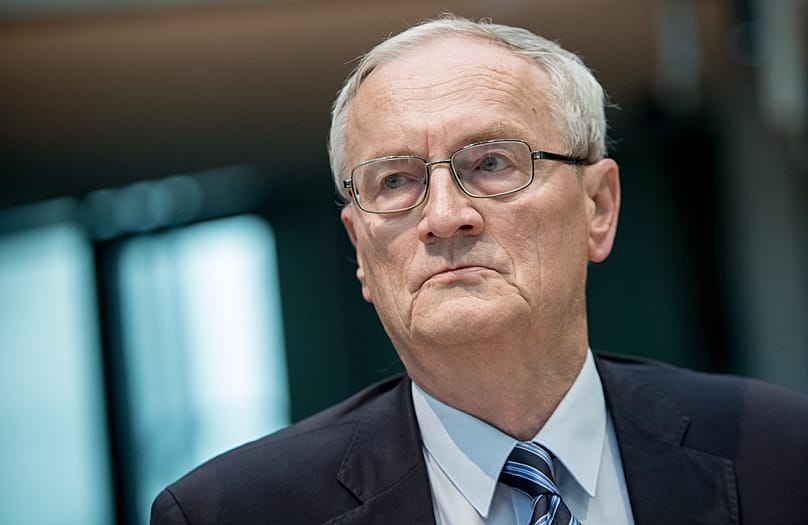
Former German foreign intelligence chief August Hanning arrested on suspicion of espionage, attempted treason

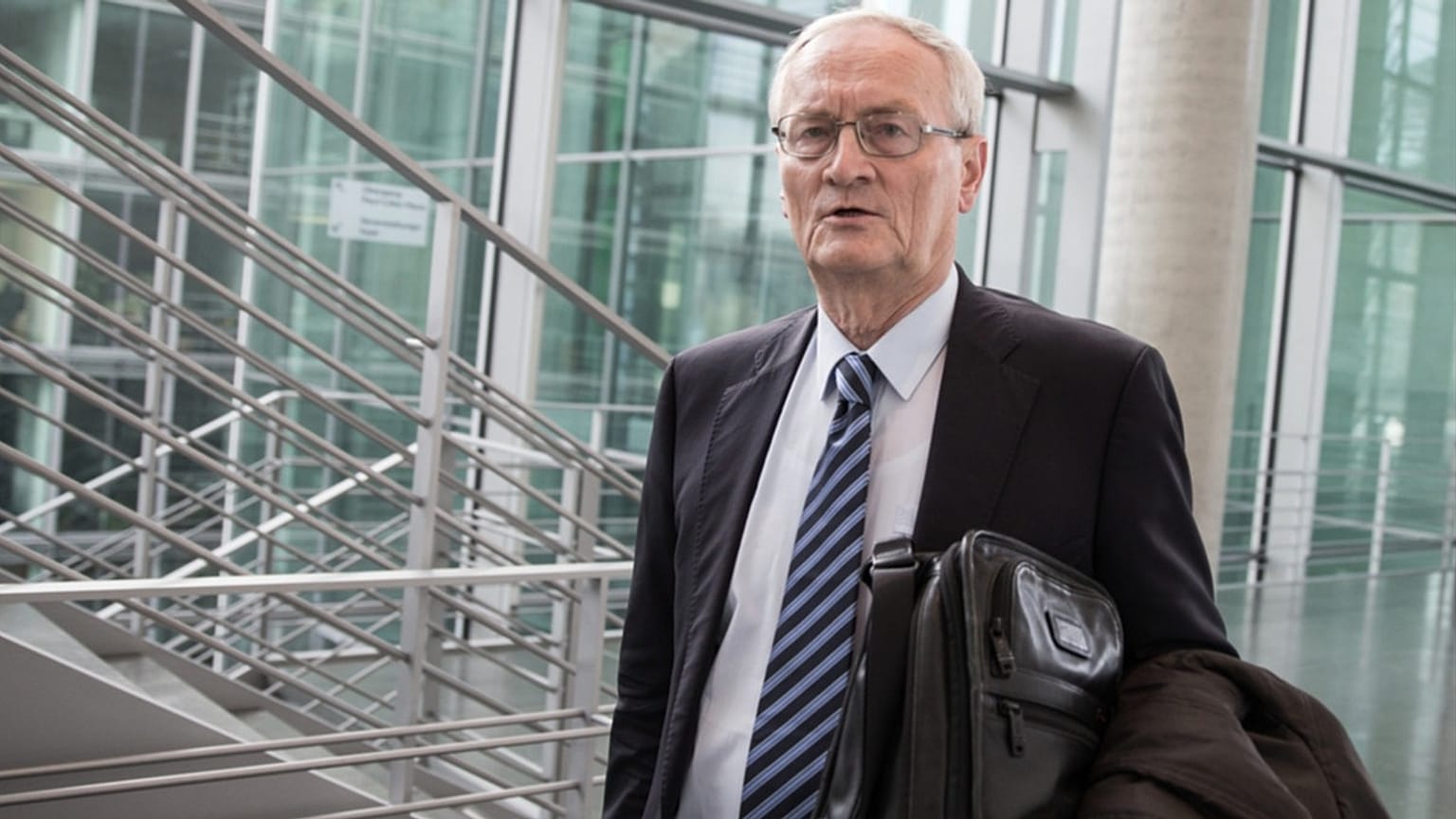
August Hanning, the former president of the Federal Intelligence Service (BND), arrives at the German parliament Bundestag in Berlin on Oct. 2, 2015
Copyright AP Photo

By Malek Fouda
Published on

August Hanning is accused of illegally receiving classified information during his time in office and after vacating his post, which were improperly used for his personal consultancy work.

A former head of Germany 's foreign intelligence service was arrested on Tuesday on suspicion that he had passed state secrets to a foreign intelligence service, the federal prosecutor's office said.

August Hanning, who led the Federal Intelligence Service, known by its German acronym BND, from 1998 to 2005, is “strongly suspected of treasonous espionage, spying out state secrets, attempted treason, and espionage,” the federal prosecutor’s office said in a statement.

Hanning, 80, was arrested in Bad Toelz-Wolfratshausen in southern Germany. A former aide, identified as Manfred D, was also arrested on Tuesday in Steinfurt in western Germany and has been charged with aiding and abetting attempted treason and treasonous espionage.

August Hanning, the former president of the Federal Intelligence Service (BND), appears as a witness at the German parliament Bundestag in Berlin on Oct. 1, 2015
August Hanning, the former president of the Federal Intelligence Service (BND), appears as a witness at the German parliament Bundestag in Berlin on Oct. 1, 2015 Michael Kappeler/(c) Copyright 2015, dpa (www.dpa.de). Alle Rechte vorbehalten

“In one instance, there is suspicion that Mr. Hanning used classified information to prepare an analysis for an employee of a foreign intelligence service,” Ines Peterson, a spokesperson for the federal prosecutor’s office, told German media outlets.

“In another instance, he is alleged to have passed on information following an extensive exchange — also with an employee of another intelligence service.”

Neither Peterson nor the earlier statement by the prosecutor's office revealed who exactly the two men were suspected of spying for or which foreign intelligence services they provided with classified information. Premises belonging to both men were searched late on Tuesday.

The prosecutor's office said Manfred D. worked as Hanning's chief of staff and later served as chief of staff for several subsequent BND presidents from 2012 until 2026. “In his role, he had access to confidential information,” the prosecutor's office said.

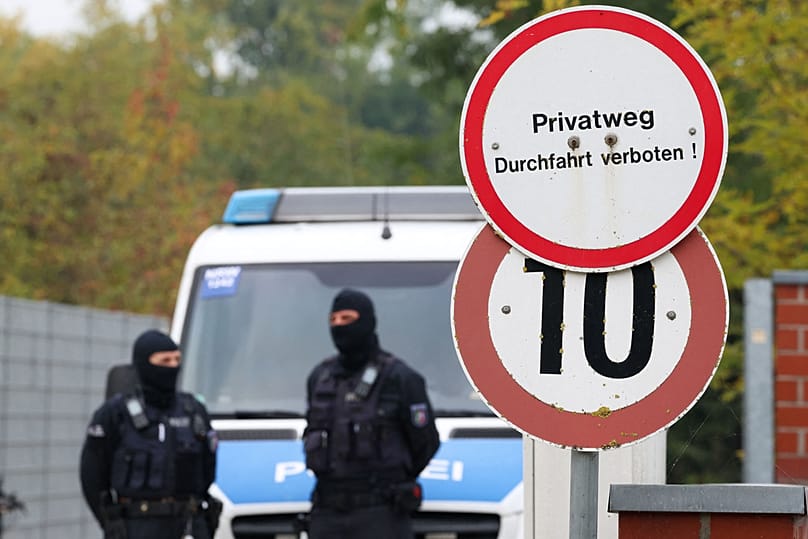
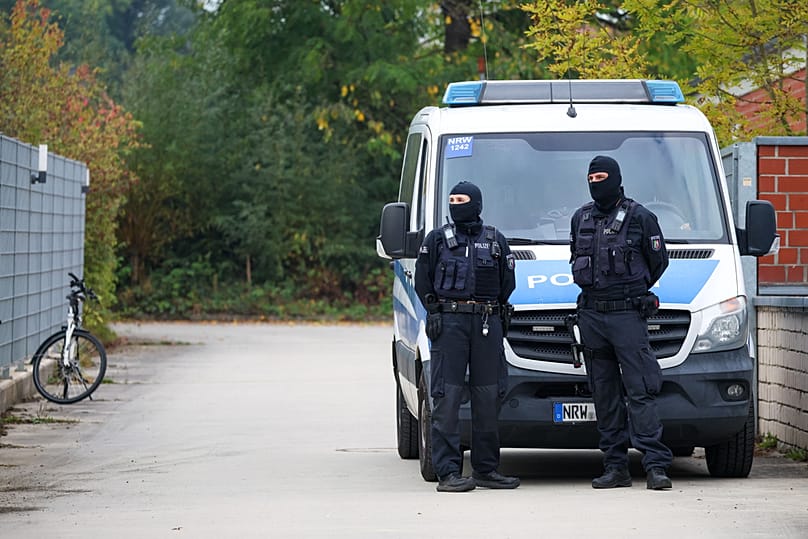
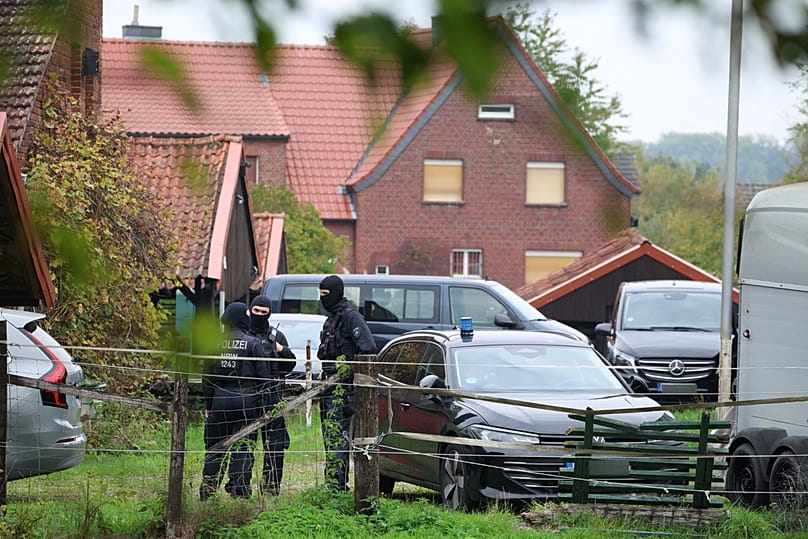
Police officers stand at the entrance of former intelligence chief August Hanning's home, who was arrested on suspicion of espionage, in Nordwalde, Tuesday, Oct. 6, 2026
Police officers stand at the entrance of former intelligence chief August Hanning's home, who was arrested on suspicion of espionage, in Nordwalde, Tuesday, Oct. 6, 2026 Christoph Reichwein/(c) Copyright 2026, dpa (www.dpa.de). Alle Rechte vorbehalten

Both suspects are believed to have agreed in 2010 to have Manfred D. continuously transmit valuable intelligence from the BND to Hanning in exchange for payment, the statement said.

“The current findings suggest that, over the years, Manfred D. provided Hanning with approximately 2,000 documents, many of which contained classified information to be used exclusively by the federal intelligence service for internal purposes, particularly for executive intelligence briefings,” the statement said.

Hanning used the information in private consulting work and Manfred D., who in line with German privacy rules cannot be identified by his full name, provided Hanning with classified information until June 2022, Peterson said.

Hanning came under scrutiny in a separate investigation into the abduction of Hamburg businesswoman Christina Block’s children from her ex-husband in Denmark in January 2024 in a lengthy custody battle. The investigation into that case led to Tuesday's arrests.

Police officers stand at the entrance of former intelligence chief August Hanning's home, who was arrested on suspicion of espionage, in Nordwalde, Tuesday, Oct. 6, 2026
Police officers stand at the entrance of former intelligence chief August Hanning's home, who was arrested on suspicion of espionage, in Nordwalde, Tuesday, Oct. 6, 2026 Christoph Reichwein/(c) Copyright 2026, dpa (www.dpa.de). Alle Rechte vorbehalten

The current proceedings stem from evidence found during a search of Hanning’s residence in connection with that case, the federal prosecutor’s office stated.

Hanning and a retired official from the Hamburg State Criminal Police Office are suspected of having accepted a contract from the businesswoman in 2022 to abduct her children while serving as executives of a security firm, the public prosecutor’s office announced in the fall of 2025, according to German news agency dpa.

The Blocks are a prominent Hamburg family best known for their popular national steakhouse chain ‘Block House’. The custody trial has received a lot of attention in the country, with German tabloids offering heavy coverage from the court.

Police officers stand at the entrance of former intelligence chief August Hanning's home, who was arrested on suspicion of espionage, in Nordwalde, Tuesday, Oct. 6, 2026
Police officers stand at the entrance of former intelligence chief August Hanning's home, who was arrested on suspicion of espionage, in Nordwalde, Tuesday, Oct. 6, 2026 Christoph Reichwein/(c) Copyright 2026, dpa (www.dpa.de). Alle Rechte vorbehalten

German opposition lawmaker Konstantin von Notz expressed shock about the allegations against Hanning and called for a quick investigation.

“This is a hard-hitting and deeply troubling story,” said von Notz, a member of the Greens party and also the German parliament committee overseeing the intelligence services.

“We expect a swift and thorough investigation into the egregious allegations levelled against former BND chief Hanning,” he said.

Van Notz also called on the German state to bar former top executives and those with top level security clearances from engaging in private consultancy work after vacating office, a matter he classified of national security interest.

Jordan And The Palestinians – OpEd


King Abdullah of Jordan addresses the UN General Assembly on September 23, 2026. 
Photo Credit: kingabdullah.jo/


October 5, 2026

By Neville Teller


Key Takeaways:

The column answers King Abdullah’s Sept. 23 U.N. speech on occupation by recalling Jordan’s 1950 annexation of the West Bank, recognized only by Britain and possibly Pakistan, and King Hussein’s July 31, 1988 disengagement, which Human Rights Watch treats as leaving about a million residents stateless.

It recounts Black September, from the 1970 hijackings and martial law through the July 1971 expulsion of the fedayeen to Lebanon, with deaths commonly put in the low thousands, not Arafat’s figure of 25,000, and the later killing of Prime Minister Wasfi al-Tal.

The author’s point is that this record undercuts an unqualified denunciation of Israel; it does not claim the history settles the present legal questions.

On September 23, King Abdullah of Jordan addressed the UN General Assembly. He devoted much of his speech to lambasting Israel. He maintained that what he called “one of the world’s longest running occupations” broke international law, and that the world had ignored it for decades.

Of course he had nothing to say about the Jordanian monarchy’s​ unhappy relationship with the Palestinians, ​with its own history of violence, repression and unresolved grievance, nor of the several charges of flouting international law that Jordan has been accused of over the years.

In the 1948–49 war, for example, Jordan’s Arab Legion took control of the West Bank. On April 24, 1950, the Jordanian parliament approved its annexation, declaring “complete unity between the two banks of the Jordan” in a single Hashemite kingdom ruled by King Abdullah’s great-grandfather, Abdullah I. ​ Arabs resident in the West Bank became Jordanian citizens.


The Arab League refused to recognize Jordan’s annexation. So did the rest of the world, with the sole exception of Britain and, it has been suggested (though details remain unclear), Pakistan.

​The UN characterized Jordan’s annexation as lacking international legal validity. International law does not recognize the acquisition of territory through the use of force as a lawful basis for acquiring sovereignty.

If Jordan flouted international law when it annexed the West Bank, it compounded its disregard for the legal niceties when it reversed its decision.

Until July 31, 1988 ​most Arabs living in the West Bank were, as a matter of Jordanian law and practice, Jordanian citizens. On that day King Hussein, Abdullah’s father, announced that Jordan was ending its legal and administrative relationship with the territory with immediate effect. Under the disengagement regulations, some one million Arab​s resident in the West Bank were ​suddenly stripped of their Jordanian citizenship. All at once they were no longer Jordanian.

​Human Rights Watch describes them as becoming stateless Palestinians under Israeli occupation.​ Over time their Jordanian passports were replaced with temporary Jordanian travel documents that did not confer citizenship.


Loss of nationality had serious legal consequences. They had no right of residence in Jordan. Non-citizens could not vote or stand for office. They were excluded from state employment and faced serious obstacles in accessing work, education, health care and other services.

International human rights law prohibits​ the arbitrary deprivation of nationality. Article 15(2) of the Universal Declaration of Human Rights states that “No one shall be arbitrarily deprived of his nationality.”

The fact that Jordan’s 1988 disengagement stripped a whole defined population of its existing nationality, without an individualized process and without a replacement nationality, makes the charge against Jordan of arbitrary illegality a powerful one.

In his speech​ to the UN, Abdullah called on world opinion to denounce Israel for Palestinian deaths. He might also have acknowledged that Yasser Arafat once accused King Hussein, his father, of killing 25,000 Palestinians – a figure generally believed to have been wildly exaggerated for propaganda purposes.

The episode is usually called Black September, although it lasted from September 1970 until the following July, and the death toll remains disputed. The commonly cited estimate of Palestinian deaths is in the low thousands, including both fighters and civilians. Jordanian soldiers also died. What is not disputed is that the events of 1970–71 left a deep and bitter Palestinian-Jordanian legacy.

​After the Six-Day War​ in 1967,​ it was from Jordan that Palestinian​ fighters began mounting guerrilla operations against Israel​. ​ By 1969 ​Arafat was leader of the Palestine Liberation Organization (PLO), an umbrella body in which his Fatah movement was dominant. The organization and its constituent groups ​started functioning increasingly from within Jordan. Armed groups established bases and checkpoints in and around cities and refugee camps ​acting as a law unto themselves, sometimes defying the police and civil authorities.

​Soon King Hussein ​was fac​ing an armed Palestinian movement operating inside his kingdom ​and challeng​ing the authority of the state.​ He decided to move against Arafat’s​ PLO and its armed forces, the fedayeen. ​


The crisis came to a head in September 1970. The Popular Front for the Liberation of Palestine (PFLP)​, a constituent body of the PLO, hijacked several international passenger aircraft. Three aircraft were eventually taken to Dawson’s Field near Zarqa, Jordan, where passengers were removed and the aircraft blown up before the world’s television cameras – a spectacular display that humiliated the Jordanian authorities.​

For Hussein, the question was no longer how to restrain the fedayeen, but who governed Jordan. ​ On September 16 he declared martial law.​ The following day the Jordanian Army opened a major offensive against Palestinian positions in Amman, Zarqa, Irbid and elsewhere.​

​The operation was considerably more than a simple expulsion. For a ​time it amounted to a civil war between the Jordanian state and heavily armed Palestinian organizations. The fighting was intense and involved artillery, tanks and infantry. Jordanian forces attacked PLO positions. Palestinian fighters resisted and, in some places, effectively controlled territory.

A ceasefire ​hammered out in Cairo on September 27 ​proved totally ineffective. ​The Palestinian militias remained entrenched and operative within Jordan. In early 1971 Hussein resumed the campaign against the​m. ​Finally the Jordanian Army ​succeeded in driving the fedayeen out of their remaining urban strongholds. The ​last major ​encounter took place in July 1971​, and ​organized ​Palestinian resistance in Jordan was effectively destroyed.​ Arafat and senior PLO figures​ ​fled.

​They escaped across the Jordanian-Syrian ​border​, and regrouped in Lebanon. Thousands of Palestinian fighters were ​driven out of Jordan and followed them. ​

It had been a bloody encounter. As well as Jordanian soldiers, thousands of Palestinians, including civilians​, had been killed. The episode produced a particularly bitter Palestinian-Jordanian legacy. In 1971 a militant Palestinian group, which subsequently called itself the Black September Organization, assassinated Jordan’s prime minister Wasfi al-Tal.

None of this ​unhappy history disposes of any moral or legal questions raised by the current situation, but it does complicate Abdullah’s posture of unqualified moral denunciation of Israel.

In short, standing at the UN podium vilifying Israel, King Abdullah might have borne in mind the old adage: “People in glass houses shouldn’t throw stones.”


About Neville Teller
Neville Teller's latest book is ""Trump and the Holy Land: 2016-2020". He has written about the Middle East for more than 30 years, has published five books on the subject, and blogs at"A Mid-East Journal". Born in London and a graduate of Oxford University, he is also a long-time dramatist, writer and abridger for BBC radio and for the UK audiobook industry. He was made an MBE in the Queen's Birthday Honours, 2006 "for services to broadcasting and to drama."
View all posts by Neville Teller