Audi chief's appearance at Trump rally sparks outrage in Germany
26.10.2026, DPA

An appearance by Audi chief executive Gernot Döllner at a US campaign event alongside President Donald Trump has triggered major backlash in Germany, with political and industry figures slamming the VW subsidiary's boss on Monday.
Left Party co-leader Luigi Pantisano called for the Audi boss to resign, as the executive faced accusations of actively supporting the election campaign of Trump's Republicans ahead of the November 3 midterms.
At a campaign rally in Georgia on Saturday, Trump unexpectedly announced Audi's plans to build its first US production facility in the state. Döllner, who is a member of the VW group board, then took the stage and thanked the US president for his support.
"I think it’s clear: Audi chief executive Gernot Döllner must step down," Pantisano told news website t-online.
Pantisano accused Trump of pursuing policies that serve the interests of the rich and powerful, while scorning labour rights.
"And then a German chief executive takes to the stage and campaigns on behalf of this autocrat," he said.
Criticism also came from Chancellor Friedrich Merz's conservatives, with lawmaker Dennis Radtke describing the appearance as "a campaign stunt for Donald Trump" which was "disturbing and pathetic."
While it was understandable for a German company to invest in the US market, Trump's policies are causing massive damage to German industry, he added.
'Political spectacle'
Christiane Benner, leader of the powerful IG Metall union that represents German autoworkers, described Döllner's appearance as "highly embarrassing, politically unacceptable and unworthy of the company - but above all of Audi’s employees."
Following the announcement, Benner had issued a statement welcoming the opening of a new plant in the US.
On Monday, she criticized the Audi chief for violating the company's internal guidelines, which ban the carmaker's employees from making public appearances with parties or candidates standing for election in the three months before a vote.
The US midterm elections are next week, with the Republicans' narrow majorities in both chambers of Congress at stake.
Olaf Lies, state premier of Lower Saxony, who is also a member of the Volkswagen supervisory board, also criticized the choice of venue for announcing the new plant.
"This display has caused consternation, not only among employees here who fear for their jobs, but far beyond," he said, accusing Döllner of having been "made part of a political spectacle."
Volkswagen works council chief Daniela Cavallo has also lashed out at Döllner following his appearance alongside Trump.
"Several minutes full of racism, sexism, xenophobia, transphobia, denigration of democracy - and then one of our top group representatives steps on stage and engages in active campaign support," she said in an interview on Sunday, which was made available to dpa.
Works council to weigh possibility of US plant
Cavallo took a more sober view of the plans for the US plant, which she said could make sense from a business perspective. The US market is among the largest and most lucrative in the world and VW's market share there is far too small, she said.
Audi intends to invest $4 billion in the Georgia plant, which is expected to produce around 200,000 sport utility vehicles (SUVs) annually and create some 4,500 jobs.
However, the works council representative noted that many questions remained following Audi's announcement, including whether the plant would bring tariff relief for the entire VW group.
She said employee representatives would only consider giving approval for a new US factory once there was clarity about its impact on other plants, especially in Germany.
In addition to Audi, the VW group includes the luxury brands Bentley and Lamborghini, as well as the motorcycle maker Ducati.
Audi's first US production plant: carmaker strikes deal with Trump
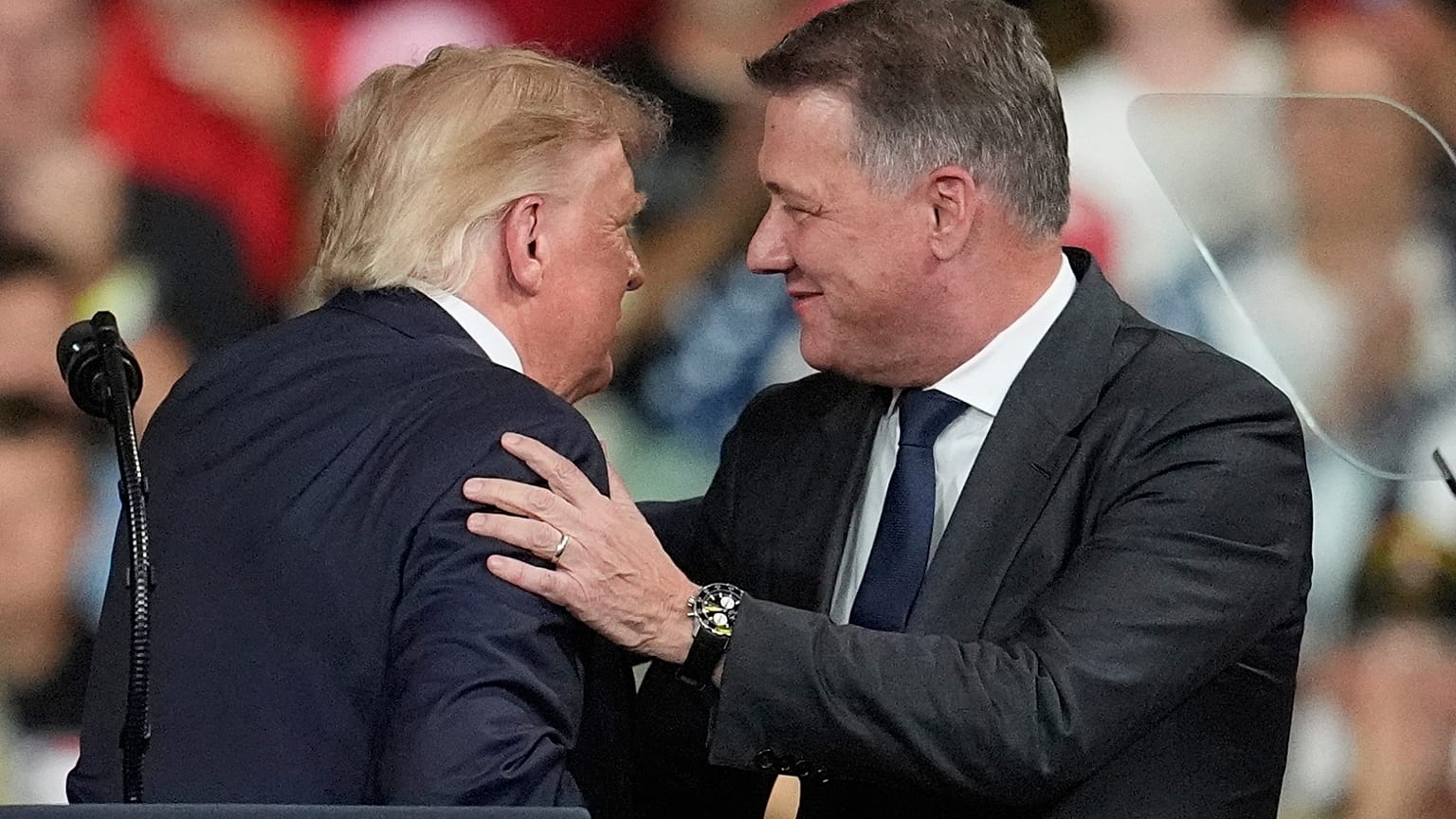
Audi is planning its first car factory in the United States, with the Ingolstadt-based manufacturer set to invest billions in a new plant in Georgia.
Audi is taking a major step into the United States: the premium carmaker from Ingolstadt plans to invest around four billion US dollars in its first own US car plant in the state of Georgia.
The announcement was made on Saturday, 24 October 2026, at a campaign rally by US President Donald Trump in Perry, Georgia. Trump appeared alongside Döllner and stressed in his speech that his trade policy was prompting companies to move their production to the United States. The announcement is likely to play well in the battle for the midterm elections on 3 November.
Audi CEO Gernot Döllner justified the investment in his address by pointing to the company’s long-term ambitions in the US: the American market is one of the world’s most important premium car markets, but Audi has not yet fully tapped its potential there.
Production scheduled to start in the early 2030s
The plan is for an annual capacity of up to 200,000 vehicles and around 4,500 jobs. The plant is to be built at the Middle Georgia Megasite in Peach County, near the city of Macon. According to the state authorities, Georgia won out as a location partly because of its existing supplier base, its transport links and its pool of skilled workers. The option to expand the facility at a later date also played a role in the choice.
According to the company, preparatory work is due to begin in 2027, with series production to start in the early 2030s. The government of Georgia is naming 2031 as the target date for full-scale production.
With around 4,500 planned jobs, the project would be a major industrial development for the region. Additional posts at suppliers, logistics firms and service providers would come on top.
Large SUVs for the American market
The new plant will mainly build large, high-end sport utility vehicles. Reuters reports, citing a US government official, that the Audi Q7, Q8 and Q9 models are planned. Audi itself speaks of particularly large and upmarket SUVs tailored to the needs of North American customers.
For Audi, the move is strategically significant, as until now the company has imported its vehicles for the US market from Europe or Mexico. Local production would reduce its dependence on international supply chains and exchange-rate fluctuations. At the same time, Audi would be producing closer to its American customers and strengthening its competitive position against manufacturers with their own US plants, as the carmaker stresses in an official statement.
Trump claims the move as a success for his tariff policy
Trump imposed additional tariffs on imports of cars and car parts and repeatedly called on foreign manufacturers to produce more in the United States. For companies such as Audi, this policy increases the cost of imports, making local manufacturing more economically attractive. According to Reuters, Trump’s tariffs cost Audi around 1.2 billion euros last year.
However, this does not mean that the tariffs alone explain the choice of location: Audi also points to the long-term expansion of its US business, access to the sales market, the existing infrastructure and the regional supplier base.
What does this mean for Germany?
The decision raises questions for the German sites of the Volkswagen Group. Additional production in the US does not automatically mean job losses in Germany, but it does alter the geographical distribution of future investment and increase the importance of North America.
Audi emphasises that Germany and Europe are to remain the company’s industrial backbone; the existing expertise in development, engineering and production is merely to be complemented by the new site.
According to Tagesschau, the IG Metall union broadly welcomes the stronger push into the US market, but at the same time is calling for firm long-term prospects for employees at the German sites. The union also says that the final decision is still subject to approval by the relevant Volkswagen bodies.
Georgia: an industrial hub with a car-making tradition
Georgia has long been a centre of the American car industry. South Korean carmaker Kia has been producing in West Point since 2009, while Hyundai, also from South Korea, has built a multibillion-dollar plant for electrified vehicles near Savannah. Added to this are the powerful ports of Savannah and Brunswick, through which vehicles and components can be shipped internationally.
For Trump, the investment would be another trump card in his strategy of bringing more industrial production back to the United States. For Audi, it marks a step closer to one of the world’s most important car markets.
VW works council slams Audi chief's appearance at rally with Trump
26.10.2026, DPA

Volkswagen works council chief Daniela Cavallo has sharply criticized Audi chief executive Gernot Döllner after the boss of the VW subsidiary appeared at a campaign event alongside US President Donald Trump.
"Several minutes full of racism, sexism, xenophobia, transphobia, denigration of democracy - and then one of our top group representatives steps on stage and engages in active campaign support," Cavallo said in an interview on Sunday, which was made available to dpa.
At a campaign rally in Georgia on Saturday, Trump unexpectedly announced Audi's plans to build its first US production facility in the state. Döllner, who is a member of the VW group board, then took the stage and thanked the US president for his support.
Cavallo said Döllner's appearance contradicted internal Audi guidelines, which ban the carmaker's employees from making public appearances with politicians standing for election in the three months before a vote. Döllner had signed these principles only a few months ago, she said.
The US midterm elections are on November 3, with the Republicans' narrow majorities in both chambers of Congress at stake.
Cavallo also levelled criticism more generally at the Volkswagen board under chief executive Oliver Blume. He had let himself be turned "from a highly questionable political figure, who violates pretty much every one of our corporate values, into a puppet in [Trump's] propaganda show," she said.
The works council head recalled the history of VW, which was founded during the Nazi era and served as a flagship company for Adolf Hitler's regime.
Audi chief faces criticism over appearance at Trump campaign rally
25.10.2026, DPA

German carmaker Audi's chief executive has come under fire for appearing alongside President Donald Trump at a campaign rally to announce plans for a new $4-billion factory in the United States.
Isabel Cademartori, a transport policy expert for Germany's Social Democrats (SPD), condemned Gernot Döllner's appearance at the rally on Saturday in Perry, Georgia, where he joined Trump on stage and thanked him for his support.
Cademartori accused Döllner of lending campaign support to an "autocrat" who is waging a trade war against Germany, calling his appearance shameful given the Nazi-era origins of Audi's parent company, Volkswagen.
"This is a disgrace, particularly in view of the history of the VW Group," she said in Berlin.
Volkswagen was founded during the Nazi era and served as a flagship company for Adolf Hitler's regime.
The appearance also raised questions about Audi's own political neutrality guidelines, which state that employees should avoid public appearances with political parties or candidates in the three months before elections.
Trump's Republican Party faces crucial congressional midterm elections on November 3, with its narrow majorities in both chambers of Congress at stake.
Audi's first US factory
Trump announced Audi's plans to build its first US production facility during the campaign rally in Georgia.
The German carmaker intends to invest $4 billion in the plant, which is expected to produce around 200,000 sport utility vehicles (SUVs) annually and create some 4,500 jobs.
Construction is scheduled to begin in 2027, with production of premium SUVs tailored to North American customers expected to start in the early 2030s.
The project still requires approval from Volkswagen's supervisory board, although Audi supervisory board chairman Manfred Döss has already backed the management's strategy.
Audi's future cannot be secured through cost-cutting and efficiency improvements alone, Döss said.
"We need the courage to invest, seize new opportunities and make decisions that will shape our company for decades to come," Döss added.
Audi announces new US factory at Trump campaign rally
25.10.2026, DPA

German carmaker Audi announced plans to build its first factory in the United States during a campaign rally held by US President Donald Trump in the state of Georgia on Saturday.
Trump told supporters that construction of the large SUV plant would begin next month and that it would produce 200,000 vehicles a year.
Audi chief executive Gernot Döllner then joined Trump on stage and thanked him for his support.
In a statement, however, Audi said construction was scheduled to begin in 2027, with production expected to start in the early 2030s.
The company plans to invest around $4 billion and create some 4,500 jobs at the factory, which will produce premium SUVs tailored to North American customers.
The announcement comes less than 10 days before the November 3 midterm elections, when Trump's Republicans will seek to defend their narrow majorities in both chambers of Congress.
Since returning to office in January 2025, Trump has pressured foreign companies to shift production to the US, threatening steep import tariffs while offering the prospect of avoiding duties by manufacturing locally. The president hopes the measures will boost the US economy and create jobs.

No comments:
Post a Comment