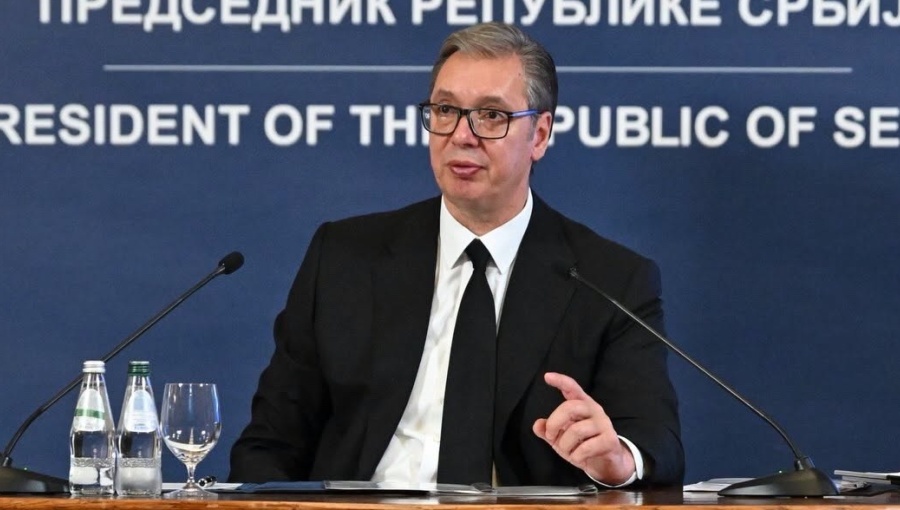
Serbia’s veteran leader Aleksandar Vucic has conceded defeat in the October 25 parliamentary election, saying a student-backed opposition list had won the most seats in a result that will end his party’s 14-year hold on power.
“Based on the sample, it is clear that we lost these elections,” Vucic told supporters at the headquarters of the ruling Serbian Progressive Party (SNS) in Belgrade.
He said the student-backed list was on course to win between 135 and 140 seats in the 250-seat parliament, compared with about 105 for the SNS-led coalition.
Celebrations erupted across Belgrade after Vucic’s announcement, with crowds cheering, fireworks lighting up the streets and car horns blaring.
The election followed nearly two years of student-led protests sparked by the collapse of a railway station canopy in the northern city of Novi Sad in November 2024, which killed 16 people. The demonstrations grew into a broader challenge to Vucic’s rule, with protesters demanding accountability and action against corruption.
Serbia’s Vucic Concedes Defeat In Snap Elections

Celebrations on the streets of Belgrade. Photo: BIRN.
October 25, 2026
By Marina Zec
Key Takeaways:
CRTA reported Student List at 51.5 percent and United Serbia at 40.2 percent, with turnout at 64.9 percent by 6 pm and elevated irregularities, including ballot photographing in 80 percent of monitored Belgrade stations.
Belgrade celebrations framed the outcome as a popular victory for change after the Novi Sad protest movement, despite isolated violence and SNS-linked activity.
“I would like to inform you that, based on the stratified sample, it is clear that we have lost this election,” said Aleksandar Vucic, former president and leader of the Serbian Progressive Party’s “United Serbia” electoral list.
Speaking at around 9:30 pm on Sunday, Vucic announced preliminary results suggesting that the opposition Student List was leading in Serbia’s closely watched snap parliamentary elections, with around 135-140 seats compared to 105 for the ruling Serbian Progressive Party (SNS). Besides these two lists, only minority lists crossed the electoral threshold.
“This was a verification of a revolution that they carried out directly with support of various European countries, and the US’s deep state, the one that is against President Trump,” Vucic said in a press conference.
Serbian election watchdog CRTA said that according to preliminary results, Student List won 51.5 per cent and Vucic’s United Serbia won 40.2 per cent.
Celebrations erupted on the streets of Belgrade following the announcement of the preliminary election results that showed Student List in the lead, with supporters gathering in the city centre to celebrate the apparent victory.
Radomir Saicic, a Student List candidate, said, “Tonight, the citizens of Serbia have shown that no obstacle is greater than their will, no fear is stronger than their courage, and no force can forever overpower a people determined to take their destiny into their own hands.”
He said preliminary results showed Student List was leading convincingly at all polling stations, but stressed that the evening was about more than election results.
“It is about the people, all those who believed when things were hardest, who did not give up when they were told nothing could change, and who, despite everything, continued to fight,” Saicic said.
He described the outcome as “a victory for the belief that Serbia can and must be different.”
Serbia’s snap parliamentary elections on Sunday saw exceptionally high voter turnout as the ruling SNS faced its greatest electoral challenge in 14 years from Student List, which emerged from the student-led protest movement following the Novi Sad railway station disaster in November 2024.
Polling stations closed at 8 pm, although voters already waiting in line were allowed to cast their ballots. The Republic Electoral Commission (RIK) said official preliminary results would be published progressively as polling station reports were processed.
Long queues formed outside polling stations throughout the day. According to RIK, voter turnout reached 64.9 per cent by 6 pm, compared to 51.93 per cent at the same time during the 2023 parliamentary elections, an increase of nearly 13 percentage points.
CRTA programme director Rasa Nedeljkov announced during the evening that the organisation had observed a “series of irregularities involving the obstruction of polling station committee members and pressure on voters.”
He added that CRTA had never recorded such a high percentage of irregularities involving the photographing of ballots in any previous election. The rate of ballot photographing was particularly high in Belgrade, where it was documented in 80 per cent of the polling stations CRTA monitored in the city.
However, RIK president Vladimir Dimitrijevic described the incidents as mostly minor, saying polling boards had resolved most problems and police had intervened where necessary.
Several violent incidents were also reported. In Pancevo, prosecutors launched an investigation into a fight involving masked individuals outside a polling station. In Pavlovac, near Vranje, two journalists were attacked while reporting, with two suspects subsequently arrested.
Meanwhile, there was renewed activity in Pioneers Park, popularly known as “Cacilend”, a camp associated with SNS supporters. Groups of hooded men dressed in black were seen heading towards the area, while trucks delivered tents and other equipment and new tents were being erected.
Police officers were also seen allowing groups of masked men to enter Cacilend. A BIRN journalist, however, was denied access despite identifying himself as a member of the press.
The groups of hooded men were later seen leaving “Cacilend” after Vucic conceded defeat.
About Balkan Insight
The Balkan Insight (formerly the Balkin Investigative Reporting Network, BIRN) is a close group of editors and trainers that enables journalists in the region to produce in-depth analytical and investigative journalism on complex political, economic and social themes. BIRN emerged from the Balkan programme of the Institute for War & Peace Reporting, IWPR, in 2005. The original IWPR Balkans team was mandated to localise that programme and make it sustainable, in light of changing realities in the region and the maturity of the IWPR intervention. Since then, its work in publishing, media training and public debate activities has become synonymous with quality, reliability and impartiality. A fully-independent and local network, it is now developing as an efficient and self-sustainable regional institution to enhance the capacity for journalism that pushes for public debate on European-oriented political and economic reform.
View all posts by Balkan Insight →
EU hails Serbia’s political upheaval after student group ends Vučić’s rule
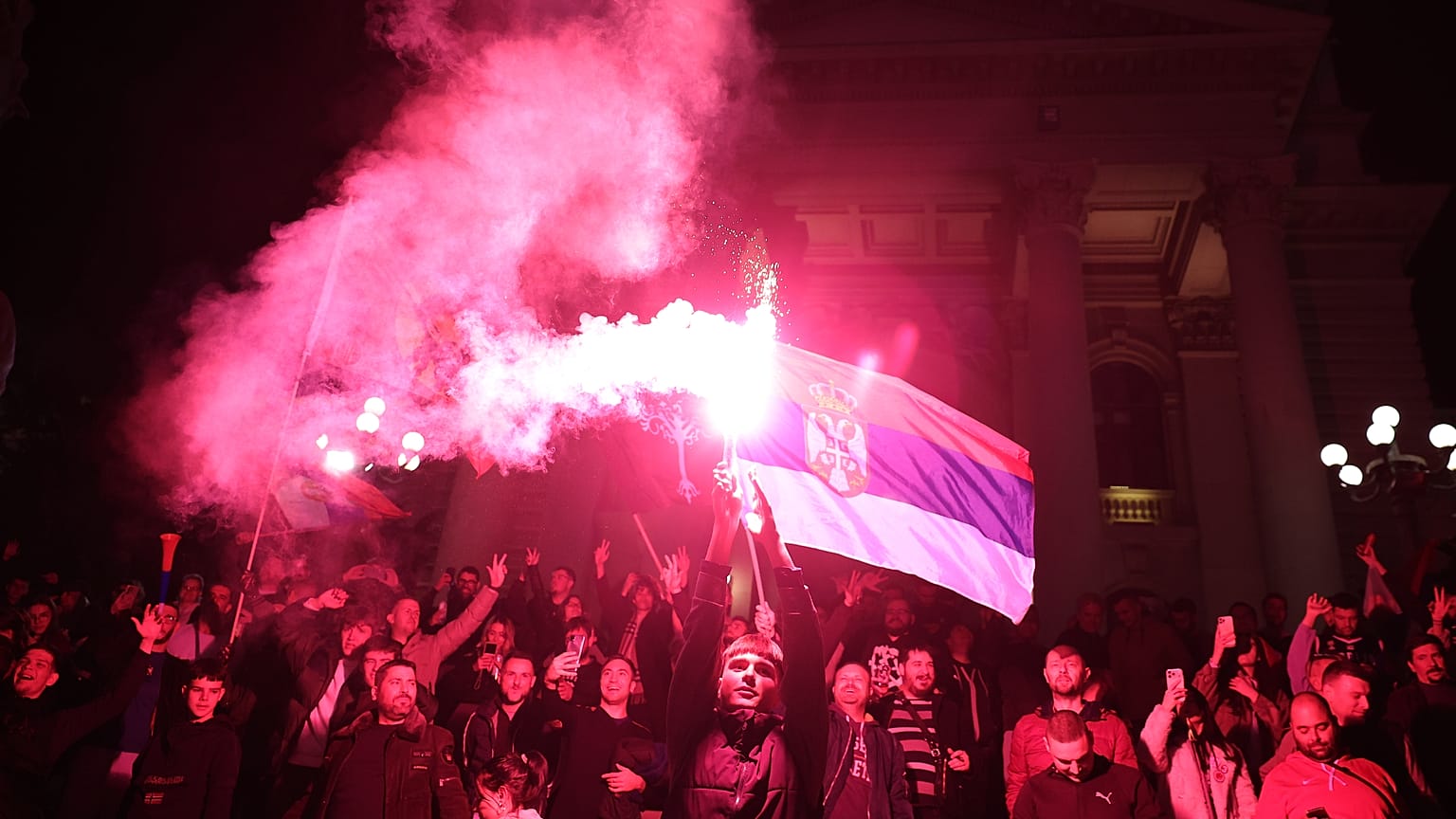
EU leaders and senior officials welcomed the Student List’s election win in Serbia, offering support for reforms and a path to membership after Vučić conceded defeat.
EU leaders have welcomed the Student List’s election victory in Serbia, ending Aleksandar Vučić’s 12-year grip on power and raising hopes of a reset in relations with Brussels.
European Council President António Costa and European Commission President Ursula von der Leyen were quick to welcome the result, which saw a student-led protest movement win a parliamentary majority.
“We stand ready to support reforms on the rule of law, media freedom, the fight against corruption and strong democratic institutions, and to work together to advance Serbia’s future in the European Union,” Costa and von der Leyen said in a joint statement.
Serbia, the largest and most influential country in the region, has a fraught history with the EU. Its accession bid stalled after Russia’s full-scale invasion of Ukraine, as Belgrade kept up friendly relations with Moscow.
In July, the Commission tried to open a new accession cluster, but eight member states blocked the move over Serbia’s failure to align with EU sanctions on Russia and its rule of law record.
More recently, the funeral of convicted war criminal Ratko Mladić, attended by senior Serbian officials and held with military honours, further soured relations with the EU.
“After nearly two years of protests for democracy, the rule of law, and the fight against corruption, Serbians turned out in historic numbers,” Enlargement Commissioner Marta Kos wrote on X. “A new chapter can begin for Serbia. The door to the EU is open, and we are ready to move forward together.”
Whether the change in Belgrade will give fresh momentum to the stalled accession bid remains hard to predict. Brussels, however, notes that the Student List grew out of a pro-democracy, rule of law movement, fuelling hopes that Belgrade will now align with EU values and reforms.
“Now is the time for the rule of law, reforms, and institutions that serve all citizens. That should be the path toward the EU,” Tonino Picula (Croatia/S&D), the European Parliament’s rapporteur for Serbia, wrote on social media.
Political earthquake in Serbia: The end of the Vucic Era and the rise of the student list
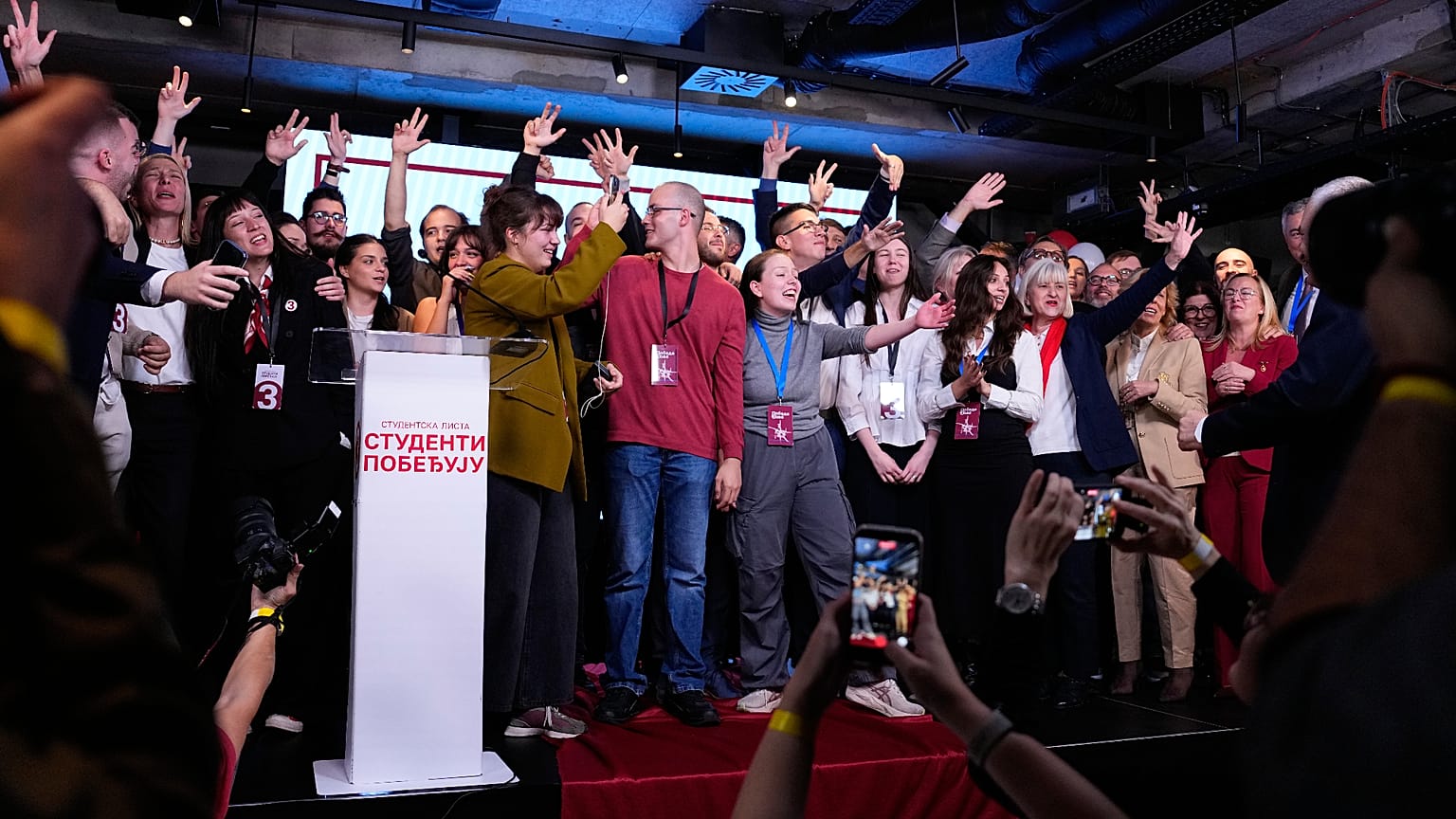
This is not simply a change of government. It is the collapse of a political order that has defined Serbia since 2012.
Serbia's elections have produced a result that will almost certainly be remembered as one of the biggest political turning points in the country's modern history. The Student List has won a landslide victory and, with 140 of the 250 seats in parliament, secured an outright majority. The Serbian Progressive Party (SNS), until now the country's dominant political force, has won 104 seats and, for the first time in almost 14 years, is heading into opposition.
This is not simply a change of government. It is the collapse of a political order that has defined Serbia since 2012.
Since the Serbian Progressive Party came to power, Aleksandar Vučić and his political bloc have exercised almost complete dominance over Serbia's political life. The SNS controlled the executive branch, enjoyed large parliamentary majorities, dominated local politics and, through an extensive network of political and institutional alliances, largely determined the boundaries of political competition in the country. For more than a decade, opposition parties repeatedly tried to break that dominance, but without success.
The paradox of this political earthquake is that the SNS was not defeated by the traditional opposition.
It was defeated by students.
The Student List has transformed itself from a movement born out of months of student protests into the country's dominant political force, turning what began as a social revolt into electoral legitimacy. In doing so, the student movement has achieved what Serbia's traditional opposition parties failed to accomplish for more than a decade: it has directly broken Aleksandar Vučić's political monopoly.
The result should therefore also be understood as a referendum on 14 years of SNS rule.
A large part of the electorate clearly did not vote simply for a particular group of candidates or a particular programme. They voted against a model of government that had become synonymous with personalised politics, a strong concentration of power, political control over institutions, media and deep social polarisation. The student movement succeeded in bringing together different forms of dissatisfaction – from demands for institutional accountability and the rule of law to broader calls for political change.
The fact that no other small party managed to cross the three-per-cent electoral threshold makes the result even more dramatic. Serbia's traditional party landscape has effectively disappeared between two dominant political forces: the Student List and the SNS.
This is another indication of the scale of the earthquake.
Parties that had been a permanent part of Serbia's parliamentary life have been wiped out of the legislature. At the same time, the Student List has not merely emerged as the largest political force; it has won enough seats to govern alone.
The collapse of the old political geography of minorities
An equally important signal has come from Serbia's ethnic minority communities.
For almost a decade and a half, most minority political parties were among Aleksandar Vučić's most reliable political allies. The major exception was the Albanian political bloc, which never became part of Vučić's governing coalition. These elections, however, suggest that even this traditional political geography has been seriously disrupted.
The Alliance of Vojvodina Hungarians (SVM), a long-standing political partner of the SNS, won only three of the five parliamentary seats it could potentially have secured. This is more than a simple decline in parliamentary representation. It points to a significant shift in political sentiment among Vojvodina's Hungarian community and suggests that a substantial share of Hungarian voters may have supported the Student List rather than Vučić's traditional ally.
A similar signal has come from the Bosniak community. Only two Bosniak representatives will enter parliament – one from a political group that previously cooperated with Vučić and one from a movement that has traditionally remained in opposition. Here too, the previous pattern of political loyalty has been seriously disrupted.
The new parliament will also include two representatives of the Albanian coalition, a political community that has never collaborated with Vučić's government.
The old system of political alliances has therefore been fundamentally weakened.
For years, Vučić's political system relied partly on his ability to build a broad network of allies around the SNS – from minority parties to smaller coalition partners. That network has now either disappeared or been reduced to a minimum.
From Belgrade to Brussels: an international dimension
The scale of the political change was also reflected in the first international reactions to the result.
The Student List received congratulations from senior European figures, including Antonio Kosta, head of the European Council, European Commission President Ursula von der Leyen and European Commissioner for Enlargement Marta Kos. Congratulations also came from other European politicians, including Péter Magyar, the Hungarian prime minister.
Those reactions carry considerable political weight.
For years, Brussels has closely followed Serbia's domestic political situation, particularly issues concerning the rule of law, the functioning of institutions, electoral conditions and the relationship between the government, opposition and civil society. The fact that senior European officials were among those congratulating the election winner therefore sends a significant signal that the Student List's victory is being viewed as the possible opening of a new political chapter in Serbia's relationship with the European Union.
The reaction from Péter Magyar is particularly symbolic. Hungary has been one of Aleksandar Vučić's closest political allies within the European Union under the rule of Viktor Orban who was defeted himself in Hungary i April this year. A new political reality in Serbia could therefore have consequences not only for Belgrade's relations with Budapest, but also for the wider political balance in the region.
In other words, the election result has already moved beyond being solely a domestic Serbian affair. It has acquired a clear European dimension.
Vučić warns of sanctions against Russia and investor uncertainty
Aleksandar Vučić's first reaction to the result also pointed to the potentially profound geopolitical and economic consequences of the change of government.
Vučić said he expected Serbia, under the new authorities, to introduce sanctions against Russia. Such a move would represent a major foreign-policy shift for Serbia, which has maintained close political, economic and historical ties with Moscow while simultaneously pursuing EU membership.
The outgoing president also warned that the election result could send a negative signal to investors.
That warning is significant because attracting foreign investment has been one of the central pillars of Vučić's economic policy. During his years in power, the government repeatedly presented Serbia as a stable and increasingly attractive destination for foreign companies and investors. A transition to a completely new political establishment could therefore raise questions among investors about political stability, economic policy, regulation and Serbia's future foreign-policy orientation.
At the same time, the Student List will inherit an economy deeply integrated with both the European market and international investment flows. Its challenge will be to demonstrate that political change does not mean economic instability.
A movement now facing the burden of governing
For the people behind the Student List, however, the significance of the election is about much more than simply replacing one government with another.
Dejan Šoškić, a professor at the Faculty of Economics and one of the prominent figures associated with the Student List, described the result in explicitly historic terms.
“I am proud of the students who have brought us to this historic situation in which Serbia has freed itself, in which Serbia has a chance to become a democratic and free society again,” Šoškić said.
The statement captures the broader meaning that the new governing camp attaches to the election.
Candidate of the “Student List – Students Are Winning”, academician and professor Radomir Saičić, said after the election victory was declared that the citizens of Serbia had demonstrated courage and a willingness for change, stressing that “serious work and the building of a new Serbia begin tomorrow.”
But winning an election is one thing; governing a country is another.
The Student List now faces the much harder task of transforming a protest movement into a functioning political establishment. It will have to form a government, rebuild institutions, establish its own political structures and formulate policies on the economy, foreign affairs, the European integration process, social policy and the rule of law.
Its victory is historic. But historic victories often mark the beginning of the most difficult phase.
For the SNS, meanwhile, this is much more than simply losing a government.
For the first time since 2012, the party will have to operate without control of the state apparatus and without the political privilege of organising Serbia's political life around itself. It will be the first real test of how strong the SNS is as a political organisation when it no longer controls the executive branch and when Aleksandar Vučić is no longer at the centre of government.
The political consequences could extend far beyond the immediate parliamentary arithmetic.
For years, Serbian politics revolved around one dominant question: whether a political force could challenge Vučić.
The answer has now been given.
It can.
And the force that did it was not one of the established opposition parties, but a student movement that only recently existed outside the traditional political system.
That is the real significance of these elections.
The traditional opposition has virtually disappeared from parliament. The minority parties that once formed part of Vučić's political support structure have lost influence. The SNS has been pushed into opposition after almost 14 years of uninterrupted dominance.
Serbia’s strongman toppled by student-backed movement
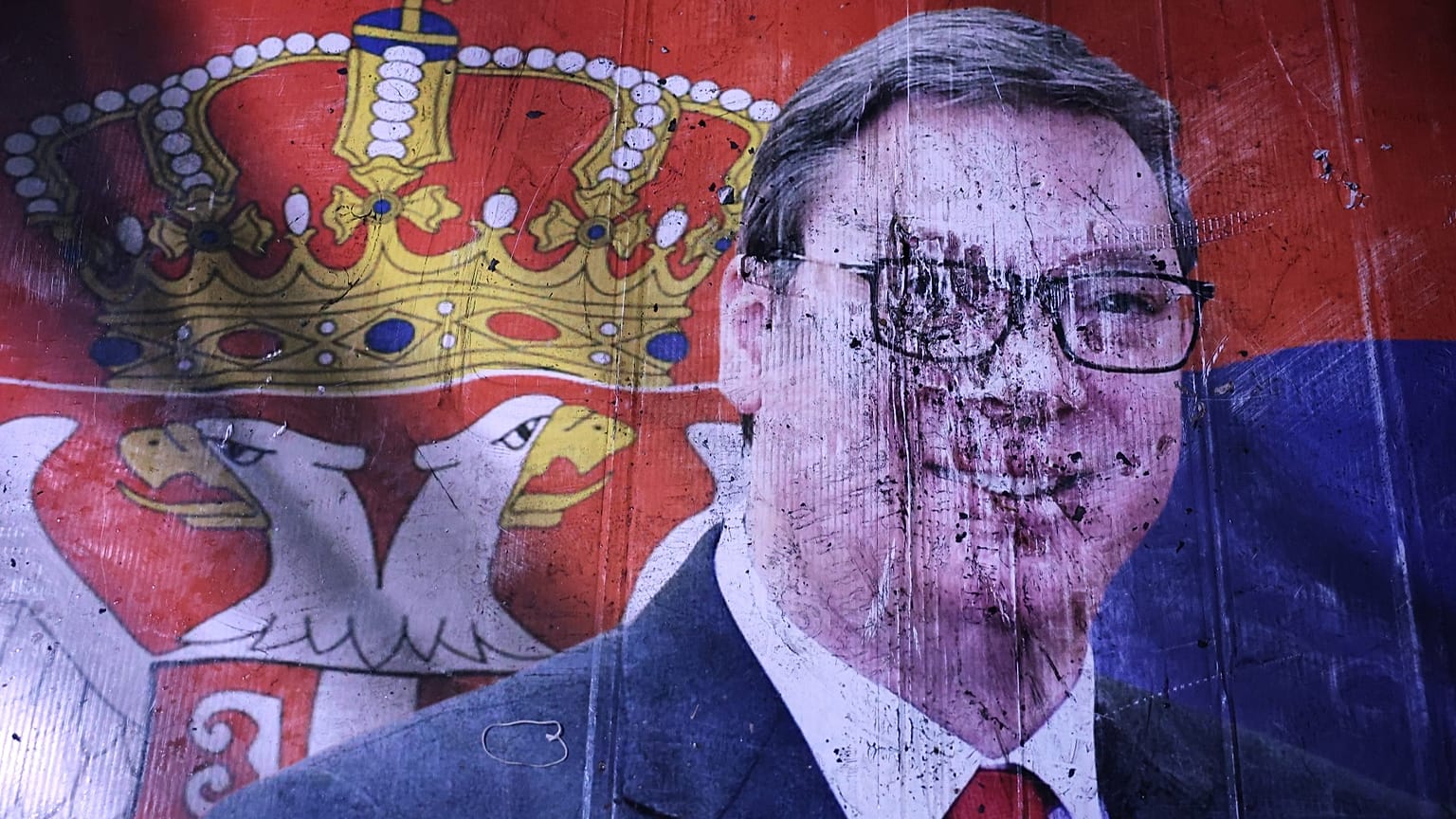 Copyright Copyright 2026 The Associated Press. All rights reserved
Good morning. It’s Angela Skujins holding the newsletter pen for the entire week. On Monday’s agenda: Serbian elections serve as a death knell for long-time leader Aleksandar Vučić and his political party, while French fury continues to manifest through violent protest and a presidential bid.
While you were sleeping: Serbia’s longtime conservative politician Aleksandar Vučić conceded defeat last night in a parliamentary election that pitted himself and his right-wing Serbian Progressive Party (SNS) against the left-wing Student List in the Western Balkan nation.
“It is clear that we have lost the election,” the former president of Serbia and prime minister hopeful said in a televised statement, with the votes paving the way for the student-backed political group to seize a minimum 135 parliamentary seats, while the SNS party is set to win around 105. The vote count, however, is not yet final.
Breath of fresh air: Bojan Vranic, a professor of political science at the University of Belgrade, just told Europe Today Student List’s victory is a “historic” moment for the country as it brings in a “new, fresh political elite”. Watch.
From the outside, it was expected the vote would impact Belgrade’s long-standing bid to join the European Union — a 14-year process that has been complicated by Vučić’s relationship with Russia and China, and his defiance against adopting certain foreign policy protocols.
Vranic believes, however, that the Student List movement is “very conservative” when it comes to inching Belgrade closer to joining the bloc, as the organisation is focussed on internal changes. “I would not be overly enthusiastic… of a miracle breakthrough in European integration,” he said. Watch.
Fourth time’s a charm: French political hopeful and far-right firebrand Marine Le Pen also officially launched her presidential candidacy on Sunday, at a campaign rally in the city of Orléans attended by thousands of Rassemblement National RN (National Rally) supporters. This is the fourth time she has attempted to snap-up the top job.
In a fiery speech, the dame of the ultra-conservatives promised the protection of public spaces so “that they can remain places full of life and mutual respect”. The pitch was in clear reference to the defiant protests that have transformed France over the last few weeks into a country gripped by looting, violence and thousands of arrests.
Anarchy in France: During her speech, Le Pen lamented the leadership of French President Emmanuel Macron during this period, stating that under his presidency, rule of law has become “too lenient”.
She also set out other major policies while at the podium, including her position on military conflict — vowing that France "will not send" its young people "to die in reckless or irresponsible military adventures, and even less in wars that are not ours" — as well as getting tougher on migration. The former will surely cause EU heads of state and allies in Kyiv a headache, but the latter could be a welcome reprieve from Macron’s centrist tendencies.
Election fever in Jerusalem: Former Israeli Prime Minister Ehud Olmert just said on Europe Today that the future of the country hinges on a crucial upcoming vote. Watch.
Olmert, a fierce critic of Israel’s incumbent head of state Benjamin Netanyahu, was speaking on the programme as just over seven million eligible Israelis will head to the polls on Tuesday to cast their vote in arguably the country’s most important vote in recent history.
It will be the first national election since the deadly 7 October attack by Hamas, and is seen as a referendum on the leadership of the country’s far-right nationalist leader and the last three years of war.
The election comes as the occupied West Bank continues to be squeezed by the Israeli Defence Force, with soldiers displacing hundreds of Palestinians from their homes. The activity follows a gun attack last week, with two Israeli soldiers killed and more injured.
News from Brussels: The European Commission is proposing a bundle of reforms to the EU’s major border force agency, Frontex, this week. As my colleague Vincenzo Genovese reports, the EU’s border agency will have more personnel to deploy at the bloc’s borders and a “quick response force" could be activated in case of sudden arrivals of a large volume of migrants.
This is according to an EU official with knowledge of the matter speaking to Euronews on condition of anonymity, who stated the reform is expected to be formally proposed on Tuesday by the EU executive.
‘Innovative solutions’: The proposal will also include an online surveillance unit to monitor social media and prevent large-scale movements. The goal is to avoid situations previously witnessed in the EU’s recent history, such as 80,000 migrants illegally entering the Spanish enclave of Ceuta via Morocco in July, prompting a political firestorm among EU leaders, and triggering a crisis of confidence in leadership.
To associate or not: The concept of “associate membership” is at risk of disappearing from the declaration of this week’s EU-Canada summit in Montreal as member states butt heads over its inclusion, Jorge Liboreiro writes.
Ambassadors will gather today to discuss the content of the declaration, with some countries still unclear about what “associate membership” is as it has no precedent. They want the European Commission to provide clear answers before the summit takes place on Thursday. In a declaration of intent, European Commission President Ursula von der Leyen will travel to Montreal with 10 Commissioners by her side.
Time to pay up: The summit in Montreal will give von der Leyen the perfect opportunity to gently press Canadian Prime Minister Mark Carney to increase Canada’s financial support to Ukraine. As previously reported, the EU has committed to addressing Kyiv’s massive €70 billion shortfall for next year.
Officials and diplomats in Brussels all agree that the bloc should continue to provide two-thirds of support, which, in this operation, would amount to €50 billion, with other allies covering the remaining third.
However, this division of labour hasn’t worked. According to an internal document seen by Jorge, the EU is slated to provide 80% of Ukraine’s military and financial aid next year, a share that vastly exceeds the agreed two-thirds. Brussels has ratcheted up pressure on allies to first, make good on what they have already promised and second, ramp up their contributions for 2027.
Fighting an uphill battle: As Sasha Vakulina reports, officials in Moscow have said Russia is ready to resume trilateral peace talks with Ukraine and the US but only after 4 November — Russia’s National Unity Day.
What might happen before talks resume? Sasha expects more Russian attacks on Ukraine. Just over the past week, Russia launched roughly 1,600 guided aerial bombs, 48 missiles and nearly 2,300 attack drones against Ukraine, according to Ukrainian President Volodymyr Zelenskyy.
Student List wins Serbian election in political earthquake as Vučić concedes defeat
Serbia has entered a new political era.
The Student List has won the country's parliamentary election, marking a dramatic breakthrough for a movement that emerged from months of student protests and rapidly transformed itself into the country's most important political force.
Immerse yourself further in this seismic story with in-depth reporting from Euronews Serbia and Ljubiša Ivanović.
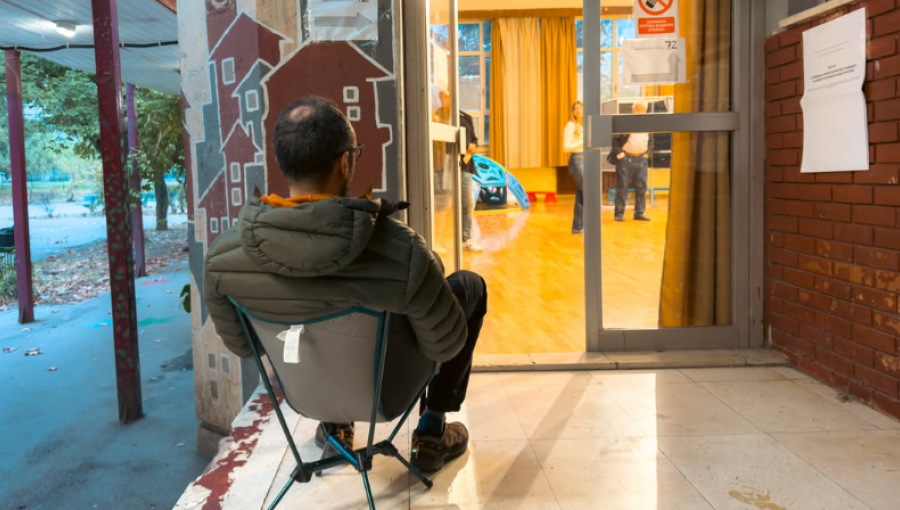
Polling stations have closed in Serbia after an election marked by exceptionally high turnout, reports of violence and allegations of electoral irregularities, as a student-backed opposition movement challenges the ruling party's 14-year grip on power.
An estimated 67.6% of voters had cast their ballots by 19:00 local time, according to pollsters Ipsos and CeSID. Election monitor CRTA put turnout at 67.8%, compared with 55.5% at the same point in the December 2023 parliamentary election.
The turnout is the highest in a Serbian parliamentary election since the break-up of Yugoslavia in 1992. Initial results are expected later on Sunday evening.
The vote pits the ruling Serbian Progressive Party (SNS), led informally by former president Aleksandar Vucic, against a student-backed opposition movement that has mobilised widespread public anger over corruption.
The student movement led nearly two years of protests following the collapse of a railway station canopy in the northern city of Novi Sad in November 2024, which killed 16 people.
Reports of violence and irregularities
Election day was marked by long queues at polling stations across Serbia and abroad, alongside reports of physical attacks, intimidation and breaches of voting procedures.
In the northern town of Pančevo, local media reported that masked men had attacked several young men near a polling station. Footage shared on social media showed one man with a bloodied face.
In Niš, two motorcyclists supporting the student movement were injured in a separate incident, according to local media. Witnesses said men travelling in cars had attacked members of the group, some allegedly carrying metal bars.
Voting was also interrupted at a polling station in Leskovac after a member of the polling committee reportedly broke a ballot box and struck a representative of the student list.
In Hrtkovci, in northern Serbia, a group of motorcyclists supporting the students said they had been attacked by men who emerged from two cars carrying sticks. Police investigated the incident.
Elsewhere, police responded to a report of suspected vote-buying in the Belgrade suburb of Zemun but said there were no grounds to initiate proceedings. Local media also reported an altercation near SNS premises in Lazarevac after a vehicle carrying baseball bats was seen there.
The SNS has faced longstanding accusations of using street thugs and paid associates to intimidate voters and opposition supporters, disrupt opposition activities and instigate violence.
A huge police presence in Belgrade
Security forces gathered en masse in the capital as voting ended, fuelling concerns about a night of unrest.
Vehicles belonging to the Gendarmerie, a specialist police force used to respond to serious public-order incidents, were seen amassing near the presidency building, where a pro-government encampment has been established.
A group of men dressed in black was also filmed moving towards the Serbian parliament.
The European Union's ambassador to Serbia, Andreas von Beckerath, said the bloc was deeply concerned about reports of violent incidents at several polling stations.
Belgrade's Higher Public Prosecutor's Office called on election participants to reduce tensions and refrain from violent behaviour.
There were also questions over access for journalists covering the count. Reporters from the independent broadcaster N1 said they had initially been prevented from reaching the Republic Election Commission (RIK) building, despite holding accreditation. They were later allowed to enter, but police did not explain the initial restrictions.
Election monitor CRTA reported widespread irregularities during the day, including pressure on voters, polling station committee members and observers. Its observers also recorded cases of voters photographing their ballots and other breaches of voting procedures.
The election is being closely watched by international observers amid longstanding concerns over media freedom, the use of state resources by the ruling party and the conditions for opposition campaigning.
With voting over and counting under way, the initial results will indicate whether the student movement has succeeded in translating nearly two years of street protests into an electoral challenge to Vucic's political dominance.

No comments:
Post a Comment