Wednesday, October 07, 2026

WHO: Reports of a possible second pneumonia death

07.10.2026, DPA

Photo: Pia Bayer/dpa

The World Health Organization (WHO) has asked Russia for information regarding a possible further death from pneumonia in the Siberian city of Irkutsk.

WHO expert Abdirahman Mahamud said in Geneva on Wednesday that the request was prompted by a media report that had been verified and deemed credible.

No response has yet been received, he said. 

The Russian authorities have also been asked for further information regarding the first case - the death of a female scientist who worked at the Institute for the Control of Plague Diseases in Irkutsk. 

The 28-year-old woman died last Friday. The official cause of death is listed as pneumonia of unknown origin. 

WHO chief Tedros Adhanom Ghebreyesus has said the organization does not have a complete picture of the situation and cannot conducted a full risk assessment.

According to the WHO, Russia reported that the young female scientist had not died of pneumonic plague, but of pneumonia of unknown origin. There had been no accident at the institute.

The WHO has asked for details including what tests were carried out on the woman and around 200 other people, exactly what materials she had been working with, what safety measures were in place at the institute, and whether she had been vaccinated and, if so, against which diseases, said WHO specialist Maria Van Kerkhove.

She added that the WHO had been notified of nearly 4,000 plague cases from 10 countries between 2019 and 2025, including 423 deaths.


WHO says cannot conduct full risk assessment on Russia plague reports


Geneva (AFP) – The World Health Organization said Wednesday it could not produce a full risk assessment as it did not have the whole picture from Russia on the suspected plague death of a laboratory technician.


Issued on: 07/10/2026 - 

WHO Director-General Tedros Adhanom Ghebreyesus urged Moscow to provide more information © Fabrice COFFRINI / AFP

The WHO, the United States and the European Union have all urged Moscow for more information after the death of the 28-year-old woman, who worked at the Irkutsk Anti-Plague Research Institute in Siberia.

"The lab worker died after being hospitalised with severe pneumonia. Initial media reports suggested pneumonic plague following an accidental lab exposure," said WHO chief Tedros Adhanom Ghebreyesus.

"WHO is aware that the Russian government held a meeting on October 2 because they suspected a resident of the Irkutsk oblast (region) had contracted a dangerous infection," he told a press conference.

Tedros said the WHO asked Moscow for more information on Saturday, in accordance with the International Health Regulations.

The IHR provide a legally binding framework defining countries' rights and obligations in handling public health events and emergencies that could cross borders -- and countries are asked to respond within 24 hours.

Russia responded -- on Tuesday -- saying no plague case had been reported in the Irkutsk region and that around 200 contacts had been quarantined.

The WHO has asked for more information on the lab tests conducted on the fatality, on the contacts, and details on their health status, said Tedros.

"We don't yet have the full picture of this event and we're not able to conduct a full risk assessment," he stressed.

"Timely, complete and transparent information sharing under the international regulations is essential to clarify conflicting reports and enable an accurate assessment of potential public and risks."

- 'What did she die from?' -

Maria Van Kerkhove, the WHO's director of epidemic and pandemic management, added: "We don't understand how she was infected."

The WHO's Maria Van Kerkhove said the UN health agency wanted to know more on the tests conducted in Siberia © Fabrice COFFRINI / AFP

If pneumonic plague "is ruled out, what did she actually die from?", she said.

Van Kerkhove said the UN health agency wanted to know what tests were done, the specifics of the results, and what further analysis was being done if the cause of death was not yet known.

Furthermore, "what contacts were put under quarantine or under follow-up; what did that involve; if the quarantine period is over?", she said.

As to whether Moscow should have provided more information, she said: "The simple answer is always: yes."
'Community-acquired' infection

Silviu Ciobanu from the WHO Europe office's public health intelligence alerts and reponse operations unit, said that "given the timeline given in IHR is 24 hours, obviously it's not OK.

"The sooner we get information, the better the outcome."

The laboratory is in the Siberian city of Irkutsk © TATYANA MAKEYEVA / AFP

Moscow has said the woman died from a community-acquired severe pneumonia of unknown origin, he added.

Van Kerkhove said there were people whose deaths were ascribed to unknown causes of pneumonia, but there were now laboratory methods that can determine the causative agent, such as PCR testing and genetic sequencing.

Community-acquired infection "would mean outside of the lab", she added.

Russia warned Wednesday against "false" information as reports emerged of a second suspected case of plague, with its health agency saying it had determined there were "no epidemic risks for the population".

Tedros said he wanted more clarification from Moscow following two media reports of "a second employee with pneumonia of undetermined cause".

"We asked Russia to respond to that... because any reporting that comes, we cannot ignore it," he said, adding "I hope we will get an answer to that, formally."

Between 2019 and 2025, 10 countries reported suspected human plague cases to the WHO, six of which reported confirmed cases.

Overall, 3,847 suspected cases and 423 deaths were reported, giving case fatality rate of 11 percent.


Russia denies plague death but quarantines hundreds without explanation

ARCHIVE: quarantine during a Marburg fever outbreak in Kenya, 8 October 2014.
Copyright Ben Curtis/Copyright 2024 The AP. All rights reserved.

By Knarik Papoyan & Euronews Russian
Published on

Rospotrebnadzor said Darya Shipilova, 28, died of "pneumonia of unknown aetiology" with no links to her work at the Irkutsk Anti-Plague Institute, but imposed quarantine on her contacts, confined 60 colleagues inside the facility and restricted access to hospitals including a maternity ward.

Russian authorities have insisted a lab researcher who died in Siberia last week did not have the plague while quarantining nearly 200 of her contacts, confining more than 60 colleagues inside their institute and restricting access to multiple hospitals, all without explanation.

Darya Shipilova, 28, a researcher at the Irkutsk Anti-Plague Research Institute, was admitted to Shelekhov District Hospital in late September and died last Friday night.

Russia's national health watchdog Rospotrebnadzor said biological samples from her body found no microorganisms linked to her professional work and that she died from "pneumonia of unknown aetiology."

The agency said its special commissions had found no accidents involving pathogenic microorganisms at the institute. Kremlin spokesman Dmitry Peskov told reporters to rely solely on Rospotrebnadzor's statements.

Between 189 and 197 of Shipilova's contacts were placed under observation and quarantine, according to figures cited by independent and regional media.

Initial tests among those contacts returned negative. More than 60 staff members of the anti-plague institute were effectively confined inside the facility for several days.

Quarantine restrictions were also imposed on hospitals in Irkutsk, including a maternity ward, according to reporting by multiple regional and international outlets.

Patients at one facility said doctors cited plague as the reason. Relatives of a woman in labour were refused entry to the ward despite having paid for partner-assisted birth.

The head of neighbouring Buryatia, Alexei Tsydenov, initially said after Shipilova's death that she had died of plague, then amended this to "possibly plague".

Irkutsk regional authorities posted a message on Friday asking residents not to travel to the satellite town of Shelekhov because of plague, then deleted it.

Governor Igor Kobzev described the cause of death as "pneumonia of unknown aetiology" on Monday.

What are international authorities saying?

The World Health Organization said it assessed the public health risk from the incident as low to moderate for Irkutsk region, low for Russia as a whole and very low for the WHO European region.

It said Russian authorities had identified Shipilova's contacts and were monitoring them, and that they had detected no dangerous infectious disease agents among those contacts.

The European Centre for Disease Prevention and Control told Euronews it was "closely following the situation" and was in contact with the WHO.

"We are aware of a case of pneumonia of unknown origin in eastern Russia that is suspected to be plague. This suspicion has not yet been confirmed," an ECDC representative said.

US authorities are also monitoring developments, while Kazakhstan and Kyrgyzstan have strengthened sanitary controls at their borders with Russia.

Uzbekistan has also strengthened its public-health preparedness after reports of a suspected case of a particularly dangerous infectious disease in Russia’s Irkutsk region, while stressing that the diagnosis has not yet been confirmed.

Online theories swirl

Two unofficial theories have circulated in Russian media. The first, reported by Telegram channels SHOT and Baza, holds that Shipilova accidentally broke a test tube containing the plague pathogen in the laboratory.

Several specialists consider this unlikely, noting that work with high-risk pathogens is conducted inside sealed safety cabinets with protective suits and strict decontamination protocols.

The second theory is that the infection was acquired during field research in a region with natural plague reservoirs. The head of Buryatia publicly denied that Shipilova had visited the region.

The official diagnosis has not been confirmed or ruled out by published PCR test results.

Plague is caused by the bacterium Yersinia pestis. Its most common form, bubonic plague, affects the lymphatic system. Pneumonic plague, which can spread between people via airborne droplets, is considered the most dangerous.

Russia's most recent confirmed human cases were recorded in the Altai region in 2014, 2015 and 2016, all involving people who handled marmots.

Human plague cases in Russia remain rare despite natural reservoirs existing in several regions.


EU countries to discuss suspected plague outbreak in Russia

The case centres on a lab worker in Siberia, Russia.
Copyright Alexander Zemlianichenko/Copyright 2021 The AP. All rights reserved.


By Jorge Liboreiro
Published on

European health authorities are closely following the suspected plague outbreak in Siberia, Russia. The European Commission and member states are set to discuss the matter on Wednesday morning.

Representatives from the European Commission and member states plan to discuss the suspected outbreak of pneumonic plague in Siberia, Russia, as national authorities scramble to get a clear picture of the situation.

A meeting of the Health Security Committee, which evaluates serious cross-border health threats, will take place on Wednesday morning in Brussels. The meeting was already scheduled, but the item has been added to the running order.

"I can confirm the incident in Russia will be on the agenda of the Health Security Committee," a Commission spokesperson told Euronews.

The case revolves around a female lab worker at the Irkutsk Research Anti-Plague Institute, in south-eastern Siberia, who died on 2 October in uncertain circumstances. Her death was attributed to a "pneumonia of unknown aetiology".

Russian authorities say they have found no evidence that her illness was caused by any of the pathogens she worked with and insist the situation is under control.

The hospital where the lab worker was treated was placed under quarantine. About 200 people who had been in touch with her went into strict medical observation.

Separately, Kazakhstan, Kyrgyzstan and Uzbekistan introduced precautionary measures at their borders to prevent the possible spread of infectious diseases.

The World Health Organization (WHO) said on Tuesday that none of those people has shown symptoms so far and early testing has been negative, although it noted it was "unclear" which pathogens were tested.

The WHO noted the risk for the European region was "very low".

In a statement, the European Centre for Disease Prevention and Control (ECDC) said the suspicion of a plague outbreak was "not yet confirmed".

"There is little travel between Irkutsk and the EU, particularly at present due to Russia's war against Ukraine," the agency said.

"Based on the limited information currently available, there are no reports of secondary cases or sustained human-to-human transmission."

Brussels and Washington are closely monitoring the evolving situation and have urged Russia to provide accurate and transparent information.

Pneumonic plague occurs when plague, an infectious disease caused by bacteria, infects the lungs. It is the most serious form of the disease and can be spread from person to person. If left untreated, it has a case-fatality ratio of 30% to 100%.


Pneumonic plague suspected in Russia: What we know and what is the risk to Europe?


By Marta Iraola Iribarren
Published on

The death of a staff member at an anti-plague institute in Russia following a laboratory accident has put the spotlight on plague and how it spreads.

A staff member at the anti-plague institute in Irkutsk, Russia, died after a test tube broke in the laboratory, regional media reported, citing unnamed sources close to the region’s security services.

Russian authorities said they found no evidence that her illness was caused by any of the pathogens she worked with. But the case has raised alarm in Russia after unconfirmed media reports suggested she might have died of pneumonic plague — a less common but severe form of plague that can spread from person to person.

Russian media reported that around 200 people, who had been in contact with the deceased worker, were under strict medical observation and that several hospitals in the region were closed and placed under quarantine.

“As ... the contagion was in a lab (and has presumably well disinfected) and people were rapidly quarantined, it is highly unlikely that it will spread further- and thus, whilst it is contagious, it is unlikely to have the opportunity to spread,” Alice Hughes, professor of conservation science at the University of Melbourne, said in comments to the Science Media Centre.

Yet, public health authorities are following closely any developments.

The European Centre for Disease Prevention and Control (ECDC) told Euronews that it is “closely monitoring the situation” and is in contact with the World Health Organization.

“We are aware of the case of pneumonia of unknown origin in eastern Russia that is suspected to be the plague. That suspicion is not yet confirmed,” a spokesperson said in a written statement.

The spokesperson added that based on the limited information currently available, there are no reports of secondary cases or sustained human-to-human transmission, and noted that there is “little travel” between Irkutsk and the European Union and European Economic Area countries, “particularly at present due to Russia’s war against Ukraine”.

Plague has been absent from Europe for more than 50 years; however, human cases are reported in Africa, particularly in the Democratic Republic of Congo and Madagascar.

What do experts say about the risk?

While the information surrounding the suspected case in Russia is very limited, experts noted that sporadic pneumonic cases are not rare.

“Plague is not a historical disease,” said Zania Stamataki, associate professor of viral immunology at the University of Birmingham in comments to the Science Media Centre. “It remains endemic in rodent populations across Africa, Asia and the Americas, and human cases occur every year, including outbreaks of the pneumonic form.”

According to Brendan Wren, professor of microbial pathogenesis at the London School of Hygiene & Tropical Medicine, “there shouldn’t be too much concern as the transmission of Yersinia pestis between humans is generally poor”.

What is pneumonic plague?

Pneumonic plague occurs when plague, an infectious disease caused by bacteria, infects the lungs.

Pneumonic plague is the most serious form of the disease and is the only form of plague that can be spread from person to person. If left untreated, it has a case-fatality ratio of 30% to 100%.

According to the World Health Organization (WHO), it is especially contagious and can trigger severe epidemics through human-to-human transmission via respiratory particles. However, recovery rates are high if the disease is detected and treated in time.

The incubation period can be as short as 24 hours and any infected person may pass it via respiratory particles to other humans.

What are the symptoms?

Pneumonic plague develops when bacteria spread to the lungs of a patient with untreated bubonic or septicemic plague, or when a person inhales infectious droplets coughed out by another person or animal infected.

Symptoms typically appear one to three days after infection. They include severe respiratory problems such as shortness of breath and coughing, often with bloody or watery mucus.

What is the treatment?

If untreated, pneumonic plague can be rapidly fatal. Early diagnosis and treatment are essential for survival and to reduce complications. Common antibiotics used against enterobacteria can effectively cure the disease if given early.

“Plague is a serious infectious disease. However, it can be diagnosed and treated with antibiotics readily available in Europe,” the ECDC spokesperson noted.

In cases of pneumonic plague, patients should be isolated and their contacts traced and treated, the agency says on its website.

Are there vaccines?

The WHO does not recommend vaccination except for high-risk groups, such as laboratory personnel who are constantly exposed to infection and health-care workers.

Because human plague is rare in most parts of the world, public health agencies see no need to vaccinate people other than those at particularly high risk of exposure.


France earmarks a further €7m to help fight DRC's worst-ever Ebola crisis

France has decided to allocate an additional €7 million this year to combat the Ebola epidemic currently ravaging the Democratic Republic of the Congo (DRC). This comes as Kenya announced its first-ever death from the disease.


Issued on: 06/10/2026 - RFI

Jean-Noël Barrot (C), France's Minister for Europe and Foreign Affairs, visits the Ebola Treatment Centre Rwanpara in Bunia to express France's support for those involved in the response to the outbreak on 3 October, 2026. © HARDY BOPE / AFP

The French Foreign Minister Jean-Noël Barrot announced the spending package on Tuesday.

Barrot, who visited the Democratic Republic of Congo late last week to show Paris' support for local authorities and humanitarian workers, said the French contribution now totals €23 million this year.

The announcement of funding comes as Kenya reported its first-ever Ebola death on Tuesday.

The Kenyan Health Minister Aden Duale stated that the man fell ill about a month ago and had received treatment in the DRC before travelling by road to Kampala, the Ugandan capital, to catch a flight to Nairobi on 3 October.

The minister noted that the man had been tested and found positive for the deadly virus, adding that he "unfortunately passed away" on Monday night.

Duale said that they had listed 28 contacts of the deceased, including family members and healthcare workers, but that so far "only one test has turned positive and is the one that we have just discussed".

"I wish to assure the public not to panic, as all systems are in place to mitigate the spread of the disease," he added.

Kenya has previously never recorded an Ebola case and Kenyans reacted furiously to government plans earlier this year for the creation of an Ebola facility at Laikipia Air Base, about 200 kilometres from Nairobi.
Fighting a 'megafire'

Medical charity Doctors without Borders (MSF) warned again on Monday of an "alarming surge" in Ebola cases in the North Kivu region of eastern DR Congo and called for more treatment capacity.

In mid-May, already several weeks late, the DRC declared its 17th Ebola outbreak, an extremely deadly disease that has already killed more than 15,000 people in Africa over the past 50 years.

As of 2 October, the World Health Organization had recorded 4,082 deaths out of 8,463 cases since the emergence of the Bundibugyo strain of the virus, for which there is still neither a vaccine nor a specific treatment.

Violence against healthcare workers in DRC hampers Ebola response

Starting in the northeastern Ituri province, Ebola has spread to seven provinces in the country. Ituri, North Kivu and the northeastern Haut-Uele (northeast) account for the majority of the reported cases.

MSF said the outbreak in North Kivu had "intensified dramatically since early September, with the province now accounting for nearly 40 percent of all newly confirmed cases nationwide".

"It is like fighting a megafire," said Stephanie Hoffmann, the coordinator of the MSF Ebola treatment centre in the city of Butembo, close to North Kivu's border with Uganda.
Build trust in communities

"With new hotspots emerging every week, treatment capacities remain largely insufficient and inadequate. This situation places current patients and entire communities at even greater risk," MSF said.

MSF said capacity to treat the contagious viral disease in North Kivu was "stretched to the limit".

As of late last week, 34 percent of confirmed Ebola patients were still being treated in non-specialised health facilities that "lack the resources and expertise required... raising the risk of further transmission among patients and healthcare workers".

"Because there are not enough beds available, we are sometimes forced to refer confirmed Ebola patients elsewhere, despite the significant risk this poses to the wider community," Hoffman explained.

She said it was also vital to build trust with local communities, some of whom have been suspicious of the treatment centres.

"More than 60 percent of Ebola-related deaths continue to occur in the community," she pointed out.

"Patients must be willing to seek care early and accept isolation measures. Without that trust, we risk seeing more deaths and further spread of the disease into neighbouring areas."
EU suspends beef exports from Namibia due to foot and mouth disease

The largest market for Namibian beef, the European Union, announced it has suspended imports after an outbreak of foot-and-mouth disease, which wreaked havoc in Europe 25 years ago.


Issued on: 06/10/2026 - 15:17

Namibia announced its first outbreak of foot-and-mouth (FMD) in September 2026, prompting the EU to suspend exports from 6 October. The disease affecting cattle has been detected in other countries on the continent such as South Africa. Here, farmers prepare their animals for vaccination at a farm near Cape Town, on 15 February, 2026. 
AFP - RODGER BOSCH

Namibia announced last month its first outbreak of foot-and-mouth (FMD) in its primary commercial livestock zone in 60 years, prompting a nationwide ban on livestock movement and meat exports.

"The EU has decided to temporarily suspend the entry into its territory of fresh meat of cattle, sheep and goats...," the EU delegation announced.

The suspension included meat from relevant farmed and wild hooved animals, and certain processed meat products, it said in a statement.

Processed meat that had undergone "the most severe risk-mitigating treatment" remaied eligible for entry, it said.

The EU is Namibia's largest beef market, accounting for more than 80 percent of beef exports.

Around 10 million kilogrammes of Namibian beef went to Europe annually, EU ambassador Ana Beatriz Martins said in an interview with Namibia's NMH media.
Found at 11 farms

A quarter of 40,000 direct jobs involved in exports to Europe would be affected by the suspension, she said.

During the last major FMD outbreak in the EU in 2001, more than six million animals had to be culled, the delegation's statement said.

FMD causes fever and blisters near the hoof and in the mouth that prevent animals from feeding and sometimes leads to death.

The disease has struck several southern African countries, including Botswana, Eswatini, Lesotho, Mozambique, South Africa, Zambia and Zimbabwe.

Since the outbreak in southern Namibia was declared on 22 September, it had spread to 11 farms, officials said.

The government's disease-control response included intensified surveillance, tracing and testing, movement controls, veterinary roadblocks and biosecurity measures, agriculture ministry spokesman Romeo Muyunda told AFP.
CHRISTIAN NATIONALIST FASCISM
US top diplomat Rubio says West must choose ‘national power’ or decline

US Secretary of State Marco Rubio delivered a combative defence of Washington’s right to wield its “national power” in Athens on Wednesday, while urging Europe to “awaken from its long slumber”.


Issued on: 07/10/2026 -  RFI

U.S. Secretary of State Marco Rubio speaks at the Pnyx hill, where ancient Athenians held democratic assemblies, with the ancient Parthenon temple atop the Acropolis in the background, in Athens,Wednesday, Oct. 7, 2026. Mark Schiefelbein/Pool AP via AP - Mark Schiefelbein

"We are at an inflection point ... not only in the history of my nation but an inflection point in the whole of our civilisation," Rubio said in a speech beneath the Acropolis.

"Either we choose to act now, or lose the choice to act at all," the top US diplomat said.

The United States under President Donald Trump has made its choice, according to Rubio.

"We choose the unapologetic pursuit of national power: to take back control of our critical supply chains, to reindustrialise our economy, to rebuild our defence, to fight for dominance of the technologies and industries of the future," he said.

"There is new competition between great powers again. There is vulnerability, aggression, terrorism, a whole universe of new threats and attacks again," Rubio said.

"We must rebuild our institutions and our alliances to face these threats together," he said.


Rubio said that in Europe he saw encouraging signs of what Washington hoped "will be the beginning of a generational shift, skyrocketing defence spending, a flurry of new partnerships and programmes, expanded manufacturing and production."

"We believe that Europe can awaken from its long slumber and rekindle the fire that was lit here millennia ago," he said.


Ancient Greeks


His speech, which was packed with praise for the ancient Greeks, followed an address in February when he argued in a speech to world leaders at the Munich Security Conference, that Europe was threatened by mass immigration and called for it to defend Christian civilisation.

Man maditation at the Pnyx, a hill near the Acropolis in Athens, where US Secretary of State Marco Rubio makes a speech on 7 October 2026. AFP

But he also flagged the energy sector, and announced a joint agreement on information-sharing on drug trafficking and terrorism.

"As you see a world that faces ... destabilising events, you recognise how important this alliance with Greece is to the United States," he said, referencing conflict in the Middle East and the Russian invasion of Ukraine.

In the Middle East, he argued that Iran had "lost complete control" of the strategic Strait of Hormuz, seeking to offer reassurance at a time when the United States is struggling to find a way out of the war just weeks before key US legislative elections.

Rubio took part Wednesday in a "strategic dialogue" with Greece on regional and energy security amid high tensions triggered by the wars in Iran and Ukraine.

United States Secretary of State Marco Rubio. © Yuki Iwamura / AP

One day before Rubio's arrival, Greek police said more than 2,000 demonstrators gathered in central Athens on Tuesday to protest his visit.

Syntagma Square, in the heart of the Greek capital, was closed to traffic, with a heavy police presence to beef up security, AFP photographers saw.

The visit has been overshadowed by media reports about possible conflicts of interest involving the US ambassador to Greece, Kimberly Guilfoyle, a former fiancee of Donald Trump Jr. and ex-wife of California Governor Gavin Newsom.

In a letter addressed to Rubio, Congressman Gregory Meeks sought clarification of a Wall Street Journal report alleging that Guilfoyle had stated the United States could create "political change" in European countries.

Rubio is to meet conservative Prime Minister Kyriakos Mitsotakis on Wednesday evening, before departing for Lisbon on Thursday.

(with newswires)


Thousands march fearing return of a Bolsonaro presidency in Brazil

Rio de Janeiro (Brazil) (AFP) – Thousands of people joined a student march Wednesday in downtown Rio de Janeiro to protest presidential candidate Flavio Bolsonaro and a surge of the far-right in Brazil.


Issued on: 07/10/2026 - RFI

Brazilians young and old joined the spirited student march after the son of far-right former president Jair Bolsonaro finished first in Sunday's election © Pablo PORCIUNCULA / AFP

Wearing stickers declaring "Never Again Bolsonaro" and "No to the father, no to the son," Brazilians, young and old, joined the spirited student march after the son of far-right former president Jair Bolsonaro finished first in Sunday's election.

Flavio Bolsonaro and second-placed candidate, the veteran leftist President Luiz Inacio Lula da Silva, will battle it out in a run-off on October 25.

"I'm here because I believe in democracy. Because I'm scared," said Alice Carneiro, 25, an administrator in maritime shipping, crying as she expressed fears about a possible backlash against her wife, who is trans.

Protesters evoked life under Jair Bolsonaro, who was in office from 2019 to 2022 and is remembered for his handling of the pandemic, which claimed more than 700,000 lives in Brazil, the second-highest death toll in the world after the United States.

"I remember my family's lives being at risk during the pandemic... I remember the vaccine denial," said Carneiro.

Amid drums and fireworks, massive flags read "Get Out Bolsonaro," while some protesters expressed concern about Flavio Bolsonaro's plans to grant amnesty to his father, currently serving a 27-year sentence for attempting a coup after his 2022 election loss.

"Dictatorship Never Again," read one poster.

"I find this rise of the far-right and the rise of Bolsonarism in Brazil very, very sad," said Emmanuel Araujo, 19, who is preparing to take university entrance exams.

"Most people voting for Bolsonaro aren't doing so because they believe in his proposals. It's anti-PT, anti-Lula politics, driven by hatred and resentment toward previous administrations," he said, referring to Lula's Workers' Party.

"Lula might not be my preferred candidate, but amid this barbarism, we have to choose between someone we can keep criticizing and someone who might take away our right to speak," he said.

fb/md

© 2026 AFP


A heavy lift: Thieves steal Dalí's 200kg diamond-studded 'Book of the Apocalypse' in France

A Dalí exhibition in Barcelona, 2004.
Copyright AP Photo/Bernat Armangue

By Christina Molle with AFP
Updated

Police in central France are searching for an art collector's book worth an estimated €1 million that was stolen from an art centre in Issoire in Puy‑de‑Dôme. The "Book of the Apocalypse", a 210‑kilo volume contains works by Salvador Dalí, Jean Cocteau and Bernard Buffet.

Another theft in the art world: the "Book of the Apocalypse", described as one of the most expensive (and heaviest) books in the world, was stolen from a private museum in Issoire, in Auvergne, overnight from Sunday to Monday, the Clermont-Ferrand public prosecutor’s office has said.

The original and unique copy of this book, conceived by the Auvergne publisher Joseph Forêt, was designed as a total work of art inspired by the Apocalypse of Saint John.

Weighing 210 kilos in total, this work made up of 150 parchments was produced between 1958 and 1961 by seven leading writers and seven leading painters of the time, among them Ossip Zadkine, Léonard Foujita, Jean Cocteau and Jean Giono. Salvador Dalí, for his part, sculpted the cover using the lost-wax casting technique.

A work that has travelled the world

After being shown in nearly 150 exhibitions around the globe between 1961 and 1972, the book disappeared from view for several years. Stored in Switzerland, it was eventually sold to Japanese collectors.

As they were preparing to auction it off, piece by piece, it was bought in 2003 by Christian Karoutzos, CEO of an art restoration company in Issoire. He decided to display the cover and several parchments in his contemporary art centre in the town until the autumn.

"It is a cathedral-like work, a masterpiece, unique in the world", the new owner lamented to ICI Pays d’Auvergne after the theft, adding that"France was murdered last night, French heritage was murdered".

"This was a privately owned work kept in a small private contemporary art museum that also housed other, less valuable pieces", said Issoire’s mayor, Bertrand Barraud. He stressed that the loss was "incalculable" and that it was "the work of a lifetime".

An investigation has been opened by the Clermont-Ferrand gendarmerie’s research unit. The work is estimated to be worth several million euros.

It's the latest in a long line of high-profile art thefts in France which began with the daring broad daylight robbery at the Louvre in Paris on 19 October 2025, when thieves managed to steal royal French jewels valued at €88 million euros_._


Brussels eyes agricultural carve-outs from Ukraine's EU membership

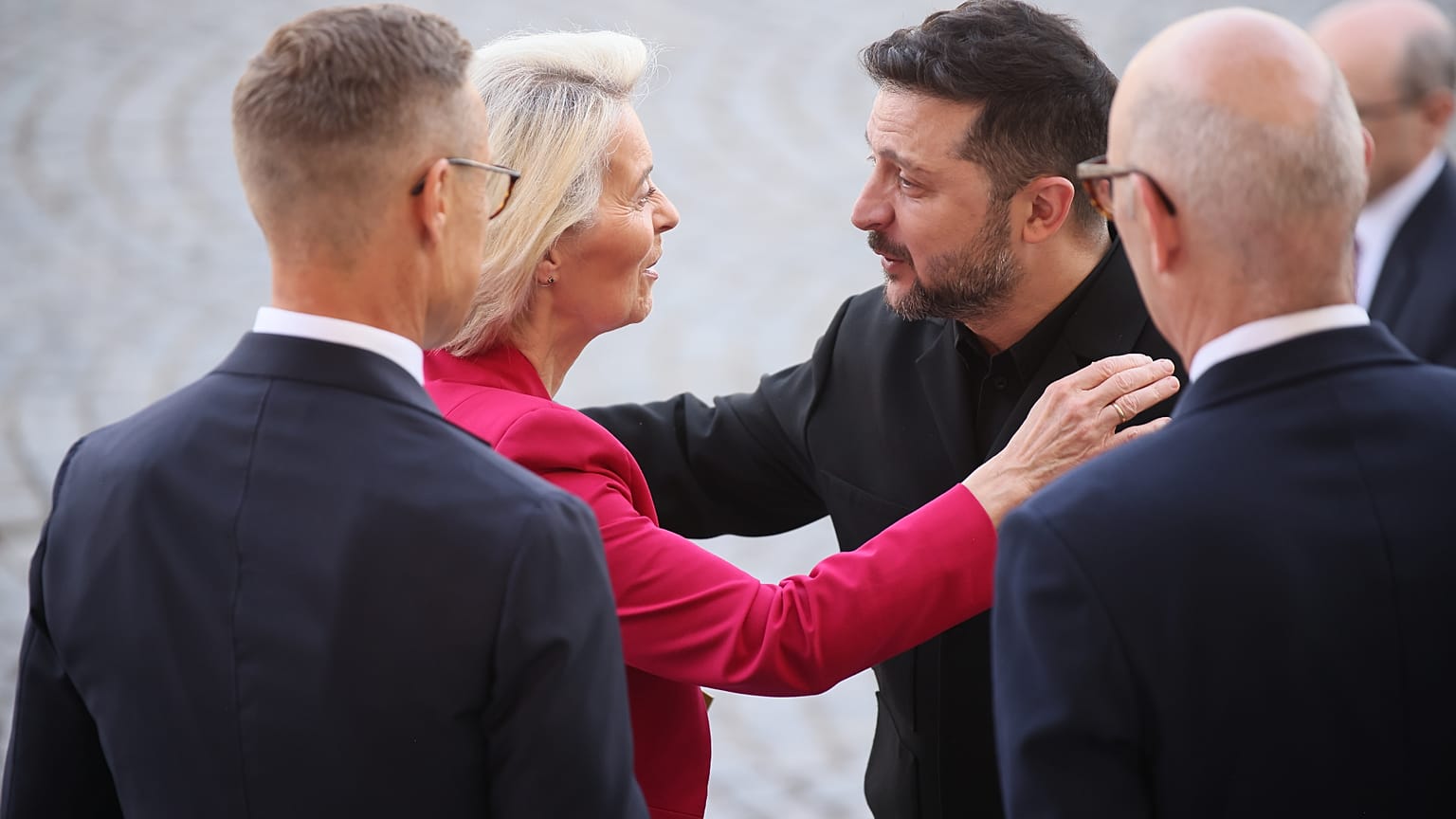
Ukraine's President Volodymyr Zelensky, center right, and European Commission President Ursula von der Leyen, center left.
Copyright AP Photo/Thomas Padilla

By Luca Bertuzzi
Published on

The European Commission proposed excluding Ukraine's agricultural products from the EU market and agricultural funding even when Kyiv joins the EU, in a move to smooth the country's accession process and address concerns from several member states.

The European Commission proposed to exclude certain agricultural products from accessing the European market and receiving EU funding even after Ukraine becomes a full member of the bloc.

The proposal comes as part of an enlargement strategy meant to prepare the Union to better absorb new countries, and is meant to address concerns from several member states that their agricultural sector could be undercut by the Ukrainian one.

“One area where we have to be very careful is agriculture. Why? Because the structure and the size of agriculture in Ukraine is really unique, therefore, we are proposing that we do special arrangements, which would limit the financial support, and market access for some of the Ukrainian agricultural products,” EU’s Enlargement Commissioner Marta Kos said.

Agricultural carveout

For the enlargement chief, Ukraine’s partial integration is possible, and the objective is to make Kyiv a full member state, but the Commission is proposing targeted amendments to exclude Ukrainian wheat and grain from the EU’s agricultural framework.

“What we propose now is about protecting European farmers,” Kos noted, adding that the Commission will propose to include the measure in the EU’s common position on agricultural policy when negotiating the accession of Ukraine.

According to the Commission, the idea is to help Ukraine regain access to its traditional markets, in particular in Northern Africa and the Middle East, which Russia’s war of attrition made it difficult to reach.

The EU executive argues that, if such regions were deprived of Ukrainian grain as it was diverted to the European market, it would substantially harm the food security of the importer countries and even trigger risks of mass famine.

Troubled accession

However, the measure is also meant to address concerns from EU countries like Poland that Ukraine’s agricultural exports might seriously challenge their national farmers and markets, Euronews understands.

Kyiv applied to become an EU member shortly after Russia’s war of aggression started in 2022, but its accession bid has stalled until earlier this year due to opposition from Viktor Orbán’s Hungary.

However, as Orbán was ousted from power earlier this year, the accession process started moving, with two more accession clusters expected to be opened as early as next week.

Thus, the Commission’s move seems meant to prevent these concerns from affecting Ukraine’s sensitive enlargement process from being delayed further.

“It doesn't mean that Ukraine will not become a member of the EU,” Kos continued. “We can afford that Ukraine will become a member of the EU, but we will set special conditions for agriculture.”

Tentative timeline

At the same time, Brussels is conscious that Ukraine, because of its size and ongoing war effort, poses a specific challenge to the EU’s enlargement process. Nevertheless, Kyiv has been included in a group of four “frontrunners” that will receive a dedicated roadmap later this month.

The roadmap will include an indicative timeline for joining the Union and a breakdown of the most important steps to get there. Still, for the other three frontrunners, Montenegro, Albania and Moldova, the timeline is relatively intuitive.

Montenegro’s declared ambition is to become the 28th member by 2028. Albania is poised to see its ambition to conclude the accession homework by the end of next year formally endorsed. Moldova is similarly targeting the first half of 2028.

For Ukraine, there is no obvious timeline, since the accession path might inevitably become linked with the eventual peace process with Russia.

“The country is at war. We will have to see. There are so many ifs [for Ukraine’s roadmap],” Kos said.