World Nuclear News
Viewpoint: Four million workers won't be enough without the right leaders
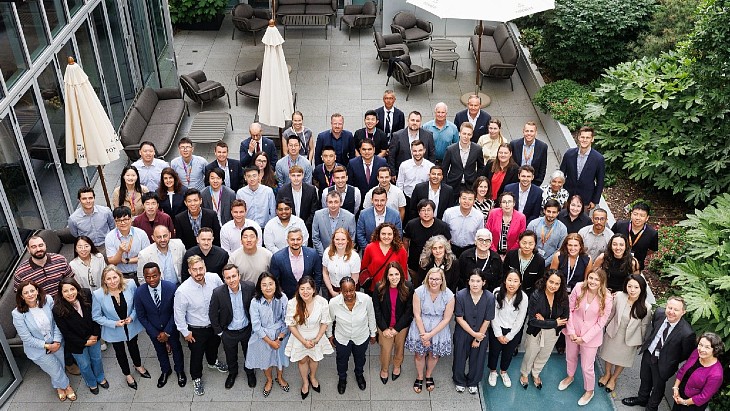
Somewhere in the nuclear industry today is the engineer who will bring a country's first reactor online, the regulator who will license it, and the financier who will make it bankable. Most of them don't know it yet.
Thirty-nine countries have now backed the Declaration to Triple Nuclear Energy, and the IAEA estimates that four million nuclear professionals will be needed by 2050. That growth won't come from one place or follow one model. Some countries are running fleets into their sixth decade, some are building again after a long gap, and others are setting up a regulator for the first time. A single project can now combine a vendor from one country, finance from another and a supply chain spread across several more. Reactors approved in the next decade could still be running at the end of this century, and many of the people who will decide how they are built, financed, regulated and run are mid-career today. What they learn now will shape the energy system their grandchildren grow up with.
Most workforce planning, quite reasonably, starts with numbers. But programmes are rarely delayed because they are one welder short. They are delayed when decisions are made late or badly, when government, regulator, operator and suppliers stop pulling in the same direction, or when a project loses its grip on schedule and cost. Those are leadership problems, and in an industry this international, the people solving them need to understand systems and markets well beyond their own.
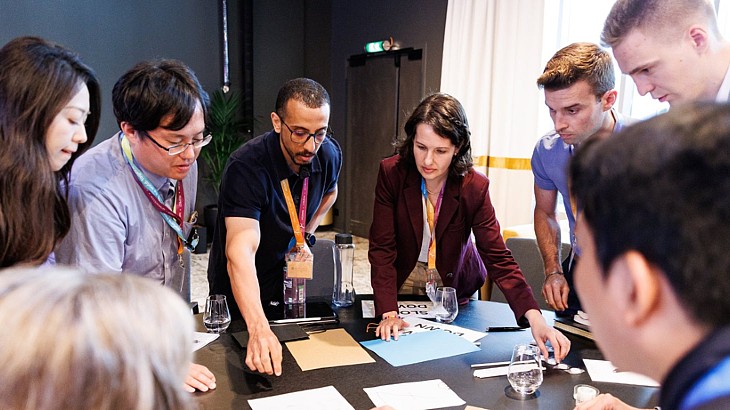
Summer Institute Fellows work on real industry projects (Image: World Nuclear University)
What the leadership challenge looks like
The challenge runs across the whole industry - not just plant operations or new-build, but the supply chain and the long-term operation of existing fleets.
Countries starting a nuclear power programme are building institutions, not just plants. The IAEA's Milestones approach expects them to establish a government body to coordinate the programme, an independent regulator and an owner-operator - each needing senior leaders who understand the others' roles well enough to work together without compromising the regulator's independence.
Safety depends on leadership everywhere. IAEA safety requirements place responsibility for safety culture with senior management, who set what gets reported, what gets questioned, and what gets prioritised when time and money are tight.
New-build and long-term operation both test leaders. Recent megaprojects have shown that project management and decision-making matter as much to schedule and cost as the reactor technology itself. Keeping existing reactors running for 60 years or more demands its own leadership: major refurbishment and licence renewal programmes, ageing equipment and obsolete components, and skills that must be kept in place across decades.
The supply chain needs leaders too. Many suppliers left nuclear during the long lull in construction, and those that remain must scale up, maintain nuclear-grade quality and meet different regulatory requirements in each market they serve.
The experienced generation is leaving. A quarter of the nuclear workforce is over 55, according to the 2022 Global Energy Talent Index, and many of the people who led the last major wave of construction have retired or are close to it, and their knowledge has to reach a new generation of leaders while they are still around to pass it on.
On top of all this, leaders have to manage public and political support and new technologies such as AI and small modular reactors - often all at once.
What globally connected leaders need
Leading in that environment takes three things that are hard to build from inside one single organisation or one country: an international network of peers and expertise to call on, the systems thinking to see how policy, regulation, finance, construction and operations depend on one another, and the ability to work across markets and institutions that do things differently.
The World Nuclear University (WNU) Summer Institute is designed around those needs. This leadership development programme brings together a global cohort of high-potential mid-career professionals, at the point where people move from being expert in one area to leading across several, from every part of the industry: operators, regulators, vendors, research organisations and government. Over five weeks they hear from senior figures across the sector, work in mentored international teams on real industry projects, and visit nuclear facilities in the programme's host country. At least half the programme is applied group work, and in 2027 the mentors include a former IAEA Deputy Director General and a former President of the Canadian Nuclear Safety Commission. The aim is not to turn a regulator into an engineer or an engineer into a financier, but to give each a holistic understanding of the whole system and practice in leading people who think differently from them.
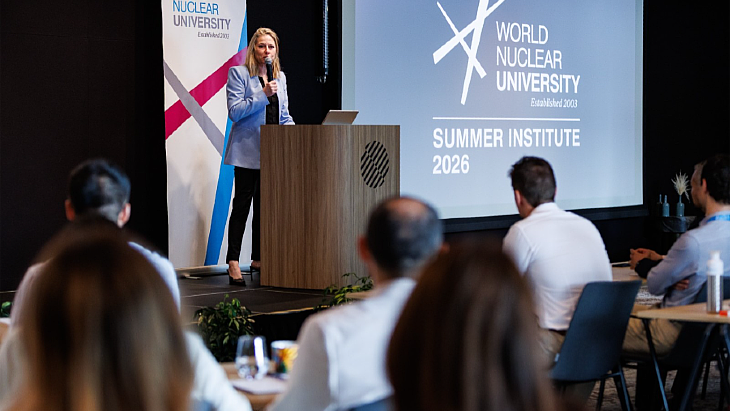
Sama Bilbao y León, World Nuclear Association Director General, at the 2026 Summer Institute (Image: WNU)
For the organisations that send them, the return is a colleague who comes back with a wider view of the industry, a network to draw on, and experience of leading across disciplines and cultures. They bring back first-hand knowledge of how other countries regulate, finance and deliver projects, and contacts across the sector to call on when problems arise. Putting someone forward also signals to high-potential staff that the organisation is investing in their future.
For Fellows themselves, the programme is a rare chance to step back from day-to-day work, learn from senior leaders and mentors, and test their leadership in an international team - while building a network of peers who will be leading the industry worldwide in the years ahead. As Emanuele Campelo, a 2025 Fellow now working as a Nuclear Safeguards Inspector at the IAEA, puts it, the Summer Institute "broadened my perspective through the experience of collaborating with and leading people from diverse cultural backgrounds”.
Why place still matters
Some of this can be taught in a lecture hall. Much of it is learned by being somewhere unfamiliar, seeing how another country's institutions actually work, and comparing it with home. That is why the Summer Institute has always moved around the world, and why it is never just the Fellows who travel: our speakers and mentors come too.
In 2027 the programme runs in Cape Town from 30 May to 3 July, its first time in Africa, and the setting is a particularly rich one. South Africa's Koeberg 1 and 2, just up the coast from the city, have operated since 1984 and 1985 and have received a licence extension allowing operation into the mid-2040s. The country's 2025 Integrated Resource Plan calls for 5200 MWe of new nuclear capacity by 2039. So Fellows will see a sector managing a mature fleet while working out how to restart new build - a challenge many established nuclear countries also face.
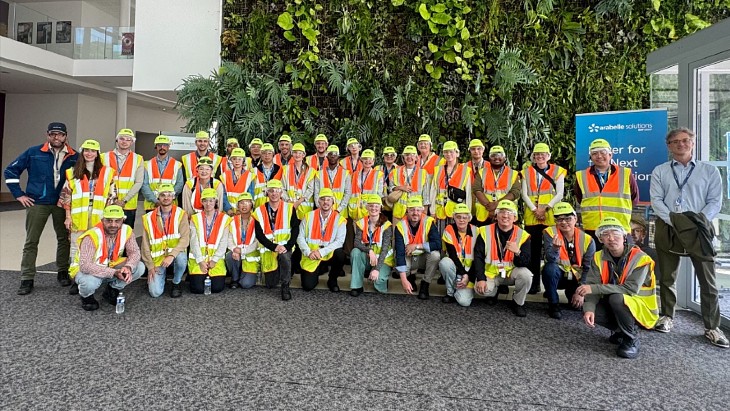
Arabelle Solutions Technical Tour during the 2026 Summer Institute (Image: WNU)
The learning runs in every direction. Fellows from established programmes gain as much from these different contexts as anyone else, and moving the programme around also brings it within reach of professionals for whom distance, visas and travel costs would otherwise rule it out.
Leadership that stays connected
Our host in South Africa is Loyiso Tyabashe, Group CEO of the South African Nuclear Energy Corporation - Necsa - and a 2009 Summer Institute Fellow, who championed bringing the programme to Africa. That is a common pattern: Fellows go home, take on bigger roles, and many later return as hosts, speakers and mentors for new cohorts.
More than 1,700 Fellows from over 90 countries have now been through the programme, and many stay in touch long after the five weeks end, with specific activities both online and in person for our Alumni community. For a leader in a newcomer country, that means a direct line to peers who have already worked through the same regulatory, construction or operational questions elsewhere. Marily Jaska, a 2023 Fellow who now heads Radiation and Nuclear Safety at Estonia's Ministry of Climate, says the knowledge and network she gained "are still useful in my daily work, especially as Estonia is developing its nuclear energy programme". For the industry, it means lessons travel faster than they otherwise would.
The Summer Institute is one part of a wider effort. World Nuclear Association's Workforce and Talent Development Working Group brings together experts from member companies to identify strategies and best practices for attracting, developing and retaining people and leadership across the sector - from closing skills gaps to strengthening the leadership pipeline that programmes like the Summer Institute feed.
Putting someone forward
Applications for the 2027 Summer Institute close on 27 November 2026. For anyone who leads a team or an organisation, the useful question is who among your people is at the point of moving from specialist to leader. The programme is designed for high-potential mid-career professionals from any part of the nuclear energy industry; past cohorts have included engineers, regulators, researchers, lawyers and finance specialists. Organisations in developing countries can put candidates forward for IAEA sponsorship through its technical cooperation programme. Full details, including eligibility and the application process, are on the WNU website. Questions about putting someone forward can go to the WNU team at wnu@world-nuclear.org.
The reactors of the tripling will be built and run by people who are mid-career today. The question for every organisation is whether they will be ready to lead.
Tilted fuel assembly retrieved from Palisades plant
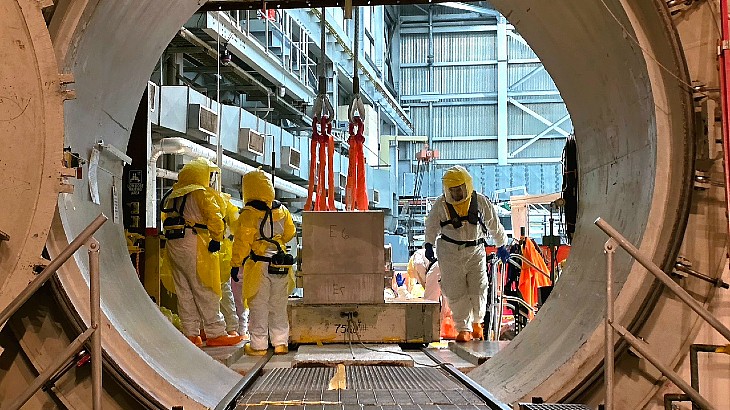
Holtec is working to return the single-unit pressurised water reactor, removed from service in 2022, back to operation. It began the process of fuel loading in late August, but on 21 September announced that fuel loading was on hold after a fuel assembly tilted from its upright position after it had been placed and the fuel-handling machine grapple had been disengaged.
The specially designed Fuel Movement Device was developed to support the controlled lifting and transfer of the tilted assembly. US Nuclear Regulatory Commission (NRC) approval was required to use the specialised recovery methodology, with the regulator issuing a one-time use emergency revision to the plant's licensing basis to facilitate the operation after carrying out a review to confirm that the activity could be carried out safely and in compliance with its regulatory requirements.
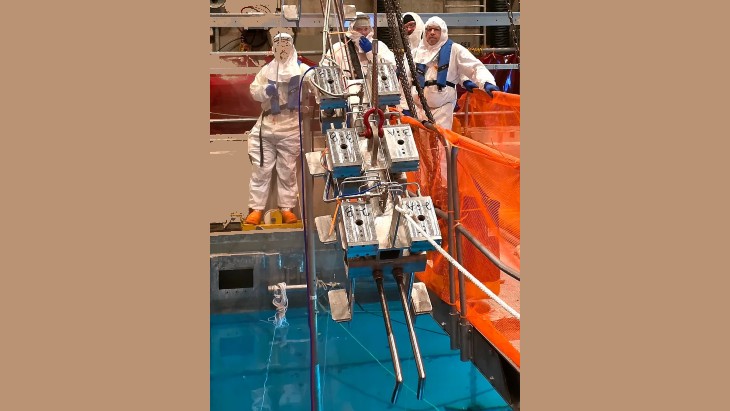
A special fuel handling device was made to remove the assembly (Image: Holtec)
The device, together with a custom-engineered fuel transfer canister, provided a solution to a fuel-handling challenge that could not be addressed using conventional refuelling equipment, Holtec said. The Palisades team used the device to lift the fuel assembly from its position within the reactor vessel and placed it into the fuel transfer canister. The canister lid was installed and secured within the reactor cavity before the canister was safely transferred to the plant's used fuel pool, where the recovered assembly is now stored. The operation was supported by extensive engineering evaluations, equipment testing, detailed execution planning, and disciplined performance by the recovery team.
"When we encounter a challenge, what matters is how we respond," said Fadi Diya, Holtec International's Chief Nuclear Officer. "Our team approached this recovery with the same commitment to safety, technical rigor, and teamwork that has guided our work throughout the restart. We developed a solution, executed it safely and error-free, and demonstrated the depth of expertise across our organisation. I’m proud of this team and grateful for the dedication they bring to Palisades every day."
With the recovery operation complete, the Palisades team continues its progression toward the plant’s return to service, including the completion of fuel loading, required testing, inspections, and operational readiness activities, the company said.
Regulatory milestone for US laser enrichment plant
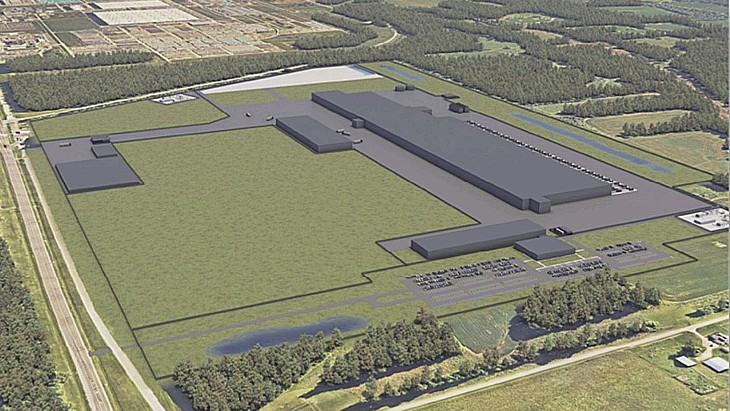
Global Laser Enrichment (GLE) submitted its Environmental Report for the Kentucky facility - also known as PLEF - to the US Nuclear Regulatory Commission (NRC) in December 2024. The Final Safety Evaluation Report - the last milestone before a licensing decision - is expected by the end of the year.
"The NRC's issuance of the Final Environmental Impact Statement represents a significant regulatory milestone for the PLEF and reflects the NRC staff's comprehensive and efficient review of our application," GLE Vice President, Safety, Security & Compliance Tim Knowles said. "We appreciate the agency's commitment to a rigorous, timely, and transparent licensing process."
GLE is the exclusive licensee of Silex Systems Ltd's SILEX laser enrichment technology for uranium. Last year, GLE took it to Technology Readiness Level 6, following the completion of a large-scale uranium enrichment demonstration programme using the technology at its Test Loop facility in Wilmington, North Carolina. As well as preparing for commercial deployment, GLE recently executed a long-term offtake agreement with Canadian company Cameco for future uranium enrichment production.
PLEF would deploy the technology to re-enrich high-assay depleted uranium tails from previous operations at the US Department of Energy's former Paducah gaseous diffusion enrichment plant. The plant will be the world’s first large-scale domestic enrichment facility utilising a next-generation enrichment process, GLE says, in a project that will strengthen US nuclear fuel cycle supply chains as well as supporting the nation's growing energy needs and enhancing long-term energy security.
Michael Goldsworthy, CEO and Managing Director of Silex Systems, said the PLEF licence is expected to be finalised in early 2027. "The issuance of the final EIS marks a significant step forward in GLE's mission to deploy the PLEF in the US, which would become the world's first laser-based enrichment facility for the production of natural grade uranium (from depleted uranium tails) and low-enriched uranium (LEU) with uranium-235 assays up to 5%. The NRC licence would also authorise GLE to produce LEU+ with assays up to 8% - which is a new fuel grade being sought by nuclear utilities to improve power plant economics," he added.
Background
Uranium-235 is the fissile isotope of uranium that is useful for energy production in a nuclear reactor - but this isotope only makes up about 0.7% of natural uranium. So for use in nuclear fuel, uranium can be "enriched" to increase the ratio of fissile uranium-235 to non-fissile uranium-238. Most commercial reactors currently in operation use low-enriched uranium - or LEU - fuel that is typically enriched to 3-5% uranium-235.
Today's commercially operating uranium enrichment capacity uses gas centrifuge technology, with centrifuges in which a fast-spinning rotor inside a vacuum casing makes use of the very slight difference in mass between the different uranium isotopes to separate them.
Laser enrichment processes are sometimes described as a third-generation technology. Precise wavelengths of light produced by lasers are used selectively to increase the energy of atomic or molecular species consisting of a specific isotope - a process called "laser excitation" - changing their properties and allowing them to be separated. The process has been described as substantially more efficient than existing methods of uranium enrichment, with potentially lower energy inputs, lower capital costs and lower tails assays.
Studsvik's waste treatment technology heads to Fukushima
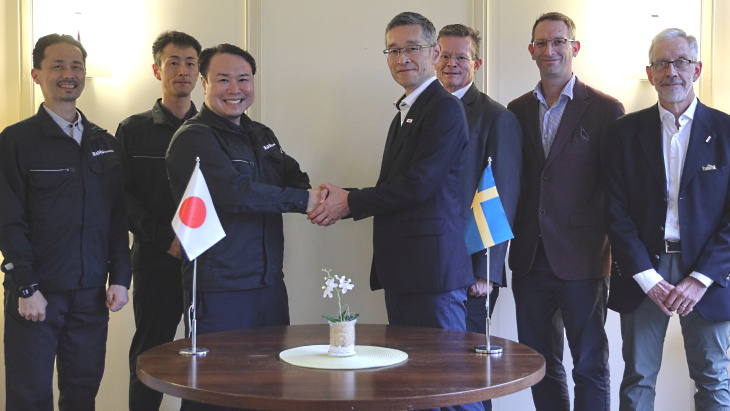
Under an agreement signed on 21 October, ReNu will design a pilot plant - to be built in Fukushima Prefecture - adapted to Japan's seismic and regulatory requirements and to the characteristics of the waste to be treated.
Studsvik's inDRUM technology is a solution for transuranic (TRU) waste streams that have characteristics that do not meet waste disposal criteria. The technology can be used on low, intermediate and high-level radioactive wastes.
inDRUM is a batch thermo-chemical system that treats containerised radioactive wastes by means of in-container thermal treatment to remove the free liquids, destroy organics, and deactivate corrosives and reactive materials from the containers. Treatment is achieved without removing or handling/sorting wastes from the container. In most applications, wastes are treated in the container in which the wastes were originally packaged. The thermally decomposed waste form is an inert, inorganic dry char (ash-like substance), significantly reduced in volume (as much as 90%).
The inDRUM process consists of two main treatment systems: an electrically-heated container treatment vessel (CTV), where thermal treatment of drums is performed, followed by an off-gas treatment system that oxidises any volatile organic compounds, carbon monoxide, and traces of hydrogen volatised from the CTV and removes and/or neutralises any acid gases, mercury or iodine present in the off-gas stream.
ReNu has been awarded up to JPY700 million (USD4.4 million) under the Subsidy for Projects Promoting Practical Development for Regional Reconstruction, implemented by Fukushima Prefecture under the Japanese government's Fukushima reconstruction initiative, to develop a radioactive waste treatment pilot plant in Fukushima. ReNu aims to establish the basic design conditions for the Japanese version of inDRUM during fiscal year 2026, which ends in March 2027, and, subject to the necessary agreements, to complete the pilot plant in fiscal year 2028.
Studsvik operates a full-scale inDRUM demonstration facility in Nyköping and is advancing the adoption of inDRUM for the treatment of radioactive waste from the European Spallation Source (ESS) in Lund.
The partnership with ReNu is the first step in the model Studsvik has chosen for taking inDRUM to international markets. Studsvik will build and operate its own inDRUM facilities in Sweden, while abroad it will license the technology and work with local partners that design, build and operate the plants. In September 2023, Studsvik and German radioactive waste specialist GNS Gesellschaft für Nuklear-Service mbH formed a strategic and exclusive cooperation to implement Studsvik's inDRUM technology for the German market.
Building on the Fukushima project, Studsvik and ReNu will explore deploying inDRUM elsewhere in Japan and in Asia, as well as broader cooperation in nuclear engineering, including fusion.
"Fukushima will need radioactive waste treatment for decades," said Studsvik President and CEO Karl Thedéen. "ReNu is based in Okuma, the town that hosts the plant, and brings the local knowledge needed to adapt inDRUM to Japanese conditions. Fukushima is our starting point in Japan and in Asia."
ReNu CEO Ryohei Takahashi added: "Decommissioning Fukushima requires technology proven around the world, re-engineered to fit Japan's regulations and site conditions and implemented with local hands. Through our technical collaboration with Studsvik, ReNu will adapt inDRUM to Japanese regulatory and site requirements. We intend to build on our experience in Fukushima to pursue opportunities elsewhere in Japan and overseas."
First reactor unit launched on Chukotka icebreaker
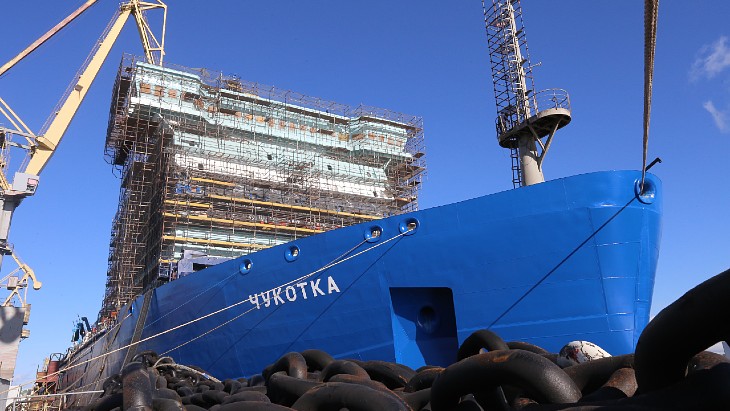
The icebreaker, part of the Project 22220 fleet, features two RITM-200 reactors, which produce 175 MW of thermal power each, and have a service life of 40 years, with refuelling every seven years.
Once both units have had their physical start-up, with launch equipment calibrated to confirm the correct operation of the reactor, controls, protection and monitoring systems, there will then be a series of tests of the nuclear power plant on the vessel.
Each of the units weighs more than 147 tonnes, is 7.3 metres tall, with a diameter of 3.3 metres and is designed to be able to operate in harsh Arctic conditions and to withstand a roll of up to 45 degrees and a pitch of up to 15 degrees.
The Chukotka is the fifth of the Project 22220 vessels being built at the United Shipbuilding Corporation Baltic Shipyard. It was laid down in December 2020 and the vessel launched in November 2024 and is currently undergoing mooring trials and preparing for its factory sea trials, the shipyard said.
Background
There are currently a series of Project 22220 nuclear-powered icebreakers operating - the Arktika, Sibir, Ural, the Yakutia, and two under construction, the Leningrad and the Stalingrad at the Baltic Shipyard.
Within Rosatom's machine-building division, Afrikantov OKBM is the designer, complete supplier, and manufacturer of the reactor internals for the RITM-200 and RITM-400 reactor units. Reactor vessel fabrication and test assembly are performed at ZiO-Podolsk. Fifteen RITM-200 reactors have so far been completed, with 13 more under construction.
The Project 22220 vessels are 173 metres long, 34 metres wide and with a height from the waterline to the mainmast of 57 metres. They are designed to break through ice up to three metres thick and have a speed of 22 knots in clear water. The first four have been escorting cargo ships along the Northern Sea Route for several years now.
There is also a larger nuclear-powered icebreaker under construction, the Rossiya, which will be the first of the proposed Project 10510 nuclear-powered icebreakers. It will feature two RITM-400 reactors for a propeller power of 120 MW. It will be able to penetrate ice up to 4.3 metres thick and clear a channel up to 50 metres wide. It has a reported construction target service date of 2030.
Nuclear-powered icebreakers are a key part of Russia's plan to develop the Northern Sea Route, the shipping lane along its north coast which allows faster transport between Europe and Asia
Posiva given go-ahead to operate Finnish used fuel repository
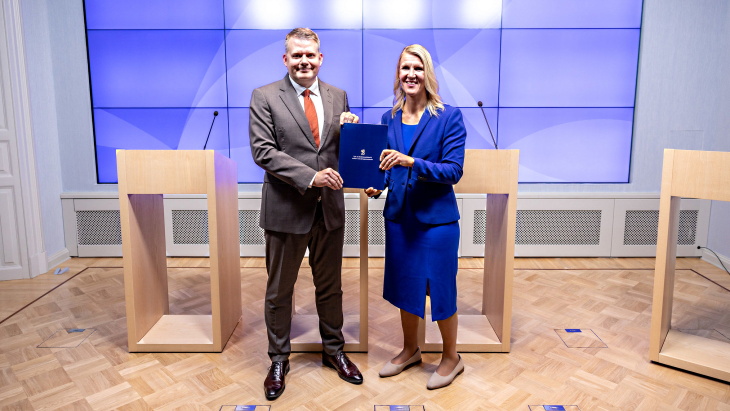
Posiva submitted its application, together with related information, to the Ministry of Economic Affairs and Employment on 30 December 2021 for an operating licence for the used fuel encapsulation plant and Onkalo final disposal facility. The company is applying for an operating licence for a period from March 2024 to the end of 2070. The encapsulation plant and final disposal facility are intended for the used nuclear fuel generated by TVO's Olkiluoto and Fortum's Loviisa nuclear power plants.
A prerequisite for the government making the final decision on Posiva's application was a positive opinion by the Radiation and Nuclear Safety Authority (STUK). The regulator began its review in May 2022 after concluding Posiva had provided sufficient material. The ministry had requested STUK's opinion on the application by the end of 2023 before extending it, in stages, until the end of June 2026. STUK published its safety assessment of Posiva's encapsulation and final disposal facility for used nuclear fuel on 4 August this year, saying the facility meets the safety requirements set for it in the Nuclear Energy Act and Decree, and, "therefore, there is no obstacle to granting the facility an operating licence with regard to radiation and nuclear safety".
The government has now granted Posiva the operating licence taking into account STUK's opinion.
The licence granted to Posiva allows the company to possess, process, store and dispose of a maximum of 6,500 uranium tonnes (tU) of used nuclear fuel generated by the Olkiluoto and Loviisa plants. Under the licence conditions, Posiva may possess, produce, process, store and dispose of low-level and intermediate-level radioactive waste generated by the encapsulation plant and final disposal facility and by the operation and decommissioning of nuclear facilities owned by its shareholders - TVO and Fortum - provided that the total volume of the waste does not exceed 3,000 cubic metres, of which no more than 1,500 cubic metres may be designated for final disposal.
The licence also permits the final disposal of certain other radioactive waste and nuclear materials generated in Finland to a limited extent. This includes certain radioactive waste generated in healthcare and research institutions.
The amount of used nuclear fuel to be disposed of corresponds to approximately 3,300 disposal canisters. Once operations are fully established, the plan is to dispose of a maximum of 60 canisters annually at the plant. The final disposal operations are estimated to continue until the 2120s, after which the repository will be backfilled and closed. After the closure of the facility, responsibility for the used nuclear fuel will be transferred to the State in accordance with the Nuclear Energy Act.
Posiva must ensure that the data sets essential for the final disposal operations are specified and stored to make them available to the State after the closure of the final disposal facility.
Before the facility is commissioned, STUK will conduct the inspection referred to in section 20 of the Nuclear Energy Act to ensure that all conditions for safe operation have been met. Despite the decision on the operating licence issued by the government, Posiva may not start operating the facility before STUK has conducted the inspection.
Posiva is required to submit a periodic safety assessment and an updated long-term safety justification to STUK within ten years of the granting of the licence. Periodic safety assessments will also be carried out during the operation of the facility in accordance with nuclear energy legislation.
"Finland's strong safety culture underpins the production of clean energy," said Minister of Climate and the Environment Sari Multala. "It is our responsibility across generations to ensure the safe and responsible use of nuclear power, from construction through to the final disposal of spent fuel. As a result of more than 40 years of systematic efforts, Finland will launch the first final disposal facility for spent nuclear fuel in the world."
"The decision marks the beginning of a new stage in a process that has continued for more than 40 years," Posiva said. "Posiva will now transition towards production operation which will go on for over a hundred years." However, it added: "The operating licence does not imply an immediate start to production operation. Before final disposal begins, Posiva will finalise the commissioning stage, carrying out the necessary tests and inspections which STUK also needs to verify and approve. No detailed schedule is given at this point for the start-up."
"This is a great and historic day for both Posiva and Finland. In addition to comprehensive expertise, the stability of the society and the predictability of the operational environment were prerequisites for the operating licence" said Posiva President and CEO Ilkka Poikolainen. "This solution has not been built because it was easy. It was built despite not being easy. Because it is the responsible thing to do. And because it is the right thing. Like we have said from the very start: only safe final disposal is possible. That is why we will take the time to complete also the final stages with care."
"A total solution like this is not built by just one organisation, and not in just a few years' time. It has its background in the forward-looking decisions of the society, independent regulatory oversight, strong commitment from our owners, and the efforts of a wide-reaching group of experts. The thanks must go to everybody involved in this work," Poikolainen said.
A deep geological repository comprises a network of highly-engineered underground vaults and tunnels built to permanently dispose of higher activity radioactive waste so that no harmful levels of radiation ever reach the surface environment. Countries such as Sweden, France, the UK and the USA are also pursuing this option.
At Onkalo, used nuclear fuel will be placed in the bedrock, at a depth of about 450 metres. The disposal system consists of a tightly sealed iron-copper canister, a bentonite buffer enclosing the canister, a tunnel backfilling material made of swellable clay, the seal structures of the tunnels and premises, and the enclosing rock. The first final disposal tunnel that is now being worked on is about 330 metres long and will house a total of about 30 drilled deposition holes.
In late August this year, ahead of being granted an operating licence, Posiva announced that workers had begun drilling the first deposition hole for use at the Onkalo underground used nuclear fuel repository. The drilling of the first deposition hole using the Deposition Hole Boring Machine (DHBM) was started in the 1.9-billion-year-old Olkiluoto bedrock at a depth of more than 400 metres. The deposition hole now under construction is being drilled vertically into the floor of a previously excavated final disposal tunnel. The finished hole will have a depth of 8.4 metres and a diameter of 1.75 metres.
The Onkalo repository
The site for Posiva's repository at Eurajoki, near the Olkiluoto nuclear power plant, was selected in 2000. The Finnish parliament approved the decision-in-principle on the repository project the following year. Posiva - jointly owned by Finnish nuclear utilities Fortum and Teollisuuden Voima Oyj (TVO) - submitted its construction licence application to the Ministry of Employment and the Economy in December 2013. Posiva studied the rock at Olkiluoto and prepared its licence application using results from the Onkalo underground laboratory, which would be expanded to form the basis of the repository. The government granted a construction licence for the project in November 2015 and construction work on the repository started a year later.
In July 2022, Posiva announced that the excavation of the first five actual disposal tunnels had been completed. The total length of the tunnels, whose excavation began in May 2021, is about 1700 metres. It is estimated that 100 deposition tunnels will be excavated during the 100-year operational period of the final disposal facility, and will have a total length of about 35 kilometres. The maximum length of each tunnel will be 350 metres. The tunnels will be about 4.5 metres high and about 3.5 metres wide.
AEP, Amazon and X-energy planning 12-SMR plant
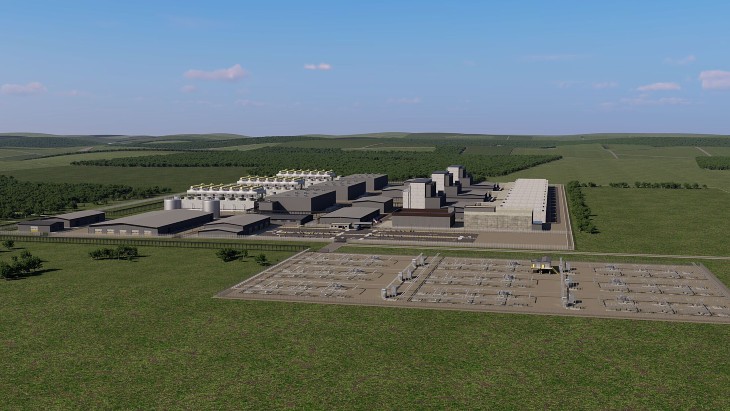
Tech giant Amazon is to support the project's development through a funding agreement and through a long-term power purchase agreement "covering the costs of the facility and its operations for the duration of the contract".
X-energy's Xe-100 small modular reactor provides 80 MW of energy - if the development project reaches a final investment decision and moves forward with it envisages 12 of these units being arranged in three groups of four.
Sullivan County recently became part of the Indiana Advanced Nuclear Ready Communities Program - the proposed site being evaluated is the former site of I&M's Breed Generating Station. If it goes ahead it is likely to create about 1,000 construction jobs and 100 permanent jobs.
Bill Fehrman, Chairman and CEO of American Electric Power (AEP), said: "Advanced nuclear energy has the potential to provide dependable power for over half a century while supporting economic growth in our communities. With this development plan, we are working to bring together the resources to help meet unprecedented growth in energy demand with reliable baseload power while protecting affordability for existing customers."
Josh Weissman, VP of Data Center Infrastructure Capacity Delivery at Amazon, said: "We are committed to serving the needs of our customers and achieving our Climate Pledge goal to be net-zero carbon across our operations by 2040. This collaboration with AEP and X-energy would enable us to make progress on both while ensuring that Indiana's communities benefit. Together, we're looking to develop nearly a gigawatt of carbon-free power for the regional grid and pay our full costs without passing them to others. This project would also create jobs and generate tax revenues to benefit Hoosier communities for decades to come."
J Clay Sell, CEO of X-energy, said: "This effort pairs AEP's 50 years of excellence in nuclear operations with the world-class expertise of Amazon to chart a new course for Indiana's energy future, powered by our Xe-100 small modular reactor. Together, we're working to advance a clean, safe, reliable solution to meet growing energy demand and benefit Indiana and its communities for generations to come."
Background
The Indiana project would be the second one under the 2024 collaboration that saw Amazon taking a stake in X-energy and the two announcing a goal of adding more than 5 GW of new nuclear capacity to the US grid by 2039. The first scheme is at the Cascade Advanced Energy Facility in Washington state. Amazon says it will be "the first offtake customer" of these projects, "providing the demand signal that makes these projects viable and accelerating the path to new carbon-free power for the grid".
Amazon has signed a US government-led pledge "to pay the full electricity costs of serving our data centres, including paying for additional infrastructure, without passing costs to others", and says that increased revenue from large customers like itself is driving down utility bills.
The Xe-100 is a pebble bed high-temperature gas reactor capable of a thermal output of 200 MW (80 MW electrical). It uses fuel made from robust TRISO (tri-structural isotropic) fuel particles. TRISO fuel is composed of small spheres of enriched uranium that are coated with multiple layers of carbon and ceramic materials, forming a robust shell that can withstand extremely high temperatures without melting.
Optimised as a four-unit plant delivering 320 MWe, the reactor can provide baseload power to an electricity system or use its thermal output to support industrial applications with high-pressure, high-temperature steam.
The first deployment of the Xe-100 is planned for Dow's Seadrift site on the Texas Gulf Coast, to supply both power and high-temperature heat to industrial-scale operations.
The main feedstock for fuel that will be manufactured by X-energy's TRISO-X subsidiary is high-assay low-enriched uranium, or HALEU. In February, TRISO-X received a 40-year Special Nuclear Material Licence from the US Nuclear Regulatory Commission, enabling it to commercially manufacture fuel using HALEU under a single licence. HALEU contains between 5% and 20% of fissile uranium-235 - a higher enrichment than that found in typical uranium fuel used in today's operating commercial reactors, which contains between 3.5% and 5% U-235.
Rosatom signs floating nuclear power deal for Indonesia
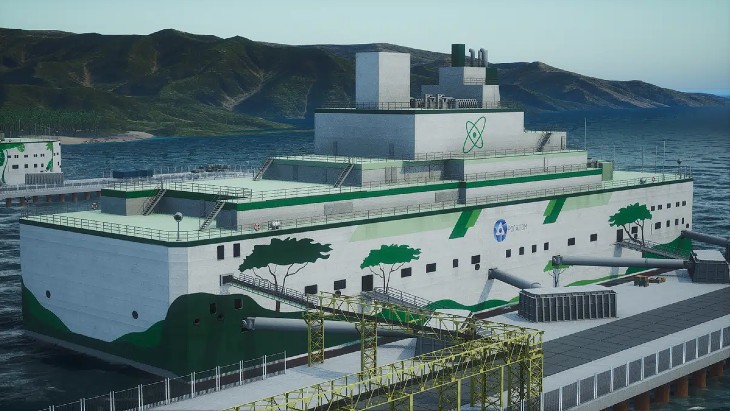
Russia's state nuclear corporation Rosatom said it signed the agreement during Russian Energy Week in Moscow to supply the power to the northern part of Halmahera Island in North Maluku.
Two of Rosatom's FPU-100 floating nuclear power units will be deployed, giving a combined capacity of 200 MW. Rosatom said it expects them to be supplying electricity to consumers within five years.
Alexey Likhachev, Director General of Rosatom, said: "Cooperation between Rosatom and Indonesia is progressing rapidly. Our recent meeting with President Prabowo Subianto reaffirmed that this world's largest island nation is consistently pursuing a course toward strengthening energy security and achieving carbon neutrality. I would like to emphasise the historic significance of this milestone - the world's first-ever export agreement for electricity supply from a floating power unit. I am convinced that this will send a strong signal to the global business community. With systematic government support, the private sector is actively taking the lead in initiating nuclear infrastructure projects capable of transforming the country's economy."
Yudi Utomo Imardjoko, Indonesian Nuclear Scientist and Director of PT Pembangkit Listrik Nuklir, said: "We firmly believe that providing our people with clean, reliable, and carbon-free electricity is essential to securing Indonesia's long-term energy future. It is important to emphasise that this project is structured entirely as a business-to-business initiative, driven by private-sector investment without reliance on funding from Indonesia's State Budget. We are deeply grateful for the opportunity to advance this historic partnership and sincerely appreciate the continued support of the Indonesian Government, particularly the Embassy of the Republic of Indonesia in Russia, in facilitating this important milestone."
In its discussions with Indonesia's government, Rosatom has proposed a two-phased approach to nuclear energy in Indonesia, with the first stage consisting of small-scale floating nuclear power units, followed by a second phase involving land-based nuclear power plants equipped with large units.
Background
Rosatom is in the process of constructing four floating power units to supply electricity to a copper mining centre in Chukotka. It is targeting the export market for floating nuclear power plants with capacity of at least 100 MWe and an assigned service life of up to 60 years featuring RITM-200M reactors, which have been derived from those used on Russia's latest nuclear-powered icebreakers.
It already has had experience of operating the world's only operating floating nuclear power plant - the Akademik Lomonosov - for more than five years. It is based, with its coastal infrastructure, by the city of Pevek - population 5,000 - to which it supplies heat and power in Russia's Arctic Chukotka region.
The business model for the floating power units is that they remain Rosatom-owned and operated, with the customer paying for the electricity generated. Rosatom says they are environmentally friendly, relatively easy to install at deployment sites, and also ensure stable electricity prices over extended periods and do not require countries to invest in their own nuclear infrastructure or assume ownership of the units.
The challenge of securing uranium from seawater - podcast
There's enough uranium in the world's oceans to power humans' current energy needs for hundreds of thousands of years. The challenge is finding a way to extract it at a cost that makes it a viable option.
There have been various studies and trials carried out over the years - including recently in China and Japan - but Bryan is bullish about his US-based plan being able to harvest uranium from the sea at prices which, at worst, match current prices.
Bryan, who was a co-founder of Uranium Energy Corp and spent more than a decade as Terrestrial Energy's chief commercial officer, acknowledges that the idea of sourcing uranium from seawater had been seen as a "mythical technology", one that, like fusion, was being worked on "but always a few years away".
"In fact we've learned that's not true - with the serious engineering work we've been doing, we've been able to dispel a lot of those myths," he says.
The goal is clear - if successful, it would solve supply issues, including geopolitical ones, which impact the existing nuclear fuel supply chain, he says.
In July, Austin, Texas-based Supercritical Materials announced it had secured an exclusive licence from Battelle Memorial Institute - which manages eight national laboratories for the US government - to a patented uranium adsorbent technology for the extraction of uranium from seawater, originally developed by the Pacific Northwest National Laboratory and research partners.
In its announcement it said: "The technology has demonstrated the feasibility to extract uranium from seawater. Supercritical has been granted rights to the technology and to deploy it in the United States with the goal of reaching industrial scale and will seek to expand to allied nations."
Their challenge is to scale-up a process which has been proven to work at small, experimental scale. They are currently in the preliminary economic assessment phase, with a target timeline of 2033 for the first industrial-scale facility.
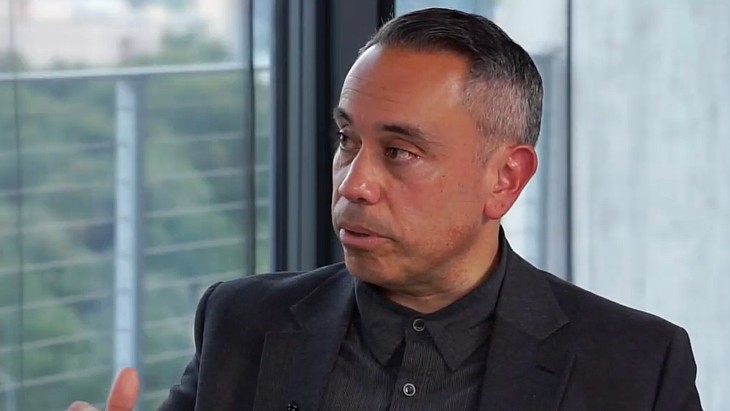
Canon Bryan (Image: Supercritical Materials)
As to the amount of uranium in seawater, it is, he says, about 3.3 parts per billion, so it's very low, and the technology "has a way of concentrating that uranium to much, much, much higher levels, commercial levels of uranium concentration".
How does the process work?
Bryan explains: "It is actually a very simple concept. The DOE invented a special fibre, a specialised fibre, but not exotic, so it's not difficult to produce. That fibre is treated with a special chemistry. It's deployed to seawater and the fibres interface with the uranium mineral in the ocean in such a way that it creates an ionic bond. The uranium adsorbs onto the fibre. And once there, once the fibre has been submerged long enough and the concentration is high enough, the fibres are removed."
They are then chemically treated with a processing stage to get it from concentrate to something which is a marketable product
"The real engineering challenge here is how do we get a certain quantity of fibre, in our case, for our industrial scale design, 10,000 tonnes of fibre per year, how do we get that quantity of fibre to interface with a certain quantity of ocean water to give us the production that we are seeking, which is 1.85 million pounds per year per industrial facility. The volume of ocean water may seem extraordinarily large - we would need the 10,000 tonnes of fibre to interface with approximately 250 cubic kilometres of seawater per year."
Their design is for piers to be installed initially in the Gulf of Mexico where the currents have sufficient flow rates. It also has the benefit of being warmer - an increase of 10C in water temperature would have a 50% increase in the recoverability of uranium "so it's a sweet spot", he says. "We have a quite strong indication now, based on the project economic work that we've been doing, that this design will yield production of uranium that is profitable at today's uranium price, not some theoretical greater, higher uranium price in the future, but today's uranium price. We're very excited by what we're working on. We think this is a very special project and has huge implications - we may have a fuel, a low-cost fuel for nuclear energy, for a major energy source forever, and with an effective price cap."
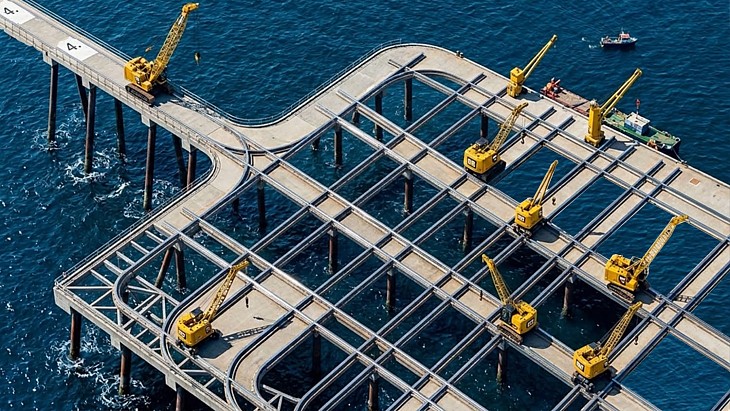
How one of the piers might look (Image: Supercritical Materials)
As to progress so far, he says the next stage will be the pre-feasibility study, followed by a further series of studies before a final investment decision, which is the point at which it is determined whether or not the project gets financed and built. He says they are targeting that final investment decision for 2029.
What about the reaction from friends and colleagues in the uranium and wider nuclear sector? Bryan says: "I think there's a big part of the sector, let's say the lion's share of the sector and the rest of the world, that has either never heard of this or they have heard of it and they think it's insane. And then there's the small but increasing group of people that have heard of it and have seen our thesis and our particular methodology for commercialising this technology. And they know me to a degree. I mean they know I'm nuts, but they also know that the things that I've worked on, generally come to fruition. So there is a little bit of a belief system there that, 'you know, this thing could actually be less crazy than we've been led to believe. And I would say that those people have the closest idea to reality'."
Among people who have seen the company's particular methodology for commercialising the technology the feedback has been "overwhelmingly positive", he says.
You can listen and subscribe on all major podcast platforms:
World Nuclear News podcast homepage
Apple
Spotify
Amazon Music
Episode credit: Presenter Alex Hunt. Co-produced and mixed by Pixelkisser Production
Preparations for advanced nuclear at ports should begin now, study concludes
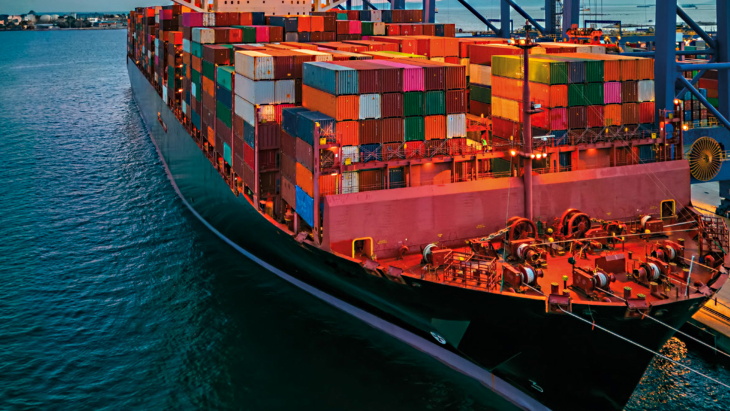
"Advanced nuclear technologies are shifting from the theoretical into practical consideration for ports and the maritime sector," the paper says. "Advanced nuclear technology could reshape port environments, maritime operations and industrial energy systems. It offers potential benefits in reliable low-carbon power, shore power, industrial heat, fuel production, vessel propulsion, resilience and high-value maritime services." Potential applications include nuclear-powered ships, floating or transportable nuclear power units, and land-based small modular reactors (SMRs) or microreactors to power port operations and support fuel production.
The paper - titled Advanced Nuclear Technology Use Within Port Environments - is intended as a briefing for port leaders, harbour authorities, terminal operators and policymakers. The report outlines how ports should treat nuclear as a long-term infrastructure and operating-model question, not simply as a new fuel. The most immediate actions are stakeholder engagement, evidence-building, regulatory engagement and integration of nuclear scenarios into established port safety-management systems and ways of working.
"Ports are becoming increasingly large electrical power consumers and some are exploring their own role in energy production," the paper says. "Electrified cargo-handling equipment, cold storage, shore power, electric fleets, industrial tenants, data centres, hydrogen production and synthetic fuel pathways are all increasing demand for reliable, low-carbon electricity. Small nuclear reactors can provide stable baseload power for ports and reduce reliance on regional grids, depending on power demand, site location, regulations, grid constraints, and cost. Ports are often located at the intersection of constrained grids, heavy industrial demand, strategic logistics and local air-quality or decarbonisation pressures.
"Nuclear offers a possibility to provide for these new or increasing demands in a compact, reliable, low-emission package that is inherently safe."
The study suggests advanced nuclear could give some ports a pathway to become clean-energy hubs. A single 100 MWe-class SMR could, in principle, meet the electricity needs of a medium-sized port and several associated industrial tenants. "The best candidates for port-based nuclear are likely to have large, steady and growing electricity demand, grid constraints, nearby energy-intensive industries, sufficient secure space, manageable site hazards, supportive regulatory or policy environments and strategic resilience needs. Detailed port-specific assessment is essential before any technology match or investment decision can be credible."
The paper calls on ports to integrate nuclear scenarios into their established marine safety-management systems, rather than create a parallel regime. "Existing disciplines used to manage dangerous goods, hazardous cargoes, security zones and high-consequence operations provide a strong foundation, but will need additional nuclear-specific evidence, competence, monitoring and regulatory interfaces."
It finds that the most significant barriers are not solely technical. Regulatory alignment, governance, emergency preparedness, liability, insurance, workforce capability and public confidence will all be critical to safe and commercially viable deployment.
The paper proposes a tiered readiness model, enabling each port to adopt a proportionate level of ambition: from becoming 'nuclear-aware', with the ability to assess enquiries and engage authorities, through to 'nuclear-ready' and 'nuclear-enabled', or ultimately operating as a nuclear energy hub. Recommended no-regret actions include mapping stakeholders, assessing future energy demand and grid constraints, engaging regulators early and preparing clear, evidence-led communications for workforces and local communities. The report also sets out a staged pathway from initial orientation and feasibility assessment to development and delivery. This is designed to help ports build evidence and confidence before major capital is committed, recognising that advanced nuclear will not be appropriate for every location.
The paper concludes: "Advanced nuclear is not imminent for every port, nor is it a universal solution. But it is strategically significant and relevant to future energy demand such that port leaders should begin structured, proportionate planning in the near-term. The ports that do so will be better placed to make informed decisions, protect public confidence and shape the regulatory and commercial frameworks that will determine whether nuclear has a role in the next generation of maritime infrastructure."
"Advanced nuclear has the potential to transform ports from energy consumers into resilient, low-carbon energy and industrial hubs. But realising that opportunity will depend on more than technology alone," said Mark Tipping, Global Offshore Power-to-X Director at Lloyd's Register. "Ports need to further assess governance, proportionate assurance and early collaboration across the maritime and nuclear sectors. By starting that work now, port leaders can build the evidence, capability and public confidence needed to make informed decisions as the market develops."
British Ports Association CEO Richard Ballantyne added: "For ports, the opportunities for advanced nuclear go beyond receiving a nuclear-powered ship. They are already planning for significant changes in energy demand, infrastructure and the vessels they serve. Advanced nuclear may not be the right solution for every port, but it is important that the sector understands the potential applications and starts asking the right questions early on."
Lloyd's Register : Ports Will Benefit From Early Planning for Nuclear Power Systems
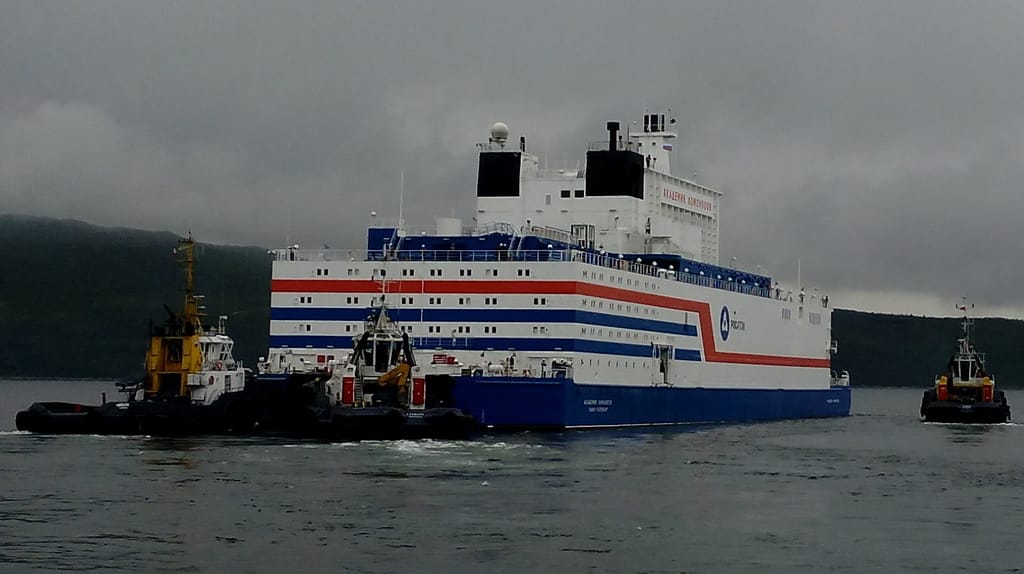
In a new white paper, Lloyd's Register and the British Ports Association (BPA) are encouraging port operators to get ready for the arrival of nuclear-powered vessels and microreactor power units, which could both accelerate port decarbonization.
Ports are increasingly reliant on wattage-hungry equipment, having invested in electrification as a way to reduce their carbon footprints. The need to feed electric cranes, battery-electric rolling stock, shore power stations and other big consumption sources can outstrip the supply available from the local electrical utility. At minimum, a big electrical draw like an electric-vessel charging point can force costly upgrades. Small-scale nuclear power, suggests LR, could supply the baseload power a port needs, on site and independent of the grid.
"Advanced nuclear has the potential to transform ports from energy consumers into resilient, low-carbon energy and industrial hubs. But realizing that opportunity will depend on more than technology alone. Ports need to further assess governance, proportionate assurance and early collaboration across the maritime and nuclear sectors," said Mark Tipping, head of offshore power-to-X at Lloyd's Register.
One single 100 MWe-sized small modular reactor could cover the power needs of a midsize port and several of its tenants, LR says. Extra benefits include power resilience during grid disruptions; process heat (waste heat) for use by nearby industries; and the economic benefits of hosting a new nuclear-power supply chain. The ports most likely to benefit from a reactor are those that need a lot of electricity, have tenants or neighbors who could use more power, and are constrained by a limited supply from the grid, LR said.
The regulatory frameworks for nuclear propulsion and modular reactors are still a limiting factor, LR assessed, and a long period of collaborative work will be needed to get the appropriate rules in place. In the interim, LR says, ports can get ready by assessing their future energy needs, their grid constraints, and their stakeholders' needs; and preparing for engagement with regulators, workers and local communities.
"Ports that begin proportionate planning now will be better placed to make informed investment decisions, maintain public confidence and influence the regulatory and commercial frameworks that will determine nuclear’s role in the next generation of maritime infrastructure," predicted LR and BPA.
Top image: Elena Dider / CC BY SA 4.0
Elementl Power Eyes $750 Million Deal for U.S. Nuclear Projects
U.S. nuclear developer Elementl Power has signed a preliminary agreement to establish a development partnership worth up to $750 million with a consortium led by South Korea's DS Investment Partners, as the company seeks to accelerate the construction of new nuclear power capacity in the United States.
Samsung C&T's Engineering & Construction Group is participating as a potential strategic investor, bringing international nuclear construction expertise to the proposed partnership.
The agreement, announced Monday, outlines plans to finance pre-construction activities for as many as three advanced nuclear projects, including regulatory permitting, grid interconnection and procurement of equipment with long manufacturing lead times.
The South Korean-led consortium would contribute part of the partnership's anticipated funding in exchange for a significant minority ownership stake. Additional financial and strategic investors could also participate.
One of the projects covered by the proposed partnership is Elementl's planned 1.5-gigawatt nuclear power facility in southeastern Ohio, which will use GE Vernova Hitachi Nuclear Energy's BWRX-300 small modular reactor technology.
The project, announced in June 2026, is being developed in Meigs County along the Ohio River. Elementl previously submitted an interconnection request to PJM Interconnection for the first 600 megawatts of the proposed facility's capacity.
The Ohio development forms part of a broader effort to deploy advanced nuclear reactors to meet rising U.S. electricity consumption, particularly as artificial intelligence infrastructure and data centers drive demand for reliable round-the-clock power.
Elementl has already attracted interest from major technology companies. In May 2025, the developer signed an agreement with Google to advance three potential U.S. nuclear sites, each targeting at least 600 megawatts of generating capacity. Google agreed to provide early-stage development capital under that arrangement.
The proposed South Korean partnership represents another step in Elementl's strategy of securing development financing before projects reach final investment decision, when substantially larger construction funding commitments would be required.
Samsung C&T could also provide access to established nuclear engineering and construction capabilities. The South Korean company has participated in major international nuclear developments, including the 5.6-gigawatt Barakah Nuclear Power Plant in the United Arab Emirates.
Elementl CEO Chris Colbert said the proposed partnership would strengthen the company's access to development capital while creating opportunities to draw on South Korea's nuclear supply chain and engineering expertise.
Elementl has appointed Macquarie Capital as financial adviser to explore participation by additional institutional and strategic investors.
The agreement remains preliminary and does not represent a final investment decision for any of the planned nuclear projects. Completion is subject to definitive agreements, regulatory approvals and other closing conditions.
By Charles Kennedy for Oilprice.com


