Tuesday, October 27, 2026

Obama mocks Trump’s trade war with ‘well-known evil empire’ Canada


Updated: er 25, 2026 


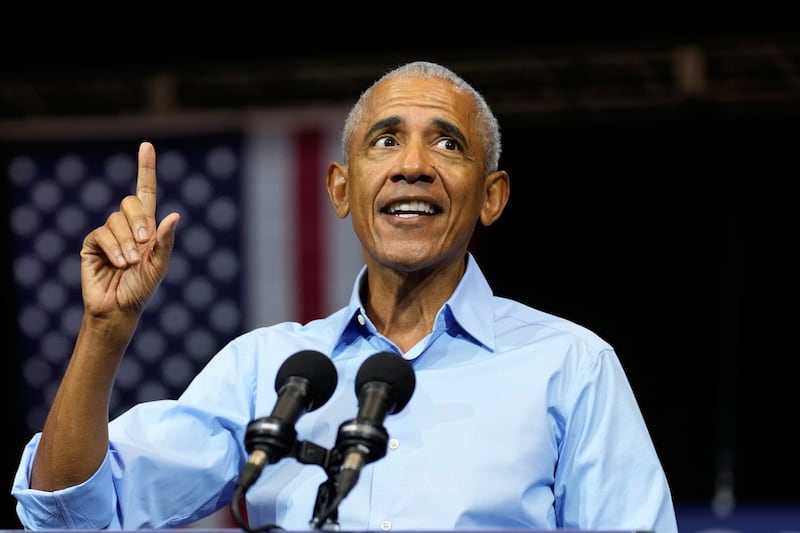
Former President Barack Obama, speaks to supporters during a campaign rally at Cass Technical High School Saturday, Oct. 24, 2026, in Detroit.(AP Photo/Paul Sancya)


Former U.S. president Barack Obama has turned Canada into the punchline of an attack on U.S. President Donald Trump’s trade policies, mocking his tariffs against one of America’s closest allies and warning that the measures are pushing prices higher for consumers.

Speaking at a Democratic campaign rally in Detroit on Saturday, Obama sarcastically described Canada as a “well-known evil empire,” before pointing out how unusual it was for Washington to be at odds with its northern neighbour.

The remarks come as Trump’s trade war with Canada remains a contentious issue ahead of next month’s U.S. midterm elections, with economic ties between the two countries particularly significant in Michigan, a major automotive manufacturing state where the automotive sector relies on deeply integrated supply chains connecting Canadian and American factories.


Obama argued that tariffs were working against Trump’s promises to bring down prices, particularly in an industry where manufacturing depends on parts moving across the Canada-U.S. border.

In his speech, Obama noted that building a vehicle involves components sourced from multiple locations in both countries, meaning tariffs can raise costs throughout the production process rather than simply making imported goods more expensive.

“He was warned,” Obama said of Trump’s tariff policy. “This will drive prices up. This does not lower prices.”

Obama also mocked the deterioration in relations between the two countries, highlighting Canada’s proximity to the United States and its cultural contributions.

“These are the people who gave us Martin Short … and maple syrup,” he said, describing Canadians as among the nicest people.

Former President Barack Obama speaks during a campaign rally for Democratic Ohio Senate candidate Sherrod Brown, Saturday, Oct. 24, 2026, in Cleveland. (AP Photo/Sue Ogrocki)

He suggested Trump’s repeated threats to annex Canada and make it the 51st U.S. state, alongside his trade measures, had helped fuel Canadian anger toward Washington.

The former U.S. president’s comments come amid a widening trade dispute that has affected a range of Canadian industries, including steel, aluminum, lumber and automotive manufacturing.

Canada has responded to U.S. trade measures with counter-tariffs, adding pressure to a relationship that supports businesses, workers and consumers on both sides of the border.

Obama also linked the tariff debate to the broader affordability challenge facing Americans, arguing that Trump’s approach had failed to deliver the lower prices he promised.

With files from The Canadian Press

‘Overnight, we’re losing 25% of our business’: U.S. Tariffs threaten thousands of Canadian flooring jobs

By Michael Serapio


Published: October 25, 2026


Flooring, soap industries say they believe they could lose around 25 per cent of their business thanks to Trumps’ latest tariffs. Michael Serapio reports.


OTTAWA - Jean-François Dufresne is worried about the future of his industry.

The president and CEO of Preverco, a major Canadian hardwood flooring producer, says new U.S. tariffs announced Friday by the Trump administration threaten to devastate the sector, putting thousands of jobs at risk.

“Overnight, we’re losing 25 per cent of our business,” Dufresne said.

“There is no way that we can pass those tariffs, and there is no way we can absorb them. So essentially, that business is gone overnight.”

On Friday, the Trump administration announced a major shift in the tariffs the United States applies on Canadian goods, removing several products off its targeted list and replacing them with new items.


Among the products now affected are shampoos, soaps, certain paints, cocoa products, carpets, and wood products that include flooring.

Dufresne says placing these tariffs on his industry puts thousands of jobs at risk. Jobs could be lost in a matter of weeks because without the United States, producers like him have limited markets for their products.

“The flooring industry represents many thousands of jobs. And then, when that goes down, it’s going to affect the sawmills, and that’s another bunch of thousands of jobs. And when that goes down, it’s going to affect the lumber guys, the ones who are, you know, harvesting the lumber,” Dufresne said. “And then the villages where these people work — the grocery store, the pharmacy, all these things will start to shut down because the entire region is based on that lumber industry.”
Political calculations in the U.S.

There is a sense of urgency, and panic, in the flooring industry over these new tariffs. In large part, this is because they were unexpected and have nothing to do with anything the industry may have done.

“Ultimately, there’s $3.4 billion of products being added, $3.4 billion of products being removed. So, it all comes out in the wash from an economic perspective as a whole,” said William Pellerin, an international trade lawyer and former deputy director for North America trade with Global Affairs Canada.

“We know a lot of this is being driven by Senator Susan Collins out of Maine, who is in a political battle for her re-election life,” Pellerin said. “So, a lot of the products that came off are products that they needed in that state and were causing affordability concerns. It’s all about tweaking at the margins, but it has a massive impact on Canada.”

It is an assessment backed up by Eric Ham, CTV News’ U.S. political analyst.

Maine’s economy is closely tied to Canadian trade, and U.S. tariffs have hurt industries in the state. With affordability concerns mounting and U.S. President Donald Trump’s approval ratings under pressure, Republicans risk losing ground there, observers say.

Ham says the White House is responding to those political pressures.

“This is all political,” Ham said. “What the president is finally recognizing is that not only are these tariffs, but the way the president has been treating Canada simply has not gone over well for him politically. So, the president is doing everything he can to try to help shore up his base and many of those very vulnerable Republicans. Which is why we see the president making this move to help one of those embattled Republican senators, Susan Collins of Maine.”


But the U.S. midterm elections are not Dufresne’s primary concern.

He wants to know what Ottawa will do to help Canadian flooring producers weather the tariffs. Dufresne has written to federal Finance Minister François-Philippe Champagne requesting a meeting.

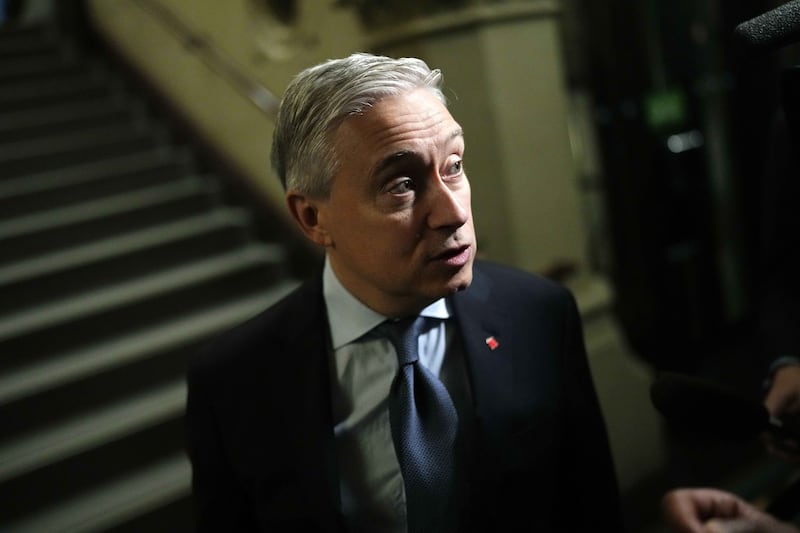
Minister of Finance and National Revenue Francois-Philippe Champagne makes his way to a meeting of the federal cabinet on Parliament Hill in Ottawa, on Tuesday, Oct. 20, 2026. THE CANADIAN PRESS/Justin Tang

He is also urging the federal government to impose a 100 per cent surtax on hardwood flooring imported into Canada from countries such as China.

In his letter, Dufresne describes the proposed measure as provisional and calls for it to take effect no later than Oct. 30, when the new U.S. tariffs are set to kick in.

Dufresne says Canadian producers need a clear indication that Ottawa is prepared to act before they can justify continuing to invest in their businesses.

“Unless there is something, a hope that the government is going to change the Canadian landscape, it doesn’t make sense to keep throwing money at this if it’s not going to go anywhere,” he said.

“And once it’s gone, it’s not going to come back.”

American steel — not overseas dumping — dominates Canadian imports, trade data shows


Published: , 2026


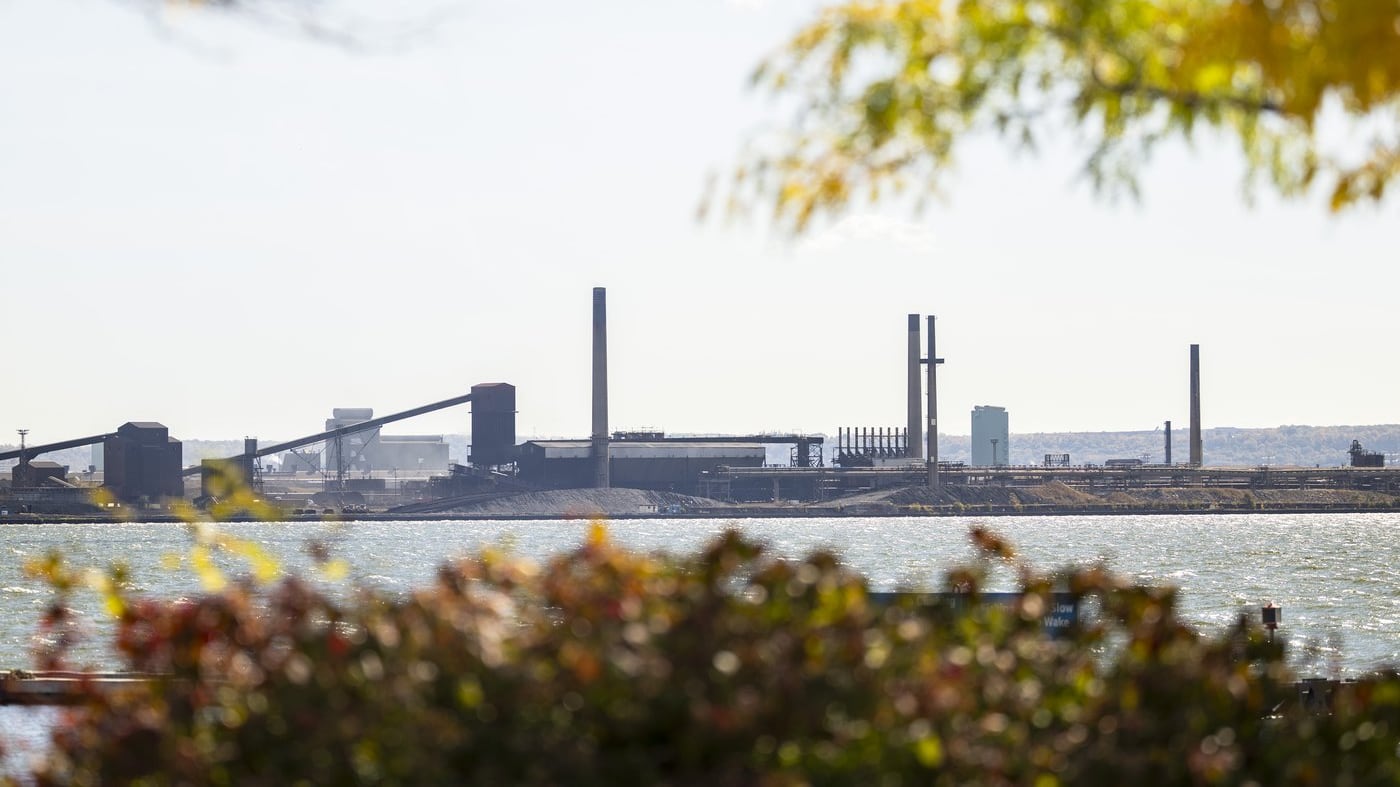
Stelco's Hamilton operations steel production facility is pictured from across the Hamilton Harbour in Burlington, Ont., on Friday, Oct. 9, 2026. THE CANADIAN PRESS/Nick Iwanyshyn

Federal trade figures show American steel makes up more than half of Canada’s imports of galvanized and coated steel, complicating Cleveland-Cliffs’ argument that an influx of cheap overseas steel is one of the top causes of Stelco layoffs.


Global Affairs Canada steel import data shows that 54.1 per cent of the country’s 625,726 tonnes of galvanized and coated steel sheet imports during the first nine months of 2026 came from the United States.


Stelco owner Cleveland-Cliffs has blamed the idling of its Hamilton, Ont., steel plant partly on what it describes as dumped overseas steel imports in Canada, arguing that Ottawa’s trade protections have failed to create a viable market for Canadian producers.


Colin Mang, assistant professor of economics at McMaster University, says the claim that offshore steel is being dumped into Canada does not reflect the latest trade figures.


He says much of the imported steel comes from the United States and that import prices of galvanized and coated steel have actually risen over the last several months.


Still, Mang says Canada continues to import large quantities of steel even as domestic demand weakens, putting additional pressure on Canadian producers already struggling with declining exports to the United States.


Cleveland-Cliffs CEO Lourenco Goncalves has argued that Canada’s galvanized steel market is too small to accommodate two domestic producers alongside what he called “an avalanche of imports.”


In an Oct. 9 letter to Industry Minister Mélanie Joly, Stelco president and general counsel Paul Simon blamed the company’s difficulties in part on the “market-depressing impact of dumped, offshore imports” and U.S. tariffs.


Simon acknowledged that Ottawa’s steel import restrictions, introduced in June 2025 and strengthened in December, had reduced some overseas imports.


But he argued they had done little to protect the cold-rolled and coated steel products manufactured at Stelco’s Hamilton finishing operations.


In response, Industry Minister Mélanie Joly pointed to federal measures restricting overseas steel imports in an Oct. 22 letter to Stelco, including tighter quotas introduced in December 2025. Imports from the United States and Mexico remain exempt from those restrictions.


This report by The Canadian Press was first published Oct. 27, 2026.

Brett Bundale, The Canadian Press


Strike curbs output at Canada’s largest copper mine

Teck Resources’ Highland Valley copper project in British Columbia. (Image of Highland Valley Copper. Courtesy of Teck.)

Teck Resources (TSX: TECK.B; NYSE: TECK) is operating its Highland Valley Copper mine in British Columbia, Canada’s largest, at reduced capacity after workers went on strike Saturday, the company said.

The walkout involves United Steelworkers Local 7619, which represents about 1,200 workers at the operation near Logan Lake, about 200 km northeast of Vancouver. All 944 members who participated in the strike vote supported a walkout, the union said in a statement.

Teck remains committed to securing a collective agreement that is “fair and reasonable for employees and supports the ongoing viability of the operation,” the company said in an Oct. 24 release.

Highland Valley is Canada’s largest copper mine, with an approved extension set to keep it operating through 2046. The strike comes as Teck pursues its merger with Anglo American, a combination expected to create one of the world’s five largest copper producers as demand for the metal grows from power grids, electric vehicles and data centres.

Wages issue

Shares in Teck Resources gained 1.6% to $84.01 apiece on Monday morning in Toronto as wider markets rose. The miner has a market capitalization of C$41.2 billion ($29.3 billion).

The production impact will depend on the strike’s duration, Teck said. Contingency measures prioritize safety and environmental management, it added.

The dispute centres on wages, pensions and staffing. The union is seeking improvements to pay and retirement benefits, arguing the mine is struggling to recruit and retain skilled workers.

Highland Valley produced 127,100 tonnes of copper in 2025, accounting for about 28% of Teck’s total output of 453,500 tonnes, according to the company’s annual production update.

The stoppage follows unsuccessful contract negotiations and the expiry of a 72-hour strike notice. The previous collective agreement expired Sept. 30, Teck said in its notice.

The union didn’t immediately respond to a request for comment outside regular business hours on Monday.

Teck says strike begins at Highland Valley Copper mine in British Columbia


Teck Resources (TSX: TECK.B) said on Saturday workers had started a strike at its Highland Valley Copper mine in British Columbia, with operations continuing at reduced capacity.

The impact on overall production remains dependent on the duration of the strike, Teck said.

The labour action follows the expiry of a 72-hour notice served by United Steelworkers (USW) Local 7619 after contract talks failed to produce a new collective agreement.


The United Steelworkers union represents about 1,200 workers at Highland Valley, according to its website.

In its strike notice, the union said it is seeking higher wages and improved pensions, arguing the mine faces challenges attracting and retaining skilled workers amid staffing shortages.

Teck said it remains committed to negotiating a new collective agreement.

The USW did not immediately respond to a request for comment.

(Reporting by Ananya Palyekar in Bengaluru; Editing by David Gregorio and Nia Williams)


Chouest Reaches Deal to Buy Canadian Offshore Firm Horizon Maritime

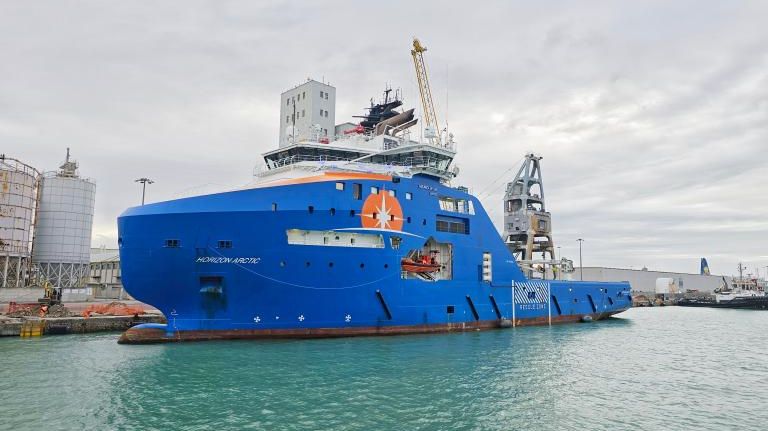
Horizon Arctic in Livorno, 2024 (Antonio Giordano / VesselFinder)

The Louisiana-based offshore services company Chouest Group has reached a deal to buy Canadian operator Horizon Maritime, provider of OSV services to Eastern Canada's offshore oil sector and customers overseas.  

The deal will keep Horizon's management team in place, ensuring continuity for clients and the retention of the company's culture and values, the firms said in a joint statement.

"We see immense value in Horizon's team, leadership and operational excellence. We look forward to working closely with Horizon's clients, building on their established reputation and growing the business," said Dino Chouest, the company's owner and CEO. "Combining Chouest's global fleet expertise and technology with Horizon's local footprint across Canada's vast coastlines opens up incredible growth potential."

Horizon was founded in 2015 to serve markets in Eastern Canada and acquired quality tonnage on the secondhand market during the offshore downturn. Today, Horizon has three large vessels - the AHTS Horizon Arctic (currently in the North Sea), the PSV Horizon Dragon (presently off Angola) and medium duty icebreaker Polar Prince (last seen on AIS in Canada). The company also operates three small truckable tugs built for utility and cargo operations in icy waters. It also operates a ship-assist towage business in partnership with Kotug as Kotug Canada. 

Chouest sees opportunities for expansion along Canada's East Coast, West Coast and remote Arctic reaches. It also wants to bring its full service portfolio into the Canadian market, including marine transportation, marine engineering, advanced technology and subsea services. "This is an opportunity to build on what we have created and take Horizon Maritime into its next phase of growth," said Horizon co-founder Sean Leet. 

Canada Considers a Subsea Power Cable to Europe

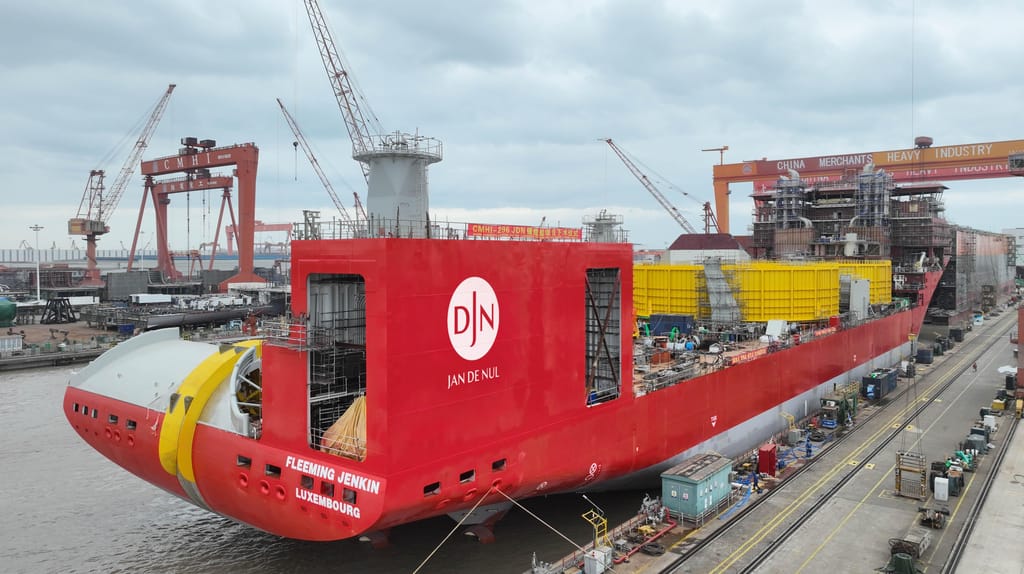
Jan de Nul recently completed a study on the proposed NATO-L transatlantic power cable, which would be laid by a vessel like Fleeming Jenkin, above (Jan de Nul file image)

Canada’s prime minister has expressed interest in exporting Canadian energy such as LNG to Europe, along with renewable energy. Other recent discussions have focused on a unique possibility: an undersea electric power cable extending across the North Atlantic to Northern Europe.

Introduction

The concept of transporting energy under the ocean dates back decades. Earlier examples of the concept involved undersea pipelines carrying natural gas and oil. While the first undersea electrical power cables carried telecommunications signals (telegraphs), modern undersea electrical power cables carry grid-scale electrical energy. Such cables are widely used to transmit electric energy from offshore wind turbines to shore-based power grids.

Discussions dating back some 15 years focused on the possibility of transmitting electric power from geothermal sources in Iceland to power grids located in Scotland and England.

During that period, Canada had commissioned a study on domestic coastal kinetic ocean energy potential. Every 24 hours, lunar gravity pulls several hundred cubic miles of ocean water from the North Atlantic into Hudson Bay and into the Bay of Fundy which has the highest tides in the world. Present technology can only convert a small portion of the hydrokinetic energy to electrical power. Several hundred uninhabited small islands located along the eastern side of Hudson Bay and the eastern side of Ungava Bay have potential to support wind turbines, with additional potential for offshore wind energy.

Northern Summers

Western Europe has endured several hot summers where demand for electric power exceeded electrical generating capacity. The combination of European wind and solar energy conversion has routinely been unable to meet peak summer demand for electric power. A transatlantic undersea electric power cable capable of transmitting 20 to 50-megawatts of electrical power offers potential for relief to overstressed European grids, providing additional power to run air conditioning and building cooling systems.

Transatlantic Power Cable

The development of geothermal electrical energy at Iceland, with undersea electric power cables extending to the UK and Europe, could provide a basis to extend an undersea power cable from Eastern Canada to southern Greenland, then to Iceland.

An undersea power cable connecting Iceland to the UK and Europe would need to carry the combined electrical energy coming from both Eastern Canada and Iceland. There is future potential to transmit a mix of hydroelectric power, ocean tidal power conversion, wind energy conversion and nuclear power between Canada and Western Europe.

During overnight hours after midnight with minimal market requirement for electric power across eastern Canada, the AM peak requirement for electric power would begin across the UK and Western Europe. Electric power from Canada and Iceland would assist UK and European electric power utilities in providing peak period electric power their customers.

When the midnight and overnight requirement for electric power is minimal across Europe, Eastern Canada and Northeastern United States would gain access to European power generation capacity during the Northeastern American and Eastern Canadian peak evening requirement for electric power.

Power Cable Economics

A transatlantic electric power cable would enhance the economics of electric power generation in both Eastern Canada/Northeastern United States and Western Europe. Excess wind power generation for which there is minimal demand in one region could be transmitted to another distant region. Nuclear power stations operate best when run at constant power output. An east-west undersea power cable allows for transmission of off-peak nuclear power in order to satisfy electric power demand in a distant region. Peak tidal power generation can occur when local demand for power is minimal, with peak demand for electric power across the Atlantic.

The usable service life of the undersea cable system would greatly exceed the usable service lives of electrical battery-based energy storage by several orders of magnitude. Electrical storage batteries incur a ‘round-trip’ loss of efficiency, with up to 30% of electrical energy being dissipated as heat. A cable operating on ultra-high voltage with low current would reduce loss of energy as heat, delivering more electrical energy to the market compared to a system that is heavily dependant on grid-scale chemical-battery energy storage or other methods – like compressed air energy storage, which also incurs a massive loss of energy as heat.

Ocean Tidal Energy

The conclusion of high tide across Hudson Bay causes a massive river of seawater to flow east through Hudson Strait, reaching peak velocity in the vicinity of the Button Islands where kinetic energy potential is estimated to exceed 2,000 megawatts. Turbulent seawater in the channels between the Button Islands generate extreme mechanical forces that require specially reinforced kinetic turbines of extreme strength, capable of cost-competitive operation in severe water current conditions. Turbine housing and support structure would need to deflect the occasional iceberg while ensuring that the turbines remain operational.

Further south, there is potential to build tunnels deep under the isthmus between the eastern end of the Bay of Fundy and the Gulf of St. Lawrence. Turbines installed in the tunnels would generate repeated daily cycles electric power, courtesy of the difference in water height across the isthmus.

There is also potential for Quebec to generate additional hydroelectric power, for export to Europe. The installation of wind turbines along the eastern side of Hudson Bay will slightly cool the humid air that winds blow toward Quebec, potentially increasing rainfall over hydroelectric dam watershed areas.


Conclusions

A future transatlantic undersea electric power cable connecting between Canada and Europe via Iceland and Greenland incurs both merit and drawbacks. It would make for more productive use of off-peak electric power while reducing the expense and energy loss of energy storage technologies. The cable would enhance the economics of ocean power conversion, nuclear power, hydroelectric power from Quebec and Labrador, and wind energy conversion. However, Canada and the USA would need to invest in developing new electrical power generation capacity for domestic demand, with potential to export future off-peak power over to Europe.

The opinions expressed herein are the author's and not necessarily those of The Maritime Executive.


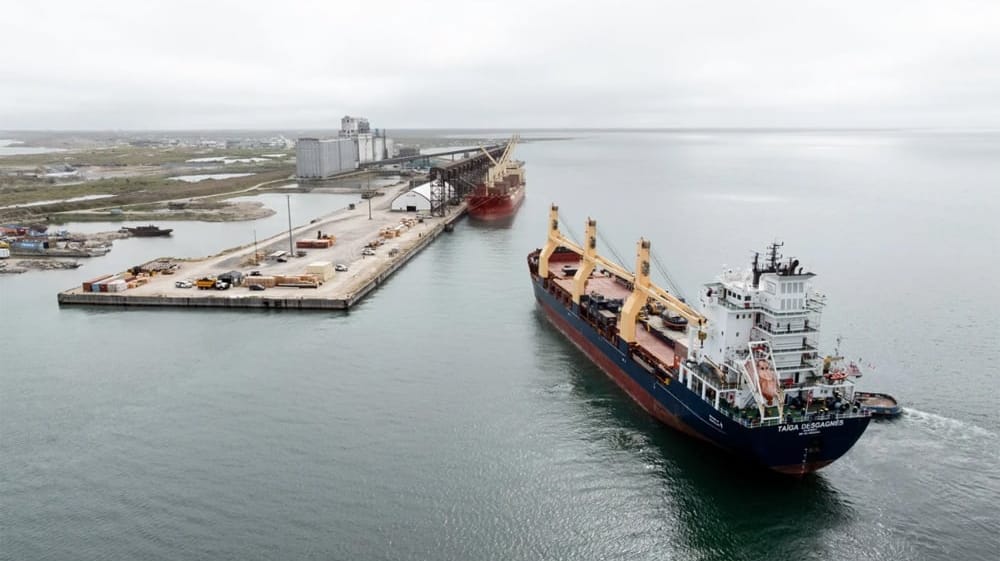
DP World Joins Efforts to Develop Trade Through Canada’s Port of Churchill

Canada Port of Churchill
Port of Churchill is experiencing a resurgence including shipping its first grain in six years (Arctic Gateway Group)

DP World has entered into a new partnership with the operators of Canada’s northern Port of Churchill, along with CentrePort Canada, which operates Canada’s largest tri-modal inland port and Foreign Trade Zone. It is the latest in a series of steps supported by the provincial and federal government to develop Manitoba’s port as Canada seeks to build new international trade opportunities.

Under the terms of the agreement, Arctic Gateway, which operates the Port of Churchill and the Hudson Bay Railway, will work with DP World and CentrePoint for the potential development of an integrated transportation corridor. The goal is to link Manitoba and central Canada’s manufacturing and natural resources through the Port of Churchill to DP World’s global logistics network. Today’s agreement focuses on port operations, logistics services, and the future development of the network.

“Canada is building stronger, more resilient trade corridors that connect Canadian businesses to markets around the world,” said Steven MacKinnon, Minister of Transport and Leader of the Government in the House of Commons. “This agreement between the Arctic Gateway Group, CentrePort, and DP World is an important opportunity to strengthen connections between northern, inland, and global transportation networks, diversify our routes, and create new opportunities for Canadian exporters.”

Port officials highlight the steps made to revitalize its operations. They note that the Port of Churchill is shipping the most diverse range of commodities in its history. After making investments to restore the railroad and port facilities, the port is handling critical minerals, grain, and potash and providing an important location for shipping northern supplies to the Nunavut First Peoples community. 

In September, the Port of Churchill handled its first grain shipments since 2020. Approximately 30,000 tonnes of Canadian durum wheat supplied by Saskatchewan-based AGT Foods was loaded at the Port of Churchill and shipped to customers in Europe. The Arctic Gateway Group says it continues to be in active conversations about driving private sector investments. It notes that studies have confirmed the Port of Churchill can support year-round operations with the current generation of ice-strengthened vessels.

CentrePoint reports it has attracted approximately C$1.5 billion in private investment. It reports that over 1,000 companies have developed in the region and that there is more than 3.5 million square feet of industrial space built or under construction in the past eight years.

DP World is further enhancing its reach across Canada. It says it already handles more than one million TEU annually in Canada. It operates at Port Rupert in the West and is involved in the expansion of the Port of Montreal.

The federal government supports the development and is encouraging investment. It is looking to fast-track the expansion of the port as it builds international opportunities.