Saturday, November 07, 2026

CANADIAN WOLVES* IN U$A

Outrage Over ‘Depraved’ Idaho Program Paying Hunters Thousands of Dollars to Kill Wolf Pups

“Let’s call this what it is,” said one conservationist. “It’s a goddamned bounty.”



Canadian wolf pups play in their enclosure at the Berlin Zoo in Germany in 2013.
(Photo by Britta Pedersen/picture alliance via Getty Images)

Brett Wilkins
Nov 06, 2026

Idaho officials paid hunters $24,000 to kill a dozen newborn wolf pups this spring, including what appears to have been at least one entire litter massacred in or near its den, according to Friday reporting that has sparked outrage among conservationists and wildlife advocates.

The killings—which were first reported by the investigative news site Public Domain—took place in late April in Idaho’s northern panhandle. Three hunters received reimbursements of $2,000 per wolf through a state-backed program intended to reduce the Idaho’s wolf population in service of the livestock industry and big game hunters.

“It’s an abomination,” said Brooks Fahy, executive director of the conservation group Predator Defense. “Let’s call this what it is—it’s a goddamned bounty.”


“What kind of receipts are you going to show for 12 pups who weigh 12 pounds?” she asked. “It’s ridiculous on its face, and the state of Idaho should be ashamed.”

The records obtained by Public Domain describe the killings as “still stalk,” suggesting hunters spotted and approached the animals before shooting them. But wolf experts questioned that account, suggesting the hunters may instead have located dens and removed the pups.

In one instance, a full litter was apparently massacred in or near its den. Doug Smith, a biologist who formerly oversaw Yellowstone National Park’s wolf program, warned in an interview with The Guardian that killing entire litters can fracture or dissolve packs.

Contrary to popular belief, wolves typically do not protect their young; they usually flee about 50 yards and bark.

“It’s easy to do,” Smith said of taking a whole litter of pups. “If you can’t reach them, you dig them out with a shovel.”

“Wolves breed once a year, so the birth of the pups is a very important thing,” Smith said. “The pack’s life hinges on those pups. They’re the glue that holds the pack together.”

The killings were made possible by Idaho’s increasingly permissive wolf management regime. In 2021, Republican lawmakers passed Senate Bill 1211, which established year-round wolf trapping on private property, eliminated limits on the number of wolf tags an individual could purchase, expanded permissible killing methods, and authorized private contractors to kill wolves.

That same year, Idaho wildlife officials signed an agreement with the Foundation for Wildlife Management, which reimburses hunters and trappers for expenses associated with killing wolves. Covered costs include fuel, ammunition, vehicle payments, and outdoor clothing. The program is financed through a combination of public money, hunting license revenue, and private contributions.

The state’s 2023 wolf management plan called for reducing the population to approximately 650 animals during the spring, when wolf numbers typically peak. Idaho’s estimated population nevertheless remained above 1,100 this year, down from a peak of approximately 1,600 in 2019.

The Idaho controversy comes amid broader concerns about the future of gray wolves in the United States. In September, President Donald Trump signed an executive order directing the Interior Department to consider removing federal Endangered Species Act protections for gray wolves across the continental United States.

Wolves remain federally protected in most of the Lower 48 states, while Idaho, Montana, and Wyoming have authority over their populations.

Those are the only three states that received the nation’s lowest grade—a “D”—on the conservationist group Team Wolf’s “State Wolf Management Report Card.”


“Trump says you can go out and kill wolves now—how many people took him at his word?” Fahy told Public Domain. “These are sentient creatures. They’re basically dogs. They form family bonds. They mate for life, pretty much. They have a pack structure that is very similar to our social structure. How could we be so wantonly cruel to something that is so similar to us?”


* US WOLVES ORIGINATED FROM CANADA 
IN A REPOPULATION DRIVE TWO DECADES AGO


Time for a Green New Deal 2.0

With Trump’s repudiation in the 2026 midterm elections, it is time to end Green New Deal hushing and instead consider what a Green New Deal revamped for today should be.


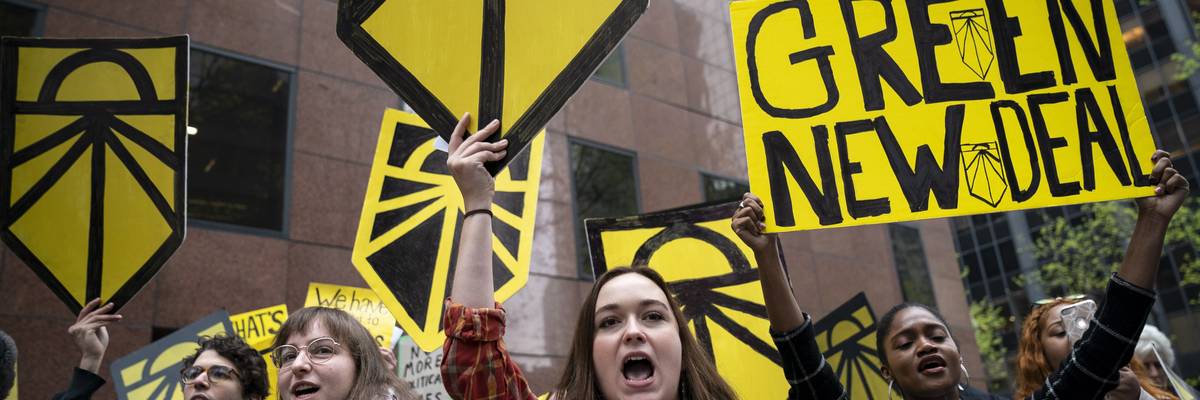
Activists rally in support of proposed Green New Deal legislation outside of Senate Minority Leader Chuck Schumer’s (D-NY) New York City office, April 30, 2019 in New York City.
(Photo by Drew Angerer/Getty Images)

Jeremy Brecher
Nov 06, 2026
Common Dreams


The overwhelming repudiation of President Donald Trump in the 2026 midterm elections may make it possible to constrain his worst depredations. But that will hardly be enough to solve the multiple crises facing the American people or the world. The Green New Deal represents the best vision we have for addressing those realities, but it needs to be updated and expanded for the world we face today. We need a “Green New Deal 2.0.”

Trump’s pet whipping boy was the Green New Deal. His excoriating attacks led many Democratic politicians to engage in “Green New Deal hushing.” With Trump’s repudiation in the 2026 midterm elections, it is time to end Green New Deal hushing and instead consider what a Green New Deal revamped for today should be.

The Green New Deal project has been promoted by a wide array of social forces. It has brought together people operating inside political systems with social movements organizing outside of them. It has used both the institutions of representative democracy and the direct-action power of the people to implement its objectives. The Green New Deal 2.0 will draw on comparable sources of power.

The Green New Deal has proven perennial because it addresses the basic problems faced by our people and planet.

No doubt there are many in both the Republican and Democratic parties who would like to see the Green New Deal where Trump believed he consigned it—in the grave. But the Green New Deal has proven perennial because it addresses the basic problems faced by our people and planet. It is a project that in all its varied manifestations takes the necessity for climate protection as the basis for a broad program for social reconstruction—a visionary program designed to protect the Earth’s climate while creating good jobs, reducing injustice, and eliminating poverty. It will rise again transformed.
The Heritage of the Green New Deal

In 2008, in the depths of the Great Recession, United Nations Secretary-General Ban Ki-moon called for “investment that fights climate change, creates millions of green jobs, and spurs green growth.” He said what the world needs, in short, is a “Green New Deal.”

The project of a Green New Deal rapidly picked up momentum around the world. Green New Deals became official policy in many countries, endorsed by the UN, the international trade union movement, and even by the International Monetary Fund. China, India, and the European Union began implementing some of the policies envisioned by the Green New Deal. But within a couple of years a global counterattack demanding austerity stymied much of the drive for massive investment to implement climate protection and economic justice. The Green New Deal appeared dead.

Even in the Trump era the Green New Deal has continued as a force in American life—from below.

The Green New Deal was reborn a decade later when the Sunrise youth climate movement held a sit-in in the office of US Democratic House leader Nancy Pelosi (Calif.) demanding she support a resolution for a Green New Deal proposed by newly elected Rep. Alexandria Ocasio-Cortez (D-NY). Drawing on the proposals a decade earlier for a Global Green New Deal, the resolution called for a “new national, social, industrial, and economic mobilization on a scale not seen since World War II and the New Deal.” The Green New Deal amassed support among congressional representatives, progressive organizations, and young people across the country. A poll found that more than 80% of registered voters “strongly support” or “somewhat support” the general concepts behind a Green New Deal. A poll five years later found that “the Green New Deal is still incredibly popular.”

Notwithstanding its popularity with the public, the Green New Deal met implacable opposition from the fossil fuel industry and hostile forces in both the Democratic and Republic parties. Upon his election as president, Trump declared the Green New Deal dead and proceeded to devastate both climate protection and social justice.

Nonetheless, even in the Trump era the Green New Deal has continued as a force in American life—from below. It has continued to be implemented through little-noticed initiatives by community groups, unions, city and state governments, tribes, and other nonfederal actors pursuing the climate protection and social justice goals of the Green New Deal. I have described it as the “Green New Deal from Below.”


The Green New Deal 2.0

The Green New Deal 2.0, like earlier Green New Deals, is a project to abolish the extraction and burning of fossil fuels while rapidly expanding equality, justice, and well-being. To do that it will have to learn from the earlier Green New Deals but also develop far beyond them. It will be aided in doing so by the radical reduction in the cost of fossil free energy and the ways in which energy is used—the Greentech Revolution. But the Green New Deal 2.0 will also have to function within—and help transform—the period of American dysfunction and global disorder that has come to be known as the Polycrisis.

To succeed, the Green New Deal 2.0 will need to be multilevel: local, state, regional, national, and global. From the start it needs to be global in its perspective and to transcend national borders in many of its actions. But it will initially have to be built from the bottom up, community by community, jurisdiction by jurisdiction. Eventually it will need to control and wield the power of national governments.

Achieving the goals of the Green New Deal 2.0—abolishing fossil fuel extraction and burning while rapidly reducing inequality, injustice, and deprivation—will require simultaneous action at many levels from local communities to global institutions.

The Green New Deal 2.0 won’t happen all at once; it will have to develop over time. In the US the Green New Deal 2.0 may start with an Emergency Green New Deal addressing the catastrophe now being experienced by the American people and its impending intensification. This catastrophe includes the crises of food, housing, energy, health, public safety, climate, inequality, democracy, and the rule of law—a veritable American Polycrisis. In some ways it resembles the “Yeltsin Era” that followed the collapse of the Soviet Union when systems from employment to food to healthcare to housing to the rule of law broke down; male life expectancy at birth fell by six years just between 1990 and 1994.

There is little likelihood of immediate federal solutions to this catastrophe. The newly-elected Congress has an important role to play in limiting Trump’s freedom of action, proposing alternatives, and supporting popular mobilizations. But as long as Trump remains in office, he can veto legislation and wield the powers of the executive branch. Addressing the crises we face requires people organizing themselves from below to implement an Emergency Green New Deal that will put people to work doing the things are that are necessary to ensure survival and well-being in the face of the American Polycrisis.

Achieving the goals of the Green New Deal 2.0—abolishing fossil fuel extraction and burning while rapidly reducing inequality, injustice, and deprivation—will require simultaneous action at many levels from local communities to global institutions. It will constitute an era of social reconstruction.

Elements of the Green New Deal 2.0

Here are some of the ways in which the Green New Deal 2.0 can incorporate but go far beyond previous Green New Deals:

The Greentech Revolution: Protecting the climate by replacing fossil fuels with fossil-free energy was the central pillar of the original US Green New Deal. Since then, climate catastrophe has truly arrived. But the global Greentech Revolution has created a new basis for moving to fossil-free communities, countries, and world. The Green New Deal 2.0 will accelerate the timetable for the transition to climate safety, while utilizing it as the pivot for other transformations.

Jobs: The original US Green New Deal resolution noted a “four-decade trend of wage stagnation, deindustrialization, and anti-labor policies.” It proposed to use climate mobilization as a vehicle to transform the world of work through high-quality union jobs, worker rights, labor standards, and a “job guarantee” that would ensure a job for every worker who wants one doing the work that is necessary to protect the climate and create a more just society. Since then, inequality has exploded and artificial intelligence (AI) threatens to eliminate millions of jobs and turn millions of others into excruciating daily oppression. The Green New Deal 2.0 will expand the jobs programs proposed by the Green New Deal, ensure that there are good jobs for those affected by AI, and empower workers to organize and act collectively on the job.

Affordability: Rising prices for the necessities of life are a crucial concern for working people today. The Green New Deal 2.0 will address this from the start by replacing fossil fuels with far cheaper fossil-free energy, reducing the price of everything that uses energy—that is to say, everything. It will also make massive investment in energy-conserving housing, food production, and other necessities of life that will both protect the climate and reduce the cost of living. It will tax the rich to reduce inequality and provide resources for the 99%.

Human Needs: The Green New Deal specifically addressed the unmet needs for housing, education, healthcare, and other necessities of life as part of the transition to a climate-safe society. Recent bills in Congress have proposed Green New Deals for housing and education. The Trump administration has devastated all aspects of our already inadequate social provision and is taking aim at what’s left. The Green New Deal 2.0 will establish new systems of social provision that empower local communities while providing the resources necessary to meet individual and social needs.

Justice and Equity: The original Green New Deal resolution proposed to use its programs to “promote justice and equity by preventing current and repairing historic oppression” of “indigenous peoples, communities of color, migrant communities, deindustrialized communities, depopulated rural communities, the poor, low-income workers, women, the elderly, the unhoused, people with disabilities, and youth.” Today the further degradation of all these groups is being actively promoted by the Trump administration and its supporters in all spheres of life. The Green New Deal 2.0 will use resources, policies, democratic processes, and law to reverse both historic and new forms of injustice and inequality.

Democratization: The original US Green New Deal was defeated in large part by the inordinate wealth and power of the fossil fuel industry and its power base within both Republican and Democratic parties. Since then, the Trump administration and the forces of plutocracy have further degraded our democracy and empowered the billionaire class. The initial US Green New Deal resolution called for “ensuring the use of democratic and participatory processes that are inclusive of and led by frontline and vulnerable communities and workers to plan, implement, and administer the Green New Deal.” The Green New Deal 2.0 will rebuild democracy from the bottom up. That includes establishing democratic institutions at the grassroots and establishing genuine political equality for all people. It will also extend democracy within workplaces and the economy. Donald Trump has greatly expanded the role of government in the economy for the worst of purposes, to enrich kleptocrats and war contractors. The Green New Deal 2.0 will utilize that expansion of powers to provide planning and investment to serve the common good.

Constraining Corporations and Technologies: The original New Deal of the Great Depression aimed to control the anti-social behavior of “malefactors of great wealth.” The startling growth of hyperscale data centers controlled by a handful of tech billionaires has forced new attention to the need to constrain corporations and their technology. To realize its objectives, the Green New Deal 2.0 will have to go far beyond previous green new deals in halting the anti-social behavior of today’s malefactors of great wealth, the corporations they control, and the destructive technologies they are seeking to impose. It will need to implement the “precautionary principle” that forbids introduction of new technologies until they are proven safe. More broadly, it will need to make the actions of private economic entities accountable to the public and those they affect.

Global Cooperation: Neither the climate nor the economy can be fixed at a purely local or national level. The growing chaos of the global Polycrisis, with its breakdown of international cooperation, has led to a collapse of climate protection, proliferating warfare, economic chaos, and an inability of any nation to provide security and well-being for its people. The Green New Deal 2.0 will treat a worldwide Green New Deal as a common project of the world’s people and will make cooperation among movements and nations a primary part of its local and national programs. It will promote mutually managed international trade in the interest of protecting the climate and the world’s people rather than either economic nationalism or unconstrained globalization.

The elements of the Green New Deal 2.0 will rapidly improve the lives of workers, communities, and ordinary Americans. The Greentech Revolution will not only retard climate devastation, it will reduce pollution and reverse soaring energy costs. Putting millions of people to work addressing human and environmental needs will not only provide quality employment but rapidly expand provision of food, housing, medical care, public safety, and other necessities of life. Rebuilding democracy from the bottom up will offer protection against the agressions of authoritarian government and promote our ability to control our common life.

By itself the Green New Deal 2.0 won’t quell the global Polycrisis. But working with other forces it can begin to constrain Polycrisis dynamics while also starting to transcend them. The rapid reduction in burning fossil fuels and the transition to fossil-free energy can slow and eventually reverse the destruction of the Earth’s climate. The reduction in inequity and injustice, the meeting of social needs, the provision of full employment, and the constraining of corporate power all address the inequality promoted by right-wing policies and the Polycrisis. The drive for international cooperation can help begin to bring war making, war crimes, nihilistic geopolitics, and global plunder under control and start to develop an alternative world order


Our work is licensed under Creative Commons (CC BY-NC-ND 3.0). Feel free to republish and share widely.


Jeremy Brecher
Jeremy Brecher is a historian, author, and co-founder of the Labor Network for Sustainability. His book, "Climate Insurgency: A Strategy for Survival," or free download at his personal website. His other books include: "Save the Humans? Common Preservation in Action" (2020), "Strike!" (2020), and, co-edited with Brendan Smith and Jill Cutler, "In the Name of Democracy: American War Crimes in Iraq and Beyond" (Metropolitan/Holt).
Full Bio >
Reviving Solar for All Could Save US Families Over $450 Million in the First Year

“Two federal courts have now said EPA broke the law when it terminated Solar for All grants. Instead of keeping families in the dark, EPA should take this opportunity to help a million households cut their electricity bills.”


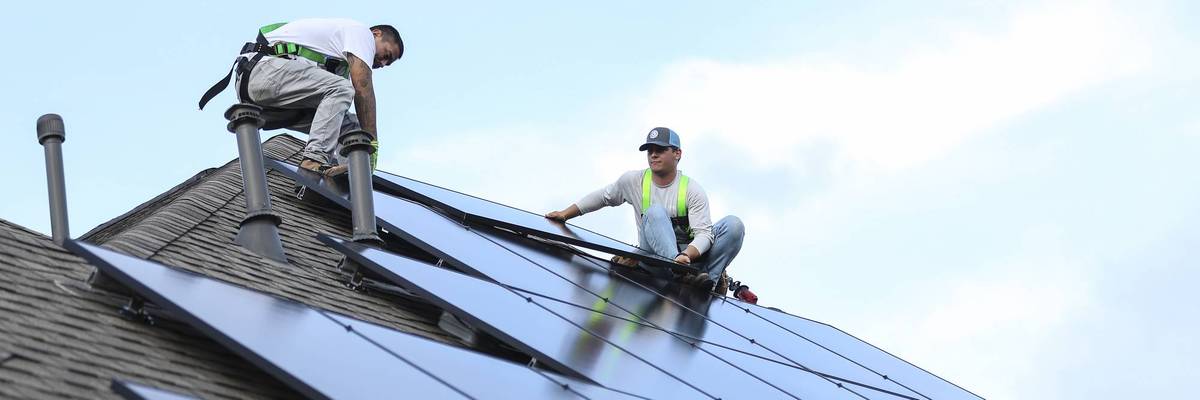
Daniel Molina and Dion Worrel of Texas Solar Outfitters install solar panels on a home on December 17, 2021 in Cypress.
(Photo by Karen Warren/Houston Chronicle via Getty Images)


Jessica Corbett
Nov 05, 2026
COMMON DREAMS

In the wake of recent court rulings against President Donald Trump’s administration and voters ending his Republican Party’s congressional majorities, the Environmental Protection Network on Thursday published an analysis that highlights how swiftly reviving a federal solar power program could save US households hundreds of millions of dollars in the first year alone.

EPN is an organization made up of former US Environmental Protection Agency officials, some of whom drafted the new brief, “Restore Solar for All: EPA Could Help a Million Families Cut Their Electric Bills by 25%.”

Solar for All is a $7 billion grant initiative created under the Greenhouse Gas Reduction Fund from former President Joe Biden’s Inflation Reduction Act. Since returning to office last year, Trump has aimed to serve the climate-wrecking fossil fuel industry and waged a war on renewable energy. His EPA terminated the program’s grants in August 2025, sparking legal battles.

On September 18, Trump-appointed US Judge Mary McElroy in the District of Rhode Island ruled that the EPA’s termination of Solar for All violated the Administrative Procedure Act. On September 22, Judge Tanya Sue Chutkan, an appointee of former President Barack Obama in the District of Columbia, issued a similar ruling. Those decisions present an opportunity to restart the program.

“Families are skipping groceries to keep their lights on, yet restarting Solar for All could ultimately deliver more than $450 million a year in electricity bill savings,” said EPN executive director Michelle Roos in a statement. “Two federal courts have now said EPA broke the law when it terminated Solar for All grants. Instead of keeping families in the dark, EPA should take this opportunity to help a million households cut their electricity bills.”

Specifically, EPN projects first-year savings of $458 million, or about $456 per household, which could grow over time. The report breaks down the number of families reached and how much they would each save by state. It also details the locations and average savings of the over 74,000 tribal households reached by the program.

The Trump administration’s appeal deadline is approaching, and the brief warns that if the legal fights push a restart past December 31, 2027, it “could permanently deny approximately 410,000 households almost $500 per year in bill savings.”

“Once the deadline passes, the commercial solar credit is gone for every system not yet operating,” the report explains. “Absent
subsequent action from Congress to restore the tax credit, the grant needed per household rises by about 70%, from about $7,000 to about $11,800.”

“The same $7 billion would then reach about 594,000 households, roughly 410,000 fewer than a prompt restart,” the publication continues. “Total first-year savings fall from about $458 million to about $271 million. The families who do participate still save about 25%, but far fewer families benefit.”


The report also emphasizes how needed the larger savings are as Trump’s policies, from his so-called One Big Beautiful Bill Act and support for energy-sucking artificial intelligence data centers to his illegal war on Iran, drive up electric bills.

Even before Trump began bombing Iran in February, the average annual US electric bill had increased by $110, or 6.4%, last year, according to an analysis from Democrats on the congressional Joint Economic Committee.

The report notes that “a recent Consumer Reports survey showed 1 in 5 American families are skimping on groceries to pay their power bills, and roughly 21.5 million US households are behind on their energy bills.”

In addition to reviving Solar for All, EPN is calling on the EPA to take various related actions, which include approving work plan revisions within 30 days, extending a temporary waiver for domestically assembled modules, granting no-cost extensions for the months lost, prioritizing shovel-ready projects, and restoring staff in the office that runs the program.

The group also urged the US Department of the Treasury to give grantees certainty on tax credits, plus encouraged grantees to move quickly on projects and prioritize bill savings for low- and moderate-income households.

Michelle Moore, CEO of Groundswell, which received a $156 million Solar for All grant, said in EPN’s statement that it “stands at the ready to restart our Southeast Rural Power Solar for All program,” and “I’m confident we could reach thousands of families across the Rural South with deep bill savings by this time next year.”
The 2026 Election Gives Winners a Mandate to Act Big on Climate

Over the last two years, we’ve witnessed the most corrupt, pro-fossil fuel, anti-environmental administration in US history. Last night, voters overwhelmingly rejected those priorities and demanded a total system reset. It’s time to deliver.


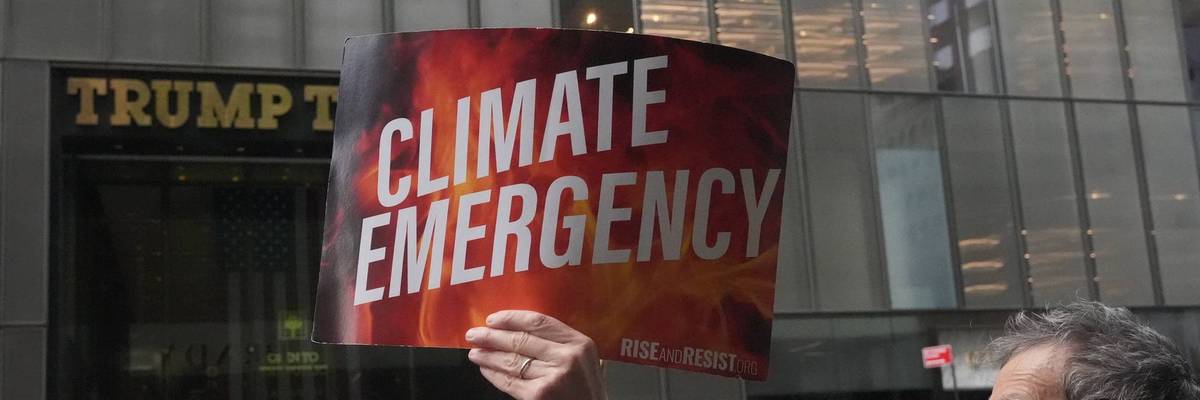
Demonstrators gather outside Trump Tower on 5th Ave to raise awareness about climate change, environmental protection, and sustainability, and call for stronger policy action and accountability during an Earth Day Protest in New York City on Wednesday, April 22, 2026.
(Photo by Selcuk Acar/Anadolu via Getty Images)

Jamie Henn
Nov 05, 2026
Common Dreams

Where does Tuesday night’s historic election leave the climate movement? The answer is on the cusp of a huge opportunity—if we know how to seize it.

Two of the issues that voters cared about most in this election—energy prices and corruption—present climate advocates with the perfect framework within which to push exactly the sort of bold agenda we need for this moment in the climate fight.


Let’s take energy first. Above all else, this was a gas prices election. It’s hard to imagine the sort of Democratic blowout we saw last night if gas and diesel prices weren’t the highest they’ve ever been for any election day in US history. The same is true for electricity bills. While not as mediagenic as the price ticking up on the pump, utility bills were top of mind for voters. No surprise considering the impact that they have on a family’s bottom line: it’s easier to cut back on miles driven than the need to light and heat your home.

From utility reform, to new investments in public transit, to rapidly scaling up renewables, Democrats have a mandate to roll out a historic clean energy package that will cut costs and pollution at the same time.

In response, Democrats up and down the ballot made energy affordability a core campaign issue. On Tuesday, voters rewarded them for it. In election after election, Democrats who spoke clearly and passionately about the need to drive down rates, hold big utilities accountable, and build more clean energy won overwhelmingly. The same was true for energy cost-related ballot initiatives, like in Michigan, where over 80% of voters supported an initiative to ban their utility from making political donations that many rightfully saw as bribes for politicians to keep rates high. Down ballot, Democrats also won important seats on the Georgia Public Service Commission, the Arizona Corporation Commission, and the Texas Railroad Commission, which all have crucial decision-making roles in those states when it comes to prioritizing renewables over fossil fuels.

These wins set up Democrats at all levels to embrace the most ambitious and sweeping clean energy affordability agenda possible. Voters are demanding that politicians drive down rates, and building more clean energy is the fastest and cheapest way to do it. From utility reform, to new investments in public transit, to rapidly scaling up renewables, Democrats have a mandate to roll out a historic clean energy package that will cut costs and pollution at the same time.

But voters want more than just affordability—they want accountability. Corruption emerged as a major issue in this election, from President Donald Trump and his family’s self-dealing, to Big Tech’s backroom deals to push AI data centers, to Big Oil’s profiteering off the War in Iran and invasion of Venezuela. People are rightfully furious at a system that they see enriching a small circle of billionaires (including all those Big Oil CEOs) at the public’s expense.

That anger is the rocket fuel Democrats need to pursue an aggressive agenda that goes after Big Tech, Big Oil, and other corporate polluters. In Congress, that should look like an aggressive oversight agenda to investigate the corrupt dealings between the Trump administration and the fossil fuel industry. From the sale of our public lands, to the attack on our environmental regulations, to the outrageous profits Big Oil and Trump personally has raked in because of the war in Iran, there is plenty for Democratic-led committees to sink their teeth into.

But oversight isn’t enough. Democrats will also have to show that they’re willing to take these corporations head on. That means doing everything they can to stop the massive build-out of AI data centers, which have become the largest new source of greenhouse gas emissions in the country, along with their other harms. It also means taking immediate action to rein in the massive profiteering oil companies are engaged in right now—just days before the election, Exxon, Chevron, Shell, BP, and TotalEnergies announced they’d made a combined $56.2 billion in the last quarter, or $611 million every day. When the new Congress convenes in January, they should pass a permanent Big Oil Windfall Profits Tax that would send the majority of those profits back to the public and ensure prices aren’t allowed to spike like this again.

Voters’ desire for affordability and accountability also provides fertile ground for politicians of all stripes to throw their support behind the growing Make Polluters Pay campaign, which is demanding fossil fuel companies pay their fair share for growing climate damages. As Tuesday’s election was taking place, people across the Southwest were still grappling with the impacts of record-breaking flooding, which has wiped away bridges and homes across the region and made getting out to vote that much harder. The costs of the damage in New Mexico alone could be as high as $300 million. State leaders should fully embrace the push for climate superfund bills, like those passed in Vermont and New York, which would force the oil and gas companies most responsible for the climate crisis to pay into funds to offset the costs of climate disasters and invest in resiliency, as well as squash any attempts by the industry to pass “big oil immunity” bills which would grant them a get-out-of-jail-free card.

Above all else, we need our politicians to act—and act big. Now isn’t the time for small thinking or convoluted triangulation and half measures. Over the last two years, we’ve witnessed the most corrupt, pro-fossil fuel, anti-environmental administration in US history. Last night, voters overwhelmingly rejected those priorities and demanded a total system reset. Our job now is to do everything we can as a climate movement to help deliver on that vision in the most sweeping way possible.

For a new generation of Democrats looking to make a name for themselves as champions of working people, this is an obvious place to start. From making polluters pay to getting every American access to cheap, clean energy, we know what needs to be done in the years ahead—it’s time to go out and fight for it.


Our work is licensed under Creative Commons (CC BY-NC-ND 3.0). Feel free to republish and share widely.


Jamie Henn
Jamie Henn is the director of Fossil Free Media and a co-founder of 350.org.
Full Bio >
The Voters Have Spoken—And Now Chuck Schumer and Hakeem Jeffries Must Go

Democrats have said loudly and clearly that they want new leadership. Unfortunately, too many of the people in Washington aren’t listening.


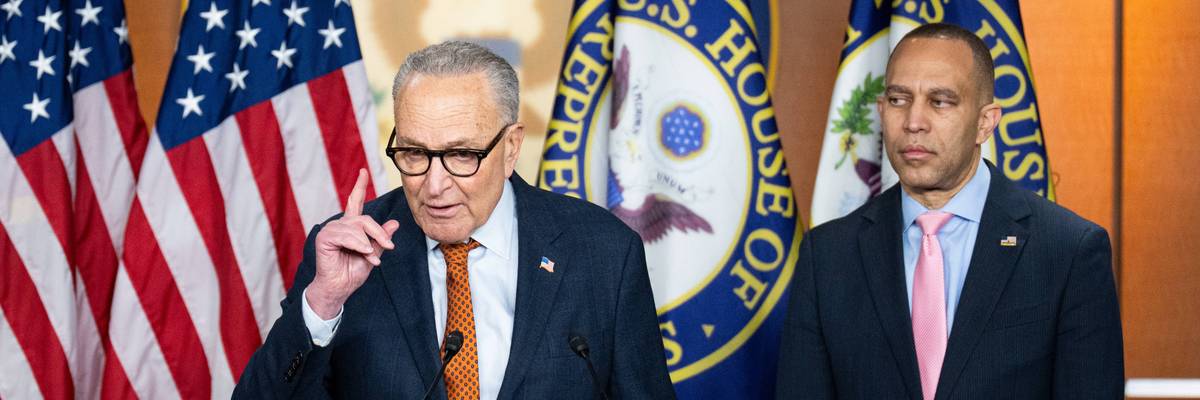
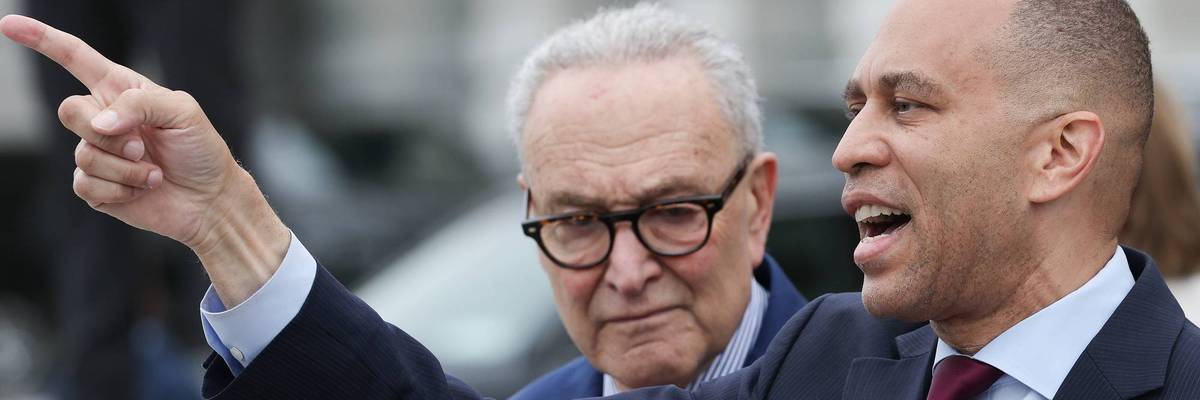
Senate Minority Leader Chuck Schumer (D-NY) and House Minority Leader Hakeem Jeffries (D-NY) hold a joint news conference in the US Capitol on Thursday, January 8, 2026
(Photo: Bill Clark/CQ-Roll Call, Inc via Getty Images)

Corbin Trent
Nov 06, 2026
Common Dreams


On Tuesday, Democratic voters, independent voters, and even some Republican voters spoke loudly and clearly: they want this country to go in a different direction.

This is an amazing, unprecedented moment in my lifetime. I’m 46 years old, and this is the most hopeful political moment I’ve ever experienced.

However, the Democratic leadership we have today is completely ill-suited for this moment. They do not have the vision for what it’s going to take to rebuild the trust the American people have lost in their government, their institutions, and the Democratic Party itself.

Democrats have spoken loudly and clearly that they want new leadership. Unfortunately, too many of the people in Washington aren’t listening.

CHUCK SCHUMER HAS GOT TO GO

NOT HAKEEM for SPEAKER

We’re going to do our dead-level best to make sure they hear us and make sure they see the names. We’re going to start sending text messages, running ads, and getting loud. We’re going to get in their faces and make it impossible to ignore what Democrats, independents, and the voters who delivered this Democratic tsunami are demanding: new leadership.

Chuck Schumer is bad at his job. Hakeem Jeffries is not ready for this moment. He is not the leader we need.

It’s time for them to go.


Our work is licensed under Creative Commons (CC BY-NC-ND 3.0). Feel free to republish and share widely.


Corbin Trent
Corbin Trent is an Appalachian-born general contractor and political organizer. He co-founded Brand New Congress and Justice Democrats, helped recruit AOC, and served as her first communications director. He publishes AmericasUndoing.com, a project exposing America’s economic decline and calling for bold, public-led rebuilding. Find morework on his TikTok, YouTube, and Facebook channels.
Full Bio >

After Blue Tsunami, Progressives Don’t Trust Schumer and Jeffries to Lead Congress


“Schumer is bad at his job,” said one organizer. “Jeffries is not ready for this moment.”


US House Minority Leader Hakeem Jeffries (D-NY) speaks alongside Senate Minority Leader Chuck Schumer (D-NY) on May 21, 2026 in Washington, DC.
(Photo by Win McNamee/Getty Images)

Jessica Corbett
Nov 06, 2026
COMMON DREAMS

After a Democratic “tsunami” in this week’s midterm elections that has been widely seen as “a mandate to deliver big change,” progressives within and beyond Congress have cast doubt on whether the New York Democrats likely to lead both chambers are actually up for facing Republican President Donald Trump’s veto threats and fighting for the “bold agenda” sought by US voters.

As critics of artificial intelligence data centers prepared for a Friday protest outside the Brooklyn home of Senate Minority Leader Chuck Schumer over a “dirty” bill that House Minority Leader Hakeem Jeffries is suddenly speaking out about, political organizer Corbin Trent argued that “Schumer is bad at his job” and “Jeffries is not ready for this moment.”

Although some races haven’t yet been called, “Democratic voters, independent voters, and even some Republican voters spoke loudly and clearly: They want this country to go in a different direction,” wrote Trent, a former communications director for Rep. Alexandria Ocasio-Cortez (D-NY) and two-time presidential campaign staffer for Sen. Bernie Sanders (I-Vt.).


Trent, who also co-founded Justice Democrats and now runs the super political action committee A Fight Worth Having, stressed that “this is an amazing, unprecedented moment in my lifetime. I’m 46 years old, and this is the most hopeful political moment I’ve ever experienced.”

“Democrats have spoken loudly and clearly that they want new leadership. Unfortunately, too many of the people in Washington aren’t listening,” he added. While Trent and his group are far from alone in calling for new Democratic leadership when the party takes over Congress in January, Schumer and Jeffries are expected to become majority leader and speaker, respectively.

“Do you expect to face any kind of challenge in the election for Senate majority leader?” Michael Barbaro, who hosts The New York Times’ podcast The Daily asked Chuck Schumer on Friday. He simply responded, “No.”

Schumer ultimately added that “our caucus is focused on moving forward. Everyone’s very happy with what we all did. But this is just the beginning. As I said before, and I’ll say it again and again to my caucus, to the country, to everybody: If we don’t deliver, all this will go away. This is just the first step. But I think we’re united together to do that.”

He delivered a similar message of unity during a Thursday night appearance on MS NOW, telling host Lawrence O’Donnell that the victorious Democrats—so far the party has 54 seats in the Senate and 253 in the House of Representatives, but those numbers could rise—were “all running on the same basic themes: costs, chaos, corruption.”


As both majority and minority leader in recent years, Schumer has faced criticism from the party’s left flank—and, as Al Jazeera noted Thursday, at least seven Democratic senators-elect have signaled or outright said they will not support him: Abdul El-Sayed (Mich.), Peggy Flanagan (Minn.), Adam Hamilton (Kan.), Chris Pappas (NH), Juliana Stratton (Ill.), and James Talarico (Texas).

However, as Fox News chief congressional correspondent Chad Pergram explained Friday, basic math and a lack of clear challengers suggest Schumer will win: “The selection of Senate majority leader is not a vote which plays out on the floor. The concept of ‘Senate majority leader’ has only been around since the early 20th Century and is not mentioned in the Constitution.”

“Let’s say Democrats do win Mississippi and Alaska, giving them 56 senators who caucus with the Democrats. All Schumer needs is 29 Democrats to support him in caucus, and he’s the next majority leader,” Pergram wrote on social media.

He noted that other possible contenders are Democratic Sens. Brian Schatz (Hawaii) and Chris Van Hollen (Md.), but the former is running to succeed retiring Senate Minority Whip Dick Durbin (D-Ill.) and the latter reportedly isn’t seeking the post—though Van Hollen has said publicly that Democrats should demand an ambitious progressive agenda before backing Schumer or anyone else.


“Progressives are flipping Republican seats and winning critical battlegrounds where pundits told us our politics could never compete. Abdul El-Sayed in Michigan. Troy Jackson in Maine. James Talarico in Texas. Sam Forstag in Montana. Randy Villegas in California. Bob Brooks in Pennsylvania,” said Joseph Geevarghese, executive director of Our Revolution, which grew out of Sanders’ 2016 presidential run. “We gave people something to vote FOR, and they showed up.”

“The progressive movement drove this victory. We spent a decade building the infrastructure, developing leaders, and making the argument that brought us here... This is a vindication of our politics and our theory of change: Organized people can beat organized money when we advance an anti-corporate, working-class agenda,” he stressed, recalling when “the talking heads, academics, and party establishment scoffed at Bernie Sanders and our movement for talking about oligarchy.”

The organizer said that “this was the corruption election. Affordability was central, but people were also asking why life keeps getting more expensive and who keeps cashing in. From AI and data centers to healthcare, Big Pharma, crypto, oil, and the war industry, people want a say over decisions being made at their expense. Corporate control of government is making their lives harder.”

The American Israel Public Affairs Committee (AIPAC)—which notably congratulated Jeffries and Schumer, who wasn’t even on the ballot this cycle, by name on Wednesday—along with GOP megadonor Elon Musk “and other billionaires and corporate interests have poured money into shaping our politics,” Geevarghese continued. “Our victories show that their money does not make their agenda inevitable. People can organize, fight back, and win.”


In the wake of these victories “powered by a progressive wave,” Geevarghese called on Democrats to “use every committee, hearing, and budget negotiation. Follow the contracts and conflicts of interest. Put executives and administration officials under oath. Fight for concrete gains and make Trump answer for what he blocks.”

“People need to see Democrats using every bit of power they have to fight for them,” he said. “That requires leadership ready to meet the moment. Chuck Schumer should step aside. Bernie Sanders has provided the clarity and urgency a real opposition party needs. Leadership must match that ambition, including by investing in candidates and communities too often written off.”

Aru Shiney-Ajay, executive director of the youth-led climate group Sunrise Movement, similarly said in a statement after the midterms that “young people voted for change. We deserve a Senate majority leader who will end the filibuster so we can stop the Iran Oil War, end corporate control of our government, and create good green jobs, not more data centers.”

“Young people won’t get that with the same old Democratic leadership. Schumer, it’s time to put the American people first–commit to ending the filibuster or step aside,” Shiney-Ajay added, referring to controversial chamber rules that effectively block legislation unless at least 60 of the 100 senators support advancing it to a final vote.

As for Jeffries, he got “the majority of his dreams,” as Axios put it earlier this week. The outlet reported:
The left’s strategy is “going to look different from what it would have been with a smaller margin,” one incoming House progressive told Axios, noting that “leaders have more flexibility when they have big majorities.

Progressives ”can’t really extract much now [with this] colossal majority,“ a progressive strategist acknowledged, adding that ”we don’t have to do this high-stakes Jeffries fight.“


Although Jeffries is on track to secure the role, there are calls for him to not be the next speaker. Nearly 900,000 people have signed a related Change.org petition, Nicole Whitted, an author and social media creator who receives compensation in connection with the effort.

“After historic wins on Tuesday, I believe the Democratic Party and our country as a whole is at a crossroads,” Whitted told Newsweek. “My opposition to Hakeem Jeffries is about more than any single policy disagreement. It’s about real leadership that aligns with today’s Democratic voter, real accountability, and whether the party is genuinely listening to the voters demanding change.”


In anticipation of Jeffries serving as speaker, the outlet Sludge examined his “financial backing from executives at Anduril and Palantir, cryptocurrency industry interests, and major Wall Street investors—business interests with a stake in how aggressively the new majority pursues corporate beneficiaries of Trump’s presidency.”

In response to that reporting, Melanie D’Arrigo, executive director of the pro-single-payer Campaign for New York Health, said that “you can’t lead the opposition party while being bankrolled by the opposition. This should not be a controversial take.”
Are the Corporate Democrats Gonna Blow This Again?

How Democrats choose to deal with Musk, Trump, and other morbidly rich American oligarchs and their monopolistic empires may be the most important set of decisions party leaders have made in 50 years or more. We can’t allow them to mess it up.


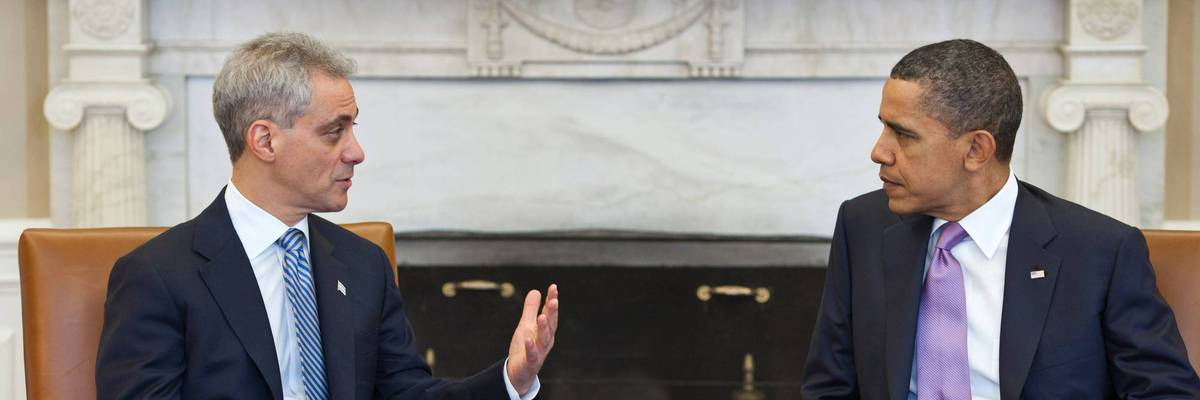
US President Barack Obama meets with Chicago Mayor-elect and former White House Chief of Staff Rahm Emanuel in the Oval Office, March 4, 2011 in Washington, DC.
(Photo by Pete Souza/The White House via Getty Images)


Thom Hartmann
Nov 06, 2026
Common Dreams

Elon Musk spent almost a half-billion traceable dollars (and we have no idea how much “dark money” that’s not traceable but legalized by corrupt Republicans on the Supreme Court) to try to help rightwing politicians win this week’s election. As the old joke goes, that’s both the good and the bad news.

Given how severely great wealth has distorted our republic—from buying elections and legislation to putting judges on the Supreme Court—Democrats now face some serious decisions about how to proceed.

Who should lead the Party’s efforts both in and outside of Congress? Should the Party embrace its progressive base and push policies like Medicare for All and free college, or stay with Clinton-style “moderate” positions as we move into the next Congress? Impeach Trump or, as Schumer suggested yesterday, “work with him”?

As more and more of the nation’s wealth is stolen from the bottom and middle and transferred to the top one percent, the nation’s people lose confidence in the institutions that should have been defending, protecting, and supporting them.

Corporate Democrat Claire McCaskill suggested on MS NOW recently that Democrats must embrace “moderate” positions because those are the ones most likely to be looked upon favorably by “independent” voters, but is that true?

Those same voters swung toward Trump several times recently because, instead of being “moderate,” he was proposing radical change in government policies.

Support for genuinely progressive policies like free college, Medicare for All, taxing the morbidly rich and big corporations, and aggressive actions to mitigate climate change with green energy actually poll very strongly with so-called independent voters.

And there’s something eerily familiar about today that people who’ve read histories of the 1930s and the Roosevelt administration’s New Deal recognize. It’s as if history is repeating itself.

And if that’s actually the case, the choices congressional Democrats make now about how to deal with Musk, Trump, and other morbidly rich American oligarchs and their monopolistic empires (including media monopolies) may be the most important decisions Democrats have made in 50 years or more.

And the stakes are huge: in actual, historical fact, those wielding great wealth have been responsible for the failure or near-failure of pretty much every republic that’s failed since the days of ancient Greece and Rome.

In modern times they’ve provoked the American Revolution, the French Revolution, the American Civil War, the Russian Revolution, and the downfall of dozens of smaller once-democratic or partially-democratic states from Chile in the 1960s to Egypt, Hungary, and Turkey in the last few decades. It’s also happening to Russia as you read these words, although that’s another article altogether.

And now the morbidly rich are screwing up America again, much as they did in the 1920s and the 1850s. If they succeed and enough “moderate” Democrats continue to get into bed with them, it will be both disastrous and perhaps bloody, a word that Trump himself has recently used to describe his plans for the next two years.

America has been through three great cycles since our founding, as brilliantly explained by Neil Howe in The Fourth Turning Is Here and Peter Turchin in Elites, Counter-Elites, and the Path of Political Disintegration. Turchin also summarized his thesis in a tight but concerning article for The Guardian two years ago titled “The deep historical forces that explain Trump’s win.”

(I’ve also written about these cycles of history multiple times over the years, here, here, here, here, here, etc., but it deserves a fresh examination in the light of the election and the crucial decisions now facing the Democratic Party.)

Howe explains how every 80 years or so (as our elders die out) we lose access to the lessons our grandparents learned, particularly those about the importance—nay, the necessity—of regulating great wealth so it doesn’t turn government into a vehicle to exclusively serve the morbidly rich.

When the morbidly rich take over, he notes, bad things happen: it was 73 years from the Constitution’s ratification until the oligarchs in the South started the Civil War, exactly 80 years from the end of the Civil War to the end of World War II (caused by greedy oligarchs on Wall Street kicking off the Republican Great Depression), and today we’re exactly 81 years out from the end of World War II.

Turchin breaks those 80-year cycles into 40-year segments. He points out how, in back-to-back 40-year blocks of time, the obscenely rich are brought to heel over four decades, but then rise up and take over again during the next forty years. Over and over again throughout American history.

Support for genuinely progressive policies like free college, Medicare for All, taxing the morbidly rich and big corporations, and aggressive actions to mitigate climate change with green energy actually poll very strongly with so-called independent voters.

The cover of his book Ages of Discord provides a graphic that visually explains his hypothesis, showing a red line for the accumulation of great wealth from 1780 to 2020 and working class wealth with the blue lines.

Today, we’re overdue for one of his generational flips: we are 45 years from Reagan’s counter-revolution against the New Deal, a program FDR put into place in 1933 that saved America and created the largest middle class the world had ever seen. (I’m radically simplifying both of these scholar’s works: I recommend you buy and read their books for more detail.)

In summary, Trump’s election and re-election were reflections of the success of the anti-New Deal counter-revolution launched with the Reagan Revolution in 1981, in which America’s most wealthy men essentially took back control of our government from the “New Dealers.”

Much of this was accomplished through a process of destroying unions, cutting taxes on the rich while borrowing from the future to fund them, and allowing corporations to search the world for the cheapest labor and least regulation (“free trade”). While it’s rarely mentioned in our increasingly-oligarch-captured media, they called this “neoliberalism” (as I detail in my book The Hidden History of Neoliberalism: How Reaganism Gutted America).

FDR’s New Deal created massive prosperity for the American working class, lifting us from 15 percent of Americans being in the middle class in 1933 to 65 percent of us at that status with a single paycheck when Reagan took office in 1981. (Today, we’re well below 50 percent and it takes two paychecks to get there.)

Because of roughly 40 years of success during FDR’s New Deal (1933-1981), a third of American workers had the protections of a union when Reagan took office, brand-spanking-new schools dotted the countryside, college was so cheap as to be virtually free, hospitals and health insurance companies were required to be nonprofit so healthcare was easily affordable, and housing supports meant that the cost of the average home was about twice the average annual income.

The main beneficiaries were my generation, the boomers, who came of age at the peak of the New Deal’s effects, before Reaganism bit hard into American workers, with Republicans and their morbidly rich stealing over $79 trillion of our wealth in just 45 years and handing it off to the Epstein/Musk/Bezos/Zuckerberg class.

As I point out in The Hidden History of the American Dream, when my generation was in our 30s, we controlled about 21 percent of the nation’s wealth; today people in their thirties only control 4.6 percent of America’s wealth. Average home prices today are ten times average annual income today. College is unaffordable, as is healthcare.

Forty-five years of Reaganism, embraced by both parties until 2021, have wiped out the middle class while making the rich into the super-rich. When Reagan came to office, billionaires were a rarity (there were only 7 of them) and they were constrained by law from owning judges and politicians or having an outsize influence in elections.

And then Republicans took over in 1981 and began their war on the American Dream.

In this week’s election—thanks to corrupt Republicans on the Supreme Court with their Citizens United decision—several hundred American and foreign billionaires, Elon Musk, and Israel’s AIPAC largely funded GOP campaigns, massively outspending progressive Democrats through PACs and dark money SuperPACS.

The most visible examples were the billionaire-funded campaigns against James Tallarico and Abdul El-Sayed, who were outspent by over $248 million dollars. That money, though, could not overcome the trends of history and America’s outrage at the GOP’s turn toward naked fascism.

Peter Turchin identifies a three-step process that leads to revolutionary outcomes: “popular immiseration, elite overproduction and state breakdown.”

First, the rich get control of the political system and change the tax code and regulatory state to gut worker income and union-organizing power, “immiserating” (impoverishing) the middle class.

We saw this with Reagan and corrupt Republicans on the Supreme Court dismantling union rights and workers’ power, followed by the passage of “Right To Work For Less” anti-union laws in state after Republican-controlled state.

The rich then redirect the government’s efforts away from supporting working class people to redirecting the wealth of the nation into their own money bins.

The most obvious example of this are the “tax cuts”—cumulatively totaling over $35 trillion—put into place by Reagan, Bush, and Trump.

Up next are efforts to destroy the programs supporting the middle class, as we saw with the Big Beautiful Billionaire’s Bill gutting food stamps (SNAP), Medicaid, and the Affordable Care Act (among other supports to the middle class).

Average working people know they’ve been screwed; they just don’t realize it’s the morbidly rich who did it to them unless there’s an outspoken class warrior like FDR or Bernie Sanders calling it out.

I put “tax cuts” in quotation marks, by the way, because they’re really not tax cuts: those taxes will eventually be paid. Just not by the people who should have paid them; they succeeded in pushing them out decades into the future with the assumption they’ll be paid for either by raising taxes on working people, cutting benefits to the middle class and poor, or both. Instead of “tax cuts,” we should rightly call them “tax deferrals” or “tax redistributions.”

Finally, as more and more of the nation’s wealth is stolen from the bottom and middle and transferred to the top one percent, the nation’s people lose confidence in the institutions that should have been defending, protecting, and supporting them. They see that no matter how they vote, no matter what they do, no matter how loud they protest, they’re still being screwed and the morbidly rich are still getting richer every single day.

This leads to Turchin’s “state breakdown,” which we’ve been witnessing in real time since Trump’s inauguration and the full-on implementation of the billionaire’s Project 2025, kicked off on January 20th, 2025. Step-by-step, those parts of the state that work for and protect the middle class and poor have been taken apart, while those parts that protect the rich (prisons, police, ICE, the military) have gotten trillions.

Average working people know they’ve been screwed; they just don’t realize it’s the morbidly rich who did it to them unless there’s an outspoken class warrior like FDR or Bernie Sanders calling it out.

Thus, they voted for whoever they perceive as most likely to “shake things up,” “destroy the deep state,” or “make the country great again” by restoring the wealth of the middle class.

Sometimes we choose right, as Americans did in 1860 with the election of Lincoln, and in 1932 by choosing FDR. The country was on the brink of disaster with massive fascist movements growing during each era; Lincoln and FDR defeated them and saved our nation’s democracy.

In 2024, though, the billionaires had such a grip on the media and the message, much of it through their ownership of media (Xitter, Facebook, TikTok, Instagram, Washington Post, LA Times, Fox “News,” massively subsidized podcasts, rightwing radio, etc.) and also with a tsunami of advertising cash that they convinced Americans that Trump—a billionaire rapist and convicted criminal who had promised to again cut taxes for his billionaire buddies—was the champion of the little guy.

As Trump, Vance, and Musk celebrated their 2024 election, their toast had to include the word “suckers.”

The result of this choice that put Project 2025 front-and-center has been the further disintegration of government’s protective ability for working class and poor people, turning it instead toward the wish-lists of billionaires, tech bros, and massive corporate monopolies and oligopolies.

As Turchin noted in The Guardian:
“One result of all this political dysfunction is an inability to agree on how the federal budget should be balanced. Together with the loss of trust and legitimacy, that accelerates the breakdown of state capacity.
”It’s notable that a collapse in state finances is often the triggering event for a revolution: this is what happened in France before 1789 and in the runup to the English civil war.“


If both Turchin and Howe are right and we’re now in the Fourth Turning or something like it, that explains much of the results of this week’s election. It should also give Democrats a clear vision of how to move forward.

We’re departing, in other words, the 45-year-long neoliberal/conservative/austerity part of the cycle that Reagan started and shifting into the next ~40-year cycle of progressive renewal of both our democracy and our economy.

For its own survival and that of our republic—and the success of our 2028 candidate for president—the Democratic Party must now reject the neoliberals within its own ranks.

Which means the Democratic Party and individual Democratic politicians should be embracing AOC, Bernie, Ro Khanna, Mark Pocan, Al-Sayed, and every other genuinely progressive politician as hard as they can, and push their policies to the fore.

To do anything less is to squander this moment and risk another rightwing reactionary backlash and loss of middle-class voters like we saw in the reaction to Clinton in 2016 and Harris in 2024.

For its own survival and that of our republic—and the success of our 2028 candidate for president—the Democratic Party must now reject the neoliberals within its own ranks and makes a forceful argument for returning to the systems of Reconstruction, the New Deal, and the Great Society that protected and enriched working class people in the previous cycles.

If Democrats again embrace neoliberals like Rahm Emmanuel (who’s pretty much openly campaigning for the 2028 presidential election), they’ll fail at this critical work and messaging: that could well doom our American experiment in liberal democracy.

If Democrats succeed at finding their voice, however, America may get the second chance to rebuild both our middle class and our democracy, a chance we ultimately won at the beginning of each of the past two 80-year cycles with Abraham Lincoln and FDR.

Thus, the policy and “holding Trump accountable” choices Democrats make for how they’ll proceed in the first 100 days of next year may well decide the fate of our American democracy.


Our work is licensed under Creative Commons (CC BY-NC-ND 3.0). Feel free to republish and share widely.


Thom Hartmann
Thom Hartmann is a talk-show host and the author of "The Hidden History of Monopolies: How Big Business Destroyed the American Dream" (2020); "The Hidden History of the Supreme Court and the Betrayal of America" (2019); and more than 25 other books in print.
Full Bio >