Monday, October 26, 2026


Invisible eland identified from 60,000-year-old ochre-rich sediment


Ancient proteins reveal hidden aspects of technical and symbolic behaviors of early humans


Kyushu University

Illustration of an eland

image: 

An eland is a large plains antelope found in East and Southern Africa

view more 

Credit: Takumi Tsutaya/Kyushu University


Fukuoka, Japan—Publishing in the journal Proceedings of the Royal Society B a research team from Kyushu University, Universitetet i Bergen, and the University of Copenhagen reports that they found traces of ancient collagen protein from the common eland, Taurotragus oryx, on a 60,000-year-old ochre-rich surface in the Kilpdrift Complex, a Middle and Later Stone Age archeological site located within the coastal cliffs of the De Hoop Nature Reserve in South Africa.

To better understand how ochre was used by early humans, the team used palaeoproteomics, the high-throughput analyses of ancient proteins, to search for potential proteinaceous traces within this archaeological feature. The study identified collagen from elands in the ochre surface, suggesting that either animal-derived materials were deliberately mixed with the ochre or ochre-treated eland hides were present at the site.

These findings provide new evidence for the complex technical and possibly symbolic behaviors of early Homo sapiens.

The most significant finding is the identification of type I collagen proteins from the common eland, which provides biomolecular evidence that animal-derived materials were associated with ochre use during the Middle Stone Age. Until now, evidence of organic components mixed with ochre has been extremely rare, especially in Africa. This discovery offers a new way to investigate how early humans used ochre and other organic materials in their daily, technical, and potentially symbolic activities.

The team analyzed archived sediment samples taken from the Kilpdrif Complex using palaeoproteomics, a growing field of archaeology and paleontology that examines ancient proteins preserved in materials collected at archeological sites. The proteins were extracted from the sediments and analyzed using liquid chromatography-tandem mass spectrometry (LC-MS/MS). The resulting protein fragments were then compared to large protein databases and a custom collagen reference database to identify their species of origin.

These findings demonstrate that palaeoproteomics can successfully recover and identify ancient proteins from archaeological sediments, even in challenging African environments where ancient DNA rarely survives. This creates a powerful new tool for archaeologists studying early human behavior, allowing them to investigate biological materials no longer visible in the archaeological record.

###

For more information about this research, see "Palaeoproteomic investigation of archaeological sediments associated with ochre use in the Middle Stone Age of southern Africa," Zahra Haghighi, Takumi Tsutaya, Elizabeth Catherine Velliky, Simon James Armitage, Christopher Miller, Meaghan Mackie, Francesco d'Errico, Gaudry Troché, Jesper Velgaard Olsen, Karen L. van Niekerk, Christopher Stuart Henshilwood, Enrico Cappellini. Proceedings of the Royal Society B, https://doi.org/10.1098/rspb.2025.3300


First author Zahra Haghighi pictured preparing a sample in a clean laboratory for palaeoprotemic analysis

Credit

Takumi Tsutaya/Kyushu University


A photo of the Kilpdrift Complex located within the coastal cliffs in the De Hoop Nature Reserve in South Africa where the samples for the study were collected

Credit

Ole F. Unhammer/Universitetet i Bergen


Smart planning of outdoor sports tournaments using environmental heat measurements


Researchers develop a heat-informed framework to assess available playing time and help organizers evaluate tournament schedules under hot conditions


Doshisha University

Tennis championships in Japan during peak summers

image: 

To mitigate heat-related risks among competitive athletes, researchers propose a novel framework for better for heat-informed tournament design.

view more 

Credit: EaglebrookSchool via Flickr from Openverse https://openverse.org/image/3ee5c47a-e200-44e3-9e83-6f975d22fb71?q=Eaglebrook-School-Spring-2014-Athletics20140409_5478&p=1


Rising temperatures caused by climate change are making it harder to organize outdoor sports events safely. Exercising in the heat lowers performance and raises the risk of heatstroke, which is a leading cause of non-traumatic death among professional athletes. In Japan, where school tennis championships are often held during summer vacation, excessively hot days pose a significant challenge for organizers. With many matches to complete within a fixed schedule, they face a difficult balancing act between protecting players from heat-related illnesses and ensuring that the competition can finish on time.

One of the most widely used tools for assessing heat stress on a given day is the wet-bulb globe temperature (WBGT), an index that accounts for air temperature, humidity, and solar radiation. The International Olympic Committee and many sports federations rely on it to guide decisions about whether exercise should continue under hot conditions. However, WBGT can only indicate when conditions may be hazardous; it does not help organizers determine whether it will be possible to finish a tournament considering factors like long matches or unexpected disruptions. There is no well-established approach to convert such heat measurements into estimates of available playing time and scheduling margin. 

To tackle this problem, a research team led by PhD student Hiroki Yamaguchi from the Graduate School of Health and Sports Science at Doshisha University, Japan, has developed a framework for evaluating whether tennis tournaments can be completed under high-heat conditions. Their study, published in Volume 8 of the journal Frontiers in Sports and Active Living on October 9, 2026, was co-authored by Professor Kojiro Ishii of the Faculty of Health and Sports Science at Doshisha University.

The researchers analyzed more than 119,000 hourly WBGT observations collected between 2018 and 2022 at 11 meteorological stations across Japan. Following the heatstroke prevention guidelines of the Japan Sports Association, the team counted hours with a WBGT below 28 as ‘low-risk operational time.’ Then, they converted these hours into practical tournament indicators, such as feasible tournament days and the number of matches that could be completed.

As a benchmark, the researchers modeled the first day of the individual tournament at the 2025 Inter-High School Athletic Meet, comprising 180 matches. Assuming 20 courts based on recent tournament practices and 30 minutes per match plus a 10-minute turnover, the required operating time was set at 6 hours per court per day. The operational margin was calculated as the difference between the WBGT-based low-risk operating hours and the required operating time. Then, they compared tournament schedules across different periods from July to September, using three daily scheduling models. These were the standard 9 a.m. to sunset format, as well as an early morning format and a nighttime format that both avoid the midday peak.

Their statistical analysis showed that adjusting playing hours had a stronger effect on the availability of low-risk hours than changing tournament dates. Both the nighttime and early morning models increased the odds of WBGT remaining below 28 by 46% and 36%, respectively. Notably, applying changes to both tournament dates and playing hours produced the greatest overall improvement, adding the equivalent of up to 0.8 days of low-risk playing time over a 7-day tournament period.

The researchers also investigated whether the analyzed schedules provided enough time to complete the benchmark tournament. While many scheduling scenarios met this requirement on average, the amount of extra time available varied considerably. For example, the July 11–20 early morning scenario had the largest average margin at 2.2 hours per day, while the September 1–10 standard schedule fell short of the requirement by an average of 0.5 hours per day.

These results suggest that passing a threshold is not enough and that organizers should carefully consider how much spare time remains under a given schedule. “Our approach provides decision makers with information directly relevant to tournament planning, rather than relying solely on environmental heat indices,” says Yamaguchi. The proposed method provides new indicators to complement existing safety guidelines by showing how much time is available before an event begins.

Overall, this novel framework provides a foundation for future discussions on climate-adaptive tournament scheduling and management. Organizers could use the proposed metrics to evaluate options to make large sporting events safer. “We believe that using operational margins and matching surplus to fundamentally review tournament dates, time of day, locations, the number of courts, and match formats will help protect players’ lives and support the sustainable hosting of tennis tournaments,” concludes Yamaguchi.


About Hiroki Yamaguchi from Doshisha University, Japan
Hiroki Yamaguchi is currently a PhD student at the Graduate School of Health and Sports Science, Doshisha University. His broader research interests encompass sports science, exercise physiology, heat exhaustion, and environmental physiology. He has extensive experience as a player, coach, and tournament organizer in tennis.

About Professor Kojiro Ishii from Doshisha University, Japan
Dr. Kojiro Ishii is a Professor in the Faculty of Health and Sports Science at Doshisha University. He obtained his Ph.D. in Physical Activity and Human Performance from Osaka City University in 1993. His research centers on the promotion of health and human performance through physical activity, nutrition, and environmental design, seeking solutions to specific practical problems. To date, Dr. Ishii has authored over 160 peer-reviewed publications.

Funding information
The author(s) declared that financial support was not received for this work and/or its publication.

World set to breach 1.5°C warming limit set by Paris Climate Agreement


Issued on: 21/10/2026 - FRANCE24

The UN is warning that global commitments to cut planet-heating emissions are falling far short of the Paris climate goals of 1.5 degrees Celsius warming – and put the world on course for 2.6C warming this century. The report by the United Nations Environment Programme lays bare the chasm between rhetoric and action when it comes to tackling global warming, and the challenge before political leaders at November's COP31 climate summit - set to take place next month in Turkey. 

Story by Emerald Maxwell.

Europe weighs €10bn plan to launch its own astronauts ahead of Rome space summit

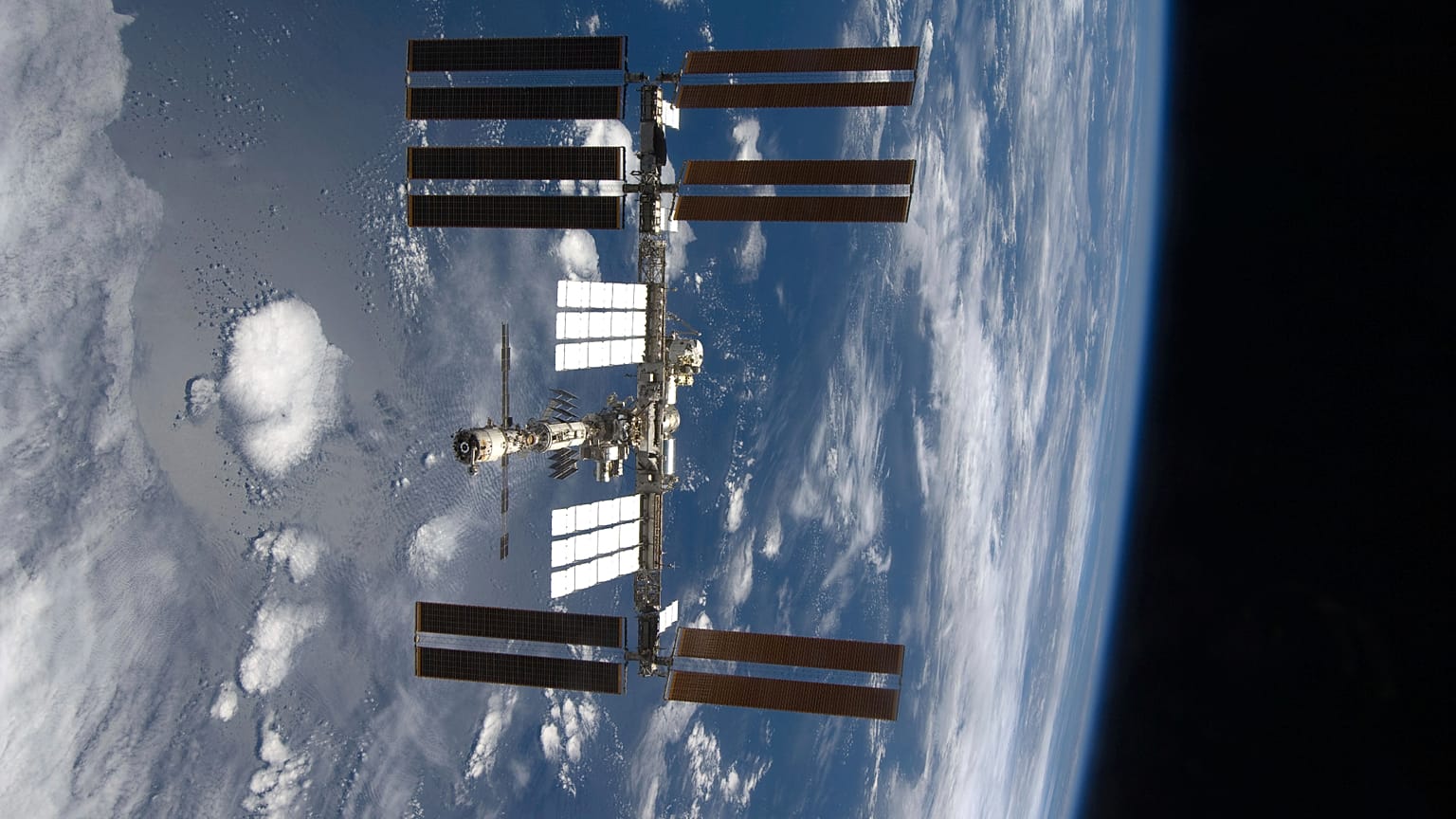
Archive photo of the International Space Station - archive
Copyright AP Photo
By Stefania De Michele
Published on

Europe is seeking to boost its presence in space and cut technological dependence on other states. The 15 December ESA summit in Rome will shape choices on astronauts, cargo and investment.

Europe wants to stop depending on others to send its own astronauts into space. The next key date for deciding how to do that is 15 December in Rome, when the member countries of the European Space Agency (ESA) will meet to discuss the future of space exploration. On the table are multi-billion-euro investments, new technologies and one strategic issue: ensuring that Europe can reach Earth orbit with its own means, without relying exclusively on services provided by foreign companies.

The summit, officially the Intermediate Ministerial Meeting 2026, comes at a time of transformation in the sector. Member states will have to assess proposals to strengthen Europe’s role in low Earth orbit, prepare for the post-International Space Station era and build the continent’s presence on the Moon, while also looking towards Mars. The aim is not to abandon international cooperation, but to take part in it with greater autonomy.

Ten billion euros to send European astronauts into space

The most ambitious challenge concerns human spaceflight. Today, Europe does not have a fully autonomous system to launch astronauts and bring them back to Earth: for crewed missions to the International Space Station it depends on capabilities developed outside the continent, in particular in the United States.

ESA’s director general, Josef Aschbacher, has proposed investing around €10 billion over ten years to develop a European system capable of carrying astronauts into space and returning them safely. According to the estimates he presented, continuing to buy services from foreign providers could cost European taxpayers about €5 billion over the same period.

These are projections, not funds already allocated: the political and financial decision rests with the member states. The choice, as Aschbacher frames it, is between building up Europe’s own industrial capabilities or continuing to buy services from other operators, with costs and availability that also depend on the commercial decisions of those suppliers.

What is at stake goes beyond transporting astronauts. An autonomous capability would keep a larger share of investment within Europe’s space industry, drive the development of reusable technologies and strengthen the continent’s bargaining power in international programmes.

Ariane 6 and Vega-C: Europe’s renewed access to space begins with its launchers

Autonomy also depends on having reliable rockets that can be launched frequently enough to meet demand. In this field Europe can count on Ariane 6, the heavy launcher developed for institutional and commercial missions, and on Vega-C, designed to place lighter satellites into orbit.

The two launchers are key components of independent access to space. Vega-C, for example, put the FLEX and Sentinel-3C satellites into orbit in September 2026 as part of Europe’s Earth observation activities. The goal is to consolidate launch capabilities and widen opportunities for both public and private customers.

Competition, however, is global. SpaceX has built a model based on frequent launches and reusable rockets, securing a central role in the international market. For Europe, therefore, it is not enough simply to have its own launchers: they must also be competitive in terms of cost, availability and turnaround times.

The challenge also involves new commercial operators. German company Isar Aerospace took a step forward on 5 September 2026, when its Spectrum rocket reached space for the first time, placing five small satellites and an experiment into orbit. The first test flight in March 2025, by contrast, ended after about 30 seconds. The 2026 outcome shows the progress of a European sector in which start-ups are seeking to stand alongside established operators.

Cargo capsules and reusable technologies: the race among European companies

Another piece of the puzzle is the transport of goods to space stations and their possible return to Earth. On 10 September 2026 ESA awarded The Exploration Company a contract worth a total of €760 million for the next phase of the ALADDIN programme, dedicated to developing the Nyx capsule.

The agreement provides €310 million for a demonstration mission and includes a further €450 million for two additional missions, which still have to be confirmed. The aim is to prove Europe’s ability to carry cargo to low Earth orbit and bring it back, starting with a mission to the International Space Station.

The programme marks an important step towards a European commercial service: ESA is not only funding technological development, it is also becoming a key customer for a private company.

At the same time, industry is working on reusable rockets, a technology that can help cut the cost of access to space. This is the context for programmes run by European companies such as France’s MaiaSpace and Italy’s Avio. For the latter, the development of new propulsion and launcher-recovery solutions remains an area to watch, but the results of individual demonstrators and their timelines must be assessed on the basis of official updates.

Italy, the States General to organise the Space Economy

For Italy, the Rome summit comes as the country seeks to strengthen coordination between businesses, research and institutions. The space sector involves major industrial groups, specialist firms, start-ups, universities, research centres and financial operators: a complex value chain in which the ability to work together can make the difference in accessing European programmes and international markets.

In June 2026**,** the cross-party parliamentary group on space chaired by Andrea Mascaretti, launched the States General of the Space Economy. The programme includes twenty events in sixteen Italian regions, with the aim of showcasing aerospace clusters and gathering input from the national production system.

The initiative aims to help define strategic guidelines for the sector. The issue is not only the ability to build satellites or launchers, but also to connect industrial expertise, attract investment and turn innovation into services and economic opportunities.

Life after the International Space Station and the challenge of the Moon

The timetable for European decisions is also linked to changes in human exploration. Under current plans, the International Space Station is due to end operations by 2030, while commercial projects for new low-orbit infrastructure are taking shape. For Europe, securing a role in this scenario means being able to continue carrying out scientific experiments, developing technologies and taking part in future missions without depending entirely on the choices of external partners.

The Moon is the other major objective. The ESA wants to strengthen Europe’s presence through international cooperation and the development of targeted capabilities, viewing Earth orbit and lunar missions as stepping stones towards the exploration of Mars.

On 15 December in Rome, European governments will be asked to discuss the options prepared by the space agency. No single summit is expected to resolve all the sector’s vulnerabilities, but it will be an important step towards understanding which goals states are willing to fund, and on what timescale.

Solar storms around a black hole

Researchers from the Technion Faculty of Physics have discovered that the powerful eruptions occurring in the coronae of black holes are driven by dynamics similar to those of solar storms


Technion-Israel Institute of Technology


Technion researchers have presented evidence for the existence of solar-storm-like outbursts near supermassive black holes, which can be a million times larger than the Sun or more. The phenomenon was discovered in the vicinity of the black hole in the galaxy NGC 3783 and the researchers’ findings were published in The Astrophysical Journal Letters.


Solar storms are powerful eruptions of X-ray radiation accompanied by winds of charged particles ejected from the Sun’s corona into the solar system, posing risks to astronauts and satellite communications. These Coronal Mass Ejections (CMEs) originate in the conversion of magnetic energy into kinetic energy through a process called magnetic reconnection. Technion researchers have discovered, for the first time magnetic reconnection eruptions and a CME in the coronae of a black hole.


In this study, the researchers monitored X-rays emitted from near the black hole using the XRISM space telescope. The phenomenon they identified near the black hole is known as the “Neupert effect.” It was first discovered on the Sun in 1968 but had never previously been observed around black holes. This means that the same physical processes underlying solar storms also occur in the environments of supermassive black holes.


The research was led by Gal Vardi, a doctoral student in the Technion Faculty of Physics, under the supervision of Prof. Ehud Behar, with the participation of researchers from Japan, Europe, and the United States. The observations were conducted using the XRISM space telescope, a joint mission of NASA, the Japan Aerospace Exploration Agency (JAXA), and the European Space Agency (ESA), as well as ESA’s XMM-Newton space telescope.


Photo: Gal Vardi

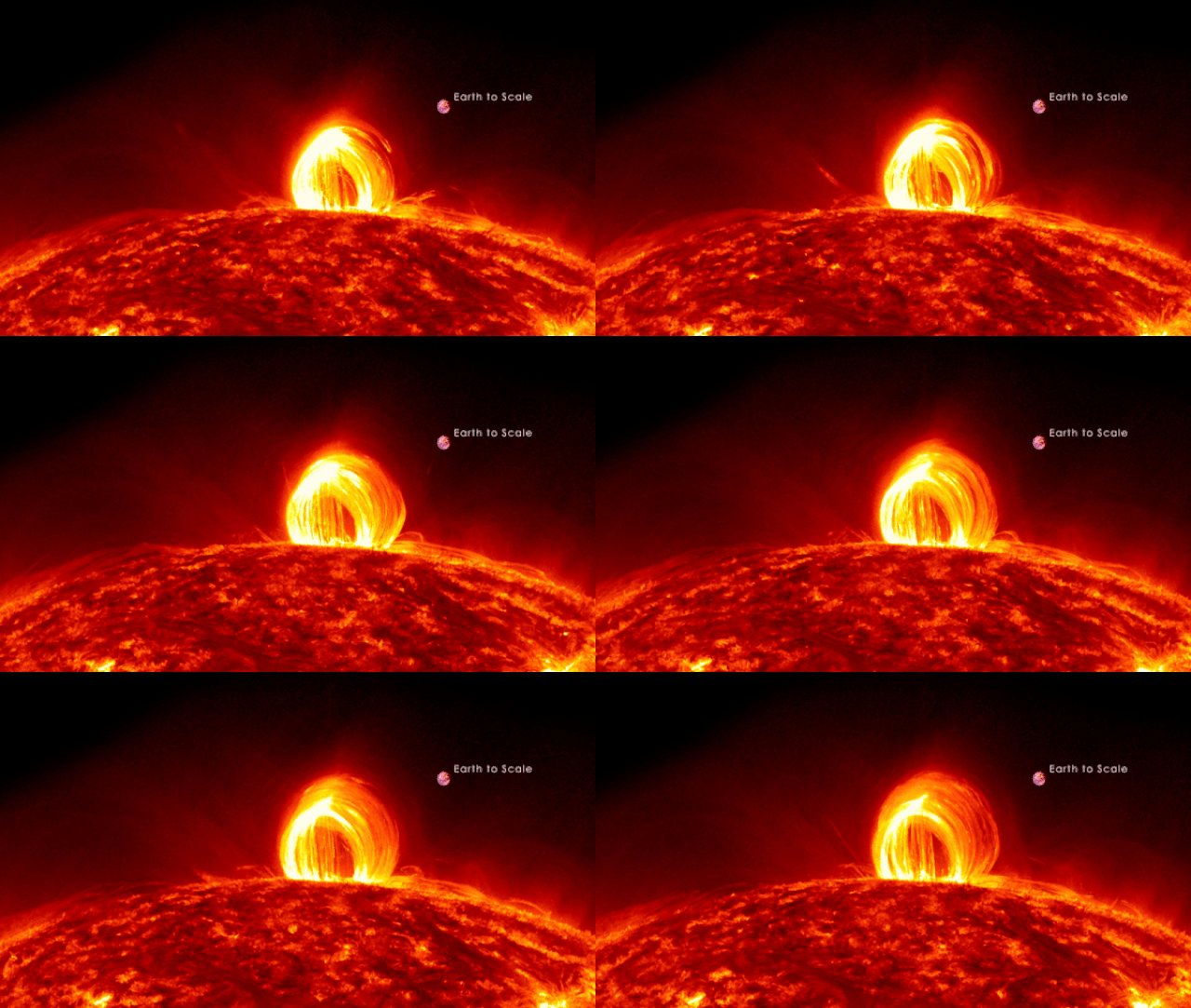
In the accompanying video and diagram: An eruption of solar wind


In the link: Flow along magnetic field lines

https://cdn.mos.cms.futurecdn.net/Kigkno5FGn6xnkEmzAqTzR.gif


The paper:

https://iopscience.iop.org/article/10.3847/2041-8213/ae8f44/pdf


Your car’s weakest spot may not be in the car


University of Gothenburg

Srijita Basu, researcher

image: 

Srijata Basu, researcher in software engineering at the University of Gothenburg. 

view more 

Credit: Gunnar Jönsson


Modern cars are constantly connected to the outside world. This makes them vulnerable to hackers who want to take control of the vehicle remotely. Researchers at the University of Gothenburg and Chalmers University of Technology have found that IT vulnerabilities have shifted from the car’s own computer systems to apps and cloud services connected to it.

A car is a computer on wheels. It communicates with the car manufacturer’s cloud services, the driver’s phone and charging stations, and when children stream films in the back seat, data travels over the internet. All these connections can become entry points for hackers into the car. Researchers at the University of Gothenburg and Chalmers University of Technology studied 413 reported security vulnerabilities in automotive software between 2022 and 2024 and compared them with the previous decade.

“Ten years ago, most vulnerabilities were found in the cars’ own systems. Now the share found in apps, websites and cloud services has nearly tripled. These systems hold data about where you live, where you drive and when, so the risk is not only that someone could interfere with the car, but that they could get hold of information about your life,” says Srijita Basu, postdoctoral researcher in software engineering at the University of Gothenburg and Chalmers University of Technology.

Driver data in cloud services

A reported IT vulnerability does not mean that a breach has occurred, only that there is a risk of one. In December 2024, it was revealed that data from around 800,000 electric cars from Volkswagen, Audi, Seat and Skoda had been openly accessible on the internet for several months. The data contained precise GPS information and the email addresses, telephone numbers and home addresses of the owners of the cars. This meant that it was possible to see exactly where and when a particular car had been driven. The vulnerability was in the cloud service used by the car manufacturer to upload data from vehicles on the road. The data leak was uncovered by an ethical hacker group after a tip from a whistleblower and was widely reported in the media. The leak was fixed before it was known to have been misused.

“When we compare with the previous decade, we can see that IT vulnerabilities are now most commonly found in apps, websites and cloud services, and that the risks are more often rated as serious and critical. We are surprised by how basic some of the weaknesses in these systems are. They can involve passwords that have not been changed since installation. Hackers can use tried-and-tested old tricks to gain access through a back door,” says Srijita Basu.

Took control of the accelerator and brakes

The car’s audio and media system, commonly known as the infotainment system, is a weak point. Anyone connected to the car’s Wi-Fi network could potentially gain access to the car’s other systems as well if they are not properly separated.

This happened in a test conducted by security researchers to a Jeep Cherokee in 2015. Through the car’s media system, they were able to gain access to other systems in the vehicle and take control of steering, brakes and the accelerator. The new study shows that similar weaknesses still appear nearly a decade later.

“My advice to car manufacturers is to keep systems that control the vehicle strictly separated from infotainment and other connected systems, with strong security around them. They should also learn from the web and IT world, where many of these flaws have been known for years. When the car is constantly connected to the outside world, it also invites the outside world into the car,” says Srijita Basu.

Differences between computer chips

In their review of reported vulnerabilities, the researchers analysed where each vulnerability had originated. Was it in the design of the IT function, in the programming or in the software running on the car’s computer chips? The researchers found that chip manufacturers vary in how well they protect their products against attacks and in how openly they report security flaws. Computer chips from the same manufacturer are often used by several car makers. This means that hackers who have found a back door into the IT system of one car model may be able to use the same method on other cars as well.

“Car owners also have a responsibility to make things more difficult for hackers. It is important to update the software as soon as the car prompts you to do so, and strong passwords are still important. Today we share a lot of personal information with AI assistants for cars, for example when we ask to plan a long journey in an electric car. Like other AI systems, these assistants can be tricked into revealing information they have been given, so it matters what we share with them and what car makers allow them to access,” says Srijita Basu.