Tuesday, November 03, 2026

INTERVIEW

'Protecting the Congo's forests means protecting people's lives'

The forests of eastern Democratic Republic of Congo are a haven for some of the world's rarest species – but despite being protected areas, they are under threat from conflict, poaching and deforestation. After global decision-makers gathered at the United Nations' Cop17 biodiversity summit this week, Emmanuel Bahati Lukoo, a ranger at Kahuzi-Biega National Park, says people on the frontline of wildlife protection deserve greater recognition.


Issued on: 01/11/2026 - RFI

Guides lead tours in the forest of Kahuzi-Biega National Park, a few kilometres outside the city of Bukavu in the Democratic Republic of Congo, 13 February 2022. © AFP - GUERCHOM NDEBO

Now assistant park manager at Kahuzi-Biega, Lukoo was formerly a ranger at nearby Virunga, the oldest national park in Africa.

From tropical forests to extinct volcanoes, snowfields to swamps and lava plains, the region is home to an exceptional range of habitats.

Yet its natural wealth makes it vulnerable to exploitation, whether from armed groups battling the national government or impoverished local communities struggling to survive.

Hundreds of rangers work to protect the parks and their wildlife, sometimes at risk to their own lives.

Lukoo, who also founded a football academy to engage young people in conservation and has written a memoir about his experiences, told RFI about the challenges of preserving nature in a conflict zone – and why he wishes rangers got more respect.

Emmanuel Bahati Lukoo, ranger and assistant park manager at Kahuzi-Biega National Park in Democratic Republic of Congo, pictured earlier this year. © Courtesy of Emmanuel Bahati Lukoo

RFI: Why is conservation work so important in your view?

Emmanuel Bahati Lukoo: These forests are part of Congolese heritage, but they also belong to the world. We're not just protecting them for ourselves, but for future generations – so they'll have the chance to come and experience the same thing we can.

It's also a source of income for the country: tourists come to visit the park and pay to see this biodiversity. Money comes in, and everyone benefits.

The climate is changing too. A few years ago, you couldn't just wear a shirt, you needed a sweater. That's no longer the case. We're also seeing rivers drying up, agricultural production declining, landslides. If we can breathe fresh air, it's because of all these forests and this biodiversity that we're protecting. We're protecting an ecological balance. Without trees there's no rain, no rivers.

Protecting the forests in the [DRC] means protecting people's lives. It's a huge responsibility.

RFI: In the DRC, rangers undergo intense training, similar to military recruits. Were you drawn to that aspect of the job?

EBL: I didn't start out wanting to be in the military. I've been passionate about nature ever since I was very young. Being in the Scouts taught me how to live in the forest, alongside animals. And I was born right next to a protected area. From a very young age, I witnessed the wonders of conservation. After completing my studies in humanitarian aid, I went to university and got a degree in environmental management.

You learn a lot when you're training to be a ranger: what conservation means, all about the protected area you'll be working in, how to navigate the forest without a compass, how to live alongside animals, who they are, why they need to be protected... But you also learn how to handle weapons. Eastern DRC has been a conflict zone for a long time. Rebel groups take refuge in protected areas.

As a result, park managers give rangers thorough paramilitary training so they can confront armed groups. This training is gruelling.

Nature conservation in the Congo isn't the same as elsewhere. For us, it's like being at war. When you go out on patrol, you don't think about coming back... Being a ranger in the east of the DRC is complicated. But you learn to love it.

RFI: Your role sees you handle everything from fighting off armed groups and poachers to tracking gorillas. What is ultimately the core of your mission?

EBL: It's protecting the territorial integrity of the reserve, the habitat and everyone who lives there against numerous threats – for instance, poaching and wildlife trafficking. To take a baby gorilla and traffic it, you first have to kill the mother. Our mission isn't to wage war against armed groups, but to defend when they attack.

There's also deforestation and illegal logging. In some areas, it has reached a particularly alarming scale. Trees are cut down to produce charcoal – known locally as makala – for energy, but also to make furniture.

Other threats include the illegal occupation of land for farming and the expansion of pastures, as well as illegal mining.

This aerial photograph, taken in September 2019, shows an area in Kahuzi-Biega National Park devastated by logging. © AFP - ALEXIS HUGUET

Deforestation falling worldwide but Congo Basin losses grow, report finds

RFI: How are these illegal activities carried out?

EBL: Not everyone who enters a park illegally has the same motives. Some groups are pursuing political or military objectives, while others are seeking to control territories or trade routes, or to exploit natural resources to finance their activities.

Others, however, live in extreme poverty on the outskirts of the park and depend on these resources.

Armed groups set up camp in protected areas and draw from these communities – sometimes by force. Often, they use young people to mine minerals and produce charcoal. The communities transport the goods to illegal markets and hand over the money to the groups exploiting them.

RFI: In your memoir, you write that the political situation in the DRC complicates conservation efforts, notably corruption. What problems does this pose when managing a national park?

EBL: There are a lot of land disputes. Some communities see nature reserves as a problem. Certain politicians support these communities in illegal activities in order to get elected. Others use armed groups to attack ranger posts so that the rangers cannot do their jobs.

RFI: What could help reduce the pressure on national parks?

EBL: All parties must respect the integrity of protected areas, because everything starts with the violation of their boundaries.

But we have to look at the bigger picture. As long as local communities do not have access to affordable energy sources and enough economic opportunities, forests are likely to remain under pressure.

Next, we need to protect wildlife rangers. They are subject to arbitrary arrests and attacks. Everyone talks about human rights and protecting biodiversity, but I've never heard anyone mention rangers' rights. And yet they work day and night, spending 90 percent of their time in the forest, far from family and friends.

RFI: The International Union for Conservation of Nature rates the conservation outlook at Virunga as 'critical'. Do you share that assessment?

EBL: It's hard to say what the state of the protected area is because there's no scientific research being conducted at the moment. A very large portion – the south and the centre – is occupied and is no longer under the park's control. These are areas where rangers no longer go.

Today, it's a matter of survival and protecting the animals has become very complicated. After the war, we'll have to take stock.

A male Grauer's gorilla, a critically endangered species, in the forest of Kahuzi-Biega National Park in September 2019. © AFP - ALEXIS HUGUET

The challenges of protecting wildlife from war in eastern DRC

RFI: You've written about the personal toll that the job takes on rangers. How has it affected you?

EBL: Rangers are motivated and passionate but they don't get recognition, that's what saddens me the most. Their sacrifice isn't acknowledged, even internationally. They aren't valued as they deserve to be. It's not fair because without forests, the world wouldn't exist. You see the results of these people's work, but you don't show them the respect they deserve in return.

We also need to reconsider their pay, which isn't enough to live on in cities where everything costs more. They rely on this salary to cover rent, tuition, food... The children of rangers end up on the streets, either because their father doesn't have enough money to pay for their education or because he died protecting a World Heritage Site.

RFI: Is that why you set up your football academy?

EBL: Yes. The Virunga Football Academy came from the fact there was a lot of mistrust between young people living near the park and the rangers. When we arrest some of them, their friends see us as the bad guys. We wanted to find a way to build a connection with them. Football is the simplest way.

We started in 2021 with about 50 young people in Rumangabo in North Kivu province. Then we got lots more requests, and today we work in Goma, Kiwanja, Kirumba and Kasindi... There are around 400 young people in the school. More are always applying, but we don't have the the resources to take them in.


Young players in Kasindi train at the Virunga Football Academy, which was founded to promote peaceful coexistence between communities living near Virunga National Park. © Doyi Kanega/Virunga Football Academy

RFI: How does it work?

EBL: Every week after school, boys and girls aged 8 to 17 come to practice, just like at any other football academy. When they play together, it builds bonds. They stop thinking about getting into trouble in the park. It also fosters peaceful cohesion between them, even though there are many intercommunal conflicts in the area.

In addition, we organise educational activities to help them understand the importance of nature reserves, education and living together.

In Rumangabo, young people's tendency to engage in illegal activities has really gone down. They're busy playing football. It's far from being all young people, and these are also the ones who want to do something. But we've reached the most vulnerable ones.

The football academy giving South Sudan's youth an alternative to gang life

RFI: In April 2018, you and five other rangers were ambushed by militiamen. You were the only one to survive. What drives you to keep going after the trauma of that experience?

EBL: Firstly, to honour the friends who died protecting the park. There have been others since then. We lost 13 rangers in Rumangabo in 2020 to an ambush. It would be a great act of cowardice to leave.

Secondly, I see conservation as a way to help communities develop without contributing to the destruction of the park.

As a ranger, what drives me to keep going is hope – even in the midst of danger and armed conflict. Far from discouraging me, this situation strengthens my resolve. Despite my fear, I continue to defend our country's natural wealth with courage and conviction. I am still convinced our mission is essential for the future of our region, and for the future of generations to come.

This article was adapted from an interview in French by Géraud Bosman-Delzons. It has been lightly edited for length and clarity.
A year after the fall of El Fasher, Sudan's war has left a ghost town in its wake

A year after paramilitary forces at war with the Sudanese army captured the strategic city of El Fasher, survivors and aid workers report that the capital of North Darfur state remains largely abandoned. Some residents are too scared to return, while thousands are still missing – many held in deplorable conditions in overcrowded prisons.


Issued on: 01/11/2026 - RFI

In this satellite photo provided by Planet Labs PBC, El Fasher is seen from above on 26 October, 2025, as paramilitary forces seized control of the city after a siege that lasted months. © AP - Planet Labs PBC

On 26 October, 2025, after 500 days of siege, El Fasher fell to the Rapid Support Forces (RSF), an armed group that has been fighting Sudan's army since April 2023.

It marked one of the darkest chapters of the conflict. The paramilitaries pledged to "cleanse" the city and explicitly called for the elimination of non-Arab communities – notably the semi-nomadic Zaghawa and the Fur, Darfur's largest ethnic group.

International investigators have found evidence of widespread atrocities, including mass killings and sexual violence. The United Nations has estimated that some 6,000 people were killed, but researchers studying satellite imagery suspect the death toll is much higher – in the tens of thousands.

According to the International Organisation for Migration (IOM), nearly 100,000 people managed to flee. Thousands more civilians are missing, having died while trying to escape or been captured by the RSF.


In January, under the supervision of the city's new authorities, humanitarian organisations were able to visit El Fasher for the first time since the paramilitaries seized control. They described "a ghost town, with few civilians remaining".
Contested repopulation

"My house was destroyed," says Salwa, who did not want to be identified by her full name. Born in El Fasher, she fled a few days before the city fell.

"They smashed everything and threw all our things into the street. My father's house is still standing, but they've put people we don't know in it."

Like many residents who fled, she believes the new authorities are seeking to replace the city's original inhabitants – mainly Zaghawa and Fur – with members of nomadic Arab tribes, from which the RSF draws its leadership and most of its fighters.

Sudan's RSF paramilitaries accused of crimes against humanity in El Fasher

A screengrab from a video shared on the Rapid Support Forces' social media shows RSF fighters celebrating in the streets of El Fasher after capturing the city on 26 October, 2025. © AFP - -

"They're bringing in people from outside and giving them our homes. They're even giving them documents to prove they're the owners. These people will never leave. On top of that, they're filming them for propaganda and claiming that the residents of El Fasher have returned."

Tasis, a coalition of civilian and armed groups led by the RSF and governing in parallel from the city of Nyala in South Darfur, has called for displaced residents to go back to El Fasher and says it is helping civilians to return.

"These aren't residents of El Fasher, but people who were brought in to repopulate the city," Salwa protests.
Lingering trauma

Solidarités International, a French humanitarian organisation that has returned to work in El Fasher, estimates that between 40,000 and 60,000 people have either returned or come and go regularly, out of a pre-war population of at least 300,000.

"They come to seek aid, to see their neighbourhood, their home. They've heard that an NGO is here, that the paramilitary-linked government's humanitarian aid office is organising food distributions," Renaud Douci, the organisation's field coordinator in Sudan, told RFI.

But returnees are often put off by what they find, he said. "When the market where you used to get food is now a meagre affair with a few stalls and exorbitant prices, those aren't conditions under which you can return with your family."

Others are kept away by the memory of the siege. "For now, because of the trauma and violence of those 500 days, people don't feel at all ready to return," Douci said.

Women victims of Sudan's war bear scars of 'indescribable' violence

A displaced woman in Tawila, Darfur, pictured on 28 October, 2025, after fleeing El Fasher following the city's fall to the Rapid Support Forces. © AFP

Laura Mills, a researcher at Amnesty International, shares his assessment. "Only a fraction of the population has returned; people are too afraid," she told RFI.

"Humanitarian workers tell us there are pockets of houses still standing. And between each pocket, the streets are deserted. The city is still abandoned."

For her, the hesitation is understandable. "The residents of El Fasher are traumatised by what they've been through. Why would they return when the paramilitaries are still there and have never been held accountable for their actions? Why return when you risk being arrested and tortured at any moment?"
Prison of horror

The RSF took thousands of people prisoner during the capture of El Fasher: not only members of the armed forces but civilians – soldiers' families, teachers, doctors, journalists, civil society activists and others they accused of supporting the Sudanese army.

Ibrahim (not his real name), a journalist with El Fasher Radio and Television, was taken by the paramilitaries a few weeks before the city fell, according to his wife, who wanted to remain anonymous.

"One morning he went out to look for food, because at the time there was nothing left to eat. He left in the morning and didn't come back that evening or the next day," she told RFI.

A Sudanese man who says he was imprisoned and tortured in RSF prisons before fleeing El Fasher sits in a makeshift shelter in the town of Tawila in the Darfur region, 2 March 2026. © AFP - -

His wife believed he was wounded or dead until she learned that he had been captured by the RSF and sent to Dagris, a notorious prison outside Nyala that has been described as a "site of horror".

"The conditions were terrible," she said. "The detainees were crammed into small cells. Sometimes they would go entire weeks without seeing the sun. Occasionally, they'd be taken outside so they could air their belongings, dry their clothes and get rid of insects and fleas. And their toilets were right inside the cells. The sanitary conditions there are disgusting."

Sick, emaciated and having lost his sight in one eye, Ibrahim was finally released nine months later upon payment of $2,000. Numerous accounts report demands for ransom are common.

'They took my family'

According to human rights organisations, between 13,000 and 19,500 people were being held at Dagris earlier this year – several times the prison's official capacity of 4,500.

Zamzam, a journalist originally from the El Fasher region who now lives in exile, says her relatives were among them, arrested as punishment for her coverage of the conflict.

"The RSF contacted me to tell me to stop writing, they even offered me money. But I refused, so they took my family," she told RFI.

Her cousin, a doctor at a hospital in El Fasher who chose to stay throughout the offensive, remains incommunicado. Zamzam has heard only that he is working in construction.

"They use prisoners as labourers in construction, to do laundry, to clean the homes of RSF fighters' families," she claimed.

Conditions at Dagris prison are inhumane and in some cases life-threatening, according to Mohamed Faisal, a member of the Sudan Doctors Network.

"The detainees have no rights and no contact with their families," he said. "The cells are overcrowded. There are lots of diseases, such as cholera and dengue fever, and we are seeing a sharp rise in mortality. A few months ago, there were four deaths every week. And when prisoners die, their families aren't even notified."

An estimated 73 medical personnel are being held in Dagris and Kober, another prison in South Darfur, the network believes. Several journalists are also detained, including Muammar Ibrahim, a correspondent for Al Jazeera's Arabic news channel who had been covering the conflict since it began in April 2023.

Today, Darfur is almost entirely under the control of the paramilitary forces. The fighting has shifted to the Kordofan region, where the UN has warned El Fasher's grim history could be repeated.

This article was adapted from the original version in French by Alexandra Brangeon.
Thousands join Indian opposition protest


Issued on: 01/11/2026 - FRANCE24


India’s opposition parties staged major protests in New Delhi on Sunday against Prime Minister Narendra Modi’s government and a nationwide voter list review that has fuelled demonstrations since the summer, led by the youth movement Cockroach Janta Party.

 Eliza Herbert reports.


Europe's Gen Z protesters unite over living costs, housing and employment uncertainty

Although French high schoolers may have taken the lead in the youth protests that have since spread to Belgium, Germany, Italy, Portugal and Spain, they acted like "a catalyst" for their shared concerns over their future, researchers say, pointing to higher living costs, unaffordable housing and the uncertainty of their employment prospects.


Issued on: 03/11/2026 

By: FRANCE 24

Video by: Charlotte HUGHES


Cover image: Young Europeans have increasingly lost trust in the state. © Kirill Kudryavtsev, AFP
01:35


Countries across Europe have been swept by a wave of protests by young people angry at the spiralling cost of living who have little trust in traditional institutions.

While local grievances have fuelled the fire, the movements that brought hundreds of thousands to the streets of France, Belgium, Spain, Italy and Germany at the weekend are all linked by shared continent-wide issues such as sky-high housing costs, poor pay and the climate crisis.

Schools, universities

School and university students have found themselves at the front line of these protests.

The spark was lit in mid-September, when French high school students took to the streets to demand better and more facilities, and an end to an opaque university admissions system.

"It's a European movement but France served as the catalyst," said Sylvain Boulouque, a historian of social movements.

After weeks of rallies, the French protests drew at least 550,000 people on October 17, with the largely peaceful demonstrations swiftly eclipsed by episodes of looting, arson and clashes with the police.

Four days later in Greece, more than 10,000 people rallied across several cities, with some bearing placards with slogans written in both Greek and French.

"The problems are shared between various European countries," insisted one protester, Filippos Armen, a physics student at Thessaloniki's Aristotle University.
'Uncertainty'

Across the continent, many people have found themselves face-to-face with "a model that has run out of steam", said Belgian sociologist Geoffrey Pleyers.

"What they're being offered is, at best, a job, and for many, a precarious one," said the specialist in social movements at the Catholic University of Louvain.

At the same time, their studies no longer guarantee the standard of living their parents enjoyed, as a result of high housing costs and the risks linked to the climate crisis.
Rising rents

In many of the protests, as in Spain, Portugal and Greece, housing is "a central element" because it is directly tied to purchasing power and "an ever-more unequal distribution of wealth", the researcher added.

On the other hand, political scientist Mariam Martinez-Bascunan argued that "discontent is fuelled more by uncertainty than by poverty".

Speaking to Spain's RTVE television, the professor at the Autonomous University of Madrid pointed to the "contagion effect" of images of protests in France and of tent encampments of housing rights activists in Portugal.
'Sacrificed' generation

For Boulouque, "young people are acutely conscious of the weight of the debt and environmental problems" left by previous generations and have "the feeling of being sacrificed" as a result.

Boulouque, who also teaches in a high school, pointed to an unexpected side effect of the ban on mobile phones in French classrooms: "Students began to socialise again and lifted their heads to see just how far their working conditions have worsened".

In Germany, the possible reintroduction of military service at a time of tensions with Russia has also led many young people to join the protests.
Inequalities

The youth protests have struck a nerve with the wider public, at a time when Europe is gearing up for a wave of key elections in Spain, France, Italy and Greece over the coming year.

The French students were joined by the yellow vest movement, which organised a previous round of protests against the cost of living in 2018-19, while in Italy, drivers and farmers opposed to the high price of petrol joined the young demonstrators at Friday's rallies.

Another shared grievance is the widespread feeling of not being listened to, which is leading to an increasing "distance" and "dissociation" between ordinary people and the state, said Pleyers.

On top of that is the sense that society has become unequal and unfair.

"Young people whose parents live comfortably have a more comfortable life and, conversely, those who come from more precarious backgrounds have a much harder life today," Pleyers added.

(FRANCE 24 with AFP)
Students blockade French schools, universities as trade unions prepare for nationwide strike

Students blockaded at least 48 high schools in France on Tuesday, according to local authorities, as the country's trade unions prepare for a nationwide strike planned for November 5. The USL student union said 500 schools were blocked, while thousands of students also marched in Paris and several other cities.


Issued on: 03/11/2026 
By: FRANCE 24

Students are calling on authorities to renovate dilapidated schools, reduce class sizes and create more university places. © Kenzo Tribouillard, AFP


Students blockaded dozens of high schools and universities across France on Tuesday to maintain pressure on the government over education reforms as trade unions prepared for a nationwide strike.

After returning from a two-week autumn break, some students resumed their protest campaign Monday, calling on the authorities to renovate dilapidated schools, reduce class sizes and create more university places.

READ MORESome 320,000 demonstrators take part in largely peaceful protests across France

Authorities said Tuesday that 48 out of France's 3,700 high schools were blocked amid tight security, including in Paris, Rennes and Lyon. The USL student union said 500 schools were blocked.


Fifty-one higher education institutions out of 184 were also disrupted, officials said.

The USL union denounced what it called heavy-handed tactics, with "young people pinned against walls and riot police units deployed" outside schools.

A union representative said the authorities appeared to want to blunt a new day of blockades on Thursday when trade unions have called a nationwide strike.

"We don't even have the right to vote, we can't do anything, so this is our only way of expressing ourselves," a high school student in northwestern Paris said on condition of anonymity.

Thousands of students also marched in Paris and several other cities.
'Nothing else worked'

Education Minister Édouard Geffray spoke out against the action, saying students needed to study and prepare for exams.

The USL student union said 500 high schools were blocked. © AFP

"Preventing them from entering their school deprives them of a fundamental right: the right to an education," he said on X, adding that some staff members had "once again been subjected to violence".

In the northwestern city of Rennes, around 30 students blocked the Brequigny High School, one of the country's largest secondary schools.

Tensions quickly flared between students and the school administration.

"You are not the majority," a staff member protested.

"If we're doing this, it's because everything we've tried before hasn't worked," a student replied.

At a school in the southwestern city of Toulouse, students brandished placards, one saying "Angry, not far right".

"Young people are sticking it to the education system," read another, in a nod to the lyrics of a popular protest song against the far right.

With the European Union's second-largest economy on the brink of recession, authorities have little room to quell student anger with additional spending © Thibaud Moritz, AFP

The school protests have fuelled a nationwide movement against soaring prices and inadequate public services, which has drawn hundreds of thousands of people onto the streets over the past three weekends.

On October 17, it also led to some of the worst unrest seen in France in years.

The school movement has inspired students in other European countries, including Italy and Spain, where the French word "blocus" (blockade) has become a hashtag.

Last week, the French government unveiled measures aimed at addressing some of the students' demands, including the replacement of the university admissions platform, which has been criticised for a lack of transparency.

Students say the proposals do not go far enough, demanding €10 billion in investment.
Three minors arrested

With the European Union's second-largest economy on the brink of recession and under pressure to reduce its debt, authorities have little room to quell student anger with additional spending.

Student union L'Union Etudiante said one university in two was affected Tuesday and that over 50 campuses had been blockaded.

At the University of Lille in the north, around 40 students used bicycles and trash bins to block the campus, leading to the cancellation of classes.

Some students resumed their protest campaign after returning from a two-week autumn break © Mehdi Fedouach, AFP

"There's a massive national mobilisation under way," said Gauthier Capiez, a third-year political science student.

"If next year we manage to get rid of Parcoursup, among other things, then it will all have been worth it," he said, referring to the university admissions platform.

Some schools have been damaged since the student movement emerged in September.

On Tuesday, authorities said three minors had been arrested after a school in the western city of Nantes was set on fire in October, on the margins of the protests.

(FRANCE 24 with AFP)


France braces for fresh protests as students to resume school blockades

France is readying for another week of protests after the head of a student group said a campaign of high school blockades would restart Monday, ahead of a nationwide day of strikes and protests on Thursday.


Issued on: 02/11/2026 - RFI

A masked high school student holds a placard reading "Liberty, Equality, Fraternity. Except for us, apparently" during a blockade of the Lycee Voltaire high school in Paris on 6 October. REUTERS - Tom Nicholson

A nationwide day of strikes and protests across the public and private sectors is planned for Thursday.

The Union Etudiante (Student Union), said Saturday that blockades of universities and high schools would take place on both Tuesday and Thursday.

But some high schools will be blockaded from Monday, when students return from a two-week holiday, said Pierre Sourzat, head of the "Lyceens!" group.

"We're calling for blockades... starting on Monday ... that's the principle when you go on strike, it's to cause disruption," he told RMC radio on Sunday.

High school pupils began blockades in mid-September.

President Emmanuel Macron has called for classes to resume in a calm manner, arguing that "young people have been heard".

"No, we're not all going back to class," Sourzat said, "[the president] hasn't heard us, he's given us almost nothing."


'Smoke and mirrors'

Hundreds of thousands of people, including high school and university students, took to the streets across France on Saturday for a third consecutive weekend of protests over soaring prices, inequality and poor conditions in schools.

The movement emerged in mid-September with high school students angry over overcrowded classrooms, teacher shortages and dilapidated school buildings, which they blame on years of underinvestment.

Last Monday, the government announced a series of measures, including replacing the university admissions platform, known as Parcoursup, which is criticised for its lack of transparency, and providing loans for school renovations.

Sourzat said the proposed overhaul of Parcoursup failed to address the shortage of places in higher education.

He also dismissed the government's plan to reduce class sizes as insufficient, noting that it would apply only to 10th-grade classes.

"We were asking for all year groups," he said, describing the government's proposals as "smoke and mirrors".

"There's a bit of polish on the surface, but once you scratch beneath it, there's nothing there."

High school pupils block the lycée Buffon in Paris on 2 October. AFP - THOMAS SAMSON


Calls for action

France is the eurozone's second-largest economy but is struggling with mounting debt and the government has limited scope to appease student protesters through additional spending.

Several trade unions also say the government's proposals do not go far enough and are calling for a large turnout on Thursday.

"This time, we're close to concrete progress so that tomorrow can be better than today," Thomas Vacheron, a national official at the hardline CGT union told BFMTV.

The CGT wants an increase in the minimum wage, higher pay grades for civil servants and pay rises for all workers.

"The government must respond to the protests now. It's the one that holds the key," Vacheron said.

'Robust' security operation

Turnout at Saturday's protests was around 320,000, including 70,000 people in Paris, the Interior Ministry said, though organisers put the figure at half a million.

Interior Minister Laurent Nunez had warned that Saturday was a "high risk" day and deployed 70,000 police and gendarmes nationwide.

In Paris, the only authorised march was outside the city centre.

Police arrested 779 people, the interior ministry said on Sunday, adding there had been "no major incidents".

The operation helped avert a repeat of the widespread looting and vandalism seen on 17 October when more than 1,300 people were arrested and an estimated €1 billion of damage caused to shops and public property..

"The arrangements put in place, robust and flexible, allowed authorised demonstrations to take place, guaranteeing freedom of expression while preventing the actions of those who sought to make the marches degenerate," Nunez wrote on X.

Prosecutors announced Sunday they had launched an attempted murder probe after a petrol bomb was thrown at security forces during the protest in Paris, leaving one officer with second-degree burns.

Several hundred rioters had attacked security forces with projectiles, including a Molotov cocktail, the prefecture said.

(with newswires)


Some 320,000 demonstrators take part in largely peaceful protests across France

Around 320,000 protesters took part in a third mass protest over living costs across France on Saturday, the interior ministry estimated, while organisers counted nearly half a million. Tensions flared ​at the end of marches in ​some cities but authorities reported that most demonstrations were largely peaceful.


Issued on: 01/11/2026
By: FRANCE 24

A protestor waves a French flag among tear gas smokes while taking part in a nationwide demonstration in Lyon, France, on October 31, 2026. © Jeff Pachoud, AFP


Scuffles broke out in Paris and other French cities ​on Saturday evening at the end of nationwide demonstrations driven by anger over living costs and strained public services, while authorities warned of possible further violence overnight with Halloween celebrations under way.

The protests, which were largely peaceful through the afternoon, continued for a third weekend after riots and looting on October 17 that caught security forces off guard, leaving a trail of damage to shops, public buildings and businesses across the country.

Riot police charged to disperse small groups ​of rioters at the end of ‌the Paris march, and fired tear gas in Lyon, France's third-largest city, and in Toulouse in the southwest. There were also tensions at the end of unauthorised protests ⁠in Marseille, but calm had returned as night fell.

"Security forces held their ground and protected city centres. Public order was maintained," Interior Minister Laurent Nuñez told reporters after the marches, adding that police had faced "a great deal of violence". He said authorities were now bracing for scattered unrest later in the evening, amid what ‌he said were calls for insurrection on Halloween night.

"The day is not over. We are ready for those looking for a fight tonight, and we will respond firmly," ⁠Nuñez added.

The protests in France have inspired youth-led "Gen-Z" protests across Europe, with demonstrations in several German cities on Saturday. There were also protests in Italy.

The marches brought together students – who began mobilising in September – with trade unions and a smaller contingent of anti-establishment Yellow Vest protesters, united by complaints over the cost of living, high fuel prices, rising inflation and President Emmanuel Macron's government.

"The French economy ​is doing badly no matter what happens, because today we're being run by a group of incompetents who juggle billions, while families are struggling with a few cents," protester ‌Jerome Rodriguez said during the Paris march.

"That's why we're here, to keep shouting our demands louder and louder and hopefully get a response from the government, although that seems very unlikely."

Far-left leader Jean-Luc Mélenchon, whose ratings have risen in recent weeks ahead of next April's presidential election, marched at the head of the Paris demonstration. France's top administrative court had upheld a ban on a march between the landmark Paris squares of Nation and Bastille, rejecting a challenge from unions. Authorities instead authorised ‌a route along boulevards on the eastern edge of the capital, away from central shopping districts.

Europe's wave of anger: How far will youth-led protests go?

Cover image: THE DEBATE © FRANCE 24
44:05


Turnout was lower than for the previous two Saturdays of protests, with 320,000 protesters nationwide, including 70,000 in Paris, the interior ministry said, while organizer's turnout estimates are nearly half a million. That compares with 410,000 the week before and 550,000 on October 17.

The interior ministry said ​in a statement that "radical elements" intent on damage and looting had attempted to break away from marches in cities including Bordeaux, Toulouse, Lyon and Marseille, but were thwarted by security forces.

It added that security checks at railway stations and roads had uncovered people carrying objects that could be used as weapons.

Authorities have warned that Halloween masks could be used to conceal the identities of rioters. Nuñez has vowed ​to prevent a repeat of the October 17 violence, noting that existing laws allow police to prohibit face coverings when public order is threatened.

The unrest comes at a delicate moment for the government. On Friday, ratings ​agency Fitch unexpectedly revised the outlook on French debt to negative, underscoring investor concerns over the country's finances. With public debt nearing 120 percent of economic output and ​borrowing costs rising, Macron's government faces mounting pressure to curb spending, limiting its room for manoeuvre.

The US Embassy advised travellers to avoid areas where demonstrations or large gatherings were planned.


Protests began with students

The protests gathered momentum in late September as Macron's minority government opened talks on its 2027 budget. Students angered by the deteriorating state ​of schools, overcrowded classrooms and a university admissions system widely viewed as unfair have since been joined by trade unions and a resurgent Yellow Vests movement demanding action on living costs.

The French government's promises to reform education and ease fuel costs have failed to calm discontent.

"When I was little, I was told young people were the future," said Aaron Berthier de Grandry, a 15-year-old high school student in the Paris suburb of Nogent-sur-Marne, who was planning to join his third consecutive weekend of protests.

"Well, if we, as the future of France, lack resources, that means France will end up collapsing."

The unrest has handed a political boost to far-right leader Marine Le Pen, who leads opinion polls ⁠ahead of April's presidential election, while potential centrist successors to Macron remain divided.

The troubles are the latest blow to an economy which data on Friday showed was already shrinking in the third quarter.

The Chamber of Commerce estimates that losses to retailers during the three weeks of unrest ⁠has exceeded €1 billion ($1.1 billion). Other estimates put ​the total at double that when including uninsured damage and lost revenue.

Along Paris' main shopping boulevards, early Christmas lights glowed around boarded-up windows and security grilles.

Among the shops targeted in the unrest of previous weekends were outlets belonging to luxury brands including Hermès, Louis Vuitton and Burberry.

(FRANCE 24 with Reuters)
Calls mount to ban French TV channel following racist killing

A petition urging that a French television channel be taken off air gained traction on Monday, after accusations that far-right views it aired contributed to the racist killing of a black man.


Issued on: 02/11/2026 - RFI

A banner reads "Racism kills" during in a rally against racism in Trappes, outside Paris on 30 October, 2026. AFP - SIMON WOHLFAHRT

Anger against CNews – often described as France's answer to Fox News – has mounted with just six months to go before the country elects a new president, with far-right candidate Marine Le Pen leading in the polls to replace Emmanuel Macron.

The petition to shut down the channel was launched in June, but signatures spiked after a man on 23 October killed a Frenchman of Congolese origin and wounded seven others, including a child, in a racist attack in the Paris suburbs.

Contacts told French media he was an avid consumer of CNews, while leftist politicians have accused such media of giving too much airtime to anti-immigrant rhetoric.

The independent petition accusing CNews of being a "propaganda machine" on Monday surpassed 500,000 signatures on the National Assembly website. This means the issue could go to debate in the lower house, though this is not systematic.

CNews – among the media outlets owned by French ultra-conservative billionaire Vincent Bolloré – told French news agency AFP it would not comment on a "political petition".

It has previously denied allegations it promotes far-right views and racist tropes, saying it defends freedom of expression.

Paris suburb shooting suspect 'targeted Muslims, Africans or North Africans'

A 39-year-old man has been charged with murder and attempted murder over the 23 October attack in the towns of Trappes and La Verrière west of Paris in which he said he was "targeting individuals who appeared to be Muslim, African, or North African", a prosecutor has said.

Protesters at a rally a few days later in the Paris suburb of Aubervilliers held up posters reading slogans such as "CNews kills".

Two Green lawmakers have urged the lower house of parliament to withdraw accreditation for CNews to protect "democracy" from "racist hatred".

France earlier this year expelled Russian pundit Xenia Fedorova, who had been accused of peddling Kremlin propaganda on CNews.

The channel has also been accused of broadcasting racist comments about Bally Bagayoko, a Frenchman of Malian descent who is the mayor of the capital's largest suburb, Saint-Denis.

Protesters on 17 October threw projectiles and broke windows at the channel's Paris headquarters during cost-of-living protests.

(AFP)

Petition to ban French right-wing TV channel clears 600,000 signatures after racist killing

A petition calling for right-wing television channel CNews to be taken off-air cleared 600,000 signatures on Monday after a Frenchman shot and killed a French national of Congolese origin and wounded seven others. The 39-year-old shooter is believed to have been an avid watcher of CNews, which is owned by ultra-conservative billionaire Vincent Bolloré and has been accused of promoting far-right anti-immigrant views.


Issued on: 02/11/2026 
By: FRANCE 24


Demonstrators brandish a banner reading "CNEWS, a public frequency for toxic opinions" during a protest action called by activist group Action Justice Climat against right-wing French TV channel CNEWS and its billionaire owner Vincent Bolloré at the headquarters of Lagardère News in Paris, on May 20, 2026. © Stéphane de Sakutin, AFP

A petition urging a French television channel to be taken off-air gained traction Monday, after accusations its far-right views contributed to the racist killing of a Black man.

Anger at CNews – often described as France's answer to right-wing US network Fox News – has mounted just six months before the country elects a new president, with far-right candidate Marine Le Pen leading in the polls to replace President Emmanuel Macron.

The petition to shut down the channel was launched in June, but signatures spiked after a man on October 23 killed a Frenchman of Congolese origin and wounded seven others – including a child – in a racist attack in the Paris suburbs.

A 39-year-old man has been charged with murder and attempted murder over the attack in the towns of Trappes and La Verrière west of Paris in which he said he was "targeting individuals who appeared to be Muslim, African, or North African", according to a prosecutor.

'Very disturbing details': Trappes shooting suspect admits targeting victims by race, religion
Cover image: © France 24
02:38


Contacts told French media he was an avid consumer of CNews, while left-wing politicians have accused such media of giving too much airtime to anti-immigrant rhetoric.

The independent petition accusing CNews of being a "propaganda machine" on Monday surpassed 600,000 signatures on the National Assembly website. This means the issue could go to debate in the lower house, though this is not systematic.

Notably critics say CNews' agenda increasingly follows the lines taken by Le Pen's far-right National Rally (RN), from ‌which the channel could benefit if, as polls suggest, Le Pen wins the ​2027 presidential election and fulfills her promise to privatise public broadcasting, which CNews has long criticised.

CNews – among the media outlets owned by French ultra-conservative billionaire Vincent Bolloré – told AFP it would not comment on a "political petition".

It has previously denied allegations it promotes far-right views and racist tropes, saying it defends freedom of expression.

Protesters at a rally a few days after the attack in the Paris suburb of Aubervilliers held up posters reading slogans such as "CNews kills".

Two Green lawmakers have urged the lower house of parliament to withdraw accreditation for CNews to protect "democracy" from "racist hatred".

France earlier this year expelled Russian pundit Xenia Fedorova, who had been accused of peddling Kremlin propaganda on CNews.

The channel has also been accused of broadcasting racist comments about Bally Bagayoko, a Frenchman of Malian descent who is the mayor of the capital's largest suburb, Saint-Denis.

Protesters on October 17 threw projectiles and broke windows at the channel's Paris headquarters during cost-of-living protests.

(FRANCE 24 with AFP and Reuters)


What happens to the brain when you eat peanuts daily? New study reveals striking results

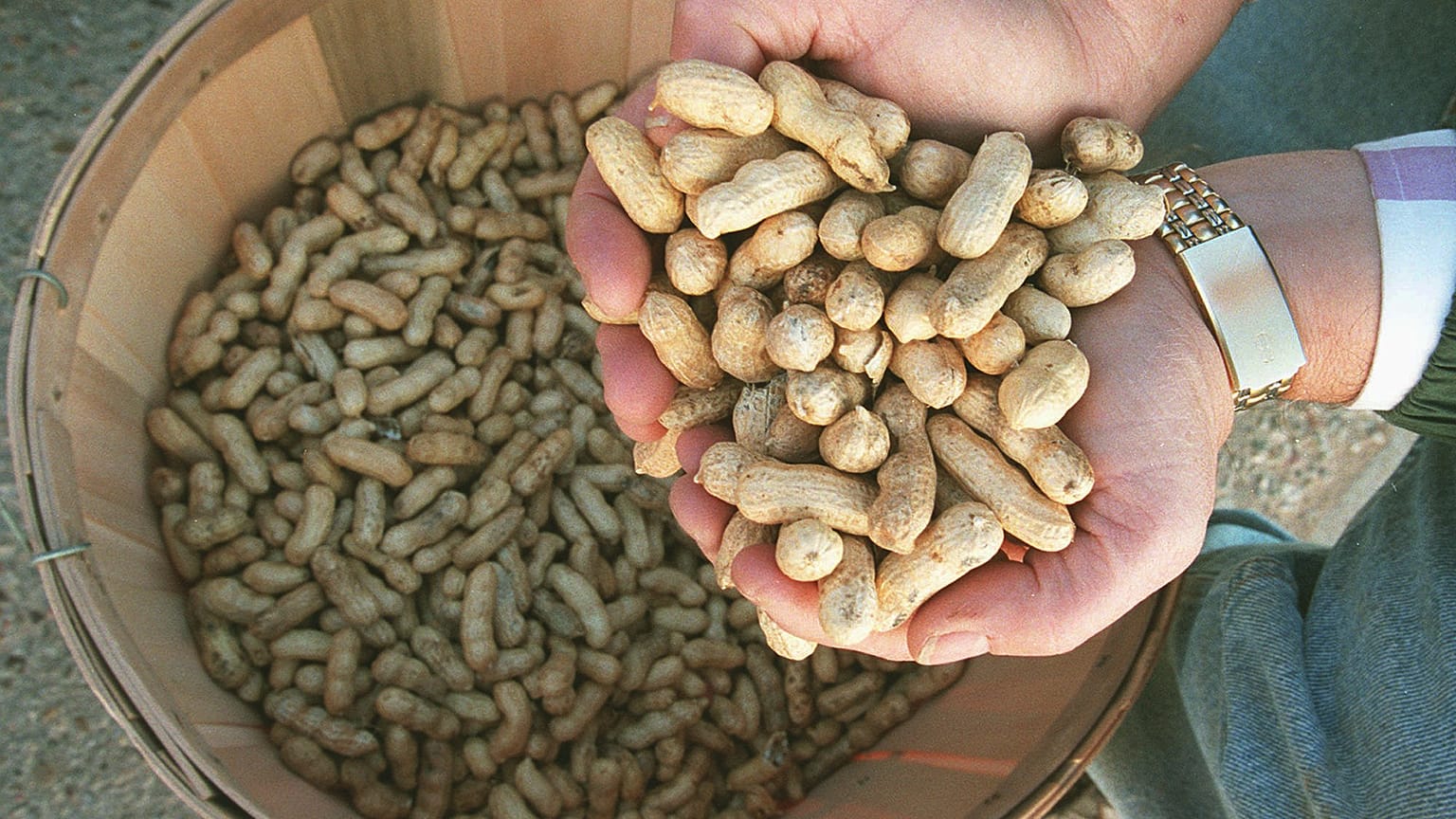
In this file photo taken on 16 December 1997, feed store owner Jerry Foot of Seminole, Texas holds a handful of peanuts grown in Gaines County.
Copyright Brad Farris/AP


By Chaima Chihi & يورونيوز
Published on


Does eating peanuts every day help to maintain memory as we get older?

A recent scientific study indicates that eating peanuts daily may help improve the brain's response to insulin in areas linked to memory in older adults.

The study was published in the journal "Food & Function", and was carried out by researchers from the medical centre at Maastricht University in the Netherlands, with the aim of examining the effect of regular peanut consumption on the brain's response to insulin with advancing age.

The experiment involved 31 healthy people aged between 60 and 75 years.

The participants ate 60 grams of roasted peanuts with their skins and without salt every day for 16 weeks, then the researchers compared the results with another period during which they did not eat peanuts.

Improved brain response to insulin

The results showed an improvement in the response of areas in the right hemisphere of the brain to insulin, including parts of the hippocampus, the parahippocampal gyrus, the lingual gyrus and the posterior cingulate gyrus, which are areas involved in memory processes and other cognitive functions.

To measure this response, the researchers gave the participants insulin through the nose, then used magnetic resonance imaging based on arterial blood labelling to measure changes in blood flow to brain regions.

Insulin plays a role in a number of brain processes linked to learning, memory and communication between nerve cells.

The brain's response to this hormone may become less effective with advancing age, a change that is associated with age related cognitive decline.

However, the researchers did not demonstrate that eating peanuts prevents cognitive decline or stops dementia from developing, but they observed changes in the response of specific brain regions to insulin.

These findings build on previous research by the same team on the same dietary intervention, published in the journal Clinical Nutrition in 2025, where the results showed a 3.6% increase in total blood flow to the brain, along with a 5.8% improvement in verbal memory after the 16 week intervention period.

The researchers believe that the nutritional composition of peanuts may explain some of these effects, as they contain unsaturated fats, fibre, vitamins, minerals and biologically active plant compounds, as well as plant protein.

Peanuts are also a source of the amino acid L-arginine, which the body uses to produce nitric oxide, a compound that helps regulate blood vessel functions and may in turn be linked to learning and memory processes.

Is eating peanuts enough to protect memory?

These findings still need further research to determine to what extent the recorded changes in the brain's response to insulin are reflected in memory and mental performance.

The experiment was limited to 31 people, and the indicators observed by the researchers are not enough to state with certainty that peanuts provide protection from Alzheimer's or other dementia disorders.

Conducting studies on larger numbers of participants and following them for longer periods would help to clarify this relationship and determine whether the potential benefits continue over time.


Canadian minister stops short of endorsing EU carbon tax as energy alliance deepens

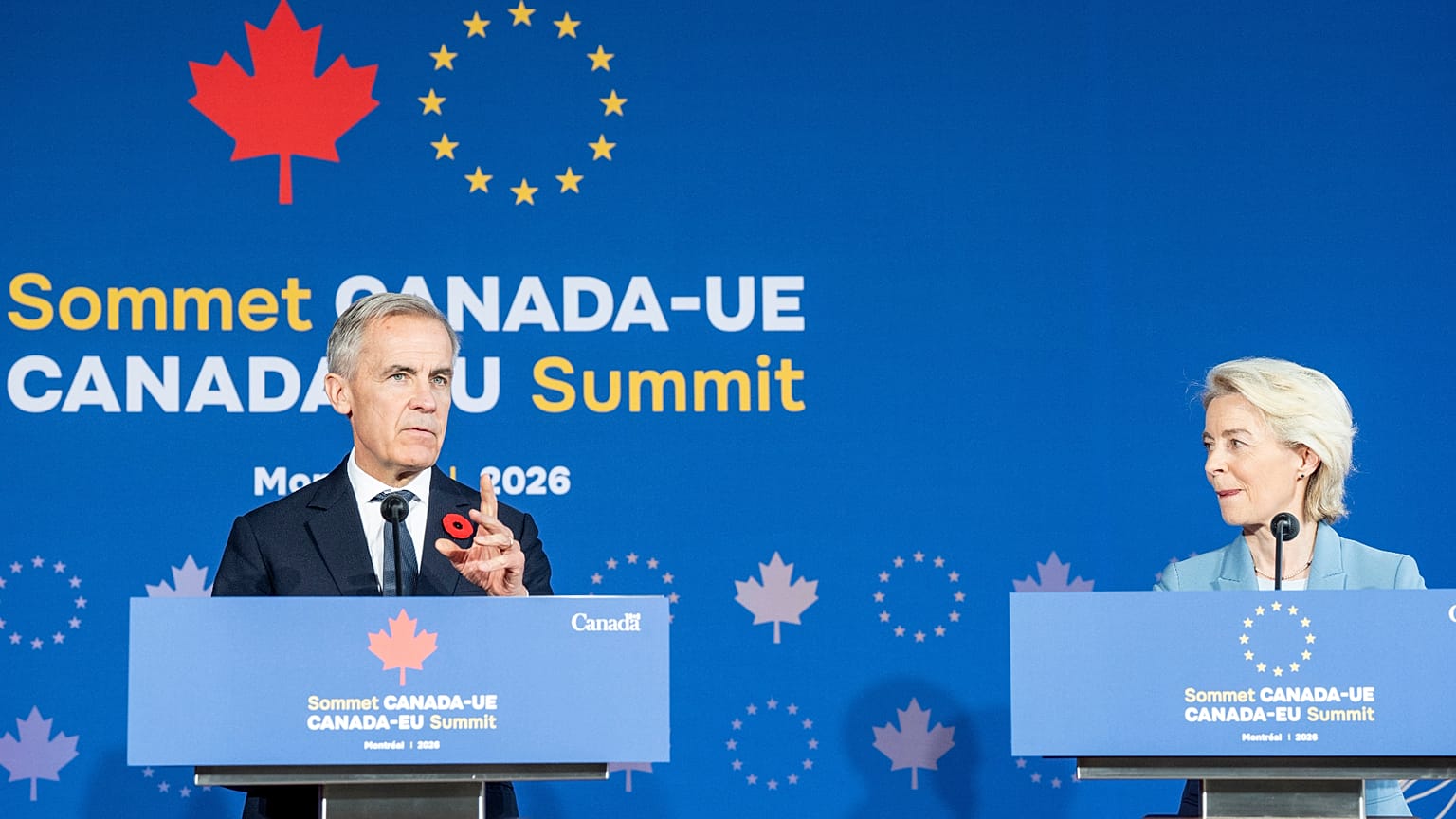
Prime Minister Mark Carney speaks to the media alongside European Commission President Ursula von der Leyen, at the EU-Canada summit.
Copyright AP Photo / The Canadian Press / Christinne Muschi

By Marta Pacheco
Published on


The Canadian climate Minister's reluctance to openly commit to cooperation with the EU on its climate policy stems from the fact that Ottawa is effectively seeking an exemption from the bloc's carbon border tax, according to a December 2025 internal document seen by Euronews.

Canadian Climate and Environment Minister Julia Dabrusin has defended industrial carbon pricing as a tool to cut CO2 emissions and protect businesses from unfair competition, but stopped short of explicitly endorsing the European Union's carbon border tax.

"Industrial carbon pricing is important in a low-carbon economy, which is where the world is going. But these are conversations for us to have (...) those are conversations that are still to be had," Dabrusin told Euronews.

Opposition to the EU's carbon border tax — the Carbon Border Adjustment Mechanism (CBAM) — could expose potential limits to a budding energy alliance between Brussels and Ottawa, as the transatlantic partners embark on a new path of cooperation, hailed at the Montreal summit on 29-30 October.

But when asked whether Canada would back CBAM — which came into effect in January 2026 and imposes a carbon cost on certain imports to protect European producers from competitors operating under weaker climate rules — Minister Dabrusin offered no explicit endorsement.

Dabrusin's reluctance to commit to cooperation with the EU on its climate policy stems from the fact that Ottawa is effectively seeking an exemption from the bloc's carbon border tax, according to a December 2025 internal document seen by Euronews.

"Canada continues to seek a practical agreement with the EU to reduce CBAM's administrative burden for Canadian exporters, and the Prime Minister's Personal Representative to the European Union is fully engaged," the internal document from Canada's trade and foreign affairs ministries reads.

At the closing press conference on 30 October, Canadian Prime Minister Mark Carney said that "a series of trade issues that had been bubbling along" had been discussed, but stopped short of sharing details.

"We are working together to find common solutions (on CBAM and other trade issues)," Carney told reporters on 30 October.

Carney has been attempting to diversify Canadian trade away from its heavy dependence on Washington, making access to the EU market increasingly important.

However, the Canadian document identifies CBAM as a potential obstacle to expanding exports to Europe, particularly in aluminium, steel, critical minerals and hydrogen.

"Canadian exports are not exempt from CBAM and exporters will face carbon charges and complex administrative requirements that could create market access risks and potential competitiveness challenges in the EU market," the document reads.

Lobbying for an exemption

Canada does not qualify for an exemption, despite its existing carbon-pricing policies and close trade relationship with the EU under the Comprehensive Economic and Trade Agreement (CETA), according to the document.

Nonetheless, Ottawa wants Brussels to recognise its domestic carbon-pricing system as sufficiently comparable to the EU's to reduce the administrative and financial burden on Canadian businesses.

Although the legal obligation falls on EU importers, critics argue that such requirements and costs are likely to be passed on to exporters through commercial agreements.

Stephanie Kusie, the Canadian Conservatives' shadow minister for international trade, also raised concerns about how the EU's CBAM could affect businesses.

"Canada is facing an EU carbon tariff in the coming months that could affect $3 billion in Canadian exports. Instead of fixing the issue, the PM has spent months distracting Canadians with talk of the EU," said Kusie.

Between 2021 and 2024, Canadian exports of goods covered by the EU's carbon border mechanism averaged C$28 billion a year, representing 7.4% of Canada's exports to the bloc, according to the document.

Minister Dabrusin said the Canadian government supports industrial carbon pricing, which it has had in place for years and intends to strengthen.

Dabrusin argued that industrial carbon pricing was among the most effective ways to reduce emissions while keeping businesses competitive in a global economy shifting towards lower-carbon production.

However, despite having its own industrial carbon-pricing system, Canada is not exempt from the EU's carbon border levy. Under the bloc's rules, a full exemption is linked to participation in, or a connection with, the EU Emissions Trading System — a condition Canada does not currently meet.

Moreover, the EU's carbon price is significantly higher than Canada's domestic carbon price trajectory.

Battle of semantics over EU-Canada relations

The EU-Canada summit took place as the EU seeks to build a network of trusted economic partners amid souring relations with the United States, which have become more uncertain under Donald Trump's administration.

Canadian Prime Minister Mark Carney told the EU-Canada summit that Ottawa aims to become an associate member by June next year.

However, divergences over the nature of this renewed relationship have been voiced by several member states, led by Germany, particularly over the definition of associate membership. EU leaders agreed to define the concept by the 2027 summit.

Dabrusin told Euronews that, for Canada, delivering on substance rather than semantics was important.

"The main thing for us is deepening the relationship with the EU (...) The conversations we had today underlined how much we have in common in terms of interests and values, and these are things we can build on as we launch the Alliance for the Future," Minister Dabrusin said.


China’s record-breaking clean tech exports could cut CO2 emissions by 8,400 million tonnes - report

Installers unbox solar panels from the Chinese manufacturer LONGi at a project site in Manila, Philippines, on April 30, 2026.
Copyright AP Photo/Anton L. Delgado

By Angela Symons with AP
Published on

Clean tech is growing "much faster than anyone predicted just a few years ago” as gas prices continue to soar.

China is exporting a record amount of clean energy technology and equipment as the energy crisis from the Iran war drives surging demand for renewables. This will help reduce global emissions, according to a report released on 29 October.

Once installed or deployed, these 2026 exports will likely avert emissions of about 450 million tonnes of carbon dioxide per year, roughly equal to Brazil’s annual emissions, says the analysis by the Finland-based Centre for Research on Energy and Clean Air (CREA).

It's a small sign of progress as global efforts to curb climate change fall short. In November, Türkiye will host annual UN climate talks where electrification is expected to be a leading topic.

"This is a pivot point for the outlook of global energy and global emissions," says Lauri Myllyvirta, with CREA. “We’re seeing growth in clean energy that is much, much faster than anyone predicted just a few years ago.”

Record-breaking year for Chinese exports

China is by far the largest global supplier of renewable energy equipment, from solar panels and wind turbines to electric vehicles and batteries. Most of what it makes is sold domestically, but a sizeable share is exported

In the first nine months of 2026, CREA tracked a 61 per cent increase in exports of electric vehicles, a 45 per cent jump in shipments of wind turbines, a 39 per cent spike in battery exports and 22 per cent growth in overseas sales of solar equipment, compared to the same period last year.

Southeast Asia was a major destination. China's clean energy exports to the region jumped nearly 160 per cent from last year to this September, according to Ember, an independent global energy think tank.

The value of China's electric vehicle exports hit $72.8 billion (€65bn) in the first nine months of this year, up from $39.7 billion (€35.5bn) last year, according to the research firm Atlas Public Policy.

A visitor inspects the interior of a BYD car during an exhibition organised by the Indonesian Electric Vehicle Industry Association in Tangerang, Indonesia, Oct. 29, 2026.
A visitor inspects the interior of a BYD car during an exhibition organised by the Indonesian Electric Vehicle Industry Association in Tangerang, Indonesia, Oct. 29, 2026. AP Photo/Tatan Syuflana

Chinese clean tech dents emissions

If these export trends continue for the rest of 2026, about 8,400 million tonnes of carbon dioxide will be averted over the lifetime of all the clean tech China exported this year, CREA estimates.

That's about 24 per cent of annual global emissions, more than the United States' and India's emissions combined.

The analysis by CREA is based on export data, the electricity systems in destination countries and Chinese emissions during manufacturing. Independent experts said the estimate was in line with the scale of China's exports, but were unable to validate the data.

Despite President Donald Trump's higher tariffs, Chinese clean tech exports to the US rose 13 per cent in January-September compared to a year earlier.

“The demand is much stronger than I expected,” Myllyvirta says. “That’s certainly noteworthy.”

China is both the world's biggest provider of clean tech equipment and the largest global source of carbon emissions.

Muyi Yang, a senior policy analyst at Ember, likens China's energy transition to replacing the engine of a ship while it's still at sea.

Installers haul a solar panel onto the roof of a home in Manila, Philippines, on April 30, 2026.
Installers haul a solar panel onto the roof of a home in Manila, Philippines, on April 30, 2026. AP Photo/Anton L. Delgado

Interest in renewables likely to persist, experts say

The drastic war-related disruptions to shipping through the Strait of Hormuz, usually the source for a fifth of the world’s oil and gas, hit import-dependent Asian countries first and hardest.

Renewed interest in clean energy options is likely to persist even after the war, says Yu Sun Chin, with the research group Zero Carbon Analytics.

Consumers in Southeast Asia are paying more for their electricity and fuel and opting for renewable alternatives such as rooftop solar.

Laos, Thailand and Vietnam have offered various incentives for installing solar and purchasing electric vehicles to help reduce dependence on imported fossil fuels.

The Philippines implemented similar policies and became the second-largest destination for Chinese solar exports in the first quarter of 2026. Indonesia has pledged to install 100 gigawatts of solar power by 2029.

“The surge in clean energy policies in Southeast Asia shows there is a paradigm shift happening,” Chin says. “Considering Southeast Asia is one of the most vulnerable regions to climate impacts, every emission cut matters in limiting a rise in global temperatures.”