Thursday, November 05, 2026


Heat raised for UK's MAST Upgrade fusion machine
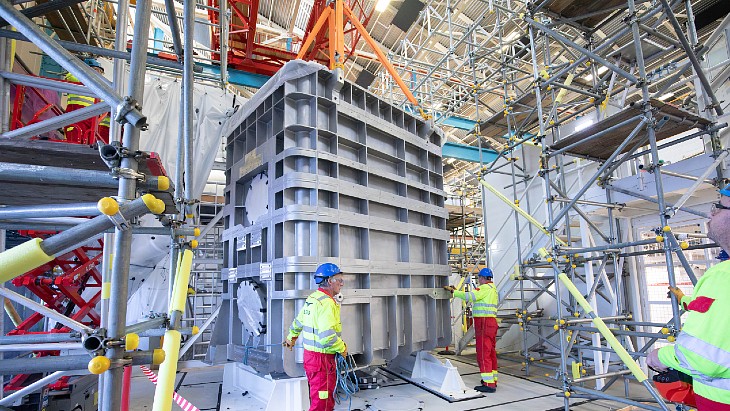


A 12-tonne double beam box, which is set to double the UK's flagship fusion machine's plasma conditions to 60 million degrees Celsius, has been moved into position.
 
(Image: UKAEA)

The UK Atomic Energy Authority (UKAEA) said the double beam box has a "double decker" layout with two neutral beam injectors - injectors fire high-energy neutral atoms into the plasma raising its temperature to more than 30 million degrees Celsius.

It says that adding two more injectors to the machine, at UKAEA's Culham campus near Oxford, doubles its heating power to 8.8 MW and doubles the plasma temperatures, which "will enable researchers to investigate the technologies and physics needed for future fusion power plants".

The double beam box vessel, which has a volume of 20 cubic metres, is made of 316L stainless steel which "offers good vacuum compatibility, essential for the ultra-high vacuum conditions required inside the vessel".

UKAEA says that all major hardware is due to be manufactured and fitted inside it by the end of Autumn 2027 with scientific experiments to use it from 2028.

Andrew Thornton, Head of MAST Upgrade Operations at UKAEA, said: "The lift of the double beam box is a huge step forward for MAST Upgrade. By doubling our heating power, we will explore plasma conditions we simply couldn't reach before. We will be able to study the stability of higher-pressure plasmas while testing how the MAST Upgrade exhaust system copes with these hotter, higher-performance plasmas."

The MAST (Mega Amp Spherical Tokamak) Upgrade has three key aims: to investigate novel exhaust concepts; to de-risk/advance the spherical tokamak design, as a future power plant; and to extend physics knowledge in support of the broader fusion programme.

UKAEA says the machine's core focus is on the exhaust system, known as the tokamak's ‘divertor’ which "takes the particles and heat ejected from the plasma and directs it onto surfaces within the tokamak. To achieve commercial fusion power, we must solve the key issue of plasma exhaust. There will be intense power loads in the large fusion machines in future power plants. This has the potential to damage the divertor components which would require replacement every few years. It would make it difficult for fusion to become an economically competitive energy source. The challenge is to develop a divertor which can reduce the power loads to a manageable level. This would be about the same as in a car engine."

MAST Upgrade, which in August completed its fifth round of experiments during which it achieved the highest plasma pressure it has ever attained while overcoming plasma instability issues considered essential prerequisites for commercial fusion power, is funded by the Department for Energy Security and Net Zero and is part of the EUROfusion European Medium-Sized Tokamak Programme.

Other enhancements this year include the installation of an electron Bernstein wave (EBW) system that will provide an additional 1.6 MW of heating power. EBW technology is planned for use in the Spherical Tokamak for Energy Production (STEP), the UK's prototype fusion power plant to be based in West Burton in Nottinghamshire. The current MAST Upgrade work also includes the "transfer and repurposing of power supply equipment from the Joint European Torus (JET)" machine, which was retired after 40 years in 2023.

STEP is due to begin operating by 2040. The technical objectives of STEP are: to deliver predictable net electricity greater than 100 MW; to innovate to exploit fusion energy beyond electricity production; to ensure tritium self-sufficiency; to qualify materials and components under appropriate fusion conditions; and to develop a viable path to affordable lifecycle costs.


Amentum, Kyoto Fusioneering agree fusion collaboration

Kyoto Fusioneering and Amentum have signed a memorandum of understanding covering international cooperation across the UK, Japan and the USA in advancing fusion energy commercialisation.
 
Colin Baus, Head of Kyoto Fusioneering UK, seated, left, and Loren Jones, Amentum Senior Vice President signed the agreement (Image: Amentum)

The two companies "intend to pursue joint opportunities across major public and private fusion programmes, integrating Amentum's established, technology-agnostic fusion engineering capability and expertise in systems engineering, plant integration, nuclear safety, digital engineering and programme delivery with Kyoto Fusioneering's confinement-agnostic fuel cycle, breeding blanket and plasma heating systems and its experience integrating them into fusion plant designs".

They will also seek to "explore opportunities to combine fusion engineering and expertise with advanced digital and AI-driven engineering and programme delivery tools. This has the potential to optimise design cycles, improve predictive performance and accelerate the transition from experimental systems towards commercially viable fusion plants". 

Kiyoshi Seko, president and chief operating officer of Kyoto Fusioneering, said: "Amentum brings nuclear engineering and programme delivery experience at the scale fusion programmes will need as they move toward construction. We look forward to working with the Amentum team to combine that experience with our fuel cycle, breeding blanket and plasma heating systems."

Mark Whitney, president of Amentum's Energy and Environment business, said: "By combining Amentum’s capabilities with Kyoto Fusioneering’s advanced fusion technologies, we can help address the engineering and delivery challenges required to move fusion from experimental systems towards commercially viable power plants."

Kyoto Fusioneering was spun out of Kyoto University in 2019 and is based in Tokyo and Kyoto with subsidiaries in the UK, the USA and Germany. Amentum is based in Virginia in the US, with about 50,000 employees in more than 70 countries.

 

Floating nuclear power plant 'has boosted air quality'


An environmental monitoring report for Russia's floating nuclear power plant suggests that emissions have fallen almost 80% since it started supplying heating in the area in 2022.
 
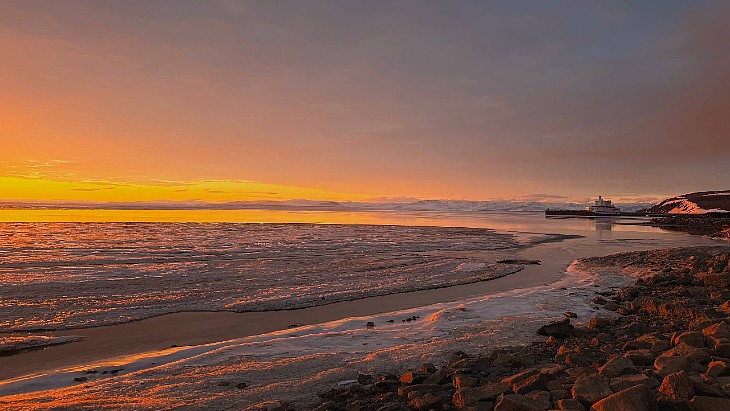
(Image: Rosatom)

According to the operators of the Akademik Lomonosov floating nuclear power plant in Chukotka, on eastern Russia's Arctic coast (pictured above), "after transferring a significant portion of the city's heating load to the floating nuclear power plant, gross emissions of pollutants into the atmosphere decreased almost fivefold - from 11.64 to 2.281 tonnes".

There are 11 automated radiation monitoring stations, plus four in the city of Pevek - population of 5,000 - as part of the environmental monitoring.

The report says that measurements of air emissions, water discharges, soil impacts and waste generation "all comply with established standards. On average, these levels are less than 10% of the maximum permissible values".

According to Russia's state nuclear corporation Rosatom, monitoring of the Chaunskaya Bay in the East Siberian Sea also shows no significant changes. This means, they say, the ecosystem is not experiencing any negative impact from the nuclear power plant.

Chukotka Governor Vladislav Kuznetsov said: "The environmental agenda is our region's number one priority. The Arctic is a fragile and vulnerable territory, and we must work here with particular attention to nature, human health, and the future of Pevek."

Dzhumberi Tkebuchava, First Deputy Director General of Rosenergoatom, said: "The floating nuclear power plant is of great importance for Chukotka and the Russian Arctic. It is a unique energy facility, closely monitored by the entire international community … the industrial environmental monitoring system at each of our nuclear power plants is evolving and improving year after year, as evidenced by the annual improvement in their environmental impact."

The Akademik Lomonosov

The Akademik Lomonosov began commercial operation in May 2020 and is the world's only operating floating nuclear power plant. It is based, with its coastal infrastructure, by the city of Pevek to which it supplies heat and power.

The Akademik Lomonosov has two KLT-40S reactors generating 35 MWe each, which are similar to those used in a previous generation of nuclear-powered icebreakers. It is also providing energy for the development of mining of the Baimskaya ore zone. It has the capacity to provide electricity to a city with a population of up to 100,000 people.

Rosatom is in the process of constructing four floating power units and is targeting the export market for floating nuclear power plants with capacity of at least 100 MWe and an assigned service life of up to 60 years featuring RITM-200M reactors, derived from those used on Russia's latest nuclear-powered icebreakers.

World Nuclear News

Belgian nuclear power plant negotiations extended


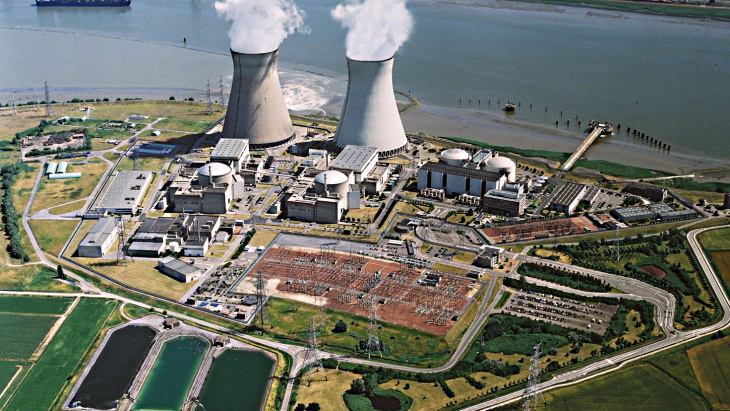
The Belgian state, Engie and Electrabel have agreed to postpone to 12 December the target date for the conclusion of the heads of terms for the potential acquisition of Belgium's seven nuclear power reactors by the state.
 
Doel (Image: Engie)

Engie, the French parent of Belgian power company Electrabel, and the Belgian government began negotiations in late April. At that time, they said their Letter of Intent covered a proposed transaction which "encompasses the full scope of the nuclear activities currently owned and operated by Engie and Electrabel and their affiliates, including the complete nuclear fleet of seven reactors, the associated personnel, all nuclear subsidiaries, as well as all associated assets and liabilities, including decommissioning and dismantling obligations". The joint statement said: "This initiative reflects the Belgian Government's strategic decision to assume direct ownership of the country's nuclear assets, in line with its ambition to extend the operation of existing nuclear reactors and to develop new nuclear capacity in Belgium."

The two sides had aimed to conclude the heads of terms by 1 October. However, they subsequently agreed to postpone to 4 November the target date "to allow the parties to finalise their ongoing analyses and discussions".

The Belgian government, Engie and Electrabel have now agreed to extend the target date to 12 December.

"Given the current circumstances, the complexity and scale of the envisaged operation, the parties have agreed to an additional period to continue their discussions," they said in a joint statement. "Indeed, the in-depth discussions held over the past few months between Engie and the Belgian State have led to progress and strengthened mutual understanding of the issues. However, significant differences remain, particularly regarding the valuation of the transaction, and the parties wish to take the necessary time to try to reconcile their positions.

"The parties have therefore given themselves a maximum period of one additional month."

Background

Belgium's federal law of 31 January 2003 required the phase-out of all seven nuclear power reactors in the country. Under that policy, Doel 1 and 2 were originally set to be taken out of service on their 40th anniversaries, in 2015. However, the law was amended in 2013 and 2015 to provide for Doel 1 and 2 to remain operational for an additional 10 years. Doel 1 was retired in February 2025. Doel 3 was closed in September 2022 and Tihange 2 at the end of January 2023. Tihange 1 was disconnected from the grid on 30 September 2025. The fifth closed unit, Doel 2 in the Flanders region, was taken offline for the final time after 50 years of operation and disconnected from the grid in December.

Belgium's last two operating reactors - Doel 4 and Tihange 3 - had also been scheduled to close at the end of 2025. However, following the start of the Russia-Ukraine conflict in February 2022 the government and Electrabel began negotiating the feasibility and terms for the operation of the reactors for a further ten years, to 2035. A final agreement was reached with a balanced risk allocation - equal ownership of Doel 3 and Tihange 4 between the Belgian state and Engie, and the transfer of nuclear waste liabilities from Engie to the Belgian state for EUR15 billion (USD16 billion) payable in two instalments.

For the continued operation of Doel 4 and Tihange 3, Electrabel had to submit an extensive LTO (Long Term Operation) file with safety studies and an action plan to further increase the safety of the youngest reactors. This file was submitted in December 2024 for both units. Tihange 3 was taken offline on 5 April 2025 for a so-called 'LTO overhaul' - an extensive inspection and maintenance period with a view to safe long-term operation of the reactor. After a thorough analysis, regulator FANC and its technical subsidiary Bel V determined that the reactor met the conditions for a safe restart and the 1020 MWe PWR resumed operation on 10 July. Doel 4 was taken offline on 30 June for its LTO overhaul and was restarted on 8 October.

In February 2025, Belgium's new coalition government announced plans to operate the two units for a further 10 years beyond 2035. In May 2025, Belgium's federal parliament voted by a large majority to repeal the 2003 law which set out a phase-out of nuclear power and ban on the construction of new nuclear generating capacity.

Helen to assess environmental impacts of SMR in Helsinki

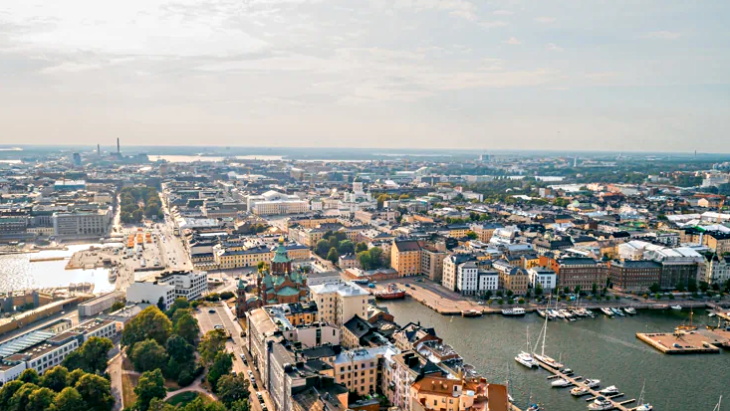
Finland's Helen Ydinvoima Oy has launched an environmental impact assessment on the construction of a small nuclear power plant at one of three potential sites in Helsinki.
 
(Image: Helen)

Helen - which currently produces heat, electricity and cooling in power plants and heating plants in different parts of Helsinki - is aiming for carbon-neutral energy production by 2040. In September 2024, the company launched the first phase of its nuclear programme, aimed at constructing a small nuclear power plant for producing heat for Helsinki city. Its nuclear energy programme will evaluate small modular reactors (SMRs) based on proven solutions, which can be used to produce just heat or both electricity and heat. During the initial phase of its nuclear programme, Helen said it will negotiate with potential partner shareholders, evaluate plant suppliers and determine potential plant sites.

The company has now published its Environmental Impact Assessment (EIA) Programme for the planned plant for public consultation, marking the start of the project's statutory environmental impact assessment procedure in Finland. The purpose of the EIA procedure is to identify and assess the project's impacts on the environment, people, and society, and to provide information to support planning and decision-making. The process also gives authorities, stakeholders, and the public access to information and opportunities to participate.

Possible locations for the SMR plant include the Salmisaari and Vuosaari power plant areas and Norrberget in Ă–stersund. The EIA procedure evaluates five possible implementation options, depending on the chosen plant technology and location. Both a heat-only plant and a combined heat and power plant are to be considered. In addition, an alternative is assessed in which the project is not implemented. The impacts of the construction of a cogeneration plant producing electricity and heat are only being assessed in Vuosaari and Norrberget. Helen said the cogeneration plant requires new connections to be built due to the production of electricity, such as cooling water arrangements and electricity transmission lines. Due to limited space, it is not possible to implement a cogeneration plant in Salmisaari, it said.

The environmental impact assessment will examine the maximum capacities of the plants: the thermal capacity of the heat generating plant is 600 MW (reactor capacity 630 MW) and the thermal capacity of the cogeneration plants is 700 MW and the electrical capacity is 500 MW (reactor capacity 1,400 MW). The characteristics of the final plant will be specified as the design progresses and may be smaller in size.

The EIA will proceed in two stages. The programme stage explains which impacts will be assessed and how the assessment will be carried out. The results of the assessments will be compiled into an environmental impact assessment report, which will be published in 2028. Statements and opinions will be collected on both the EIA programme and the EIA report.

Sweden-based engineering, project management and advisory company AFRY is acting as the EIA consultant for the project and is also supporting Helen's nuclear energy programme with studies related to potential plant locations and technical solutions. Helen said its goal is to make a decision on a potential plant location in 2028.

"Helen wanted to launch the environmental impact assessment as early as possible so that the impacts and implementation conditions of the project can be thoroughly investigated before further planning," said Helen's Nuclear Siting Manager, Melina Laine. "The environmental impact assessment produces key information to support decision-making and permit procedures on the impacts the project will have on the environment and residents of the surrounding area."

The SMR plant would reduce the load on electricity transmission connections and strengthen the energy self-sufficiency of Finland and Helsinki, the company said.

Helen Ydinvoima Oy CEO Pekka Tolonen added: "We are investigating the possibilities of nuclear power for the needs of a growing and vibrant city. With low-emission and weather-independent nuclear power, it is possible to curb fluctuations in energy prices and ensure the availability of energy in all situations."

Initial fuel loading completed at second San'ao unit

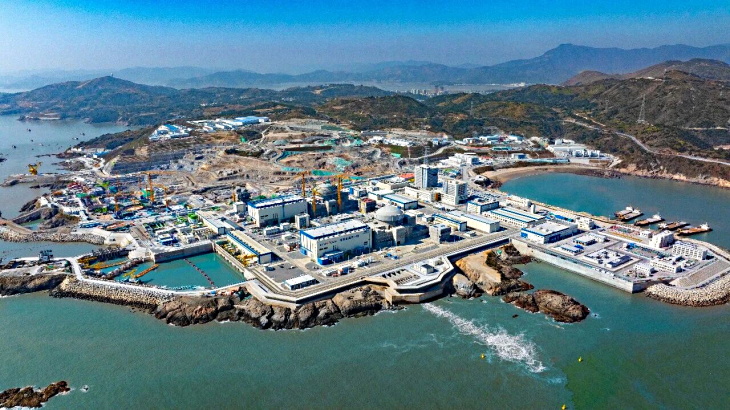
The loading of fuel assemblies into the core of unit 2 at the San'ao nuclear power plant in China's Zhejiang province has been completed ahead of its start up. The unit is the second of six HPR1000s (Hualong Ones) planned at the site.
 
(Image: CGN)

China General Nuclear (CGN) said the milestone, completed on 2 November, marks "the official entry of the unit into a new stage of nuclear-powered operation and commissioning. This is another key step for San'ao Nuclear Power towards the goal of achieving full completion and commissioning of the first phase of the project".

The company noted that the fuel loading operation at San'ao 2 utilised semi-automatic equipment. "After the staff completed the fuel loading sequence programming, the programme was imported into the refuelling machine's control system," CGN said. "Specialised fuel operators then controlled the equipment, sequentially transferring 177 fuel assemblies from the spent fuel pool's fuel racks to the reactor core. Notably, this loading operation also utilised a floating light gun independently developed by CGN, providing underwater illumination for the core operations and effectively ensuring the smooth progress of the loading process."

The background

On 2 September 2020, the executive meeting of the State Council approved the construction of units 1 and 2 as the first phase of the plant. China's National Nuclear Safety Administration issued a construction permit for the two units on 30 December that year and first concrete for unit 1 was poured the following day. The first concrete for San'ao 2 was poured on 30 December 2021.

Unit 1 achieved first criticality in February this year and was connected to the grid in March. The reactor was declared to be in commercial operation on 29 April.

Cold functional tests - which are carried out to confirm whether components and systems important to safety are properly installed and ready to operate in a cold condition - were completed at San'ao 2 in October last year. Hot functional tests - which simulate the temperatures and pressures which the reactor systems will be subjected to during normal operation - were completed in April this year. San'ao 2 is scheduled to begin supplying electricity in 2027.

The San'ao plant is the first nuclear power project in China's Yangtze River Delta region to adopt the Hualong One reactor design.

The construction of two Hualong Ones as units 3 and 4 of the San'ao plant was among plans for 11 reactors approved by China's State Council in August 2024. The first concrete was poured for the nuclear island of unit 3 on 19 December last year. A further two Hualong One units are planned as units 5 and 6.

Upon completion, the project will provide more than 54 TWh of electricity annually to Zhejiang Province and the Yangtze River Delta region, reducing standard coal consumption by more than 16 million tonnes and carbon dioxide emissions by more than 51 million tonnes annually, CGN noted.

The San'ao project marks the first Chinese nuclear power project involving private capital, with Geely Technology Group taking a 2% stake in the plant. CGN holds 46% of the shares of the project company Cangnan Nuclear Power, with other state-owned enterprises holding the remainder.

FANCO expands cooperation with Hyundai E&C on EAGL-1


US small modular reactor developer First American Nuclear Co has signed a comprehensive master service agreement with South Korea's Hyundai Engineering & Construction.
 
(Image: Hyundai E&C)

The master service agreement - signed at Hyundai E&C's headquarters in Gye-dong, Jongno-gu, Seoul, on 30 October - advances to the contract stage a framework agreement the two companies signed in July on First American Nuclear Co's (FANCO's) EAGL-1 project. A master service agreement is a basic agreement that predetermines common contractual conditions and responsibilities to be applied for continuous cooperation between companies; subsequently, whenever specific tasks arise, details such as the scope of work, duration, and contract amount are finalised through individual task orders.

EAGL-1 is a lead-bismuth cooled fast-spectrum small modular reactor (SMR) designed for factory fabrication and scalable, multi-unit deployment. It can operate in a closed-fuel cycle in which used fuel is continuously reprocessed and reused. FANCO submitted a regulatory engagement plan for the 240 MWe SMR to the US Nuclear Regulatory Commission in April, marking the start of its pre-application engagement with the regulator.

FANCO says its system will focus on mixed-oxide fuel and other transuranic fuels sourced from existing US Department of Energy stockpiles, although the EAGL-1 system is also capable of operating on high-assay low-enriched uranium. This "fuel-agnostic" approach means it can avoid major supply chain bottlenecks while helping reduce the nation's stockpile of long-term nuclear waste, the company says. Its BridgePower solution offers customers the ability to generate immediate power using off-the-shelf package boilers that feed steam turbines, and later seamlessly transitions to nuclear energy by replacing the boilers with the EAGL-1 reactor, using the same turbine infrastructure, with minimal equipment and modification costs.

Under the framework agreement signed in July, Hyundai E&C and FANCO were to collaborate on the early stages of the project, including the design of the balance of plant (all support components and auxiliary systems of nuclear power generation necessary to deliver energy) for the EAGL-1 nuclear power plant, support for BridgePower solutions, constructability reviews, and modularisation strategies. The partners also planned to explore implementation measures to participate as an engineering, procurement, and construction (EPC) partner in the EAGL-1 Project in the future.

The master service agreement signed between Hyundai E&C and FANCO is valid for five years, but can be extended by mutual agreement. During the contract period, Hyundai E&C will perform tasks related to FANCO's EAGL-1, including: constructability reviews; design and engineering technical consulting; and provision of technical feedback in the construction sector.

"In particular, it is evaluated that the possibility of future participation in the project construction has been increased by incorporating Hyundai E&C's EPC know-how from the design stage," the Korean company said.

In May, FANCO and Canadian engineering firm AtkinsRéalis formed a strategic alliance to establish a scalable framework for deploying FANCO's EAGL-1 SMR and associated fuel facilities, with AtkinsRéalis providing engineering services.

In a statement, Hyundai E&C said: "Hyundai E&C is expanding its global achievements not only in large-scale nuclear power plants but also in the next-generation energy construction market. Through this contract with FANCO, we will lead the commercialisation of the EAGL-1 Project and further solidify our leading position in the US SMR market."

Last month, Hyundai E&C announced the signing of memorandums of understanding with US SMR developers NANO Nuclear Energy and ARC Clean Technology.

Texas SMR plant moves to final permitting stage


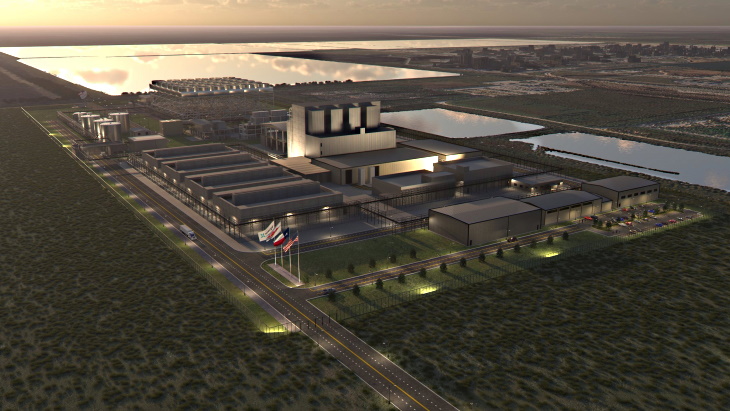
The US Nuclear Regulatory Commission says there will soon be a construction permit announcement after it finished its safety review for the Xe-100 reactor, which is proposed for deployment at the Long Mott Generating Station in Texas.
 
(Image: X-energy)

The Nuclear Regulatory Commission (NRC) released its Final Safety Evaluation Report for the Long Mott Generating Station construction permit application on 30 October, after a comprehensive review of the Xe-100 plant's principal design criteria, preliminary design, safety analyses, probabilistic risk assessment, and research and development programmes. The report documents the conclusion of the NRC staff that the proposed plant and site provide the safety basis to begin construction under US nuclear regulations.

The NRC completed its environmental review for the project in May, when it issued an Environmental Assessment and Finding of No Significant Impact. This means that both of the primary reviews needed for the NRC to approve the construction permit application have now been completed, X-energy said. With both primary reviews complete, the project moves to the final stages of the NRC's construction permit review. On its social media channels, the regulator said its followers should "stay tuned for a construction permit announcement soon".

Long Mott Energy, a wholly owned subsidiary of The Dow Chemical Company, submitted the construction permit application for the proposed plant - consisting of four Xe-100 high-temperature gas-cooled reactors, capable of generating a total output of 800 MWt or 320 MWe - in March 2025. The plant would be used to generate electricity and process steam for the Dow Chemical Company's Seadrift Operations, exporting any excess power to the electrical grid: X-energy says this would make it the first grid-scale advanced nuclear reactor at an industrial facility in US history.

The commercial licensing effort for X-energy's technology is supported by pre-application engagement with the NRC dating to 2018, as well as decades of US Department of Energy research on high-temperature gas-cooled reactor (HTGR) technology. The Xe-100 is the first HTGR construction permit application to use the NRC's technology-inclusive, risk-informed, and performance-based licensing framework.

"Licensing a new reactor is earned through the quality of the application and the rigor of the regulator's review," said Dragan Popovic, Chief Global Operating Officer at X-energy. "The NRC's completion of its safety review reflects years of disciplined work by our team and the NRC staff, establishing the foundations to support every Xe-100 application that follows on the path to scale."


Kazakhstan aims for 100-year uranium reserve


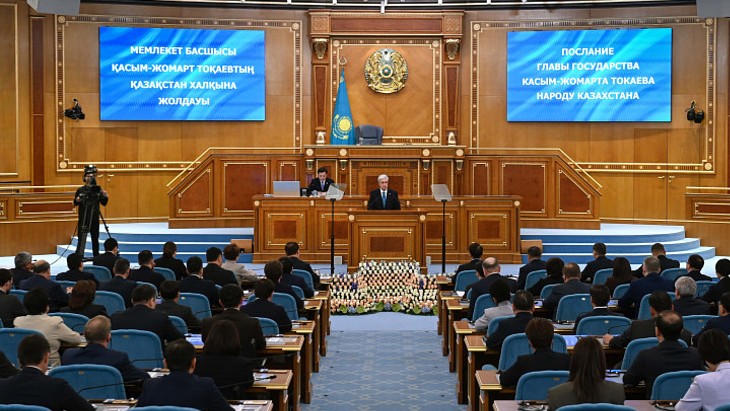
Kazakhstan is aiming to develop its strategic uranium reserve to meet the needs of its planned nuclear power plants for more than 100 years, President Kassym-Jomart Tokayev has said.
 
The president set out policy priorities in a speech to the nation (Image: Kazakstan's President's Office)

President Kassym-Jomart Tokayev set out the ambition in an address to the nation last week, saying: "As a result of a nationwide referendum, the right decision was made to build several nuclear power plants in our country. We need to start thinking now about how we will supply these stations with uranium raw materials in 50 years, and even beyond.

"The proposal to create a state strategic reserve of uranium for the next 100 years to meet the needs of nuclear power plants in Kazakhstan is very reasonable. I believe that this initiative needs to be comprehensively developed."

On Tuesday, according to the official presidential press service, he was briefed by Kazatomprom's Chairman Meirzhan Yusupov "on the measures to create the State Strategic Uranium Reserve". This includes the company "conducting geological exploration in six areas with a total area of more than 1,000 square kilometres. It is also planned to explore the promising Kyzyltu area with an area of 124 square kilometres".

The official Kazinform news agency reported that the Chairman of the Atomic Energy Agency, Almassadam Satkaliyev, told a committee on economic policy, industry, and energy that the country's development strategy calls for the reserving of at least 150,000 tonnes of uranium by 2050, and work was on-going to develop and approve a conceptual framework for establishing the strategic reserve.

He added: "The strategic reserve is expected to be developed as a comprehensive, multi-level system covering the entire nuclear fuel supply chain, from reserving uranium deposits underground to building physical stockpiles of natural uranium, reserves of ready-to-use nuclear fuel, and other mechanisms."

New nuclear capacity

An intergovernmental agreement setting out the key principles - and export loan financing - for Kazakhstan's first nuclear power plant project - the Balkhash Nuclear Power Plant - was signed in May during Russian President Vladimir Putin's state visit to the country.

Further details of the financing was not included in the official announcements, although Kazinform said that preliminary estimates put the cost of the two units at about USD14.4 billion, with another USD2 billion earmarked for physical security systems and social infrastructure. It reported that the construction start was targeted for 2027, and the aim was for operation of the first unit in 2034.

An engineering, procurement and construction contract was signed by Russia's Rosatom in September for the plant, which is set to feature two of its VVER-1200 pressurised water reactors.

Kazakhstan has been preparing for a nuclear power programme to reduce its reliance on fossil fuels, diversify its energy mix and reduce CO2 emissions for some time. Kazakhstan Nuclear Power Plant, a subsidiary of Kazakhstan's Samruk-Kazyna National Welfare Fund JSC, was set up in 2014. In a referendum in 2024 more than 70% of the 7.8 million people who voted answered 'yes' to the question: "Do you agree with the construction of a nuclear power plant in Kazakhstan?"

In addition to the initial nuclear power plant, China National Nuclear Corporation is lined up to build a second one, at a site also in the Zhambyl district, adjacent to the site selected for the first plant. The government has set a target for nuclear to produce a 5% share of the national generation mix by 2035.

According to the Kazinform report on Satkaliyev's comments, sites are currently being examined for a third nuclear power plant in the country. It said that in terms of technology, "medium-sized nuclear power plants are considered - from 300 to 600 MW ... in addition to electricity production, such plants can provide heat supply and desalination".

Kazakhstan has 14% of the world's uranium resources and has been the world's leading uranium producer since 2009. In 2025 Kazakhstan produced about 25,839 tU, which was about 40% of the world’s total.

Eagle Nuclear Energy to acquire Noble Plains Uranium 


Eagle Energy’s Aurora uranium project in southeast Oregon. credit: Eagle Energy Metals

Eagle Nuclear Energy (NASDAQ: NUCL) announced Wednesday it has signed a binding Letter of Intent (LOI) to acquire 100% of Noble Plains Uranium (TSX-V: NOBL, OTCQB: NBLXF, FSE: INE0) in an all-stock transaction. 

The deal will expand Eagle’s resource footprint beyond Oregon, where it is advancing its Aurora uranium project, which it says is the largest mineable uranium deposit in the US. The company’s land package spans the Oregon-Nevada border, with the mine on the Oregon side and the plant on the Nevada side. 

Under the LOI and subject to a definitive agreement, Eagle will acquire 100% of Noble Plains’ issued and outstanding common shares at a deemed price of C$0.125 per Noble Plains’ share. Based on the Exchange Ratio of 0.0167 Eagle shares for each Noble Plains share, the offer price represents a premium of approximately 92% to the closing price of Noble Plains shares on the TSXV on October 29 of C$0.065.  

Upon closing it is anticipated that existing Eagle stockholders will hold approximately 95.22% and former Noble Plains shareholders will hold approximately 4.78% of the equity of Eagle, on an issued and outstanding share basis. 

Noble Plains is a U.S.-focused uranium exploration and development company advancing two In-Situ Recovery (ISR)-amenable projects strategically located within two of the country’s most prolific uranium districts in Wyoming.  

Noble Plains’ ISR portfolio combines brownfield projects covering ~5,965 acres of demonstrated ISR geology in close proximity to established operators. 

Noble Plains has an option to acquire an 80% interest in its flagship Duck Creek project located in the Powder River basin of Wyoming that hosts a U₃O₈ resource, reported on a 100% basis, containing 5.32M lbs in the Indicated category and an additional 1.04M lbs in the Inferred category, as reported by Noble Plains under the Canadian NI 43-101 regulatory standards.  

Eagle said its technical team believes this current resource estimate represents a relatively small portion of the total resource potential at Duck Creek, as it covers only 2.5 miles of a total 5.25-mile trend, and sits entirely in the shallower of two prospective mineralized formations.  

The company said it plans to unlock significantly more value at Duck Creek through the execution of a systematically phased exploration program over the next 12-18 months. 

Noble Plains’ Shirley Central is an earlier-stage uranium project that represents additional prospectivity for developing U₃O₈ resources in the strategically prominent Shirley basin of Wyoming. 

“This transaction gives Eagle greater scale at a time when demand for U.S. uranium is growing,” Eagle Nuclear Energy CEO Mark Mukhija said in a news release.  

“Noble Plains adds established resources in Wyoming and strengthens our portfolio with favorable ISR geology. We believe we can move these assets forward efficiently while we continue to work towards development of an integrated nuclear energy platform combining domestic uranium resources with advanced SMR technology,” Mukhija said.  

“We’ve proven we can acquire uranium assets with historical data, move them forward quickly and add value without having to recreate decades of work,” Noble Plains CEO Drew Zimmerman added. “Combining with Eagle gives us more scale and the capital to keep executing that strategy. We have a strong resource at Duck Creek, more opportunity across the portfolio and existing uranium infrastructure all around us.”  

Eagle’s stock was down 2.8% on the NASDAQ at Wednesday’s closing. The company has a $123.5 million market capitalization.  Noble Plains stock closed the day up 13% on the TSX.   

Iran War Triples Logistics Costs for Oil Services Firms


By Julianne Geiger - Nov 03, 2026


Oilfield services companies are paying as much as three times their usual logistics costs in the Middle East, with fuel expenses doubling and labor costs climbing by as much as 40%, as the Iran war continues to disrupt equipment deliveries and project operations.

Executives speaking Tuesday at the ADIPEC energy conference in Abu Dhabi described mounting financial pressure from the nine-month conflict, which has damaged infrastructure, forced employee evacuations, and made moving equipment through the Strait of Hormuz increasingly difficult.

Alessandro Bernini, CEO of Italian engineering company Maire, said logistics costs on some Middle Eastern contracts have tripled, while labor expenses have risen between 30% and 40%.

Those increases are cutting into contractors' margins and raising the cost of completing energy projects. Bernini warned that the additional expenses would eventually contribute to higher energy prices and inflation.

For Saipem, another Italian energy contractor, the problem is getting equipment to its destination in the first place.

"We have been sitting outside Hormuz for months," CEO Alessandro Puliti told the conference.

National Energy Services Reunited (NESR), which operates across Saudi Arabia, the UAE, Kuwait, Oman and Iraq, has been storing materials in warehouses for longer periods to protect against supply interruptions. Those precautions come with additional costs that contractors often cannot recover.

"You eat it most of the time," NESR CEO Sherif Foda said.

Recent earnings reports show how uneven the industry's recovery has been.

SLB reported a 9% sequential increase in third-quarter Middle East and Asia revenue to $2.81 billion, although the figure remained 6% below year-earlier levels. The company said Middle Eastern activity recovered during the quarter before renewed disruptions emerged in September.

Baker Hughes reported $1.26 billion in Middle East and Asia oilfield services revenue, down 13% from a year earlier, partly reflecting a business divestiture.

Higher oil prices have encouraged additional drilling activity in some markets, creating more work for service providers. But the equipment, personnel, and transportation needed to perform that work have become considerably more expensive.

For contractors already committed to Middle Eastern projects, the immediate question is how much of those additional costs they can pass along to customers.

By Julianne Geiger for Oilprice.com
Hormuz Oil Flows Unlikely to Return to Pre-War Levels, Rystad Says


By Michael Kern - Nov 03, 2026


The United States and Iran could reach some form of a limited agreement by the middle of 2027, which would allow oil flows from the Strait of Hormuz to continue to gradually recover, but fundamental differences will remain, and the Middle East situation will remain far from normal next year, according to Rystad Energy.

“Achieving a comprehensive settlement would require addressing issues related to Iran’s nuclear program, sanctions, Tehran-backed armed groups in the region, and the security of maritime shipping, while also taking into account Israel’s security interests,” Rystad Energy said in a report cited by Azeri news agency Trend.

“We consider it unlikely that all these points of contention can be resolved within the coming year,” the analysts led by Rystad’s Head of Geopolitical Analysis, Jorge LeĂ³n, wrote in the report.

Oil flows through the Strait of Hormuz will continue to recover gradually, but are unlikely to reach pre-war levels in a normalized trade flow, according to the energy intelligence firm.

Rystad Energy has estimated that crude oil exports from Persian Gulf producers averaged nearly 12 million barrels per day (bpd) in September and the first 20 days of October.

“While this is well above the lows recorded earlier in the conflict, it remains substantially below the pre-war level of approximately 18 million barrels per day,” the report reads.

While flows have recovered substantially from the lows in the spring, the security situation in and near the Strait of Hormuz has actually deteriorated, with a higher number of attacks on tankers in recent weeks, according to Rystad Energy.

In the near term, the risk of renewed military escalation following the U.S. midterm elections could be another setback to the recovering Hormuz oil flows.

Early on Tuesday, as voting in the midterms began on the U.S. East Coast, oil prices rebounded from Monday’s 7% loss following a Wall Street Journal report about a U.S. strike on Iran’s Qeshm Island in the Strait of Hormuz.

By Michael Kern for Oilprice.com
China Now Home to Nearly Half of World's Clean Industrial Plants

By Irina Slav - Nov 04, 2026


China is home to 49% of the world’s “clean industrial plants” thanks to massive investments in energy transition projects, solidifying its position as the biggest investor in wind, solar, batteries, and other alternative energy sources.

According to a report by decarbonization outlet the Mission Possible Partnership, China accounted for $45 billion in energy transition investments this year. The number of “clean industrial plants: above includes both facilities already in operation and facilities under construction, Reuters noted in a report on the news.

The Mission Possible Partnership tracks decarbonization in so-called hard-to-abate sectors of the global economy, including cement, steel, aviation fuel, methanol, and aluminum production. According to its report, this year saw a record high of industrial decarbonization projects reaching their final investment decision on a global scale. Of that total, which stood at 36 projects, 23 were in China.

“We have seen a record number of final investment decisions in the last 12 months, but we need to move from tens to hundreds of financed plants each year,” the organization’s chief executive said.

Last month, the country’s National Energy Administration reported that China’s total installed wind and solar power generation capacity exceeded 2 billion kW by the end of September, with 170 million kW in new capacity added over the first nine months of the year.

Despite its leadership in alternative energy and fuel investment, China also remains a top consumer of hydrocarbons and a leading importer of energy commodities. It is also the country building most of the world’s new coal power generation capacity. China is the world’s biggest coal consumer, and it still relies on the fuel for nearly 50% of its power generation.

By Irina Slav for Oilprice.com


Democrats’ win puts US mining agenda under scrutiny


President Donald Trump delivers remarks the day before the midterm elections, Nov. 2, 2026, at the Lincoln Memorial Reflecting Pool. Credit: Official White House Photo by Joyce Boghosian

Democrats’ capture of Congress raises the prospect of greater scrutiny of President Donald Trump’s mining and energy agenda, even as pressure to lower electricity costs could create an opening for a bipartisan permitting deal.

The party won control of the House of Representatives and Senate in Tuesday’s midterm elections, setting up divided government from January. Investors face the possibility of tighter regulation of data centre construction and closer examination of federal investments, while permitting reform could provide common ground on energy affordability, according to assessments from BMO and Wood Mackenzie.

“While we see the likelihood for permitting reform, how policy is legislated and implemented remains a risk to the U.S. economy,” David Brown, Wood Mackenzie’s director of global integrated energy research, said Wednesday. “Entrenched partisanship could fuel policy stagnation and regulatory confusion.”


For miners, the election puts the durability of Trump’s mining agenda to the test. Democrats have already challenged Washington’s financial stakes in mining companies and questioned the terms of a bipartisan permitting proposal. Their stronger negotiating position could reshape that legislation, while scrutiny of data centres could affect a source of growing copper demand.

Greater scrutiny

Democrats’ concerns about federal mining investments predate the election. Senator Martin Heinrich and Representative Jared Huffman, the senior Democrats on the Senate energy and House natural resources committees, sought a watchdog investigation in August into financial safeguards and potential conflicts when Washington acts as both investor and regulator.

They asked the Government Accountability Office to examine how agencies assess investment risks, protect taxpayer funds and manage permitting decisions involving companies in which the government holds stakes.

Democratic control could also bring investigations into presidential family interests in companies, while appointments of officials, ambassadors and judges could be blocked or delayed, BMO said in a Wednesday note.

The prospect of stronger regulation could slow data centre development and soften inflationary pressures, the bank said. That contrasts with Wood Mackenzie’s assessment that pressure to lower electricity costs could encourage both parties to accelerate infrastructure approvals.

Gold gains

Gold and copper face different pressures from the result, according to TD Securities strategists Ryan McKay and Bart Melek.

Constraints on Trump’s fiscal agenda could limit further spending, helping push the dollar and longer-term Treasury yields lower and lifting gold back above $4,000 per oz., they said in a Wednesday note.

Copper initially weakened on the prospect of increased scrutiny of artificial intelligence data centre construction before recovering as tight physical supplies, particularly in China, supported prices, they said.


Potential AI regulation could challenge a major source of stock market gains, according to Russ Mould, investment director at AJ Bell (LSE: AJB). The British investment platform had £126 billion in administered assets at Sept. 30.


“Given that AI has been the key to considerable stock market wealth creation in recent years, the prospect of red tape could put the brakes on this hot investment theme,” Mould said in emailed comments. “However, a positive market reaction implies that certain investors are welcoming the potential that Trump’s political power may be curbed somewhat.”

Gold rose 2.7% to $4,038 per oz. in the early trading snapshot cited by Mould, who suggested investors were adding protection against uncertainty over Trump’s response to the result.

The election leaves metals tariffs largely outside Democrats’ immediate reach. Section 232 duties on steel, aluminum and copper products remain under presidential authority, as would potential tariffs on refined copper from January, BMO said.

Those tariffs survived Democratic gains in the 2018 midterms and are widely viewed as having strong bipartisan support, the bank added.

Permitting bargain

Wood Mackenzie’s case for a permitting deal rests on a shared incentive to reduce energy costs and a proposal already backed by senators from both parties.

The Bipartisan American Affordability and Jobs Act, introduced before the election, would overhaul federal environmental reviews and permitting. Republican senators Shelley Moore Capito and Mike Lee joined Democrats Sheldon Whitehouse and Heinrich in sponsoring the proposed legislation to accelerate energy and mineral development.

The package would strengthen review deadlines, restrict agencies’ ability to revoke permits and narrow the window for legal challenges. Wood Mackenzie highlighted two-year environmental impact reviews, a 150-day litigation window following environmental approvals and a nine-month timetable for evaluating dredge-and-fill permits needed for new gas pipelines.

But Democratic support for reform does not guarantee support for the existing compromise.

Huffman questioned the Senate package in a September statement, seeking stronger protections for communities, wildlife and renewable energy projects. He argued that Democrats should wait for greater negotiating power after the election.

“Folding our hand now or in the lame duck makes no sense,” Huffman said.

Trump would retain veto authority, and the impact of any legislation would depend on implementation by executive agencies, Wood Mackenzie cautioned. New renewable energy subsidies proposed by Democrats would be unlikely to overcome a presidential veto, the consultancy said.

Power pressure

Rising electricity costs could provide an incentive for compromise. Wholesale U.S. power prices could climb 46% between 2026 and 2035 under Wood Mackenzie’s base case as data centres and other infrastructure expand, the consultancy said.

It forecasts 166 gigawatts of net new gas-fired generating capacity over that period. Much of that development would require additional pipelines, making gas infrastructure approvals a potential constraint on electricity supply.

“Without reform, midstream bottlenecks are likely to return, stifling upstream investment and pushing regional gas and power prices higher, most acutely in the power-hungry Northeast,” Siddhant Warrier, Wood Mackenzie’s North American power research analyst, said. “Prolonged pipeline delays would also slow data center development, a high priority for both parties.”

Transmission construction faces similar pressure. High-voltage line completions in the 2020s have been running at less than half the rate of the previous decade, according to the consultancy.

Faster approvals would address only part of that problem. Allocating the cost of lines that cross utility territories and benefit several states remains contentious. State governments would become more important if federal negotiations stall because they oversee retail electricity, utility regulation and much project siting, Wood Mackenzie said.

The first test comes before the new Congress takes office. The Senate has scheduled a procedural vote for Nov. 9 on advancing the legislation serving as the vehicle for permitting reform, opening negotiations over whether a deal can pass in the remaining weeks of Republican control.