‘RIP Salon’: After 31 Years, Independent News Outlet Goes Dark
“Salon was born in a time when the internet felt like a frontier, full of possibility that didn’t fit neatly anywhere else.”

“The business realities of independent digital journalism have changed profoundly over the years,” the outlet said ina a statement announcing the end of operations. “After careful consideration, we have reached the difficult decision that our publishing model is no longer sustainable.”
(Image: Salon.com)
Jon Queally
Nov 06, 2026
COMMON DREAMS
The independent news, politics, and culture website Salon.com announced Thursday that it was ceasing publication after 31 years, a decision it said stemmed from the struggle of “business realities” and profound changes in the digital journalism landscape.
“It’s difficult to find the right words for the end of something that has meant so much to so many people,” the outlet said in a public statement. “Salon was never just a website. It was an idea about what journalism could be, born at a moment when the internet was still a largely unexplored frontier.”
After its launch in 1995, Salon became a hub for liberal and progressive readers seeking the latest news and opinion on politics, domestic affairs, civil liberties, arts, and culture.
Word of the publication’s closing prompted an outpouring of reaction from journalists and former readers.
“RIP Salon.com,” declared podcaster Casey Newton. “It was once among the best things on the web, and I learned so much from reading all the great writers there.”
“This is very sad,” said Michael Hiltzik, the Pulitzer Prize-winning columnist for the Los Angeles Times. “I feel like part of my own past—as a reader—is disappearing.”
As the New York Times reports:
Salon was started in 1995 by the journalist David Talbot as a digital magazine covering books, culture and ideas at a time before blogging and online news had taken off. It was financially backed by Apple, Adobe and the now-defunct bookstore chain Borders.
Over the years, it became known for its politically progressive views and expanded to cover politics and tech. It employed a number of well-known journalists, including Glenn Greenwald, Joan Walsh and Michelle Goldberg. Steve Kornacki, the beloved data nerd at NBC News, was at one point Salon’s politics editor, while CNN’s Jake Tapper also worked for the site as a Washington correspondent early in his career.
The publication, which had weathered financial ups and downs over the decades, was sold in August 2019 for $5 million to the entrepreneurs Chris Richmond and Drew Schoentrup. It was then bought in November 2023 by Find.co, a Malta-based company that describes itself online as a “performance marketing ecosystem” for crypto brands, for an undisclosed sum.
The outlet told The Associated Press that it had no immediate plans to take down its online archives, leaving three decades of Salon content available for review.
“Salon was the first media outlet that ever employed me,” wrote Glenn Greenwald, who started his public writing career at Salon, following the news. “They gave me full editorial independence—the right to upload my articles and columns with no editorial interference—and, unlike others, always honored it. I won’t comment on what they became, but David Talbot’s creation was one of the pioneers of what became independent online media. RIP.”
Trevor Timm, executive director of the Freedom of the Press Foundation, also mourned the loss:
While right-wing voices celebrated its demise—“Another one bites the dust,” declared fascist Trump loyalist Laura Loomer with joy—others simply noted that Salon.com, whether or not you embraced its editorial lines or business model over the years, is the latest indication of just how difficult it is to maintain an online publication outlet in the age of corporate media consolidation, rapacious private equity gobbling up news outlets, and the encroachment of artificial intelligence.
“Sad fucking news,” said television producer Trace Crutchfield. “Salon was born in a time when the internet felt like a frontier, full of possibility that didn’t fit neatly anywhere else. That spirit is pretty much extinct, strangled by crypto whiz kids and private equity asset-catchers determined to strip-mine everything.”
In its announcement, Salon said, “Thirty-one years is a remarkable run, but what matters most is what happened during those years: the journalism, the ideas, the voices, the conversations and the community that grew around them. Salon helped demonstrate what digital journalism could be and could become. We hope that legacy will continue to matter long after today.”
Santiago Peña, Trump’s Ally in Paraguay, Resigns After Digital Bank Collapse“Santiago Peña and the Colorado Party have stolen all our savings,” said one protester in the streets of Asuncíon. “We are fed up with 70 years of plunder.”
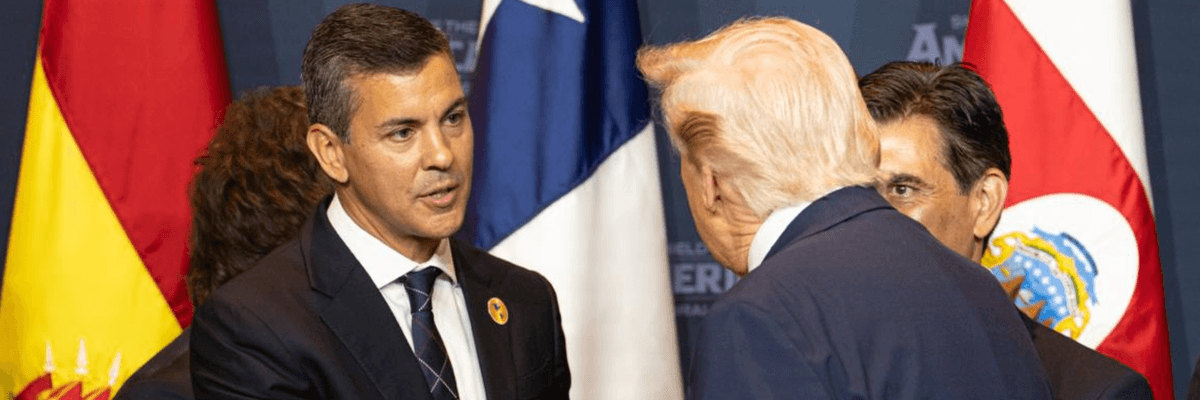
Paraguayan President Santiago Peña shakes hands with US President Donald Trump during the Shield of the Americas summit at Trump National Doral in Miami on March 7, 2026.
(Photo by Santiago Peña/X)
Brett Wilkins
Nov 05, 2026
C0MMON DREAMS
Paraguayan President Santiago Peña, a close ally of US President Donald Trump, on Thursday announced his resignation after a major digital bank with close ties to his government collapsed, freezing millions of customers’ savings, sparking mass protests, and spurring the lower house of the South American country’s Congress to unanimously impeach him.
“I have made the decision to submit my resignation as president of the republic,” Peña declared in a video posted on social media. “I do so thinking of the stability of our country, social peace, and the need to preserve our democratic institutions.”
“I wish to apologize to the people,” he said. “It was never my intention to betray the trust they placed in me.”
Minutes after Peña’s announcement, lawmakers in the Chamber of Deputies—the lower house of Paraguay’s Congress—voted 78-0 to impeach the president. Charges were then sent to the Senate, which must now decide whether to try him, given the evidence and considering his resignation. Conviction would require the votes of 30 of 45 upper chamber’s lawmakers.
Paraguay’s crisis centers on Ueno Bank, a fast-growing digital lender whose operations were suspended after the country’s Central Bank intervened over a severe capital shortfall. The bank had approximately 2.9 million customers in a country of just over 6 million people, leaving much of the population adversely affected by the collapse.
In the streets of the capital Asunción, furious residents demanded their money back and accountability for the officials responsible for the collapse. Police responded by firing rubber-coated steel bullets and pepper spray in a bid to disperse demonstrators.
“Santiago Peña and the Colorado Party have stolen all our savings,” protester Luis Pineda told The Associated Press. “We are fed up with 70 years of plunder.”
Peña’s departure marks a dramatic setback for the right-wing Colorado Party, which has governed the country for most of the past seven decades, including during the genocidal, US-backed military dictatorship of Gen. Alfredo Stroessner.
Another protester decried what he called “yet another assault on honest, hard-working citizens; people whose small savings are the fruit of years of labor.”
Ueno Bank reportedly held approximately $800 million in public deposits, including money belonging to the country’s social security and health funds and operators of major hydroelectric dams. Peña’s previously had financial connections to the Ueno-linked Grupo Vázquez. He also appointed Carlos Carvallo, the former head of Ueno’s predecessor company, to lead the Central Bank of Paraguay, which was responsible for supervising Ueno.
Prosecutors have charged 27 Ueno Bank officials and associates with alleged crimes including breach of trust and attempted fraud. Six executives, including founder Miguel Vázquez and bank president Juan Manuel Gustale, were ordered jailed pending trial, while two others were placed under house arrest.
Peña was among Trump’s closest allies in Latin America, enthusiastically embracing two of the US president’s signature but highly controversial international initiatives. In January 2026, he became a founding member of Trump’s so-called Board of Peace, initially established to oversee Gaza’s postwar reconstruction.
In March, Peña joined fellow right-wing regional presidents, including Javier Milei of Argentina, Nayib Bukele of El Salvador, and Daniel Noboa of Ecuador ,at the inaugural Shield of the Americas summit at Trump’s Doral resort in Florida.
“Peña’s rapid fall from power comes on the heels of the Democratic Party’s massive victory in Tuesday’s US midterms elections, Brazilian President Luiz Inácio Lula da Silva’s surprise reelection in Brazil the week before, and plummeting approval ratings of recently elected Trump-aligned presidents across South America,” observed Lee Schlenker, a researcher at the Quincy Institute for Responsible Statecraft.
“These trends all point toward a shift in the regional balance of power that has produced unprecedented levels of ideological alignment across the Western Hemisphere,” he added.
Setting ‘Powerful Example’ for Other States, Newsom Works to Clear Country’s Largest Death Row
“The death penalty is a flawed, expensive, and error-filled practice that fails us all,” said Equal Justice Initiative’s Bryan Stevenson, urging other elected officials to follow the California governor’s lead.
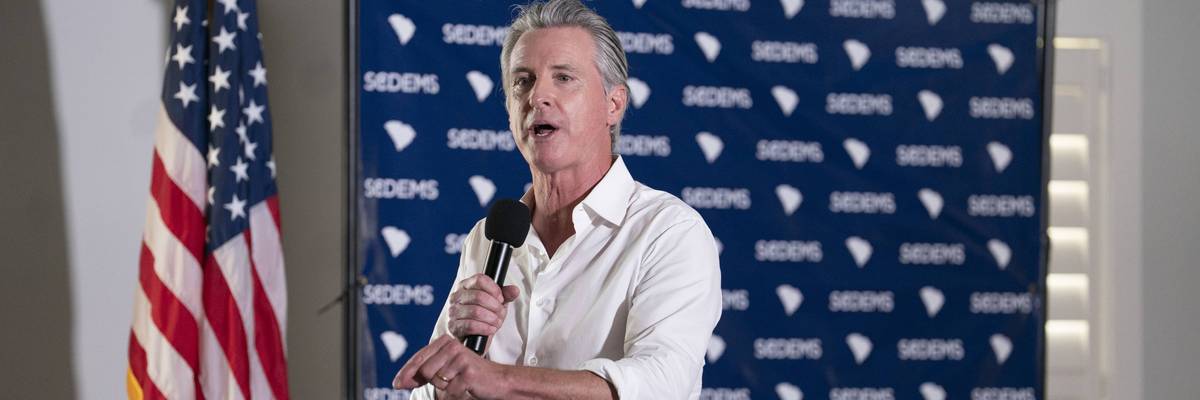
Democratic California Gov. Gavin Newsom, a potential 2028 presidential candidate, speaks at the Clubhouse at King’s Grant on September 3, 2026 in Summerville, South Carolina.
(Photo by Sean Rayford/Getty Images
Jessica Corbett
Nov 05, 2026
COMMON DREAMS
Opponents of capital punishment applauded on Thursday after Gov. Gavin Newsom moved to commute all of California’s death sentences, sparing up to 548 lives as the term-limited Democrat prepares to leave office with eyes on the White House.
The New York Times had reported last month that Newsom was mulling the move, which he addressed in a Thursday letter initially obtained by The Sacramento Bee: “After nearly 30 years in public office, I have come to understand the limits of what government can justly accomplish. I take this action because I firmly believe that state-sanctioned killing is incompatible with California’s values, undermines the foundations of our legal system, and diminishes each of us.”
The Bee explained that “Newsom can commute single-felony sentences, but must receive the California Supreme Court’s approval to commute sentences for people with multiple convictions. Four of the seven justices must approve those requests, though there is no time limit for them to do so. If they do not approve before Newsom leaves office on January 3, 2027, the requests lapse and do not roll over to the next governor, according to attorney Natasha Minsker, an anti-death penalty advocate.”
However, Democratic Gov.-elect Xavier Becerra has pledged to maintain the death penalty moratorium that Newsom issued in 2019, and could keep pushing to make all 548 sentences life without parole if the state’s high court doesn’t initially sign off. In his letter, Newsom cited his decades of publicly opposing state-sanctioned killings and his executive order seven years ago, which “formalized the de facto moratorium on executions in place since 2006, the last year California executed anyone.”
“The people sentenced to death in California caused indescribable suffering to victims, their families, communities, and our state as a whole,” but “I have concluded the state cannot morally kill them,” Newsom wrote. “Because the death penalty is inherently incompatible with our legal system’s commitment to justice, I have determined that this clemency decision, while difficult in many respects, will ultimately affirm the strength and integrity of our state and its justice system.”
The outgoing governor called the decision “among the most difficult” of his career, but also “a righteous action.” He said it follows “the moral leadership of past presidents, including our Founding Fathers, and governors across America,” and is informed by what he has heard from “crime victims and survivors, public safety experts, and religious, civil rights, and other community leaders.”
Coalitions of civil rights groups, business executives, faith leaders, victims’ family members, former corrections professionals, and ex-prosecutors have recently urged Newsom to take this action before leaving office. According to the Death Penalty Information Center, he is now among a dozen state and federal leaders who have made sweeping clemency grants to death row inmates since capital punishment was reinstated in the United States in 1976.
It is arguably the most significant of those actions because of its scope. California has the largest death row in not only the United States, but the Western Hemisphere, according to the governor’s letter. The Times reported that “Newsom’s action cancels approximately one-fourth of all death sentences nationwide.”
The national ACLU and its three affiliates in the state were among the groups pressuring the governor to act. The organization’s executive director, Anthony Romero, declared Thursday that Newsom “made history” and “honored his commitment to end a system that conflicts with human dignity, fairness, and the values enshrined in our Constitution.”
“These commutations reflect what justice demands: an end to a racist, error-prone, and inhumane punishment that has burdened California for far too long,” Romero continued. “By taking this step, Gov. Newsom has affirmed that the death penalty has no place in California, and he showed real courage by confronting racialized injustice head-on.”
US Campaign to End the Death Penalty’s executive director, Laura Porter, also offered praise: “We are grateful that Gov. Newsom, like other Republican and Democratic leaders across the country, has decided to grant clemency to individuals on death row. The historic number of commuted sentences would set a new record and offer an acknowledgment that the death penalty process is flawed.”
Bryan Stevenson, Equal Justice Initiative’s founder and executive director and the author of the award-winning memoir Just Mercy, similarly welcomed the development, saying: “The death penalty is a flawed, expensive, and error-filled practice that fails us all. I commend Gov. Newsom for this historic act and hope that other state elected officials follow his lead... Now more than ever, Americans need leaders who act on our beliefs, protect the vulnerable, and stand up for human rights and human dignity.”
As the Times noted:
Death penalty opponents have planned a national ad campaign praising him for the move. The minute-long commercial casts the governor’s decision as an act of courage and leadership inspired by the Rev. Dr. Martin Luther King Jr., Dolores Huerta, and Robert F. Kennedy. It will air on dozens of news and political shows nationwide, said Dan Newman, a Democratic strategist who advises both Mr. Newsom and the anti-death penalty groups sponsoring the ad.
Mr. Newman said that the governor had been motivated by personal conviction. But the ad could also help Mr. Newsom in a 2028 presidential campaign.
Among the Californians cheering Newsom’s move is Jeanne Woodford, who presided over four executions as warden of San Quentin State Prison, signed a recent letter to Newsom, and shared that “as someone who has carried out executions in California, I am haunted by the fear that we will execute an innocent person.”
“Innocent people have been sentenced to death in California,” she stressed. “Since 1973, more than 200 individuals nationwide, including eight in California, have been freed from death row after they were found to have been innocent. Gov. Newsom will ensure that California will never execute an innocent person.”
Newsom’s move may save some innocent prisoners, but it is also set to spare some notorious ones. The Times pointed out that the state’s death row includes “Richard Allen Davis, who murdered Polly Klaas, a 12-year-old, after kidnapping her from her home in 1993,” as well as “Cary Stayner, who killed four women near Yosemite in 1999, and the 1980s serial killer Charles Ng.”
Relatives of the 12-year-old are divided: Her father, Marc Klaas, has criticized Newsom for the 2019 moratorium, but her stepsister, Jess Nichol, recently met with the governor and encouraged his action. She said in a statement that “I won’t pretend I’ve always opposed the death penalty. I used to think the man who killed my sister deserved execution. But over time I’ve realized that whether he’s executed has absolutely nothing to do with my recovery or with real public safety.”
“The system tells survivors that execution matters to our healing,” Nichol added. “It doesn’t. It’s a distraction from what we actually need.”
While President Donald Trump—whose Republican Party just lost its majorities in Congress—is infamously pro-death penalty, fresh calls for ending capital punishment nationwide have mounted since late September, when Christa Pike survived two injections of pentobarbital from a doctor involved with an earlier botched execution at the maximum security prison in Tennessee.
“There hasn’t been a moment since that night when I haven’t been in pain,” Pike said last week. “My body hurts. My arms hurt. My hands hurt. My throat hurts. I still struggle to speak. And the pain isn’t just physical. There is pain in my mind and in my soul. I had not contemplated life beyond that night, and I’m deeply hurt by the incompetence that has put so many people in this terrible position. I continue to think about my victim’s family and the terrible pain and loss they have endured. I am recovering, and I know that I am getting stronger. But healing is not the same as being okay.”
RIGHT TO LIFE TRUMPS MAGA
MAGA erupts over Newsom’s ‘unbelievably disgusting’ move: 'Justice doesn't matter'
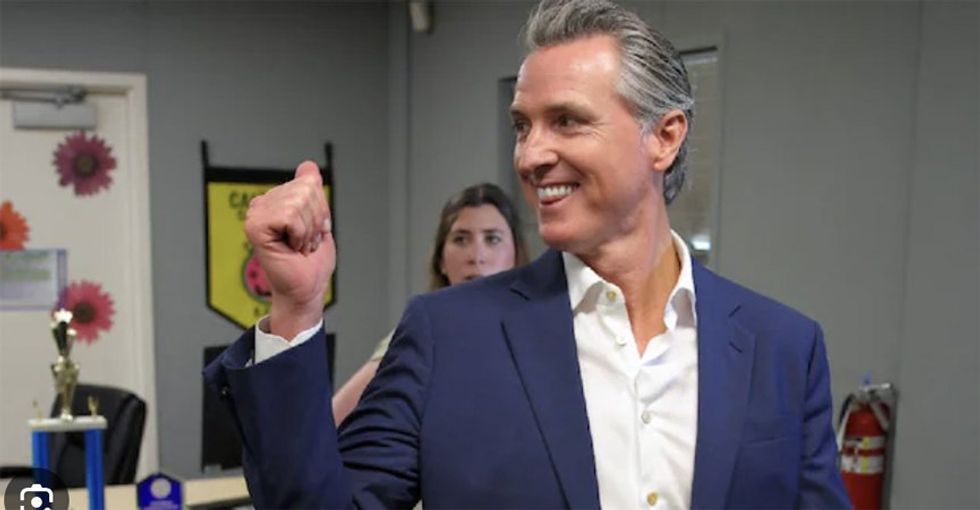
California Governor Gavin Newsom gestures as he attends an event, to announce the Golden State Literacy Plan and deployment of literacy coaches statewide, at the Clinton Elementary School in Compton, California, US. (IMAGE: REUTERS)
Nov 05, 2026
RAW STORY
California Gov. Gavin Newsom ignited a furious conservative backlash Thursday after announcing he would spare all 548 inmates on the state’s death row from execution.
“Unbelievably disgusting,” outgoing MAGA Rep. Nancy Mace (R-SC) fumed.
“Gavin Newsom just told the victim of every criminal on death row [that] their justice doesn't matter,” Mace wrote. “Stop coddling criminals and start supporting victims.”
ALSO READ:Schumer's future questioned as posse of new senators circles: 'He's holding us back'
MAGA influencer David Freeman, who goes by the name "Gunther Eagleman" on social media, also lashed out at the Democratic governor.
“POS GAVIN NEWSOM JUST MOVED TO WIPE OUT 548 DEATH SENTENCES,” he posted on X, nothing that California’s Supreme Court must approve 382 of the commutations.
“548 killers get a pass. The victims' families get nothing,” he added.
Newsom announced the sweeping decision Thursday, commuting death sentences to life imprisonment without the possibility of parole in what The New York Times called “the largest mass commutation of death sentences in modern American history.”
Newsom, who is weighing a 2028 presidential run, defended the decision in an open letter. But conservative critics quickly piled on.
“Today in executive nullification of the laws he's charged with enforcing,” wrote National Review senior writer Dan McLaughlin.
Amy Swearer, a senior legal fellow at Advancing American Freedom, pointed to several notorious killers among those affected.
“Among these are some of the most clear-cut cases justifying execution you can imagine,” she posted on X.
Political consultant Kramer Hagen suggested Newsom’s presidential ambitions were behind the move.
“Make no mistake, this is a move not made on principle, but political calculation because he’s running for President,” Hagen wrote Thursday.
Ahead of Next Climate Summit, COP30 Host Brazil Unveils ‘Critical Handbook for Ending the Fossil Fuel Era’
“It offers every country a menu of policies to build its own plan to move away from coal, oil, and gas, whether it’s a major producer, a big consumer, or an economy that depends on imports.”

The venue prepared for the 31st Conference of the Parties to the United Nations Framework Convention on Climate Change is shown from the air in Antalya, Türkiye, on November 2, 2026.
(Photo by Orhan Cicek/Anadolu via Getty Images)
Jessica Corbett
Nov 03, 2026
COMMON DREAMS
With the next United Nations Climate Change Conference less than a week away, greenhouse gas levels soaring, and a temporary overshoot of the Paris Agreement’s 1.5°C goal now inevitable, Brazil, the host of last year’s COP30, on Tuesday published a pair of roadmaps for transitioning away from planet-heating fossil fuels and tackling deforestation.
“We don’t need more negotiations. What we need is for governments to start taking action,” André Aranha Corrêa do Lago, the Brazilian diplomat who served as the president of COP30, told Reuters. “We need to completely change the way governments deal with climate change. To implement this, we need finance, infrastructure, and transportation ministers at the table.”
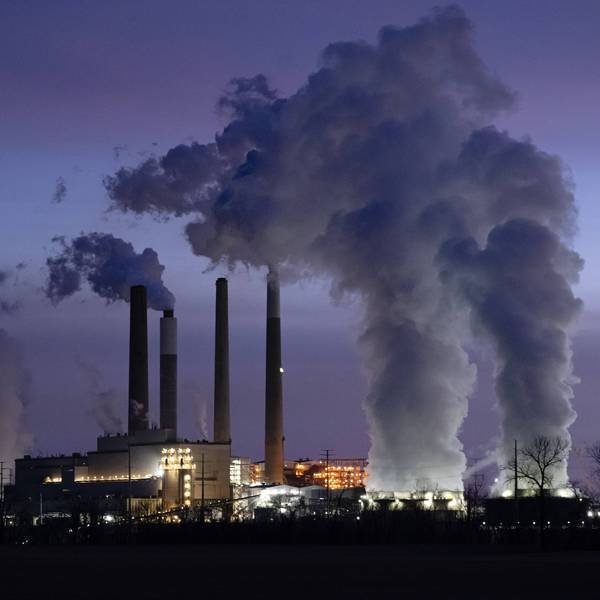
‘Another Year, Another New Record’: UN Highlights Rising Greenhouse Gas Levels Ahead of COP31
In his foreword for the transition report, Corrêa do Lago explained that at the closing plenary in Belém last November, “and in the context of the COP being held in the Amazon, I committed to developing... roadmaps for implementing two outcomes of the First Global Stocktake, agreed by consensus at COP28 just two years earlier: (i) transitioning away from fossil fuels in energy systems in a just, orderly, and equitable manner; and (ii) enhancing efforts toward halting and reversing deforestation and forest degradation by 2030. With their publication, that commitment is fulfilled.”
“Both transitions depend on finance,” he stressed. “The two roadmaps are therefore presented alongside a third document, ‘Implementing the Baku to Belém Roadmap to 1.3T,’ which sets out how financing to developing countries for climate action can be scaled up from all public and private sources to at least US$1.3 trillion per year by 2035. Read together, the three documents describe what has to change and propose ways forward so that change can be financed and sustained.”
After ending with what critics called “an empty deal,” COP30 was condemned as a “catastrophic failure to take concrete action to implement a funded and fair fossil fuel phaseout,” and there was some criticism of the new roadmaps for also not going far enough.
Greenpeace Brazil executive director Carolina Pasquali said in a statement that “this is a major effort by the COP30 presidency and a crucial step towards ensuring the COP28 decision to transition away from fossil fuels is fully implemented. As our climate races towards a 1.5°C overshoot, the roadmap encourages important measures but stops short of setting clear fossil fuel phaseout targets or calling for an immediate halt to the expansion of fossil fuels.”
However, Pasquali praised the forests roadmap—launched in the aftermath of Brazilian President Luiz Inácio Lula da Silva’s reelection victory over far-right candidate Flávio Bolsonaro—which she said “represents a major effort from the COP30 presidency and was launched with the credibility of a Brazilian government that has achieved the lowest deforestation rate in its history. The presidency has helped bring together, through multiple contributions and dialogues, a wide range of existing initiatives and views.”
Despite some shortcomings, other climate campaigners welcomed the roadmaps—released as activists and world leaders alike prepare for COP31, which is scheduled to kick off Monday in Antalya, Türkiye.
“Brazil has offered a valuable blueprint for the global transition away from fossil fuels,” said Oil Change International global policy lead Romain Ioualalen in a statement. “It recognizes there is no one-size-fits-all pathway, that all countries need to plan their transition now, and that equity and finance are critical to achieving fossil-free prosperity in many countries.”
Like Corrêa do Lago, he emphasized that “now that we have a global roadmap, we need to see action. If all this process leads to is another series of dialogues, it will be a massive missed opportunity in an already closing window. Countries need to develop their own domestic roadmaps that plan their economic diversification away from fossil fuels using the guidance and tools provided by Brazil’s report.”
“We also need to see the global Mutirão for the transition away from fossil fuels deliver key decisions that allow countries with strong economic and energy constraints to unlock their transition. The Second Global Stocktake in 2028 will be a critical opportunity to make that happen,” Ioualalen continued.
“Delivering on this global roadmap for countries with deep financial constraints hinges on finance. But it does outline some finance tools that have a track record of failing, like debt swaps and derisking methods,” he noted. “Enough public finance can be delivered to fund a fair fossil fuel phaseout as rich countries can unlock trillions every year through taxing polluters and extreme wealth, ending fossil fuel subsidies, and reforming unfair financial rules.”
Ioualalen added that “one area of real concern is the suggestion that global action on reducing fossil fuel supply could wait until the 2030s. That would be a grave mistake, and a guarantee to further lock in fossil fuels and for a chaotic transition. Existing fossil fuel extraction projects already commit the world to emissions nearly seven times the remaining 1.5°C carbon budget. There is no time to pass the baton between supply and demand. Both need to be addressed now, through a fair, funded, and fast transition.”
Fanny Petitbon, a policy analyst at the international movement 350.org, similarly said that “this roadmap is a critical handbook for ending the fossil fuel era, which leaves governments with no excuse not to act. It offers every country a menu of policies to build its own plan to move away from coal, oil, and gas, whether it’s a major producer, a big consumer, or an economy that depends on imports.”
“Electrification is absolutely central to this transition, but it will only deliver if it is powered by renewable energy, matched by investment in modern grids, and brings clean, affordable energy to everyone,” she highlighted. “We cannot swap one energy system for another while leaving the same communities behind.”
Petitbon argued that “the roadmap must not end up as just another report gathering dust on a shelf. France, the Netherlands, and Germany have already published national roadmaps, but they fall short of the ambition the climate crisis demands and of their responsibility in it. Pacific Island states plan to deliver a regional strategy to break free from fossil fuels. So the question for all major emitters is simple: When will you submit your roadmap?”
“Rich nations must also mobilize public finance to support developing countries with their transition and ensure that the fossil fuel industry cannot continue to profit from a crisis that is costing people their livelihoods, health, and homes,” she asserted. “COP31 must be the moment when governments take this work forward, with clear commitments, timelines, and the resources to deliver a fair and orderly exit from coal, oil, and gas.”
“The COP30 presidency has set out clear next steps, and future COPs must keep this issue at the top of the agenda every year so the momentum is never lost,” she added. “2028 will be the moment of truth. As the world will take stock of how far it has come in delivering the Paris Agreement, it will become clear who has honored the promise made in Dubai to transition away from fossil fuels, and who has walked away from it.”
We just got a ferocious preview of the 'wild' El Niño winter coming
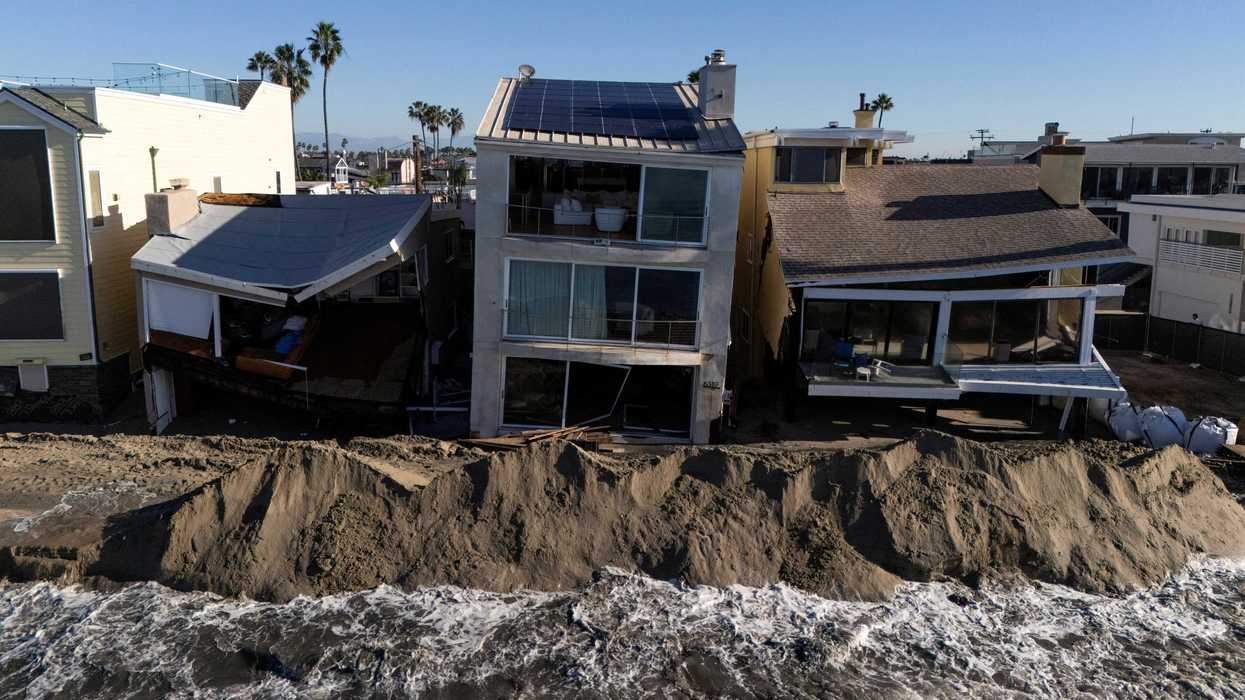
REUTERS/Daniel ColeNovember 05, 2026
The Southwest just got way too much of a good thing. Last weekend, a ferocious storm inundated communities and killed at least four people. Though precipitation is an essential component of Arizona’s desert climate, the state got two or three months’ worth of it in just a few days — far more than human infrastructure could handle all at once. Since September 20, an astonishing 28.84 inches of rain has fallen on Clovis, New Mexico, compared to its historical average of just 3.3 inches.
“This weekend was just adding more on the rough times that those communities in Southwest Colorado and Arizona and Utah and New Mexico have been having recently,” said Russ Schumacher, director of the Colorado Climate Center at Colorado State University, who’s also the state climatologist. “I think the El Niño connection is pretty clear.”
Indeed, that band of warm water in the Pacific could be priming much of the southern United States for a winter of increased precipitation, according to the National Oceanic and Atmospheric Administration’s seasonal outlook. “Could an event like this have happened in a non-El Niño year?” asked Michael A. Crimmins, a climatologist at the University of Arizona. “It could have, but it would have been a lot harder to pull all of the ingredients together at the same time, and would have been a lot less likely.”
A wetter winter looks likely across the southern US
The looming problem this winter is heat, oddly enough. The unfolding El Niño is already the strongest on record, and it could get stronger still in the next few months. Although that amounts to just a handful of extra degrees in the Pacific, it injects a tremendous amount of energy into the atmosphere, scrambling weather the world over. The phenomenon is so influential, in fact, that it has helped cancel hurricanes over in the Atlantic, by messing with winds high up in the atmosphere. Accordingly, this year shattered the record for the latest first hurricane in a season by nearly a month. Normally by this time of year we’d have seen six of these cyclones, but 2026 has still only produced one.
The Southwest, though, gets no such relief from inclement weather. In addition to adding heat to the sky, the warmer waters of El Niño also increase atmospheric moisture. Even beyond the El Niño, temperatures in the Pacific have been running extra hot, which explains why the western part of the ocean has produced 10 hurricanes this season even as the Atlantic has remained quiet. (Overall, more than 90 percent of the excess heat that humans have pumped into the atmosphere has been absorbed by the oceans.)
All this warm water means more moisture for the weather patterns that have been moving into the Southwest over the last month. A separate system in late October, for instance, became one of the most extreme storms in Colorado’s history, pelting higher elevations with up to 8 inches of rain in four days, causing widespread destruction. “It’s just really extreme amounts of water vapor in the atmosphere that have been aimed into the Southwest in each of those storms,” Schumacher said.
This autumn precipitation primed Arizona, Colorado, and other Southwestern states for yet more destruction this past week. For one, rivers were already running high, then ran all the higher. And two, if soils are soaked, a followup bout of rain will run off and cause flooding. “We get the second storm, just a little bit after the first one, then everything was primed for even worse flooding this time around,” Schumacher said.
In mountainous terrain, this gets especially dangerous, as the topography funnels rainwater into raging torrents. “If you hike around the Southwest, you’re going to see out-of-place boulders all over the place,” Crimmins said. “Water put it there. Maybe it was 5,000 years ago or something like that, but water moves. We can have really epic flash flooding.”
The one silver lining here is that any increased precipitation from this El Niño could bring drought relief to much of the southern U.S., according to NOAA’s projections. Climate change is not only exacerbating these ongoing dry spells — hotter temperatures also increase evaporation from reservoirs. At the same time, populations are growing in the Southwest, meaning more people demanding more water.
Drought could ease across the South this winter
With these factors conspiring, the Colorado River’s two largest reservoirs, Lake Powell and Lake Mead, are approaching the point of collapse. The potential for more rainfall this winter might help fill them, Schumacher said, but it can’t reverse the system’s precipitous decline. “It’s a long way to go to get even back to where we were a year ago,” he said. “Let alone when it was in good condition decades ago.”
The wildcard this year is snowpack: It’s still too early to tell, Schumacher said, how much snow will fall in Colorado. Whereas rainwater flows quickly into rivers, making it harder to store without overwhelming infrastructure — hence all the destructive flooding of late — snowpack slowly releases water as things thaw in the spring. With a record low snowpack earlier this year, Colorado is in desperate need of bountiful flakes in the months ahead.
Water agencies can’t change the weather, but they can at least change how they manage precipitation. Down in Arizona, cities like Tucson have been installing green infrastructure — basically dirt spaces that hydrate native plants — which slow down the flow of water, thus preventing flooding. “There’s really cool and clever ways of thinking about stormwater as a resource,” Crimmins said, “rather than a nuisance.”"
This story was originally published by Grist.
A wounded Trump could make foreign policy much more dangerous
November 04, 2026
Donald Trump’s Republican Party has received a stunning rebuke in the US midterm elections. Republicans went into the evening hoping that the polls might be wrong and that they could at least cling on to control of the Senate. But by midnight in Washington, the GOP was staring down what looked like its worst defeat in 50 years.
Republican losses were not just confined to the type of swing districts that parties usually worry about on election night. The scale of the losses was staggering. They lost Senate seats in deep red states such as Texas and South Carolina. They lost districts they had gerrymandered and in which they were supposed to be unbeatable. They lost seats that even the sharpest analysts thought were safe.
Why? For months, surveys have shown that voters are fed up with high prices, with the war in Iran, and with what is increasingly being talked about as the Trump administration’s corruption. A president who was narrowly elected on the promise of a steady economic hand instead spent two years pursuing an extreme ideological agenda favoured only by a minority of Americans. He ignored what voters were saying, and now they have delivered a harsh verdict.
But these results have implications beyond just the remainder of Trump’s presidency. They break some of the patterns that have defined American politics for decades. Democrats are suddenly winning in places where they have been counted out for a generation. Suddenly, the American political map looks different.
Take Texas. The last time a Democrat won election as a senator there was 1988. Democrats have not won a presidential election in Texas since Jimmy Carter in 1976. Yet last night, Democrat James Talarico powered to a convincing victory. If elections in Texas become politically competitive on a permanent basis, it will become much harder for Republicans to take the presidency in the future.
The Republican Party will now be looking nervously towards the 2028 election. For the first time since 2016, there is likely to be a serious debate within the party about whether to move on from the aggressive nationalism and bigotry of Trump’s “Make America Great Again” movement. Democrats, meanwhile, face their own questions about how to capitalise on their victories.
Foreign policy futures
But for the rest of the world, change might not come so quickly. Despite the fact that his party has suffered this electoral setback, Trump remains president until 2028. And because despite its constitutional role in declaring war and ratifying treaties, Congress tends to be less involved in foreign policy, there is still a lot that he can do with that power.
Indeed, US presidents whose parties perform badly in midterm elections often become more active in foreign policy than they had previously. With the chance of passing a significant domestic agenda mostly beyond their reach, they have a more time on their hands to think about America’s relations with the rest of the world. The same is likely to be true of Trump.
The fact that the midterms are over also means that Trump no longer has to be so careful about the political consequences of his actions. As the midterm elections got closer, the president has backed down from major military confrontation with Iran and sought a truce in his tariff wars. Now, with political constraints lifted, he could become more erratic and unpredictable.
Congress would not be completely powerless to stop him, at least in theory. But most actions it can take – such as cutting off funding for the war with Iran or seizing tariff power back from the president – require margins of control in both chambers that Democrats are unlikely to have, despite their formidable victories.
They would need to have a two-thirds majority to override an almost certain presidential veto on any attempt to pass laws to achieve these outcomes. So a key question is whether this midterm drubbing was serious enough to make some Republican members of Congress get serious about joining Democrats in restraining Trump.
Something that Democrats will definitely be able to do is launch all manner of investigations into the conduct of the Trump administration and some of its officials. Their efforts are likely to focus on the war with Iran, Trump’s personal financial dealings with foreign leaders, and the management of the Pentagon by secretary of defence Pete Hegseth.
Hegseth, indeed, could be an early casualty of these efforts – there is speculation that he will resign or be fired rather than face possible impeachment.
But ultimately a change of direction in US foreign policy depends on the decisions of Trump himself. A changing of the guard among his advisers, or in Congress, can only do so much to influence a president who has never willingly submitted to constraint.
The world should prepare itself for the possibility that a politically wounded and angry Trump could now decide to vent his frustrations abroad.
Andrew Gawthorpe, Lecturer in History and International Studies, Leiden University
This article is republished from The Conversation under a Creative Commons license. Read the original article.
Multibillion-dollar battle brewing behind closed doors will affect every American
REUTERS/Brian SnyderNovember 07, 2026
LANSING, Mich. — Fifteen years working as an emergency room nurse has convinced Kim Bogan that the only way to fix the American healthcare system is to tear it down and start over.
Her patients arriving for triage are sicker than ever. They can’t afford many of the prescriptions they get in the ER. And sometimes when patients die, she wonders if she could have saved them had she not been caring for five or six other people at once.
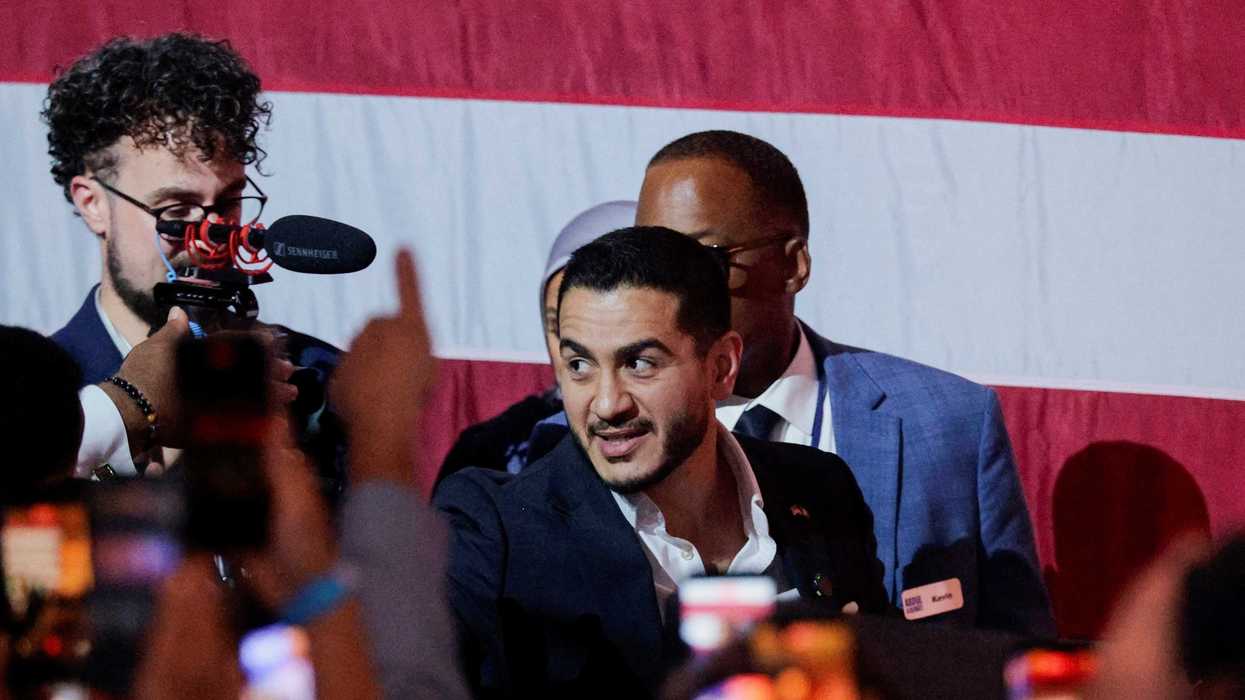
That’s why she spent the past year shuttling between 12-hour shifts at this city’s Sparrow Hospital and campaigning for Abdul El-Sayed, the Democrat who made “Medicare for All” a signature issue in his congressional campaign and is now a senator-elect.
But she realizes that just because progressive candidates successfully campaigned on some form of the policy in states such as Texas, Iowa, Maine, and Michigan, it doesn’t mean Medicare for All will be an easy sell. “Nobody expected that,” Bogan said.
Medicare for All typically refers to a government health program that would guarantee Americans coverage by replacing most or all private insurance. Critics are already pointing out that, even in a blue wave as massive as the 2026 midterms, the most vocal Medicare for All champions generally won by smaller margins than more moderate Democrats.
“Whatever else people voted for in this midterm election — anger about inflation, anger about corruption, anger about the Iran war — they by and large didn’t vote to have the government take over health insurance,” said Jonathan Oberlander, a professor and healthcare reform expert at the University of North Carolina-Chapel Hill.
Still, supporters of universal healthcare see this moment as a once-in-a-generation opportunity because Americans are buckling under the weight of healthcare costs and are hungry for change. Several states, including Oregon, are already exploring what it would take to set up single-payer systems.
The affordability crisis “dominated this election, and Medicare for All speaks to that,” Oberlander said. Medicare for All supporters expect the policy agenda will gain major momentum heading into the 2028 Democratic presidential primaries, he said.
But more moderate Democrats may see the idea’s growing popularity as a threat to gains they made in states such as Iowa, Kansas, and South Carolina. “If Democrats want to hold those seats, which were very difficult to win, they’re probably not interested in passing Medicare for All,” Oberlander said. “That’s a huge political risk in red-leaning states. So just because Democrats have a majority doesn’t mean it’s a majority for Medicare for All.”
Previous Medicare for All proposals would have required getting millions of people to willingly give up their existing coverage, fueling unprecedented opposition from the healthcare industry, said Michael Cannon, a healthcare economist at the libertarian Cato Institute and a Medicare for All opponent.
“If Medicare for All actually had the price levels that Bernie Sanders and Abdul El-Sayed envision, the industry would tear it to shreds,” he said.
And even as voters say they support Medicare for All in greater numbers than in nearly a decade, support falters when they’re presented with common arguments against it — like it could lead to higher taxes or delays in treatment — according to a recent KFF poll.
Jaime Bardenhagen said she feels a little guilty about the idea of getting her healthcare coverage from the government. A former nurse in rural Leelanau County in northern Michigan, Bardenhagen has Parkinson’s and sialidosis, a rare genetic disease that can cause seizures.
Yet she “feels bad” about qualifying for disability benefits next year. Such programs were something she “didn’t believe in” while growing up on a farm, she said. You were supposed to work for what you needed, she said, not rely on government support. “And I did work as hard as I could, for as long as I could.”
But like millions of Americans, Bardenhagen and her husband saw their health insurance costs skyrocket this year, after enhanced Affordable Care Act subsidies expired.
Their monthly premiums went from $700 to $1,300, with a deductible of $7,500. They started putting off medical tests her doctor wanted, she said. “We couldn’t afford that,” she said.
Her husband voted for Donald Trump in 2016, Bardenhagen said. This time, he stayed home. Bardenhagen, a Democrat, also considered sitting out the midterms. “I just don’t trust either party anymore,” she said.
Despite those misgivings, she says she supports Medicare for All. Her years as a nurse left her disillusioned with the current healthcare system, she said.
She felt the insurance companies, not doctors, were calling the shots, determining which prescriptions and procedures patients could receive. Wouldn’t it be fairer, she figured, if “good people” in government were making those calls? “So, absolutely, the government should take it over.”
That takeover is Cannon’s worst-case scenario. The libertarian economist said giving the federal government greater control over the healthcare system would only backfire. Patients would be left “in even more vulnerable positions, because they would be relying for their access to healthcare on government spending that is just not sustainable.”
Medicare for All supporters are naive to think the government could negotiate lower drug and healthcare prices by replacing private plans with a public one, he said. “Everyone knows that the industry is going to end up running the show, and that has been the case since they passed Medicare,” Cannon said.
For Bardenhagen, the message she wants Democrats to take from the midterms is simple: “Do something,” the former nurse said.
“With the election results, both parties are going to be under pressure to come up with solutions to address the current affordability crisis in healthcare,” said Sara Collins, a senior scholar at the Commonwealth Fund, a private foundation that supports healthcare research.
That could mean smaller, but still significant, bipartisan deals that might have seemed unthinkable before the midterms: things such as reinstating the enhanced Affordable Care Act subsidies that expired at the end of last year, or other measures with broad support, such as curbing insurance companies’ use of prior authorizations, which requires patients to get insurers’ approval before proceeding with a covered treatment.
“That’s probably the lowest-hanging fruit for them, I’d think,” said Patricia Votava, a political strategist based in Sullivan’s Island, South Carolina.
The pressure for healthcare reform is likely to grow, too, with Affordable Care Act premiums set to rise by double digits again next year; employers passing on more of their growing insurance premium costs to workers; and massive cuts to Medicaid looming, which are projected to leave 7.5 million more people uninsured by 2034.
On the whole, the midterm results could push Democrats’ healthcare agenda further left, Oberlander said. Some Democrats could support a public option, a government-backed health plan people could opt into. Others in the party could coalesce around a version of Medicare for All that doesn’t fully replace private insurance but serves as “guaranteed baseline government health insurance,” as El-Sayed described his current plan in the campaign.
“If you like your insurance from your employer or from your union, that can still be there for you,” he said.
Whatever they opt for, Democrats shouldn’t expect voters to be willing to wait patiently for years of gradual change, Oberlander said. “If the window opens, you better jump right through.”
South Carolina correspondent Lauren Sausser contributed to this report.
This article first appeared on KFF Health News and is republished here under a Creative Commons Attribution-NonCommercial-NoDerivatives 4.0 International License.
New war brewing in Congress over 59 multi-million dollar business deals
REUTERS/Evan Vucci
November 07, 2026
Democrats regained control of both the House and the Senate in Tuesday’s historic midterm elections, a comeback fueled largely by voter anger over high prices and the war on Iran. But surveys also found that corruption was a major concern, with 76% of voters telling a Harris poll that elected officials care more about enriching themselves than improving the economy for ordinary people. A separate Reuters/Ipsos poll found that 63% of Americans considered it inappropriate for Trump and his family to profit from cryptocurrency, while 69% said his private business interests influence his decisions as president.
“If this election was about corruption and cost, then this next Congress needs to be focused on accountability and affordability,” says Donald Sherman, the president and CEO of Citizens for Responsibility and Ethics in Washington, or CREW.
“Congress needs to do oversight not just on the administration’s corruption, not just on the president’s profiteering, but also on corporate America, what they have gotten out of engaging in the president’s pay-to-play environment, how corporate America and the outside influence of money in our political system has undermined the public voice in our policy discussions.”
This is a rush transcript. Copy may not be in its final form.
AMY GOODMAN: This is Democracy Now!, democracynow.org. I’m Amy Goodman, with Nermeen Shaikh.
NERMEEN SHAIKH: In a sweeping rebuke to Trump and his MAGA movement, Democrats won control of both the House and the Senate in Tuesday’s historic midterm elections. One issue that emerged as a major concern for voters was corruption. A recent Harris poll for The Guardian found that 76% of voters said elected officials care more about enriching themselves than improving the economy for ordinary people. A separate Reuters/Ipsos poll found that 63% of Americans considered it inappropriate for Trump and his family to profit from cryptocurrency, while 69% said his private business interests influence his decisions as president.
This is Donald Sherman, president and CEO of CREW, Citizens for Responsibility and Ethics in Washington, testifying in Congress earlier this year about just one example of alleged corruption by President Trump. We’ll speak to Donald Sherman right after.
DONALD SHERMAN: Days before President Trump’s second inauguration, an investment vehicle backed by the United Arab Emirates national security adviser bought a 49% stake in Trump’s crypto venture, World Liberty Financial, for $500 million. Months later, the Trump administration handed over America’s most sensitive AI chips technology to the UAE, despite national security concerns. This type of corrupt profiteering from influence seekers is unprecedented, dangerous and, in some cases, against the law.
AMY GOODMAN: Tuesday’s midterm elections brought a tidal wave of victories for candidates who challenge corruption in politics and also the influence of corporate and special interest money in elections. This is despite record amounts of spending this cycle of nearly $12 billion, according to the group Open Secrets. The New York Times reports that top donor Elon Musk, a trillionaire, spent almost half a billion dollars, $474 million, in an unsuccessful attempt to help Republicans keep control of Congress. And that doesn’t include the dark money he might have spent. Texas Senator-elect James Talarico addressed this in his victory speech.
SEN.-ELECT JAMES TALARICO: We went up against more than $300 million, more than any Senate campaign in American history. We went up against all the negative ads, smear campaigns, foreign bots and AI deepfakes that money can buy. Those attacks were the final howls of a dying establishment.
AMY GOODMAN: With Democrats now preparing to take control of the House and the Senate in these next two years of the Trump administration, what can and should Congress do to address corruption and address it going forward?
For more, we are joined in our New York studio by Donald Sherman, president and CEO of Citizens for Responsibility and Ethics in Washington, or CREW. The group filed lawsuits, ethics complaints, public records requests challenging what it describes as corruption and conflicts of interest in the Trump administration.
Donald Sherman, welcome back to Democracy Now! Why don’t you — I mean, it is amazing that corruption in a number of the exit polls was number one, above affordability, above the war, above the immigrant crackdown. Corruption. Can you talk about what it means? And you have laid out in your testimony before Congress, and what CREW has been doing in filing lawsuits, the examples and how it can be taken on.
DONALD SHERMAN: Thanks for having me.
And I think what the poll suggests is what Americans have been experiencing, which is, whether it is costs or the war or the other everyday issues animating conversations at kitchen tables across this country, corruption underlies all of those issues. And that’s what sort of doesn’t — that’s what the polls don’t sort of connect, which is that it’s corruption and costs. It’s corruption that leads to the costs that Americans are experiencing, that has animated so many people to make their voices heard.
You look at the administration’s policy with respect to tariffs, where from day to day, week to week, everyday consumers, farmers, grocers don’t have any sense of how tariffs are going to impact the costs that they are experiencing, but they do know that the president’s business impacts how he approaches tariffs. When the president wanted to — his business wanted to pursue trademarks in Vietnam, all of a sudden, a couple of weeks before, the tariffs on Vietnamese products gets lowered. We saw how the Trump Organization engaged with countries like Argentina and Mexico, invoking tariffs as part of the leverage that they use in order to extract concessions from those governments.
And so, I think what we have seen is, time and time again, whether it’s the millions that the president has made from his oil and gas stock trading because of the illegal war that he is pursuing in Iran, whether it’s seeing how the president’s stock portfolio has increased substantially because of the immigration policy that led to investments in GEO Group and other private prisons, the president’s corruption is directly intertwined with cost concerns, with immigration policy, with the war in Iran. So it should be a surprise to no one that corruption is at the top of the list, because the reality is, is that the president’s corruption, and government corruption writ large, underlies all of the other problems that are animating Americans’ concerns about their government and about their daily lives.
NERMEEN SHAIKH: So, we can talk about some of the other examples, and, of course, the examples are legion, but because the midterms just finished — I mean, this was perhaps one of the most staggering, even by Trump standards. He promised earlier to send checks for $5,000 to every U.S. adult if Republicans retained control of both the House and the Senate. Has anything like this ever happened?
DONALD SHERMAN: I’m not aware of anything like that ever happening. It’s obviously corrupt. But here’s the important thing: The president, time and time again, has demonstrated that he is not credible, right? And that is also directly connected with his corruption.
When the president goes on TV and says, “Well, the American people aren’t going to spend a dime for this ballroom or for my arch,” he’s doing two things. One, all of a sudden, a couple weeks later, he comes hat in hand to Congress asking for taxpayer money. But also, he’s burying the lede, which is that he’s shaking down corporate America in order to get money for his vanity projects, which communicates to the American public a couple of things. One, he’s not putting their priorities first. Two, that everybody knows there’s no such thing as a free lunch. Corporate America is not funneling money into the president’s pet projects out of the goodness of their heart. They are getting something for those donations at the expense of everyday Americans.
AMY GOODMAN: Wasn’t it significant that in the post-election news conference, where did President Trump hold that? I mean, he held his final big rally speech in front of the Reflecting Pool, and then he held his Wednesday morning speech, after the — what fellow Republican, Governor DeSantis, called an extinction-level election — he held it in front of the White House ballroom that he’s building, and was signing the beams that are going into it.
DONALD SHERMAN: So, I think one of the other lessons that we are taking from the voters is that they have eyes, they have ears. They can see that the president has not prioritized their concerns. This is someone — and a couple of numbers. This is someone, in President Trump, who created 59 businesses — 59 businesses — since winning the White House in 2024. This is someone who made $117 million in foreign business deals since returning to the White House. You led with the $500 million that the UAE sovereign wealth fund donated, or invested, in the president’s crypto enterprise. Time and time again, whether it’s the golf trips that he takes, that also funnel millions of taxpayer dollars into his business, this is someone that has prioritized making money for himself, enriching himself, as opposed to the needs of the American people. And he’s doing it at their expense.
The one other big issue in this election was the war in Iran. And you have a president who picked his son-in-law, Jared Kushner, and gave him this quasi-diplomatic role. Meanwhile, Kushner is running his own company that has received $2 billion from Saudi Arabia’s sovereign wealth fund. If the war in Iran is such a significant priority, why would you put someone in such a prominent role, without going through Senate confirmation, without filing a financial disclosure statement, that has a lucrative side hustle where he has received investments from foreign governments? The American people can easily understand not just the scope and scale of the president’s corruption, but why the president and how the president’s corruption is harming them on a daily basis.
NERMEEN SHAIKH: Well, I mean, according to the law, the president and the vice president are exempt from criminal liability. Is that right? And if so, what can the new Congress do, House and Senate, now that Democrats are in the majority?
DONALD SHERMAN: Well, first of all, the president is not exempt from criminal liability. The president — the Supreme Court has expanded the exemption for the president. And so, to the extent that there are official — there’s official conduct that is criminal, that’s where the liability — that’s where the liability shield exists. It doesn’t necessarily cover private actions, for example.
But I will say, if this election was about corruption and cost, then this next Congress needs to be focused on accountability and affordability. Those two things are directly linked. They’ve been directly linked by the president’s misconduct. They have been directly linked by the voters. And Congress needs to do oversight not just on the administration’s corruption, not just on the president’s profiteering, but also on corporate America, what they have gotten out of engaging in the president’s pay-to-play environment, how corporate America and the outside influence of money in our political system has undermined the public voice in our policy discussions, not just in our elections, but in the day-to-day work of policymaking.
And I think the member-elect, Representative Kiros, made a excellent point. Congress needs to focus not just on corruption of the Trump administration, but they need to get their own house in order. They need to ban members from owning and trading individual stocks. They need to look at more aggressive and expansive reforms of Congress, including potentially banning members from — former members from serving as lobbyists, extending the Freedom of Information Act to Congress, setting — the Senate setting up an independent ethics office. There’s a lot of work that Congress needs to do to ensure accountability, not just for the abuses of the Trump administration, not just for the abuses of corporate America and their outside influence on our policy, but also on the ways that Congress, as an institution, has undermined public trust.
NERMEEN SHAIKH: So, how would one distinguish — that’s a very important point — between Trump’s official and unofficial business? Because it’s difficult to see where that distinction would be drawn.
AMY GOODMAN: And what role does Congress play? I mean, they’ve got two years right now.
DONALD SHERMAN: They have two years. So, for example, you know, tariffs are official conduct, right? But the president’s potential role, any role that the president may have played in the Trump Organization’s use of tariffs as a leverage point as it engaged in negotiations with foreign governments, could be conduct that Congress — one, is definitely conduct that Congress should look at, but could be an example of private conduct that might implicate — you know, that would fall outside of the exceptions that the Supreme Court has established.
NERMEEN SHAIKH: And also that he’s made $2.7 billion in the two years since he’s been president.
DONALD SHERMAN: That’s exactly right. I mean, you know, private conduct could be the president — whether the president has paid his taxes. Right? There is a whole host of private conduct and private misconduct that we have seen from this president that should be investigated by Congress and could fall outside of the scope of the Trump v. United States decision. And so, you know, I think that Congress needs to look at all of it.
AMY GOODMAN: We have 30 seconds.
DONALD SHERMAN: They have been given a mandate to address corruption and costs. And again, they need to do that by ensuring accountability and focus on affordability.


