Turkey issues dozens of arrest warrants for military personnel over alleged links to 2016 coup
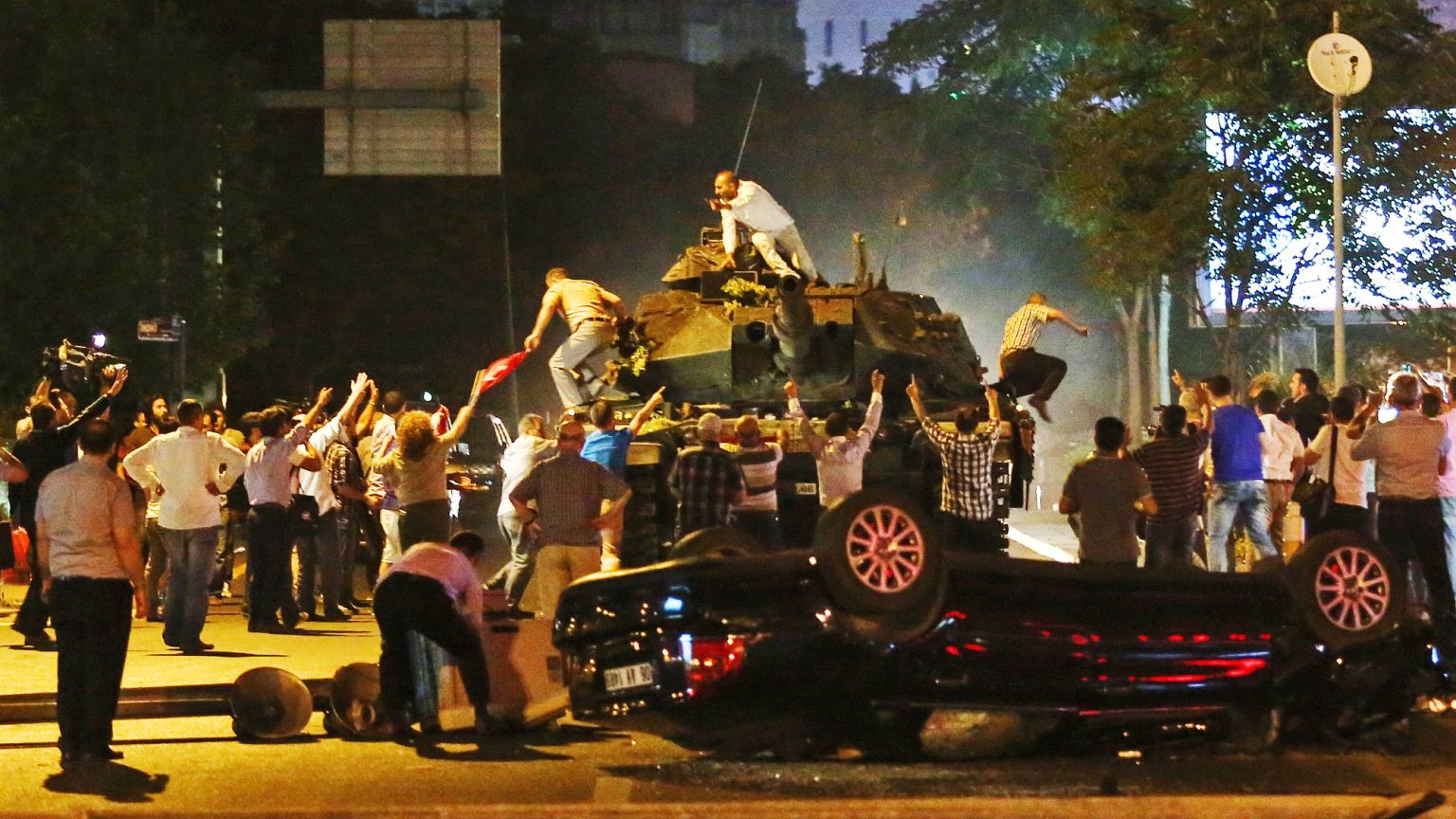
Officials say the individuals were identified through phone records and allege that FETÖ continues to pose a major threat to the state.
The Istanbul Chief Public Prosecutor's Office has issued arrest warrants for 63 active-duty military personnel accused of links to the Gülen movement, which Ankara blames for the July 2016 failed coup attempt
According to a statement released, simultaneous operations were carried out across 36 provinces, resulting in the detention of 56 suspects.
Among those detained are four colonels, as well as officers from the Turkish land, naval, and air forces and the gendarmerie.
The prosecutor's office said that the suspects include eight personnel from the air force, 13 from the Gendarmerie General Command, 36 from the land forces, and six from the navy.
The detainees comprise four colonels, eight lieutenant colonels, 12 majors, 15 captains, and 24 non-commissioned officers.

The statement alleges that these individuals have ties the group founded by cleric Fethullah Gülen, who lived in self-imposed exile in the United States from 1999 until his death in October 2024.
The group is accused by Turkish authorities of orchestrating the 2016 coup attempt, which claimed the lives of around 290 people.
The prosecutor's office said in a statement: "The arrest and detention of 63 suspects in Istanbul and 35 other cities was launched simultaneously at 6 am today (5 am CEST), in accordance with instructions given to the Istanbul Police Anti-Terror Branch Directorate. We will keep you informed of further developments."
On the evening of 15 July 2016, military units loyal to the plotters launched an attempted coup d'état and took to the streets of Ankara and Istanbul, bombing government buildings including the Turkish Parliament and the presidential palace.
President Recep Tayyip Erdoğan was on holiday in Marmaris at the time.
Several senior officials, including then Chief of General Staff Hulusi Akar and General Yaşar Güler (now Defence Minister), were taken hostage.
Survival of the state
In Friday's statement, the prosecutor's office said the suspects had been identified through telephone communication records.
The statement described the Gülen movement as "the biggest threat to the constitutional order and survival of the state," and claimed that the number of undetected military personnel affiliated with the organisation exceeded those who actively participated in the coup.
Although specific charges were not detailed, the prosecutor's office noted that around 25,800 military personnel have been detained in connection with the failed coup attempt since 2016.
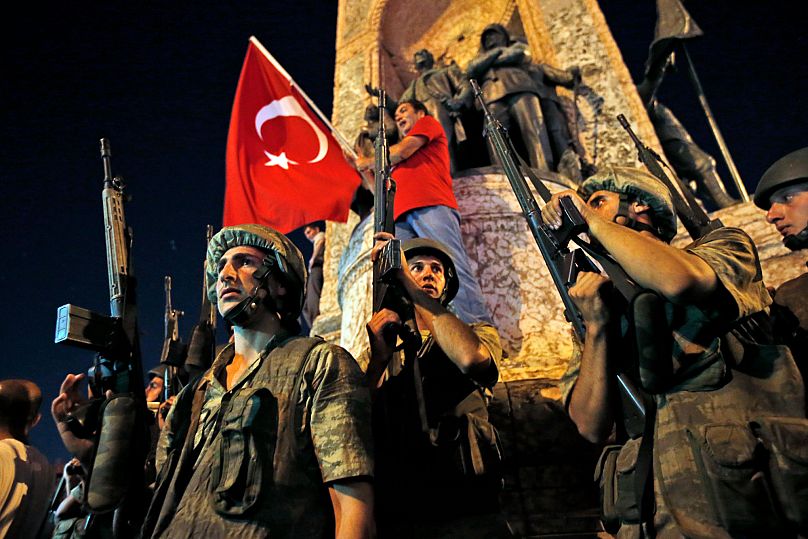
The Gülen movement — officially referred to by the government as the "Fethullahist Terrorist Organisation/Parallel State Structure" (FETÖ/PDY) — has long been accused of establishing a clandestine network within state institutions, including the judiciary, police and military.
The group has been implicated in various criminal activities, including leaking university entrance exam questions and orchestrating the assassination of academic Necip Hablemitoğlu.
It is also accused of involvement in the murder of journalist Hrant Dink and other serious crimes.
The first legal case against the organisation was filed in 1999. The indictment accused Gülen and his followers of trying to create "an illegal organisation with the aim of establishing a state based on Islamic principles by changing the constitutional system."
Although originally Gülen was considered a friend and supporter of Turkish President Recep Tayyip Erdogan, tensions between the Gülen movement and the ruling AK Party escalated significantly in 2013 during a corruption investigation, dubbed by critics as a coup attempt, led by prosecutors allegedly linked to the group.
Following the 2016 coup attempt, further crackdowns took place under a state of emergency, and many individuals were dismissed via emergency decrees.
Critics have raised concerns over inconsistencies in the enforcement of justice. While some high-profile businessmen with alleged ties to the movement have avoided prison, many low-level affiliates were jailed or lost their jobs.
Former AK Party MP Şamil Tayyar claimed that a "FETÖ stock exchange" operated during the purges, where businessmen could allegedly avoid prosecution by paying bribes.
"There are millions of dollars involved," Tayyar said.
"They’re releasing businessmen under the guise of being informants. This is happening all over Turkey."V

Turkish President Recep Tayyip Erdogan on May 23 claimed that he has no interest in again being re-elected as president.
The 71-year-old was on May 22 discussing his push for a new Turkish constitution when—according to Turkey’s state news service Anadolu Agency—he told journalists on a plane bringing him home from a visit to Hungary: “We want the new constitution not for ourselves but for our country. I have no interest in being re-elected or becoming a candidate again."
Erdogan’s present term in office runs to 2028 and, under the current constitution, he cannot run for president again unless he calls early elections. In Turkey, there is therefore a widely held belief that Erdogan, who has led Turkey for 22 years, wants to change the constitution in order to change the rules.
A snap election as things stand could be risky—Erdogan is facing intense opprobrium over the jailing of Istanbul mayor and main political opponent Ekrem Imamoglu, a politician who would be expected to defeat Erdogan in a fair contest, or perhaps even in an election marred by significant rigging given the strength of his popularity.
In January, Erdogan was asked by a singer if he was considering running for another term. His response was "I am, if you are." A spokesman for Erdogan’s AKP party then confirmed the issue was on the agenda, saying: "What is important is that our nation wants it."
In further comments on why Turkey in his eyes needs a fresh constitution, Erdogan said he wanted to create a constitution that has a "civilian" framework rather than one "written by coup plotters".
"In such a rapidly changing world, is it possible to get anywhere with a constitution that was written under the conditions of a coup?" he asked.
Much of the content of Turkey’s present constitution was ratified following a military coup in 1980.
The constitution allows for two five-year presidential terms. Erdogan is actually on his third term already, but he has contended that his first term took place before Turkey moved from parliamentary rule to executive presidential rule following a referendum.
To pave the way to a referendum that could bring in a new constitution allowing for further presidential terms, Erdogan needs the votes of 360 MPs in the 600-seat parliament. As things stand, he can only rely on 321. If he managed to secure 400 votes, he could bring in new constitutional rules immediately.
If the current process aimed at establishing a durable peace with the outlawed Kurdistan People’s Party (PKK) is successful, Erdogan might seek the support of the 56 MPs who represent the pro-Kurdish DEM party. The PKK lately announced it was disbanding, but it has not disarmed.
Erdogan said on May 21 that if the PKK laid down its arms, it would mean the DEM party could continue in politics "in a much stronger way".
Separately on May 22, US Senator Adam Schiff, a Democrat, said that Turkey’s authorities should present credible evidence of corruption against Imamoglu, or immediately release him.
He spoke as he urged his colleagues to vote for a resolution calling out Erdogan over what he called democratic backsliding.
“The continued detention of Mayor Imamoglu, as well as the harassment and arrest of dozens of journalists and dissenting political voices in Turkey, is the latest in an unfortunate trend in the democratic backsliding that Turkey has seen under President Erdogan,” Schiff said in a statement to Reuters.
“The Senate should send a loud and clear message that the unjustified jailing of Erdogan’s political rivals is not acceptable.”
US President Donald Trump has not said a word about the arrest of Imamoglu, while the US State Department has dismissed the matter as Turkey’s internal affair.
.gif)

No comments:
Post a Comment