Crete earthquake: Is it safe to travel to the Greek island following second tremor in a month?
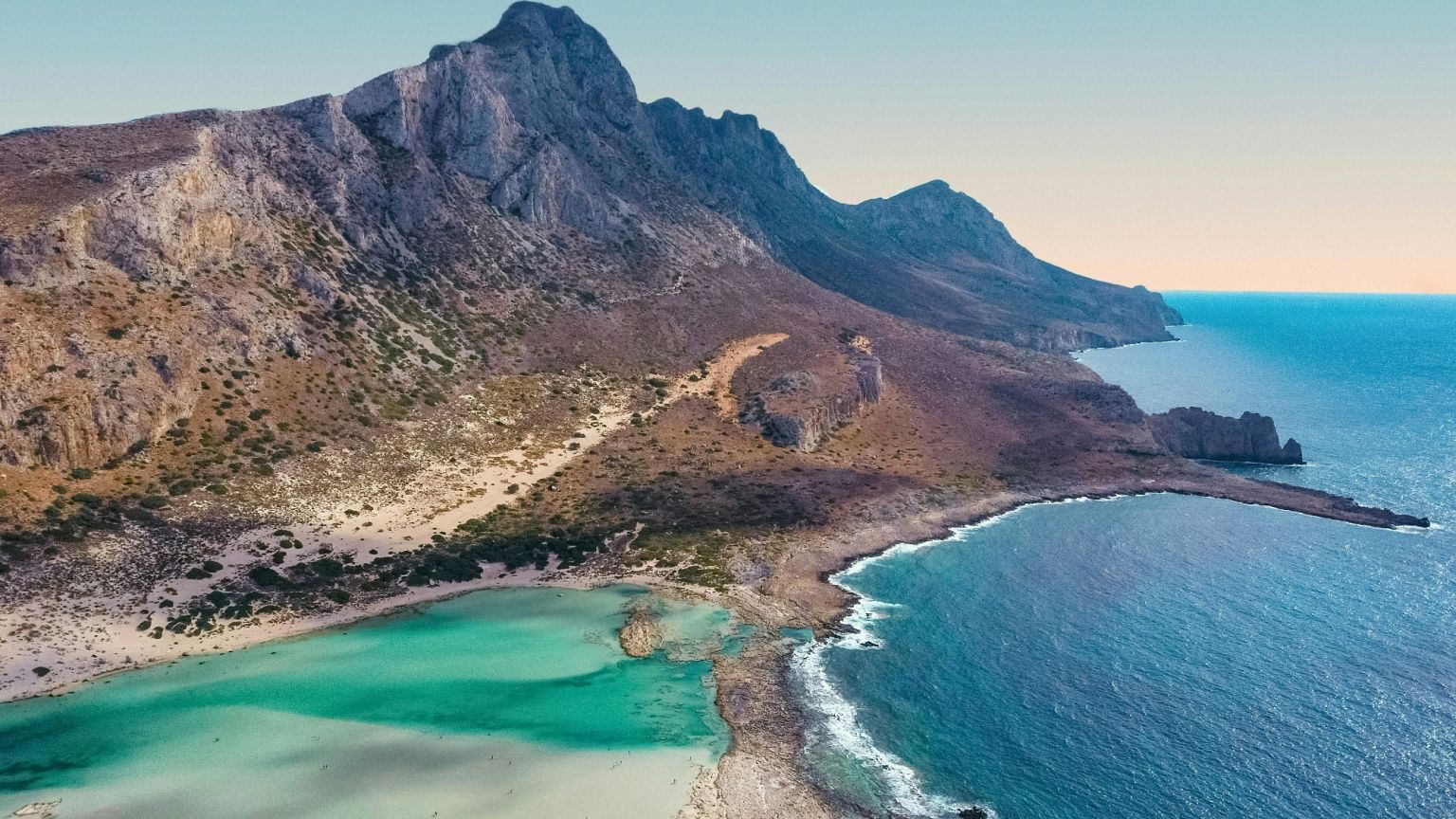
Copyright Joshua Kettle
By Rebecca Ann Hughes
Published on 22/05/2025
A 6.1 magnitude earthquake struck off the coast of the Greek island of Crete early this morning, Thursday 22 May.
The tremor was felt across several Aegean islands, areas of mainland Greece, Turkey and Israel.
There have been no reports of major damage, and authorities have said there is very little risk of further surface impact, including a tsunami.
It is the second time this month that Crete has been hit by seismic activity, but the latest earthquake was stronger than the first, eight days ago.
Here is the latest travel information from the local government.
Earthquake shakes Crete island for second time in a month
The earthquake's epicentre was 56 kilometres northeast of the Cretan capital Heraklion, and the tremor was felt in the cities of Chania and Rethymno on the island, too, as well as in Athens.
According to reports, the earthquake caused landslides on the provincial road network and damage to buildings in Heraklion.
Mayor of Agios Nikolaos, Manolis Menegakis, confirmed to local media that despite the powerful tremors, there have been no other reports of major damage or injuries.
Authorities say they are monitoring the situation closely. "We are vigilant," Menegakis added.
Unlike the most recent quake eight days ago, officials say post-seismic activity is not expected.
Athanassios Ganas, research director at the Geodynamic Institute of the National Observatory of Athens, said: "It is a classic intermediate-depth earthquake, as often occurs in the southern Aegean. There are no expected impacts on structures, nor is it expected to cause a tsunami or affect areas such as Santorini."
Crete earthquake: Is it safe to travel and am I entitled to compensation?
Foreign governments have not issued travel advisories as yet, so it is currently still considered safe to visit Greece and its islands.
This also means that, should you choose not to go ahead with your trip, you are unlikely to receive compensation.
Depending on your travel insurance policy, you may be able to receive a refund for some or all of your trip if it includes compensation for cancellations due to natural disasters. Check with your provider and read your terms and conditions carefully.
Related
Authorities say no major damage has been reported and there is very little risk of a tsunami.
Copyright Joshua Kettle
By Rebecca Ann Hughes
Published on 22/05/2025
A 6.1 magnitude earthquake struck off the coast of the Greek island of Crete early this morning, Thursday 22 May.
The tremor was felt across several Aegean islands, areas of mainland Greece, Turkey and Israel.
There have been no reports of major damage, and authorities have said there is very little risk of further surface impact, including a tsunami.
It is the second time this month that Crete has been hit by seismic activity, but the latest earthquake was stronger than the first, eight days ago.
Here is the latest travel information from the local government.
Earthquake shakes Crete island for second time in a month
The earthquake's epicentre was 56 kilometres northeast of the Cretan capital Heraklion, and the tremor was felt in the cities of Chania and Rethymno on the island, too, as well as in Athens.
According to reports, the earthquake caused landslides on the provincial road network and damage to buildings in Heraklion.
Mayor of Agios Nikolaos, Manolis Menegakis, confirmed to local media that despite the powerful tremors, there have been no other reports of major damage or injuries.
Authorities say they are monitoring the situation closely. "We are vigilant," Menegakis added.
Unlike the most recent quake eight days ago, officials say post-seismic activity is not expected.
Athanassios Ganas, research director at the Geodynamic Institute of the National Observatory of Athens, said: "It is a classic intermediate-depth earthquake, as often occurs in the southern Aegean. There are no expected impacts on structures, nor is it expected to cause a tsunami or affect areas such as Santorini."
Crete earthquake: Is it safe to travel and am I entitled to compensation?
Foreign governments have not issued travel advisories as yet, so it is currently still considered safe to visit Greece and its islands.
This also means that, should you choose not to go ahead with your trip, you are unlikely to receive compensation.
Depending on your travel insurance policy, you may be able to receive a refund for some or all of your trip if it includes compensation for cancellations due to natural disasters. Check with your provider and read your terms and conditions carefully.
Related
Olive oil, honey and wine: How heat is hitting harvests on the Greek island of Kos
One Day: How a Netflix series has boosted bookings on the Greek island of Paros
If you are on holiday in or about to travel to Crete, Kasos or Karpathos, make sure you stay up to date with the latest information.
Crete and its surrounding region are considered one of Europe’s most seismically active zones.
In October 2021, a 6.3 magnitude earthquake shook the island just weeks after another tremor killed one person and injured several others.
One Day: How a Netflix series has boosted bookings on the Greek island of Paros
If you are on holiday in or about to travel to Crete, Kasos or Karpathos, make sure you stay up to date with the latest information.
Crete and its surrounding region are considered one of Europe’s most seismically active zones.
In October 2021, a 6.3 magnitude earthquake shook the island just weeks after another tremor killed one person and injured several others.
Two earthquakes struck near Crete and islands across the Aegean sea over the last two weeks. Experts are warning tourists to familiarise themselves with emergency guidance.
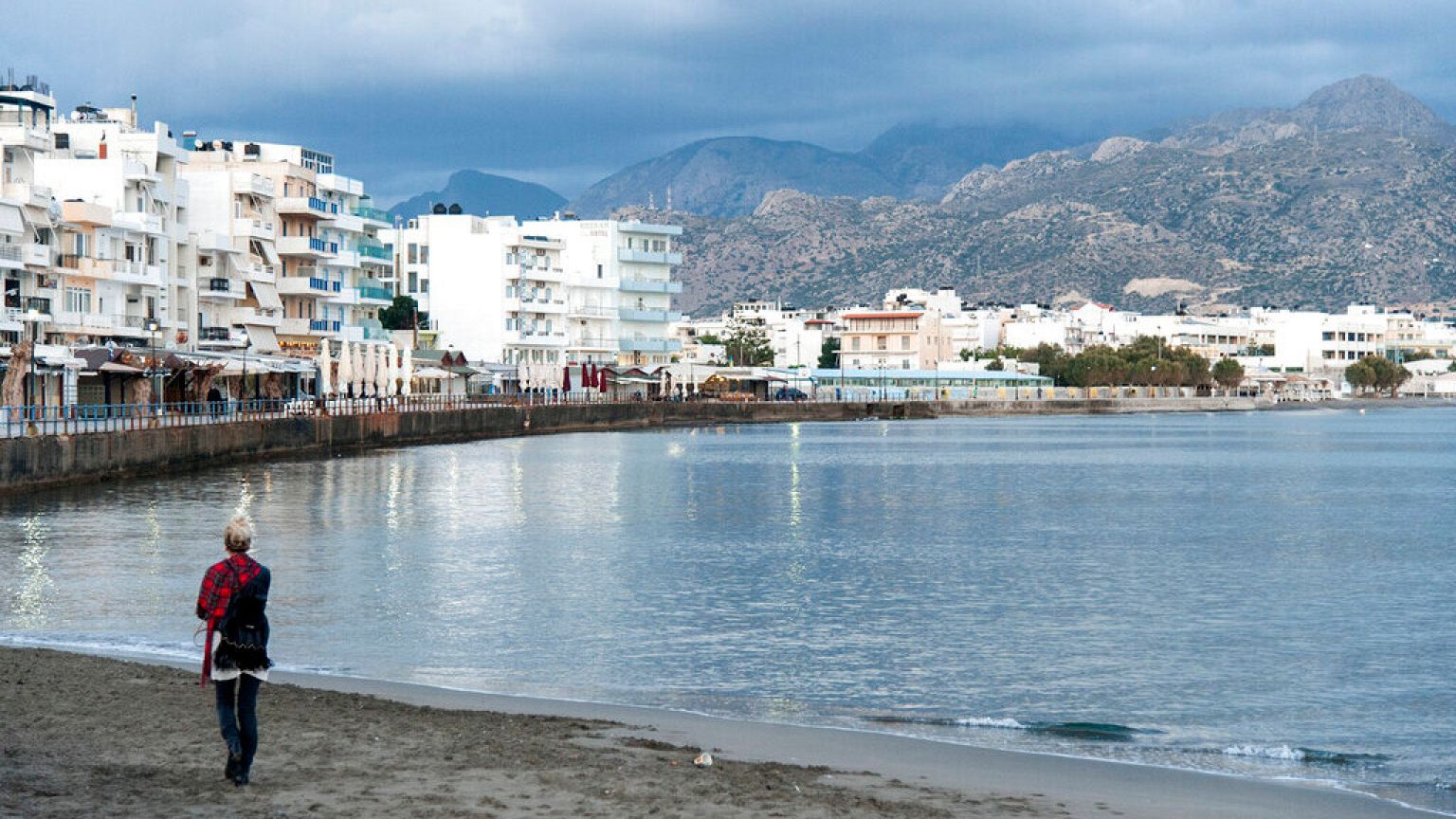
Copyright AP Photo
By Tamsin Paternoster
Published on 22/05/2025 -
A magnitude 6.1 earthquake struck off the coast of Crete on Thursday, just over a week after a similar undersea tremor near the island was felt as far away as Egypt.
In February, a series of near-constant quakes were felt near the idyllic island of Santorini, which declared a state of emergency over the unusual seismic activity.
Although the earthquake off Crete prompted authorities to issue a tsunami warning and caused damage to buildings in the island's historic port, experts say there is no evidence the recent cluster of tremors is connected or poses an unusually significant safety risk.
Rémy Bossu, Secretary-General of the European-Mediterranean Siesmological Centre, told Euronews that "everytime you go to Greece, you are going to a seismically active region."
"The hazards are not significantly higher than they were yesterday, or in February."
Nevertheless, tourists preparing a visit to islands in the Aegean should be prepared and read up on guidance on how best to protect themselves in the event of such tremors, which can be unsettling.
In February, a series of near-constant quakes were felt near the idyllic island of Santorini, which declared a state of emergency over the unusual seismic activity.
Although the earthquake off Crete prompted authorities to issue a tsunami warning and caused damage to buildings in the island's historic port, experts say there is no evidence the recent cluster of tremors is connected or poses an unusually significant safety risk.
Rémy Bossu, Secretary-General of the European-Mediterranean Siesmological Centre, told Euronews that "everytime you go to Greece, you are going to a seismically active region."
"The hazards are not significantly higher than they were yesterday, or in February."
Nevertheless, tourists preparing a visit to islands in the Aegean should be prepared and read up on guidance on how best to protect themselves in the event of such tremors, which can be unsettling.
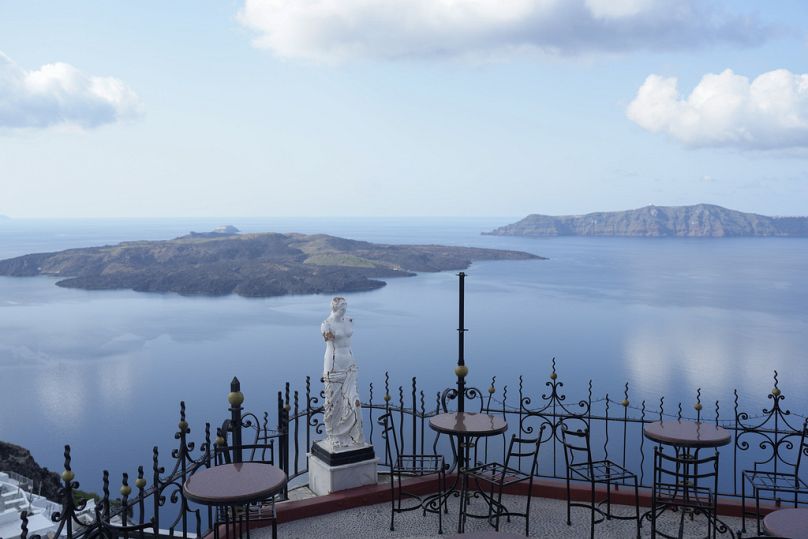
The volcanic island of Nea Kameni, left, is seen from Fira town as Greek authorities are taking emergency measures in response to seismic activity on Santorini, February 2025 Petros Giannakouris/Copyright 2025 The AP. All rights reserved
"The most likely cause of injuries is falling objects if you are inside. So you have to protect yourself by going below a table and avoiding open areas when possible," Bossu says.
"The most likely cause of injuries is falling objects if you are inside. So you have to protect yourself by going below a table and avoiding open areas when possible," Bossu says.
"The earthquake of such magnitude itself does not automatically injure people, but tiles from roofs or balconies might do if they collapse. So you have to know how to behave during an earthquake and above all, listen to what authorities say."
The tsunami warning is automatically triggered in the Mediterranean in the event of an undersea earthquake that reaches magnitude 6, Bossu explains.
"Typically, for magnitude 6, you do not expect a large tsunami. For this level, what is advised is not to go into harbours because it can create a whirlpool and not go on the beach because you may have some rise in sea levels."
Unusual seismic activity in Santorini
Thursday's tremor was felt extensively throughout islands across the Aegean Sea and in parts of the Greek capital of Athens.
Residents of the island told Greek daily Ethnos that they awoke to alarming tremors and described hearing a loud roar following the aftershocks.
The fact that it occurred in the sea meant its damage however was ultimately minimal, director of the Geodynamic Institute of the National Observatory of Athens, Vassilis Karastathis, told OPEN tv.
"I think the most likely scenario is that it will evolve exactly as it seems to evolve with a very weak post-earthquake sequence, Karastathis said, adding that seismologists in the Mediterranean country were monitoring the phenomenon.
More unusual was the earthquake near the volcanic island of Santorini in February, which experienced intense seismic activity known as an "earthquake swarm." According to Bossu, there was a clear volcanic element to the tremors.
Thousands fled the popular holiday destination, which has since implemented measures to protect the location from a potential volcanic eruption.
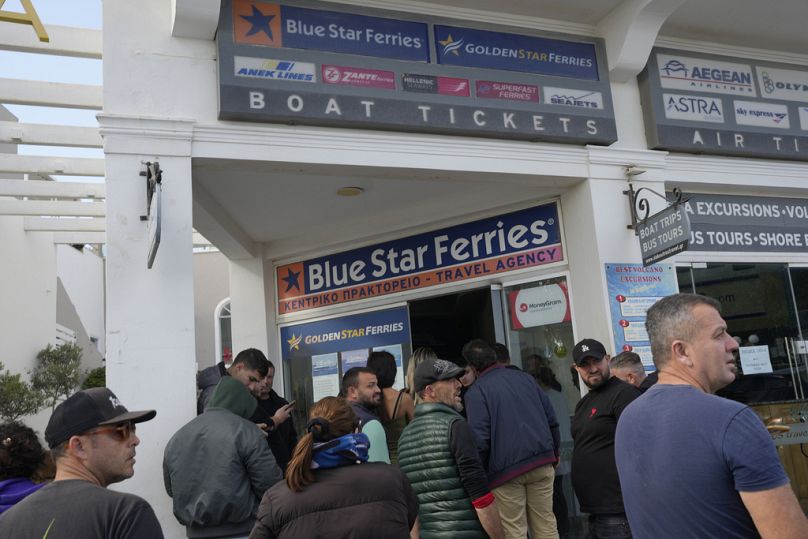
People wait to buy boat and air tickets as Greek authorities are taking emergency measures in response to intense seismic activity on the island of Santorini, Feb 2025.Petros Giannakouris/Copyright 2025 The AP. All rights reserved
Seismologist, Dr Nikolaos Melis, Director of Research at the Institute of Geodynamics, part of the National Observatory of Athens told Euronews that despite the high number of earthquakes in a short time span, researchers have no reason to believe that Greece will experience a devastatingly large earthquake anytime soon.
However such large earthquakes — such as one in Crete that killed one person in 2021 — are impossible to predict.
Sitting close to the boundary of the African and Eurasian tectonic plates the Greek islands, particularly the western Ionian islands, are sites of high seismic activity and are typically well-prepared for the dangers of aftershocks.
"For people who are not aware it can be frightening, and whilst it is not impossible for a big earthquake, most buildings and hotels follow a strict building code that protects them from damages," Melis says.
"Greece has got the highest seismic activity in Europe and next to Turkey we have two countries with very high activity. But as I said, the big magnitudes, the catastrophic magnitudes, are very rare."
Seismologist, Dr Nikolaos Melis, Director of Research at the Institute of Geodynamics, part of the National Observatory of Athens told Euronews that despite the high number of earthquakes in a short time span, researchers have no reason to believe that Greece will experience a devastatingly large earthquake anytime soon.
However such large earthquakes — such as one in Crete that killed one person in 2021 — are impossible to predict.
Sitting close to the boundary of the African and Eurasian tectonic plates the Greek islands, particularly the western Ionian islands, are sites of high seismic activity and are typically well-prepared for the dangers of aftershocks.
"For people who are not aware it can be frightening, and whilst it is not impossible for a big earthquake, most buildings and hotels follow a strict building code that protects them from damages," Melis says.
"Greece has got the highest seismic activity in Europe and next to Turkey we have two countries with very high activity. But as I said, the big magnitudes, the catastrophic magnitudes, are very rare."

No comments:
Post a Comment