FASCIST FRIENDS OF A FEATHER
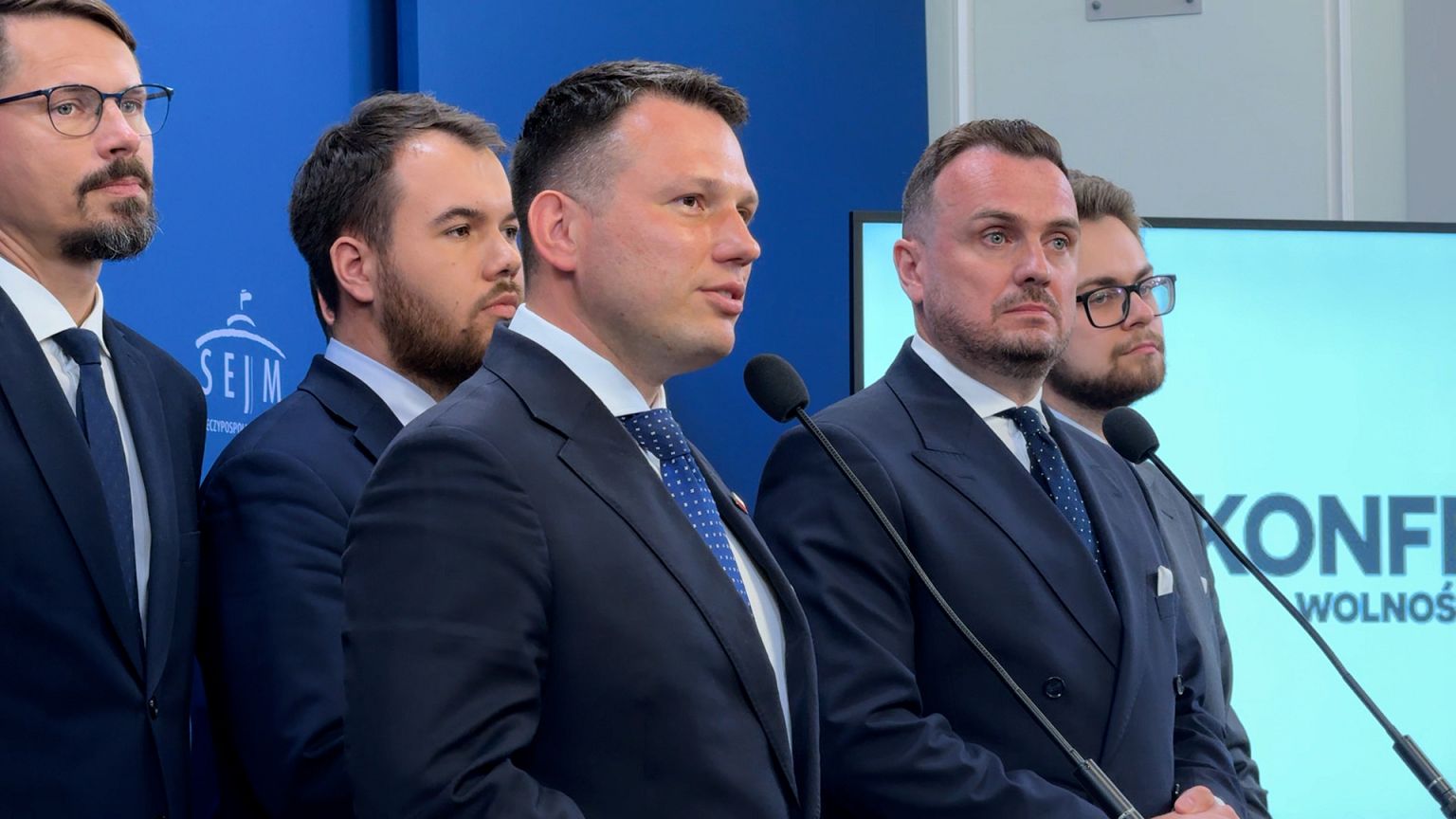
Copyright fot. Paweł Głogowski
By Marcelina Burzec
Published on 22/05/2025
The nationalist presidential candidates Slawomir Mentzen and Grzegorz Braun won a combined total of almost 21 per cent of the vote.
Candidates from right-wing and nationalist parties did particularly well on Sunday in the first round of Poland's presidential election, echoing a trend seen across Europe in recent months, with nationalist politicians enjoying a wave of success.
In February, Europe was shocked when the far-right Alternative for Germany (AfD) became the second-largest force in the Bundestag.
On the same day as the Polish vote, the far-right Chega party performed well in Portugal, while nationalist candidate Geroge Simion narrowly lost out on the Romanian presidency.
In Poland, the nationalist candidates Slawomir Mentzen and Grzegorz Braun received a combined total of almost 21% of the vote. Overall, more than 50% of Polish voters cast their ballot for right-wing candidates.
Mentzen was the presidential candidate for Konfederacja or Confederation, a nationalist party which describes itself as liberal-conservative, while Braun represented Konfederacja Korony Polskiej (Confederation of the Polish Crown), a party which has voiced antisemitic views.
Their voters are now being fought over by the candidates who went through to the second round of the presidential election — Rafał Trzaskowski from the liberal Civic Platform and Karol Nawrocki, supported by the right-wing Law and Justice or PiS party.
Who voted for Mentzen?
"Mentzen's voters are not a homogeneous group," Dr Olgierd Annusewicz, a political scientist from the University of Warsaw, told Euronews.
In total, Mentzen received 14.8% of all ballots on Sunday.
"There are certainly a great many people out there who strongly believe in certain isolationist thoughts, are averse to the European Union, or think in very traditional terms in general, on social issues for example, where Slawomir Mentzen has expressed himself," the political scientist explained.
Annusewicz explained that he also gained support from free-market voters. "They believe that only the free market is able to give them some level of happiness or trust in the state," he said.
Dr Annusewicz also noted that Mentzen got the support of young people.
"Not necessarily because of the views he preaches, but because, firstly, he is anti-system, and young people very often do not like the system, they do not like the state and its institutions. But also simply because he seemed cool to them," Dr Annusewicz said.
"Let's remember that Mentzen was the youngest of all the candidates running. He was able, in his own way, to find contact with this young generation."
Who are Braun's voters?
Braun, of the Konfederacja Korony Polskiej, gained 6.34% of the vote — and won fourth place in the presidential race, even though he was only seventh in the polls.
"This is, of course, a little surprising, because it would seem that a candidate with very extreme views, who is very expressive in this way, but also highly controversial on the political scene, will not be attractive to too many voters," Dr Annusewicz told Euronews.
Annusewicz mentioned that some of Braun's supporters would have grown disillusioned with the classical political parties and turned away from the right-wing Law and Justice party.
Professor Rafał Chwedoruk from the University of Warsaw said Braun was supported by many middle-aged men in some of the country's most conservative areas.
His voters were worried about Poland being dragged into Russia's war in Ukraine and about migration, Chwedoruk noted.
Mentzen and Braun set conditions
Both Mentzen and Braun want to make the most of their raised profile and have issued demands to the presidential candidates who made it through to the second round.
Mentzen listed eight conditions that a candidate must fulfil to gain his support. They include not raising existing taxes, not allowing Polish soldiers to be sent to Ukraine, and not signing a law to ratify Ukraine's accession to NATO.
Mentzen offered Trzaskowski and Nawrocki a conversation on his YouTube channel.
"Mentzen is growing (in stature), putting himself in the spotlight and showing that he is the boss today. This is, from the point of view of Slawomir Mentzen's political interest, an excellent move," Dr Annusewicz said.
Meanwhile, Braun, who is an MEP, demanded that the future president "reject the so-called European Union migration pact and ... stop immigration — both legal and illegal".
Representatives of the PiS party and the Civic Platform have said their party was the ideal partner for Mentzen and his voters.
"I have always said: there are no enemies on the right. I am in favour of a coalition with the Confederation," PiS MP Janusz Kowalski said.
"I have no doubt whatsoever that if Slawomir Mentzen's voters, and I understand that he has defined what is important to them, listen to what Rafal Trzaskowski says, it will suddenly become apparent that many of these issues are close to Rafal Trzaskowski," argued Krzysztof Kwiatkowski, a Civic Platform lawmaker.
Nine EU countries seek European human rights convention's rethink on migration
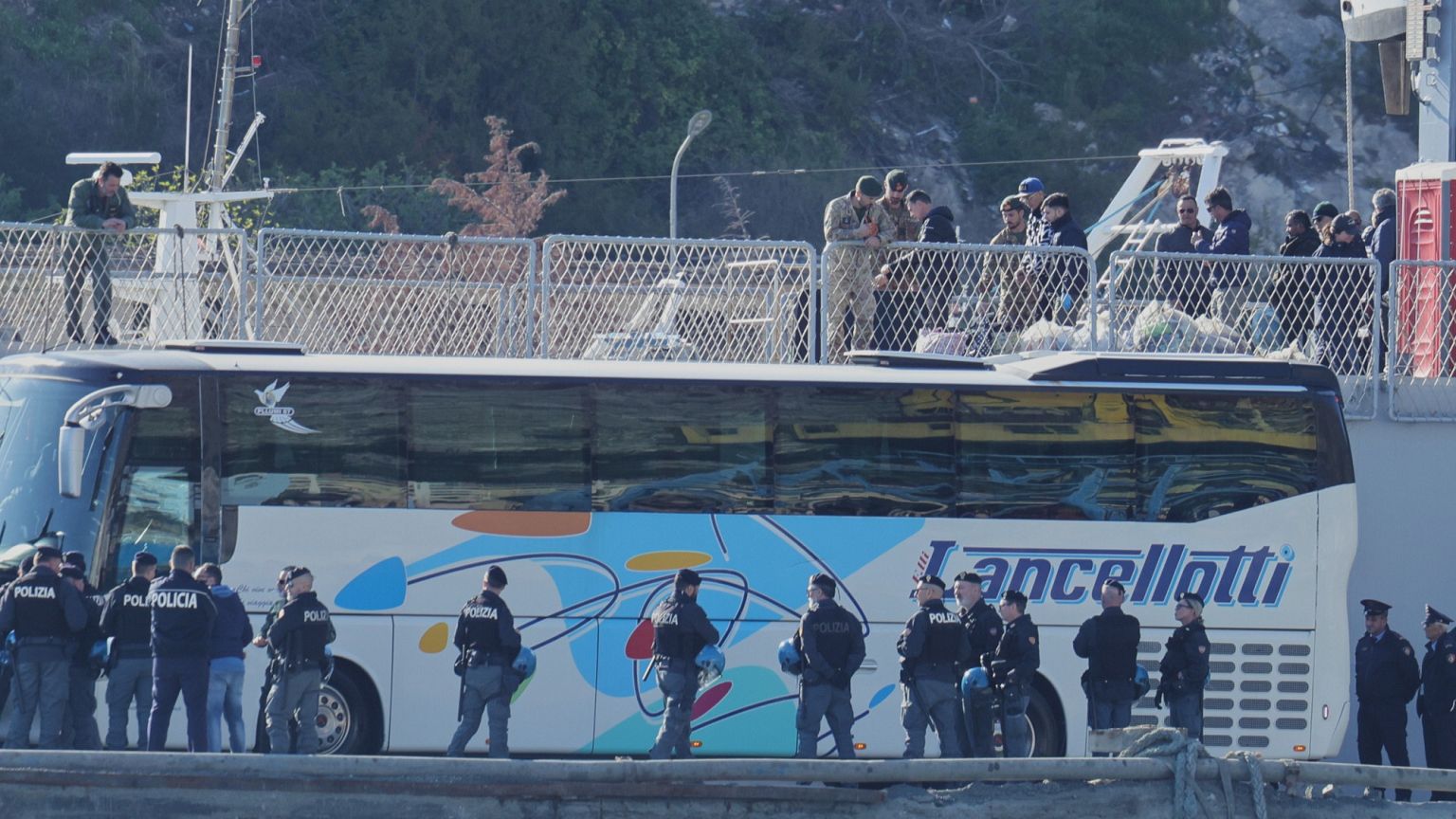
In an open letter spearheaded by Italian Prime Minister Giorgia Meloni and her Danish counterpart Mette Frederiksen, nine leaders have called for a reinterpretation of the European Convention on Human Rights.
Nine EU countries have signed an open letter calling for the European Convention on Human Rights (ECHR) to be reinterpreted to allow for policy changes on migration.
The document was published on Thursday as part of an effort led by Italy and Denmark. It was also signed by leaders from Austria, Belgium, the Czech Republic, Estonia, Latvia, Lithuania and Poland.
The signatories, who believe it should be easier to expel migrants who commit crimes, said the ECHR's interpretation of the convention should be examined.
"It is important to assess whether, in some cases, the court has over-extended the scope of the convention compared to its original intentions, thus altering the balance between the interests to be protected," they wrote.
"We believe that the development of the court's interpretation has, in some cases, limited our ability to make political decisions in our democracies," they added.
Their message comes as anti-immigration parties across Europe have surged in popularity in recent months.
During a press conference on Thursday with her Danish counterpart Mette Frederiksen, Italian Prime Minister Giorgia Meloni said the letter sought to "open a political debate on some European conventions and on the capacity of those conventions to deal with the great issues of our time, starting precisely with the issue of migration."
In the letter, Meloni, Frederiksen and their co-signatories outlined some concrete changes they would like to see.
The proposals included having greater freedom to decide when to expel foreign nationals and having the ability to take effective action against "hostile states that seek to use our values and rights against us...by instrumentalising migrants at our borders".
Signed in 1950 by the Council of Europe, the convention is an international treaty designed to protect human rights and fundamental freedoms in Europe.
All 46 countries that comprise the Council of Europe are party to the convention, including the 27 EU member states.
Any person whose rights have been violated under the convention by a state party may bring an action before the court.


No comments:
Post a Comment