At the Grand Egyptian Museum in Cairo, golden coffins, gold amulets, pearl necklaces and other treasures of Tutankhamun will be presented to the general public at the end of the year. An exhibition made possible thanks to the restoration work of 150 professionals.
Published : 10/07/2025 -
By: FRANCE 24
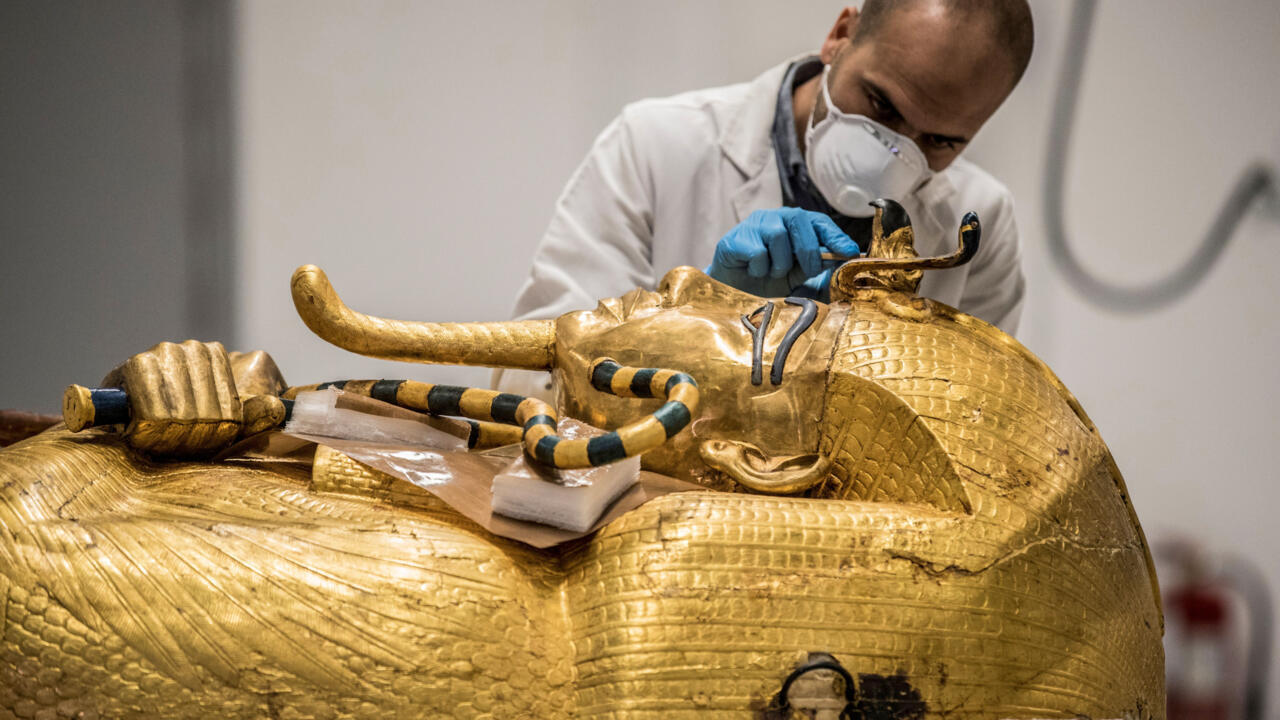
An archaeologist performs restorations on the sarcophagus of Pharaoh Tutankhamun in the restoration laboratory of the Grand Egyptian Museum in Cairo, Egypt, in 2020. © Khaled Desouki, AFP
The 5,000 or so objects in Tutankhamun's treasure will be on display at the end of 2025 at the official inauguration of the Grand Egyptian Museum (GEM) and permanent exhibition in Cairo.
As a teenager, Eid Mertah spent hours reading books about King Tutankhamun, tracing hieroglyphics with his finger, dreaming of one day holding the famous golden mask of the young pharaoh in his hands.
He is now one of 150 professional Egyptian restorers who work in the GEM's conservation laboratories and treat, among other things, the precious collection of funerary objects discovered in 1922 in a tomb in the Valley of the Kings, spared by looters.
Observe the life of a conservation laboratory
"It is thanks to Tutankhamun that I chose to study archaeology," the 36-year-old expert told AFP. "I dreamed of working on his treasures — and that dream came true."
"I think we are more eager to discover the museum than the tourists themselves," said Mohamed Moustafa, a 36-year-old restaurateur.
The state-of-the-art building built near the Giza Pyramids on a budget of more than $1 billion will offer visitors a rare experience: observing the life of a conservation laboratory and the work of experts on Pharaoh Khufu's 4,500-year-old solar boat behind a glass wall, according to information obtained from the museum's management.
The 5,000 or so objects in Tutankhamun's treasure will be on display at the end of 2025 at the official inauguration of the Grand Egyptian Museum (GEM) and permanent exhibition in Cairo.
As a teenager, Eid Mertah spent hours reading books about King Tutankhamun, tracing hieroglyphics with his finger, dreaming of one day holding the famous golden mask of the young pharaoh in his hands.
He is now one of 150 professional Egyptian restorers who work in the GEM's conservation laboratories and treat, among other things, the precious collection of funerary objects discovered in 1922 in a tomb in the Valley of the Kings, spared by looters.
Observe the life of a conservation laboratory
"It is thanks to Tutankhamun that I chose to study archaeology," the 36-year-old expert told AFP. "I dreamed of working on his treasures — and that dream came true."
"I think we are more eager to discover the museum than the tourists themselves," said Mohamed Moustafa, a 36-year-old restaurateur.
The state-of-the-art building built near the Giza Pyramids on a budget of more than $1 billion will offer visitors a rare experience: observing the life of a conservation laboratory and the work of experts on Pharaoh Khufu's 4,500-year-old solar boat behind a glass wall, according to information obtained from the museum's management.
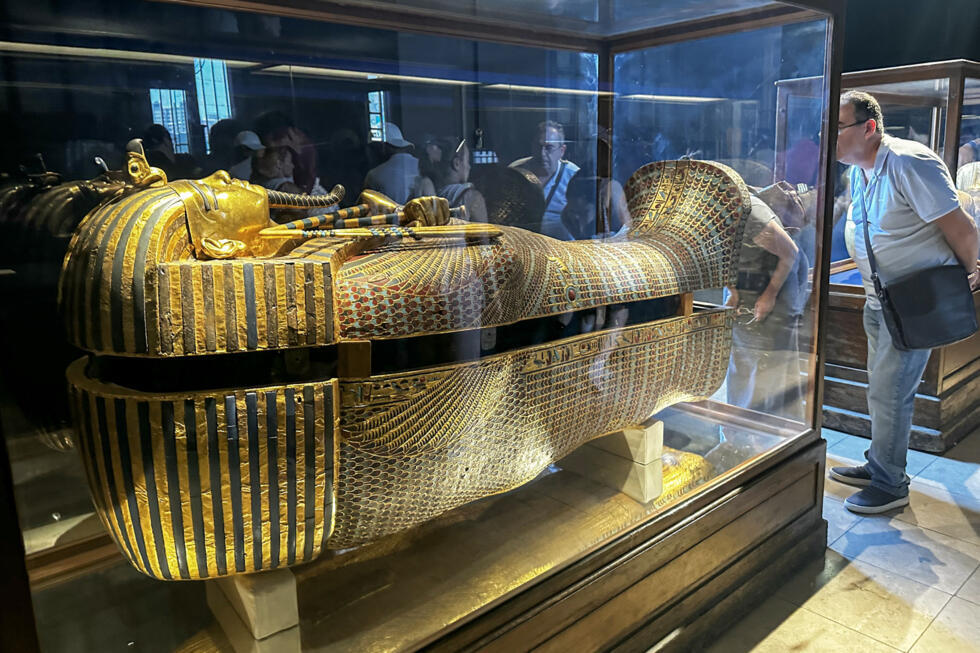
The GEM's Tutankhamun collection comes from several museums and storage sites, including the Egyptian Museum in Cairo. © Khaled Desouki, AFP
"When visitors walk through the museum, they will admire the beauty of these artifacts. But for us, each piece is a reminder of countless hours of work, passionate debates and intensive training," says Mohamed Moustafa.
Originally scheduled for July 3, the Egyptian authorities justified the postponement of the exhibition by geopolitical tensions in the region, after several postponements related to political upheaval and the Covid-19 pandemic.
"When visitors walk through the museum, they will admire the beauty of these artifacts. But for us, each piece is a reminder of countless hours of work, passionate debates and intensive training," says Mohamed Moustafa.
Originally scheduled for July 3, the Egyptian authorities justified the postponement of the exhibition by geopolitical tensions in the region, after several postponements related to political upheaval and the Covid-19 pandemic.
Golden coffins and miniature shrines
Tutankhamun's hoard includes his iconic gold funerary mask, gilded coffins, gold amulets, pearl necklaces, linen gloves, statues, miniature shrines, ceremonial chariots, as well as two mummified fetuses, presumed to be his stillborn daughters.
Many of these objects had not been restored since their discovery by British archaeologist Howard Carter. Conservation techniques used at the time were intended to protect the objects, but more than a century later complicate their restoration.
Applying wax to the gold surfaces helped "preserve the objects at the time," Bayyoumi says, "but then it masked the details that we want to reveal to the world today."
For several months, the 39-year-old professional and her colleagues painstakingly removed the wax that had, over time, trapped the dirt and tarnished the shine of the gold.
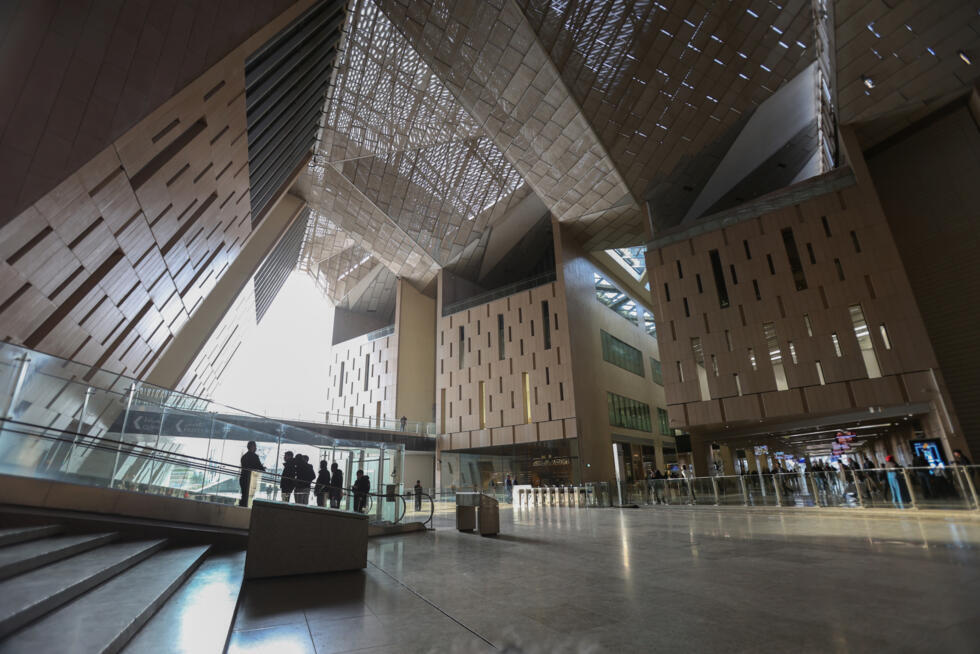
The Grand Egyptian Museum in Giza is now scheduled to open at the end of the year, after multiple delays. © Hasan Mroue, AFP
"A huge puzzle"
The restoration was the result of close cooperation between Egypt and Japan, with Tokyo providing $800 million in loan funding as well as technical support for restoration, transportation, and museum management.
Egyptian restorers, many of whom were trained by Japanese experts, conducted their cutting-edge work in nineteen specialized laboratories: wood, metal, papyrus, textiles, etc.
The restoration of Tutankhamun's coffin, transferred directly from his tomb, proved to be one of the most delicate operations.
At the wood laboratory, restorer Fatma Magdy, 34, has mobilized magnifying glasses and photographic archives to carefully reassemble the fine gold leaf.
"It was like putting together a huge puzzle," she says. "The shape of the breaks, the tracing of the hieroglyphics - every detail mattered."
"A huge puzzle"
The restoration was the result of close cooperation between Egypt and Japan, with Tokyo providing $800 million in loan funding as well as technical support for restoration, transportation, and museum management.
Egyptian restorers, many of whom were trained by Japanese experts, conducted their cutting-edge work in nineteen specialized laboratories: wood, metal, papyrus, textiles, etc.
The restoration of Tutankhamun's coffin, transferred directly from his tomb, proved to be one of the most delicate operations.
At the wood laboratory, restorer Fatma Magdy, 34, has mobilized magnifying glasses and photographic archives to carefully reassemble the fine gold leaf.
"It was like putting together a huge puzzle," she says. "The shape of the breaks, the tracing of the hieroglyphics - every detail mattered."
"Every object tells a story"
The Tutankhamun collection has long been scattered across several sites, including the Egyptian Museum in Tahrir Square, the Luxor Museum, as well as the tomb itself, in the Valley of the Kings. Some objects have undergone light restoration before being transferred for safe transport.
Before any manipulation, the teams carried out photographic documentation, X-ray analyses and various tests to assess the condition of each piece.
"We had to understand the condition of each object — the layers of gold, the adhesives, the structure of the wood — absolutely everything," says Eid Mertah, who worked on the ceremonial shrines of the young pharaoh at the Egyptian Museum in Tahrir Square.
The philosophy that guided the team throughout the process was to "do the bare minimum necessary — while respecting the history of the object," says Mohamed Moustafa.
"Every object tells a story," he concluded.
With AFP

No comments:
Post a Comment