Human-driven climate change intensified the most recent European heatwave by as much as 4C in several cities, raising temperatures to levels that posed serious health risks to thousands of people, scientists reported on Wednesday.
Issued on: 10/07/2025 - RFI

This is likely to have led to far more heat-related deaths than would have occurred without the influence of global warming, a study conducted by more than a dozen researchers from five European institutions concluded.
Temperatures between late June and early July soared well above 40 degrees Celsius in many European countries, as the first heatwave of the summer broke records and triggered health warnings.
Hottest June on record
The European Union's climate monitoring service Copernicus on Wednesday said that Western Europe had seen its hottest June on record, with some schools and tourist sites shuttered as the mercury soared.
To assess what role climate change had played, scientists compared the intensity of the heatwave with one that would have occurred in a world that had not warmed due to burning of fossil fuels.
Using historical weather data, they concluded that a heatwave "would have been 2-4C cooler" without human-induced climate change in all but one of the 12 cities studied.
The 4C elevation greatly increased the risk to health in the 12 cities, which included Paris, London and Madrid, and have a combined population of more than 30 million.
"What that does is it brings certain groups of people into more dangerous territory," said researcher Ben Clarke from Imperial College London, which co-led the study with the London School of Hygiene and Tropical Medicine.
"For some people it's still warm, fine weather. But for now a huge sector of the population, it's more dangerous."
Death toll
The study also sought to estimate the death toll from the heatwave in the 12 cities studied, and how many of these deaths could be attributed to climate change.
Based on peer-reviewed scientific methods and established research on heat and mortality, the study concluded that the heatwave likely caused around 2,300 deaths between 23 June and 2 July across the 12 cities studied.
Around 1,500 of these deaths would not have occurred had climate change not pushed temperatures to such dangerous highs, researchers said, whole stressing that this was an estimate as no official death toll was not yet available.
Heatwaves are particularly dangerous for the elderly, those with health conditions, young children, outdoor workers and anyone exposed to high temperatures for prolonged periods without relief. The impact on health is also compounded in cities, where heat is absorbed by paved surfaces and buildings.
Copernicus said large parts of southern Europe experienced so-called "tropical nights" during the heatwave, when overnight temperatures don't fall low enough to let the body recover.
"An increase in heatwave temperature of just two or four degrees can mean the difference between life and death for thousands of people," said Garyfallos Konstantinoudis, a lecturer at Imperial College London. "This is why heatwaves are known as silent killers. Most heat-related deaths occur in homes and hospitals out of public view, and are rarely reported."
Authorities say it could take weeks to calculate a definitive death toll from the recent heatwave, but similar episodes have claimed tens of thousands of lives in Europe during previous summers.
(with AFP)
Europe hit by storms and wildfires after heatwave - is climate change also to blame?
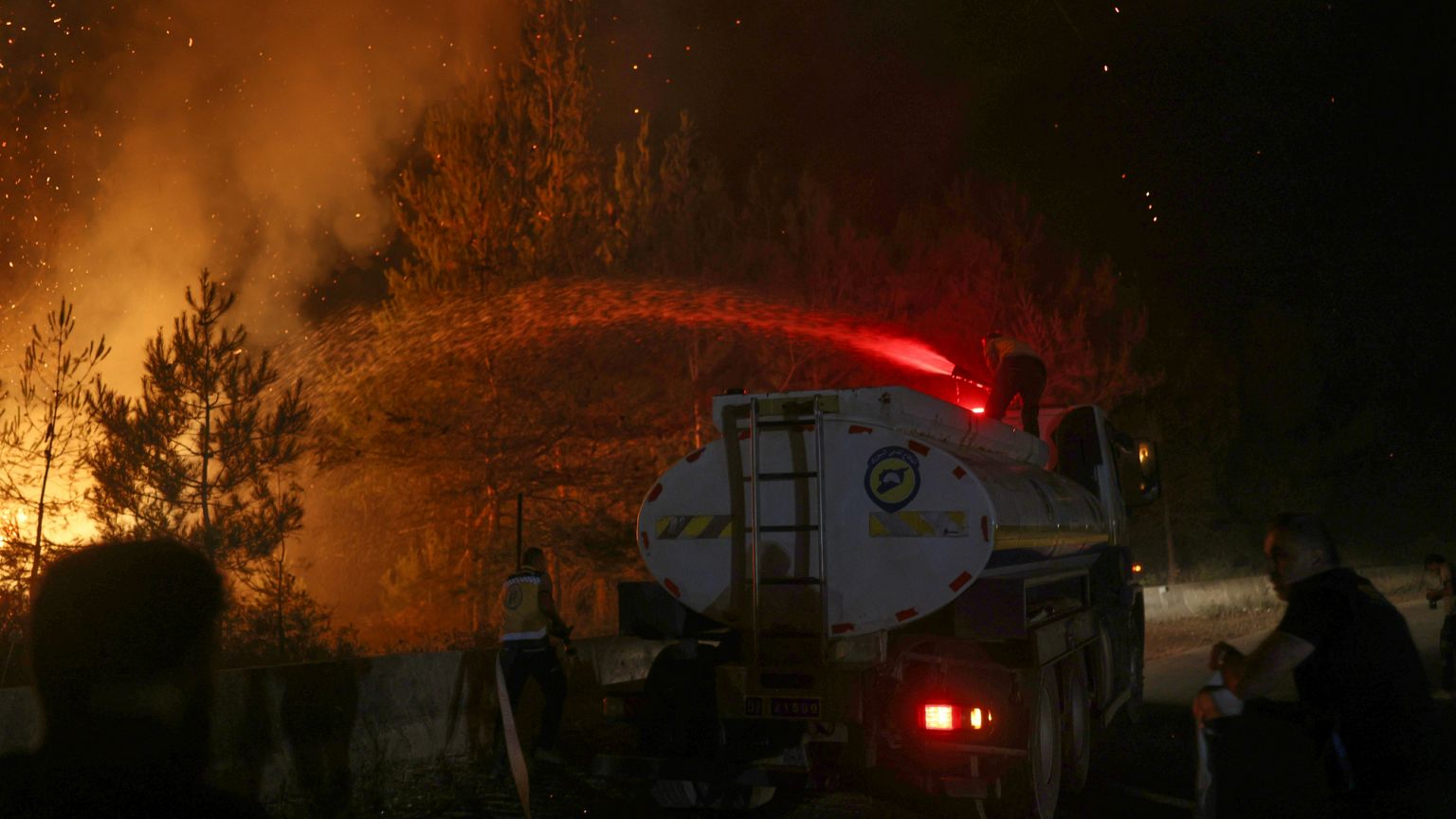
The Balkans have been pounded by storms, while wildfires broke out in Türkiye, Spain and France in the last week.
Europe has been experiencing dozens of extreme weather events in recent weeks, from blistering heatwaves to raging storms.
Many of these rapidly fluctuating phenomena have already been attributed in part to human-induced climate change.
And they are only expected to increase in frequency and intensity due to global warming, scientists say, bringing further substantial damage and loss.
Experts warn that Europe should brace for another summer of weather whiplash as it oscillates between droughts and floods.
“These events are unfortunate reminders of the changing and volatile climate that Europe needs to adapt and prepare for, while taking action to drastically reduce carbon emissions in order to slow down and limit climate change,” the European Environment Agency says.
Wildfires in Marseille, Spain and Türkiye were ‘inevitable’ in current weather conditions
In southern France, wildfires are encroaching on the port city of Marseille. More than 1,000 firefighters have deployed to tackle the blaze, which broke out near the town of Les Pennes-Mirabeau on Tuesday.
Some 720 hectares have been consumed by the flames, the prefecture said, and hundreds of homes have been evacuated. Marseille Airport is experiencing a second day of flight disruptions, and train traffic has also been plunged into chaos.
Climate data scientist Max Dugan-Knight at Deep Sky Research warns there is a clear link between the wildfires and climate change.
“The direct cause of the fire that is rapidly spreading near Marseille was apparently a car which caught on fire. But the real culprit is the current extreme fire weather conditions in France and across Europe,” he says.
“In these dry, hot, and windy conditions, even the smallest ignition would have spread quickly and caused serious damage.”
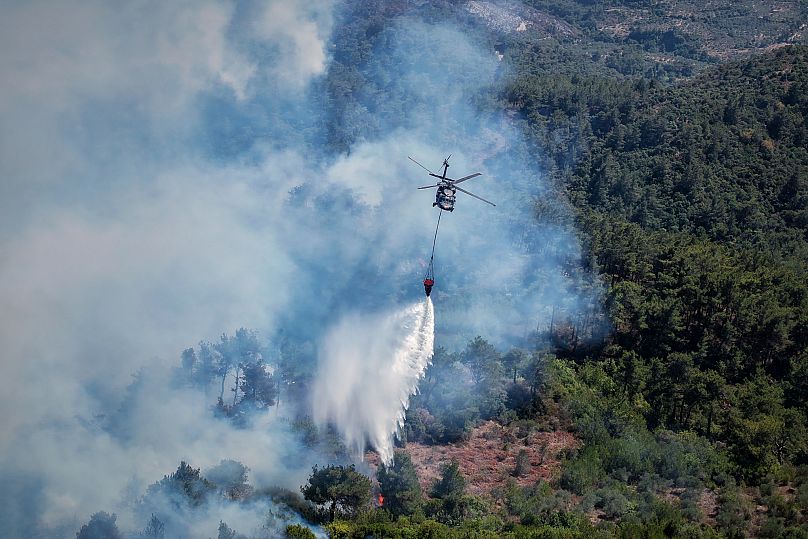
It is the same story for other recent blazes, Dugan-Knight says: “Just as high winds fanned flames and led to massive destruction in Los Angeles in January, winds are spreading fires across France and Spain.
“When high winds combine with a record-breaking heatwave and dry conditions, wildfires are inevitable.”
Last week, a similar incident occurred in Türkiye. While the official cause of wildfires in Izmir was faulty power lines, they were made more likely and more intense by the soaring temperatures, strong winds, and low humidity that the area has been experiencing.
Fires also broke out along the Turkish-Syrian border. Syrian minister of emergency and disaster management Raed al-Saleh called the situation “extremely tragic.”
In a statement posted on X, he said the fires had destroyed “hundreds of thousands of trees” covering an area estimated at 10,000 hectares.
“We regret and mourn every tree that burned, which was a source of fresh air for us,” al-Saleh said.
‘Hydroclimate whiplash’ is exacerbating extreme weather
Climate change is also contributing to a phenomenon known as “hydroclimate whiplash”, which refers to large swings between heavy rainfall and extreme drought conditions.
This is particularly dangerous as the vegetation growth that happens after the rainfall is immediately dried out, becoming ready fuel for wildfires, Dugan-Knight explains.
“Through its impact on heatwaves and precipitation, climate change is making wildfires more common and more deadly,” he adds.
He also warns that the emissions from wildfires “point to a cruel irony and a vicious cycle where climate change makes wildfires more common, and wildfires’ emissions contribute to climate change.”
Balkans pummelled by storms after extreme heat
The Balkans are currently experiencing just such rapidly changing weather phenomena.
A severe hailstorm ripped up trees and roofs in Croatia on Tuesday, coming right on the heels of a 40°C heatwave.
At least three people were injured, and severe damage was reported across the city, including downed trees and flooded streets.
An Index news portal report quoted the Split meteorological service as saying that “such storms are usual after a long period of heat with extremely hot days.”
The weather service in neighbouring Slovenia said on Tuesday that snow fell at high altitudes in the Alps while the rest of the country has been pounded with heavy rain and hail.
Climate change-induced extreme weather is putting Europeans at risk
After battering Croatia, the storm later swept through Serbia. It came after firefighters battled more than 600 wildfires on Monday that injured six people.
Serbia has been hit by a severe drought this summer that has endangered crops and led to restrictions in supplies of drinking water throughout the country.
It is a concrete example of the findings of the first European Climate Risk Assessment (EUCRA). The report identifies 36 climate risks that pose a threat to Europe’s energy and food security, ecosystems, infrastructure, water resources, financial stability, and people’s health.
It shows that many of these risks have already reached critical levels and can become catastrophic without urgent and decisive action.
“Without strong adaptation and mitigation actions, hundreds of thousands of people could die from heatwaves, and economic losses from coastal floods alone could exceed €1 trillion per year in a high warming scenario,” the EEA says.

No comments:
Post a Comment