CRIMINAL CAPITALI$M
Vale lost $38 million amid Brazil mining corruption case
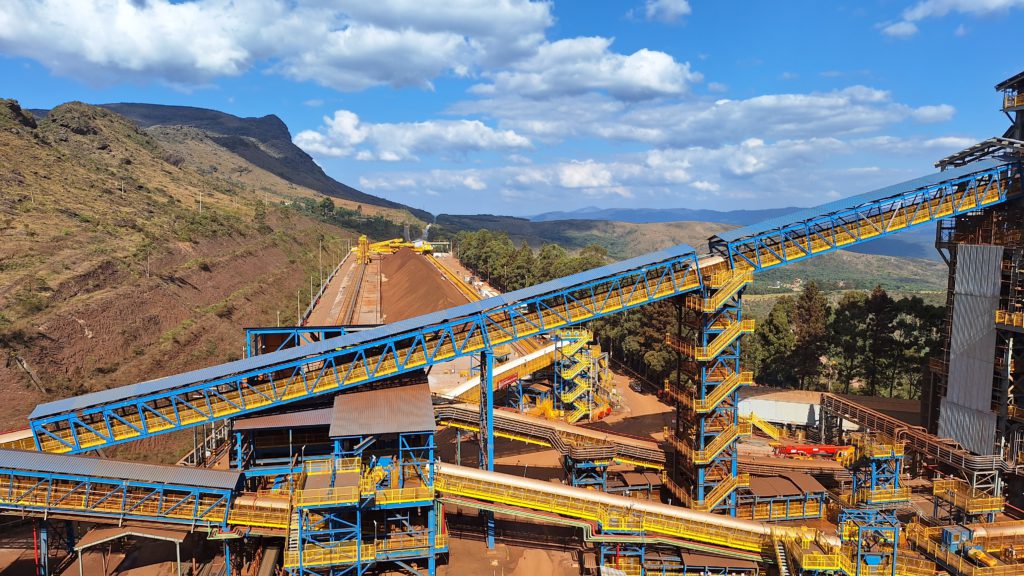
A Brazilian court said that iron ore producer Vale SA lost 200 million reais ($38 million) after disadvantages in government decisions amid a corruption and money laundering scheme.

The court decision showed that Aiga Mineracao in 2023 acquired the rights to minerals in an area of the Capanema mine, but misappropriated a pile of Vale’s tailings that could have been recovered and generated profit. Officials at the mining sector’s regulator — known as ANM — including a director arrested amid a police probe, are accused of favoring Aiga over Vale, according to the court decision.
Vale didn’t immediately respond to a request for comment. Aiga couldn’t be reached for comment by Bloomberg News.
Brazil’s federal police have uncovered a criminal organization operating in the mining sector to defraud environmental licenses by paying bribes to public officials, according to a statement on Wednesday. The court decision cited some of the police findings.
Vale is one of the world’s largest iron ore suppliers.
Vale just recently resumed operations at Capanema mine, an expansion project that will add 15 million tons a year and is key to the company’s goal of producing 340 million to 360 million tons next year. The Rio de Janeiro-based miner is also investing to produce more iron ore by reusing tailings and waste rock. Vale estimates 10% of its output could come from circular mining by 2030, mostly from Minas Gerais.
(By Mariana Durao)
Singapore reviewing short seller claim against Vedanta
The Singapore Police Force is reviewing a complaint by short seller Viceroy Research that natural resources conglomerate Vedanta Ltd improperly funded its 2024 dividend, documents viewed by Reuters show.
Vedanta Ltd told Reuters it had paid all dividends in full compliance with applicable laws, calling Viceroy’s allegations “baseless”.
“We maintain that the allegations in the short seller’s dubious ‘reports’ are malicious and ill-informed, and the company unequivocally rejects them,” the company said.
It added that no SPF investigation was under way and it had not been contacted by Singapore police. Vedanta previously rejected separate earlier accusations made by Viceroy in July.
The SPF declined to comment on the matter when contacted by Reuters.
Allegations of boosted dividends
India-based Vedanta Ltd specializes in the exploration, extraction and processing of minerals, along with oil and gas.
In an August 7 letter to the SPF, seen by Reuters, US-based Viceroy alleged the company propped up its dividend by using a $900 million loan from Oaktree Capital Management.
Viceroy said Vedanta Ltd, which is valued at roughly $20 billion, used the loan and accounting tricks to make its reserves look bigger on paper and make a payout to investors that was not backed by real cash earnings. It later repaid the loan and reversed write-offs through entities domiciled in Singapore.
Viceroy stated that its conclusions are primarily drawn from publicly available reports, forensic analyses of Vedanta Ltd’s filings and site visits to its assets.
In an email seen by Reuters, the SPF replied to Viceroy’s complaint, assigning it a reference number indicating it was reviewing the matter.
UK-based Vedanta Resources owns 56% of Vedanta Ltd, while the rest is held by institutional shareholders.
In July, Viceroy published a report saying it had taken a short position against the debt of Vedanta Resources, alleging that the British firm was “systematically draining” its Indian unit, which Vedanta Ltd disputed.
It also alleged that Vedanta Ltd’s dividend policy serves its parent’s financing needs, not its own cash flow, adding that billions of dollars in disputed expenses were hidden off its balance sheet.
A spokesperson for the Indian firm said at the time that the report was “a malicious combination of selective misinformation and baseless allegations.”
Vedanta Ltd has been under pressure since India’s government objected to a demerger plan into four separate entities launched by chairman Anil Agarwal in 2023, after an unsuccessful attempt to take the group private three years earlier.
As part of the plan, Vedanta Resources said last year it would focus on cutting its debt pile, bringing net debt down by $1.2 billion to $11.1 billion in fiscal 2025.
(By Clara Denina and Florence Tan; Editing by Veronica Brown and Joe Bavier)
Switzerland probes trader over alleged sanctioned Russian gold dealings

Swiss-based metal trader Open Mineral is being investigated by Switzerland’s State Secretariat for Economic Affairs (SECO) and Zug police for alleged dealings with sanctioned Russian gold, two sources with knowledge of the matter said.
Sanctions on Russian gold were imposed by Switzerland in August 2022, aligning it with the European Union’s sanctions which included gold, after Russia invaded Ukraine in 2022.
“We are fully cooperating with the authorities and welcome this development as we hope it will speed up the resolution. Business is ongoing as usual,” Open Mineral said in response to a Reuters request for comment.
A SECO spokesperson told Reuters that SECO and Zug police conducted a house search in the canton of Zug on September 11.
“The measure was carried out in connection with an ongoing administrative criminal proceeding by SECO. The proceeding currently targets two individuals as well as persons unknown,” SECO’s media spokesperson said.
SECO declined to name the two individuals and did not say if the search was in relation to the investigation into Open Mineral.
“The subject of the investigation is the potential violations of Article 9 of the Federal Act on the Implementation of International Sanctions…in connection with the Ordinance on Measures related to the Situation in Ukraine,” SECO said.
Article 9 provides the legal basis for criminal prosecution of individuals or entities that breach Swiss sanctions laws whether deliberately or negligently.
“SECO is not providing any further comment on the ongoing proceedings at this time,” SECO said. “All accused persons are presumed innocent until the proceedings are legally concluded.”
(By Pratima Desai and Polina Devitt; Editing by Jane Merriman)

No comments:
Post a Comment