Iraq's Sudani secures 'major victory' in general election: sources close to PM
Baghdad (AFP) – Incumbent Iraqi Prime Minister Mohammed Shia al-Sudani, who is vying for a second term, has scored a big win in general elections, sources close to the premier said on Wednesday.
Issued on: 12/11/2025 - RFI
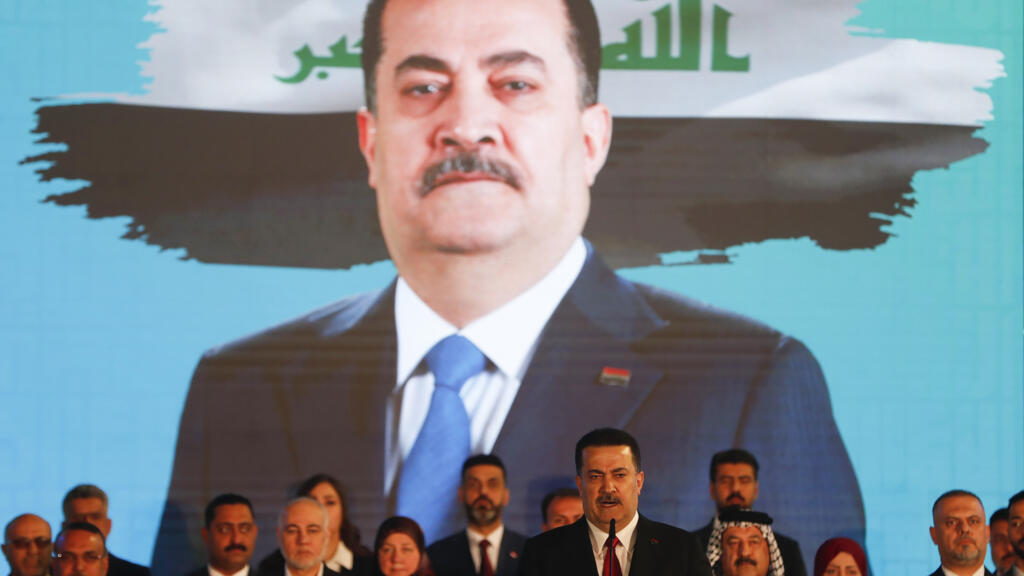
Iraqis on Tuesday headed to the polls for a general election that came as the country experiences a rare moment of calm in a region roiled by recent conflicts.
The next premier must answer to Iraqis seeking jobs, better infrastructure, and improved education and health systems in a country plagued by corruption and mismanagement.
But he also faces the exacting task of maintaining the delicate balance between Iraq's allies, Iran and the US, even more so now that the Middle East is undergoing seismic changes, with new alliances forming and old powers weakening.
Iraq's electoral commission is expected to announce preliminary results later in the evening, but an official close to the premier said that his "Reconstruction and Development list has secured a major victory".
Another two sources said Sudani's alliance has "won the largest bloc", with approximately 50 seats.
Sudani has emerged as a major force in Iraqi politics, after he was brought to power three years ago by an alliance of pro-Iran groups.
Difficult task
Once final results are confirmed, lawmakers are set to begin negotiations to nominate the prime minister -- an often painstaking task that has at times taken months.
With an outright majority almost impossible to achieve by any single list, the role of prime minister is determined by the coalition that can secure enough post-election allies to form the largest alliance.
In Iraq, the role of prime minister goes to the Shiite majority, the speaker of parliament to a Sunni Muslim, and the largely ceremonial presidency goes to a Kurd.
In previous parliaments, Shiite-majority parties have struck compromise deals to work together and form a government.
Sudani was brought to power in 2022 by the Coordination Framework, an alliance of powerful pro-Iran Shiite parties who formed the largest parliamentary bloc.
A senior Iraqi politician told AFP last month that the Coordination Framework is divided over supporting Sudani, with former prime minister Nuri al-Maliki reportedly likely to oppose a second term for the incumbent.
Always a balance
Even as Iraq tries to move past two decades of war since a US-led invasion toppled Saddam Hussein, the country of 46 million suffers from poor infrastructure and public services, mismanagement and corruption.
Many Iraqis who boycotted the elections told AFP the vote wouldn't bring meaningful change to their daily lives and said that it was a sham that only benefits political elites and regional powers.
Sudani has nonetheless vowed to continue on the path of "reconstruction and development".
During his three-year tenure, Baghdad has been transformed into a bustling construction hub, with new tunnels and bridges springing up across the city.
He also maintains that his government helped shield Iraq from regional turmoil in the past two years.
The next premier will have to maintain the balance between Iran and the US, the long term foes for whom Iraq has often served as a proxy battleground.
Since the US-led invasion, Iran has held sway in Iraqi politics, not only backing influential politicians but also supporting armed groups there.
The past two years have seen Israel inflict heavy losses on Tehran-backed groups in the region, and Iran itself was on the receiving end of an unprecedented Israeli bombing campaign that led to a 12-day war in June.
In addition to maintaining its foothold through the groups it backs, Tehran is also seeking to keep the Iraqi market open to products from its crippled economy.
Washington meanwhile hopes to cripple Tehran's influence, and has long pressured Baghdad to disarm Iran-backed groups.
© 2025 AFP
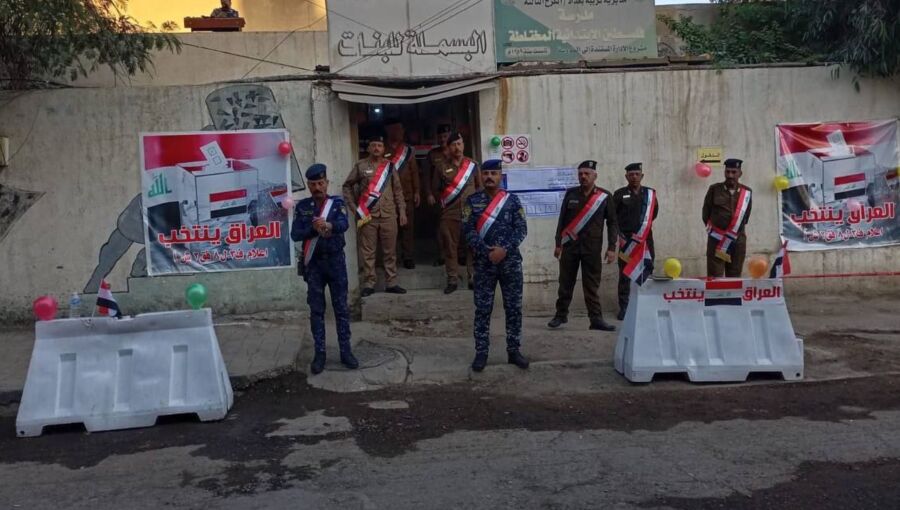
Iraq's electoral commission has announced that 23.9% of eligible voters cast ballots by midday in parliamentary elections held on November 11, with 4.795mn people voting, Anadolu Agency reported.
The Permanent Elections Commission said in its midday report that the total number of voters reached 4mn 795,000 and 685 voters by midday.
Polling stations opened at 7am local time, with electronic voting machines set to close at 6pm without extension. Some 7,743 candidates, including 5,496 men and 2,247 women, are competing in the elections.
More than 20mn voters are eligible to cast ballots in 8,703 polling centres distributed across all provinces to elect 329 members of parliament who will be responsible for electing the president and granting confidence to the government.
Mohamed Al Hassan, Special Representative of the UN Secretary-General in Iraq and head of the United Nations Assistance Mission for Iraq (UNAMI), described election day as "a moment of pride" for Iraqi democracy and an embodiment of the people's will to freely and responsibly shape their country's future.
Al Hassan told Al-Jibal platform that wide participation and distinguished organisation by the Independent High Electoral Commission, along with security forces' efforts in securing centres, confirm that Iraq is moving confidently towards consolidating the democratic path and building effective institutions that respond to citizens' aspirations.
He added that the UN is monitoring the electoral process through its teams deployed in all provinces, confirming that elections represent a basic pillar in consolidating trust between citizens and the state.
Al Hassan expressed appreciation for the Independent High Electoral Commission for its efficiency in organisation, and for security forces for their role in securing a stable electoral environment. "What we witness today of commitment and awareness among voters reflects the maturity of the democratic experience in Iraq and confirms that the people's will is the basis for shaping the future," he said.
The current parliamentary session began on January 9, 2022, and continues for four years. According to Iraqi law, legislative elections must be held 45 days before the end of the parliamentary session.
Following the close of polling, workers using tuk-tuks and large minivans began removing the metal frames used to hang candidate photos and slogans from city streets and neighbourhoods, according to Asharq Al-Awsat.
These workers, typically from low-income families living in working-class neighbourhoods, have become accustomed since previous parliamentary sessions to collecting these frames and selling them in the used goods market at prices less than half their original value.
Although the work is small-scale, obtaining the largest possible number of metal frames represents an opportunity to earn noticeable sums compared to their daily incomes, which usually do not exceed IQD 25,000 (approximately $18).

No comments:
Post a Comment