Sea levels are rising across the world. But in Greenland, scientists say they’re about to fall
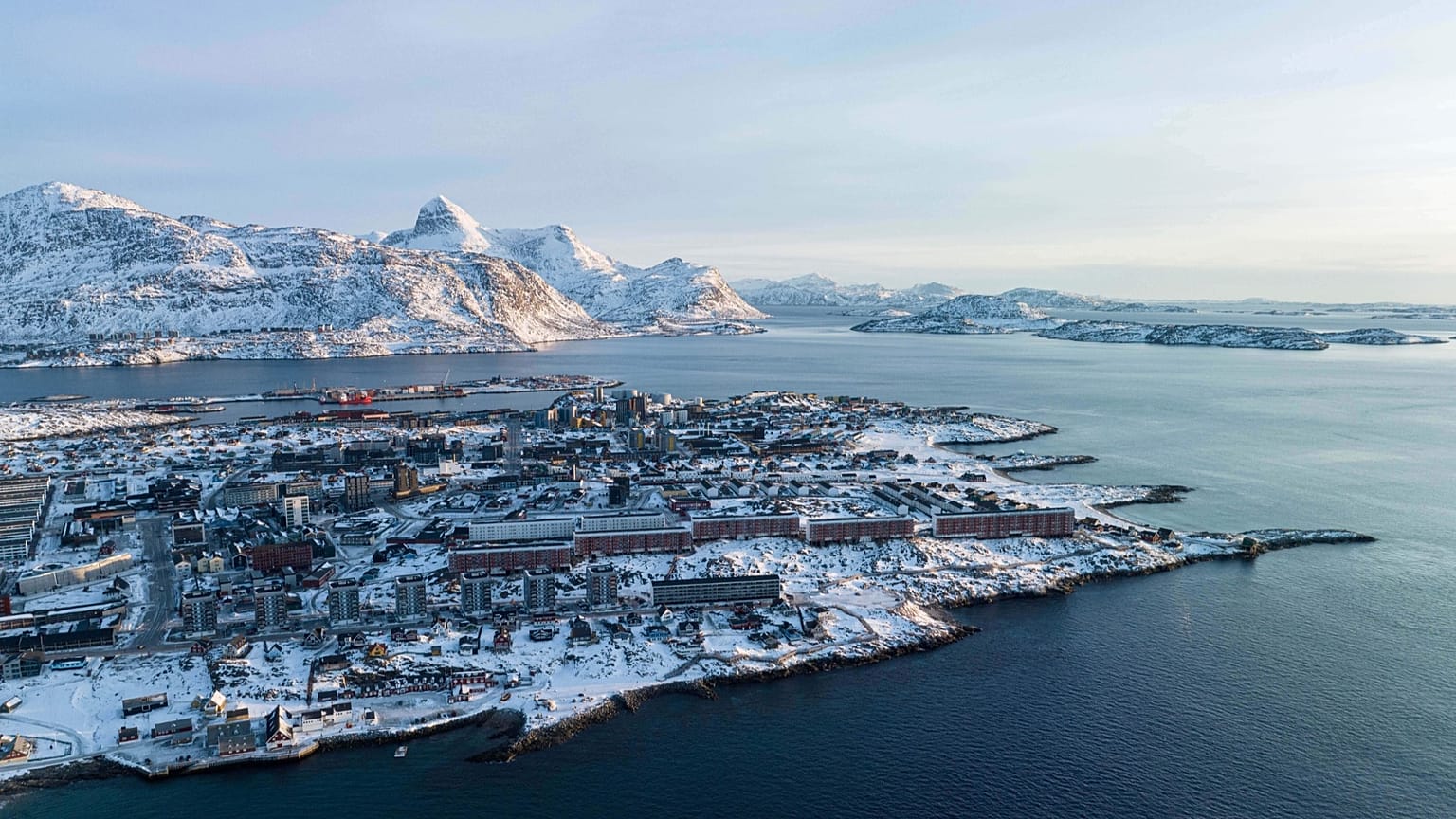
Scientists say Greenland’s sinking sea levels will have a ripple effect on coastal communities, shipping routes, fishing and infrastructure.
Rising temperatures are causing sea levels to rise around the world, putting millions at risk of severe flooding and coastal erosion. But in Greenland, the opposite is happening.
Researchers at the Lamont-Doherty Earth Observatory, which is part of the Columbia Climate School, warn that sea levels around the autonomous island are actually projected to fall despite heat-trapping emissions triggering record ice melt.
The study, published in Science Communications, predicts that in a low-emissions future, the decline in sea level will likely measure around 0.9 metres by the year 2100. In a high-emissions future, this will drop to 2.5 metres.
Why are Greenland's sea levels set to sink?
It may seem paradoxical that a nation covered predominantly in ice could face a drop in sea levels in a warming world, but this is exactly why Greenland is an anomaly. As the ice sheet loses mass, the land beneath it rises – free from its immense weight.
Study co-author Jacqueline Austermann likens the effect to the decompression of a memory-foam mattress after the person lying on it gets up.
Researchers blame both recent and historic ice loss for driving Greenland’s rebound, explaining that as mass is lost from the ice sheet, sea levels will decline even further because of gravity.
“When the ice sheet is very large, it has a lot of mass,” says lead author Lauren Lewright.
“The sea surface is pulled toward the ice sheet because of that gravitational pull. As the ice sheet loses mass, its gravitational pull on the sea surface decreases, translating into sea level fall.”
Both of these effects will account for up to 30 per cent of Greenland’s future sea level decline, and are technically known as “glacial isostatic adjustment”.
Leaving coastal communities ‘high and dry’
Rising sea levels have long been linked to increased coastal flooding and accelerated shoreline erosion. In fact, for every centimetre of sea level rise, around six million people on the planet are exposed to coastal flooding.
When the opposite occurs, there are still consequences. Coastal communities in Greenland build their infrastructure with current sea levels in mind, meaning they could be left “high and dry” if there’s a noticeable drop.
“The biggest impact is on local communities and the effects on shipping routes, fishing and infrastructure,” says Austermann.
There is a chance that falling sea levels will help certain glaciers stabilise when they enter the ocean, which could potentially slow their decline. However, researchers say they don’t know if the predicted sea level fall is enough for the stabilising effect to take place.

No comments:
Post a Comment